Home Blog Page 556

Bombardier wins Rs. 2577cr Rolling Stock contract of Delhi-Meerut RRTS project

NEW DELHI (Metro Rail News): Bombardier transportation emerged as the lowest bidder for the supply of Roling Stock (210 standard gauge coaches) and Depot Maintenance & Procurement contract worth Rs. 2577 crores for 82.15 km long Delhi – Meerut Regional Rapid Transit System (RRTS) corridor after NCRTC officials opened the global financial bid on May 01 2020.

Bidder NameBidding AmountRank
Bombardier Transportation India Pvt. Ltd. – Bombardier Transportation Sweden AB – Bombardier Transportation UK Ltd. JV2577 CroresL1
CAF India Private Limited – Construcciones Y Auxiliar De Ferrocarriles S.A JVRs. 2850 croresL2
Alstom Transport India Ltd. – Alstom Transport S.A. – Alstom Ferroviaria SPA JVRs. 3343 croresL3
Name of the bidder and their bidding Amount

This Global Rolling stock tender was floated in August 2019. As tenderer needs more time, the last date of submission extends from Nov 9, 2019 to Mar 12, 2020. On the same day, the Name of 3 bidders, i.e. Alstom, Bombardier and CAF unveil and Prequalification & technical bids opened.

As per the report of Economic times Indian Rolling stock manufacturer, BEML and Titagarh Wagons recently submitted complaints to the Department for Promotion of Industry and Internal Trade (DPIIT) alleging that NCRTC tender qualification rules do not support the government’s ‘Make in India’ initiative.

Once the Letter of Acceptance (LoA) received by Bombardier, The supply of 210 standard gauge coaches to be completed in 243 weeks and provide AMC for 15 years. .

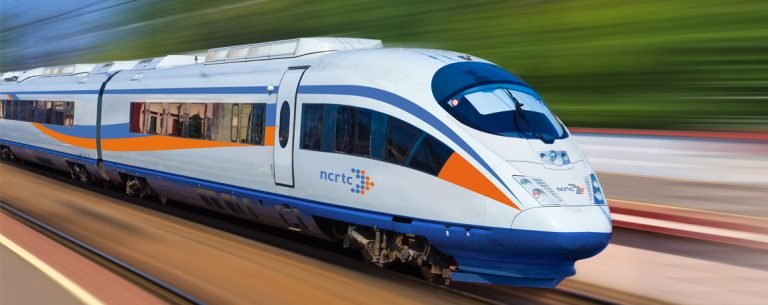
Features of Rolling Stock to be supply by Bombardier

  1. Train Type: Aerodynamic trains, 22 meters long, 3.2 meters wide.
  2. The train will be lightweight and have a stainless steel/aluminium body. 
  3. Gauge: Standard Guage (1435 mm)
  4. Train design speed will be 180 kmph, the operational speed of 160 kmph and the average speed would be 100 kmph.
  5. Signalling System: European Train Control System (ETCS)
  6. Out of the 210 coaches, 180 coaches (30 train-sets of 6 coaches) will be used for long-distance. The rest 30 coaches will run as 10 trains in a configuration of 3 cars for a short distance. 
  7. Each RRTS train is planned to have transverse (Aeroplane type) seats for passenger comfort over long distances. 
  8. Axle load: 17T
  9. Traction power: 25KV AC, Overhead catenary Type.

For More News and Project update please explore our Delhi-Meerut RRTS Section

BMRCL floats tender for getting the National Common Mobility Card

BENGALURU (Metro Rail News): During a lockdown, the Bengaluru Metro is one step ahead towards getting the National Common Mobility Card (NCMC) that would enable holders to use Namma Metro & buses and pay for parking or toll and buying in retail stores.

Bangalore Metro Rail Co has floated a tender to choose a financial institution to begin the open-loop mobility card. MD of BMRCL Ajay Seth said that by the end of this year the demanded infrastructure would be in place to introduce the tools.

BMRCL had commenced a trial test through installing automatic fare collection (AFC) system at Baiyappanahalli, Mysuru Road and Majestic stations but had to defer it because of the lockdown. Since 2011, the BMRCL has been issuing closed-loop smart cards for commuters to travel in Namma Metro trains.

The BMRCL has covered Phase-II routes for the common mobility card that include an extension of metro line on Kanakapura Road from Yelachenahalli-Anjanapura township and on Mysuru Road from Kengeri terminal. These 2 lines are required to open for commercial services this yr.

Financial Institution shall strive for migration of current cardholders to NCMC cards through offering value-added services & loyalty programmes.

However, to ensure customer service BMRCL would remain to issue and accept closed-loop cards for transit ticketing declares the tender document. The tender document also declares that the instant issuance fee of NCMC card at metro stations shall not be more than Rs 100. There would not be a minimum balance limit or related costs on the NCMC issued from Bengaluru Metro premises.

The selected financial institution would declare the card with the permission of BMRCL on design & other features. The tender reports show that Bengaluru Metro passengers shall be able to check the balance by SMS, web-based channels, or mobile apps.

The Bangalore Metropolitan Transport Co (BMTC) also is in the method of floating a tender for declaring the common mobility card. Several years ago, BMTC had used measures to introduce the facility but was not able to scale it up.

Metro Rail to have contactless ticketing to control the spread of Covid-19

DELHI (Metro Rail News): Tokens for travelling in metro trains may not be existing anymore as Centre plans to execute a contactless ticketing system using only metro cards once limitations on public transport are lifted.

The central govt is preparing a slew of steps to introduce social distancing as metro travel and to secure minimising the risk of spreading COVID-19 by maintaining space between 2 passengers, zone-wise queueing, screening & controlling crowds at the stations.

These proposals are part of a Standard Operating Procedure (SOP) for the resumption of metro train services that are being drafted by the Ministry of Housing & Urban Affairs. “We are planning to support the use of metro cards only, make ticketing as contactless as possible and avoid lines at the counter,” a senior official told.

In the wake of coronavirus crisis, the Centre has commanded a lockdown, stopping all public transport till 3rd May. Metros, trains & flights, have been delayed since March 25.

The official said that on Tuesday a review meeting was directed by the minister to start planning on how to operate metro services once restrictions are lifted. Please note, services would only resume once the order comes from the home ministry. We have to formulate a plan for whenever operations resume.

The official further added that we would have to plan our trains accordingly and would also have to find out ways of keeping social distancing in the train. We are watching what other countries that have continued services are doing & should be able to factor all that in. Our guidelines would be ready this week.

It’s possible to unlock safe urban mobility during a lockdown

Nowadays, the most challenging question is whether it is possible to permit mobility of workers from their house to the workplace to commence production & distribution of goods and services in selected sectors after the three-week-long nationwide lockdown period.

The major concern behind this is not to protect the predicted fall in the increase in national income in the current year, at least not till the corona-infected persons’ curve begins flattening out. The critical concern for the upcoming two months cannot be anything but protecting human life. The threat to life comes from the pandemic entering the 3rd phase with the possibility of the number of community infected persons going up to millions in India that has extremely inadequate health care services, both for testing and treatment, particularly in terms of coverage.

The threat to life is the same serious for people not having sufficient purchasing power to buy food. Other means of survival since 15% of the workforce has income or pension security & the inadequacy in the scope of the state machinery to guarantee the minimum necessities to the rest workforce is becoming evident, at the central, state & district level.

The vast awareness has been created regarding the process, vulnerabilities, symptoms & precaution for the COVID-19 pandemic, with the main focus in keeping social distance. Also, plans have been made for increasing the scope & coverage of the medical facilities to look after the infected persons. Unluckily, there is no any benefit of this lockdown in any such detailed planning, resulting in most workplaces being locked up, workers were driven out or facing an imminent threat of unemployment and the migrants setting out for hard journeys back home in crowded compartments, trucks, buses and even on foot without any consideration of their health, in which some has lost their lives also.

This lockdown impacts differently at various levels of administration, general society and every individual. Notwithstanding the injunction of staying at home, several civil society groups, community groups and individuals have ventured, not always with adequate precautionary steps, to reach out to the poor, elderly, physically challenged and the quarantined people.
Unluckily, there has been no stipulation of a framework or guidelines for safe community assistance, whereby very more substantial engagement of civil society could have been institutionalized.

Where necessary services have been defined and exempted from lockdown outlines, unorganized workers that constitute the backbone of all these services & those who must walk long distances to avail the sustenance things given by the state govt have not been included in their fold. This lockdown has led to an economic emergency.

Shortly but a calibrated resumption of production focused economic movement is required to arrest any irreversible modification. It is must be considered to open up of industries & businesses in some identified areas in the cities allowing for a gradual resumption of product. Travell of workers can be operationalized throughout partial lockdown via a system of electronic passes will enable them to travel from their residence to workplace and return within a specified period of the day except those residing in or nearby the hotspots zones.

For operationalization of the plan of safe exchange of workers, it will be essential to ensure their safety along with that of those involved in the transportation movement. Transit to and from workplaces could be organized by pre-authorized buses or four-wheeler vehicles for e-permit holding employees by the company among specific destinations.

Companies would have to make a small payment to the state for every vehicle to meet the extra expenses of the supervision and control. Employees opting for commutation through self-driven cars can be provided e-permits by their companies on payment of a certain fee to the state. Likewise, app-based and regular taxi and auto-rickshaw assistance will be issued authorization to take the e-permit holders from the residences to places of job and back.

Each trip will have to be logged into a purpose-built application on their mobile device with the e-permit ID of the traveller. All the vehicle operators will need to maintain hygiene in the vehicles and log in disinfection actions after every trip. Being found away from the permitted travel route or beyond specified hrs will be an offence. Allowing taxis & auto-rickshaws to run under the permit scheme will enable a critical number of drivers to get back in their regular earnings.

People without personal cars & not able to afford personalized transport, e-permits could be published at a low cost by the employing companies, for those at least bus services would be provided. These will be the workers under the threshold income. The permits will enable them to avail the advantages offered by public agencies during the pandemic right at the workplaces.

The employers can take the advantages like cooked food, weekly rations, etc., for this section of workers like the casual labour and those on short-duration contract & distribute at the places of work following the institutional supervision of public agencies and civil society. This will increase the employer-employee relationship that would be a decisive factor for the future growth of the company. Moreover, this will assist the migrants in staying back in the cities and motivating those who have moved for their native places in fear, to return, particularly after the harvesting season.

As the workers of a company would stay together through the day under the standard safety measures executed by the company, there would be less community interaction.

It will not be as tough to ensure adequate distancing between passengers when there are very less no of passengers. Such buses will be cleaned before and in between their respective trips & run with windows open. These will take travellers with their e-passes travelling within fixed points of origin & destination at standard fare, without settling on permitted traveller density and distancing conditions. The fees collected from the workers for the e-permits will be utilised to repay for the losses incurred through the public transport system.

All the drivers and other private taxis, auto-rickshaws & buses cars will have to have the safety kits and observe hygienic and medical facilities mandatory for their personal safety and that of the commuters. They will run under the supervision of police who will ensure compliance on the part of both the provider of transport services and the commuters.

Remain the fear that the lockdowns ease will make it impossible to monitor or control in India enters massively into the 3rd stage that is the community spread of the pandemic. The capacity to remain in control cannot be lost sight of through the authorities. For that, the strength to track & monitor the consequence of the mobility relaxations and appropriate corrective steps holds the key—the protocol conferred above addresses this issue. The catalyst needed is a sterile transport system that is wholly tracked to lessen the danger associated with lifting the crippling lockdowns. As a matter of abundant caution, a practical approach will be to open priority sector industries & businesses. Relaxations can be progressively enhanced.


(This article first appeared on Live Mint and authored by Amitabh KunduBobby JohnH. S. Sidhu. Amitabh Kundu is distinguished fellow, Research and Information System for Developing Countries; Booby John is managing director, Æquitas Consulting Pvt. Ltd; and H.S. Sidhu is a business consultant)


COVID-19 prompts rethinking of urban mobility and city planning

In the life of urban mobility, people used to travel for many reasons it may be going to work, educational areas, recreation and shopping. Asian cities offer diverse means of travelling like walking, cycling, motorcycles, public and mass transport, micro-mobility, paratransit, private cars, public taxis & ride-hailing systems.

COVID-19 outbreak has had a profound impact on transport and mobility. As this nationwide lockdown announced measures to restrict travel and social gatherings and urged to maintain social distance and personal hygiene to prevent the spread of the coronavirus.

If you are in need of mental health support during COVID-19, reach out to BetterHelp today. 

In short, we can say that these restrictions are impacting the use of public transport in all cities. In some cities, public transport operators are employing sanitization & physical distance policies for travellers like staggered seating. But still, it remains difficult to win the confidence of commuters for psychological and behavioural reasons.

And if we talk about the other good side of this lockdown impact, we have seen a change in air quality and reductions in CO2 emissions because of the less transport activity. But these are actually the short-term gains as air pollution and emissions are expected to rise again once the situation is resolved.

Due to COVID-19, current difficulties faced by public transport & mobility and benefits of active mobility give new impetus to transport & city planners to think twice on forms of mobility and city planning. In the short and long run, it will be wiser to plan emerging small and medium-sized cities depending on public transport and active mobility.

Only active mobility or non-motorized transport like walking, cycling and micro-mobility as the electronic scooter can provide for maintaining a social distance. Nowadays in cities of different regions, Public cycling systems are growing. Where micro-mobility is operational in various cities in Europe & North America, it is only operating in some Asian countries, cities and universities like Thailand, Singapore and the Republic of Korea.

Various Asian cities have a good share of active mobility such as Kathmandu 42%, Surat 27%, Ho Chi Minh City 23%, Colombo22%, Dhaka 17% and Suva 9%. However, active mobility share is low in Surabaya 3%, and Hanoi 3.2%. Among active mobility trends, the walking share is high and cycling is low.

The active mobility helps to increases physical activities which is beneficial for health. The World Health Organization suggests at least 150 minutes of physical activity every week that includes transportation.

An average of people walks a block or around 500 m to take public transport. For work, 20 min or a one-mile walk is considered reasonable. However, comfortable travelling distance also depends on the quality of the walking surface and the surrounding environment.

The ESCAP Sustainable Urban Transport Index, Data Collection Guideline suggests that a good urban mobility plan should have options to motorized transport that includes public transport, walking & cycling networks and intermodal interchange amenities.

Active mobility is part of integrated urban transport & city planning but has not taken due priority.

A supply-side intervention like the provision of interconnected infrastructure for active mobility can influence travel behaviour of urban residents. There are some infrastructure that encourages active mobility to involve exclusive walking and cycling lanes, walkways and wide footpaths, cycling tracks, interconnected parks and resting sectors along the routes.

The supply of infrastructure needs to be backed by related policies and community-level advocacy to enhance people to do work and school trips on active mobility & recreational walking and cycling. These are low-cost mobility areas compared to public transport that requires big investments. Between the supply of infrastructure, active mobility and the health and well-being of commutes there is a direct relation.

Physical exercises also help to develop immune systems. Non-motorized transport runs on 0 energy emissions as the cleanest form of transport. So, it helps in reducing transport sector emissions along with ensures safe mobility in case of future pandemics.

This would also contribute to the achievements of Sustainable Development Goals 3: Good health & well-being, 9: Industry, innovation & infrastructure, 11: Sustainable cities & communities and 13: Climate action.

City authorities could consider employing the following strategies by considering the health advantages of active mobility and employing pull strategy and supply-side interventions –

  • Plan compact cities based on public transport & active mobility
  • Prioritize active mobility as part of public transport
  • Plan and develop related infrastructure for active mobility
  • Develop resting sectors & public parks
  • Improve environment with walking or cycling routes by planting trees and beautification.

Rethinking of transport and change in mindset, urban and city planners are required. The above strategies would be useful for emerging small & medium-sized cities to model & plan cities based on public transport & active mobility before these cities are locked in and influenced by the car-centric development path.


The Article first appeared on ESCAP and written by Madan B. Regmi

NCRTC Invites Bids for ETCS & CBTC System of Delhi – Meerut RRTS corridor

DELHI (Metro Rail News): The National Capital Region Transport Corporation (NCRTC) invited bids for the signalling, train control and telecommunication system for Delhi – Ghaziabad – Meerut RRTS Corridor of NCRTC on April 17, 2020.

The National Capital Region Transport Corporation Limited (NCRTC “the Employer”), invites online bids from eligible Bidders for Design, Supply, Installation, Testing & Commissioning of the following works contract package, subject to compliance with NCRTC policies and requirements.

Name of WorkTender
Identification
No.
Bid
Security
(in Rs.
Million)
Completion
Period
(days)
Design, Supply, Installation,
Testing & Commissioning of
Signalling & Train Control and
Telecommunication Systems for
Delhi – Ghaziabad – Meerut
RRTS Corridor of NCRTC.
2020_NCRTC
_46848_1
INR 77
Million
1613 days

Scope of work

Package 24: Design, Supply, Installation, Testing & Commissioning of Signalling & Train Control and Telecommunication Systems for Delhi –Ghaziabad – Meerut RRTS Corridor of NCRTC.

Key Details

• Bid Security (in Rs. Million): INR 77 Million
• Completion Period: 1613 Days (4.5 years)
• Bid Submission Start Date: 16-Jun-2020 03:00 PM
• Bid Submission End Date: 23-Jun-2020 03:00 PM
 Bid Opening Date: 24-Jun-2020 03:00 PM

Open Competitive Bidding (OCB) – International will be conducted in accordance with Single Stage- Two Envelope Bidding Procedure and is open to all Bidders from eligible countries as described in the Bidding Document.

To be qualified for the contract package, the bidder should as a minimum meet the
following requirements:
• Please refer Section 3 of bid document for complete “Evaluation and Qualification
Criteria”.

The complete bidding document in English can be viewed/downloaded from the official website of NCRTC www.ncrtc.in or e-procurement portal of NIC https://etenders.gov.in/eprocure/app from 17.04.2020 to 23.06.2020 up to 15:00 Hrs IST).

Bids must be submitted online only a https://etenders.gov.in/eprocure/app on or before 23.06.2020 up to 15:00 hrs (IST)

Bid through any other mode shall not be entertained. However, Bid Security in original shall be submitted physically by the Bidder on or before 23.06.2020 up to 15:00 hrs (IST). Bids received shall be opened on 24.06.2020 at 17:00 hrs (IST).

To participate in the e-tendering process, a Bidder should be in possession of Class III Digital Signature Certificate (DSC) in the name of the person duly authorized to sign on behalf of the Bidder from any Certifying Authority recognized by CCA India (e.g. Sify /nCode / eMudhra etc.), with their profile.

To participate in the e-bid submission, it is mandatory for the bidder to register their firm with e-procurement portal of NIC https://etenders.gov.in/eprocure/app to have a user ID and password.

The pre-bid meeting shall be conducted on 15.05.2020 at 11:00 hrs (IST) at the
address below:

National Capital Region Transport Corporation Ltd.,
Corporate Office Extension / GC office,
Under CWG Flyover, Near CWG Village Flats,
NH-24, New Delhi – 110092
Tel: +91-11-41066943
Fax: +91-11-41066953

Bidders may attend the pre-bid meeting through Video Conferencing (VC) also. The prospective bidders who wish to join the VC shall be required to send a request email (along with necessary details such as name and address of the bidder, name, designation and email id of the person(s) who shall attend the meeting), to the below mentioned email id, at least 3 working days in advance. NCRTC shall send the link for Video Conferencing in such cases enabling them to join through VC.

NCRTC reserves the right to restrict the number of links per bidder based on the total requests received. NCRTC reserves the right to reject any request received after the deadline of such requests stated above

To obtain further information and inspect the bidding documents, Bidders should contact:
Group General Manager /Procurement

National Capital Region Transport Corporation Ltd.

7/6, Siri Fort Institutional Area,

August Kranti Marg,

New Delhi – 110049

Tel: +91-11-41066943

Fax: +91-11-41066953

Email:- procurementcell@ncrtc.in

Anand Kishore takes charge of Managing Director of Patna Metro Rail Corporation

PATNA (Metro Rail News): State Govt appointed 1977 batch IAS officer Mr Anand Kishore, Secretary, Urban Development Department as the Managing Director (MD) of Patna Metro Rail Corporation Limited (PMRC) to expedite the construction work. 

Due to the lack of departmental responsibility, many decisions related to Patna Metro Project were pending. With this, a list of other boards of directors has also been appointed. 

With the completion of the process of appointing the officers who have been hanging for several months by the department. As per the term of the formation of PMRCL, three officers selected from central government and five from state government. Three officers including Chairman Shivdas Meena on the Board of Directors of Metro have been selected by the Center. At the same time, five officers, including MD Anand Kishore, have been chosen by the Bihar government.

In which the names of Rahul Singh from the Finance Department, Devesh Sehra from Road construction department, Pankaj Kumar from the Transport Department and Sanjay Dayal from the Urban Development Department are selected.

On behalf of the central government. Thara, Mahesh Kumar and Mahendra Kumar have been selected as a Director. One post is still vacant, on which selected officers of the Central Government will be reinstated.

The Special cell formed for land acquisition

Patna Metro Rail Corporation Limited has formed a special cell for land-acquisition work. The in charge of treasure will be a retired officer of the Deputy Collector level of Bihar Administrative Service. Apart from this, three surveyors, three amines and one IT assistant will also be appointed in this cell.

A letter is also being sent by Patna Metro Rail Corporation Limited to the Additional Chief Secretary of the Revenue and Land Reforms Department and Patna DM for land acquisition for the construction of the metro so that the approval for the acquisition of land can be obtained at the earliest. 

This process will be completed by the land acquisition officer of Patna district. For the land survey, two amines should be kept and work taken from them. Their remuneration will be borne by Patna Metro.

Amaravati Metro renamed as Andhra Pradesh Metro Rail Corporation Ltd

VIJAYAWADA (Metro Rail News): On Monday the State govt-issued an order renaming the Amaravati Metro Rail Co (AMRC) as Andhra Pradesh Metro Rail Co Ltd (APMRC).

It would implement metro rail projects in the State. After creating 2 Special Purpose Vehicles for Visakhapatnam Metro Project & Vijayawada Metro Project in August 2014, then govt changed the SPV for Vijayawada Metro Project as AMRC in Sept 2015.

However, the Managing Director of AMRC suggested that it might be appropriate to change the name AMRC as APMRC so as to implement the Metro Projects in other parts of the State. Hence, the govt declared the order accordingly.

Metro trains in every 2.5 min frequency at Nagawara & E-City Lines

BENGALURU (Metro Rail News): The Yellow and Red Lines, two-section of Namma Metro’s Phase II project would be soon able of operating trains at a 2 & half minutes of frequency, due to the adoption Communications-Based Train Control (CBTC) system a relatively new technology.

The rest 4 lines of Phase-II and the current 42 km network of Phase-I are made with a separate signalling solution, trains would only be able to operate at a frequency of not less than 4 & half mins.

The Bangalore Metro Rail Corporation Ltd had opened the bids to implement CBTC system on the 19 km RV Road, Yellow line Bommasandra that operates along with the IT corridor through Central Silk Board & Electronic City.

The tenders for a related technology on the Gottigere, Nagawara section have not been called as the civil works on the 21 km corridor including elected & underground stretches have just started.

As per sources 3 global companies with Indian subsidiaries Alstom Transport, Siemens Mobility along with Hitachi Group associated in the tenders for the Yellow line. With them, the German-based Siemens emerged the lowest bidder but the contract is supposed to be given after evaluating the bids. MD of BMRCL Ajay Seth approved the opening of tenders.

“When the CBTC technology was introduced about 7 yrs back 4 of the 6 lines of Phase-II were already planned. We can still upgrade the Metro lines that are running with a various signalling system whenever the traveller load rises. For all the future lines including Outer Ring Road (ORR) and Airport we would be using the CBTC system,” Seth said.

Now the 42 km Phase-I Metro network is being conducted based on the distance-to-go (DTG) signalling system with trains being operated at a frequency of four and half minutes in the peak hrs and ten minutes in the non-peak hrs.

Alike technology was also planned for the 4 lines between Baiyappanahalli-Whitefield, Mysore road-Kengeri, Yelachenahalli-Anjanapura Township and Nagasandra-Bengaluru International Exhibition Centre as these lines were intended much before the Yellow & Red Lines were added into the Phase-II network.

Hyderabad Metro Rail is all set to resume operations

HYDERABAD (Metro Rail News): Hyderabad Metro may not be operating due to the lockdown but that it does not mean that the Hyderabad Metro officials have taken a break. Trials & checks of the functioning of the system to assure that things are in place to start operations in 25 hrs of notice from the govt are on.

NVS Reddy said that though the services have been stopped we have to assure that the system including the services is working without any glitches. All we want is 24 hrs advance notice to begin the operations.

Very few staff members are being utilised to secure these maintenance works apart from the monitoring the system from the Operations & Command Centre. Besides, the trains and other parts need to be operated and its performance checked to view the break-in operations because of the lockdown, he said.

Besides the technical features, Hyderabad Metro is also making great use of the lockdown in developing various civil works at the ground level. In Sultan Bazaar works pertaining to laying a cement concrete road are being brought up with the brisk pace.

Furthermore, pavement works street furniture works & others are also being performed at various places & efforts are being made to finish as many before the lockdown is lifted.