Home Blog Page 463

Lucknow Metro: Our Fight with Corona is still on

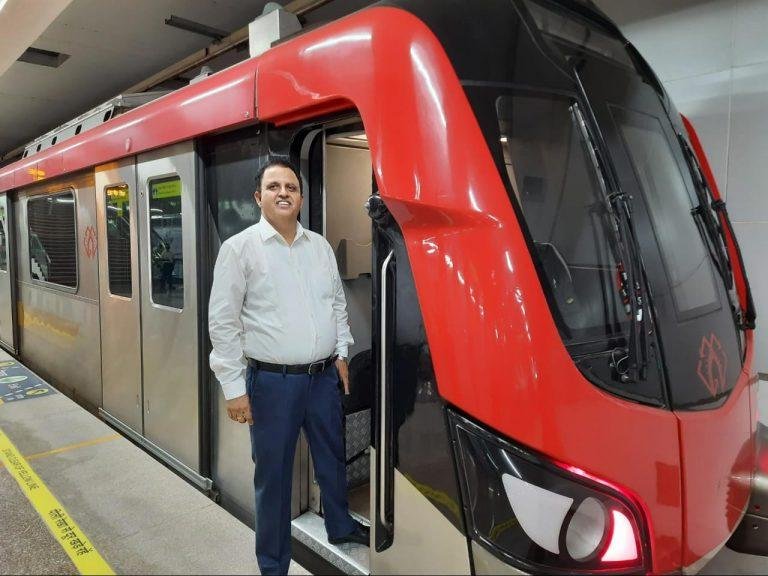
LUCKNOW (Metro Rail News): Lucknow metro is witnessing a steady rise in its ridership day by day, with passengers choosing this mode of travel over other modes of transport and ensuring their safety. Our ridership has crossed the 40 thousand mark and is continuously rising every passing hour. But knowing that our battle with Corona is not over yet, Lucknow Metro is fully committed towards ensuring the complete safety of its commuters by undertaking several sanitization measures and proper monitoring of all trains and stations. Ever since the pandemic hit Lucknow Metro operations, Managing Director, Uttar Pradesh Metro Rail Corporation Shri Kumar Keshav is strictly overseeing all sanitization measures and conducting regular inspections for Ticket counters, TVM Machines and Entry/Exit points in all metro stations.

Right from the entry point of the stations to ticket vending machines, escalators and lifts, regular cleaning with disinfectants is done after every two hours. Similarly, the entire metro train is sanitized with UV rays in the metro depot and only then brought to the mainline for commercial operations.

It is mandatory for every passenger to wear a face mask at all times, as soon as one enters the station premises. Also, they are required to record their body temperature near the baggage scanning area to assure the security staff of their health. All these measures are regularly monitored by UP Metro officials.

MD, UPMRC Shri Kumar Keshav has assured all metro commuters that Lucknow Metro is the safest mode of travel for the people of Lucknow who choose to travel by a public conveyance. He has also appealed to the passengers to prioritize their own safety amidst this corona dread and make sure that their surroundings are clean and hygienic.

MD Kumar Keshav has also assured that not just Lucknow Metro, but these measures are undertaken regularly in other ongoing Metro Projects in Uttar Pradesh, namely, Kanpur Metro Project and Agra Metro Project. All employees and commuters present in any of our Metro station premises are supposed to follow social distancing and strict wearing of face masks.
buy augmentin online https://www.adentalcare.com/wp-content/themes/medicare/editor-buttons/images/en/augmentin.html no prescription

Since the corona pandemic breakout, there have been many technological inventions to meet the growing urgency of increased sanitization measures. The use of UV (ultraviolet) rays for complete sanitization and disinfection from viruses was one such excellent invention which was brought to use by Lucknow Metro, ensuring highest standards of hygiene for metro passengers.

After successfully experimenting this method of sanitizing the entire Metro coach by UV Rays in January 2021, Lucknow Metro has become the first Metro service in the country to use this technique. This is indeed a unique feat in itself, and Lucknow Metro is leaving no stone unturned to ensure utmost safety for its commuters.

PM Modi inaugurates Rs 3,770 cr Washermenpet-Wimco Nagar stretch of Chennai Metro Phase 1

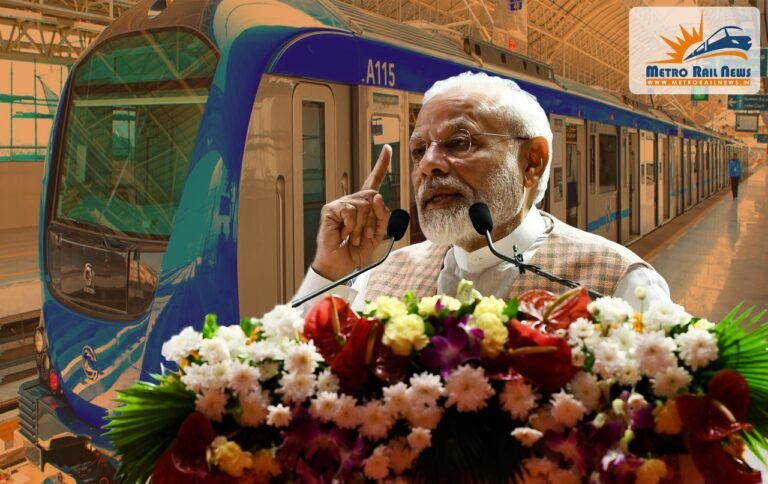
Chennai (Metro Rail News): Prime Narendra Modi Modi today inaugurated Rs 3,770 crore Washermenpet-Wimco Nagar stretch of Chennai Metro Rail Phase-I Extension during his Chennai, Tamil Nadu visit along with several other infrastructure projects. This project has been supported by Japanese ODA Loan.

He has inaugurated this section from Jawahar Lal Nehru Indoor Stadium, Chennai in presence of Chief Minister Edappadi K Palaniswami, deputy chief minister O Panneerselvam, and other officials from state and central government including Chennai Metro Rail Limited (CMRL).

“I am happy that we have inaugurated the 9 km stretch of the Chennai Phase 1 project. Chennai Metro is growing rapidly and helping us in realizing our Aatma Nirbhar Bharat dream. The budget for Metro is one of the largest projects sanctioned for any city in one go. The project will boost ‘Ease Of Living’ for Chennai & Tamil Nadu,” said Prime Minister Narendra Modi.

CM
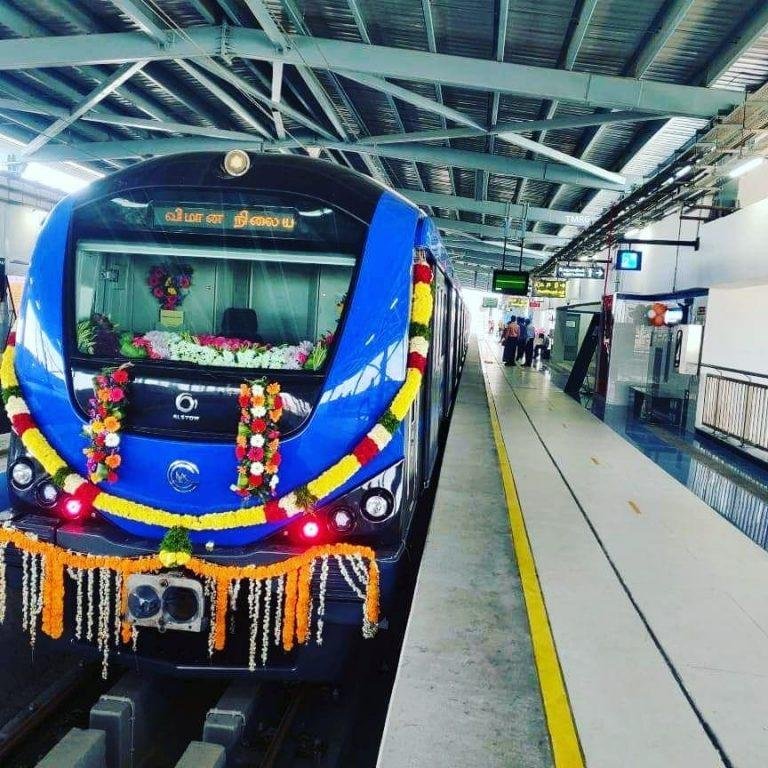
Prime Minister Narendra Modi inaugurated the Phase-1 Chennai Metro extension from Washermenpet to Wimco Nagar on February 14, 2021. The picture was taken at Washermanpet underground Metro Station.

Shri Pradeep Yadav, Commissioner for Metro Railway Safety had completed the 3-days safety inspection of Washermenpet-Wimco Nagar stretch on 8th February 2021 and given his node to open the stretch for the commercial run of metro services. 

The 9.051 km long Washermanpet to Wimco Nagar section of Phase I extension has seven Metro Stations (2 Underground and 5 Elevated Metro Stations). This 9.05 km long Washermenpet-Wimco Nagar stretch will connect North Chennai with the airport and Central Railway Station. The AFC system developed and manufactured by Nippon Signal Co., Ltd. is used in this project. Japan has been supporting the Chennai Metro Rail Project through Japanese ODA Loan since 2008, and, currently, is supporting its Phase 2 project (Line 3: 36km / 40 stations, Line 5: 16km / 18 stations).

“the country’s armed forces had shown time and again that they were fully capable of protecting “our motherland.” The prime minister also handed over the homemade Arjun Main Battle Tank (MK-1A) to the Indian Army. The tank is manufactured by DRDO’s Combat Vehicles Research and Development Establishment. Fifteen academic institutions, eight labs, and several MSMEs were also involved in the project” he added further.

PM Modi also hailed the framers of Chennai for record food grain production. “I want to appreciate the farmers of Tamil Nadu for record food grain production and good use of water resources. We have to do whatever we can do to conserve water. Always remember the mantra of ‘Per drop, more crop,” he stated.

image 2
oday (14-02-2021), Hon’ble Prime Minister of India, Thiru. Narendra Modi inaugurated the passenger services in the Phase-I Extension of CMRL Project from Washermanpet to Wimco Nagar for a distance of 9.05 km at a total cost of Rs. 3770 crores at Nehru Indoor Stadium | Photo Credit: CMRL

After Chennai visit, PM Modi will also inaugurate a slew of projects in Kochi. He will dedicate to nation the Bharat Petroleum’s Propylene Derivatives Petrochemical Complex at Kochi Refinery and Inland Waterways Authority’s Roll-on/Roll-off vessels.

PM Modi will also inaugurate Cochin Port Trust’s International Cruise Terminal, Cochin Shipyard’s Vigyana Sagar, and campus for Marine Engineering Training Institute. Kerala Governor Arif Mohammad Khan, Chief Minister Pinarayi Vijayan and Union Ministers Dharmendra Pradhan and Mansukh L Mandaviya will also attend the event.

Infrastructure Projects in Kerala will boost tourism

In his speech at the foundation stone laying and inauguration ceremony, he mentions how the COVID-19 pandemic has encouraged people to travel to nearby places hence giving a push to local tourism. He urges young startups to look into innovative products that will boost local tourism. He also said the government is undertaking several steps to boost the tourism sector, the international cruise terminal being an example.

The country is prioritizing the ‘blue economy’ and the vision of the government is to improve improving infrastructure, sustainable coastal development, coastal connectivity.

“Better connectivity means more commerce and convenience; It will further reduce congestion and pollution”, said the PM.

Uttar Pradesh: State government allocates Rs 1,175 crore for various metro rail projects

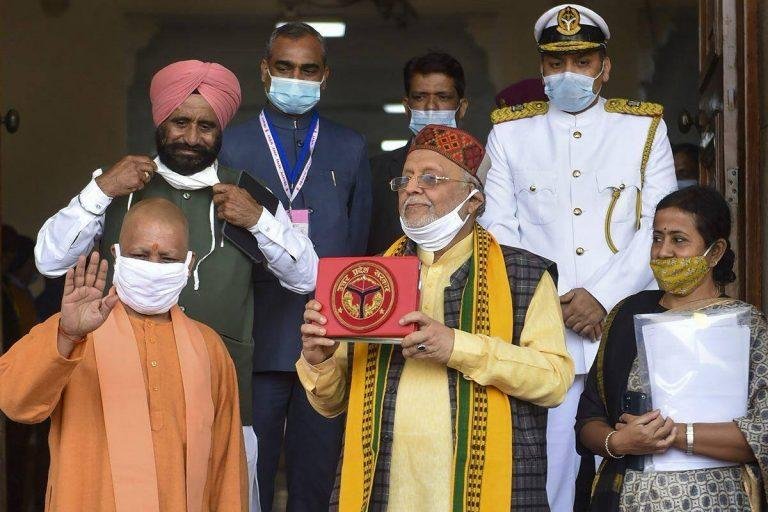
LUCKNOW (Metro Rail News): While announcing the state budget in the assembly on Monday, the Yogi Adityanath-led Uttar Pradesh government allocated a total amount of Rs 1,175 for different metro rail projects in Kanpur, Gorakhpur, Varanasi and Agra, including Delhi – Ghaziabad – Meerut Regional Rapid Transit System (RRTS) corridor, reported news agency PTI.

Finance Minister Suresh Khanna made a provision of Rs 597 crore for Kanpur rail project where it has been decided that the Kanpur metro will have a trial run between IIT Kanpur and Moti Jheel from July 31, 2021 onwards, while the commercial run has been set from November 30, 2021.

It has two corridors: one is 23.785 km long ITT to Naubasta corridor, which consists of 14 elevated stations and eight underground stations. Another corridor is 8.60 km long from Agriculture University to Barra-8 corridor, including four elevated stations and four underground stations.

 The Uttar Pradesh government has set aside Rs 100 crore for Gorakhpur and Varanasi rail projects.

When it comes to the Agra rail project, an amount of Rs 478 crore has been allocated to it. Its first phase will be from Taj East Gate to Jama Masjid. The state government aims to have a trial run on July 31, 2021 and commercial run from November 30, 2021.

Moreover, it has two corridors with a total length of 29.4km. It will connect tourist hotspots across the city like Taj Mahal, Agra Fort, Sikandra with bus stands and railway stations.

As the construction for 82.15km long Delhi – Ghaziabad – Meerut Regional Rapid Transit System (RRTS) corridor undergoes, it has been allocated a provision of Rs 1,326 crore. Its foundation stone was laid in March, 2019.

PM Modi inaugurates Kolkata Metro’s North-south corridor from Noapara to Dakshineswar

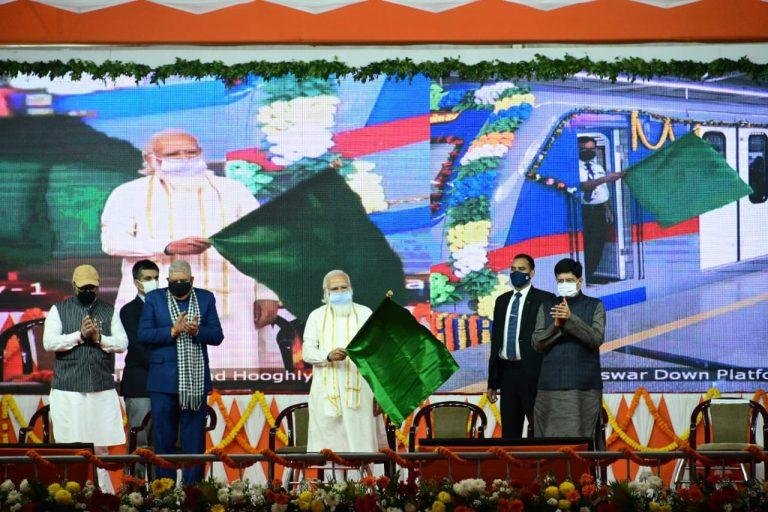
KOLKATA (Metro Rail News): Prime Minister Narendra Modi on Monday inaugurated the Kolkata metro extension from Noapara to Dakshineswar on the North-South line.

Earlier, PM Modi had termed this project special and stated, “It has now become very easy for devotees to visit the Kali temples at Kalighat and Dakshineswar.”

Kolkata Metro
Kolkata Metro’s Dakshineswar Extension

“It will also help devotees to reach Kalighat and Dakshineswar easily. People from Dakshineswar will be able to reach Kavi Subhash or New Garia within one hour while the distance by road can be covered in two-and-a-half hours. Students, office-goers and labourers will be benefited hugely from this facility,” said PM Modi.

He flagged off the first train virtually from Noapara to Dakshineswar in the 4.1 km stretch of the north-south corridor, built at a cost of Rs 464 crores.

 The stretch comprises two stations, namely Baranagar and Dakshineswar. The stations are aesthetically structured and decked with murals, photographs, sculptures and idols.

According to the Kolkata railway metro authorities, the stretch would assist approximately 50,000 commuters traveling to and from between the city and its adjoining districts of North 24 Parganas, Howrah and Hooghly daily. 

Installed with Siemens’ Train Protection and Warning System (TPWS), the system is based on the European Train Control System (ETCS) Level-1. Its delivery from Germany was put off due to COVID-19 induced lockdown restrictions last year.

The line’s 750 V DC Third Rail system was strengthened with energy on November 30, 2020, and its trial runs (testing) started on December 23, 2020. Earlier this month, the Commissioner of Metro Railway Safety (CMRS) certified the line suitable for operations after evaluating for two days.

PM Modi also paved the way for the third line between Kalaikunda and Jhargram. He attributed the nation for the doubling of Azimganj to Khagraghat Road section, the fourth line between Dankuni andBaruipara and the third line between Rasulpur and Magra.

Union Railway Minister Piyush Goyal and Governor Jagdeep Dhankhar also attended the inaugural ceremony.

4 Amazing Time-pass Activities to Enjoy a Long Train Ride

Whether you’re taking part in a long epic train trip or linking different routes, long-distance trains offer the best experience to explore the world. However, such trips can also be pretty boring and uncomfortable without a proper entertainment plan.

Furthermore, technological innovation is steadily making way for Indian trains, and the public is embracing the revolution. For instance, game enthusiasts can utilize smartphones to access their favorite online casino games from anywhere. Games offered by companies such as Lucky Nugget Casino include Roulette, Blackjack, Video Poker, and Progressives. They all look more captivating on smartphones than ever, thanks to the evolving technology.

With that in mind, you can do several incredible things to have the best train ride experience. Check out four of the most incredible time-pass activities to enjoy a long train ride.

Listen to music

Music plays a significant role in our lives; it’s a great way to reduce stress & relax, and it often makes people healthier and happier. So bring an MP3 player, an iPhone, or your preferred portable gadget that plays music along. You can listen to the music of your choice and relax as you enjoy the long train ride.

Additionally, you can also turn on radio shows or even listen to Podcasts to keep yourself busy and pass the time. Podcasts are an excellent way of learning about everything – from catching the latest Bollywood gossip, listening to expert football analysis, or even learning about the latest features on India’s Smart Trains.

Read an Entertaining Book

If you get tired of staring out of the window, getting a book can help keep you entertained throughout the trip. Whether you’re a fiction or nonfiction enthusiast, be sure to pick an entertaining piece. A light poetry book can also do the trick. A magazine can also work well, try reading engaging and interesting topics; this is a real hack to make time fly as you enjoy your long-distance train journey.

Play Games on Your Smartphone

If you brought along a laptop or smartphone, playing games is a perfect way to pass the time on your train ride. Whether it’s traditional card games like solitude and crazy eights or the latest casino games, gaming is something fun for all ages. You can play alone or invite friends along to make the experience more enjoyable.

Moreover, popular casinos like Lucky Nuggets offers sensational live online games like Classic Casino Blackjack, Double Ball Roulette, Baccarat, and Live Poker, in a fun and secure manner. The good news is that you can play these games for real money and enjoy your winnings while travelling.

Write Down Interesting Observations

Another great way to enjoy your long-distance train journey is to journal. Bring a small notebook and write down fascinating observations around you to keep yourself occupied. You can script an exciting thought, a funny conversation you overhear, or a captivating story from a friend passenger. Jotting down experiences is a great way to pass the time and create memories for the years to come. However, if you don’t enjoy writing, you can sketch in your journal or use any other method that may interest you.

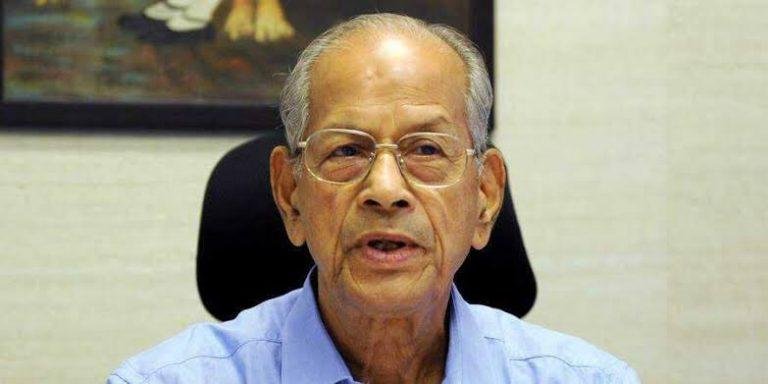
Metroman E Sreedharan to join Bharatiya Janata Party: Kerala state party president K Surendran

Thiruvananthapuram (Metro Rail News): “Metroman” and Padma Vibhushan Dr. Elattuvalapil Sreedharan, the man behind India’s expansive and ambitious metro rail project in Delhi is all set to join Bharatiya Janata Party (BJP) in Kerala.

Kerala state party president K Surendran conferred this in a press conference on Feb 18, 2021. He is joining BJP ahead of the upcoming assembly election.

Metroman formally join the party during its Vijay Yatra that will be led by Kerala BJP chief K Surendran from February 21, 2021.

Sreedharan, who is leading a semi-retired life in his ancestral home in Ponnani (Malappuram) district, confirmed the report.

In a recent interaction with Newspaper, He Said that It is true, I will join the BJP. I have been staying in the state for the last ten years and observing the political climate. Both fronts, ruling LDF and opposition UDF, are interested in furthering their organizations.

“I wanted to do something for the state. I alone cannot do things. BJP is different from other parties that’s why I joined the party. The state has immense potential, but development takes a backseat always. If I can do something positive, I will be happy,” he added.

He said party state leaders had approached him last week and he agreed to their suggestion. When asked whether some central leaders have called him, he refused to comment

“They suggested me to contest in the upcoming assembly election. I agreed to this also. It is for the party to decide where I should contest,” he said. The veteran engineer said he will be into healthy politics and not interested in mere mudslinging or gimmicks.

Wielding enough respect and standing, his entry will be a big boost to the saffron party in Kerala where the party remains a distant third-runner.

Sreedharan retired as chief of Delhi Metro Rail Corporation (DMRC) on December 31, 2011.

The Indian engineer acquired the sobriquet of the ‘Metro man’ of India after he oversaw the launch of the metro rail project – a showpiece of the modern urban infrastructure.

Sreedharan’s entry into ruling Bharatiya Janata Party comes ahead of the state’s legislative assembly elections this year as the party faces a bitter fight with Kerala’s chief minister-led Communist Party of India (Marxist) – a key player in an alliance of United Democratic Front (UDF).

The 88-year-old Sreedharan was the first Managing Director of the DMRC since its inception and played an instrumental role in the completion of the project within the budget and well ahead of schedule.

He has remained principal advisor of Delhi Metro and other metro rail projects such as Jaipur, Lucknow, Kochi, etc in India.

He was appointed as a principal consultant for the proposed Kozhikode and Thiruvananthapuram light rail projects.

Delhi Metro uses some of the most advanced technology in the field of civil, electrical, signalling and telecommunication engineering worldwide.

Delhi Metro started its services in 2002, and has increased its network to about 389 km with 285 stations (including Noida-Greater Noida Corridor and Rapid Metro, Gurugram) in record time. The rail connectivity has boosted the idea of public transport in the national capital as the network is used rapidly by millions every day for office, school, business and daily commute.

The network connects people of the National Capital Region (NCR) to Delhi by including stations in Noida and Ghaziabad in Uttar Pradesh, Gurgaon, Faridabad, Bahadurgarh and Ballabhgarh in Haryana.

The Delhi metro makes 2,700 trips per day with average daily ridership at 2.86 million, who on an average travel a distance of 17 kilometres each, the rail network had said in its release.

The DMRC served 100 crore riders in the financial year 2019-20.

Born on June 12, 1932 in Palakkad district of Kerala, Sreedharan has been among the driving force behind some of the most successful railway and metro projects in India. To his credit, he also has the successful construction of Konkan Railways – the largest rail project in India after independence by linking the west coast of India.

Sreedharan graduated from the Government Engineering College, Kakinada, and later joined the Indian Railways in its Service of Engineers.

He has been conferred several honours, including the country’s fourth-highest civilian award Padma Shri in 2001. The Time magazine named him an Asian Hero in 2003.

Kerala CM inaugurates first route of Water Metro project

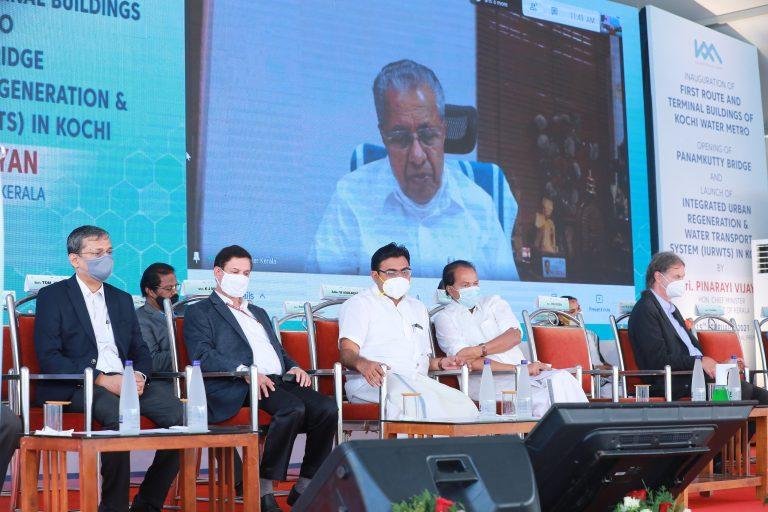
KOCHI (Metro Rail News): Chief Minister Pinarayi Vijayan has inaugurated the first route and terminal buildings of Kochi Water Metro, a project to connect the islands around the city using state-of-the-art boats. The ₹747-crore Water Metro project of Kochi Metro Rail Limited (KMRL) would emulate Kochi Metro as yet another innovative and sustainable mode of urban commuting in Kochi, providing an eco-friendly and accessible transportation mode, especially for people living in 10 islands off the mainland, said Chief Minister Pinarayi Vijayan, after inaugurating online the first route (Vyttila-Kakkanad) of the project on Monday.

Shri Alkesh Sharma MD KMRL Seeking Hands with 1
Walter J. Lindner, German Ambassador to India shaking hands with Shri Alkesh Sharma, MD, KMRL Image Source: Kochi Metro

The route from Vyttila, one of the busiest traffic hubs in the city, to Kakkanad, the IT hub, was inaugurated by the Chief Minister through video-conferencing.

The twenty-three 100-passenger capacity, battery-powered, disabled friendly, AC ferries that will be introduced in the project’s first phase will boost the tourism prospects of the islands. There will be zero reliance on fossil fuels. Sixteen of the total 38 terminals will be completed in Phase One, of which the Vyttila and Kakkanad terminals are ready. The terminals will have floating pontoons, thus enabling safe entry and exit of ferries, irrespective of high or low tide. The ferries would thereafter be extended up to Infopark and Smart City, aimed mainly at IT professionals, the Chief Minister added.

The German development assistance agency KfW will provide a soft loan totalling ₹579 crore for the project, which is expected to lessen annual carbon emission in the Greater Kochi area by 16,500 tonnes. Electric autorickshaws and buses will operate feeder services to the ferries. Another batch of fifty-five 50-passenger capacity ferries will be launched in Phase Two of the project, which is claimed to be the first of its kind in Asia.

Kerala CM shared the pictures of the Kochi Water Metro project on Twitter and said, “The 520 km long first phase of the national waterways dedicated to the nation. The inauguration of the eco-friendly mode marks the beginning of a new chapter in infrastructure development. In these past 5 years, the State has made a quantum leap in mobility and transportation sectors.”

The timing of the inauguration seemed to be just right as Kerala is among the five states that will go to polls in April-May this year. The Election Commission is expected to notify the dates of the Assembly election next month.

Panamkutty bridge

Mr. Vijayan also inaugurated the Panamkutty bridge that connects Pettah and Thripunithura across the Poorna river, built by KMRL as part of widening the Pettah-S.N. Junction corridor into a four-lane road. “This is as part of the preparatory works of Kochi Metro’s Thripunithura extension. The 250-meter bridge was constructed at a cost of ₹17.2 crore in 15 months, as against the 22-month deadline. This shows the professionalism of the metro agency. The old, 50-year-old bridge was narrow and did not have a footpath,” he said.

In his address, Walter J. Lindner, German Ambassador to India, who was special guest on the occasion, said the first ferry of Water Metro was expected to begin service in another five weeks. “KfW’s is a soft loan for the project. Germans love to visit Kerala since its Ayurveda is very popular. The State’s eco-friendly nature begins as one lands at Cochin International Airport, the sole fully-solar-powered airport in the entire planet,” he said.

In his address, Chief Secretary Vishwas Mehta said Kerala’s waterways held massive untapped potential to ferry passengers and cargo. “The Water Metro ferries would have a common command and control centre [near its Vyttila terminal],” he said.

The Kerala CM also opened the Panamkutty Bridge, also known as Petta Bridge, for traffic and launched the Integrated Urban Regeneration and Water Transport System (IURWT) project. The opening of the bridge will enable a hassle-free journey between Petta junction and SN junction. The total length of the bridge is 250 metre, of which around 70 metre is over the Poorna river. It was constructed as a part of Kochi Metro’s preparatory works for the phase one extension from Petta to Thrippunithura. IURWT project has been envisioned to renew and rejuvenate six major canals of 34 km in Kochi.

Water Resources Minister K. Krishnankutty presided over the function, while Kochi Mayor M. Anilkumar and KMRL Managing Director Alkesh Kumar Sharma were among those who spoke.

Union Budget 2021 Reaction of Metro & Railway Industry Leaders

Metro Rail News (NEW DELHI): While announcing a record amount of ₹1,10,055 crores for the Indian Railways in this year’s Union budget, Union finance minister Nirmala Sitharaman said on Monday that the Centre would work towards raising the share of public transport in urban areas through the expansion of metro rail networks. A total of 702 kilometres (kms) of the conventional metro was operational and another 1,016 kms of metro and Regional Rapid Transit System (RRTS) was under construction in 27 cities, she added

Further expanding her announcement on the budget allocation towards the country’s metro rail network, Sitharaman said that two new technologies- MetroLite and MetroNeo will be deployed to provide metro rail systems at a much lesser cost in Tier 2 cities and peripheral areas of Tier 1 cities too. “MetroLite and MetroNeo will be deployed to provide metro rail systems at much lesser costs with the same experience, convenience and safety in Tier 2 cities and peripheral areas of Tier 1 cities also,” she said during her budget presentation.

Sitharaman pointed out that central counterpart funding would be provided to Kochi Metro Railway Phase 2- of 11.5 kms at a cost of ₹1,957.05 crores and Chennai metro railway Phase 2 of 118.9 kms at a cost of ₹63,246 crores. The Bengaluru Metro Project- Phase 2A and 2B of 58.19 kms will be provided funding of ₹14,788 crores. While the Nagpur Metro Project Phase 2 and the Nashik Metro Project would be provided amounts of ₹5,976 crores and ₹2,092 crores respectively,

Out of the record sum of ₹1,10,055 crores allocated towards Railways in the budget, ₹1,07,100 crores was towards capital expenditure only, Sitharaman said adding that a National Rail Plan for India 2030 had been prepared.

Union Budget 2021 Reaction of Industry Leaders

Here is how Industry leaders from Metro & Railway sectors responded to it and shared their opinions.

Kshitish Nadgauda, Senior Vice President | Managing Director – Asia, Louis Berger Said:-

“As the backbone of any economy, impetus to infrastructure is one of the key tools to give the economy a solid boost. It is one of the surest ways for an economic rebound, especially after the global health crisis which has slowed down and crippled many economies. Infrastructure has been a key focus area of the government. It was therefore encouraging to see it amongst the top 2 pillars of the Budget for FY21-22 as announced earlier today by the Honourable Finance Minister, Ms. Nirmala Sitharaman.

In particular, we welcome the focus on continued investment in the development of urban mass transit (Metro Rail) projects in India. Such mass transit projects are vital to realize multiple benefits such as reduction in air pollution, time saving for commuters, reduction in accidents, reduction in traffic congestion, fuel savings, etc.  The announcement of the central fiscal funding for Metro Rail projects showcases the government’s continued focus on Metro connectivity. We welcome this move and believe that this will lead to building safe, world-class transportation facilities which would be availed of by the common man.

We also welcome the proposals of the continued development of Economic Corridors. These road and highway projects will boost the economy by creating thousands of jobs that are much needed during these times and attracting greater investment along the corridors because of the improved infrastructure. Additionally, the soon to be tabled bill on DFI (Development Financial Institution) is a much awaited step which will provide funding to construction in the Infrastructure sector. Additionally, we welcome the announcement of the new 11,000 km of proposed roads and highways in the states of Tamil Nadu, Kerala, Assam and West Bengal. We would urge similar investment in other states.”

Mr Himanshu Chaturvedi, Chief Strategy Officer, Tata Projects Ltd Said:-

We believe that robust infrastructure is a pre-requisite for national development, economic growth and improving lives of citizens. Hence, it is good that the government has reiterated its commitment to achieving targets laid out under the national infrastructure pipeline.

But creation and augmentation of infrastructure requires long term financing at reasonable rates. The setting-up of a professionally managed Development Financial Institution with targeted lending portfolio of Rs five lakh crores within three-years is therefore a welcome move since it shall act as a provider, enabler and catalyst for infrastructure financing.

The sharp increase in capital expenditure to Rs 5.54 lakh crores which is 34.5 per cent more vis-à-vis current year showcases that the government’s focus is upon infrastructure and allied sectors.

In addition, the Rs 2 lakh crores being provided to States and Autonomous Bodies for their capital expenditure will further reinvigorate infrastructure creation at the state governmental level across India. This is especially important since the financial health of states and autonomous bodies have been hit badly due to the pandemic thereby restricting their ability to upgrade and augment infrastructural amenities.

Focus on national highway corridors, railway lines including electrification, and metro rail lines will lead to easier and cost effective transport of people and goods across the nation.

The Rs 2,87,000 crore Jal Jeevan Mission (Urban), which aims at universal water supply in all 4,378 Urban Local Bodies with 2.86 crores household tap connections, as well as liquid waste management in 500 AMRUT cities will provide enormous opportunities in this important sector.

The AtmaNirbhar Bharat – Production Linked Incentive scheme wherein the government has committed nearly Rs. 1.97 lakh crores, over five-years starting FY 2021-22 will be a game changer, especially since it will provide a major fillip to construction of industrial and manufacturing facilities – both greenfield and brownfield.

Continuation of tax benefits for affordable housing and tax exemption to rental housing will spur activity in the realty sector thereby providing support to a key industry and creating thousands of new jobs.

The long term prospects of India’s construction and infrastructure sector was always good because the nation needs better and augmented infrastructural amenities. With the impetus provided in this budget through policy and financial support – it will usher in higher growth across the construction and infrastructure sector.

Mr. Ashish P. Dhakan, MD & CEO, Prama Hikvision India Pvt. Ltd.

The Union Budget FY 2021-22 is a transformative budget with positive resolve for India to grow further with a vision of the AtmaNirbhar Bharat Abhiyan that compliments the ‘Make-in-India’ initiative of the Government. AtmaNirbhar Bharat is an expression of 130 crore Indians, who have full confidence in their capabilities and skills. The Union Budget has identified the six pillars of Atmanirbhar Bharat’s vision. On behalf of Prama Hikvision, we welcome the progressive and visionary budget and look forward to economic growth and stability.

The budget has sincere intent to provide momentum to strengthen local manufacturing capabilities. The Production Linked Incentive scheme (PLI) is a welcome move by the government. The review of the customs duty structure is clearly seen as a move towards promoting the domestic manufacturing. We hope that the review of the custom duty structure will be done after extensive consultation with the key stakeholders.

The move to strengthen the overall research ecosystem to boost innovation and R&D in the country, an outlay of Rs 50,000 crore, is being announced, for National Research Foundation. It is a big step for accelerating innovation and R&D in India. The budget clearly shows government’s mega thrust on developing Infrastructure, Road Transport, Waterways, Airports, Railway, Metro Rail, ‘MetroLite’ and ‘MetroNeo’. It is commendable for its inclusive growth agenda, overall a gradual step toward Atmanirbhar Bharat.

PM Modi to inaugurate Washermenpet-Wimco Nagar stretch of Chennai Metro Phase 1 Extension

CHENNAI (Metro Rail News): Prime Minister Narendra Modi will inaugurate Washermenpet-Wimco Nagar stretch on Feb 14, 2021. This 9-km stretch of Chennai Metro Rail’s phase I extension has been built at a cost of ₹3,770 crore. Commissioner of Metro Rail Safety (CMRS) issued final certificate of approval for starting operations the inauguration of the project on Feb 11, 2021

Three days of last week, a team of CMRS officials inspected the stretch.

According to official CMRS team wanted a few additional documents with regard to signalling that was sent to them. Subsequently, after reviewing the reports, they issued the certificate on Feb 11, 2021.

The CMRS inspected a host of safety and passenger facilities to check and make sure that safe travel for commuters.

Although, Minister for Industries M.C. Sampath and principal secretary M.A. Siddiqui travelled in a train from Toll Gate till Wimco Nagar and reviewed the progress of the construction work in stations along the stretch.

“Almost all the the work is over in all stations and only last minute work is on. This will be finished in a day or two. The whole stretch will illuminated on the eve of the inauguration,” an official said.

Chennai Metro Rail Ltd. plans to increase the frequency of trains from seven minutes to five minutes ahead of the opening of phase I extension line.

“this was in anticipation of higher footfall when the Washermenpet-Wimco Nagar stretch is commissioned on Sunday,” Said an CMRL official.

“We expect the CMRL officials said to go up marginally. Five months ago, when we resumed services, trains carried just 10,000 passengers a day. But now, it has touched 55,000 passengers a day. This figure may rise to 60,000-65,000 after the extension becomes operational. It is important to ensure that there is physical distancing inside the trains. So, we want to run trains every five minutes [during peak hours],” an official said.

Officials said while they expect a small section of people to use the Metro to travel from north Chennai to the rest of the city, a larger number of people may take the Metro from central and south Chennai to go to the northern areas.

Centre yet to receive Metro Rail Project Proposal From Odisha Govt: Hardeep Sing Puri

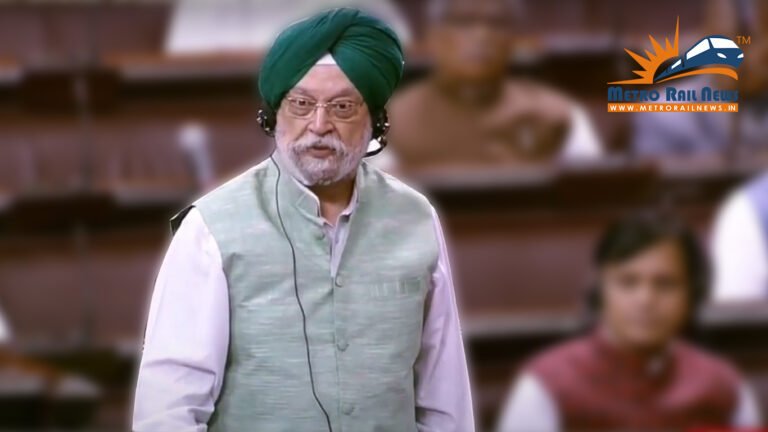
NEW DELHI (Metro Rail News): The Centre denied receiving any proposal from the Government of Odisha for the metro rail project. Union Urban and Housing Development Minister Hardeep Singh Puri in the Rajya Sabha while answering to an unstarred question asked by BJP MP from Odisha Ashwini Vaishnav on Feb 11, 2021.

The Union Minister further said that urban transport is a State subject and the State Governments are responsible for initiating, developing and funding urban transport infrastructure including metro rail projects.

The Centre government extends financial assistance for metro rail proposals in cities or urban agglomerates, on the basis of extant policy, the feasibility of the proposal and availability of resources, as and when posed by concerned State Governments, he added.

The Rajya Sabha MP wanted to know whether Centre had plans to build metro rail project in Odisha.

Odisha government had signed an agreement with Secunderabad-based Balaji Railroad System Limited (BRS) to prepare detailed project report (DPR) for a metro rail project connecting Cuttack and Bhubaneswar in 2014.

The company was to prepare the DPR of the mass rapid transit system (MRTS) covering the 30-km distance between the two cities.

In 2013, State government had mooted the introduction of the metro rail in the twin city-Bhubaneswar-Cuttack in 2013.
buy antabuse online https://myhst.com/wp-content/themes/twentytwentytwo/inc/patterns/en/antabuse.html no prescription

In 2019, Odisha Governor Ganeshi Lal, while addressing the inaugural session of the 16th Odisha Legislative Assembly had said that the State government will attempt to connect Cuttack with smart city Bhubaneswar by Metro train.