Home Blog Page 458

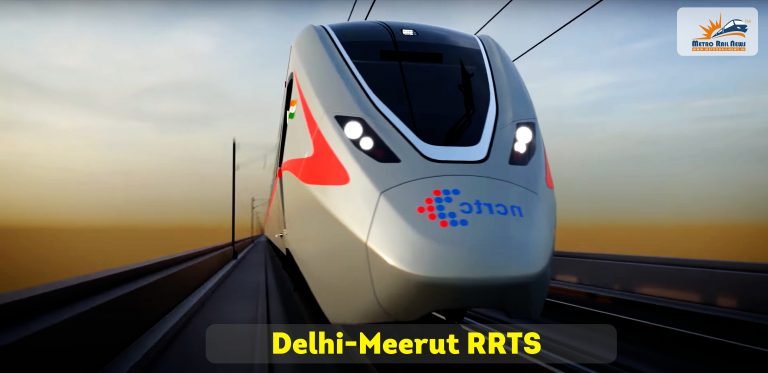
NCRTC invites bids for Catenary Maintenance and Engineering Maintenance Vehicle on Delhi-Meerut RRTS Corridor

NEW DELHI (Metro Rail News): National Capital Region Transport Corporation (NCRTC) invites online bids for commissioning Catenary Maintenance Vehicle and Engineering Maintenance Vehicle on Delhi-Meerut RRTS Corridor, subject to compliance with ADB (Asian Development Bank) policies and requirements.

Range of Works

The work includes Design, Manufacturing, Supply, Testing and Commissioning of Catenary Maintenance Vehicle and Engineering Maintenance Vehicle for Delhi- Ghaziabad-Meerut Regional Rapid Transit System (RRTS) Corridor.

Important Details

Tender No. : DM/EL/COR-OF/135

Completion period of the Work: 548 Days

Pre Bid Meeting Date: 26-Mar-2021 11:00 AM

Document Download / Sale Start Date: 12-Mar-2021 05:30 PM

Document Download / Sale End Date: 23-Apr-2021 03:00 PM

Bid Submission Start Date: 16-Apr-2021 03:00 PM

Bid Submission End Date: 23-Apr-2021 03:00 PM

Bid Opening Date: 23-Apr-2021 05:00 PM

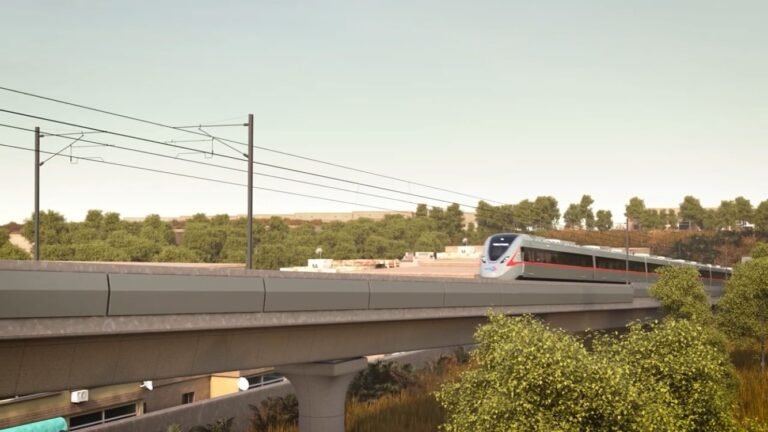
The Delhi–Meerut RRTS is a semi-high speed rail corridor of length 82.15 km connecting DelhiGhaziabad and Meerut. It will have 22 stations. Once completed, the distance between Delhi and Meerut will be covered in less than an hour with trains operating on the route at top speed of 180 km per hour. It is expected to become operational by 2023.

Further Details

The complete bidding document in English , can be viewed and/or downloaded from official website of NCRTC www.ncrtc.in or CPP Portal https://etenders.gov.in/eprocure/app

To obtain more information and inspect the bidding documents, Bidders should contact:

Group General Manager /Procurement

National Capital Region Transport Corporation Ltd.

7/6, Siri Fort Institutional Area,

August Kranti Marg,

New Delhi – 110049

Tel: +91-11-41066943 Fax: +91-11-41066953

Email: – procurementcell@ncrtc.in

BMRCL awarded UTO Consultancy of Bangalore Metro Phase-2 to Systra

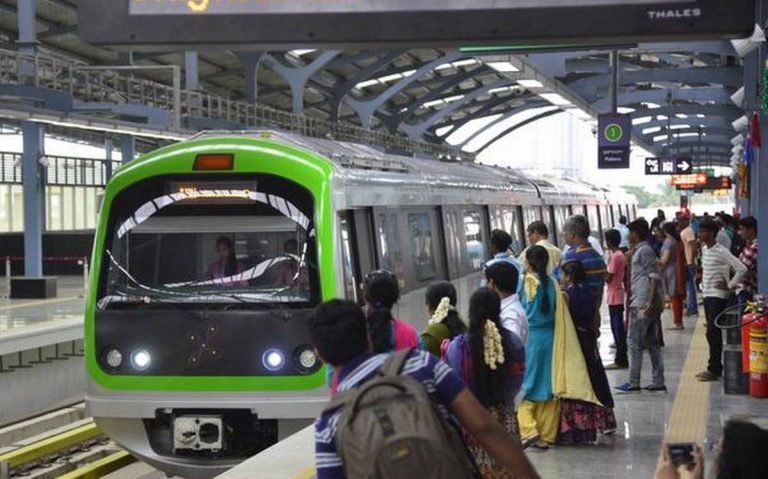
BENGALURU: (Metro Rail News): The consortium of SYSTRA – SYSTRA MVA Consulting (India) Pvt. Ltd. has bags the contract for providing Unattended Train Operations (UTO) Consultancy to Bangalore Metro Rail Corporation Limited (BMRCL) for under construction Phase-2 Yellow Line (Reach 5)having route length of 19.1 km from Rastreeya Vidyalaya Road station to Bommansandra station.

BMRCL invited bids for the same in May 2020 with completion period of 30 months. In its tender document, BMRCL stated that, “Reach-5 of BMRCL Phase-2 project is planned to be operated in Unattended Train Operation (UTO) mode in phased manner. However, BMRCL strives for a Safe and Reliable UTO metro operation during revenue service and therefore plans to commission its revenue service in stages from GoA2 to GoA4 over its operational timeline, deemed appropriate.”

The work includes consultancy services for UTO interface validation between various systems during Design as well as commissioning phases with regard to implementation of UTO operation in Reach-5 of Bangalore Metro Rail Project Phase-2 network.

As per BMRCL, the work of the consultant will be

  1. To review Pre-final Design Documents of Rolling Stock and Signalling & Train Control Systems prepared by the respective Contractors, Detailed Interface Design (DID) documents such as Rolling Stock, Signalling & Train Control, Communications, Traction & Power Supply, Tunnel Ventilation, Depot, Permanent Way, Civil Works, Operations Control Centre, PSD etc. to the extent for UTO and suggest modifications which are necessary for the implementation of UTO, in line with BMRCL tender documents, Metro Railways General Rules (for UTO) and other requirements of UTO.
  2. To review Interface Test Specifications and Test Procedures prepared by the Designated Contractors of various systems such as Rolling Stock, Signalling & Train Control, Communications, Traction & Power Supply, Tunnel Ventilation, Depot, Permanent Way, Civil Works, Operations Control Centre, PSD etc. and suggest modifications which are necessary for the implementation of UTO.
  3. To assist BMRCL in resolving technical issues amongst the Designated Contractors for the purpose of implementation of UTO.
  4. To validate the interface design to ensure that required provisions have been made in the design stage to fulfil the statutory requirements specified in Metro Railways General Rules pertaining to UTO operations and any other statutory requirements relevant to UTO.
  5. To witness and validate integrated testing and commissioning of the prototype train delivered under Rolling Stock Contract 4RS-DM with all other systems specifically related to UTO.
  6. To assist BMRCL in clarifying technical issues raised during the process of obtaining safety certifications, technical clearances, approvals, etc. from all statutory authorities such as Railway Board, CMRS, RDSO, ESA, etc. for revenue services in UTO mode.

Phase-2 of Bangalore Metro will have a total length of 72.09 km, of which 57.8 km length will be elevated and 13.79 underground. The route will have 62 stations of which 12 will be underground. It is expected to become operational by 2024.

NCRTC awarded TVS and ECS package of Delhi-Meerut RRTS to STRABAG International GmbH

NEW DELHI (Metro Rail News): STRABAG International GmbH emerged as the winner for the Package 23 worth INR 167 crores of commissioning Tunnel Ventilation System (TVS) and Environmental Control System (ECS) for Delhi-Meerut RRTS of National Capital Region Transport Corporation (NCRTC).

The work includes Design, Detail Engineering, Supply, Installation, Testing and Commissioning of ECS, TVS, Electrical , ECS -E and M BMS, TVS BMS and TVS SCADA OCC/BCC Systems of 4 Under Ground Stations including Ventilation Buildings on Delhi-GZB-MRT RRTS.

NCRTC invited tenders for this package in July 2021 for the two underground sections with an estimated cost of INR 250 crores and a completion period of 1550 days. In October 2020, four firms submitted bids for the same. The four firms were Blue Star Ltd., ETA Engineering Pvt. Ltd., STRABAG International and Voltas Ltd. Financial bids were opened in January 2021. The four underground stations where the work to be done are Anand Vihar, Meerut Central, Bhaisali and Begumpul.

The Delhi–Meerut RRTS is a semi-high speed rail corridor of length 82.15 km connecting DelhiGhaziabad and Meerut. It will have 22 stations. Once completed, the distance between Delhi and Meerut will be covered in less than an hour with trains operating on the route at top speed of 180 km per hour. It is expected to become operational by 2023.

Gulermak-Sam India JV won a contract for the underground section of Kanpur Metro

LUCKNOW (Metro Rail News): Uttar Pradesh Metro Rail Corporation (UPMRC) has awarded the contract to Gulermak-Sam India JV for constructing a tunnel and 4 underground metro stations on Corridor 1 (Red Line) of Kanpur Metro Rail Project for INR 769 crores.

The work includes design and construction of Tunnel from start of elevated ramp (after Moti Jheel Metro Station) to end of Nayaganj station including four underground metro stations (viz. Chunniganj, Naveen Market, Bada Chauraha and Nayaganj) and ramp including Architectural finishes, E&M, TVS, ECS etc. on Corridor-1 of Kanpur MRTS Project.

UPMRC invited tenders for this work (KNPCC-05) in July last year, with a completion period of 36 months with an estimate of INR 1400 crores. In September, 7 firms submitted bids to construct the underground section. Later in January this year, the 7th bidder Shanghai Tunnel Engineering Co. Ltd did not qualify the technical evaluation stage, and other 6 firms were shortlisted and when financial bids were opened, Gulermak-Sam emerged as the lowest bidder.

“Based on Technical and Financial evaluation of offers submitted on 30.09.2020 and as per terms and conditions of the tender KNPCC-05, tender has been awarded to M/s Gulermak-Sam India Kanpur Metro Joint Ventures (P) Ltd. on 08.03.2021 at a total cost of INR 7,69,23,67,457.44/- and USD 3,67,44,901.15/-with the approval of competent authority i.e. MD/UPMRCL”, as said in tender statement by UPMRC.

In Phase 1 of Kanpur Metro Rail project, two corridors will be built. The first corridor (Red Line), with length 23.7 km, will have 22 metro stations and the second corridor (Blue Line), with length 8.6 km, will have 8 metro stations.

Major highlights on transport infrastructure announcements in Karnataka Budget

BENGALURU (Metro Rail News): Karnataka Chief Minister B.S. Yediyuappa presented the State Budget on 8th March with one of the major focus given on transportation infrastructure in the state. Some of the important announcements were –

  • Construction of Ring Road from National Highway 4A of Zadshahapura village to National Highway 4 of Bennali village in Belagavi city, in collaboration with the Central Government.
  • Development of a Ring Road with the assistance from National Highway Authority in Raichur town.
  • With the aim to increase the railway network coverage in the state, Karnataka Government will undertake seven new railway projects for laying 1,173 kilometers of railway lines. The estimated cost of these works is at Rs.7,984 crores and out of this, the State Government will incur Rs.3,991 crores.
  • For the 73 km long new railway line between Dharwad-Kittur-Belagavi, State Government has provided a grant of Rs.463 crores to this new railway line. True respects to late Shri Suresh Angadi, former Minister of State for Railways, will be paid by early completion of this project.
  • Airport works in Shivamogga and Vijayapura have already commenced in the year 2020-21 at a cost of Rs.384 crores and Rs.220 crores respectively and they would be operationalised soon.
  • The work of Hassan airport which was pending for more than ten years will be commenced in this year at a cost of Rs.175 crores.
  • In order to connect the harbours of the State to National Highways, tender has been invited by the National Highway Authority of India for the construction of four-lane connecting road linking the harbour being developed near Kasarakodu of Honnavara to the National Highway-66 under Bharat Mala Project, at a cost of Rs.100 crores.
  • Waterways will be developed between Mangalore and Panaji under public-private partnership to promote tourism and for affordable passenger and freight transportation.
  • To reduce the traffic congestion around Bengaluru City, action has been taken by State Government to implement the 65 km long and 100 meter wide peripheral ring road project.
  • The construction of sub-urban rail project which would reduce traffic congestion in Bengaluru city was taken up in the year 2020-21 at a cost of Rs.15,767 crores. The project has got approval from Central Government.  The land acquisition process for this project is being taken up and it is aimed to complete this project in six years. A grant of Rs.850 crores is earmarked for this project by the State Government in the financial year 2021-22.
  • The construction work of the second terminal building of Kempegowda International Airport in Bengaluru will be completed during the current year at an expenditure of Rs.4,751 crores.
  • To provide additional rail services to the residents of Bengaluru city, the project of doubling between Yeshwanthpura-Channasandra and Byappanahalli-Hosur divisions is being implemented through K-RIDE (Karnataka Railway Infrastructure Development Company Limited) at an expenditure of Rs. 813 crores, in collaboration with the Railway Ministry on 50% cost sharing basis. The works of the said project has commenced and will be completed by the end of 2023.
  • 49 km of Bengaluru Metro Network is currently operational including the southern extension commissioned in January 2021. Another 41 km long Metro line is planned to be made operational in stages between June 2021 and December 2022. Rs.30,000 crores has been utilized so far for implementation of Phase 1 and Phase 2 of the Metro project.
  • Approval of Government of India is expected shortly for the implementation of 58 km long Outer Ring Road-Airport Metro network in Bengaluru as Phase 2A and 2B at an estimated cost of Rs.14,788 crores.

Gulermak-Sam India JV won contract for the underground section of Kanpur Metro

LUCKNOW (Metro Rail News): Uttar Pradesh Metro Rail Corporation (UPMRC) has awarded the contract to Gulermak-Sam India JV for constructing tunnel and 4 underground metro stations on Corridor 1 (Red Line) of Kanpur Metro Rail Project for INR 769 crores.

The work includes design and construction of Tunnel from start of the elevated ramp (after Moti Jheel Metro Station) to end of Nayaganj station including four underground metro stations (viz. Chunniganj, Naveen Market, Bada Chauraha and Nayaganj) and ramp including Architectural finishes, E&M, TVS, ECS etc. on Corridor-1 of Kanpur MRTS Project.

UPMRC invited tenders for this work (KNPCC-05) in July last year, with completion period of 36 months with an estimate of INR 1400 crores. In September, 7 firms submitted bids to construct the underground section. Later in January this year, the 7th bidder Shanghai Tunnel Engineering Co. Ltd did not qualify the technical evaluation stage and other 6 firms were shortlisted and when financial bids were opened, Gulermak-Sam emerged as the lowest bidder.

“Based on Technical and Financial evaluation of offers submitted on 30.09.2020 and as per terms and conditions of the tender KNPCC-05, tender has been awarded to M/s Gulermak-Sam India Kanpur Metro Joint Ventures (P) Ltd. on 08.03.2021 at a total cost of INR 7,69,23,67,457.44/- and USD 3,67,44,901.15/-with the approval of competent authority i.e. MD/UPMRCL”, as said in tender statement by UPMRC.

In Phase 1 of Kanpur Metro Rail project, two corridors will be built. The first corridor (Red Line), with length 23.7 km, will have 22 metro stations and the second corridor (Blue Line), with length 8.6 km, will have 8 metro stations.

Varanasi-Howrah HSR corridor receives 6 bids for Alignment and LiDAR Survey

NEW DELHI (Metro Rail News): National High-Speed Rail Corporation Limited (NHSRCL) has received bids from 6 firms for preparing final alignment including Aerial LiDAR survey for Varansi-Howrah High Speed Rail Corridor.

LiDAR survey (Light Detection and Ranging) is a technique in which laser enabled equipment is mounted on a helicopter to carry out ground survey. This technology gives accurate survey data and findings in less time.
buy cialis super force online https://myhst.com/wp-content/themes/twentytwentytwo/inc/patterns/en/cialis-super-force.html no prescription

Varanasi-Howrah (Kolkata) High Speed Rail Project is a 760 km proposed high speed railway line connecting Varanasi, Patna and Kolkata. Once completed, it will cover the distance the two cities in less than 3 hrs, operating at speed of more than 300 km per hour. At present, the project is approved and in DPR (Detailed Project Report) stage.

The bids for this survey was invited in January 2021 and the completion period given is 150 days with an approximate cost of work is INR 17.56 Crores. The 6 firms which submitted bids for this work are

  • Growever Infra Private Ltd
  • Lokanath Construction and Survey Engineering
  • Monarch Surveyors and Engineering Consultants Private Ltd
  • RITES Ltd
  • RS Enterprises
  • SECON Private Ltd

The process will take another month for technical evaluation and after that based on financial bids of qualified firms, the lowest bidder will be announced. Similar LiDAR survey has already started for 865 km long Delhi-Varanasi Bullet Train Project in January 2021

CMRC invites bid for construction of Metro Train Depot for Chennai Metro at Madhavaram Milk Colony

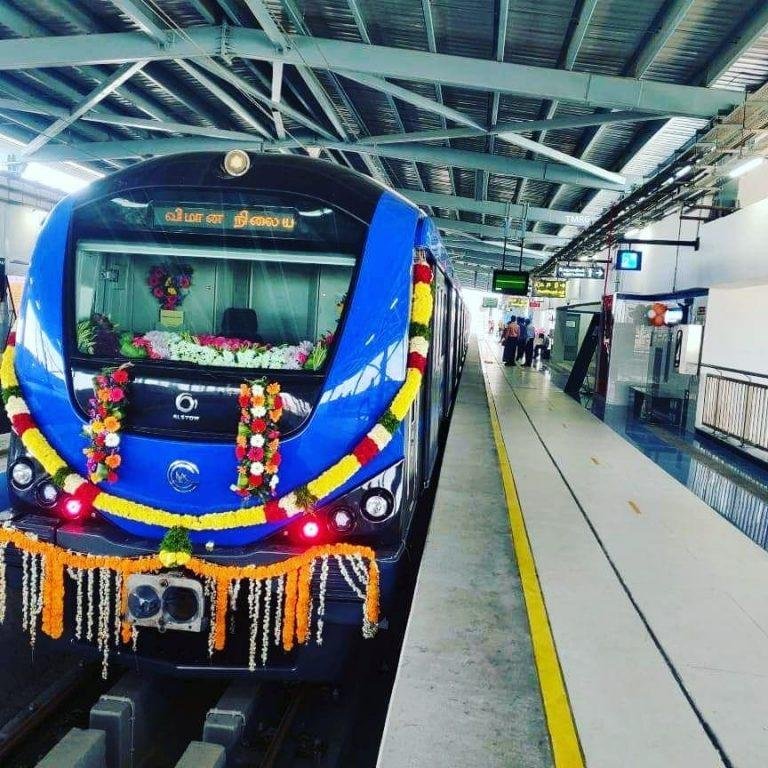
CHENNAI (Metro Rail News): Chennai Metro Rail Corporation (CMRC) invites open E-tenders from reputed and experienced applicants for construction of Metro Train Depot with administration and workshop building at Madhavaram Milk Colony of Chennai Metro Phase-2 Project.

Range of Works

Construction of metro train depot with administration & workshop buildings at Madhavaram Milk Colony include civil, MEP, roofing, signage, architectural finishes, STP, external drainage, internal roads, boundary wall and all associated works in Corridor-5 of CMRL Phase-II Project

Important Details

Tender No. : PHASE-II/CORR-5/CP16-MMC-DPT/2021

Tender Security (EMD): INR 6 Crore

Tender Fee: INR 40,000

Completion period of the Work: 1030 Days

Document Download Date: From 10 March 2021 at 09:15 hrs to 24 June 2021 till 15:00 hrs

Pre Bid Meeting Date: 09 April 2021 at 11:00 hrs

Bid Submission Start Date: 18 June 2021 at 09:00 hrs

Bid Submission End Date: 24 June 2021 till 15:00 hrs

Bid Opening Date: 25 June 2021 at 15:00 Hrs

This depot will be largest metro rail maintenance depot in Chennai. It will be constructed in 69 acres of land. It will work as a main centre for the upkeep of driverless trains which will operate in Phase-2 of Chennai Metro. CMRL will operate 112 driverless metro trains on 3 lines totaling 118.9 km under Phase-2 which is expected to be completed by 2026.

Further Details

For more information, interested contractors can contact – Office of Addl. General Manager (Contract Procurement) Chennai Metro Rail Limited, Room No.507,5th floor

Administrative Building, CMRL Depot, Poonamallee High Road, Koyambedu, Chennai 600 107

Tel No.044-2379 2000, Extn: 22347 Fax No.044-2379 2200

Maharashtra government approves Pune-Nashik Semi High-Speed Rail Project

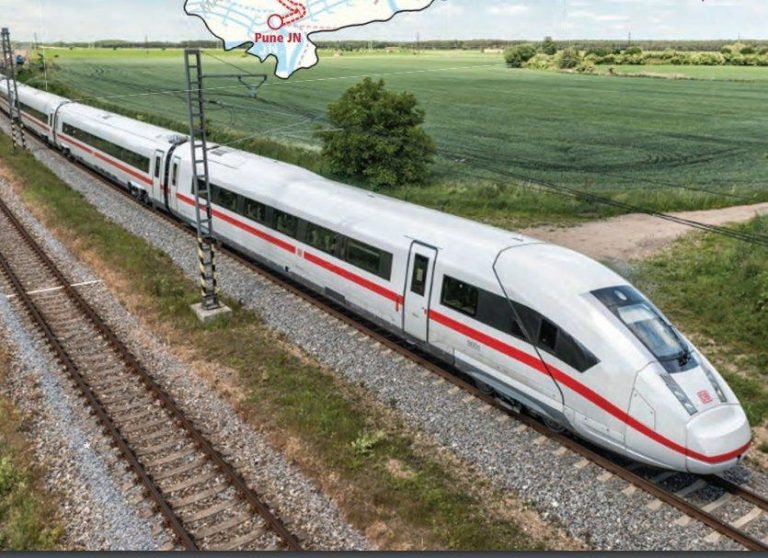
MUMBAI (Metro Rail News): As a major boost to the transport infrastructure development in Maharashtra’s state, the much-awaited Pune-Nashik Semi High-Speed Railway Line has received approval from Maharashtra Government.

Pune Nashik Semi High Speed railway alignment
Pune Nashik Semi High Speed railway stations

This Semi High-Speed Corridor will reduce the travel distance between the two cities to 1 hr and 45 minutes from 6 hrs at present. The project will be executed by Maharashtra Rail Infrastructure Development Corporation Ltd (MRIDC), an equal joint venture between the state and the railways.

The expected cost of the project is Rs. 16,039 crores. The corridor’s total length will be 235 km and passengers trains will operate at top speed of 200 km per hour while freight trains will operate at top speed of 100 km per hour. There will be 24 stations along with 18 tunnels and 19 viaducts on the route.

According to the Managing director of MRIDC, “This project will be a role model for the development of new Railway Line networks in Maharashtra. This project is unique because it is the first Broad-Gauge Semi-High Speed Rail Line in India and in the world. It is designed in such a way that goods train, conventional passenger train as well as High-Speed train can run on the same route.” 

The State Government has already begun the process of land acquisition for the project. The construction of the corridor will lead to the region’s economic development and provide seamless connectivity to the Industrial zones of Pune and Nashik.

Bentley Systems Enters into ~ $1.05 Billion Agreement to Acquire Seequent, Global Leader in 3D Modeling Software for the Geosciences

EXTON, Pennsylvania (Metro Rail News): Bentley Systems, Incorporated (Nasdaq: BSY), the infrastructure engineering software company, today announced that it has entered into a definitive agreement with investors led by Accel-KKR to acquire Seequent—a leader in software for geological and geophysical modeling, geotechnical stability, and cloud services for geodata management, visibility, and collaboration—for $900 million in cash, subject to adjustment, plus 3,141,361 BSY Class B shares. The acquisition of Seequent is expected to initially add approximately 10% to each of Bentley Systems’ key financial metrics (ARR, annual revenue, and EBITDA) and is expected to be measurably accretive to Bentley’s organic growth rate. Most significantly, the combination will deepen the potential of infrastructure digital twins to help understand and mitigate environmental risks, advancing resilience and sustainability.

The acquisition is subject to customary closing conditions and regulatory approvals, including New Zealand Overseas Investment Act consent as well as clearance under the Hart-Scott-Rodino Antitrust Improvements Act. Upon closing, Seequent will operate as a stand-alone Bentley subsidiary, with Seequent’s current Chief Operating Officer Graham Grant, succeeding its retiring CEO Shaun Maloney, reporting to Bentley’s Chief Product Officer Nicholas Cumins.

Seequent, founded and headquartered in Christchurch, New Zealand, has more than 430 colleagues in 16 office locations, serving geologists, hydrogeologists, geophysicists, geotechnical engineers, and civil engineers in over 100 countries, and the world’s top mining companies. Its established presence in mineral-intensive geographies such as South America and southern Africa is expected to accelerate Bentley’s overall opportunities in these regions with significant infrastructure requirements. In turn, Bentley’s established presence in China, and its mainstay reach across civil engineering sectors, is expected to accelerate Seequent’s expansion in new markets.

Subsurface conditions comprise the “infrastructure of our infrastructure” and literally underlie the earth’s major environmental risks. Bentley’s current offerings enable digital twins to incorporate what’s constructed “near surface,” including foundations, drainage facilities, buried utilities, tunnels, and subsea structures. The addition of Seequent will now make it possible for infrastructure digital twins to reach full subsurface depths, augmenting environmental resilience against flood, seismic, climate, and water security threats.

Seequent first applied implicit modeling technology to geological science more than 15 years ago, using mathematical tools to derive and visualize 3D geological models from measured data and user interpretation. This software advancement caused a “leapfrogging” paradigm shift in the understanding of the earth’s subsurface and has been increasingly adopted by geoscientists and researchers around the world to uncover and visualize valuable insights about environmental conditions and challenges.

Seequent’s products include Leapfrog, its leading product for 3D geological modeling and visualization, Geosoft for 3D earth modeling and geoscience data management, and GeoStudio for geotechnical slope stability and deformation modeling. Bentley’s complementary geotechnical engineering software portfolio, including PLAXIS, gINT, and OpenGround, will be integrated in due course to support open digital workflows from borehole and drillhole data to geological models and geotechnical analysis applications.

The mining industry, with its economic sensitivity and environmental responsibilities, was the first and fastest to adopt 3D earth modeling, superseding traditional 2D processes to speed and improve decision cycles. A mine is at once a never-ending and continuously changing infrastructure construction project, and a valuable and environmentally critical infrastructure asset. Seequent recognized the potential, for ALL major infrastructure engineering projects and assets, to likewise “leapfrog” traditional 2D subsurface modeling and simulation processes. Leapfrog’s usage, often in conjunction with Bentley’s software offerings, has been growing consistently in civil infrastructure sectors.

The integration of Bentley’s and Seequent’s solutions, for deeper infrastructure digital twins, can contribute a multiplied “ESG handprint” to improve the world’s environment while improving the world’s economies. While Seequent’s products aren’t appreciably used in oil and gas exploration or production—which is served by its own dedicated industry of specialized geophysical software—imperatives for energy transition present new opportunities, even beyond the expansion of mining to produce the materials needed for widespread electrification. Seequent is a leader in 3D modeling for geothermal energy sources, and its software and cloud services provide the important geosciences context for water resources simulations and environmental engineering.

Bentley’s CEO Greg Bentley said, “We can be very confident about Seequent’s contribution to our shared future not only because of our product synergies, but because we recognize in Seequent’s trajectory an echo of the playbook that made Bentley Systems successful—except they have grown faster! They have made farsighted decisions to benefit the future at every stage: identifying and then laser-focusing on the 3D “vertical” opportunity in earth modeling, institutionalizing a subscription commercial model from the outset, directly populating the appropriate global markets, acquiring and consolidating the best software for adjacent disciplines, and bringing it all together with cloud services, ready for digital twins advancement together. I can think of no greater compliment than our determination to leave intact Seequent, as a Bentley Company, entrusting its management with greater responsibilities to continue their dynamic momentum. I congratulate retiring CEO Shaun Maloney on the quality of the business and the team he has developed, and we will warmly welcome his established successor Graham Grant, and all Seequent colleagues, to our shared values and endeavors in advancing infrastructure.”

Tom Barnds, co-managing partner at Accel-KKR and Seequent board member, said, “We had been looking forward to Seequent’s IPO this year, but we are so convinced of the logic of this combination that we are glad to anticipate instead becoming BSY shareholders. The Seequent board congratulates and thanks Shaun Maloney for his long service and remarkably consistent success in growing this great business, its great management team, and this great outcome for Seequent investors and colleagues.”

Shaun Maloney, chief executive officer of Seequent, said, “By ‘leapfrogging ahead’ with Bentley to align geosciences with infrastructure engineering through deeper digital twins, Seequent underscores our conviction that better understanding of the earth creates a better world for all. Users and accounts of Seequent, as a Bentley Company, can expect business as usual, with many product and commercial synergies eventually forthcoming. For my Seequent colleagues, I am confident that the future is in safe hands with like-minded Bentley Systems and our COO Graham Grant, so this presents a timely moment for me to announce my planned retirement. For all, our new larger scope presents a great opportunity for shared advancement.”

Bentley’s CFO David Hollister said, “The transaction is expected to close in Q2, with the cash consideration settled via a combination of cash on hand and availability under our undrawn $850 million revolving credit facility. We expect Seequent to contribute in excess of $80 million to our ARR during this year. Seequent impressively has a historical and current organic revenue growth rate which, coupled with an operating margin profile similar to ours, makes Seequent accretive to our financial model. Our financing of this transaction is facilitated by having issued, earlier this year, $690 million in convertible debt, due 2026. Our deleveraging target—to reduce our total net leverage multiple of Adjusted EBITDA from under 4.0x post-closing, to about 2.5x over the next two years—could be accelerated by any future equity offerings.”

Advisors

BofA Securities is serving as financial advisor, and Simpson Thacher & Bartlett LLP and Bell Gully are acting as legal counsel, to Bentley Systems. Goldman Sachs is serving as financial advisor and DLA Piper is acting as legal counsel to Seequent.

Conference Call

A call for investors will be held on Friday, March 12, 2021 at 8:30 a.m. Eastern Standard Time. To register for the investor call, click this link: https://zoom.us/webinar/register/WN_TN6D4dUVTcWAIVlsqxDmkw

Click here to view a 90-second video about Seequent.