Home Blog Page 453

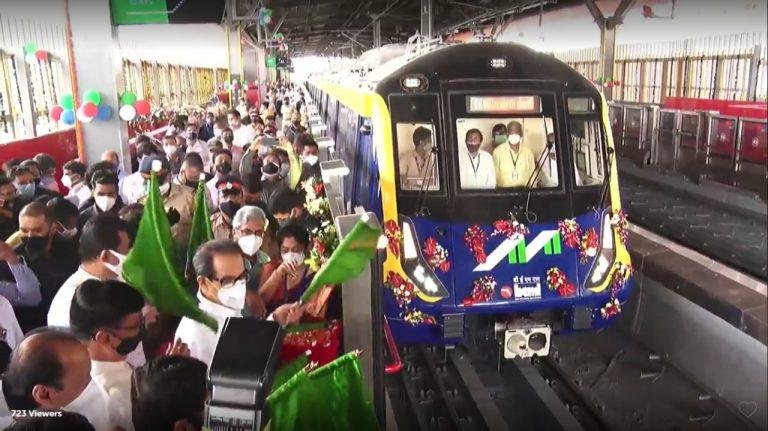
CM Uddhav Thackeray flags off trial run for Mumbai Metro 2A & 7 corridors

MUMBAI, INDIA (Metro Rail News): On Monday, Maharashtra Chief Minister Uddhav Thackeray flagged off trial runs for the city’s two new metro train lines, Metro 2A and 7, on the Charkop-Dahisar-Aarey route.

The metro is expected to be fully operational and available to the general public around four months after the trial run i.e. the initial phases of Metro-2A (Dahisar-Aarey) and Metro-7 (Dahanukarwadi-Aarey) starting in October 2021

When the metros open to the general public, a daily average of 9 lakh passengers would be able to travel. Commuters from Adheri to Dahisar are expected to benefit from this metro service since it will make travel easier and local trains will no longer be the main mode of public transportation. The construction of these metro lines is also expected to reduce congestion on western freeways and in western native.

Each metro practice might have six coaches, one of whom would be assigned to the females. Aside from the one ladies’ coach, four seats in each compartment may be dedicated for women.  The metro fare would range from Rs 10 for short distances and Rs 80 for long distances. The metro may be free of air pollution.

According to environmentalists, this is a good example of how two or more metro lines may cohabit in a single carshed. The green brigade is challenging the state of the Kanjurmarg composite carshed, which is intended for at least three metro rail lines – Metros 3, 4, and 6.

Metros 2A and 7 will temporarily share a carshed at Charkop for the time being. The Bombay High Court is considering a dispute about land title in Kanjurmarg. According to the Centre, the Kanjurmarg site belonged to its salt department. According to the Mumbai Metropolitan Region Development Authority (MMRDA), the 102 acres of land at the site are needed to build the carshed for metro lines 3, 4, and 6, as well as an interchange station for the projected line 14 with line 6.

“If there is a delay in acquiring land for the carshed in Kanjurmarg, it would have an impact on the metro train projects,” said environmental activist Zoru Bhathena.

The MMRDA is battling to acquire around 136 hectares of property for several metro train tracks interconnecting the city, including Dahisar (26 hectares), Mankhurd (30 hectares), Kanjurmarg (40 hectares), and Thane (40 hectares). The only easily accessible land piece is at Charkop (25 hectares), where the metro rail coaches of Metro 7 on Andheri (E)-Dahisar (E) and Metro 2A on Dahisar (W)-DN Nagar would first be stabled.

The Maharashtra government issued a notification in March to change the reservation for the metro car depot and casting yard in the Development Plan (DP) 2034. “The property should be granted in the wider public interest, as projects are being delayed,” says Stalin D, director of the NGO Vanshakti.

According to MMRDA sources, even in Charkop, there is a limit of 25-27 rakes. More property in Dahisar East, which has been earmarked for the Metro 7 line, will be required.

Uddhav Thackeray is live from Akurli Metro Station to flag off the path run of Metro ‘2A’ and ‘Metro-07’                         https://www.pscp.tv/w/1YqGoyQnVqlxv  click to watch live                
Chennai Metro invites tender for track works on Corridor-3 under Phase-2

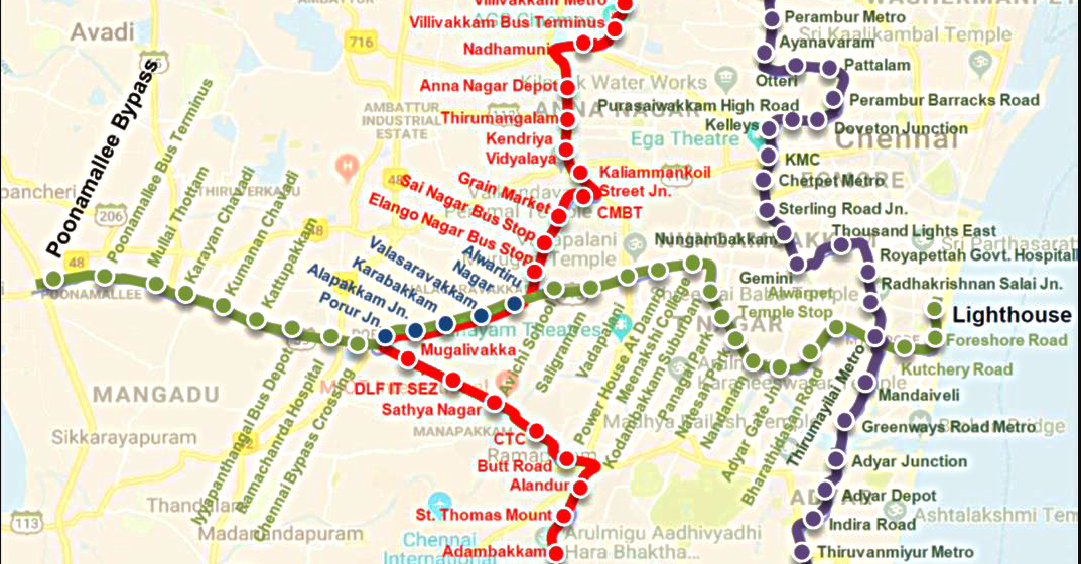
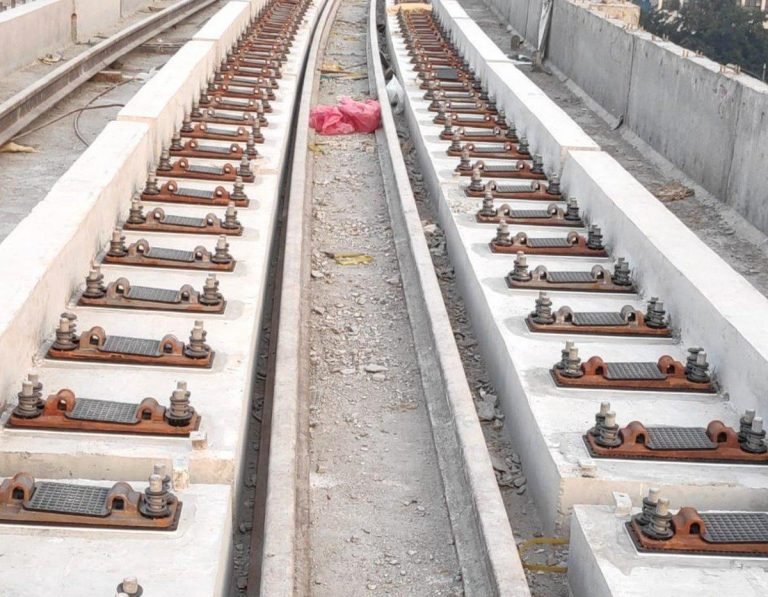
CHENNAI (Metro Rail News): Chennai Metro Rail Limited (CMRL) invites tender through e-procurement portal from reputed, experienced and eligible applicants for the supply and commissioning of Track works of Standard gauge for Corridor-4 which runs from Light House Station to Poonamalle Bypass Station including Poonamalle Depot under Phase-2 of Chennai Metro.

Important Details –

Tender Number – CMRL/CON/PHASE-II/C4-TRK-01/2021

Name of Work – Supply, installation, testing and commissioning of Track works of Standard gauge including all associated works in Underground and Elevated sections between Light House Station and Poonamalle Bypass Station and Poonamalle Depot in Corridor-4 of Chennai Metro Rail Project- Phase-2.

Period of Work – 1610 Days

Pre Bid Meeting Date – 06-Jul-2021 11:00 AM 

Document Download Start Date – 28-May-2021 09:00 AM

Document Download End Date – 19-Aug-2021 03:00 PM

Bid Submission Start Date – 13-Aug-2021 09:00 AM

Bid Submission End Date – 19-Aug-2021 03:00 PM

Bid Opening Date – 20-Aug-2021 03:00 PM

For more information and details on scope of work, tender documents can be downloaded by applicants from the CPP Portal – http://eprocure.gov.in/eprocure/app

Corridor-4 of Chennai Metro Rail Project under Phase-2 comprises construction of 26.1 km long corridor connecting Light House with Poonamallee with 28 stations on the route. The corridor will be both elevated and underground (18 elevated & 10 underground stations) with 16.03 km will be elevated while 10.07 km to be underground.

Stations to be built for Corridor-4 are Light House, Kutchery Road, Thirumayilai Metro, Alwarpet, Bharathidasan Road, Adyar Gate Junction, Nandanam, Panagal Park, Kodambakkam Sub Urban, Meenakshi College, Power House, Vadapalani, Saligramam, Avichi School, Alwarthirunagar, Valasaravakkam, Karambakkam, Alapakkam, Porur Junction, Chennai Bypass Crossing, Ramachandra Hospital, Iyyapanthangal Bus Depot, Kattupakkam, Kumananchavadi, Karayanchavadi, Mullai Thottam, Poonamalle bus terminus, Poonamallee Bypass and  Poonamallee Bus Depot

Recently, CMRL awarded two contracts for this corridor which includes elevated package C4-ECV-01 of length 7.9 km and elevated package C4-ECV-02 of length 7.9 km being awarded to Larsen & Toubro (L&T) and Hindustan Construction Company Ltd. – KEC International Consortium respectively. Work on this total awarded stretch of 15.8 km is likely to begin in a month. Period of completion for both contracts is 2.9 years and 3 years respectively.

Phase-2 of Chennai Metro comprises construction of three lines covering a total of 118.9 km to be built at a cost of INR 61,843 crores with all three corridors are expected to be operational by the year 2026.

Chennai Metro Phase 2 Work starts with a tender for track works

CHENNAI (Metro Rail News): The majority of the city’s infrastructure projects are being hampered by the second Covid wave and a labour shortage, but the Chennai metro rail’s phase-2 project is moving forward, with Chennai Metro Rail Limited (CMRL) issuing a tender to lay tracks connecting the city’s core localities like T Nagar and Vadapalani with the IT hub in Porur and the Poonamallee bypass.

These areas are part of the 26.1km corridor that runs from Light House in the east to Poonamallee in the west, and pre-construction work on the 15.8km length is expected to begin in a month after two businesses were granted contracts.

Chennai Metro Corridor 4 of Phase 2 Project
Chennai Metro Phase 2

The Phase-2 network will consist of three routes totalling 118.9km and is expected to be completed by 2026. CMRL has begun seeking for a business that can supply, instal, test, and commission track on the subterranean and elevated parts of corridor-4 from Light House to Poonamallee bypass, as well as Poonamallee depot, after floating multiple tenders for the 118.9km phase. The 26.1-kilometer route consists of a 16-kilometer elevated corridor with 18 stations and a 10.1-kilometer subterranean portion with 12 stops. Officials previously stated that they may choose for ballasted tracks for the depot to save money and ballastless tracks for mainline train operations.

According to a Metrorail official, work on phase 2 has stalled owing to the Covid-induced statewide shutdown last year and this year’s state assembly elections. “But, during the lockdown, we had been working on getting the papers ready. The work has also been slowed down as a result of the model code of conduct that was in effect during the assembly elections. “We don’t want any further delays,” an official stated.

Three businesses were recently granted four building contracts by CMRL. It contained two contracts for the building of a section of corridor-4. Contracts will begin pre-construction work, such as soil investigations and other studies, within a month, according to officials.

Corridor-4 connects many of the city’s core neighbourhoods, including Marina Beach, Mylapore, Nandanam, T Nagar, Kodambakkam, Vadapalani, and Saligramam, are well-connected by public transportation, as are west Chennai neighbourhoods such as Chennai bypass crossing, Iyyappanthangal bus depot, Katuipakkam, Karayan Chavadi, and Poonamallee.

On corridor-4, Larsen & Toubro was awarded a contract to build a 7.9km elevated line with nine stations from Power House in Kodambakkam to Porur junction in 2.9 years, and Hindustan Construction-KEC International Consortium was awarded a contract to build a 7.9km elevated line with nine stations from Chennai bypass crossing to Poonamallee bypass in three years.

The business must complete the contract signing procedures within 28 days and then begin work.” As a result, we may expect some work to begin within 28 days, although mobilising workers and larger machinery may take some time,” an official explained.

Delhi Metro Services to Resume from June 7, 2021

NEW DELHI (Metro Rail News): With Covid-19 cases continue to decline in the Capital, the unlock process has started gradually in Delhi from Friday. However, the operation of Delhi Metro will take some time and is expected to start operation in Unlock-2 from the 7th of June. Delhi Metro, the lifeline of Delhi, is not only imperative for Delhi but also to other NCR cities such as Noida, Ghaziabad, Faridabad, Gurugram etc.

Delhi Metro Rail Corporation (DMRC) will continue following strictness in Unlock-2 including social distancing, compulsory wearing of masks and other important Covid-19 guidelines.

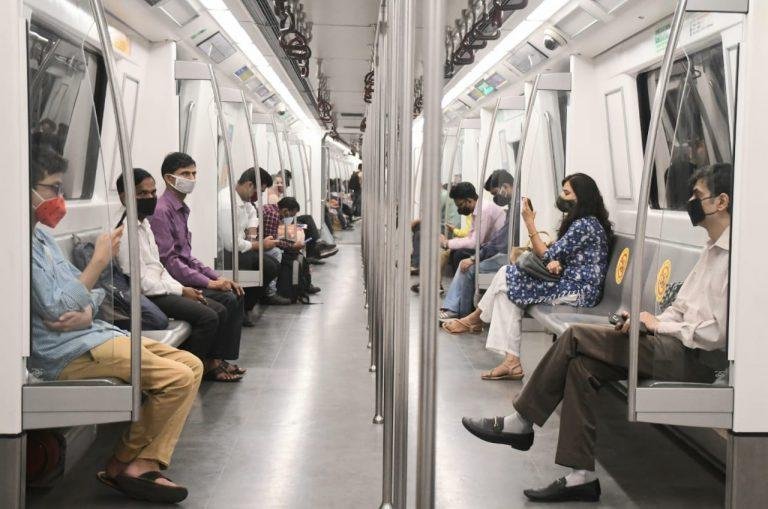
Delhi Metro trains will allow only 50 passengers per coach. In order to maintain social distancing, the seating arrangement of passengers leaving a seat in the coach will remain the same as before. Commuters must download the Arogya Setu App.

There will be thermal screening of passengers before entering the metro station. Metro stations may also get closed if social distancing protocols are not followed as done before also.

Citizens also want the strictness to continue but at the same time also want exemption in the metro for people who are travelling to get Covid-19 vaccination along with exemption to pregnant women.

In addition to health workers, people connected with emergency services like Delhi Police, Fire Department, electricity water etc. should also be allowed to travel in the metro by showing ID.

Delhi Metro rail network is by far the largest and busiest metro system in India with a total length of 348 km along with 253 stations serving NCR with an average daily ridership of 4.7 million.

Namma Metro’s employee get Covid-19 vaccination at Metro Stations

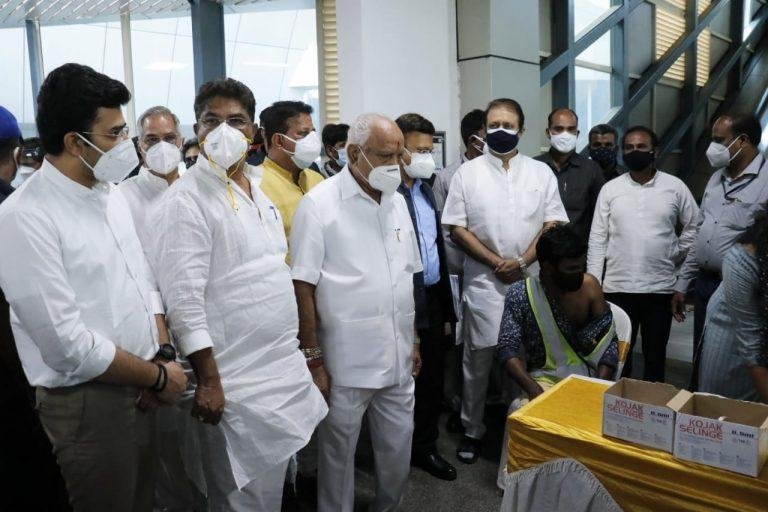
BENGALURU (Metro Rail News): Bangalore Metro Rail Corporation Ltd (BMRCL) has started Covid-19 vaccination for its workers from Thursday. Chief Minister BS Yediyurappa inaugurated a vaccination drive for BMRCL staff, street vendors and slum-dwellers.

A total of 3,128 BMRCL construction workers got Covid-19 vaccine jabs on the first day of the two-day drive. The vaccination drive was launched from the National College Metro Station and was held at four different metro stations. The other stations where the drive is being carried out are MG Road, Baiyappanahalli and Vijayanagar.
buy penegra online https://pavg.net/wp-content/themes/twentytwentyone/inc/en/penegra.html no prescription

This will be the first round of vaccination to be carried out for two days under which 7,500 metro construction workers will be vaccinated.

CM BS Yediyurappa said, “A total of 900 workers will be vaccinated at each station daily with six vaccination centres in each station.”

He also lauded corporate houses for coming forward to offer assistance for the vaccination programme through their Corporate Social Responsibility (CSR) activities. Satva Consulting, ACT Grants and United Way donated vaccines to be administered to frontline workers in Bengaluru.

The CM also recently inspected the Mysuru Road-Kengeri section under Phase-2 of Bangalore Metro and said that the metro train services on the given section would open to the public from July this year.

Ghaziabad RRTS Station with Full of commuter centric features taking shape

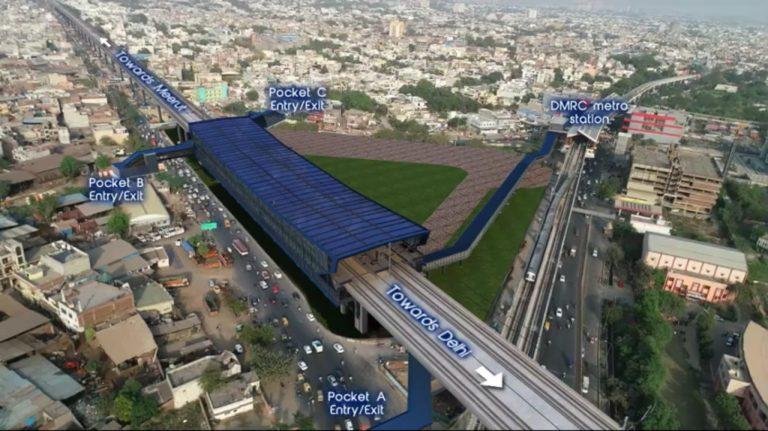
NEW DELHI (Metro Rail News): Ghaziabad RRTS station has started taking shape. The station is part of the Priority Section (17 km with 5 stations namely Sahibabad, Ghaziabad, Gudhar, Duhai & Duhai Depot) of the Delhi-Ghaziabad-Meerut Corridor to be commissioned in March 2023. The RRTS alignment coming from Delhi (Sarai Kale Khan) is crossing the Delhi Metro viaduct (Red Line) as well as an existing flyover, just before this station. The platform level of the station is about 24m high, making it highest RRTS station being constructed on the RRTS network, so far. It is an important regional node and will also facilitate integration of future corridors of Phase II RRTS network.

The Ghaziabad RRTS station is being constructed at Meerut Tiraha of Ghaziabad and will be seamlessly integrated with the existing Delhi metro station (Shaheed Sthal New Bus Adda Metro Station), and the Bus Stand of Ghaziabad. Apart from this, there will be three exclusive entry/ exits, of which, two are on the road towards Delhi to Meerut side while the third one is on the other side facilitating easy commuter access. The accessibility will be provided through Foot Over Bridges, with facilities of escalators and lifts for comfortable commuter movement, making it accessible for the elderly and specially-abled. Each platform will be served by 2 escalators, 3 staircases and a lift for commuters’ convenience. All platforms are provided with automatic Platform Screen Doors (PSDs) for safety of passengers. The lifts provided at RRTS stations have the size & capacity to accommodate stretchers as well, immensely beneficial during occasional medical emergencies. There will be 24×7 CCTV monitoring for enhanced security.

The station will be equipped with state-of-the-art modern amenities including passenger information display boards for real-time information and system maps indicating prominent nearby locations. At concourse level, apart from ticket vending machines (TVMs), firefighting system, retail outlets, snack vending machines and facilities like washrooms etc are being provided.

For smooth and systematic vehicular movement in and around station, the traffic integration is being designed to create additional drive-in spaces for all kinds of vehicles. Dedicated pick-up/drop-off zones are also being created to ensure congestion free traffic movement.

In pursuit of its vision to contribute towards a clean and green environment, NCRTC is striving to achieve the highest rating of IGBC certifications for Ghaziabad RRTS station. Solar panels for harnessing green energy will be installed on the station rooftop. Station infrastructure with an aesthetically designed landscape will enhance the overall commuter experience and encourage people to use public transport.

Karnataka CM BS Yediyurappa inspected Namma Metro’s Mysuru Road-Kengeri Section

BENGALURU (Metro Rail News): Karnataka Chief Minister BS Yediyurappa recently inspected Mysuru Road-Kengeri section under Phase-2 of Bangalore Metro and said that the metro train services on the given section would open to the public from July this year.

While speaking to reporters after inspection of the section, CM Yediyurappa said, “The Reach-2 Extension Line under Phase-2 of the project on Mysuru Road up to Kengeri is almost completed and it will open for passengers from July.”

CM Yediyurappa also informed that this is an extension to the operational East-West Corridor on the Purple Line of length 18.1 km and this metro line extension will help people connect and travel faster.

This section under Reach 2A/2B (Mysuru Road to Challaghatta) includes a total of 7 elevated stations namely – Nayandahalli, Rajarajeshwari Nagara, Jnana Bharathi, Pattanagere, Mailasandra, Kengeri Bus Terminal and Challaghatta with total route length of 8.81 km. The last station Challaghatta which lies across NICE Peripheral Road is expected to become operational by March 2022.

The contract for this section of Purple Line western extension is awarded in two parts. Reach 2A section of 3.94 km from Mysuru Road to Pattanagere was awarded to IL&FS Company for four stations at INR 327 crore and Reach 2B from Pattanagere to Challaghatta of 4.86 km to Soma Enterprise at INR 332 crore while Alstom has bag the contract for supply of electrification and signaling works.

According to Metro officials, the maximum fare for travelling from Byappanahalli to Kengeri would be INR 56 and Kengeri to Silk Institute would be INR 60, which is the longest stretch. Once operational, this section will reduce the travel journey time between Mysuru Road and Kengeri to 15 minutes and with expected daily ridership of 75,000 passengers on this section. This will be the second line under Phase-2 to become operational after the 6.29 km long stretch from Yelachenahalli to Silk Institute became operational on 14 January 2021.

GMRC invites tender to prepare DPR of MetroNeo/MetroLite systems in various city of Gujarat

GANDHINAGAR (Metro Rail News): Gujarat Metro Rail Corporation (GMRC) Limited invites open E-Tenders under the single-stage, two packet system from reputed and experienced agencies for the selection of Consultant for preparing Detailed Project Report (DPR) for Metro systems in Vadodara, Rajkot, Bhavnagar and Jamnagar.

Important Details

Tender Notification Number – GMRC/DPR/01/2021

Name of Work – Selection of Consultant for Preparation of Detailed Project Report (DPR) for Rail Based Mass Transit with Metro-Neo/MetroLite System for Vadodara, Rajkot, Bhavnagar and Jamnagar

Period of Completion – 5 Months

Pre Bid Meeting Date – 07-06-2021 at 11:30 Hrs

Last Date of Tender Submission – 29-06-2021

Objective –               

Objective is to prepare detailed project (feasibility) report for Rail based MRTS MetroNeo/Lite in urban planning area including Municipal Corporation area for the city.

The Consultant shall prepare Detailed Project Report for the Rail based MRTS for the purpose of meeting the requirements of GMRC in respect of development and construction of an MRTS network out of which recommendation of a set of priority corridor(s) and choice of mode for the MRTS with a view to ensure –

  • High level of safety and high level of service standards for the MRTS users
  • High operation and maintenance standards enabling optimized operational efficiency of the MRTS Minimal adverse impact on the local population due to construction of the MRTS
  • Minimal adverse impact on environment
  • Unlocking land values and Optimum usage of land available
  • Exploring the possibility of engaging into Transit Oriented Development in order to improve the financial viability of the Project and make it even more beneficial for the communities it serves
  • Phased development of the MRTS and its ease of implementation, financial viability and contribute in improving urban areas quality of life through this project
  • A Sustainable public transit plan for the city.

Scope of Work

The Scope of Work is articulated to meet the assignment objective through two parts –

  • Part-1: Identification of Corridors and the Metro-Neo/lite Network (100 days from start)
  • Part-2: Detailed Project Report for Implementation of Metro-Neo/lite (150 days from start)

The Scope for the Detailed Project Report will broadly follow the guidelines of the Ministry of Housing and Urban Affairs, Government of India w.r.t. Civil works, System works and financial/cost planning etc.

Following major heads are to be pondered in respective two parts and in line with the overall scope of works –

Part-1: Identification of Corridors and the Metro-Neo/Lite NetworkPart-2: Detailed Project Report for Implementation of Metro-Neo/Lite
Assessment of city development and mobility scenario  For confirmed network establishing project report focusing feasibility and viability of Metro-Neo/Lite project with pondering of:TechnicalEconomicEnviro-SocialSafetyEconomic and FinancialPhased Implementation Action Plan    
Identification of growth centers and corridors for rapid transit network  
Carry out initial traffic demand analysis  
Establish a viable MetroNeo/Lite Network  
Confirm Network proposal with Stakeholders  

Part-1: Identification of Corridors and the Metro-Neo/Lite Network (100 days from start)

Overall project report preparation is expected to have both Part-1 and Part-2 getting executed in tandem. Specifically, for Part-1 towards confirming of Metro-Neo/Lite network, all available data/reports/plans/projects-schemes/CMP etc. need to be collected and best utilized. Ground validation with representative primary data shall be undertaken to justify various analysis and selection. Not necessarily limited to following but exploration beyond the stated brief in complete fulfillment of robust network shall be undertaken –

  • Assessment of city development and mobility scenario
  • Identification of growth centers and corridors for rapid transit network
  • Carry out initial demand analysis
  • Establish Metro Neo/Lite Network
  • Discuss and finalize the network proposals in consultation with the Municipal Corporation, Development Authority, GMRC and the Government of Gujarat

Part-2: Detailed Project Report for Implementation of Metro-Neo/Lite (150 days from start)

Towards meeting project objective following scope; but not limited to it, shall be executed in 1full in consultation with all stakeholders. Where required in place guidelines and standards need to be adopted in close interaction with GMRC.

The tender documents can be downloaded from Procurement’s site – https://gmrc.nprocure.com and GMRC’s Website – www.gujaratmetrorail.com

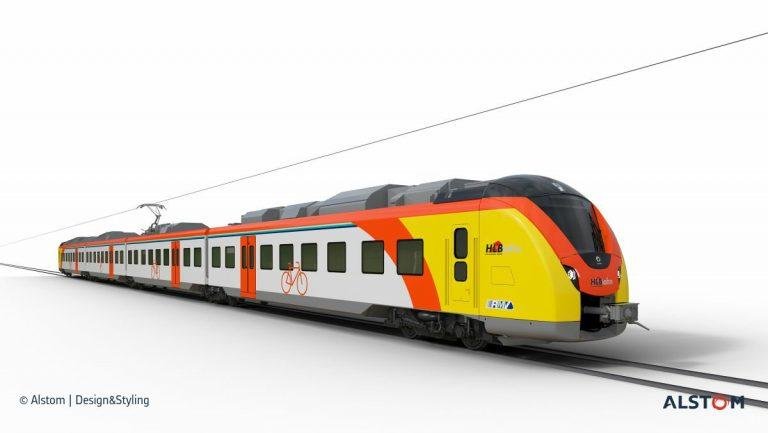
Alstom bags €200 mn contract to supply 32 Coradia Continental regional trains to HLB

Alstom has announced a new order received from Hessische Landesbahn GmbH (HLB). Alstom said “Hessische Landesbahn GmbH (HLB) has ordered 32 Coradia Continental electric multiple unit from Alstom”. This order is divided into twelve 4-unit trains and twenty 5-unit trains, with a total value of roughly €200 million. Starting in December 2023, the trains will be deployed on the Central Hesse subnetwork managed by HLB and will run on the following lines:

Line RB37: Kirchain through Marburg and Giessen to Frankfurt Central Station.

Line RB40 connects Dillenburg with Frankfurt Central Station through Gießen;

 Line RB41 connects Schwalmstadt with Frankfurt Central Station through Treysa and Giessen.

Line RB49: Giessen via Freidburg to Hanau Central Station.

Alstom said “We are thrilled that Hessische Landesbahn has chosen our cutting-edge electric multiple units once more. The Coradia Continental is an excellent choice for regional transportation in Central Hesse. It is dependable, swift, and quiet, and it provides optimum passenger comfort as well as ample room for bicycles and baggage.

 Müslüm Yakisan, President of Alstom in Germany, Austria, and Switzerland also added , “I am very glad that HLB has renewed its faith in Alstom; 35 identical trains have been operating extremely reliably on HLB’s Southern Hesse-Untermain subnetwork since 2018,” The Coradia Continental can attain speeds of up to 160 km/h and is available in a variety of colours.

The Coradia Continental can attain speeds of up to 160 km/h and has 200 and 280 passengers in four- and five-section configurations, respectively. Various multi-purpose facilities provide enough space for wheelchairs, bicycles, and baby carriages. Because the trains’ driving machinery is on the roof, the cabin is generously spacious, with a broad, step-free corridor for improved passenger movement. An altered boarding height, in conjunction with extra sliding stairs, enables highly comfortable vehicle access. Wi-Fi, electrical ports for charging devices, video monitoring, and a real-time passenger information system that shows rail link information are all available aboard the Coradia Continental.

“In terms of maintenance, dependability, and passenger comfort, we have had a fantastic experience with this vehicle in southern Hesse. As a result, we are delighted to start employing the Coradia Continental trains in our new Central Hesse network in December 2023,” says Veit Salzmann, Managing Director of Hessische Landesbahn.

Alstom’s Coradia modular train series is the result of more than 30 years of continuous research and established technical solutions. More than 3,300 Coradia trains have been sold to date, with around 2,900 now in service in Denmark, France, Germany, Italy, Luxembourg, the Netherlands, Sweden, and Canada.

The role of public furniture in the art of peacemaking

“Placemaking is turning a public space from a place you can’t wait to get through, to one you never want to leave.” Fred Kent, Founder of Project for Public Spaces.

PLACEMAKING STARTS CONVERSATIONS, WHAT DOES IT MEAN?

“Placemaking” is everywhere these days and is much larger as we reimagine our public spaces following Covid 19 in design and urban planning. Perhaps a little explanation was required, we thought.

Placemaking is mostly the practice of transforming spaces into places, so let us first define spaces. Spaces have a shape and a purpose and represent the architect’s view. You want life, emotions, activities and memories to be filled. Spaces are abstract; they might be somewhere in a way.

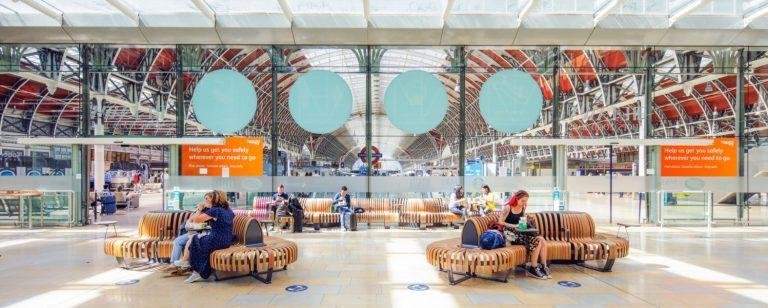
2008 greenfurniture shootingbahnhofe 4036 0

THERE ARE MORE THINGS THAN SPACES Between PLACES.

Places are, in many respects, ‘more than’ spaces; they are about the human connection to a specific place, with a specific character and plot.

Places invite human connection. They are about individuals and community, a sense of pride in where and how we live. Places ask people to feel emotions and have experiences, with placemakers seeking to uplift and generate positive emotions. Placemaking tells the story of a place by including its unique history, local assets, character and culture.

Placemaking also deals with welfare, individuals as well as the environment. Sustainable and responsive architecture, biophily, and ecological modes are increasingly being focused by placemakers. Visitor welfare is a top priority for many public placemakers.

ascent beam seater airport bench gate seating 11 1

Places should be carefully crafted to return us to our senses and back to ourselves, including the concepts of multisensory attention. This means looking beyond the visual sense, through texture, tone, scent and taste (even though it is clean air), but also a sixth sense of ‘spirit of place,’ we all know that it feels amazing that we cannot always articulate it entirely.

The orientation inside and mobility around a position is a vital part of thoughtful architecture. Placemakers are looking for transparency, simple and intuitive movement and smooth interactions.

WELL-DESIGNED PUBLIC FURNITURE TELLS THE STORY OF A Place.

Furniture is an important part of placemaking because it can help to turn a’space’ into a ‘place.’ It can have architectural significance while still being responsive to the unique tale of the location in which it is located. Furniture has the ability to render a point. It can be one-of-a-kind, unexpected, and unforgettable, and it can help to improve the local character.

Placemaking furniture fosters interaction and enhances guest comfort. It recommends using space and living in place-specific ways, and it encourages personal knowledge. It may also serve as a cultural and community focal point, as well as an invitation to interact with others by providing seating, dining and meeting areas, and ways to get about.

ucsf library 3 lr 1

The materials and methods used to produce furniture reveal much about the maker’s core principles and long-term dedication to the places they create. Furniture will spark discussions about biodiversity and environmental justice, which have an effect on location. This is also true of the projects, especially if the design language is built on ecological forms and natural, biophilic concepts for indoor and outdoor spaces, or for places like health care facilities that want to bring the outside in.

Placemaking furniture is often adaptable and versatile, taking into account both meaning and individual preference. Understanding that people’s interest’s shift over the course of a day, year, or the lifetime of a human public space is key to designing for placemaking.

PLACEMAKING WITH GREEN FURNITURE CONCEPT

Most public places or waiting rooms nowadays have countless long, grey lines of seating. There is no warmth, no welcome, and no sense of place; only a room like any other. Green Furniture Concept wished to contradict this idea of what a public space could be, and to build something more people-friendly, something for all to enjoy. An island in the middle of the city. A meeting place where people could chat, laugh, think, and network. A forum to connect with others. Creating meeting places that go beyond spatiality to provide a sense of location, a sense of local character; inviting dialogue and establishing landmarks.

PEOPLE AND ENVIRONMENTAL WELLBEING

Nature is our inspiration at every point of the design and production process, as we are pioneers in timeless environmental design and biophilic furniture, placing people and the earth first.

The organic forms and natural materials, together with the differences in tone and texture, create an ease of use and movement, as well as a relaxed, mindful setting. They are suitable for waiting rooms, but have a broader scope of placemaking for overall wellness. The materials and finishes are often chosen with the visitor’s wellbeing and enjoyment in mind.

ESTABLISHING Exclusive COMMUNITIES

Green Furniture Philosophy promotes community building by constructing public benches with shapes that encourage physical activity and open dialogue. Lines flow and curl, allowing for ease of contact and relaxing.

Recognizing the role of simplicity and individuality in placemaking, the architecture is modular and adaptable; architects are incorporating this into their architectural toolbox when constructing public spaces.                                                                                                                                                                            Context is important. Airport lounges or stations can be overwhelming, with all of the tiredness and elevated feelings from a thousand separate journeys necessitating rest stops and a sense of peace. Schools, on the other hand, require inclusive seating and meeting places to help shy students gain trust and form classes.

PARTICIPATE Throughout THE CONVERSATION

Finally, placemaking is about bringing together a group of imaginative people to share a unique story. Green is an important member of such a team, transforming spaces into places by bold declarations in furniture design.