MetroLite: An Introduction
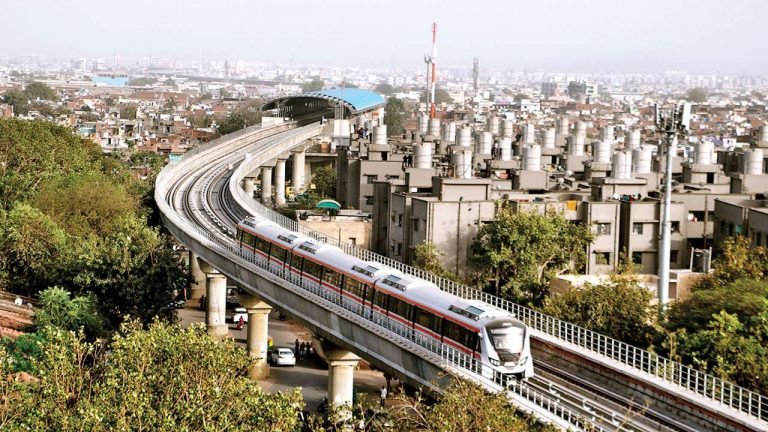
Metro in general words can be said to be a massive urban railway project interconnecting every fringe of the city. Metros have been a very successful means of urban transport in India. Since its inception in 1984, hundreds of kilometres of metro corridors have been commissioned in 13 Indian cities. Lakhs of crores have been spent to make the Indian metro project successful. Observing the success of the metro railway in big cities, smaller cities also started seeking permission to construct metros from GOI. Most Indian Metro Rails are heavy capacity rapid transit systems.
They carry lakhs of passengers per day. But the smaller cities don’t have the potential to carry lakhs of commuters. For e.g, the Kolkata Metro network that accounts for 38.56 km – being very small carries an average of a staggering more than 30 thousand passengers per hour per direction. On the other hand, a big metro network like Delhi Metro which accounts for 389 km carries approximately 75 thousand passengers per hour per direction. Smaller cities with the maximum potential of 15000 passengers per hour per direction don’t actually need these massive heavy-capacity metro networks. But, they badly need a modern public transport system that is similar to the metro.
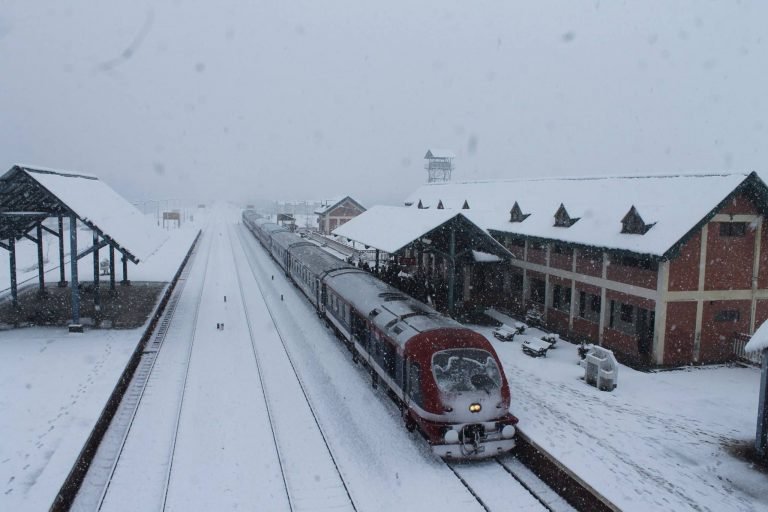
Hence, the government of India recently came up with a solution to resolve this problem. The solution was seen as the introduction of Metrolite, which in simple words can be stated to be a new means of transport system which is neither a tram nor a metro but encompasses the feature of both the transport systems. Metrolite can carry a greater number of passengers than a tram but lesser than a metro. Now the concept is to lay tracks at grades following the city roads just like trams. But, the tracks should have a dedicated path that is separated from the road traffic. Proper fencing should be done to ensure that no obstruction comes in the way of the trains. It is also mandatory for Metrolites to run on the surface as far as possible. If it’s not possible at all to run trains at grades then only the trains can climb up elevated tracks or path.
The mention intention to build metrolite instead of the metro is to save cost. Metros are too costly to be constructed and it’s mandatory to run either on elevated tracks or underground.
buy viagra oral jelly online no prescription
But, laying tracks on the road level doesn’t require huge amounts of money. It is a well-known fact. MetroLite trains are designed to make either of aluminum or stainless steel. Each train is 2.65 meters wide and possesses three coaches that are
permanently coupled with each other. The number of coaches can be increased as per requirement. Metrolite runs on 1435 mm standard gaze tracks and will have an overhead wire with 750 volts DC power supply.
Embedded third rails can also be used in metrolite. Each train will be able to carry 300 passengers at a time and shall run at a maximum speed of 60 km/hr. The Communication-based train control or CBTC signaling system and automatic train protection with a grade of Automation-1 will be used to provide better passenger safety. CBTC is fully automated and provides better safety and accuracy in terms of frequency and service. Construction of metrolite has to be cheaper than the construction of metro rails. So, the extra utilities from the civil structures are removed in metrolite transportation system. We often see that the elevated stations of metro rail have at least two floors.
The first floor or the concourse has ticket counters, AFC gates, Offices, all electrical equipment, etc. whereas, the second floor has platforms and tracks. But, in the case of metrolite, no concourse will be built. The single floor has it all. The platforms, the tracks, and the ticket counters. Elevated stations also possess a foot underbridge (min 5.5mtrs above the road) and underneath the platform to cross the tracks. The same foot underbridge shall also be used by general passengers to cross the roads. Metrolite shall not have automatic fare collection gates, platform screen doors, and extra baggage scanning machines like there are in metros. The metrolite transport system is successfully operationalized through random ticket checking throughout the day with imposing a heavy penalty on passengers traveling without tickets.
Al track stations shall be built on the roads. If built on roads minimum road space occupied by the metrolite stations should be 8.5 meters. The stations must have a minimum platform width of 1.12 meters and a maximum 12mtr length of the platform will have a shed to protect the passengers from the rain. The trains in a metrolite system are usually
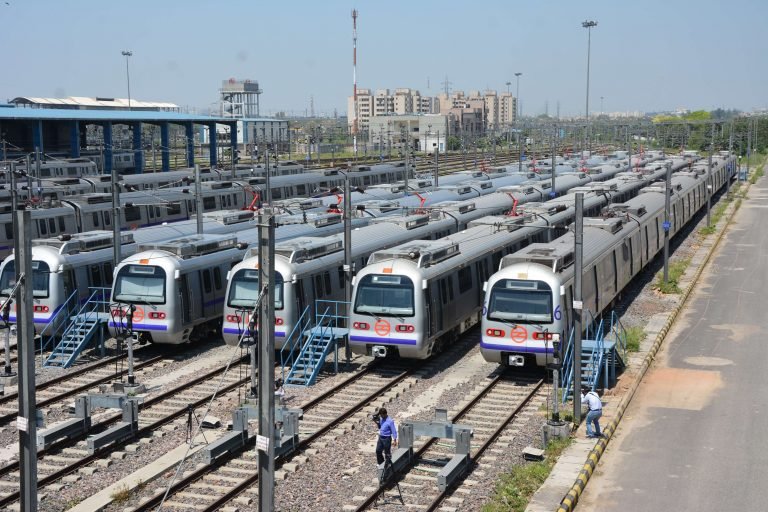
very small and narrow. The tracks will have a radius of curvature of just 25 meters. Therefore, the metrolite depots shall also be very small in size compared to the metro. The concept of metrolite is to resolve transport problems in various small Indian cities. It is estimated that by the year 2025 – 2030 at least 50 cities in India would get metrolite which as per the feasibility study cannot have a metro or already has a metro.
The cities which already have a metro network can also have metrolite. In such cases, metrolite would act as feathers added to the metro railway. Recently, projects like Chandigarh Metro was rejected as it did not comply to the standards of metro rail policy-2017. The metro rail policy-2017 in India decides whether a city or a locality is eligible to have a metro rail or not? But, smaller cities that do not qualify for metro rail must have something like metro. That is why metrolite is being introduced in these cities. In foreign countries, this metrolite concept is already in operation in the name of light rapid transit or LRT. The LRT system which recently is into operation has become increasingly popular in most foreign countries where the roads are wide and have sufficient space.
Summary
- Definition: Metrolite is a light rail (LRT) urban transit system being planned in India for cities with lower ridership projection and as a feeder system for the existing metro systems. It will cater to lower passenger capacity at a reduced cost than a metro line. It will have dedicated tracks, separated from the road.
- Route and Stations: The route alignment and stations will be at grade, as far as possible to reduce construction cost and time. The system will have shelter island platforms and AFC gates, platform screen doors, X-ray machines and baggage scanners that will not be present similar to a bus stop. Fencing will be provided on both sides of the track to segregate it from the road traffic. The at-grade stations will have a 5.5 m width, and in case of road width does not permit, one line will be provided on an adjacent road parallel to the previous one. Entire roads might be closed for road traffic and converted to metrolite network. For the elevated section, there will be side platforms each having a width of 1.12 m. Although concourse level will be absent, both platforms will be connected via footbridges. The stations will have a maximum height of 5.5 m above the road.
- Ticketing: The stations will not have any AFC gates to reduce cost, but ticket validators might be installed in trains and stations with National Common Mobility Card and other ticketing systems. Ticket checking will be random and heavy penalties will be levied on the passengers without a valid ticket.
- Rolling Stock: The stainless steel or aluminium trains will be of the 3-car unit, articulated with each other and with a peak hour peak direction traffic capacity of 2,000 to 15,000. The width of the trains is standardised at 2.65 m with a low floor height of 300-350 mm. The maximum operational speed will be 60 kmph. The trains will also have an obstruction detection system.
Other Specifications
- The Light Urban Rail Transit System – Metrolite – in small cities and towns having a lower projection of ridership, with each train having three coaches and a restricted speed of 25 kmph has been proposed by the centre as an alternative to crowded transportation in Indian cities.
- The Union Housing and Urban Affairs Ministry has issued standard specifications of the ‘Metrolite’ system which specifies the development of the transportation system on the surface and elevated stretches. According to the ministry, the ‘Metrolite’, which can be developed at a lower cost in comparison with the existing metro system, will also act as a feeder system to the high capacity Metro.
- The ‘Metrolite’ system will have a dedicated path separating the road traffic with it. For segregation with road traffic, fencing can be provided on either side of the network.
- The three-coach train will have a capacity of carrying 300 passengers with a maximum operational speed of 60 Km/Hr. In any case, even with the failure of Onboard signalling, the speed is restricted to 25 Kmph.
- The metro rail system being developed at present is of high capacity which is required for bigger cities with very high ridership on the other hand the ‘Metrolite’ train will comprise three non-separable coaches with a low floor height of about 300-350 mm. Unit length shall be of minimum 33 m. The car structure material will be stainless steel or aluminium. There would be shelter platforms. The Metrolite platforms will not have AFC gates, platform screen doors, X-ray and baggage scanner.
Recent Trends
However, in recent trends towards development in urban transportation Metro Neo has appeared as a better and cheaper mode of transportation as an alternative to the crowded urban transport system in India. It has been studied that while it costs Rs 222 crore per km to construct a conventional metro rail, Metro Lite, (which resembles more of a tramway) costs Rs 140 crore per km, and Metro Neo, which is more like an electric trolleybus, costs Rs 71 crore per km.
The other reasons for which Metro Neo has been advocated over Metro Lite are :
The Metro Neo system to be introduced in India shall have three coach sets, with each set 12 metres long and 2.5 metres wide with a floor height of 300-350mm. Made of stainless steel or aluminium, the coaches would not only be smaller but also lighter than Delhi Metro rakes. The average axle load would be around 10 tonnes instead of the usual 17 tonnes of Metro coaches.
The rubber-tyred MetroNeo coaches would run on road slabs, which could be elevated or at grade. When running at grade, Metro Neo would have a dedicated lane separating it from road traffic with the help of a plinth, fencing or kerbs. There would be an automatic train protection system with an anti-collision feature and predefined speed limit.
The stations, both at grade and elevated, would be simple structures with no automatic fare collection gates. X-Ray baggage screening, door frame metal detectors or other features associated with Delhi Metro. Metro Neo platforms would be simple, open and serve the functional requirement of exchange of passengers between the platform and the vehicle. Only bare minimum facilities like lighting, CCTV, public information system etc. has been provisioned to be provided.
Additionally, few other features of Metro Neo are as under:
- Metro Neo system will have rail-guided, rubber-tyred electric coaches powered by an overhead traction system running on elevated or at-grade sections.
- Apart from just 20-25% of capital cost compared with Metro systems, the operation and maintenance cost of Metro Neo is also less. Metro Neo coaches shall also have rubber tyres running on road slabs.
- The car structure would be that of aluminium or stainless steel.
- Electric coaches shall have sufficient battery capacity to run up to 20 Km without OHE power. Metro/City authorities can decide the battery desgn and sizing based on site requirements. Rolling stock to have energy regeneration system during braking.
- The entire system shall be equipped with Kerb or Centre Rail guidance system.
- At-grade lane to separate it from road traffic through plinth, fencing or kerb.
- Automatic train protection system with anti-collision feature and pre-defined speed limit.
- Ticketing system based on National Common Mobility Card and QR code.
- No AFC gates like Delhi Metro, but random checking with a heavy penalty for ticketless travel.
- Simple stations limited to the platform area.
- No platform screen doors, X-Ray baggage scanner, and door frame metal detectors.
- Lighting, Passenger Information System, CCTV, automatic ticket vending machine, add value machine, ticket validator, signage, etc. at stations to be provided in limited space.
- Platform roof to be one-third of the length.
- At-grade stations accessed through properly designed pedestrian crossings with mandatory traffic claiming measures and signage or signal, improvement in footpaths and area around stations.
- No concourse level at elevated stations, elevators for differently-abled and senior citizens. Escalators to be provided as per absolute necessity.
Conclusion
It may be thus concluded that although Metrolite has been approved by a number of Indian cities and shown interest to be developed and started by many other cities in its periphery in parallel, it’s worth noting that DMRC (Delhi Metro Rail Corporation) recently has cancelled its tender for Metrolite project for the metropolitan area and has approved MetroNeo for its various feasible features.
It is hence, can be stated that the race between Metrolite and Metro Neo for becoming the most popular alternative for the problem of the crowded urban transportation system in India is into a state of transition and it would be a subject of a few years from now when we get an answer to it. But, it is worth mentioning that both Metrolite and Metro Neo transport systems are future centric transport systems that would be safe, reliable and clean and it would definitely support human’s effort to create a pollution-free, healthy and better environment and eco-system.