Home Blog Page 422

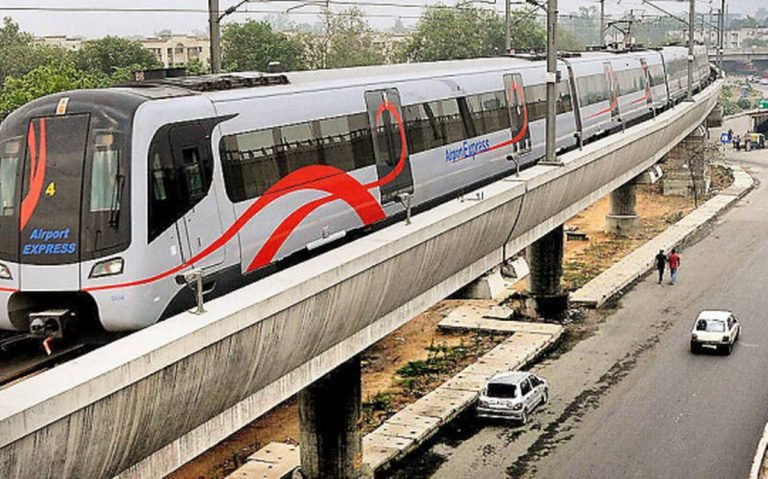
DMRC airport express line links Jewar through Greater Noida’s Pari Chowk.

NEW DELHI (METRO RAIL NEWS): The Shivaji Stadium Metro station on the DMRC’s airport express line is expected to be the starting point for this projected Metro route in Delhi. To go to the airport at Jewar, it will most likely pass through Greater Noida’s Pari Chowk.
buy levaquin online https://pavg.net/wp-content/themes/twentytwentyone/inc/en/levaquin.html no prescription

Officials said the Yamuna Expressway Industrial Development Authority (Yeida) and the Delhi Metro Rail Corporation (DMRC) signed a memorandum of understanding on Thursday to prepare a feasibility report for a Metro corridor to provide direct connectivity between Delhi’s Indira Gandhi International Airport and the upcoming Noida International Airport at Jewar.

The Shivaji Stadium Metro station on the DMRC’s airport express line is expected to be the starting point for this projected Metro route in Delhi. To go to the airport at Jewar, it will most likely pass through Greater Noida’s Pari Chowk.

DMRC has been hired by Yeida to work on the project in two parts, according to officials. In the presence of the authority’s chief executive officer Arun Vir Singh and DMRC’s business development officer Pramit Garg, the memorandum of understanding was signed at Yeida’s Sector Omega-2 office.

“We have requested DMRC to provide a complete project report for the 35.64-kilometre Metro project from Greater Noida’s Pari Chowk to Jewar, where the Noida international airport is being built,” says the statement. A feasibility assessment for a Metro link between Pari Chowk in Greater Noida and Delhi’s Shivaji Stadium has also been assigned to DMRC. After signing the MoU, Yeida CEO Arun Vir Singh remarked, “This corridor will provide smooth connectivity between Delhi’s IGI airport via the airport Metro’s airport express line.”

In the following nine months, Yeida has asked DMRC to prepare the project report and feasibility report.

Yamuna International Airport Private Limited has begun development on the airport project, which is projected to be completed by 2024. Officials from Yeida stated they hoped to have the Metro link and the airport operational at the same time. They stated that after the project report is completed, the financial modalities will be finalised.

“We want to give multi-model connectivity from Noida airport to the rest of Delhi-NCR so that people may travel in comfort,” says the company. The Metro project will be critical for the new airport since it will assist commuters greatly,” Singh added.

After the IGI airport and the civilian terminal at Ghaziabad’s Hindon airport, the airport is expected to be the largest in India and the third in the NCR. The Uttar Pradesh government approved the design of the Jewar airport in December 2020. The new international airport is expected to help Delhi airport cope with its growing passenger load.

Yamuna International Airport Private Limited, a special purpose organisation established to handle the airport project, has started erecting boundary walls and levelling the ground. The airport is scheduled to open in 2024 and will cost roughly 20,000 crores to build.

The government also intends to build a smart city on 1,400 acres of land near the airport.

Weekdays Ridership in Chennai Metro improves slowly and steadily

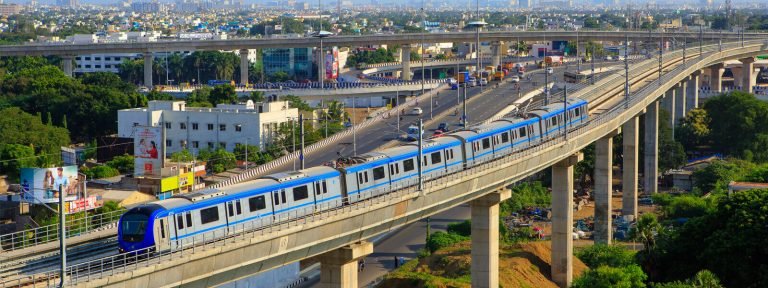
CHENNAI, INDIA (Metro Rail News): After the lockdown, the metro trains were run with 50 per cent occupancy and now with 100 per cent occupancy. Still, at both times, people do not want to travel in the metro due to fear and other reasons, but now the ratio is increasing, especially on weekdays.

According to the Chennai Metro Rail Limited (CMRL) report, on weekdays, ridership has increased up to 6 lakhs in just one month.

“While a total of 18.4 lakhs commuters took the trains in July, the ridership touched 22.4 lakhs in August 2021. On 27th August 2021, there are approximately 90,000 commuters travel in the metro. After schools and colleges reopening, maybe it will boost ridership”.
buy Viagra Black generic over the counter

CMRL has fined 242 commuters in August 2021 for not wearing masks and has collected approx. Rs. 50,000 from them. We will sharpen the security, and commuters also have to cooperate with us, said CMRL officials. The Central Metro station received the highest vestige with nearly 7,000 commuters, followed by the High Court Metro station, 4,000.

Indian Railways’ net-zero objective for 2030 may save Rs 17,000 crore while reducing CO2 emissions by 15 MT.

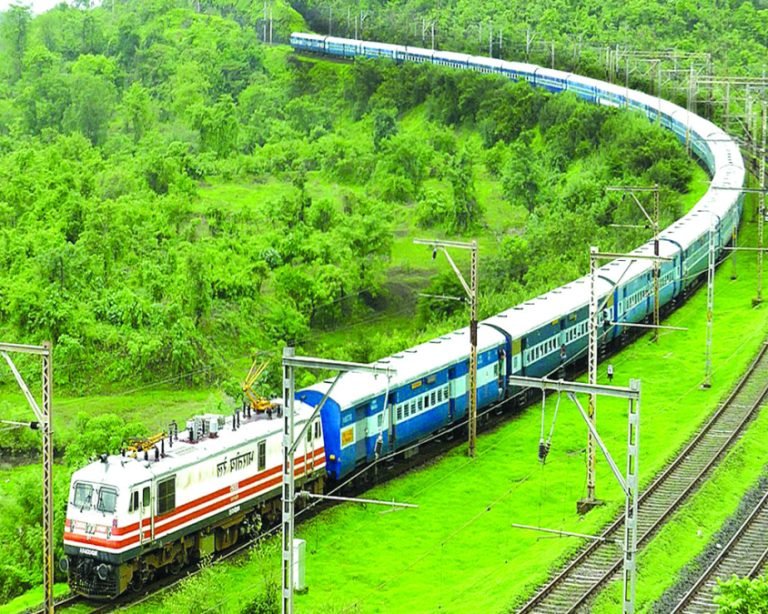
NEW DELHI (METRO RAIL NEWS): In 2020, Indian Railways set a goal of being the world’s first net-zero emissions railway network by 2030. According to an environmental analysis released on Wednesday, if this occurs, it might result in a decrease of at least 15 million tonnes of CO2 emissions yearly, which could help the country fulfil 5% of its Nationally Determined Contributions target. Furthermore, it has the potential to save Rs 17,000 crore a year in fuel expenditures as well as other savings. According to an IE report, the environment report titled “Riding Sunbeams in India” is prepared by Delhi-based Climate Trends, United Kingdom-based Possible, and Riding Sunbeams.

The Indian Railways network is believed to be one of the world’s largest rail networks. The national transporter transports around 2.3 crore passengers per day and 1,160 MT of freight annually, which necessitates massive energy consumption, making it India’s largest power consumer as well as third largest fuel consumer. The national transporter used 2,749 billion litres of fuel, 17,682 terawatt-hours of power, and 1,000 tonnes of coal during the fiscal year 2018-19, accounting for 4% of India’s total greenhouse gas emissions. According to the research, the transportation industry as a whole accounts for 12% of greenhouse gas emissions. The government authorised plans in 2018 to electrify the entire Indian Railways network by 2023. Indian Railways increased its objective to reach net-zero emissions by 2030 in July of last year.

According to the analysis, changing all existing diesel traction to electric traction would result in an increase of 32% in CO2 emissions at first due to the country’s reliance on coal to generate electricity. To equal the traction energy supplied by the power grid, the national transporter would need to either procure its own clean electricity supply from wind and solar generators directly connected into the railway network or construct new grid-connected renewable projects. According to the article, the company intends to add 20 GW of solar for both traction and non-traction loads.

Indian Railways has identified approximately 51,000 hectares of barren land as ideal for solar production. The national carrier and the Railway Ministry have launched the Railway Energy Management Company, a joint venture organisation to facilitate the development of solar PV and wind energy projects to meet Indian Railways’ energy needs.
buy eriacta online https://healthcoachmichelle.com/wp-content/themes/twentytwentyone/inc/en/eriacta.html no prescription
The Indian railway network is expanding its renewable energy strategy, including the tendering of 3 GW of solar projects this year, as well as the commissioning of 103 MW of wind power. According to the research, the approved electrification will generate 20.4 crore man-days of direct employment during the construction phase.

As of March 2021, around 71% of India’s conventional (broad gauge) rails are electrified, making Indian Railways the world’s third-largest electrified rail network after Russia and China. In addition, the national transporter has smashed the yearly railway electrification record with over 6,000 RKM wired in 12 months, and it is on track to be entirely electrified by the end of 2023. Moreover, a variety of other initiatives are underway, including the replacement of diesel locomotives with electric, the construction of DFCs with high-speed rail, and the installation of 24 rooftop solar panels at 900 railway stations, among others.

The paper also predicts that by 2030, railway energy demand will have increased from 21 billion kilowatt-hours to 33 billion kilowatt-hours and that it will be totally provided by renewable energy, reducing the nation’s diesel usage and enhancing energy security.

Effective Project Monitoring: A Symphony – Least Played

In April 2021, the Ministry of Statistics and Programme Implementation, which monitors infrastructure projects in our country, reported that out of 1,737 projects worth Rs 150 crore and above, 470 projects had reported cost overruns, 525 were delayed. Thus, the total project overrun amounted to nearly 20%. At the same time, the average delay was a whopping 46 months. While some of these delays could be attributed to the prevailing pandemic, most of these are from pre-pandemic time. Also, the report observed that the overruns will be even higher since realistic forecasts are yet to come out on many of these projects.

What could be the factors for such enormous time and cost overruns?

These could be related to setting up ambitious baselines for the projects. But, most likely, it is due to a lack of effective project monitoring. Both, in terms of time as well as cost. Project Monitoring is a process that is practised randomly by many project owners and sponsors. While most think that they are doing enough, but in reality, it’s more like mere status reporting and firefighting rather than an organized, comprehensive approach to get an early warning system.

Project Monitoring: Best Practices

image 4

Project monitoring is not merely a comparison of actual spending vs budget, nor it’s a simple comparison of substantial per cent completion against planned percentage. The process has to be designed in a way that encompasses all aspects of the project performance metrics. If one looks at only cost or rate, they are only looking through a very narrow window and can easily be misled.

A typical monitoring process does not end at reporting the delays and deviations. The process must include a mechanism for formulating and implementing the remedial actions and devise a system to follow up the effectiveness of these corrective actions. It’s akin to a physician’s manual for treating a patient until they are up and running.

The process should aim for 360֯ view of the project throughout the life cycle of the project. It may sound daunting, but if approached in an organized fashion, it will play like a symphony and can provide all the early warnings regarding the project’s physical and financial health.

The process for physical health monitoring and financial health monitoring should be based on this basic philosophy. The process will have to be designed to look into the status comprehensively and analyze the data meaningfully. That and that alone will help the project managers to control the projects effectively.

Project Monitoring: Physical Health Check

image 5

For monitoring the physical health of a project, it’s essential to look at each indicator. The progress numbers do tell the quick status, but they never tell the whole story. Monitoring requires an in-depth analysis of various aspects and their interplay. It’s like doing cause-and-effect research. Every number tells a story one must listen to each of these.

For accomplishing this, the reporting system has to be robust. Then, comes the critical phase of analyzing the data integrated and establishing the prevailing situation’s root cause. Then only a meaningful plan of action to arrest any negative deviation is possible.  

A typical monitoring process should include the following steps.

image 6

Project Monitoring: Financial Health Check

To meet the business objectives of any project, it’s imperative to keep the cost of the project strictly under the budget. However, it needs to be recognized that there will be deviations against several budget items as the project progresses. Hence, a robust system should be put in place to monitor the cost and budget of the project continuously. The design should not only be taking care of cost forecasting; it should also take care of cost phasing in line with the project’s progress. This will ensure that there is no shortage of funds nor there are any parked excess funds.

While the data for analysis and forecasting is captured continuously, cost forecasting and re-phasing should be carried out at predefined frequencies.

image 7

Ideally, the project contingencies should suffice for the budget growth. And an ideal model should look like the following.

image 8
image 9

Project Monitoring: Tricks of the Trade

Often it is observed that owner (client) organizations do not develop their Master Implementation Plan (Integrated Project Network Schedule) & corresponding progress measurement system as no government officers want to be monitored, unfortunately. As a result, the major project phases such as Land Acquisition, Design & Tendering phases go unmonitored. When Construction contractors are onboarded, then only everybody starts project progress monitoring. As the earlier stages (Land Acquisition / Design / Tendering) go unmonitored, maximum delays are observed. If the owner (client) organizations start preparing and monitoring their schedule, the delays can be arrested to a large extent. The best trick of the trade for effective monitoring is if our Ministers / Secretaries / Top management of owner organizations would start asking statistical Analysis of Plan Vs Act Vs Forecast for % Progress, Drawings Status, Tendering Status, Construction Quantities, Manpower, Machinery etc. which is purely dependent on the Organizational Project Management Maturity of the respective owner organizations, then the Cost / Time overrun can indeed be reduced to a great extent.

The amount of data, which gets generated during the lifecycle of the project, is enormous. Therefore, it needs to be analyzed with a clear focus, and the findings should be presented in a manner that provides an accurate representation of the project health.

For schedule monitoring, it’s most important not to focus just on a single indicator. One must look at the project through multiple lenses to provide a 360֯ view of the project health. While reporting the findings, one must be precise, accurate and always remain audience-specific. The reports for working engineers will vastly vary from the information which needs to be provided to top management or the project sponsors. While working on the action plans to recover any delays, one should remain focused on the objective. Indulging in blame games and lengthy post mortem should strictly be avoided.

image 10

For Cost monitoring, first and foremost is that Money Spent is not equal to Money Earned. Unfortunately, many organizations follow this, which leads to a grave situation in terms of time and cost overruns even before they realize it. Therefore, it’s best to use the Earned Value Management (EVM) system and watch the Cost Performance Index (CPI).

image 11

Project Monitoring: Roles and Responsibilities

Project monitoring has to be operated as a well-organized process rather than working with random snapshots. Therefore, the role of the entire project team and various stakeholders is vital to the success of this process.

The top management should inculcate a culture that the monitoring process is for the benefit of the project and not hold any person responsible for any delays. The project team needs to report the actual status of the activities at any point in time. They might be too occupied to carry out their work and should seek the help of the planning and monitoring teams to prioritize their work.

The dedicated project planning monitoring team gathers all the data from various sources and analyzes the data to establish the prevailing deviations and likely deviations in future. Subsequently, the team will fathom the root cause of the delays and overruns. Once the root causes are established, the team will prepare the action plans to arrest the delays and overruns in consultation with the execution team.

The top management and the project sponsors should focus on the milestones and specifically seek the areas that need their attention and support. By doing so, they can create a healthy project environment to give confidence to the project team that they are always standing with them in any need of the hour. This will help in excluding the tendency to provide false reports and will assist in delivering the actual status of the project and any areas of concern.

Project Monitoring: Closing Note

Barring the few exceptions due to natural calamities or unforeseen events, all projects can be executed to maintain the schedule, cost, quality, and safety. However, once the realistic baselines have been established, they need a robust and comprehensive project monitoring process.

About Company:

Protecton BTG has been instrumental in setting up these systems at India’s first bullet train project MAHSR and is currently in active discussion with other important infrastructural projects for providing MIP services and implementation/operations of SMART PMS.

ST Engineering and Siemens Mobility Consortium Wins $180m Contract to Modernise Communications System for Singapore’s Rail Lines

SINGAPORE (METRO RAIL NEWS): An ST Engineering and Siemens Mobility consortium today announced that it has won a $180 million contract to renew and modernise the communications system for Singapore’s North-South and East-West Lines (NSEWL) and the Bukit Panjang  LRT (BPLRT). Covering 75 locations comprising stations, interchanges, on-line substations,  depots and control centres, the renewal programme will see a replacement and upgrade of the  NSEWL’s and selected BPLRT’s existing communications systems, the first of its scale since the lines commenced operations more than 20 years ago.  

“The NSEWL and BPLRT are the most heavily utilised lines in Singapore’s rail network.  Collectively with our partner, we provide deep technical and domain expertise to ensure zero disruption while deploying the new communications systems to the existing systems and train services,” said Chew Men Leong, President of Urban Solutions at ST Engineering. “This win  is testament to our smart metro capabilities, and further strengthens our global track record in  helping rail operators leverage advanced technology to solve their mobility challenges.” 

“Our joint team leverages the proven expertise and track records in communications systems to deliver a highly reliable solution for the iconic North-South and East-West Lines and the  Bukit Panjang LRT,” said Michel Obadia, CEO of Siemens Mobility Asia Pacific. 

Serving as the digital backbone of rail networks, communications systems are integral to smooth rail operations as they manage and connect various components and systems in trains and stations. When fully operational in 2029, the new communications system on the NSEWL  and the BPLRT will further improve safety, reliability and efficiency for the rail operator,  contributing to an improved commuter travel experience.  

Singapore Technologies Engineering Ltd 

ST Engineering is a global technology, defence and engineering group with offices across  Asia, Europe, the Middle East and the U.S., serving customers in more than 100 countries.  The Group uses technology and innovation to solve real-world problems and improve lives through its diverse portfolio of businesses across the aerospace, smart city, defence and public security segments. Headquartered in Singapore, ST Engineering reported revenue of $7.2b in  FY2020 and ranks among the largest companies listed on the Singapore Exchange. It is a  component stock of the FTSE Straits Times Index, MSCI Singapore, iEdge SG ESG  Transparency Index and iEdge SG ESG Leaders Index. 

Siemens Mobility is a separately managed company of Siemens AG. As a leader in transport solutions for more than 160 years, Siemens Mobility is constantly innovating its portfolio in its core areas of rolling stock, rail automation and electrification, turnkey systems, intelligent traffic systems as well as related services. With digitalization, Siemens Mobility is enabling mobility operators worldwide to make infrastructure intelligent, increase value sustainably over the entire lifecycle, enhance passenger experience and guarantee availability. In the fiscal year 2020,  which ended on September 30, 2020, Siemens Mobility posted revenue of €9.1billion and had around 38,500 employees worldwide. Further information is available at:  www.siemens.com/mobility 

RVNL invites bids for the construction of a new POH Workshop for Electric Locomotives in Dabhoi.

GUJARAT (METRO RAIL NEWS): Rail Vikas Nigam Limited (RVNL), has invited bids under single stage two system for the work of “Construction of PEB sheds, structures, buildings, overhead tank with water supply arrangement, drainage, road, track works, signalling & telecommunication, power supply arrangement, OHE, general electrical works and supply, erection & commissioning of machinery & plant in connection with setting up of POH workshop for electric locomotives at Dabhoi, Vadodara, Gujarat (India).”

Tender Reference Number: RVNL/BRC/DB/02

Name of Work: 

Setting up of new POH Workshop for Electric Locomotives at Dabhoi, Vadodara involving Construction of PEB sheds, structures, buildings, overhead tank with water supply arrangement, drainage, road, track works, signalling & telecommunication, power supply arrangement, OHE, general electrical works and supply, erection & commissioning of machinery & plant in connection with setting up of POH workshop for electric locomotives at Dabhoi, Vadodara, Gujarat (India).

Approx. Estimated Cost of Project: INR 114.62 Crores

Bid Security: INR 2 Crores

Period of Completion: 21 Months

Document Download / Sale Start Date: 31-Aug-2021

Document Download / Sale End Date: 25-Oct-2021

Bid Submission Start Date: 23-Sep-2021

Bid Submission End Date: 25-Oct-2021

Bid Opening Date: 25-Oct-2021

About RVNL:

The company began its operation in 2005 with the appointment of the Board of Directors.  The company was granted Miniratna status in September 2013. RVNL has been rated “Excellent” for 9 successive years by the Department of Public Enterprises. RVNL has also been ranked 1st amongst the Railway PSEs for the 4 times out of the last 5 years.

The turnover of the company for the financial year 2019-20 has increased by 44.44%. The authorized share capital of the company is Rs. 3000 cr. with paid-up share capital of Rs. 2085 cr. The company has been listed after the disinvestment of its stake of 12.16% of the company through IPO.

Other recent Tenders floated by RVNL:

Tender Reference Number: RVNL/RAIPUR/TAROKI-ROWGHAT/2021/2 

Name of Work: 

Construction of Tunnels T14, T15 And T16, Bridges and formation work from Chainage 40+430 to 44+925, including Slope Protection Works and Allied, works in Connection with Bhanupali-Bilaspur-Beri New Railway Line in District Bilaspur of Himachal Pradesh State, India.

Approx. Estimated Cost of Project: INR 692.17 Crore

Bid Security: INR 2 Crore

Period of Completion: 24 Months

Tender Reference Number: RVNL/GGM/SnT/BSB/GST-TRG/NewLine

Name of Work:

Design, Supply, Erection, Testing and commissioning of signalling and Telecommunication works involving indoor and outdoor signalling works at Ghazipur Ghat, Block Hut, Tarighat & outdoor alteration work of Ghazipur city in connection of MAU-Ghazipur-Tarighat New line on Varanasi Division of North Eastern Railway and Danapur Division of East Central Railway in Uttar Pradesh, India.

Approx. Estimated Cost of Project: INR 24.33 Crores

Period of Completion: 12 Months

Tender Reference Number: RVNL/BHOPAL/INDB-BNI/DDnPMC/TUNNEL

Name of work: 

Detailed Design Consultancy for Tunnel and Viaduct including Geotechnical Investigation and Project Management Consultancy for Construction of Tunnel, Viaduct, ROBs / RUBs and Waterways in connection with Construction of electrified new BG railway line between Mangliya Gaon (Indore) to Budni stations (198 KMs) of West Central Railway and Western Railway in Madhya Pradesh State, India.

Period of Completion:

Detailed Design of Tunnels Stage: 6 Months

Construction Supervision Stage: 42 Months

Defect Liability Period for construction works: 6 Months

Bidding Documents can be downloaded free of cost from RVNL website www.rvnl.org and RVNL e- Tendering portal i.e https://rvnl.euniwizarde.com/

RITES invites tenders for supply of Broad Gauge PSC sleepers

CHHATTISGARH (METRO RAIL NEWS): RITES Ltd, a Public Sector Enterprise under the Ministry of Railways, has issued a tender for the work of “Manufacture, Supply, Delivery, and Stacking at Site of various types of BG PSC sleepers as per RDSO drawings and Specifications in connection with Detailed Engineering (DE) and Project Management Consultancy (PMC) for the work of Construction of New Railway Siding at Dipka Area of SECL, Dist. Korba.”

  • Tender Reference Number: 11 /OT/SECL – Dipka/PSC Sleepers/PKG-II/2021
  • Name of work: Manufacture, Supply, Delivery and Stacking at site of different type of BG PSC sleepers as per RDSO Drawings & Specifications in connection with Detailed Engineering (DE) & Project Management Consultancy (PMC) for the work of “Construction of New Railway Siding at Dipka Area, SECL, Dist. Korba, Chhattisgarh.
  • Estimated Cost of Work: INR 6.55 Crore
  • Time for Completion: 4 Months
  • Document Download / Sale Start Date: 31-Aug-2021
  • Document Download / Sale End Date: 16-Sep-2021
  • Bid Submission Start Date: 01-Sep-2021
  • Bid Submission End Date: 16-Sep-2021
  • Bid Opening Date: 17-Sep-2021

Locations at which Supply is to be made:

  • Railway Siding at Dipka Area of SECL, Dist. Korba, Chhattisgarh. Site is available and materials are to be supplied as per directives of Engineer In-charge of RITES at the working site.

Tender documents may be downloaded from CPPP website https://etenders.gov.in/eprocure/app and from RITES website https://www.rites.com.

About RITES Limited:

RITES Limited is a Miniratna (Category-I) Schedule ‘A’ Public Sector Enterprise and a leading player in the transport consultancy and engineering sector in India, having diversified services and geographical reach. 

The company has experience spanning 47 years and has undertaken projects in over 55 countries including Asia, Africa, Latin America, South America and Middle East regions.

RITES Limited is the only export arm of Indian Railways for providing rolling stock overseas (other than Thailand, Malaysia and Indonesia).

Recent Tenders floated by RITES:

  • Tender Reference Number: 2021/RITES/EXPO/MOZ/COACH/0821
  • Name of Work: Engagement of freight forwarder for transportation of export project cargo consisting of 34 nos. Passenger Coaches ex. MCF, Raebareli, UP and approx. 200 CBM of spares ex. MCF, Raebareli, UP / RITES’ Warehouse, Delhi via Mumbai Sea Port to Maputo Sea port, Mozambique on CIF basis.
  • Document Download / Sale Start Date: 27-Aug-2021
    • Document Download / Sale End Date: 03-Sep-2021
    • Bid Submission Start Date: 29-Aug-2021
    • Bid Submission End Date: 03-Sep-2021
    • Bid Opening Date: 03-Sep-2021
  • Tender Reference Number: RITES/CO/RI/SnT/Laxman/SECL/2021
    • Name of Work: Supply, Installation, Testing & Commissioning of Indoor & Outdoor gears of Signalling & Telecommunication system including Distributed Electronic Interlocking system and allied works in connection with New Railway siding of proposed load out system near Laxman Project at Gevra area.
    • Document Download / Sale Start Date: 26-Aug-2021
    • Document Download / Sale End Date: 20-Sep-2021
    • Bid Submission Start Date: 26-Aug-2021
    • Bid Submission End Date: 20-Sep-2021
    • Bid Opening Date: 21-Sep-2021

Should Government of India Advocate the Make-In-India Initiative for Mass Transit and Mobility Sector

With over 6.4% of India’s GDP, amounting to an allocated budget of Rs.18,000 crore for the financial year 2020-21 invested in the public transport sector, the Government of India has been resolute in developing the mass transit and mobility sector of the country. Currently, only 18% of the urban population is reliant on public transportation. However, with the Government’s continued efforts to make buses, metros, and trains more reliable, safe, and technologically advanced, along with increasing awareness about climate change and sustainability, the general public is likely to become more dependent on these urban mobility trends over time. 

In addition, the Government’s advocacy of the “Make-In-India” initiative is yet another step towards fostering innovation, developing infrastructure, and promoting India as a manufacturing hub. Even then, in some domains of mass transit where there is a higher reliance on Intellectual Property development and a greater focus on proprietary R&D, the growth rate and impetus towards the development of Indian SMEs are still slow. While a possible explanation for this continued reliance on international companies over Indian SMEs could be high-quality standards, safety concerns and associated cost of research and development, I believe that it is now time for the Indian company to break this deadlock and come out of the shadows of foreign counterparts by focusing on developing their IP. In addition, a step in this regard is likely to bring with it a plethora of benefits, which are attached to growing dependence on Indian manufacturers in the automobile, renewable energy, IT, and railways industry. While the identical stead of development has been observed by Indian companies in other sectors, it is rather surprising that the automation sector is still sluggish and countering resistance.

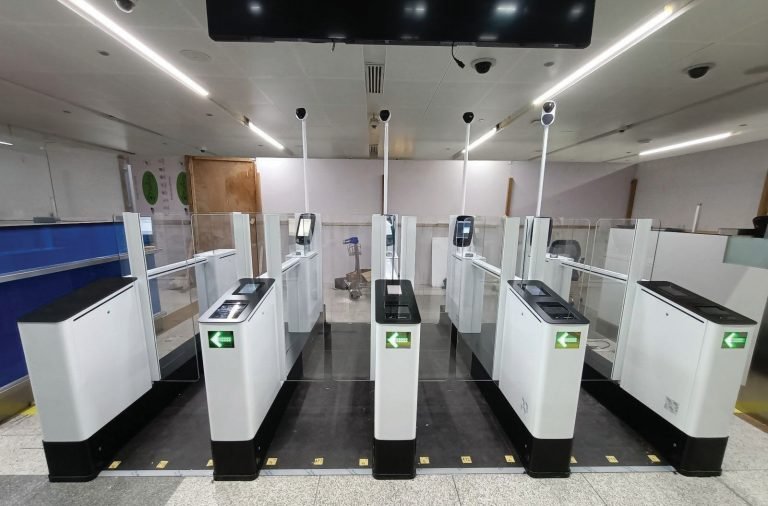
With COVID-19 changing the outlook of travel and transportation worldwide, safe and minimal touch machines are the need of the hour, especially in public places with large numbers of outgoing and incoming passengers all day long. Therefore, automation companies, such as Toshi Automatic Systems Pvt. Ltd., manufacture products like Platform Screen Doors, AFCS Gates, Ticket Vending machines, etc., for entry and exit of passengers at metro/ railway/ bus stations. 

Platform Screen Doors (PSD) are compatible with both signalling and RFID functionality. They are suitable for underground, ground, and skyway stations, and offer climate control technology for underground metro. Finally, and most importantly, they prevent trespassing of passengers to ensure the utmost safety of travellers.

1
Photo Copyrighted

AFCS Gates are essentially Flap Barriers that undergo design alteration to make them suitable for automatic fare collection of BRTS and Metro Stations. In addition, AFC Gates integrate multiple identification access control functions, including Quick Pass, mobile phone QR code, bus card, and token.

Ticket Vending Machines are cash-less dispensers that integrate multiple functions, including cash collection, coin module, token ticket dispensing, bankcard acceptance, module monitoring, ticket, and voucher printer. Highly customisable machines that can be modified with video, voice, and sound & light prompts. TVMs allow ticket buying by notes/ coins/ bank cards and permit ticket selling through token/ QR code (touch-free concept) while consecutively printing tickets and vouchers.

WHY INDIAN AUTOMATION COMPANIES SHOULD BE GIVEN A CHANCE TO MANUFACTURE AND PARTICIPATE IN THE MASS MOBILITY DOMAIN? 

2012 10 14 11.16.14 1
Photo Copyrighted
  • Lower cost of production

One of the unavoidable reasons for foreign investments in India is the low cost of labour and production. Combine that with Indian manufacturing units, and the cost can be reduced even further while ensuring fair play and ethical standards. 

  • Lower transportation cost 

With the logistics cost higher than US and Europe at 12-13% of GDP, India spends a significant amount on freight and transportation expenses for goods and services. Simply allowing Indian SMEs to manufacture and manage logistics domestically, these costs can be lowered significantly. 

  • Develop job opportunities 

With India’s population and the unemployment rate on a steep rise, more job opportunities are only likely to benefit the economy. Moreover, with the decline of the rural economy in India, a shift to the manufacturing sector is necessary to balance the jobs lost. 

  • Ease of Business 

Globalisation and exposure to global technology and standards have made Indian companies equally competent to international giants. In fact, with the dynamic quality of engineers and business owners in India and their roots set in the country, they are likely to know their economy better than their global counterparts, making it easier for them to conduct business and generate trust amongst domestic allies. 

Currently, due to over-reliance on Chinese and European companies to complete Metro and Airport projects, the Indian SMEs are not getting a chance to prove their capabilities. For example, ToshiAutomatic successfully completed the first-ever BRTS project in Ahmedabad in 2016 with over 900 PSD doors. While that was the first and last project executed by an Indian company, the faith in the Indian Government remains unwavered to provide local enterprises with the responsibility and chance to participate along with Foreign companies in upcoming tenders. 

About Company:

Toshi Automatic Systems Pvt. Ltd., which was established in 1992  have grown to emerge as thought leaders and innovators in IndustrialPublic SafetyMass Transit and Hygiene Automation Solutions.

Over the past 29 years, Toshi Automatic Systems Pvt. Ltd. has evolved from a household operation to a nationally recognised brand name. However, as we continue to evolve in a dynamic market to place the needs of our clients at the forefront of our purpose, we are committing ourselves to the highest standards of service through a platform built on better QSP – Quality, Service and Price.

How AFDD+ is the innovative solution to reduce the risk of Electrically Ignited Fires

According to India Risk Survey (IRS) report, more than 700 cases register on fire outbreaks in 2019, out of which more than 80 per cent of the cases are due to electric short circuits. It is a risk for people and property and harmful for the business flow and operation.

The initial stage before the fire outbreak is the generation of ARC in the circuits, which goes unnoticed because the protection devices installed/available are not designed to capture these ARCs coming in the circuits.

Here, a product can detect the ARCs and prevent major electric failure, leading to fire, especially in the single-stage application that is AFFD+.

WHAT IS AFDD+

AFDD+ stands for Arc Fault Detection Device, offers a comprehensive protective solution against fires triggered by arc faults. It significantly enhances your safety concerning electrical fires in your home. The device detects arc faults and automatically trips to help prevent electrical fires through continuous electronic cable monitoring.

image

HOW DOES AFDD+ WORK
Arc formed is always persistent, and it induces change voltage pattern, current pattern and thermal effect in the wire/cable. When an arc fault occurs, it has unique and readily identifiable characteristics, i.e.,

  • High-frequency disturbances within the fault current
  • A breakdown of the fault current, close to the zero-crossing of the driving voltage

AFDD+ applies an algorithm with its embedded integrated electronic circuit and uses these changes in electrical characteristics to ensure sensitive detection of arc fault currents, combined with avoidance of unnecessary tripping.

WHY EATON’S AFDD+
Eaton’s AFDD+ is the industry’s first protection device that provides a combination of three levels of protection, i.e., (MCB+RCD+AFDD) without compromising basic protections.

image 1

ADVANTAGES OF EATON’S AFDD+

  • Three-in-one protection
  • The broadest range for selection
  • Clear identification of all faults
  • Provides the last fault history
  • Avoid Irritant tripping
  • Cross talk test
  • Clear differentiation between arc & spark


AVOIDING ARC FAULT MASKING
Power line communication can cause intense signals that mask the disturbances generated by arc faults. The EATON AFDD+ has been developed to ensure this does not interfere with its detection capability. AFDD+ is also tested with the Cross Talk Test, which is conducted according to International Electrotechnical Commission (IEC) 62606:2013. This test is performed by a disturbance caused by electromagnetic interference, along with a circuit or a cable pair. A telecommunication signal disrupts a signal in an adjacent circuit and can cause the indications to become confused and cross over each other. Therefore, only the right AFDD shall trip (not the neighbouring devices).

EATON AFDD+ RANGE

Rating: 10A to 40A

MCB + RCCB + AFDD

B & C Curve

Pole: 2P

Breaking capacity: 10kA up to 25A and 6kA for 32A, 40A

Sensitivity: 10mA (10A-25A) and 30mA

Type: A and AC

INDICATION OF FAULTS
AFDD+ is an all-in-one device that indicates all the faults and gives the last fault history.

image 2
image 3

Green, no arc fault occurred
1x yellow, serial arc fault
2x yellow, serial arc fault of dimmed load
3x yellow, parallel arc fault
4x yellow, overload > 270V
5x yellow, over-temperature in device >115°C
6x yellow, device failure, testing required

CONCLUDED OUTCOME
Suppose you want complete protection against electrical hazards. In that case, you should have selected the right product which offers protection from essential to advance security & AFDD+ ensure the continuity of the system with utmost safety. Moreover, it conveniently removes the need for three separate protective devices. As a result, it gives electricians a more efficient tool for ensuring customer safety, putting at their disposal a state-of-the-art arc fault detection device that also complies fully with all applicable standards.

About Eaton

Eaton’s mission is to improve the quality of life and the environment through the use of power management technologies and services. We provide sustainable solutions that help our customers effectively manage electrical, hydraulic, and mechanical power – more safely, more efficiently, and more reliably. Eaton’s 2020 revenues were $17.9 billion, and we sell products to customers in more than 175 countries. We have approximately 85,000 employees.

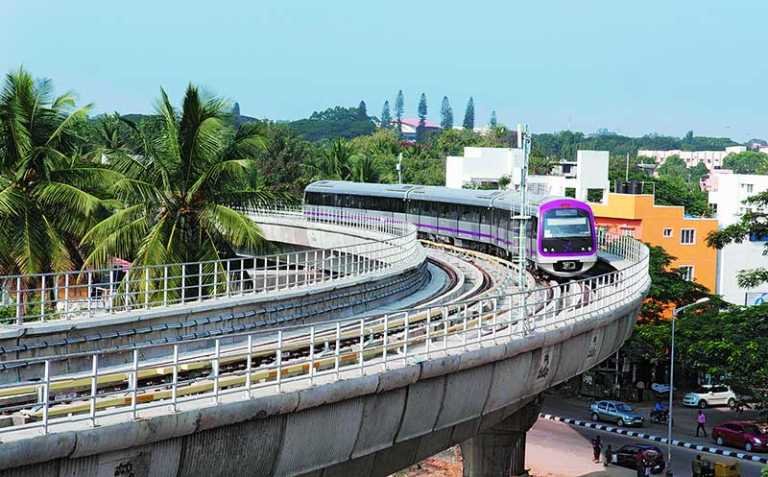
Over 7,500 people travel Mysuru Road-Kengeri Section on Day-01

BANGALORE, INDIA (Metro Rail News): On 30th August 2021, i.e., Monday, the Kengeri line starts its first day of commercial operations, and over 7,500 people use the metro services.

Commuters are delighted after getting this news. However, one commuter said that I couldn’t believe the metro is finally open for us. I used to take an autorickshaw and train from Mysuru road station, but now Metro is almost at my doorstep.

According to the given report by BMRCL, On Monday, metro ridership was over two (2) lakh commuters travel in metro between 07:00 AM to 08:00 PM, including 95,387 on purple 1,04,590 on the green line. It includes the Kengeri section; whose projected daily ridership was 75,000.

While techies were less due to work from home arrangements, many travellers were government and private employees. Some opined they feel safe and relaxed in the metro ride.
buy viagra online no prescription
The parking facility at Kenegri station is not open, so many commuters used the facility at the nearby BMTC bus terminal.

The Kengeri section is expected to cater to many, especially those travelling to Bangalore University (Jnanabharathi campus), Global Village IT Park and RV College of Engineering Extension from Kenegri to Challaghatta (2KM) is scheduled for completion by March 2022.

The 7.5 KM Kenegri section with six (6) stations was inaugurated on 29th August 2021, i.e., Sunday. Therefore, the travel time between Byppanahalli to Kenegri is approximately 52 minutes only.