Home Blog Page 414

Tenders invited for construction of Depot cum Workshop at Subhash Nagar

BHOPAL (METRO RAIL NEWS): Madhya Pradesh Metro Rail Corporation Limited (MPMRCL) has invited E-Tenders from reputed and experienced contractors for the Construction of Depot cum Workshop at Subhash Nagar for the Bhopal Metro Rail Project.

Source of Funds:

The Employer has applied for loans from the European Investment Bank – EIB (hereinafter called “Funding Agency”) towards the part cost of the Project and intends to apply a portion of the proceeds of the loans for payments under this Contract. Disbursement of the loans will be subject, in all respects, to the terms and conditions of the Loan Agreements, including the disbursement procedures and the applicable guidelines of EIB (http://www.eib.org/attachments/strategies/ guide_to_procurement_en.pdf).

Key Details:

  • Name of work: Construction of Rolling Stock Depot cum Workshop at Subhash Nagar for Bhopal Metro Rail Project
  • Approx. cost of work: INR 3,22,91,41,307/-
  • Completion Period: 1092 Days
  • Pre Bid Meeting Date: 06-Oct-2021 11:00 AM
  • Bid Submission Start Date: 04-Nov-2021 11:00 AM
  • Bid Submission End Date: 11-Nov-2021 04:00 PM
  • Bid Opening Date: 12-Nov-2021 04:30 PM

The scope of work Bhopal Metro Depot work :

Depot is to be constructed based on IGBC Platinum Rating. The work content in this contract consists of, but is not limited to, supplying all labour, materials, tools, plants and necessary machinery as required to completely execute all works relating to:

  • Construction of following buildings at the Metro Train Depot cum Workshop at Subhash Nagar, Bhopal:
    • Boundary wall , Diaphragm wall, Earth work and land area grading works, Cutting and filling.
    • Repair shops (Pre-Fabricated Building) for major repair of Metro trains.
    • Inspection sheds (Pre-Fabricated Building) for routine inspection of Metro trains.
    • Stabling shed (Pre-Fabricated Building) for night stabling of Metro trains.
    • Covered offices for major repair & routine inspection of Metro trains.
    • Depot stores with loading unloading facility and storage facility for inflammables.
    • Engineering Train Unit (ETU) stabling (Pre-Fabricated Building).
    • Internal cleaning shed (Pre-Fabricated Building)
    • Pit wheel lathe shed (Pre-Fabricated Building)
    • P-way, S&T, E&M, Traction workshop and Office building.
    • Underground water tanks, pump room and water distribution system.
    • Water Filtration plant and control room.
    • Sewage and Effluent treatment plant and control room.
    • Administrative Building, OCC & DCC
    • Training Centre & canteen building
    • Time office and security building.
    • Car parking for four wheelers and two wheeler-parking facilities
    • Receiving cum Traction Sub-station and Aux. Sub-station building
    • Metro Coach Unloading facilities
    • Check posts
    • Approach roads and Main/Access Gates.
    • Pathways and Inspection Platforms in Inspection, workshops and Stabling.
    • Pits in Inspection, workshops, stabling, Interior cleaning and Pit wheel Lathe.
    • Boundary walls and Fencing (other than peripheral)
    • Services- Electrical (Illumination and Power distribution) and Plumbing (water supply- raw, soft water, RO and treated water, storm water, sewage and effluent and compressed air).
    • EOT Cranes for Inspection, Workshops, ETU and PWL.
    • Compressor and compressed air lines.
    • Civil / Foundation work for M & P (Machinery & Plant)
    • M & P and STP, ETP & WTP
    • Approach ramp for main line tracks.
    • Finishes and waterproofing of above structures and facilities.
    • Firefighting facilities.
    • Approval from statutory authorities.
    • Interfacing with designated contractors – Civil Contract Viaduct/Abutment/Station for boundary / retaining wall, road works etc., systems contractors track, traction, signalling and telecom, rolling stock, solar system, MEP and AFC contractors and providing access of various buildings sites to these contractors.
    • Interfacing with M & P contractors- Pit wheel lathe, Blow Down Plant, Train wash, Pit jack and mobile jack contractors and providing civil, structural & and plumbing- water & drainage and electrical-power & earthing requirements of these contractors.
    • Interfacing with Rolling Stock contractors and providing their requirements.
    • Interfacing with Solar Power System contractors and providing their requirements.
    • Obtaining IGBC Platinum Rating.
    • Depot contractor shall verify the DDC’s detailed design, calculation/reports etc. by doing his own calculations, Design verification, shop drawings, calculation/reports etc based on the DDC design.
    • Trenches, ducts, cable trays, raceways and cable tray hangers including conduits for High Voltage cables, Traction cables, Signalling and telecom, AFC, Emergency Tripping devices, LAN and optical fibres.
    • Rain Water Harvesting along with re-charge pit and silting chamber. Outfall/outlet connection to existing Municipal manhole/drains.
    • Geophysical investigation and Installation of Borewell as water resources.

Tenderers may download the tender documents from the official e-portal https://etenders.gov.in/eprocure/app from 25.08.2021 to 11.11.2021.

Schindler wins order to deliver 180 escalators for Bangalore Metro’s Phase-2 project

BANGLORE (METRO RAIL NEWS): Schindler has been chosen to supply and install 180 escalators for the Bangalore Metro Rail Corporation Ltd’s Phase 2 project’s two additional routes. The project will connect Bangalore’s tech hub to Bangalore International Airport by integrating the metro network with the city’s other urban transportation systems.

Bangalore, India’s third-largest city, is a global technology centre. The Phase 2 project, which is expected to be finished in 2026, would encourage public transportation in Bangalore’s Information Technology (IT) district, with the goal of reducing traffic congestion in the city. The project has been broken down into elevated reach extensions and underground parts. Schindler was chosen for the project because it will incorporate 140 escalators for the new Yellow Line route connecting Bangalore with Electronic City, one of India’s largest IT industry parks.

In addition, Schindler will deliver and install 40 escalators for the new Pink Line north-south route through the city. The new stations will be able to transport an additional 370,000 passengers a day.

“We’re proud to be supporting a project of this magnitude that is bound to improve quality of life in Bangalore. Our technology will help the people of Bangalore navigate the city’s expansive public transport network in a reliable, safe, efficient, and comfortable manner,” said Jujudhan Jena, Member of Schindler’s Executive Committee responsible for the Asia Pacific. “I’m honored that we will play a vital role in forming the beating heart of Bangalore’s metro system.”

About the project:

  •  Bangalore Metro Rail Corporation Ltd (BMRCL) is a Special Purpose Vehicle (SPV) of Government of Karnataka (GoK) and Government of India for implementing Bangalore Metro Rail Project.
  • BMRCL Phase-I network comprises of Purple and Green Lines spanning a total length of 42.30 Km of which about 8.82 Km is underground and about 33.48 Km is elevated. 
  • There are 40 stations in Phase-I, of which 7 stations are underground, 1 station at grade and 32 stations are elevated.
  • BMRCL Phase-II spans a length of 72.095 km – 13.79 km underground, 0.48 km at grade and 57.825 km elevated and adds 61 stations to the network, of which 12 stations are underground. 
  • Phase-II network comprises of extensions to Purple Line (East-West) between Baiyappanahalli and Whitefield (R1 Extn of 15.5 Km) with a depot at Whitefield (also known as Kadugodi) on the Eastern end and Mysore Road to Chellagatta (R2 Extn of 6.1 Km) with a depot at Chellagatta on the Western end of the corridor. 
  • Similarly, the extension to the Green Line (North-South) comprises of stations between Nagasandra and BIEC (R3 Extn of 4 Km) on the Northern side of the corridor and between Yelachenahalli to Silk Institute (R4 Extn of 6 Km) with a depot at Anjanapura on the Southern end of the corridor. 
  • Further two new lines are being added between RV Road to Bommasandra (R5 of 18.8Km) with a depot at Hebbagodi and between Gottigere to Nagawara (R6 of 21.2 Km) with a depot at Kothanur. 

Tremble trial of Navi Mumbai Metro Line 1 project will start from 28th August 2021

MAHARASHTRA, INDIA (Metro Rail News): The City and Industrial Development Corporation (CIDCO), the central agency for implementing the metro rail systems in Navi Mumbai, plans to open a part of the stretch for commercial operations by 2021.

Indian Railway’s Research Design and Standard Organization (RDSO) had announced the date to commence the tremble trial of the metro trains from 28th August 2021 to check the dynamic behaviour of the rolling stock or metro cars in different conditions to ensure the quality of the trains and safety of the riders.

According to the latest report, the metro cars will be tested for their braking system, tracks’ worthiness, and the cars at different times. The trails will be conducted for the 5.14 KMs section between Pendhar Station to Central Park Station of the Navi Mumbai Metro Rail Project.

“Tremble trial is a crucial stage before commissioning of metro service for citizens. The commuters service will be beginning soon on metro line no.1 in two phases after the tremble trial, said Shri Sanjay Mukherjee, Vice Chairman and MD, CIDCO Ltd.
buy diflucan online https://healthcoachmichelle.com/wp-content/themes/twentytwentyone/inc/en/diflucan.html no prescription

CIDCO has been responsible for developing four elevated metro corridors under the Navi Mumbai metro project to make the city’s public transport system more efficient and interconnect different nodes. A trial run of line 1 measuring 11.1 KM with 11 stations and depot at Taloja was conducted successfully in May 2021.

Recently, CIDCO has been awarded a contract and appointed Maharashtra Metro Rail Corporation (Maha Metro) to operate and maintain the Navi Mumbai metro’s phase 1 for ten (10) years.

Alstom’s Coradia iLint hydrogen train runs for the first time in Sweden

SWEDEN (METRO RAIL NEWS): Alstom’s Coradia iLint passenger train, the first in the world to be powered by hydrogen, makes its Swedish debut in Östersund today. Alstom teams are presenting the train to a variety of local stakeholders, including regional operators, transport authorities, government decision-makers and leading media, to highlight the potential of the Coradia iLint for sustainable transport in Sweden.


“The Coradia iLint trains represent a huge opportunity for Sweden to reduce CO2 emissions and even decarbonise rail transport. Thanks to hydrogen-powered public transport, regional operators can be beacons of modern mobility, as experienced recently in Germany, the Netherlands and Austria – that have tested and are implementing (or planning to implement) hydrogen trains,” says Rob Whyte, CEO Alstom Nordics.

Sustainable Mobility Without Compromise


In 2016, the launch of the Coradia iLint, a CO2-emission-free regional train that represents a true alternative to diesel power, positioned Alstom as the first railway manufacturers in the world to develop a passenger train based on hydrogen technology. The first two 100% H2 iLint trains entered commercial service in 2018 in Germany and have already covered more than 100 000 km. To date, 41 trainsets have been ordered in Germany, and successful trials have taken place in Austria and in the Netherlands.

In Italy, the operator FNM confirmed an order for 14 100% H2 trains at the end of 2020. In line with its aim to facilitate a global transition to a low-carbon transport system, Alstom has pioneered several sustainable mobility solutions. The Coradia iLint is a perfect illustration of Alstom’s commitment to designing and delivering innovative and environmentally friendly solutions: the Coradia iLint is the world’s first passenger train powered by a hydrogen fuel cell, which produces electrical power for traction. This zero-emission train emits low levels of noise, with exhaust being only steam and condensed water. Its performance matches with regular regional trains with a maximum speed of 140 km/h and comparable acceleration and braking performance.
buy kamagra oral jelly online https://blackmenheal.org/wp-content/themes/twentytwentytwo/inc/patterns/en/kamagra-oral-jelly.html no prescription
Likewise, passenger capacity is up to 300 passengers and the train has a range of 1,000 kilometres.
The innovative hydrogen technologies implemented by Alstom have been recognised by the industry. In 2021, the world’s first hydrogen train Coradia iLint was honoured with the European Railway Award 2021. Alstom is also doing this to demonstrate that hydrogen is a possible climate-friendly solution for trains in general, not just the iLint.

Hydrogen Trains for Non-Electrified Routes

Designed specifically for use on non-electrified lines, the Coradia iLint enables clean, sustainable train operations. This is of great importance for the environment: replacing one diesel regional train with one
hydrogen train will reduce the yearly CO2 emission equivalent to 400 cars.

Despite many electrification projects in several European countries, a significant proportion of the continent’s rail networks will remain non-electrified for the foreseeable future. Coradia iLint uses the existing infrastructure without the need to invest in electrification.
Alstom is the largest player on the Swedish railway market, with over 1 000 trains delivered. Alstom is holding several large maintenance contracts and is offering maintenance in 19 local depots, including depots in Motala and Västerås specialising in heavy maintenance and refurbishment. The company is also leading the ERTMS1 rollout in Sweden both onboard and trackside and is delivering the new standard national traffic management system for Trafikverket.

Virgin Hyperloop released a video on Futuristic High-Speed Transportation System

On 23rd August 2021, Virgin Hyperloop launched a promotional video explaining how its futuristic high-speed transportation system will work in several cities.

In November, the company, an arm of Richard Branson’s Virgin Group, successfully tested out its hyperloop system with human passengers. The vehicles, referred to as “pods,” will eventually be able to seat up to 28 passengers at speeds of over 670 mph (over 1000 km/h) — three times faster than high-speed trains and ten times faster than traditional rail options.

Their Twitter handle posted a video; Virgin Hyperloop shows that the system starts with a “near-vacuum environment inside a tube” that facilitates high speeds and low power consumption by reducing aerodynamic drag. Then, pods will travel quietly using “proprietary magnetic levitation and propulsion” that lifts and guides pods on a track and allows several pods to depart per minute across different routes.

The hyperloop system also aims to have a lower environmental impact than other modes of transportation using solar panels and 100 per cent electric energy.

“After building and testing the world’s first hyperloop system, we are now focused on our commercial product; the key to our product is guided by a design that is elegant through its simplicity, future-proof due to its modularity, guided by principles of this century,” said the company in that video.

Kolkata Metro: 3 Tunnels is being dug between Sealdah and Dharmatala

KOLKATA METRO (Metro Rail News): East-West Metro is going to take a fancy initiative keeping in mind the safety of the passengers. These three (3) tunnels are being dug between Sealdah and Dharmatala metro stations. The metro took the initiative so that commuters can be evacuated quickly in case of any disturbance while travelling

According to the East-West Metro Rail report, three tunnels is being dug at Subodh Mallick Square between Khabar, Sealdah and Dharmatala. The pit length is up to 13 meters below the ground. 

Passengers will be brought out through the tunnel if any journey is being disrupted. Metro’s initiative is considered to be very significant in terms of passenger safety. Meanwhile, the Sealdah station is also being specially arranged, keeping in mind the safety of passengers. Because there will be a large gathering of people in Sealdah, Metro has decided to make arrangements to open both the metro doors at Sealdah station. This decision took so that the crowd of commuters at the station does not form too much disturbance.

The construction of the Sealdah station is about completion. The metro will run from Phulbagan to Sealdah in the next few months. After that, the metro will proceed towards Howrah through Dharmatala through Kolkata from the tunnel.

DMRC will be built a “National Metro Rail Knowledge Centre” at Vishwavidyalaya Station

DELHI (Metro Rail News): According to a statement released by the DMRC, Vishwavidyalaya station will get a dedicated facility to showcase the rapid growth and development of the metro railway in India and a technical understanding of construction and day-to-day working operations of the Delhi Metro.

Under the plan, a “National Metro Rail Knowledge Centre” will be built at an approximate cost of Rs. Forty-Six (46) crores at the station on a Public-Private Partnership (PPP) basis. The DMRC floated a tender on 19th August 2021. The approximate area of this knowledge centre is 3000 Sq. Meters.

Before this initiative, DMRC builds a metro museum at the Patel Chowk station, where they display various equipment and models which showcase the journey of DMRC from 2002- till now.

“The main aim of this structure is to spread knowledge and awareness on metro construction, operation facilities, challenges, latest developments, history & sharing of other valuable experiences with other metros and the general public to promote the use of the metro system. The knowledge centre will showcase the growth and development of Metro Railway in India and will act as a centre/hub of knowledge about the latest metro technologies,” said DMRC officials.

The knowledge centre will also have a simulator room, audio and visual televise of films and documentaries, several kinds of research, other published materials about the metro. Apart from the knowledge centre, a surface parking area will be developed over 2800 sq. metres, and a sprawling commercial space will have a restaurant cum bar, cafeteria, and memento outlets.

Banglore Metro’s Mysuru Road – Kengeri section is all set to open on August 29, 2021

BANGALORE (Metro Rail News): Bangalore Metro Rail Corporation Limited (BMRCL) has finally set a fixed timeline to open the extended Purple Line on Mysuru Road on 21 Aug 2021

“From Mysuru Road station to Kengeri under Phase II of the Namma Metro project, the line will be opened on 29th August 2021 at 12:00 PM. Union Minister of Housing and Urban Affairs (MOHUA) Shri Hardeep Singh Puri and Bangalore’s Chief Minister Shri Basavaraj Bommai will participate in the inaugural session,” said Shri Anjum Parwez, Managing Director, BMRCL

“We have come up with certain plans to run trains on the extended line. Initially, during peak hours, every train that departs from Baiyappanahalli will go to Kengeri. During non-peak hours, every alternative train will be operated till Kengeri. However, if footfall increases during non-peak hours, we will run the required number of trains for the benefit of passengers,” said MD, BMRCL.

The 7.53 KM metro line has six stations, i.e., Nayanadahalli, R.R. Nagar, Jnanabharathi, Pattangere, Kengeri Bus Terminal, and Kengeri.
buy temovate online https://healthcoachmichelle.com/wp-content/themes/twentytwentyone/inc/en/temovate.html no prescription
BMRCL estimates that more than 75,000 people would travel on the line every day peacefully and happily. The BMRCL has spent Rs. 1,560 crores for infrastructure and Rs. Three hundred sixty (360) crores for land acquisition to build the line.

According to the sources, a few days ago, BMRCL received authorisation from the Commissioner of Metro Railway Safety (CMRS) to start the commercial operations with specific riders.

It is the second time a metro line is opened for commercial operations under Phase II of Namma Metro. In January 2021, BMRCL opened the extended section of the Green Line of Namma Metro from Yelachenahalli to Silk Institute on Kanakapura Road.

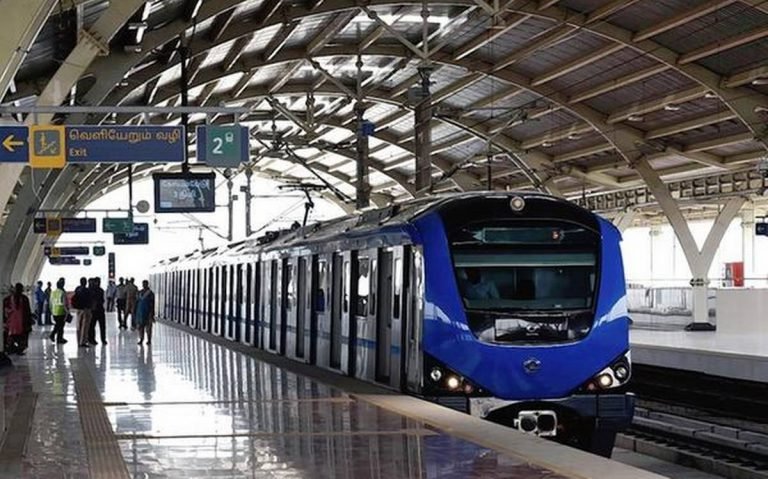
Chennai Metro services extend till 11:00 PM on weekdays

CHENNAI (Metro Rail News): Owing to demand from passengers for more train services at night, Chennai Metro Rail Limited (CMRL) had announced the extension of train services to 11:00 PM on weekdays (Monday to Saturday), which starts from Monday, i.e., 23rd August 2021.

On Sunday, CMRL announced that trains will now be operated from 5:30 AM to 11:00 PM on weekdays along with the Green (between St. Thomas Mount and Puratchi Thalaivar Dr. M.G. Ramachandran Central Metro stations) and Blue (between Airport and Wimco Nagar metro stations) lines, as opposed to the earlier timings of 5:30 AM to 10:00 PM.

Peak hour services will be from 8:00 AM to 11:00 AM and 5:00 PM to 8:00 PM, with trains running with a progress of 5 minutes. Trains during non-peak hours will continue to run with a progress of 10 minutes.

On Sundays and public holidays, train services will run from 07:00 AM to 09:00 PM with 10 minutes throughout the day without peak hours. CMRL had resumed operations with 50% occupancy along the Green and Blue Lines in Chennai from 21st June 2021, following relaxations in lockdown restrictions. Resumed operations with 50% occupancy

According to government covid-19 guidelines, CMRL has been sanitising trains and stations regularly. For example, with only 50% occupancy allowed, seats have been marked with ‘X’ to ensure social distancing. In addition, masks and social distancing are mandatory, and crowd control staff have been deployed across all stations to ensure no one disobeys the rules and guidelines.

CMRL announced that squads are imposing fines amounting to Rs. 200 on those not wearing masks while travelling in the metro. More than 176 passengers have been fined till 21st August 2021, and Rs. 35,200 has been collected from covid-19 rules violation.

Metro Transportation, fast-growing industry all over the world

Metro Transportation is a fast-growing industry all over the world. Its adaptability, Accessibility, comfort and safety make the metro the best pick among the transportation sector. In India, a number of Metro projects are in the plan and under commissioning.

One of the main issues regarding metro projects is the High capital cost and less revenue generation. The success of the metro is dependent on many factors such as no of commuters, operating cost, alternate revenue etc. Metros are not only provided comfortable transportation to commuters it is environmentally friendly too. Researchers and experts are working on reducing the capital cost of metro rails in order to make the Metro industry more flexible. Since civil structures to be built at the initial stage that no deviation is possible that.

In the energy section, metros can implement solar panels on a lease basis, to reduce the conventional energy consumption buildings and stations. Industry can pay the rent and can give energy back to the grid as rent since the entire viaduct(elevated Rail structure) is running along with the city, the considerable panel may be exposed to sunlight which can provide a sufficient amount of energy. When coming to Buildings, open space at stations can be leased out for other vendors to generate alternate revenue.

In case of Rolling stock, the method which is in consideration is Train procurement on a lease basis. I.e, just like we lease rooms rather than buying them, the industry can use the trains which are under someone else’s ownership, creates the revenue and pay back a portion of it which was agreed at the biding time. In such a scheme manufactures are paid on a time basis (hourly, daily, weekly or monthly) regardless of the passenger numbers. I.e, they will get paid even if there are fewer passengers in the metro. All they have to do is ensuring the availability of trains for the revenue service. Let’s see some pros and cons of such a scenario,

Pros of train procurement on a lease basis

  1. Since burden of availability lies with the manufacturer, less chances of service breakdown during revenue service.
  2. Since trains are on lease, Preventive as well as corrective maintenance can also be outsourced to the manufacturer which can reduce the company man power thus cost can be reduced further
  3. Consumables spares need not to be purchased or stored in a separate building by the metro organization, since everything shall be taken care by the manufacturer
  4. Since manufacturer need to occupy local places and buildings for offices and warehouses the rent can also be a revenue source for the organization
  5. Ads, film shooting, Sticker ads etc will get more exposure since private party also intervening in the public transport.
  6. Will encourage more pvt companies to invest or participate in public transport sector.

Cons of train procurement on a lease basis

  1. Considering all the above advantages, operational cost may be same as that of conventional metros
  2. Job security may be less for the workers just like in a private firm.