Home Blog Page 364

Women playing important role in every department of Kanpur Metro making the city safer and travel friendly

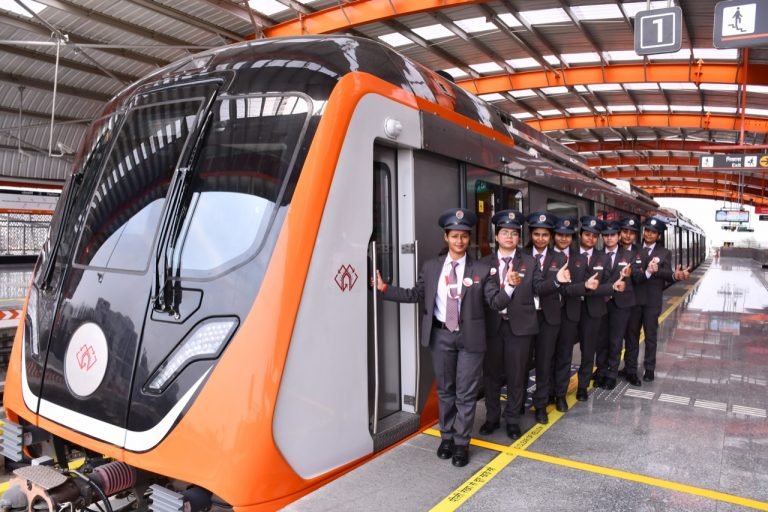
KANPUR (Metro Rail News): In order to recognise contribution and achievements of women globally, International Women’s Day is observed on 8th March every year. This year the theme of International Women’s Day is, “the role of gender equality in building a sustainable tomorrow”. There has always been active participation of women in every technical and non-technical department under the projects of Uttar Pradesh Metro Rail Corporation Ltd. (UPMRC). In Kanpur Metro Rail Project also women are creating success stories in their respective fields. Train Operations and Maintenance, Civil, Electrical and Signalling; women are playing important role in all departments of the company. Women’s share of participation in a total staff of UPMRC is almost 21%.

For the safety and security of women commuters both at the Metro stations and inside the trains, UPMRC has endowed the responsibility of running the day to day operations with the women workforce. It includes female Train Operators, Station Controllers, security personnel and housekeeping staff. They have been performing their job responsibilities and duties sincerely by taking special care of the differently abled passengers, women, children and senior citizens.

Shri Kumar Keshav, MD, UPMRC expressing his views on this special occasion said, “Metro is the safest mode of transport for women. She can move and travel anywhere in the Metro premises with complete ease and sense of freedom. Adequate number of women staffs are present at Metro stations. Besides, we don’t believe in provision of separate coaches for women, but ensures that the entire Metro premises and Metro trains are safe for women and we are performing this responsibility with utmost sincerity. We try our level best to give more opportunities to women in our organization and motivate them to take up higher responsibilities and enhance their performance. Our women employees wearing UPMRC uniform instils a sense of pride in each one of us. It is a matter of immense pride as the women workforce of UP Metro has taken long stride in transforming the organizational working environment. From security to technical, Kanpur Metro’s female staff has taken control and charge of all the departments thereby setting an example for other women.”

As a Mass Rapid Transit System (MRTS) of the city, UPMRC ensures 100% safety of women commuters in travelling from one place to another. It has taken the following measures to make women feel safe in the Metro system:

In case of any emergency, telephonic conversation with Train Operator can be established immediately by pressing Passenger Emergency Intercom (PEI). The CCTV footage of the PEI in use coach is automatically transmitted in Cab, Operations Control Centre, Depot Control Centre and Security Control room.

12 CCTV cameras per train and around 45 CCTVs are installed at every station for continuous surveillance.

Glass panelled see-through cubicles for Station Controllers & Ticket Vending Executives.

Properly Illuminated area with no dark spots at stations.

Presence of lady security personnel along with lady housekeeping staff at all stations.
RRTS rail track system is using unique precast track slab technology 1st time in India

DELHI (Metro Rail News): India’s first RRTS project under construction between Delhi to Ghaziabad and Meerut is a high-speed system with a design speed of 180 kmph. With an operating speed of 160 kmph and the station at every 5-10 km, it will cover 100 km in about an hour. It is very important to have an efficient and qualified rail track system to run the train at this high speed.

Since the RRTS project aims to significantly reduce the travel time, it is ultimately very important that the design of the selected track structure is suitable for high speed. It should be reliable and easily maintainable. The RRTS corridor is passing through the congested urban environment as elevated as well as the underground corridor. The selection of the ballastless track structure has been finalised after considering all these key factors.

The existing ballastless track system being used in metro rail projects in India is generally suitable for design speeds of up to 95 kmph. In the absence of high-speed ballastless track experience in the country, NCRTC has studied several internationally prevalent rail track systems to select an apt track system suitable for high speed, be reliable with low maintenance. Precast slab track system has been selected as track system for RRTS.

NCRTC adopted a strategy to identify a suitable track system for RRTS and first selected a “System Provider” who has complete knowledge and experience of the said system. After that, this technology was strategically acquired from this system provider for all RRTS corridors.

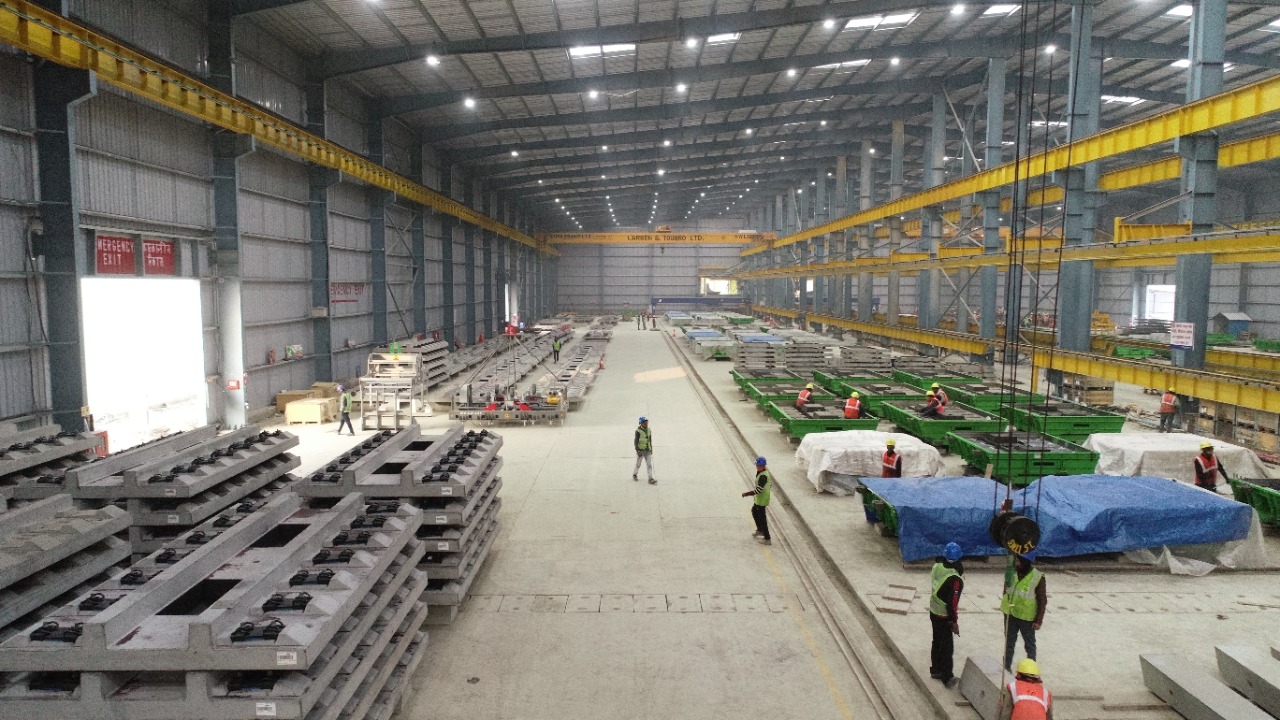
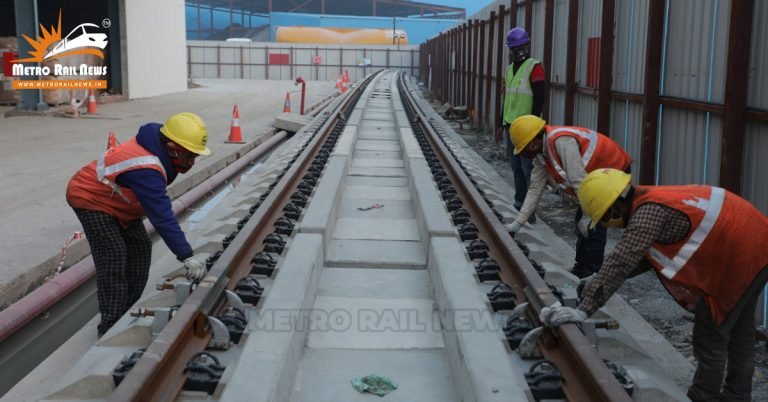
This technology is being used for the first time in India in the construction of the first Regional Rail of the country. The Precast Track Slab technology produces high capacity ballastless track slabs that have a longer life cycle and require less maintenance. Due to this, the overall life-cycle cost of the track is also low. These precast track slabs are being manufactured in a factory located at Shatabdi Nagar, Meerut. These track slabs are generally 4 m x 2.4 m in size and use elastomer as a separation layer. High-quality concrete is being used in the construction of these track slabs, due to which it has high strength and very good finishing.

RRTS Precast Track Slabs are being manufactured under the Make in India initiative. On average 90 precast track slabs can be manufactured daily in this factory. A total of about 42000 precast track slabs are to be produced for the entire Delhi-Ghaziabad-Meerut corridor, whereas for the priority corridor only, about 9000 track slabs are being made.

After the construction, these track slabs are transported on large trucks/trailers to the already built viaduct at the construction site and installed on the RRTS viaduct. Precasting helps in better quality as production takes place in a controlled factory environment and faster track laying and about 100 – 150 meters long track can be laid per day by one team through this process.

NCRTC has adopted the strategy of implementing uniform track structure across its different corridors and this precast track slab technology will be used for all under construction and upcoming RRTS corridors.

PM Narendra Modi inaugurates Pune Metro Rail Project

PUNE (Metro Rail News): Prime Minister Modi has visited Pune on Sunday where he inaugurated the Pune Metro Rail project around 11:30 AM and unveiled the statue of Chhatrapati Shivaji Maharaj on the premises of the Pune Municipal Corporation at 11 a.m. He will also lay the foundation stone of several other projects today while visiting the city.

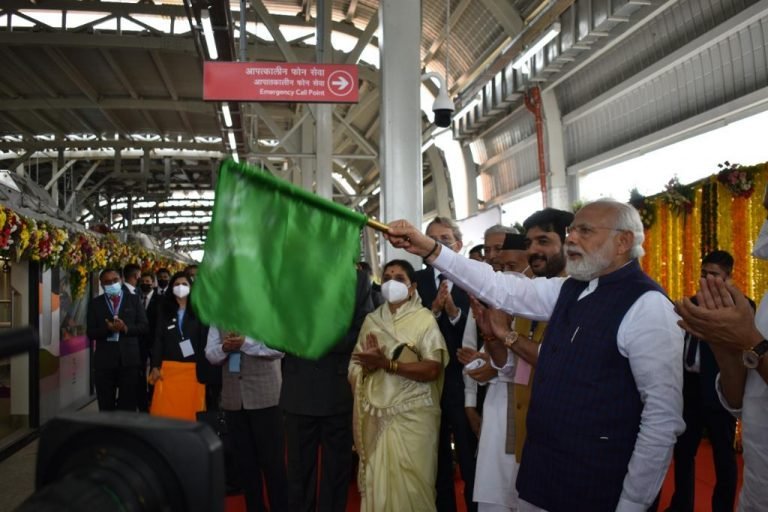
After the inauguration, He took a ride from the Garware college to the Anandnagar metro stations. Prior to boarding the metro train, Modi unveiled a plaque relating to the project, took a review of the entire project from a senior MahaMetro official and proceeded to the booking counter for taking a ticket to board the train from the Garware college station.

PM tweeted this morning to inform about his visit to the city and said “Leaving for Pune where I will be taking part in various programmes including the inauguration of the Metro Rail Project, laying the foundation stone for various development works and attending the Golden Jubilee celebrations of Symbiosis University”.

The official on 5th March said that “The Prime Minister will inaugurate the Pune Metro Rail Project around 11.30 a.m. This project is an endeavour to provide the world-class infrastructure for urban mobility in Pune”. “A 12 km stretch of the total 32.2km Pune metro rail project will be inaugurated,” he added.

Prime Minister Shri Narendra Modi inaugurated the Pune metro rail 2
Hon’ble PM paid the fare by QR code

Hon’ble PM paid the fare by QR code – mobile-based mode and purchased the ticket. At platform Hon’ble PM pressed the button that made the signal green followed by waiving of the green flag for the inaugural train from Garware College station and PCMC station (through VC). Hon’ble PM and Hon’ble Governor of Maharashtra Shri Bhagat Singh Koshyari, Dy CM Shri Ajit Pawar, Industry Minister Shri Subhash Desai, UD Minister Shri Eknath Shinde, Pune Mayor Shri Murlidhar Mohol, PCMC Mayor Smt Mai Dhore. French Ambassador Shri Emmanuel Lenain, AFD India Director Mr Bruno Bosle boarded the inaugural run from Garware college metro station and alighted at Anand nagar metro station. During the travel Hon’ble PM interacted with the students including the divyang students.

At the Anand Nagar Station,99 Hon’ble PM wrote a message in the visitor’s book “I am happy that international standard metro rail service is starting in Pune city. Fast, safe and environmental friendly public transport is available to Pune citizens now. I congratulate all Pune citizens for the successful operation of metro”

Pune metro has two corridors. Vanaz to Ramwadi 15.7 KM (all elevated & 16 stations) & PCMC to Swargate 11.4 KM (6KM underground and rest elevated) with 14 stations. PCMC to Phugewadi section (7KM, five stations) of PCMC to Swargate corridor & Garware to Vanaz section (5 KM &5 stations) of PCMC to Swargate were opened for the public after inaugurated by Hon’ble PM today.

Lots of excitement was seen among Pune citizens at all the stations even before 3 pm when the services are going to started. Everyone rushed to a nearby station to travel on the first train ride after the formal opening of Garware station to vanaz station and PCMC station to Phugewadi station route.

Commuters in queue for tickets
Commuters in a queue for tickets

The minimum fare is Rs 10 and the maximum fare Rs 20 (return fare Rs 30). There is services after every 30 minute from 8 am to 9 pm of a day. People visited stations in thousands out of excitement and to be part of this historical moment. Women’s, children, students, Sr citizens, college students were taking photographs and selfies to keep memories of this historical run. Pune metro gallery “Dream Coming True” is star attraction for selfie.

On March 6, 2022, services started on both inaugural sections from 3 pm. Till 8.30 pm on Garware station to Vanaz station route 14251 passengers travelled and PCMC to Swargate route 4414 passengers travelled.

The foundation stone of the metro project was also laid by Mr. Modi on December 24, 2016, and this ambitious metro project is being built at the cost of more than ₹11,400 crores. The project will involve works such as river edge protection, interceptor sewage network, public amenities, boating activity etc. The Mula-Mutha River pollution abatement project will be implemented on the concept of “One City One Operator” at a cost of over ₹1,470 crores. A total of 11 sewage treatment plants will be constructed under this project, with a combined capacity of around 400 MLD.

During his visit, PM will launch 100 e-buses and e-bus depot constructed at Baner in Pune and will also inaugurate the R. K. Laxman Art Gallery. After this, the Prime Minister will kickstart the golden jubilee celebration of Symbiosis University at around 1.45 p.m.

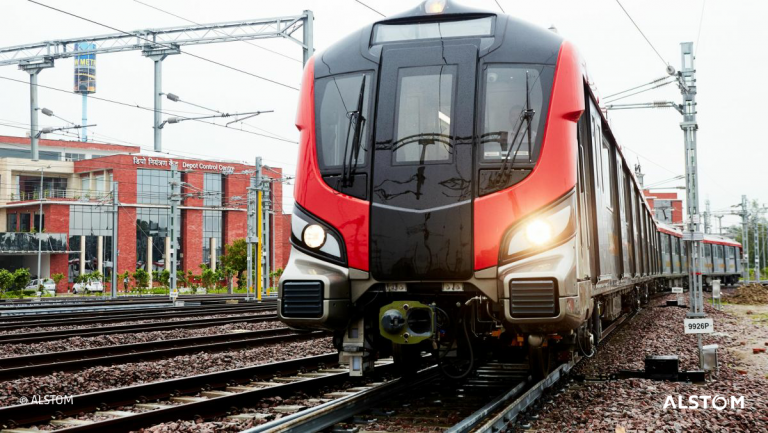
Alstom cancels Mumbai Metro Line 4 and 4A Rolling Stock contract worth Rs.1,853 crores

MUMBAI (Metro Rail News): Alstom has cancelled the contract which the company won for the project of coaches for Mumbai metro’s fourth line and its extension (Mumbai Metro-4 and 4A) due to delays.

Mumbai Metropolitan Region Development Authority (MMRDA) awarded the contract to supply 234 coaches or 39 trains for the Metro-4 (Wadala-Thane-Kasarwadavali) and Metro-4A (Kasarwadavali-Gaimukh) to Bombardier Transportation in March 2021 which has been acquired by Alstom. They bagged the contract as they were the lowest bidder with a bid of Rs 1,198 crore. But there were delays in handing over land for a car depot and other issues with the project which led Alstom to pull out of the job.

Metro Line 4 from Wadala to Kasarvadavali is planned to be a 32.32 km long elevated corridor with 32 stations. The main aim of his project is to connect the Eastern Express Roadway, Central Railway, Monorail, the ongoing Metro Line 2B (D N Nagar to Mandale) and the proposed Metro Line 5 (Thane to Kalyan), Metro Line 6 (Swami Samarth Nagar to Vikhroli) & Metro Line 8 (Wadala to General Post Office). MMRDA previously said that this project would reduce the current travel time by 50% to 75%, depending on road conditions.

Now MMRDA is looking at alternative options for the depot and according to the sources, they may move it to the Mogharpada area in Thane. As per sources, Alstom was looking forward to strengthening the mobility infrastructure for the citizens of Mumbai and supporting the Make in India initiative.

The French company Alstom is currently executing a contract for Mumbai Metro Line 3, which includes a supply of rolling stock, power supply and signaling. According to officials, two train sets for Line 3 are ready and the third one is under production at factory in Sri City at Andhra Pradesh and they will soon be delivered to Mumbai Metro Rail Corporation Limited (MMRCL). Alstom has also assured us that they are engaged in other projects all over India and that this cancellation will not be a problem in any other projects.

Metropolitan Commissioner Srinivas said that work on metro projects in the city is progressing well and two lines, Mumbai Metro Line 2A and Mumbai Metro Line 7, may start operations soon. Mumbai Metro Line 2A will run between Dahisar and DN Nagar areas in Mumbai. Line 7 connects Dahisar East with Andheri East. Both these projects are built on elevated lines.

CMRL to provide last mile connectivity at various metro stations

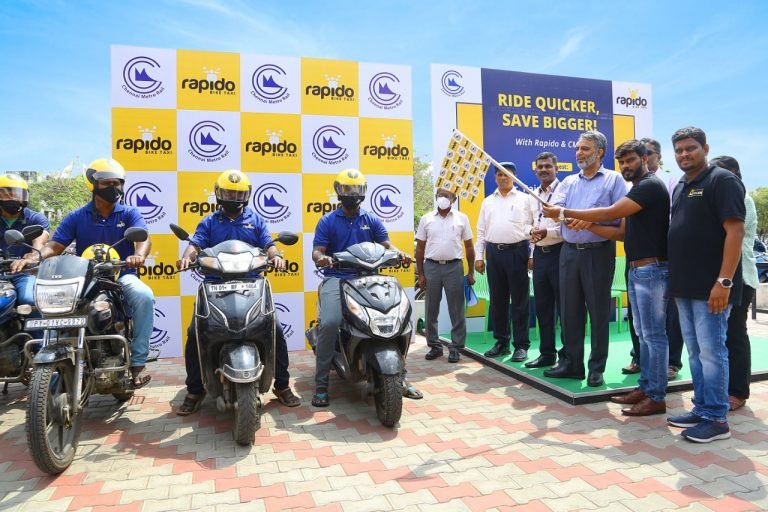
CHENNAI (Metro Rail News): In an endeavour to provide the Last Mile Connectivity to passengers travelling in metro trains, Chennai Metro Rail Limited (CMRL) in association with Uber, Taxi Service Platform and Rapido Bike Taxi Service Platform has launched last mile connectivity solutions at the Metro Stations. Rajesh Chaturvedi, Director (Systems and Operations) inaugurated this initiative today (05-03-2022) at Koyambedu Metro Station.

Uber Autos at Five Metro Stations

The last mile connectivity measures will provide pick up and drop off zones for Uber Autos at five Metro Stations in Chennai. During the first phase of this initiative, the exclusive designated zones are set up at Guindy, Alandur, Egmore, Koyambedu, and Thirumangalam Metro Stations, enabling users to have an enhanced and seamless commute experience. Uber will also provide ground support at these designated zones to ensure riders have access to Uber Autos round the clock. Additionally, it has rolled out a promotional offer of a 20% discount (max discount Rs.
buy furosemide online https://myhst.com/wp-content/themes/twentytwentytwo/inc/patterns/en/furosemide.html no prescription
50) on Auto rides, to and from these five Metro stations.

The offer will be valid until August 31, 2022. To avail this offer, registered riders need to tap on the profile icon on the top right of the app’s home screen, select “Wallet”, scroll down to “Promotions”, select “Add Promo Code” and type in the code UBERCMRL.

Rapido Bike Taxi at 22 Metro Stations

Rapido Bike Taxi, a growing bike taxi and auto service platform will provide last mile connectivity services at total of 22 Metro Stations namely Airport Metro, Arignar Anna Alandur Metro, Guindy Metro, Little Mount Metro, LIC Metro, Government Estate Metro, High Court Metro, Thiyagaraya College Metro, Tiruvottriyur Metro, Wimco Nagar Metro, St. Thomas Mount Metro, Ekkattuthangal Metro, Ashok Nagar Metro, Vadapalani Metro, Koyambedu Metro, Thirumangalam Metro, Anna Nagar Tower Metro, Pachaiyappa’s College Metro, Kilpauk Metro, Nehru Park Metro, Egmore Metro, Puratchi Thalaivar Dr. M.G. Ramachandran Central Metro Station for commencing the services. Rapido also provides a 30% discount on rides, to and from the above said metro stations.

To avail the service, passengers can download the Rapido Bike Taxi app on iOS/android, login from their account, and start booking. Once booked, the amount and captain details appear on the homepage and their personnel will be at the pick-up location in no time.

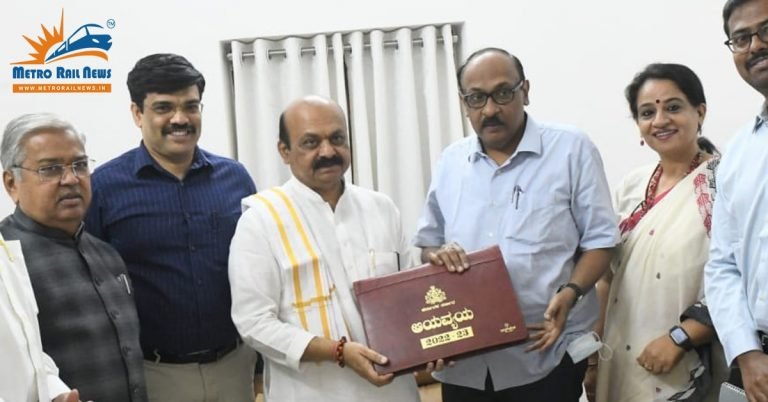
Karnataka CM Bommai announces Rs. 15,000 cr for 37 Km Sarjapur-Hebbal Metro Corridor

BENGALURU (Metro Rail News): Chief Minister Basavaraj Bommai on Friday announced a new 37-km Sarjapur and Hebbal line at the cost of Rs 15,000 crore. He also offered minor relief to BMRCL by offering a minor extension of three months to the Outer Ring Road-Airport Line (Phase 2A & 2B Lines) and announced March 2025 as the new deadline.

The Sarjapur line was previously decided as a part of Metro Phase-3 and an announcement for this was made in the 2018-2019 budget. But last year the Detailed Project Report (DPR) for the Phase-3 line was finalized and only two corridors were announced.

Sarjapur Hebbal Metro Corridor

On 4th March, in his speech, the CM said, “Action will be taken to prepare Detailed Project Report in the year 2022-2023 for construction of a new 37 km long new Metro line connecting Sarjapura to Hebbal through Agara, Koramangala and Diary Circle at an estimated cost of Rs 15,000 crore.”

The DPR for Phase-3 will be submitted to the Central government for approval, he added. This 45-km project is estimated to cost Rs 11,250 crore which will cover 32 kms on Outer Ring Road from Hebbal to JP Nagar and 13 km between Hosahalli and Kadabagere.

March 2025 is fixed as the deadline for completion of the 58.19 km line from the Central Silk Board to the Airport Line (Phase 2A and Phase 2B) during the budget speech. CM Bommai also announced connectivity between Bengaluru Metro and railway stations at a cost of Rs 55 crore. The connectivity will turn up at Whitefield, K R Puram, Baiyappanahalli, Yesvantpur, and Yelahanka. Lastly the CM restated that 33 km of metro lines will be added in the ongoing financial year.

Lucknow model metros will run in Indore

Indore (Metro Rail News): The first span between pillar no. 14 and 15 of MR-10 Indore metro will be launched on 9th March. It will have an emergency front gate and the passengers will get one train in every 90 seconds.  

Metro work in Indore has been on track since August 15. In the 31.55-km ring of the Metro, the 17-km priority corridor to Shaheed Park in Gandhinagar will be ready by December 2023. In Indore, no Lucknow model metro will run. The speciality of this is that the emergency gates will be in front of the metro and the system is being built so that in every 90 seconds, passengers will be able to get the metro train. The Metro depots and tenders of Baya Duct were allotted to agencies and the tenders for coaches and signalling systems will be allotted soon.

For Indore Metro, MPMRCL has taken up two features from Lucknow and Kochi Metro. The emergency gate in Lucknow Metro will be in front which will allow passengers to run to safety in case of power failure. The second speciality is that there will not be a web of wires at top of the metro to provide electricity as there will be a third rail power system at the side like Kochi metro. 

Due to being nearby the bridge, the launcher machine cannot be installed on the pillars therefore the launcher machines will be installed at the end of the bridge. This will enable the segments to be launched faster.  In this stretch of 5.29 km, the tender for Viaduct has been bagged by Dilip Buildcon.  203 pillars will get ready in this part. The pillars from MR-10 Bridge to Chandragupta Intersection in the middle of the road and on the side have been drawn in parallel. The metro train will pass through these 11 portals. After this, the entire track will run on a single pillar. This change has been made due to the gas pipeline in this part.

In the first phase, three coaches will run with one coach having a capacity of 250 passengers. The tender of 75 coaches of the metro has been opened by MPMRCL on February 25, the technical evaluation of which is going on. It is designed as 6 coach metro and the work on the first 3 have started. The Kanpur-based agency has received the depot contract for Rs 247 crore. This depot is being built in Gandhinagar for the maintenance of the 75 coaches of the metro.

MRIDC starts process to build 20 railway stations for Pune-Nashik semi-highspeed rail line

MUMBAI (Metro Rail News): Maharashtra Rail Infrastructure Development Corporation Ltd (MRIDC) has started the process to construct 20 railway stations on the 235.15-km broad-gauge rail on Pune-Nashik semi-high speed rail line.

This ambitious project is estimated to cost Rs 16,039 cr and is expected to be completed in 1,200 days. This line will have 24 stations and 18 tunnels on the route passing through Pune, Ahmednagar and Nashik districts and is claimed to be the first low-cost semi-highspeed rail corridor in the country which will provide seamless connectivity to industrial zones of Pune and Nashik, such as Alandi, Chakan, Khed, Manchar, Narayangaon, Sinnar, Satpur.

The major reason why this project is much awaited is that it is expected to bring down the travel time between the two cities to less than two hours. “We have started the empanelment of civil contractors for the construction of railway station buildings along with that of residential accommodation, platforms, foot overbridges, station circulating areas and other utility structures, including architectural finishing, plumbing and high voltage electrical works, heating, ventilation and air conditioning in connection with the new high-speed electrified double rail line between Pune and Nashik,” said an MRIDC official.

The construction of approximately 20 stations in the Pune-Nashik line, including Pune, Hadapsar, Manjari, Wagholi, Alandi, Chakan, Rajgurunagar, Manchar, Narayangaon, Alephata, Bota, Sakur, Ambore, Sangamner, Nimon, Nandur Shingote, Sinnar, Muhdari, Wadgaon and Nashik has been started.
buy cipro online https://healthcoachmichelle.com/wp-content/themes/twentytwentyone/inc/en/cipro.html no prescription
The infrastructure such as station buildings and residential accommodation will be constructed as per Indian Railways’ standard specifications, guidelines and design parameters with solar panels installed.

The approval for this project was given by the railways in June 2020 and is expected to boost tourism, pilgrimage along the trade.

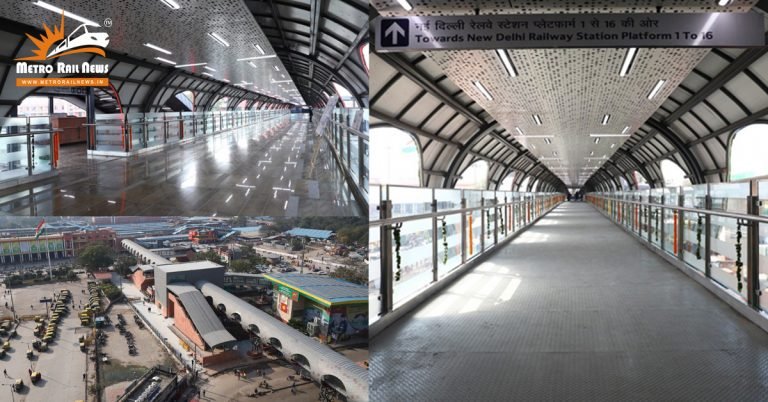
Skywalk bridging New Delhi railway with adjacent metro station opens today

New Delhi (Metro Rail News): The skywalk joining New Delhi railway station with the adjacent metro station which was announced by DMRC on Friday have been opened today on 5th March 2022 for public use.

The dedicated skywalk is constructed by DMRC in collaboration with Northern railway and has been opened at 10:00 am today. On social media handles the DMRC have announced the benefits of this skywalk such as it will provide immaculate connectivity between the New Delhi railway station and the metro station of New Delhi on the Yellow line and Airport Express Line and will also help in smooth movement of the traffic flow on the Ajmeri gate side of the railway station.

DMRC also posted about the situation and challenges which the engineers faced during the construction of this skywalk, especially during the covid-19 pandemic and added that “The Skywalk has been provided with escalators along with facilities such as CCTV surveillance cameras and many more”.

Regarding the traffic movement and construction, DMRC said that the structure had to be built above a functional underground metro station just 3 metres below with major traffic movement on Bhavbhuti Marg. Also, the bridge had to be connected to two pre-existing building structures at the far ends ensuring minimum inconvenience to the people, infrastructure and other buildings nearby.

Kavach – India’s train safety system developed by Indian Railways

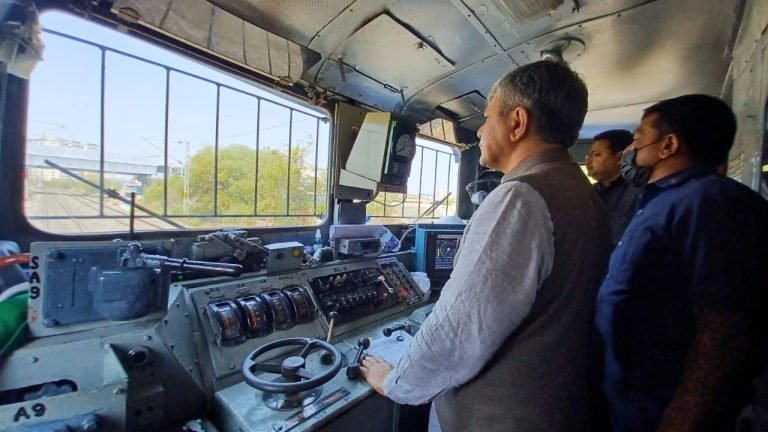
DELHI (Metro Rail News): The successful trial of Kavach which is an indigenous Automatic Train Protection (ATP) System for enhancing the safety of running trains has been conducted today in the presence of Shri Ashwini Vaishnaw, Minister of Railways. During the trial, the driver didn’t stop the train but the train stopped automatically when it sensed another train coming from the other side avoiding a collision. Kavach conforms to SIL (Safety Integrity Level)-4 which is to the highest level of safety certification.

Kavach has been developed indigenously by research designs and standards organization (RDSO) in association with three Indian Vendors. According to Indian Railways, it is the cheapest yet the best protection system in the world. KAVACH has this unique feature that initiates automatic whistling without any intervention from the Loco pilot. The amalgamation of technologies such as Relay Based, UHF Radio, RFID, GSM and GPS will collectively aid in the effective and smooth functioning of this system.

Announced in the 2022 Union Budget as part of the Atmanirbhar Bharat initiative, 2000 Km of the rail network is planned to be brought under Kavach. In addition to the trial section of 250 km, at present Kavach is under implementation on 1200 Route km of South-Central Railway.

It has been deployed on over 1098 Route Kms & 65 locos in ongoing projects of South-Central Railway. It is planned to be implemented on Delhi–Mumbai & Delhi–Howrah corridors as a part of the “Mission Raftar” project.

To make Kavach a world class ATP system the few additional features that will be incorporated in the future are:

  • Direct interface with Interlocking
  • Functionality for Temporary Speed Restrictions
  • Development of Balise for Kavach
  • Development of Kavach on LTE

This system creates a safety envelop around trains and if two trains approach each other, then both automatically stop. This will also help in bad weather conditions and foggy weather when there are chances of more accidents