Home Blog Page 337

Covid Protocols: Difficulties & Challenges in Rail Transportation

0
Metro
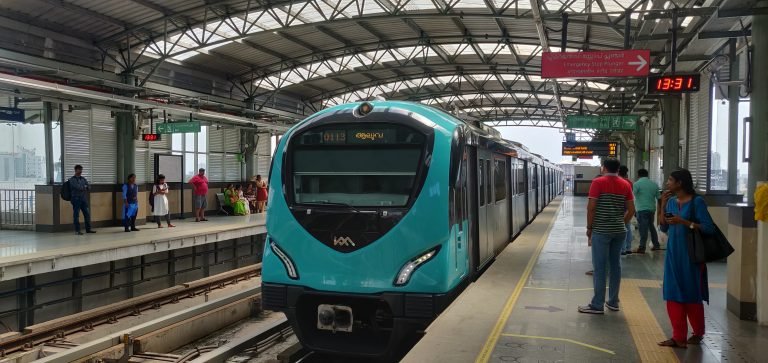
Representative Image

Despite the fact that most countries are currently observing declining trends and low incidence of COVID-19 due to the strong public health response measures adopted, it is expected that SARSCoV-2 will continue to circulate. In order to minimise the risk of resurgence of cases of COVID-19, it is advised to adopt a set of actions including enhanced community-based surveillance with comprehensive testing of possible cases, systematic contact tracing, continuation of certain non-pharmaceutical interventions, and reintroduction of additional measures in case of transmission upsurges.

A set of protocols has been designed to assist the safe and speedy recovery of the rail sector through a harmonised approach. Railway operations present a number of challenges to the response of the COVID-19 pandemic. These include but may not be limited to: 

  • Rail represents the most frequently used commuting means of transportation and trains transport millions of passengers annually. In contrast to aviation, railways continued to operate throughout the national lockdown measures.
  • Railway stations are essential public places and entrance to them cannot be strictly controlled like airports, unless national distancing measures are enforced. The same is largely true for trains.
  • The majority of train tickets are not nominal as in the aviation sector and in addition, commuting passengers use frequent traveller cards, which do not allow for passenger identification. On the other hand, contact tracing after an identified COVID-19 case is one of the most important public health response tools and railway stakeholders should be able to facilitate this process as much as possible.

Covid Protocols: Various Difficulties & Challenges

  1. Preparedness : It is advised to Railway stakeholders to develop preparedness plans if not already available, or standard operational procedures according to existing plans, for the response to the COVID-19 pandemic. It is recommended to appoint one preparedness coordinator to monitor the implementation of the adopted measures and to be the liaison person with the local/regional/national/international public health authorities.

Hot spot analyses and review of passenger flows could be applied by railway companies and authorities to support preparedness planning by enabling identification of critical points on the passenger journey or sites in hubs where transmission risk is potentially increased, therefore relevant measures need to be prioritised. Cross-border aspects should also be taken into consideration in the planning and development of COVID-19-specific protocols, including plans for cross-border contact tracing, which should be developed in consultation with the relevant authorities in various countries operating international trains.

  • Training : Training of station, train and all railway employees is needed on the adopted measures and applied procedures. This generally includes information on how COVID-19 is transmitted, physical distancing measures, hand and respiratory hygiene, the appropriate use of the recommended personal protective equipment (PPE) and the management of a possible COVID-19 suspected case in route and any new procedures they need to put in practice. Employees also need to be allowed and advised to stay at home if they have symptoms compatible with COVID-19.
  • Coordination : Coordination ensures effectiveness of response. Competent national authorities, railway undertakings, station managers, infrastructure managers and other railway stakeholders should coordinate their actions in sufficient detail. Train operations for long distances, inter-state, sub-urban movement, cross-border and international rail services, measures need to be well coordinated among national authorities responsible for public health as well as for transport for different member states and the rail management operating the rail service in question in order to be effective.

In particular, when adapting recommended measures affecting the common situation of travel companions and passengers with specific needs to local requirements, railway companies should ensure that this is done without unnecessarily affecting the passenger experience. Some specificities of railway assets (e.g. historical or small stations, old rolling stocks) may compromise application of these measures. In that case, alternative solutions should be explored. The implementation of public health and safety measures should be delivered in close cooperation between rail companies and all involved public authorities (including public health) to the best of passengers’ welfare.

  • Pro-active Communication : Recommended measures not only need to be effective but also properly communicated and visible. Railways should therefore communicate to their staff and passenger clear rules and procedures, through a variety of channels, in clear and easily accessible language(s).

The information flow should reach all levels of railway staff and as regards the passengers start well before the journey, and stay with them throughout, and a procedure in place to keep all stakeholders updated. Health promotion information should be prominently displayed in stations and on trains. Special attention should be given to passengers with special needs and people who do not speak the local mother tongue; pictograms are strongly encouraged. It is strongly advised for railway competent authorities and companies to adopt the same messages as communicated at various levels to avoid duplication of efforts.

  • Promoting Responsible Behaviour : Given the high number of passengers transported daily and the number of stations served, compliance with the general rules for safe behaviour to protect public health, depends on the diligence and sense of responsibility of transport and public health authorities, railway stakeholders and each passenger. The effectiveness of the measures recommended and implemented in trains and stations has to be aligned with those implemented at national, regional and local levels. Promoting responsible behaviour and mutual respect in times of crisis will create trust among customers and staff alike.
  • Inclusiveness : The transport of persons with disabilities and/or reduced mobility should receive particular attention during the COVID-19 pandemic. Railways & other rail based transport system should appropriately instruct staff who, in line with various rules on passenger rights, assist persons with needs and provide their staff with adequate health protection equipment.
  • Efficient Operation for health & safety : The measures herein should create a healthy and safe environment for railway workers and customers and help build confidence, complicity and trustiness. A culture of compliance with the necessary behavioural etiquette should be promoted by railway companies through available communication channels. At the same time, it is important to enable the railway companies to run their system in a robust and well-functioning way. The movement of people increases the risk of SARS-CoV-2 re-introduction into areas with low transmission or where only sporadic cases are being observed.

The movement of people refers not only to tourists, but also to commuters, business travellers and migrant or seasonal workers. However, virus re-introduction would not necessarily lead to widespread community transmission if strong surveillance, extensive testing and robust contact tracing measures are in place, together with ongoing risk communication about the importance of staying at home if travellers or staff have symptoms, physical distancing, hand and respiratory hygiene.

Various Operational Measures

image 2

The various operational measures regarding passengers and staff, regarding maintenance and cleaning of railway coaches and stations, and regarding the rail system and its equipment are outlined in three main sections:

  • General measures that should be in place all the time,
  • Measures applicable for stations/platforms and on board trains, referring to both staff and passengers, and
  • Measures applicable for train stations and on board trains.

Railway station managers and railway undertakings should take appropriate actions to ensure that passengers and railway staff follow the measures described below.

Measures that should be in place at all times

Passengers and railway staff entering stations or boarding platforms or trains should respect public health instructions to reduce the risk of spreading SARS-CoV-2.

  • Health promotion messages: Should be displayed prominently throughout stations and on board trains emphasising the main public health advice including: 
  • Physical distancing (at least 1.5 metres, ideally 2 metres) – Current scientific studies confirm that, in general, the distance that large respiratory droplets can travel in the air is 1.5 metres for normal speech and up to 2 metres when coughing and sneezing. Further evidence indicates that the physical distancing should be of at least 1.5 metres and ideally 2 metres. For this reason, during the journey and during the waiting time at the platform, passengers and staff should ensure that 1.5-metre physical distancing is maintained wherever this is operationally feasible. In whatever situation, risk-mitigating measures are essential, and should be emphasized thus meaning hand hygiene and respiratory etiquette. If because of operational constraints physical distancing cannot be guaranteed, the use of face mask should be implemented.
  • Respiratory etiquette – Strict respiratory etiquette should be advised: nose and mouth should be covered with a paper tissue when sneezing or coughing. If tissues are not available, coughing or sneezing into the elbow is recommended.  Paper tissues should be disposed of immediately after use, ideally into bins with covers, and hands should be washed/sanitised immediately after disposal of the used tissue.  Health promotion material that promote the importance of respiratory etiquette should be available in different areas of the train.
  • Meticulous hand hygiene – SARS-CoV-2 is believed to be transmitted mainly via respiratory droplets and by direct contact. However, indirect contact with contaminated fomites is also playing a role in transmission. Therefore, frequent and meticulous hand washing and disinfection plays a key role in mitigating the risk of SARS-CoV-2 transmission.  Health promotion material (e.g. posters, videos, etc.) that promote the importance of hand hygiene and explain how to perform effective hand hygiene should be available in different areas of the train.  Easy access to hand washing facilities with soap for passengers and staff, single use paper towels, and alcohol-based hand rub solutions (containing at least 70% of alcohol).  Rigorous hand hygiene should be advised; especially after contact with frequently touched surfaces, before eating, drinking, and after using the toilet.
  • Appropriate use of face masks – Face masks are recommended mainly as a means of source control for persons who are symptomatic in order to prevent the spread of the respiratory droplets produced by coughing or sneezing. There is increasing evidence that persons with mild or no symptoms at the pre-symptomatic and early stages of the infection can contribute to the spread of COVID-19.

A face mask may help reduce the spread of the infection in the community by minimising the discharge of respiratory droplets from infected individuals who may not know they are infected and before they develop any symptoms. The use of face masks outside health or social care settings can be considered, especially when visiting busy, confined spaces, or when using public transport — conditions that apply in the context of train transport. The use of face masks should, therefore, be strongly recommended for both staff and passengers on trains and at the train platforms, with particular emphasis when the ideal 1.5 to 2-metre physical distancing is not feasible.

The use of face masks should be considered only as a complementary measure and not replace the preventive measures put in place, mainly respiratory etiquette, physical distancing, meticulous hand hygiene, and avoiding touching the face, nose, eyes and mouth. In general, face masks should be replaced when they become wet or soiled, or after being worn for 4 hours. For long distance travels, passengers should be reminded that they should ensure they have a sufficient supply of masks for the entire duration of their travel.

There are three main caveats associated with the use of face masks.

  • Their correct use (how to wear and remove them, and how to manage the face mask while wearing it),
  • the proper disposal of the used face mask, and
  • the false sense of security that the use of a face mask can give.

A face mask should completely cover the face from the bridge of the nose down to the chin. Before wearing and removing the face mask, hand hygiene with soap and water or alcohol-based hand sanitiser should be observed. When removing the face mask, it should be removed from behind, avoiding touching the front side.  The false sense of safety that can be given by wearing a face mask should be considered: the face mask works mainly as a means of control for exhaled droplets, and not as a means of protection for the wearer.

Passengers should be informed about this and about the importance of observing physical distance and frequent hand hygiene, together with the proper respiratory etiquette, to reduce the risk of infection.  A used face mask as well as other waste from symptomatic patients can be treated as regular waste.

  • Recommending the use of mobile contact tracing applications (apps).

Information should also outline instructions for any person, who develops symptoms compatible with COVID-19 while at railway stations or travelling by train.

  • Strategies to reduce overcrowding : Strategies to reduce overcrowding are advisable, particularly in areas with on-going community transmission of SARS-CoV-2, in collaboration with the local/national public health authorities. Floor markings indicating the appropriate distance are advisable, where crowding is expected (e.g. ticketing, platforms, restaurants). Encourage and request that passengers purchase tickets in advance before departure (online or at ticket machines). For passengers that travel cross-border electronic tools may be available to directly collect passenger locator data for contact tracing purposes. Railway operators should ensure that passengers are informed about this requirement before their travel. Moreover, station managers should liaise with retail providers within stations, to ensure that the same principles are applied throughout the station area and to coordinate social distancing measures, e.g. the location of queues.
  • Facilitation of hand hygiene : With the maintenance of working hand washing stations in public toilets and the availability of hand sanitizer dispensers throughout the stations and on board trains. Hand sanitizers must be clearly visible for passengers and accessible for people with reduced mobility. They must also provide enough amount of fluid to perform a correct hand hygiene. In the toilets, ensure the availability of soap and disposable tissues to dry hands.
  • Enhance the cleaning of public areas in terms of depth and frequency: Procedures are needed to ensure that cleaning and disinfection is performed in a consistent manner following the principles and guidance in stations, platforms and on board trains, subject to train schedules as per standard SoP & protocol. Equipment of common use used by railways personnel such as computers, tablets, radio stations, headsets, etc. should also be disinfected before being used by another staff member. The maintenance of toilets in stations and inside vehicles may need to be adapted to ensure the proper cleaning and disinfection. Open or no-touch bins should be available at stations and on board trains for the safe disposal of used face masks and tissues.
  • Heating, Ventilation and Air conditioning (HVAC) system: Train operators and station operators should consult with the manufacturers of the HVAC systems in place in stations and on each of their train types on proper maintenance and applying COVID-19 related revisions, if needed, to minimise a potential risk of contributing to the spread of small droplets or aerosols containing SARS-CoV-2.

It includes ensuring the cleaning of HVAC system parts and changing or replacing of filters according to recommendations of the manufacturer. Increasing the number of air exchanges per hour will reduce the risk of transmission in closed spaces. This may be achieved by natural or mechanical ventilation of indoor or carriage air, depending on the setting. Direct airflow should be diverted away from passengers or staff to avoid potential pathogen dispersion from asymptomatic persons.

There is currently no scientific evidence that airborne SARS-CoV-2 would be effectively inactivated by means of electrostatic air purifiers. The application of the above guidance should be achieved based on information provided by the manufacturer or, if not available, to seek advice from the manufacturer. All COVID-19-related revisions should be performed in accordance with national and local regulations (e.g. health and safety regulations, technical recommendations of respective national or supranational associations) and appropriate to local conditions.

  • Risk communication strategies for passengers and railway staff : Should be adapted locally, if necessary, and aligned with ongoing national and local risk communication efforts to remind citizens that the pandemic is ongoing. Information should be easily accessible, accurate, timely, frequent and available to all travellers through different channels (e.g. websites, travel apps, screens, announcements, leaflets, posters). Passengers should be regularly informed via visual and audio messaging, as well as other appropriate means, about the preventive measures in place at the station and on the trains and should be reminded about the importance of hand and respiratory hygiene, of staying at home if experiencing any COVID-compatible symptoms, and of complying with any other recommendations from the national/local public health authorities. Fixed visual messages should preferably be in the form of pictograms wherever possible. In addition, if travelling cross-border, passengers should be made aware of the measures in place in the destination country.
  • Thermal screening as exit or entry screening in stations and trains is not supported by scientific evidence as an effective or efficient measure to detect COVID-19 cases and prevent the spread of the virus in areas with low transmission. Railways need to liaison with various authorities regarding the current protocols for the provision of general first aid, including cardiopulmonary resuscitation, applicable to passengers in the context of the COVID-19 pandemic.

Measures applicable to Train Stations

image 3

In addition to the measures stated in the section ‘Measures that should be in place at all times’, wherever staff members interact with passengers from a fixed location such as, but not limited to, ticketing and information counters, protective screens should be installed in such a way as to allow the handover of the required documents but provide protection to the staff member from the respiratory droplets of passengers, and vice versa.

To reduce overcrowding in stations dedicated lanes or otherwise separate passenger flows at the station and on the platforms are advisable. In addition, remove, where possible, facilities that encourage crowding (e.g. benches, tables) at stations or, re-arrange them to ensure adequate distancing; allow seating in every other seat in stations. Moreover, liaise with the retail providers in stations to apply the same principles and coordinate physical distancing measures. Implement adequate measures at embarking, at eventual security checks, disembarking (e.g. openings of doors without passenger intervention if possible, disinfection of surfaces) and other measures that help to minimise contact. Station managers could ensure availability of face masks for purchase in the stations (e.g. through vending machines or in station shopping areas).

Measures applicable on board Trains

In addition to the measures stated in the section, ‘Measures that should be in place at all times’, overcrowding on board trains should be avoided as much as possible. Where possible, passengers should be encouraged to travel off peak hours to prevent overcrowding of trains. Where operational capacity exists, increasing the number of trains serving popular routes and/or limiting the number of passengers in each train car is advisable by allowing seating in every other seat. When possible, minimising passenger crossing between carriages and queuing in the galleys or in front of toilets. Where physical distancing cannot be ensured on board trains, use of face masks is recommended. Limit contact with compartment surfaces to the extent possible, not reducing safety functions (e.g. decrease the need for use of push buttons and door handles by central door opening where it is safe and feasible). Ensure safe and hygienic on-board services, including restaurant car/bar services. Ensure functioning public toilets in the train cars; frequent water level checks to ensure the functionality of as many toilet facilities as possible inside the train for the entire journey.

Reduce staff-passenger interactions and physical contact to the sheer minimum necessary. Adapt assistance and on-board service for persons of reduced mobility to ensure their comfort and wellbeing giving proper consideration to the duration of the travel on the train. Preferably, ticket control should be organised such that no exchange of documents between passengers and train staff will be needed. Electronic solutions can be explored.

Few other important measures

  1. Contact Tracing : Contact tracing is an essential measure to limit the spread of COVID-19 and the most important public health tool along with testing and isolation of cases, particularly in this phase of adjustment of measures and increasing movement of persons at the regional, national and international levels. The purpose of identifying and managing the contacts of probable or confirmed COVID19 cases is to rapidly identify secondary cases and prevent further spread. In most situations, contact tracing starts only after a COVID-19 case has been laboratory-confirmed.

The assessment of whether persons are high- or low-risk exposure contacts is performed by public health professionals through a case-by-case assessment of risk. Guidance on contact tracing defines high-risk and low-risk exposure contacts and gives advice for follow up. Each country will need to adapt their response to the local epidemiological situation and according to available resources.

Additionally, international public health organization (WHO, ECDC, etc.) are exploring the use of mobile applications (apps) to complement regular contact tracing efforts. For contact tracing operations to be successful and effective, it is important that the public health professionals have prompt access to passenger locator data, particularly if transportation has taken place between regions or countries. This enables public health authorities to identify promptly and notify contacts of an infected case for active follow-up and the provision of relevant advice.

Although the railway sector presents particular challenges, it is important that transport authorities and railway stakeholders collaborate with public health authorities to identify the most efficient and feasible way to collect and communicate passenger locator data, particularly for inter-regional and cross border routes to assist public health professionals.

  • Thermal Screening : Thermal screening of passengers, particularly at international points of entry (PoE), is frequently considered as the go-to measure to implement for health safety in order to safeguard regions or countries from the introduction of a communicable disease. These procedures usually include some type of thermal screening (contactless thermometers, thermal scanners/cameras and others) to detect exiting or entry passengers with fever (e.g. body temperature >38°C). Additional (secondary) screening is frequently added to this procedure using a health declaration form or a health questionnaire, potentially administered and assessed by a health professional to determine the need to test for the particular pathogen.

Historically, reports reviewing entry screening procedures based on temperature screening from several countries at the time of the SARS outbreak (2003), the A(H1N1) pdm09 influenza pandemic (2009) and the Ebola virus disease (EVD) in West Africa (2014- 2016) consistently show that screening using temperature control is a high-cost, low-efficiency measure. As regards COVID-19 available scientific knowledge, several of its characteristics make it unlikely that temperature screening alone, will be an effective and/or efficient procedure to promptly detect COVID-19 on board. This assessment is based on the following:

  • Many individuals who have been infected with the virus could be in the incubation phase when travelling and not yet showing symptoms; SARS-CoV-2 has an incubation period of 2-14 days, with 75% of cases developing symptoms after 4-7 days. These passengers will not be detected by temperature screening, even in a scenario assuming high sensitivity equipment.
  • Since the beginning of the pandemic, evidence has accumulated indicating that asymptomatic (or pre-symptomatic and mild) cases play a significant role in the transmission of COVID-19 (maybe up to 40%) and it is currently established that transmission starts before the onset of symptoms (peaking 0.7 days before).
  • In the case of COVID-19, fever is frequently, but not consistently, reported in symptomatic cases. According to ECDC’s weekly epidemiological report for week 26/2020, fever was reported in 53% of over 160 000 laboratory-confirmed COVID-19 cases entered in The European Surveillance System (TESSy). In addition, fever is a symptom that can be temporarily concealed by using antipyretic drugs.
  • The large variety of screening equipment (contactless thermometers, thermal scanners, etc.) commercially available requires that particular care istaken in calibration and the setting of thresholds for categorising people as screen-positive. The performance of devices is difficult to compare because of different targets and modes of operation. In addition, their performance is affected by the choice of the cut-off value set for screening (e.g. 37.5 or 38.0°C). In general, performance is reported as follows:
  • Sensitivity: 80–99%, meaning that between 1 and 20% of febrile passengers will not be detected (false negative).
  • Specificity: 75–99%, meaning that between 1 and 25% of non-febrile passengers will be incorrectly detected (false positive).

Some reports suggest that taking the average of several readings improves accuracy; however, this increases the resources necessary to perform the task.

  • Vaccination : Vaccination for SARS CoV is available now. It is a matter of great relief to the people and travellers across globe. Railway system in almost all nations having a robust rail transport network have made Covid Vaccination Certificate a compulsory document for people to travel across distances through trains, metros and other rail based transport system. This has helped in easing the public transportation through rails amidst strict covid protocols.

Unlike an year ago, most of the rail transport system including India seems to return to normalcy at pre-covid levels. However, still a number of challenges and precautions need to be addressed for smooth and flawless train operations ensuring passenger safety to highest degree and organised mobility. Government of India and Ministry of Railways in India is also making continuous efforts for smooth train operations adhering to standard protocols towards safety and security from the pandemic.  


The above topic ‘Covid Protocols: Difficulties & Challenges in Rail Transportation’ is one of the many topics which will be covered in the InnoMetro event. This 2-day event is an insightful expo and conference on the metro and rail industry and would definitely open doors of possibilities.

To join the 2nd edition of InnoMetro to be held from 23rd-24th May 2022 at The LaLit, New Delhi, click on the links below.

Join as a delegate: 

Join as a Speaker: 

Join as a Partner:

Advertisement1
InnoMetro_2026

Transport Infra-Financing

0
Inter / Intra-city & multi-modal interfacing
Representative Image

Inter / Intra-city & multi-modal interfacing

The World is rapidly urbanizing. In 1950, 30% of the world’s population was urban. Currently, 54 % of the global population lives in urban areas. By 2050, 66% of the world’s population is projected to be urban. However considerable regional differences are observed in urbanization patterns across the globe. Currently, Northern America and the Latin America and the Caribbean region are most urbanized with 82% and 80% of their populations respectively living in urban areas. 73% of the population of Europe lives in urban areas. Africa and Asia are the least urbanized with 40% and 48% of their populations living in urban areas, but these are the regions where urbanization is growing at the fastest rate and by 2050, the percentage of people living in urban areas is expected to become 56% and 64% respectively.

Urbanization has been linked to the growth of GDP and is indeed an engine rather than an outcome of development. However, the rise of motorization, various macroeconomic and social factors and the growth of transport infrastructure in the 20th century has led to the wide dispersal of populations giving rise to sprawl which contributes to high energy consumption and greenhouse gas (GHG) emissions- currently, over 75% of total global energy generated is consumed in cities which account for over 70% of global GHG emissions.

Growing Need for Sustainable Transport System: Infra-Financing

  • There is growing recognition of the need for seamless, affordable, economically viable, socially acceptable and environmentally sound transport systems and connections within and between cities and urban-sub-urban- national-regional and international networks and services. An important issue is the inter-modal integration between different modes of public transport systems (e.g. metro/ light rail transit (LRT) and surface transport [bus, tram etc.]), as well as between public transport and non-motorized transport (cycling and walking). Non-motorized transport should be given much more priority and re-defined more positively as ‘Active Transport’ and always considered as a part of an integrated transport system. There is a growing need for connecting airports and passenger port terminals with city centres not only by road, but also by rail and public transport.
  • As cities expand into hinterlands, urban areas often cross multiple administrative boundaries – coordination across these boundaries on transport and spatial development issues is hard but critical for improving mobility/accessibility outcomes; the boundary between intercity/intracity infrastructure and the city and hinterland is becoming increasingly blurred – creating in particular road safety hazards.
  • The expansion of international trade in goods and services has resulted in an unprecedented demand for transport infrastructure and services to support the increased movement of goods and people, both within and across national boundaries. Pressure on land transport modes is likely to increase as inter-regional trade and investment flows, coupled with rising land and labour costs in coastal areas, directs more productive activities inland. The diversification and growth of the economies of landlocked developing countries will also raise demand for cross-border land transport.
  • The twenty-first century city is a city of intense flow of people, material and information. Goods transport accounts for 10 to 15% of vehicle equivalent kilometres travelled in urban areas and has been linked to the externalities of congestion and air and noise pollution. Evidence indicates that a high-income city in Europe generates about 300 to 400 truck trips per 1000 people per day and 30 to 50 tons of goods per person per year. Freight movement is largely driven by diesel powered cargo vessels, trucks, and trains and while diesel engines are more energy efficient than petrol, they contribute significantly to GHG emissions and other short-lived climate pollutants, particularly black carbon, thus impacting public health.
image

With growing urban congestion crippling many cities and draining the economy, the concept of ‘Green Freight’ has emerged in recent years. It involves policy makers, business leaders and civil society working voluntarily together to improve the energy and environmental efficiency of freight movement. This approach reduces costs and can make businesses more competitive, while also reducing emissions and benefiting public health.

Transport strategies in the increasingly contested urban landscape have not received adequate attention and it is essential that the close interactions between urban land-use and goods transport is considered in framing policies and strategies that can ensure the economic benefits of efficient goods transport while reducing its environmental, health and social impacts.

Major Challenges

  • The tendency to equate transport with the means of travel, particularly with travel by private motorised means has led to increasing motorisation and a propensity to build and expand urban roads. In 2010, there were 1 billion motor vehicles worldwide (excluding two-wheelers). Data from 2005 indicates that almost half of all trips in cities were made by private motorised modes. This proportion continues to increase. By 2035, the number of light-duty motor vehicles (cars, sports utility vehicles, light trucks and minivans) are expected to reach 1.6 billion and by 2050 this number will exceed 2.1 billion. Most of the increase will be found in Asian Countries, especially China and India.
  • From a regional and also an international perspective of adjoining countries, the main challenge is to strengthen regional transport connectivity in the most economically, environmentally and socially sustainable way. Given that at present the vast majority of freight movements by land are moved by road, priority needs to be accorded to enhancing the role of railways and inland waterways for long-distance freight, as well as international trade. However, due to both technical and institutional factors, the regional railway networks remain underutilized. Different gauges of the regional network and ‘missing links’ mean that goods must be transhipped en route, thereby reducing the time and cost advantages held by railways. Furthermore, lack of maintenance and investment in rail tracks, locomotives and rolling stocks in some countries have contributed to the deterioration of their railways.
  • More significantly, however, institutional obstacles make the railways and inland waterways less attractive to freight companies. For railways, some major common challenges include delays at border & remote stations, partly due to inspections on both borders, and lack of harmonization in processes and documents; different technical standards for rolling stock, power supply, braking systems and signalling systems; different operating rules and tariff structures; and a lack of qualified manpower to operate cross-border trains. As the cost advantages of railways are derived from volume, the lack of consolidation centres also prevents them from operating regular and/or profitably services.
  • Road transport still plays a critical role in countries where alternative modes to not exist, as well as in linking remote and rural areas to cities. Roads connect production and consumption centres within countries, and for some landlocked developing countries provide the most efficient transport option for transit to maritime ports. In low-income countries, road transport is often the only competitive mode for both agricultural and industrial producers to link to domestic and international markets. But regional road transport services in some regions (e.g. Africa and Asia) are less efficient, both economically and environmentally, than in other regions. Poor maintenance of roads, weak enforcement of traffic rules and regulations concerning axle-loads, weights and speed, and numerous non-physical barriers to cross-border movement of vehicles and drivers add to the time and energy used for transport, while aging vehicles and the lack of professional standards for drivers add to the environmental and safety toll, particularly of trucks.
  • Economic growth and expanding trade also means that road and transport infrastructure, including intra-city and intercity roads, are subject to increased loading. Poor design, construction and maintenance often result in the rapid deterioration of such infrastructure. This in turn leads to vehicular damage in addition to causing congestion and safety hazards.

‘Transportation Corridors’ which are made up of one or more primary transportation facilities that constitute a single pathway for the movement of goods and people within and between activity centres should also link with land-use patterns and street networks in adjoining areas.

But often, ‘corridor development’ emphasises inter-city connectivity and the movement of goods and people without adequate consideration of land-use patterns and urbanization pressures generated alongside the nascent corridors. This presents a missed opportunity in the sense that the increasing value of land is not tapped in systematic ways for developing public infrastructure and services such as better roads, connectivity, water supply and sewage in the newly urbanizing areas.

For example, appropriate tax regimes can be considered for housing developments close to such corridors, with the additional revenues being directed to improvements in basic services. Supply-side corridor management and the lack of integrated and inter-jurisdictional planning also constrain accessibility to the corridors, cause safety hazards and disrupt community linkages (e.g. links between settlements on two sides of an intercity super highway).

A number of issues are associated with expanding city boundaries and inter-modal connectivity, for example:

  • While a regional perspective may prioritize compact structure of urban growth based on public transport, outlying municipalities in the periphery may have financial incentives (tax base) to encourage sprawl;
  • Smaller municipalities may have limited capacity and legal authority to actively guide spatial development causing sprawl; and
  • National/provincial agencies manage/build intercity infrastructure and local government manages municipal level infrastructure and the lack of coordination between these spheres of governance leads to bad planning (e.g. big intercity highways but ineffective connection to inadequate local road network);
  • Public transport integration is a problem impacting investments, operations, service integration and user side integration (fares and tariff policy).

The poor often live in the periphery and are particularly affected by this lack of integration since they may need to change multiple modes. As intercity roads traverse through small urban areas and approach larger urban areas they create some of the most hazardous conditions. Residents of these peri-urban areas treat the space as streets – with a strong pedestrian/cyclist user population crossing frequently. Drivers treat the space as fast roads. Good solutions have been difficult to design.

Freight logistics and intermodal integration in a framework of co-modality are often underestimated, but of very high relevance for the liveability of cities and metropolitan areas. This is particularly true for megacity agglomerations. The potential of complementarity of public/passenger and freight transport should be further analyzed (e.g. conjunctive use of rail/tram infrastructure). Efficient logistics dictate the use of large trucks on intercity routes while urban considerations often require restrictions on size and timing.

In port cities restrictions on truck traffic can have a deleterious effect on the entire logistics supply chain. Planning of transfer terminals is another problem – these are expensive investments and as cities expand a terminal located in what used to be the urban periphery becomes a terminal inside the city affected by restrictions and thus of much less functional value. Taking a broader regional perspective, the main challenge emerges as the need to strengthen regional transport connectivity in the most economically, environmentally and socially sustainable way.

image 1

A more organised solution & recommendation for sustainable development

  • Generally, a focus on the means of transport – vehicles and roads, bridges and flyovers has dominated policymaking and planning. There needs to be a fundamental shift in this paradigm. The goal of all transportation is access – access to opportunities, services, goods and amenities. Accessibility and sustainable mobility is to do with the quality and efficiency of reaching destinations whose distances are reduced rather than the hardware associated with transport. Accordingly, sustainable urban mobility is determined by the degree to which the city as a whole is accessible to all its residents, including the poor, the elderly, the young, people with disabilities, women, children and women with children. This move from a “transport” bias to a focus on accessibility opens up the possibilities of better linking landuse planning, urban design and transport planning and laying the foundation for compact, walkable and more ‘connected’ cities.
  • The coordination between land-use and transport planning needs to be promoted at the highest level through national urban policies which are developed as statutory instruments that provide a vision for sustainable urban development while also defining the roles, responsibilities and relationships amongst different sectors, agencies and stakeholders. Such policies can also support a regional vision for coordinated land-use and transport (e.g service integration of public transport in a metropolitan region). Some good examples indicate the way forward. For instance, in Auckland, New Zealand, ‘Auckland Transport’ was created in 2010 to function under the city council.
  • The new organisation amalgamates the functions and expertise of eight local and regional councils and the Auckland Regional Transport Authority and all transport functions now fall under the domain of the new organisation. The underlying assumption behind this transformation is that the Auckland Council with its multiple roles and responsibilities is not able to provide the required level of specialisation and focus on transport related matters. Auckland Transport now is responsible for planning and delivering local “roads and footpaths, parking and train, bus and services”. It is also responsible for preparing the Auckland regional land transport programme, which sets out the transport projects.
  • In Stockholm, Sweden, to deal with urban growth, the Storstockholms Lokaltrafic was created as a single regional transport body to take over the responsibilities that had been earlier shared amongst different municipalities. In another example, encouraged by potential investments in transport infrastructure, the five “county governments” that make up the Greater Nairobi Metropolitan Area have agreed on a collaborative framework for transport planning and operations by signing a “Memorandum of Understanding” as a precursor to the establishment of the proposed “Nairobi Metropolitan Transport Authority” to oversee transport development in the Greater Nairobi Metropolitan Area.

With reference to transport corridors, instead of supply-side corridor development responses (e.g. building frontage roads; curb-cut restrictions), corridor–level growth management plans that link land use to new improvements can be developed. Coordinated, strategic and long-range planning keeping in view a dual vision of infrastructure development for transport and land-use development can maximise the gains from new investments.

A good example of public-transport oriented corridor development is provided by the city of Stockholm, Sweden, where strategic regional planning has created regional settlement and mobility patterns that have reduced car dependency. The city planners deliberately created a balance between jobs, housing and retail activities along rail-based axial corridors producing a so-called “necklace of pearls” form of development, where a number of mixed-used neighbourhoods are interspersed by lower density development and open spaces.

This has reduced trip lengths and a high share of trips take place within self-contained subregional corridors. Traffic congestion has reduced and there is more even distribution of traffic between peak and non-peak hours. Curitiba, Brazil provides another land-mark example, where a lower cost option bus rapid transport system was introduced in conjunction with a land-use policy that promoted increasing intensity of land-use progressively with proximity to the BRT corridor demonstrating planning for people approaches rather than the planning for car paradigm.

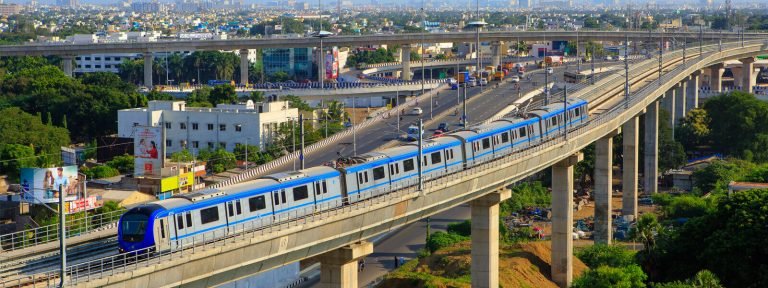
It is important to consider the complementary roles of freeways and railway systems. For example in the suburbs of Munich, Germany, motorways and suburban trains are physically integrated to allow for motorists to switch to trains. Similarly, better pedestrian and cycling paths feeding into suburban railway stations, bike-sharing and rental schemes where such stations function as a node can improve accessibility in the wider metropolitan regions and should be prioritised in large urban agglomerations. A similar experiment has been done by CMRL (Chennai Metro Rail Corporation) for Chennai Metro Rail in India where efforts for inter-modal and last-mile connectivity has been prioritized with equal focus with the development of the metro in various phases.  

Good examples of modal integration have emerged in Asian and Latin American Cities. In Guangzhou, China, the BRT system which serves 800,000 passengers daily is integrated with the city’s bicycle lanes and bike-share systems, thereby ensuring access to public transport and extending the reach of public transport. Sao Paolo and Curitiba in Brazil, Bogota in Colombia and Santiago in Chile have also taken measures toward such integration.

Hence, governments need to take a comprehensive approach and develop integrated national transport plans and policies in coordination with national urban policies, which encourage the most efficient use of different modes of transport, especially in the third world and developing countries.

For example, for long-distance freight, national policies may help the railways and inland water transport service providers to compete with road. The development of high-quality intermodal facilities such as dry ports would also encourage the use of railways, as it would allow for safer consolidation and smoother transfer between modes. Additionally, regional cooperation in road and railway facilitation could help address the various institutional issues which affect cross-border movements of goods and people. In this regard, the application of information and communications technology (ICT) can help improve the efficiency of border-crossing procedures and logistics. For the movement of people, the railway has many environmental and, within certain distances, economical advantages over aviation. High-level political commitment and private sector interest are required to overcome the deadlock of government bureaucratic procedures.

Some good practices have emerged on freight distribution in urban areas. These include rationalisation of delivery and consideration of ‘reverse logistics’ (i.e. removal of waste and modal adaptation), but much more focused research is required on integrating freight distribution as an integral part of sustainable urban mobility. Challenges of (transfer) terminals and logistics centres might be reduced if they move away from road dependency and towards intermodal terminals with rail access. Freight logistics and intermodal options require more attention from policy and decision-makers, especially, as mentioned above, regarding decision making for terminal location and integration (e.g. long-distance railway network often goes beyond administrative city boundaries.

Seeing the fast transforming global mobility pattern it is imperative to state that more efforts need to put in at all levels to instigate more action towards sustainable mobility and multi-modal interfacing. Any collective effort or modal shall represent a repertoire of emerging good practices, and guidance in terms of the key steps governments can take in this regard. It should also seek to inform the various sectors on how the goal of sustainable mobility can be a multiple win for people, businesses and for the planet.


The above topic ‘Transport Infra-Financing’ is one of the many topics which will be covered in the InnoMetro event. This 2-day event is an insightful expo and conference on the metro and rail industry and would definitely open doors of possibilities.

To join the 2nd edition of InnoMetro to be held from 23rd-24th May 2022 at The LaLit, New Delhi, click on the links below.

Join as a delegate: 

Join as a Speaker: 

Join as a Partner:

Advertisement1
InnoMetro_2026

Rail Transportation: Creating Opportunities for Energy & Environment

0
Rail
Representative Image

Rail is among the most efficient and lowest emitting modes of transport. With a strong reliance on electricity, it is also the most energy diverse. Rail networks carry 8% of the world’s motorised passenger movements and 7% of freight transport but account for only 2% of energy use in the transport sector. Rail services consume less than 0.6 million barrels per day (mb/d) of oil (about 0.6% of global oil use) and around 290 terawatt-hours (TWh) of electricity (more than 1% of global electricity use).

image 4

They are responsible for about 0.3% of direct CO2 emissions from fossil fuel combustion and the same share (0.3%) of energy-related emissions of fine particulate matter (PM2.5). The high efficiency of train operations means that rail saves more oil than it consumes and more emissions than it generates. If all services currently performed by railways were carried by road vehicles, such as cars and trucks, then the world’s transport-related oil consumption would be 8 mb/d (15%) higher and transport-related greenhouse gas (GHG) emissions would increase by 1.2 gigatonnes (Gt) CO2-equivalent (CO2-eq) on a well-to-wheel basis.

Rail has a long-standing position as one of the pillars of passenger mobility and freight transport. Today, conventional rail provides nearly one-sixth of the world’s long-distance passenger travel around and between cities. High-speed rail provides a high-quality substitute for short-distance intracontinental flights. In cities, metros and light rail offer reliable, affordable and fast alternatives to road travel, reducing congestion and carbon dioxide (CO2) emissions and local pollution. Freight rail enables high capacity goods movements over very long distances, allowing access to trade for resources that otherwise would likely be stranded and facilitating the operation of major industrial clusters.

Classification of rail transport services

Railways make a significant contribution in providing various types of services, referred to as passenger or freight rail. Categorising sub-sets of passenger and freight rail is a challenging undertaking. For passenger rail, this has been addressed by considering key characteristics, such as speed and location, but always within the limitations of the data available. The categories and terminology employed are:

  • Conventional rail, covering medium- to long-distance train journeys with a maximum speed under 250 kilometres per hour and suburban train journeys connecting urban centres with surrounding areas.
  • High-speed rail is defined as rail services over long distances between stations, operating at a maximum speed above 250 kilometres per hour.
  • Metro rail, refers to high-frequency services within cities, designed for high capacity transport (standing passengers and many wide doors for rapid boarding and exit), which are fully separated from other traffic and are often developed as an underground and/or elevated network.
  • Light rail, refers to tramways and other urban transport systems, most often at street level and offering lower capacity and speed compared with metro rail.

Metro rail and light rail are often aggregated as urban rail (that is rail within cities and the immediately surrounding area), while conventional and high-speed railway systems are together referred to as non-urban rail. In the discussion of rail infrastructure, the term conventional rail lines (or tracks) designates the infrastructure used by both passenger conventional rail and freight rail.

In addition to metro systems and light rail, urban areas are also serviced by commuter, or suburban, rail systems, connecting the city centres with suburban areas. While commuter rail services constitute a significant proportion of passenger transport activity, they are not very often included in separate analyses because of data unavailability or unreliability. This is a significant limitation for some aspects of the analysis since commuter rail is an important part of urban mobility, but unfortunately, it cannot be fully isolated. Classification issues are simpler for freight rail, which is defined as the transport of goods on dedicated freight trains.

Some Major Facts about rail transport

  • In 2016, passengers travelled over 4 trillion kilometres by rail, around 8% of total transport passenger-kilometres. Rail travel is concentrated in a few regions: China, the European Union, India, Japan and Russia, which together make up about 90% of global passenger rail activity. Despite the rapid expansion of metro and high-speed rail systems over the past decade, the share of rail in global motorised passenger transport has remained roughly constant.
  • Today, around 600 billion passenger-kilometres are travelled by high-speed rail every year compared with 3 100 billion by conventional rail. Two-out-of-three high-speed rail tracks are in China, which starting from virtually zero only a decade ago has built over 41 000 kilometres of high-speed rail tracks. The speed and size of this achievement place it among the largest infrastructure projects of recent years.
  • Nearly 200 cities worldwide have metro systems. The combined length of the metro tracks exceeds 32 000 kilometres. Light rail systems add 21 000 kilometres of track length, across more than 220 cities. The pace of extension of China’s metro network since 1990 has outstripped the global average, pushing the country’s share of global metro networks from less than 10% in 1990 to more than 28% in 2017. Since urban rail is typically electric, travel by metro and light rail systems gives rise to none of the tailpipe emissions associated with road transport and can achieve zero-emissions mobility overall.
  • About 7% of global freight transport activity, as measured in tonne-kilometres, goes by rail. Growth was very rapid at the turn of the century but slackened and levelled off thereafter. In contrast to Europe, Japan and Korea, where rail networks mostly serve passengers, rail networks in North America overwhelmingly cater to freight transport. In Russia, more than half of freight activity takes place on rail. Australia, Brazil, Canada, India and South Africa also carry substantial volumes of goods by rail.
  • Rail transport today accounts for close to 2% of final transport energy use, a modest share compared with rail’s share of transport activity. Three-quarters of passenger rail transport and almost half of all freight rail is electric, using around 290 TWh of electricity every year (25 Mtoe). Diesel-powered trains account for the remainder of final energy use (0.6 mb/d, or 28 Mtoe a year). Electric and diesel trains together give rise to around 3% of all well-to-wheel greenhouse gas emissions from the transport sector.
  • Although rail is an energy consumer, it also makes an important contribution to containing energy demand. If all passenger and freight services currently carried by rail switched to road vehicles, such as cars and trucks, global oil demand from transport today would be 16% higher (8 mb/d). The contribution rail makes to containing GHG emissions is as significant as its energy savings. If all current passenger and freight traffic by rail shifted to road vehicles, global GHG emissions would increase by 1.2 Gt of CO2-eq, or 12% more than total emissions from transport today.
  • Investment in rail infrastructure is expensive. In order for a rail construction project to pay off, high passenger or freight throughput is necessary. If this condition is met, shifting large quantities of transport away from cars, trucks and planes delivers very important societal and environmental benefits, which may not be fully captured in conventional commercial pricing.

Most rail networks today are located in India, China, Japan, Europe, North America and the Russian Federation, while metro and light rail networks operate in most of the world’s major cities. About 90% of global passenger movements on conventional rail take place in these countries and regions, with India leading at 39%, followed by China (27%), Japan (11%) and the European Union (9%). Globally, about three-quarters of conventional passenger rail activity use electricity, and the remaining quarter relies on diesel. Significant investments have been made in high-speed rail and metros, most notably in China, which has overtaken all other countries in terms of network length of both types within a single decade.

Today China accounts for about two-thirds of high-speed rail activity, having overtaken both Japan (17%) and the European Union (12%). The regional distribution of urban rail activity is more even; China, European Union and Japan each have around one-fifth of urban passenger rail activity. Both high-speed and urban rail are entirely powered by electricity. Freight movements are concentrated in China and the United States, each of which accounts for about one-quarter of global rail freight activity, and Russia, which accounts for one-fifth. Despite the fact that electrification of freight rail faces greater challenges than other rail types, half of the global freight movements rely on electricity.

Future of Rail – Opportunities for Energy & Environment  

image 5

The future of rail will be determined by how it responds to both rising transport demand and rising pressure from competing transport modes. Rising incomes and populations in developing and emerging economies lead to strong demand for mobility, but social considerations and the need for speed and flexibility tend to favour car ownership and air travel. Rising incomes also drive demand growth in freight, where higher incomes, together with digital technologies, have sharply increased demand for rapid delivery of higher value and lighter goods. The rail sector has important advantages to exploit in competing for business, but this will require additional strategic investments in rail infrastructure, further efforts to improve its commercial competitiveness and technological innovation.

In the Base Scenario, annual investment in rail infrastructure is expected to increase to USD 315 billion globally by 2050, on the basis of projects currently in various stages of construction and planning. In this scenario, which assumes no significant new emphasis on rail in policy making, the pace of infrastructure build is fastest in urban rail. The length of metro lines under construction or slated for construction over the coming five years is twice the length of those built over any five-year period between 1970 and 2015. The result is unprecedented growth in passenger movements on urban rail; global activity in 2050 is 2.7 times higher than current levels. Growth is strongest in India and Southeast Asia, which witnesses more than a sevenfold growth in passenger movements on the urban rail, albeit from a low baseline. In the three countries with the highest urban rail activity today, activity increased by more than threefold in China, 25% in Japan and 45% in the European Union.

The Base Scenario also sees strong growth in high-speed rail networks, particularly over the coming decade. As has been the case over the past decade, China accounts for a large share of high-speed rail developments; nearly half of those projects undertaken between now and 2050 are in China. The result is strong activity growth on high-speed rail: passenger movements in China increased more than threefold, while those in Japan increased by 85% and by 66% in the European Union. Construction of non-urban rail infrastructure in India is particularly notable, supporting volumes of passenger activity that, by 2050, are unparalleled anywhere in the world. However, despite impressive global growth, rail does no more worldwide than maintain its current share in activity relative to personal cars and passenger air travel by 2050. Global freight activity across all categories nearly triples in 2050 from 2017 levels.

The strong growth of rail activity in the Base Scenario brings up rail energy demand: by 2050 rail electricity use reaches nearly 700 TWh. By 2050, 97% of passenger rail movements and two-thirds of freight take place on electrified rail, meaning that rail remains far and away from the most electrified of all transport modes. Rail’s energy use, however, pales in comparison with the energy it saves by diverting traffic from other modes. In 2050, if all rail services were performed by cars and trucks, oil demand would be 9.5 mb/d higher (or 16%) higher than in the Base Scenario. GHG emissions from transport would increase by 1.8 Gt CO2-eq (or 13%) above the Base Scenario in 2050. Fine particulate matter (PM2.5) emissions would rise by 340 kilotonnes (kt).

The High Rail Scenario explores how these benefits might be further capitalised. The scenario rests on three pillars:

  • Minimising costs per passenger-kilometre or tonne-kilometre moved by ensuring maximum rail network usage, removing technical barriers and integrating rail services seamlessly into the portfolio of available mobility options.
  • Maximising revenues from rail systems, such as through ‘land value capture’, i.e. capitalising on the ‘aggregation’ capacity of railway stations whereby commercial and residential properties in their proximity increase in value due to improved mobility options and greater activity, and using this value to finance rail systems.
  • And implementing policies that ensure that all forms of transport pay adequately for the impacts they generate.

Traditionally this has been accomplished through fuel taxes, but road pricing, and especially congestion charging, may be effective going forward. In the High Rail Scenario, global passenger activity on rail grows to a level that is 60% higher than in the Base Scenario in 2050, and freight activity is 14% higher. Urban rail has the greatest potential for additional growth: activity on metros and light rail in 2050 is 2.6 times higher than in the Base Scenario, concentrated in densely populated cities in China, India and Southeast Asia. The High Rail Scenario also captures the potential for high-speed rail to provide a reliable, convenient and price competitive alternative to short-distance intra-continental passenger air services. Activity on high-speed rail in the High Rail Scenario is 85% higher than in the Base Scenario, reflecting strategic investments in this mode.

Aggressive, strategic deployment of rail can lead CO2 emissions in global transport to peak in the late 2030s. By 2050, oil use in the High Rail Scenario is more than 10 mb/d lower than in the Base Scenario. GHG emissions are 0.6 Gt CO2-eq lower and PM2.5 emissions are reduced by about 220 kt, the latter primarily as a result of diminished aggregate vehicle kilometres by cars and trucks. Primarily as a result of increased urban and high-speed rail operations, electricity use by rail in 2050 is 360 TWh higher than in the Base Scenario, 50% more than in the Base Scenario, an increase that is roughly equal to the current total electricity consumption of Thailand and Viet Nam combined.

Annual average investment in the High Rail Scenario in trains and rail infrastructure combined is USD 770 billion, a 60% increase over investment in the Base Scenario. The biggest part of the increased investment goes to infrastructure for urban rail (nearly USD 190 billion) and high-speed rail (USD 70 billion); the additional costs of the trains are small in comparison. As a result of these investments, in 2050 fuel expenditures are reduced by around USD 450 billion, relative to the Base Scenario. India could save as much as USD 64 billion on fuel expenditures by mid-century.

Rail activity in India

The rail activity in Indian sub-continent is set to grow more than any other country, with passenger movements in India reaching 40% of global activity. Activity in India is already among the highest in the world, being second only to China for passenger movements and fourth for freight movements. Rail remains the primary transport mode in India connecting numerous cities and regions. Indian Railways is also the country’s largest employer. As a result, the railway network in India is sometimes referred to as the lifeline of the nation. Guaranteeing affordable passenger mobility by rail to the entire population has always been a priority in India. Today rail passengers in India travel 1.2 trillion kilometres, more than the distance travelled by cars; and about one-third of total surface freight volumes are transported by rail, a very high share by global standards. By far, coal is the predominant commodity carried on freight trains today in India.

Indian Railways is spearheading a wide range of ambitious undertakings. Construction has started on the first high-speed rail line. The total length of metro lines is planned to more than triple in the next few years. Two dedicated freight corridors are planned to enter operation in 2020. The country is set to double, or possibly even triple, existing capacity on the most utilised rail routes, and it aims to electrify the entire broad gauge network by 2022. With these and other measures realised in the Base Scenario, rail passenger movements almost triple and freight movements more than double over current levels by 2050. Electricity consumption from rail operations increases by nearly a factor of six, reaching almost 100 TWh. Electrification of highly utilised corridors leads to reductions in oil use by rail to less than 10% of current levels, reaching 3 000 barrels per day in 2050. As in other countries, rail in India saves more energy and emissions than it consumes: in the Base Scenario, rail activity in 2050 reduces oil demand by 1.6 mb/d, GHG emissions by 270 Mt CO2-eq and PM2.5 emissions by 8 kt.

Going beyond the targets captured in the Base Scenario, India has the potential to serve as an example to other emerging economies. In the High Rail Scenario, India further increases investment in railways, commissioning high-speed rail lines to connect every major city along the ‘Golden Quadrilateral’, achieves the target of doubling the share of rail in urban areas by 2050 and constructs dedicated freight corridors to connect all the largest freight hubs. Shifts in transport activity from road modes and aviation lead to additional savings in oil consumption of 1.5 mb/d, compared to the Base Scenario, and to an additional reduction in GHG emissions of 315 Mt CO2-eq and 6 kt of PM2.5.

Two categories – urban and high-speed rail – hold major promise to unlock substantial benefits both in India and throughout the world. In an era of rapid urbanisation, urban rail systems can provide a reliable, affordable, attractive and fast alternative to travel by road: metro and light rail can reduce congestion, increase throughput on the most heavily trafficked corridors and reduce local pollutant and GHG emissions. With coordinated planning, urban rail systems increase the attractiveness of high-density districts and boost their overall economic output, equality, safety, resilience and vitality of metropolises. High-speed rail can provide a high quality substitute for short-distance intra continental flights. As incomes rise, demand for passenger aviation, a mode of transport that is extremely difficult and expensive to decarbonise, will continue to grow rapidly. If designed with comfort and reliability as key performance criteria, high speed rail can provide an attractive, low-emissions substitute to flying.

Summary

On a worldwide basis, the transport sector today is responsible for almost one-third of final energy demand and nearly two-thirds oil demand. It is also responsible for nearly one-quarter of global carbon dioxide (CO2) emissions from fuel combustion and is a major contributor to air pollution, particularly in urban areas. Changes in transportation fuel use are, therefore, fundamental to achieving a global energy transition, which will guarantee energy security, alleviate air pollution and mitigate climate change. The challenge is heightened by the rapid pace of rising demand for mobility, especially in developing economies, where cities are growing exponentially, creating a need for more efficient, faster and cleaner transportation. Rail has characteristics that enable it to reduce energy demand in transport and draw on diverse energy sources. It can mitigate CO2 emissions from transport and contribute to a broader transition towards sustainability. Its particular strengths are: energy efficiency (on average, trains are close to 12-times more energy efficient than road and air travel in terms of final energy per passenger transported and 8-times more efficient than trucks per tonne of freight carried); its reliance on very diverse energy sources; and its contribution to reducing congestion on road networks. Rail provides mobility with minimal emissions of harmful air pollutants and, thanks to agglomeration effects, facilitates economic growth.

Rail today serves passenger and freight mobility needs in countries across the globe. In 2016, rail services were an important component of passenger mobility in China, India, Japan, the European Union and Russia, and provided a significant fraction of all goods movements in North America, China, Russia and India. Globally, rail constituted 8% of passenger transport and 7% of freight movements in 2016. Rail accounted for less than 2% of transport energy, far less than the sector’s share of transport activity. The reasons are multiple: the large carrying capacity of trains, compared to other modes; the high efficiency of electric motors; and the efficiency of fuel use resulting from the very low resistance offered by the steel-to-steel interface between wheels and tracks. With roughly one-third of its global energy consumed in the form of electricity, rail is also currently the only transport mode that does not rely almost exclusively on oil. The share of electricity in rail energy use exceeds 70% in major economies, such as China and the European Union. In Japan, this share is more than 90%.

In highly populated ‘megacities’, many of which are in Asia (with more yet to be built), urban rail (metro and light rail) plays a critical role in large-scale passenger movements. This form of rail travel diversifies the transport energy mix, reduces local air pollution, alleviates congestion and improves overall productivity. But there are also limiting factors. Because of its capital intensive nature, urban rail requires very high throughput in order to achieve its environmental and economic goals.

Therefore, it becomes imperative to examine the role of rail in global transport might be elevated as a means to reduce the energy use and environmental impacts of transport services. It explores plausible scenarios to 2050 in which such an enhanced role is achieved, assessing the environmental, societal and energy security implications. This analysis is guided by the essential need to respect the economic viability of rail undertakings and sheds light on the key instruments that can turn potential benefits into actual achievements. Crucial components of the solutions identified are:

  • Minimising costs per passenger-kilometre or tonne-kilometre moved, ensuring that the preconditions for maximum rail network use are in place (e.g. through urban planning measures that provide integration of different modes of transport with rail networks), taking steps to remove technical barriers (e.g. through the adoption of international standards which facilitate inter-operability) and fully exploiting digital technologies to ensure that rail services are well integrated into the range of mobility options available to passengers and freight users.
  • Maximising revenues from rail systems, capitalising on the “aggregation” capacity of railway stations (land value capture), a model which has already made several rail systems profitable. In this model, the increase in value of commercial and residential properties in the proximity of stations that arises as a result of improved mobility options and greater activity is “captured” to finance rail systems.
  • Ensuring that all forms of transport pay not only for the use of the infrastructure they need but also for the impacts they generate (e.g. through road pricing and congestion charges). The opportunity for effective action on this front will be enhanced by increased transport electrification and the transition towards road vehicle automation, both of which are likely to require price signals to modulate demand.

The transport sector is responsible for almost one-third of final energy demand, nearly two-thirds of oil demand and nearly one-quarter of global carbon dioxide (CO2) emissions from fuel combustion. Therefore, changes in transportation are fundamental to achieving energy transitions globally. While the rail sector carries 8% of the world’s passengers and 7% of global freight transport, it represents only 2% of total transport energy demand, highlighting its efficiency.

The rail sector can provide substantial benefits for the energy sector as well as for the environment. By diversifying energy sources and providing more efficient mobility, rail can lower transport energy use and reduce carbon dioxide and local pollutant emissions.

Rail serves a vital lifeline of India, playing a unique social and economic role. In India, Rail remains the primary transport mode in the country, which provides vital connections between cities and regions and guarantees affordable passenger mobility. Rail passenger traffic in India has increased by almost 200% since year 2000 yet prospects of future growth remain bright. Construction has started on India’s first high-speed rail line, the total length of metro lines is set to more than triple in next few years and two dedicated freight corridors are on track to enter operations by 2022.

Indian Railways also plans to convert diesel locomotives to electric locomotives towards its ambitious goal of a hundred percent electrification of the Indian Railway.

In all countries, including India, the future of rail sector unarguably shall be determined by how it responds to both rising transport demand and rising pressure from other transport modes.


The above topic ‘Rail Transportation: Creating Opportunities for Energy & Environment is one of the many topics which will be covered in the InnoMetro event. This 2-day event is an insightful expo and conference on the metro and rail industry and would definitely open doors of possibilities.

To join the 2nd edition of InnoMetro to be held from 23rd-24th May 2022 at The LaLit, New Delhi, click on the links below.

Join as a delegate: 

Join as a Speaker: 

Join as a Partner:

Advertisement1
InnoMetro_2026

L&TMRHL unveils India’s first Electronic & Technology Mall ‘e-Galleria’

0
e-Galleria
e-Galleria

HYDERABAD (Metro Rail News): In tune with the tech DNA of Hyderabad city, L&T Metro Rail (Hyderabad) Limited has announced the repositioning of its Hi-Tec City Mall into e-Galleria, a whole new avatar as India’s first and exclusive Electronic & Technology Mall at Hi-Tec city in Hyderabad. Harboured in the middle of the City’s IT hub, e-Galleria is all set to be a launchpad and a one-stop hub for the tech-savvy city dwellers to indulge and enjoy life with a different note.

Attached to the Hi-Tec City Metro Station through a skywalk, e-Galleria offers a curated tech experience for spaces with both long-term and short-term leasing. It has been crafted as the destination for tech-talks, roadshows, and product launches, where one can get to know the emerging trends in technology in a fun-filled and engaging environment.

Speaking on this occasion, Mr. KVB Reddy, MD & CEO, L&TMRHL, said, “We are happy to launch e-Galleria as part of our growth plan for our Transit Oriented Development. Today, brands are exploring new marketing avenues and innovative product placements that e-Galleria as a launchpad will cater to as a one-stop hub. This new avatar will help us in harnessing the support and loyalty of brands and opportunity to grow together and develop a sustainably brighter future both for businesses and the city of Hyderabad.”

Key attractions of e-Galleria:

Exclusive Brand Stores:  A premium setting offering a world-class experience where global tech brands are laid out to explore.

e-Bazaar: Mall will feature ‘e-Bazaar’ that houses a galaxy of small shops selling a variety of products, accessories, consumables, services related to IT, mobiles, and household gadgets, at the most competitive prices.

Launchpad: An exclusive space in the atrium to launch the latest tech brands and products in the presence of city’s tech lovers, and interact with key tech leaders, niche consumers, and tech enthusiasts.

TechHive: A dedicated space for focused tech-talks, seminars, workshops, etc. to bring together geeks, tech leaders, and tech enthusiasts. This is where ideas take center stage enabling people to discuss, demonstrate and brainstorm the need and relevant opportunities to build better and future-ready tech products and services.

Startup Terminus: Hyderabad has emerged as a top startup hub in India in terms of deal count and funding. This dedicated zone with plug-and-play stalls offers the best space for the key people from the startup ecosystem of Hyderabad and beyond to showcase and discuss creative ideas, products, and services, and turn them into promising businesses.

Fun, Food & Entertainment: Top of the line restaurants, exceptional food options across all areas — such as fine dining and quick-serve restaurants, lounge bars, barbeques, coffee shops, food court, etc. mixed with gaming lounges, spa, cinema, and other entertainment avenues make e-Galleria the most happening hangout place in Hyderabad.

This A-Grade, centrally air-conditioned facility of e-Galleria has been built as per NBC norms and follows stringent fire & safety policy. It offers abundant parking with electric charging stations focusing on sustainability. The mall shall be professionally managed by the international facility management firm Jones Lang LaSalle.

TOD at Hyderabad Metro Rail offers around 18.5 million sqft of space for work, shopping, leisure, entertainment, healthcare among others. 1.28 million sft space of Transit oriented Development, consisting of 4 malls and an office block at Punjagutta, Irrum Manzil, HITEC City, and Musarambagh, is operational.

Advertisement1
InnoMetro_2026

Two-day Tech Seminar, InnoMetro-2022 at Hotel Lalit on 23rd  & 24th May 2022

0
InnoMetro speakers
InnoMetro speakers

Symbroj Media to organize the 2nd Edition of the annual conclave on MRTS, Metro and tech happenings around the globe at Hotel Lalit, New Delhi on 23rd & 24th May.

The Delhi based media group which already is publishing a highly rated and popular monthly magazine Metro Rail News dedicated to news and updates of Metro, MRTS and the tech industry is the organising agency of their annual event – InnoMetro.

Speaking about the event, the chairman of the organising group, Mr. Narendra Shah told that InnoMetro is a global event to showcase Innovation & Technology for Metro, Railway, RRTS, High-Speed Rail & allied industries. He stated that InnoMetro helps in serving as a one-stop destination for leading brands to showcase their products where experts share their views and industry stalwarts speak about the latest trends and technologies of the industry. InnoMetro-2022 shall be the third consecutive annual event of the media group which already has made a good reputation amongst key players of MRTS and Rail Industry including RITES, etc. through their dedicated and informative activities related to Urban Transportation, Metro rail, Mass Rapid and light transit transport systems. He further added.

Event Manager Mr. Shyam Singh said that last year more than 500 speakers from major companies attended the three-day gathering, including Indian Railways, MoHUA, IRSDC, RDSO, RLDA, Kalpataru Power Transmission Ltd., Cylus, MegaMetro, E2E Rail, GBCI India, RITES, CRIS, MMRCL, MMMOCL, Maha Metro, MMRDA, Technocrats Kohlhauer Infrastructure Pvt Ltd, Hyloc Hydrotechnic Pvt Ltd Axis bank, Mastercard, Rittal, JSPL and Green Furniture Concept etc.

More than 10+ giant conglomerates sponsored the event being the platinum, gold, silver and bronze sponsors. Last but not the least, over 1200 industry experts from India and other countries such as Thailand, UK, US, Sweden, Bulgaria, France, Qatar, and others participated in the event last year making it one of the most comprehensive events of the country on Metro, Rail and Urban Transportation.

Speaking about the agenda and purpose of the event, the organising committee said that the main objective of the event is to put in the cumulative efforts to bring forward and highlight the key developments in Rail & Metro sector across the globe and especially in India.

We’ll be having some serious discussions on policymaking, new innovations, approaches, future techniques and efforts for self-reliant and Aatmanirbhar Bharat with an event felicitated and attended by hon’ble MoS MoHUA, Shri Kaushal Kishore, Chairman and MD of various nodal and implementing agencies of Urban & Mass Transportation, High-Speed Rail Corridor such NHSRCL, IRSDC etc., the team informed.

The organizers informed that due to covid restrictions the event has been organized virtually for the last two years but this year it is going to be organized in a hybrid form i,e; the participants can join the event both physically and digitally. The event would take place on a digital event platform where each participant can watch the presentations and join the discussions in the room with several networking possibilities helping the participants contribute impactful breakthroughs, bring sophisticated ideas and innovations and find potential fields of improvement.


Join the 2nd edition of InnoMetro to be held from 23rd-24th May 2022 at The LaLit, New Delhi. This 2 – day event will turn out to be an insightful experience and would definitely open doors of possibilities.

Join as a delegate: 

Join as a Speaker: 

Join as a Partner:

Advertisement1
InnoMetro_2026

Light House station to be first shallow underground station of CMRL

0
Chennai Metro
Representational Image

CHENNAI (Metro Rail News): Light House station is the first shallow underground station which is being built by Chennai Metro Rail Limited (CMRL). This station is designed with a platform on the first level and a mini-concourse on the second. It is going to be the longest station of phase 2 which is built over 300 m. Passengers will go to level 2 to get a ticket and then come up to level one to board the train.

This is an important terminal station for the stretch between Light House and Poonamallee, and after its completion, people from across the city will have easy and quick access to Marina beach. CMRL has already obtained the Coastal Regulatory Zone (CRZ) clearance necessary for the construction of this station.

CMRL has informed that they have planned it as a shallow underground station to secure the marine ecosystem. “In this location, unlike in other stations, where we go as deep as 20 m, the maximum depth will be 15 m. Also, the concourse is coming up on the second level and the platform on the first level, whose depth will be about 12 m. This is because we did not want to use the tunnel boring machines below the 12-m mark,” an official said, Hindu reported.

While one entry and exit will be near Queen Mary’s College, another will be constructed near Light House, and the space will be small, just about 70-80 m long, resembling a subway. The entry and exit structures of the station will be designed aesthetically to give a view of the beach as well.

“While the platform itself will be 140 m, the whole station length totals to around 300 m because it has to accommodate facilities like stabling and crossover,” another official said. Also, to operate the system even in case of heavy rains or flooding, the entry/exit structures will have flood gates, and the tracks will have sumps to pump out any water seepage.

Officials said they would take various steps during construction as it would be pretty tough to build an underground station due to the sandy soil.

“We have to take measures so that the soil does not collapse. For that, we have to create a trench, increase the density of bentonite (a substance used in construction as a binding material) and use bentonite slurry, do concreting, lower the reinforcement cage and then build a diaphragm wall (a station box),” the official added.

Advertisement1
InnoMetro_2026

Dwarka Sector 21-IICC metro line segment expected to be authorized by July

0
Delhi Metro Foundation day

NEW DELHI (Metro Rail News): On the 28th Foundation Day of Delhi Metro Rail Corporation at Metro Bhawan on 3rd May, DMRC chief Vikas Kumar said that a 2 km long Delhi Metro line between Dwarka Sector 21 and the upcoming India International Convention Centre (IICC) is expected to be commissioned by July.

“The work on this section is in the final stage, and the new station at IICC, will have entry gates both inside and outside the complex,” he said.

Situated in Dwarka Sector 25, the IICC is going to be a modern exhibition-cum-convention centre, with facilities like financial, hospitality and retail services. Dwarka Sector-21 is the last station at the end of the long and busy Blue Line which is also an interchange point for the Airport Line.
buy ventolin generic rxxbuynoprescriptiononline.com/ventolin.html over the counter

Speaking on the development of the Delhi Metro and ongoing projects, the DMRC chief said “Work is underway on the three priority corridors of Phase-4 of DMRC, and our target is to finish it by 2025. Deliberations are going on as far as the remaining three corridors of it are concerned.”

Under the approved segment of Phase-4, 65 km of new metro lines will be constructed across three different corridors which include 45 metro stations. These new sections will provide inter-connectivity among the already operational lines of the Delhi Metro.

According to the DMRC, the Mukundpur-Maujpur, R K Ashram-Janakpuri West and Aerocity-Tughlakabad corridors were approved by the Cabinet.

Advertisement1
InnoMetro_2026

8 firms bid for Surat Metro’s 22.77 km Line-1

0
Surat Metro
Representational image only

SURAT (Metro Rail News): Gujarat Metro Rail Corporation (GMRC) has received bids from 8 firms for the 40.35 km Surat Metro Phase 1 project’s 4.15 km Sarthana – North Ramp section.

Package CS4 is the 4th and final section of Surat’s 22.77 km Line-1 which will connect Sarthana to Dream City via 20 stations. It includes 4 elevated stations at Sarthana, Nature Park, Varaccha Chopati Garden and Shri Swaminarayan Mandir Kalakunj in the north-east part of the city.

The government of India has signed a Euro 442.26 million loan with KfW in December 2021 who will be funding this civil package.

GMRC had invited tenders for this package in February with a Rs. 286 crore estimate whereas the deadline is unknown. Technical bids were opened on Monday which revealed the following 8 bidders:

  • Ashoka Buildcon Ltd. (ABL)
  • Dineshchandra R Agarwal (DRA) Infracon
  • Evrascon – Varindera Construction JV
  • Kalthia Engineering & Construction
  • KEC International
  • MCL – YFC JV
  • Ranjit Buildcon Ltd. (RBL)
  • Rail Vikas Nigal Ltd. (RVNL)

View the tender notification here: https://www.gujaratmetrorail.com/wp-content/uploads/2022/02/Qualification-and-Evaluation-Criteria-1.pdf

The scope of this contract includes the Construction of a 4.15 km (ch. -450 to ch. 3700) elevated viaduct dead end of Sarthana station to end of UG ramp including 4 stations (Excl. E&M, Architectural finishing and Roofing) for Surat Metro Rail Project Phase – 1, Corridor-1.

The bids have now been sent for technical bid evaluation and after the evaluation is done, the financial bids of the technically qualified bidders will be opened to reveal the lowest bidder.

Advertisement1
InnoMetro_2026

GMRC invites bids for Ahmedabad Metro Phase 2’s rolling stock contract RS3

0
Ahmedabad Metro
Representative Image

AHMEDABAD (Metro Rail News): Gujarat Metro Rail Corporation (GMRC) has invited tenders to manufacture and supply 30 new coaches for Ahmedabad Metro’s Phase 2 project.

Ahmedabad’s 28.254 km project which is under construction includes the north-south Red Line getting extended by 22.838 km from Motera Stadium to Mahatma Mandir via 20 stations and a 5.416 km spur from GNLU to GIFT City via 2 new stations.

GMRC aims to operate 10 trains in a 3-coach configuration and stable them at the proposed Indroda Depot in Gandhinagar. This systems contract will be funded through a loan from France’s Agence Française de Développement (AFD).

The estimate and completion period are not disclosed whereas the bid submission deadline is on 13th June, 2022.

The scope of this contract includes Design, Manufacture, Supply, Testing, Commissioning and Training of 30 nos.
buy kamagra oral jelly online https://www.mydentalplace.com/wp-content/themes/twentytwelve/inc/en/kamagra-oral-jelly.html no prescription
of Standard Gauge Cars for Ahmedabad Metro Rail Phase-II Project

Trial runs on Ahmedabad Metro’s Red Line started in February between APMC – Jivraj Park.

Advertisement1
InnoMetro_2026

Hitachi and Nippon Signal revealed as bidders for Chennai Metro Line 3’s Signalling contract

0
Chennai Metro
Image for representational purpose only

CHENNAI (Metro Rail News): Chennai Metro Rail Ltd. (CMRL) had opened technical bids for Metro Line-3’s Signalling and Train Control and Video Management systems’ contract (ASA04). Hitachi Rail STS India Pvt. ltd. and Nippon Signal Co. Ltd. have been revealed as the bidders for this contract.

This 45.81 km stretch of the 119.8 km Chennai Metro Phase 2 project will run in a north-south orientation to connect Madhavaram – SIPCOT 2. This project’s development is being financed through a loan by JICA.

CMRL invited tenders for this contract in August 2021 for which the estimate is unknown and the deadline is of 1640 days (4.5 year). The scope of this contract includes the Design, Manufacture, Supply, Installation, Testing and Commissioning of Signalling and Train Control System and Video Management System

The bids for this contract have now been sent for technical bid evaluation which can take a couple months to complete. When that is done, the financial bids of the technically qualified bidders will be opened to reveal who’s the lowest bidder and most likely supplier.

Advertisement1
InnoMetro_2026