Home Blog Page 324

Paras Railtech emerges as the lowest bidder to supply and install tracks at 3 existing train maintenance depots of the Delhi Metro

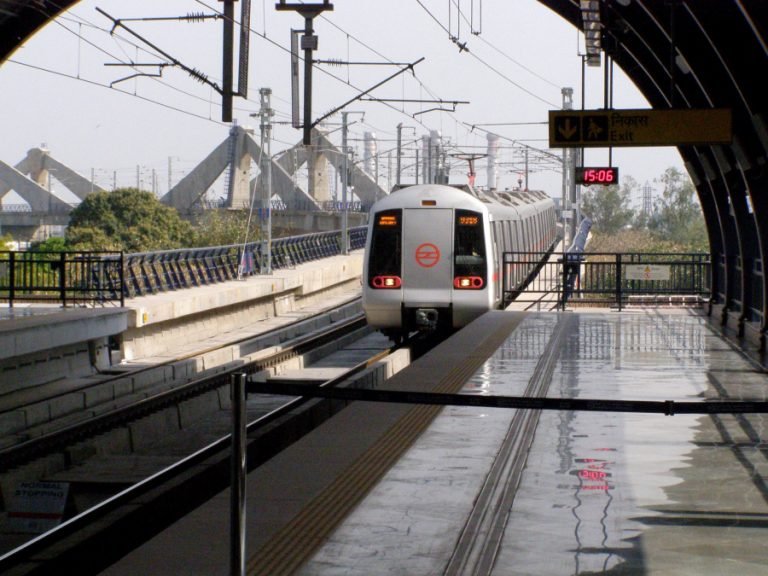
NEW DELHI (Metro Rail News): Paras Railtech Pvt. Ltd. won the contract to supply and install tracks (Package CT-42) at three already existing Delhi Metro Train maintenance depots that were constructed in Phase 1-3.

The project’s scope includes completing tracks at the Shastri Park Depot on the Red Line, the Najafgarh Depot on the blue and grey Lines, and the Yamuna Bank Depot on the Blue Line, all of which are expanding their current facilities to accommodate more maintenance and stabling.

Contract CT-42 is one of the low-value residual projects approved under the 162 km Phase 3 project, which is almost finished.

In May 2022, the Delhi Metro Rail Corporation (DMRC) issued a bid with a 2-year completion deadline and an estimated cost of Rs. 29.78 crores. In June, technical bids were opened, revealing 3 bidders.

A contract should be given in the next weeks without a lengthy financial bid evaluation period because Paras Railtech’s bid was far less than DMRC’s estimate.

Survey for Alternative Routes by Patna Metro

PATNA (Metro Rail News): While the Patna Metro Rail project’s preparatory work continues, the Patna traffic police studied the alternate routes along corridor II, which will be open for traffic flow during the civil works. According to traffic police officials, there will be detours for vehicles near Gandhi Maidan, Frazer Road, and Ashok Rajpath. In order to improve commuter comfort, alternate routes have been improved and will be maintained and kept open until this extensive renovation is completed.

The eastern side of the Frazer Road won’t alter, but the western side will be closed off. Kumar, the SP traffic police said that one side would be closed near PMCH to Patna University in order to expand the second flank, which will be used for two-way traffic. Trail runs shall be conducted before it is brought into implementation. As per Kumar, the detour is necessary to avoid causing a traffic gridlock for locals due to construction activity.

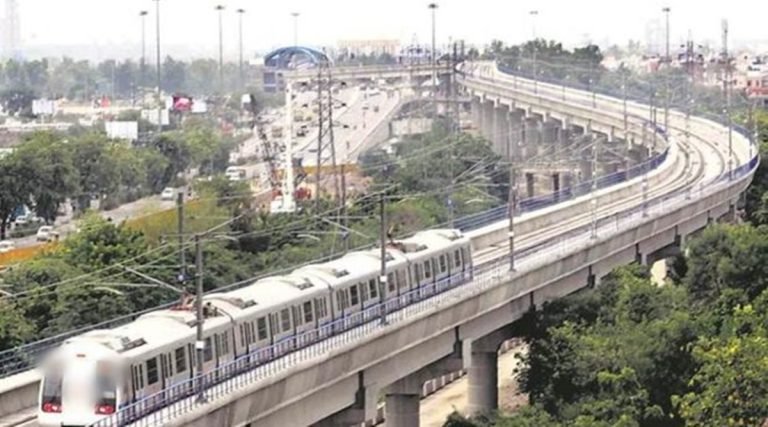
Patna Metro plans to have 24 stops on two lines. The foundation stone of the project was laid by PM Modi on 17 February 2019 following approvals to the project by Central Government on February 06, 2019. NCC Ltd. began ground work for Patna Metro’s Phase 1 in November 2020 and piling for construction in December 2020.

Patna Metro

Patna Metro Phase 1 Route : Line-1 (East–West Line): Danapur Cantonment–Khemni Chak

  • Length            : 16.86 km
  • Type               : Elevated & Underground
  • Elevated         : 9.36 km with 8 stations
  • Underground : 7.5 km with 6 stations
  • Number of Stations   : 14
  • Station Names           : Danapur Cantonment, Saguna More, RPS More, Patliputra (formerly IAS Colony), Rukanpura, Raja Bazar, Patna Zoo (formerly JD Women’s College), Vikas Bhawan (formerly Raj Bhavan), Vidyut Bhawan, Patna Junction (interchange), Mithapur, Ramkrishna Nagar & Jaganpur and Khemni Chak (interchange)

Line-2 (North–South Line): Patna Junction –New ISBT

  • Length            : 14.05 km
  • Type               : Elevated & Underground
  • Elevated         : 6 km with 5 stations
  • Underground : 8 km with 7 stations
  • Number of Stations   : 12
  • Station Names           : Patna Junction (interchange), Akashvani (formerly Dak Bungalow), Gandhi Maidan, PMCH, Patna University, Moin Ul Haq Stadium, Rajendra Nagar, Malahi Pakri, Khemni Chak (interchange), Bhoothnath, Zero Mile and New ISBT

Hitachi submits lowest bid for Chennai Metro Phase II signalling contract

CHENNAI (Metro Rail News): One of the largest contracts of Chennai Metro Rail Ltd.’s Phase II project, the design and development of the signalling software, has been awarded to Hitachi Rail Signalling and Transportation Systems India Pvt. Ltd.

Hitachi Rail Signalling and Transportation Systems India Pvt. Ltd. came in with the lowest bid of Rs. 1,600 crore for the Phase II works.

Hitachi was the lowest bidder when the financial bids were opened a few days ago, according to authorities of Chennai Metro Rail Ltd. (CMRL). The only other company that submitted a bid was Nippon Signal. According to sources, Hitachi provided a quote for the project of roughly Rs. 1,600 crore. Before legally granting the contract, there are some procedures and evaluations to be completed. The project management committee must first approve it, and then and only then can the contract be released, an official stated.

According to officials, the contractor are expected to supply the software months in advance so that trials may begin because the first length between Poonamallee and Power House might be opened by the end of 2025 or the beginning of 2026.

In Phase II, Chennai Metro Rail Ltd. plans to run driverless trains, for which a reliable signalling system is crucial because it regulates numerous functions, including announcements in stations and trains and other critical parts of train operations, the authorities said.

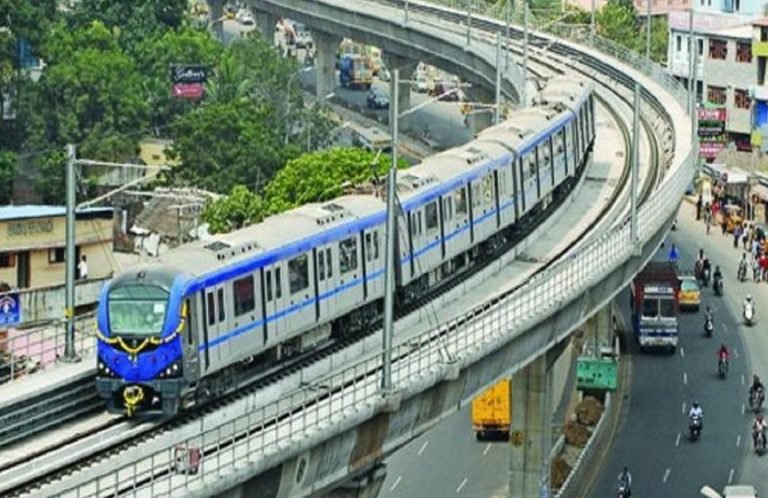
The project’s Phase II signalling system would be much different from Phase I signalling system. In contrast to the distance-to-go signalling system that CMRL built for the Phase I project, it shall deploy the communications-based train control signalling system in Phase II, which officials claim is a superior and more accurate system. As a result, the Phase I project’s trains will not operate in Phase II. Commuters will have to disembark, travel a short distance, and then board the train wherever there are interchange stops, such as Alandur, Thirumangalam, CMBT, or KMC.

Three Neo Metro Routes in Ghaziabad

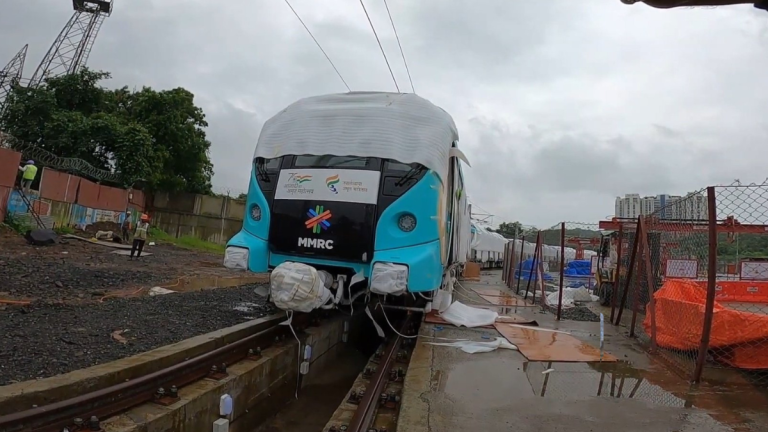
GHAZIABAD (Metro Rail News): The Ghaziabad Development Authority (GDA) is getting ready to launch three routes of Neo metro around the city. Recently, the first route from Vaishali to Mohan Nagar, the second route from Noida Sector 62 to Rapid Station Sahibabad, and the third route from Hindon River Bank Metro Station to Rajnagar Extension were all inspected by Anoop Agarwal, Executive Director of the Maharashtra Metro Rail Corporation (MMRC).

The three suggested routes have been found suitable for Neo Metro operation after a preliminary examination by MMRC. The Ghaziabad Development Authority now shall discuss how to move the project forward once MMRC submits the preliminary result of the inspection to the GDA this week.

What is Metro Neo

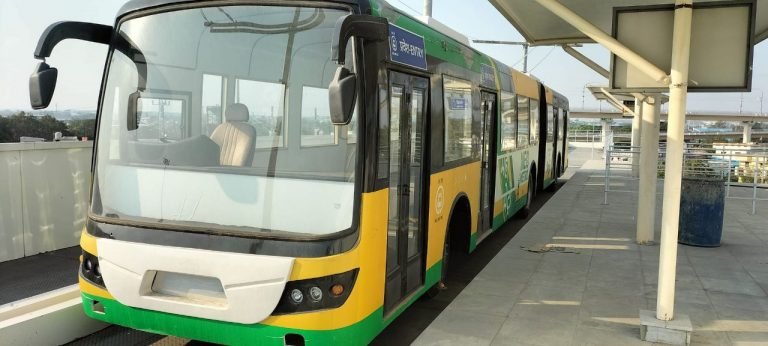
Metro developments require a lot of capital. MetroLite and MetroNeo have emerged as alternatives to traditional metro rail because of the significant capital expenditure aspect of the metro rail. The standard specification for the rubber-tired electric coach known as MetroNeo, which runs on a road slab with exclusive right of way and is powered by an overhead traction system was introduced in November 2020.

In terms of comfort, convenience, safety, punctuality, reliability, and environmental friendliness, it offers a similar experience and ease of travel as that of a traditional metro system. This is appropriate for tier-2 cities and can be built at around 25% cost of a traditional metro system.

MetroNeo‘s cheap capital cost is ascribed, among other things, to its lower axle load (10 tonnes), much lighter civil structure, absence of track and signalling, open and straightforward station design, and need for low power rated electrical equipment.

The first Metro Neo project in the nation is the 32 km long Nashik Metro Neo Project in Maharashtra. The two-corridor project received Cabinet clearance in March 2021 and is scheduled to be finished in four years. In a similar vein, the Delhi Metro Rail Corporation (DMRC) is making preparations to introduce Neo Metro between Kirti Nagar and Dwarka.

Cheaper compared to a Ropeway

The Ghaziabad Development Authority July last year proposed the Vaishali-Mohan Nagar ropeway project. The 5.17 km ropeway project from Vaishali to Mohan Nagar is estimated to cost around Rs 450 crore; however, the same distance may be covered by the Neo Metro project for only 416 crore rupees. After the release of the MMRC’s preliminary report, the cost situation will become evident. The GDA will find it simpler to finish the project due to the lower cost.

For the past four months, residents of the Trans Hindon area have been protesting the GDA’s ropeway project. People are using social media and other channels to voice their opposition to the ropeway in conjunction with the ongoing sit-in protest.

In such a scenario, efforts are also being made to put an end to the populace’s protest by moving the Neo Metro project forward.

First two projects being the priority

According to GDA Chief Engineer Rakesh Kumar Gupta, the MMRC’s preliminary assessment would also include details about the project’s cost. After reviewing the preliminary report, work will begin on creating the detailed project report (DPR).

The first route from Vaishali to Mohan Nagar and the second route from Noida Sector-62 to Sahibabad Rapid Rail Station project are those that the GDA would want to prioritise.

The state will have Metro, MetroLite, and MetroNeo rail systems if the project is approved. The state already has functioning metro networks in Lucknow, Ghaziabad, Noida, Greater Noida and Kanpur. The state government is working on expanding the services to Agra, Gorakhpur, Varanasi, Meerut, Bareilly, Jhansi and Prayagraj. The project is nearing completion in Agra.

Additionally, Gorakhpur MetroLite has been proposed by Uttar Pradesh Metro Rail. Official sources claim that the project is awaiting Central Cabinet approval.

ICF to produce coaches for Maha Metro and Vande Bharat Trains

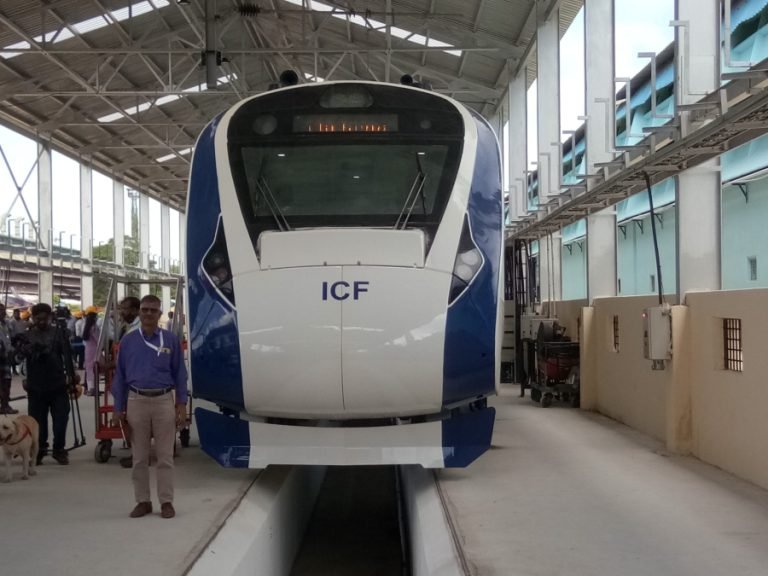
CHENNAI (Metro Rail News): Integral Coach Factory (ICF) will produce metro coaches for the Maharashtra Metro Rail Corporation Ltd. (Maha-Metro) this year, which has been entrusted to develop metro train services for the cities of Nagpur and Pune. According to ICF General Manager AK Agarwal, all 75 of the Vande Bharat trains—which are expected to be unveiled by August 15 of next year—will be manufactured there. This was announced on Monday during celebrations for the country’s 75th Independence Day.

ICF is the first railway production facility to make coaches for Metro Rail Corporation which is a railway subsidiary. ICF is currently making coaches for the Indian Railways-owned Kolkata Metro’s north-south corridor. However, for the east-west corridor, it purchases coaches from China (KMRCL).

The number of coaches, production costs, and other factors related to building metro coaches for Maha-Metro are being worked out, according to ICF official sources. A representative stated, “An MOU will soon be signed between Maha-Metro and ICF”.

A K Agarwal stated that the factory intended to produce 3,500 coaches in approximately 50 different models. “These will include Vande Bharat rakes, and the Vistadome dining car, which will be operational in Gujarat by September. There will also be a Gatishakti freight train on the Vande Bharat platform and a steam engine-themed heritage train with electric propulsion on the Vande Bharat platform,” he added.

Mumbai Metro lines 3 and 6 won’t have ramp integration: MMRC

MUMBAI (Metro Rail News): The ramp-based seamless integration of the elevated Metro 6 line with the underground Metro 3 line is no longer in existence. When asked about the metro corridors integration plan, Ashwini Bhide, Managing Director of Mumbai Metro Rail Corporation (MMRC), said that a separate and dedicated space will be established for commuters to travel the 300-meter distance between the two corridors. She claimed that commuters could stroll to the elevated corridor.

It was previously suggested to build the ramp from Aarey and take the underground metro to the elevated Metro 6 corridor when the depot was moved to Kanjurmarrg which means Metro 3 rakes shall also be used on Metro 6 line. Between, Seepz and Saki Vihar stations the merger was proposed.

Zoru Bhathena, a member of the Save Aarey conservation group, stated, “The elevated Metro 6 line and the underground Metro 3 line have always been connected overground at JVLR. It was always intended for users to be able to switch between the two lines with ease at this connection. Now, in an effort to demonstrate that the lines are incompatible, they are eliminating this interconnecting line, forcing commuters to walk more than 900 metres in order to switch from the Metro 3 to Metro 6 lines.”

The merger of Lines 3 and 6 was proposed by then Mahavikas Aghadi government, led by Chief Minister Uddhav Thackeray. This would require Line 3 of the underground Metro to emerge above ground after passing Seepz, enter the Aarey Metro carshed via a ramp, and then be elevated with the aid of the piers.

As a result of the centre claiming ownership of the land parcel and some private parties becoming involved and expressing concerns, the planned Kanjurmarg depot cannot go forward in the meantime.

DMRC shall run trains on Independence Day, Vehicle parking to remain suspended, according to a Delhi Metro update

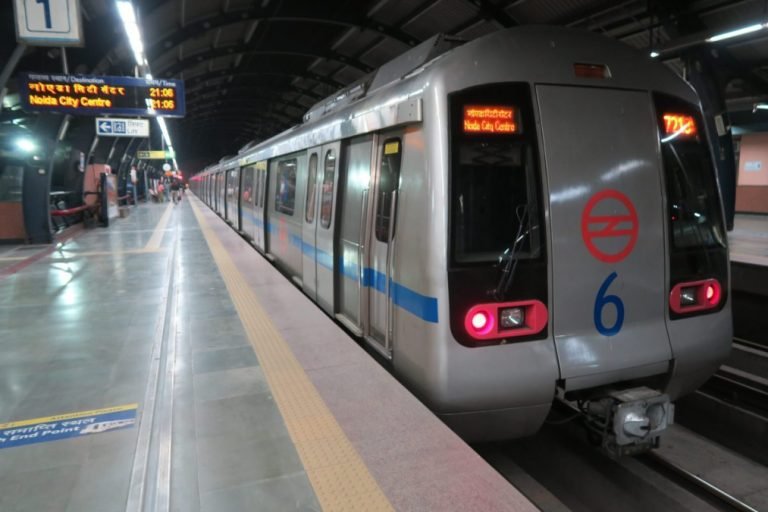
NEW DELHI (Metro Rail News): The Delhi Metro Rail Corporation shall carry on with its regularly scheduled metro train operations during Independence Day. However, due to security reasons, parking at Delhi Metro stations won’t be available from Sunday morning to Monday afternoon, as per DMRC. The information was shared by DMRC on its official Twitter account. The DMRC has also stated that due to continuing Independence Day dress rehearsals, a few of the ITO, Lalquila, Jama Masjid, and Delhi gate gates will be closed.

According to a notification, “Parking facilities will remain suspended at the Delhi Metro stations from 6:00 AM on Sunday, August 14, 2022, till 2:00 PM on Monday, August 15, 2022, due to security measures adopted on the occasion of Independence Day.” In order to maintain efficient vehicular traffic around the city on Independence Day, the Delhi Police also released a traffic warning on Thursday.

Eight roads will continue to be off-limits to general traffic, according to the advisory: Netaji Subhash Marg, Lothian Road, SP Mukherjee Marg, Chandni Chowk Road, Nishad Raj Marg, Esplanade Road and its link road to Netaji Subhash Marg, Ring Road from Rajghat to ISBT, and Outer Ring Road from ISBT to IP Flyover.

As per the statement, commercial and transport vehicles shall not be allowed to cross the borders of Noida, Loni, Singhu, Ghazipur, Badarpur, Safia, Maharajpur, Aya Nagar, Auchandi, Surya Nagar, Rajokri, Dhansa, Apsara, Kalindi Kunj, Jharoda, Bhopura, Lal Kuan Pul Prahlad Pur, and Tikri from Friday 10 p.m till 11 a.m on Saturday and similarly on Sunday. It stated that buses travelling to Kauria Pul, Red Fort, or the Old Delhi train station will use the ISBT bridge (Yudhistir Setu) and end at Boulevard Road close to the Mori Gate U-turn.

Fillers :

  • No parking facilities 6 AM Sunday
  • Traffic advisory issued for vehicular movement
  • Eight Roads to remain closed

Cost Increase of Mumbai Metro 3 by Rs. 10,000 Crore

MUMBAI (Metro Rail News): Eknath Shinde’s government in their first cabinet meeting after expansion approved Rs 10,000 crore in the total cost of the Mumbai Metro 3 project, which shall connect Nariman Point, Worli, Bandra-Kurla Complex, airports and Colaba-Bandra-Santacruz Electronics Export Processing Zone (SEEPZ) as a rise in the project cost. The project’s cost has increased from Rs 23,136 crore to Rs 33,405 crore, while the state government’s contribution has increased from Rs 2,402.7 crore to Rs 3,699.81 crore.

The loan from the Japan International Cooperation Agency for the Mumbai Metro 3 plan now stands at Rs 19,924 crore, up from Rs 13,235 crore in the previous projections.

The rise in the Cost

According to a report in the Free Press Journal, the increased time required for excavation due to basalt rock, the use of bottom-up construction technology for space needs, additional costs incurred due to rocky layers and to remove them, and the construction of steel decks for road traffic to enable the construction of underground stations in congested areas are some of the causes of cost inflation.

In addition, the Metro 3 project will include eight carriages instead of the Delhi Metro’s six.

After allowing work on Metro 3 Car shed in Aarey Colony in Goregaon (East), the state government gave its approval for the rise in project costs. The loan from the Japan International Cooperation Agency (JICA) for the plan now stands at Rs 19,924 crore, up from Rs 13,235 crore in the previous projections. According to Deputy Chief Minister Devendra Fadnavis, the Cabinet approved a proposal to send JICA a new request to enhance the loan amount.

Beginning of the Project works for the Metro

In 2016, construction on the 33 km-long subterranean stretch from Colaba to SEEPZ by the Mumbai Metro Rail Corporation Limited (MMRCL) began. There are 26 underground stations throughout the whole route.

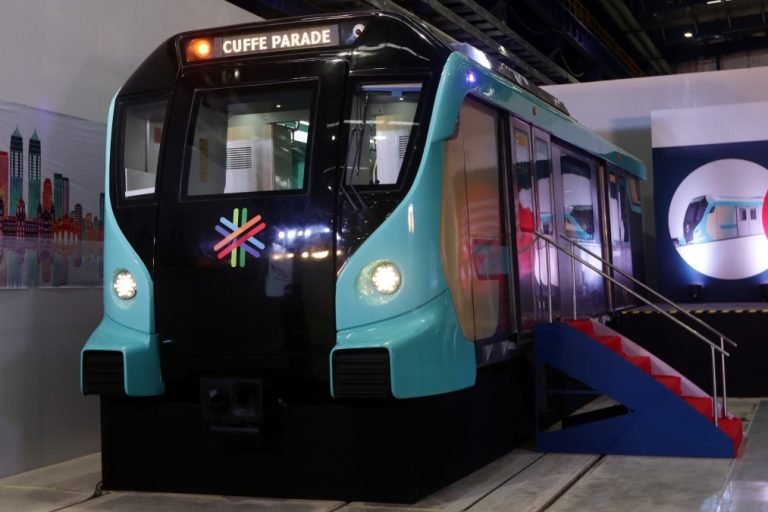
The Metro line will be expanded by 2.5 km from Cuffe Parade to Navy Nagar, and a total of 27 stations will be built, with an estimated additional cost of Rs 2,031 crore, according to then-Deputy Chief Minister and Finance Minister Ajit Pawar.

The project’s first phase, from Bandra to SEEPZ, was supposed to be finished by December 2021, and its second phase, from Bandra-Kurla Complex to Colaba, by June 2022. The MMRCL is currently planning to finish the first phase by January 2024 after experiencing numerous delays.

Aarey Car Shed Roadblock

Devendra Fadnavis’ administration at the time suggested building a Metro 3 car shed in Aarey Colony. Aarey, a small area of forest in Mumbai, used to be connected to the nearby Sanjay Gandhi National Park. In 2016, the park’s eco-sensitive zone was established in some areas of Aarey.

Massive protests occurred, however, and petitions were filed in the Bombay High Court and Supreme Court opposing the decision to build the metro shed in the area after the MMRCL, under the Fadnavis government, cut down more than 2,000 trees in the area for the construction of the car shed in October 2019.

Chief Minister Uddhav Thackeray cancelled the vehicle shed project in Aarey after the Maha Vikas Aghadi government was formed in November 2019 and declared relocation of the scheme to a swampy, salt pan location of Kanjurmarg. The Central government claimed a stake in the territory, and the Kanjurmarg area was mired in legal disputes.

Aarey depot in Mumbai Metro 3 is rushing to meet the April 2023 deadline.

The state government is making all possible efforts to keep the Metro 3 vehicle shed at Aarey. The car shed for the underground Line 3 (Colaba-Bandra-SEEPZ) would be ready for Phase 1 operations by April 2023, said Ashwini Bhide, Managing Director of Mumbai Metro Rail Corporation (MMRC) on Thursday. Bhide claimed that since the Phase 1 length between BKC and SEEPZ is slated to open in December 2023, work is moving along at a rapid pace.

As per Bhide, the strategy has undergone several adjustments in order to fulfil the deadline. He stated that, “To ensure that the depot work is expedited, we are currently in discussions with our consultants. Additionally, the work that has to be done for the depot in order for Phase 1 to operate has been prioritised”.

Although the operations control centre (OCC) is an important and crucial part, she stated that a backup is available at the BKC station, even the OCC is delayed for some reason. Bhide also said that BKC had always planned to have an OCC provision. With an OCC at BKC and a stabling line for nine rakes at Aarey, the commissioning of Phase 1 can be proceeded. Bhide said. Bhide noted that 29% of the depot work was already finished when a stop-work notice was issued.

According to Bhide, the line would need 55 rakes by 2050, which may demand an additional hectare of land. “However, consideration of more land won’t begin until beyond 2040. The needs could change as technology develops over the next few years, as there may be some room in the station area as well to stabilise rakes, she added.

Civil construction works of Phase I reportedly is completed to an average of 84%, with tunnelling work completed hundred percent, with completion of approximately 43% of system work, as per MMRC. The trial run is expected to be called three months prior to the intended deadline because the Phase 1 works would be commissioned by December 2023. The entire Phase is expected to be completed by June 2023, according to Bhide.

Bhide emphasised that the ticket price will stay the same as other planned metro lines despite the increase in project costs.

Ahmedabad to receive Metro as Navratri Gift

Ahmedabad (Metro Rail News): Metro soon would be available to citizens of Ahmedabad as their Navratri gift. By the third week of September, the much-awaited rail services are expected to begin. The first phase of the project is almost completed, and train trials on the North-South track have begun.

The final inspection will be carried out by the Commissioner of Metro Rail Safety (CMRS) in the coming week. On August 20, the CMRS crew is scheduled to arrive, to inspect entire stretch 40 Kms. After the completion of the inspection, the Gujarat Metro Rail Service (GMRS) will be able to get final approval for commencement of services complying to some necessary paper works.

With compliance works of CMRS expected to take up to 15-20 days, the services are likely to begin in late September as per Managing Director, GMRS S. S. Rathod. The monsoon too has affected the work. Each train must complete 320 km of trial runs before beginning genuine operations. Trial runs are now underway. The project was scheduled to be completed in 2021 but Covid lockdown and some legal hurdles delayed the project. More than Rs 12,500 crore have already been spent on the project. The train will run on elevated platforms except in the Walled City where it is underground. Kalupur, Shahpur, Gheekanta and Kankaria East are the four stations in the underground section

There are two corridors in Phase-1. Corridor-1 is from APMC to Motera stadium while Corridor-2 is from Thaltej gam to Vastral gam. Corridor -1 will have stations at Jivraj park, Rajivnagar, Shreyas, Paldi, Gandhigram, Old High Court, Usmanpura, Vijaynagar, Vadaj, Ranip, Sabarmati Railway station, AEC, Sabarmati and Motera. Corridor- II will pass through Thaltej gam, Thaltej, Doordarshan Kendra, Gurukul Road, Gujarat University, Commerce six roads, S P Stadium, Old High Court, Shahpur, Gheekanta, Kalupur Metro station, Kankaria East, Apparel Park, Amraiwadi, Rabari Colony, Vastral, Nirant Crossroads, Vastral gam.

Fair Pricing

The maximum and minimum fare for metro is expected to be fairly priced at Rs 25 and Rs 5 respectively. The prices are going to be in multiples of Rs 5. From APMC to Vastral and Motera to Apparel Park, the maximum fare in corridor I and the fare between Thaltej Gam to Vastral, Nirant Crossroads, and Vastral Gam in Corridor II would be Rs 25. The ticket prices would be Rs 5, 10, 15, 20, and 25 for the various stations.

Talgo won a contract of 280 million Euro to manufacture night trains in Egypt

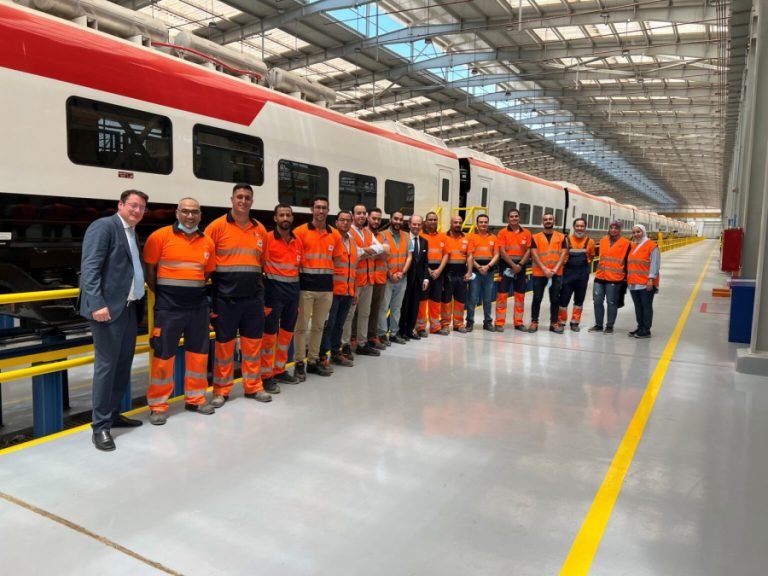
SPAIN(Metro Rail News): Spanish rolling stock manufacturer Talgo has won a contract in Egypt worth 280 million EURO. Under the contract, Talgo will manufacture seven passenger trains for the Egyptian national railway company to be used for night services with the maintenance of 15 years.

Talgo is currently delivering on a contract with Egyptian National Railways (ENR) in 2019 for passenger trains for daytime services and eight years of maintenance.

The company will build the new rail units at its Alava and Madrid plants, with delivery expected to begin in 2024.

The firm recorded an attributable net profit of 5.5 million euros during the first half of the year, 46% less than in the same period of 2020.