Home Blog Page 320

CMRL floats e-tenders for licensing of advertisement rights inside Metro stations

CHENNAI (Metro Rail News): Chennai Metro Rail Limited (CMRL) has floated bids for digitally signed e-tenders for the licensing of advertisement rights inside Metro stations and semi-naming rights in nine CMRL Metro stations along Corridor 1 of Phase 1 Extension. 

The tender Reference Number is 2022/490/03CMRL/BD/SNR

The name of the tender is Licensing of Semi-Naming Rights in 9 CMRL Metro Stations of Corridor 1 of Phase 1 Extension and Advertising Rights inside Metro Stations.

Tender Cost Estimate in INR is 14,79,34,215 Crore

EMD: 15,30,000 Indian Rupees

Work Period is 1095 Days

The date of Document Download / Sale Commencement is on August 25, 2022

End of Sale / Document Download is on September 29, 2022

The date of the Pre-Bid Meeting is on September 6, 2022

The start date for bid submission is on September 22, 2022

The end of bid submission is on September 29, 2022

The date of Bid Opening is on 30 September 2022.
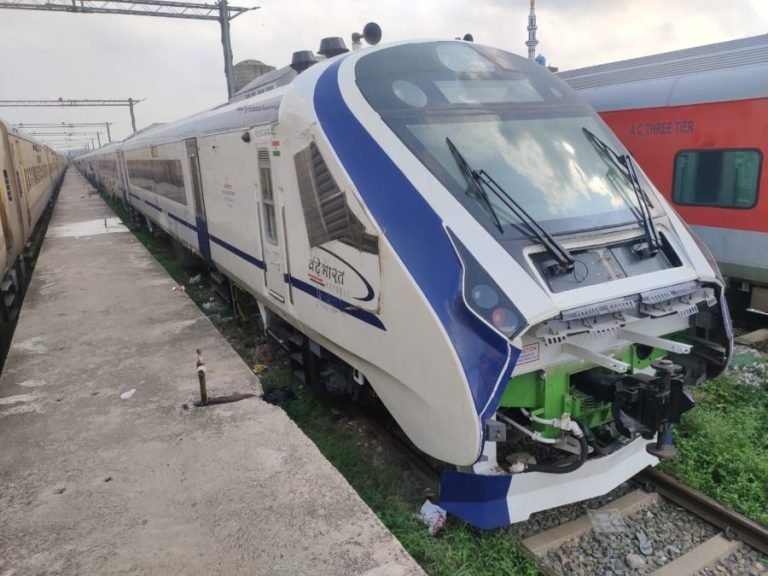
Vande Bharat-2 reach 180 kmph in a test run on the Kota-Nagda railway section

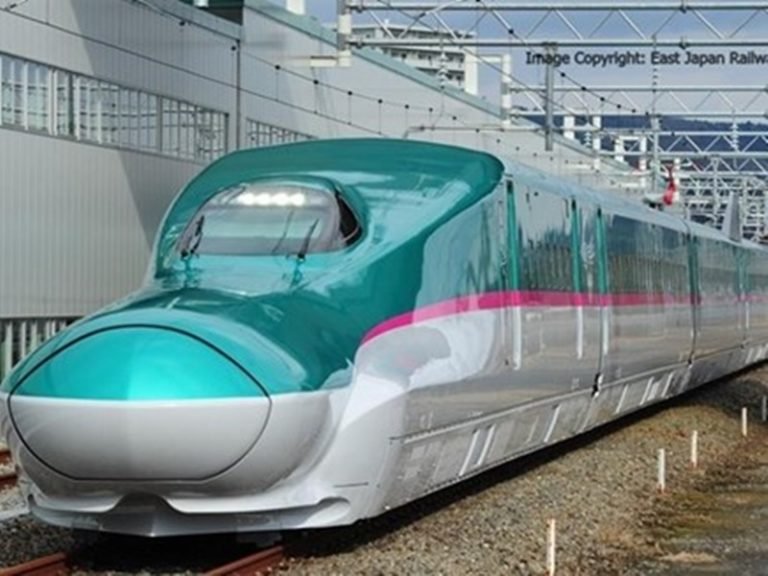
MADHYA PRADESH (Metro Rail News): Vande Bharat Express train, a semi-high-speed train in India built by the Integral Coach Factory (ICF), went beyond the 180 kmph speed restriction during a test run. Vande Bharat train underwent a preliminary trial at various speeds on the Kota-Nagda railway segment. Union Railway Minister Ashwini Vaishnaw tweeted, “VandeBharat-2 speed trial started between Kota-Nagda section at 120/130/150 and 180 Kmph.”

The RDSO (Research, Design, and Standards Organization) team used a newly developed Vande Bharat train set to undertake thorough oscillation trials on a prototype rake of 16 coaches of the train set. Trials were undertaken in stages in Kota Division. The first trial was conducted between Kota and Ghat ka Barana; the second trial was conducted between Ghat ka Barana and Kota; the third trial was non-recording on the down line between Kurlasi and Ramganj Mandi; the fourth and fifth trials were conducted on the down line between Kurlasi and Ramganj Mandi; and the sixth trial was conducted on the down line between Kurlasi, Ramganj Mandi, and Laban.

Vande Bharat train is completely manufactured in India. It is a semi-high-speed train. Vande Bharat train is a self-propelled engine train, that is, it does not have a separate engine. It has automatic doors and air-conditioned chair car coaches and a revolving chair that can rotate up to 180 degrees.

KEC International Ltd. bags Electrification contract for Delhi Metro Phase 4

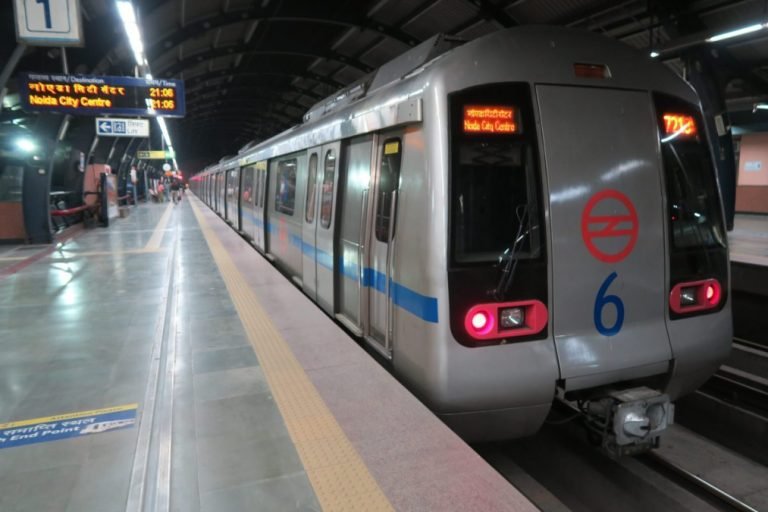
NEW DELHI (Metro Rail News): KEC International Ltd. emerges as the winning bidder for the 25 kV OHE & 33 kV power supply contract for the elevated corridors of the 65.1 km Delhi Metro Phase 4 project on Tuesday.

Delhi’s new Phase 4 is well under construction and it includes one new line (the 23.62-kilometer Silver Line from Aerocity to Tughlakabad) and the extension of the Magenta Line (the 28.92-kilometer Janakpuri West to R.K. Ashram) and Pink Line, (12.58 km Mukundpur – Maujpur).

In February 2022, the Delhi Metro Rail Corporation (DMRC) issued a tender invitation for this significant systems contract, with a 1440-day (3.95-year) timeframe and an unknown estimate. In May, technical bids were opened, revealing 4 bidders.

The Delhi Metro MRTS Phase-IV project’s scope includes designing, supplying, installing, testing, and commissioning 25 kV overhead equipment (OHE), 33 kV auxiliary power supplies for elevated corridors, and a SCADA system for both elevated and underground corridors.

It is just one of the many electrification-related packages in Phase 4. It’s interesting to note that DE-02 also applied to the OHE electrification package for the remodelling of Ajronda and Sarita Vihar Depots. In January 2021, Salasar Techno Engineering was awarded that contract. This package is just one of the many electrification-related packages in Phase 4.

Delhi-Varanasi bullet train project is still under consideration

NEW DELHI (Metro Rail News): The Ministry of Railways denied on Thursday that the Delhi-Varanasi bullet train project had been abandoned and said that its DPR was still being taken into account. The DPR for the high-speed rail between Delhi and Varanasi has not been decided. The Railway Ministry does not have any objection to the project’s DPR, as stated by the ministry.

Additionally, it stated that the National High-Speed Rail Corporation Limited (NHSRCL) had completed and submitted the project’s detailed project report (DPR) to the Railway Board. “It (DPR) is under evaluation by RB, as part of the process of obtaining approval,” the ministry updated.

The high-speed corridor’s projected route travels via Varanasi, Greater Noida, Agra, Lucknow, and Prayagraj. The ministry further stated that R N Singh, Principal Executive Director (Infra), and NHSRCL representatives did not recently meet to discuss the DPR.

Sources, however, have claimed that a meeting took held and that the feasibility report of the high-speed Delhi-Varanasi project was discussed. Concerns over the project were expressed in relation to the numerous curves along the route. The National Highway-2 was built for the corridor in the feasibility study. It was claimed that doing so would enable more affordable land purchases and lower construction costs.

However, sources have maintained that a meeting took place and the feasibility report of the Delhi-Varanasi high speed project was discussed and concerns were raised on the project citing multiple curves along the route. The feasibility report proposed that the corridor be built along the National Highway-2. It said this will help in the acquisition of land at cheaper rates and reducing the cost of construction.

The sources claimed that the technical problem was that NH-2 had numerous curving stretches between Delhi and Varanasi, which served as a hurdle, making it extremely risky for a train to run at 350 kilometers per hour. “To operate a bullet train at 350 kmph, the high-speed corridor’s track should be straight.

The railway ministry claimed it could not answer to queries on particular features of the DPR, such as projected cost, stoppages, and estimated date of commencement of work, because the project has not yet been sanctioned and the detailed report has not yet been approved.

BMRCL seeks approval for Phase-3 final DPR from the Karnataka government

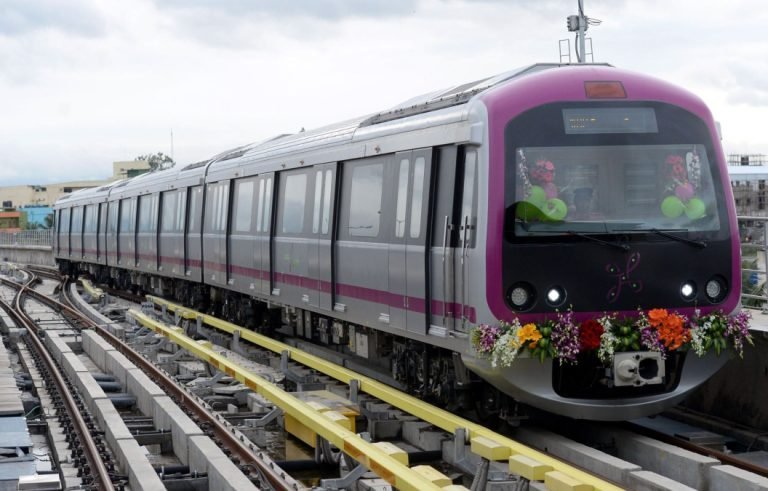
BANGALORE (Metro Rail News): Bangalore Metro Rail Corporation Limited (BMRCL) by Rail India Technical and Economic Service (RITES) Limited, a consulting firm for the Ministry of Railways, is scheduled to be approved by the State government for the final Detailed Project Report (DPR) for Phase 3. BMRCL has estimated that the 44.65-km elevated project would cost over Rs 13,000 crore and have a ridership of 4.65 lakh passengers per day when it becomes operational in 2028.

Anjum Parwez, managing director of BMRCL stated that BMRCL’s final round of discussions took place on Wednesday. We will give the DPR to the State government in the near future, and the State government will send it to the Centre for its approval. Phase-3 is projected to cost more than Rs 13,000 crore at current (2022) rates, according to the computation. However, the price would have significantly increased by the time the project was finished in 2028 due to increases in material and construction costs, among other factors, the MD added.

BMRCL has not undergone any alignment changes in the two corridors proposed by RITES in its final DPR, Corridor One for 32.15 kilometres from JP Nagar IVth Phase to Kempapura, with 22 stations, and Corridor Two for 12.5 kilometres from Hosahalli to Kadabgere on Magadi Road, with 9 stations.

We performed analyses and expect 4.65 lakh daily riders on both lines in 2028,” the official added. The MD responded that options were being provided by BMRCL and that the Ministry of Housing and Urban Affairs and the Ministry of Finance would make the final decision when questions regarding the financial model were raised.

An official stated that the three financial options are as follows: a Special Purpose Vehicle model, in which the State and Centre would each contribute 20%, and the remaining 60% would be raised through loans; a Viability Gap Funding Scheme (PPP model), in which the State and Centre would both contribute 20% again, and the remaining would be raised by private parties; and a Grant model, in which the Center would contribute 10% of the project cost as a grant.

MMRDA to begin trail runs on Mumbai Metro Lines 2A & 7

MUMBAI (Metro Rail News): The Mumbai Metropolitan Region Development Authority’s (MMRDA) two key projects are about to be finished, and the trials run will soon start. Construction on Line 2A (From Dahisar to DN Nagar) from Link Road and Line 7 (From Dahisar East to Andheri East) from the Western Express Highway is both almost complete. MMRDA stated that the two lines’ trial runs are anticipated to begin by October of this year.

By the end of December, the MMRDA intends to begin the final stage of commercial operations. The two lines intend to provide fast and efficient interchange with the suburban rail system and MRT system at Andheri, JVLR, and Dahisar as well as communication between the Western Express Highway, Metro Line 1 (Ghatkopar to Versova), and Metro Line 6 (Swami Samarth Nagar to Vikhroli). The Dahisar-Andheri line aims to connect Central Mumbai with Northern Suburban Mumbai, as well as to give rail-based access to the National Park, SEEPZ, Mumbai International Airport (CSMIA), and other commercial and geographic attractions.

About 3 lakh people can use the two metro lines, which have 30 stops along the corridor. In order to offer continuous connection, the MMRDA is also constructing a foot overbridge at Goregoan station on Metro Line 7 that will connect to the railway stations in the western suburbs. A tender for the same will soon be announced by the MMRDA.

MMRC invites EOI from consultants for the preparation of the Southern Extension of Mumbai Metro Line 3

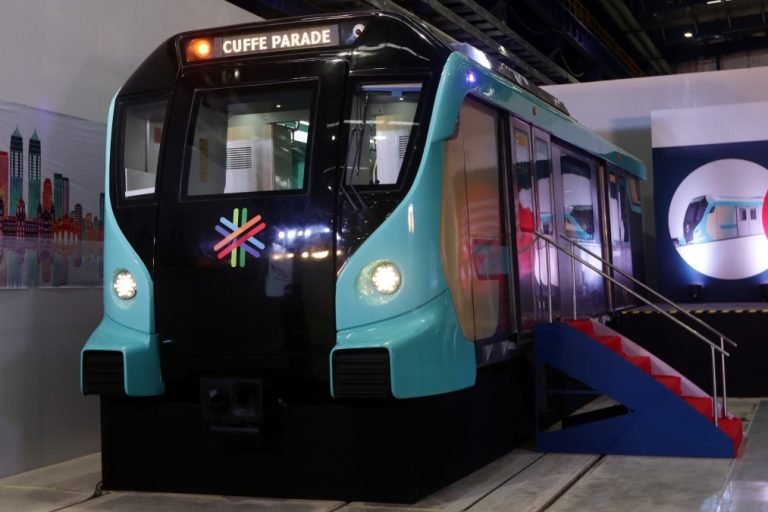
MUMBAI (Metro Rail News): The Maharashtra government announced plans to expand a 2.5 km stretch to Line 3 southbound from Cuffe Parade, adding one new stop at Navy Nagar, in March 2022. The cost of the extension would increase by Rs 2,301 crore. The extended portion is 2.5 km long, of which over 15 km will be the actual length of the metro line and with the remaining stretch being used for turning metro rakes.

In this regard, the Mumbai Metro Rail Corporation Limited (MMRC) is inviting expressions of interest from reputable consultants for the provision of consultancy services for the preparation of the Southern Extension of Mumbai Metro Line 3 from Cuffe Parade to Navy Nagar. The last date to submit bids is 1st September 2022.

Additionally, MMRC is also floating bids for the provision of project management, architectural, and structural design services for the renovation of buildings for project participants (K3, G3, and K2 Buildings Balance Work) at the Kalbadevi and Girgaon Stations of Mumbai Metro Line-3.

The Maharashtra government has previously been asked by the Indian Navy’s Western Naval Command (WNC) to expand the metro services from Cuffe Parade to Navy Nagar. This will make it easier for Naval Officers and their families to access Mumbai’s other neighborhoods via the metro rail system.

A 250-meter station is proposed in front of the TIFR on Dr. Homi Bhabha Road with an estimated 2.5-kilometer tunnel expansion from the current terminal point at Ambedkar Nagar. Station with two sides and a crosswalk before and after the metro station (25 other stations have island perform).

M I A Construction wins contract of Multi-Modal Integration of 10 Metro Stations of Delhi Metro

NEW DELHI (Metro Rail News): The Delhi Metro Rail Corporation (DMRC) has issued a Letter of Acceptance (LoA) to M/s M I A Construction Pvt. Ltd. for the work of Multi-Modal Integration of 10 Metro Stations, including Janakpuri East, Uttam Nagar West, Dwarka More, Nawada, Shahdara, Shastri Park, Shastri Nagar, Jahangirpuri, and Karol Bagh Metro Stations of Phases I and II.

Number of the tender: MMI/Civil/04

Name of Project: Multi-Modal Integration of 10 Metro Stations, including Phase-I and Phase-II of Janakpuri East, Uttam Nagar West, Dwarka More, Nehru Place, Nawada, Shahdara, Shastri Park, Shastri Nagar, Jahangirpuri, and Karol Bagh.

Amount of the Accepted Contract: Approximately INR 19,00,83,381 Crore

Time Frame for Work completion: 10 Months

The DMRC issued an invitation to bid for Tender Number: MMI/Civil/04 in April of this year.

Construction and completion of the works by the Contractor (including, but not limited to, the design, construction, and removal of the Temporary Works) as well as the correction of defects in the Works in the manner, to the standards, and within the timeframe specified by the Contract are the goals of the contract. The Contractor shall execute the Works in full recognition of this goal and with full acceptance of all responsibilities, liabilities, and risks that may be involved.

Kochi Metro to construct Metro Light in Kozhikode and Thiruvananthapuram

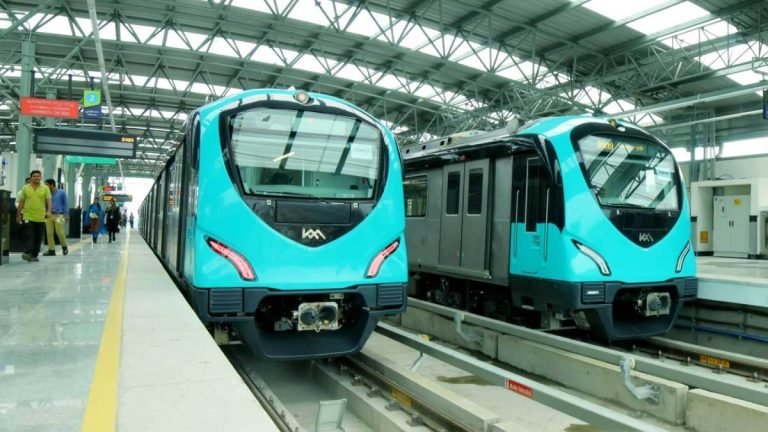
THIRUVANANTHAPURAM (Metro Rail News): The cabinet meeting was held on Wednesday, and it was resolved to entrust Kochi Metro Rail Ltd construction for the Light Metro/Metro Light projects and three flyovers that will be built in Thiruvananthapuram and Kozhikode by Kerala Rapid Transit Corporation Ltd. For the Light Metro projects, the Kochi Metro will be tasked with creating a new, comprehensive project report. The DPR needs to be created in accordance with the instructions provided by the Union Government.

The Kerala Land Reforms Act, 1963’s principles and requirements for granting exemptions from the law’s land ceiling restriction were modified by the government. Applications for exemption will be conducted through an entirely online approach.

The Kochi metro project is the first metro in the country which connects rail, road, and water transport facilities. The first phase is being set up at an estimated cost of ₹51.81 billion. In October 2017, Kochi Metro was named the Best Urban Mobility Project in India by the Urban Development Industry, as part of the Urban Mobility India (UMI) international conference hosted by the ministry every year.

Indian Railways connecting Northeastern states with rest of country

MANIPUR (Metro Rail News): Indian Railways has been relentlessly constructing train connections between all of India’s states. Railways have one of the greatest rail networks in the world, having expanded rail networks to unreachable rural locations and now offering train services in every state, including connecting North-East India with the rest of the country. Indian Railways does all possible to provide travelers with comfort and convenience.

A recent video tweeted by Kiren Rijiju, Minister of Law and Justice, demonstrates how in the 1990s when asked about the railway projects for Manipur, the then-governing party responded with the assurance that construction had already begun on them. But the present Modi administration has only just resolved, after so many decades by connecting all the Northeastern states with a proper railway link.

Kiren Rijiju stated that now, Railway Projects for Manipur were conceived in 1990. It’s only Narendra Modi Ji, who has fulfilled it. Now, all North East States are connected and more projects are in the pipeline to link NE with the rest of India. And reservation provisions are made easy for the passengers.

Additionally, by 2024, a train network will connect the state capitals of the northeastern states with Delhi, Railway officials stated. Over 60% of the construction connecting Northeastern states to the national capital is complete and the remaining 40% is anticipated to be finished by 2024, stated Raosaheb Patil Danve, Minister of State for Railways.