Home Blog Page 309

L&T & KEC – VNC JV Bags Chennai Metro Phase 2 ballastless track work contract

0
Chennai-Metro / Representational image

CHENNAI (Metro Rail News): Larsen & Toubro and KEC International – Vijay Nirman Company JV won two ballastless track work contracts for Chennai Metro Phase 2 on Saturday from CMRL.

The contract for the 45.813 km Line-3, with scope between Madhavaram Milk Colony and Sholinganallur Station, was awarded to Larsen & Toubro. Tata Projects and Larsen Toubro are building this portion, which is mostly underground.

KEC – VNC JV was awarded the contract for the 47 km Line-5, which included the area inside Madhavaram Depot and between Madhavaram Milk Colony and CMBT Station.

Chennai Metro Rail Ltd. (CMRL) floated tenders for both in January 2022. Three bidders for Line-3 and four for Line-5 were revealed when technical bids were available in June.

Line-3 tender includes PHASE-II/CORR-3/CP18A-ATW-09/2022.
Estimated cost of Line 3 is 267 crore rupees

Deadline for the tenders includes 1290 day + 730 day deadline (DLP)

Texmaco Rail and Engineering Ltd., Rail Vikas Nigam Ltd., and Larsen & Toubro Ltd. are the bidders.

Supply, Installation, Testing, and Commissioning of Ballastless Track of Standard Gauge Including All Associated Works in Underground and Elevated Section from Madhavaram Milk Colony to Sholinganallur of Corridor 3 are the scope of Line 3.

Line-5 tender includes Phase-II/C-5-CP18B-ATW-12/2022

Estimated cost of Line 5 is 194 crore rupees

Deadline for the tenders includes 1006 days + 730 days (DLP)

Rail Vikas Nigam Ltd. (RVNL), Texmaco Rail and Engineering Ltd., Larsen & Toubro Ltd. (L&T), and KEC International – Vijay Nirman Company JV are the bidders.

Elevated and Madhavaram Depot of Chennai Metro Rail Project – Phase II Between CMBT to Madhavaram Milk Colony of Corridor 5 scopes includes supply, Installation, Testing, and Commissioning of Ballastless Track of Standard Gauge including all associated works in Underground Madhavaram Depot.

Advertisement1
InnoMetro_2026

Ruby-New Garia Section of Kolkata Metro is ready for trial runs

0
Kolkata Metro
Kolkata metro/Representational Image

KOLKATA (Metro Rail News): The Ruby-New Garia metro project‘s 6.2 km long is now equipped with a 33 KV power supply to support the upcoming trial runs in this section of the line. The authorities of the implementing agency, Rail Vikas Nigam Limited, are aiming to complete commissioning of the stretch by the end of October.

At Satyajit Ray Metro station, a substation has been built for the power supply. This substation, which is being provided by the CESC and has a 33 KV power capacity, will provide energy to the tracks for the test runs and later train operations. The RVNL is getting ready to begin the trial runs along the stretch.

A non-AC rake from the Noapara car shed needs to be brought here for this. Notably, Phase 1 of the New Garia-Airport Metro will soon begin testing, including a 6.2 kilometre stretch from Kavi Subhas to Ruby Crossing.

The section will be tested using non-AC rakes in the “one train on one line” mode because it does not yet have the hitech communication-based train control (CBTC) signalling system.

Radar and microwave equipment will be used to perform the trials while the high-tech signalling system is still being prepared. The Kavi Subhash Metro station is expected to become a junction of two important metro corridors, the older North-South Kavi Subhas-Dakshineswar line and the New Garia-Airport Corridor, once the planned 6.2 kilometre section will be operational.

Advertisement1
InnoMetro_2026

Ministry of Railways shares Dimapur-Kohima Project Progress Report

0
Dimapur-Kohima Railway Progress Report

NAGALAND (Metro Rail News): Ministry of Railways shared the Dimapur-Kohima Project Progress Report on its Twitter handle.

The state of Nagaland’s capital, Kohima, will be connected to the rail network via the 82-kilometer-long Dimapur-Kohima railway project. This rail project is scheduled to be completed in March 2023.

3 Tunnels completed, 3 are under advanced & 14 are at mobilization stage, 4 major bridges Superstructures are complete, 8 are in progress, Substructure of 11 bridges are complete, 8 are in progress, and 134 minor bridges out of 198 are completed.

Advertisement1
InnoMetro_2026

Imphal to get its first Rail connectivity from Jiribam

0
Imphal Jiribam Progress Report

MANIPUR (Metro Rail News): Ministry of Railways has shared the Progress Report of Jiribam-Imphal, Manipur Project on its Twitter handle.

The capital of Manipur is expected to be connected by rail and thereby reducing the travel time between Jiribam and Imphal to two-and-a-half hours from the current 12 hours drive.

The Jiribam-Imphal new broad gauge railway line (111 km) project with an estimated cost of Rs 12,264.15 crore is set to be completed by December 2023.

89.20% of work completed of Jiribam- Imphal Project. 48 Tunnels out of 52 completed, 11 major Bridges are also completed, the substructure of 7 and superstructure of 5 of project are completed, and 6 Stations were constructed out of 11 stations.

Advertisement1
InnoMetro_2026

Indian Railways to promote MP tourism by introducing vistadome coaches to Jan Shatabdi

0
Vistadome coaches added to janshatabdi Express

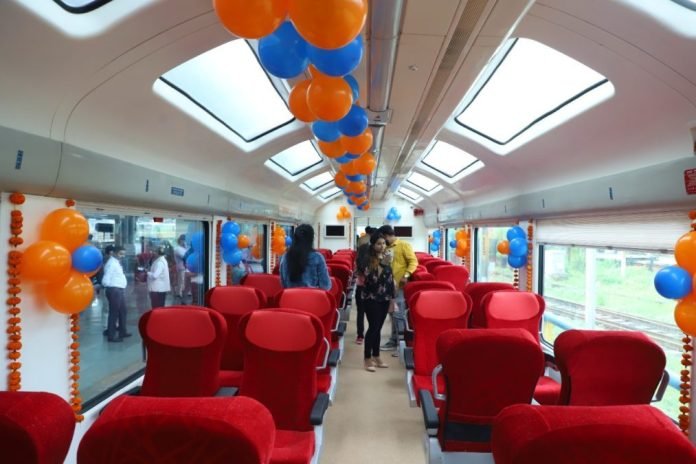
MADHYA PRADESH (Metro Rail News): Madhya Pradesh introduced its first vistadome coaches on the Bhopal-Jabalpur Janshatabdi Express to introduce passengers to the state’s beautiful forests, waterfalls, and marbles. This information is shared by Minister of Railways of India, Ashwini Vaishnaw on his Twitter handle.

This initiative by the Madhya Pradesh tourism board with Indian Railways includes big windows, 360-degree rotating pushback chairs, and self-operating sliding doors. The Madhya Pradesh government has guaranteed more attractive journeys through this programme, and people can enjoy the gorgeous sites without getting bored. Large windows and transparent, clear roofs will draw tourists to travel by train, and improved services will be provided to assure their comfort.

The train was flagged off by the State ministers Usha Thakur and Vishvas Sarang from Rani Kamlapati Railway station.

Tourists would be able to take in the sights of the state’s various tourist attractions while travelling, which would include the Bhimbhetka rock shelter in Obedullaganj (proposed), the Narmada river bank in Hoshangabad, the Tawa Dam in Itarsi, the proposed Satpura National Park in Suhagpur, the Panchmarhi hill station, the Joteshwar Temple in Gotegaon, the Madan Mahal fort, the Bhedha Ghat famous for marble rock, Kanha and Bandhav National park.

Advertisement1
InnoMetro_2026

Mathura- Vrindavan gets rail bus on the auspicious day of Shri Krishna Janmashtami

0
Vrindaban to mathura new rail bus

MATHURA (Metro Rail News): On the occasion of Shri Krishna Janmashtami, the Ministry of Railways announced on 19th of August, through its Twitter handle that an interstate rail bus between Mathura and Vrindavan will soon run to serve commuters commuting between the cities.

A more powerful engine will drive the newly created rail bus, which can accommodate 50 passengers. The distance between Mathura to Vrindavan is 12 km through its long metre gauge rail route. The rail bus’s one-way ticket was only Rs 30. The rail bus run between Mathura and Vrindavan twice every day. At 8.55 AM, Rial Bus starts from Mathura Junction and reach Vrindavan at 9.30 AM. At 3:20 PM, the second run departs from Mathura Junction. It stops at Sri Krishna Janam Sthan and Masani stations along the way.

The development of the Mathura-Vrindavan train line under the Mass Transit System was discussed by Mathura Member of Parliament Hema Malini and Union Ministers Nitin Gadkari and Ashwini Vaishnaw in May of this year. There is significant encroachment on both sides of the Mathura-Vrindavan train track, according to local media sources. For this 13 km long and 22 m wide ROW track, Railways has 38.7 hectares of land.

All throughout the year, devotees and visitors visit Mathura and Vrindavan as well as neighbouring towns in the Mathura city, including Goverdhan, Gokul, Barsana, Nandgaon, Mahavan, and Dauji, notably during the festivals of Holi, Krishna Janmashtami, Shravan maas, and others.While Mathura is well connected with all parts of the country via rail and it is just 140 kms south of Delhi on Delhi NCR- Agra Yamuna Expressway, connectivity to its satellite towns is not as good. Yogi Adityanath, the state chief executive, stated earlier this year that his administration would construct Mathura-Vrindavan and Gokul Dham after Ayodhya and Varanasi.

Advertisement1
InnoMetro_2026

Bangalore Metro’s Vindhya TBM achieves its second breakthrough

0
second breakthrough of tunnelling project, BMRCL

BANGALORE (Metro Rail Project): Bangalore Metro saw the second breakthrough made by the Larsen & Toubro(L&T) Tunnel Boring Machine (TBM) Vindhya (DZ671) at 21.386 km Pink Line on Thursday. Executive assistant Public Relations of BMRCL, Srivas Rajagopalan shares this information through his Twitter handle.

The 2.884 km package RT-03 (Shivajinagar to Tannery Road) of the Bangalore Metro Phase 2 project, which was awarded by the Bangalore Metro Rail Corporation Ltd (BMRCL) in February 2019, includes China Railway Construction Heavy Industry (CRCHI) slurry machine.

Vindhya was recommissioned in February 2021 to build the 906.702m south-bound tunnel for the Cantonment – Pottery Town Station portion after completing the 862m Cantonment – Shivajinagar tunnel in October 2021.

For this drive, L&T provided an official tunnelling estimate of 280 days; however, they finished the digging in just 184 days.

The machine will now be hauled through the station box and put into service for its third and final 710.64-meter assignment, which is located in the south of Tannery Road Station, towards the Shadi Mahal TBM Retrieval Shaft.

With this advancement, roughly 53.3% of Phase 2’s tunnelling work has been finished, and 10 out of 26 breakthroughs have been done: One on RT-04 by ITD Cementation, three on Package RT-01 by Afcons, two on RT-02 by L&T, four on RT-03 by L&T.

Advertisement1
InnoMetro_2026

Vande Bharat train soon to be run in Punjab, oscillation trial complete

0
vandebharat speed trial
vandebharat train

LUDHIANA (Metro Rail News): The Oscillation trial of Vande Bharat train was conducted at a speed of 90 kmph from Sanehwal in Ludhiana to New Morinda Junction railway station. Minister of Railways, Ashwini Vaishnaw shares this information on his Twitter handle.

The Northern Railways on Friday conducted a trial of an advanced version of the aforementioned special train between Sanehwal and New Morinda Junction railway station, in an effort to launch more than 400 Vande Bharat trains across the nation by 2025.

Notably, Nirmala Sitharaman, the union finance minister, announced plans to launch 400 Vande Bharat trains around the nation in the upcoming three years in her budget statement in February of this year. Two such trains are currently operating between Delhi and Varanasi and Delhi and Katra.

The railways are currently preparing to produce Vande Bharat train sets with innovative technology and increased speed.

Advertisement1
InnoMetro_2026

Alstom to make new generation high-speed train to satisfy the needs of European traffic

0
alstom high speed train
Representational Image

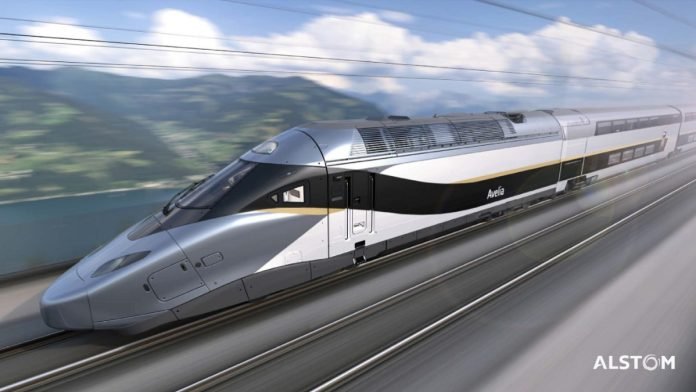
FRANCE (Metro Rail News): Alstom, a leader in smart and sustainable mobility, has acquired a second order from SNCF Voyageurs for 15 Avelia Horizon new-generation ultra-rapid trains, worth over 590 million euros.

High-speed trains which are ordered are of new generation 4-voltage high-speed trains to satisfy the needs of European traffic. With a total purchase cost that is 20% less than the previous generation, the Avelia Horizon portfolio achieves ambitious goals in terms of competitiveness in the rail industry and profitability for SNCF Voyageurs.

Avelia Horizon is made up of two innovative short-length, high-performance, and compact power cars, as well as articulated double-deck coaches. When operating in the most effective configuration, the train can carry up to 740 passengers, which enables a 20% increase in passenger capacity.

The cost of maintenance will be more than 30% less than what SNCF Voyageurs in France. The maintainability of the train is taken into account during the design phase, and a remote diagnostic system enables predictive maintenance, which raises the reliability and availability of the trains. Numerous components have been improved to streamline, cut down on, and enable longer gaps between maintenance operations. The new generation of high-speed trains will use 20% less energy than current high-speed trains because of their aerodynamic design and more effective traction.

Jean-Baptiste Eyméoud, President of Alstom France stated that “This order once more validates the success of incredibly high-speed trains and the Avelia Horizon platform. This solution addresses the technological, economic, and competitive difficulties of SNCF in an environment of strong passenger demand for low-carbon mobility options”.

Advertisement1
InnoMetro_2026

Exclusive Interview with Mr. Loknath Behera, MD, KMRL

0
Mr. loknath behera exclusive interview

Metro Rail News conducted an email interview with Mr. Loknath Behera, MD, Kochi Metro Rail Corporation Ltd. In the interview Mr. Behera talked about Kochi Metro Rail and why it requires inter-modal transportation and integration of travel through use of technology.

Mr. Lokanath Behera is a retired I.P.S. officer. He was State Police Chief and Director General of Police (DGP) of the Kerala State Police. He was one of the founding members of the National Investigation Agency (NIA). Behera joined the service as the ASP in Alappuzha and served as ACP (Kochi city), SP (Kannur), commandant of KAP-4 Battalion, commissioner (Kochi city), IG (police HQ), ADGP (modernisation), DGP (prisons) and DGP (Fire and Rescue Services). He was also instrumental in modernizing the Kerala police, equipping it with modern vehicles and state-of-the-art small arms and non-lethal weaponry. He was reappointed as Managing Director of Kochi Metro on 28 August 2021 by the Government of Kerala.

Here are the edited excerpts: –

Kochi Metro, already a high-tech transport system, is planned to be developed as the most advanced Metro System of the country. What other world class amenities commuters are expected to get in Kochi Metro apart from one being availed now?

Any metro system like Kochi Metro Rail requires inter-modal transportation and integration of travel through use of technology. Kochi is a unique city where all types of transport can be envisaged which inter-alia include the Water Transport by using its backwaters and canals. Kochi Metro is using advanced technologies in integrating all the transport services like auto rickshaws/public transport buses/ taxis/ water Metros and the Metro Rails. We are also introducing Robotics. The use of analytics and artificial intelligence are also in the pipeline. We are experimenting in providing high speed internet inside metro trains. Similarly, we will be having paperless ticketing by the end of this year. The spare pairs of internet cables pairs; more than 40 in number, will be used effectively giving various facilities to the commuters and non commuters. We will also be launching the first online radio for any metro company in the country. Our aim is to ensure that using high technology, we become closer to the people and people should come closer to the metro through technology. 

There have been reports regarding Kochi Metro running in losses. What is the official statement? Is there any plan under execution to make the metro System financially self-reliant in future?

Yes. Like most of the metros we do suffer from operational losses. In the year 2020-21 we made a loss of Rs.60 crore which we brought down to Rs. 37 crores in the last financial year (2021-22). Our efforts are to make it zero in the next one and a half years. Not only we have to increase the ridership but also to generate alternate revenue by various programmes and advertisements etc. We are going heavily for digital advertisements. In the meantime, we are also going to build a city inside the city called ‘Bliss City’ with the state-of-the-art technology which will give us continuous and constant revenue. Every marketable space inside & outside station available is being awarded / licensed for starting Kiosks. We are in the process of reducing the operational loss to zero by 2023-24. Our ridership in 365 days should increase to 365 lakhs and we are trying for that.

Please tell us something about the Kochi Water Metro Project. What is the present status of the project? How is the project going to benefit a vast majority of commuters in the city?

Kochi is a unique city having Road, Rail, Metro and Water Transport. Water Metro is one of the most uniquely conceived and designed projects. The Water Metro Project is of Rs 819 crore and will have a network of 15 routes that span 76 km. A fleet of 78 fast, electrically propelled hybrid ferries Boats) ply on these routes from 38 jetties operated by Kochi Water Metro Limited (KWML). These boats will connect 1 Islands to the mainland, Kochi.

Kochi has become India’s first city to have a Water Metro Project after the launch of its first boat in December 2021, named ‘Muziris,’ among the 23 battery-powered electric hybrid boats with 100 passenger capacity being manufactured by Cochin Shipyard Limited. Integrating the sea, road, and rail with a multimodal transport system into a single platform will be one of the major achievements through Water Metro.

A Sea-Link like that in Mumbai is already there in Kochi known as the Goshree Project. It connects various important islands. Of course, if the Water Metro system operates more efficiently, which we expect, there will not be a requirement to construct more extensive and costly bridges. Moreover, water transport is sustainable, green, and efficient.

We are making efforts to start commercial operation by August/Sept. 2022. The islanders in 11 islands surrounding Kochi will be the biggest beneficiaries.

Amidst rising pollution and increasing traffic most of the cities are trying for a multi-modal transport system which can ease the pressure of motorized vehicles on roads. What is the overall development for the Kochi city region in this regard?  

It is our earnest effort to start the Water Metro operations in a staggered manner from the month of September 2022 with 5 boats, 5 terminals, 5 routes. Subsequently, smaller boats of 50 passenger capacity also will be introduced. Kochi Metro has started a Non-motorised Transport project in which modern footpaths / traffic islands / cycle tracks etc. are made to encourage non-motorised pollution free transport. In the days to come, around another Rs.100 crores will be spent in this direction by the KMRL. We are also procuring 10 hydrogen propelled buses and 15 electric buses in addition to the 9 Electric buses already we are having.

Our biggest endeavour is to integrate all the public transport systems (taxi, auto rickshaw / buses / by-cycles/ / Water Metro boats / metro by using technology so that a commuter must buy one ticket virtually and travel in any mode of public transport. The Cochin Smart Mission is also helping us. We are also coming out with integrated transport hubs in the city of Kochi. If everything goes right, Kochi will be show-cased as the model transport city of the country.

How would the Integrated Public Transport System being developed for the Kochi city region be different and an improvement over other transport systems of the country? How are you planning to manage the fare integration?

To begin with, KMRL has been instrumental in re-shaping the mobility culture of the city. Providing seamless, affordable, accessible, and equitable mobility solutions to the citizens remains our priority. Kochi is unique in its geographical advantage of having almost all modes of transport confluencing here., be it road, rail, water, and air. While this is of great importance and advantage, therein also lies the challenge. With connectivity, especially the first and the last mile, being extremely important for our operational success, KMRL is taking a leadership role in achieving it. The soon to be operational water metro is a unique integrated inter modal mobility option, first of its type in the country. KMRL is also providing the much-needed feeder connectivity to CIAL, Info Park and other areas improving both connectivity and ridership numbers by widening our catchment area. These buses being EV, emit 48% less CO2 when compared to ICE buses, substantially reducing the carbon footprint of our operations. We will soon be launching electric three-wheeler autos in the stations providing green last mille/para transit options. KMRL has also invested in non motorised transport, improving walkability near its stations and providing bike sharing options. We have also allowed cycles to be taken in the metro coaches free of cost in tune with our policy of encouraging sustainable transport modes.

For an integrated multi modal transport system to work, there must be integration at physical, operational, information and fare level. Fare integration of multi modal transport especially with existing conventional modes is always a challenge, but we are working towards it. The Kochi Open Mobility Network, the first of its kind in the nation, provides an interesting platform to achieve this.

What are the main objectives of IURWTS? In what ways it is going to help the people of the city. Is there any integration between IURWTS and Kochi Water Metro Project?

Integrated Urban Regeneration and Water Transport System (IURWTS)

Kochi Metro Rail Limited (KMRL) has been entrusted with the task of regeneration and rejuvenation of 6 canals in Cochin City and bring back these canals to its erstwhile glory under the IURWTS Project. The six canals proposed to be taken up under the project are: Edappally Canal (11.23 km), Thevara –Perandoor Canal (9.88 km), Chilavanoor Canal (11.15 km), Thevara Canal (1.41 km), Market Canal (0.66 km) and Konthuruthy canal (0.67 km). 

At present all the canals are highly silted and polluted by domestic waste, commercial waste, construction waste, weeds growth and other sources. As part of the project, the following activities are to be carried out:

Cleaning of Canals

Dredging & Widening

Bank Protection

Reconstruction of Cross Structures and Foot Over Bridges

Sanitary Sewer Line & STPs

Sanitation Facilities

Boat Terminals

The main objectives of the project are as follows:

Flood mitigation and flood plain management. 

Canal bank development which includes beautifications, walkways, recreation, and tourism. 

Enhance sewerage network, establish 4 sewage treatment plants, and provide sanitation facilities to the inhabitants of the project catchment and restrict dumping of waste, control encroachments, stop sewage mixing, etc. 

Improve intermodal connectivity with the Rail Metro and Water Metro by way of restoration of canals. 

Providing necessary infrastructure for navigation facilities and vessels. 

Integration with Metro Rail and Water Metro:

It is proposed to integrate the Edappally canal to the Cheranellor and Eroor Water Metro Jetties.

Also, it is proposed to integrate the IURWTS Canals at Edappally – Chembumukku – Elamkulam Metro Stations. 

What are the major efforts towards reducing carbon footprints for the transport system being developed in Kochi City Region? What have been the significant accomplishments?

Transportation is the fastest growing major contributor to global climate change, accounting for 23% of energy-related carbon dioxide (CO2) emissions. Introduction of Kochi metro railway in Kochi city has reduced carbon dioxide emission caused by the modal shift from high-carbon modes and the CO2 benefits of transit-oriented development along the metro rail alignment.

KMRL has made various efforts towards reducing carbon footprints in the city of Kochi, few of them being following projects:

a.           large network of public bike systems connected to it as feeder service. 

b. E-auto rickshaws at stations for first and last mile connectivity.

c. Electric buses at terminal station as first/last mile connectivity towards the airport.

d. Connection to the water metro system thus an integrated multi modal system with less carbon footprint.

e. Water conserving and reusing public transport systems with rainwater harvesting systems in all stations and recycling of water in few places.

f. Generation of solar power for the operation of the metro system in its infrastructure. We use 60% of our power requirement.

g. Footpaths of international standards around the transport system to make it accessible to the public in a sustainable way.

h. Women friendly transport system with women in all stations as front-line workers and availability of amenities like breastfeeding pods.

I. Energy efficient technologies and machinery utilized in the transport system and related systems.

Bicycle docking stations were installed in all metro stations for the public bike system. Almost 1000 bicycles have been deployed in the 25km metro system with major 22 metro stations as hubs and other important public spaces. Footpaths and cycle-paths around the metro stations for easy accessibility were constructed by KMRL. To utilize E-autos as feeder vehicles, electric charging units were installed in major stations. 

Advertisement1
InnoMetro_2026