Home Blog Page 286

BMRCL to roll out mobile apps based QR ticketing system from 1st November

0
BMRCL to roll out mobile apps based QR ticketing system
BMRCL to roll out mobile apps based QR ticketing system/ Image credit: HT

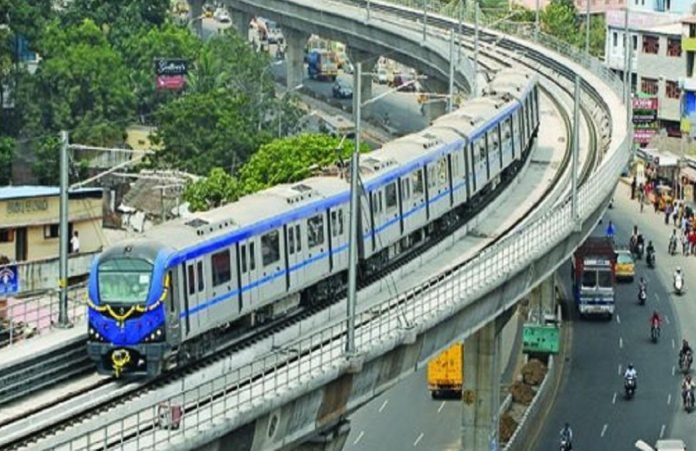
BANGALORE (Metro rail News): Bangalore Metro Rail Corporation Ltd. (BMRCL) will roll out a QR ticketing system based on mobile apps from 1st November. The initiative will enable commuters to ride the metro without using tokens or smart cards.

BMRCL managing director Anjum Parwez stated that tests were being carried out to start the new ticketing system. “On the occasion of Karnataka Rajyotsava, the BMRCL will launch the QR ticketing system. The new system will provide more travel comfort for metro passengers,” said Mr. Parwez.

Metro commuters will be able to purchase single-trip tickets by selecting origin and destination points on the mobile app. To travel in the metro, simply scan the displayed QR code at the automatic fare collection (AFC) gates. With the new method, there won’t be any more waiting in queues to buy tokens or top-up smart cards. The AFC gates in every metro station have been upgraded to accommodate the new ticketing system.

The BMRCL had intended to implement the National Common Mobility Card (NCMC) and a QR ticketing system based on mobile apps before the COVID-19 outbreak.

Namma Metro operations in the city celebrated its 11th anniversary on October 20. 36% of commuters utilised tokens, compared to 64% who used smart cards, in September. Average daily ridership has already exceeded 5 lakh, and once the BMRCL begins operating the Baiyappanahalli-Whitefield line for profit, that number is sure to increase. Commercial operations are probably going to start by March of next year after the trial run which has already begun.

The city’s commuters who depend on public transportation are requesting that the BMRCL and Bangalore Metropolitan Transport Corporation (BMTC) establish a shared ticketing system that will enable them to ride both city buses and metro trains. The BMTC had previously made large promises regarding the introduction of a feature-rich mobile app that would enable users to follow bus arrival in real-time, a QR-based ticketing system, and others, but it is still buying time due to a number of obstacles.

A common paper ticket that enabled travel on both city buses and the metro was introduced by the BMRCL and the BMTC when the metro service was established in 2011. Common paper tickets were no longer issued after a few months due to low patronage.

In the city, the BMRCL has a network of 55 km of operational metro line and the BMTC has a fleet size of 6,800 buses and operates over 52,300 trips a day.

Advertisement1
InnoMetro_2026

RRTS to get exclusive entry/exit points on service roads to avoid traffics

0
Delhi Meerut RRTS
Delhi Meerut RRTS/ Representational Image

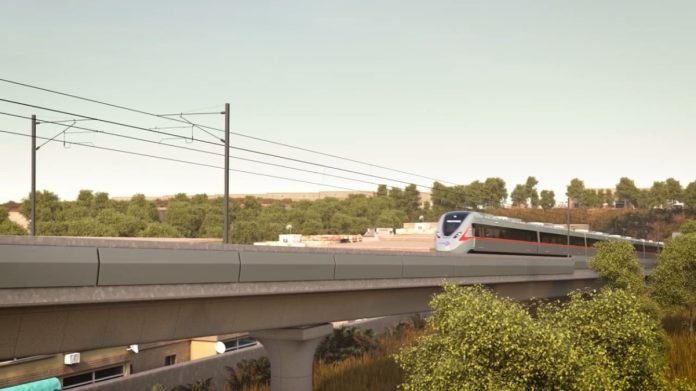
NEW DELHI (Metro Rail News): The Regional Rapid Transport System (RRTS) stations will have the provision to separate station-bound vehicles from those on the main roadways through exclusive entry/exit points on the service road in order to minimise traffic jams. The action is intended to discourage drivers from stopping on the major route to drop off or pick up commuters. There will also be a designated pick-up/drop-off lane at some stations.

The project of a high-speed train network will connect the three cities of Delhi, Ghaziabad, and Meerut. It will feature 25 stations with a design speed of 180kmph.

“It has been seen that due to lack of space around many public transport services, the vehicles, whether private or personal, drop off passengers on the main road. It creates hindrances in the movement of traffic, triggering a jam-like condition almost on a daily basis. Pedestrians, along with commuters, have to struggle with overcrowding and haywire traffic,” said a spokesperson of National Capital Region Transport Corporation (NCRTC), which is executing the project. “Lack of designated space also leads to people jumping over fences or crossing main roads amid fast-moving traffic with luggage, increasing chances of accident,” he added.

To address these problems, NCRTC has decided to make exclusive entry/exit points on service roads. They will have a physical barrier along the station length to discourage stopping of vehicles on the main road. “This will not only help commuters reach the station safely and comfortably, but also give pedestrians relief from overcrowding and chaos,” the spokesperson clarified.

On the 82km Delhi Ghaziabad-Meerut corridor, there are 25 stations, 21 of which are elevated stations with entry/exit points being built on both sides so that passengers may access them from either side of the road.

A dedicated pick-up/drop-off lane is also being planned. “Wherever possible, a designated space has been created under the station box to safely drop off/pick up commuters from where they could access the station easily after walking only a short distance,” said an official. NCRTC is making foot overbridges and skywalks wherever needed.

The stations will also have properly lit pathways and 24×7 CCTV monitoring to make the space safe. “The green zones around the stations will not only make it aesthetically pleasing for the eyes but will also provide much-needed respite and a moment of relaxation to the commuters,” the official said.

Advertisement1
InnoMetro_2026

HMR seeks commuters views on revision of fare

0
Hyderabad Metro
Hyderabad Metro/ Representational Image

HYDERABAD (Metro Rail News): Hyderabad Metro Rail (HMR) has invited feedback from Metro commuters on the proposed fare revision. HMR operates on these three channels-  Red Line (Miyapur-LB Nagar) has 27 stations, Green Line (JBS-Falaknuma) has 15 stations, and Blue Line (Nagole-Raidurg) has 24 stations. The lowest and maximum ticket prices are Rs 10 from one station to another and Rs 60, respectively.

The Indian government established the Fare Fixation Committee (FFC) to suggest rate revisions for the HMR. The FFC requested suggestions from commuters regarding the modification of fares.

“The FFC, headed by a retired high court judge, is set up to take a decision on revision of Metro rail fare. You are welcome to offer your suggestions,” tweeted Arvind Kumar, Special Chief Secretary (Municipal Administration & Urban Development Department Department).

Commuters can email their suggestions to ffchmrl@gmail.com or by sending a letter to the address, Chairman, FFC, Metro Rail Bhavan, Begumpet, Secunderabad, 500003, Telangana by November 15.

The HMR has extended its service hours until 11 pm due to heavy traffic from all stations. The first train service begins at 6 am.

Advertisement1
InnoMetro_2026

RVNL emerges as lowest bidder for Sholinganallur Lake – SIPCOT section of Chennai Metro Line-3

0
Chennai-Metro
Chennai-Metro/Representational Image

CHENNAI (Metro Rail News): Rail Vikas Nigam Ltd (RVNL) has emerged as the lowest bidder for the construction of the 10.13 km Sholinganallur Lake – SIPCOT 2 section of Chennai Metro Line-3 (Package C3-ECV-01/RT-01).

The 45.8 km Line-3 segment of the 118.9 km Chennai Metro Phase 2 project, which will connect Madhavaram to SIPCOT 2 through 49 stations, includes 9 elevated stations on Old Mahabalipuram Road (OMR) at the southern end.

Earlier plans for a train maintenance depot by Chennai Metro Rail Ltd (CMRL) at SIPCOT were dropped in 2020. An elevated stable yard, akin to the one at Wimco Nagar for the 9.051 km Phase 1 Extension project, has now been replaced.

The initial bids for this package were floated by CMRL in January 2021, with a 36 month timeframe. Three proposals were received for the tender in July 2021, but it was subsequently canceled in February 2022 as a result of a significant redesign that disconnected the metro’s viaduct from the proposed IT expressway.

In March 2022, new bids were requested with an estimated value of Rs. 957.50 crore. In May 2022, technical bids were opened, revealing 7 bidders. The technical proposal from URC Construction Pvt. Ltd. (URCC) was rejected.

Financial Bid Values

FirmBid (Rs. Crore)
Rail Vikas Nigam Ltd. (RVNL)901.15
KEC International – YFC Projects JV909.50
Larsen and Toubro Ltd. (L&T)1044.00
GR Infraprojects Ltd. (GRIL)1047.17
JMC Projects India – Evrascon JV1048.91
ITD Cementation India Ltd.1095.89


Brief Scope of the CMRL’s bids are the Construction of an elevated viaduct (approximate length of 10 km), nine (9) elevated metro stations at Sholinganallur Lake, Ponniamman Temple, Sathyabama University, Semmancheri, Gandhi Nagar, Navallur, Siruseri, SIPCOT 1 and SIPCOT 2 and stabling viaduct at SIPCOT.

RVNL’s tender of Rs. 901.15 crore was 5.89% which is less than CMRL’s projection, so the tender for the contract will be awarded in the upcoming week.

The northern elevated part of the line, which has 10 stations and connects Nehru Nagar and Sholinganallur, was given to L&T back in May 2022.

Advertisement1
InnoMetro_2026

Pune Metro Installs Digital Kiosks

0
Pune Metro Installs Digital Kiosks

PUNE (Metro Rail News): The PCMC metro station to Phugewadi metro station and Vanaz to Garware college metro station has been operational since 6th March 2022. Soon Pune Metro will complete the work from Phugewadi to Civil Court in the corridor I and Garware college to Civil Court in corridor II.

Simultaneously, the work on the communication Base Train Control Signaling System (CBTC), commissioning of the command and control center, commissioning of Receiving Substation (RSS), etc are being undertaken by Maha Metro.

Pune Metro has made various options available for buying tickets at metro stations. Last week, Pune Metro has installed Digital Kiosk at the stations so that passengers don’t have to wait in queues to buy tickets. A Digital Kiosk is designed for a stand-alone unmanned
operation and gives ticketing services to patrons using only digital payment methods i.e UPI only.

In the future, patrons can make payments with a Bank card also. The digital kiosk has a touch screen with instructions available in three languages – Marathi, Hindi, and English to avail tickets. A passenger can easily operate the digital kiosk to buy tickets.

In the digital kiosk, physical tickets, as well as digital tickets (tickets on WhatsApp), can be
obtained. Maha Metro urges passengers to opt for WhatsApp tickets to avoid the physical
paper ticket. At present, all the operational stations of Pune Metro have installed digital kiosks.

PCMC metro station installed 3 digital kiosks, Sant Tukaram Nagar metro station -1, Bhosari station -1, Kasarwadi metro station-1, and Phugewadi -1 in the corridor I and Vanaz metro station – 1, Anand Nagar metro station- 1, Ideal Colony metro station- 1, Nal stop metro station- 1 and Garware college metro station- 1 in the corridor 2. Total 12 digital kiosks have been installed at the stations.

Apart from the digital kiosk, every station has a TOM (Ticket Office Machine) where a passenger can buy a ticket with the help of a TOM operator. At TOM, passengers can pay in
cash or through all digital modes of payment and credit/debit cards. A passenger can obtain a paper QR ticket or QR ticket on WhatsApp.

For frequent travelers, Pune Metro has made a Pune Metro Mobile App which is available on
android and IOS platforms. Passengers can buy tickets through the mobile app in a completely digital process. On the app, all modes of online payment are made available.

The tickets will also be used in digital QR code mode on the mobile App. The digital QR code ticket obtained through the App will be directly used for scanning at the access control gate.

The majority of the Punekars are opting for digital modes of payment and ticketing because of this lots of paper is getting saved.

On this occasion, MD Maha Metro said, Pune Metro is committed to making it available world-class ticketing infrastructure for commuters. The digital kiosk is an eco-friendly initiative which will also save time for the commuters”.

Advertisement1
InnoMetro_2026

Helping urban transport system grow sustainable

0
Helping urban transport system grow sustainable

Abstract

India is undergoing rapid transformation in the urban transportation sector thanks to the consistent focus of the government and its efforts on bringing in private participation through the public-private partnership (PPP) model. With the entry of private players, there has been a lot of focus on technology adoption and up-gradation, making the urban transportation sector cleaner, faster and greener.

The nation saw rapid growth in metro operations with some key metro projects being Kochi, Jaipur, Chennai, Hyderabad, Bengaluru, Ahmedabad, Pune, Nagpur and Lucknow, while metro routes in Delhi, Mumbai and Kolkata got further expanded. The government is putting a lot of focus on indigenisation through the Atmanirbhar Bharat, Make in India and Vocal for Local programmes to push indigenous technologies and capabilities. This has led to many companies such as Bharat Earth Movers Limited and Alstom, among others, manufacturing metro coaches in India. There are several companies such as ABB and Mitsubishi Electric, which are manufacturing various metro components in India. Ample domestic capacity is also being developed for the construction of civil structures.

In August 2017, the government approved a new metro rail policy, which basically provides guidelines for the development of urban transport systems across the cities in a responsible manner, considering multimodal integration, last-mile connectivity, selection of the most suited urban transit system, creation of the UMTA and financing aspects. The policy has not only accelerated metro rail implementation but has also helped in creating an ecosystem for improving the urban mobility scenario in the country. Currently, over half a dozen cities where metro projects are operational have set up UMTAs, notified transit-oriented development policy and have a comprehensive mobility plan in place for overall improvement in urban mobility. Identification of urban transport projects under the NIP, development of standard specifications for MetroNeo, MetroLite and water metro, standardisation and the local content stipulation under the Make in India programme are some of the other initiatives that are helping strengthen the development of the urban transport sector in the country.


Technology embedded Services ensuring timely completion of projects

vlcsnap 2022 06 27 15h32m41s025 scaled 1


The Indian metro system today is at par with any other metro system in the world in terms of digitalisation and technology adoption. Whether it is the signalling system (CBTC system), modern lightweight aluminium built rolling stock, IoT-based asset management system or the adaptation of BIM, digitalised passenger information systems, fare collection systems including proximity smart card/QR-based ticketing systems enhancing passenger convenience, all sectors in metro railways in India are technologically enhanced and upgraded. The adoption of intelligent transportation systems is the need of the hour to improve traffic congestion and help reduce carbon emissions. It is also noticed that the government is leaning towards future-forward technology tools which include artificial intelligence (AI), IoT, 5G internet connectivity and cloud engineering. All these technological capabilities and their adoption have the potential to turn around the entire landscape of urban transportation.

  1. As part of the digitalisation initiatives, 5D building information modelling (BIM), along with a system analysis program, is being incorporated on a .NET platform for a seamless management information system experience. The automatic fare collection (AFC) gates at the metro stations are another example of how technology can facilitate commuter movement. Besides, the mobile application caters to ticketless commuting. For e.g. the Nagpur Metro will also be incorporating digital kiosks and incident management systems soon. It is further looking to implement the .NET platform and form a board of stakeholders from the railways, metro railway organisations and other urban transport bodies in order to provide uniformity across India and ensure faster decision-making to help speed up execution works.
  2. Over the years, there has been a shortening of the construction period of metro rail projects in the country, in some cases to even under three years. One of the main reasons for quicker execution is the advancement in construction technology. Most of the metro rail construction work is now occurring off-site, using extensive mechanisation and digital tools for monitoring and control. An Integrated project management system comprising 5D BIM solutions, AI/machine learning-based digital dashboards, drone-based solutions and IoT/sensors are being deployed effectively in most of the metro rail projects which are under construction.  For operations and maintenance (O&M) as well, new technologies such as advanced analytics for predictive maintenance, IoT-based devices for condition-based maintenance and a digital asset management system are being explored.  Technologies such as the national common mobility card, journey planners and MaaS are helping in integrating various modes of transport and providing seamless connectivity to passengers.
  3. The Lucknow Metro rail network is one of the best examples of technology and advancement. Project monitoring is being done with the best tools available. The entire team works on one platform and interface, otherwise it would have been impossible to complete these projects. UPMRC has also brought in BIM technology. 3D BIM is being used and may move on to 5D depending on the cost and time factors in the future. This is bringing in a lot of improvement in project design, building an interface between different systems and cable routings. Signalling is advanced and we have used a communication-based train control system. In addition, we have opted for an AFC system with smart cards and quick response codes.

In general, metro operations are undergoing a digital revolution with internet of things enabling onboard sensors to deliver real-time analysis and monitoring, automating maintenance and ensuring that a trains’ location is always 100 per cent accurate. Drones are already in use for identifying problems, assisting maintenance workers and providing additional security by offering a view of trespassers or other threats. To overcome the challenges of cost and time, virtual reality is being used to create a 3D model of a product, test its efficiency virtually and then bring it to market. The concept of driverless trains is gaining traction. A driver-free network can be more predictable, maximise capacity and remove the element of human error. Implementation of the emerging technology for common ticketing through a national common mobility card will make transport systems more accessible, sustainable and seamless. Other trends include:

  • Equipping ticket counters with a unified payment interface with static quick response (QR) codes for digital payments.
  • Developing mobile applications to facilitate smart card recharges and enabling QR code ticket at metros.
  • Equipping ticket counters with point-of-sale machines at stations to enable credit and debit card payments.
  • Collaborating with Google Maps for providing train schedules and train frequency to save travel time.
  • Collaborating with popular mobile applications for smart card recharges and QR code tickets. BMRCL for instance, is in the process of interacting with various other modes of transport to promote the concept of mobility-as-a-service (MaaS).


In an area already developed without a sustainable planning approach, retrofitting infrastructure becomes a tedious task, involving a huge cost for land acquisition, resettlement and rehabilitation. Governments have to offer attractive incentives to property owners and developers to come forward for land pooling along the development area and promote the concept of transfer of development rights. There are multiple agencies involved in land development in or around the transit-oriented development corridor; therefore, capacity building of persons involved in the implementation of TOD and multimodal integration plans need to be taken care of, to bring them on the same platform. Further, multiple agencies are involved in road-based transport, leading to delays in implementation. Hence, there is a need for creating a single agency for all road-based transport for effective coordination, similar to the UMTA.


Metrolite & Metro Neo as new options to traditional metro systems

neo metro


Urban transportation in India is still facing perennial financing troubles and revenue shortfall, which has been further amplified by the unprecedented Covid-19 outbreak. While the situation is normalising post the mass vaccination across the globe, financial stability for operators is still some way away. Fare box collections are nowhere adequate to recover project costs. Another issue affecting the sector is delayed land acquisition, which continues to be a spanner to project implementation. The sector is also facing first- and last-mile connectivity issues, which dissuade people from availing of MRTSs. An integrated body of UMTA is the need of the hour. India needs to devote much of its efforts towards setting up empowered UMTAs at the state and city levels to give its urban residents a better quality of life.

There are financial concerns as these projects require heavy capital investments and significant O&M costs. Most of the metro rail projects in the country do not even make operational profits. That said, the financial sustainability challenges can be overcome through alternative technological options, project structuring to bring private investments, regulatory measures, emphasis on micro mobility, improving last-mile connectivity, focus on transit-oriented development, land value capture mechanisms and adopting measures that disincentivise private motorised transport


  1. India’s urban transport sector is steadily taking the shape of a system rather than loosely connected modes. The advent of two new technologies – MetroLite and MetroNeo – to provide metro rail systems at a much lower cost with the same experience, convenience and safety in Tier II cities and peripheral areas of Tier I cities, will provide a fillip to the urban transportation system across the country. Another revolution in rail connectivity in the offing is the regional rapid transport system (RRTS). This modern transit facility would enhance connectivity and boost economic development along the corridors and adjacent regions. Being a high-priority programme of the government, the future outlook of the urban transportation sector in India remains bright.
  2. The urban transport sector will continue to evolve, with an emphasis on adopting cost-effective mass transit solutions such as MetroLite and MetroNeo in smaller cities or as feeders to the main metro systems in large cities. There will also be increasing consideration for comprehensive and seamless mobility, transit-oriented development and joint physical asset creation of multiple transport projects with urban transport being the focal point. Recently, comprehensive O&M of the RRTS line from Delhi to Meerut has been handed over to a private concessionaire. It is expected that O&M of a greater number of metro rail systems will be completely outsourced to the private sector in the immediate future. This is expected to improve the service quality and efficiency and bring down the overall O&M cost.


Conclusion

The urban transport sector has been growing at a faster pace in India in recent times, with about 750 km of metro rail line under operation across 19 cities, with 70 per cent of the network having become operational after 2014. Over the past few years, approximately 40 per cent of the total budget of the Ministry of Housing and Urban Affairs has been allocated consistently for the implementation of metro rail projects across the country. In line with Vision 2025 for urban public transport, there is a continued push to make MRTS and bus connectivity available within 800 metres of homes in more than 50 cities, for which Rs 5,733.66 billion is planned to be invested under the National Infrastructure Pipeline (NIP). The urban transport sector has also been identified as one of the seven engines of growth under the PM Gati Shakti programme to achieve nation-wide integrated infrastructure development as per the central government’s vision.

 With increasing government focus, the urban transport sector has witnessed rapid growth in recent times. As part of its commitment to urban transportation, the Government of India has introduced the ambitious PM Gati Shakti-National Master Plan for a Multi-modal Connectivity mega project, which would lead to massive government spending on roads, railways, highways, ports and public transport. With a clear focus on infrastructural reforms, this is going to be the key driver in accelerating India’s economy. The mass rapid transit system (MRTS) in India has taken a substantial leap with 791 km of operational metro rail network. Vision 2025 for urban public transport envisages MRTS being made available in more than 50 cities in India by 2025. The government has taken up metro rail feasibility studies across cities with over 2 million population. With over 1,000 km of metro and regional rapid transit system projects currently under various phases of development, very soon, 27 Indian cities will have operational metro services.

On the policy front, the Metro Rail Policy, 2017 advises cities to develop a comprehensive mobility plan under a statutory body, Unified Metropolitan Transport Authority (UMTA). The setting up of UMTAs is currently at various stages in 12 states where the metro rail network has either commenced or is under construction.

Growing urbanisation has necessitated urban mobility solutions to prevent pollution and traffic-related problems. India’s urban transport sector has seen significant growth in the past few years owing to key initiatives such as the metro rail policy, increased financial assistance to metro rail projects, and promotion of indigenous technologies and capabilities. New modes of transit, MetroNeo and Metrolite, are emerging as potential and viable transit systems for Tier II and III cities. The sector is witnessing rapid adoption of technologies such as contactless ticketing, advanced signalling systems, driverless operations, and building information modelling. Metro operators are also actively looking at augmenting non-fare revenues and improving first- and last-mile connectivity.

 

Advertisement1
InnoMetro_2026

Future of Urban Mobility in India and way forward

0
Future of Urban Mobility in India and way forward
solving-the-mobility-challenge-in-megacities

Indian cities are characterized by increasing levels of congestion, pollution, road accidents and inequality in access to mobility. The need for better urban mobility in order to build inclusive, safer and more sustainable cities cannot be underestimated.

Status of Urban Transport in India

Major Modes of Public Urban Transport:

  • Buses are the prime mover for both inter-city and intra-city travels in most urban centres. However, in recent times there has been a loss in ridership. Other modes include metro rail, trams, and local trains.
  • Intermediate public transport system (IPT): All Indian cities feature large numbers of auto rickshaws, taxis, cycle rickshaws and forms of informal car pooling
  • The range of public transport services vary considerably across cities. For example: Only Mumbai, Kolkata, and Chennai have extensive suburban rail services whereas Delhi has limited suburban rail services. Currently, 15 Indian cities have operational metro rail with Delhi having the largest metro rail system.

Problems faced by Urban Transport in India:

can self driving cars stop the urban mobility meltdown rectangle tcm9 252392 scaled


  1. Unprecedented Transport Growth: According to Niti Aayog, the number of registered motor vehicles has increased from 5.4 million in 1981 to 295 million in 2019. This rapid growth in demand in the absence of a widespread public transport system has caused a rapid increase in private car ownership in India.
  2. Inadequate Public Transport: According to government data, there are about 19 lakh buses in the country and only 2.8 lakh of them are run either by state transport undertaking or under stage carriage permits. China has about six buses for 1,000 people while India has only four buses per 10,000 people.
  3. Further, a CSE study points out that the share of public transport is expected to decrease from 75.5% in 2000-01, to 44.7 per cent in 2030-31, while the share of personal transport will be more than 50%.
  4. Urban Pollution: According to a WHO study 14 out of the top 15 most polluted cities in the world belong to India. Vehicular pollution has been one of the major contributors to rising urban air pollution in Indian cities along with other factors such as construction activity, road dust and industrial activity.
  5. Urban Congestion: Major Indian cities like Delhi, Mumbai, Kolkata and Bengaluru are ranked among world’s most congested cities. For example: Average speed for vehicles in Bengaluru is reported as 17 km/h. These high levels of congestion have huge economic implications in the form of reduced productivity, fuel waste, and accidents. Further, there is an acute shortage of parking spaces both on and off the streets in the urban centres.
  6. Road safety- Traffic injuries and fatality: India is one of the countries with an alarmingly high number of road accidents. Every year, lakhs of road accidents are registered across the country, which causes deaths to lakhs of people and severe injuries to an even higher number of people. Road accidents not only have a crippling effect on human lives and their families but on the overall economy at large of the country as well.

India recorded 1.5 lakh road accident fatalities in 2020, which was 26.37 per cent of total road accidents recorded in 207 countries. The major reasons for traffic crashes include poor quality of roads, poor traffic management, unsafe and overcrowded vehicles and unsafe driving behaviour.

  1. Equity Issues: Unplanned urbanization in India has led to gentrification (as per upper and middle socio-economic class) of city centres and lower income groups are forced to live in peripheral suburbs which have increased their cost and time they allocate to commute. Most of the lower income groups and urban poor fail to afford private transport and even public transport are high for them. For example, a CSE study ranks Delhi Metro as the second most unaffordable metro (after Hanoi in Vietnam) with lower income group people spending nearly 22% of their monthly transport on Delhi Metro fares.
  2. Mobility for women: Safety or the lack thereof, is the single biggest factor constraining women’s mobility. According to Action Aid UK, 79% of women in major Indian cities reported being harassed on streets. Overcrowding in public transport adds to insecurity and safety issues with a large number of women complaining about harassment in public transport across major Indian cities like Delhi and Mumbai.


Initiatives to address Urban Transport issues in India

2011 the future of mobility 1
Aerial view of Bangkok modern office buildings, condominium in Bangkok city downtown,Mahanakorn tower with sunset sky , Bangkok , Thailand
  1. Jawaharlal Nehru National Urban Renewal Mission JNNURM, 2005: JNNURM was launched in 2005 and closed in 2014 (now succeeded by Atal AMRUT Mission). It attempted to improve the public transport system in larger cities through funding of public transport buses, development of comprehensive city mobility plans and supporting city transport infrastructure projects.
  2. National Urban Transport Policy, 2006: The policy envisages safe, affordable, quick, comfortable, reliable and sustainable urban transport through establishment of quality focused multi-modal public transport systems.
  3. Green Urban Transport Scheme, 2016:.The scheme aims to improve non-motorised transport infrastructure such as dedicated lanes for cycling, pedestrians, increasing access to public transport, use of clean technologies and adoption of intelligent transport systems (ITS).
  4. Mass Rapid Transit/ Transport Systems (MRTS): The metro rail has come up as a favoured alternative of mass transport in Indian cities. In 2017, the government introduced new Metro Policy which aims to improve collaborations, standardising norms, financing and creating a procurement mechanism so that the projects can be implemented effectively.
  5. Bus Rapid Transport System (BRTS): BRTS segregates the movement of buses from all other transport modes, and introduces other changes in the road infrastructure that are associated with safety. BRTS is an important component of AMRUT (Atal Mission for Rejuvenation and Urban Transformation)
  6. National Transit Oriented Development Policy, 2017: The policy framework aims to promote living close to mass urban transit corridors like the Metros, monorail and bus rapid transit (BRT) corridors.
  7. Sustainable Urban Transport Project (SUTP): The project in partnership with Ministry of Urban Development and UNDP aims to promote environmentally sustainable urban transport in India.
  8. Personal Rapid Transit System (PRT): It is a transport mode combining small automated vehicles, known as pods, operating on a network of specially built guideways. In 2017, the National Highway Authority of India (NHAI) had called the expression of interest (EOI) for launching India’s first driverless pod taxi systems on a 70 km stretch from Dhaula Kuan in Delhi to Manesar in Haryana. The 70-km stretch from Dhaula Kuan to Manesar will decongest the NCR and ease traffic on NH-8, giving great relief to airport passengers and scores of daily office-goers. The first phase will include a pilot project covering 13-km stretch from Gurgaon-Delhi border to Badshapur Mod with a total of 16 stations. The Transport ministry has earmarked Rs 850 crore for the pilot project. The ropeway-like system runs on electricity and driverless pods and comes down at designated stations, thus removing the traffic burden from crowded roads. The capital cost of the metrino is Rs 50 crore per km against Rs 250 crore per km of the metro.
  9. National Public Bicycle Scheme (NPBS): In 2011, NPBS was launched to build capacity for the implementation and operation of cycle sharing systems across the country. The first public bicycle sharing (PBS) initiative — Trin Trin was launched in Mysuru. Modern cycle sharing systems employ information technology systems to ensure security, provide real-time customer information, and facilitate the redistribution of cycles. These IT features enable the operator to ensure that cycles are available when and where users need them. IT systems also provide a way for the implementing agency to monitor system status and ensure that the operator meets service level standards. A combination of good engineering and constant oversight on the part of the government will ensure that cycle sharing systems can attract a diverse set of users. The toolkit was developed on behalf of the Ministry of Urban Development, Government of India, as part of India’s National Public Bicycle Scheme.
  10. Promotion of Electric Vehicles: Indian Government plans to have an all-electric fleet of vehicles by 2030. For promotion of electric vehicles FAME (Faster Adoption and Manufacturing of (hybrid &) Electric vehicles. Under FAME, the Centre subsidizes the cost of electric buses and has sanctioned 390 buses in 11 cities (as of April 2018).FC4X2snUYAE2DFP


Institutional Challenges & Measures Taken

  • Gaps in Laws and regulations: The urban transport requirements and issues in Indian cities have often been the victim of political will and lackadaisical approach of the executing agencies, groups etc. resulting in project delays and cost overruns Further, the weak enforcement and lacunae in existing laws such as the Motor Vehicles Act, 1988 on a number of occasions have proved to be inefficacious thereby emphasizing a need on amendments as per new age requirement. The government has amended the Act and added modifications in the Central Motor Vehicles rules, 1989 to remove the bottlenecks and lacuna.  
  • Poor Institutional Framework: Functions of Urban transport system are performed by multiple agencies under the central, state and city governments which lack coordination and makes accountability difficult. To address to the need the government has recently launched the PM Gati-Shakti Yojna (or National Master Plan for Multi-modal Connectivity) which emphasizes a digital platform to bring 16 ministries including railways and roadways together for integrated planning and coordinated implementation of infrastructure connectivity projects.
  • Land as a Barrier to development of Transport Infrastructure: High cost of land acquisition and time-consuming processes has been a major hindrance to integrated urban transport infrastructure. For example, land acquisition issues have delayed the East-West metro Corridor Project in Kolkata over years. Similarly, until change of government in Maharashtra the country’s first bullet train project got delayed due to negligence by then Maharashtra government in land acquisitions.
  • Human Resource Challenges: Lack of urban transport skills amongst city and state officials is a major challenge in effectively implementing transport projects. The government in this regard is working on mission mode to enhance the skills of the workforce through a number of training and skill development centres, technology embedded programs, induction of new courses and curriculum along with overseas training& induction, partnership and exchange programs etc. as various other measures taken to enhance the skill of the manpower involved. 


Recommendations by National Institution for Transforming India (NITI) Aayog:


  • It calls for a 3C Framework (Clean, Convenient and Congestion free) for transforming mobility in India. To achieve this, it lays down the following action-agenda:


  • Connect Bharat:

Niti Aayog calls for a Safe, Adequate and Holistic Infrastructure (SAHI) for the Indian population including women, elderly and the disabled. Major recommendations for achieving this:

  1. Increased emphasis on safety and accessibility
  2. Leveraging multiple modes of transport – road, rail, coastal and inland waterways, small regional airports, ropeways etc.
  3. Higher usage of data for holistic mobility needs


  • Optimize Travel footprint:

It calls for increased emphasis to reduce congestion caused by passenger and goods flow in urban areas. Major recommendations include:

  1. Integrated land use – Planning residential and commercial complexes in an integrated manner so that travel time is reduced
  2. Focused policy based measures for optimizing travel
  3. Data-based measures such as intelligent transport systems


  • Promote Seamless Public Transport:

It calls for an efficient and convenient public transport to address the issue of air pollution and congestion in Indian cities. Major recommendations include:

  1. Data-driven planning and urban transport, with a clear hierarchy amongst different modes- from non-motorized(pedestrians, cycles) to public and lastly private transport.
  2. Focus on multi-modal systems
  3. Make public transport affordable, comfortable and accessible for urban India, to ensure better adoption


  • Adopting Green Modes and Technologies:

It calls for rapid adoption of electric vehicles and non-motorized transport (NMT). Major recommendations include:

  1. To improve adoption of non-motorized transport, the routes and paths should be planned so that they integrate seamlessly with public transport.
  2. To ensure safety for NMT users by outlining norms & dedicated traffic signals should be a key priority.
  3. There should be a clear push toward clean technologies. This has to be enabled through ecosystem development which includes domestic manufacturing, deployment of charging infrastructure, etc.


For effective execution of this actions-agenda, the Niti Aayog recommends to optimise the following strategic enablers:

  • Skill development which will ensure high employability and address the issue of human resource demand
  • Intelligent Transport systems based on ongoing technological developments
  • Well-defined Governance mechanism involving different stakeholders.
  • A strong public awareness and communication campaign


Conclusion


The Ministry of Urban Development, Government of India (MoUD) came out with the National Urban Transport Policy (NUTP) in 2006 to bring about comprehensive improvements in urban transport services and infrastructure. The policy focus was on moving people rather than vehicles. Eight years later, Institute of Urban Transport (India), a professional body promoted by MoUD, undertook a comprehensive review of the NUTP 2006. After a series of consultations, that included taking cognisance of recommendations of working groups on urban transport, interviews and comments of officials from various cities, review of international practice, and several workshops and roundtable discussions, the NUTP 2014 was finalised and published.

The National Urban Transport Policy 2014 recognises the huge deficit in urban transport services and infrastructure both in quality and quantity. The use of desirable modes of transport — walking, bicycle, and public transport — is declining and the use of undesirable modes, i.e. car and two-wheelers, is growing. As a result, congestion is increasing, urban mobility, as well as road safety, are declining, and pollution, use of fossil fuel, and accidents are rising by the day.

The Energy and Resources Institute (TERI), a Delhi-based non-governmental organization, has forecast that India’s commercial energy demand and emissions would increase by about six to seven times by 2031-32, if nothing is done to curb the emissions. The NUTP 2014 seeks to encourage growth of urban transport along a low carbon path. The progress in implementation of the NUTP in our cities also needs greater participation of citizens and central-state coordination. Changes need to happen before Indian cities double in population by 2050 (World Economic Forum, 2016). 

The government is making stupendous efforts on strengthening the transport infrastructure in the country. From roads to waterways and railways all sectors of transport are being revamped to cater to the needs of ever-increasing vehicular traffic and urban population in the country. Adequate infrastructure for moving people through means, such as bicycle tracks, dedicated pedestrian pathways, green-fields etc. are also being developed at multiple levels to promote eco-friendly transport options.

Therefore, the need of the hour is to focus on public transportation (PT) in India, especially, low carbon non-motorised transport (NMT). As income levels increase, people too aspire to shift to private transport, due to infrequency and unreliability of public transport. As a result, the use of such desirable modes of transportation (such as NMT or PT) is declining and the use of undesirable modes (i.e. car and 2-wheelers) is growing. To keep India walking, the government needs to oversee an incremental and mixed mode approach for a transition into a low carbon pathway. Cities and states needs to be pro-active and may consider following interventions for sustainable urban mobility solutions:


  • A Comprehensive and Integrated Transport Plan for Each City: City transport is administered by various modal agencies such as the city bus corporation like DTC, the municipality, the rail and metro-rail corporation, the city development authority like DDA, etc. What is really required is an integrated process of transport planning for co-ordinated inter-city and intra-city transport. Sustainable urban transportation system, however requires, integration of Land Use and Transport Planning. The Transit Oriented Development (TOD) policy will build a roadmap in integrating public transport systems with the built environment. 
  • Future centric and smart transport systems : More and more cities in the country are going for MRT, LRT and monorail transport systems. With a well-known fact that these are capital intensive transport systems that require massive capital and operating subsidies, for most of the rapidly growing Tier-II and Tier-II cities the urban rail transit system being developed seems to be the most viable option towards a sustainable, clean and eco-friendly transport option as long term public transport assets. However, seeing the population densities, urban form and socio-economic conditions of the cities a more interactive transport option can also be envisaged where Intermediate public transport (IPT) modes like e-rickshaws, shared autos and cycle rickshaws and NMT can be prioritized as they can meet the travel demands in small and medium size cities. Even within large cities, 20 to 30 per cent of the family income of nearly 50 percent those living in unauthorized settlements is spent on public transport.  Therefore, a mixed modal strategy can also be ascertained in different cities to cater to different segments of the population.
  • System-based Approach is Critical : Transport networks cannot exist in silos. Sustainable urban mobility calls for Intermodal Integration, i.e., integration of various modes of transport to provide seamless connectivity for the commuters. Last mile connectivity is an important factor for determining the success of public transport system in a city.
  • Empowering Municipal Governments and Citizens : Municipalities needs to be empowered by providing autonomy in functions, finances and functionaries  for better citizen engagement in city planning. The Smart Cities Mission focuses on developing sustainable and shared mobility systems, in addition to laying smart roads, street redesign and smart parking systems. Huge resources are being spent on improving urban transport projects such as real time bus tracking system, smart bus shelters and junction improvements (MoHUA 2018). There is need to create demand from the bottom-up level to increasing citizen participation and urban practitioners’ awareness.
  • Making Public Transportation Accountable : For Indian cities to be livable, urban mobility, especially, public transport such as bus and bus rapid transit (BRT) systems must become a vital part of urban growth. We need to think of innovative ways of financing our PT ventures and operate to dis-incentivize private vehicles. There is need to improve operations of PT by adopting Intelligent Transport System (ITS) and GPS tracking of buses for better route planning. This would induce a long term behavioural change where people are encouraged to go for public transport. Additionally, different modes of urban rail transit (rapid transit, suburban rail, monorail and tram systems) need to be greatly emphasized for a clean and eco-friendly transport system.
  • Providing Barrier-free Integrated Transport Solutions For Vulnerable Groups : To make cities more inclusive and to address the requirements of the vulnerable sections of the population, planners need to take into account the concerns of different segments of the population during transport planning. Women represent the largest share of public transport users around the world, yet they face many barriers that limit their mobility and entry into the formal work-force. Therefore, all experiences of public transport, such as those of women, children, the poor and the disabled needs to be taken into consideration, budgeted and planned for. The buses and train corridors, stops and junctions need to be well lit, easily accessible and located in crime-free areas.


Way Forward


For India to achieve resilient and inclusive cities, it is necessary to continuously plan for a low carbon model of growth in our cities, rather than focussing on physical infrastructure for vehicle mobility alone. The need is to build compact cities with a mixed land use and integrating transport planning with land use planning which emphasizes, on one hand, women participation and lead to inclusive sustainable urban growth, on the other. The planners, city authorities and civil society all have to join the mission to make our cities a better place to live in. The need is to implement NUTP for more mobile cities.


  1. To address the institutional challenges there is a need for better cooperation among different transport agencies, departments, and ministries as well as better coordination of transport and land-use policies. Further, there should be adequate funding to address various issues plaguing public transport infrastructure
  2. To address the issues of urban congestion and urban air pollution, it is important to augment mass and share transit capacity and discourage use of private cars by enforcing restraint measures through parking policy, low emissions zones approach, tax measures and congestion pricing.

Further, policies toward enhancing public transport should promote inclusive access to mobility.

  1. Well engineered, safe infrastructure for travel should be ensured. Further, there is an urgent need to address the issue of low woman mobility by ensuring women safety through gender-sensitive transport policies, dedicated seats/ coaches and emergency helplines.
  2. There should be focus on enhancing non-motorised transport. Focus should be to encourage use of non-motorised transport for short distances. Further, Pedestrian zones, bike lanes should be made to ensure safety to commuters. For example, well designated Bike-lanes and bike-sharing solutions have promoted use of bicycles as a mean of transport in cities like Amsterdam and Paris.
  3. Commuters should be provided with multiple modes of connectivity. To ease out travelling, a single smart card can be provided. For example, London’s Oyster ‘smart’ card enables a commuter to change from one mode to another with minimal loss of time or effort.


Advertisement1
InnoMetro_2026

Plans to develop the light transit system for the city before Mahakumbh – 2025

0
Prayagraj Light Metro

PRAYAGRAJ (Metro Rail News): Prayagraj Light Metro with 2 lines & 39 stations is a light rail transit (LRT) system proposed to be built in Prayagraj (Allahabad), Uttar Pradesh by the Uttar Pradesh Metro Rail Corporation Ltd. (UPMRCL).

In 2017, the Uttar Pradesh Metro Rail Corporation (UPMRCL) was assigned as the ‘coordinator’ by the Government of Uttar Pradesh to bring all stakeholders together and get its Phase 1 project started. Later in the year, RITES was assigned to prepare its feasibility report and Detailed Project Report, which was submitted to the Prayagraj Development Authority (PDA) in November 2019.

The proposed system will consist of two lines, an east-west line from Manauri to Trivenipuram, and a north-south line from Shantipuram in Jalalapur to Karchana. Both lines will be about 20 kilometres long. There will be a total of 39 stations, 20 on the east-west line and 19 on the north-south line. The project is expected to cost Rs. 8000 crore.

Key Figures

Operational : 0 Km

Under Construction : 0 Km

Approved : 0 Km

Proposed : 42 Km

Proposed Lines

Line 1 (East – West Line) : Manauri to Trivenipuram 

Type : Elevated

Line 2 (North – South Line) : Shantipuram in Jalalapur to Karchana

Type : Elevated

Interchange station will be built at Parade Grounds near Alopibagh 

Allahabad Metro
Overview
OwnerUttar Pradesh Metro Rail Corporation
LocaleAllahabad
Transit TypeLight Rail
Number of Lines02
Number of Stations39
Operation
Planned2025-26
Technical
System Length40 Km


The Metrolite Project likely to roll out ahead of Mahakumbh-2025

Metrolite is a light rail urban transit system being planned in India for cities with lower ridership projection. If all goes as per plan, locals and visitors including tourists and pilgrims to Sangam city would be enjoying comfortable rides on board ‘Metrolite’ before Mahakumbh-2025 gets underway in Prayagraj.

Metrolite is a light rail urban transit system being planned in India for cities with lower ridership projection and as a feeder system for the existing metro systems. It will cater to lower passenger capacity at a reduced cost than a metro line. It will have dedicated tracks, separated from the road. UP CM Yogi Aditya Nath in a recent statement said that the state government has made plans to organize Mahakumbh of 2025 at a grander scale than Kumbh – 2019. The CM therefore has asked his officials to prepare a detailed and concrete action plan in this regard.

Eyeing the task ahead few developments have already being made by the state government. As per Divisional Commissioner, Prayagraj Mr. Sanjay Goyal the survey for Prayagraj Metrolite has already commenced between Phaphamau and Bamhrauli besides Andawa and Chaufatka. It is expected that a route between either of the two stretches would start before the Mahakumbh for the light transit system of the city.

The officials from Lucknow have also informed that for the state government, the countdown of Mahakumbh-2025 has already begun. The divisional commissioner informed that before the Mahakumbh, information and processing of all the facilities provided to institutions and seers would be computerised and would be provided through an online portal.

Likewise, work to develop digital Kumbh museum would also soon begin. A light and sound show is being prepared to be held at Chandra Shekhar Azad Park, which will be started soon. An action plan has also been sought from the health department, in which constructions in view of Kumbh would be included, informed the divisional commissioner. After listening to all the points, the principal secretary of the state has suggested that whatever works are being done, authorities should definitely talk to the stakeholders in the district. This includes judges, lawyers, litterateurs, industrialists, businessmen, social workers and seers. Only after talking to them, administration should come up with a concrete action plan. The state government has already earmarked Rs. 100 crore for Mahakumbh-2025 preparations in the recently presented budget. But till now the budget allotment has not been done due to non-preparation of an action plan of the departments as per officials.

The officials from the city have also informed the state government that the approach roads for temples were being widened and repaired. It has been reported that the roads between Lalita Devi and Takshak Teerth needs to be widened. In such a situation, the Public Works Department (PWD) is now conducting a survey for the same.

The district administration have also informed that flyovers have to be built to reduce the crowd at intersections. The Public Works Department has also been asked to prepare a proposal in this regard as well. The proposal to build a ramp at Dashashwamedh Ghat has already been prepared. Along with this, the ramp of Bakshi Bund will be further developed.


Advertisement1
InnoMetro_2026

Alstom bags order to supply 312 Rolling stock coaches for DMRC Phase 4

1
Rolling Stock
Rolling stock/ Representational Image

NEW DELHI (Metro Rail News): Alstom Transport India has received a Letter of Acceptance (LOA) from Delhi Metro Rail Corporation Ltd. (DMRC) for the delivery of 312 Standard gauge Rolling Stock coaches as part of contract package RS-17 for Delhi Metro Phase 4 on October 27, 2022. The total contract value for this order is Rs. 26,31,36,02,343 (USD 3,019,380 + EUR 44,348,957).

The scope of the work are:

Part A: Design, Manufacture, Supply, Testing, Commissioning, Training of 234 Nos. Standard Gauge Cars for Extended Sections of Line 7 & 8 under Phase 4 of Delhi Metro Rail Project.

Part B: Design, Manufacture, Supply, Testing, Commissioning, Training of 78 Nos. of Standard Gauge Cars Including Comprehensive Maintenance up to Fifteen Years. These 78 Nos. Standard Gauge Cars for Aerocity city – Tughlakabad Corridor of Phase 4 of Delhi Metro Rail Project.

The tender floated for the aforementioned work was published with a 236-week delivery period in June 2021. Technical bids went live on 1st February 2022. The estimated value of the contract was Rs. 3567.11 crore.

Japan International Cooperation Agency (JICA) will provide funding for the package with an Rs 8,390 crores payment ODA loan agreement.

Five bidders competed for the contract package DMRC/RS-17: Alstom Transport India Ltd., BEML Ltd., CAF India Pvt. Ltd., JSC Metrowagonmash, and Titagarh Wagons Ltd. Financial bids were opened in September.

The rolling stock coaches delivery schedule is divided into two sections:

A total of 144 coaches (24 x 6 coaches) for the 28.92 km of Magenta line extension (Janakpuri West – RK Ashram) and 90 coaches (15 x 6 coaches) for the 12.558 km Pink Line extension (Mukundpur – Maujpur).

There are 78 coaches (13 x 6) for the 23.622 km long Silver Line (Aerocity – Tughlakabad) that is currently under development.

Rolling Stock Cars with 3.2 m in width, lightweight, stainless steel construction, and compliance with a standard gauge track system will be provided by Alstom.


Advertisement1
InnoMetro_2026

CMRL provides PSDs in platforms of underground metro stations of Chennai Metro Phase-I

1
CMRL provides PSDs in platforms of underground metro stations of Chennai Metro Phase-I

CHENNAI (Metro Rail News): The Chennai Metro Rail Limited (CMRL) has provided Platform Screen Doors (PSD) in the platforms of Underground Metro Stations under Phase-I of Chennai Metro Rail Project to enhance the safety of the passengers, which were imported.
Now, in order to indigenize the PSD System, CMRL and Bharat Electronics Limited
(BEL) have joined hands to develop the system in India under “Make in India”
initiative.
In this connection, a Memorandum of Understanding (MoU) was signed on 27th
October 2022 between CMRL and BEL at Chennai Complex of BEL.

FgJz0I8XoAIGdz8

Thiru. M.A. Siddique IAS, MD, CMRL and Thiru. Dinesh Kumar Batra, CMD, Bharat
Electronics have signed the MoU for development, installation and commissioning of
Half Height PSD systems at seven Metro Stations (13 Platforms) in Corridor 1 (Blue
line) between Wimco Nagar Depot and New Washermenpet Metro station.
Under the arrangement, the work development of half height PSD system for
Chennai Metro will be executed by Panchkula unit of Bharat Electronics Limited in
three phases over a period of 36 months.

In the first phase, a prototype of PSD system will be developed and certification from Independent Safety Assessor will be obtained for the required Safety Integrity Level.

In the second and third phases, the system will be installed and commissioned progressively at 13 Platforms of Phase 1 Extension Metro Stations between Wimco Nagar Depot and New Washermenpet Metro station.
During this event, Thiru. Rajesh Chaturvedi Director (Systems and Operations),
Tmt. Prabha Goyal, General Manager, BEL, Panchkula unit and other officials from
CMRL and BEL were present.

Advertisement1
InnoMetro_2026