Home Blog Page 257

Prime Minister Narendra Modi Launches Mumbai Metro Line 2A & 7

0
Prime Minister Narendra Modi Launches Mumbai Metro Line 2A & 7

MUMBAI (Metro Rail News): PM Modi inaugurates Mumbai metro lines 2A and 7 of Phase- II on 19th January. Providing seamless urban mobility has been one of the key focus areas of the Prime Minister. In line with this, he dedicates to the nation Mumbai Metro Rail Lines 2A & 7, worth around Rs 12,600 crores.

PM Modi rode the train to ensure the metro service was running well. The inaugural event occurred at the BKC Grounds in the financial capital, and attendees included Governor Bhagat Singh Koshyari, Chief Minister Eknath Shinde, Deputy Chief Minister Devendra Fadnavis, and others.

The distance between Dahisar E and DN Nagar on metro line 2A is around 18.6 km, whereas the distance between Andheri E and Dahisar E on metro line 7 is about 16.5 km.

Additionally, the Prime Minister lay the cornerstone for these lines in 2015. In addition, the Prime Minister unveils the National Common Mobility Card and the MUMBAI 1 mobile app (Mumbai 1).

The software will make travelling easier, may be displayed on Metro Station entry gates, and facilitates digital payment to purchase tickets using UPI.

The National Common Mobility Card (Mumbai 1) will initially be utilised in metro lines but may also be used on local trains and buses as well as other forms of mass transit. The NCMC card will allow rapid, contactless, digital transactions, streamlining the process and eliminating the need for commuters to carry several cards or large amounts of cash.
Advertisement1
InnoMetro_2026

Siemens Wins Contract for Electrification of Ahmedabad Metro Projects

0
Ahmedabad-Metro-Rail
Ahmedabad-Metro-Rail/ Representational Image

AHMEDABAD (Metro Rail News): Siemens emerged as the successful bidder for the Surat Metro electrification contract and the Ahmedabad Metro Phase 2 project’s 750 V DC Third Rail electrification system (EP-2) on 16th January.

 The project includes 28.254 km of the Red Line being extended from Motera Stadium to Mahatma Mandir with 20 new stations and a 5.416 km spur from GNLU to GIFT City with two new stations. GMRC had invited tenders for the EP-2 Systems contract in January 2022 with financing from the Agence Française de Développement (AFD), and Technical bids were opened in June.

Financial Bid Values

FirmBid (Rs. Crore)
Siemens384.5
KEC International421.22
Larsen & Toubro (L&T)435.77
TEECL – ABL JV529.93
KPTL – Gulermak JVDisqualified (Financial Bid Not Opened)

Brief Scope of the project includes Supply, erection, testing and commissioning of power supply receiving & distribution system, 750v DC third rail traction electrification and SCADA system for Ahmedabad Metro Rail Project Phase-II.

Advertisement1
InnoMetro_2026

Siemens Ltd. Wins Bid for 750 V DC Third Rail Electrification System of Surat Metro Phase 1 Project

0
Surat Metro
Surat Metro/ representational image

SURAT (Metro Rail News): Siemens Ltd. was revealed to be the lowest bidder for the 750 V DC Third Rail electrification system of the Surat Metro Phase 1 project on 16th January. With Line-1’s 11.6 km Dream City Depot – Kadarsha ni Nal section being given priority, Gujarat Metro Rail Corporation (GMRC) had invited tenders for this major systems contract, financed by the Agence française de développement (AFD), back in February 2022.

The unknown estimated deadline for technical bids was opened in May 2022, with seven bidders in the running. The city’s 40.35 km Phase 1 consists of two lines with 37 stations.

FirmBid (Rs. Crore)
Siemens672.96
KEC International699.08
Larsen & Toubro (L&T)748.33
TEECL – ABL JV905.22
Kalpataru – Gulermak JVDisqualified (Financial Bid Not Opened)
Sterling and WilsonDisqualified (Financial Bid Not Opened)
Linxon IndiaDisqualified (Financial Bid Not Opened)

IFB No: GMRCL/TR/ST/EP-1/2022

Brief Scope of the project includes Supply, Erection, Testing and Commissioning of Power Supply receiving & Distribution System, 750 V DC Third Rail Traction electrification and SCADA System for Surat Metro Rail Project phase-I.

Advertisement1
InnoMetro_2026

Finnish Railways to Receive New Sleeping Coaches and Freight Wagons from Skoda Group

0
Representational image

HELENSKI (Metro Rail News): Finnish state railway company VR Group has ordered nine sleeping coaches and eight freight wagons for cars from Škoda Group. The worth of the contract is EUR 50 million and trains will be produced at the Finnish production site of Škoda Group in Otanmäki. They will be put into service by the end of 2025. The contract also includes an option to purchase an additional 30 sleeping coaches and 30 freight wagons for cars.

Night train transport is growing in popularity in Finland. The new train cars will complement the VR Group’s existing fleet of night trains and thus make it possible to meet the demand that exists among passengers.

The order from VR is important for us as it strengthens the order book of our Otanmäki factory. The comfortable sleeping car concept will give us a foothold in the European market, which is experiencing a new boom in night train travelling. It is easy and effortless to board the train in your hometown and wake up in the morning rested and refreshed at the final destination, says Juha Vierros, President Region North at Škoda Group.

The popularity of overnight train travel has grown significantly in recent years. With this new fleet, we want to meet our customers’ wishes and further improve the travel experience. For example, working and enjoying meals in your own cabin will be more comfortable than ever before, says Elisa Markula, CEO of VR.

The individual cabins are designed to resemble hotel rooms, so that passengers can both work comfortably and rest undisturbed during the journey. All cabins are equipped with toilet, some of them have their own shower. There are special family cabins for families with children, which can accommodate a baby cot. In addition to comfort, special attention has been paid to making the cabs soundproof so that passengers can enjoy the ride.

Our fleet meets VR’s requirements by bringing comfort, enjoyment and ease to night train travel. The night train is a comfortable and attractive alternative to both car travel and flying. The key factors are cabin functionality, a private toilet/shower and functional furnishings, to which we have paid great attention, explains Antti Korhonen, Sales Director at Škoda Group Region North. “Our night train concept for VR Group is a combination of comfort and functionality. The cabins are cozy for easy holiday travel as well as functional for working in peace and quiet during the journey,” Korhonen continues.

The sleeping coaches will be put into service on the current night routes, i.e., from Helsinki, Turku and Tampere to Oulu, Rovaniemi, Kemijärvi and Kolari. The sleeping coaches will be complemented by freight wagons for cars, allowing passengers to transport their vehicle at the same time.

The contract also includes an option to purchase an additional 30 sleeping coaches and 30 freight wagons for cars. Through the option it will be possible to increase the frequency of services and extend the routes in the future. In addition, the option will allow the replacement of old train cars as their service life is coming to an end.

Advertisement1
InnoMetro_2026

Major Progress Made on 30% of Patna Metro Rail Priority Corridor

0
Patna-metro construction work/Representational image

PATNA (Metro Rail News): After the initial challenges were overcome, 30% of the continuing civil works on the elevated section of corridor 2’s priority route for the Patna Metro Rail Project have been finished. Along with the intended depot at SH-Bairiya Chak near Paijawa, it will be ready for use within the next two years.

An official stated that more than 92 pillars have been built for the priority corridor between Malahi Pakri and Patliputra inter-State bus terminal (ISBT) and that the piers are being built to support both the concourses and the platform constructions. Priority corridor civil work must be completed by the fourth quarter of 2024, following which electrical and rolling stock construction will begin.

The launching of U-girders has also begun. After the necessary land had been given, work was proceeding quickly, official added.

Five elevated metro stations along a 6.6 km priority corridor will be built at Malahi Pakri, Khemnichak, Bhoothnath, Zero Mile, and Patliputra ISBT. The interchange station for the two corridors, corridor 1 (Danapur-Khemnichak) and corridor two, will be Khemnichak (Patna-station-Patliputra ISBT). Two platforms at the same level will be present.

According to the comprehensive project report, the depot will be outfitted with cutting-edge technology. For example, eight stabling bays, which can hold 32 three-coach trains, two workshop bays, three inspection bays, a testing track, and auto-coach washing, will all be included in the facility.

Advertisement1
InnoMetro_2026

RVNL Emerges as Lowest Bidder for Surat and Ahmedabad Metro Rail Projects

1
gujarat metro
gujarat metro/ Representational Image

GUJARAT (Metro Rail News): Rail Vikas Nigam Limited (RVNL) emerges as the lowest bidder for two tenders of supply, erection, testing and commissioning of power supply receiving & distribution system, 750 V DC third rail traction electrification and SCADA System for Surat Metro Rail Project Phase-I and Ahmedabad Metro Rail Project Phase-II.

Rail Vikas Nigam Limited emerges as the Lowest Bidder (L1) for:

  • Supply, erection, testing and commissioning of power supply receiving & distribution system, 750 V DC third rail traction electrification and SCADA System for Surat Metro Rail Project Phase-I. (Cost Rs. 673.8 Crores).
  • Supply, erection, testing and commissioning of power supply receiving & distribution System, 750 V DC third rail traction electrification and SCADA System for Ahmedabad Metro Rail Project Phase-II. (Cost Rs. 384.3 Crores).
  • In the above-referred tenders, RVNL had participated in a consortium with M/s SIEMENS India Limited. M/s Siemens is the lead partner with a 65% share, and RVNL has a 35% share.
  • The letter of Award is yet to be issued by Gujarat Metro Rail Corporation Limited.
  • The company began its operation in 2005 with a Board of Director’s appointment.
  • The company was granted Miniratna status in September 2013.
  • RVNL has been rated “Excellent” for nine successive years by the Department of Public Enterprises.
  • RVNL has also been ranked 1st amongst the Railway PSEs four times over the last five years.
  • The company’s turnover for the financial year 2019-20 has increased by 44.44%.
  • The company’s authorised share capital is Rs. 3000 cr. with paid-up share capital of Rs. 2085 cr.
  • The company was listed after the disinvestment of its stake of 12.16% of the company through IPO.


Advertisement1
InnoMetro_2026

Get a 2-Month CP Pass from L&T Metro Rail in Hyderabad

0
Hyderabad Metro
Representative Image

HYDERABAD (Metro Rail News): Three merchant bankers claimed on Tuesday that L&T Metro Rail (Hyderabad), an Indian company, intends to borrow money by offering commercial papers with a two-month maturity.

According to three merchant bankers on Tuesday, India’s L&T Metro Rail (Hyderabad) intends to generate money by offering commercial papers with a two-month maturation.

According to them, the business has already taken pledges totalling 2.50 billion rupees and would give a return of 7.73% on the offering.

CRISIL and India’s Ratings have assigned the notes an A1+ rating. On Monday, the agreement’s parameters were decided upon. 

Advertisement1
InnoMetro_2026

China Achieves Milestone with Successful Maglev Train Tests

0
China high speed rail

CHINA (Metro Rail News): An ultra-high-speed Maglev train operating in a low vacuum pipeline is part of a cutting-edge transportation system that China has successfully put through a thorough test.

According to the Global Times on 16th January, when the speed on the 210-meter test path hits 50 kilometres per hour, all systems function correctly.

Researchers working on the project in Datong, Shanxi Province, Central China, said they want to combine railway and aircraft technologies to create an ultra-high-speed mega transport system that runs in low vacuum tubes.

The government-owned China Aerospace Science and Industry Corporation (CASIC) team intends to operate maglev trains in a tube with thin air at some point, allowing them to “fly on the ground” at speeds comparable to those of aeroplanes.

While operating the train in a low-vacuum pipeline decreases resistance and noise, two significant issues in rail transportation, the technology of maglev (also known as magnetic levitation) successfully removes friction.

China continues to prioritise developing and promoting high-speed rail to connect more of its vast territory, including not just larger cities but also outlying locations, to travel by train to save time and money for a more significant number of people.

There is just one commercially operational maglev line in China, which runs from Shanghai’s Pudong Airport to the city’s Longyang Road station. The train travels 30 kilometres (19 miles) in roughly seven and a half minutes, reaching 430 kilometres per hour (267 mph).

Advertisement1
InnoMetro_2026

Siemens Mobility awarded a €3 billion project in India

0
Siemens Mobility awarded a €3 billion project in India

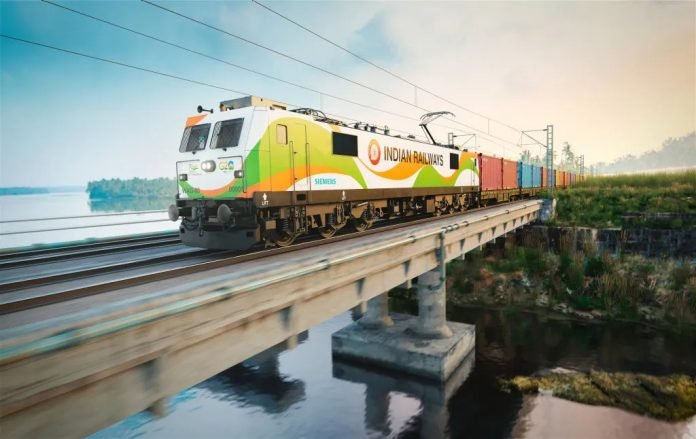
NEW DELHI (Metro Rail News): Siemens Mobility has received an order for 1,200 locomotives of 9,000 horsepower (HP) from Indian Railways, marking the single most significant locomotive order in the history of Siemens Mobility and single most significant order in the history of Siemens India. Siemens Mobility will design, manufacture, commission and test the locomotives. Deliveries are planned over eleven years, and the contract includes 35 years of total service maintenance.

The locomotives will be assembled in the Indian Railways factory in Dahod, Gujarat, India. Maintenance will be performed in four Indian Railways depots in Vishakhapatnam, Raipur, Kharagpur and Pune. Locomotive assembly and maintenance will be implemented together with the staff of Indian Railways. The contract has a total value of approximately €3 billion, excluding taxes and price variation.

“Siemens is supporting the sustainable transformation of India’s transportation sector as the country seeks to almost double freight capacity on its railways,” said Siemens CEO Roland Busch. “I’m proud that this major order will help India achieve its ambitious goal of creating the world’s largest green rail network, as our locomotives will save more than 800 million tons of CO2 emissions over their lifecycle.”

“We are delighted to partner with Indian Railways and deliver one of the most powerful electric locomotives available. These new locomotives will help increase freight transport on one of the world’s largest rail networks, as they can replace between 500,000 to 800,000 trucks over their lifecycle. This historic order cements a firm commitment from Indian Railways to achieve 100% electrification of rail traffic in India. Our partnership will further strengthen Siemens Mobility’s position in India and support the country’s expanding railway market,” said Michael Peter, CEO of Siemens Mobility.

The state-of-the-art locomotives will be used for freight transport throughout the Indian Railways network and are specified to haul loads of 4,500 tons at a maximum speed of 120 km per hour. Producing 9,000 HP, they will be one of the most powerful freight locomotives in the world. In addition, they will be equipped with advanced propulsion systems produced locally in Siemens Mobility factories in India.

Siemens Mobility will use the power of its Railigent platform to deliver the highest availability and performance.

India has one of the world’s most extensive rail transport and logistics networks used daily by 24 million passengers on more than 22,000 trains. Additionally, the Government of India plans to increase the share of railways for freight transport to 40-45% from the current approximately 27%.

India is one of the few countries with an almost fully electrified rail network. As one of the world’s fastest-growing markets for rail, India has evident sustainability and technology goals. Indian Railways and the Indian Government are committed to investing in state-of-the-art products to reach net zero CO2 emissions by 2030. The 9,000 HP project stands as testimony to this. As a technology leader, Siemens Mobility is firmly committed to delivering world-class solutions to help transform rail in India.

The history of Siemens in India dates back to 1867 when Werner von Siemens and his brothers built the Indo-European telegraph line from London to Calcutta. Siemens has been supporting Indian Railways with the latest technologies over many decades and offers a full range of intelligent and efficient technologies and solutions for passenger and freight transportation, including rail infrastructure and rolling stock.

Advertisement1
InnoMetro_2026

₹30,274 Crore Rapid Rail Project to Connect Noida and Greater Noida with Delhi-Ghaziabad-Meerut Corridor

0
RRTS train/ Representational Image

GREATER NOIDA (Metro Rail News): Residents of Noida and Greater Noida will have direct access to the Delhi-Ghaziabad-Meerut rapid rail corridor with the help of the Sahibabad, Ghaziabad, and Guldar stations. This RRTS project, worth ₹30,274 crores and involves trains with a design speed of 180kmph, includes 17 routes serviced by 114 buses that will pass through Gaur Chowk, Sectors 62 and 62, 51 and 52. This move aims to ensure seamless exiting from the rapid rail stations.

These buses, which will be of Euro 6 classification and run on CNG, will have a capacity of 20 passengers each. Applications will initially be accepted for three routes, which will involve travelling on public and private roads. 

Here are the routes: Sahibabad to Loni, Shalimar Garden, Sahibabad railway station; Hindon Airport, Shalimar Garden, Sahibabad Railway Station; Loni, Mohan Nagar; Hindon Airport, Mohan Nagar; Noida Sector 62, CISF, Indirapuram, Vasundhara; Noida Sector 62, Aditya Mall, Indirapuram, Vasudhara; UP Gate, Dabur Chowk, Vaishali, Sahibabad; UP Gate, Abhay Khan, Gyan Khand, Atal Chowk, Vasundhara; Kaushambi, bus station, Sahibabad Industrial area.

Special licences will be granted for these roads, and the entire corridor is expected to be operational by 2025. The route will consist of 24 stations, including Sarai Kale Khan, New Ashok Nagar, Anand Vihar, Sahibabad, Ghaziabad, Guldhar, Duhai, Muradnagar, Modinagar South, Modinagar North, Meerut South, Shatabdi Nagar, Begumpul and Modipuram.

It is expected that the RRTS, which will have 25 stops along its 82-kilometre route, with 22 of them being in Uttar Pradesh, will be able to reduce the current three to four-hour road travel time between Delhi and Meerut to around 55 minutes when it is up and running.

 The project is estimated to serve roughly 800,000 passengers per day and is planned to start operations for commuters by March 2025, with the 17 km priority stretch in Ghaziabad beginning operations by March 2023 and having five stations at Sahibabad, Ghaziabad City, Guldhar, Duhai and Duhai Depot.

Advertisement1
InnoMetro_2026