Home Blog Page 245

Affordability & Sustainability of Public Transport

0
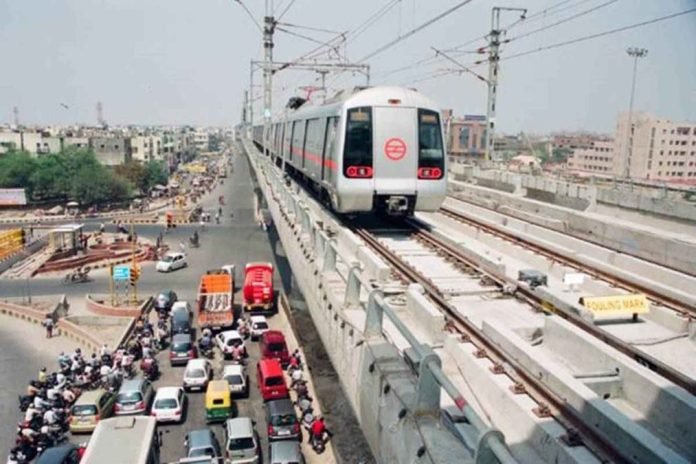
Metro
Representational image only

Public transport has long been an essential aspect of urban mobility across the globe. It provides a convenient and cost-effective mode of transport for people to move from one place to another in cities, thereby reducing traffic congestion, air pollution, and carbon emissions. However, there are two major issues that often hinder the widespread use of public transport in cities: affordability and sustainability.

Affordability is one of the biggest challenges in public transport. The cost of public transport must be low enough for people to be able to use it regularly. High ticket prices and lack of affordable options can result in a decline in the use of public transport and an increase in private vehicles on the road. For low-income people, public transport can be the only viable option, and as such, it is essential that it remains accessible and affordable to them. Governments and public transport authorities must ensure that the fares remain within reach of everyone, and special concessions and subsidies are provided for those in need.
Another significant challenge in public transport is sustainability. Public transport systems that run on fossil fuels are a significant contributor to greenhouse gas emissions, which has a harmful impact on the environment and public health. To make public transport more sustainable, cities need to move towards low-emission alternatives such as electric buses, hybrid buses, and trams. Many cities around the world have already started implementing such alternatives, resulting in cleaner and greener public transport systems.

Furthermore, in addition to low-emission alternatives, cities must also focus on developing a comprehensive network that provides connectivity to all areas of the city. This means ensuring that public transport is accessible to all, including people with disabilities, senior citizens, and children. The provision of cycle lanes, walkways, and other alternative modes of transport can also play a crucial role in improving the overall sustainability of public transport.

Finally, to encourage the use of public transport, it is crucial to ensure that the system is efficient and reliable. Commuters need to be able to rely on the public transport system to get them to their destination on time. The system should be well-maintained, with regular and predictable schedules, and passengers should have access to real-time information about the routes and schedules. In addition, safety and security measures, such as CCTV cameras and emergency response teams, must be put in place to ensure the safety of commuters.

In conclusion, making public transport affordable and sustainable is vital for the mobility of people in urban areas. To achieve this goal, cities need to ensure that public transport is accessible to all, environmentally friendly, efficient, and reliable. By doing so, public transport can become the preferred mode of transport, resulting in a reduction in traffic congestion, air pollution, and carbon emissions, and ultimately contributing to the creation of healthier, more livable cities.

Urban & Social Mobility In India

Metro Commuters scaled 1

Urbanization is rapidly transforming India, with more and more people moving to cities in search of better opportunities and a higher standard of living. The process of urbanization is a complex one, with multiple challenges and opportunities. One key area of focus in this regard is the issue of urban and social mobility.
Urban mobility refers to the ability of people to move freely and easily around cities, while social mobility refers to the ability of people to move up or down the socioeconomic ladder. Both these types of mobility are critical to the success of India’s urbanization process, as they enable people to access jobs, education, healthcare, and other services that are vital for their well-being.

However, the reality is that urban and social mobility in India is far from ideal. The country’s cities are often characterized by congested roads, inadequate public transport, and poor infrastructure, all of which contribute to low levels of urban mobility. In addition, there are significant inequalities in access to services and opportunities, which hinder social mobility for many people, particularly those from disadvantaged backgrounds.
The challenges of urban and social mobility are particularly acute for women, who often face multiple barriers to movement and participation in urban life. These include safety concerns, limited access to public transport, and social norms that restrict their mobility and agency. Addressing these challenges requires a holistic approach that takes into account the unique needs and experiences of different groups in society.

There are many potential solutions to the challenges of urban and social mobility in India. These range from investments in public transport and infrastructure, to policies that promote sustainable urban development and more equitable access to services and opportunities. For example, initiatives such as the Smart Cities Mission and the Atal Mission for Rejuvenation and Urban Transformation (AMRUT) are aimed at improving urban infrastructure and services, while the Pradhan Mantri Awas Yojana (PMAY) seeks to provide affordable housing for all.

In addition, there is a growing recognition of the importance of sustainable urban development, which prioritizes the needs of people and the environment over short-term economic gains. This approach involves a shift away from car-centric planning and towards more sustainable modes of transport, such as walking, cycling, and public transport. By making cities more livable and accessible, sustainable urban development can help to improve both urban and social mobility in India.

Overall, the issue of urban and social mobility is a complex one that requires a multifaceted response. By investing in public transport, infrastructure, and sustainable development, and by taking into account the unique needs and experiences of different groups in society, India can create more inclusive, equitable, and sustainable cities that enable people to move freely and participate fully in urban life.

Advertisement1
InnoMetro_2026

Track-Bed Concreting Work Commences for Delhi-Meerut RRTS Tunnels

0
Delhi-Meerut RRTS tunnel

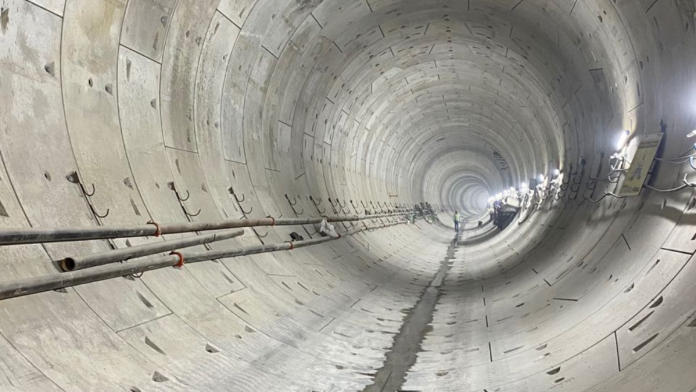
DELHI NCR (Metro Rail News): Contractors for the Delhi-Meerut RRTS project’s Package 8 have completed 3 out of 6 tunnels, marking a significant milestone in the semi-high-speed rail project. Afcons Infrastructure has progressed to the subsequent stage of the project to aid system works while the tunnel construction work continues.

 First stage concrete  in bored tunnel
First stage concrete in bored tunnel

Last week, Afcons poured first-stage invert concrete inside the down-line tunnel between Begumpul Ramp and Begumpal Station. This work, which is being done above the tunnels’ precast segment lining, will help Larsen & Toubro with track-laying work under Package 17.
In November 2020, Afcons was awarded the Rs. 1529.10 crore contract for Package 8, with a deadline of 1310 days. They have deployed 3 Terratec Earth Pressure Balance (EPB) machines (S88, S89 & S90) with a diameter of 7.51m each to construct six twin tunnels from Brahampuri DN Ramp to Begumpul UP Ramp. In addition to tunnel construction, they will also be responsible for building three underground stations at Meerut Central, Bhaisali, and Begumpul using the cut & cover method.

While concrete work advances on this particular section, joint tunnel surveys are being conducted by teams from NCRTC, Afcons, and L&T in other areas. The purpose of these surveys is to gather tunnel geometry data using reference points to guarantee accurate track installation.

Advertisement1
InnoMetro_2026

Spirit Infrastructure Awarded LoA for Property Development at Badkal Mor Metro Station

0
Delhi Metro
Delhi Metro/ Representational Image

DELHI (Metro Rail News): Spirit Infrastructure Pvt. Ltd. has been awarded a Letter of Acceptance (LoA) by the Delhi Metro Rail Corporation Ltd. (DMRC) for the property development at Badkal Mor Metro Station (Line-6 Extension). The DMRC had invited a Request for Proposal (RFP) for the same in November last year under Tender Reference Number CPD-76R1.

The proposed development is situated at the Line-6 Extension of Phase-III of the Delhi MRTS Project, and Badkal Mor is an elevated metro station that lies close to the Delhi-Agra highway (NH-2). The DMRC plans to develop retail and commercial space on the ground and concourse floors of the station for specified purposes as outlined in the RFP document.

The space will be leased out for a period of 15 years, with an upfront fee of INR 2,22,00,000/- and a quoted lease fee of INR 401/- per square metre per month.

The project site’s location in the commercial sector of Faridabad presents excellent potential for it to become an important commercial hub in the area, with separate access available for commercial areas, prominent and spacious frontage, and a captive commuter base, presenting unique opportunities for retailers.

The document outlines the scope of work for the Lessee, who is responsible for financing, constructing, procuring, managing, operating, and maintaining the leased area. The Lessee must follow the activities permitted by the local authority and the Master Plan of Delhi. Various activities and facilities are allowed in the leased space, including shopping complexes, offices, restaurants, and educational institutes. The Lessee must comply with all applicable laws and adhere to building codes and standards while designing and developing the leased area. The Lessee must obtain DMRC‘s written approval before obtaining approval from any other competent authority. The Lessee is responsible for its fire-fighting arrangements, and parking facilities are subject to availability.

Advertisement1
InnoMetro_2026

PM Lays Foundation Stone for Shivamogga-Shikaripura-Ranebennur New Line Project

0
Hon'ble PM Shri Narendra Modi laying the foundation stone for the Shivamogga-Shikaripura-Ranebennur New Line Project and Shivamogga (Koteganguru) Coaching Depot in Karnataka

KARNATAKA (Metro Rail News):  The Prime Minister of India, Narendra Modi, laid the foundation stone for two significant railway projects in the district of Shivamogga, Karnataka. The two projects are the Shivamogga – Shikaripura – Ranebennur new Railway line and Shivamogga (Koteganguru) Coaching Depot.

The Shivamogga – Shikaripura – Ranebennur new Railway line will be constructed at a cost of Rs. 990 crore, and it will connect the Malnad region with the Bengaluru-Mumbai mainline. The new railway line will provide enhanced connectivity, boost trade and tourism and will be an important step towards the development of the Malnad region.

The Koteganguru Railway coaching depot, located in Shivamogga city, will be built at the cost of more than Rs. 100 crores. The primary objective of the depot is to decongest maintenance facilities at Bengaluru and Mysuru by starting new trains from Shivamogga. The depot will also improve the facilities for railway passengers, create job opportunities and contribute to the overall development of the region.

The Chief Minister of Karnataka, Basavaraj Bommai, and other ministers also attended the event. The government officials stated that the new railway projects would create employment opportunities and boost the economic development of the Malnad region

The laying of the foundation stone for the two railway projects by the Prime Minister is a significant step towards the development of the Malnad region. These projects will improve connectivity, boost tourism, create job opportunities and contribute to the overall growth and prosperity of the region.

Advertisement1
InnoMetro_2026

Alstom Gets Rs. 219.59 Crore Contract for Delhi Metro’s Silver Line

0
Delhi Metro
Representational Image only

DELHI(Metro Rail News): Alstom Transport India has been awarded a Rs. 219.59 crore contract by Delhi Metro Rail Corporation (DMRC) for the train-control and signalling solution (Package DS-06) of the 23.622 km Silver Line. The primarily underground under-construction line is a part of the 65.1 km Delhi Metro Phase 4 project and will connect Delhi Aerocity – Tughalakabad via 16 stations in South Delhi. The line will feature Alstom’s CBTC system (Communications Based Train Control) and run in conjunction with i-ATS, and alongside its Automatic Train Supervision (ATS) system.

The tenders were invited by DMRC for this contract in February 2022 itself with an unspecified estimate and 4 years of the deadline. In August 2022, the technical bids were opened, declaring Alstom the only bidder. Post technical evaluation, Alstom’s financial bid was opened in the month of November. Subsequently, a three-month contract negotiation period ensued, during which Alstom submitted four revised offers to DMRC. The final contract value for the project is approximately Rs. 219.59 crore. DMRC’s project scope involves designing, manufacturing, supplying, installing, testing, and commissioning the train control and signalling system for the Delhi MRTS phase 4’s Aerocity to Tuglakabad Corridor.

Advertisement1
InnoMetro_2026

CMRL to Construct an at-grade Station at Venugopal Nagar in Phase 2

3
Chennai metro/Representational image

CHENNAI (Metro Rail News): As part of the upcoming 118.9-km phase II project, Chennai Metro Rail Limited (CMRL) has planned to construct an at-grade station at Venugopal Nagar in the northern region of the city. The station will be partially underground and partially above ground level. CMRL officials have stated that the Venugopal Nagar station falls in corridor 5 of phase II project, which connects Madhavaram to Sholinganallur. The concourse or ticketing level of this station will be built at ground level, while the platform will be constructed underground.

The upcoming phase II project of Chennai Metro Rail will feature an at-grade station at Venugopal Nagar in the northern part of the city. Unlike other stations in the project, which are either elevated or underground, this station will be half-underground and half-on-ground. According to officials of Chennai Metro Rail Limited (CMRL), the Venugopal Nagar station is located in corridor 5 of the phase II project, connecting Madhavaram to Sholinganallur. It will serve as a link between an elevated corridor in corridor 5 (Assissi Nagar to Retteri Junction) and the underground stretch in corridor 3 (Madhavaram to Taramani), hence the unique construction plan.

According to sources, work on the construction of this station has been underway for the past few months. Officials have stated that there will be two entry and exit points for commuters, and sufficient parking space will be made available.

Advertisement1
InnoMetro_2026

Centre Approves Doubling of Guntur-Bibinagar Railway Project to Boost Industrialization in AP

0
Railways
Representational Image

AMARAVATI (Metro Rail News): The doubling of the Guntur-Bibinagar railway project has been approved by the Centre, providing a significant boost to the industrialisation of underdeveloped areas in Andhra Pradesh and Telangana. Despite not being included in the recent railway budget, the Network Planning Group (NPG), under the PM Gati Shakti scheme, has given the project a significant push. The NPG has suggested that the Ministry of Railways undertake the long-awaited project, which is expected to cost approximately 2,853 crore.

The railway project linking Guntur with Hyderabad is expected to double the volume of goods traffic by automatically connecting with other major metro railway lines. This development will not only facilitate the speedy movement of freight trains but also attract new investments in Nalgonda, Khammam (TS), and Palnadu Guntur (AP) districts.

Despite the fact that the scheme was initiated in 2021 with the goal of comprehensively integrating the interventions of various ministries/departments and bridging gaps to ensure the uninterrupted movement of people, goods, and services, the Guntur-Bibinagar railway project was approved during the latest meeting of the NPG.

Advertisement1
InnoMetro_2026

Tunnelling Work Between BKC and Thane for Bullet Train Project Set to Start

0
Bullet Train/Representational image

MUMBAI (Metro Rail News): Following the Supreme Court’s approval of the bullet train project of Mumbai-Ahmedabad, the National High-Speed Rail Corridor Limited (NHSRCL) is set to initiate preliminary activities on the Vikhroli land. The upcoming tasks include clearing a 3.92-hectare area in Vikhroli, erecting barricades around the boundaries, and commencing drilling on a 21-km tunnel linking Bandra Kurla Complex and Thane. The tunnel is expected to cost around ₹10,000 crore. According to reports, the tunnel’s depth will range from 25 meters to 65 meters, and it will reach a depth of 45 meters below Thane creek, spanning a distance of 7 kilometres. The most profound point of the tunnel will be beneath Parsik Hill, plunging to a depth of 114 meters.

An official stated that the NHSRCL would create shafts in BKC, Vikhroli, and Sawli in Ghansoli for the tunnel’s excavation, which will be carried out from both ends. The approximate cost per kilometre for the tunnel is estimated to be ₹500 crore. As of February 23, NHSRCL has acquired 99.75% of the land in Maharashtra, and the total land procured for the 508-kilometre-long corridor is 99.17%. Earlier this month, the NHSRCL released technical tenders for tunnelling, and by March 29, authorities plan to open tenders for civil works that include viaducts, bridges, tunnels, maintenance depots at Thane, Virar, and Boisar, and connecting works for the Thane depot between Shilphata and Zaroli on the Gujarat-Maharashtra border, according to officials.

Advertisement1
InnoMetro_2026

Only Two Bidders for Mumbai Metro’s Line-2B PEB Roof and Finishing Contract

0
Mumbai-Metro/Representational Image

MUMBAI (Metro Rail News): Only J Kumar Infraprojects and Ahluwalia Contracts (India) have submitted their bids for the pre-engineered building (PEB) roof and architectural finishing contract at five stations of Mumbai Metro’s 23.6 km Line-2B (Yellow Line) that links DN Nagar – BKC – Mandale. These five elevated stations, situated at Shivaji-Chowk, Diamond Nagar, Mankhurd, BSNL, and Mandale, have already had their civil construction contract (Package CA-07) awarded to NCC Ltd. back in April 2019 after multiple rounds of re-bidding. The first set of U-girders was launched in January 2020.

Back in January 2023, the Mumbai Metropolitan Region Development Authority (MMRDA) had invited bids for this contract (Package CA-158), with an estimated value of Rs. 100.30 crore and an unspecified deadline of completion. On Thursday, Technical bids were opened.

The Mumbai Metropolitan Region Development Authority (MMRDA) has invited bids for the project involving the design, supply, fabrication, and erection of pre-engineered building (PEB) structural steel works, execution of architectural finishings, and plumbing works for five elevated stations of the ML2B corridor that runs from Diamond Garden to Mandale as part of the Mumbai Metro rail project.

The bids for this project have been submitted and are currently undergoing technical evaluation, which may take a few months to complete. Once the technical evaluation is finished, the financial bids of the technically qualified bidders will be opened, revealing the lowest bidder and the likely contractor.


Advertisement1
InnoMetro_2026

Indian Railways likely to float Tender for Hydrogen Train

0
Hydrogen Train/Image for representation only, copyright: Respective Authority

NEW DELHI (Metro Rail News): The Indian Railways is expediting plans to introduce hydrogen-powered trains by preparing to float a tender to procure 35 green energy-driven trains. According to sources, the cost for these trains would be approximately Rs 2,800 crore. This week, railway officials held a detailed meeting with several major technology players, including Siemens, Cummins, Hitachi, BHEL, and Medha Servo, who expressed interest in manufacturing the trains. The trains are expected to be introduced on heritage routes. After receiving input from the industry, the railways will float the tender. Officials stated that the meeting with the industry was productive and aided in expediting the plan.

At present, Medha Servo is conducting a pilot project to retrofit hydrogen fuel cells onto a Diesel Electric Multiple Unit (DEMU) train. This initiative will result in the development of the first prototype hydrogen train, which is expected to commence operation between Jind and Sonipat later this year.

According to recent announcements made by the Railway Ministry to the Rajya Sabha, the cost for each hydrogen train is estimated to be around Rs 80 crore, while the ground infrastructure required for various heritage and hill routes will require an investment of approximately Rs 70 crore per route. 


Advertisement1
InnoMetro_2026