Home Blog Page 243

An advanced Metro System needed for the Metropolitan City : Mumbai Metro

0
Mumbai Metro Line 6
Representational Image

The idea to build the Mumbai Metro, with the purpose of providing alternate transport facility to Mumbaikars, started taking reality in 2006, when the foundation stone for phase-I, according to the Mumbai Metro map was set. However, operational and policy bottlenecks caused the Mumbai metro routes to be delayed. There are now only three Mumbai Metro routes in operation. Two of them are new metro lines in Mumbai.

On January 19, 2023, Prime Minister Narendra Modi dedicated the Mumbai Metro lines 2A and 7 to the nation. Modi rode the metro from Gundivali train station to Mogra and back. In 2015, the Prime Minister laid the groundwork for these two lines.

Mumbai Metro will also be compatible with the National Common Mobility Card, which conforms to the One Nation, One Card approach. From October 2022, the Mumbai Metropolitan Region Development Authority (MMRDA) has begun trial runs for these two metro lines. When both sections of the Mumbai Metro lines – Line 2A and Line 7 – are fully operational, they shall carry close to 3 lakh passengers.

The projected cost of the Line 2A Mumbai metro project is Rs 6,410 crore. Lines 2 A and 7 in Mumbai will feature two interchanges, one at Dahisar and the other at DN Nagar metro station, with the existing Mumbai Metro Line 1. (Ghatkopar and Versova). The Mumbai 1 mobile app introduced will have all Mumbai metro related information and also help in buying tickets online by payment using UPI. 

The first phase of the Mumbai metro routes ‘Metro 2A’ (Dahisar to DN Nagar) and ‘Metro 7’ (Dahisar East to Andheri East), was made operational for passengers on April 2, 2022. Every day, more than 3 lakh commuters are projected to use the new metro lines. The first section of the new Mumbai Metro 2A route is from Dahisar to Dahanykarwadi, and the first phase of the new Mumbai Metro 7 route is from Dahisar to Aarey colony.

There would be 11 trains of six coaches operating for both Mumbai metro corridors, with 8 or 9 of them operational and the others on standby. The Mumbai metro trains will run every 10 minutes and will be operational for about 19 hours a day.

On February 22, 2022, approximately 50% of the statutory inspection of the delayed Phase 1 of Mumbai metro corridors 2A and 7 between Dahanukarwadi and Aarey was completed by the Commissioner of Metro Rail Safety (CMRS). The inspection includes a look at the railway assets, including signalling, OHE, civil works, stations, and platforms. On March 25, 2022, the Mumbai Metro received its safety certificate.

Metro Routes

Line 1

This operating route connects Versova to Ghatkopar through Andheri and is also known as the Blue Line on the Mumbai metro map. The Mumbai metro route connects significant locations in the western suburbs with the central suburbs, making it one of the city’s most popular modes of transportation. This 11.4-kilometre-long Mumbai metro track is entirely elevated.

Line 2

This 42-kilometre-long Mumbai metro route, often known as the Yellow Line, is divided into two sections: Mumbai Metro line 2A and Mumbai Metro line 2B.

The Mumbai Metro line 2A segment will be an 18-kilometre corridor connecting Dahisar-Charkop-DN Nagar with 17 Mumbai metro stations. Because of community requests for location-specific metro stations, the MMRDA renamed 15 of the 17 stations. According to the MMRDA list, two stations whose names have not been altered are Dahisar East Metro station and Eksar Metro station.

The 2B section will be 23.5 kilometres long and will connect DN Nagar, BKC, and Mankhurd. This project is expected to cost roughly Rs 17,000 crores. The first leg of the 2A Mumbai metro route of 9.5 km began operations on April 2, 2022, and connects Dahisar, Anand Nagar, Kandarpada, IC Colony, Eksar, Borivali West, Pahadi Eksar, Kandivali West, and Dhanukarwadi with 9 stations.

Line 3

Line 3 of the Mumbai Metro, also known as the Aqua Line, is 33.5 kilometres long and totally underground, connecting Cuffe Parade in south Mumbai to SEEPZ and Aarey in north Mumbai. It includes 26 underground Mumbai metro stations and one at-grade station. This Mumbai metro route will also travel through the Mumbai Airport, enhancing regional connectivity.

The overall cost of constructing this route was formerly estimated to be Rs 23,136 crores. The Maharashtra cabinet approved additional funding of Rs 10,269 crore for the Mumbai Metro Line 3 project on August 10, 2022, citing cost inflation, bringing the total cost to Rs 33,405 crore.

Japan International Cooperation Agency(JICA) is funding Metro Line 3 with new costs, JICA’s contribution will rise from Rs 13,235 crore to Rs 19,924 crore. By 2031, 17 lakh passengers are expected to travel daily on Metro Line 3. The tunnel work has been finished to 98.6 percent, while station work has been completed to 82.6 percent. A total of 73.14 hectares of government property and 2.56 hectares of private land have been acquired.

The Aqua Line, also known as the Mumbai Metro Line 3, was inaugurated at Sariput Nagar in Aarey Colony by Maharashtra chief minister Eknath Shinde and deputy chief minister Devendra Fadnavis. Construction work has begun to connect Chhatrapati Shivaji Maharaj Terminal’ (CSMT) ancient subway to Mumbai Metro Aqua Line 3. MMRCL has already erected barricades in front of the subway at the entry site near Canon.

Aqua Line will connect at eight public transportation hubs, increasing connectivity. Mumbai CSMT and Churchgate termini, Grant Road and Mumbai Central railway stations, Dadar MSRTC bus depot, Mahalakshmi monorail, and Mumbai Metro Lines 1 and 2B are among them. Furthermore, the dynamic and static testing of the initial design proving train trial runs for Mumbai Metro Line 3 has been completed.

Line 4

Mumbai Metro Line 4, also known as the Green Line, would connect Kasarvadavali in Thane to Wadala in south-central Mumbai. This Mumbai metro route would improve connectivity between Mumbai and Thane while also relieving pressure on the local rail network. This project is projected to cost Rs 15,000 crores. The project is under construction.

Line 5

This 24-kilometre-long Thane-Bhiwandi-Kalyan Metro-5 line, popularly known as the Orange Line, would be totally elevated and will include 17 Mumbai metro stations. It will cost Rs 8,416 crore to build. The Metro-5 route will eventually connect with the Metro-4 Wadala-Thane-Kasarwadavli line and the Metro-11 Taloja-Kalyan corridor.

Line 6

This Mumbai metro route, also known as the Pink Line, would connect the western and eastern suburbs and will be the second west-east metro corridor after the already functioning Versova-Andheri-Ghatkopar portion. The 14.5-kilometre route will have 13 Mumbai metro stations.

Akurli Metro Station Line 7 scaled

Line 7

Mumbai Metro Line-7, also known as the Red Line, is a 33.5-kilometre-long Mumbai metro route that will connect Dahisar to Andheri and then to the Mumbai International Airport. The line would include 29 Mumbai metro stations, 14 of which will be elevated and the rest subterranean. The Mumbai metro route was scheduled to begin operations in 2020. The Covid-19 pandemic, however, slowed down the civil construction works. The second phase of Metro Line 7 construction is 98% complete. 

The Phase 1 of Mumbai Metro Line 7 began operations on April 2, 2022, trials for phase 2 are planned to begin in October 2022, with commercial operations proposed to begin by the end of December 2022.

In addition, the MMRDA will construct a footbridge connecting the Goregaon station on Metro Line 7 to the Goregaon western railway station. MMRDA plans to open the Line 7 Mumbai metro project, which is expected to cost roughly Rs 6,208 crore, in January 2023.

Line 8

Line 8, also called the Gold Line, is a proposed Mumbai metro route connecting Mumbai Airport and Navi Mumbai Airport. The approved length of this Mumbai metro route is 32 kilometres, and the project will cost Rs 15,000 crores to build. On this route, eight metro stations have been proposed.

Line 9

Line 9 of the Mumbai Metro is an extension of Line 7 and Metro-2A. (Dahisar to DN Road). This corridor, which will connect Gaimukh and Shivaji Chowk (Mira Road or Metro-10 ), will cost Rs 3,600 crores. The Mumbai metro route was supposed to open in 2019; however, due to procedural issues, the date has been extended to October 2024.

Line 10, 11

Lines 10 and 11 of the Mumbai Metro are expansions of Line 4, often called as the Green Line. These lines will link Gaimukh and Shivaji Chowk (Mira Road), as well as Wadala to CSMT. PM Narendra Modi laid the foundation stone of the project in 2017. Work on these lines has begun.

Line 12

This Mumbai metro route is intended to be a continuation of Mumbai Metro Line 5. It will connect Kalyan and Taloja and improve connectivity throughout the Mumbai Metropolitan Area.

Line 13

This is a proposed Mumbai metro project that will link Mira Road and Virar. The cost of this 23-kilometre-long Mumbai metro route is anticipated to be over Rs. 6,900 crores. The comprehensive project report for this route is currently being developed. The project is scheduled to be completed by 2026. This will be referred to as the Purple Line. 

Line 14

The Magenta Line is a Mumbai metro route that will connect Vikhroli with Kanjurmarg and thereafter to Ambernath-Badlapur. It shall have an interchange with Line 6, called the Pink Line. This project, which is also in the DPR state, will cost approximately Rs 13,500 crores. This Mumbai metro line is scheduled to open by 2026.

Conclusion

The Mumbai Metropolitan Region Development Authority (MMRDA) is implementing the Mumbai Metro route network, which is being expanded beyond the Mumbai region.

At the moment, only one Mumbai metro route is completely operational, while two more are being phased in. In Mumbai, eight are under construction, and five metro lines have been approved. The first line opened in June 2014, the other two additional new metro lines began operations in April 2022. Mumbai has 14 metro lines, with two additional lines on the extension. Metro Line 2B (D N Nagar to Mandale), Metro Line 4 & 4A (Wadala-Kasarvadavali-Gaimukh), Metro Line 5 (Thane to Kalyan), Metro Line 6 (Swami Samarth Nagar to Vikhroli), and Metro Line 9 are all under development in Mumbai (Andheri to CSIA and Dahisar to Mira Bhayander). All of these Mumbai metro routes, according to MMRDA, have already initiated civil works and are projected to be completed by 2022-2024.
 

Advertisement1
InnoMetro_2026

Navi Mumbai Metro: Connecting the Fast-Growing Satellite City

5
Navi Mumbai Metro Line 1

Navi Mumbai Metro: An Introduction

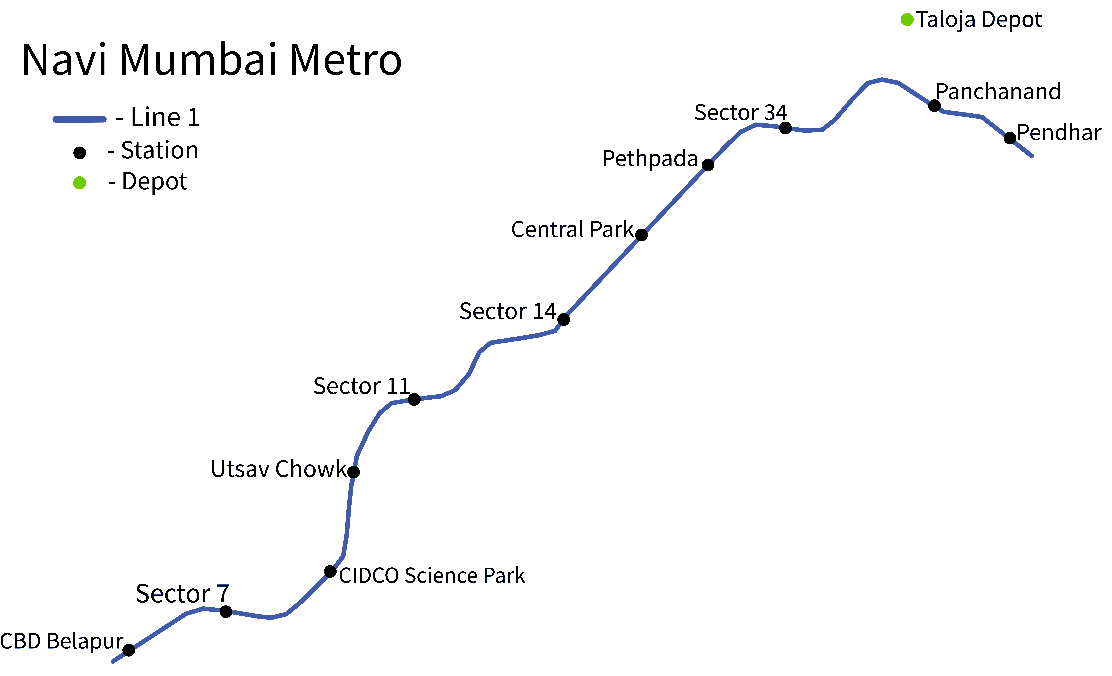
Navi Mumbai, created as a satellite city for Mumbai, has grown rapidly in the recent decade. Today, every node, both old and new, that is opening up in Navi Mumbai is being developed carefully with the goal of providing people with cutting-edge social and physical infrastructure. Seawoods Darave, for example, is India’s first and largest transit-oriented development (TOD) situated in Navi Mumbai. The operation of the Navi Mumbai Metro (NMM), which offers good connection to its various nodes, is the next milestone for this satellite city.

Mumbai (Navi Mumbai) Metro Line-1 phase-2 trial run from Central Park (station 7) to Utsav Chowk (station 4) in Kharghar has been completed successfully. With the completion of this successful test, construction on the NMM Line Phase-2 has gained momentum. On November 25, 2022, CIDCO entered into an agreement with ICICI Bank for a Rs 500 crore Line of credit, completing the financial completion process for the Metro Line No. 1 project. With Rs 500 Crore line of credit facility from ICICI Bank, work on Line No. 1 will be hastened, and passengers will be able to ride on this line as soon as the construction is completed on time. The approved line of credit has, in some ways, stamped the trustworthiness of CIDCO’s undertakings.

The Belapur-Pendhar line viaduct has been finished, and 5 of the 11 stations are ready for commissioning. This Line has received all necessary certifications, including CMRS. The last six stations are now under construction, and the entire route is projected to be operational very soon. The cost of Metro line-1 is anticipated to be around Rs 3,400 crore, of which Rs 2,600 crore has already been invested by CIDCO, Rs 500 crore is from a bank line of credit, and the remainder would be CIDCO internal accruals.

The Navi Mumbai Metro is expected to serve one lakh passengers per day by 2027. After receiving the RDSO certificate and the ‘Dynamic Clearance Certificate,’ the next step for the Navi Mumbai Metro was to obtain the Commissioner of Metro Railway Safety (CMRS) certificate. On February 11, 2022, the Railway Board of the Government of India approved the rolling stock (coaches, electricity, etc.) of CIDCO’s Navi Mumbai metro. The Navi Mumbai Metro is now undergoing civil work inspection. Following the successful completion of the civil work inspection, the CMRS and the Railway Board will issue a green signal to begin direct transport.

Metro Rail Network

The Maharashtra government has designated the City and Industrial Development Corporation of Maharashtra Ltd (CIDCO) as the implementing agency for the building, maintenance, and operation of the Navi Mumbai Metro Corridor-1, which will be built in three stages. On May 1, 2011, the foundation stone for the Navi Mumbai metro train project was laid. Corridor-1 connects Belapur, Kharghar, Pendhar, Kalamboli, and Khandeshwar, with plans to expand it to Navi Mumbai International Airport (NMIA). Corridor-1 is based on a detailed project report prepared for the Navi Mumbai Metro Rail Project by the Delhi Metro Rail Corporation (DMRC).

Metro Line 1

Line-1 will be 23.4 kilometres long and will have 20 metro stations. The Navi Mumbai Metro Line 1 line will begin in Belapur and end at the Navi Mumbai International Airport (NMIA). Line-1 would be built in four phases, with the first covering a distance of 11.10 kilometres and include 11 elevated stations with a terminus at Belapur and a depot-cum-workshop at Taloja metro station.

Metro Line 2 

The Navi Mumbai Metro Phase 2 route from MIDC Taloja metro station to Khandeshwar will stretch 10.30 kilometres and feature eight stops. The Navi Mumbai Municipal Corporation (NMMC) and the Mumbai Metropolitan Region Development Authority (MMRDA) will fund Navi Mumbai Metro Lines 2 and 3, respectively.

Navi Mumbai Metro Map

A two-kilometre-long interlink between Pendhar and MIDC will be developed as part of Phase 3 of the Navi Mumbai Metro line. Ultimately, Phase 4 of the Navi Mumbai Metro will run from Khandeshwar to the Navi Mumbai International Airport (NMIA).

Metro link to suburban railway stations

Belapur suburban railway station would be connected to Metro station 1, while Kharghar suburban railway station would be connected to Metro station 3. Furthermore, the Taloja metro station could provide as a link to the Konkan Railway. The Navi Mumbai Metro would be a three-car train that could be expanded to a six-car train if demand grows and related infrastructure becomes available.

Dynamic Clearance Certificate

Mumbai (Navi Mumbai) The central Ministry of Telecommunications granted the ‘Dynamic Clearance Certificate’ to Metro Phase 1 from Belapur to Pendhar metro station.

RDSO Certified

The interim speed certificate for CIDCO’s Navi Mumbai Metro’s Metro Line-1, Phase 1, from Belapur to Pendhar metro station has been given by the Research Design and Standards Organisation (RDSO) in Lucknow. The RDSO certificate for the Navi Mumbai Metro route between stations 7 and 11 was issued on October 20, 2021. Navi Mumbai Metro received the certificate following successful trials and reviews of test certifications, as well as a vast quantity of documentation demonstrating adherence to the RDSO safety rules.

Conclusion

The Navi Mumbai Metro is a mass rapid transit system built by CIDCO, with line 1 set to open in early 2023. To relieve the strain on the railway network and the increasing traffic on the roads, a new method of public transportation was needed to connect all Navi Mumbai residential nodes. As a result, the Navi Mumbai metro was constructed with five lines that span 106.4 kilometres. The Navi Mumbai Metro will not only meet a critical transit necessity for the smart city, but it will also help the city’s economic growth.

Advertisement1
InnoMetro_2026

Invitation for Tender: UPMRC Offers Licensing Space on Pillars of N-S Corridor in Lucknow

1
Lucknow Metro
Image for representation.

LUCKNOW (Metro Rail News): UPMRC (Uttar Pradesh Metro Rail Corporation Ltd.) has announced an open e-tender for the Request for Proposal (RFP) for licensing space on pillars of N-S Corridor of UPMRC network in Lucknow. The tender is for placement and operation of telecom equipment and laying of Optical Fiber Cable (OFC) to provide shared mobile coverage of 2G/3G/4G/5G. The license period is for six years, and the Earnest Money Deposit (EMD) required is INR 10 Lakh. The objective of this tender is also to augment non-operational revenue of UPMRC through licensing of space and provide mobile coverage in selected elevated stations/sections of UPMRC.

To be eligible for this tender, bidders should have an average annual turnover of at least INR 24 Lakhs for the last three years ending 31st March of the previous financial year, and they must submit audited financial year data of last three years (i.e., FY 2019-20, 2020-21 and 2021-22) certified by Chartered Accountant with stamp & signature along with UDIN.In the event that the bidder does not provide the audited balance sheet for the previous financial year, they are required to present an affidavit confirming that the balance sheet has not yet been audited. In such situations, the financial information from the previous two years will be utilized for evaluation. Additionally, bidders must be registered with the Department of Telecommunications, Government of India as authorised Infrastructure provider in IP-1 category.

The sale start date is February 28th, 2023, and the sale end date is April 10th, 2023. The pre-bid meeting will be held on March 14th, 2023, and the bid submission start date is March 29th, 2023. The bid submission end date is April 10th, 2023, and the bid opening date is April 11th, 2023.

Advertisement1
InnoMetro_2026

Indian Railways Poised for Elaborative Changes

0
Union Budget for FY 2023-24

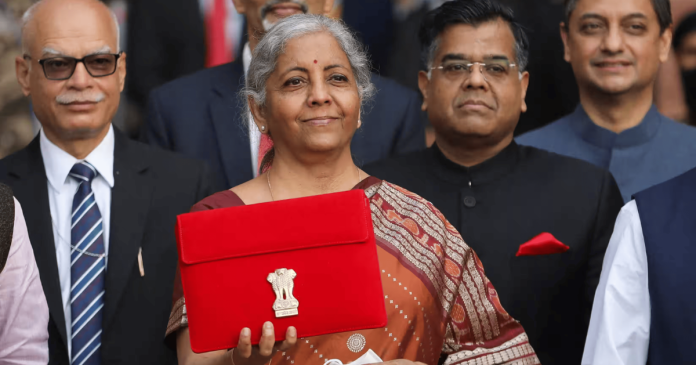
Mrs. Nirmala Sitharaman, Finance Minister, delivered the Union Budget on February 1, 2023. The budget prioritises infrastructure, investment, green growth, and the financial industry. The green growth agenda focuses on supporting sustainable enterprises and assisting India in reducing carbon emissions.

The Union Budget 2023 focuses on maintaining momentum towards a sustainable India. The government has reinforced its commitment to decarbonization and the creation of green jobs by designating green growth as one of the seven main goals. The allocation of Rs. 35,000 Cr. for priority capital investment in energy transformation will aid in the acceleration of our Net Zero journey. The Viability Gap Financing for battery storage projects, major investment in renewable energy system expansion, and the green credit scheme to reward sustainable behaviour are all extremely welcome and timely initiatives that will advance clean energy adoption. The PM PRANAM initiative will increase the use of green ammonia in the manufacture of environmentally friendly fertilisers. The scrapping policy and customs duty exemption on Li-ion batteries will also assist accelerate the adoption of EVs and clean up the mobility sector.

 The finance ministry has delivered major support to the Ministry of Railways, which is aiming to leapfrog to a freight volume of 3 billion tonnes over the next decade, with a budgetary support of Rs 2.4 trillion. The entire 11th five-year plan (2007-12) may promise less than this spending.

 There must be some cause for such enthusiastic support. One, despite the Covid-19 epidemic, the government is delighted with the Railways‘ progress towards 1.5 billion tonnes of freight loading by 2023. Following that, 2023 will be a promising year. The economic, trade, and industry ministries are preparing to announce some high-profile projects that are nearing completion at breakneck speed.

 Railway showcase projects also have the opportunity to increase the frenetic pace of last-mile connection, and funding must not be a limitation in any way. The new Vande Bharat train sets were one of the most obvious symbols of railway modernization in 2022. They have received a great deal of national notice.

 Even during the second wave of Covid-19 and thereafter, the freight company generated unexpectedly large profits. The railways, which boost nearly all industries and trade by delivering raw materials and finished goods, are moving far more BTKMs (billion tonne kilometres) during and after the pandemic. The Railroads rely on BTKMs to make ends meet.

 Following Covid, freight has escaped the decade-long haphazard trap of clocking 691 billion in 2011-12 and 707 billion in early 2020. Since 2021-22, these gains have only been possible due to the Centre’s substantial fiscal support for infrastructure expansion and modernisation through the finance ministry and the Railways’ intensive use of its assets — track and rolling stock — by stretching their capacities to absorb pent-up demand.

 The value of freight BTKMs increased from 707 billion in 2019-20 to 807 billion in 2021-22. Although if pent-up demand is likely to level off in the fiscal year 2022-23 (FY23), the Railways may be planning for another significant increase in BTKM. Despite an anticipated decrease in tonnes carried in FY23, higher leads (average distances travelled by freight) are driving increasing BTKMs. As a dependable performance indicator, BTKM is a combination of kilometres travelled by tonnes of freight. The railways’ freight prices are also among the lowest in the world.

Railways in India are poised for elaborative changes and meet future challenges and requirements. The government is making efforts in all sectors of the national transporter to meet the ambitious goal.  

Advertisement1
InnoMetro_2026

Feasibility Study for Bengaluru-Hosur Metro Gets Approval From Centre

0
Chennai Metro/Image for representational purpose only
Image for representational purpose only

CHENNAI (Metro Rail News): The Chennai Metro Rail Corporation (CMRL) has commenced work on drafting a tender document for a consultant to conduct a feasibility study on South India’s first inter-state metro connectivity project. The proposed project will connect Bommasandra in Bengaluru to the industrial hub of Hosur in Tamil Nadu. The Union Ministry of Housing and Urban Affairs (MoHUA) has approved CMRL’s proposal seeking feasibility study for the Bengaluru-Hosur metro link.

CMRL has written to MoHUA seeking its nod for a metro rail link from Bommasandra to Hosur, which is home to top business houses. The proposed stretch is 20.5 km long, of which 11.7 km is in Karnataka and 8.8 km in Tamil Nadu, which will fund the feasibility study. The Tamil Nadu government has already sanctioned Rs 75 lakh for the study. Karnataka and Tamil Nadu are likely to share the project expenses in their respective states, along with MoHUA.

Advertisement1
InnoMetro_2026

The Commuter Rail System for Delhi – NCR

1

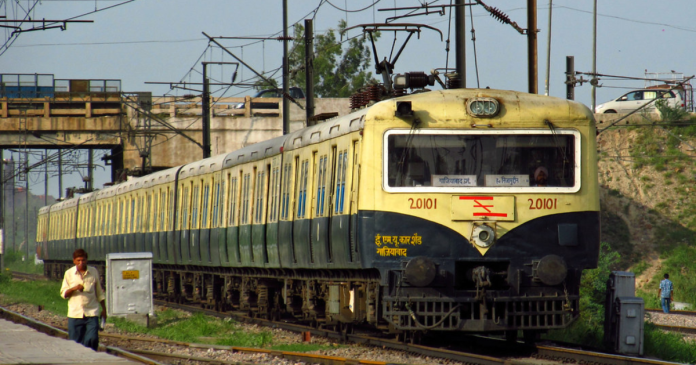
Northern Railway’s Delhi Suburban Railway is a suburban train service for the National Capital Region (NCR). This train service serves Delhi as well as the neighbouring cities of Gurgaon, Faridabad, Ghaziabad, Sonipat, and other locations in Haryana and Uttar Pradesh. These services are generally delivered with EMU and MEMU rakes. Passenger trains and DMU services are now available up to Rewari in Haryana, which is part of the NCR. Delhi currently has 46 railway stations.

As per railway ministry, plans are being worked upon with efforts being made to upgrade and link the network with Delhi Metro by building interchanges at metro stations. The main aim of the project is to relieve traffic congestion in the city. The Delhi Suburban Railway operates on the same tracks as long-distance trains. Women Special trains were launched between New Delhi and Palwal and from New Delhi to Ghaziabad and Panipat in 2009.

EMUs in Delhi currently run with 12 coaches, ten of which are general compartments and two of which are reserved for ladies as ladies compartments. According to Northern Railway estimates, there are more than 110 suburban trains that operate on key routes.

 Delhi Ring Railway

 The Delhi Ring Railway is a 35-kilometer circular railway network in Delhi that runs parallel to the Ring Road. It is part of the city’s suburban train services. It was built in 1975 primarily to serve freight trains that could avoid the congested and heavily populated Old Delhi and New Delhi railway stations. For the 1982 Asian Games, the network was enhanced with the addition of 24 new services. Its circular path takes trains 90-120 minutes to complete, both clockwise and anti-clockwise travel, between 8 a.m. and 7 p.m. via the Hazrat Nizamuddin Train Station.

2846px Delhi suburban rail network.svg

With a return ticket for the full route only Rs.12, it is favoured by poor and middle-class families over the Delhi Metro, which costs roughly Rs.60. During the morning and evening rush hours, it runs seven clockwise and six anti-clockwise trains at a peak frequency of 60 to 90 minutes. Before, Commonwealth Games in 2010, seven stations near the venues, namely Chanakyapuri, Sarojini Nagar, Inderpuri Halt, Lajpat Nagar, Sewa Nagar, Lodhi Colony, and Safdarjung, had a Rs. 3 crore refurbishment.

The ring-railway service was established on a track laid in 1975 for the high number of freight trains originating, ending, or passing through the city to avoid the main passenger terminals at New Delhi, Old Delhi, and Hazrat Nizamuddin Rly. Stations. The ‘Delhi Avoiding Line’ was the name given to the track. However, the Northern Railway’s service for travellers within the city is now something that Delhiites prefer to avoid. The ring rail has 12 electric trains. Only three of the twelve EMUs are fully operational. The occupancy in remaining train sets is only around 1-2%. The ring railway runs clockwise and anticlockwise around the city, beginning and ending at the Hazrat Nizamuddin railway station.

The ring train service was highly popular in the 1980s and 1990s, when Delhi’s transportation system had just started to gain momentum, but with the quick construction of the Delhi Metro and an extensive bus network, the ring railway seemed to be neglected by both the city and the Railways since then.

Every day, only 3,700 passengers ride the trains. The lack of a feeder network, such as approach roads and feeder buses to the stations, is evaluated as the primary reason for the ring railway’s failure. The stations are in isolated regions and are difficult for passengers to reach. There are also security issues related to stations as most of the stations have been encroached. In addition to this, most of the time, the trains on this network run late. The network is presently primarily used for freight, with little passenger train service available during peak hours.

 Conclusion

With the fast expansion of the Delhi Metro, there has been little focus on improving the condition of the Delhi Suburban Railway. However, there have been reports of the services being strengthened so that more commuters can use them. Feasibility studies have also been conducted, and there have serious intentions visible to launch EMU services from Gurgaon with regard to commuter’s demand. The government is also promoting an integrated rail-bus transit (IRBT) system to connect Delhi with the satellite towns of Gurgaon, Ghaziabad, and Sahibabad. A feasibility study has already been completed, and the project will be overseen by a steering group. The IRBT will have two distinct tracks.

Advertisement1
InnoMetro_2026

PNC Infratech Secures Rs 771.46 Crore Project of Haryana Orbital Rail Corporation Ltd

0
Indian Railways/Representational Image
Representational Image

HARYANA (Metro Rail News): On Tuesday, PNC Infratech, an infrastructure company, announced that it has won a railway project worth Rs 771.46 crore from Haryana Orbital Rail Corporation Ltd. According to a BSE filing, the company stated that the scope of the project involves designing and constructing civil works at Sultanpur station related to the installation of a new BG double railway line.

In the filing, the company stated that it has been declared the lowest bidder (L1) for the project, which includes earthwork, bridges, station buildings, retaining walls, and other miscellaneous works. The project will span from km 29.68 to 49.70 and from km 55.60 to 61.50, and it will connect to the Indian Railways network from New Patli to Patli Station and New Patli to Sultanpur Station, including modifications and civil works at Sultanpur Station. The project is expected to be completed within 30 months.

Advertisement1
InnoMetro_2026

A Mock-up Metro Train Coach for Commercial Use Now Available at Sector 137 Metro Station in NMRC Network

0
Mock-Up- Metro Train Coach

NOIDA (Metro Rail News): NMRC is making constant efforts to increase non-fare box revenue generation to support overall revenue. NMRC has chosen M/s CITY SUPERMART as licensee through an open bid for commercial utilization of Mock-Up-Metro Train Coach to be placed at Noida Sector- 137 Metro Station on Aqua line.

NMRC will hand over the Mock-Up- Metro Train Coach, to Licensee to relocate the Mock – Up Metro Train – Coach from Depot area to designated space at Sector – 137 for setting up its business. Licensee can operate any kind of businesses, i.e. restaurant, mix convenience store etc. except negative list/ banned usages of NMRC. The business activity inside the Mock-Up Coach will be different and unique in Delhi/NCR. Licensees will also be permitted to develop circulating areas around the Metro coach as landscape/green areas with seating arrangements. Such initiative is being taken first time by any metro organization.

In addition to this, in the station box area at Sector-137, three restaurants, one car showroom and one saloon are already operational, which made Sector-137 Metro Station more popular and happening place for the nearby residents as well as metro commuters.

Advertisement1
InnoMetro_2026

The growing need for traffic management & engineering for sustainable mobility

0

Traffic Engineering & Management

The developed world has effectively achieved a fair solution between the requirement to extend road networks to add capacity and manage capacity with a safety component as part of the overall traffic management system. Likewise, the Government of India (GOI) should integrate ‘increase in capacity’ and ‘traffic management’ on Indian roads. The GOI’s current road policy may consider constructing such a link. To that end, the GOI must not incorrectly believe that local traffic police in Indian cities are traffic engineers capable of managing traffic in their jurisdiction.

There is a significant distinction between operating traffic lights and managing traffic through engineering practise. Clearly, traffic cops ‘control’ traffic, and their function cannot be overstated, but traffic management extends far beyond the supervision of signals, junctions, and VIP movements. The primary challenge is managing road capacity while keeping the supply-demand equation in mind, with a focus on proper traffic control device deployment and the construction of Intelligent Transportation Systems (ITS). These are highly technical difficulties that cannot be left to the police as part of normal traffic control operations at crossings. Traffic cops are responsible for enforcing traffic laws and parking regulations. In contrast, the activities of all municipal road authorities must be coordinated with the job established by trained traffic engineers.


Road Capacity Perspective

Modern highways are constructed in developing countries to provide individual mobility, aggregate movement, and access to rural and urban areas. With the Indian economy expected to grow at a rate of 6-10% over the next 15 years, this massive investment and corresponding expansion of national highways (40,000 miles over 15 years) have enormous potential to achieve mobility and contribute to rapid economic benefits for a large number of citizens. Looking through the lens of development, ‘economic and road planners’ in India and possibly other emerging countries understand this side of the issue. However, with the projected increase in highway capacity (e.g., by all accounts, India’s vehicle-carrying capacity is expected to rise sharply, there will be a corresponding increase in traffic congestion (which is already a reality in most cities), rapid vehicle growth, air and noise pollution, and accidents, injuries, and fatalities. This is self-evident and must be recognised by policymakers as soon as possible.


Road Safety Perspective

The economic perspective on traffic safety in developing nations is of major interest to road planners and policymakers. According to World Bank estimates, road accidents cost one to three percent of a country’s Gross National Product (GNP). It is estimated that developing countries currently lose around $100 billion per year as a result of traffic accidents. This amount is nearly twice as much as the entire development assistance received by these countries overall. Such losses surely impede a country’s economic and social advancement. India’s portion of these losses is enormous (equal to its yearly defence budget), and it will continue to climb if nothing is done to improve road safety and traffic management.

The national vision for road safety should be formulated and implemented into political and societal ideas. At the same time, transport systems and road safety management practises utilised in developed countries may not necessarily be suited for developing countries’ safety demands for a variety of reasons – main differentiators include road traffic mix and road user behaviour. Techniques from wealthy countries, on the other hand, can be utilised in India’s urban road environment with changes to local motions and space constraints. Some of the undesirable or risky conditions depicted in the figures, for example, can be eliminated by implementing traffic engineering solutions such as pedestrian crossing facilities, road signs and markings, lane separation for slow-moving traffic, and even a dedicated bus lane during peak periods. Other solutions that must be addressed include effective enforcement and road user education.


  • Road Traffic: Some concerns are evident and readily understood by onlookers. Motorised and non-motorised traffic, slow and fast-moving cars, mixed traffic sharing common lanes, lack of footpaths, and a significant number of people on roadways are some of them. Lane management, parking, and access management are all poorly recognised and addressed in poorer countries. Two-wheelers account for a high proportion of mixed traffic (for example, in India, two-wheelers account for more than 75% of traffic).
  • Traffic Police: They oversee daily traffic in developing countries, including the enforcement function and VIP movements. However, in most advanced economies, traffic management (which includes traffic control) and road safety is the responsibility of professional traffic management organisations, while police departments are in duty for enforcement.
  • Violations and Actions: The use of roads is an individual right that must be practised with a feeling of cooperative behaviour among elements that make up the ‘roadside community’. However, such a thought lacks in the majority of underdeveloped countries. The behaviour of road users is seen as a major contributor to accidents and fatalities.
  • Design Standards: Other areas addressed differently in developed (satisfactorily addressed) and developing (inadequately to scantly addressed) countries include operational practices, engineering knowledge base, accident reporting and their associated databases, traffic law enforcement, and driver training / licensing.


Ticketing in Mobility as a Service

can self driving cars stop the urban mobility meltdown rectangle tcm9 252392 1 scaled

Mobility is a prevalent issue that arises across regions, bringing with it a slew of challenges as well as new opportunities. A Preply survey reveals how long individuals around the world spend sitting in traffic in various locations of the world. With a population of 23 million people, it’s no surprise that New Delhi, India, is at the top of the list. The residents of Delhi spend 57.37 minutes per day delayed in traffic, followed by the people of Manila, Philippines, who spend 54.02 minutes per day caught in traffic. London is ranked tenth, with residents suffering for an average of 43 minutes every day. In their lifetime, the average UK driver spends over four years behind the wheel, with eight months of that time spent stuck in traffic. In addition, the average motorist travels 592,920 miles in their lifetime, which is enough to travel to the Moon and back or around the world 24 times. The analysis also looked into the cities throughout the world where people work the most hours per year. The city with the most hours worked is Hanoi, Vietnam, where residents work an average of 2,691 hours a week or 10.5 hours per day. In London, the average number of working hours is 2,003. New Delhi, for its part, ranks third, with its residents working an average of 2,511 hours every week.

Shared mobility might be greatly promoted. Public transportation, such as buses or metro lines, can be an excellent option. In terms of public transportation, measures such as smart-ticketing and possibly a one-nation-one-card system could benefit this market. Traffic management and traffic jams also provide chances for start-ups and entrepreneurs to carve out speciality solutions that are noiseless, non-polluting, and energy efficient, benefiting both cities and citizens.

According to the Union Budget 2022, the ‘PM GatiShakti Master Plan for Expressways’ would be developed in 2022-23 to facilitate faster movement of people and products. The National Highways network will be expanded by 25,000 kilometres in 2022-23. On-demand services and other novel mobility business models, such as multimodal trip-planning tools, have benefited from technological advancements. However, the problems with urban transportation are multifaceted. A good road infrastructure could help India’s road transport problems. We need cleaner or alternative fuels to reduce the pollution emitted by vehicles. Non-motorised modes of transportation, such as bicycles, can be promoted. We do have a few start-ups that have facilitated smart bicycles for Indian roadways, which are presently adorning the streets of various cities. In line with the environmental goal, the Union Budget 2022 established the ‘National Ropeways Development Programme’ in hilly areas. This might be viewed as a preferred environmentally sustainable alternative to traditional roadways, and it will be implemented through the private public partnership (PPP) approach. The goal is to improve commuter connectivity and convenience, as well as to promote tourism. This may also apply to congested urban areas where a normal mass transit system is not possible. Contracts for eight ropeway projects totalling 60 kilometres in length are planned to be awarded in 2022-23.

One solution could be traffic navigation software that provides real-time information on road traffic congestion. Last-mile delivery notifications may also help with traffic management. Vehicle tracking and monitoring tools can be optimised using technology. Intelligent vehicle highway systems (IVHS), which are popular in many parts of the world, can also be implemented here. This could incorporate computerised traffic light control and dynamic information on road conditions. Smart traffic solutions, speed control devices, sensor networks, and warnings on vehicular movement are required to prevent accidents caused by speeding.


Conclusion

According to the Market Research Future (MRFR) 2022 research, ‘Smart Transportation’ is expected to promote improved mobility facilities with a USD 320 billion market increase by the end of this decade. As work on smart city projects progresses, the government is leaning toward cutting-edge technology tools such as the Internet of Things (IoT), Artificial Intelligence (AI), 5G internet access, cloud engineering, and so on.

Achieving this goal entails confronting global difficulties such as increased carbon emissions, which cause rapid climate change, growing population, which causes traffic congestion and rising fuel prices, and so on. As a result, in combination with the goal of developing smart cities, the Government of India is actively focusing its efforts on speeding ‘Smart Mobility’ in India. Transportation is a critical use case for smart cities and a fundamental component influencing metropolitan regions. Intelligent transportation system is a prevalent concept that is being used in the country to develop innovative solutions to ease traffic congestion and urban mobility.

India is writing a new chapter in the history of technology by becoming one of the most appealing investment locations for technology in the world. Smart technology has been a game changer for several industries in India, with one of the most prominent revolutions being experienced in the transportation sector, which is undergoing an evolution as part of the ‘Smart Cities’ objective to infuse digitisation into the transportation system.


Public Transport System: A long trusted commuting option

The Indian population’s reliance on public transportation necessitates a redesign of the country’s mobility infrastructure, especially now that the country is returning to normalcy after the pandemic. As a result, there is a need to create a seamless transportation network with technology solutions focused at optimising and improving the overall travel experience of the average Indian commuter. 

Furthermore, given the high reliance on them for intercity transit, electric buses play an important part in the Indian transportation system. According to reports, India has over 140,000 state-run buses for public transit, at least 22% of which are overage, meaning they are 12 years or older. This implies a much-needed chance to convert to a greener alternative and justifies the government’s desire to purchase 50,000 electric buses in concert with its plans to decarbonise public transportation and help fulfil its net-zero emissions targets.

According to Niti Aayog, by 2030, 40% of buses in India would be electric vehicles. This effort is also supported by companies in India that provide and cater to its requirements for EV buses. Having said that, India has a solid foundation of global and Indian corporate sponsorship for new solutions for automated fare collecting, passenger information systems, enhanced signalling, and telecommunication systems. Automation has proved to be beneficial in cost savings, increased productivity, and data-driven insights to improve experience and operations.

Indeed, the most recent transport strategy study published by the Motor Vehicles Department (MVD) for the state of Kerala urged for a greater use of technology and the use of GPS as a major point of commuter travel plans. Furthermore, as part of Intelligent Transportation Systems (ITS), India has been tapping into IoT, AI, and Big Data to develop traffic management systems, with one such initiative being ‘FASTag’ by the NHAI, which provides traffic alerts pertaining to National Highways, thereby making a positive move towards smart mobility.

Infrastructure development in Indian cities has been spectacular over the last decade. With initiatives and investments in multimodal vehicle integration, shared mobility, integrated communication systems, e-ticketing, GPS-based vehicle tracking, real-time passenger security and surveillance systems, improved rail signalling, revamped and world-class public transportation platforms and depots, in-platform free Wifi network, and LED displays with automated voice tagging, the transformation wheel is only getting established.

Some intelligent transport infra that is making way for a much smarter Indian mobility system:

  • Automatic Vehicle Location System (AVLS): This is commonly used by delivery transport operators to connect cars to passenger information systems, allowing for real-time tracking of products/services via Global Positioning System (GPS) integration. Besides fleet information, its GPS monitoring system allows commuters to track the real-time position, routes, traffic movements, and running status of public transportation buses, trains, and other modes of transportation.
  • Real-time Passenger Information System (RTPIS): This is becoming more common on public buses, trains, and railway platforms. The transport units connect to General Packet Radio Service (GPRS) and communicate the vehicle’s current location to a central server at the transport company’s headquarters. LED displays with speech tagging systems have been installed on platforms, as well as inside buses and local train coaches. The server predicts the Estimated Time of Arrival (ETA) using GPS and displays it on such platforms as well as mobile applications. RTPIS also gives passengers real-time information about transportation arrivals, departures, route specifics, current location, traffic state, and so on.
  • Fare Collection System: Indian transportation has traditionally relied on paper-based ticketing systems, but with the increase of commuters and the increasing need to become paperless, and more recently, in accordance with Covid standards, there has been an increase in contactless ticketing. This has led to the development of new, faster Automated Fare Collection (AFC) systems powered by Near-Field Communication (NFC), which enables mobile applications and introduced the use of smart cards, e-purse (virtual wallets) replacing QR-code based ticket issuance, all of which replaced paper tickets/passes.
  • Vehicle planning and scheduling system: This method allows the transport team to handle their transport operations more effectively. It enables GIS-enabled route planning to deliver precise transit timetables and maximum passenger count, as well as supplementing optimal resource management through optimised roster planning. Its third wing of vehicle scheduling incorporates legal policies/rules and establishes the transport operator’s stated tasks.
  • AEM – Depot management system (DMS): This system intends to automate all public transportation depot activities, as the name implies. A DMS is made up of four important modules: HR/Payroll, Inventory, Crew Roster, and vehicle maintenance. The DMS enables a network-based transport operation system to follow all activities of buses, beginning with their arrival and reporting into a depot and ending with their departure from the same.


Smarter mobility for a smarter India


adobestock 327970422 scaled
IoT based Solutions

Given the Indian government’s reforms and regulations, as well as its ‘Smart India Mission’ to establish a sustainable transportation network throughout 100 Indian cities, the path to smart mobility is well travelled. To reduce automotive emissions and related pollution levels, it plans to ambitiously drive India to 100% EV usage by 2030. As a result, in keeping with the spirit of national transportation infrastructure excellence leading to the country’s promising economic growth, which is also becoming an increasingly popular narrative at global forums, the time has come to broaden the reach and power of in-demand transport technologies that will pave the way for smarter mobility and a smarter India.


Advertisement1
InnoMetro_2026

PM Modi Inaugurates Modernized Belagavi Railway Station

0
Redeveloped Belagavi Railway Station

KARNATAKA (Metro Rail News): At a ceremony in Shivamogga, the Prime Minister of India inaugurated the newly rebuilt Belagavi railway station and dedicated it to the nation. The project, estimated to have cost around Rs.190 Cr, will offer world-class amenities to passengers. Additionally, a rail line doubling project between the Londa-Gattaprabha section and Belagavi, estimated to cost Rs. 930 crores, will be carried out to enhance line capacity along the Mumbai-Pune-Hubballi-Bengaluru railway line. This is expected to promote trade, commerce, and economic activities in the region.

Modernized Belagavi Railway Station

The modernized Belagavi railway station, formerly known as Belgaum railway station, will enable the introduction of new train services between various parts of the state towards Maharashtra and Goa. The station is under South Western Railways and serves as the primary railway station for Belagavi in North Western Karnataka. As part of its beautification project, the station also features a large Charkha at the front, with the Rail Land Development Authority (RLDA) incorporating local heritage elements in the facade/redevelopment of station buildings in its redevelopment course.

The station has been reconstructed with modern amenities, with the main building being a G+3 structure that cost Rs.44.9 Cr. The facility offers new AC and non-AC retiring rooms, a food court, a dormitory, and waiting rooms. Three lifts are available for passengers, and the station has been designed to accommodate the needs of the elderly and the disabled, with additional elevators on platforms one and four. A commercial area has been established on the station premises to encourage commercial activities, with a separate area designated for two and four-wheelers and auto-rickshaw parking to minimize parking space congestion.

Advertisement1
InnoMetro_2026