Home Blog Page 238

Indian Railways to Speed Up Vande Bharat Train Production: Reveals Plan for 102 Racks

0
Vande Bharat Express - Indian Railways
Vande Bharat Express

NEW DELHI (Metro Rail News): The Indian Railways is on a mission to revolutionize transport infrastructure and the Launch of Vande Bharat is one of the most significant steps towards achieving the same. Currently, Indian Railways operates 10 pairs of Vande Bharat Express trains. The production plan for Vande Bharat Rakes has been announced, with a target of 102 rakes in total. This includes 35 rakes to be produced in 2022-23 and 67 in 2023-24, to be manufactured in Indian Railways production units. 75 rakes are planned as Chair Car version and the remaining as Sleeper version.

Additionally, Indian Railways has floated tenders to select technology partners for manufacturing 400 Vande Bharat trains (Sleeper version) of three different technologies within its production units with its manpower. The proposed budget for this is Rs 19479 crore in the Revised Estimate of Financial Year 2022-2023, and an additional 8000 Vande Bharat Coaches have also been proposed under Budget 2023-24.

Indian Railways has introduced “Kavach” across its network, and it has been implemented on 1455 route km on South Central Railway. Contracts have been awarded for Kavach work on approximately 3000 route kms of Delhi-Mumbai and Delhi-Howrah sections, and work is in progress. Furthermore, a new Gati Shakti Multi-Modal Cargo Terminal (GCT) policy has been introduced to boost investment from the industry in developing additional terminals for handling rail cargo.

The aim is to commission 100 Gati Shakti Cargo Terminals (GCTs) in three financial years, i.e., 2022-23, 2023-24, and 2024-25, out of which 30 GCTs have already been commissioned. 145 requests have been submitted for establishing Cargo Terminals under the GCT policy, and 103 in-principle approvals have been issued. 

 

Advertisement1
InnoMetro_2026

Ministry of Railways Allocated ₹ 2.4 Lakh Crore for Capital Expenditure in 2023-24

0
Budget 2023-24
Representational image

NEW DELHI (Metro Rail News): The Ministry of Railways has been allocated a Gross Budget Support (GBS) of ₹ 2,40,000 crore for Capital Expenditure during the financial year 2023-24. The GBS comprises ₹ 1,85,000 crore under Capital, ₹ 45,000 crore under Railway Safety Fund, and ₹ 10,000 crore as a contribution towards Rashtriya Rail Sanraksha Kosh.

Out of the Gross Budgetary Support, a sum of ₹ 31,850 crore has been allocated to the Plan head “New Lines” for the financial year 2023-24. The Zone-wise fund allocation for new line projects is provided in the table below. The highest amount of ₹ 11,617.30 crore has been allocated to the Northern Railways for new line projects.

Table: Gross Budgetary Support 2023-24 for New Line Projects

RailwaysGross Budgetary Support 2023-24 for New Line Projects (in crores)
Central1234.95
Eastern432.95
Northern11617.30
North Eastern792.00
Northeast Frontier6591.00
Southern1158.15
South Central819.50
South Eastern14.90
Western1011.70
East Central1518.02
East Coast1984.00
North Central2.13
North Western861.65
South East Central389.00
South Western1408.35
West Central2014.40
Total31850.00


The Ministry has also made a provision of ₹ 13,150 crore out of the Gross Budgetary Support for the Plan head “Customer Amenities” for the financial year 2023-24. As part of this, the development of 35 hydrogen fuel cell-based trains for various heritage/hill routes at a cost of ₹ 2800 crore has been included in the budget. The budget also includes the setting up of Hydrogen Infrastructure for heritage routes at a cost of ₹ 600 crores.

The Minister of Railways, Communications and Electronic & Information Technology, Shri Ashwini Vaishnaw, provided this information in a written reply to a question in Lok Sabha.

Advertisement1
InnoMetro_2026

Uttarakhand announces special allocation for Dehradun Metro in Budget 2023

0
Metro-Neo/Representational image: Image from UKMRC

UTTARAKHAND (Metro Rail News): Uttarakhand government announces special allocation for Dehradun Metro The Uttarakhand government has announced a special allocation of Rs 101 crore for the Dehradun Metro project in its Budget 2023.

The Dehradun Metro project will be a Metro Neo service with two corridors: the North South corridor from Inter-State Bus Terminal to Gandhi Park and the East-West corridor from Forest Research Institute to Raipur. The ISBT-Gandhi Park corridor will have 10 elevated stations passing through important areas, and the FRI-Raipur corridor will have 15 stations passing through areas like Ballupur Chowk, IMA Blood Bank, and Doon School. Officials from the Uttarakhand Metro Rail Corporation have said that the project has already been approved by the state government and is awaiting approval from the central government.

Proposed Metro Neo in Dehradun/Image from UKMRC

MetroNeo as an alternative to conventional metro rail Metro projects are capital-intensive,
and MetroLite and MetroNeo have emerged as alternatives to conventional metro rail. MetroNeo is an electric coach that runs on rubber tires and is powered by an overhead traction system, with an exclusive right of way on a road slab. In November 2020, a standard specification was issued for the MetroNeo system, which offers a comparable experience in terms of comfort, convenience, safety, punctuality, reliability, and environmental friendliness to that of a conventional metro system. This system is particularly suited for tier-two cities and can be developed at a cost that is approximately 25 percent of a conventional metro system’s cost. Its low capital cost is attributed to a much lighter civil structure, lesser axle load, absence of track and signalling, open and simple station structure, and requirement of low power rated electrical equipment among other factors.

Advertisement1
InnoMetro_2026

Metro Project for Tricity of Chandigarh, Mohali and Punchkula Gets Approval after a Long Standstill

0
A photo of Banwari Lal Prohit, Governor of Punjab and UT Administrator, CM Haryana ML Khattar, and Punjab Minister Anmol Gagan Mann taken during a meeting at the New Building of UT Secretariat /Photo via Twitter

CHANDIGARH(Metro Rail News): The metro project for the Tricity of Chandigarh,  Panchkula and  Mohali has received “in-principle” approval from the UT Administration along with the governments of Haryana and Punjab, despite opposition from MP Kirron Kher. The decision was made after a meeting at the UT Secretariat in Sector 9, Chandigarh, where the report on the comprehensive mobility plan (CMP) prepared by RITES was presented to Haryana and Punjab. Approximately Rs 10,570 crore is the estimated cost of the proposed plan, which will be forwarded to the Centre for final approval. The cost for the project in the first phase will be  Rs 1,795 crore, the second phase will cost Rs 6,898 crore, and the third phase will cost Rs 1,878 crore.

The first phase of the metro project will cover a total of 38 kilometers in Chandigarh, Panchkula, and Mohali, with an additional 10 kilometers to be completed in the second phase. Chandigarh will have 14.5 kilometers of the first phase completed entirely, while Panchkula will have 3.5 kilometers completed in the first phase and 4.5 kilometers completed in the second phase. Mohali will see 20 kilometers completed in the first phase and 5.5 kilometers completed in the second phase, making up a total of 48 kilometers for the entire project.

Additionally, Haryana Chief Minister Khattar proposed adding Pinjore-Kalka, PGIMER, Punjab and Haryana High Court, Vidhan Sabha, secretariat, and airport connectivity to Panchkula to the first phase of the project. Additionally, Haryana suggested including the area of Ghaggar river and new Panchkula extension in the expansion of the metro.


Advertisement1
InnoMetro_2026

Wabtec Transit India Receives Great Place to Work Certification

0
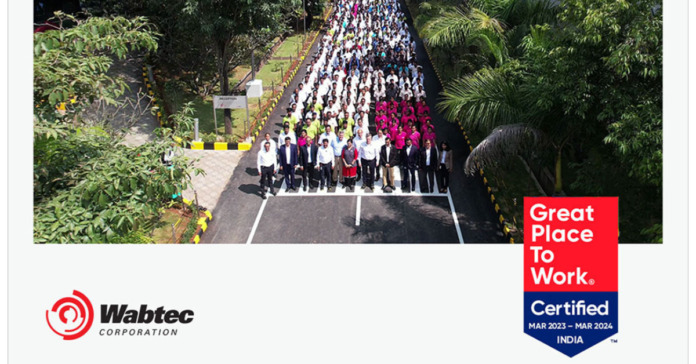
Wabtec Transit India Recognized as a Great Place To Work
Wabtec Transit India Recognized as a Great Place To Work/Team Wabtec

HOSUR, TAMILNADU (Metro Rail News): Wabtec Transit, a subsidiary of Wabtec Corporation, a top technology supplier for the freight and transit rail industries, announced that its three India-based sites in Hosur, Baddi, and Bahadurgarh have received the Great Place to Work certification.


Managing Director of Wabtec Transit, Ajay Mani, expressed his pride in receiving recognition from Great Place to Work for the second time. He believes this acknowledgment reflects the excellent culture, career progression opportunities and growth the company offers, as well as the dynamic market they serve.


Wabtec Transit’s role in the Indian Railways and metro systems 

The Transit business of Wabtec is one of the top providers of subsystems for the Indian Railways and metro systems. The company is experiencing immense growth, with over 1,250 employees working at the three main manufacturing locations and customer sites.The primary facility and administrative office for the Transit business in India is the Hosur plant, where almost all the products in the Transit portfolio are manufactured.


Great Place to Work’s role in evaluating workplace culture

Great Place To Work is a renowned global organization that is considered an authority in workplace culture. It has extensive experience of 30 years in conducting groundbreaking research and collecting data to aid organizations in creating a workplace that is ideal for all employees. Their exclusive platform and For All™ Model provide an extensive evaluation of the experience of each employee, with exceptional workplaces receiving recognition on the Best Workplaces™ List or Great Place To Work Certified.


Wabtec Corporation’s mission to revolutionize transportation 


Wabtec Corporation (NYSE: WAB) has a mission to transform the transportation industry for future generations. The company supplies equipment, systems, digital solutions, and value-added services globally to industries such as freight and transit rail, mining, marine, and industrial markets. With over 150 years of experience in the rail industry, Wabtec aims to establish a zero-emission rail system in the U.S. and globally.


Advertisement1
InnoMetro_2026

Ramakrishna Forging and Titagarh Wagons Consortium Wins Bid for Forged Wheels

0
Indian Railways
Indian Railways/Representational Image

NEW DELHI (Metro Rail News): The consortium of Ramakrishna Forgings and Titagarh Wagons has won the bid to manufacture and supply 80,000 forged wheels annually for 20 years under the “Make in India” project. The successful bidder will manufacture wheels for semi-high-speed and high-speed trains and will be required to produce 80,000 wheels annually after the initial three years.

The consortium’s bid of Rs. 12,226 crore was lower than Bharat Forge’s quote of Rs. 17,875 crore and SAIL’s bid price of Rs. 18,817.5 crore. According to officials, although the expected cost of establishing a production unit is around Rs. 1,000 crores, the anticipated business volume is over Rs. 15,000 crore.

The project aims to reduce dependence on wheel imports, and the railways will purchase nearly 80,000 forged train wheels at Rs. 600 crore per year from the facility. The manufacturer will also be allowed to export forged wheels to other countries after meeting railway requirements.

Advertisement1
InnoMetro_2026

Hitachi Rail Secures $200 Million Contract for Chennai Metro Phase 2 Digital Signalling System

0
Contract Signing- Chennai Metro & Hitachi Rail

CHENNAI (Metro Rail News): On March 15, 2023, Hitachi Rail signed a contract worth INR 1,620 crore (approximately $200 million USD) to deliver digital signalling for Phase 2 of the Chennai Metro Rail Project. The project will see the installation of cutting-edge communication-based train control (CBTC) system combined with Automatic TrainOperation (ATO) technology.

Improved Capacity and Reliability

The CBTC system will enable the train’s traction and braking to be automatically controlled, calculating the optimum speed, and allowing the trains to run at up to 90-second intervals. This will significantly increase the capacity and reliability of the services. Autonomous Train Operation Phase 2 trains will be equipped with ATO technology, allowing them to depart, run at optimum speeds, and brake automatically without needing a driver. This system will improve safety and result in significant maintenance savings. ATO technology will also be used at the depot and for passenger information and display systems.

Installation and Funding

The city of Chennai, Tamil Nadu, will be served by the fourth longest metro system in India, on which the digital signalling system will be installed. Phase 2 of the project will include 119km of line, with 42km underground. The project is being funded by JICA (Japan International Cooperation Agency). The contract will cover the design, supply, installation, manufacture, testing, and commissioning of the signalling, train control, and video management system.

Signalling control/Representational image

Hitachi Rail’s Vision

With its expertise in transportation and technology, Hitachi Rail aims to digitize and optimize all aspects of public transportation. Integrating its advanced metro rail technology into Phase 2 of the Chennai Metro project can enhance capacity and ensure more seamless and dependable commutes for passengers. Hitachi Rail is also a world leader in autonomous and signalling technology and has successfully delivered many autonomous rail projects worldwide.

Advertisement1
InnoMetro_2026

World’s longest railway platform inaugurated at Shree Siddharoodha Swamiji station in Karnataka

0
world's longest railway platform at Shree Siddharoodha Swamiji station in Hubballi, Karnataka/Photo via Twitter
World's longest railway platform at Shree Siddharoodha Swamiji station in Hubballi, Karnataka/Photo via Twitter

KARNATAKA (Metro Rail News): The Prime Minister of India, Narendra Modi, inaugurated the world’s longest railway platform at Shree Siddharoodha Swamiji station in Hubballi, Karnataka, during his visit to the state on March 12th. As part of the Indian Railways’ station remodeling initiative, the railway platform has been constructed with an investment of Rs 20.1 crore. The Union Minister Pralhad Joshi was also present during the inauguration.

longest railway platform

Construction of the Longest Railway Platform:

The construction of the 1.5 km long railway platform at Siddharoodha Swami Railway Station was initiated in February 2021 and completed within a remarkably short period.The station plays a crucial role in Karnataka’s transportation network, linking Bengaluru (Davanagere side), Hosapete (Gadag side), and Vasco-Da-Gama/Belagavi (Londa side). In addition to the five already present platforms, three more platforms have been installed to cater to the expanding demands of the city. Platform No. 8, with a length of 1507 meters, has been registered in the Guinness Book of World Records as the world’s longest railway platform. From this platform, two trains with electric engines will simultaneously depart.

Benefits of the Longest Railway Platform: 

The transportation needs of the Hubballi-Dharwad region will be served by the world’s longest railway platform, and it will improve the operational capacity of the yard as well as enable trains to operate in both directions. The South Western Railway Zone of Indian Railways has achieved a significant feat with the construction of the world’s longest platform, which has earned them a place in the Guinness World Record.

Advertisement1
InnoMetro_2026

Indian Railways Implements New Payment Policy for Contractors to Mitigate Risk

0
Indian Railways
Representational Image

NEW DELHI (Metro Rail News): Union Minister Ashwini Vaishnaw announced on Tuesday said that the Indian Railways has implemented a new policy of paying private contractors within 30 days of invoicing, with the government paying interest if the deadline is missed. This move aims to mitigate the “biggest risk” faced by contractors in government contracts. Vaishnaw stated that Prime Minister Narendra Modi had called for the removal of the most significant risk in government contracts, which they found to be payment risk.

This provision has been implemented in all new tenders and government-funded projects. For years, the government has used a similar provision in contracts for government-funded highway projects taken up by the highways ministry, where interest charged on delayed payments is 3% higher than the bank rate. Vaishnaw remarked that since 2014, the government has focused more on railways, with this emphasis resulting in increased cargo transport by rail after decades.

The railways has identified 70 major bottlenecks and aim to address them within the next two years. To meet the need, the national transporter has ordered 85,000 wagons and 1,200 locomotives, with the aim of adding 1,000 locomotives annually. Vaishnaw expects that by increasing the railways’ carrying capacity, logistics costs will decrease significantly.

Advertisement1
InnoMetro_2026

Chennai Metro signs agreement with Swastik-EquiLavaggi JV for Phase 2 Depot Machinery and Plant

0
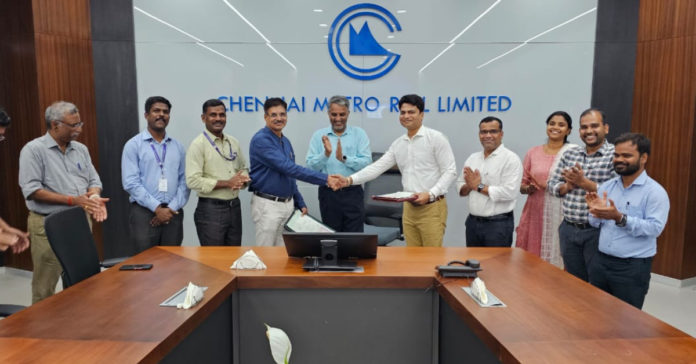
CMRL signing agreement with M/s. SwastikEquiLavaggi Joint Venture /Photo by CMRL
CMRL signing agreement with M/s. Swastik-EquiLavaggi Joint Venture /Photo by CMRL

CHENNAI (Metro Rail News): Chennai Metro signs agreement with Swastik-EquiLavaggi JV for Phase 2 Depot Machinery and Plant Chennai Metro Rail Limited (CMRL) has signed an agreement with M/s. Swastik-EquiLavaggi Joint Venture for the supply of 13 Machinery and Plant at Poonamallee Depot for Corridor-4 of the Phase-II Project. During the signing of the Contract agreement, A.R. Rajendran, Chief General Manager/Rolling Stock for CMRL and Shobhit Saxena, Project Head for Swastik-EquipLavaggi were present alongside Rajesh Chaturvedi, Director (Systems & Operations) CMRL. The contract was awarded for a price of INR.31.80 Cr following a competitive bidding process.

Scope of the Contract

On a turnkey basis, Swastik will undertake the responsibility of designing, manufacturing, supplying, installing, testing, and commissioning machinery and plants at Poonamallee Depot. Additionally, they will also provide training to employees. The works under this contract have been awarded a Notice to Proceed by CMRL with a start date of March 14, 2023.

Machinery and Plants to be supplied

The 13 machinery and plants to be supplied by Swastik-EquiLavaggi include an Automated Train Wash Plant, Wheel Lathe, Wheel Profile Measurement System, Train Lifting Pit Jack, Synchronized Train Lifting Mobile Jack, and Battery Powered Train Shunting Machine. These machinery and plants are essential for railroad trails and subsequent train maintenance.

Delivery and Commissioning

The machinery and plants covered by this contract will be tested on-site and delivered to the Poonamallee Depot of CMRL by July 2024.. They will be commissioned at Poonamallee Depot before the arrival of trains.

The signing of this agreement between CMRL and Swastik-EquiLavaggi JV is a significant milestone in the development of the Chennai Metro Rail Phase-II Project. The new machinery and plants to be supplied will play a significant role in ensuring the safe and efficient operation of the metro rail network.

Advertisement1
InnoMetro_2026