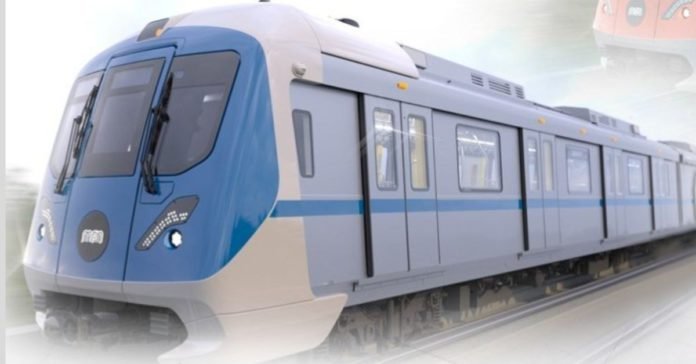
New Delhi: Prime Minister Narendra Modi has flagged-off the Delhi-Faridabad Metro Line that would allow hassle free travel for around two lakh daily commuters between the national capital and the industrial hub in Haryana.
The extension of the Delhi Metro connects Badarpur to Escorts Mujesar in Faridabad.
The total cost of the project from Badarpur to Escorts Mujesar is nearly Rs. 2,500 crore. Out of this, Rs. 1,557 crore was borne by the Haryana Government, the Centre contributed Rs. 537 crore, while the Delhi Metro provided Rs. 400 crore.
All these are elevated and located on either side of the Delhi-Mathura Road (NH-2).
“The nine-station metro corridor which was 95 per cent indigenously built will provide people a safe, affordable, quick, comfortable, reliable, environment-friendly and sustainable transport facility,” a Haryana government spokesperson said.
Haryana Chief Minister ML Khattar, addressing a press conference on Saturday, had thanked the Prime Minister for “gifting” the Metro service which would take the city to “another level of progress” with better connectivity with other NCR towns.
He had also said that the Prime Minister would be announcing the go-ahead for connecting Gurgaon with Faridabad by Metro.
NEW DELHI (Metro Rail News): JICA (Japan International Cooperation Agency ) has announced that India will receive a loan of 300,000 million Japanese Yen (approx. INR 18,750 Crore) for the construction of the Mumbai-Ahmedabad High-Speed Rail (MAHSR) project. The loan, which is the fourth tranch High-speed rail of official development assistance (ODA) from JICA, is the largest amount committed through a single project loan agreement in the agency’s history.
The announcement was made on Wednesday, March 29, after JICA signed an agreement with India. The Japanese agency has been providing ODA loans worth Rs 40,625 crore since 2017, as well as technical assistance like feasibility studies, training in Japan, as well as sending Japanese Shinkansen experts to the NHSRCL, the executing agency of the project.
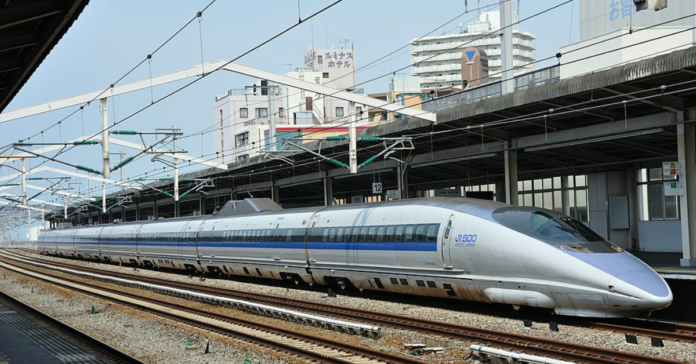
The aim of the MAHSR project is to create a high-frequency mass transportation system between Mumbai and Ahmedabad, using Japan’s Shinkansen technology, generally known as the bullet train. This will increase mobility and regional economic development in India. The project is seen as a symbol of collaboration between Japan and India by JICA India chief representative, Mitsunori.
In addition to the MAHSR project, JICA has also signed an agreement with the Government of India to provide an ODA loan of 98,612 million yen (Rs 5,509 crore) for Phase 1 of the Patna Metro Rail project. With this loan, JICA aims to contribute to the development of urban infrastructure in Patna, the capital of the eastern state of Bihar.
JICA’s continued support for infrastructure development in India through ODA loans and technical assistance is seen as a testament to the strong and longstanding partnership between Japan and India. The MAHSR project and the Patna Metro Rail project are just two examples of this partnership, which is set to continue well into the future.
NAGPUR (Metro Rail News): Negotiating traffic snarls along the already crowded Railway Station and Cotton Market would be a matter of past, as the twin projects of Y-Shape Flyover (Ram Jhula Extension) and New Loha Pul are all set for dedication to people on 1st April 2023 (Saturday). Executed by Maha Metro Nagpur, the two projects would be dedicated by Hon’ble Union Minister Shri Nitin Gadkari and Hon’ble Deputy Chief Minister Shri Devendra Fadanvis in the presence of other local leaders.
The dignitaries would dedicate New Loha Pul first at 5.30 pm, followed by Y-Shape Flyover (Ram Jhula Extension). The two projects have been executed as Deposit Work by Maha Metro Nagpur for the Public Works Department, Government of Maharashtra and as part of Central Road Fund, under the aegis of the Ministry of Road Transport and Highways (MoRTH), Government of India.
Getting a train traffic block for the project from Railway Department was a tough task as the section is one of the busiest, with more than 200 trains passing through it every day. The stretch surrounding Loha Pul is always congested, given its location. The stretch is surrounded by Railway Station, Cotton Market, Temples, 2 Cinema Theatres, Sitabuldi Main Road (which has multiple shops all along) and other Commercial locations.
The New Loha Pul would help decongest traffic on the section of road between Manas Square and Cotton Market. The project includes two boxes under railway tracks which connect Manas Square to Cotton Market. The length of cells under the railway line is 47 meters and are 6 meter wide and 4.5 meter high. Box Pushing Techniques and Rail Cluster Method were adopted to execute the project.
Similar to Loha Pul, the traffic congestion at Ram Jhula is equally acute. In fact, the entire stretch from Mayo Hospital (Indira Gandhi Government Medical College and Hospital) to LIC and RBI Square – along Kingsway – is bustling with traffic almost through the day. The entire stretch has multiple locations and establishments, which attract a huge footfall.
The stretch is lined up with a Railway Station, DRM Office, Mayo Hospital, Reserve Bank of India, Kasturchand Park, Territorial Army Battalion 118, PSU Banks, Schools & Colleges, besides many commercial establishments, government offices, besides residential localities.
Considering the complexity of the traffic, a Y-Shape Flyover was constructed, which serves as an extension of the existing Ram Jhula. It starts from Ram Jhula and breaks into two streams near Sri Mohini Complex – one landing near RBI Square and the other near LIC Square. The total length of the flyover is 935 meters.
After it is dedicated to the citizens, the traffic arrangement on the Y-Shape Flyover would be as follows:
• Traffic movement would be one way on this Y-Shape Flyover – vehicular movement would be from Ram Jhula towards RBI and LIC Chowk.
• Commuters coming from Central Avenue to RBI or LIC Chowk will have to go through the flyover.
• The flyover splits in two directions near Sri Mohini Complex.
• One route leads to RBI Square, and the other to LIC Square.
• Vehicles going from RBI or LIC Square to Central Avenue can’t use Flyover and have to drive through the existing road.
• Vehicles going from RBI or LIC Square to the railway station will have to take a right turn at Jai Stambha Square, taking the road instead of crossing Ram Jhula.
• Those coming from Central Avenue and wishing to reach the railway station will have to proceed through the ramp on the left.
With starting of these two sections, the traffic movement on the two stretches would be much smoother and vehicular movement in the two stretches with high volumes would be much easier. The successful execution of these projects has once again underlined Maha Metro’s commitment to the city.
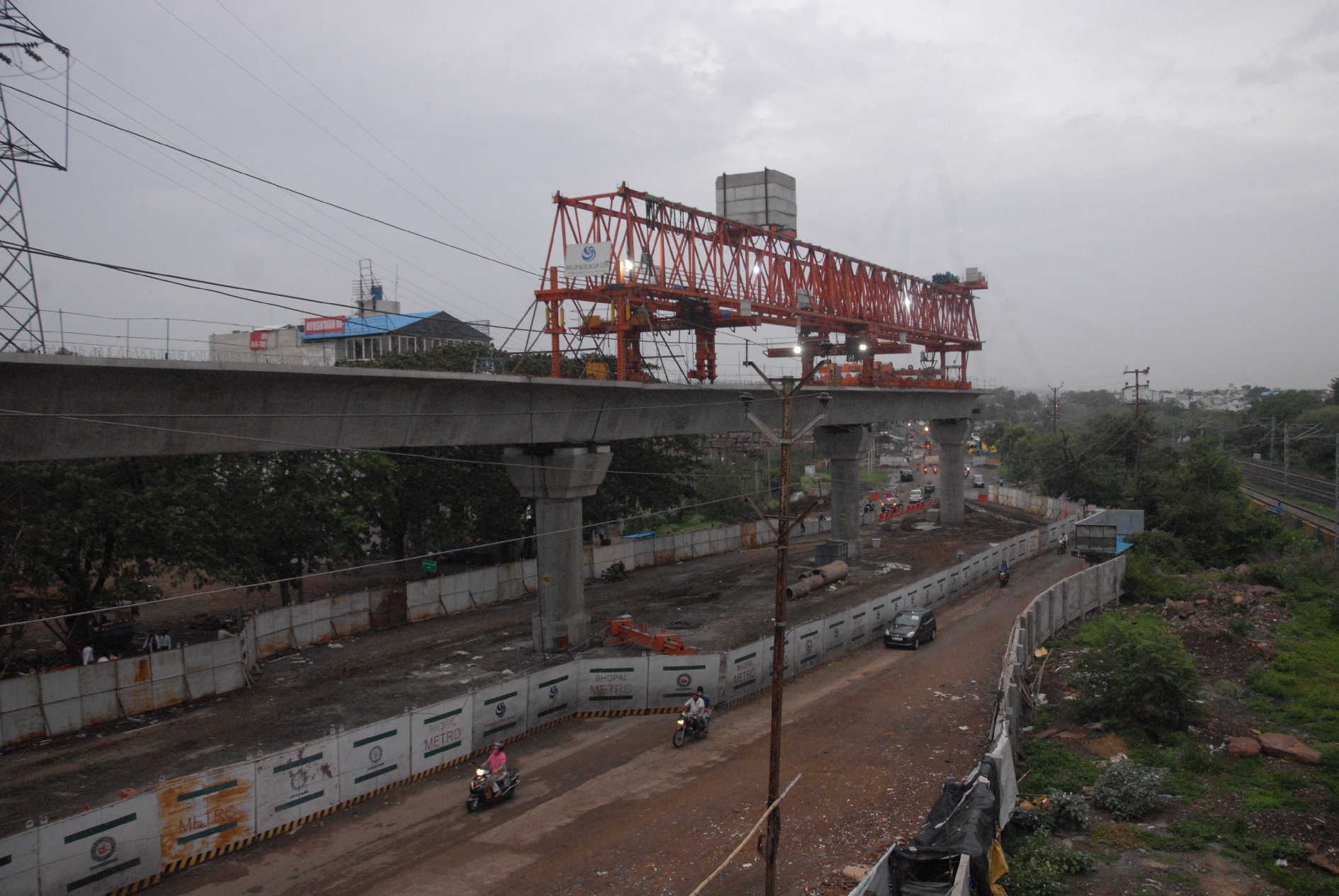
The Bhopal Metro project, also known as the Bhoj Metro, is a mass rapid transit system (MRTS) currently under construction in Bhopal, the capital of Madhya Pradesh state. The project, which is being built by the Madhya Pradesh Metro Rail Co Limited (MPMRCL), will consist of two lines and 28 stations.
The project’s master plan, prepared by Rohit Associates Cities & Rails Pvt.Ltd outlines a total of six metro lines, with two lines (line 2 & 5) selected for implementation in Phase 1. The Phase 1 project’s Detailed Project Report (DPR) was approved by the state government in December 2016 and by the Central Government’s cabinet in October 2018. The project’s priority corridor is expected to be completed and opened in March 2024, beyond its original August 2023 deadline, while Phase 1 is slated for completion in 2027.
The Bhopal Metro project is set to be partly financed by a loan from the Asian Development Bank (ADB), as well as a 400 million euro loan from the European Investment Bank (EIB), which was signed on December 20, 2019. Construction work on Phase 1 began in January 2019 and is expected to be completed in 2026. The project’s foundation stone was laid by the state’s Chief Minister in September 2019, and it is nicknamed Bhoj Metro.
The system specifications for the Bhopal Metro include a top speed of 80 kmph, an average speed of 34 kmph, a track gauge of standard gauge – 1435 mm, electrification with 750 V DC Third Rail, and signalling through Communications-based Train Control (CBTC).
Once completed, the Bhopal Metro is expected to span 77.13 km, with Phase 1 consisting of 21.65 km of approved lines. The estimated cost of the project is Rs. 6941.40 cr, with an estimated daily ridership of 2.20 lakh/day (2027).
Alstom Transport India has officially started production of metro trains for Bhopal and Indore Metro at its manufacturing facility in Savli, Gujarat, on March 13, 2023
Route Map for Phase 1 of Bhopal Metro:
Route Map of Bhopal Metro phase 1
The map shows the official line colours. The locations of stations are subject to change.
Phase 1 of the Bhopal Metro project includes two approved lines: Line-2 (Purple Line) and Line-5 (Red Line). Line-2 spans 14.99 km, with 16 stations between Karond Circle and AIIMS. It is an elevated and underground line, with 6.225 km currently under construction between AIIMS and Subhash Nagar. Line-5 spans 12.88 km and consists of 13 elevated stations between Bhadbhada Square and Ratnagiri Tiraha. Both lines have their depot at the Subhash Nagar Underpass (Jinsi).
Proposed Lines for Bhopal Metro:
Green Line (Line-1): Bairgarh to Awadhpuri
Number of stations: 24
Station names: Bairagarh, Bairagarh Stadium, Hemu Kalani, Hala Pura Bus Stand, Lal Ghati Square, Idgarh Hills, Collectorate, Cambridge School MG Hospital, Curfew Wali Mata Mandir, Kamala Park, Polytechnic Square, Roshanpura Square, TT Nagar Stadium, Mata Mandir, Jain Mandir, Sharda Mandir, Nutan College, Mansarovar Complex (Habibganj Station), Khushabhau Thakrey ISBT, Anna Nagar, Carmel Convent, Piplani Gurdwara Square, Mahatma Gandhi Square, Awadhpuri.
Blue Line (Line-3): Bhauri Bypass (NH12 Junction) to Vasant Kunj Bus Stop
Number of stations: 24
Station names: Bhauri Bypass/NH12 Junction, Peepainer Village (Aerocity), Airport Road, Gandhinagar, Airport Tiraha, Manubhan Tekri, Lalghati Square, Idgarh Hills, Collectorate, Cambridge School MG Hospital, Curfew Wali Mata Mandir, Kamala Park, Polytechnic Square, Roshanpura Square, TT Nagar Stadium, Mata Mandir, Jain Mandir, Sharda Mandir, Nutan College, Mansarovar Complex (Habibganj Station), Habibganj Naka, 10 No. Square, Sai Board, Vasant Kunj Bus Stop.
Yellow Line (Line-4): Ashok Garden Auto Stand to Mother Teresa School
Number of stations: 21
Station names: Ashok Garden Auto Stand, Krishna Campus, Railway Station, Jumerati Road, Curfew Wali Mata Mandir, Kamala Park, Polytechnic Square, Roshanpura Square, TT Nagar Stadium, Mata Mandir, MACT Square, Panchsheel Nagar Bus Stop, Ekant Park, Sahapura Lake, Bhoj University (Chunnabhatti), IIPM Sarvadham, Mansarovar School, CI Height Nayapura Bus Stop, Sanskar Marriage Garden, Bhairagarh Chichali, Mother Teresa School.
Brown Line (Line-6): Habibganj Naka to Mandideep
Number of stations: 12
Station names: Habibganj Naka, RRL, BU University, Bagsewania Bus Stop, Ashima The Lake City Mall, Sri Ram Colony, C21 Mall, Scope College (Bharopur), Regional 1 / NH-12, Harigangar Nagar, Regional 2, Mandideep.
To view the latest notices inviting tenders for the Bhopal Metro, visit MPMRCL’s website. Refer to the news and construction page for further details on these notices, including bidders, awarded tenders, and contracts.
The following contractors are involved in the Bhopal Metro project:
Rohit Associates Cities & Rails Pvt. Ltd. created the Detailed Project Report (DPR).
DB Engineering & Consulting GmbH – Geodata Engineering S.p.A. – Louis Berger Group JV is the General Consultant (GC).
RITES – Ardanuy Ingeniería JV is the Detailed Design Consultant (DDC) for the Subhash Nagar Underpass (Jinsi) Depot.
Dilip Buildcon Ltd. is responsible for Package-01, which involves constructing a 6.225 km viaduct from AIIMS to Subhash Nagar, including an entry/exit viaduct to the depot.
URC Construction won the BH-02 contract to construct 8 elevated stations on Line-2 between AIIMS and Subhash Nagar.
KEC – SAM JV is the lowest bidder for BH-06, which involves constructing the Subhash Nagar Depot (carshed).
Larsen & Toubro (L&T) is the lowest bidder for BH-07, which involves constructing the ballastless track of standard gauge at elevated and underground sections along with ballasted and ballastless track in the depot.
Gulermak – Kalpataru JV is the lowest bidder for BH-08, which involves electrification, including 750 V DC 3rd rail, SCADA, power supply, RSS, TSS, and ASS.
Amit Mandloi Contractor is the lowest bidder for BH-11, which involves commissioning a 3X8 MVA 33 11kV substation and 33kV 11kV line work.
Alstom Transport is the lowest bidder for BH-IN-02, which involves the supply of 156 rolling stock cars for the Bhopal and Indore metros, including signalling and train control and telecommunication systems.
Jindal Steel & Power Ltd (JSPL) won the contracts for BH-IN-03A, which involves the supply of 1305 MT UIC 60_60 E1 Profile 880 Grade Rails, and BH-IN-03B, which involves the supply of 8120 MT Head Hardened Rails.
Vossloh Cogifer is responsible for BH-IN-03C, which involves the design, manufacturing, and supply of standard gauge 60 E1 UIC 60 turnouts.
HYT Engineering Company is the lowest bidder for BH-IN-06A, which Design, manufacture, supply, testing and commissioning of two numbers of Automatic CNC Underfloor Wheel Lathe & four numbers of Electric Shunter for Depot(s)
Premier India Agencies submitted the only bid for BH-IN-06B, which involves Two sets RRV and Shunter.
Two bids were received from Nissan Clean India and Swastik Overseas for BH-IN-06C, which involves an automatic train wash plant for depots at Bhopal Metro and Indore Metro Rail projects.
STAHL Cransystems India is the lowest bidder for BH-IN-06D, which involves two sets of pit jacks, two sets of mobile jacks, and ten numbers of bogie turn tables.
State Bank of India (SBI) submitted the only bid for BH-IN-07, which involves an open loop EMV NCMC card and QR code-based automatic fare collection AFC system based on the PPP revenue model for Bhopal and Indore.
Otis Elevator Company (India) Ltd. is the lowest bidder for BH-IN-10A, which involves heavy-duty machine room-less gearless lifts and heavy.
Indore Metro
Indore Metro is a mass rapid transit system currently under construction in Indore, Madhya Pradesh. It is being developed by the Madhya Pradesh Metro Rail Co Limited (MPMRCL). It is expected to cover 94 kms with four metro lines and two spurs, as per the master plan designed by Rohit Associates Cities & Rails Pvt. Ltd.
Phase 1 of Indore Metro will cover a distance of 33.53 kms and includes the implementation of the Yellow Line / Line-3, which is a ring line. The state government approved the Detailed Project Report (DPR) for Phase 1 in December 2016 and by the Central Government’s cabinet in October 2018.
The Priority Corridor of Indore Metro is slated to be completed and opened to the public in August 2024, with Phase 1 expected to be fully completed in 2027. Originally, the project was set to be funded by the Japan International Cooperation Agency (JICA). Still, it will now be financed by the Asian Development Bank (ADB) and the New Development Bank (NDB).
In February 2019, construction work on the Indore Metro project commenced after the Phase 1 foundation stone was laid by the state’s Chief Minister in September 2019.
Indore Metro: System Specifications and Phase 1 Line Details
The Indore Metro is an upcoming mass rapid transit system (MRTS) that will serve the city of Indore in Madhya Pradesh state, India. Here are some important specifications and details about the project:
System Specifications:
Top Speed: 80 kmph
Average Speed: 34 kmph
Track Gauge: Standard Gauge – 1435 mm
Electrification: 750 V DC Third Rail
Signalling: Communications-based Train Control (CBTC)
Project Status:
Operational: 0 km
Under Construction: 16.217 km (Gandhi Nagar – Mumtaj Bag Colony)
Approved: 15.1313 km
Proposed: 57.18 km
Estimated Cost: Rs.7500.80 cr
Estimated Daily Ridership: 2.50 lakh/day (2027)
Phase 1 Line Details:
Line Name: Yellow Line (Line-3)
Type: Elevated & Underground
Length: 33.53 km
Number of Stations: 30
Station Names: Bhawarsala Square, MR 10 Road, ISBT / MR 10 Flyover, Chandragupta Square, Hira Nagar, Bapat Square, Meghdoot Garden, Vijay Nagar Square, Radisson Square, Mumtaj Bag Colony, Bengali Square, Patrakar Coloy, Palasia Square, High Court / Hotel Residency, Indore Railway Station, Rajwada Palace, Maulana Azad Marg, Bada Ganpati, Ramchandra Nagar Square, Kalani Nagar, BSF, Airport, Gandhi Nagar Nanod, Super Corridor 6, Super Corridor 5, Super Corridor 4, Super Corridor 3, Super Corridor 2, and Super Corridor 1
The Yellow Line, also known as Line-3, is a ring line that will cover 30 stations along a length of 33.53 km. The line will be a combination of elevated and underground sections, with a depot located at Super Corridor. Construction work for the line started in February 2019 and is expected to be completed in 2027. As of now, 16.217 km of the line between Gandhi Nagar and Mumtaj Bag Colony is under construction.
Station Names: Sri Aurobindo Hospital, Bhawarsala Square, Sanwer Industrial Area, Ganesh Sham Colony, Banganga, Laxmibai Nagar Square, Mara Mata Square, Imli Bazar Chowk, Rajwada Palace, Collectorate Office, Indore Icchapur Rail Crossing, Tower Square, Bhawarkuan Square, Holkar University/IT Park, Rani Bagh, Limbodi, Ralamandal, Indore Bypass 1
Line-1B: Sri Aurobindo Hospital – Collectorate office – Regional Park (1B)
Number of Stations: 13
Station Names: Sri Aurobindo Hospital, Bhawarsala Square, Sanwer Industrial Area, Ganesh Sham Colony, Banganga, Laxmibai Nagar Square, Mara Mata Square, Imli Bazar Chowk, Rajwada Palace, Collectorate Office, Central Excise, Choithram, Regional Park
Line-2: Dewas Naka – Juni Indore – MHOW
Number of Stations: 28
Station Names: Dewas Naka, Niranjanpur Circle, Aranya Nagar, IDA Park, Vijay Nagar Square, Bhamori, Patni Pura/St Joseph Church, Malwa Mill Square, Raj Kumar Bridge, Indore Railway Station, Juni Indore, Collectorate Office, Mhow Naka, Dusshera Maidan, Annapuran Temple, Narmada Public School (Ring Road), Rajendra Nagar, Reti Mandi, IPS Academy, Shramik Colony, Indore Bypass-2, Pigdambar, Umariya, Maa Vaishanodevi Hospital, Haranyakheri / IIT Indore, Chinar Residency, MHOW
Line-4: MR9 – Indore Railway Station – Indore Bypass 4
Number of Stations: 16
Station Names: MR9, Convention Center, Lahiya Colony, Chandragupta Square, Sukliya, Nanda Nagar Main Road, Mazdoor Maidan, Rajkumar Bridge, Indore Railway Station, Chhavani, Sri Agrasen Maharaj Chowk, Navlakha Bus Station, Teen Imli, Babul Nagar, Musakhedi, Indore Bypass 4
The contractors for various aspects of the Indore Metro project are listed below:
DB Engineering & Consulting GmbH, Geodata Engineering S.p.A., and Louis Berger Group JV are the General Consultants (GC).
RITES – Ardanuy Ingeniería JV is the Detailed Design Consultant (DDC) for Line-3’s Depot.
Dilip Buildcon Ltd. is responsible for Package-02A/01, which involves constructing a 5.29 km viaduct between ISBT/MR10 Flyover and Mumtaj Bag Colony.
Rail Vikas Nigam Ltd (RVNL) won the bid for IN-02, which involves constructing 7 stations between ISBT/MR10 Flyover and Radisson Square. RVNL is also responsible for IN-03, which involves constructing a 10.927 km section with 9 elevated stations between MR10 Road Station and Gandhi Nagar Station on the Super Corridor.
KSM Bashir Mohammad and Sons won the bid for IN-07, which involves constructing the Gandhi Nagar Depot.
Texmaco Rail – ISC Projects JV is responsible for IN-08, which involves constructing the Ballastless Track of Standard Gauge for the underground corridor and Gandhi Nagar Depot.
Kalpataru Power Transmission won the bid for IN-09, which involves the electrification of the 750 V DC 3rd Rail, SCADA, Power Supply, RSS, TSS & ASS.
Alstom Transport is responsible for BH-IN-02, which involves supplying 156 Rolling Stock Cars for the Bhopal & Indore metros, including Signaling and Train Control and Telecommunication Systems.
Jindal Steel & Power Ltd (JSPL) for the supply of 8425 MT of Head Hardened Rails under BH-IN-03B
Vossloh Cogifer for the design, manufacturing, and supply of Standard Gauge 60 E1 UIC 60 Turnouts under BH-IN-03C
HYT Engineering Company is the lowest bidder for the Design, manufacture, supply, testing and commissioning two numbers of Automatic CNC Underfloor Wheel Lathe & four numbers Electric Shunter for Depot(s) under BH-IN-06A
Premier India Agencies as the only bidder for the supply of Two sets RRV and Shunter under BH-IN-06B
Two bids have been received for the supply of an Automatic Train Wash Plant for Depots at Bhopal Metro and Indore Metro Rail projects from Nissan Clean India and Swastik Overseas under BH-IN-06C
STAHL Cransystems India as the lowest bidder for the supply of two sets of Pit Jack, two sets of Mobile Jack, and ten Bogie Turn Tables under BH-IN-06D
State Bank of India (SBI) as the only bidder for an Open Loop EMV NCMC card and QR code-based Automatic Fare Collection (AFC) System based on PPP Revenue Model for Bhopal and Indore under BH-IN-07
Otis Elevator Company (India) Ltd. as the lowest bidder for the supply of Heavy Duty Machine Room Less Gear Less Lifts and Heavy Duty Escalators under BH-IN-10A.
Indian Railways is among world’s largest transportation and logistics networks. The Railways transports 23 million passengers every day in 12,000 passenger trains and 3 million tonnes of freight per day in 7000 freight trains from its 8000 stations across India. It transports around 36% of overall transit in the transport sector.
Although being the national transporter, the women participation in the development and usage of this vast transportation network has been at a comparatively lower rate compared to other sectors, which is an issue that should be addressed. The female participation as consumers of transportation facilities must be improved for establishing railways as a gender-equitable transport system. Women are underrepresented in the transportation sector in general, and in Indian Railways in particular, because the infrastructure is not equipped for female personnel or female passengers.
Seeing in totality, it seems that the railways in India has never been planned with keeping the needs of women in mind. Only a few reserved coaches, a few separate restroom blocks at stations, and certain special waiting areas at larger stations are normally planned for female passengers. According to the International Labor Organization’s Transport Policy Brief 2013, occupations in the transportation sector are highly gendered and uneven, as is access to transportation services. As a result, when it comes to transportation planning and the quest of good work, women’s voices are all too often ignored.
Male and female commuters are affected differently by public transportation conditions. Women suffer more when public transportation is in disrepair. For example, if public transportation is unreliable or prohibitively expensive, women may pass up better employment prospects away from home in favour of a low-paying local job closer to home. As a result, a good transportation system (that is both economical and convenient) is critical not just for women’s practical needs, such as travelling to school/college or the market, but also for offering equitable chances for women’s social and economic empowerment.
Concern
Smt. Surekha Yadav becomes Vande Bharat’s first female locomotive pilot.
Despite the fact that Indian Railways has been pursuing all of the efforts and plans introduced by the Government for a more active participation of women in railways as passenger and employee for its development, there are only 100,000 female employees out of a total workforce of 1.3 million, (nearly 8%) of the entire workforce. However, for a managerial position, this ratio is around 13% which is encouraging. Therefore, we can say that labour participation at all levels in Indian Railways needs significant attention.
Major Issues
As previously indicated, the situation for female employees in railways is not much different. Every day at work, women staff encounter a number of problems. There are very few stations that offer separate bathroom for female staff. If female staff are stationed at level crossing gates, for example, there is likely to be no nearby bathroom facility available. Because lower-level employees lack basic workplace amenities, it is likely that relatively few would continue with the job or strive to learn; most will prefer a desk job in a controlled setting where obstacles are less and conditions are better.
In a situation where fewer women choose to work in the field, there are chances of lesser vertical up-gradation of women employees to achieve decision-making positions, this further creates a lack of interest towards lesser investment in basic amenities. The employment as aeroplane pilots and air hostesses is popular among young females in the country, while the number of female locomotive pilots and guards is far lower in railways. Additionally, despite the fact that there are a number of female ticket checkers, very few prefer to work in long-distance trains. These are some of the prominent issues that railway is facing. The reason can be attributed to lack of decent restrooms of female running staff, as well as the difficulties associated with long-distance train operations and journeys.
Need for active woman participation
Transport acts as a pivot, connecting individuals to their workplaces, educational institutions, and social activities. Everyone uses it. As a result, a wide and elaborative perspective is required to develop and guide the transportation sector at every stage, ensuring that the services it provides are accessible to all.
According to International Labor Organization, transport is one of the several areas that has traditionally been seen as having ‘no place for women’. The Indian Railways is no exception. Female participation is quite low in all departments of Indian Railways. According to the 2011 census, India has 940 girls for every 1000 males; however, the working population in India tells a different tale.
As per a recent NSSO labour force survey, which uses the usual status approach, the estimated female work population ratio (in percentage) in the country in 2009-10 and 2011-12 was 26.6% and 23.7%, respectively. According to the NITI Ayog report, just 27 females per 1000 work in transport, compared to 117 males per 1000 (in urban population) (State Statistics/Labor Force Participation Rates) in storage and communication.
This gap persists despite various government initiatives and steps to increase the female participation rate, such as the enactment of the Maternity Benefit (Amendment) Act, 2017, which increases paid maternity leave from 12 weeks to 26 weeks and makes a provision for mandatory crèche facility in establishments with 50 or more female employees, and the issuance of an advisory to states under the Factories Act, 1948, to allow women workers in night shifts with adequate severance pay.
However, despite the fact that the Minimum Wage Act of 1948 and the Equal Remuneration Act of 1976 have been in place for a long time to ensure equal wages for men and women and equal remuneration for men and women for the same or similar work without discrimination, female participation in the workforce has remained stagnant.
Situation in other countries
Women’s engagement in other countries is also low. Female labour force participation (aged 15 and up) is 48.7% worldwide as of 2018, lesser than 51.2% in 1990. Nonetheless, public transportation is a sector dominated by male working culture, with females making up about 10% to 30% of the workforce in large countries. JR-East is one of Japan’s six major passenger rail companies.
It is crucial to highlight that most countries are undertaking various initiatives to enhance female participation in the transportation sector. Women in Transport, an all-party organisation in the United Kingdom, is active in this subject, holding regular meetings and debates to adopt techniques for increasing female participation.
In Europe, the same types of organisations, UITP1 and ETF2, are trying to boost the share of female employees in transportation businesses from 17.5% to at least 25% by 2020 and 40% by 2035. This demonstrates that the value of female participation in the transportation sector is recognised in all countries, and efforts are being made to promote it at all levels.
Conclusion
Under Vision 2020, Indian Railways is regarded as a “Vehicle of Inclusive Growth and National Integration” (Indian Railways: Vision 2020). Indian Railways committed in the Citizen Charter issued in March 2018 that providing passenger facilities and convenience in travel is one of the most significant aims of Indian Railways, in terms of both corporate ethics and social commitments. The first mission statement in this charter is safe and dependable services, and the final is essential facilities for females, senior citizens, and disabled persons for their convenience.
The Citizen Charter expresses Indian Railways’ commitment to female passengers, and there is now a need to develop gender-friendly transportation. The first, and most crucial, step in achieving this aim may be to hire more female employees at various stations and on trains.
A lady travelling alone will feel more secure with a female ticket checker and station master. It instils confidence in female candidates to observe that women operate in night shifts on Indian Railways. If Indian Railways wishes to achieve inclusive development, it is critical that ladies be included in all services and future planning. Whether it is station construction projects or new lines for high-speed trains, a female perspective will enhance social and strategic development.
It is worth noting that, with 14 lakh employees, Indian Railways would set an example for other sectors of our economy if it takes initiatives to enhance female involvement at all levels. Indian Railways is an economic and social change career. This position should be broadened by opening doors for females and allowing female employees wings to reach the top and provide quality services to clients.
The desired steps towards expanding female labour-force participation should include both infrastructure and regulatory adjustments.
Addressing the issue of basic amenities: It is also critical to address the demands of urban women, including their everyday needs and other gender-related measures. To encourage women to pursue non-traditional careers, organisations must offer a welcoming environment. The most crucial factor in making this happen is infrastructure. Priority should be given to providing basic amenities such as separate toilet blocks in all establishments. The second barrier that prevents females from taking on the roles of driver/guard or ticket checker on long-distance trains is a lack of restroom facilities.
Monetary Encouragements: It has been observed that monetary incentives can serve as an incentive to embark on difficult jobs. Hence, if a well-paying railway position becomes available for eligible ladies, they will be encouraged to pursue it over a low-paying career. Only monetary rewards can enhance the allure of physically difficult work. If additional benefits are provided to female employees, it is likely that an increasing number of young women will apply for these positions.
Reservation on managerial positions: The presence of women at all levels of public transportation authorities has the potential to mainstream gender inside the organisation by bringing women’s issues to the forefront of its services and infrastructure. As a result, it is crucial that an increasing number of female officers join railway services and remain committed once the journey begins. This can be accomplished by providing reservations for top management positions.
Publicity and glamorization: Young people tend to gravitate towards careers that are within their financial means or have a certain allure, such as that of air hostesses or airline pilots. Careers in Indian Railways are well-paid and popular among young students, but the actual job-related hardships and rewards are not commonly understood.
As a result, the service must be widely marketed, and female students must be made aware of both the problems and the benefits associated with it. The variety of employment profiles must be marketed and glamorised, with role models approaching training schools.
Women Committees: The Indian Railway Board recently issued instructions requiring inadequacies in separate toilet blocks and changing rooms to be corrected on a priority basis in all zones, with a deadline set to finish all such works. The Railway Board has also committed in the employee charter to address the concerns of female employees.
Although the Railway Board has issued directions, its compliance must be regularly reviewed because it is not a priority item for field units. That is why, in each zone, a high-powered committee consisting of officials from the relevant departments is required to organise and assure the availability of basic facilities for female employees. These committees can then be used to establish the essential amenities in various cities through collaboration with various women’s groups to address gender concerns in public transportation.
Organisational Will: There is a need for “Organisational Will” to incorporate gender sensitivity into Indian Railways’ vision and make it a part of all training programmes. While female employees should not be considered a special case, it is imperative that women receive equal attention in addressing their personal needs, and appropriate provisions should be made to execute this in all units.
HARYANA (Metro Rail News): Indian Railways has achieved a major milestone by completing the electrification of the entire railway network in Haryana state. The existing broad gauge network of Haryana, which spans 1,701 route kilometers, is now 100% electrified. The announcement was made by Union Railways Minister Ashwini Vaishnaw on Twitter, who congratulated the people of Haryana on their achievement.
Hon’ble Prime Minister Shri Narendra Modi, also took to Twitter to congratulate the state of Haryana on achieving 100% rail electrification. He emphasized that this accomplishment would bring many benefits to the state.
According to the press release, “Haryana’s existing Broad Gauge network, covering a distance of 1,701 Route Kilometers, has been fully electrified, resulting in several benefits such as reduced line haul cost (about 2.5 times lower), increased capacity for hauling heavier loads, improved sectional capacity, and reduced operating and maintenance cost for electric locomotives. Furthermore, electrification has also made transportation more energy-efficient and eco-friendly, leading to a reduction in the country’s dependence on imported crude oil and foreign exchange savings.”
Haryana state’s territory falls under the jurisdiction of the Northern, North Central, and North Western Railways. Some of the major railway stations in Haryana are Panipat, Ambala, Kurukshetra, Gurgaon, Hisar Junction, Rewari Junction, Rohtak Junction, and Bhiwani. These railway stations offer convenient connectivity to various regions of the state and other major cities in the country. Also, several prestigious trains pass through Haryana state, including the Kalka Shatabdi Express, Kalka Mail, Himalayan Queen, Paschim Express, Golden Temple Mail, and Kalinga Utkal Express. These trains provide easy access to various parts of the state, making travel more convenient for passengers.
On the whole, the completion of the electrification of the railway network in Haryana state is a major achievement that will have numerous benefits for the state and its people. The move will provide a more energy-efficient and eco-friendly mode of transportation while saving on costs and reducing dependence on imported crude oil.
TRICHY (Metro Rail News): The Trichy Corporation has taken a major step towards improving the city’s public transportation infrastructure by identifying three high-demand corridors for a proposed metro rail network. These corridors, which span a total of 68 km, have been selected based on passenger per hour per direction (PPHPD) data and will serve as a master plan for the proposed Trichy metro.
The Comprehensive Mobility Plan (CMP) was created with the help of a Bengaluru-based consultant and is designed to serve as a long-term vision document in order to strengthen public transport infrastructure and non-motorised modes in the city. To prepare the plan, Consultants analyzed a population of 1.47 million by studying 65 wards in the city, Lalgudi and Thuvakudi municipalities, and four town panchayats, and the plan was based on 20 types of data collection and surveys conducted in an 803 sq. km area.
The proposed three metro rail networks will be integrated at the Central bus stand, railway junction, and Panchapur IBT. These corridors will be implemented in phases, and the type of metro network to be used, either Metro Lite or Metro Neo, will depend on the city’s passenger capacity.
The proposed Routes:
1. Samayapuram to Vayalur: Route One of the Proposed Trichy Metro Network will cover a distance of 18.7 km, which will connect the northern suburbs of Samayapuram to Vayalur in the west. The route will pass through Srirangam and Thillai Nagar.
2. Thuvakudi to Panjapur: Longest Route Two of Trichy Metro Network With a length of 26 km, will connect Thuvakudi to Panjapur, passing through the Central bus stand. This route will be the longest of the three.
3. Trichy Railway Junction to Panjapur: Route Three of Trichy Metro Network will cover a distance of 23.3 km, connecting Trichy railway junction to Panjapur via the international airport and semi-ring road. This route will pass through some major transportation hubs and serve as a key component of the proposed metro network in Trichy.
The Trichy Corporation has announced that they will prepare an alternative analysis report to serve as the basis for the detailed project report (DPR) for the proposed Trichy metro project. This is a promising development for the city, which is in dire need of an efficient and reliable public transportation system. The proposed metro rail network is expected to significantly ease traffic congestion and improve the quality of life for Trichy’s residents.
NEW DELHI (Metro Rail News): Indian Railways has issued a letter of award to the Russian major JSC Metrowagonmash-Mytischi (TMH) to manufacture 120 Vande Bharat trains with Sleeper coaches at Latur. The Railway Stores Executive Director stated that with the issuance of the LOA, the contract stands concluded. With a quoted price of Rs 120 crore per train, TMH-RVNL secured the position of the lowest bidder for the manufacturing of Vande Bharat trains with Sleeper coaches, while Titagarh-BHEL became the second-lowest bidder by quoting nearly Rs 140 crore per train.
Presently, the operational Vande Bharat trains are equipped with seating arrangements, while the upcoming ones will include Sleeper coaches comprising one First AC, three Second AC, and eleven Third AC coaches. The front and rear side of the train will feature an ergonomically designed driver trailer coach, which will be a Divyang-friendly facility.
The consortium of Titagarh-BHEL, was also asked to lower the price as a counteroffer. According to sources, both bidders have accepted the offer and will soon communicate with the Railways.
Now, as part of the Vande Bharat project, TMH-RVNL is required to submit a performance guarantee bond of Rs 200 crore, while Titagarh-BHEL must submit a bond of Rs 160 crore to the Railways. The project has a total worth of Rs 50,000 crore and a maintenance provision of 35 years.
CHENNAI (Metro Rail News): Chennai Metro Rail Limited (CMRL) is set to install Platform Screen Doors (PSD) at all stations of its phase 2 project to ensure passenger safety during Driverless Train Operation. The move comes as a part of CMRL’s commitment to providing a world-class experience for its commuters. The PSDs not only provide additional safety to passengers but also improve air conditioning at underground stations by preventing cool air from escaping into the tunnels.
Thiru Rajesh Chaturvedi, the Director (Systems and Operations) of CMRL, has announced that the contract for the installation of PSDs on Corridor 4 of phase 2 has been awarded to M/s Zhuzhou CRRC Times Electric Co. Ltd. for INR 100 Crores. The work is being funded by the New Development Bank. The installation will include half-height PSDs for 18 elevated stations from Poonamalle to Kodambakkam Powerhouse and full-height PSDs for nine underground stations from Lighthouse to Kodambakkam.
The PSDs will be operated automatically by the driverless signaling system of Corridor 4. The contracts for the remaining corridors 3 and 5 are also in the process of finalization. CMRL’s decision to install PSDs at all stations of phase 2 shows its dedication to ensuring the safety of its commuters. The PSDs not only prevent accidents but also offer a more comfortable and efficient travel experience.
In conclusion, CMRL’s decision to install PSDs at all stations of phase 2 is a crucial step towards ensuring passenger safety and providing a world-class travel experience. With the installation of PSDs, CMRL aims to offer its commuters a safe, comfortable, and efficient mode of transport.
Operation Control Center being developed at Aarey Car Depot, Mumbai Metro line-3/ Image via Twitter
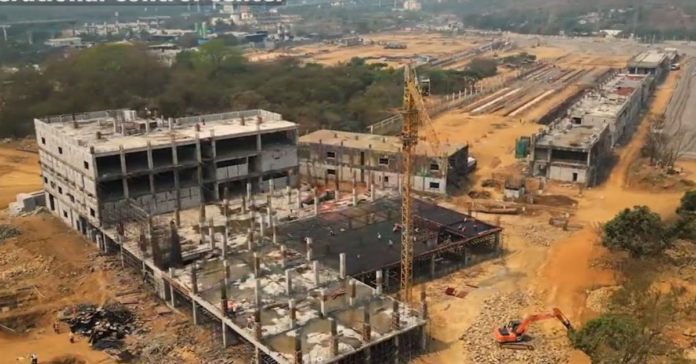
MUMBAI (Metro Rail News): Mumbai’s Aarey car depot, which is a crucial part of the Mumbai Metro Line-3, is making good progress. The MMRC (Mumbai Metro Rail Corporation), which is overseeing the project, has said that work on the car depot is 54% complete, and the project is expected to be completed on schedule. The depot has a vital role in the functioning of the Mumbai Metro Line-3, and the MMRC is keen to ensure that it is completed on time.
Workshop & Maintenance building / Image from Twitter
The Aarey car depot will play a significant role in the Mumbai Metro Line-3’s operations, providing crucial rolling stock cleaning facilities. There will also be stabling lines for 31 trains of eight coaches each, as well as an Operation Control Centre (OCC) to manage and control train operations. A total of 29 stabling lines are being developed. The OCC is a top priority, and work is underway to ensure that it is up and running as soon as possible.
Aarey car depot’s work is in progress/Image from Twitter
In addition, work on other aspects of the project, such as civil structural work for a workshop and maintenance building, mechanical engineering and plumbing, and the subterranean water tank, is also progressing well. The Aarey Metro Station, which will provide connectivity to the JVLR and Speez Station of Line 6, is also shaping up, with 15% of the work already completed. Despite the challenges, the MMRC is confident that the project will be completed on schedule, and Mumbai commuters can look forward to a more efficient and convenient Metro system.
Trial Run of 1st Diesel Locomotive between Bhestan-Sanjan section of WDFCC CTP-12 & CTP-13
GUJARAT (Metro Rail News): In a historic moment for the Indian railways, the first-ever trial run of a diesel locomotive between the Bhestan-Sanjan section of WDFCC CTP-12 & CTP-13 was completed successfully.
The trial run, which took place under the watchful eyes of Shri Manish Gupta, General Manager (co-ord) Vadodara, and Shri M.K. Soni, Technical Advisor to DFCCIL Vadodara, marks a significant step towards the modernization of India’s railway infrastructure.