Home Blog Page 220

Transport Infra-financing: An Analysis in Indian Context

0
Representational image only

In India, there are numerous possibilities for different modes of transportation infrastructure. Therefore, prioritising the most appealing opportunity is crucial. The National Infrastructure Pipeline, the government’s growth roadmap, calls for a $1,350 billion investment over the next five years. (the fiscal year 2019–2020 to the fiscal year 2024–2025). Approximately $575 billion of this amount is designated for transportation facilities. The remaining is distributed across other infrastructure areas, including energy, irrigation, agriculture, and urban and rural infrastructure.

The private sector’s involvement in developing transportation infrastructure is anticipated to grow in the coming years. Actually, the National Infrastructure Pipeline anticipates $115 billion in private sector investments across transportation sectors over the next five years, demonstrating the possibilities and the need for increased private sector participation. For example, private-sector participation in road projects is anticipated to rise from approximately 15% of total investments today to approximately 40% over the next five years.

Roads

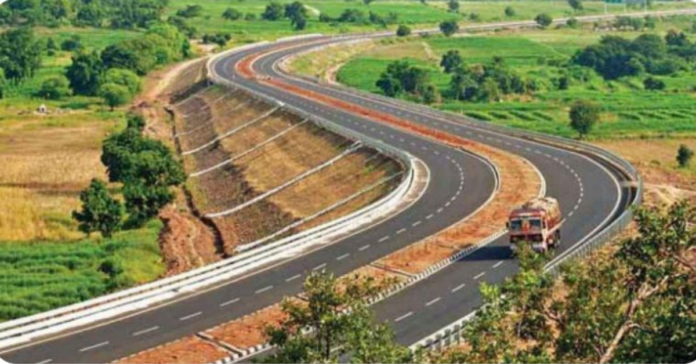
The Bharatmala Pariyojana, India’s most extensive infrastructure investment programme worth over $100 billion, offers the most appealing road investment potential. Over the next five years, an average annual investment of about $45 billion is anticipated in the road sector, which is roughly four times the average annual investment made between 2014 and 2016. Investments are expected to be made in a variety of ongoing programs, with the flagship Bharatmala Pariyojana project, the government-sponsored national highways development program, being the most promising opportunity. Due to the programme’s size and significance, the Bharatmala Pariyojana offers a rewarding opportunity for concessionaires and financial investors:

  • Once completed, the Bharatmala Pariyojana road network will serve as the backbone of the country’s national highway network, catering to approximately 70% of freight volume and connecting approximately 550 districts.
  • As part of the Bharatmala Pariyojana, shorter greenfield alignments between key economic centres are also being developed. These high-traffic routes have substantial toll potential and will stimulate economic growth in previously underserved rural areas.
  • With the country’s long history of tolling on national highways, enforcing tolls on the corridors being built under the Bharatmala Pariyojana will be easier.
  • The investment potential of the Bharatmala Pariyojana is both substantial and immediate; the first phase alone includes an award target of 34,800 km and a $110 billion outlay. The National Highways Authority of India (NHAI) has prioritised the rapid implementation of projects under this plan, as evidenced by the NHAI’s robust pipeline of detailed project reports.
  • While some of the ambitious targets may not be met entirely, the intent to accelerate execution is clear. The award procedure has become more transparent and efficient as the NHAI’s expertise in engineering, procurement, construction (EPC), and public-private partnership (PPP) projects has grown, thereby improving the investment environment and reliability of such infrastructure projects. Since 2014, more than 32,500 kilometres of road work have been approved and awarded.

Given that the Bharatmala Pariyojana is the single most extensive government road construction programme in India’s history, its projects are anticipated to receive priority support from stakeholders for expedited approvals. This is an important driver for timely road construction and substantially minimises project investment risks. Additionally, with dedicated resources working within government organisations such as the NHAI to improve and proactively manage project execution tracking, as well as significant improvements in land acquisition processes, Bharatmala Pariyojana projects can be a promising area for investors.

Railways

Railway station redevelopment and private train operations are among the most enticing railway business opportunities. Railways’ annual investment will rise by 3.5 times on average over the next five years, compared to the annual investment made between 2014 and 2017. Seven areas offer investment prospects in railway infrastructure. Dedicated freight corridors (DFC) and high-speed and semi-high-speed rail will continue to drive investments in Indian Railways to improve logistics and passenger-handling capability. Station redevelopment is also seeing interesting PPP methods of execution.

To increase private investment and accelerate project execution, Indian Railways has set an ambitious goal of increasing private-sector involvement in significant projects involving passenger and cargo trains, rolling stock, and stations by 2025. The high traffic volume, the quest for better services, and the extensive network make railways a desirable option for investors.

Station redevelopment has been a priority for Indian Railways, spurred by a pressing need to improve passenger amenities and infrastructure at railway stations. Further, capacity enhancement is needed due to rising footfalls at railway stations—more than 100 stations targeted under the redevelopment programme have approximately 16 million footfalls per day, with a CAGR of 7%. Railways intends to leverage private-sector expertise for station redevelopment initiatives, particularly in construction, commercialisation, operations, and maintenance. This subsegment has a high potential for investors, with over 600 stations planned for long-term redevelopment via EPC and PPP projects.

Indian Railways has made concrete steps to become more rewarding to the private sector by introducing concessionaire agreements with much longer lease terms, allowing investors to make a higher internal rate of return (IRR). For example, the Surat multi-modal hub for rail and bus transportation has a lease period of 99 years, while the Habibganj railway station in Bhopal is scheduled to be finished soon with a lease period of 45 years. Railways have also made the concession model more appealing by giving land parcels adjacent to city railway stations for commercial development, citing the stations’ high footfall and prime position as reasons for the high IRR.

Indian Railways also has an ambitious plan to introduce 150 privately operated passenger trains on 100 important routes, with a $3 billion investment in rolling stock and related infrastructure. Private operators will be permitted to operate train services using shared railway facilities, such as tracks and signalling systems, as well as depots and washing lines. Railways intends to privatise passenger train operations in order to provide customers with world-class amenities. The change is anticipated to improve the passenger experience, such as shorter transit times and more modern coaches.

Metros

With the country’s metro network expanding, rail construction and operations offer an exciting chance, with a $25 billion investment pipeline in the next five years. Investments in urban transportation will continue to prioritise the development of mass transit facilities, as well as the improvement of shared mobility and last-mile connectivity. With India’s fast urbanisation, metros are an essential component of each city’s growth.

By 2025, $25 billion in investments for projects in multiple cities are proposed to be put up for bid. Civil and electrical works requiring a high level of domain specialisation would account for 50 to 60 per cent of overall project costs. Private players have already expressed strong interest and involvement in metro rail construction, including through PPP models, construction agreements, rolling stock supply, and maintenance agreements.

Ports

The Indian government’s flagship Sagarmala port-led industrialisation program, with a greater emphasis on inbound and outbound connectivity, offers substantial opportunities. The government intends to develop port-proximate industrial capacities near the shore through the establishment of 14 coastal economic zones across all of India’s maritime states and union territories under this programme. Additionally, 35 potential port-linked industrial clusters in the energy, materials, discrete manufacturing, and maritime sectors have been identified.

With a shift towards the internationally favoured standard of port management under the landlord model in 2016, essential ports gained an opportunity to introduce private-sector investments and improve operational efficiency, paving the way for private players to join the market and help modernise ports.

Further, with the intended development of several passenger and freight terminals along national waterways, inland waterway development has gained traction. These planned waterways would connect 24 states and two union territories, as well as the dedicated freight corridors and the Sagarmala project. These connections would accelerate the movement of goods through a dense multi-modal transportation network, allowing for seamless movement between waterways, dedicated freight corridors, and road travel. The ambitious inland waterway development program, which includes the country’s 138 river systems, creeks, estuaries, and related canal systems, can be used to transport people and cargo both within the country and to neighbouring countries.

Airports

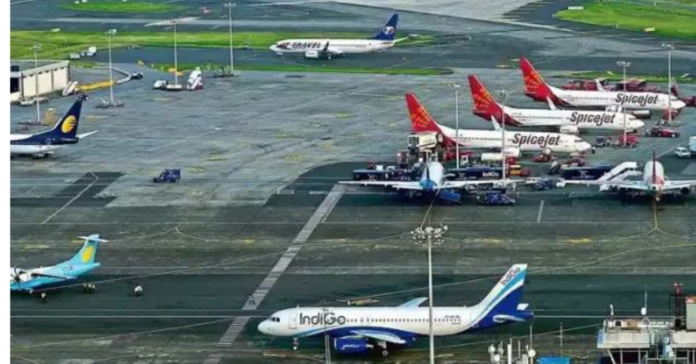
Despite competition from incumbents, plans to open 100 new greenfield and brownfield airports over the next five years provide enough room for multiple players to coexist serenely. Over the last 15 years, India’s aviation industry has experienced unprecedented growth, driven by rising demand for air travel, an increase in low-cost airlines, and the government’s push for improved regional connectivity, including schemes such as UDAN. This sector’s investments will be divided into three categories. First, over the next five years, 100 new airports (a mix of greenfield and brownfield projects) are scheduled to be opened. The push to improve regional connectivity has resulted in a robust pipeline of airport projects nationwide, with numerous possibilities for greenfield airport development.

Because of the anticipated high demand for airport infrastructure, players in this market will prioritise speed of execution and technological superiority. The recent tendering of the management contract for six AAI airports and subsequent award to the Adani Group (with an aggressive per-passenger fee as a bid parameter) shows both private investor interest and opportunity. Similarly, four firms competed for the Jewar airport: Adani Group, DIAL, Zurich Airport International AG, and Anchorage Infrastructure Investments Holding Limited, with Zurich Airport winning the contract.

Despite the competition, the vast possibilities in this sector allow for multiple players to coexist. While big cities will require multiple airports, a more comprehensive development strategy will be required for the next tier of airports, which may not be feasible using conventional stand-alone PPP models.

Infrastructure Gap: Need for a vibrant ecosystem

Government agencies play an essential part in the development of the concessionaire ecosystem. For example, when it comes to brownfield projects like lane expansions or comparatively smaller projects like building local rural roadways, smaller regional players are often more agile. On the other hand, Greenfield airports are almost entirely the domain of a few major infrastructure companies. In both instances, the government can help shape the ecosystem by levelling the playing field for both small regional players and big national infrastructure players.

For example, thanks to stringent service-level agreements and metric-based performance tracking in concession agreements, the Ministry of Road Transport and Highways has modified the qualifying criteria for several road projects with smaller project packages that increase smaller players’ participation without compromising quality. Skukuza Airport in South Africa is an excellent example of how a PPP can be used for small infrastructure projects. For ten years, the airport’s operations were leased to a consortium of businesses, including regional airlines, a resort, and the South African National Parks Company.

Private-sector involvement can improve both project execution and financing; the critical function of the public sector is to create the proper conditions for those benefits to be realised. A solid legal foundation is essential in addition to a proper contractual structure. Infrastructure initiatives are long-term, and investors face significant political risks. Only if investors can trust the legal and political processes will they be willing to commit large sums of funding over long periods of time. Improved safeguards for preventing non-performing assets and methods for rehabilitating non-performing assets can also benefit the concessionaire ecosystem and increase investor trust.

Despite the sector being a monopoly of a few major infrastructure players for the past decade and a half, the Airport Authority of India’s recent management contracts for brownfield airports has enabled many new bidders to join the fray. Agencies can play an important part in creating a robust ecosystem of concessionaires by addressing the concerns of all parties and building a robust framework for tendering and performance-based tracking.

A vibrant ecosystem can be found in the associated non-transport infrastructure space: city or urban sanitation and wastewater treatment. Historically, infrastructure projects have been carried out at the local level, with a variety of contractors in charge of intercepting and diversion work, laying sewage lines, and eventually managing sewage treatment plants. Unfortunately, this resulted in a number of issues, including a lack of monitoring and responsibility tracking, which caused several projects to fail to function as intended. In addition, larger contractors were not interested in completing small piecemeal tasks.

A paradigm shift resulted in the novel’ one city, one operator’ concept, which allowed more significant contractors to assume responsibility for an entire city’s sanitation network. Moreover, mandating the use of technology to monitor operational success and a transparent metric-based compensation system has triggered a transformation in the ecosystem. This has also induced the ecosystem’s ability to absorb more projects by bringing in newer players.

Project Delivery – Quality and Timeliness

Concessionaires and contractors must focus on developing strong capex deployment and project management skills to ensure project completion on time, allowing for faster return realisation. This would necessitate a thorough risk assessment in order to proactively identify construction-related risks and create mitigation strategies. For example, conducting a thorough on-the-ground investigation using advanced techniques such as LiDAR and ground penetration radar before starting the work will allow for more accurate planning and reduce uncertainties during highway project execution. Proactive interaction with government authorities during project execution is also required to resolve risks, minimise delays, and reduce cost overruns.

Financiers

In addition to reassessing the risk-reward spread in the infrastructure sector, financial institutions should work with government officials and concessionaires to create innovative financing products.

Over the last five years, foreign direct investment in India’s infrastructure sector has grown at a CAGR of about 35 per cent. This trend will likely continue because of increased infrastructure spending in the government’s flagship projects. This astounding increase in foreign investment demonstrates that, despite challenges, India’s infrastructure development story is quickly emerging as a compelling investment prospect for global financiers. As new financing and operating models for infrastructure projects emerge, financiers will need to fully assess the risk-return profile of each asset category. To guarantee secure returns and business case viability, the risks and sensitivities associated with collecting user fees, which is the primary source of returns, must be evaluated fairly and transparently.

Given the broad range of new government projects, financial institutions must reassess their investment portfolios, from high-risk projects like greenfield development to those with more secure cash flows like brownfield projects. Financial institutions will also need to be aware of their investment portfolios’ cash-flow cycles in order to balance the risks associated with refinancing, which is usually required in capital-heavy projects.

Given the evolving ecosystem, which includes players ranging from small local businesses to major infrastructure companies, financial institutions must develop products that meet a broad range of needs. They will have to continually bring to innovative market products that meet the risk appetite of concessionaires and government agencies. Additionally, financial institutions must collaborate closely with the government to fine-tune contracting terms and project packaging, as well as create alternate financing choices for asset rotation.

Conclusion

The government primarily executes infrastructure projects using the EPC model. Raising the upfront capital needed to carry out infrastructure projects without jeopardising government finances is a delicate balance. This, combined with the fact that revenues from transportation infrastructure projects are spread out over 20 to 30 years after completion, presents a major cash-flow management challenge. Relying solely on budgetary resources limits the government’s ability to plan and implement big infrastructure projects. Therefore, alternative and innovative forms of capital are essential. For example, the Airport Authority of India is planning a $25 billion investment over the next ten years to achieve targets set by the National Civil Aviation Policy of 2016. Still, it only has internal resources and a government scheme allocation of about $0.6 billion in 2019. The disparity is simply too large to be bridged solely through budgetary allocation. However, the Airport Authority of India’s balance sheet is underleveraged for an infrastructure development authority constructing airports—one of the more viable asset classes within transport infrastructure—with a debt-equity ratio of less than 0.1 in 2019.

Government officials are looking into ways to bridge the capital gap between what is needed and what is available, such as borrowing through bonds and loans, rotating assets, and land value capture financing to capitalise on the increased land value as a result of infrastructure development.

By leveraging government agencies’ balance sheets, there is a large chance to raise additional capital through bonds. For example, Indian Railways recently raised $20 billion from the Life Insurance Corporation of India (LIC) through bonds issued by the Indian Railway Finance Corporation. Similarly, the NHAI raised $3.5 billion from LIC through bonds in the previous year. In addition to raising funds for EPC projects, the government should set in place the proper mechanisms for project selection and phasing. 

This will allow for sufficient revenue generation and phased capital deployment to satisfy debt repayment commitments. Although infrastructure development agencies have significant leeway to increase debt on their balance sheets, structuring the terms of the debt (interest rate, moratorium, and tenure) to closely match the project’s cash flow is essential for limiting any short-term cash shortfall and ensuring complete debt serviceability throughout the asset’s life cycle.

To finance new projects, asset rotation, in which income from completed projects is capitalised by transferring the right to levy user fees to private investors, is being explored. The TOT model eliminates the financial investor’s construction risk while offering a substantial return on investment through expected traffic growth. Because the construction risk is eliminated and the base traffic is already established, such an asset class is well adapted for infrastructure-focused private equity and sovereign wealth funds. The first round of TOT auctions finished by the Ministry of Road Transport and Highways fetched approximately $1.3 billion—1.5 times the projected value. However, the second round did not receive the intended market response because projects were not appropriately bundled. The third phase was successful based on the lessons gained from the second phase and stakeholder interactions.

The critical imperative for successful asset rotation is prioritising and phasing assets to guarantee consistent cash flows. Additionally, guaranteeing the availability of high-quality data to interested bidders is vital for effective bidding and the discovery of a fair price for the assets. To elicit interest from domestic and global investors, governments must proactively open communication channels with prospective bidders to resolve their deal-related queries. To attract various investors, the TOT model was refined to enable varying concession periods depending on project features.

The government is also introducing new models to manage the financing requirements and establish investment avenues for private investors. For example, the infrastructure investment trust strategy is being used to monetise operational assets in the power and road areas. The NHAI is also envisaging a project-based financing model to establish exceptional purpose companies that would invest in developing a specific road stretch and running it for a defined period of time to earn a return on equity and repay debt obligations.

This would allow the authority to access extra resources for highway development. Land monetisation is becoming more popular among government organisations. The Delhi Metro Rail Corporation has been engaged in the leasing of land parcels as well as the development and leasing of an IT park in Delhi. Similarly, the Airport Authority of India leases property to hotel chains, parking lots, and city-side developments. The Rail Land Development Authority is trying to commercialise surplus land owned by Indian Railways. Funds from such proceeds can be reinvested in ongoing projects to help meet financing requirements.

Authorities are also looking into methods to capitalise on increased real estate activity through the development of large urban infrastructure initiatives. For example, the stamp duty in the influence area of 500 metres along the Nagpur Metro has been raised by one percentage point. The surcharge is shared equally by Nagpur Metro Rail Corporation Limited and Nagpur Municipal Corporation. Value capture financing through a higher stamp duty or other related mechanisms needs coordinated action from all involved stakeholders, including the infrastructure development authority, state governments, and urban local bodies.

The financial models must be backed by the appropriate operating model framework, which clearly defines the duties and responsibilities of all stakeholders, including government authorities, private concessionaires, and financial institutions.

 

Advertisement1
InnoMetro_2026

Delhi Metrolite: A Modern Transport System to Provide Feeder Services to Delhi Metro

0
Representational image only

Information

The Delhi Metrolite project, with two lines and 37 stations, is a 40.88 km light rail transit (LRT) system planned by the Delhi Metro Rail Corporation (DMRC) to be built in Delhi.

Metrolite lines in Delhi are proposed on routes where costly heavy-rail metro lines may be overkill in terms of cost and engineering. The system has been developed in accordance with the Government of India’s July 2019 metrolite specifications, and it will be less expensive to build and operate due to its smaller size and lower capacity when compared to traditional heavy-rail metro systems.

Metrolite trains will primarily operate at-grade (road level) on dedicated/fenced-in corridors and will serve as a much-required feeder to the Delhi Metro system. The DMRC board approved the Detailed Project Report (DPR) for Delhi Metrolite’s Line-1 (Kirti Nagar – Bamnoli Village) in October 2019. It is presently awaiting approval from the Delhi government.

Key Figures

  • Operational: 0 km
  • Under Construction: 0 km
  • Approved: 0 km
  • Proposed: 40.88 km
  • DMRC’s Deadline: Not Finalized (Pending Route Finalization & Approval)
  • Estimated Completion: 2026
  • Estimated Cost: Rs. 5,587 crore
  • Funding Pattern: 50:50 between Govt of India (GOI) and Govt of Delhi (GNCTD)

System Specifications

  • Track Gauge: Standard Gauge – 1435 mm
  • Electrification: 25 kV, 50 Hz AC OHE
  • Signalling: Communications-based train control (CBTC)
  • Number of Trains: 29 (Line-1)
  • Total Capacity: 425 passengers
  • Number of Coaches: 3
  • Length: 45m
  • Top Speed: 60 kmph
  • Average Speed: 35 kmph

Route Information

Line-1: Kirti Nagar – Bamnoli Village

  • Length: 19.15 km
  • Estimated Cost: Rs. 2,673 cr
  • Type: At-Grade (16 stations), Elevated (5 stations, Tihar Jail – Dwarka Sector 2 section) & Underground (0 stations, underpass for main-line to be built at Mayapuri & Tihar Jail)
  • Number of Stops/Stations: 21
  • Station Names: Kirti Nagar (elevated), Saraswati Garden, Mayapuri Bus Depot, Mayapuri, Hari Nagar, Mayapuri Industrial Area (MIA), Mayapuri Industrial Area 2 (MIA 2), Tihar Jail, Shivpuri (elevated), Dabri Village (elevated), Sitapuri (elavated), Mahavir Enclave (elevated), Dwarka Sector 2, Dwarka Sector 7, Dwarka Sector 6, Dwarka Court, Dwarka Sector 20, Dwarka Sector 23, Dhul Siras – Dwarka Sector 24, Dwarka Sector 25 – ECC Centre, Bamnoli Village

Line-2: Rithala – Narela

  • Length: 21.73 km
  • Estimated Cost: Rs. 2,914 cr
  • Type: At-Grade
  • Number of Stops/Stations: 15
  • Station Names: Rohini Sector 26, Rohini Sector 31, Rohini Sector 32, Rohini Sector 36, Rohini Sector 37, Barwala, Put Khurd, Bawana Industrial Area – 1, Bawana Industrial Area – 2, Bawana, Bawana JJ Colony, Sanpath, New Sanath Colony, Anaj Mandi, Narela

Conclusion

The Delhi Metro Rail Corporation (DMRC) has presented detailed project reports to the Delhi government for approval for two Metrolite corridors: Rithala to Narela (21.7 km) and Kirti Nagar to Dwarka ECC (Exhibition-cum-Convention Centre) in Sector 25 (19 km). After receiving approval from both the state and the central government, the Metrolite Corridor will be completed within three years. Metrolite, unlike metro corridors, will be a light rail project that will mostly run on the road surface, so the Rithala-Narela corridor is scheduled to be built first. 

Unlike similar projects in other cities around the world that share road space with other forms of transportation, this corridor will have dedicated corridors that are fenced on both sides because sharing road space with other vehicles would have significantly lowered the train’s average speed. The Rithala-Narela Metrolite project will cost Rs. 2914 crore, of which the DDA anticipated to contribute Rs. 200 crore. The corridor will connect the Narela sub-city and will also travel through areas such as Bawana, Puth Khurd, Sanoth, Bhorgarh, and Anaj Mandi. The Kirti Nagar-Dwarka ECC Metrolite corridor is not part of DMRC’s Phase-IV project, but it will be a standalone corridor that will link to the Blue (Dwarka-Noida City Centre) and Green (Inder Lok-Brig Hoshiar Singh) lines.

Advertisement1
InnoMetro_2026

Extensions for Last Mile Connectivity: DMRC Phase 4&5

0
(For representational purpose)

Introduction

Phase IV of the Delhi Metro is a network expansion to new housing areas in the National Capital Region. The fourth phase of the Delhi Metro will include six additional routes that would connect to a few prominent locations in West Delhi and Faridabad. In March 2019, the central government approved three routes as part of the project, totalling 61.679 kilometers: Tughlakabad to Aerocity, Janakpuri West to RK Ashram, and Maujpur to Mukundpur.

The Delhi government approved the long-awaited Phase 4 of the Delhi Metro in December 2018. Six corridors were approved during a cabinet meeting presided by Chief Minister Mr. Arvind Kejriwal. Following that, on March 7, 2019, the union cabinet approved three ‘priority corridors’ out of six corridors of Metro’s Phase 4.

  • Total length of approved ‘Priority Corridors’: 61.679 km 
  • Estimated project cost: Rs 24,948.65 crore
  • Total length of six corridors: 103.93 km
  • Total Estimated Project Cost: Rs 45,000 crore
  • Expected Ridership: 1.5 million passengers per day
  • Expected completion date: December, 2024

The three corridors will include 17 underground and 29 elevated stations, with a total length of 61.679 km – 22.359 km underground and 39.320 km elevated. The Tughlakabad-Aerocity Metro line will run beneath 17 active railway lines. The railway lines will be around 110 meters long. The Indian Railways has given its approval to the DMRC. According to officials, the planned metro line will be around 23 meters below the rail level. There will be a 15-metre gap between the railway tracks and the Metro tunnel below. This stretch of railway is part of the Delhi-Palwal railway route.

To link to the projected Tughlakabad-Aerocity line, an underground interchange station will be developed soon on the Delhi Metro Yellow Line, at the Chhatarpur Metro station (from Samaypur Badli to Huda City Centre).

While the current Chhatarpur metro station is elevated, the subsequent station will be underground, and a subway will be constructed to connect the two stations.

Phase V

The Delhi Metro Phase V project is currently on hold. In 2016, Mangu Singh, the then Managing Director of the Delhi Metro Rail Corporation (DMRC), stated that Phase 4 would most likely be the final phase of the Delhi Metro network’s development. The MD stated in 2019 that the DMRC will make a decision on it midway through Phase 4 development.

However, plans change all the time. By the time Phase 4 construction is completed in 2025, there is a good chance that new lines will be proposed for development within Delhi’s core and the National Capital Region to densify the network and connect new places within Noida, Gurgaon, Faridabad, Ghaziabad, Loni, Sonipat, Rohtak, and so on

  • Estimated Cost: N/A (Pending Route Finalization & Approval)
  • DMRC’s Phase 5 Deadline: Not Finalized (Pending Route Finalization & Approval)
  • Completion Estimate: 2032 (no sooner, if approved by the state government in 2025)

Conclusion

In July 2015, the routes for the Delhi Metro Phase 4 project’s six lines totalling 103.93 kilometers within Delhi’s limits, were finalised. On March 7, 2019, the Central Government approved the construction of 61.679 kilometers spanning three lines (priority corridors) with 45 stations. In October 2020, the Silver Line’s length was increased, making the entire project 65.1 kilometres long. Tendering for civil construction on Phase 4 commenced in June 2019, with piling work on Line-8’s extension beginning on December 30, 2019, at Haiderpur-Badli Mor Station.

DMRC began the tendering process for the project’s subsystems in December 2020, which will be funded by the Japan International Cooperation Agency. (JICA). DMRC intends to purchase 288 new coaches to serve all three lines in this phase. The Priority Corridors of Delhi Metro Phase 4 are projected to be completed and opened in June 2026, considerably later than the planned schedule of December 31, 2024.

  • DMRC’s Deadline: December 31, 2024 (Priority Corridors)
  • Completion Estimate: 2026 (Priority Corridors)
  • Estimated Project Cost: Rs. 24,948.65 cr
  • Revised Funding Pattern (December 2019): Central Government (GOI) Rs. 4,643.638 cr, Delhi Government (GNCTD) & other sources Rs. 7,374.098 cr and External Loan: Rs. 12,930.914 cr

Phase – IV

Approved New Lines

Line 10 (Silver Line): Aerocity – Tughlakabad

  • Length: 23.622 km
  • Type: Elevated (4.279 km) & Underground (19.343 km)
  • Depot: Sarita Vihar (shared with Violet Line) & possibly Vasant Kunj
  • Number of Stations: Sixteen
  • Stations: Aerocity, Mahipalpur, Vasant Kunj, Kishangarh, Chhatarpur, Chhattarpur Mandir, IGNOU, Neb Sarai, Saket G-Block, Ambedkar Nagar, Khanpur, Sangam Vihar, Maa Anandmayee Marg Junction, Tughlakabad Railway Colony (Pul Prahaladpur) and Tughlakabad

Approved Extensions

Line 7 (Pink Line): Mukundpur – Maujpur

  • Length: 12.558 km
  • Type: Elevated (12.58 km)
  • Number of Stations: Eight
  • Stations: Burari Crossing, Jagatpur Village, Surghat, Khajuri Khas, Bhajanpura, Yamuna Vihar and Maujpur

Line 8 (Magenta Line): Janakpuri West – R.K. Ashram (28.92 km)

  • Length: 28.92 km
  • Type: Elevated (21.18 km) & Underground (7.74 km)
  • Number of Stations: 22
  • Station Names: Krishna Park Extn, Keshopur, Paschim Vihar, Peeragarhi, Mangol Puri, West Enclave, Pushpanjali, Deepali Chowk, Madhuban Chowk, Prashant Vihar, North Pitampura, Haiderpur Badli Mor, Bhalaswa, Majlis Park, Azadpur & Ashok Vihar, Derawal Nagar, Rajpura, GG Sabji Mandi, Pulbangash, Sadar Bazar, Nabi Karim and RK Ashram Marg

Lines/Extensions (Approval Pending)

Line 1 (Red Line): Rithala – Narela

  • Length: 21.73 km
  • Type: Elevated
  • Number of Stations: 15
  • Stations: Rohini Sector 26, Rohini Sector 31, Rohini Sector 32, Rohini Sector 36, Rohini Sector 37, Barwala, Put Khurd, Bawana Industrial Area – 1, Bawana Industrial Area – 2, Bawana, Bawana JJ Colony, Sanpath, New Sanath Colony, Anaj Mandi and Narela

This corridor might be built as a Metrolite line

Line 1 (Red Line) Narela – Kundli

  • Length: 4.86 km
  • Type: Elevated
  • Number of Stations: Three
  • Stations: Narela Sector 5, Kundli and Nathupur

The Haryana Government’s Cabinet approved this extension to Kundli (Sonepat district) in 2017. The approval and construction of the Rithala-Narela extension are required for this to be built.

Line 3 (Blue Line): Noida Sector-62 (Electronics City) – Sahibabad

  • Length: 5.11 km
  • Type: Elevated
  • Number of Stations: Five
  • Stations Names: Vaibhav Khand, Indirapuram, Shakti Khand, Vasundhra Sector 5, Sahibabad (interchange)

In January 2020, the DPR was submitted to the Uttar Pradesh government for approval.

Line 4 (Blue Line): Vaishali – Mohan Nagar

  • Length: 5.06 km
  • Type: Elevated
  • Number of Stations: Four
  • Stations: Prahlad Garhi, Vasundhara Sector 14, Sahibabad (interchange), Mohan Nagar (new station building will connect with Red Line’s Mohan Nagar Station)

In January 2020, the DPR was submitted to the Uttar Pradesh government for approval.

Line 10 (Silver Line): Lajpat Nagar – Saket G-Block

  • Length: 7.96 km
  • Type: Elevated & Underground
  • Number of Stations: Six
  • Stations: Saket-G Block, Pushp Vihar, Saket District Court, Sheikh Sarai, GK1, Andrews Ganj and Lajpat Nagar

Line 11: Inderlok – Indraprastha

  • Length: 12.58 km
  • Type: Underground
  • Number of Stations: Ten
  • Stations: Inderlok, Dayabasti, Sarai Rohilla, Ahmal Khan Park, Nabi Karim, New Delhi Railway Station, LNJP Hospital, Delhi Gate, IG Stadium and Indraprastha

The Delhi Metro’s Phase IV is intended to provide last-mile connectivity to the National Capital Region’s (NCR) new housing clusters. Initially, the completion date was slated for 2022, with work on the project set to begin in 2017. However, the project had significant setbacks. Work on Phase 4 eventually commenced on December 30, 2019, with a ground-breaking ceremony at Haider Badli Mor for piling work for stations along the Janakpuri West-RK Ashram Marg line. When completed, the 104-km Delhi Metro Phase 4 network is planned to carry 1.5 million passengers per day. The route is scheduled to be completed by December 2024; however, it may be delayed due to initial pushbacks. The Delhi Metro Phase IV project comprises three approved extensions totalling 65 kilometers: Maujpur to Majlis Park, Janakpuri West to RK Ashram, and Tughlakabad to Aerocity.

Due to the pandemic, construction work on the three corridors of Phase IV, namely Inderlok-Indraprastha, Rithala-Bawana, and Lajpat Nagar-Saket, has been delayed. However, development on Maujpur-Majlis Park, as well as other Metro Phase IV corridors such as Janakpuri West-RK Ashram and Aerocity-Tughlaqabad, is now underway. The stretch between Maujpur and Majlis Park is likely to be completed first. According to a top DMRC official, the Maujpur-Majlis Park line will be completed ‘on time’ by November 2024. 

The Lajpat Nagar-Saket stretch will be the shortest corridor in Phase IV, connecting the Magenta Line (which connects Botanical Garden to Janakpuri West) and the Pink Line, as well as Delhi’s upcoming metro line from Tughlaqabad to Aerocity. The Centre’s Project Investment Board, under the Ministry of Finance, recently approved three Delhi Metro Phase IV upcoming projects, namely the Rithala to Narela metro route (22.91 kms), the Lajpat Nagar – Saket G-Block (8.38 kms), and the Inderlok – Indraprastha (12.37 kms) spanning over 40 kms. It is projected that the overall cost will be around Rs 12,586 crore. The proposal is submitted to the union cabinet for approval.

Work on the underground segment of the Delhi Metro Phase 4 Aerocity-Tughlaqabad Silver Line corridor shall commence soon by DMRC. Tughlaqabad will function as an interchange station. The stretch is expected to be made operational by 2025. The 23.6-kilometer line will connect to the Violet line, which runs from Kashmere Gate to Raja Nahar Singh. To connect the erstwhile station at Tughlakabad to the proposed interchange station, a 100-metre subway has been planned to be built. Adhering to approval from Japan’s international agency, tenders were awarded in March 2022. Once commenced, the silver line metro corridor will connect commuters in the far-flung area of Faridabad in Haryana and save time through the Tughlakabad interchange station, as well as reduce travel time to domestic and international airport terminals via the Airport Express Line to around 90 minutes.

Advertisement1
InnoMetro_2026

Hyderabad-Warangal RRTS: A Regional Transport System to Reduce Road Congestion

0
Representational image only

Introduction

Hyderabad is the country’s industrial hub, with industries spanning areas such as information technology, pharmaceuticals, automobile and defence equipment manufacturing. Hyderabad has grown exponentially during the last few decades. It is essential to diversify new investments in the state to tier 2 cities in order to develop a sustainable environment. The state’s key tier 2 cities, including Warangal, Nizamabad, and Khammam, have all of the resources and opportunities to become the state’s future growth centre. Access to Hyderabad from these cities will be seamless and quick, promoting the region’s holistic and comprehensive growth. Semi-high-speed rail connectivity can be investigated to give improved and better connectivity.

A semi-high-speed rail system connecting peripheral areas to the metropolitan region shall help Tier 2 cities to develop as economic centres. The system with high-speed connectivity would assure new investments in these cities and will gradually improve metropolitan living standards due to a reduction in the arrival of the migrants from Tier 2 cities to metropolitans. The GoTs has planned to explore the feasibility of a semi-high-speed rail system connecting Hyderabad to Warangal and Vijayawada in the first phase. The tender has been invited by HUMTA/HMDA for selecting consultants to carry out the ‘Pre-feasibility Study of Semi High-Speed Rail System in Telangana.’

Hyderabad Metro

The Hyderabad Metro is a rapid transit system that serves the city of Hyderabad, Telangana. After Delhi Metro and Namma Metro, it is India’s third-longest operational metro network, with lines structured on a secant model. It is funded through a public-private partnership (PPP), with the state government owning a minority stake. Based on DBFOT, Hyderabad Metro is the world’s largest elevated Metro Rail system. (Design, Built, Finance, Operate and Transfer). The construction firm L&T established a special purpose vehicle company, L&T Metro Rail Hyderabad Ltd (L&TMRHL), to develop the Hyderabad metro rail project.

Prime Minister Narendra Modi inaugurated a 30-kilometre line with 24 stations from Miyapur to Nagole on November 28, 2017. This was India’s longest rapid transit metro line to be opened in a single stretch. It is expected to cost Rs. 18,800 crores. During morning and evening rush hours, trains are generally crowded. All trains now include a ladies-only coach since May 7, 2018. Hyderabad Metro had an average ridership of 4,50,000 passengers daily post-covid, by December 2022. At the Global Infrastructure Leadership Forum in New York in February-March 2013, the HMR project was highlighted as one of the top 100 strategic global infrastructure projects. L&T Metro Rail Hyderabad Limited (LTMRHL) received the SAP ACE Award 2015 in the ‘Strategic HR and Talent Management category.

Rasoolpura, Paradise, and Prakash Nagar Metro stations were honoured with the Indian Green Building Council’s (IGBC) Green MRTS Platinum Award in 2018. In November 2018, the Government of India declared the Hyderabad Metro the Best Urban Mass Transit Project. Durgam Cheruvu, Punjagutta, and LB Nagar metro stations in Hyderabad received Indian Green Building Council (IGBC) Green MRTS Certification with the highest platinum grade under elevated stations category in October 2022. With this, Hyderabad Metro Rail now has 23 metro stations certified with the IGBC Platinum grade certification.

Warangal

According to the 2011 census, Warangal is the second largest city in Telangana, with a population of over seven lakh people. The city covers an area of more than 400 km. It is one of eleven cities in the country designated by the Government of India for the Heritage City Development and Augmentation Yojana initiative. It was also chosen as a smart city in the ‘fast-track competition,’ making it eligible for additional investment to develop an urban infrastructure and industrial possibilities under the Smart Cities Mission.

The Warangal Tri-City consists of three urban cities: Kazipet, Hanamkonda, and Warangal. The National Highway 163 connects the three cities. (Hyderabad–Bhuvanagiri–Warangal–Bhopalpatnam). Kazipet Junction railway station and Warangal railway station are the major stations. According to the 2011 census, Warangal is one of the Indian cities that has undergone rapid urbanisation rising from 19% to 28%, along with places such as Gandhinagar and Kozhikode.

Agriculture is the principal economic activity, with irrigation primarily dependent on monsoon and seasonal rainfalls. Paddy, cotton, mango, and wheat are the major crops. The Godavari lift irrigation plan, which is designed to lift water from the Godavari River and irrigate drought-prone districts in Telangana, benefits Warangal. The city is home to Asia’s second-largest grain market, which is located in Enumamula. Another industry in which the city is making steady progress with its Incubation hub at Madikonda is information technology. Tech Mahindra and Cyient have launched their development centres, and many more IT companies, such as Mindtree and Quadrant Resource, will be opening offices soon.

Warangal Metro

Warangal Metro, also known as Metro NEO, is a bus rapid transit system proposed by Greater Warangal Municipal Corporation (GWMC) to be developed in Warangal, Kazipet, and Hanamkonda in Telangana. This system’s electric bus coaches, similar to Nasik Metro Neo, will be 25 metres long, travel on rubber wheels, and have a maximum capacity of 250 passengers at a time. The total system capacity is projected to be 15000 PPHPD. (Passengers Per Hour Per Direction). Coaches will be powered by an overhead electrical (OHE) system on elevated sections and by battery power on at-grade (road) sections.

The detailed project report (DPR) for Warangal Metro NEO Phase 1 was prepared by Urban Mass Transport Company Limited in collaboration with Maharashtra Metro Rail Corporation Limited (Maha-Metro), which was hired by GWMC to assist with project preparation. GWMC is currently finalising the project’s proposal and route with input from other stakeholders such as TSRTC, Police, Transport, and NPDCL. Following completion, it will be submitted to the state government for approval. The project is expected to cost Rs. 1100 crore. The project’s deadline and completion date have yet to be disclosed.

Key Information

Operational: 0 km

Under Construction: 0 km

Approved: 0 km

Proposed: 17 km

Line-1: Kazipet Junction – Warangal Railway Station

  • Length: 17 km
  • Type: Elevated & At-Grade
  • Depots: Not Revealed
  • Number of Stations: Not Revealed
  • Station Names: Not Revealed

Petrol Pump, Hanamkonda Chowrasta, Mulugu Road, MGM Centre, Pochamma Maidan, Kashibugga, and Venkatrama Junction are among the catchment areas and route points.

Hyderabad-Warangal RRTS  

The Telangana government intends to construct a semi-high-speed rail link between Warangal and Vijayawada. The Hyderabad Unified Metropolitan Transport Authority (HUMTA), a division of the Hyderabad Metropolitan Development Authority (HMDA), has requested bids from experienced companies to conduct a pre-feasibility study for the projected semi-high-speed rail connectivity in the two corridors. For intra-regional passenger movement, the proposal would provide rapid, safe, and comfortable commuting services at a reasonable fare. The corridors have been recommended because passenger traffic is heavy on these two corridors. The semi-high-speed rail system differs from traditional railways in a way that it will enable dependable, frequent point-to-point regional movement along a dedicated channel. The goal of this system is to lessen commuters’ reliance on road transportation.

Following the success of the Hyderabad Metro Rail Limited (HMRL) operations in three city corridors, the Telangana government is now proposing to prioritise Regional Rapid Transit System (RRTS) in two corridors — Hyderabad-Warangal and Hyderabad-Vijayawada — maintaining a conformity to the lines of the National Capital Region (NCR), which is a multi-state region with New Delhi as its focal point.

For intra-regional passenger movement, the RRTS network would provide rapid, safe, and comfortable commuter services at a reasonable fare. To push the RRTS project in the state, officials are taking learning notes from Delhi-Meerut RRTS and Regional Rapid Transit development made by Kerala, Odisha and other states by visiting these transport systems. The visit of the officials will help expedite the project faster, avoiding the mistakes that have been faced in prior RRTS projects.    

Conclusion

The Telangana government has planned two RRTS corridors between Hyderabad-Warangal and Hyderabad-Vijayawada. The movement of passengers is high in these two corridors. Therefore, the routes have been selected. The RRTS will be different from the conventional railway in a way that it shall provide reliable, high-frequency, point-to-point regional travel at high speed of 180 kmph along a dedicated pathway to the passengers and travellers using this transport system. The RRTS is also different from the conventional suburban railway and Metro system as it meets the requirement and caters to the need of passengers looking to travel longer distances. The project is expected to be cost-intensive. It shall also require extensive inter-ministerial consultations and their approval depending on the feasibility of projects and the availability of resources. The allocation of funds and construction of the project will be undertaken once the project is approved.

Advertisement1
InnoMetro_2026

The Local Train Service Serving Millions of Passengers Daily: Kolkata Suburban Railway

0
Representational image

Introduction

The Kolkata Suburban train is a branch of the British-built second commuter train in India. The East Indian Railway (EIR) ran the first train between Howrah and Hooghly stations on August 15, 1854. On the same day, regular services on the 38.6 km route began, with stops at Bally, Serampore, and Chandannagore. The Tarkessur Railway Company inaugurated the broad gauge Sheoraphuli-Tarakeswar branch line on January 1, 1885.

All railway companies, zones, and divisions were integrated and recategorized in 1951. As a result, the Eastern Railway (ER) and South Eastern Railway (SER) zones were established. The Kolkata Suburban Railway is presently operated by these Indian Railways zones.

Eastern Railway Zone

On 14 April 1952, the East Indian Railway Company and the entire Bengal – Nagpur Railway (later formed the SER) merged to create the Eastern Railway zone. It is divided into four divisions, with Howrah and Sealdah divisions operating the system. Prior to the reclassification, the Sealdah division was part of the Eastern Bengal Railway. The ER zone’s Howrah division is the oldest.

EMU services were inaugurated on the Howrah – Bandel section of the Howrah division on February 1, 1957. In 1963, services were steadily extended to Barddhaman, and on the Sealdah Division of the Eastern Railway were introduced on the Sealdah – Ranaghat route. The Howrah-Barddhaman main and chord lines were changed from a 3000 V DC power supply to a 25 kV 50 Hz AC power supply in 1968. In 1957-58, the Howrah-Sheoraphuli-Tarakeswar route was electrified.

South Eastern Railway Zone

In 1887, the Bengal Nagpur Railway (BNR) Company was established to take over the Nagpur Chhattisgarh Railway (NCR) and convert the route to broad gauge. The project was completed in 1888. By 1891, the main line extension from Nagpur to Asansol was completed. It later became the Eastern Railway zone. The former Bengal Nagpur Railway portion was split on August 1, 1955, and a new zone, the South Eastern Railway (SER), was established. The SER is divided into four divisions, with Kharagpur being the only one that operates the suburban train.

EMU service began in the SER zone on 1 May 1968 between Howrah and Mecheda in the Kharagpur division, and it was expanded to Kharagpur on 1 February 1969. By 2003, the services had been gradually expanded to eight other lines. By 1968, the system within this zone was totally electrified.

Lines & Network

In terms of size, Kolkata is the smallest of India’s six A-1 cities. However, in terms of track length and station count, the Kolkata Suburban Railway is India’s largest suburban railway network. The total track length is 1,501 km, with 458 stations. The system is run by two zonal divisions (under Indian Railways), Eastern Railways (ER) and South Eastern Railways (SER).

The fast commuter rail corridors on the Eastern and South Eastern Railways are shared with long-distance and freight trains, whereas inner suburban services run on separate parallel tracks. The South Eastern Line is operated by SER, while the Eastern Line, Circular Line, Chord Link Line, and Sealdah South routes are operated by ER.

  • Eastern Line: There are five corridors in the Howrah division of the Eastern line, which also bifurcates and extends into the northwestern suburbs. The first two corridors are the 107-kilometer-long Howrah-Bardhaman main route and the 94-kilometer-long chord line. 

On these two corridors, the Howrah-Tarakeswar branch line splits at Seoraphuli Junction and runs 39 kilometres to Tarakeswar, passing over the chord line at Kamarkundu. This route has now been extended from Tarakeswar to Goghat as the Tarakeswar – Bishnupur branch, as part of the Tarakeswar – Bishnupur rail project. The Bandel-Katwa line splits at Bandel Jn after 105 kilometres; the Bardhaman-Katwa branch line splits at Bardhaman Jn after 53 kilometres.

On the other side of the river, the Eastern line’s Sealdah division has seven corridors that split into branch lines to serve the northeastern suburbs. The 116-kilometer-long Sealdah-Gede line, designated a mainline, ends in Gede, a small town on the India-Bangladesh border. The first branch line on this route splits at Dum Dum Junction and runs for 70 kilometres to Bangaon Junction. The second branch line splits at Ranaghat Junction and runs for 33 kilometres to Bangaon Junction. The third branch line splits at Ranaghat Junction and terminates at Krishnanagar City Junction after passing through Kalinarayanpur Junction and Shantipur for a total length of 35 kilometres or by bypassing Shantipur and going only through Kalinarayanpur for a total length of 26 kilometres. There is also a 127-kilometer expansion of the third branch line, which runs from Krishnanagar City Junction to Lalgola. 

The fourth branch line splits at Kalyani Junction and runs for 5 kilometres to Kalyani Simanta. The fifth branch line splits at Barasat Junction and runs for 53 kilometres to Hasnabad. The Eastern line also contains an 8-kilometer connection from Bandel Junction to Naihati Junction, which serves as a vital link between the Howrah and Sealdah divisions.

  • South Eastern Line: The South Eastern line in Kolkata is made up of three main corridors that split into two branches as they approach the suburban satellite towns. Two lines, one local and one through, follow the South Eastern Railway for 128 kilometres from Howrah Junction to Midnapore. The mainline divides into two branch lines: the Panskura-Haldia line at Panskura Junction, 69 kilometres to the south-east, and the Santragachi-Amta line 45 kilometres to the north. The ‘main’ South Eastern route is comprised of these corridors. The South Eastern line also has two branch lines, 5 km and 94 km long, linking Santragachi to Shalimar and Tamluk to Digha, respectively.

At Howrah Junction, the South Eastern Line connects with the Eastern Line. The rolling stock comprises of both AC and dual-powered AC/DC EMUs. Tikiapara and Panskura have large car sheds on this line. On September 6, 2009, then-Railway Minister Mamata Banerjee declared the introduction of Ladies Special local trains, christened Matribhumi (meaning “motherland”), in the Kolkata suburban section. The first local Matribhumi Special local operated from Howrah to Kharagpur.

  • Sealdah South Lines: The Sealdah South line as an important link connects Kolkata to the Sundarbans in West Bengal. It is also a component of the Eastern Railway. This route has four corridors and splits into branch lines that connect Kolkata’s southern suburbs. The main line runs for 110 kilometres from Sealdah to Namkhana railway station. The main line is double-tracked until Lakshmikantapur railway station, and then it is single-tracked to Namkhana.

The first branch line of this corridor begins at Ballygunge Junction and runs for 19 kilometres to Budge Budge station. A 29-kilometer-long second branch line begins at Sonarpur Junction and ends at Canning. The third branch route, which is 35 kilometres long, begins at Baruipur Junction railway station and ends at Diamond Harbour railway station. Sonarpur is the only depot for this route. This route has three interchange stations: Majerhat and Park Circus with the Circular Railway, and Sealdah with the Eastern line.

  • Chord Link Line: Sealdah is linked to Dankuni Junction on the Howrah-Barddhaman Chord by the Chord link route. This line connects the Sealdah Division’s mainline to the Howrah-Bardhaman chord, which is mainly used by freight and passenger trains travelling to North India (The Howrah–Bardhaman chord is part of the Howrah–Delhi mainline and the Grand Chord). The Vivekananda Setu road-rail bridge spans the Hooghly River, allowing the Chord link to traverse it. The Dakshineswar Kali Temple, where Ramakrishna Paramhansa worked as a priest, is a popular tourist attraction along this corridor. It also features the Vivekananda Setu, also known as the Bally Bridge, a road-rail bridge. There are three interchange stations. Interchange is available at Dum Dum Junction for the Eastern line (Sealdah-Gede mainline), Dankuni Junction for the Eastern line (Howrah-Barddhaman Chord), and Bally Halt (above Bally station) for the Eastern Line. (Howrah–Barddhaman mainline). The extension of Kolkata Metro route 1 travels parallel to this route and will have interchange facilities at Dum Dum, Baranagar, and Dakshineswhar stations.
  • Circular Railway: The Kolkata Circular Railway corridor encircles the city’s inner-city areas. This 42-kilometre-long route, with 20 stations, is managed by Eastern Railway’s Sealdah Division. The route is double-tracked from Dum Dum Junction to Tala, but single-tracked from Tala to Majerhat. Running alongside the Hooghly River from Tala to Majerhat, it joins and travels parallel to the Sealdah South tracks after Majerhat and elevates at Park Circus to bypass Sealdah (which is a terminal station). After bypassing Sealdah, it rejoins the mainline at Bidhannagar Road before ending at Dum Dum Jn. The route is also referred to as the Chakra Rail. The circular line is a popular tourist attraction. It gives access to a scenic view for daily commuters and visitors as it passes under Howrah Bridge, Vidyasagar Setu, and parallel to the Hooghly River, connecting numerous tourist places and ghats.


Network Extension

A 16-kilometre-long railway under the jurisdiction of the South Eastern Railway is being built between Amta and Bagnan, which was sanctioned in 2010-11. Another new route is being built between Dakshinbari and Tarakeswar, with the ER and SER working together.

On the Eastern Railways’ southern side, there is a 42-kilometer extension of the railway between Canning and Jharkhali. The second 5 km extension is between Kakdwip railway station and Budhakhali. It stretches all the way to Sagar Island in the Hooghly River estuary. The island can only be reached by boat; expanding this line will benefit the island’s residents by providing greater connectivity. The third expansion, between Namkhana and Bakkhali, is 31 kilometres long, and the fourth, between Kulpi train station and Bahrarat, is 38 kilometres long.


Rolling Stock & Signalling

The Integral Coach Factory (ICF), Perambur, constructed the Electric Multiple Units (EMUs) for the Kolkata suburban services; the first EMU rolled out in September 1962.

Eastern Railways’ Howrah division operates 12-coach EMUs manufactured by Jessop, ICF, and Titagarh Wagons. BEML EMUs have been bought and are now in service. A few BEML stainless steel EMUs are also in use. A 12-coach Siemens EMU fleet is also in operation. MEMU Rakes from the Rail Coach Factory, Kapurthala (RCF) and ICF Diesel Multiple Units (DEMUs) are in operation. There are 61 12-car rakes in the Howrah section. Sealdah’s rolling equipment includes nine and 12-coach EMUs manufactured by Jessop, ICF, and Titagarh Wagons. There is also a small fleet of Siemens 12-coach EMUs in operation. BEML EMUs have been purchased and are in service, as well as a limited number of unique BEML stainless steel EMUs. DEMU trains manufactured by ICF and MEMU trains manufactured by Rail Coach Factory, Kapurthala (RCF), are in operation. Sealdah division has 49 and 66 9-car and 12-car EMU rakes, respectively. There are also two Mainline Electric Multiple Unit (MEMU) rakes.

kolkata suburban railway

South Eastern Railways operates 12-coach EMUs manufactured by Jessop, Siemens, Titagarh Wagons, and ICF. BEML EMUs have been bought and are now in operation. A few one-of-a-kind BEML stainless steel EMUs are also in use. The ICF Medha 3-phase rakes were used for the first time in West Bengal by SER. ICF DEMU rakes and RCF MEMU rakes are in operation. Medha ICF Rakes were introduced by SER on the Howrah-Kharagpur line in February 2018, and Eastern Railway began using them on the Howrah-Bandel route on April 15, 2018. The SER operates 30 12-car EMU rakes.

The Kolkata Suburban Railway is quickly replacing its old Jessop and ICF EMUs with the latest Medha 3-phase EMU rakes manufactured by ICF in collaboration with Bombardier Transportation. Almost all of the Kolkata Suburban Railway’s EMU Units have been fitted with a GPS-based passenger tracking system. Some EMUs that were previously in service with the Mumbai Suburban Railway’s Western Line were subsequently shifted to Kolkata for service.

The most common signalling method is electronic interlocking, which has largely replaced the old lever frames/panel interlocking system. Automatic signalling is being used to improve sectional capacity and efficiency. This is regulated by AC/DC track circuits, axle counters, and others. The axle counter system detects the existence of a train in an absolute block section, a station’s point zone area, and level crossings.

The backbone of a telecommunications network is an optical fibre communication infrastructure. The telecommunications facility is an omnibus circuit that connects Sealdah and Howrah stations to the central control centre. Mobile Train Radio transmission (MTRC) is used for ground-based mobile transmission.

Conclusion

The Kolkata Suburban Railway (also known as Kolkata local trains or simply locals) is a suburban rail system that serves the Kolkata metropolitan region and its surrounding areas. It is the country’s biggest suburban railway network, with the highest number of stations. It is also the world’s seventh-biggest suburban rail system. There are five main routes and nineteen branch lines. It has over 1,500 services and carries 3.5 million people every day with nearly 1.2 billion people annually. It operates from 03:00 a.m. to 02:00 a.m., with prices ranging from Rs.5 to Rs.25. The system operates on 5 ft 6 in (1,676 mm) broad gauge track and is powered by a 25 kV 50 Hz AC power supply. It has interchange stations with the Kolkata Metro at different places.

The Kolkata Suburban Railway is part of the second commuter railway built in British India in the mid-nineteenth century. The first train operated between Howrah and Hooghly stations. Electric Multiple Unit (EMU) services commenced a century after the initial run. With 458 stations and a track length of 1,501 km, it is India’s biggest suburban railway network in terms of track length and number of stations.

The suburban system is run by two Indian Railways zones: the Eastern Railway zone and the South Eastern Railway zone. These zones are further subdivided into the Eastern Railway’s Howrah and Sealdah divisions and the South Eastern Railway’s Kharagpur division. The three major terminals servicing the city’s network are Howrah, Sealdah and Kolkata. Santragachi and Shalimar are also the termini stations for mail/express trains as well as passenger/fast passenger trains.


Advertisement1
InnoMetro_2026

Bengaluru Metro Expansion: Phase 2, 2B, Purple Line, Green Line, and Future Plans

0
Representational image

Providing connectivity to the population in city’s outskirts

The Delhi Metro Rail Corporation (DMRC) developed and conceptualised the Bengaluru Metro. After years of delay, the first route was opened to the public in October 2011. The Bengaluru Metro Rail Corporation Limited (BMRCL) is carrying out the project, which is presently in expansionary mode. The current ridership of Namma Metro is around 5.5 lakhs to 6 lakhs and is likely to reach around 10 lakhs with the commissioning of the Whitefield Metro.

Phase 1

Namma Metro Phase 1 in Bangalore included 42-kilometers two long lines, 8.82 kilometres of which is underground and the remaining one is elevated. This segment has 40 stations. The foundation stone for Phase 1 was laid in June 2006, and construction started in April 2007 between Baiyyappanahalli and Mahatma Gandhi Road. The phase was subsequently expanded to include the northern extension (from Yeshwanthpur to Nagasandra) and the southern extension. (from Rashtreeya Vidyalaya Road to Yelachenahalli).

Phase 2

The second phase of Namma Metro was approved by the union cabinet in January 2014, the initial cost of which was 26,405 crore which is expected to rise to Rs 32,000 crore over time. Phase 2 stretches for 72 kilometers, 13 kilometres of which is underground. There are 62 stations in this section, 12 of which are underground. Bengaluru Metro Phase 2 involves both the extension of the two Phase 1 lines in both directions and the construction of two new lines.

According to the plan, the south end of the Green Line will be expanded from Yelachenahalli to Anjanapura along Kanakapura Road and from Nagasandra to Madavara (previously called BIEC) along Tumkur Road. The Purple line’s east end has been expanded from Baiyappanahalli to Whitefield and from Mysore Road to Challaghatta via Kengeri. The BMRCL spent over Rs 4,500 crores to build the K.R. Puram to Whitefield Metro line. It will have 12 locations.

In the second phase, a new 18-kilometer-long fully elevated line from RV Road to Bommasandra via Electronic City is also proposed. Another 21-kilometer railway is being built from Kalena Agrahara (previously Gottigere) to Nagawara. The route will have an elevated corridor, spanning a distance of 7.5 kms with six stations and an underground stretch of 13.76 kms from the south ramp near Jayanagar Fire station to the north ramp at Nagawara consisting of 12 underground stations. The second phase of the Bengaluru Metro is scheduled to be completed by 2024.

Phase 2A (Blue Line)

As Phase-2A of the plan, a new line between Silk Board and KR Puram has been included in Phase 2. Silk Board, HSR Layout, Agara, Ibbalur, Bellandur, Kadubeesanahalli, Kodibisanahalli, Marathahalli, ISRO, Doddanekundi, DRDO Sports Complex, Sarasvathi Nagara (previously Mahadevapura), and KR Puram are the planned thirteen stations along the Outer Ring Road.

The ORR Metro route, also known as the Blue Line, will connect with the extended Purple Line at KR Puram and the proposed RV Road-Bommasandra route (Yellow Line) at Silk Board.

Phase 2B (Airport Line)

Namma Metro Phase 2B, which will link Kempegowda International Airport and MG Road, is currently under construction and will cost Rs 10,584 crores. The length of the route would be 39 kms. The route would commence in Krishnarajapura (KR Puram) and would run along the northern part of the ORR (Outer Ring Road), passing through Nagawara, Hebbal, and Jakkur before moving towards the airport.

Purple Line

The Purple Line links Baiyyappanahalli in the east to Mysore Road terminal station in the south-west. The route is 18.1 kilometres long and has 17 stations. It is mostly elevated, with a 4.8-kilometer underground section in the city’s center, and it runs through some of Bengaluru’s most well-known areas, including MG Road, Majestic, Railway Station, Vidhana Soudha, and others. The Purple Line is being expanded to Challaghatta in the south-west and Whitefield in the east.

On August 30, 2021, the section from Mysuru Road to Kengeri became operational. The BMRCL put in Rs 1,820 crore to build the elevated line and Rs 181 crore to acquire land. By March 2022, the metro line has been extended by two kilometres along the same path to Challaghatta. Challaghatta will be the city’s first elevated metro depot.

Pink Line

The pink line is one of the future metro projects in Bangalore that shall improve the city’s connectivity. This section will link Kalena Agaraha (formerly Gottigere) to Nagawara over a distance of about 21 kilometres. There will be a 7.5-kilometer elevated route and a 13.8-kilometer underground section. In total, 18 metro stations are proposed for this metro line.

According to the Bangalore Metro Rail Corporation Limited (BMRCL), approximately 75% of the underground tunnelling work for the Pink Line has been completed. Tunnelling work for 15.2 kilometres of the 21.2 kilometres has been finished. The BMRCL intends to complete the Pink Line by the end of March 2025.

Green Line

The Green Line of the Bangalore Metro connects Nagasandra in the north-west to Anjanapura in the south-west. It has 30 stations and spans a distance of 30 kilometres. In conformity to the Purple Line, this stretch too is mostly elevated on both the north and south sides, with a four-kilometer underground section in the middle. There are 26 elevated metro stations and three underground stations on the route. Bengaluru Metro Green Line crosses through commercial and industrial centers such as Peenya and Yeshwanthpur in the north with residential areas such as Basavanagudi, Jayanagar and Banashankari. The Green Line is also being extended to Madavara in the north-west and Silk Institute in the south, increasing the length of the route to 33.5 kilometres.

Phase 3

The Phase 3 alignment of the Bangalore Metro has been finalised. The Bangalore metro route will run for 105 kilometers, connecting other Metro lines, suburban rail lines, and bus depots at nine points while also allowing for multi-modal integration. The proposed work is expected to be completed by 2027-2028.

Corridor 1 was originally planned to conclude at Hebbal Railway Station. The Metro Phase 3 will also be extended by approximately 2 kilometres and will link to Kempapura. The plan is expected to cost around Rs 13,500 crore.

Under Phase 3, there will be two corridors:

  1. Corridor 1 will stretch for 31 kilometres along the Outer Ring Road (ORR West), connecting J P Nagar and Kempapura. It will have 22 stations that will intersect with Phase 2B of the Airport route.
  2. Corridor 2 will be 11 kilometres long, connecting Hosahalli Toll to Kadabagere.

According to the suggested new metro route map, the metro routes in Bangalore include:

  • Carmelaram to Yelahanka, covering 37 kms
  • Marathahalli to Hosakerehalli, covering 21 kms
  • Bommasandra to Attibele
  • Gottigere to Basavanapura
  • RK Hegde Nagar to Aerospace Park
  • Kogilu Cross – Rajanukunte

The government stated in 2020 that using the public-private partnership (PPP) model, two corridors would be developed as metrolite lines. This shall include a 30 km ORR West Line from Hebbal to Mysore Road Metro Station and a 14 km stretch from Magadi Road Toll Gate to Kadabagere.

The BMRCL proposed a Comprehensive Mobility Plan for subsequent stages in December 2019. This covers the following Phase 3 routes:

  • Magadi Road Toll gate to Kadabgere (Metrolite) (12.5 km)
  • Hebbal to Sarjapura (35 km)

The elevated Hosahalli Metro Station (on Magadi road from Toll Gate) to Kadabagere will have nine metro stops. It is scheduled for completion in 2028.

Phase 4

According to the Comprehensive Mobility Plan, new metro stations will be built along the following routes in Phase 4:

  • JP Nagar to Hebbal Kempapura (32.15 km)
  • Whitefield to Domlur (31 km)
  • Inner Ring UG Metro (34 km)

Conclusion

Bengaluru was the first city in south India to have metro train service. The Bengaluru Metro, also known as Namma Metro, now encompasses most of the city and will soon be expanded to the city’s outskirts to improve connectivity for the population. When the Bengaluru metro was opened, it became South India’s first underground metro system. It has underground, at-grade, and elevated metro stations. The Bengaluru Metro Rail Corporation Limited (BMRCL) has been designated for developing, operating, and expanding Bengaluru’s metro network. It is a joint initiative of the Government of India and the Government of Karnataka. Prime Minister Narendra Modi initiated the Whitefield (Kadugodi)- KR Puram Metro line on March 25, 2023. The route’s metro operations started on March 26, 2023.

The 13.72-kilometer section is Bangalore’s first Metro-connected technology corridor. It is predicted to reduce travel time by 40% and benefit nearly 6 lakh people working in IT parks, Export Promotion Industrial Areas, malls, and hospitals. It will also promote the development of the software sector and reduce traffic congestion. Under Namma Metro’s Phase 2 plan the new section has been developed as part of the purple line linking Baiyappanahalli and Whitefield. The Baiyappanahalli Metro Station is located on Namma Metro’s Purple Line.

According to BMRCL officials, the Bengaluru Metro rail project is on schedule to complete 175 kilometres of city connectivity by June 2025. Bangalore will have 314 km of Metro connectivity by 2041 under the second and third stages of the metro project. The Karnataka government recently granted preliminary clearance for Phase 3 of the Bangalore Metro project. The upcoming 32.16-kilometer Bangalore metro line is anticipated to cost Rs 16,368 crore. The project will be funded by the central government in addition to loans collected by the Bengaluru Metro Rail Corporation Limited. (BMRCL).

The Karnataka Chief Minister recently stated that Bangalore Metro service to Kempegowda International Airport will commence by the end of 2023. The Metro Phase 2B project shall include the construction of a 39-kilometer-long route beginning in Krishnarajapura (KR Puram). The stretch shall follow the northern section of the Outer Ring Road (ORR), passing through Nagawara, Hebbal, and Jakkur before connecting with the airport.

Under Phase 3 of the Bangalore Metro Rail project, the Karnataka government plans to introduce four new Metro corridors by 2032 to provide better connectivity to Bangalore residents, according to an action plan prepared by the Karnataka department of planning, programme monitoring, and statistics and the Federation of Indian Chambers of Commerce and Industries (FICCI). The proposed new metro lines are projected to provide Metro access to every citizen within 1-2 kilometres of their jobs or homes.

The planned Metro corridors, which will cost Rs 27,000 crore, will include two new Metro routes and two extensions:

  • Old Airport Road, a 16-kilometer stretch from MG Road to Hope Farm via Marathahalli and Whitefield/IT corridor (underground), is expected to cost Rs 9,600 crore.
  • Nagawara to Kempegowda International Airport (KIA) via Thanisandra/ Bharatiya City for a distance of 25 kilometres for an approximate cost of Rs 10,000 crore.
  • A 6-kilometer Metro expansion from Whitefield to Katamanallur / Hoskote at an approximate cost Rs 2,400 crore.
  • A 12-kilometer extension of the Bannerghatta stretch to Jigani at a cost of Rs 4,800 crore.

Phase 2B

The Bangalore (Namma) Metro Phase 2B project is a 37 Km, 17-station ‘Airport-Link’ portion of the under-development Blue Line that connects Bengaluru city to Kempegowda International Airport (KIAL) in Devanahalli. A metro route to the airport has been planned since 2005, when work on the city’s airport began. It was originally envisioned as a high-speed rail connection linking the city’s CBD (MG Road) to be carried out by a special-purpose vehicle independent of the Bangalore Metro Rail Corporation.

RITES proposed two lines to the Bangalore Metro Rail Corporation (BMRCL) in October 2015. BMRCL solicited public input on nine routes in September 2016, and finalised four routes in late April 2017. In May 2017, they chose the path that would extend Line-4 through Nagawara, RK Hegde Nagar, Jakkur, and Yelahanka. The Karnataka Government approved the 37 km route with 17 stops as an extension of Line-5 (ORR Line) via KR Puram, Nagawara, Hebbal, and Yelahanka in January 2019.

The Asian Development Bank (ADB) will finance Phases 2A and 2B (KR Puram – Yelahanka – Bangalore Airport) with a $500 million loan approved by its board in December 2020. In addition, the Japan International Cooperation Agency (JICA) will lend a $318 million loan too. It was formally agreed upon in March 2021. Phase 2B was approved by the central cabinet in April 2021. The DPR (Detailed Project Report) for Phase 2B has not been made available online by BMRCL.

Phase 2B’s Funding

Estimated Cost: 9,616.51 crore

  • ADB: Rs. 2,410.79 crore
  • JICA: Rs. 1,310.74 crore
  • PPP Sources: Rs. 800 crore
  • State Govt: Rs. 4,074.34 crore
  • Central Govt: Rs. 1,260.54 crore

Bids for Phase 2B construction work were sought in July 2019 via three civil packages. 

  • Current Phase 2B Deadline: 2024
  • Estimated Completion Estimate: 2027

Route Information

Line-5 – Blue Line: KR Puram – Hebbal – KIAL Terminals

  • Length: 37 km
  • Type: Elevated, At-Grade and Underground (within the airport)
  • Depot: Shettigere Depot (in addition to Phase 2A’s Baiyappanahalli Depot)
  • Number of Stations: 17
  • Station Names: Kasturinagara, Horamavu, HRBR Layout (erst. Babusaheb Palya), Kalyan Nagar, HBR layout, Nagawara, Veerannapalya, Kempapura, Hebbal, Kodigehalli, Jakkur Cross, Yelahanka (erst. Kogilu Cross), Bagalur Cross (erst. Bagalur/PRR Cross), Bettahalasuru, Doddajala (erst. Trumpet Junction), Airport City (erst. Sky Garden, to be built at-grade) and KIAL Terminals (erst. Airport Terminal, to be built partially underground).
Advertisement1
InnoMetro_2026

Railways: Heading Towards Digital Mobility

0
Representational image

Digital Rail

The rail industry is experiencing rapid technological adoption. Over the last two decades, transit companies around the globe have implemented new technologies to make passengers’ journeys more comfortable. Metro and other major public transportation systems have evolved from basic mass transportation systems to integrated public transportation providers. These public transportation systems would continue to embrace evolving digitalisation for the provision of services such as security, customer service assistance, and operational support, in addition to transporting people from origin to destination.

There is a growing demand for precise data and real-time information. Mobility data is also becoming more individualised, distinguishable, and predictable. This has allowed the layering of new technologies, which are supported by automated and AI-powered solutions. As a result, the following have evolved: Smart Station

(a) Smart Mobility

(b) Smart Operation

(c) Smart Maintenance

Digitalisation today has revolutionised the railroad industry. Railways in modern times is increasingly using digital technologies to enhance its operations and efficiency. The various core activities benefitted by digitalisation processes in railways can be stated as under:

Digitalization in Rail Operation

Digitalisation in train operations has the potential to increase the efficiency and productivity of station staff, drivers, middle management, and operations people. Rail digitisation can also provide real-time information to operations people, such as rotating scroll warnings, centralised traffic control, track maps, and more. For example, one of the oldest Metro systems of the world, Metro de Madrid in Spain, has begun to digitalise its activities. The operator has created a macro-project with a wide and cross-functional scope. It is coordinated by Lines Operational Management and considers both customer views and internal employee visions. Since 2018, the project has been completely operational in various phases, covering the following areas:

(a) Tablet for station staff

(b) Digital process of checking station installations

(c) Tablet for traffic and running staff (located at the headways)

(d) Digital head-end information displays

(e) Digital time recording of operational staff

(f) Digital repository of operational documentation

Digitisation in infrastructure maintenance

The applications of IoT, sensors, and devices in rail infrastructure maintenance are opening up various new possibilities such as:

(i) Problem/damage detection,

(ii) Preventive maintenance, and

(iii) Coordination with other systems, Government agencies, logistics providers, and transport modes.

In recent years, a number of digitisation applications have been launched collaboratively by public transportation operators and cutting-edge system providers to enhance system security, maintenance cost reduction, asset availability optimisation, issue detection, and mitigation strategies.

Digitalisation in control and signalling systems

Digitalised control and signalling systems have the potential to significantly improve the reliability and performance of train operations. In terms of infrastructure asset management, removing the obsolete train signal boxes and heavy copper wires. Here are a few instances of digitalisation in control and signalling systems:

Digitalisation in Customer Experience

Customer service is becoming increasingly important for rail transport operators. Passengers want improved service and real-time information. Passengers’ expectations are rising, and with increased competition from new mobility players, railways and train operators must embrace new technologies and provide digital experiences to remain competitive. Railways must put the traveller at the centre of the experience. Technology can help increase customer satisfaction and loyalty among passengers.

One recent example is implementing a passenger flow system to handle crowding at railway stations during the COVID. The train movement and passenger control during the pandemic involved the use of various new technologies, such as Passenger Flow Analysis using IoT devices and use of AI in Vehicles and Stations functions with various technologies. The implementation of passenger flow system can be stated involving following stages:

(iv) Real-time people flow estimation achieved by image processing

(v) Motion of image is converted to people flow and congestion rate

(vi) Count of number of passengers getting on and off the vehicle

Digital communications with passengers using AI applications

AI is essential for recognising and connecting data-generated patterns generated by advanced technologies. The popularity of AI has been growing significantly in Customer Support Centres at rail stations. The following are the most prevalent AI applications in rail transportation:

  • Customer Analytics
  • Real-time Operations Management
  • Intelligent Ticketing System
  • Predictive Maintenance
  • Scheduling & Timetabling
  • Multi-modal Journey Planner

Digitalisation in asset maintenance

Effective maintenance, in addition to system design, acquisition, operation, and decommissioning, is an essential component of total asset management strategies and guidelines. The impact of digitalisation is a game changer in all asset maintenance operations in the rail transport industry. Subsequently, the complete implementation of digitalisation for asset maintenance would pave the way for a fool-proof system. Public transportation operators can reduce costs, improve service quality, increase reliability, and make the best use of their physical assets by implementing suitable digital transformation strategies. Smarter asset management is assumed to be possible with maintenance systems that can learn and diagnose existing problems as well as predict likely future failures based on past data and analytics. They should also be able to come up with related maintenance solutions.

Condition-based maintenance strategies and problem prediction guidelines are vital and essential tools for optimising.

(i) Effective asset management decisions

(ii) Timely identification of future possible failures

(iii) Increase in asset availability, and

(iv) Improvement of maintainability.

To achieve the above objectives, there are four major requirements:

(a) Accurate identification of maintenance failures

(b) Accurate calibration of sensors

(c) Accurate assessments of causes and trends of failures

(d) Formulation of effective mitigation measures and preventive strategies 

Automatic monitoring systems for rolling stock conditions

Smart tracking and surveillance systems are transforming the way transit operators shall deal with various hazards, intrusions, railway crossings, and driver behaviours. The public transportation sector has planned and implemented an increased number of monitoring and surveillance systems as a result of constant improvements in safety, performance, and reliability. Many metro operators either store the captured digital data on local servers or incorporate it into the primary company’s information technology (IT) system. Many metro companies have customised their rolling stock condition monitoring software to meet their specific needs.

Most metro operators perform maintenance of their equipments on their own rather than relying on Original Engineering Manufacturers (OEMs)/Suppliers. Although they find the monitoring systems quite dependable, they still prefer to perform manual checks when the systems fail. Before operators can completely adapt to the technology, they need to have more confidence in its reliability.

The main benefits and drawbacks of engaging the rolling stock condition monitoring systems are:

  • Maintenance: Optimisation, labour reduction,automation, and crisis prediction.
  • Service Availability: Minimising service failures, reducing incidents and downtime.
  • Quality Information: Better understanding of rolling stock conditions, investigation data, prediction of problem indicators.

Drawbacks and preliminary mitigation suggestions

  • Suppliers: Metro operators often face challenges relating to dearth of OEM assistance, complicated validation, and maintenance training. Before making a final choice on the installation of an automatic monitoring system, it is highly recommended that all stakeholders be consulted so that they are completely aware of the requirements and potential constraints. It is also important to make purchases only from enterprises having a proven track record.
  • Equipment: Sometimes, it is difficult to integrate monitoring systems into the main IT system. They may also have operational constraints and require highly skilled personnel for servicing and upkeep. It is also suggested that the system hardware and software be able to be customised. The procurement contract should explicitly specify the system specifications with regard to system availability, measurement accuracy, operational conditions, and maintenance obligations.
  • Service Quality: Some methods, such as incorrect detection, have been proven to be unreliable. It will take time for public transportation companies to gain trust in their dependability. It may be beneficial to combine the monitoring system with the main IT system in order to identify the best detection and data access location. Data management concerns (such as size, usage, security, and access) and specialised data transformation skills are also essential considerations.

 Global Scenario

Metro operators in some countries have begun to use passenger trains to gather device data along railway lines for further evaluation at maintenance centres. This not only enhances the frequency and efficiency of machinery inspection but also lowers maintenance and repair expenses at night.

To achieve acceptable track conditions in the past, the Singapore Mass Rapid Transit (SMRT) operator depended on a time-consuming, laborious, and data-intensive framework to plan and execute corrective maintenance works. They are currently working with Bentley Systems on a highly automated Predictive Decision Support System (PDSS) to improve efficiency in tasks related to planning maintenance, such as track renewals. The PDSS offers advanced data processing and visualisation capabilities to maintenance teams to support optimal decision-making, including:

  • Identification of areas where frequent corrective maintenance measures are to be carried out.
  • Prioritisation of maintenance tasks.
  • Quantitative assessment of asset health.
  • Analysis of asset health data to identify precursors of future problems.

PDSS also allows proactive maintenance. Planning chores that used to require hours per day (such as data collection, site surveying, and task prioritisation) have been completely automated. The risk of human error is significantly reduced. As a result, SMRT can now concentrate more on critical track defects and potential degradation of track conditions. The PDSS also allows complete and unrestricted access to the data. The total length of rail required for replacement each year is expected to go down with the use of PDSS to support condition-based rail replacement programmes. Intelligent recognition technology being used increasingly at metro stations, not only for ticketing but also for enhancing security and maintenance has become common. In terms of station train maintenance, some Asian metro companies have fixed image detectors in repair centres and use robots to rapidly scan train components before applying manual repairs.

Europe

European railways have made the most significant advances in formulating transparent interactions with passengers at stations and stops in the last seven to eight years. Among these services are 

(i) More informative and user-friendly websites,

(ii) Real-time information about vehicles in motion, 

(iii) Ticket purchase,

(iv) Onboard infotainment services, and

(v) Dynamic passenger and timetable information.

Several rail companies have made internet multi-media portals accessible to passengers on board. The Austrian Federal Railways (OBB) uses the catchy slogan to attract passengers to its train services in Austria. Rail travellers in Germany can connect to the internet at over 135 stations, Deutsche Bahn (DB) Lounges, and Intercity Express (ICE) trains. The use of robots as customer service representatives is becoming more common around the globe. This is helping resolve many challenges, such as staffing needs, linguistic barriers, and real-time customer analytics.

Japan 

East Japan Railway Company has developed and put into operation the JR East Communication Robot in Tokyo using Natural Language Processing (NLP) and Pattern Recognition technologies. The multilingual humanoid robot can answer questions about public transportation, local facilities, and sightseeing activities. Its data input consists of 216 frequently asked questions (FAQs) and responses gleaned from interviews with travel and commercial ‘customer service’ representatives. This communication robot has the potential to reduce the number of inquiries received by ‘customer care’ personnel at stations.

Natural Language Processing (NLP) and Pattern Recognition tools are also available at JR East’s Travel Service Centers in Sendai and Nigata. It is a workflow support system that provides pertinent information to ‘customer service’ agents in call centres in real-time. Agents can reduce their reaction time, and even inexperienced staff can handle the majority of customer inquiries with ease.

Challenges during the transition period of digital transformation

Some of the challenges to be faced due to digitalisation are:

  • Technical – Transmission and communication bandwidth, data accuracy, cyber security, inconsistent standards, and obsolescence.
  • Commercial – Fragmentation of supply chain, data governance, and management, warranty, proprietary software.
  • Economic / business case – High initial investment and maintenance costs.
  • Organisation and HR – Impacts on management and company culture, the requirement of IT maintenance skills.
  • Law and regulations – Resistance from safety authorities/PTOs/insurance companies, hindrance from complex tendering requirements on technological development.

Conclusion

During the last ten years, public transportation has changed dramatically, and urban mobility has undergone a significant transformation. Many of the exciting changes in the ways we live and travel have been driven by digitalisation and innovation. The digital evolution is rapid, and each new development in IT, every step, every journey brings us closer to the people-centric approach that the industry must maintain.

Digitalisation is a significant and evolving trend in global business and daily life. It refers to the adoption or increased use of digital and computer technology by an organisation, an industry, or a nation. In other words, it symbolises the use of digital technologies to:

  • Improve processing efficiency
  • Lower overall costs
  • Enhance productivity (for example, operation and maintenance)
  • Establish new business models
  • Provide new revenue and value-adding opportunities

It is a gradual process of moving into the digital business mode.

Changing Technology Landscape

Technology is constantly evolving, and it is obvious that new digital developments have greatly benefited public transportation. New and emerging technologies have also begun to have an effect on the public transportation sector. Technology adoption has grown with smartphones and is skyrocketing with 5G&6G networks. Passengers expect seamless transport and real-time information. When combined with emerging technologies (such as interconnected sensors and diagnostic tools, big data analytics, the Internet of Things (IoT), machine learning, and artificial intelligence (AI), the public transportation industry can perform intelligent and rapid data interpretation. This will result in a radical transformation of business operations (planning, operation, and maintenance) with increased asset availability and cost-effectiveness.

The emergence of the internet and digital technologies is reshaping the industrial horizon, driving innovation trends, and deeply affecting all aspects of urban rail transportation. Rail operations have a unique chance to become an integral part of the transition to a greener and more sustainable mode of public transportation as a result of digital development. The digitalisation of the rail industry has the potential to enhance the performance, competitiveness, safety, and security of railway systems.

Digital solutions also improve the efficiency and cost-effectiveness of rail operations. Most train operators understand how to leverage the power of digital technologies to achieve cost savings, service improvements, smarter infrastructure, and a better passenger experience. It is important that they carefully consider worries about privacy, regulatory security, data ownership and proprietary systems, public acceptability, employment impacts, and investing in stranded assets.

Advertisement1
InnoMetro_2026

Transport Infrastructure in India: Challenges & Opportunities

0

In the new millennium, India’s transportation infrastructure has expanded by leaps and bounds. The Golden Quadrilateral national highway network, the Delhi Metro rapid transit system, and several public-private partnership airport projects in India’s major metropolitan regions, including New Delhi, Mumbai, Bengaluru, and Hyderabad, to name a few, have not only revolutionised the capacity and quality of the country’s transportation infrastructure but have also fueled the growth of other major infrastructure projects, including the Bharatmala project national highway project, high-speed and semi-high-speed rail projects, dedicated freight corridors, rapid-transit metro railways across significant cities and airport modernisation.

Although India has significantly improved its transportation infrastructure over the last two decades, the country still has a long way to go to guarantee that it can meet the country’s needs now and in the future. Therefore, it becomes imperative to size the investment opportunities and explore the most prominent issues that are crippling India’s transportation infrastructure. Additionally, a closer look at the challenges that three groups of stakeholders—government agencies, concessionaires and contractors, and financiers—will face in capturing those opportunities also needs to be ascertained. Finally, the strategies these stakeholders can adopt to overcome the challenges can be summarised.

suburban rail image

Major Obstacles

India spends less money on transportation infrastructure than other developing nations. India, for example, has historically invested about 1% of its GDP in transportation infrastructure, whereas China increased its investments from 4.7 per cent of its GDP in 2014 to 6.5 per cent in 2017. Even developed countries with more mature infrastructure, such as France and Japan, spend roughly 1% of their GDP on transport infrastructure annually. Four significant problems are crippling India’s transportation infrastructure as a result of this lack of investment:

  • Inadequate Roads: Highways are the backbone of any developing sector or economy. Despite this, India only spent $38 billion on highway development between 2014 and 2018, or about 0.35 per cent of its GDP. In contrast, China has consistently invested about 1.5 per cent of its GDP in highways. The insufficient supply of infrastructure investments compared to demand has strained the country’s roads. Additionally, roads are the most important ways of transportation in India, accounting for 65 per cent of all freight movement. This puts massive pressure on the roads and highways, and limited capacity causes highway congestion and slower operating speeds. Because congested roads account for 8 to 10% of wasted journey time, network enhancements such as new motorways to augment the capacity of congested corridors, new economic corridors, and urban decongestion are much needed.
  • Social welfare obligations: Governments are frequently under social welfare obligations to subsidise public services at the price of businesses; for example, freight operations subsidise the cost of passenger journeys on railways. It may be noted that raising the cost of freight rail transport reduces its attractiveness, resulting in a modal shift away from railways, limiting the government’s ability to produce revenue, and limiting investments that could augment capacity, resulting in poor service on key routes.
  • Insufficient Airport Capacity: In the coming years, India’s aviation infrastructure will face a large supply and demand gap. Although initiatives such as the UDAN regional airport development tackle regional connectivity issues, airport capacity expansion remains a challenge, particularly in the metropolitan cities of Delhi and Mumbai, which account for nearly 55 per cent of total air traffic in India. Large cities are anticipated to require at least two to three airports in the future to address congestion problems while also providing passengers with world-class facilities. Developing new greenfield airports in Navi Mumbai and Jewar is a testament to this strategy and a step in the right direction.
  • Lack of public–private partnerships: Because India is a developing economy with limited financial resources, rapid transportation infrastructure development will necessitate private involvement. However, the difficulty and uncertainty in enforcing a ‘user-pays principle,’ as well as the risks involved with enforcing contracts, induce revenue uncertainties. Additionally, the country’s evolving concessionaire ecosystem, with a mixed record of success in public-private partnerships (PPP), has restricted private involvement in infrastructure projects—private investment accounts for only about 15% of total infrastructure investment. To sustain investments in India’s infrastructure environment, social acceptance and enforcement of user fees, as well as stricter contract enforcement and sustained improvements to the concessionaire ecosystem, will be required.

These are some of the primary causes of India’s poor logistics efficiency. India’s ranking on the World Bank’s Logistics Performance Index has deteriorated over time, falling from 35 in 2016 to 44 in 2018—underscoring the importance of addressing the infrastructure deficit. For example, India’s freight cost, which is one component of the Logistics Performance Index, is 13 to 14 per cent of GDP, whereas it is 9 to 10 per cent of GDP in other developed countries, highlighting the need for and potential economic effect of improving the country’s transportation infrastructure.

Addressing Challenges

Three groups of stakeholders—government agencies, concessionaires, and financiers—can address these challenges through a concerted and coordinated effort that addresses the following elements: sizing and evaluating the investment opportunity across sectors to identify the most appealing areas, understanding the challenges associated with capturing this opportunity, and strategising to overcome the challenges in order to maximise the opportunity entirely. 

  • Government Authorities: Project financing issues, clearance delays, land acquisition delays, and concessionaire and contractor non-performance all contribute to inadequate infrastructure coverage and quality. India’s transportation infrastructure in road, rail, air, and port infrastructure is both extensive and inefficient, highlighting the pressing need to enhance the quality and extent of the infrastructure. Project financing issues, timely land acquisition and clearances, and contractor non-performance have all exacerbated the situation.
  • Because of the large upfront capital expenditure needed, the primary challenge for government agencies is securing project funding. Typically, infrastructure development expenditures are incurred in the first two to three years, while income from the project in the form of user fees is collected over a period of 20 to 30 years after the project is launched. As a result, a large-scale infrastructure push will necessitate a mix of upfront public and private-sector financing. With the rapid evolution of technological interventions in infrastructure development, it is necessary to evaluate and prioritise investments based on total life-cycle cost and project returns rather than the needed upfront investment.

Finding the right partners for efficient, timely, and cost-effective project execution, as well as assuring high-quality asset maintenance and operations, are also essential and demanding works. For example, several significant transportation infrastructure projects have been delayed in the past due to poor performance by contractors and concessionaires. Additionally, poor pre-project preparation that results in a shift in scope during execution can lead to disagreements between government officials and concessionaires, disrupting project execution.

Monitoring the execution of ongoing projects is also a significant challenge for government agencies, given the country’s enormous size and the broad spectrum of infrastructure projects. Moreover, there is a lack of emphasis on monitoring execution quality using objective metrics. In addition, the absence of strong project management skills (aside from a few high-profile projects such as the Delhi Metro’s initial phases) leads to poor planning and delays. Defining the right metrics to review and monitor progress, as well as implementing cutting-edge technology, are essential components of monitoring on-the-ground execution. 

Delays in project execution also result in an increase in the costs needed to complete a project. For example, according to a Ministry of Statistics and Program Implementation report, delays in executing 205 Ministry of Railways projects have resulted in a $30 billion cost escalation, a 130 per cent increase over the original estimate.

The need for multiple statutory approvals from various agencies is also a significant bottleneck for any infrastructure initiative in India. For example, in March 2019, the Supreme Court suspended the environmental clearance for the Mopa Airport in Goa, and work was halted. The court ultimately lifted the ban in January, but the delay pushed the project back by nearly a year. Similarly, road, rail, and metro projects require collaboration among numerous government agencies to relocate utilities and construct railway overbridges, underpasses, and tunnels. Projects are sure to be delayed in the absence of a well-thought-out master plan with a cross-functional steering team or a single window approval.

Approvals from tribunals and litigations have been another issue that government agencies frequently encounter. Many urban infrastructure projects, such as metro rail systems, face difficulties in engaging local residents in order to alleviate their concerns about safety, pollution, and privacy. Delays in land purchase and clearance also result in project cost overruns, which leads to claims and arbitration by concessionaires. Several metro rail projects in Indian cities have escalated costs due to excessive land acquisition and construction delays. For example, the first section of the Bangalore metro can be considered a case in point, which was delayed by more than six years, resulting in approximately a $1.1 billion cost overrun.

The Right to Fair Compensation and Transparency in Land Accession, Rehabilitation, and Resettlement Act of 2013 resulted in a rise in the average land purchase cost for greenfield projects. As a consequence, those costs increased from 10% to 25% of total capital costs for road projects. This has had a major impact on the government’s capital requirements. Track doubling and tripling, as well as the laying of new railway tracks, are examples of how rising land costs affect project commercials, making them unviable. Multiple railway projects have become unviable as land prices have risen, accounting for roughly half of the total capital cost of laying a new route.

  • Concessionaires and Contractors: Concessionaires and contractors’ viability is impacted by issues such as project financing, timely clearances, operational disruptions, and user-fee collection. The primary issue for concessionaires is effective capital management. It is essential to have a complete portfolio perspective that reduces risk while increasing profitability. In addition, the availability of credit from financial institutions to execute big projects is a major obstacle in generating interest in infrastructure projects. The market credit crunch is harming concessionaires, particularly small to mid-size concessionaires, when it comes to raising money, causing project delays.

Concerns about timely approvals remain, as does the need for a robust structural mechanism to mitigate risks beyond concessionaires’ control. Delays occur at various project stages due to the need for approvals and clearances from an array of government entities, as well as unforeseen arbitration concerns. Given the size of the projects, excessive delays have frequently led to concessionaires going bankrupt.

The infrastructure construction sector employs more than 33 million people, second only to agriculture. However, the vast majority of this labour force is untrained. With this mix of labour and India’s expanding infrastructure projects, there is a severe shortage of trained labour to perform complex tasks such as tunnelling, boring, project planning, and design, particularly in urban areas. To achieve the desired level of quality in a cost-effective way, these complex activities necessitate extensive knowledge and expertise.

Another significant issue is enforcing fee collections and raising fares on time. An increase in user fees is a sensitive issue that can affect concessionaires’ recovery. Metro train fare increases, for example, have drawn widespread public and media scrutiny and, at times, resulted in lengthy arbitration and dispute resolution. Tolling disruptions in highway projects are also a concern. For example, a suspension in tolling during the recent COVID-19 pandemic has an effect on project revenues and concessionaire viability. Additionally, many initiatives have encountered difficulties in enforcing and collecting tolls. However, this is believed to be partly resolved with automated toll collections on highways via FASTag, NHAI’s electronic toll collection system.

Unpredictable occurrences also disrupt project planning, logistics, and feasibility. Natural disasters, such as floods, can cause initiatives to be delayed for years. For example, airport operations have recently been suspended due to flooding, resulting in substantial revenue loss for concessionaires. Similarly, as a result of geopolitical issues and trade conflicts, port viability can change dramatically in a short period of time due to a shortfall in the total quantity of commodities shipped through the port. A recent example is the COVID-19 pandemic, during which construction activities were stopped, causing most infrastructure projects to be delayed, resulting in higher project completion costs and lower returns.

  • Financial institutions: The lack of a strong legal and regulatory framework for early and efficient dispute resolution, as well as challenges in infrastructure valuation, have limited financial institutions’ involvement.

Investing in assets with revenue realisation risks is generally a source of constant concern for financiers. It is a difficult job to identify possible risks associated with infrastructure projects and to value the risk factor in the project appraisal. Non-performing assets can result from overlooking an essential risk or overvaluing the project. The problem of stalled projects and non-performing assets is well-known, and it continues to plague infrastructure-focused financial organisations. Revenue forecasts under various conditions must be carefully evaluated in novel scenarios such as greenfield airports in tier 2 cities and greenfield corridors of national highways with no history of tolls.

Despite the fact that large marquee projects requiring significant investments have been conceptualised, the government continues to finance the majority of the projects despite a constraint on overall spending power. In addition, there has been a lack of a stable regulatory model and a strong governance mechanism to create investor trust, resulting in a lack of interest from financial institutions in proactively designing new products for infrastructure funding for both the government and private concessionaires.

One of the primary causes of the mismatch between infrastructure demand and supply is financiers’ absence of visibility into the long-term pipeline of projects. Infrastructure financing is a complicated legal and financial process that necessitates extensive knowledge. Developing this level of expertise is expensive, and financial institutions will only engage in it if there is a clear pipeline of possibilities. Otherwise, the expense of building the capabilities will outweigh the benefits that financiers hope to gain by investing in infrastructure rather than other less complex asset classes. The government will need to define a long-term strategy with strong legal support that allows a variety of financial institutions with varied portfolios to join the infrastructure market without fear of arbitrary exercise of political power. Creating a national infrastructure pipeline is a positive move that should be accompanied by stronger financial and legal safeguards for financial investors.

Conclusion

India has attractive transport infrastructure possibilities, but there is much to be done across the spectrum of stakeholders to close the infrastructure gap. Successful projects must be studied and held up as models, with critical lessons learned shared among government agencies, concessionaires, contractors, and financiers. The supply-demand imbalance is too significant to close without effective collaboration, rapid execution, and rigorous monitoring and tracking. Today’s challenges can be transformed into opportunities that will not only boost organic development but also drive job creation and benefit a wide range of sectors. Still, they will also help fulfil one of the most fundamental tenets of economic and social activity: mobility to serve the common good with concerted and dedicated efforts.

Advertisement1
InnoMetro_2026

First Pier Cap for Elevated Corridor-I Launched Near Mithapur Metro Station

0
The launch of a 70-ton precast Pier Cap

PATNA (Metro Rail News): The first 70-ton Precast Pier Cap for the elevated Corridor-I segment close to the Mithapur metro station was successfully launched. This accomplishment represents a crucial turning point in constructing the city’s metro infrastructure.

Untitled design 39


The 10.098-meter-long Pier Cap was carefully placed at Pier/pillar number 115 on the viaduct close to the Mithapur metro station. The opening of this Pier Cap marks the beginning of the spectacular 17.93-kilometre elevated Corridor-I.

There are 14 stations along Corridor-I, with both elevated and underground facilities.  Danapur Cantonment, Saguna More, RPS More, Patliputra, Mithapur, Ramkrishna Nagar, and Jaganpura are elevated stations along this corridor.Untitled design 38

On the other hand, underground stations include Rukanpura, Raja Bazar, Patna Zoo, Vikas Bhawan, Vidyut Bhawan, and Patna Station. In addition, for commuters’ comfort and improved connectivity, the corridor also has interchanges at Patna Station and Khemni Chak stations.

Untitled design 36

Untitled design 40

With the assistance of a crane, the Pier-Cap is raised onto the Pier after being predicted at the casting yard. After this essential step, U-Girders will be placed between two Pier Caps to serve as a framework for later installing Metro lines.

Untitled design 35

The opening of the initial Pier Cap indicates the team’s expertise and commitment to the Patna Metro project. The authorities are still dedicated to finishing the project and ensuring the metro is operating right away, serving the needs of the public and completely transforming Patna’s transportation system.

Advertisement1
InnoMetro_2026

Maharashtra Government Appoints Nitin Kareer as Managing Director of Maha-Metro

0
IAS Nitin Kareen Appointed as Maha Metro MD

MUMBAI ( Metro Rail News): The Maharashtra government has appointed IAS officer Nitin Kareer as the Managing Director of the Maharashtra Metro Rail Corporation (Maha-Metro). 

This decision comes after the retirement of Brijesh Dixit, the former Managing Director of Maha-Metro. As a result, Nitin Kareer, who currently holds the additional chief secretary post and is in charge of the finance department, has been assigned the additional responsibility of leading Maha-Metro.

As the new Managing Director of Maha-Metro, Nitin Kareer’s appointment marks a significant step forward in Maharashtra’s commitment to enhancing its transportation network. With his strong leadership and strategic approach, Kareer is balanced to drive the completion of the Pune and Nagpur metro projects, benefiting residents and commuters alike.

Advertisement1
InnoMetro_2026