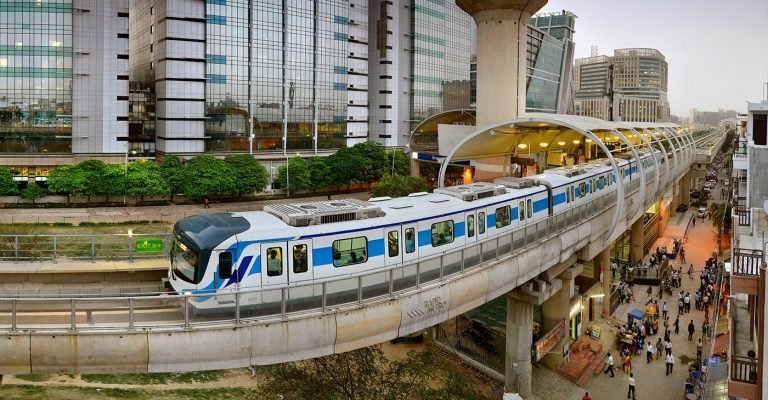
New Delhi: Prime Minister Narendra Modi has flagged-off the Delhi-Faridabad Metro Line that would allow hassle free travel for around two lakh daily commuters between the national capital and the industrial hub in Haryana.
The extension of the Delhi Metro connects Badarpur to Escorts Mujesar in Faridabad.
The total cost of the project from Badarpur to Escorts Mujesar is nearly Rs. 2,500 crore. Out of this, Rs. 1,557 crore was borne by the Haryana Government, the Centre contributed Rs. 537 crore, while the Delhi Metro provided Rs. 400 crore.
All these are elevated and located on either side of the Delhi-Mathura Road (NH-2).
“The nine-station metro corridor which was 95 per cent indigenously built will provide people a safe, affordable, quick, comfortable, reliable, environment-friendly and sustainable transport facility,” a Haryana government spokesperson said.
Haryana Chief Minister ML Khattar, addressing a press conference on Saturday, had thanked the Prime Minister for “gifting” the Metro service which would take the city to “another level of progress” with better connectivity with other NCR towns.
He had also said that the Prime Minister would be announcing the go-ahead for connecting Gurgaon with Faridabad by Metro.
PUNE (Metro Rail News): The Pune Metro stretch from Phugewadi to Shivajinagar, along with another stretch from Garware College to Ruby Hall Clinic, is expected to be inaugurated on August 1.
Officials are hopeful that Prime Minister Narendra Modi will be present at the event as he is likely to visit Pune on August 1 to receive the Lokmanya Tilak award.
Both stretches have been completed and are ready for inauguration, but the state government’s official communication is awaited.
A final inspection of the routes was conducted on Saturday by the Commissioner of Railway Safety, who has given approval for starting services on both routes. They are now awaiting the safety compliance certificate.
The new section linking Phugewadi and Civil Court station spans 6.9 km and includes four stations. On the other hand, the Garware College to Ruby Hall Clinic station section covers 4.7 km, featuring seven stations, some of which are located underground.
The newly constructed sections link significant locations in the city, including Shivajinagar, Civil Court, Pune Municipal Corporation office, Pune RTO, and Pune Railway Station. Deccan Gymkhana and Sambhaji Udyan stations provide convenient access to bustling areas like Jungli Maharaj Road and Fergusson College Road.
Ruby Hall Clinic station is conveniently located near Wadia College campus, benefiting students commuting in the area. Pune Railway station and Shivajinagar metro station have been integrated with Pune railways, ensuring smooth connectivity for rail commuters.
Advocate Sushil Mancharkar stated that residents are eagerly anticipating the opening of the Phugewadi-Shivajinagar route, as it is expected to bring a significant change to the traffic situation in the area.
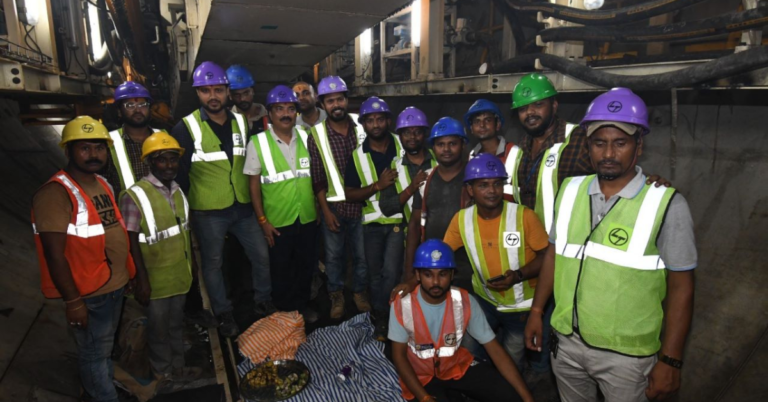
PATNA (Metro Rail News): In Corridor-II of the Patna Metro Rail Project, the construction of the underground metro station and tunnel is progressing rapidly. Recently, the first Tunnel Boring Machine (TBM) 1 at the Moin-Ul-Haq underground metro station completed an 85-meter journey successfully.
Currently, the initial drive for constructing the underground metro station is underway. The main drive began on Friday after the Tunnel Boring Machine completed 85 meters of its journey. The process of adding backup gantries to the TBM for the main drive takes approximately 20 days.
The tunnel boring machine construction of the underground metro line is primarily separated into three sections. The first (primary) drive is the first step in this procedure, during which the TBM begins excavating the tunnel from the launching shaft.
The initial/temporary ring segments are manually installed at this step, allowing the thrust jacks installed in the machine to push forward the TBM with the aid of these temporary ring segments. The TBM then arrives at the main drive, where it begins to build the tunnel by putting in permanent ring segments as it excavates.
The tunnel boring machine is separated into many components. The cutting head, which the TBM uses to cut the earth as it digs the tunnel, is located on the front shield, which is the component of the TBM that faces forward.
To prevent soil from sticking to the cutting head, a special chemical is sprayed through a nozzle mounted on it. This chemical ensures that the soil easily moves to the rear of the machine with the help of a conveyor belt. The soil is then transported to the dumping spot by a trolley after being carried out of the tunnel.
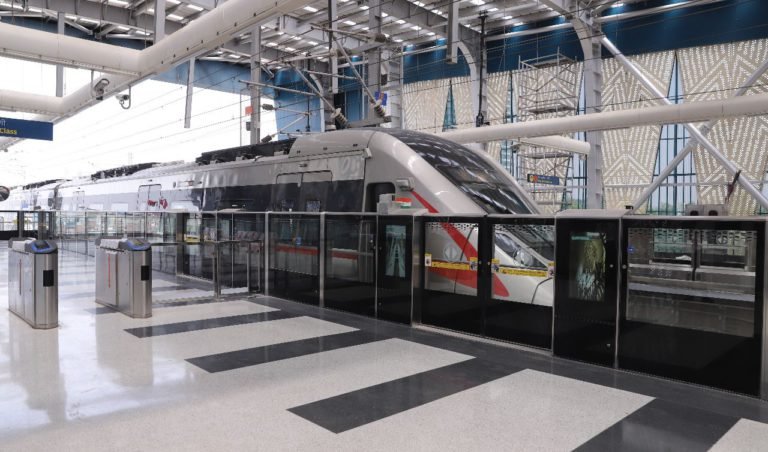
NEW DELHI (Metro Rail News): National Capital Region Transport Corporation (NCRTC) Director Vinay Kumar Singh revealed that the 17-km Sahibabad-Duhai Depot priority section of the Delhi-Ghaziabad-Meerut Rapid Rail Transit System (RRTS) project will be commissioned within a few weeks.
Addressing a workshop on transit-oriented development, Mr. Vinay Kumar Singh, MD NCRTC, said, “This breakthrough marks a significant advancement in delivering high-quality transit services nationwide.”
Mr. Singh also expressed excitement about the project, emphasizing its transformational impact. He mentioned that this 17-km priority section of the RRTS project is the first to bring fast inter-city commuter trains to the National Capital Region.
Named ‘RAPIDX,’ the RRTS is a semi-high-speed regional rail service, a joint venture company of the Centre with the governments of Delhi, Haryana, Rajasthan, and Uttar Pradesh.
The NCRTC has ambitious plans to improve connectivity further. By 2025, it aims to open the entire 82-km Delhi-Ghaziabad-Meerut stretch for the public, streamlining travel and enhancing the overall transit experience for commuters in the region.
NEW DELHI (Metro Rail News): Union Minister of Railways Ashwini Vaishnaw informed Parliament that the tender for the anti-collision system “Kavach” has been awarded for Delhi-Mumbai and Delhi-Howrah Corridors, totaling approximately 3000 route km. The work is currently in progress. The Indian Railways is also preparing a Detailed Project Report (DPR) and detailed estimate for installing Kavach in another 6000 route km, said Union Minister in a written reply in Rajya Sabha.
Kavach is a technology-intensive Automatic Train Protection (ATP) system developed indigenously. It assists the loco pilot in maintaining specified speed limits and automatically applies brakes if the pilot fails to do so, ensuring safe train operations even in inclement weather.
Kavach has been effectively implemented on 1465 route km and 121 locomotives, including Electric Multiple Unit rakes, on South Central Railway. Three Indian OEMs( manufacturers ) are currently approved for Kavach, with efforts to develop more vendors for its widespread implementation.
The tragic triple-train accident in Odisha’s Balasore on June 2, which resulted in around 300 fatalities and about 1000 injuries, sparked debates on the importance of anti-collision systems like Kavach. The total amount spent on Kavach implementation so far is Rs 351.91 crores.
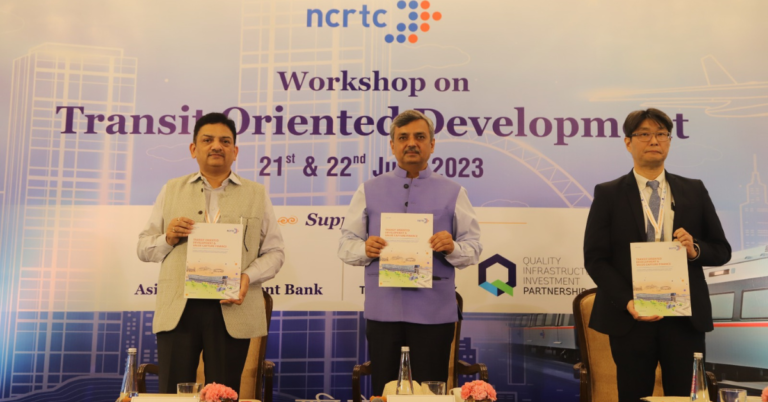
NEW DELHI (Metro Rail News):National Capital Region Transport Corporation (NCRTC) hosted an international two-day Workshop on Transit Oriented Development (TOD), a pivotal event aiming to revolutionise urban planning practices. The workshop, supported by the World Bank and the Asian Development Bank, witnessed the global participation of esteemed speakers, panelists, and participants from around the world, including heads of various urban transport corporations across the country, to foster knowledge-sharing and collaboration in creating sustainable, inclusive, and livable cities.
Shri Manoj Joshi, Secretary, Ministry of Housing & Urban Affairs, Government of India, lamp lighting at workshop on Transit Oriented Development
TOD offers compelling solutions to the challenges posed by rapid urbanisation, emphasising the integration of land use and transportation to create compact, mixed-use developments centred around efficient public transit systems.
Speaking on occasion, Shri Manoj Joshi, Secretary, Ministry of Housing & Urban Affairs, Government of India, said, “I am happy that NCRTC took the initiative of organising this Workshop as a Knowledge sharing platform for TOD which is a very important aspect of Urban Development. I am confident that the collective wisdom and constructive discussions that will take place during this Workshop will inspire a transformative change in our urban planning practices and would benefit future transit projects.”
“This workshop organised by NCRTC is intended to provide a platform to share the experiences of implementing TOD policies and the challenges faced during this journey by organisations across the globe. By promoting Transit Oriented Development, we can effectively reduce urban sprawl, congestion, and pollution while enhancing accessibility, affordability, and the overall quality of life in urban spaces.,” said Shri Vinay Kumar Singh, Managing Director, NCRTC.
On the occasion, Shri Manoj Joshi, Shri Vinay Kumar Singh, and Mr. Takeo Konishi, Country Director, ADB, also unveiled a Knowledge Product on Transit Oriented Development produced by Team NCRTC.
In 2017, the Ministry of Housing and Urban Affairs released the National TOD Policy and National Value Capture Financing (VCF) Policy Framework, recognising the significance of TOD adoption in the development plans of Indian cities. However, challenges still exist in the implementation of TOD policies, hindering their full potential. The workshop aims to identify and address these challenges to foster successful TOD implementation at the state and regional levels.
This workshop saw participation by leaders of several transit agencies from across the country, including Delhi Metro Rail Corporation, Uttar Pradesh Metro Rail Corporation, Gujarat Metro Rail Corporation, Haryana Mass Rapid Transport Corporation, Maharashtra Metro Rail Corporation, and Rail Land Development Authority.
The workshop also featured an array of diverse speakers, panelists, and experts providing insights into successful TOD projects and outlining challenges specific to their projects. This included several eminent speakers from along the globe, Mr. Takeo Konishi, Country Director, ADB; Mr. Hiroaki Suzuki, Urban Finance & Development Expert, World Bank; Mr. Kano Junkichi, Director, International Business, Urban Renaissance Agency Japan; Mr. Andrew Newsome, Partner & MD- Boston Consulting Group, Australia; Mr. Richard de Cani, Global Cities, Planning & Design Leader– ARUP; Mr. Steven Segerlin, Director, Real Estate and Station Area Plg. WMATA Washington DC; Mr. Guido Bruggeman, Senior Urban Transport Expert, Netherlands, among others.
With the Regional Rapid Transit System (RRTS) Corridors being implemented by NCRTC, traversing four states in the National Capital Region, this international workshop provides an opportunity for state governments and development authorities to collaborate and tailor TOD policies to their unique contexts. NCRTC has been working closely with stakeholders, including state governments, development authorities, and multilateral funding agencies such as the Asian Development Bank and the World Bank, to ensure financial sustainability through the operationalisation of TOD and Value Capture Financing Instruments.
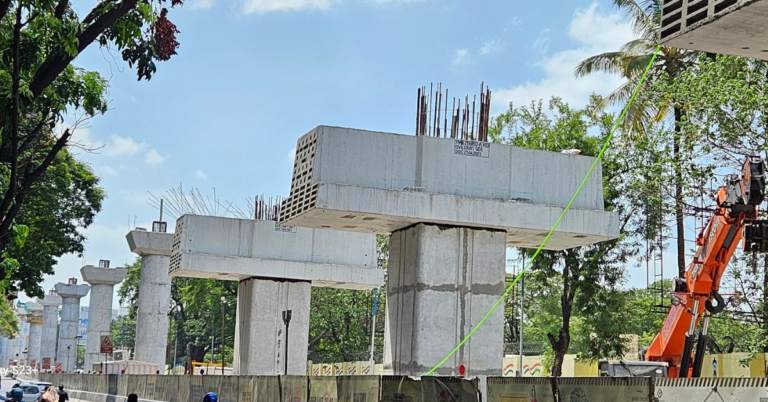
PUNE (Metro Rail News): The progress on the ‘Puneri Metro’ project, connecting the bustling IT hub of Hinjewadi, with the central business district of Shivajinagar, is moving ahead at a steady and impressive pace. Especially noteworthy is the rapid construction of piers along the route, which is advancing significantly. Today (Friday), the 622nd pier for the ‘Puneri Metro’ on the Hinjawadi- Shivajinagar route has been successfully erected on Ganeshkhind road, marking a remarkable achievement. To date, a total of 600 piers have been completed.
It is worth mentioning that the journey began with the casting of the first pier on Ganeshkhind Road back in April 2022. In just one year and three months since then, the developers of Pune Metro Line 3, jointly undertaken by Tata Group and PMRDA under the Public Private Partnership (PPP) model, have surpassed a significant milestone by completing 600 piers.
Pune IT City Metro Rail Limited established as a special purpose vehicle (SPV) company by Tata Group, is diligently managing the work of Pune Metro Line 3 on the Hinjewadi to Shivajinagar route.
“The construction of the piers, forming the backbone of the entire metro structure, is considered to be the most crucial stage of any metro train project. The Puneri Metro has planned to construct a total of 922 piers on the Hinjewadi to Shivajinagar route. Having completed 622 piers in just over a year is a testament to the dedication and expertise of the team. The Pune Metro Line 3 piers, with a unique circular shape and a diameter of 2000 mm, are designed to meet the stringent parameters of the metro rail system, strictly adhering to all construction safety guidelines outlined in the Bureau of Indian Standards (BIS) manual,” informed Mr. Alok Kapoor, Chief Executive Officer of Pune IT City Metro Rail Ltd.
Once completed, the metro between Hinjewadi and Shivajinagar will offer an easy, convenient, and affordable public transportation option, significantly improving the lives of citizen commuters. Tata Group’s commitment to quality and safety remains unwavering throughout all phases of this project, a true testament to its dedication to serving the community.
About Pune Metro line 3:
The Pune Metro Line III is a ~23 Km elevated Metro rail project connecting the IT hub of Hinjawadi to the Central business district of Shivajinagar. It is a Public Private Partnership (PPP) project awarded by the Pune Metropolitan Region Development Authority (PMRDA) to a consortium consisting of Tata Group’s TRIL Urban Transport Private Limited (TUTPL) and Siemens Project Ventures GmbH. The Project would be developed & operated on Design, build, finance, operate & transfer (DBFOT) basis by a special purpose vehicle (SPV), Pune IT City Metro Rail Limited (PITCMRL), for a Concession Period of 35 years, including the construction period.
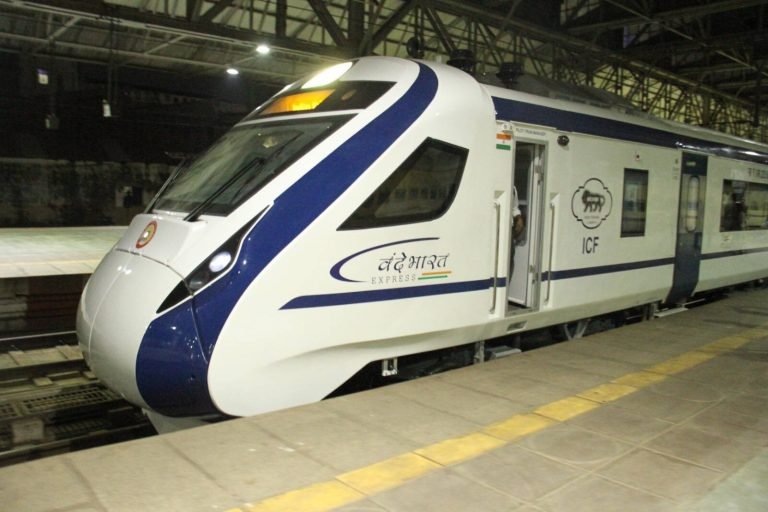
NEW DELHI (Metro Rail News):Indian Railways is making significant changes to its passenger coaches to manage maintenance costs effectively. It plans to reduce the types of coaches from 28 to just two: Linke Hofmann Busch (LHB) and Vande Bharat. As per the top government official, in the next 5-6 years, there will be only LHB and Vande Bharat type coaches on the Indian Railways. This move is inspired by successful airlines that use a similar approach with their aircraft to lower upkeep costs.
According to the official, the maintenance costs can drop by 40% with standardizing the coaches.
Additionally, to cater to lower-income passengers, particularly migrants, the Railways will introduce new non-air conditioned trains. These trains will focus on routes with high demand for affordable tickets and will run from Assam, Punjab, Eastern UP, Bihar, Jharkhand, Odisha, and West Bengal to Gujarat, Maharashtra, and Delhi. These will be permanent trains, not seasonal services, aimed at reducing pressure on other routes.
Moreover, the Railways is committed to passenger safety and plans to improve the design of LHB coaches. It aims to eliminate open doors during the journey and retrofit the coaches to minimize harm to passengers during accidents.
In the Budget 2023-24, Rs. 9792.88 crore has been allocated for Materials for Repairs and Maintenance, showcasing the Railways’ dedication to cost-effective and safe transportation for the nation.
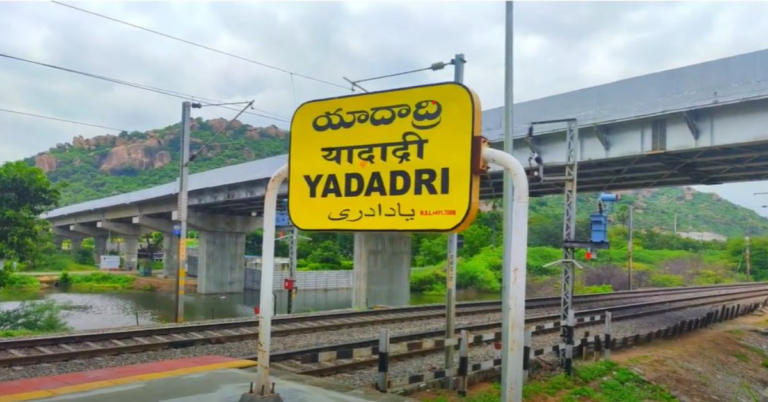
HYDERABAD (Metro Rail News): The South Central Railway (SCR) has planned to construct a brand new station building at Yadadri for the upcoming ₹430 crore 33-km MMTS suburban train extension from Ghatkesar. The new station will be on the eastern side as part of the MMTS extension, while the existing station on the western side will also undergo upgradation under the ‘Amrit Bharat‘ station scheme.
Following an inspection with his senior officials, SCR General Manager Arun Kumar Jain announced on Thursday that contracts for the existing station’s redevelopment has been awarded. The works to be undertaken include the construction of cover-over platforms, facade development and building improvements, among other things.
In 2016-17, the MMTS Phase-II extension from Ghatkesar to Yadadri was approved with an estimated cost of ₹330 crores. The project aims to add an extra 33 km line between Ghatkesar and Yadadri (Raigir) in addition to the existing two lines. Additionally, the project includes building new infrastructure at the stations and yards at Ghatkesar, Bhongir, Bibinagar, and Yadadri.
Originally planned as a joint venture with the Telangana government, the work is now being executed by the Railway Board itself without government assistance, with a revised cost estimate. The officials believe that building the new station closer to the Yadadri temple will be more convenient for pilgrims, eliminating the need for road travel.
According to Mr. Arun Kumar Jain, the completion of both works will significantly enhance the train connectivity for pilgrims visiting the important temple town.
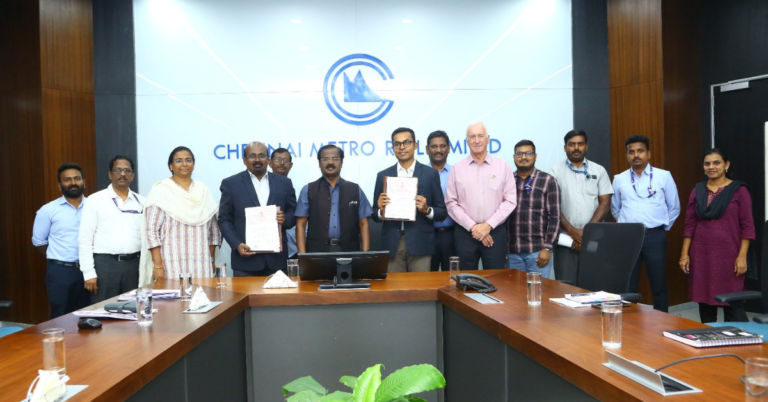
CHENNAI (Metro Rail News): Chennai Metro Rail Limited (CMRL) has signed a Contract Agreement with M/s URC Construction Pvt Limited. The agreement with contract No. CP28A-OCC, was officially signed on 20/07/2023.
The Letter of Acceptance (LOA) had been issued to M/s URC Construction Pvt Limited for the tender, identified as Tender No. CMRL/CON/PHASE-II/CORR-5/CP28A-OCC/2023, on 08/06/2023. The total value of the contract amounts to INR 65.80 crore, which includes the Provisional Sum and GST.
The scope of work for the contract encompasses the Design and Construction of the Operation Control Centre (OCC) at Madhavaram Depot. This entails various aspects, such as Civil, Architecture, MEP, VAC, and all the associated works.
The contract was signed in the presence of Thiru. T. Archunan, the Director (Projects) of CMRL. The Contract Agreement was signed by Thiru. T. Livingstone Eliazer, the Chief General Manager (PP&D) of CMRL, and Thiru. P. Ramprasath, President Projects from M/s URC Construction Pvt Limited.
The signing ceremony was attended by other officials as well, including Tmt. Rekha Prakash, Chief General Manager (PD) and representatives from CMRL and GC.
CHANDIGARH (Metro Rail News): In a recent meeting, the governments of Punjab and Haryana, along with representatives from Chandigarh administration, made some important decisions about the Metro network in the Tricity. They have now expanded the first phase of the Metro from the earlier planned 66 kilometers to approximately 77 kilometers.
During the meeting, the three administrations agreed to assign the task of creating a detailed project report and an annual analysis report for the project to RITES. While most of the Metro project is expected to be overground, a final decision on this will be made during the preparation of the DPR, said a senior official of the UT administration.
Under the new plan, the Metro network in Phase 1 will cover 35 kilometers in Chandigarh, 11 kilometers in Panchkula, and 31 kilometers in Mohali/New Chandigarh. The construction for this first phase will take place from 2027 to 2037.
The meeting also led to the inclusion of more areas in Phase 1. Approximately 6 kilometers from Paroul in New Chandigarh to Sarangpur, and around 5 kilometers from Panchkula ISBT to Panchkula Extension in Sector 20 have been approved to be part of the Metro rail project. This addition of 11 kilometers will cover several significant destinations in the region.
The states will cover 20% of the project’s cost, the Center will contribute another 20%, and the remaining 60% will be financed by a lending agency. The overall project is expected to cost around Rs 10,570 crore.
RITES has provided an estimate that the preparation of the detailed project report will cost Rs 6.54 crore. It anticipates completing the DPR by March 2024, after which it will seek the required permissions to initiate the construction phase.