Home Blog Page 209

Railway Ministry Approves Allocation of ₹153.84 Cr for India-Bangladesh Rail Project

0
Indian Railways/Representational Image
Representational Image only

AGARTALA (Metro Rail News): The Railway Ministry has recently approved an allocation of Rs 153.84 crores to complete the Agartala-Akhaura railway line project, connecting India’s Tripura with Bangladesh. The estimated cost of the project is Rs 862.58 crores, and it is expected to be operational by the end of this year or early next year.

According to Sabyasachi De, Chief Public Relations Officer of the Northeast Frontier Railway (NFR), the project is funded by the Ministry of DONER (Development of North Eastern Region). Approximately Rs 708.74 crores of the anticipated cost have already been provided and utilized.

Moreover, the improved connectivity will facilitate faster import and export of commodities, empowering local producers to reach international markets more efficiently.

In line with Prime Minister Narendra Modi’s vision of the ‘Act East Policy’ and ‘Neighborhood First Policy,’ Indian Railways has been actively executing various railway line projects to connect neighbouring countries. The Agartala-Akhaura international connectivity rail line project is an important initiative strengthening relations between India and Bangladesh.
The railway line, which stretches 15.064 kilometres (5.05 kilometres in India and 10.014 kilometres in Bangladesh), connects Akhaura, Bangladesh, to Nischintapur, an international immigration station outskirts of Agartala.

The station will serve as a dual gauge facility for passenger and goods interchange between nations. The project includes the construction of one major bridge and three minor bridges, ensuring smooth and efficient operations.

Once the Agartala-Akhaura railway project is completed, the travel time between Agartala and Kolkata via Dhaka is expected to reduce drastically from approximately 31 hours to just 10 hours.

NFR officials in Agartala expressed their satisfaction with the project’s progress, noting that over 90 per cent of the work on the Indian side has already been completed.

Advertisement1
InnoMetro_2026

REC to Extend ₹3,045 Crores Assistance for Bangalore Metro Phase II Development

0
Bengaluru Metro/Representational image only

NEW DELHI (Metro Rail News): Bangalore Metro Rail Corporation Limited (BMRCL) will receive financial assistance of ₹3,045 crores from REC Limited, a Maharatna Central Public Sector Enterprise under the Ministry of Power. This assistance will support the development of Metro Lines in Phase II of the Bangalore Metro project. The decision to provide financial assistance was approved by the REC board during a meeting held in Bengaluru on June 24, 2023.

The Namma Metro Phase-II project entails the expansion of the two Phase-I existing corridors, the East-West Corridor and the North-South Corridor; as well as two new lines, one from R.V. Road to Bommasandra and the other from Kalena Agrahara to Nagawara. Some of the city’s busiest and densest neighbourhoods will be crossed by these lines.

The completion of Phase II, covering a distance of 72.09 km, will significantly improve connectivity and reduce traffic congestion in Bengaluru. The total length of Namma Metro, after Phase-II, will be 114.39 km, with 101 stations.

REC Limited is a non-banking financial company that specializes in financing and developing projects in the power sector across India. The financial assistance provided to BMRCL is part of REC’s efforts to support infrastructure development. With over fifty years of experience, REC offers funding for various power sector projects, including generation, transmission, distribution, and renewable energy.

Advertisement1
InnoMetro_2026

RVNL-TMH JV for Vande Bharat Trains Remains Intact, Bank Guarantee to be Deposited

0
Vande Bharat Express
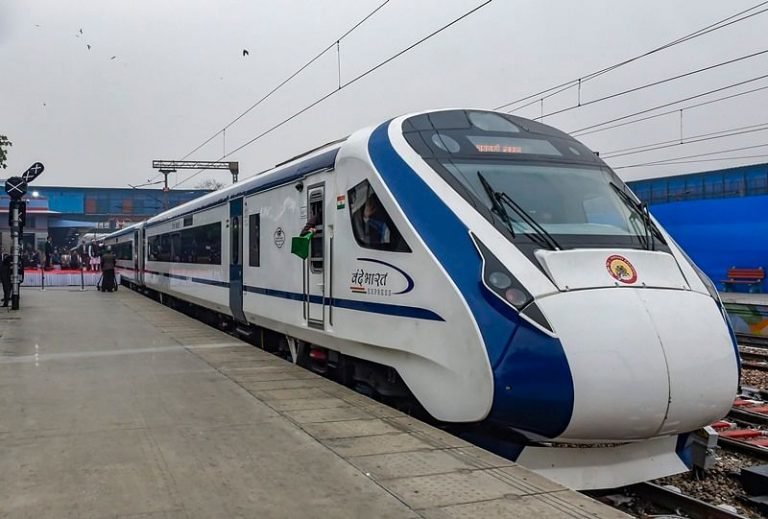
Vande Bharat Train/Representational image only

NEW DELHI (Metro Rail News): On June 20, 2023, Rail Vikas Nigam Limited (RVNL), which has a joint venture with Russian rolling stock giant TMH for the production of 120 Vande Bharat trains at Latur, said that the JV is still in place and that the necessary bank guarantee will be deposited following that.

This is the first sleeper coach for the Vande Bharat Project that will be used on Rajdhani routes.

In response to reports that the Railways may be forced to re-issue the tender after discharging the earlier one due to the dispute between TMH and RVNL over the issue of majority stakes, RVNL has clarified in its latest filing to the Bombay Stock Exchange (BSE) that it is “factually incorrect.”

The Railways also insisted that TMH and RVNL must resolve their shareholding conflict by September, adding that there is still time to deposit the bank guarantee. The Railways must receive a bank guarantee of Rs 200 crore.

A senior Railway Ministry official involved in the Vande Bharat tendering process stated, “As of now, there is no such move to re-issue the tender again.”

As the joint venture submitted the lowest offer for producing 120 Vande Bharat trains with sleeper accommodations, TMH-RVNL bagged the project for close to Rs 40,000 crore.

The Russian ambassador met with Railway Minister Ashwini Vaishnaw to diffuse the situation. Additionally, the Russian Embassy’s Trade Commissioner sent a letter clarifying the terms and conditions of the joint venture project to the relevant authorities.
The report regarding the recently disclosed joint venture between RVNL and TMH is false. No party has terminated the MoU between both sides (RVNL and TMH). Hence it is still in effect, according to RVNL’s notification to the BSE.

The details of the MoU are currently the subject of additional discussion. Any modifications to the terms of the agreement must be communicated to the exchange by the company.

Advertisement1
InnoMetro_2026

Indian Railways likely to Procure 60,000 Wagons to Boost Freight Traffic Share

0
Representational image only

NEW DELHI (Metro Rail News): To enhance the share of freight traffic carried by Indian Railways (IR), the Ministry of Railways is likely to acquire additional 60,000 wagons, estimated to cost around Rs 25,000 crore. The tenders for procuring these wagons, including 10,000 aluminium ones, will be floated between July and September.

According to a senior Railway Ministry official, “the ministry is finalizing a tender for the procurement of additional 50,000 wagons and is also considering a separate tender for the acquisition of 10,000 aluminium waggons.” These new tenders are part of a long-term aim to boost rail’s current share of freight traffic from 27% to 45% by 2030.

The official further disclosed that approximately 20,000 rakes from the second round of tenders will be procured by 2025, while the rest wagons will be delivered between 2026 and 2028.

An official stated, “Indian Railways intends to introduce a premium cargo service using aluminium rakes, which will not only be quicker than traditional rakes but will also adhere to manufacturers’ environmental, social, and governance (ESG) norms.”

The lightweight nature of aluminium will result in lower energy consumption, while customers opting for aluminium goods trains will receive ESG certificates from Indian Railways due to the wagons’ ability to save 14,500 tonnes of CO2 emissions and consume less energy, all while being corrosion-resistant.

The latest proposed tenders are part of the government’s larger drive to deploy over 1 lakh waggons over the next few years to increase freight loading to 2,000 million tonnes (MT) by 2024-25.

Vivek Lohia, the managing director of Jupiter Wagons, revealed that his company anticipates the release of tenders for 50,000 to 80,000 new wagons by Indian Railways in 2023-24. Lohia intends to bid for these tenders and has set his sights on securing orders for at least 20,000 wagons from the railways in the upcoming fiscal year.
With a current stock of approximately 320,000 wagons, Indian Railways intends to use the new acquisitions to supplement its existing capacity. These efforts form part of a larger plan to cater to 45 per cent of India’s freight traffic by 2030.

According to Indian Railways, aluminum rakes have a resale value of 80 percent and a lifespan that is 10 years longer than conventional ones. However, the manufacturing cost is 35 percent higher due to the all-aluminum superstructure.

In a statement, Hindalco mentioned that as the railways prepare to deploy over 1 lakh wagons in the upcoming years, there is a potential for an annual reduction of more than 25 lakh tonnes of CO2. This reduction can be achieved by shifting approximately 15 to 20 percent of the wagons to aluminum.

Advertisement1
InnoMetro_2026

Mumbai Metro’s Aarey-BKC Line Receives 5 Out of 9 Required Rakes

0
Mumbai Metro
Mumbai Metro/ Representational Image

Mumbai (Metro Rail News): The Mumbai Metro Rail Corporation (MMRC) has recently obtained five out of the nine rakes required for Phase I commercial operations between Aarey and BKC.

The MMRC ordered 31 eight-coach rakes from Alstom, a well-known rail transport manufacturer based in Sri City, Andhra Pradesh. The project gained momentum with the delivery of the first rake in July 2022. The official trial run was flagged off on August 30, 2022, by Chief Minister Eknath Shinde and Deputy Chief Minister Devendra Fadnavis.
According to the MMRC spokesperson, the remaining four rakes are currently under manufacturing.

Each MMRC rake has a cutting-edge Unattended Train Operation (UTO) technology that enables full automation for a start, stop, door opening, and management of emergencies, negating the need for onboard workers. The control room keeps a close eye on the train health.

These trains will initially be operated in pilot mode, but after a few months MMRC intends to request permission from the commissioner of Metro Rail Safety (CMRS) to operate them in driverless mode.

The order for these rakes, placed in September 2018, came at a total cost of 315 million euros to Alstom.

Moreover, the trainsets deployed on the Aqua Line will feature a regenerative braking system, contributing to a notable reduction in carbon emissions. With a length of 177.2 meters, the trainsets can accommodate approximately 3,000 passengers per trip, ensuring smooth and efficient transport for the city’s residents.

Safety remains a top priority for the MMRC, and the trains are equipped with various features to ensure passenger security. CCTV cameras, smoke detectors, emergency intercoms, fire extinguishers, and large detrainment doors have been installed to evacuate in emergencies quickly.

Furthermore, the design of the trainsets prioritizes accessibility, offering convenience and ease of travel for differently-abled individuals.

Advertisement1
InnoMetro_2026

Powering the Future: India’s First Hydrogen Trains Set to Roll Out in Jind District

0
Indian Railways Hydrogen train
Hydrogen Train/Representational image only

JIND (Metro Rail News): Hydrogen-powered trains will soon be introduced in India, starting from Jind district in Haryana. This will be a significant milestone as it will be the first time such trains are being used in the country. The General Manager of Northern Railway, Shobhan Chaudhary, visited the location and shared that the trains are expected to be operational by the end of this year.

To support this initiative, India’s first hydrogen plant is being established near the railway junction in Jind district. The plant is in its final phase of development and will produce hydrogen from water. This plant will play a crucial role in powering the hydrogen trains.
The first prototype of the hydrogen train is scheduled to run between the Jind-Sonipat section of Northern Railway in the fiscal year 2023-2024. Currently, trains in India run on diesel and electricity, making this hydrogen project a new and innovative venture.

The hydrogen train will consist of eight bogies and will be environment friendly, as hydrogen fuel does not produce harmful emissions. Senior officials have visited the site to assess the requirements for setting up a hydrogen pump in Jind and establishing the necessary infrastructure.

Advertisement1
InnoMetro_2026

Indian Railways and USAID Join Forces for Net-Zero Emissions

0
Indian Railways signs MoU with USAID to collaborate on renewable energy and energy efficiency.

NEW DELHI (Metro Rail News): The Indian Railways has taken a major step towards reducing its carbon footprint and working towards the goal of achieving net-zero carbon emissions. A Memorandum of Understanding (MoU) has been signed between the Indian Railways and the United States Agency for International Development (USAID) to collaborate on renewable energy and energy efficiency.

In the presence of Shri Anil Kumar Lahoti, Chairman & CEO, Railway Board, the Memorandum of Understanding (MoU) was signed between Shri Naveen Gulati, Member (Traction and Rolling Stock), Railway Board, Indian Railways, and Ms. Isabel Coleman, Deputy Administrator, USAID.

Under this MoU, the Indian Railways will receive technical assistance and support from USAID. The collaboration will focus on various areas, including long-term energy planning for the railways with a focus on clean energy, development of an Energy Efficiency Policy and Action Plan for buildings within the Indian Railways system, planning for clean energy procurement to support their goal of achieving net-zero emissions, technical support to address regulatory and implementation challenges, bid design and management support for large-scale renewable energy projects, and assistance in promoting e-mobility initiatives for the railways. These collaborative efforts will contribute greatly to the Indian Railways’ sustainability goals.

The partnership with USAID is expected to play a crucial role in helping the Indian Railways achieve its ambitious target of achieving net-zero carbon emissions by 2030. This collaboration will provide valuable expertise and support in the journey towards a more sustainable and environmentally friendly railway system in India.

Advertisement1
InnoMetro_2026

DMRC Increases Speed of Airport Express Line Metro Trains, Shortens Travel Time

0
Delhi Metro Airport Express Line
Delhi Metro Airport Express Line/Representational image

NEW DELHI (Metro Rail News): The Delhi Metro Rail Corporation (DMRC) has announced a speed increase for metro trains on the Airport Express Line (AEL), which connects New Delhi to Dwarka Sec-21 via IGI Airport. The speed limit has been increased from 100 kilometres per hour (KMPH) to 110 KMPH, substantially cutting travel time.

The DMRC received the necessary approval from the Commissioner of Metro Rail Safety (CMRS) to implement the increased speed. Consequently, passengers travelling from New Delhi station can now reach the Airport (T-3) in approximately 16 minutes, highlighting the improved efficiency of the metro system.

As a result of the increased speed, it now takes only 15 minutes to go from the airport to Rajiv Chowk, the city’s commercial centre.

After the increase, the journey time from New Delhi to Dwarka Sec-21 metro station will be roughly 20 minutes. Furthermore, after the maximum speed limit of 120 KMPH is imposed in the coming days, the overall travel time on the entire AEL will be lowered to 19 minutes.
The DMRC has achieved a remarkable feat in the Indian metro sector by setting a new benchmark with a speed of 110 KMPH, solidifying its position as one of the fastest metro systems in the country. This achievement follows the previous increase in speed on the Airport Express Line from 90 KMPH to 100 KMPH on March 22, as confirmed by DMRC officials.

Furthermore, the DMRC has plans to further elevate the speed to 120 KMPH after receiving the necessary clearance. Once implemented, this will lead to an even shorter travel time for commuters on the AEL.

According to the DMRC, commuters have a practical and affordable choice with the combination of fast transport and easy access to the airport.

In addition to speed increases, the DMRC has lately implemented initiatives to improve passenger convenience, such as rapid and cashless ticketing via QR codes and WhatsApp-based ticketing.

Advertisement1
InnoMetro_2026

Telangana CM Announces Extension of Metro Rail from Patancheru to Hayathnagar

0
Hon'ble Chief Minister K. Chandrasekhar Rao at Foundation Stone Laying Ceremony of Government Super Specialty Hospital at Patancheru

TELANGANA (Metro Rail News): Shri K. Chandrasekhar Rao (KCR), Chief Minister of Telangana, has announced plans to extend the metro train network from Patancheru in Sangareddy district to Hayathnagar in Rangareddy district.

Speaking at a public meeting after laying the foundation stone for a new super-speciality hospital in Patancheru, the Chief Minister added that this expansion would become a reality during the next term of the Bharat Rashtra Samithi (BRS) government. He highlighted the importance of extending the metro rail network to the Patancheru industrial area, which would facilitate further regional growth and development.

Addressing the gathering, Mr. Chandrasekhar Rao emphasized the government’s unwavering commitment to achieving comprehensive growth in the state. He cited the remarks of leaders from Andhra Pradesh, including former Chief Minister N. Chandrababu Naidu, who acknowledged the significant increase in land rates in Telangana. This, according to Mr. Chandrasekhar Rao, serves as a testament to the remarkable development of the state. He further stated that Telangana’s per capita income and power consumption levels surpass the national average, underscoring their significance as key growth indicators. The Chief Minister also highlighted the parallel progress in Telangana’s development and welfare initiatives.

T. Harish Rao, the Finance and Health Minister, Telangana Government, attributed Telangana’s impressive development to the visionary leadership of Mr. Chandrasekhar Rao. MLA Gudem Mahipal Reddy elaborated on the substantial progress made in the state over the past nine years. The event was attended by Chief Secretary Shanthi Kumari, MP Ranjith Reddy, MLC Mahender Reddy, Palla Rajeshwar Reddy, and other dignitaries.

Advertisement1
InnoMetro_2026

India’s Largest Private Rail Coach Factory Opens in Hyderabad

1
India's largest private rail coach factory
India's largest private rail coach factory/ Image from twitter

HYDERABAD (Metro Rail News): On June 22, 2023, Hyderabad, India’s largest private rail coach factory, was officially inaugurated in Kondakal village, Rangareddy district, near Hyderabad. The esteemed facility, constructed by Medha Servo Drives Private Limited, a renowned Telangana-based company specializing in designing and manufacturing complex electrical and electronic railway products, marks a significant milestone for the state.
private rail coach factory 3

Chief Minister K. Chandrasekhar Rao, gracing the inauguration ceremony, expressed immense pride in Telangana’s accomplishment of housing a homegrown company that will now play a key role in the construction of rail coaches within the state.

The Chief Minister also expressed his delight over Medha Servo Drives Private Limited securing a prestigious monorail order from Mumbai, further bolstering the company’s reputation and positioning them as a key player in the rail industry.

Following the Andhra Pradesh Reorganisation Act 2014, Telangana was guaranteed the establishment of a rail coach manufacturer within six months of its formation.

Medha Group took the initiative in 2017 and signed a Memorandum of Understanding (MoU) with the Telangana State Industrial Infrastructure Corporation (TSIIC) to create a private rail coach manufacturing, clearing the door for realizing this long-awaited project.
Private rail coach factory 4

Industries Minister K.T. Rama Rao laid the foundation stone for the factory on August 13, 2020. The private rail coach factory, which has an excellent investment of Rs 1,000 crore, has a production capacity of 500 coaches and 50 locomotives yearly.

Spanning 100 acres, the state-of-the-art facility can manufacture various types of railway rolling stock, including coaches, train sets, locomotives, metro trains, and monorails.

Mr. Kasyap Reddy, the Managing Director of Medha Servo Drives, revealed during the inaugural ceremony that approximately Rs 400 crore had been invested in the project’s first phase, with a proposed investment of Rs 805 crore in total.

Reddy announced that by the end of this year, the facility will successfully manufacture coach components for the Monorail project. He expressed aspirations to expand the project in subsequent phases, aiming to produce railway products for India and the global market.

The establishment of India’s largest private rail coach factory is a crucial step for Hyderabad and Telangana which contributes to the country’s railway development and technological advancement. Medha Servo Drives’s creative efforts and the Telangana government’s support promise a brighter future for the rail industry, both domestically and internationally.

Advertisement1
InnoMetro_2026