Home Blog Page 196

Commencing Trials: RapidX Trains Begin Speed Test Runs, Covering 17km in Only 12 Minutes

0
Rapidx train
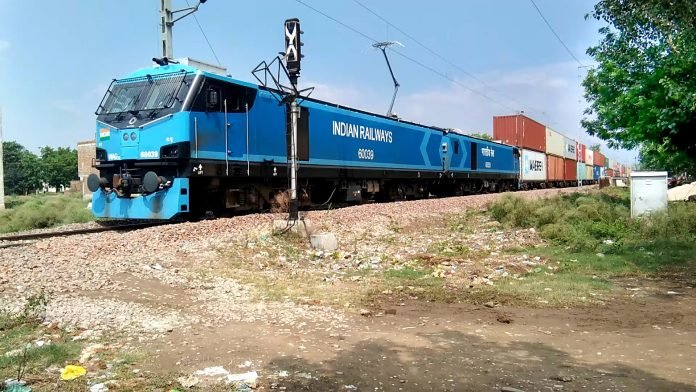
Rapidx train/ Representational image only

GHAZIABAD (Metro Rail News): The RapidX trains are being tested at high speeds of 160 km/h on a 17 km stretch between Sahibabad and Duhai depot. This short distance is covered in just 12 minutes.

To check for any technical issues, the empty trains are running from 6 am to 11 pm, with a 15-minute gap in between. Soon, passengers will be able to use this route.

The RAPIDX semi-high-speed regional railway service is a collaboration between the central government and the state governments of Delhi, Rajasthan, Haryana, and Uttar Pradesh. The aim is to create a modern railway system that connects places better and makes travel quicker.

Known as the RRTS project, the Ghaziabad-Meerut Rapid Rail is India’s first high-speed rail corridor. By 2025, this project is planned to be fully operational. When the 82 km Delhi-Ghaziabad-Meerut corridor is ready, people can travel the whole distance in about an hour, with trains every 5-10 minutes.

The initial part of the project is 17 km long and has five stations: Sahibabad, Ghaziabad, Guldhar, Duhai, and Duhai Depot. The trains can go as fast as 180 km/h. The Duhai depot is the main hub for managing the RapidX services. After this, more routes like Delhi-Gurgaon-SNB-Alwar and Delhi-Panipat will be started.

rrts train by deepu dharamarajan


RAPIDX is going to be expanded with more routes: Delhi-Gurgaon-SNB-Alwar and Delhi-Panipat. The first plan will happen in three parts. Firstly, a 107 km track from Delhi’s Sarai Kale Khan to SNB Urban Complex. Secondly, from SNB to Sotanala, which is 33.3 km. Thirdly, the SNB-Alwar route, which is 58 km. RapidX trains will make it easier for people from Haryana towns like Murthal, Gannaur, Samalkha, and Panipat to travel to Delhi using the Delhi-Panipat line.

RapidX trains can bring down travel time between cities, making commuting faster and more convenient. The focus on tests and checks before starting regular services shows how much they care about safety and reliability.

Advertisement1
InnoMetro_2026

L&T Declared As the Lowest Bidder for Hyderabad Airport Metro Project

0
Hyderabad Metro/Representational image only

HYDERABAD (Metro Rail News): L&T (Larsen and Toubro) has been declared the lowest bidder for the civil construction and system procurement contract of the 31-km Hyderabad Airport Metro project. The project aims to connect Mindspace Junction to Rajiv Gandhi International Airport (RGIA) at Shamshabad, reducing travel time significantly.

In May 2023, the Hyderabad Airport Metro Limited (HAML) had invited bids for the engineering, procurement, and construction (EPC) contract. After much interest from national and global firms, only L&T and NCC submitted their bids. L&T’s bid stood out, securing them the contract.

The project, funded by the state government, involves designing and constructing various aspects, including viaducts, underground structures, stations, tracks, electrical and mechanical works, rolling stock, power supply, and more.

The 31-km metro corridor will include an elevated section of 29.3 km and an underground part of 1.7 km. With nine stations planned, including an underground one by the airport terminal, provisions for four additional stations are also considered.

The financial bids were assessed jointly by SYSTRA – RITES – DB Engineering JV, the General Consultant, and HAML’s officials. The recommendation for the contract award will be made to the Telangana state government for L&T’s bid. A groundbreaking ceremony is slated for September 11.

Advertisement1
InnoMetro_2026

GMR Airport Instructed to Provide 48 Acres of Land for Metro Rail Depot Construction

0
Hyderabad Airport Metro/ Representational Image
Representational Image

HYDERABAD (Metro Rail News): The Hyderabad Airport Metro Rail project is moving ahead with significant developments. GMR Airport has been instructed to provide 48 acres of land for the depot’s construction. This depot is crucial for the proposed 31-km ₹6,250 crore Hyderabad Airport metro rail project.

To ensure the smooth alignment of the fast metro route from Mindspace Junction to Shamshabad, various government departments and organizations that own land obstructing the path have also been asked to hand over the identified land. This directive was issued by K.T. Rama Rao, the Minister for IT, Municipal Administration, and Urban Development.

Furthermore, there are plans to expedite the acquisition of land for the remaining 5.5 km stretch of the Old City Metro, connecting MGBS, Imlibun, and Falaknuma. This extension is estimated to cost ₹1,800 crore, and the construction work is eagerly anticipated.
During a meeting at the Metro Rail Bhavan, key officials discussed strategies for executing these projects. HAML Managing Director N.V.S. Reddy presented the proposed plan of action for construction on these routes and the challenges they face.

Rama Rao emphasized the importance of initiating surveys for the newly approved metro corridors. He urged the MD to prepare Preliminary Project Reports and Detailed Project Reports for these corridors in the next few months. These reports will be submitted to the Central government for funding consideration. Various funding options will also being explored.

To enhance the existing metro rail network spanning 69 km, the Minister proposed increasing the number of coaches, enhancing feeder services, and improving footpaths. These measures aim to double the current daily metro ridership of five lakh, contributing to reduced traffic congestion in the city.

The progress of the Hyderabad Airport Metro Rail project brings hope for improved connectivity and urban mobility in the region.

Advertisement1
InnoMetro_2026

RailTel Secures Work Order from Pimpri Chinchwad Smart City Limited

0
Representational image only

NEW DELHI (Metro Rail News): RailTel Corporation of India Ltd, a Mini Ratna PSU under the Ministry of Railways, has received a Work Order from Pimpri Chinchwad Smart City Limited (PCSCL) for providing end-to-end services for monetisation of PCSCL City Network Infrastructure on “Revenue Sharing Model” for 10 years. It is the first of its first-of-its-kind order bagged by RailTel to monetise the Telecom infrastructure of a Smart City.  The Pimpri Chinchwad city is in Pune area & is the eighteenth most populous city in India and the fifth-largest in the state of Maharashtra. During monetisation, RailTel shall generate revenue through leasing arrangements. The projected Estimated Annual Revenue is ₹ 70 Crores with total revenue of ₹700 Crores for 10 years.

 RailTel shall pay 32.4 Cr of fixed revenue to PCSCL annually. Additionally, RailTel shall pay a minimum of 21 % as additional revenue to PCSCL over the total additional revenue generated for 10 years.

The project also entails setting up of a Network Operation Centre (NOC), operations and maintenance of the existing digital infrastructure connecting citizens, government, business, communities and future extension of PCSCL network Infrastructure along with operations & maintenance activities for a period of 10 years. Also, the project involves making the PCSCL self-sustainable organisation and to evolve its credit worthiness for raising additional resources from the market Under this Smart city network project, OFC and Telecom duct network infrastructure of PCSCL covering all the critical and major areas like PCMC offices, police stations, critical junctions, footfall area etc, under the PCMC municipal limits shall be monetised by RailTel by leasing the spare ducts and poles.

 RailTel shall also provide PCSCL-required cores of fibre cable for providing connectivity to smart city elements across the PCMC to create a digitally connected ecosystem for its citizens and to render connected, efficient, and responsive city services (PCMC, PCSCL & Police). This order has been acquired through the rigorous and open competitive bidding process based on the highest Cost Method (H1).

Commenting on the development, Sh. Sanjai Kumar, Chairman and Managing Director, RailTel said, “RailTel is one of the largest neutral telecom infrastructure providers in the country. We are thrilled to collaborate with PCSCL in this transformative journey. RailTel is committed to create a digitally connected city that embraces innovation, inclusivity and economic growth. RAILTEL is eager to embark on this transformative venture and looks forward to working closely with PCSCL to achieve its vision of a digitally advanced and prosperous city.”

Advertisement1
InnoMetro_2026

MMRDA Plans Construction of Two Metro Depots in Thane District

2
Mumbai Metro Line 6
Representational Image

MUMBAI (Metro Rail News): The Mumbai Metropolitan Region Development Authority (MMRDA) is working on building two metro depots in the Thane district. This move is a significant step in expanding the metro network. The MMRDA has acquired important land for these depots, which will be crucial for the operation, maintenance, and repair of metro trains.

For the upcoming Metro Line 12 that will connect Kalyan and Taloja, the government has allocated 47 hectares of land in Niljepada, Thane district, to MMRDA. This is an important development for this metro route.

Additionally, 59.65 hectares of land in Dongri Village (Bhayander West) have been acquired for the development of Metro Route 9 and 7A. This expansion will improve metro connectivity within Thane district, offering better transportation options for residents.
Currently, work is in progress on the construction of seven metro lines, including 2B, 4, 4A, 5, 6, 7A, and 9.

MMRDA is also actively planning to connect Metro Route 12 (Kalyan-Taloja) with Metro Route 5 (Thane-Bhiwandi-Kalyan), which will allow smoother travel between Thane and Navi Mumbai. It is studying the integration of Navi Mumbai Metro station with Metro Route 12 to improve connectivity in the region.

Dr. Sanjay Mukherjee, IAS, Metropolitan Commissioner of MMRDA, expressed gratitude to CM Eknath Shinde and DCM Devendra Fadnavis for their cooperation in providing land for the metro projects. He mentioned that all metro projects are progressing rapidly, and with the newly acquired lands, the work will be completed soon. The state government’s assistance is aiding in transferring proposed metro depots. They are also looking into extending Metro route 12 and integrating it with Navi Mumbai Metro station.

Advertisement1
InnoMetro_2026

Hindalco and Texmaco Collaborate to Manufacture Aluminum Rail Wagons and Coaches

0
Hindalco and Texmaco collaborate to make aluminium rail wagons and coaches.

MUMBAI (Metro Rail News): Aditya Birla Group’s Hindalco Industries and Texmaco Rail & Engineering are teaming up to produce aluminium rail wagons and coaches for Indian Railways. This partnership aims to contribute to a project initiated by Indian Railways called ‘Mission 3000 MT’, which focuses on fulfilling a demand of 3000 metric tonnes of freight by 2027.

image 2


The investment for this joint venture is estimated to be around Rs 200 crore. Hindalco will offer its profiles, sheets, and plates of its aluminium alloys, as well as its expertise in fabrication and welding. On the other hand, Texmaco will contribute technical expertise, overseeing factory establishment, designing, organizing the production line, and supplying skilled workforce, as stated by the companies.

Satish Pai, the Managing Director of Hindalco Industries, highlighted that the introduction of India’s first aluminium rake showcased the advantages of increased payload capacity and significant CO2 reduction. This partnership will reinforce their commitment to improving the freight industry and passenger mobility, aligning with Railways’ net-zero objectives.

The collaborative plan involves establishing a local facility capable of producing top-notch aluminium wagons, coaches, and sizeable containers.

Advertisement1
InnoMetro_2026

State Cabinet Approves Rs 542 Crore for 1.5-Km Tunnel Linking Museums in Patna

0
Image for representation only

PATNA (Metro Rail News): On Tuesday, the state cabinet granted its approval to the updated cost estimate of Rs 542 crore for the construction of a world-class heritage tunnel or subway. This tunnel will link Bihar Museum with Patna Museum.

The tunnel, a technological marvel, is designed to be 1.5 kilometers long with a diameter of eight meters. It will be situated 15 to 20 meters underground and is the first of its kind in the country, according to S Siddharth, the additional chief secretary of the state cabinet secretariat department.

The tunnel will have entry and exit buildings with a G+1 structure and three-level basements. These buildings will house facilities like goods lifts, security checks, and toilets. Inside the tunnel, there will be an art gallery that showcases Bihar’s art forms, culture, heritage (including Madhubani painting), murals, and other artifacts.

Delhi Metro Rail Corporation is overseeing the construction of this tunnel, which will incorporate safety measures for emergencies. It will also facilitate combined ticketing and a seamless transition from the metro system. The tunnel will pass at a depth of 29 meters at the crossing point of the Patna metro rail tunnel.

Advertisement1
InnoMetro_2026

DFCCIL Successfully Raises $100 Million Funding from Japan’s MUFG Bank

0
Western Dedicated Freight Corridor
Representational image only

NEW DELHI (Metro Rail News): The Dedicated Freight Corridor Corporation of India Ltd (DFCCIL) has successfully raised $100 million in funding through an external commercial borrowing (ECB) loan from Japan’s MUFG Bank Ltd.

This achievement was made possible with the support of a credit enhancement guarantee provided by the Multilateral Investment Guarantee Agency (MIGA), a prominent member of the World Bank Group.

MUFG Bank’s GIFT branch played a pivotal role in facilitating this groundbreaking transaction, which stands as a remarkable milestone for DFCCIL. This event not only marks DFCCIL’s inaugural commercial financing but also represents the first-ever MIGA-covered transaction in India, making it a significant development in the country’s financial landscape.

DFCCIL holds the responsibility of constructing and managing dedicated freight railway corridors spanning across the nation. This strategic initiative aims to alleviate congestion within existing transportation networks and promote the establishment of a more efficient, reliable, and sustainable transport infrastructure system.

Shashank Joshi, Deputy CEO of MUFG India, expressed that the financing structure established through this collaboration could serve as a model for alternative financing solutions, thus playing a vital role in propelling India’s ambitious infrastructure development efforts forward.

Multilateral Investment Guarantee Agency (MIGA), a key component of the World Bank, specializes in providing political risk insurance and credit enhancement solutions for various projects. The loan acquired through this arrangement holds the potential to open up new avenues for funding large-scale infrastructure projects and other business ventures within the country, as stated by Hira Ballabh, Director of Finance at DFCCIL.

Advertisement1
InnoMetro_2026

Agra Metro: TBM Shivaji launched in the Ramp Area of the Priority Corridor

0
Agra metro
Image for representation only

AGRA (Metro Rail News): To provide metro service to the city residents ahead of the designated time, Uttar Pradesh Metro Rail Corporation launched the third Tunnel Boring Machine (TBM) named ‘TBM Shivaji’ for tunnel construction in the ramp area of the underground section of the Agra Metro Priority Corridor. During this event, senior officials, including MD Shri Sushil Kumar and Director (Works & Infrastructure) Shri Chandrapal Singh from UPMRC were present.

Shri Sushil Kumar, MD, UPMRC

MD Shri Sushil Kumar, Managing Director of Uttar Pradesh Metro Rail Corporation, praised the Agra Metro team for this achievement and stated that Agra Metro will be a project that constructs the fastest underground section with great speed in the world. He mentioned that UP Metro has taken another step towards fulfilling the commitment to provide metro service to city residents ahead of the designated time. In order to expedite the tunnel construction work in the underground section, TBM Shivaji has been launched by UP Metro.

WhatsApp Image 2023 08 09 at 17.14.15

TBM Shivaji

Shri Sushil Kumar explained that the Agra Metro Priority Corridor comprises a total of 6 stations, including three elevated and three underground stations. All three elevated stations of the priority corridor are ready, where high-speed testing of Agra Metro trains is being conducted. Meanwhile, rapid construction work is ongoing in the underground section. In order to connect the elevated section with the underground section of the Priority Corridor, ramps are being constructed using the cut-and-cover method. In this ramp area, the tunnel will be constructed from the Taj Mahal Metro Station to the retrieval site, for which TBM Chhatrapati Shivaji has been launched.

Construction Process for Tunnel in Ramp Area

For the tunnel construction in the ramp area, TBM Shivaji will be launched first in the up-line from the launching shaft at Purani Mandi. Following this, TBM Shivaji will be retrieved from the retrieval shaft. Subsequently, TBM Shivaji will be launched in the down-line again for tunnel construction.

Pooja Ceremony for Launch of TBM Shivaji

What is the cut-and-cover Method?

In the cut-and-cover method, utility lines (water and gas pipelines, electricity and phone lines, sewer lines, etc.) are inspected first at the marked location for the ramp. If any utility is found within the marked area, it is relocated. After this process, a diaphragm wall is constructed for ramp construction. Then, using machines, the ramp is excavated according to the designated gradient. After excavation, the casting of the base slab of the ramp is done. After casting the roof slab, the construction of the cut-and-cover tunnel takes place.

Meanwhile, TBM Yamuna and Ganga are constructing the tunnel towards the Taj Mahal Metro Station from Agra Fort at a high speed. Currently, TBM Yamuna has reached near the Taj Mahal Metro Station from the Yamuna mid-shaft, and TBM Ganga is also rapidly constructing the tunnel.

It is noteworthy that in Tajnagari, a metro network of two corridors, totaling 29.4 kilometers in length, is being established with 27 stations. The construction work of the 14-kilometer-long corridor between Taj East Gate and Sikandra is progressing rapidly. This corridor will have 13 stations, including 6 elevated and 7 underground stations. For this corridor, a depot is being constructed at the PAC campus. Additionally, between Agra Cantt and Kalindi Vihar, a nearly 16-kilometer-long second corridor will be constructed, featuring 14 elevated stations. A depot will be built in the Kalindi Vihar  for this corridor.

Advertisement1
InnoMetro_2026

When It Comes to Sustainable and Resilient Infrastructure, Digital Twins Are the Sharpest Tools in the Shed

0
Image for representation only

A quick glance at any newspaper around the world will reveal stories of drought, excessive temperatures—cold and hot—water shortages, extreme flooding, storms, fires, and all sorts of climate-related catastrophes.

As communities, businesses, and governments cope with these events, we need to acknowledge that the infrastructure that we build plays a big part in addressing our relationship with our planet. Infrastructure produces economic and social advancements in communities, but it has historically driven carbon emissions and other unwanted environmental impacts. By advancing how infrastructure is designed, built, and operated, we can aspire to meet both our economic and sustainability goals as we future-proof our physical environment from climate change. 

Today, immersive technology, as a precursor to the metaverse, lets software developers create virtual, interactive worlds for any kind of purpose in any kind of setting. We can use this technology to make our infrastructure more sustainable and resilient in the real world.

Case in point, the infrastructure digital twin.

An infrastructure digital twin is a 3D digital representation of something in the physical world that is continuously updated with real-time data, making the digital twin a “live” interactive digital representation of an object or system. In interactive 3D worlds created just for entertainment, engineering-grade accuracy and the laws of physics do not have to apply. But for infrastructure, they are a requirement. Infrastructure digital twins must have millimetre precision, geospatial alignment, and support for complex, 3D engineering schemas.

Whether a water pipe buried beneath a city street or a wind turbine three miles offshore, infrastructure digital twins incorporate model data from concept through construction, such as reality data from drone surveys—including the environmental surroundings. They also gather data through devices connected to the Internet of Things (IoT), such as fixed or mobile sensors that capture detailed, engineering-rich information—including temperature fluctuations, wind speeds, and carbon emissions.

As the infrastructure engineering software company, Bentley Systems is advancing infrastructure digital twins. By pairing infrastructure digital twins with advanced visualization and simulation technology—such as Epic Games’ Unreal Engine that powers the ever-popular online interactive game, Fortnite, as well as leading platforms from NVIDIA (Omniverse) and Unity—we can leverage that data into immersive virtual experiences to analyze the harmful effects of flash flooding, monitor pollution in cities, and even manage the health of trees in an urban landscape.

Who would have thought that designing, building, and operating infrastructure in interactive digital worlds could help us track carbon emissions and conserve resources to positively impact climate change?

The key to harnessing the value for the planet related to infrastructure is a physically accurate digital twin complete with rich engineering data to model not only the built infrastructure, but also its surroundings. Imagine being able to model the real world that is affected by climate change and then generate rich metaverse experiences and simulations to find solutions. Whether it is capturing changing flood plains and ocean level rise in the natural world or analyzing the resiliency of critical infrastructure like an electrical grid, infrastructure digital twins hold the key.

A point in time view is not enough; however, by recording and modelling processes in our built and natural environments and tracking those changes over time, we can use infrastructure digital twins like a time machine to look at where we have been, where we are now, and where we are going. This is a powerful tool to assess, change, and even reverse our carbon footprint.

Infrastructure digital twins, and the immersive interactive experiences based upon them, offer up the virtual change agents and create a stage for sustainably meeting the world’s infrastructure needs.

Technology is only of value if it is usable and accessible. Digital twin technology, with the evolving metaverse, provides accessibility across any platform to match the desired experience—web, desktop, mobile, or mixed reality. These advances reach beyond the gaming community to infrastructure designers and engineers, project managers, and other stakeholders who want to visualize and model the sustainability of their project—whether they are coordinating a construction site, touring a power plant, or redesigning a bridge to be more resilient against extreme weather. Engineers can use real-time data and artificial intelligence to take us on a simulated journey into the future and see the outcomes of design decisions, methods, and material selection that affect our carbon footprint.

Combating climate change is a global effort, and any organization trying to meet sustainable development goals needs the right tools to get there. This technology can be democratized for any project size, scope, or complexity, regardless of where in the world the project is located. The economic and environmental benefits of using digital twins for infrastructure have no boundaries. Rather, the open-source nature of collaborating in the virtual world takes full advantage of talent from any location to solve pressing problems.

According to the Center for Strategic & International Studies, clean water infrastructure is considered “a critical aspect of the water agenda” set by the G7 Build Back Better World Partnership (B3W), and digital twin technology is poised to take on the challenges of water scarcity and sanitation on a global scale.

At the National Oceanic and Atmospheric Administration, National Climatic Data Center scientists use historical rainfall data from digital twins to virtually test the operation of existing stormwater systems. They can then forecast data to model the impact of a major storm event and see the impact that it would have on any present or future stormwater infrastructure designs. Water infrastructure projects mapped with digital twins are addressing outdated stormwater systems that are buckling under the stress of heavier rainfall and increased flooding caused by climate change.

Achieving a zero-emissions future could also be possible with the help of infrastructure digital twins. Scientists and engineers are working virtually using infrastructure digital twins to create a carbon-free energy experiment, with 35 countries collaborating to build the world’s largest tokamak—a magnetic fusion device intended to prove the feasibility of nuclear fusion. The International Thermonuclear Experimental Reactor (ITER) project, based in southern France, expects the experiment to generate 500 megawatts of energy to power up to 200,000 homes, if successful. The implications of this potential, unlimited source of clean energy would have an unprecedented impact on sustainable development goals.
What does Net Zero mean and how will we achieve it?

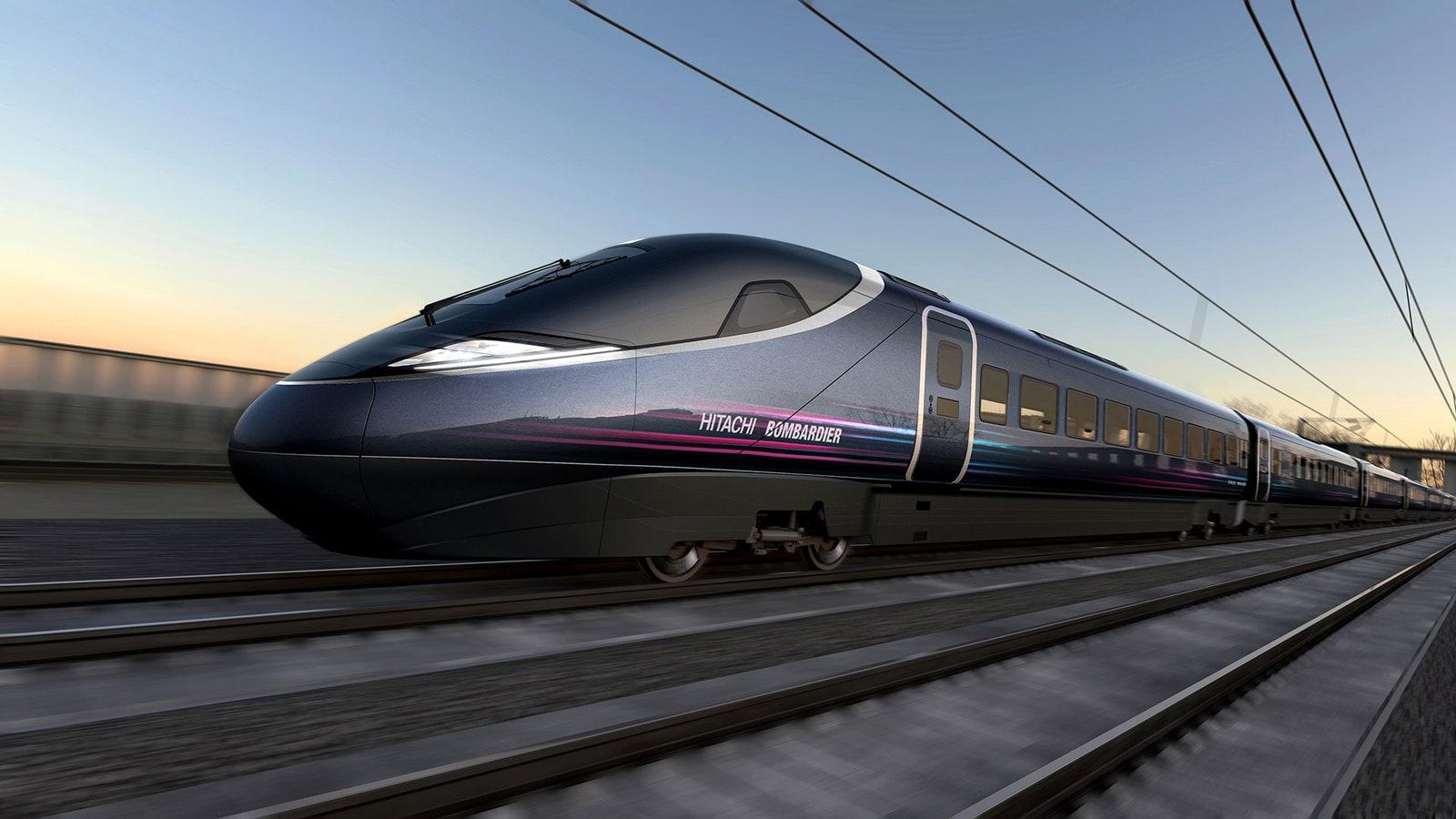
Infrastructure digital twins continue to play an impactful role in reducing carbon emissions from road and rail projects. The United Kingdom’s high-speed rail network is a prime example of how infrastructure digital twins enabled engineers to model the carbon impact of a rail system before the construction phase, optimizing a low-carbon design and getting on track to meet the carbon requirements set forth by the United Nation’s net-zero initiative. 

How high-speed trains could change Britain for the better | WIRED UK

Due to the increased frequency and intensity of extreme weather events, infrastructure is under growing pressure for improved monitoring and inspection. In 2021, the New York State Department of Transportation (NYSDOT) used digital twins to assess and replace the East 138th Street bridge in New York City’s Bronx borough. Completing the project in such a congested area involved complicated structural design and coordination using a digital twin as the primary construction document. The digital twin may now be continuously updated and used as a tool for asset management and bridge inspection.

While the metaverse is evolving, some experts anticipate that it could be the next great labour platform. Right now, in the world of infrastructure, project teams and stakeholders are already meeting virtually to conduct immersive infrastructure design reviews and other critical tasks, such as on-site coordination of resources, to effectively bring those projects to completion.

Rendering of virtual worlds can be computer-intensive, driving their own carbon footprint. Being mindful of this and making efficient computing design choices should be a consideration when creating metaverse experiences.

As the needs of our world continue to grow and change in size and scope, digital twins are essential for future-proofing infrastructure and driving climate action with sustainable designs that cut carbon emissions and eliminate waste.  

Infrastructure digital twins are not futuristic. As fundamental building blocks of the infrastructure metaverse, they allow groups to interact and collaborate in new ways to help solve problems today for a more sustainable and resilient tomorrow. 

By Lori Hufford, Vice President, Engineering Collaboration, Bentley Systems 

Advertisement1
InnoMetro_2026