Nagpur Metro: An Overview
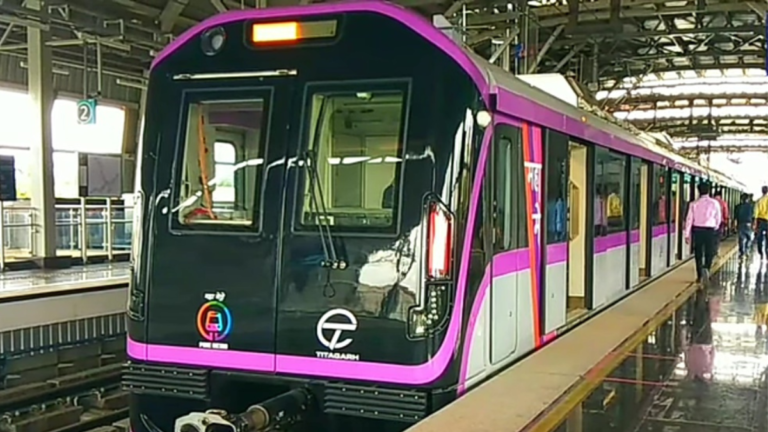
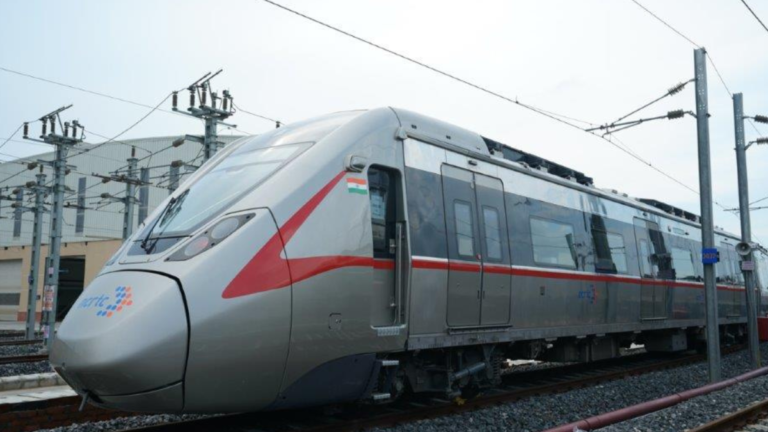
Nagpur Metro Rail is Maharashtra’s new rapid transport system. The MRTS spans 38.21 kilometres. Nagpur Metro is a modern public transportation system that operates in Nagpur City. It is in its early stages, with 24 metro stations and a total route length of 26.1 km. Nagpur Metro is being constructed in two phases, each with a single line. The system is based on a three-coach train that travels at Nagpur Metro and operates on standard gauge lines with overhead wires producing 25 kV AC. The vehicle’s maximum speed is 90 kilometres per hour, while its average speed is 33 kilometres per hour. The concept was proposed in 2012 when cities with a population of over 20 lakh became eligible for a metro rail system. The government’s decision made twelve cities in India eligible for metro rail, including Nagpur. Then-Union Minister for Urban Development Kamal Nath suggested a metro rail in Nagpur and sought a detailed project study from the state government. The Nagpur Improvement Trust (NIT) signed a deal with the Delhi Metro Rail Corporation (DMRC) on February 22, 2012, to develop the Detailed Project Report (DPR) for Nagpur’s metro rail. The Central Ministry allocated Rs. 2.4 crore to the State Government to carry out the comprehensive and detailed project work.
The Cabinet approved and permitted the establishment of Nagpur Metro Rail Corporation Limited (NMRCL), currently designated and known as Maharashtra Metro Rail Corporation Limited (MAHA-METRO), to carry out the project. Maha Metro is a Special Purpose Vehicle (SPV) formed to ensure the seamless execution and operation of the Nagpur Metro Rail Project. It is a 50:50 joint venture between the Government of India and the Government of Maharashtra. Maha Metro will exclusively be responsible for the project’s successful and timely completion and ongoing operations.
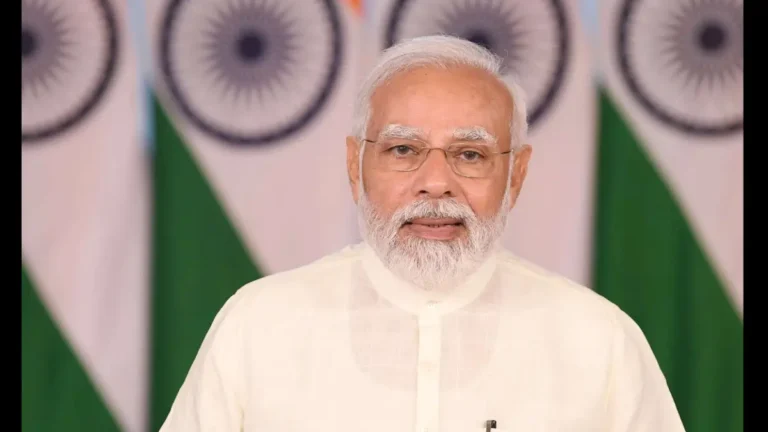
The initial cost of Phase I of the metro project was expected to be around Rs. 8,650 crores, which was later revalued and the final cost was estimated to be Rs. 9,279 crores. The Maharashtra government approved the project in February 2014. The Union Cabinet also approved the project on August 20 2014. PM Narendra Modi laid the foundation stone on August 21 during his visit to the city. The project’s construction began on May 31, 2015, with the trial run beginning on September 30, 2017.
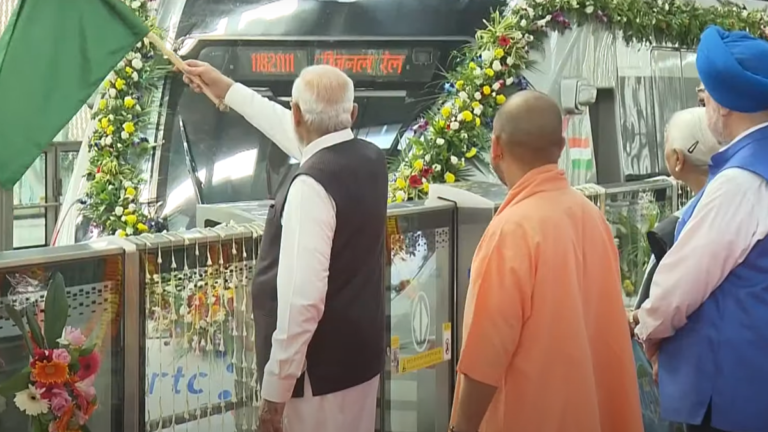
On March 8, 2019, the Prime Minister, Maharashtra Chief Minister Devendra Fadnavis and Union Cabinet Minister Nitin Gadkari inaugurated the operations of the Nagpur Metro.
Through video conference. With the inauguration, Nagpur Metro became India’s 13th operational metro system. Nagpur Metro is referred to as the country’s greenest metro system. The then Chief Minister of Maharashtra, Uddhav Thackeray, inaugurated a 1.6-kilometre extension between Sitabuldi and Kasturchand Park on August 21, 2021. This included the Zero Mile Freedom Park station, which also features a 60,000-square-foot park and a 20-story skyscraper created by a French architect. On December 11, 2022, Prime Minister Narendra Modi formally inaugurated Phase 1 of the Nagpur Metro and laid the groundwork for Phase 2. Phase II work is currently underway.
Metro Lines:
Nagpur Metro currently has two lines in operation.
They are as follows:
• Sitabuldi to Khapri:
The Orange Line Metro or Line 1
• Sitabuldi to Lokmanya Nagar:
The Aqua Line Metro or Line 2
Orange Line in Nagpur Metro Rail
Line 1 is also known as the Orange Line. It opened its first section to passengers and travellers on March 8, 2019. The distance covered by the Orange Line is 13.5 kilometres, starting from Sitabuldi and ending at Khapri station. There are now eleven stoppages on the route, with twenty stations planned. Line 1 runs north-south, connecting the city’s core and southern districts. The Orange Line has been extended in both directions, with 20 stops and a travel length of about 23 km. It runs from Khapri to Metro City in the south and from Sitabuldi to Automotive Square in the north.
Aqua Line
The Aqua Line, which runs from Prajapati Nagar to Hingna Mount View Metro Station, has 19.407 kilometres and 21 stations. The Aqua Line’s metro stations are all elevated. On January 28, 2020, the Nagpur Metro’s Aqua Line became partially operational. Both the Aqua Line and The Orange Line share a single interchange station.
The North-South Corridor: Orange Line
Khapri, New Airport, Airport, Ujwal Nagar, Jayprakash Nagar, Chhatrapati Square, Ajni Square, Rahate Colony, Congress Nagar, Sitabuldi, Zero Mile, Kasturchand Park, Gaddigodam Square, Kadvi Square, Indora Square, Nari Road, and Automotive Square are the stations on the Orange Line.
East-West Corridor: Aqua Line
Prajapati Nagar, Vaishno Devi Square, Ambedkar Square, Telephone Exchange, ChittarOli Square, Agrasen Square, Dosar Vaisya Square, Nagpur Railway Station, Sitabuldi, Jhansi
Rani Square, Institute of Engineers, Shankar Nagar Square, LAD Square, Dharampeth College, Subhash Nagar, Rachana Ring Road Junction, Vasudev Nagar, Bansi Nagar and Lokmanya Nagar are the various stations along the Aqua Line.
Interchange Station
The Sitabuldi Metro Station in Nagpur’s Sitabuldi area shall act as an interchange station for commuters desiring to switch their journey or transition from the Orange Line to the Aqua Line. The station is a T-shaped structure of 250,000 square feet.
Metro Connectivity
Initiatives such as battery-powered vehicles are also a part of the Nagpur Metro project; it provides pedestrian facilities and options like bicycle sharing and vehicle renting for last-mile connectivity. Twenty-four metro stations are operational, while fourteen metro stations are under construction. Further, the total route length planned for the Nagpur Metro Rail is 43.8 kilometres.
Station Facilities
Every station of the Nagpur Metro station is being built distinctively, with the motto ‘Metro for Everyone.’ In addition to convenient access, these metro stations have a childcare facility room and CCTV surveillance. Further, these metro stations offer first-rate facilities for physically disabled travellers and provide multi-modal amenities.
Automated Fare Collection System
Nagpur Metro Rail Ticketing is a cutting-edge Automated Fare Collection System that uses Contactless Fare Media Technology. The fare collection process categorises metro stations as paid or unpaid. Automatic entry/exit gates and barriers separate the paid and unpaid zones. It ensures that only those who have a valid ticket can enter the system. The system is designed to be closed with ticket checks at entry and exit, ensuring that all tickets are checked a hundred per cent % of the time.
Tickets for Contactless Smart Cards (CSC) and Contactless Smart Tokens (CST) are available. Tokens are pre-paid fare media that can travel between fixed stations. Tokens, purchased for a single or return trip, are a better fare media option for occasional riders. Contactless Smart Cards have stored-value cards that can be monetary (e-Purse), non-monetary (Pass), or a combination of both, and offer a variety of features to entice regular and frequent users.
The AFC System accepts a variety of passes/tickets and has a price structure based on stage. It’s also extensible and adaptable enough to support alternative fare structures/ ticketing options, such as flat fares, time-based fares, free transfers across modes, etc.
SBI MAHA Card
As consortium leader, SBI and its AFC and System Integrator partners implemented the Nagpur Metro Project’s Automated Fare Collection (AFC) system. The MAHA Card contains a stored value balance allowing offline transactions at Nagpur metro stations. After concluding the journey, passengers must tap their MAHA Card at the platform’s entry gate and then again at the destination station’s exit gate.
The card incorporates a dual interface (EMV chip) with stored value functionality for a secure, convenient, and seamless payment process. Metro riders can obtain an MAHA Card by applying at a metro station’s ticket counter. Before authenticating a one-time PIN provided to their phone number, commuters must fill up basic information in an application form. Commuters must pay a one-time card issuing charge of INR 150 after completing the application process and then top up the card with a minimum of INR 100 and multiples of INR 100, up to INR 2,000, for hassle-free metro travel. The MAHA card features a one-of-a-kind feature called stored value balance, which allows users to undertake offline transactions at Nagpur Metro stations. After the exit tap, The fare amount will automatically deducted from the card’s stored value balance. Ticket Readers (TRs) at metro stations allow commuters to check the balance of their MAHA cards.
App for Purchasing Tickets
The Nagpur Metro’s official ticketing mobile application makes purchasing tickets simple and easy. It allows the users to order tickets, look up station information, check routes, see first and last train schedules, and locate nearby tourist sites. It also allows passengers and travellers to contact the metro station and provide feedback on its services and features. Metro riders will find all the necessary information in the app, including how to purchase a ticket. The app is handy for tourists since it takes visitors and passengers to the nearest Metro station and sites of interest and provides other transit-related information.
Guinness World Records
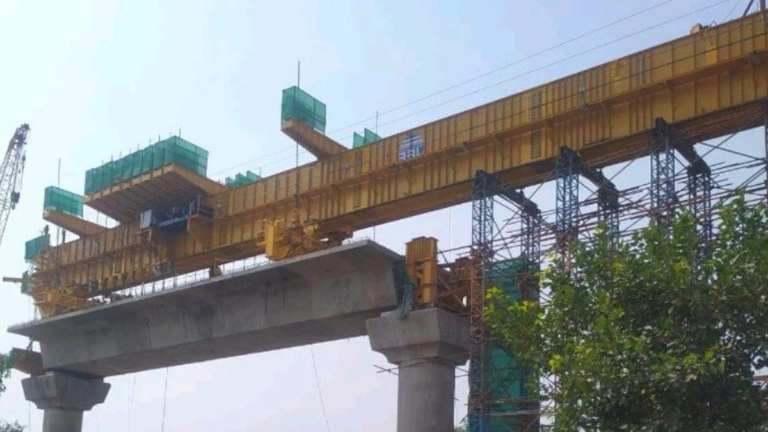
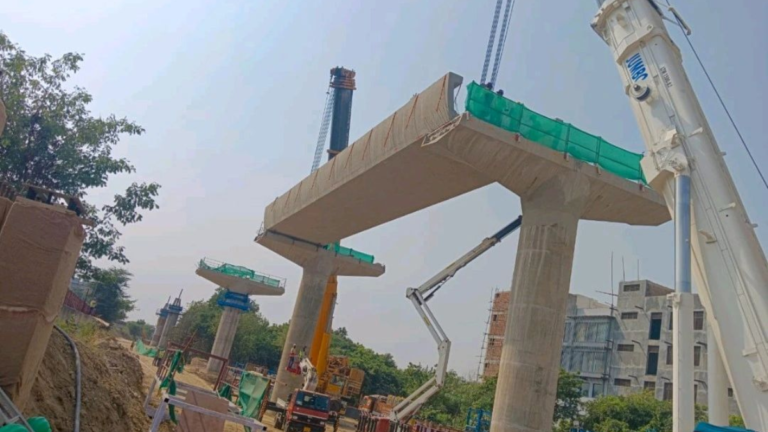
The Nagpur metro has achieved the coveted Guinness World Record for building the largest double-decker viaduct for a metro line. The Nagpur Metro Wardha Road, part of the viaduct, is approximately 3.14 kilometres long. Brajesh Dixit, MD of Maharashtra Metro, received the record certificate from the Guinness World Record management at the elicitation ceremony. He stated that building the viaduct was one of the most challenging aspects of the metro project.
The Asia and India Books of Records have already recognised the stretch as the longest viaduct in Asia and India, respectively. The concerned viaduct is a double-decker viaduct built in collaboration with the National Highways Development Authority (NHAI) and Maharashtra Metro. While the first layer has an existing highway, the second layer has a flyover highway, and the third tier has Nagpur metro rail. The flyover highway is nine metres above the ground, while the Nagpur metro level is roughly twenty metres. A similar construction has also been proposed for Pune’s Ganeshkhind Road.
The Nagpur Broad Gauge Metro
Nagpur Broad Gauge Metro is a 268.63 km regional rapid transit system (RRTS) that proposes to use existing Central Railways tracks to connect Nagpur with nearby towns Wardha, Katol, Narkhed, Ramtek, and Bhandara via a modern, comfortable railway system. The DPR (Detailed Project Report) for Nagpur Broad Gauge Metro was prepared by Urban Mass Transit Company (UMTC) in 2019, which envisioned the project to cost Rs 418 crore, half of which has been expected to be incurred and spent buying present-day rolling stock and equipment. The Railway Board approved the DPR in November 2019, and the Maharashtra state cabinet approved it in October 2020. The DPR proposes a loan covering seventy per cent of the overall cost, with the other thirty per cent to be financed and shared equally between Maharashtra and the central government.
Project Detail & Key Information:
• Operational: 0 km
• Under Construction: 0 km
• Approved: 0 km
• Proposed: 268.63 km
• Top Speed: 200 Kmph
• Operating Speed: 160 Kmph
• Track Gauge: Broad Gauge (1676 mm)
• Rolling Stock: 3 coaches (DT-T-DT)
• Capacity: 885 passengers
• Expected Deadline: 2025
Cost Details
• Project Cost: Rs 418 Crores
• Rolling Stock: Rs. 200 cr
• Depot: Rs. 80 cr
• Station Integration with Nagpur Metro: Rs. 25 cr
• Station upgrades: Rs 23.12 cr
• IT Infrastructure: Rs. 15 cr
• Automatic Fare Collection (AFC) System: Rs. 11.64 cr
• Pre-operative / Admin Expenses: Rs. 4.97 cr
• Taxes: Rs. 48 cr
Route Information
Line 1: Nagpur – Wardha
• Length: 78.8 km
• Estimated Daily Ridership: 5,669
• End-to-End Travel Time: 70 mins
• Number of Stations: Thirteen (13)
• Stations: Nagpur Junction, Ajni, Khapri, Gumgaon, Bori, Borkhedi, Sindi, Tuljapur, Dahegaon, Seloo Road, Varud, Sewagram, Wardha Junction.
Line-2: Nagpur – Narkhed
• Length: 85.53 km
• Estimated Daily Ridership: 2,616
• End-to-End Travel Time: 75 mins
• Number of Stations: Eleven (11)
• Stations: Nagpur Junction, Godhani, Bharatwada, Kalmeshwar, Kohali, Sonkhamb, Metpanjra, Katol, Kalambha, Tinkheda, Narkher Junction
Line-3: Nagpur – Ramtek
• Length: 41.6 km
• Estimated Daily Ridership: 3,929
• End-to-End Travel Time: 60 mins
• Number of Stations: 7 (Seven)
• Stations: Nagpur Junction, Kalamna, Kamptee, Kanhan Junction, Dumri Khurd, Amdi Halt, Ramtek
Line-4: Nagpur – Bhandara Road
• Length: 62.7 km
• Estimated Daily Ridership: 2,556
• End-to-End Travel Time: 55 mins
• Number of Stations: 8 (Eight)
• Stations: Nagpur Junction, Kalamna, Kamptee, Kanhan Junction, Chacher, Rewral, Khat,
Bhandara Road
The commuter rail project (Nagpur BG-Metro) planned for Nagpur and extended up to adjacent areas of Wardha, Yavatmal, Narkhed, Ramtek, Bhandara, Amravati, Wadsa, and Chhindwara (also Nagbhid shortly) in Maharashtra’s Vidarbha region has been planned to be executed by Maharashtra Metro Rail Corporation Limited. According to sources, the first broad gauge metro will run via Wardha in December 2023 on the Nagpur to Yavatmal line.
Urban Mass Transit Company has prepared a feasibility report regarding identifying routes and corridors and the viability of the metro system. Four routes of approximately 270 km have been proposed at Rs.418 crore. Three coach trains have been planned to run on the broad gauge tracks at a maximum operating speed of 160 km/h. Each train can carry 885 passengers. In August 2019, the detailed project report was submitted. Wardha 5,669, Narkhed 2,616, Ramtek 3,929, and Bhandara Road 2,556 are the estimated ridership figures for the Metro routes in 2021. The maximum design speed is projected to be around 200 km/h. In March 2019, the Maharashtra government approved a broad gauge metro plan. The DPR was approved by the Railway Board, Ministry of Railways, Government of India in November 2019. The proposed routes are as follows:
• Nagpur – Wardha – Yavatmal
• Nagpur – Wardha – Amravati
• Nagpur – Wardha – Chandrapur
• Nagpur – Bhandara
• Nagpur – Ramtek
• Nagpur – Narkhed
Interchanges have been proposed at Khapri, Nagpur Railway Station, and Ajni with Phase 1 of the Nagpur Metro.
Summary & Conclusion:
Nagpur Metro provides citizens with a quick, dependable, and inexpensive mode of transportation. It registered the highest single-day ridership of nearly 2 lakh 20 thousand passengers in the first week of 2023. BG Metro services will be rolled out in phases depending on its efficacy and success. After being interfaced with railway stations at mutually agreed-upon locations, they will serve as a feeder service to the Nagpur Metro rail project.
Discover the endless possibilities of our city’s Metro at InnoMetro, our flagship Expo and Conference. Be an active participant in shaping its future towards a more sustainable tomorrow. Stay informed and join us to take a step towards a brighter future.