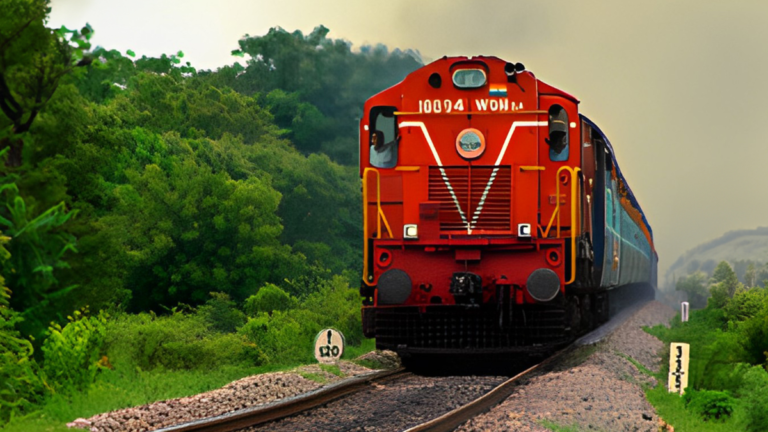
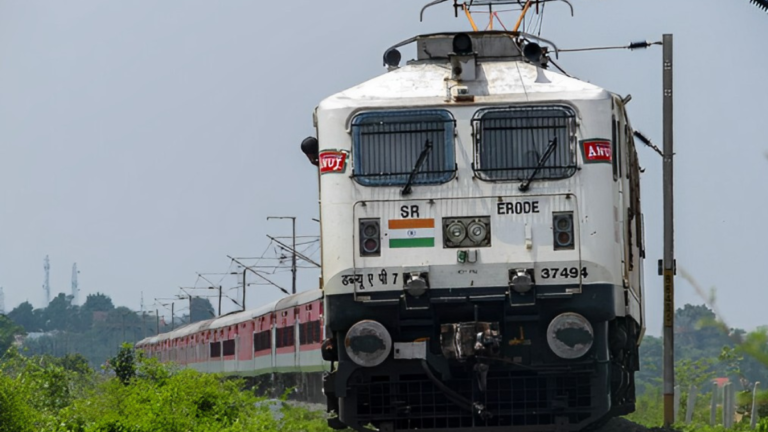
NEW DELHI (Metro Rail News): Indian Railways (IR), the world’s fourth largest railway network, endeavours to become a green transporter by mitigating its carbon footprint. In 2020, the energy consumption of IR was estimated to be 18,410 million units for traction and 2,338 million units for non-traction load. IR has taken great measures to minimise its carbon footprints and fuel expenses, and India is committed to being a ‘net-zero’ carbon-emitting country by 2030. Some of its key and principal decarbonisation measures include complete electrification of the railway’s broad gauge network, reductions in energy use, and meeting energy demand with renewable energy.
IR currently has 220 MW of renewable energy capacity, with over 3,450 MW of renewable energy capacity in the development pipeline. It is also expected that the use and consumption of renewable energy in the transportation industry will reduce greenhouse gas (GHG) emissions by nearly forty per cent. With 115,000 track kilometres, 8,500 stations, and operations of around 12,000 trains per day, IR is known to be one of India’s biggest consumers of fossil fuels, consuming approximately 2.7 billion litres of diesel yearly.
One of the world’s largest railway networks, Indian Railways, has set an ambitious goal of being a net-zero carbon emitter by 2030. The project is part of the country’s overall goal of limiting and reducing carbon emissions and mitigating the effects of climate change. The Indian Railways, which operates over 13,000 passenger and goods trains, contributes for 4% of GHG emissions from India’s transportation industry, which accounts for nearly fourteen per cent of the country’s greenhouse gas emissions.
The railway network has made several steps to lessen its carbon footprint. Shri Ashwini Vaishnaw, Minister of Railways, Communications, and Electronics and Information Technology, revealed in a written reply to a question in Lok Sabha that the use of energy-efficient technologies, such as switching entirely to the production of three-phase electric locomotives with regenerative features, the use of head-on generation (HOG) technology, the use of LED lights in buildings and coaches, star-rated appliances, and afforestation, are some of the initiatives. Additionally, switching from diesel to electric traction, boosting energy efficiency, and afforestation have been mentioned as essential approaches for attaining the Net Zero Carbon emission targets.
Indian Railways is projected to have an energy demand of roughly 8,200 Mega Watt (MW) by 2029-2030. It is estimated that around 30,000 MW of renewable energy capacity will be required by 2029-2030 to achieve net zero carbon emissions. As of February 2023, around 147 MW of solar power plants (both on rooftops and on land) and approximately 103 MW of wind power plants have been operational. In addition, approximately 2150 MW of renewable energy capacity have been planned and committed to be developed.
Further, IR has also planned to gradually meet its future energy requirements by acquiring renewable energy through various power procurement policies and strategies. The railways have set and established the target of generating 20 GW of solar energy by 2030. As of today, Indian Railways have solarised around 960 stations. Indian Railways’ objective is to totally migrate to a ‘Green mode of transportation’ by using solar energy to meet its traction power requirements. This is consistent with the Prime Minister’s 2020 directive to solarise train stations and utilise unused railway land for renewable energy (RE) projects. According to reports, around 142 megawatts of solar plants and 103 megawatts of wind power plants have been commissioned till October 31, 2022.
In addition, the Indian Railways is taking steps to enhance the usage of green fuels. It uses a 5% biofuel blend in traction diesel fuel. The railways are also taking steps to minimise carbon emissions from goods and freight trains, which have been for long among the leading contributors to pollution. Finally, the Indian Railways’ initiative to become a net-zero carbon emitter by 2030 marks and constitutes a significant step towards lowering India’s carbon emissions and minimising the effects of climate change. The railways have taken several steps towards lowering their carbon footprint, including electrifying the railway network, using renewable energy sources, and reducing energy use.
The Government of India has set a target of 33% reduction in emissions intensity as part of its Nationally Determined Contributions (NDCs), with transport being one of the principal sectors with significant mitigation potential. One of the most important transport emissions mitigation plans agreed to by the Government of India has been to raise Indian Railways’ share of freight movement from 35-36% to 45% by 2030. Indian Railways plays a significant role in contributing to India’s NDC to address climate change through a number of different approaches, including:
- To increase the railways’ share of total land-based freight transit from the current thirty-six per cent to forty-five per cent by 2030. Dedicated Freight Corridors (DFCs) are being built across India by Indian Railways. Over a 30-year period of time, the first phase of the project is expected to cut emissions by 457 million tonnes of CO2.
- Increase the proportion of renewable energy in the country’s energy mix. Railways to boost and enhance energy efficiency for both diesel and electric propulsion, allowing the country to reduce GHG emissions. The PAT Scheme is to be introduced and implemented in the railway sector. Use of a five per cent biofuel blend in traction diesel fuel.
- Improve and enhance water usage efficiency by up to twenty per cent by 2030. Planting trees to boost carbon sink. Pollution control and waste management. Adopting best practices for green buildings, industrial units, and other establishments for resource and infrastructure management in order to promote environmental sustainability in the growth of IR.
- Contribution to the ‘Swachh Bharat Mission’. IR has set and established the target of becoming a ‘Net Zero’ organisation by 2030 through the electrification of its rail network. Additionally, the railways have also introduced bio-toilets in all its trains with OBHS (Board housekeeping service) facilities.
Indian Railways has taken advances to streamline its environmental management operations, with noticeable programmes and initiatives, including Energy Efficiency Management, Renewable and Alternative Energy Sources, Water Conservation, Afforestation, Water Management, and Green Certifications. The reforms carried out by Indian Railways in recent years can be broadly classified as follows:
(i) Carbon Emission:
IR plans to make every possible effort to reduce its carbon consequences, primarily through obtaining its energy needs from renewable sources. The projected requirement for renewable capacity installation by 2029-30 is expected around 30 GW. IR has installed 142 MW of rooftop solar capacity and 103.4 MW of wind energy capacity till August 2022. Other measures for becoming a Net Zero emitter include electrification of its lines, switching from diesel to electric traction, promotion of energy efficiency, developing Dedicated Freight Corridors, Green certification of Railway Establishments, and so on.
IR has electrified 52,508 RKM out of a total BG network of 65,141 RKM (80.61%). With hundred per cent electrification, power demand is expected to rise to almost 72 BUs by 2029-30, up from 21 BUs in 2019-20. Carbon emissions are anticipated to be 60 million tonnes by 2029-30 as per business and in the usual mode, which has been planned to be mitigated by different IR initiatives.
(ii) Issuance of water policy for effective water management:
Water Policy 2017 has been disseminated to all Zonal Railways and Production Units for implementation in Railway Stations, Trains, and Railway Colonies, among other places. This is part of the Government of India’s broader aim to reduce water consumption as part of its Nationally Determined Contribution.
The main goal of this strategy is to promote water use efficiency through better demand and supply management, the installation of water-efficient devices, and the establishment of Water Recycling Plants on railway land.
(iii) Creation of Additional Carbon sink by Afforestation
Railway departmentally carries out afforestation on vacant railway land and in between sections. As part of the railways’ commitment to environmental betterment and sustainable development, state forest departments are involved in tree planting, maintenance, and disposal.
Since 2017, IR has been planting approximately 1 crore trees every year. During the years 2021-22, 72 lakh seedlings had been planted.
(iv) Waste Management:
More than 250 waste management stations have waste-to-energy/compost/biogas plants/material recovery facilities. Separate containers for dry and moist trash have been installed for waste categorisation at the source.
(v) Green certification/Consent to operate from the State Pollution Control Board
Around 700 railway stations have been accredited for ISO:14001 environmental management system implementation. Over 545 stations have received permission to operate (CTO) from their respective State Pollution Control Boards. Green accreditation has been granted to 31 railway buildings (including offices, training institutes, hospitals, and schools), 32 stations, and 55 workshops/PUs.
(vi) Policy for allocating one per cent cost in all sanctioned works for executing environment-related works:
To reduce the environmental impact of activities and to protect the environment, a policy was announced in May 2016 that provided for a 1% cost allocation in all sanctioned Works for executing environment-related activity.
(vii) Cleanliness of Trains & Railway Stations:
Cleanliness of trains and railway stations has gained prominence in the last few years, as the number of mechanised cleaning contracts at stations and coaches in trains, rag picking and garbage disposal contracts at stations, and On Board Housekeeping Service (OBHS) contracts have increased.
(viii) Environment-friendly Bio–Toilets for Passenger Coaches:
Indian Railways (IR) and the Defence Research and Development Organisation (DRDO) have collaborated to develop environmentally friendly bio-toilets for passenger waggons.
Up till March 2014, 9,587 bio-toilets were installed in 3,647 coaches. The task of installing bio-toilets in all passenger-carrying coaches on Indian Railways has been completed with the installation of 2,58,990 bio-toilets in about 73,110 coaches up to March 2021.
In accordance with the ‘Swachh Bharat Mission,’ direct discharge of human waste from trains has thus been prohibited.
(ix) Third-party Audit/Survey, including Passenger feedback on Cleanliness:
Third-party audit cum survey on cleanliness of major stations began in 2016 and has been carried out every year since then. In 2018, the first-ever third-party audit cum survey on the hygiene of major trains was conducted. Such surveys enable independent evaluation while also instilling a healthy feeling of competition in improving cleanliness in passenger interaction areas.
(x) Standard Bid Document for Housekeeping of Stations & Trains & General Conditions of Contract for Services:
To increase the effectiveness of housekeeping/cleaning contracts, the Standard Bid Document (SBD) (Aug 2017) and General Conditions of Contract for Services (GCCS) (Feb 2018) have been developed and issued, with a special focus on passenger contact areas.
The Other Recent Developments
Indian Railways, the country’s largest electricity consumer, has set the lofty aim of being a net-zero carbon emitter by 2030. The programme was announced with a focus on the importance of industry participation and collaboration in reaching this common goal. With plans and aspirations to extend its presence and influence in the solar sector and capture clean power, Indian Railways strives to become the world’s newest, finest, and safest rail system. Indian Railways, being aware of its considerable contribution to the nation’s energy usage (about 2% of the total), is actively seeking a clean energy transition. Recognising the environmental risks posed by its energy usage, the corporation has taken great steps to reduce its carbon footprint by implementing renewable energy sources.
Solar Projects on the Rise
Indian Railways has made significant strides in incorporating solar energy into its infrastructure. As part of its commitment to renewable energy, the organisation launched a 5 MW solar power project across multiple stations in New Delhi. These photovoltaic systems and solar power plants on the rooftops of the railway stations in Hazrat Nizamuddin, New Delhi, Anand Vihar, and Delhi are like shining representations of Indian Railways’ commitment to renewable energy. By embracing solar energy, the corporation not only reduced its reliance on fossil fuels, but it has also demonstrated the potential and benefits of renewable energy adoption in the transportation sector.
Additionally, as part of its ambitious goal of obtaining 5 GW of solar capacity, Indian Railways has set its sights on developing large-scale solar power projects, both on rooftops and ground-mount systems. Indian Railways can tap into the enormous potential of solar energy and contribute considerably to the country’s renewable energy goals by capitalising on available infrastructure and space. These solar projects will not only assist in cutting carbon emissions but shall also provide a long-term and sustainable source of power for the rail network.
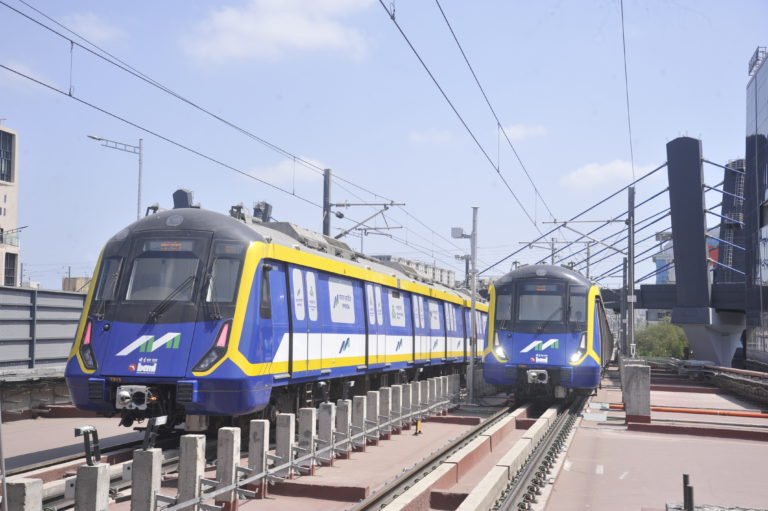
As part of its commitment to sustainability, the Kolkata Metro, in recent times, has made considerable efforts towards incorporating solar electricity into its network. The installation of solar power plants on rooftops throughout the metro railway’s network has become a cornerstone of the organisation’s sustainable energy strategy. The Kolkata Metro currently generates an astounding 2189.50 Kwp of solar power. This comprises the installation of 657 Kwp solar power plants along the North-South Corridor, 1519 Kwp solar power plants along the East-West Corridor, and 13.5 Kwp solar plants at the Metro Railway’s Tapan Sinha Memorial Hospital.
The solar power plants have been extremely advantageous to the Kolkata Metro. These projects have been carried out in a Public-Private Partnership (PPP) mode, having the metro rail authorities providing the rooftop areas and the solar power developer in control of the entire design, procurement, installation, testing, and commissioning work. The solar power developers are in charge of the operation and maintenance of these installations. The Metro Railway’s solar power generation system is monitored using a cloud-based monitoring system to maintain optimal performance and efficiency. External computers and smart devices use built-in metres and data loggers to analyse plant performance, providing vital information for ongoing maintenance and enhancements.
In the future, the Kolkata Metro has significant plans for solar power generation. The metro has set a target of increasing solar power capacity by 2792 Kwp in fiscal year 2023-24. This development comprises the erection of a 500 Kwp capacity plant at Central Park Depot’s Stabling Bay Line Workshop, a 92 Kwp capacity plant at Belgachia, a significant 1400 Kwp capacity plant at Joka Depot, and an 800 Kwp capacity plant at Kavi Subhash Carshed. A proposal has also been submitted for the development of a 654 Kwp solar power generating plant at Jessore Road station.
Setting up a 1 GW Solar Power Park
The Indian Railways has also announced its plans to build a gigantic 1 GW solar power facility in the state of Madhya Pradesh. This ambitious project demonstrates the company’s dedication to renewable energy and sustainability. The Rewa Solar Park, known for its low tariffs and favourable solar conditions, has piqued the interest of Indian Railways as an ideal location for this ground-breaking initiative.
A solar power park of this size will not only supply clean energy to run the railway system but will also demonstrate India’s commitment to renewable energy on a global scale. Indian Railways would be able to generate a huge amount of electricity and significantly lower its carbon footprint by utilising the plentiful solar resources available in Madhya Pradesh. The development of this solar power park will be an outstanding instance of India’s commitment to clean energy, as well as a catalyst for future solar power advancements in the country.
Indian Railways is seeking to attain energy self-sufficiency and lessen its dependency on conventional energy sources through extensive deployment of solar power. By incorporating solar energy into its operations, the railway system will not only help to green the environment but will also save money in the long run. Once established, solar power provides a consistent and predictable source of energy, lowering energy price volatility and the company’s vulnerability and responsiveness to price variations in the fossil fuel market.
Additionally, excess energy generated through the railway system can be fed back into the grid, improving the nation’s overall energy security. This excess power might be used during high-demand hours or in areas with low solar power generation capabilities. Indian Railways shall play an important part in grid stabilisation and promoting the optimal use of renewable energy resources by functioning as a net energy exporter.
Solar power integration into Indian Railways operations extends beyond lowering carbon emissions and achieving energy self-sufficiency. It displays the organisation’s dedication to sustainable practices, developing an environmental stewardship culture. Indian Railways is setting a pattern and standard for other companies and organisations to follow by embracing solar energy on a large scale, demonstrating that a clean energy transition is not only feasible but also economically sustainable.
Collaboration with Industry Stakeholders
Railways Minister Ashwini Vaishnaw has stressed the necessity of industry cooperation in meeting Indian Railways’ ambitious targets. Recognizing that great things in business are never completed by a single person, Shri Ashwini Vaishnaw has emphasized the importance of collaboration between the railways and a number of industry stakeholders. This collaboration includes solar developers, technology providers, legislators, and other stakeholders. These stakeholders can accelerate the transition to renewable energy by pooling their experience, resources, and innovative ideas. The combined efforts of industry participants will be critical in overcoming problems, recognising opportunities, and implementing long-term solutions that are consistent with Indian Railways’ vision and goals.
Partnerships, collaborative ventures, and knowledge-sharing platforms are all examples of collaboration. Indian Railways can exploit the different perspectives and strengths of its industry partners by establishing a collaborative atmosphere, paving the road for a sustainable future. Indian Railways can build a synergy between sustainability and passenger comfort by utilising technology improvements and embracing innovation. Integration of renewable energy systems, for example, can power charging stations for electric trains, increasing the adoption of cleaner transportation and lowering dependency on fossil fuels.
The commitment of Indian Railways to becoming a net-zero carbon emitter by 2030 represents a significant step towards a more sustainable and green future. The railway system may substantially reduce its carbon footprint and contribute to the nation’s environmental goals by capturing solar power and embracing sustainable energy options. With industry involvement and an emphasis on innovation, Indian Railways is on course to become one of the world’s newest, finest, and greenest railway networks.
Discover the endless possibilities of our city’s Metro at InnoMetro, our flagship Expo and Conference. Be an active participant in shaping its future towards a more sustainable tomorrow. Stay informed and join us to take a step towards a brighter future