New Delhi: Prime Minister Narendra Modi has flagged-off the Delhi-Faridabad Metro Line that would allow hassle free travel for around two lakh daily commuters between the national capital and the industrial hub in Haryana.
The extension of the Delhi Metro connects Badarpur to Escorts Mujesar in Faridabad.
The total cost of the project from Badarpur to Escorts Mujesar is nearly Rs. 2,500 crore. Out of this, Rs. 1,557 crore was borne by the Haryana Government, the Centre contributed Rs. 537 crore, while the Delhi Metro provided Rs. 400 crore.
All these are elevated and located on either side of the Delhi-Mathura Road (NH-2).
“The nine-station metro corridor which was 95 per cent indigenously built will provide people a safe, affordable, quick, comfortable, reliable, environment-friendly and sustainable transport facility,” a Haryana government spokesperson said.
Haryana Chief Minister ML Khattar, addressing a press conference on Saturday, had thanked the Prime Minister for “gifting” the Metro service which would take the city to “another level of progress” with better connectivity with other NCR towns.
He had also said that the Prime Minister would be announcing the go-ahead for connecting Gurgaon with Faridabad by Metro.
KOLKATA (Metro Rail News): The East-West Metro project between Howrah Maidan and Esplanade has reached its final stage. Metro authorities, under the able leadership of Shri P Uday Kumar Reddy, General Manager, have been constantly monitoring the progress of this project. Shri Reddy has also been inspecting the project sites regularly to evaluate the exact status of the work.
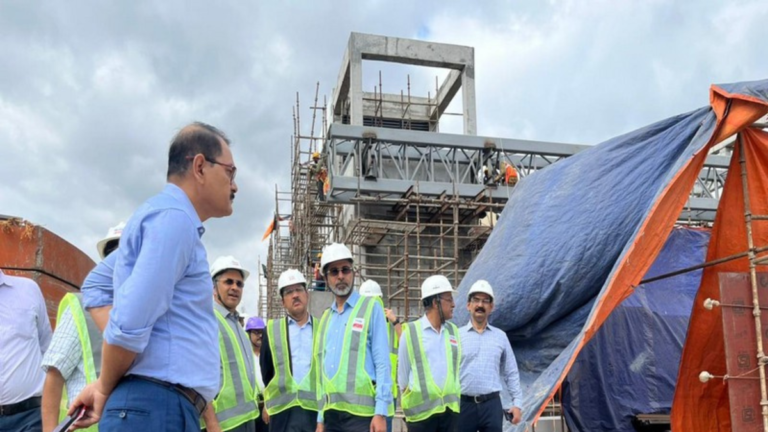
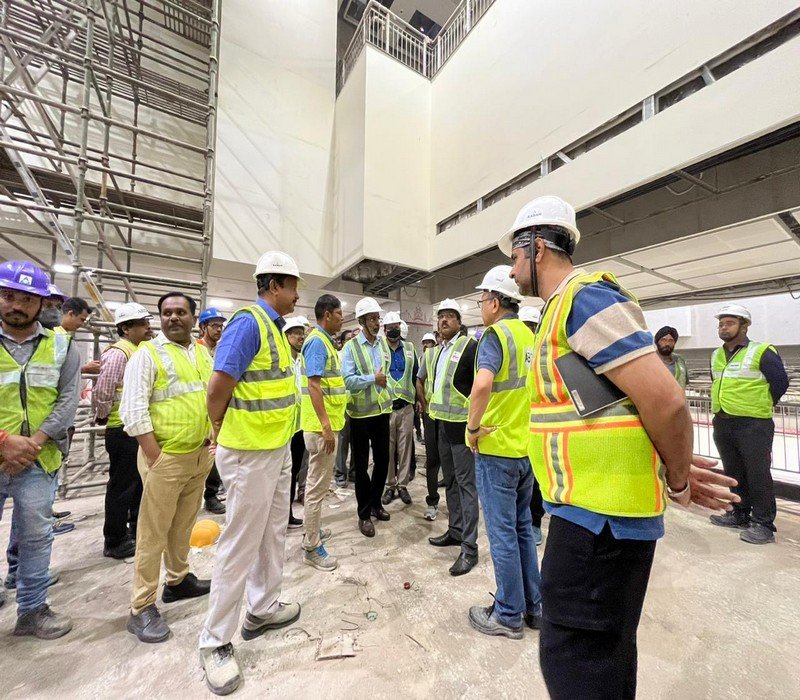
The General Manager inspected the Howrah Maidan to Esplanade stretch of the East-West Metro Corridor (Green Line) on 17.11.2023. During this inspection, Shri V. K. Srivastava, Principal Chief Engineer, Metro Railway and Managing Director, KMRCL, and other senior officials of Metro Railway and KMRCL accompanied him.
Shri Reddy started today’s inspection from Howrah Maidan Metro station this morning. He travelled up to Esplanade Metro station under the river Hooghly in a Metro. On his way to Esplanade, Shri Reddy stopped at each station and inspected the Under Platform Supply Fan, Signalling Equipment Room, Telecom Equipment Room, Power Supply System, Tunnel Lighting System, AFC – PC Gates that are being installed, lifts, escalators, concourse level etc of these stations. While evaluating the work progress on all the underground stations from Howrah Maidan to Esplanade on-the-spot, he also inspected these stations’ ventilation and air-conditioning systems.
Shri Reddy expressed his satisfaction after seeing the work progress and advised everyone to complete all the pending jobs within the deadline.
Intrigued by the future of Metro and its impact on our city? Join us at our upcoming InnoMetro event to delve deeper into this vital issue. Stay informed, get involved, and let’s ride the Metro towards a brighter, more sustainable future together.
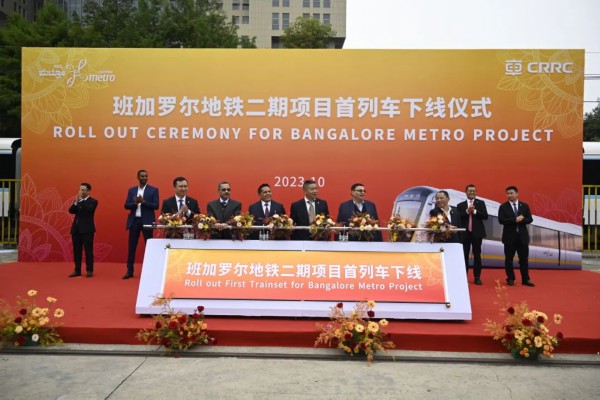
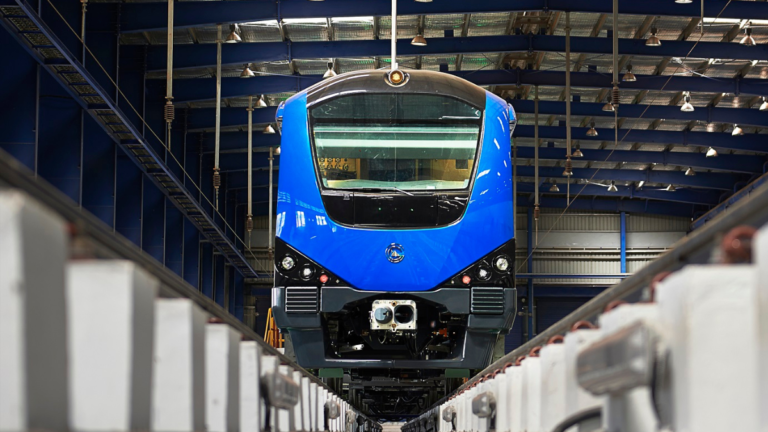
The offline ceremony in China was graced by Mr Dhoke, Project Director of Bangalore Metro Rail Corporation, Mr Jha, Project Manager, Mr Patel, Contract Manager, Mr Li Dingnan, Chairman of Puzhen Company, and relevant project personnel.
Specifications
These are 6-Coach trains that will run on the tracks of Bangalore Metro’s Yellow Line. The coaches have electric signages above the doors to showcase routes, advertisements, notices, information, etc.
Driverless Technology
These driverless coaches will be introduced as a part of the Communication-Based Train Control (CBTC) System, commonly known as “Driverless Technology”. It will also reduce the headway to 90 seconds from the existing two & a half minutes. Although it will be driverless trains, the BMRCL has decided to deploy Loco Pilots to allay passengers.
The Contract
BMRCL awarded the contract for the same in December 2019. As per the contract, 4RS-DM 2 trains will be supplied by CRRSC, while the remaining 36 will be assembled locally by Titagarh Rail Systems in West Bengal.
Yellow Line
The 18.82 Km long under-construction metro line connects RV Road with Bommasandra. It is a fully elevated metro route with 16 stations. It connects with the Green Line of Bangalore Metro at RV Road Station & with the Pink Line at Jayadeva Hospital station. It is expected to open by early 2024.
Big Connectivity Boost
It aims to boost connectivity to areas that are home to big companies like Infosys & Biocon and South Bengaluru. It will ease the daily struggles of Bangalore’s metro commuters by a substantial amount. It will also increase the overall metro connectivity in the city to facilitate easy and efficient commute.
Bangalore’s 1st Experience
It will be Bengaluru’s first experience with driverless metros running on the route. This will significantly impact the lives of Bangalore metro commuters with a comforting experience and efficient service. Bangalore Metros will become 2nd in the country to have driverless Metros.
Intrigued by the future of Metro and its impact on our city? Join us at our upcoming InnoMetro event to delve deeper into this vital issue. Stay informed, get involved, and let’s ride the Metro towards a brighter, more sustainable future together.
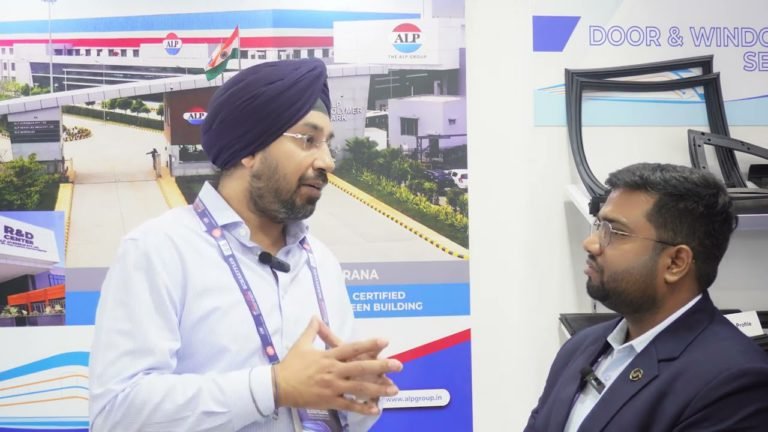
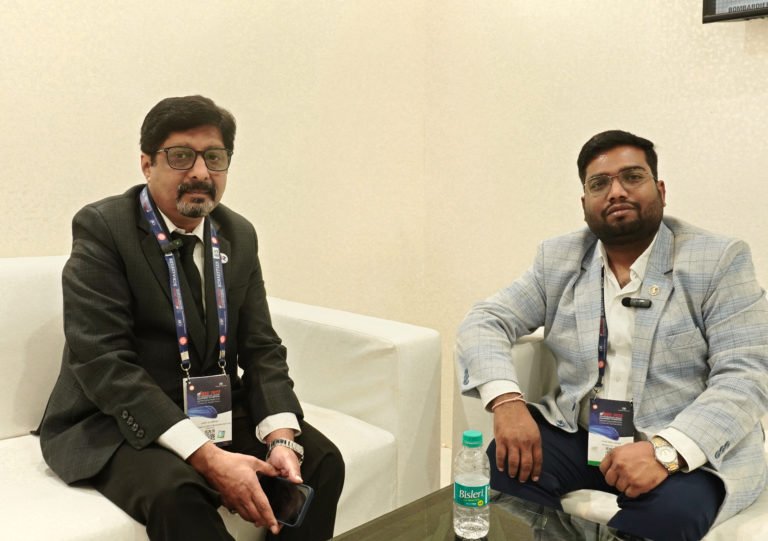
The Metro Rail News team Interviewed Mr Tejbir Singh Anand and Ms Ravleen Anand on the outskirts of IREE 2023. Tejbir is the Managing Director of ALP Aeroflex India Pvt Ltd and ALP Overseas Pvt Ltd. This interview explores the latest innovations and technologies ushered by ALP Aeroflex India Pvt Ltd in the Rail mobility sector, particularly emphasising Nitrile Rail (a new product). This interview also unravels the company’s commitment to sustainability and an environmentally friendly approach to business, as Ms. Ravleen, Director of ALP Group, explained.
With over two decades of experience, Tejbir has led the company to global recognition through joint ventures in the USA, Spain, Australia, Singapore, and South Africa. Tejbir’s strategic initiatives have elevated ALP Overseas as a global brand, focusing on various industries. Here are the edited excerpts:-
Q.1: Please tell us about your company, ALP Group, and Aeroflex.
The ALP Group consists of three distinct entities, each with unique characteristics. ALP Aeroflex is a joint venture formed with Aeroflex of Thailand. The company manufactures thermal and acoustic insulation products for the Transport Sector, HVAC and Construction industry. Meanwhile, ALP Overseas is a subsidiary wholly owned by the ALP family that caters to aftermarket and international operations. ALP Nishikawa is a JV manufacturing whether sealing for automobile manufacturers.
Across all three companies within the ALP Group, we specialize in polymer technology, covering rubber and plastics. Our expertise extends to various applications, including consumer durables, household applications, automotive, construction, HVAC, and more, where polymer science is integral to product advancement and performance enhancement.
Q. 2: Can you tell us about ALP Aerocell Rail, your recently launched product?
In line with the modernisation of Indian Railways and the introduction of advanced trains, there’s a growing need to upgrade the materials used in the railway system. ALP’s Aerocell Rail is designed to meet the highest safety standards. It is space-saving and akin to insulation used in German Rail. It’s an environmentally friendly and sustainable import substitution product compared to all other insulation used in rail coaches in India. It also has EN 45545 -2 – HL3 – R1 – fire rating approved, while the requirement is R2 by Indian Railways (thus better).
The main focus of Aerocell Rail is to improve safety in case of a fire. In public transport like buses, buildings, and railways, people are more likely to die from inhaling toxic fumes than from the fire itself. Aerocell Rail significantly reduces the release of toxic fumes and slows fire spread. It also prevents bugs and insects from damaging the material because it has antimicrobial properties. This makes Aerocell Rail an essential choice for ensuring passenger safety and material durability in railways.
Q.3 ALP Group is a more than 35-year-old company, and you are carrying its legacy. How do you feel about the responsibility you have on your shoulders?
While family plays a central role, it’s essential to note that our business operates highly professionally. With multiple locations across diverse geographies, it becomes impractical for the family to be omnipresent. Therefore, each company operates autonomously, possessing its own infrastructure and organisational structure. These entities are collectively overseen by a common board comprising family members and seasoned professionals. This approach instils my confidence, equipping us to expand into new geographies and sectors without undue burden.
Q.4 Indian Railway is going through a massive transformation in track modernisation, signalling system and rolling stock. So, how do you see these changes, and how will the ALP Group be a part of this transformation?
The ongoing transformation in India, encompassing various sectors, including the Indian Railways, reflects a nation striving to bridge technological gaps with the Western world. As these advancements unfold, upgrading the entire supply chain to remain competitive and aligned with global standards becomes imperative. The ALP Group has been at the forefront of these endeavours, exemplified by our pioneering introduction of EPDM Polymer in 1985 when natural rubber was prevalent in the manufacturing of Fiat and Ambassador cars. Within three years, the entire automotive industry transitioned to EPDM.
Similarly, in the case of Aeroflex, we witnessed a transformation from traditional thermal insulation materials such as glass wool or fibreglass to Nitrile and rubber insulation for building and HVAC applications. This adaptation to new technologies is underpinned by our belief that providing the requisite high-quality input materials is essential with the influx of advanced technologies in India. For instance, as electric vehicle (EV) buses become a reality, their lightweight design becomes critical for extending battery life and ensuring efficient travel. We are actively collaborating with the bus industry to develop lighter materials, replacing expensive and heavy metals like aluminium with thermoplastics, thereby addressing the unique challenges presented by EV technology. These are the prominent areas where we are actively engaged in technological advancement.
Q.5: What are the plans for ALP Group?
In each of our three divisions, we have a unique plan. One of these divisions, ALP Nishikawa, focuses exclusively on making passenger car parts. We have a strong presence in India, accounting for about 45% of the market for ceiling materials. We’re expanding our operations to keep up with India’s growing automotive industry. We already have factories in Gujarat, Gurgaon, and Punjab, and we’re setting up a new one in Haryana, close to the new Maruti factory. This move is in response to India’s expected increase in car production from 4 million vehicles today to an estimated 7 to 8 million in the next five to seven years. We’re getting ready to meet the rising demand in the market.
In the building and construction sector, ALP Aeroflex is expanding its presence to encompass various construction types, including infrastructure, commercial, and residential projects. We are introducing new product lines, such as XLP Foam, alongside our existing offerings, like nitrile and EPDM foams, to meet the industry’s growing demand for acoustic solutions.
Simultaneously, ALP Overseas is undergoing an extensive international expansion, with established operations in the US, Europe, and Australia. This expansion strategy aligns with the “Make in India, Make for the World” approach, capitalising on India’s cost-effective, high-tech manufacturing capabilities. We foster backwards integration by establishing subsidiaries in these regions, transferring labour-intensive tasks to India and selling our products within a comprehensive global network.
Our commitment to sustainability is evident through our eco-friendly practices, zero-waste production, and qualification for carbon credits. This approach embodies a holistic approach to business, moving backwards and forward to establish control over the entire market.
Managing editor of Metro Rial News presenting the October issue of our monthly magazine to MD, ALP Overseas Pvt Ltd.
Discover the endless possibilities of our city’s Metro at InnoMetro, our flagship Expo and Conference. Be an active participant in shaping its future towards a more sustainable tomorrow. Stay informed and join us to take a step towards a brighter future.
CHENNAI (Metro Rail News): Chennai Metro Rail Corporation (CMRL) plans to have multi-modal transit hubs at 23 locations in 116.1 km long Chennai Metro Phase 02.
Transit Hubs
These hubs will feature seamless interchange facilities with existing transit facilities in the city like Suburban and MRTS trains, MTC buses & Metrorail Phase:01 lines. Transit hubs will be developed at 23 locations to facilitate easy commutation across different modes of transport.
Project
These are a part of the Chennai metro Phase 2 that will be developed in stages from 2025 to 2028.
The 45.4 km long Corridor 3 of the Chennai Metro Phase 02 from Madhavaram to Siruseri Sipcot will have nine hubs at the following locations
Thiruvanmiyur
Adyar Bus Depot
Mandaveli
Thirumayilai
Chetpet
Ayanavaram
Perambur Suburbs
Kilpauk
Thousand Lights
The Metro stations at Thiruvanmiyur and Thirumayilai will be integrated with MRTS, while the metro stations at Mandaveli and Madhavaram will be integrated with Bus depots.
The 44.6 Km long Corridor 5 of the Chennai Metro Phase 02 from Madhavaram Milk Colony to Sholinganallur will have nine hubs. 7 of them are at the following locations:
Madhavaram Bus Terminus
Villivakkam Bus Terminus
Annanagar
Koyambedu
Alandur
St ThoVillivakkam Vanuvampet
Kilkattali
Better Connectivity
These multi-modal transit hubs will significantly impact travel time as well as travel options for commuters in Chennai. This will also help develop a well-connected transit mode to support the backbone of developing metropolitan cities and make the lives of the residents easier and more comfortable.
Enhanced Efficiency
The emergence of multi-modal transit hubs will increase the overall efficiency of the city’s transport system by consuming much less time in interchanges and offering much less hassle to commuters. The authorities are quite hopeful about the project.
Discover the endless possibilities of our city’s Metro at InnoMetro, our flagship Expo and Conference. Be an active participant in shaping its future towards a more sustainable tomorrow. Stay informed and join us to take a step towards a brighter future.
BANGALORE (Metro Rail News): On Friday, the Bangalore Metro announced the introduction of “Mobile QR Group Tickets” for the commuters of Bangalore Metro.
Mobile QR Group Tickets
For now, BMRCL was issuing a single ticket for a single person per journey, but the facility has been enhanced further on the ticket booking apps. People booking tickets using applications like Namma Metro, Paytm, WhatsApp, etc., can now book Group QR Tickets.
Number of Passengers
Group QR tickets can be booked for a maximum of 6 passengers through a single QR. This is in effect from 16th November, 2023.
Press Release Credit: BMRCL
Discount for the Commuters
In an incentivisation for the metro commuters, Bangalore metro is also offering a discount of 5% upon such bookings. The discount will be offered on the cumulative price of the ticket.
How to Use?
A single QR ticket will be issued with the number of passengers encrypted. The QR can be scanned for a maximum of six times. It will be scanned once for every passenger at entry and exit points.
Promotion of QR Tickets
BMRCL promotes Mobile QR tickets to avoid long metro station queues and offer commuters a better experience. These QR tickets can even be pre-booked from homes or offices. This will also enhance the commuters’ experience significantly.
Discover the endless possibilities of our city’s Metro at InnoMetro, our flagship Expo and Conference. Be an active participant in shaping its future towards a more sustainable tomorrow. Stay informed and join us to take a step towards a brighter future.
BENGALURU (Metro Rail News): Bengaluru Metro Rail Corporation Ltd (BMRCL) & Bosch Ltd signed an agreement on Friday that entails the facilitation of direct access from the Lakkasandra metro station.
The Walkaway
The underground walkway will be constructed directly from the concourse level of Lakkasandra Metro Station to the premise of M/s Bosch Ltd.
Terms
As per the press release, the infrastructural work will be carried out by BMRCL, while M/s Bosch Ltd will bear the cost for the same. The agreement will be enforceable for 30 years.
Easy Commutation
As per the press release, the walkway will be facilitating direct connectivity from the metro station for about 12,000 Bosch employees. This would ensure that they do not need to cross roads to reach their offices, reducing the hassles in commutation.
Under-construction Lakkasandra metro station P.C: Muthi-ur-Rahman Siddiqui
First of its kind
“This is the first such agreement on the Kalena A to Nagawara metro line”, the press release said. IKEA, a Swedish furniture company, showcased a similar approach by launching a dedicated foot-over bridge at Nagasandra Metro station.
The move aimed to provide visitors coming to the IKEA store from across the city with ease and safety.
Potential Impact on Traffic
This also holds the potential to alleviate traffic congestion in the surrounding areas. With approximately 12,000 Bosch employees gaining direct access to their workplace without the need to cross roads, the initiative is expected to contribute to smoother traffic flow in the vicinity. By reducing the number of vehicles entering and exiting the Bosch campus during peak hours, the project aligns with the broader goal of enhancing overall traffic management in Bengaluru.
Discover the endless possibilities of our city’s Metro at InnoMetro, our flagship Expo and Conference. Be an active participant in shaping its future towards a more sustainable tomorrow. Stay informed and join us to take a step towards a brighter future.
MMRDA has set up a squad comprising 23 officers to monitor the construction activities and ensure that the concerned organisations follow the pollution mitigation norms issued by the BMC. Its jurisdiction includes road projects and metro sites falling under its jurisdiction.
Weekly Assessment
Another team has also been set up to visit these sites weekly and furnish a weekly compliance report to have a heavy hand on pollution and ensure no pollutants are left unchecked across the sites. The reports will be submitted to the MMRDA itself.
Guidelines
A few of the guidelines issued by the MMRDA are mentioned below:
The barricades of the metro projects meet the 25ft height requirement.
No debris must be seen outside the barricades.
Removal of Debris immediately from the site
Regular sprinkling of water when excavation works are undertaken.
Median stones are to be painted in Yellow and black stripes.
Undergoing Projects
Currently, major infrastructural projects are underway in the region. The count for the same goes more than two dozen. It includes:
Mumbai, like Delhi, has been witnessing thick layers of smog with declining air quality for the last few weeks, which has prompted this action from the authorities.
Previous instances
Earlier instances where contracts were found in blatant disregard of the guidelines must have prompted the authority to go for such a strict instance in this case. The instances include work stop notices to various firms, including J Kumar Infra Projects.
Other Initiatives
MMRDA has also asked the contractors to maintain the sites and excavated material to lower dust emissions, ensuring a healthy AQI in the city. It has also asked contractors to stack the debris in a manner that reduces the suspension of dust in the air as well as to dispose of the debris at designated places only.
Discover the endless possibilities of our city’s Metro at InnoMetro, our flagship Expo and Conference. Be an active participant in shaping its future towards a more sustainable tomorrow. Stay informed and join us to take a step towards a brighter future.
PUNE (Metro Rail News): With the civil construction gearing up quickly, Pune Metro Line 3 is now preparing for its next step of procuring, testing, and installing the rail tracks. Connecting the IT hub of Hinjawadi to the central business district of Shivajinagar, Pune Metro Line 3 – fondly known as Puneri Metro – is now gearing up to lay the rail tracks on its 23.3 kms route. Preliminary trials of the rail tracks began today at the Depot of Pune Metro Line 3 at Maan village, Hinjawadi, Pune. After successful preliminary testing at the depot, the rail tracks will be out for installation on the Puneri Metro route.
The work of Pune Metro Line 3 on the Hinjewadi to Shivajinagar route has been undertaken by Pune Metropolitan Region Development Authority (PMRDA) on Public Private Partnership (PPP) basis, and Tata Group has established Pune IT City Metro Rail Limited (PITCMRL) as a special purpose company (SPC) for its implementation.
“Tata Group’s commitment to quality and safety remains unwavering throughout all phases of this project, a true testament to its dedication to serving the community. Therefore, various preliminary tests of the tracks are being conducted under the watchful eye of Puneri Metro project partners AECOM and SGS. Hinjewadi- For the 23.3 km route of Shivajinagar Metro, we have started preliminary discussion and internal planning on the important aspects of total rail track requirements, their scaling, maintenance of these tracks, etc. After agreeing on all our criteria then the actual work of laying rail track for the ‘Puneri Metro’ project will be started,” informed Alok Kapoor, Chief Executive Officer of Pune IT City Metro Rail Ltd.
Metro Rail News Team interviewed Mr Amit Agarwal during IREE 2023. He is the Senior Vice President of Sidwal Refrigeration Industries Pvt. Ltd. This interview explores the latest innovations and technologies ushered by Sidwal in the Indian mobility sector, with special emphasis on Railways. This interview also unravels the company’s commitment towards sustainability and an environmentally friendly approach to business.
Mr Amit Agarwal, the Senior Vice President of Sidwal Refrigeration Industries Pvt. Ltd., is a dynamic leader steering the company to new heights in air-conditioning solutions. In an exclusive interview, Agarwal highlights Sidwal’s recent successes, securing major projects like RRTS, DMRC RS17 and Chennai Metro Phase II. Here are the edited excerpts:
Q.1 Would you like to tell us about your journey and role as a Senior VP in Sidwal Refrigeration Industries?
With great pleasure, we report our successful participation in the IREE Exhibition, where we showcased our capabilities and new product line, including Gangways and Doors. Our recent TOT with our European collaborators, a global organisation, has enabled us to expand our offerings beyond HVAC. We are proud to announce that we have secured our first contract for Gangways from Alstom for Chennai Metro phase two, a significant accomplishment that marks the beginning of an exciting journey towards many more opportunities for our new product line.
We are expanding our business and product line, including setting up a new plant in Faridabad, where we will establish the manufacturing base for Gangways and Doors. We understand that our growing list of projects requires us to scale up our production. We will establish state-of-the-art HVAC, Gangway, and Door manufacturing facilities.
Q2: Today, Sidwal is a trusted name for turnkey air-conditioning solutions for various industries. What are the major orders on the book and projects undertaken? Kindly highlight the most significant achievements of the company.
Sidwal has been successful in acquiring new projects. The order book is going well, and we are ahead of the competition in all the recent projects. We have been selected for DMRC RS17 and Chennai Metro Phase II by Alstom and the Siemens WAG-10 Loco mega project. We also successfully secured the first order of Gangways for the Chennai Metro Phase II Project. Moreover, the company is looking for new business opportunities for Vande Bharat Trains with TMH and Titagarh, i.e. for 200 EMU Rakes. The company is determined to continue the journey of success and achieve new heights.
Q3: What major innovations and tailored solutions for the mobility sector make you a one-stop solution provider for various operational requirements of modern-day transport options?
We aim to increase the company’s wallet size for sub-systems in railways. Being present in the rolling stock industry, the company is currently involved in the manufacturing of HVAC, Pantry equipment, Gangways, and Doors and is also exploring opportunities to provide interior solutions for rolling stock
Q4: In what ways would you like to introduce and better explain the company’s growth journey? Although having reached a recognizable milestone, which developmental phase of the company inspires you the most and keeps you motivated?
The promoters of Amber Group are quite dynamic and are expanding their business both organically and inorganically. The Managing Director of Sidwal is also pushing hard and making efforts for the organisation’s growth. Since Amber acquired Sidwal, the business has been growing at a very high rate, and Sidwal is also collaborating with partners outside and expanding its wings. The recent announcement with Ultimate is just the beginning, as there are many more opportunities to come, although we won’t make any announcements until they are finalised. We’re quite confident that we will be able to contribute significantly to the railway industry in the near future.
Q5: What are your efforts towards carbon mitigation? Kindly share the waste management and CSR policy of the company.
The company has implemented a corporate policy to address carbon footprint reduction and energy conservation. This policy is being implemented across all the subsidiaries of Amber Group. The group is committed to making all its plants solar-efficient within the next two years. To this end, the company has upgraded all manufacturing sites to become solar-efficient. The group is closely monitoring the progress of this initiative at all its manufacturing sites.
Regarding CSR, the group company is a listed organisation and operates under government policies and regulations. The group has various CSR initiatives, such as
Promoting education, including special education and employment, enhancing vocation skills
especially among children, women, the elderly and the differently abled and livelihood enhancement projects;
Eradicating hunger, poverty and malnutrition, promoting health care, including preventive health care’’ and sanitation, including contribution to the Swachh Bharat Kosh set up by the Central Government to promote sanitation and make safe drinking water available.
Q6: What are your views about the Metro Rail News magazine and any message for our readers?
My heartfelt appreciation to you and your team. You people have recently organised a symposium that featured notable speakers and provided essential insights into industry developments. Your commitment to informing us through magazines and timely updates on business tenders and industry progress is highly commendable. Your efforts have proven invaluable in helping us make informed decisions and stay connected in the railway fraternity.
Discover the endless possibilities of our city’s Metro at InnoMetro, our flagship Expo and Conference. Be an active participant in shaping its future towards a more sustainable tomorrow. Stay informed and join us to take a step towards a brighter future.
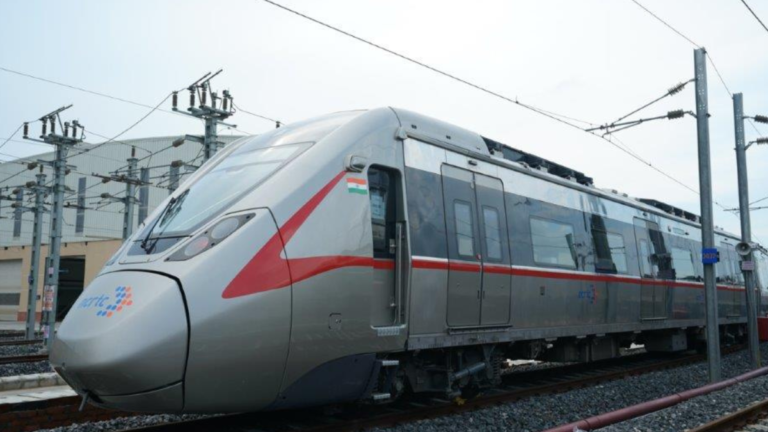
NEW DELHI (Metro Rail News): In a first-of-a-kind initiative, NCRTC has introduced a “one-tap ticketing” feature to commute in Namo Bharat trains through the ‘RRTS Connect’ Mobile App. This feature allows commuters to generate a QR code swiftly on their RRTS Connect app from anywhere within 300 meters of the RRTS station premise, with just one tap, without bothering about the destination, saving them time and effort to book tickets in advance. This is the first time in the world that such a ticketing feature is being provided in any public transport system.
In today’s day and age, time is scarce, and people are so busy that their schedule sometimes doesn’t allow them to plan a journey. In line with NCRTC’s efforts to ensure a seamless and hassle-free travel experience, this initiative lets commuters travel spontaneously and allows flexibility in changing destinations during the journey.
This innovative one-tap booking feature makes ticketing fast and convenient for commuters. It eliminates the hassle of buying tickets or going through the whole process of generating a digital QR code by selecting the origin and destination. Generally, any such app requires origin & destination selection at the start of the journey, limiting the flexibility of changing destination during the journey.
To avail of this new-age feature, commuters need to download the ‘RRTS Connect’ mobile application and ensure a few simple prerequisites to avail this new-age feature. Commuters need to link the E-Wallet to the mobile application, and the E-Wallet is required to have a minimum balance. Then, they need to enable the Location Services of their mobile phone while using this app. This setup is a one-time process which will enable single-tap ticket booking for all future Namo Bharat journeys.
Following this process, a QR code is generated with a single tap on the RRTS connect mobile application, enabling the commuter to board the train from his origin station. The fare is deducted at the destination station once the commuter exits by scanning the QR code on the AFC gate.
For the convenience of commuters, NCRTC provides various ticketing options like Digital QR code-based Ticket through the NCRTC Mobile Application, ‘RRTS Connect’ by ‘one-tap’ or origin-destination selection, Paper QR code-based tickets, which can be generated via Ticket Vending Machines (TVMs) or bought from UPI-enabled ticket vending machines. These TVMs also recharge the National Common Mobility Card (NCMC). Apart from this, commuters can buy the RRTS commuter card. Aligned with the Government of India’s “One Nation, One Card” vision, this commuter card is a National Common Mobility Card (NCMC), which allows the usage of one card in all transit systems and anywhere card payment is feasible. The RRTS system will allow commuters to use any NCMC card for travelling from the first day of operations.
The 17km long Priority Section of the Delhi-Ghaziabad-Meerut RRTS corridor between Sahibabad and Duhai Depot is now operational for people. It has five stations: Sahibabad, Ghaziabad, Guldhar, Duhai and Duhai Depot. Hon’ble Prime Minister flagged off India’s first Namo Bharat Trains and Inaugurated India’s first RRTS corridor last month on 20th October. The entire corridor is targeted to be operational by June 2025.
Discover the endless possibilities of our city’s Metro at InnoMetro, our flagship Expo and Conference. Be an active participant in shaping its future towards a more sustainable tomorrow. Stay informed and join us to take a step towards a brighter future.