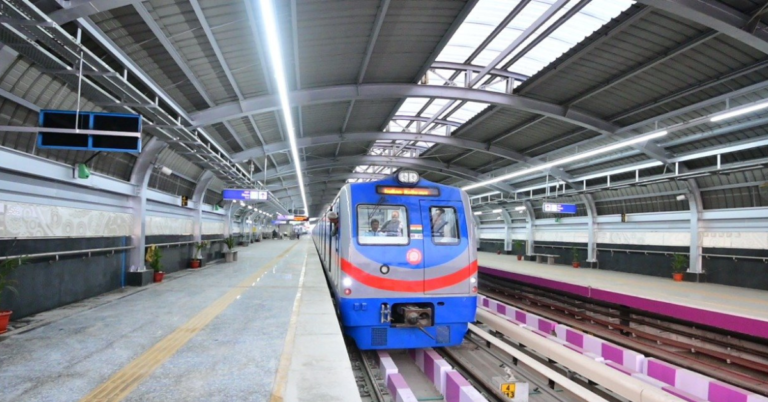
New Delhi: Prime Minister Narendra Modi has flagged-off the Delhi-Faridabad Metro Line that would allow hassle free travel for around two lakh daily commuters between the national capital and the industrial hub in Haryana.
The extension of the Delhi Metro connects Badarpur to Escorts Mujesar in Faridabad.
The total cost of the project from Badarpur to Escorts Mujesar is nearly Rs. 2,500 crore. Out of this, Rs. 1,557 crore was borne by the Haryana Government, the Centre contributed Rs. 537 crore, while the Delhi Metro provided Rs. 400 crore.
All these are elevated and located on either side of the Delhi-Mathura Road (NH-2).
“The nine-station metro corridor which was 95 per cent indigenously built will provide people a safe, affordable, quick, comfortable, reliable, environment-friendly and sustainable transport facility,” a Haryana government spokesperson said.
Haryana Chief Minister ML Khattar, addressing a press conference on Saturday, had thanked the Prime Minister for “gifting” the Metro service which would take the city to “another level of progress” with better connectivity with other NCR towns.
He had also said that the Prime Minister would be announcing the go-ahead for connecting Gurgaon with Faridabad by Metro.
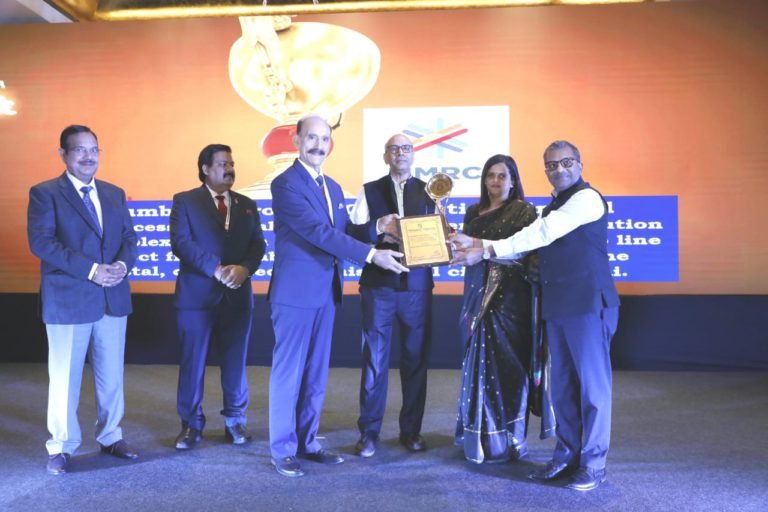
MUMBAI (Metro Rail News):Mumbai Metro Rail Corporation (MMRC) was conferred the ‘Tunnelling Project of the Year’ and ‘Safety Initiative of the Year’ awards by the prestigious Tunnelling Association of India.
The Tunnelling Association of India (TAI) is the Indian Chapter of the International Tunnelling and Underground Space Association (ITA) and was established in the year 1991 under the aegis of the Central Board of Irrigation and Power under the Govt. of India.
The awards were presented during the ongoing Tunnelling Asia 2023 International Conference on “Climate Resilience and Sustainability in Tunnelling and Underground Space” held in Mumbai. Mr Hardeep Singh Puri, Hon’ble Minister of Housing and Urban Affairs and Minister of Petroleum and Natural Gas, Govt. of India, graced the conference’s inaugural session on 23rd November 2023.
This is the 9th Edition of the ITA Tunnelling Awards 2023. Tunnelling Asia’ 2023 is the biennial international conference organised by the Tunnelling Association of India under the aegis of the International Tunnelling and Underground Space Association. Since 2015, the ITA Tunnelling and Underground Space Awards has recognised the most ground-breaking innovations and outstanding projects in tunnelling and underground construction.
“It is an honour to receive the award in the Tunnelling Project of The Year category. The project has been an engineering marvel due to its complexities of being executed in Mumbai’s most difficult topographical, geological, and logistical conditions. The project has had several challenges, like its passing through congested areas, traffic management, rehabilitation of PAPs, and tunnelling close to the coastline and even below the water body. These challenges have been successfully surmounted with the help of the use of advanced technology and engineering acumen. The support of the Government of Maharashtra and its agencies have facilitated the project to the present stage”, said Ms Ashwini Bhide, Managing Director, MMRC.
“Executing this project while ensuring the safety and structural integrity of buildings, their occupants, the safety of city dwellers and the construction workers has been paramount for us right from the beginning. 250 million manhours with a loss time injury frequency rate of 0.34 could be achieved over more than seven years by implementing detailed procedures and protocols, mandatory safety training for each worker deployed on the project and elaborate instrumentation and monitoring mechanisms. The achieved injury frequency rate is well below the international standard of 0.5 for a mega project.” said Mr Subodh Gupta, Director (Projects), MMRC.
The Awards were received by Ms Ashwini Bhide, Managing Director, MMRC, Mr Subodh Gupta, Director (Projects), and other senior officials of MMRC.
Intrigued by the future of Metro and its impact on our city? Join us at our upcoming InnoMetro event to delve deeper into this vital issue. Stay informed, get involved, and let’s ride the Metro towards a brighter, more sustainable future together.
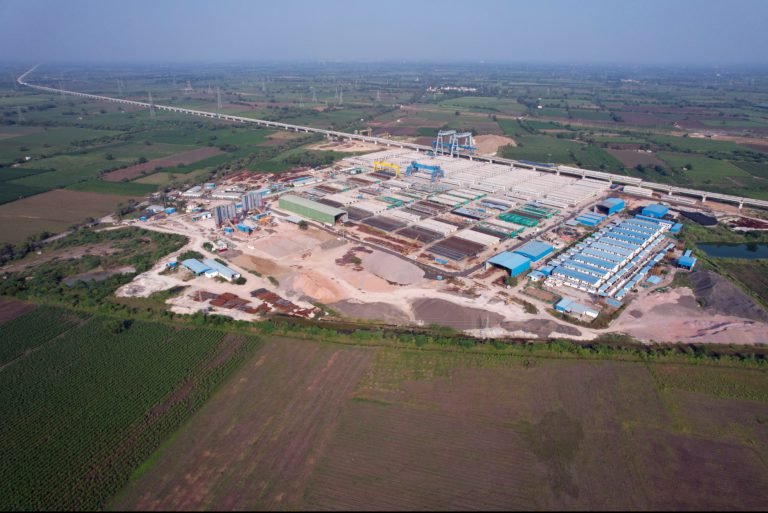
NEW DELHI (Metro Rail News): The NHSRCL on Thursday informed that it has already achieved a cumulative milestone of completing 103.24 Km (s) of elevated viaduct and 251.40 Km(s) of Pier erection work on the prestigious Mumbai -Ahmedabad Bullet Train Project.
Tweet from Railway Minister
Railways Minister Sh Ashwini Vaishnav tweeted about it on his official X handle. The tweet informs about the update on the MAHSR project until the 21st of November.
According to NHSRCL, the 100 km long viaduct comprises a 40 m long full-span box and segment girders. The viaducts are supported on piers measuring 10-20 meters in height with a circular diameter of 4-5 meters.
default
Piers
250 Km(s) of pier work has also been completed on the Bullet train project. The project entails the construction of more than 465 km (s) of an elevated viaduct out of a total length of 508 km (s) of the MAHSR project.
Bridges
The viaducts include bridges constructed over six rivers of Gujarat:
Par River (Valsad District)
Purna River (Navsari District)
Mindhola River (Navsari District)
Ambika River (Navsari District)
Auranga River (Valsad District)
Venganiya River (Navsari District)
Noise Barriers
NHSRCL has also begun with the installation of noise barriers along the route of the bullet train to reflect and distribute the sound arising out of the high speed of the bullet train. Based on Shinkansen Technology, the noise barriers would be 2-meter high and 1-meter wide concrete panels. These will be erected on either side of the route.
Tracks
As per the NHSRCL, laying the Reinforced Concrete (RC) track bed has also started in Surta. It’s the first time a J-slab ballastless track system has been employed in India.
default
MAHSR
MAHSR is India’s first high-speed railway corridor built between Mumbai and Ahmedabad at an estimated cost of 1.08 lakh crore.
Intrigued by the future of Metro and its impact on our city? Join us at our upcoming InnoMetro event to delve deeper into this vital issue. Stay informed, get involved, and let’s ride the Metro towards a brighter, more sustainable future together.
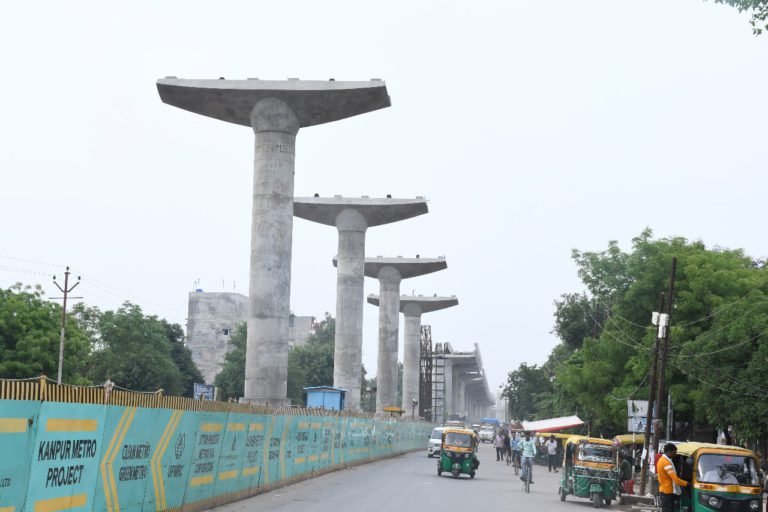
KANPUR (Metro Rail News): Metro construction work of about 5 km long Baradevi-Naubasta elevated section under Corridor-1 (IIT to Naubasta) of the Kanpur Metro Rail Project is progressing quickly. A total of 276 pillars had to be constructed in the section, of which 200 pillars have been completed. UPMRC completed the casting of the 200th pillar last night. Five metro stations will be built in the said section: Baradevi, Kidwai Nagar, Vasant Vihar, Boudh Nagar and Naubasta.
Congratulating the engineers of UPMRC in this regard, Managing Director Shri Sushil Kumar said, “The civil construction of Baradevi-Naubasta elevated section of Kanpur Metro Project is going on at a fast pace. We have completed 200 piers of this section and soon the work of all pile caps and pier caps will also be completed. After starting commercial service on the priority section (IIT to Motijheel) within the stipulated time in December, 2021, we are now progressing on time in the balance sections of Corridor 1 and all the work is being completed within the stipulated time.”
Construction works on the Baradevi-Naubasta elevated section commenced on 8 August 2022, and the first pier cap was laid in this section on 27 December 2022. The first U-girder of this section was laid on 21 January 2023. Erecting Pi-girders at this section’s Baradevi and Kidwai Nagar stations is also progressing quickly. Metro stations are to be constructed on the base of these Pi-girders. On 10 November 2023, the first Cross Arm was erected at the under-construction Naubasta station.
At present, under the Corridor-1 of the Kanpur Metro Rail Project, apart from the Baradevi-Naubasta elevated section, construction work is also progressing at a fast pace on the Kanpur Central-Transport Nagar underground section and Chunniganj-Nayaganj underground section.
Discover the endless possibilities of our city’s Metro at InnoMetro, our flagship Expo and Conference. Be an active participant in shaping its future towards a more sustainable tomorrow. Stay informed and join us to take a step towards a brighter future.
NEW DELHI (Metro Rail Mews): The Prime Minister’s Office has suggested changes in the DPR of the Noida- Greater Noida West Metro.
Metro for Greater Noida West
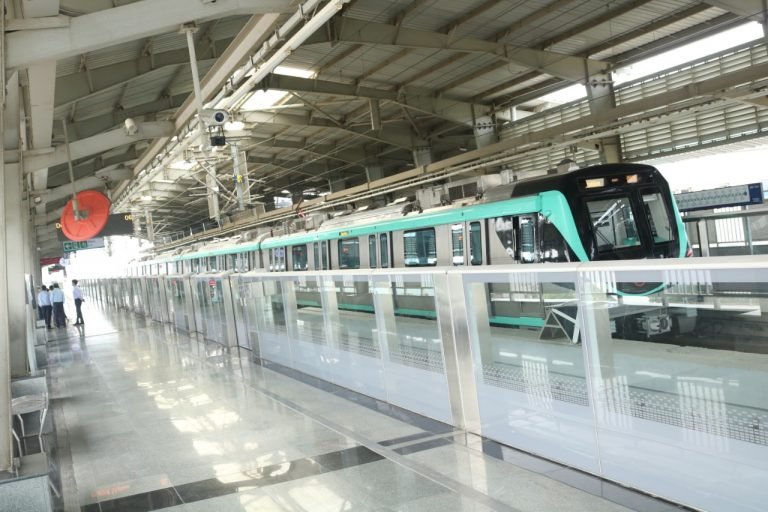
In its DPR, the Noida authority proposed building a 14.9 km-long metro line starting from Aqua Line’s Noida Sector 51 metro station. The DPR also included the proposal to connect the Aqua Line’s Sector 51 metro station with the Blue Line’s Sector 51 Metro Station through an elevator.
Rejection
The PMO has rejected the DPR for it doesn’t ensure seamless connectivity of the 14.9 Km long line originating from Sector 51 Aqua line with the Blue Line’s Sector 51 metro station as per its analysis.
New Route
This has come as a shock to the government of Uttar Pradesh. The Noida authority must find an alternative route to facilitate the metro line. The PMO has asked the Noida authority to change the route of the greater Noida west metro to ensure seamless connectivity with the blue line of the Delhi metro.
New route Suggested
The PMO has suggested originating the new route from Blue Line’s Noida Sector 61 station to reach Greater Noida West via Noida Sector 71, 72, Garhi Chowkhandi Village and Parthala Bridge. This has allowed the Noida authority to explore a new route to Noida extension rather than one originating from Noida’s Sector 51.
Approval from the State Government
Noida authority has requested the state government of Uttar Pradesh to permit it to prepare a new DPR for the Noida- Greater Noida West Metro link in compliance with the route proposed by the PMO.
Discover the endless possibilities of our city’s Metro at InnoMetro, our flagship Expo and Conference. Be an active participant in shaping its future towards a more sustainable tomorrow. Stay informed and join us to take a step towards a brighter future.
PATNA (Metro Rail News): L&T has emerged as the lowest bidder in the contract bidding, aiming to construct a pedestrian tunnel connecting Patna Museum and Bihar Museum.
Specifications of the Tunnel
The tunnel specified in Package PC-08R connecting Patna Museum and Bihar Museum will be 1.5 Km long and 16.5 meters deep. It will be bored by a TBM with a diameter of 8 meters.
Facilities
The tunnel will be equipped with air conditioners showcasing art across the ends. It will have battery-operated Golf carts, a security checkpoint, and service elevators and restrooms.
Location
It will be built between Bailey Road and Chajju Bagh to specify the location. The pedestrian tunnel will be located above the twin tunnel, on Bailey Roa, of Patna Metro’s Line 1, running between Danapur Cantonment and Khemni Chak, with a vertical clearance of 6.5 meters.
Scope of Work
The scope of work under Package PC-08R includes the Design and Construction of the Single Tunnel, Fire Escapes, Ancillary building, and Entry/Exit building, including Architectural Finishing Work, Water Supply, Sanitary Installation, and drainage Works at Patna.
Bidders
The bidders for the package include:
Firm
Bid (in Crore Rupees)
Larsen & Toubro
374.13
Afcons – Sam India Consortium
394.22
ITD Cementation India
426.71
As per the re-invited bids estimated by DMRC, the estimated cost of building the tunnel amounted to Rs. 426.88 crore, with a deadline of 900 days to complete the work after issuing a Letter of Acceptance (LoA).
Expected Developments
The technical evaluation for the bids will be held in the coming weeks, and further, the LoA will be issued with a deadline to complete the project in the deadline itself. This will significantly boost the museums by offering them many visitors owing to its integration with the metro system.
DMRC
After the approval of the project in May 2022 at an estimated cost of Rs 373 Crore, the Bihar government’s Urban Development and Housing Department (UDHD) signed a Memorandum of understanding (MoU) with the Delhi Metro Rail Corporation (DMRC) for the development of the Tunnel.
Patna Metro
Patna Metro is the first mass rapid transit system proposed for the capital city of Bihar, Patna. The Patna Metro Rail Corporation (PMRC), a public company established in February 2019, is developing the project. In February 2016 and 2019, the state and central government approved the project, respectively.
The initial stage will have five Patna Metro stations operational by March 2025. The Patna MRTS, developed through a Public-Private Partnership model, is projected to incur a cost of ₹133,657.7 million (US$1.7 billion).
Discover the endless possibilities of our city’s Metro at InnoMetro, our flagship Expo and Conference. Be an active participant in shaping its future towards a more sustainable tomorrow. Stay informed and join us to take a step towards a brighter future.
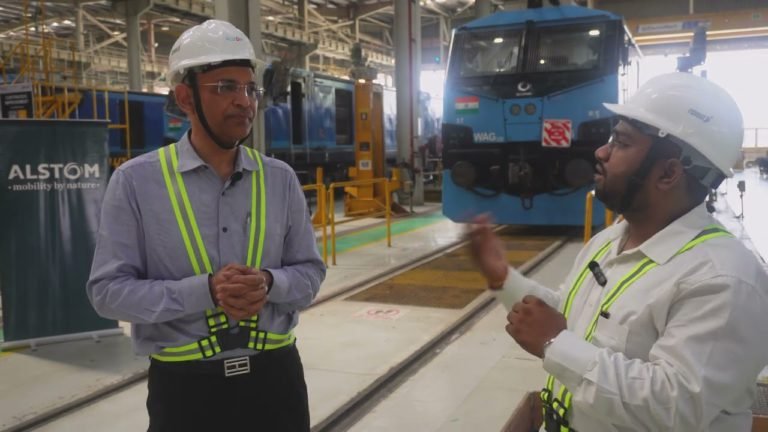
Metro Rail News conducted an in-person interview with Mr. Anil Kumar Saini, Managing Director of Rolling Stock at Alstom, India, at Saharanpur Depot, where the WAG12 Locomotives ( Wide gauge, Alternating Current, Goods traffic locomotive-12) are undergoing maintenance.
He talks about Alstom’s innovative approach to predictive maintenance in the rapidly advancing digital landscape of railway applications. He sheds light on the strategic placement of depot maintenance facilities, emphasising job creation and diversity. Addressing the skill gap in the workforce, he discusses internship trends and ongoing skill-building programs. The conversation concludes with Alstom’s commitment to sustainability, local MSME support, and openness to future opportunities in India.
Wide gauge, Alternating Current, Goods traffic locomotive-12– One of the world’s most powerful (12,000 HP) locomotives for freight carriage developed by Alstom in technological collaboration with Indian railways.
Here are the Edited excerpts:
01. How are you leveraging digital technology for predictive maintenance over here? Both aspects are pertinent.
Your inquiry addresses a vital issue as digitalisation advances quickly in railway applications. Generally, railway vehicles have numerous components, e.g. power, electrical, pneumatic and mechanical parts. High-quality sensors are now available to connect to various equipment to collect data/parameters related to the health of a particular piece of equipment. These sensors and geotagging methods enable us to gather all data/parameters in real-time while the rail vehicle operates in the field. This data is then fed into a digital asset management system that we refer to as Health Hub. With the help of Health Hub, we assist the train driver/loco pilot in the event of any troubleshooting requirements in the field. We can optimise our maintenance schedule by leveraging this data and moving towards predictive maintenance. This also helps us optimise the maintenance effort and improve the availability & reliability of the fleet.
Training facility at Alstom, Saharanpur
02. Could you explain the strategy behind placing the depot maintenance in Saharanpur? You’ve also mentioned opening a depot maintenance in Nagpur. Will it provide the same facility, or are there any improvements in maintaining the locomotives?
The determination of Saharanpur’s depot maintenance location is made by Indian Railways, based on their comprehensive planning for locating goods locomotive sheds. Regarding Nagpur, the facility will be almost identical to Saharanpur except for staffing. At Nagpur, all operational staff will be provided by Indian Railways, while Alstom retains managerial control and spare management. Thus, the maintenance in Nagpur is performed by Indian railways staff under the supervision of Alstom staff. This pioneers a very innovative model as planned by Indian Railways.
03.So, with the depot coming in Saharanpur and Nagpur, there will be some job creation on the local level. As per our understanding, you also include women in the workforce. What is the future of jobs in Alstom for our people?
Establishing new facilities, such as the Saharanpur depot or the Nagpur depot, has resulted in significant job creation, directly and indirectly. The direct job creation numbers around 500 individuals, while the indirect job creation may be almost twice that of direct job creation. This has contributed to the area’s development as we predominantly employ local individuals and provide them with the necessary skills for the job. Additionally, these individuals are trained to take up any new assignments that may arise from other projects. Diversity has always been a top priority for us across all the functions. Traditionally, the rail sector has had low levels of diversity regarding women in the workforce. However, we have employed 15% of women in working-level positions in Saharanpur. Our objective is to take this even further and reach 25% shortly.
Loco Maintenance facility at Alstom, Saharanpur
04. Out of curiosity, with our youngest population worldwide, more than our engineering colleges were needed to provide a workforce ready for use in the plant. Do you find any technical skill gap between what we have learned in college and what we use in the factories or any industry? How do you see it can be overcome?
In the present day, with engineering colleges producing a plethora of young graduates, it is essential to ponder over how they are being equipped with the necessary skills. Encouragingly, a notable shift occurs with students engaging in internships during their second, third, and fourth years, providing them with a firsthand understanding of industry dynamics. At Alstom, we’ve initiated several skill-building programs through our CSR initiatives. On completion of skill-building sessions, these individuals are recruited by various companies. Recently, a batch of about 30 people who underwent a skill-building programme in Madhepura has been recruited by a port company in Gujarat.
Mr Anil Kumar Saini with Managing editor of Metro rail News
05. During our conversation, you mentioned that Indian Railways are floating tenders for the overall lifetime of the product. Previously, they used to buy the locomotives, use them, and do maintenance work. Now, they call the vendors to give the product, buy the locomotive, supply it, and maintain it further. So, Alstom is a giant in locomotives, be it RRTs, Indian Railways, DFC, or Metro projects. We cannot imagine the Metro project without Alstom in the past 20 years. These are the recent changes by the government. But the locomotives and metro coaches need to be refurbished or overhauled. Are you planning to be part of that service for overhauling?
To provide a summary of the current approach adopted by the metro authorities and Indian Railway, it can be observed that a bundled contract is being offered, which includes supply and services for either 15 or 35 years, depending on the contract terms. This trend has become quite common in India today. As a company, Alstom has become fully integrated into this scheme and has a large stake in the service sector. For example, we maintain a high-power locomotive in Saharanpur & Nagpur and RRTS Trains in Duhai Depot. We are eager to partner with the metro authorities and Indian Railways in such initiatives.
06. What sustainability measures have Alstom undertaken to mitigate carbon emissions? You posed an exceptionally crucial inquiry today.
At Alstom, sustainability holds primary importance, encompassing various dimensions. We prioritise sustainability throughout our product lifecycle, from manufacturing to the product’s service life. Our focus revolves around employing high-grade, lightweight & recyclable materials, implementing modern manufacturing techniques, and curbing carbon emissions in the production stage.
Another pivotal aspect lies in enhancing our product’s operational efficiency. This involves maintaining top-tier equipment functionality and optimising the product’s energy efficiency. Extensive research and development initiatives actively explore improvements across the entire value chain.
Sustainability remains a central focus driving our efforts and initiatives, underscoring our commitment to sustainable practices at every stage of our operations.
07. How does Alstom support local MSMEs and contribute to developing a supplier ecosystem in India?
Let’s take the example of the WAG 12 Locomotive Project. It is worth noting that nearly 30 primary suppliers are involved, most of which are small and medium-sized enterprises (SMEs) that have been established in India through the transfer of technology by Alstom. We have achieved 90% localisation on this project and have thus trained these MSMEs ourselves. We have provided them a long-term order, depending on the contract period and supply duration. Only a few components are being exported from abroad. Similarly, localisation efforts are increasing for metro/regional trains as well. Therefore, we are effectively establishing a supplier eco-system that will cater to the country’s needs as we move forward in the rail sector.
Equipment facility at Alstom, Saharanpur
Discover the endless possibilities of our city’s Metro at InnoMetro, our flagship Expo and Conference. Be an active participant in shaping its future towards a more sustainable tomorrow. Stay informed and join us to take a step towards a brighter future.
PATNA (Metro Rail News): Delhi Metro Rail Corporation has unveiled seven bidders who have submitted bids for the package PC-01A of Patna Metro Phase 01.
Scope of Work
The scope of work for the package includes Architectural finishing work, including DFSE and roof Sheeting of Pre-engineered Building (PEB) structures and DC of External Facade, WS, SI, drainage, and Site development works at five stations: Malahi Pakri, Khemni Chak, Bhoothnath, Zero Mile and New ISBT Stations of Patna Metro.
Bidding
In August, DMRC issued bids for the project with an anticipated expenditure of 74.95 Crore. The Bidders are
B.Rai Construction Company
Godrej and Boyce Mfg. Co. Ltd.
Himcon Engineers India Pvt. Ltd.
Metcon India Realty and Infrastructure Pvt. Ltd.
Premco Rail Engineers Ltd.
Quality Buildcon Pvt. Ltd.
Sam India Builtwell Pvt Ltd.
Technical Evaluation
All the submitted bids are currently being technically evaluated, and it may take a couple of months or so to complete. Once done, the name of the lowest bidder and the probable contractor for the package will be revealed.
Patna Metro
Patna Metro is the first mass rapid transit system proposed for the capital city of Bihar, Patna. The Patna Metro Rail Corporation (PMRC), a public company established in February 2019, is developing the project. In February 2016 and 2019, the state and central government approved the project, respectively.
The initial stage will have five Patna Metro stations operational by March 2025. The Patna MRTS, developed through a Public-Private Partnership model, is projected to incur a cost of ₹133,657.7 million (US$1.7 billion).
DMRC
The Bihar Cabinet had allotted the Patna Metro work to DMRC on a nomination basis. It was decided the work would be completed on a “Deposit Work Method” at an estimated cost of ₹ 482.87 crore.
Discover the endless possibilities of our city’s Metro at InnoMetro, our flagship Expo and Conference. Be an active participant in shaping its future towards a more sustainable tomorrow. Stay informed and join us to take a step towards a brighter future.
NEW DELHI (Metro Rail News): Delhi Metro Rail Corporation (DMRC) unveiled the three bidders for the package DT-16 under Phase-IV of the Delhi Metro.
Package DT-16
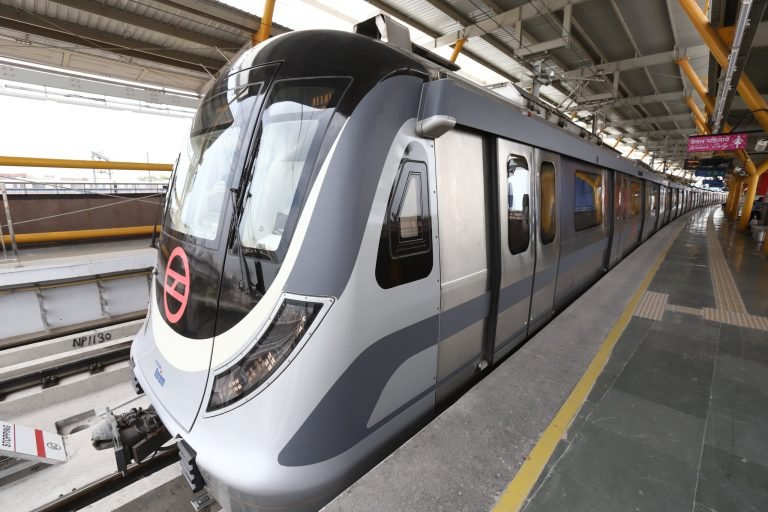
The bids for Package DT-16 were invited in September. It aims to repurpose the Sarita Vihar Depot for stabling and maintaining thirteen six-coach Alstom trains of the under-construction 23.6 Km Silver Line connecting Tughlaqabad to Delhi Aerocity with 16 stations in between.
The Three Bidders
The three bidders for the contract are :
SC Agarwal
Pee Pee Mandal Projects
Texmaco Rail & Engineering
The contract includes track-laying at Delhi Metro’s Sarita Vihar depot for augmenting additional maintenance facilities. It will be done at an estimated cost of Rs 9.44 Crore and within a deadline of 1.47 years.
Scope Of Work
The work relates to the following dynamics of the Ballastless/ballasted track to be laid on the Sarita Vihar depot:
Supply
Installation
Testing
Commissioning
It will augment Sarita Vihar Depot’s maintenance facilities for the upcoming Silver Line.
Further Developments:
It can take roughly 2-3 months for the DMRC to complete the technical evaluation of the three bids and then come up with the lowest bidder and prospective contractor for the package DT-16.
Silver Line, DMRC
The 23.622 km long Silver Line of the Delhi Metro is an under-construction line of Delhi Metro that falls under its Phase 04 tranche. This line comprises 15 stations (4 Elevated & 11 Underground) from Tughlakabad to Delhi Aerocity. It is expected to be completed by September 2025.
Discover the endless possibilities of our city’s Metro at InnoMetro, our flagship Expo and Conference. Be an active participant in shaping its future towards a more sustainable tomorrow. Stay informed and join us to take a step towards a brighter future.
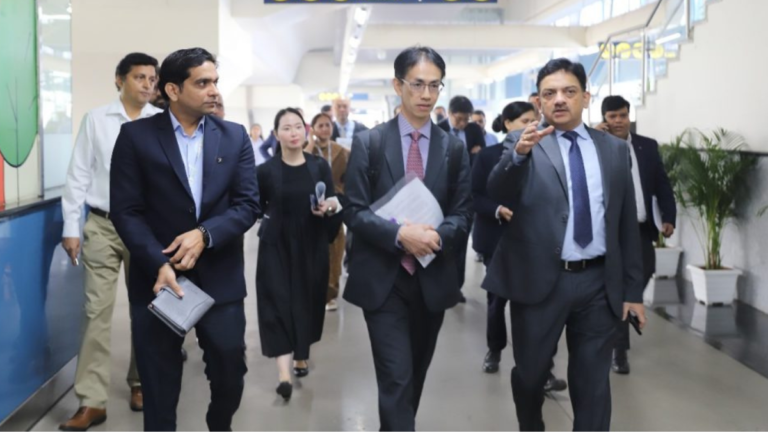
NEW DELHI (Metro Rail News): A delegation of senior officials from the Japanese government and the Asian Development Bank (ADB) visited the recently inaugurated priority section of the Delhi-Ghaziabad-Meerut RRTS corridor on 17th November, 2023.
The Delegation
The delegation included Mr Daiho Fujii, Deputy Vice Minister of Finance for International Affairs, Japanese Ministry of Finance; Mr Shigeo Shimizu, Executive Director for Japan, Asian Development Bank; Ms Nanami Shigyo, Deputy Director of Multilateral Development Banks Division, International Bureau, Japanese Ministry of Finance; and Mr Takeo Konishi, Country Director for India, Asian Development Bank, among others.
Shri Vinay Kumar Singh, managing director of NCRTC, accompanied the delegation on its visit, among other officials.
Activities
The activities performed during the visit include taking a ride in the Namo Bharat trains, contributing to the plantation drive & witnessing a demonstration of the self-defence training program being conducted by NCRTC.
Funding by ADB
The entire 82 Km stretch of the Delhi-Meerut RRTS corridor is being built at an estimated cost of Rs 31,632 Crore. The debt for the same is in a 60:40 equity ratio that the Asian Development has fully facilitated. Toral funds facilitated by ADB amount to $ 1552 Million, which is approximately 45% of the total funds being used to build the project.
Financing Source
Total in Million USD
Share % of total
ADB
1,049.0
30.4
Asian Infrastructure Investment Bank
500.0
14.5
Japan Fund for for Prosperous and Resilient Asia and the Pacific
3.0
0.1
Government
1,897.7
55.0
Total
3,449.7
100
The Central government has contributed Rs 5,687 crore, while the Uttar Pradesh Government has given Rs 5,828 crore & over Rs 1150 crore by the Delhi government.
RRTS
The Rapid Rail Transit System (RRTS) is a mass rapid transit network stretching 82.15 kilometres, connecting Delhi’s Sarai Kale Khan with Ghaziabad and Meerut. The inaugural phase of the priority corridor, spanning 17 kilometres, was inaugurated by Prime Minister Modi. This segment includes five stations: Sahibabad, Ghaziabad, Guildhar, Duhai, and Duhai Depot.
Discover the endless possibilities of our city’s Metro at InnoMetro, our flagship Expo and Conference. Be an active participant in shaping its future towards a more sustainable tomorrow. Stay informed and join us to take a step towards a brighter future.
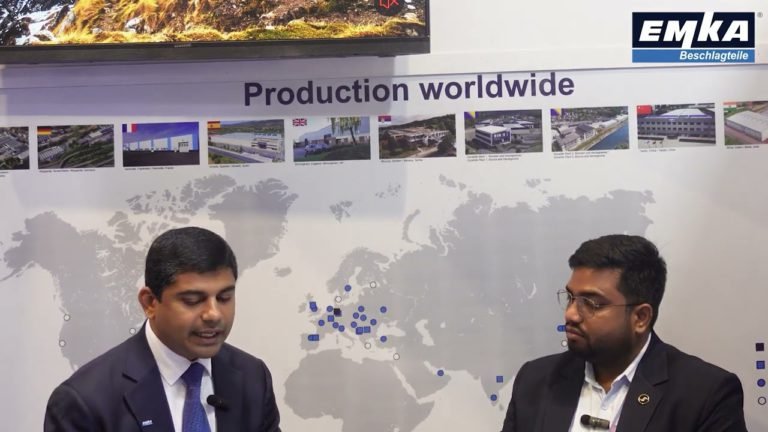
Metro Rail News team Interviewed Mr Kumar Subramaniyam during IREE 2023. He is the Managing Director of EMKA-India. This interview explores the latest innovations and technologies ushered by EMKA-India in the Indian mobility sector, emphasising Railways. This interview also unravels the company’s commitment towards sustainability and an environmentally friendly approach to business.
In the dynamic landscape of India’s rail industry, Kumar Subramaniyam stands at the forefront of innovation and transformation. As the Managing Director of EMKA-India, a German-based family-owned company with a rich history, Subramaniyam leads a team dedicated to revolutionising the rail sector. In an exclusive interview, he shares insights into EMKA’s cutting-edge product portfolio, its commitment to global standards, and its role in major rail projects across India. Here are the edited excerpts:
Q1: Kindly share a brief outline of the company’s product portfolio, especially for the rail industry.
EMKA is a renowned German-based, family-owned, middle-sized company with a remarkable history. With over eleven manufacturing units and a 400 plus million euros turnover, EMKA is a leading manufacturer of locking systems, hinges, gaskets, and a wide range of accessories, including the emergency hammer, specifically designed for the railway industry. Our product portfolio is highly acclaimed for its innovative locking systems and matches global standards and requirements.
Q2: In what ways do the products by EMKA match global standards and requirements? How do you ensure product versatility and coverage for a vast category of rail vehicles?
As mentioned, EMKA is a German-based company that has established a close working relationship with global manufacturing OEMs such as Bombardier, Siemens, and Delner, amongst other top companies. Through this partnership, we have developed a strong expertise in creating products that can withstand even the toughest working conditions, including snow and harsh climate conditions, ensuring that our products meet global standards. This expertise has been extended to our Indian counterparts, and we are proud to say that the same high-quality product that we offer in Europe is now being made available to the Indian Railway industry. Our products are designed to cater to a vast range of categories for all types of vehicles, including Metros and faster trains, making them truly of global standard.
Q3: What are the company’s new and innovative products for the railroad industry?
Certainly, for the railway industry, our company generates a turnover of approximately 20-30%, and this segment is rapidly growing in India. Our company consistently endeavours to innovate and introduce new products. Our technology centre in Germany launches new products every couple of weeks. For instance, we have developed an anti-vibration quarter turn for the railway market. This means that moulds can now be produced in India.
Additionally, we have introduced special gaskets that can withstand high temperatures in a fire accident. These are some of the innovative solutions we keep bringing to the market. Our company is renowned for innovation, and we strive to innovate to continuously introduce new products to the market.
Q4: What are the various ongoing projects and significant orders on the books for India’s metro and rail industry?
I am pleased to provide an overview of the projects in which we are currently engaged. Our organisation is involved in various projects within India and projects operated from India for the global market. Specifically, we are proud to contribute to several metro projects, including the Bhopal project, Delhi Metro expansion project, Pune Metro, and the Bangalore Metro expansion project. We are also involved in high-speed train operations, such as the new Vande Bharat project, working collaboratively with ICF team members and the Alstom team in Bangalore. Our team at EMKA India is actively engaged in a range of upcoming projects both within and beyond India. We are committed to delivering quality results and contributing to our organisation’s continued growth and success.
Q.5 With the Indian Railway undergoing a massive transformation in infrastructure, passenger experience, and rolling stock, how will EMKA be part of this journey?
We are pleased to inform you that we have established a robust online technology network in close collaboration with our technology and testing centres in Upatal, Germany. This partnership enables us to transfer the latest technological advancements from Europe to the Indian market in real time. As a result, we can keep pace with the rapid development of technology in Europe and bring it to India. We aim to catch up with high-speed new projects and ensure we provide our clients with the best possible service. As an Indian representative of an overseas company, we take pride in maintaining a formal and professional approach to our work.
Q.6 As an Indian representing an overseas company in India, what has been your journey so far with EMKA? What challenges have you faced, and how did you overcome them?
There appears to be a certain degree of apprehension in the German mindset regarding the progress made in India. However, upon witnessing firsthand the pace of development in India, they are beginning to realise that it is indeed happening. Having spent 25 years in Germany, I deeply understand the German perspective. Additionally, I know how things operate because I was born and raised in India. That being said, India is currently experiencing a dynamic growth phase, with numerous projects tangibly coming to fruition. While no significant obstacles have been encountered thus far, our team at EMKA has been restructured and is now operating faster. The team is currently faced with the challenge of responding to customer needs and providing technical solutions. This journey with EMKA has spanned nearly two years for me, during which time we have worked to establish new team dynamics in India’s growth phase. Our growth potential is reflected in our growth rate, which has reached nearly 80% compared to the previous year. The team in Germany, as well as the parent company, now recognises the importance of the Indian market and provides support and encouragement to invest more in the Indian factory and subcontinent. Our sales team is present throughout India, allowing customers to reach out to us easily from any location, such as Ahmedabad or northern India.
Discover the endless possibilities of our city’s Metro at InnoMetro, our flagship Expo and Conference. Be an active participant in shaping its future towards a more sustainable tomorrow. Stay informed and join us to take a step towards a brighter future.