Home Blog Page 137

Kochi Metro: Afcons Infrastructure Bags Rs. 1141.32 crore Civil Contract of Pink Line

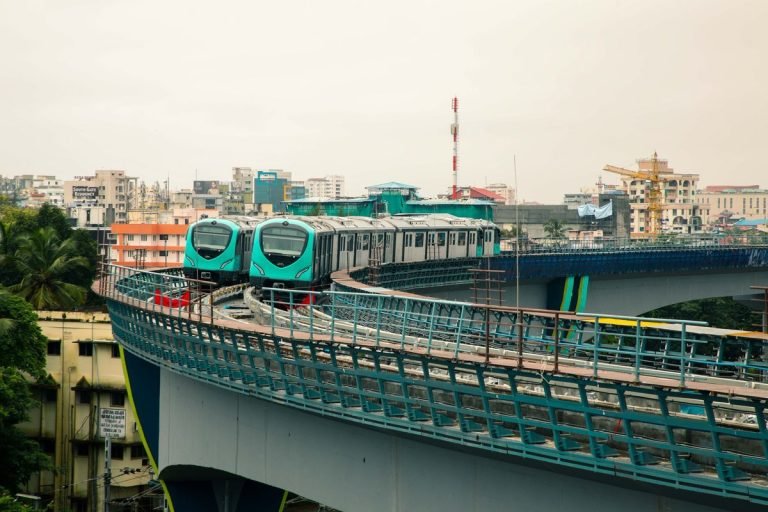
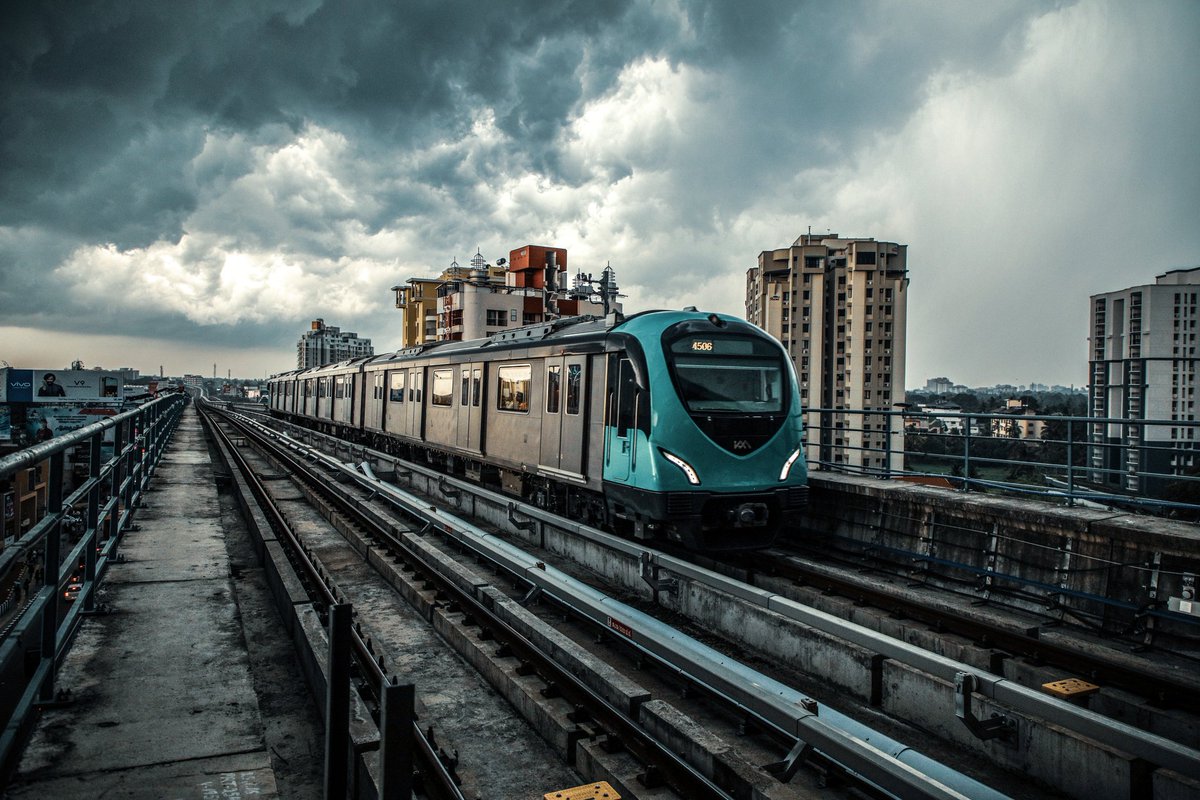
Kochi (Metro Rail News): On 20 June 2024, Afcons Infrastructure bagged a contract worth Rs. 1141.32 to undertake the construction work of Pink Line under package KBC3 of the Kochi Metro Phase 2 Project.
Kochi Metro

When bids were opened in March, Afcons was identified as the sole technically qualified bidder. In contrast, the bids submitted by KEC International – Sadbhav Engineering JV and Rail Vikas Nigam (RVNL) were disqualified due to non-compliance with the tender conditions.

 Package KBC3:

Under this contract, Afcons Infrastructure will be responsible for Designing and Constructing an elevated viaduct and 10 elevated stations of the Kochi Metro Phase 2 project which will connect Jawaharlal Nehru Stadium to Infopark II. This package has a completion deadline of 600 days. 

Although the construction of entry/exit buildings and architectural finishing will be executed through separate packages.

Kochi Metro Phase 2

Approval

Kerela government approved Kochi Metro Phase 2 in July 2018 at an estimated cost of Rs.2,310. The Detailed Project Report(DPR) of the Phase 2 project received approval from the Central Government in September 2022 at Rs 1,957.05 crore. 

Corridor length & Stations 

Phase 2 of Kochi Metro will cover a total distance of 11.2 km via 1 corridor (Pink Line). The Pink Line will connect JLN Stadium and Infopark II through  11 elevated stations.

Financial Aspects

Currently, Phase 2 awaits approval of a USD 122.3 million loan from the Asian Infrastructure Investment Bank (AIIB).
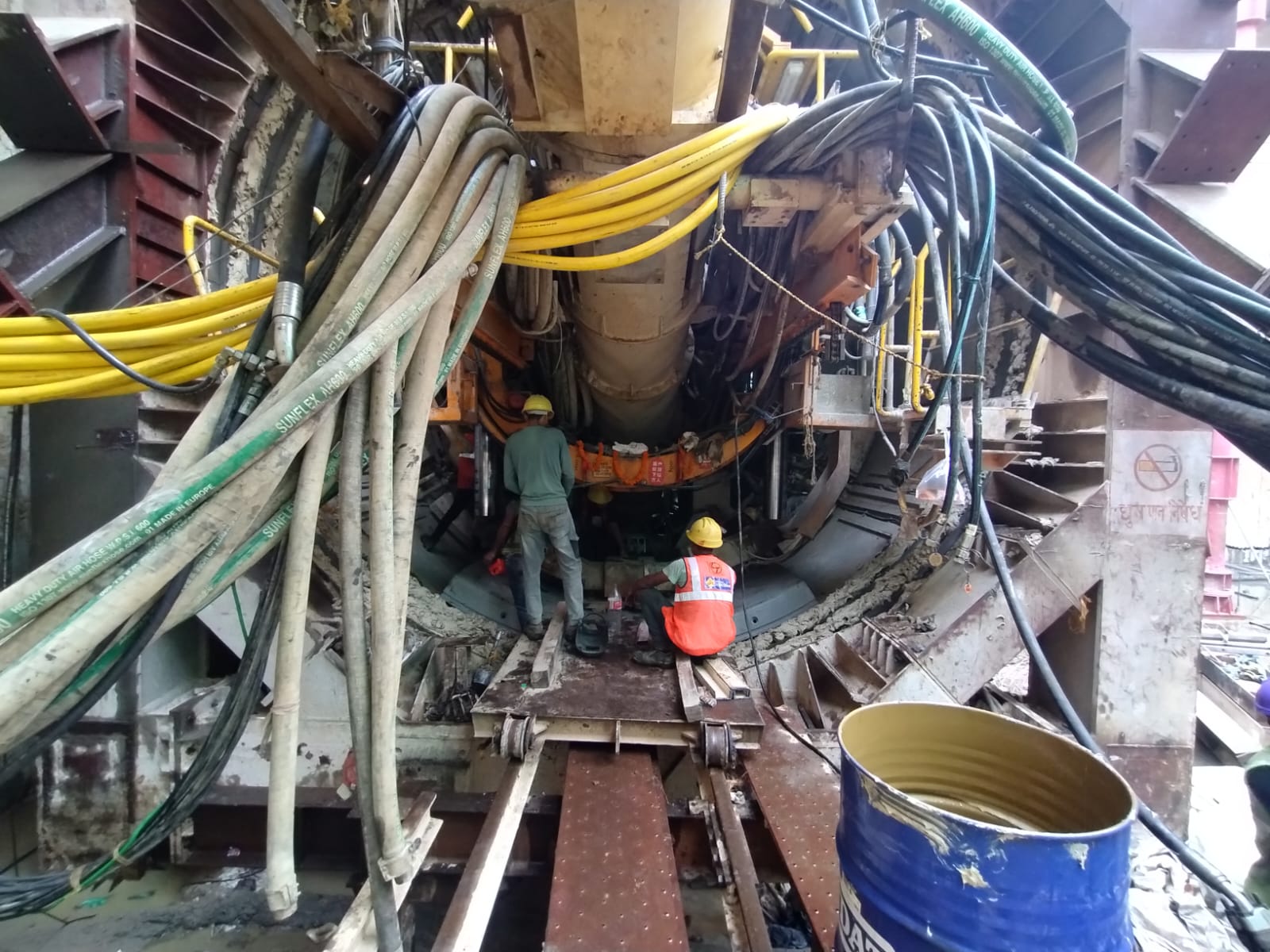
Patna Metro: L&T Deploys TBM-1 at Patna University Metro Station

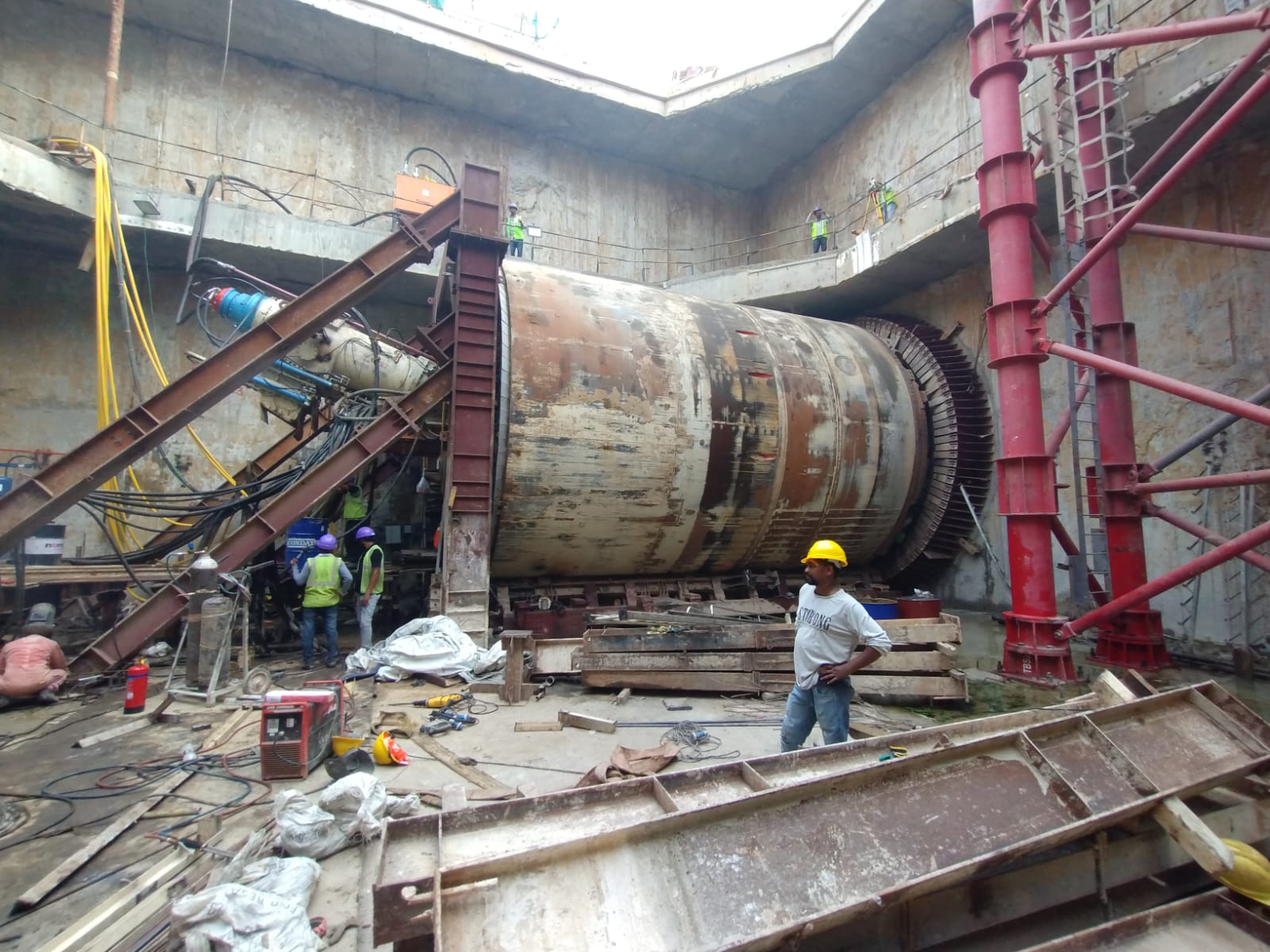
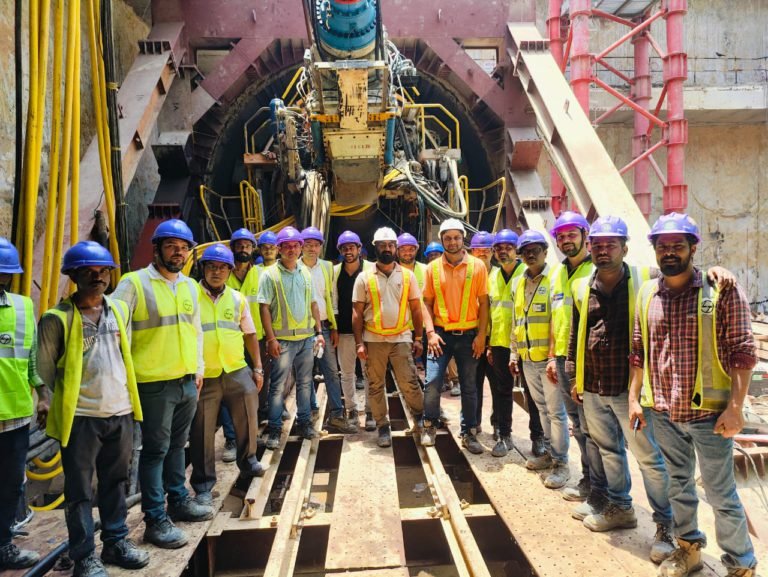
Patna (Metro Rail News): The Patna Metro Phase 1 project is advancing at a rapid pace. Recently,  Larsen & Toubro (L&T) deployed Tunnel Boring Machine (TBM-1) at Patna University Metro Station on Line 2 (Patna Junction Railway Station- New ISBT) for underground Package PC-03. This package spans 8 km and connects Rajendra Nagar to Patna Junction Railway Station.

GPyq0WiaUAA576I
Image Credit: Patna Metro

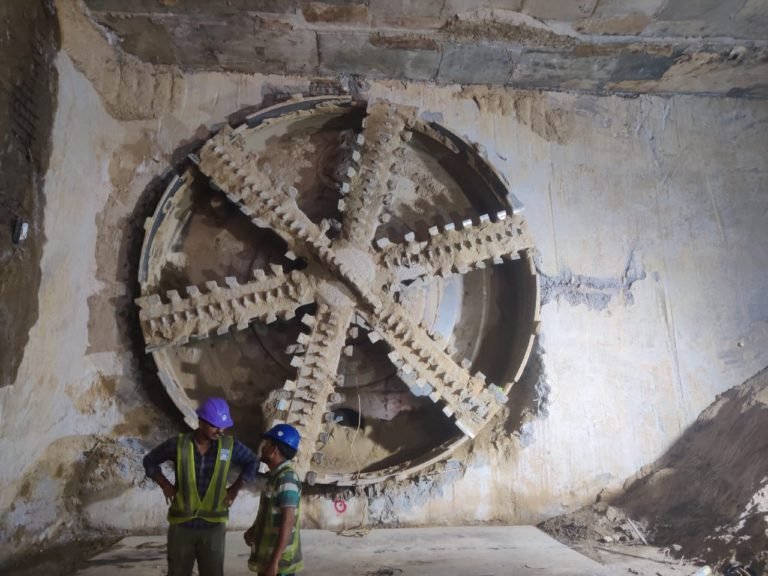
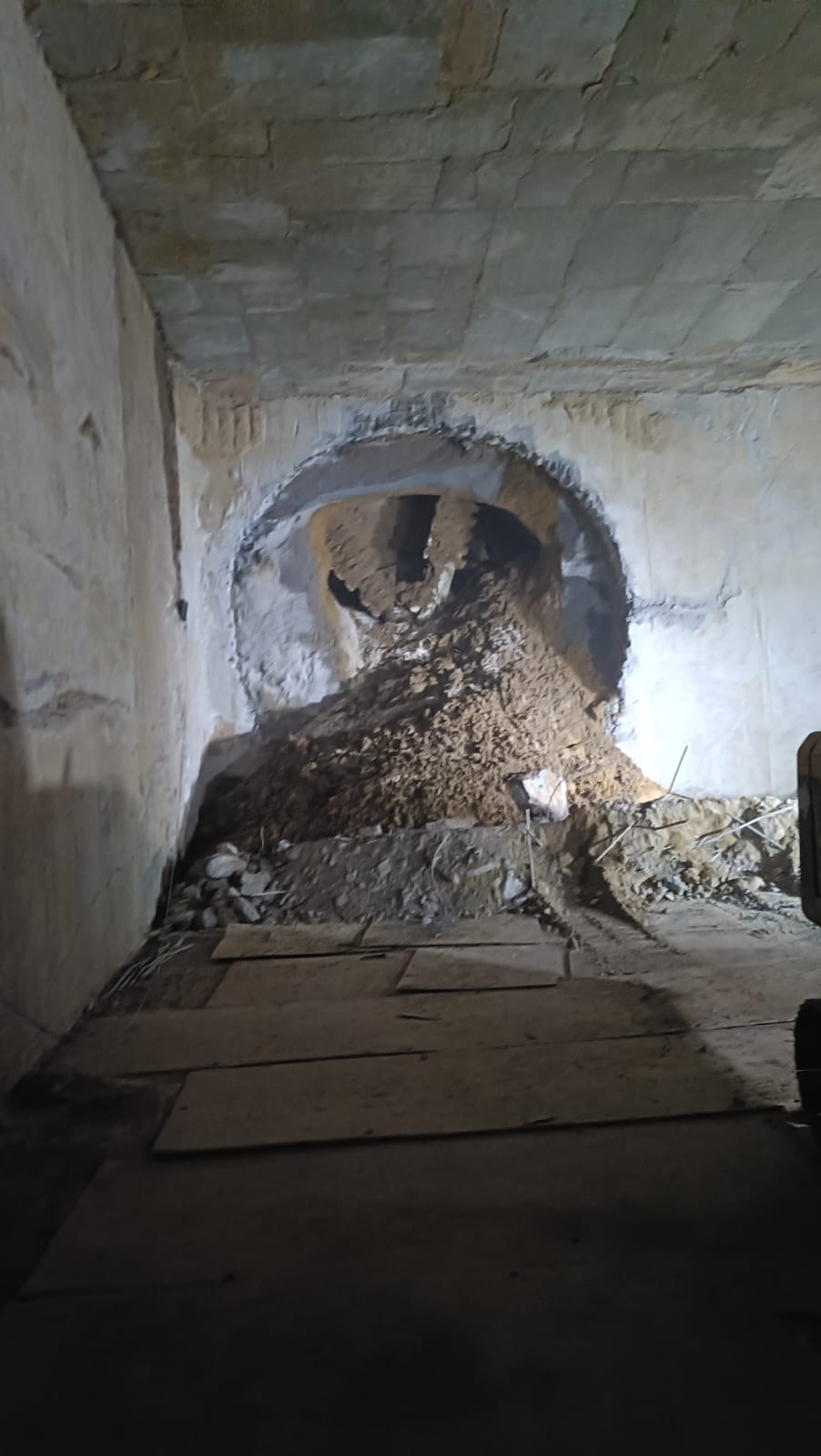
This achievement comes about three months after TBM DZ1090, also known as TBM-1, achieved its first breakthrough at Patna University’s east shaft in March 2024. Over a period of 11 months, the TBM-1 constructed a 1494-meter tunnel for the down-line, starting from Moin-ul-Haq Station.

GPyqvDXbIAABORB
Image Credit: Patna Metro

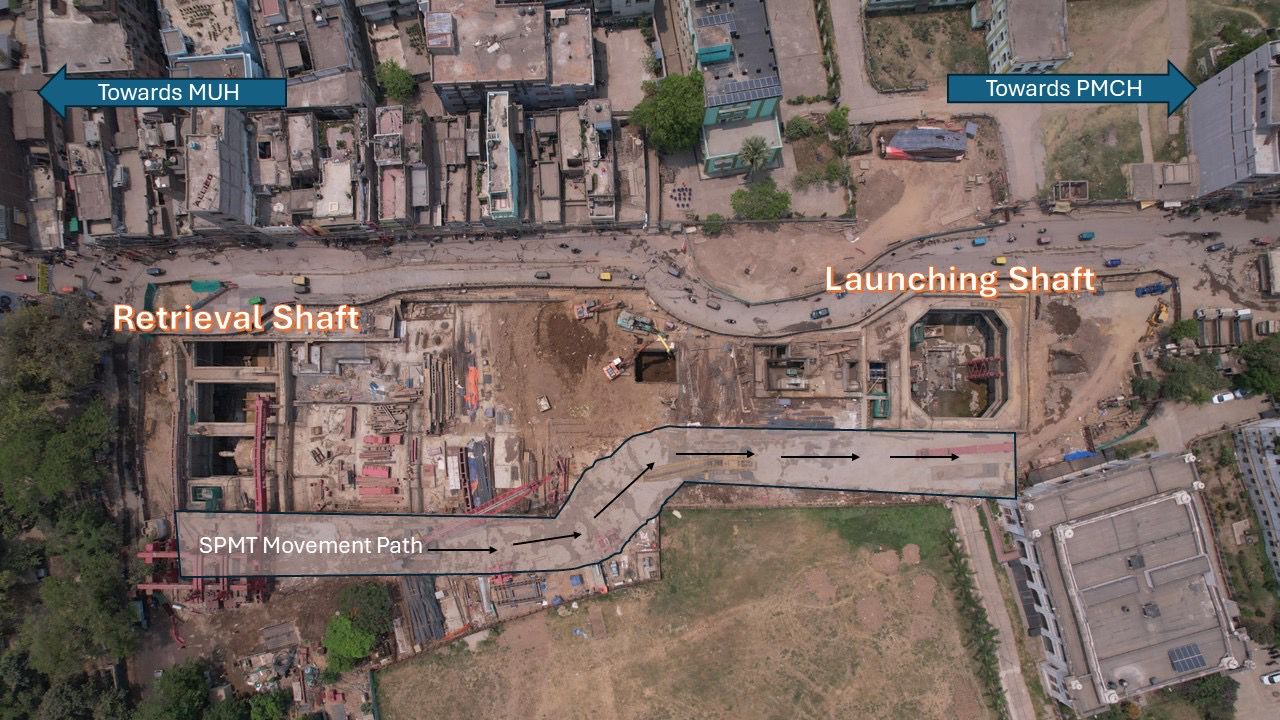
After its first breakthrough, TBM-1 was moved from Patna University’s east shaft into its west shaft. Now L&T has deployed TBM-1 for its next assignment which involves constructing a 2302 m downline tunnel toward PMCH Station.

GPyqtENaEAAAqqv
Image Credit: Patna Metro

Patna Metro Phase 1’s Package PC-03

In December 2021, Larsen & Toubro (L&T) secured Package PC-03 from the Delhi Metro Rail Corporation (DMRC) at a cost of Rs. 1989 crore. The contract has a completion deadline of 42 months.

Scope of work

Package PC-03 will link a ramp near Rajendra Nagar with Patna Junction Railway Station. To facilitate this work L&T will design and construct a Twin Tunnel and six underground metro stations: Rajendra Nagar, Moin Ul Haq Stadium, University, PMCH, Gandhi Maidan, and Akashvani (formerly Dak Bungalow).

Advancements in Package PC-03

Till now L&T has achieved 2 Tunnel breakthroughs in Package PC-03. Both were recorded at Patna University Metro Station: The first in March for the down-line by TBM-1, and the second in May for the up-line by DZ1091, also known as Buddha.

Bangalore Metro Phase 2: Final Precast Segment Launched on Pink Line

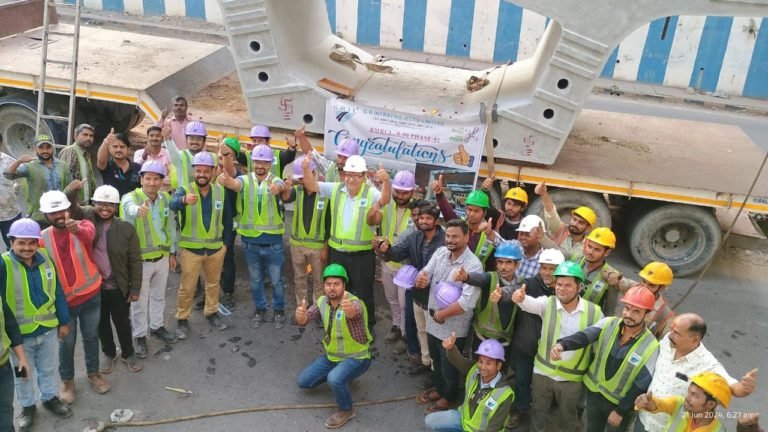
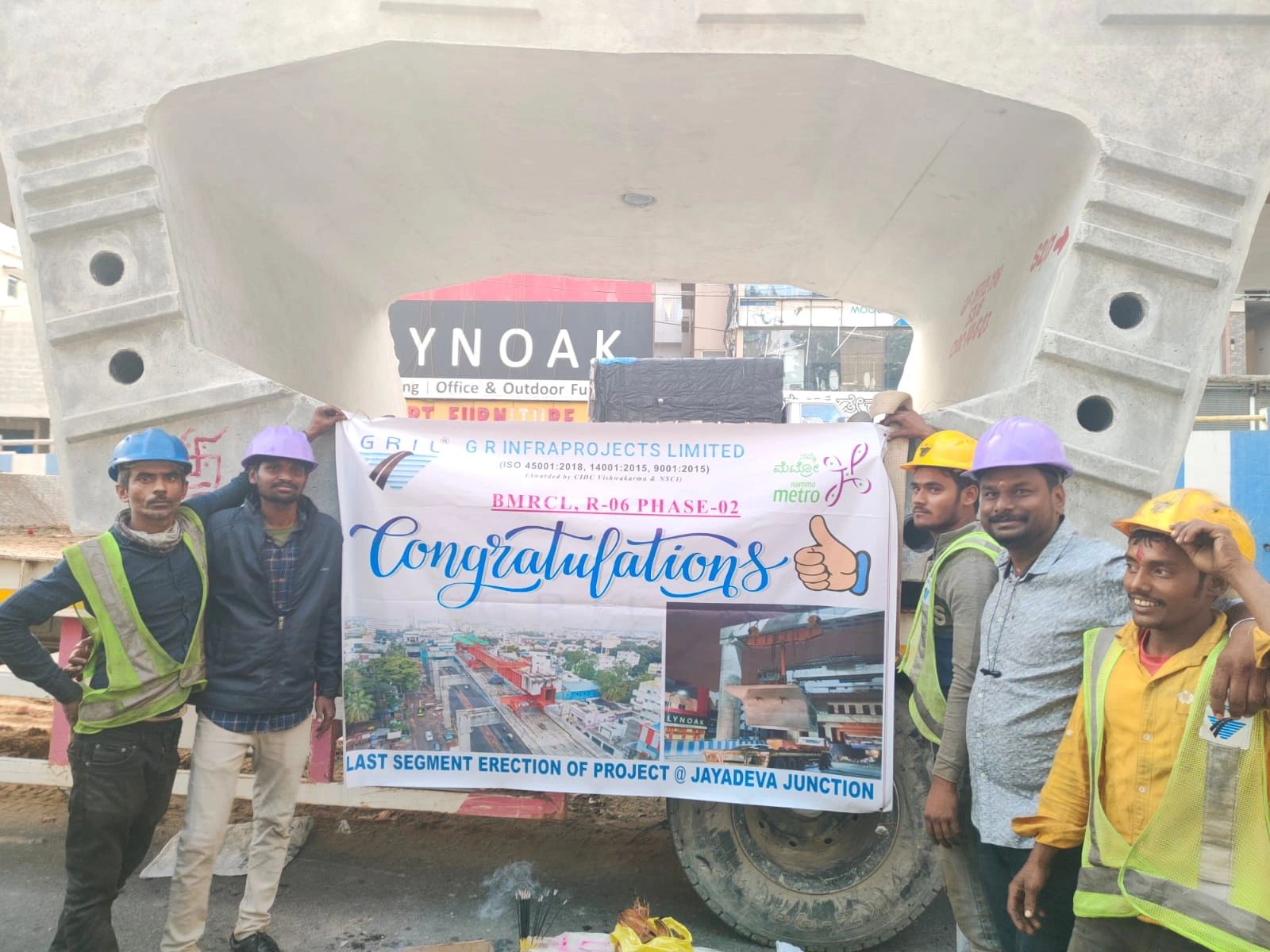
Bangalore (Metro Rail News): On 21 June 2024, GR Infraprojects (GRIL) launched the final precast segment for the 7.5 km stretch of Bangalore Metro’s Pink Line. This section runs from Dairy Circle Ramp to Kalena Agrahara.

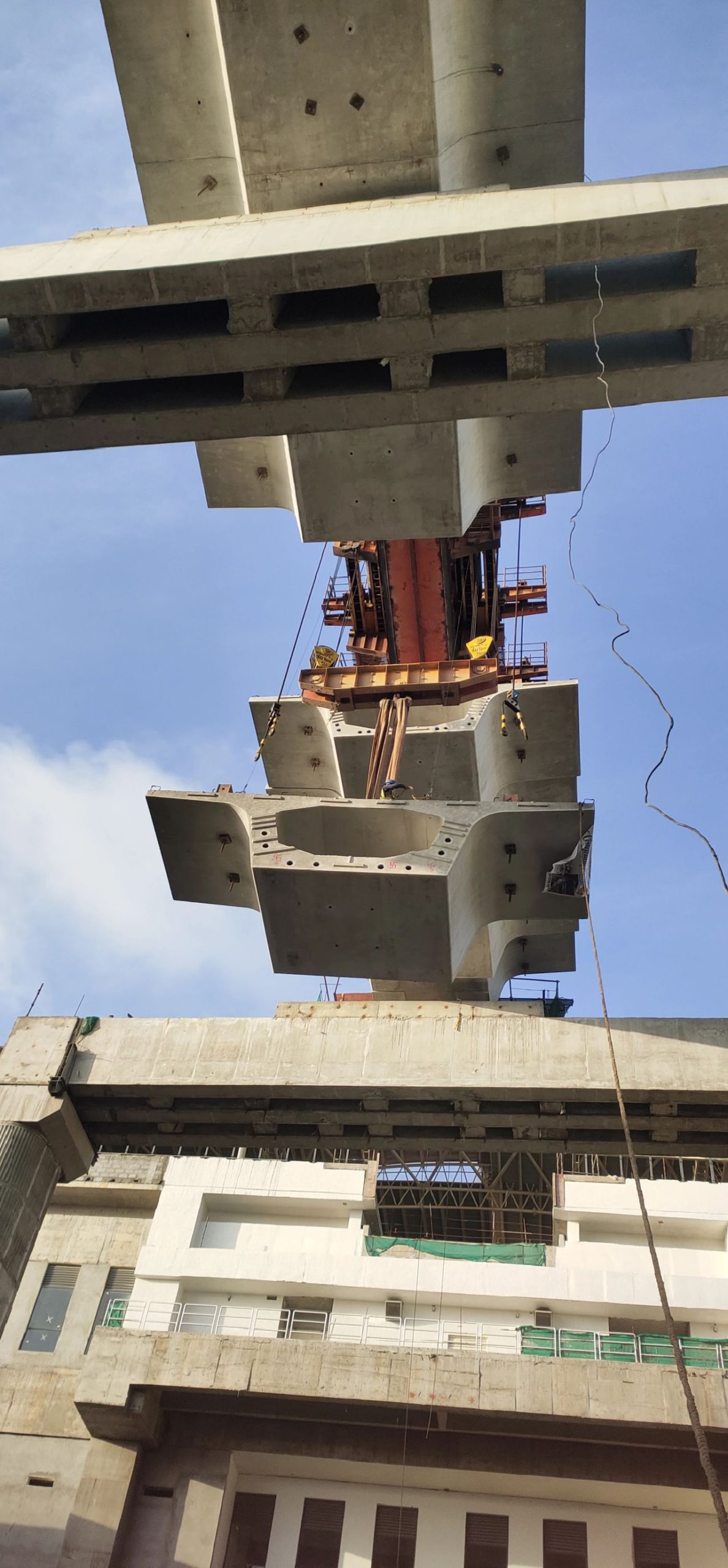
The launching of the final segment took place on Bannerghatta Road for a viaduct situated south of Jayadeva Metro Station. This advancement signifies the completion of segment-launching activities for the 21.386 km Pink Line, spanning from Kalena Agrahara to Nagawara, as well as for the entire Bangalore Metro Phase 2 project.

1718962091794
Image Credit: Mada Samy S

The contact to GRIL 

The contract for the construction of the elevated part of Reach 6 was initially awarded to Simplex Infrastructures in September 2017 with a deadline of 27 months. The contract was terminated and re-tendered due to insufficient progress, and in August 2021, GR Infraprojects secured the contract at Rs. 364.87 crore with a revised deadline of 21 months.

1718962088650
Image Credit: Mada Samy S

The launch of segments in Phase 2 of Bangalore Metro

In November 2021, GR Infraprojects initiated the process of launching segments in the Arekere neighbourhood, using mainly 8.5-meter-wide girders with weights ranging from 38 to 42 tons.

In January 2017, IL&FS Engineering performed the launch of the first segment for the Purple Line’s 3.945 km Reach 2A, which connects the Mysore Road and Pattanagere stations.

In September 2022, HCC – URCC JV launched the last segment of the 19.14 km Yellow Line or Reach 5 (RV Road – Bommasandra). 

The next route to open in 2024 is Reach 3C (Nagasandra – Madavara), a 3.031 km stretch of the Green Line. In April 2023, Simplex Infrastructure launched the final segment for this section.

SYSTRA Bags Ticketing Consultant Contract for MAHSR Corridor

On 18 June 2024,  the joint venture between SYSTRA MVA Consulting (India) and SYSTRA  was awarded the Ticketing Consultant contract for the 508 km Mumbai – Ahmedabad High-Speed Rail corridor at Rs. 3.97 crores.

Brief Scope of Contract

The contract involves selecting a consultant to manage various tasks related to the ticketing system for the Mumbai-Ahmedabad High-Speed Rail (MAHSR) Project. 

Under this contract SYSTRA will be responsible for the following:

1. Studying Global AFC Systems: Analysing existing Automatic Fare Collection (AFC) systems around the globe to recommend the best option for NHSRCL.

2. Cost Estimation: Preparing a detailed cost estimate for the ticketing system.

3. Bidding Process Assistance: Assisting NHSRCL throughout the bidding process, from inviting bids to evaluating them.

4. Contract Preparation: Preparing the contract agreement for the selected ticketing system.

Bidding Process

NHSRCL initiated the bidding process for this consultancy contract in November 2023, specifying a contract duration of 365 days. In February 2024, NHSRCL opened the technical bids and discovered that the only participants were SYSTRA and a joint venture between DB Engineering and Balaji Railroad Systems.

Criteria of SYSTRA’S Selection

NHSRCL selected SYSTRA using the 80:20 Quality and Cost Based Selection (QCBS) method. In this selection process, 80% of the weightage was assigned to the technical score and 20% to the financial score.

With an offer of Rs. 3.97 crore, SYSTRA was the lowest financial bidder. It also received a technical score of 100. DB – BARSYL JV, on the other hand, received a technical score of 97.82 and submitted a bid of Rs. 6.59 crore.

Agra Metro: TBM Yamuna Achieves Breakthrough at SN Medical College Metro Station

Agra (Metro Rail News): On 21 June 2024, the Agra Metro Phase 1 project reached a major milestone with the breakthrough of tunnel boring machine (TBM) Yamuna breakthrough at SN Medical College Metro Station within Package AGCC-02.

7ec4ec5f 24ab 4d94 9396 c8cbc04161ea

TBM Yamuna’s Journey in Agra Metro Project:

This was the 4th tunnel breakthrough of TBM Yamuna (Robbins 215-323) in Corridor 1. The other 3 tunnel breakthroughs include:

  • Ramleela Maidan to Agra Fort Station (334 m) in April 2023
  • Agra Fort Station to Shahjahan Gardens Midshaft (175 m) in July 2023
  • Shahjahan Gardens Midshaft to Taj Mahal Station (1175 m) in October 2023

Overall this is the 11th tunnel breakthrough on 14.25 km  line-1’s 7.93 km Package AGCC-02 which spans between RBS College Ramp and Taj Mahal Ramp.

TBM Yamuna was deployed for its 4th drive from Agra College Station on March 23, 2024. It travelled roughly 508 meters eastward and reached SN Medical College Metro Station in less than three months.

Contract

In March 2022 Afcons-Sam India Consortium secured underground Package AGCC-02 from Uttar Pradesh Metro Rail Corporation at Rs. 1819.79 with a 48-month deadline.

Package AGCC-02 spans  7.93 km from chainage 3630.000 to 11564.485. It comprises twin tunnels that will pass through 7 stations: Taj Mahal, Agra Fort, Mankameshwar Mandir, SN Medical College, Agra College, Raja ki Mandi and RBS College.

A way forward

For its next assignment, TBM Yamuna will be taken through the station box of SN Medical College and recommissioned towards Mankameshwar Mandir Station (formerly known as Jama Masjid Metro Station).

Currently, TBM Ganga, nicknamed Robbins 324 is constructing a parallel tunnel from Agra College to SN Medical College.

Mr Manoj Jain assumes charge as new Chairman & MD of BEL

On June 20, 2024, Mr Manoj Jain took charge as Chairman and Managing Director of Bharat Electronics Limited (BEL). He was the Director (R&D) since September 26, 2022, and from August 1, 2023, he was also assigned the additional Director charge (Bangalore Complex).


Since November 1, 2022, Mr Manoj Jain has also been assigned the additional Director (HR) charge. Before becoming Director (R&D), he was General Manager of the Electronic Warfare & Avionics SBU at BEL’s Bangalore Complex.


Mr Manoj Jain’s journey at BEL started in August 1991 as a Probationary Engineer after he completed his BE (Electronics) from REC Jaipur (MNIT) with a gold medal. In his career of over thirty years, he has made significant contributions to the field of Research and Development.
In his initial years in D&E at BEL’s Kotdwara Unit, Mr Manoj played a crucial role in developing Digital Multiplexers, Cross Connects, CDOT Exchanges, and Military Switches.


In 1999, Mr Manoj moved to BEL’s Central Research Laboratory in Bangalore and developed technologies for Defence Networks and Network & Bulk Security Solutions. He was also involved in developing VeXT, Scan Converter, and Display using FPGA in Radar, one of BEL’s core businesses.


From December 2017 to May 2019, Mr Manoj served as the Chief Scientist of CRL-Bangalore, overseeing technological developments in all technical areas. In June 2019, he became the General Manager of BEL’s Product Development and Innovation Centre. During his two years as a general manager, the centre developed many new products/ sub-systems required for BEL. He ensured innovation and value-addition while working.


In June 2021, Mr Manoj became the General Manager and Head of the Electronic Warfare & Avionics SBU at BEL-Bangalore. He provided a much-needed vision for this business vertical besides managing all the SBU’s operations.


Mr Manoj has been awarded various R&D awards, Key Contributor Awards, Raksha Mantri’s Award, and SODET Awards. During his career, he has published various technical papers, applied for several patents, and done sessions with Defence users and DRDO scientists.

Bullet Train Project: 3rd OWG bridge launched over the Delhi-Mumbai Expressway

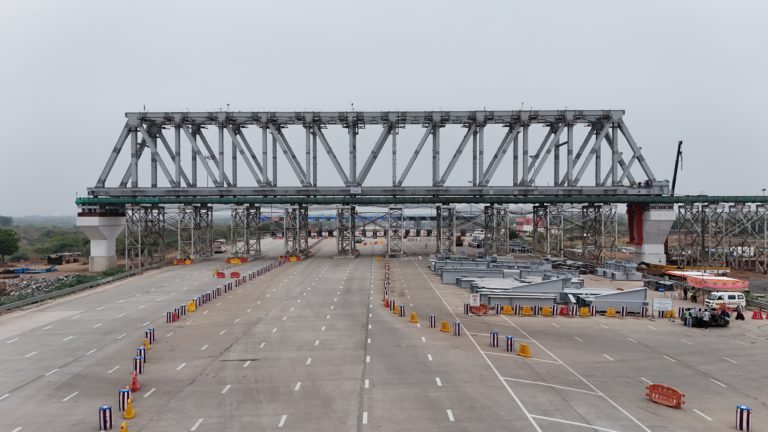
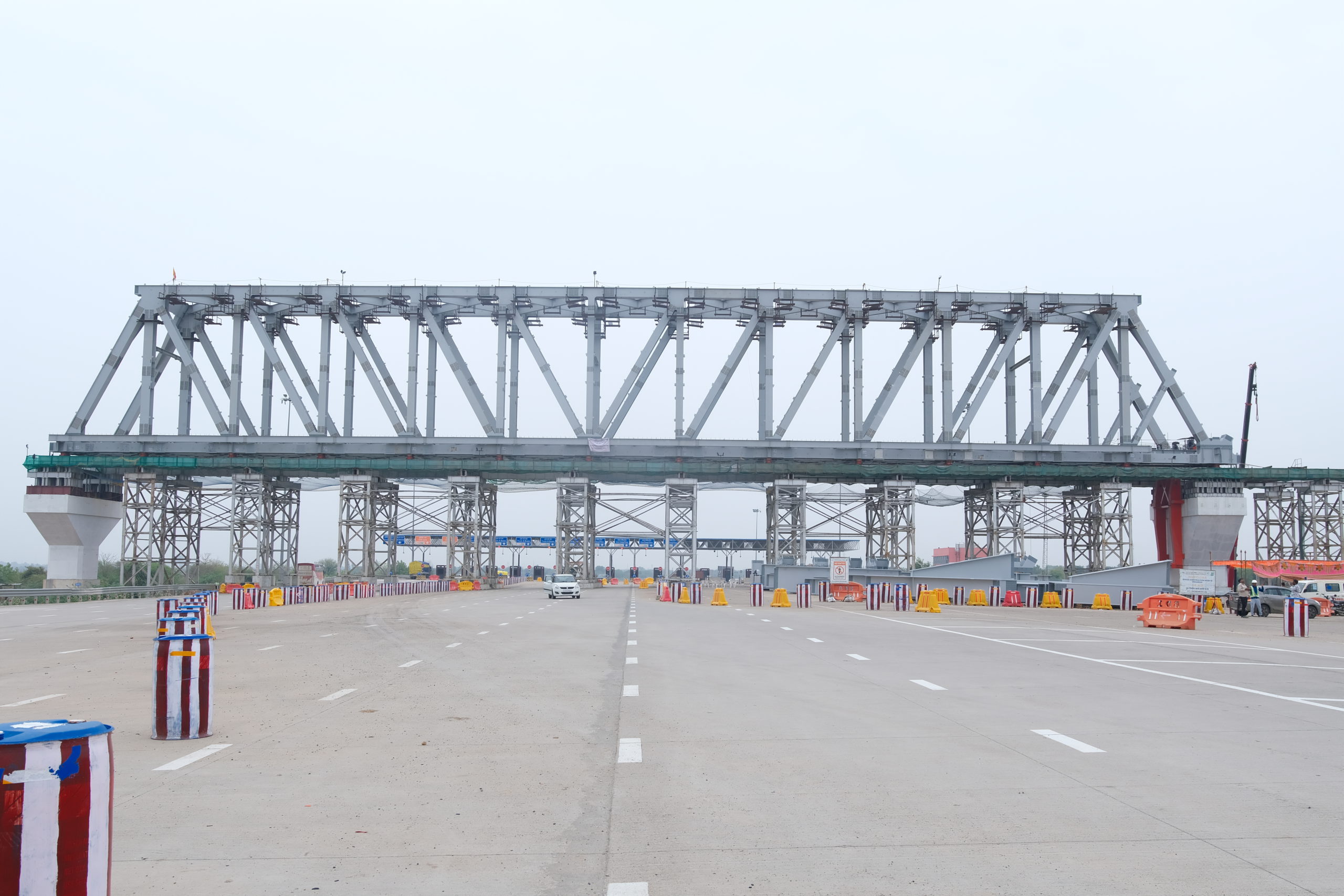
Gujarat (Metro Rail News): On 23 June 2024, National High-Speed Rail Corporation Limited (NHSRCL) successfully launched a 130-meter-long steel bridge over the Delhi-Mumbai national expressway. The bridge in Vadodara near Gujarat is part of the Mumbai-Ahmedabad Bullet Train project.


This is the third successful completion of a steel bridge out of 28 steel bridges for the MAHSR corridor. The launch of the first and second steel bridges took place across National Highway 53, in Surat and over the Vadodara – Ahmedabad main line of Indian Railways, in Gujarat respectively.

Image 1
Image Credit: NHSRCL


The launch was completed within 24 hours, and multiple rollers and hydraulic jacks with intermittent breaks to allow vehicular traffic to pass. The bridge weighs 3000 MT with a height of 18 meters and a width of 14.9 meters. It was manufactured in Wardha, Maharashtra. It is expected to be the longest of any other national highway in the country.


The bridge was assembled at a 15-m height from the ground on temporary trestles, and it was pulled with the automatic mechanism of two semi-automatic jacks, each capable of 250 tons. The bridge fabrication utilised approximately 124,246 Nos. of Tor-Shear Type High Strength (TTHS) bolts designed for a 100-year lifespan, with C5 system painting and metallic spherical bearings.


In August 2021, NHSRCL awarded M G Contractors with a bridge package P-1 (C) of Rs. 261.24 crore. P1-C’s scope involves constructing one press trusted concrete (PSC) and four steel truss bridges within 87.569 km package C6, which is under construction by Larson & Toubro.

In October 2023, M G Contractors placed the first open web girder (OWG) of the entire project on Package P-1(B) at MAHSR’s chainage 254.585 across NH-53 near Surat. In April 2024, the first OWG for Package P1(C) was placed over Indian Railways’ mainline track between Kanjari Boriyavi and Uttarsanda stations.


The utmost safety standards are being practised during the project’s execution. Under the ‘Make in India’ initiative, India is making increased use of its technical and material resources, and the major example is the steel bridge for the Bullet Train project.


India boasts the capacity to construct steel bridges for heavy haul and semi-high-speed trains which can operate at 160kmph. Now India is utilising the same expertise to construct steel girders for the MAHSR corridor which is designed to accommodate high-speed trains running at the top speed of 320 kmph.

Delhi Metro: With Green Line Expansion New Delhi Metro Station to Become Triple Interchange Hub

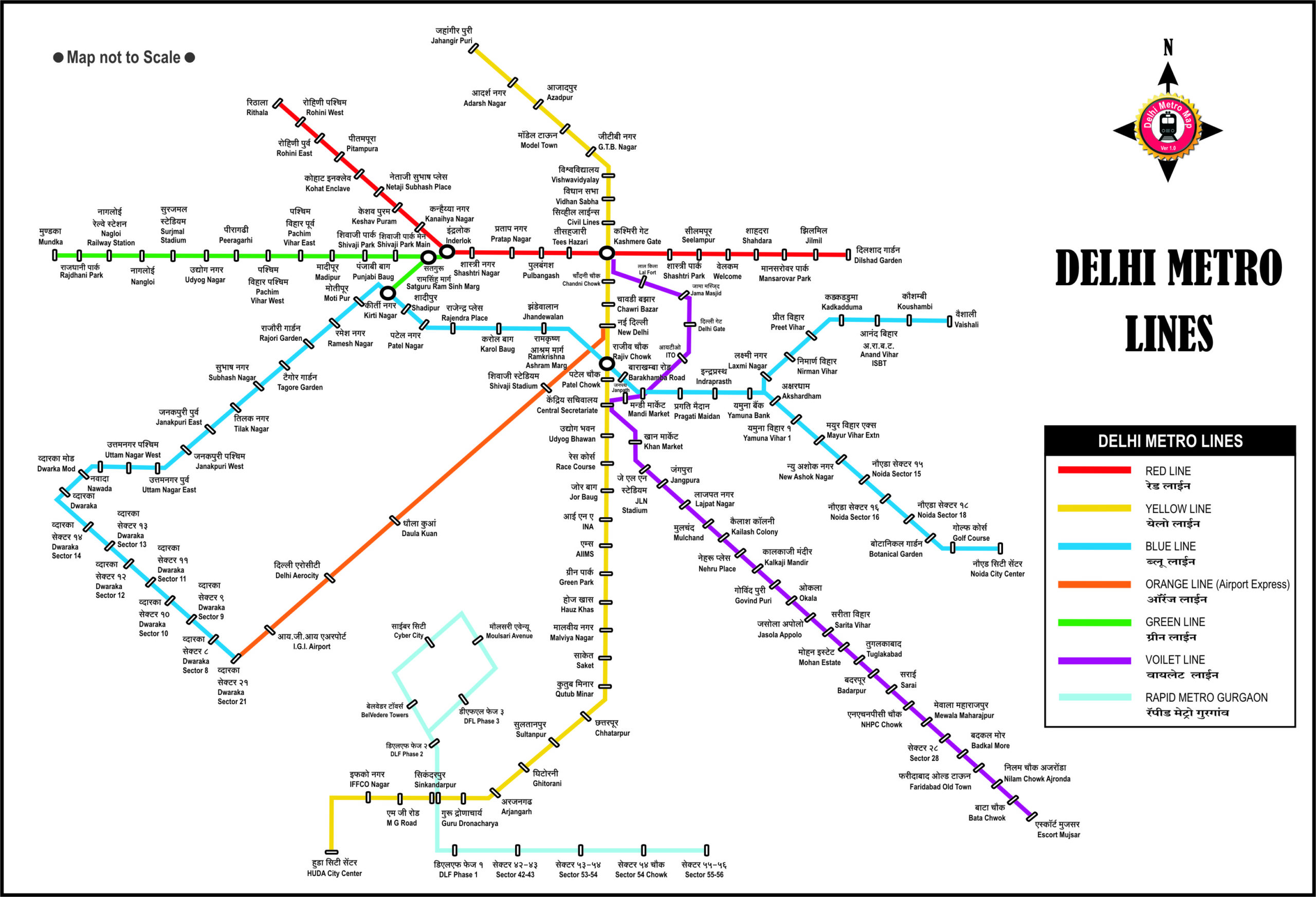
New Delhi (Metro Rail News): To streamline the connectivity for the West Delhi residents authorities have decided to extend the existing 28.78 km long Green Line (Brigadier Hoshiar Singh-Inderlok) to Indraprastha.

Under this initiative, the New Delhi Metro Station will be transformed into a triple interchange hub to accommodate Green Line as this station already has an interchange facility between Orange and Yellow Line.

map d
DMRC map

As part of Delhi Metro’s Phase 4, Green Line’s new extension will be 12.37km long and it will extend Green Line from Inderlok to Indraprastha. This underground corridor will increase the accessibility to the New Delhi Metro Station for people living in Bahadurgarh, Nangloi, Rajdhani Park and other parts of West Delhi.

This will also make New Delhi Railway Station more accessible for commuters as it is adjacent to New Delhi Metro Station and will also help reduce the congestion around the station as more people will opt for the metro rather than travelling by road.

In the existing Delhi Metro network, Kashmere Gate is the only metro station that features a triple interchange facility. Falling on the Yellow Line, Kashmere Gate has an interchange with the Red and Violet Lines. After the completion of Phase 4, there will be 3 three more stations that will serve as triple interchange stations. The stations are Lajpat Nagar, Azadpur and New Delhi.

Delhi Metro Phase 4

Currently, approximately 86 kilometres of new lines are under construction as part of the Delhi Metro’s Phase 4 expansion. This phase includes three major lines: Janakpuri West to RK Ashram Marg, Majlis Park to Maujpur, and Aerocity to Tughlakabad.  About 50% of the civil work has already been completed on these sections.

In March 2024, the central government approved two new corridors for the Delhi Metro, totalling 20.76 kilometres in length. This comprises a 12.377-kilometre extension of the Green Line from Inderlok to Indraprastha and an 8.385-kilometre line from Lajpat Nagar to Saket G Block. 

Currently, the Delhi Metro Rail Corporation (DMRC) is in the process of obtaining statutory clearances, which include acquiring land from the Delhi Development Authority (DDA), Central Public Works Department (CPWD), and Public Works Department (PWD), as well as securing necessary forest clearances, according to officials.

Further processes related to planning and tendering for civil works are currently underway. These steps need to be completed before proceeding to contracts for track laying, electrical systems, signalling, and other technical components. This ensures that all foundational and preparatory work is in place before moving on to the more crucial aspects of the project.

Bengaluru Suburban Railway Project gets a €300 million boost from EIB

New Delhi (Metro Rail News): On June 14, 2024, the Ministry of Finance’s Department of Economic Affairs (DEA) signed a Memorandum of Understanding (MoU) with the European Investment Bank (EIB) for a €300 million loan for the Bengaluru Suburban Railway Project (BSRP). The loan agreement was signed in the presence of officials from both the DEA and EIB in New Delhi.

According to K-RIDE, the loan will facilitate the initiation of tenders for Corridor 1, Depot-2, track, and traction, further expediting the progress of the Bengaluru Suburban Railway Project (BSRP).

In December 2023, the German investment bank KfW also signed a similar Memorandum of Understanding (MoU) for a €500 million loan.

Project Funding:

The €800 million loan, comprising €300 million from EIB and €500 million from KfW, covers 60% of the total project cost of Rs 15,767 crore. While the 40% cost will be covered by the union and state governments.

Bengaluru Suburban Railway Project

The Bengaluru Suburban Railway Project (BSRP) stretches 149 km through 4 corridors and two depots. The project is a key initiative that is designed to offer a reliable and sustainable mode of transportation. It aims to reduce traffic congestion within the city and establish a dedicated suburban rail network to meet the increasing transportation demands of Bengaluru and its neighbouring regions.

Corridor 1: Pre-construction activities are underway for Corridor 1 (Sampige Line) which spans 41.4 km. This corridor will connect Majestic to Devanahalli, with a branch line extending to the Kempegowda International Airport.

Corridor 2: The groundwork has started on Corridor 2, known as the Mallige Line, extending 25.57 km from Benniganahalli to Chikkabanavar.

Corridor 3: Initial groundwork has commenced on Corridor 3. It runs from Kengeri to Whitefield covering a distance of 35.52 km.

Corridor 4: K-RIDE has recently awarded the civil work contract for 46.88 km long Corridor 4 (Kanaka Line). This corridor will connect Heelalige to Rajanukunte. The groundwork on this corridor is likely to begin shortly.

Indian Railway Initiates Trial Run On World’s Highest Arch Rail Bridge

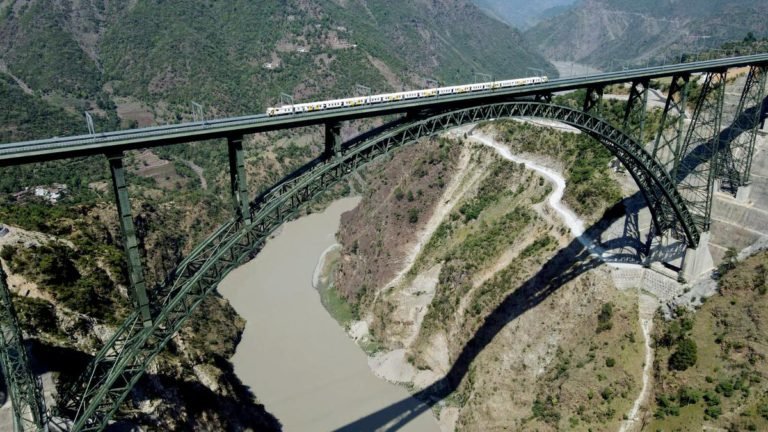
J&K (Metro Rail News): Indian Railways made history on June 20 by successfully conducting a trial run on the Chenab Bridge, which is the world’s highest rail bridge located in Jammu and Kashmir. The successful trial run of the 8-coach MEMU train marks the opening of rail service on the corridor connecting Reasi to Baramulla in Kashmir.

“After an extensive inspection of the newly constructed Chenab Bridge by senior officers from Railway Board, Northern Railway and Konkan Railway, a trial run was conducted on a 46-km-long electrified line section between Sangaldan in Ramban district and Reasi at a speed of 40 kmph,” stated Ministry of Railways.

The 8-coach MEMU train began its journey at 12:35 pm from Sangaldan and it reached Reasi at 2:05 pm. During its journey, the train traversed a route that included nine tunnels spanning a total length of 40.787 kilometres. The longest among these tunnels is T-44, which measures 11.13 kilometres in length.

According to the Ministry, it was the first complete train to cross the Chenab bridge which falls between Dugga and Bakkal stations over the Chenab River, and it is also the world’s highest arch railway bridge.

For the first time, Indian Railways employed ROCS (Rigid Overhead Conductor System) technology at 25 kV to carry out the electrification work on this section.

Upon the arrival of the Mainline Electric Multiple Unit (MEMU) train at Reasi railway station, a chorus of ‘Bharat Mata ki Jai’ erupted among the crowd. The MEMU train was carrying railway officials and the employees engaged in the project

Reflecting on the past 20 years, Raj Kumar Sharma, former sarpanch, highlighted the difficulties Railways encountered from the outset of the project. Expressing his optimism, he said, “The train service from Reasi to Kashmir could begin by the end of this month,” as reported by The Hindu.