Home Blog Page 135

RRTS Corridor: NCRTC Managing Director Inspects Meerut South – Sarai Kale Khan Stretch

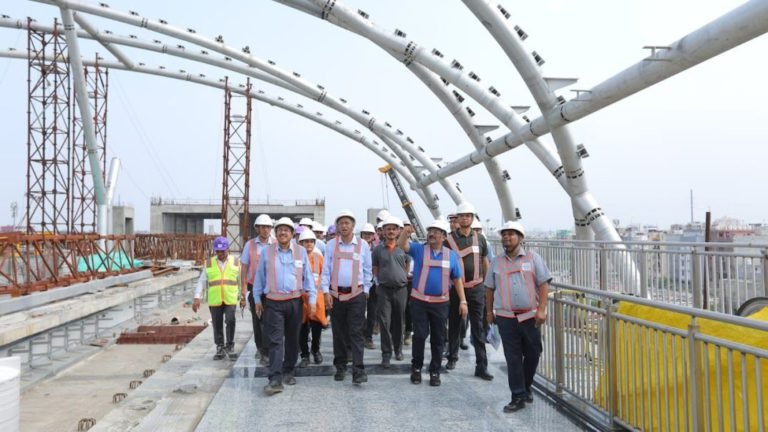
Delhi (Metro Rail News): NCRTC Managing Director Mr Shalabh Goyal conducted an inspection of the RRTS corridor from Meerut South Station to Sarai Kale Khan Station in Delhi. He was accompanied by the NCRTC Director and other officials during this visit. 

The inspection began at Meerut South Station, where construction has been completed, and Namo Bharat trains will soon commence operations. Mr Goyal closely examined the station’s operational preparations and reviewed the parking facilities.

1720506103063
Image Credit: NCRTC

Meerut Metro will also start from this station, enhancing convenience for residents traveling from Meerut South to Modipuram. The station features three platforms: two for Namo Bharat trains and one for Meerut Metro. An 8 km section from Modi Nagar North Station to Meerut South will soon be open to the public, allowing residents to reach Ghaziabad from Meerut South in minutes. Currently, trial runs for Namo Bharat trains are ongoing between Modi Nagar North and Meerut South stations.

1720506102354
Image Credit: NCRTC

Following this, Mr Goyal inspected the corridor from Modi Nagar North to Sahibabad, the operational section of the RRTS, and travelled on a Namo Bharat train. During this intensive inspection, he interacted with the station controllers, train operators, and other operational staff to understand their daily challenges. He experienced passenger-centric facilities such as push buttons, PSD, stretcher space, and the train’s high speed. He praised the cleanliness of the stations and urged officials to continuously improve cleanliness standards.

Operational Route

Currently, Namo Bharat trains operate across eight stations in the 34 km section from Sahibabad to Modi Nagar North. With the upcoming commencement of services from Modi Nagar North to Meerut South, the operational section will extend to 42 km including 9 RRTS stations.

1720506101753
Image Credit: NCRTC

Mr Goyal also inspected the ongoing construction works at New Ashok Nagar and Sarai Kale Khan elevated stations in the Delhi section. He assessed the challenges faced by officials in the rapid construction work and motivated them, emphasizing strict adherence to safety and security norms.

Delhi Section of RRTS corridor

The Delhi section of the RRTS corridor spans 14 km, with 9 km elevated and 5 km underground. The underground section includes the construction of Anand Vihar Station. The viaduct construction in the Delhi section is complete, and the three under-construction stations are nearing completion. Efforts to integrate these stations with other transport modes are also underway.

Mr. Goyal highlighted that the construction of the country’s first RRTS will spur development in Delhi-NCR and provide a high-speed public transport system for residents, with NCRTC personnel playing a crucial role in this development.
Mumbai Metro: MMRC Extends Trials to Siddhivinayak Station on Line 3 

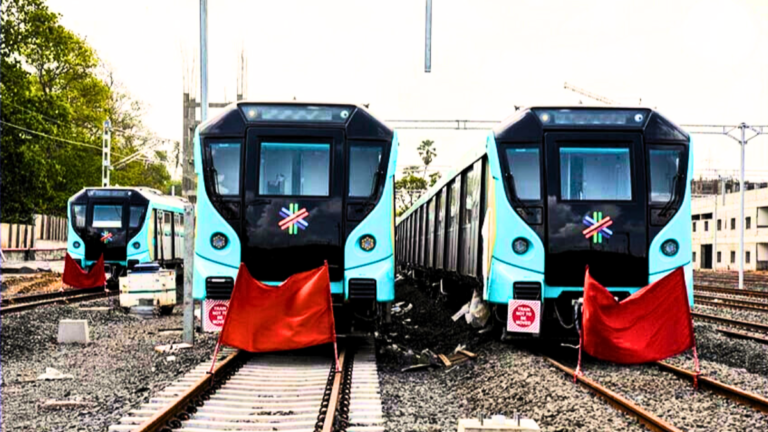
Mumbai (Metro Rail News): On July 4, 2024, the Mumbai Metro Rail Corporation (MMRC) extended the trial operations on Mumbai Metro’s Line 3, also known as the Aqua Line, to include the stretch from Dadar station to Siddhivinayak station.

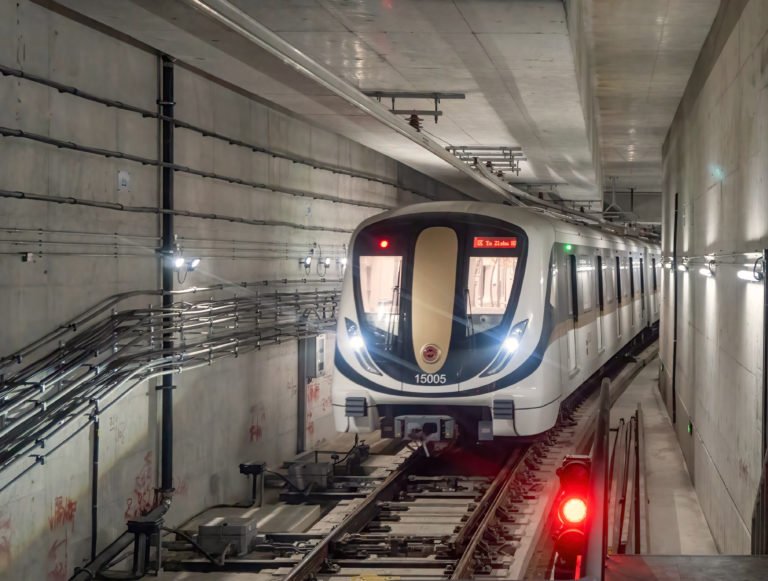
For the trials, the MMRC deployed an 8-coach metro train manufactured by Alstom. The train ran at a low speed of 10 km/h up to Siddhivinayak station. The distance between Dadar station and Siddhivinayak station is 1.1 km, while the distance to BKC station is 5.4 km.

Objective of Trial Run 

The main aim behind the trial run was to check for Schedule of Dimensions (SoD) clearances. It is done to ensure that the train interacts with the civil structure and there are no physical barriers along the route.

Construction Details

Continental Engineering Corp – ITD Cementation – Tata Projects consortium constructed the twin tunnels for this section under the package UGC-04 which runs 6.08 km connecting Dharavi to Worli.

In October 2020, TBM S-1074 (Krishna 2)  (Krishna 1) completed tunnelling for the 1106 m up-line tunnel, and its trials are yet to be started. In December 2020, Herrenknecht TBM-1073 completed its tunneling for 1126 m down line, running from Siddhivinayak to Dadar.

Delayed Construction of Mumbai’s Line 3

Mumbai’s Line 3 is lagging behind schedule, given that other Indian metro projects typically take about two years to complete system installation, station architectural finishing, and testing after the final tunnel breakthrough. 

In contrast, the Uttar Pradesh Rail Metro Corporation (UPRMC) in Agra took only 2 months to start its commercial operations. Line 1’s priority Corridors’ final breakthrough was recorded on December 29, 2023, and the travel to passengers on the line opened on March 6, 2024.

Recent Updates About Mumbai Metro Line 3

In March 2024, Integrated train testing on Phase 1, running from Aarey Colony to Bandra Kurla Complex, with 10 stations, started. Also, the Research Designs and Standards Organization (RDSO) has just completed the Line 3 rolling stock testing.

All the stations of Phase 1 are left for architectural finishing work. Mock drills at all stations of Phase 1 are scheduled for the upcoming weeks so that MMRC can get the fire department’s NOC to start its operations.

Pune Metro: First Pile Cap Successfully Cast for PCMC – Nigdi Extension

Pune (Metro Rail News): On 6 July, Maha Metro successfully cast the first pile cap for the 4.5 km long Pimpri Chinchwad Municipal Corporation (PCMC) – Nigdi Extension of the 16.589 km Purple Line of Pune Metro.

This achievement was recorded at PMP Anna Bhau Sathe Bus Terminal near Bhakti Shakti Chowk.  This achievement comes in under four months after the Maharashtra Metro Rail Corporation (MahaMetro) awarded a Rs. 339.23 crore contract for Pune Metro Phase 1 Extension Package C-01 to Rail Vikas Nigam Ltd. (RVNL).

This extension will include 151 spans and 1181 segments. These will be cast at Talegaon’s yard location.

Key Figures About Pune Metro:

Operational: 29.77 km (PCMC to Civil Court, Vanaz to Ramwadi)

Under Construction: 31 km (Civil Court to Swargate, PCMC to Nigdi, Hinjewadi to Civil Court)

Approved: 0 km

Proposed: 106.5 km (Swargate to Katraj, Phase 2)

Production Details of PCMC

Pune Metro Project

Delhi Metro Rail Corporation prepared the DPR for Pune Metro’s Phase 1 project, which spans 31.254 km and features 2 corridors with 29 stations.

Additionally, a new corridor is being constructed by Pune Metropolitan Region Development Authority (PMRDA). This new Line will connect the Hinjewadi and Civil Court.

The detailed project report (DPR) for the Pune Metro Phase 2 project has not been prepared yet. However, it is expected to include new corridors and extensions of existing metro lines to areas such as Katraj, Chandni Chowk, Kharadi, Hadapsar, Loni Kalbhor, Khadakwasla, and Warje.

DMRC and RVNL Join Hands to Provide Consultancy Services in India & Abroad

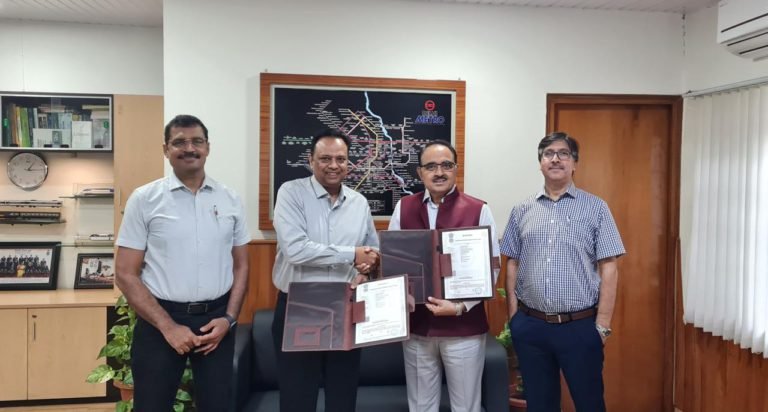
New Delhi (Metro Rail News): The Delhi Metro Rail Corporation (DMRC) and Rail Vikas Nigam Limited  (RVNL) signed a Memorandum of Understanding (MoU) to collaborate and jointly work as a Project Service Provider for Design, Construction and Consultancy Projects in India and Abroad.

The MoU was officially signed by Dr P.K.Garg, Director (Business Development) DMRC and Mr Rajesh Prasad, Director Operations, RVNL, in the presence of other senior officials.

GRpC33 X0AAFEx

The Objective of the MoU between DMRC & RVNL

This partnership aims to synergise the joint efforts of DMRC and RVNL in the upcoming projects in India and abroad as Project Service Providers for Metro/ Railways/ High-Speed Rail/ Highways/ Mega-Bridges/ Tunnels/ Institutional Buildings/ Workshops or Deports/ S&T works/ Railway Electrification. 

The MoU covers a wide range of infrastructure projects. The two organisations will work together to develop new projects by sharing their expertise and capabilities as they have a strong track record of delivering complex infrastructure projects. This collaboration between DMRC and RVNL  will help to develop new projects in India and abroad.

Mumbai Metro: JICA Provides Rs 4,657 Crore Funding for Line 3

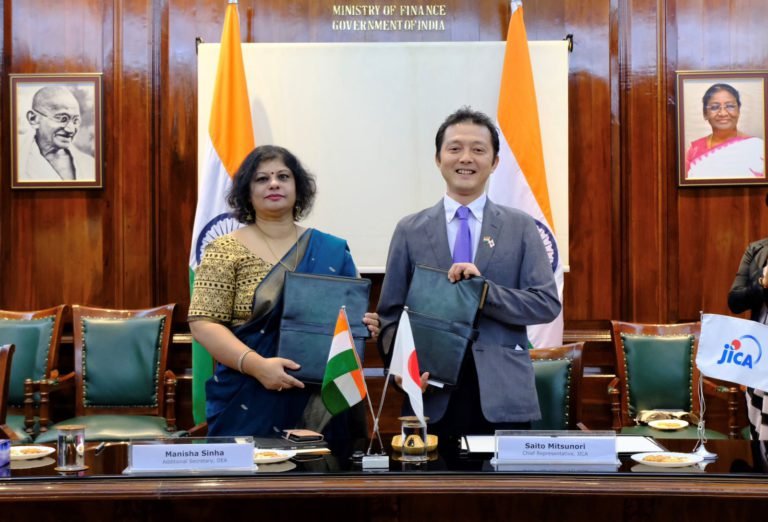
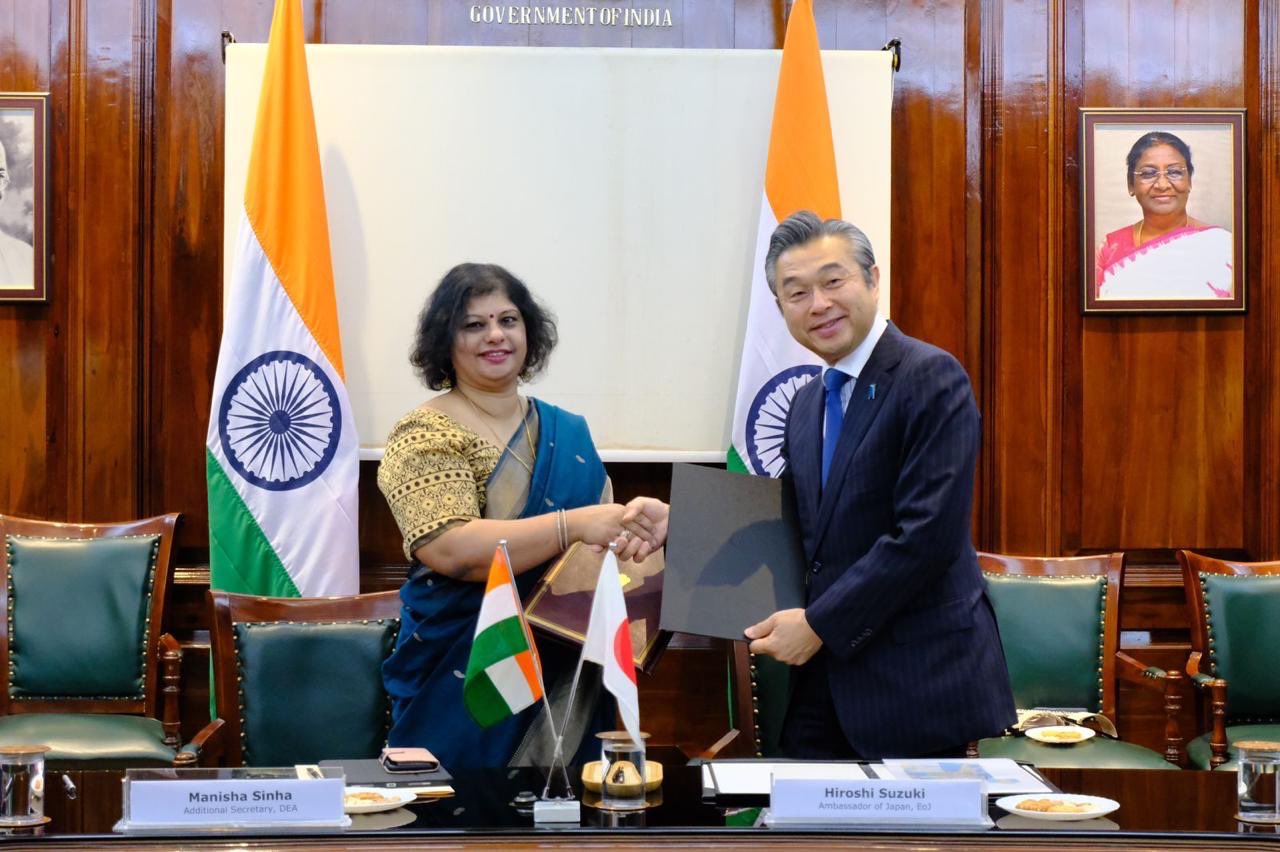
On 5 July, Mumbai’s first fully underground metro Line (Aqua Line) received a substantial boost as the Japanese International Cooperation Agency (JICA) Signed a Rs. 4,657 crore loan agreement with the Government of India for the Mumbai Metro Line 3 project. This agreement represents the fifth and final instalment of the official development assistance (ODA) loan for the Mumbai Metro Line 3.

GRtpuLlWIAAJprs

Manisha Sinha, Additional Secretary of the Department of Economic Affairs in the Ministry of Finance, and Hiroshi Suzuki, Ambassador of Japan to India, signed the loan agreement.

Mumbai Metro Line 3 Project Cost

On February 29, 2024, the Government of India approved the Line 3 project with a revised cost of Rs 37,276 crore. As per Mumbai Metro Rail Corporation (MMRC), the implementing agency for the Mumbai Metro Line 3 project, the first loan instalment was received on September 7, 2013, from JICA. The fifth instalment of Rs.  4,657 crore signifies the completion of the funding for the project.

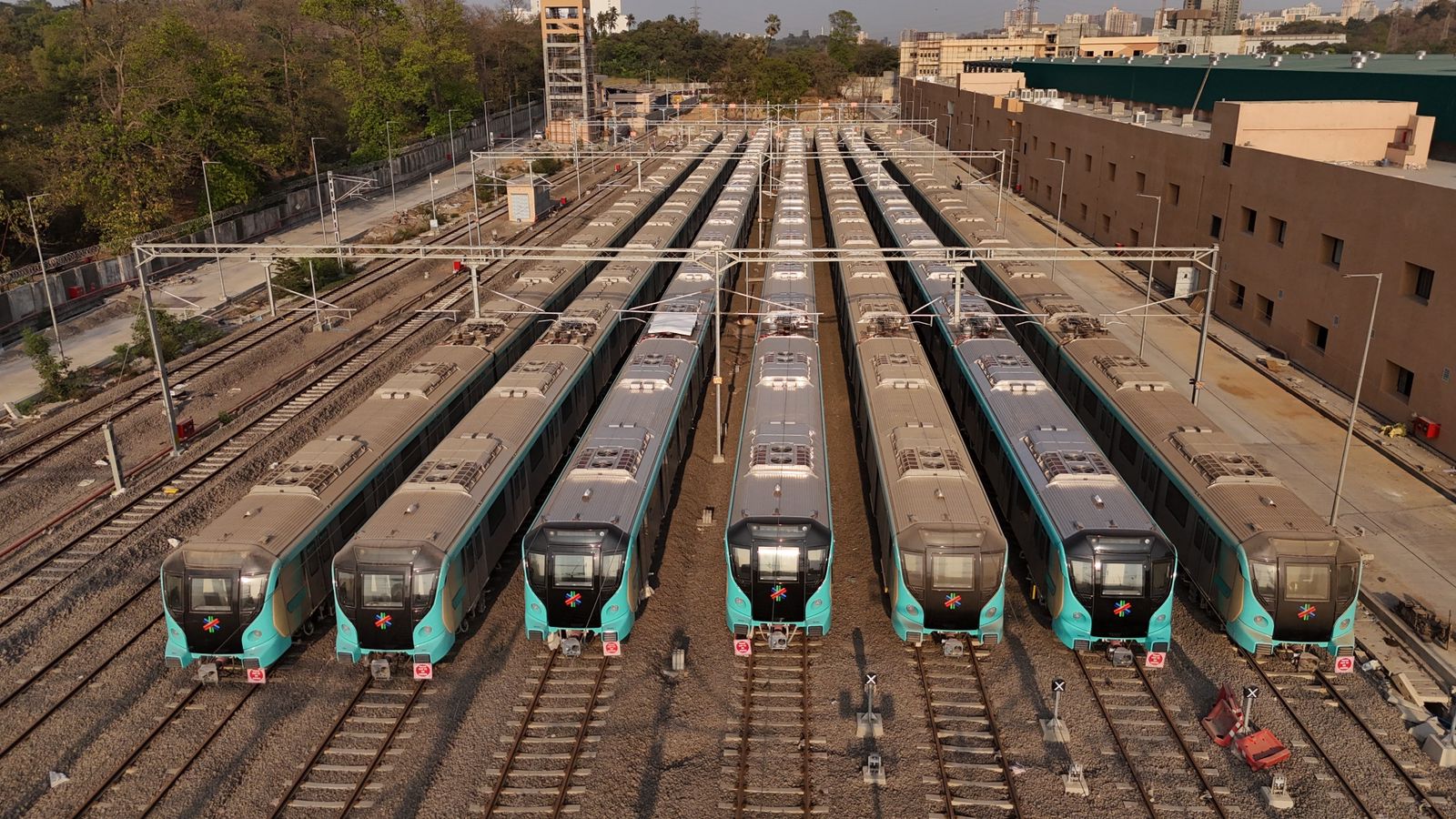
Mumbai Metro Line 3

GRurTgLWwAARfgp

Mumbai Metro’s Line 3, or Aqua Line, covers a total distance of 33.5 km, connecting Aarey Colony with Cuffe Parade via BKC. This line features 27 stations, 26 of which are underground and 1 at-grade station. Aqua Line will become operational in Phases. The operations in Phase 1 which spans from Aarey to BKC are expected to commence this year.

Once fully operational, the Aqua Line will provide substantial time savings for commuters. The journey from Domestic Airport station to Cuffe Parade station, which currently takes over 2 hours due to traffic, will be reduced to just 45 minutes by metro.

KSM Secures UPMRC Metro Bhawan’s Construction Contract 

On July 1, KSM Bashir Mohammad and Sons emerged as L1 (Lowest Bidder) for Package LKCC-15 to carry out the construction work of the Metro Bhawan headquarters of Uttar Pradesh Metro Rail Corporation (UPMRC) in Lucknow.

Currently, UPMRC’s headquarters is located in a three-story building in Ambedkar Park. As UPMRC manages the metro networks in Lucknow, Kanpur, and Agra, the need for a larger space has become essential to ensure efficient operations. To meet this requirement, a new building will be constructed near the Sachivalaya Station of the Lucknow Metro.

Additionally, the new UPMRC headquarters will feature an Operational Control Centre (OCC) for Lucknow Metro to manage train operations for Corridor 1. This corridor spans 22.8 km, linking Lucknow CCS Airport with Munshi Pulia through 23 stations.

Brief Scope of Work: 

The work under this package involves the design and construction of the Metro Bhawan cum OCC Building near Sachivalaya metro station in Lucknow. It includes structural work, architectural finishing, plumbing, drainage, external development, road works, electrical and mechanical works, HVAC systems, fire detection, and fire fighting systems.

Following are the bidders for the package LKCC-15:

Firm Bid Value
KSM Bashir Mohammad and Sons101.79 crore
Lisha Engineers104.19 crore
Quality Buildcon124.27 crore

Bidding Process:

In March 2024, UPMRC called for bids for package LKCC-15 with an estimated cost of Rs. 120.80 crore and a 600-day deadline. In May, UPMRC opened the technical bids, revealing 3 bidders for this package.

KSM placed a bid of Rs. 101.79 crore, substantially lower than UPMRC’s estimate of Rs. 120.80 crore. So, it’s likely that UPMRC will award the contract to KSM soon.

Tricity Metro Project: MoHUA Approves Underground Route for Chandigarh Section

The Tricity Metro project linking Chandigarh, Mohali, and Panchkula received a major boost from the centre. The Union Ministry of Housing and Urban Affairs (MoHUA) gave approval for running all metro lines underground in Chandigarh from sectors 1 to 30. This decision aims to preserve the city’s heritage and architectural integrity.

This decision stemmed from the recommendations of the Chandigarh Heritage Conservation Committee’s sub-panel, which emphasised the preservation of the city’s heritage.

As per the report prepared by RITES for the 154-km Metro network across the Tricity, the corridor was originally planned to feature elevated tracks and stations.

The newly sanctioned proposal for Chandigarh’s metro network incorporates roughly 8 kilometres of elevated tracks from a planned 20 kilometres. The decision was made with careful consideration to preserve the city’s aesthetic landscape.

Phase 1 of the Tricity Metro Project will feature 3 corridors that will run through Chandigarh, Mohali, and Panchkula. The corridor passing through Chandigarh’s heritage sectors (1 to 30) is planned to be constructed underground. By situating this segment underground, the project aims to minimise visual disruption and maintain the city’s iconic urban landscape. The work of Phase 1 is likely to commence by 2027.

On the other hand, the other two corridors in Phase 1 of the Tricity Metro Project will feature elevated sections, with some segments also running underground. 

Looking ahead to Phase 2, which focuses on Mohali and Panchkula, the plan primarily includes elevated sections. 

Funding of Tricity Metro Project

The Tricity Metro Project will finance approximately 20% of its funding from each of the states involved, Haryana and Punjab, with an additional 20% contributed by the central government. The remaining 60% of the estimated Rs 10,570 crore project cost will be secured through loans from a lending agency.

Kolkata Metro: L&T Begins Construction of D-Wall for Launching Shaft on Mominpur-Esplanade Section

Kolkata (Metro Rail News): Construction work on the Purple Line beyond Majerhat station has got a major boost in recent times. The Purple Line of Kolkata Metro, which stretches from Joka to Esplanade, is now operational from Joka to Majerhat. Efforts have been made to extend it further as per the plan and reach the heart of the city to connect it with the Blue Line as well as the Green Line. In order to achieve this, construction work of Mominpur (Excl.) to the Esplanade stretch of this Corridor has been going o­n in that direction. A Work Order for the construction of this stretch has already been issued to M/s. Larsen & Toubro in last July.

GRfMazha4AANOEz 1
Image Credit: Kolkata Metro

Mominpur-Esplanade Section

After Mominpur, this stretch will go underground, and four stations, namely, Khidderpore, Victoria, Park Street and Esplanade, will be underground stations. All these stations will be modern, state-of-the-art stations replete with all passenger amenities. Executing agency Rail Vikas Nigam Limited (RVNL) is bringing two Tunnel Boring Machines (TBM) to burrow the tunnels for this stretch from Germany. These TBMs are expected to arrive in Kolkata in January 2025 and, after assembling, will begin their tunnelling work from March 2025.

GRfMawCb0AEQ4on

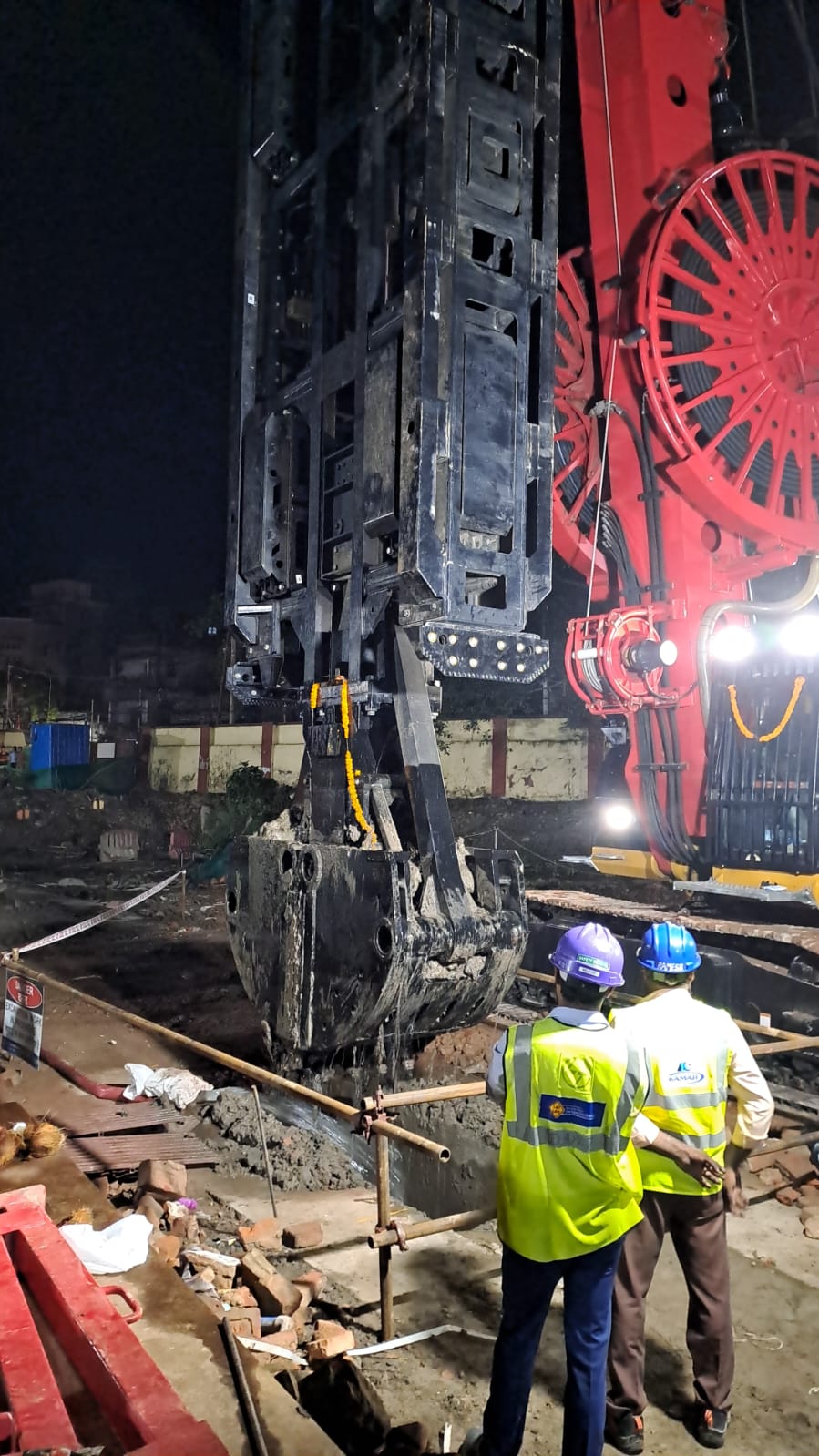
Prior to that, the preparatory work to construct the launching shaft has been going o­n. The construction of the D-Wall of this launching shaft started on 27.06.2024 at St. Thomas School premises at Khidderpore. The length of this D-Wall will be 65 metres and this construction is expected to be over within two months. This is a major boost for this project after overcoming a lot of administrative and legal problems.

GRfMazcaYAAF 7b
Image Credit: Kolkata Metro

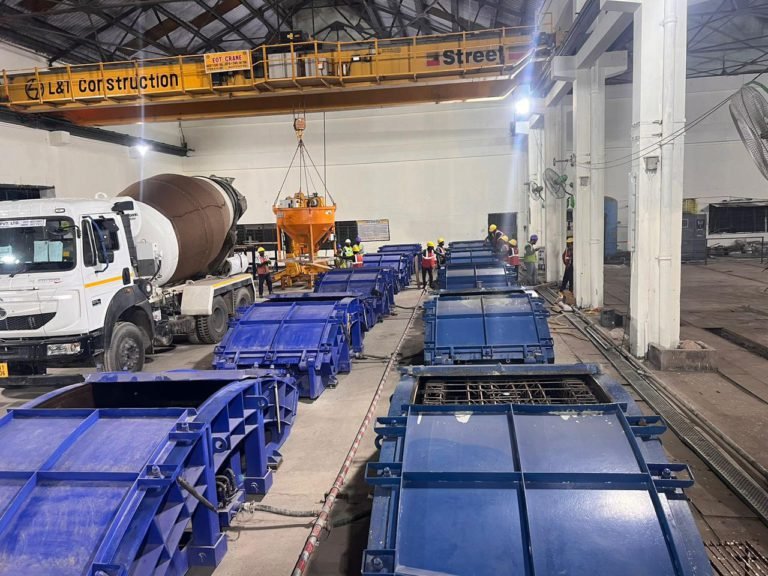
Apart from that, the casting work of the tunnel segments has also been started at the casting yard at Sarkarpool in Maheshtala. The width of each segment which will be used in the tunnels is 1.40 metres. Six such segments will be required to form an o­ne complete ring with an inner diameter of 5.80 metres and a width of 1.40 metres. All these pre-cast segments will be brought to the site before the tunnelling work begins. The TBM machines, immediately after boring the tunnels, will fix the lining with these pre-cast segments under the ground to give it a final shape.

Kanpur Metro: Ceigall Initiates Pilling on Line 2 Under Package KNPCC-12

Kanpur (Metro Rail News): On July 1, Ceigall India successfully completed drilling and concreting the first pile on Kanpur Metro’s 8.38 km Line 2. The work commenced within Package KNPCC-12.

Package KNPCC-12 spans a total distance of 4.3 km, comprising two distinct elevated sections. These sections are situated on either side of the underground Package KNPCC-11.

GRfax VaYAExrpN
Image Credit: UPMRC

According to UPMRC,  Ceigall India will drill about 750 piles to facilitate the construction of the viaduct and stations’ substructure.

The southern segment of KNPCC-12’s viaduct, stretching over 3.745 km, will connect Double Pullia Ramp to Barra-8. This crucial stretch will feature four strategically located elevated stations: Vijay Nagar Chauraha, Shastri Chowk, Barra-7 Station, and Barra-8. 

On the northern end of the line, beyond Rawatpur Interchange Station, a compact 557.8m viaduct is planned to be constructed. This section will feature a single elevated station situated at Agriculture University, adjacent to Line-2’s Agriculture University Depot.

Scope of work 

The Package KNPCC-12 entails a comprehensive range of tasks, including the  Design and Construction of an elevated viaduct and 5  elevated stations 

The Station names are:

  1. Agriculture University Station
  2. Vijay Nagar Chauraha Station
  3. Shastri Chowk Station
  4. Barra-7 Station 
  5. Barra-8 Station 

Additionally, it encompasses architectural finishing, E&M work and special spans from the end of the ramp after Double Pullia Station to Barra-8 Station, i.e., from chainage 3783.000m to 7528.566m and end of ramp in Depot to Agriculture University Station i.e. from Chainage (-)297.460m to (-)855.339 on Corridor-2 of Kanpur MRTS Project at Kanpur, Uttar Pradesh, India.

Kanpur Metro’s Package KNPCC-12

In November 2023, UPMRC floated the tender for Package KNPCC-12 at Rs. 484 crores, with a 30-month deadline. Serving as the Detailed Design Consultants, Ms. SYSTRA MVA Consulting (India) designed this package. Subsequently, in March 2024, UPMRC issued a Letter of Acceptance to Ceigall for KNPCC-12 at Rs. 427.11 crore.

Delhi Metro’s Golden Line & Violet Line to have an Interchange at Tughlakabad Station

New Delhi (Metro Rail News): On July 1, the Delhi Metro Rail Corporation (DMRC) announced that as part of Phase 4, the Tughlakabad Metro Station will be developed as an interchange station between the Golden Line (Tughlakabad-Aerocity) and the Violet Line (Kashmere Gate-Raja Nahar Singh). This development will facilitate a smooth transition for commuters travelling on both lines, enhancing connectivity and easing travel for passengers.

Tughlakabad Station’s features

As per DMRC, the existing Tughlakabad Metro Station is being elevated. Additionally, plans are underway to construct a new underground station. These two stations will be connected by a 45-metre-long subway to ensure seamless integration and transitions for commuters between the elevated and underground sections.

The design of the new station incorporates a four-level structure, including an underground floor that will serve as a parking zone with a capacity to accommodate 250 vehicles. Commuters from both the Golden and Violet Lines will have direct access to this floor via lifts, stairs, and escalators, enhancing convenience and accessibility at the station.

Tughlakabad Metro Station will be the first interchange facility in the Delhi Metro network to feature underground parking.

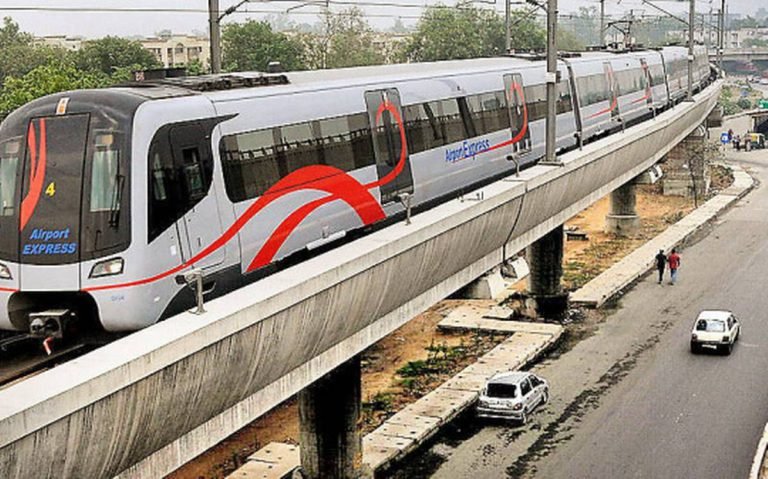
Currently, to access the domestic and international airport terminals, commuters on the Violet Line have to go to the Central Secretariat station and then transfer to the Airport Express Line.

The opening of the new line will save time for passengers from Faridabad in Haryana. They can disembark at the interchange station and proceed directly to the airport.