Home Blog Page 126

Indore Metro: State Orders New Feasibility Study for Underground Section Amid Public Concerns

0
Indore Metro
Indore Metro P.C: Amit Kumar Yadav

Indore (Metro Rail News): To address public concerns and criticisms regarding the proposed route alignment of the Indore Metro, Technical experts have been instructed to conduct a new feasibility study for certain sections of the Indore Metro Phase 1 project.

On June 17, Urban Development Minister Kailash Vijayvargiya stated, “It seems the public and representatives of social organisations are unhappy with the present planning of some metro rail routes in the city. The participants have suggested changes, especially in the underground portion of the metro rail project.”

“Officials have been instructed to conduct a new feasibility survey on technical and financial aspects in view of these suggestions and submit a report within a month. Around 30 to 40 percent work of the metro rail project in the city has been completed. All decisions have already been taken at the level of the Central and state governments regarding this project,” he added.

He said, “The Metro may be built after a year, but the citizens should not be punished for it.”

Three Alternatives for Route:

According to a report by the Free Press Journal, three alternatives have been proposed for the Indore Metro. One option advocates running the metro underground from Bengali Square rather than near the High Court trisection. Another option is to begin the underground section from Agriculture College. A third alternative suggests directing the metro via Race Course Road instead of MG Road.

Indore Metro’s Journey:

In October 2018, the Central Government gave its approval for Phase 1 of the Indore Metro project. This phase spans a total length of 33.53 kilometres and encompasses 29 stations. Among these stations, 23 will be situated on elevated tracks, while the remaining 6 stations will be located underground.

The Priority Corridor of the Indore Metro, originally slated for completion by August 2023, is now anticipated to be completed and opened for public use by August 2024. However, Phase 1 is projected to be fully operational by 2027.

Advertisement1
InnoMetro_2026

Pune Metro Line 3 to activate third rail electrification from 20 June

0
Pune metro
Pune metro

Pune (Metro Rail News): The adoption of the Third Rail System for the PMRDA-promoted Pune Metro Line 3 project aka ‘Puneri Metro’ represents a significant leap forward in sustainable and reliable urban transportation. As the overall work of Puneri Metro has gained a significant pace, the developers are now implementing the electrification for metro line 3. The 33,000 V, 50 Hz AC power cable and 750 V, DC third rail traction system will be activated from Thursday, 20th June 2024 at Hinjawadi.

All citizens and personnel are informed that the power supply system will be operational from the specified date. Unauthorised persons are strictly prohibited from approaching or working near the electrified areas to ensure safety.

The work of Pune Metro Line 3 on the Hinjewadi to Shivajinagar route has been jointly undertaken by Tata Group and PMRDA based on the Public Private Partnership (PPP) and Tata Group has established Pune IT City Metro Rail Limited as a special purpose vehicle (SPV) company for its implementation.

Section Details

Line: Pune Metro Line 3 (Pink Line)

Date of Electrification: 20.06.2024

Components:

33 kV ASS and TSS including 33 kV cable

750 VDC third rail traction system including 750 VDC cable of the test track

750 VDC stinger system of IBL-1 at Hinjewadi Depot

Safety First

It is the policy of the Tata Group not to compromise on quality and safety in all phases of the project, which was undertaken for the convenience of the citizens. The authorities have made an appeal to all individuals to adhere strictly to the safety guidelines and avoid any unauthorised access to the electrified areas, as citizens’ cooperation is crucial for a safe and efficient operation of the Puneri Metro.

About Pune Metro line 3:

The Pune Metro Line III is a 23 Km elevated Metro rail project connecting the IT hub of Hinjawadi to the Central business district of Shivajinagar. It is a Public Private Partnership (PPP) project awarded by the Pune Metropolitan Region Development Authority (PMRDA) to a consortium consisting of Tata Group’s TRIL Urban Transport Private Limited (TUTPL) and Siemens Project Ventures GmbH. The Project would be developed & operated on a Design, build, finance, operate & transfer (DBFOT) basis by a special purpose vehicle (SPV), Pune IT City Metro Rail Limited (PITCMRL) for a Concession Period of 35 years including the construction period.

Advertisement1
InnoMetro_2026

Delhi Metro: Centre Approves Rithala-Narela-Kundli Extension of Red Line

0
Delhi Metro's Red Line

New Delhi (Metro Rail News): To better connect the northwestern region of Delhi, especially the ones near the Haryana border, the “Public Investment Board” of the Ministry of Finance has sanctioned the “Ministry of Housing and Urban Affairs DDG proposal to extend the existing Red Line of the Delhi metro.

Labeled as the “Rithala-Nerela-Kundli Metro corridor”, this extension of the Red Line will cover a total distance of 26.5 Km via 21 stations, thereby connecting the nearby region with the rest of the city.

Delhi Metro's Red Line's Extension
Image credit: DMRC

Financial Aspects of this Project


The total cost of the project will be Rs. 6,231 crores. Of this, it has been reported that the Delhi Segment” of the project (which has a cost estimate of Rs. 5,685.22 crores) will be funded by the Delhi Development Authority (DDA) in which-

  • The government of India will cover 40% of the project’s cost.
  • 37.5% will be covered through bilateral and multilateral loans.
  • Lastly, the Delhi Government will cover approximately 20% of the project cost.

Likewise, for “The Haryana Segment” (which costs Rs. 545.77 crores), 80% of the funding will be provided by the Haryana government and the remaining 20% by the central government.

Critical analysis of this funding distribution, at its core, showcases the Delhi and the Haryana government’s effort to provide better connectivity to the “Narela-Bawana-Alipur” areas with the rest of the city. A major reason for such infrastructural and connectivity-based upgradation is that upon completion, this corridor will bolster economic and regional development in these far-flung regions of northwestern Delhi and Haryan

Cause and Effect of the Extension of the Red Line of the Delhi Metro

it would provide seamless inter-state transportation between Ghaziabad (Uttar Pradesh), Delhi, and Kundli (Haryana). All this cumulatively shows that such infrastructural and transportation development projects will benefit the economy of North India, by boosting its social life, economic, and business perspectives. Ultimately, one can state that this will enhance the lifestyle, societal structure, and GDP of the Indian economy.

Advertisement1
InnoMetro_2026

Ayesa India Becomes L1 for E&M DDC Contract of Indore & Bhopal Metro Projects

0
Bhopal Metro
Bhopal Metro

Last week, Ayesa India emerged as the lowest bidder for the Detailed Design Consultant (DDC) role concerning the electrical and mechanical (E&M) systems of the Indore and Bhopal Metro projects.

The DDC contract BH-IN-21 encompasses nine underground stations and 24 elevated stations across five civil packages:

For Bhopal Metro:

– BH-03 includes six elevated stations on the Orange Line.

– BH-04 comprises two underground stations on the Orange Line.

– BH-05 features thirteen elevated stations on the Blue Line.

For Indore Metro:

– IN-04 includes five elevated stations on the Yellow Line.

– IN-05 comprises seven underground stations on the Yellow Line.

The project scope involves appointing a Detailed Design Consultant (DDC) for two distinct areas:

  • Electrical & Mechanical (E&M) systems, Part Plumbing, Environmental Control System (ECS), Tunnel Ventilation System (TVS), SES/CFD Simulation, and Building Automation System/SCADA for nine underground stations. This includes twin tunnels, cut & cover sections, cross-passages, and ramps.
  • Electrical & Mechanical (E&M) systems, Part Plumbing, and Building Automation Systems for twenty-four elevated stations, including associated viaducts, as part of the Bhopal and Indore Metro Rail Project.

In September 2023, MPMRCL called for bids on the consultancy service, estimating the contract at Rs. 15.07 crore for a period of 4.4 years. By January 2024, the technical bids were unveiled, with six bidders participating in the process.

During the evaluation process, bids from LKT – Lombardi JV and STUP Consultants – RINA Consulting JV were rejected because they did not meet the technical requirements specified in the tender’s conditions.

Firm Bid Value
Ayesa India11.89 crore
Tata Consulting Engineers – LEAP JV11.95 crore
Ardanuy India11.99 crore
SYSTRA MVA Consulting (India)14.92 crore
Bids placed by firms

The DDC selected by MPMRCL will craft and suggest alternative designs for electrical and mechanical systems.

Ayesa submitted a bid of Rs. 11.89 crore, significantly lower than MPMRCL’s estimated Rs. 15.07 crore. This should expedite the contract award process in the coming weeks, bypassing the need for an extended financial bid evaluation period.

Advertisement1
InnoMetro_2026

Bangalore Metro: Titagarh Rail Systems Initiates the Production of Trainsets for Yellow Line

1
Bangalore Metro's Yellow Line's trainset's production commences
Image Credit: Titagarh Rail Systems

New Delhi (Metro Rail News): Titagarh Rail Systems Limited (TRSL), the prominent Indian rolling stock manufacturer, has commenced the production of trainsets as part of a contract with China Railway Rolling Stock Corporation (CRRC) for the Bangalore Metro Rail Corporation Limited’s (BMRCL) Phase 2 Yellow Line project. 

The contract between BMRCL and CRRC Nanjing Puzhen Co Ltd, signed in December 2019, encountered challenges, which led to delays in meeting the original deadlines. To address the delay in the rolling stock supply, CRRC sought additional time and subsequently entered into a Memorandum of Understanding (MoU) with Titagarh Rail Systems. Under this MoU, Titagarh will manufacture the trainsets at its state-of-the-art facility in Uttarpara.

Under the agreement with BMRCL, Titagarh is responsible for producing 34 of the 36 trainsets needed for the Yellow Line at its advanced manufacturing facility. Only two trainsets, comprising 12 coaches, will be manufactured in China. To meet the specific requirements of the project, Titagarh has established a dedicated stainless steel production line at its facility. Production began on May 18th, 2024, and the first trainset is slated for delivery in August 2024.

Bangalore Metro’s Yellow Line

Bangalore Metro Map

The 21-km Yellow Line, extending from RV Road to Bommasandra, is a crucial metro corridor designed to enhance connectivity and alleviate traffic congestion in Bengaluru. Upon completion, this line is expected to significantly improve urban mobility for the city’s residents. Titagarh’s involvement in this high-profile project underscores its dedication to supporting national infrastructure projects through reliable transportation solutions.

The impressive range of manufacturing capability allows Titagarh to support a wide array of transportation needs, reinforcing its position as a leader in the rail transportation industry. The Company’s ongoing investments in advanced production technologies and its commitment to quality and innovation continue to drive its success and contribution to the national infrastructure.

Advertisement1
InnoMetro_2026

Chennai Metro: TBM Anaimalai Achieves Breakthrough at Otteri Shaft in Corridor 3

0
Chennai Metro's TBM S98 (Anamalai)
Image Credit: Tunnel India

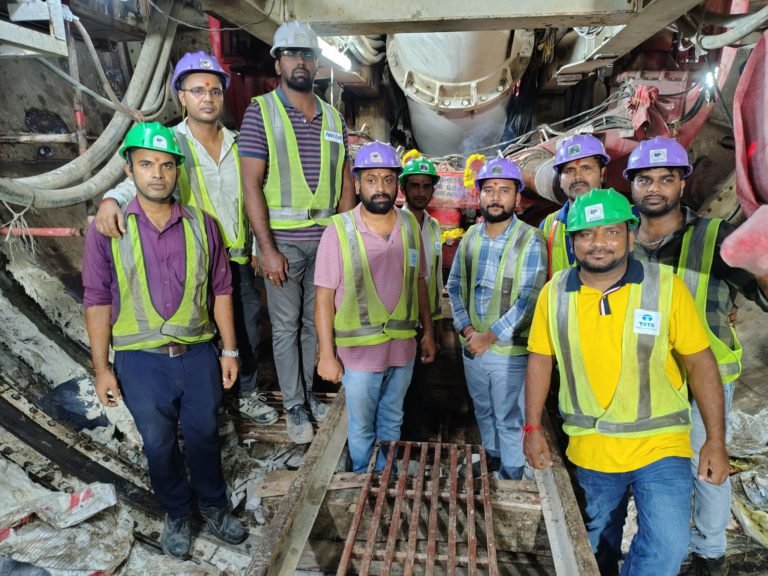
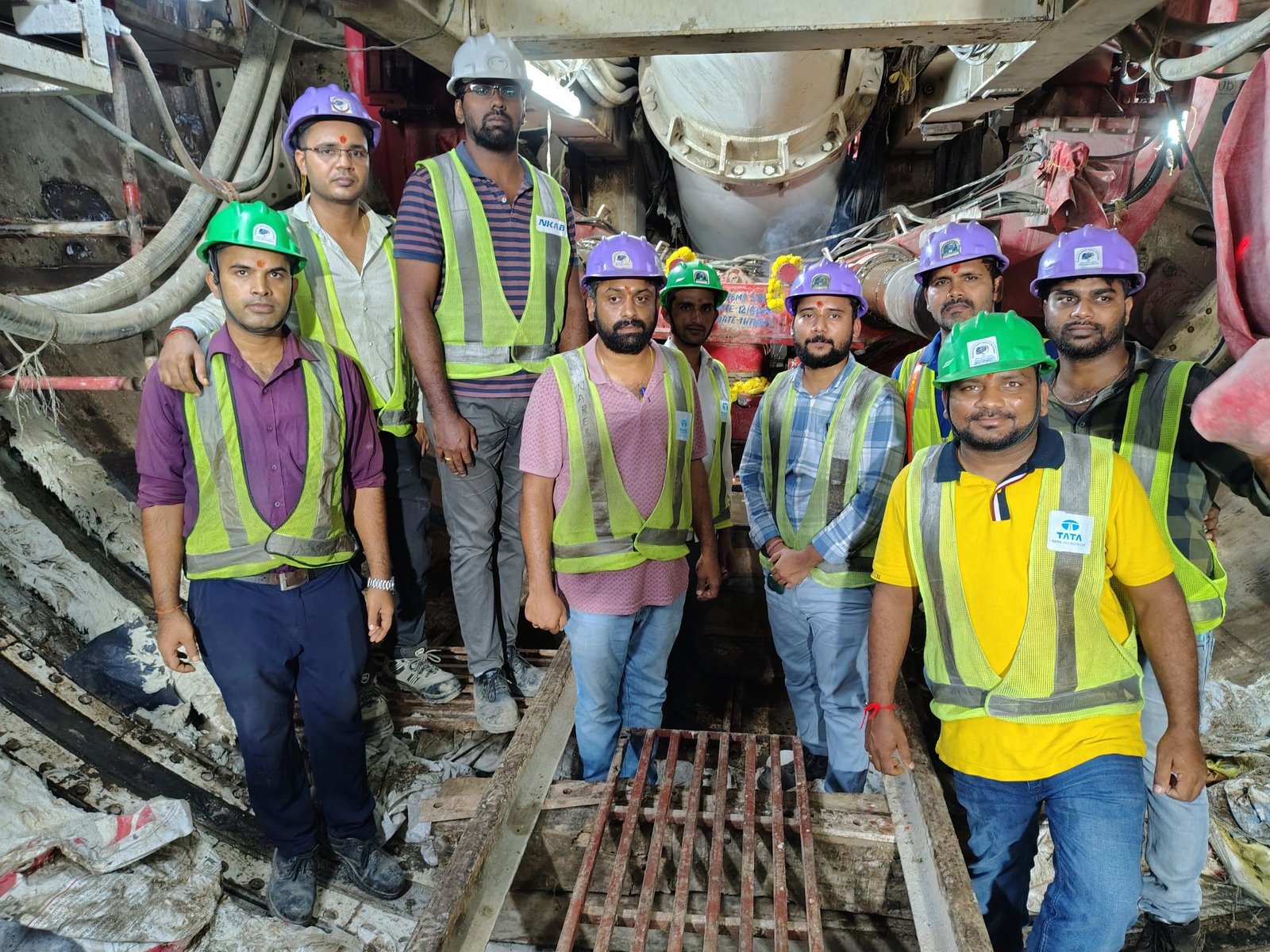
The Chennai Metro Phase 2 project reached a major milestone with the breakthrough of Tata Projects Ltd’s TBM Anaimalai at Otteri Shaft in corridor 3 (downline), which covers a total distance of 45.4 km from Madhavaram Milk colony to Siruseri Sipcot.

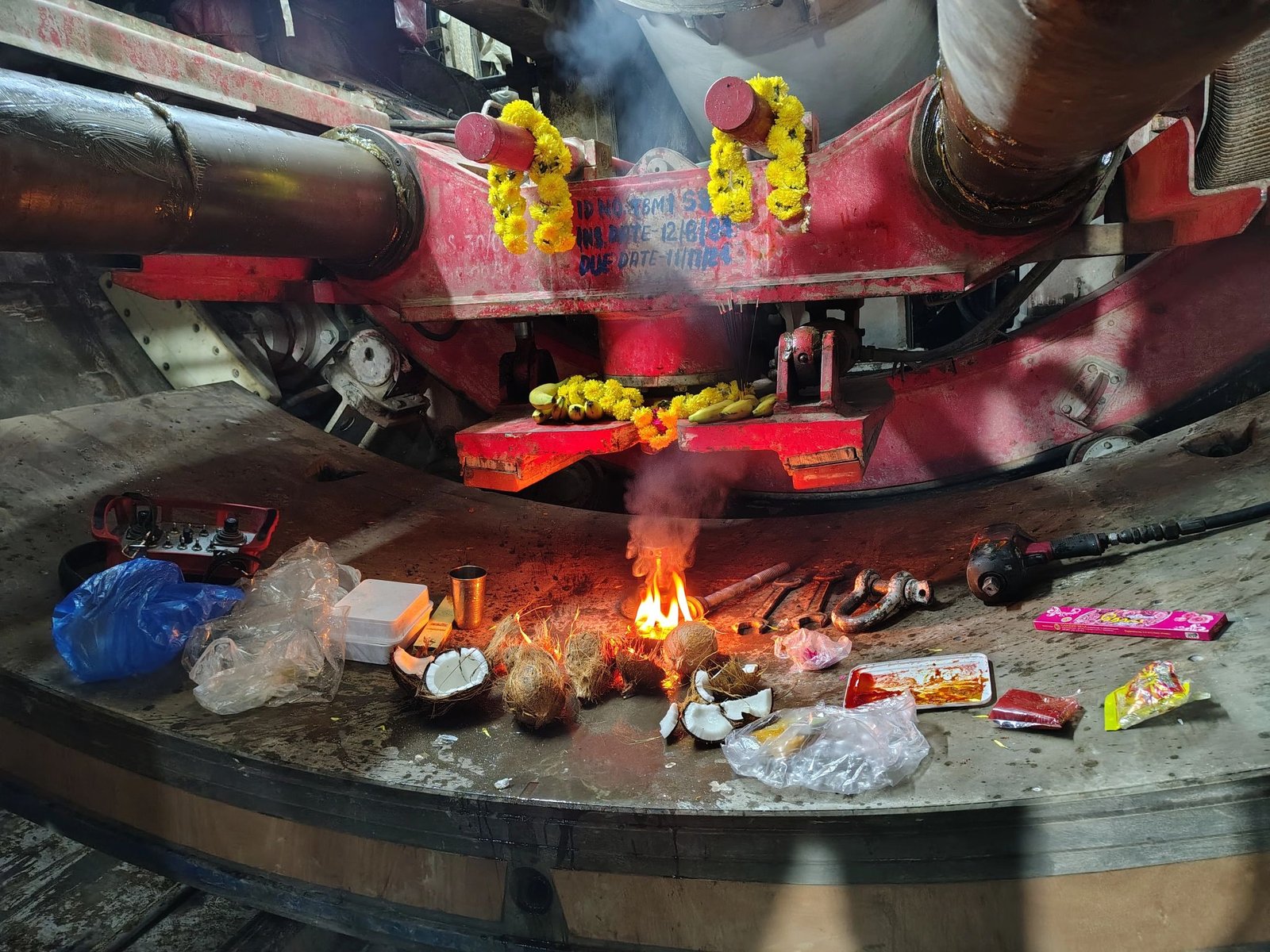
TBM S98, nicknamed Anaimalai, started its journey from Ayanavaram Station towards Otteri Station (Down line) on October 23, 2023, as part of Corridor 3. After successfully boring a tunnel length of 925 meters, the TBM reached its destination with a breakthrough at the Otteri shaft. 

1718262432831
Image Credit: Tunnel India

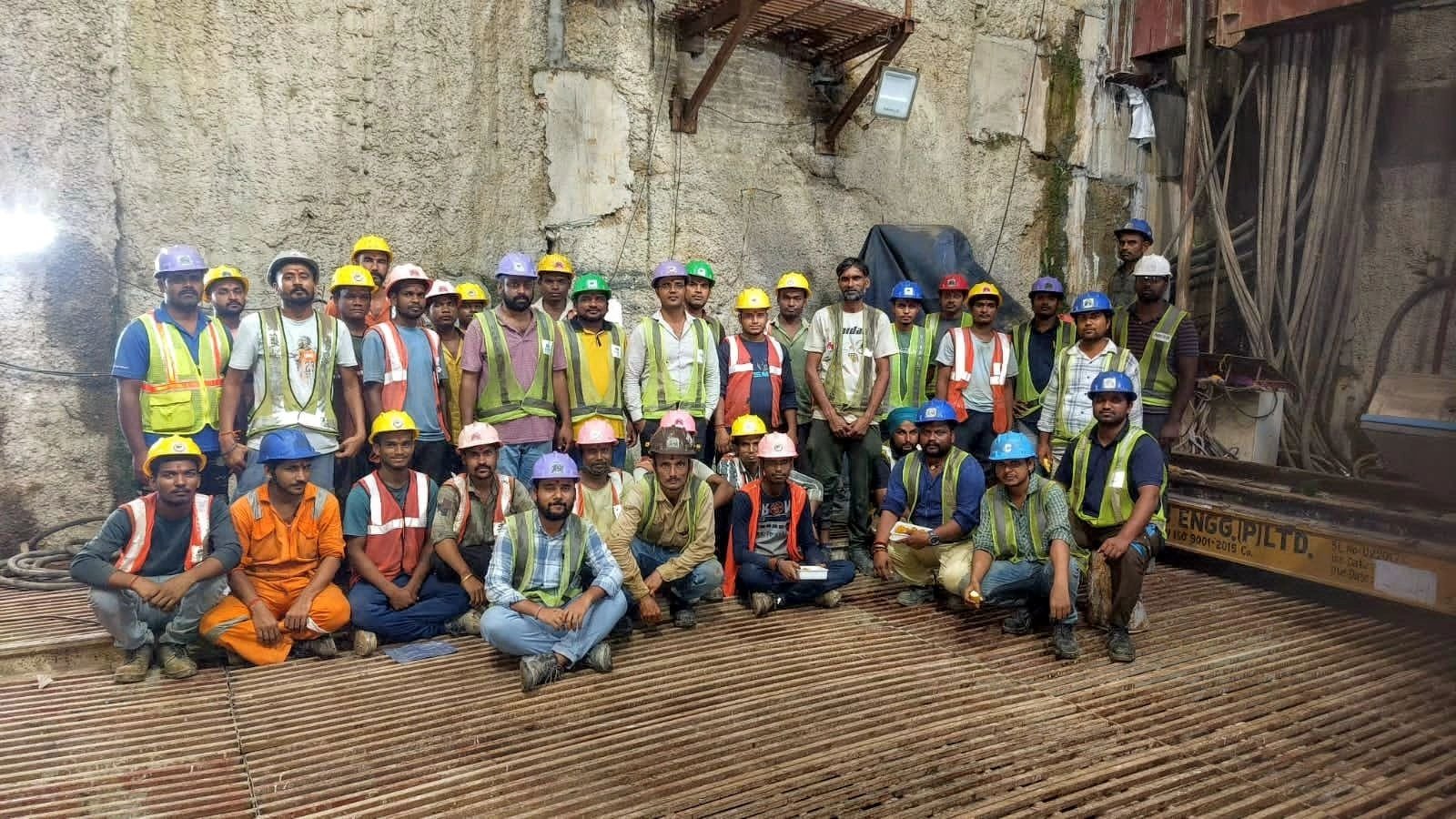
Thiru M.A. Siddique, I.A.S., Managing Director of CMRL, and senior officials from the Government of Tamil Nadu, CMRL, GC, and Tata Projects were present during the event.

GP9i4auWQAAXJFW
Image credit: CMRL
GP9j0kDXMAAyuyV
Image Credit: CMRL

In Corridor 3, M/s Tata Projects Limited is executing the initial 9 kilometers of the underground section from Madhavaram Milk Colony to Kellys within Package TU-01. This includes constructing 9 kilometers of twin tunnels (totaling 18 kilometers) on the Venugopal Nagar – Kellys section using TBM Anaimalai and 6 other TBMs.

Additionally, the project entails building diaphragm walls and entry/exit structures for Madhavaram Milk Colony Station, Murari Hospital Station, Ayanavaram Station, and Purasaiwakkam High Road Station.

GP9i4auXAAApmWS
Image Credit: CMRL

 Package TU-01 was awarded to Tata Projects by Chennai Metro Rail Ltd. (CMRL) in May 2021 at Rs 1999 crore with a deadline of 42 months (3.5 Years). 

Advertisement1
InnoMetro_2026

DMRC and RITES Join Hands For Consultancy Projects In India And Abroad

0
DMRC and RITES Signs MOU

New Delhi (Metro Rail News): The Delhi Metro Rail Corporation (DMRC) and Rail India Technical and Economic Service (RITES) have entered a strategic partnership to jointly explore consultancy opportunities both within India and internationally in the realm of Mass Rapid Transit Systems. 

GP8tcWkbgAAHJCH

The (Memorandum of Understanding) MoU was officially signed by Dr. Amit Kumar Jain, Director (Operations & Services) of DMRC, and Dr. Deepak Tripathi, Director (Technical) of RITES. The signing ceremony took place in the presence of Dr. Vikas Kumar, Managing Director of DMRC, along with other senior officials from both organizations.

This partnership aims to harness the combined expertise of DMRC and RITES, leveraging their respective strengths to effectively identify, secure, and implement projects both within India and internationally.

The collaboration will focus on a wide array of large-scale infrastructure projects, particularly in the areas of Operations and Maintenance services for Metro Railways, Urban Transit, and Intercity Transit systems. By pooling their resources and capabilities, DMRC and RITES intend to enhance their efficiency and impact in the execution of these critical infrastructure endeavours.

Advertisement1
InnoMetro_2026

Shri Manuj Singhal Takes Charge As Director (Infrastructure), DMRC

0
Manuj Singhal

Sh. Manuj Singhal has assumed charge as the new Director (Infrastructure) of the Delhi Metro Rail Corporation (DMRC). An Indian Engineering Service (IES) officer of the 1994 batch, Shri Singhal brings with him almost three decades of multidisciplinary experience, having served in various pivotal roles throughout his career.

In his capacity as Director (Infrastructure), Sh. Singhal will be in charge of the Maintenance of infrastructure including Civil, Electrical, Signal, AFC, Telecom, Rolling Stock, Solar Power etc in DMRC.

An Electrical Engineering Graduate as well as Post Graduate from Delhi College of Engineering, Sh. Singhal began his career with National Thermal Power Corporation (NTPC) and thereafter, joined the Department of Telecom through IES. He has been working with DMRC since 2006 and prior to taking up this role, he was working as Executive Director (Rolling Stock /Project).

He has published many technical papers in National and International Journals/Conferences and has played a key role in redefining the ‘Energy Mix of DMRC’, ‘execution of Electrical Works for Kochi Metro Project (with D. C. Traction system)’ and ‘finalising of Procurement of Lifts and Escalators on ‘Lease basis’ for DMRC Phase – IV project’.

Advertisement1
InnoMetro_2026

Mumbai Metro: Taikisha-Swastik JV Wins Contract for Mandale Depot’s Machinery and Plant Work

1
Mumbai Metro Line 6
Representational Image

Mumbai (Metro Rail News): The joint venture between Taikisha Engineering Pvt. Ltd and Swastik Overseas has emerged as the lowest bidder for the Machinery and Plant (M&P) work of the Mandale Depot, a key component of the Mumbai Metro Rail Project’s Line 2B.

Scope of Work

The package CA-244 involves a comprehensive set of tasks, including designing, manufacturing, supplying, testing, commissioning, and providing training for personnel. Additionally, it includes a 2-year Defect Liability Period (DLP) for the Depot Maintenance and Production (M&P) works at Mandale Depot.

Mandale Depot

Mandale Depot is Mumbai’s first elevated and largest metro depot, covering a total of 32 hectares of land. It comprises two levels—a ground floor and a first floor—and is designed to accommodate up to 72 metro rakes.

In addition to providing stabling lines, the depot will also feature technical and service buildings dedicated to overseeing the operations of the Metro line.

Mandale depot will play a major role in supporting the operational needs of the 23.6-km elevated Metro Line 2B, which connects DN Nagar to Mandale in Mankhurd. This connectivity will effectively bridge Mumbai’s western suburbs with its eastern corner.

At present, Mumbai operates two metro depots. One serves Lines 2B and 7 in Charkop, accommodating 22 rakes, while the other caters to Metro Line 1 (Versova-Ghatkopar) in Andheri.

Mumbai Metro’s Yellow Line

The Mumbai Metro’s Yellow Line, consisting of two sections (Line 2A & Line 2B), extends over 42.20 km as an elevated metro line. The first section (Line 2A) spans 18.589 km, running from Dahisar East to D.N. Nagar. Line 2B covers 23.649 km, connecting D.N. Nagar to Mandale via BKC, passing through 22 elevated stations.

Phase 1 of the Yellow Line, spanning 9.5 km, was inaugurated on April 2, 2022. It connects Dahisar East with Dahanukarwadi (Kamraj Nagar) via 10 stations. Subsequently, the second phase, extending from Kamraj Nagar to Andheri West, was inaugurated on January 19, 2023.

Advertisement1
InnoMetro_2026

Bangalore Metro: Siemens – RVNL JV Bags Rs. 762 crore Electrification Contract of Blue Line

0
Bangalore Metro
Bangalore Metro Rail/ Representational Image

Bangalore (Metro Rail News): On June 10, 2024, Rail Vikas Nigam Ltd. (RVNL) disclosed in a BSE filing that its joint venture with Siemens has secured a contract worth approximately Rs. 762 crore from Bangalore Metro Rail Corporation.  This contract encompasses the 750V DC third rail electrification work under package EPC5-CC for the 57 km Blue Line of the Bangalore Metro. 

Bangalore Metro’s Blue Line

Bangalore Metro's Map

The Blue Line has two sections: Phase-2A (Central Silk Board to Krishnarajapura) and Phase-2B (Krishnarajapura to Airport). The 57 km Blue line will ultimately connect the Central Silk Board with the Kempegowda International Airport through 30 stations.

Scope of work

Package EPC5-CC encompasses a comprehensive scope of work that includes engineering, supply, erection, testing, and commissioning of 33 KV distribution and 750V DC third rail traction electrification. The project also involves setting up traction substations, auxiliary substations, and a Supervisory Control and Data Acquisition (SCADA) system for Bangalore Metro’s Phase-2A and Phase-2B.

Bangalore Metro's Blue line's Electrification Contract

BMRCL invited bids for package EPC5-CC in September 2023, setting a 130-week (2.5-year) deadline but keeping the estimated cost undisclosed. Financial bids were opened in February 2024, revealing Siemens-RVNL JV as the lowest bidder.

In this Joint Venture, Siemens holds 70% of the shares, while RVNL holds 30%. The final contract value is INR 394,23,90,663.45 plus EURO 41,119,535.00, amounting to approximately Rs. 762 crore.

Advertisement1
InnoMetro_2026