Home Blog Page 121

Digital twin: Helping sustainability goals and smart rail operations within reach  

0
Digital twin
Digital twin ( A representational image)

A digital twin is an artificially generated and virtual representation of an object or system that spans its lifecycle, is updated from real-time data, and assists in decision-making through simulation, machine learning, and reasoning.

The working

A digital twin is a virtual model designed and developed to replicate a physical object and phenomenon precisely. The device under investigation, such as a wind turbine, comes equipped with different sensors relevant to vital and critical areas of functionality. These sensors generate information regarding multiple facets of a physical object’s performance, such as energy output, temperature, weather conditions, etc. This information, after that, is transmitted to a processing system and applied to the digital copy. Once such data is readily accessible, the virtual model may be used to run simulations, explore and examine issues with performance, and generate possible and conceivable modifications, all to develop valuable and significant conclusions that may be brought back to the original physical device.

Digital twins and simulations

Although both simulations and digital twins use digital models to simulate and replicate a system’s different functions and processes, a digital twin is truly a virtual world, making it far more prosperous and more explorative for study and analysis. The primary distinction between a digital twin and a simulation is one of scale: While a simulation typically examines a single process, a digital twin may perform numerous meaningful simulations to explore multiple procedures. The distinctions do not end there. For example, simulations rarely benefit from real-time data. However, digital twins are built on a two-way information flow that commences when object sensors offer and deliver relevant data to the system processor and continues when insights generated by the processor are exchanged back with the source object. Digital twins can study more issues from far more vantage points than standard simulations because they have better and constantly updated data related to a wide range of areas, combined with the added computing power of a virtual environment.

Types of digital twins

Various types of digital twins exist depending on the extent of product magnification. The primary distinction between these twins is their field of application. It is common and typical for multiple kinds of digital twins to coexist within a system or process.

  1. Component twins/Parts twins: Component twins are the fundamental unit of a digital twin, representing the minor example of a working component. Parts twins are roughly the same, except they refer to significantly fewer essential components.
  2. Asset twins: When two or more components work and function together, they generate and develop what is known as an asset. Asset twins allow for investigation of the interaction of those components, leading to the creation of a wealth of performance data that can be evaluated and transformed into meaningful insights.
  3. System or Unit Twins: The next degree of magnification involves system or unit twins, which allows us to understand better how various assets interact to build a fully functional system. System twins provide visibility into asset interactions and may identify performance improvements.
  4. Process twins: Process twins, the macro level of magnification, demonstrate how systems interact and work together to generate an entire facility for manufacturing and production.  Process twins can assist in determining the specific timing schemes that influence overall effectiveness, whether all of those systems are synchronised to run at peak efficiency, or will delays in one system will impact others.

History of Digital Twin Technology

The concept of digital twin technology was initially put forward in 1991 with the introduction and publication of David Gelernter’s Mirror Worlds. Dr. Michael Grieves (then on the faculty at the University of Michigan) is credited for introducing the notion of digital twins to manufacturing for the first time in 2002 and formally announcing the digital twin software concept. In 2010, NASA’s John Vickers coined the phrase; digital twin.’ However, the fundamental concept of using a digital twin to study and examine a physical thing can be witnessed much earlier. NASA can claim to have pioneered digital twin technology during its space exploration missions of the 1960s when each voyaging spacecraft was precisely replicated in an earthbound version that NASA personnel serving on flight crews used for study and simulation.

Advantages and benefits of digital twins

  • Better R&D: Using digital twins allows for more effective product research and creation, with a wealth of data generated concerning expected performance outcomes. This data can lead to insights that can help businesses make necessary product improvements before going into production.
  • Greater efficiency: Even after a new product goes into production, digital twins can assist in mirroring and monitoring production systems to achieve and maintain optimal efficiency throughout manufacturing.
  • Product end-of-life: Digital twins can even assist producers in determining what to do with products that have reached the end of their product lifecycle and require final processing, such as recycling or other measures. They can use digital twins to decide which product materials can be harvested and assembled.

Digital twin market and industries

While digital twins are valuable for what they provide, their utilisation is only appropriate for some manufacturers or products. Only some objects are complicated enough to need the constant and intensive flow of sensor data required by digital twins. Investing significant resources in producing a digital twin is sometimes only financially worthwhile. (It is important to note that a digital twin is an exact reproduction of a physical thing, which may need a high cost of production.)

On the other hand, many other types of projects benefit significantly from the use of digital models:

  • Buildings, bridges, and other complicated constructions and structures must adhere to rigid engineering requirements.
  • Mechanically complicated projects, Automobiles, jet turbines, and aircraft. Digital twins can help enhance efficiency in complex machinery and massive engines.
  • Electrical and power equipment. This comprises both power generation and transmission mechanisms.
  • Projects involving manufacturing. Digital twins excel in streamlining process efficiency, as seen and witnessed in industrial settings with co-functioning machine systems.

As a result, the industries that benefit the most from digital twins are those that deal with large-scale products or projects:

  • Engineering (systems)
  • Automobile manufacturing
  • Aircraft production
  • Railcar design
  • Building Construction
  • Manufacturing
  • Power utilities

Digital twin market: Poised for growth

While digital twins are currently in use across many industries, the fast-increasing digital twin industry suggests that demand for digital twins will continue to rise for some time. The global digital twins market had been projected to reach USD 73.5 billion by 2027 in 2022.

Applications

Digital twins are already widely employed in the following areas:

  • Power-generation equipment: Large engines, such as jet engines, locomotive engines, and power-generation turbines, benefit significantly from using digital twins, particularly in establishing schedules for routine maintenance.
  • Structures and their systems: Large physical structures, such as high-rise buildings or offshore drilling platforms, can benefit from digital twins, especially during the design phase. It is also helpful in the design of systems that operate within those structures, such as HVAC systems.
  • Manufacturing operations: Given that digital twins are intended to mirror a product’s entire lifecycle, it’s no surprise that they’ve become commonplace in all manufacturing stages, guiding things from design to final product and all processes.
  • Healthcare services: Patients receiving services like products can be profiled using digital twins. The same sensor-generated data system can track various health indicators and offer crucial insights.
  • Automotive industry: Cars have a wide range of complicated, co-existing systems, and digital twins are widely employed in car design to optimise vehicle performance and increase production efficiency.
  • Urban planning: Using digital twins, which can display 3D and 4D spatial data in real-time and embed augmented reality systems into constructed environments, greatly assists civil engineers and others involved in urban planning operations.

The future of digital twin

Existing operational models are undergoing substantial upheaval. In asset-intensive businesses, a digital revolution is taking place that is transforming operating patterns and necessitating an integrated physical and digital perspective of assets, equipment, facilities, and processes. Digital twins are an essential component of that readjustment. Given that larger quantities of cognitive power are constantly being deployed to their usage, the future of digital twins is almost endless. As a result, digital twins continually acquire new skills and capabilities, allowing them to generate the insights required to improve goods and processes.

Digital Twin in the Railway Sector

In railways, the digital twin includes the construction and development of a digital model that represents the actual assets and activities of the railway system. The digital twin combines data from different sources, including sensors, signalling systems, maintenance records, and historical data, to reflect railway assets’ real-time state and behaviour. The use of digital twins in the railway industry has various advantages. Here are some significant applications for digital twins in railways:

  • Asset Monitoring and Maintenance: Real-time monitoring of train components, tracks, signalling systems, and other infrastructure is possible with digital twins. Predictive maintenance algorithms can detect probable defects or breakdowns in advance by collecting and analysing sensor data. This proactive strategy aids in the optimisation of maintenance schedules, the reduction of downtime, and the enhancement of asset performance.
  • Operations and Simulation: Using digital twins enables railway operators to simulate and optimise train operations. Operators can identify bottlenecks, optimise scheduling, and increase overall system efficiency by simulating the behaviour of trains and railway infrastructure. Digital twins can simulate many scenarios, such as changes in train routes, timetables, or infrastructure upgrades, to analyse the impact on operations.
  • Safety and Security: Digital twins can improve railway safety and security. Anomalies or potential security concerns can be recognised in real-time by analysing data from various sensors and monitoring systems. Digital twins also make testing and validating railway safety protocols, emergency response plans, and training simulations easier.
  • Passenger Experience: Using digital twins can help improve the entire passenger experience. Operators can optimise seating arrangements, estimate crowd density, and provide real-time information to passengers regarding delays or disturbances by integrating data from multiple sources, such as ticketing systems, passenger flow sensors, and train schedules.
  • Infrastructure Planning and Design: Digital twins can help plan and design railway infrastructure. Engineers and planners can simulate multiple scenarios, assess capacity, optimise layouts, and analyse potential implications on existing infrastructure by generating virtual models of planned tracks, stations, and signalling systems.

The use of digital twins in the railway sector improves operating efficiency and safety, reduces maintenance costs, and improves the overall performance of the rail and train network.

Conclusion

The digital twin continues to provide benefits from design concept to operation. It improves complex design processes by stimulating layouts, configurations, operational circumstances, and risk scenarios. It establishes a living repository for engineering data to spot potential clashes, optimises resources and construction, and enables continuous handover. The platform provides visibility into the design process for all stakeholders, sets deliverable expectations, and ensures seamless handover, reducing onsite activities and improving communication between EPCs and operators or across many EPCs.

By incorporating procurement planning into the design process, digital twins help to reduce lead time and promote transparency by cross-referencing design documentation with procurement and commissioning. It connects the design, procurement, and construction phases for concurrent activity. To identify possible issues, optimise resources, eliminate rework, enhance construction deadlines and schedules, and create virtual reproductions of construction sites. Additionally, Digital Twin employs digital documentation and deliverables to expedite commissioning and ensure a smooth transition to operations. It uses engineering data in operations to improve safety, sustainability, and agility while lowering costs. Maintains EPC partnerships and operates through engineering data upkeep or equipment refinement. Thus, digital twin technology is helping make sustainability goals attainable and within reach.
Advertisement1
InnoMetro_2026

Mumbai Metro: Leena Becomes L1 for Electrification Contract of Line 7A & Line 9

0
Mumbai Metro
Representational Image

Mumbai (Metro Rail News): On 23 July, Leena Powertech Engineers Pvt. Ltd. emerged as the lowest bidder for the 25 Kv AC OHE electrification contract of Line-7A and Line 9 of the Mumbai Metro project.

Mumbai Metro’s Line 7A and Line 9

The construction is underway for both Line 7A and Line 9. Both lines will serve as the extensions of existing operational Line 7 which covers a total distance of 16.5 km from Gundavali to Dahisar East. The details of both Lines 7A and 9 are below:

Line 7A

This line will extend Line 7 in the southward direction. This extension runs 3.17 km from Gundavali to CSIA. The electrification contractor will equip this line with rigid OHE (ROCS).

Line 9:

This line is the northern extension of Line 7. Line 9 spans 11.38 km from Mira Bhayandar to Dahisar East. The electrification contractor will install flexible OHE (FOCS) on this line.

Bidding Process

In June 2023 Mumbai Metropolitan Region Development Authority (MMRDA) called for bids to carry out the electrification work on Line 7A and Line 9 under Package CA-176. 

MMRDA’s Expected Cost: 108.01 Crore

Deadline: 30 months

In December 2023, MMRDA opened technical bids and revealed 4 bidders for Package CA-176. During the technical evaluation, the bids placed by BNC Power Projects Ltd. and Texmaco Rail and Engineering Ltd. didn’t meet the terms of the tender; subsequently, their bids were disqualified.

Financial Bids 

FirmBid price
Leena 122.09 crore
Siemens185.35 crore

Scope of work

The appointed contractor under this electrification contract will be responsible for the design, manufacture, supply, installation, testing, and commissioning of various electrical systems for Metro Line 9 and Line 7A of the Mumbai Metro project.

Key responsibilities include:

  • 33 kV and 25 kV Cabling Work
    • Cabling work for efficient power transmission.
  • 25 kV Overhead Equipment (OHE) System
    • Installation of the 25 kV OHE system to power metro trains.
  • Switching Station
    • Establishing a switching station for managing electrical supply.
  • 33 kV Auxiliary Power Distribution System
    • Designing and installing the 33 kV auxiliary power system.
  • 33/0.415 kV Auxiliary Substation (ASS)
    • Setting up substations to step down voltage from 33 kV to 0.415 kV.
  • Supervisory Control and Data Acquisition (SCADA) System
    • Implementing a SCADA system to monitor and control electrical systems.

Update on Line 7A and Line 9

Line 7A: Currently, Tunneling work is under on this corridor.
Line 9: MMRDA is pursuing superstructure works to facilitate the construction of a Viaduct on corridor 9.

Advertisement1
InnoMetro_2026

Kochi Metro: KMRL Proposes New Metro Line From Kalamassery to Tripunithura

0
Kochi Metro
Kochi Metro

Kochi (Metro Rail News): On July 22, Kochi Metro Rail Limited released the draft of the Comprehensive Mobility Plan (CMP), which advocates for multi-nodal and transit-oriented development in the city. This plan includes the construction of a new metro corridor that will connect Kalamassery and Tripunithura via Kakkanad, aiming to decongest the busiest areas of Kochi city.

This Comprehensive Mobility Plan (CMP), proposed by the Ministry of Housing and Urban Affairs serves as the road map for upcoming mobility patterns of the city.

Kochi Metro Rail Limited (KMRL) was assigned as the Urban Mass Transit Company (UMTC) under the Union government to develop and design a comprehensive plan for the future transportation and infrastructure needs of the city.

Proposed MRTS Routes

The Comprehensive Mobility Plan (CMP) proposes the development of a 97 km-long Mass Rapid Transit System (MRTS) in the city. The CMP suggests rail-based MRTS for the Kalamassery-Tripunithura section and the Aluva-Angamaly section. Additionally, it proposes bus-based MRTS for the Paravoor-Aroor and High Court-Munambam stretch.

These suggestions are based on a preliminary assessment. However, to identify the most viable system for the city, a detailed study needs to be conducted.

According to the CMP, regions such as Aluva, Angamaly, Kakkanad, Tripunithura, Vallarpadam, North Paravoor, and Kalamassery are evolving as key growth hubs within the Kochi municipal corporation area.  multi-nodal development framework is essential for the efficient and fair distribution of transportation demand throughout the city.

Kochi Metro

Phase 1

Kochi Metro Map

Kochi City has one operational metro line (Blue Line). This corridor is part of Phase 1 and it runs 27.96 km connecting Aluva to Tripunithura through 25 elevated stations.

Phase 2

Kovhi metro phase 2

Kochi Metro’s Phase 2 received approval from the state government in July 2018. However, the project still awaits approval from the central government. Phase 2 will cover 11.2 km of distance through 11 stations connecting JLN Stadium and Infopark II.

Advertisement1
InnoMetro_2026

Pune Metro Receives 814 Core boost from budget

0
Pune metro
Pune metro

Pune (Metro Rail News): On July 23, Union Finance Minister Smt. Nirmala Sitharaman announced a budgetary provision of Rs 814 crore for Pune Metro in her budget presentation. According to Maha Metro officials, this financial aid will boost Pune Metro’s expansion plans.

Pune Metro 03

Reflecting on this, Shri Devendra Fadnavis, Deputy Chief Minister, stated, “Those who are alleging that there was no mention of Maharashtra should look at the budgetary provisions, including the one made for Pune Metro. Rs 814 crore has been provided by the Union budget for Pune Metro,” as reported by the Indian Express.

Maha Metro Seeks Break-Up Details of Funding

Furthermore, Mr. Shravan Hardikar, Maha Metro Managing Director, stated, “We had sought Rs 500 crore for extensions of the Pune Metro route up to Katraj and Wagholi. We do not know the break-up of the Rs 814 crore so far. It could also be for the ongoing works of Pune Metro or might also include Metro work being implemented by PMRDA. We will wait for more clarification on this count from the government.”

Additionally, Mr Hardikar mentioned that the centre has already approved financial aid of Rs 970 crore for the 4.519 km long Pimpri-Chinchwad Municipal Corporation (PCMC) to the Nigdi stretch of the Purple Line. “We don’t know whether the budget includes some portion of this amount as well,” he added.

Pune Metro 05

This stretch will feature four stations: Chinchwad, Akurdi, Nigdi, and Bhakti-Shakti. It also involves the construction of a viaduct comprising 1181 segments and 151 spans. Upon completion, the metro will start from Bhakti-Shakti and conclude at the Civil Court in Shivaji Nagar.

Advertisement1
InnoMetro_2026

Chennai Metro: TBM Bhavani Begins Tunneling on Royapettah – R.K. Salai Section of Line 3

0
Chennai Metro's TBM Bhavani

Chennai (Metro Rail News): On 21 July, Mr Udhayanidhi Stalin, Youth Welfare and Sports Development Minister launched the Tunnel Boring Machine (TBM) Bhavani on Royapettah-R.K. Salai Section of Chennai Metro’s 45.4 km long Line 3.

1721563645954
Image credit: CMRL

TBM Bhavani’s Assignment

Tunnel Boring Machine (TBM) Bhavani will construct an underground tunnel which will have a length of about 910 m from Royapettah to R.K. Salai. The machine is likely to take 7 months to complete its drive.

Apart from TBM Bhavni CMRL will deploy three more TBMs on this section of which one TBM will travel towards R.K. Salai while the other two will move towards Thousand Lights. 

Inspection of Phase 2

1721563646824
Image Credit: CMRL

In addition to launching the Tunnel Boring Machine (TBM) Bhavani, Mr Udhayanidhi Stalin reviewed the progress of Chennai Metro’s Phase 2 project. He inspected various segments of the project, including the common ticketing system and the stretches from the Airport to Kilambakkam, Koyambedu to Avadi, and Poonamallee to Parandur. Mr Stalin also reviewed the developments of the Coimbatore and Madurai Metros.

1721563645874
Image Credit: CMRL

Furthermore, he examined the construction work at Alapakkam Metro Station, which is part of the 26.09 km-long Line 4, extending from Light House to Poonamallee. 

Additionally, Mr. Stalin visited the Poonamallee Depot, which is under construction at a cost of ₹187 crore. This depot will function as a repair and maintenance facility for 56 (six-coach) driverless trains.

1721563645486
Image Credit: CMRL

Chennai Metro’s Line 3

Line 3 also known as the Purple Line is being constructed under Chennai Metro’s Phase 2 project. The 45.4 km long Line 3 features 49 stations (20 elevated & 29 underground) connecting Madhavaram and  SIPCOT 2. This line will traverse through some of the significant locations of the city such as Madhavaram, Ayanavaram, Purasawalkam, Thousand Lights, Royapettah, and Adyar. 

Royapettah metro station

The Royapettah underground metro station which is a part of Line 3, is being constructed at a cost of ₹250. Located 21.5 meters below ground, the station will be 150 meters long and 22 meters wide.

Line 3 is anticipated to become operational within the next four years.

Advertisement1
InnoMetro_2026

Airtel Payments Bank Launches NCMC-enabled Debit and Prepaid Cards in Partnership with DMRC

0
DMRC and Airtel Payment Bank Join Hands for digital Payment solutions

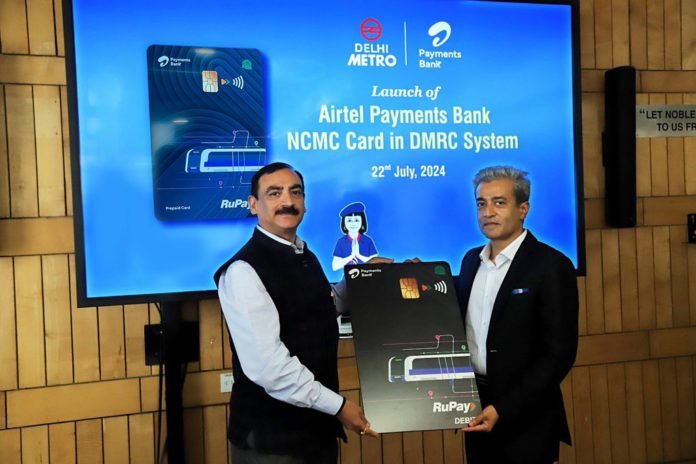
New Delhi (Metro Rail News): In continuation of the efforts to introduce more digital ticketing solutions for the convenience of passengers, the Delhi Metro Rail Corporation (DMRC) has now partnered with Airtel Payments Bank to extend a host of digital payment solutions to its commuters. 

The rights of maintenance and processing of digital payment solutions via the National Common Mobility Card (NCMC) have now been granted to the Airtel Payments Bank. The Bank will now process NCMC card transactions, issued by any bank, facilitating convenient travel on all lines of Delhi Metro including Airport Express along with other open-loop transport systems nationwide. 

This announcement was made in a ceremony at the Delhi Metro headquarters attended by DMRC MD, Dr. Vikas Kumar, MD & CEO of Airtel Payments Bank Mr. Anubrata Biswas, and other senior officials from both organisations.  

On this occasion, Debit, Pre-paid NCMC enabled cards offered by Airtel Payments Bank were also unveiled. The Bank will issue these NCMC-enabled cards at the metro stations which will enable seamless travel on Delhi Metro and other open-loop implemented transport systems across the country, along with retail purchases, ATM and e-commerce transactions. One can use this card across travel segments, including metro, bus, railways, and parking lots with an NCMC payments facility. 

Dr. Vikas Kumar, Managing Director, Delhi Metro Rail Corporation Ltd said, “With Airtel Payments Bank, we will be able to offer a host of digital payment solutions across all Delhi metro stations. This partnership will enable us to offer seamless and hassle-free movement for our daily commuters in the National Capital Region.”

Mr. Anubrata Biswas, MD & CEO of Airtel Payments Bank said, “We are delighted to partner with Delhi Metro Rail Corporation to maintain and process digital payment solutions via NCMC. This collaboration aligns with the Nation’s vision of One Nation One Card. This takes us one step ahead to serve our customers better with our diverse offerings, and make our services available to a wide range of users.”

The introduction of seamless digital ticketing options for passengers has been a priority area for DMRC. A number of such solutions have been introduced by DMRC in the recent past. By integrating advanced digital payment solutions, DMRC and Airtel Payments Bank are set to revolutionize the commuting experience, ensuring greater convenience, efficiency, and accessibility for millions of passengers daily.

Advertisement1
InnoMetro_2026

Chennai Metro: Jakson Ltd. Becomes L1 for E&M Contract of Line 5

0
Chennai metro
Chennai metro

Chennai (Metro Rail News): On 22 July, Chennai Metro Rail Ltd. (CMRL) declared Jakson Ltd. as the lowest bidder for the electrical & mechanical (E&M), fire protection, ventilation, and air-conditioning contract (C5-EM-03) for Chennai Metro Line-5.

Line 5 (Red Line) is part of the 116.1 km long Chennai Metro Phase 2 project. This Line covers a total distance of 44.6 km through 48 stations of which 41 stations will be elevated, 1 at-grade and 6 underground). Line 5 will connect Madhavaram Milk Colony and Sholinganallur.

Location of work

Under package EM-03, the electrical and mechanical (E&M) work will be carried out at 10 elevated stations and 6 underground stations. Additionally, the package covers E&M work in the underground tunnels passing through Kolathur and Nathamuni stations, as well as along the viaduct spanning between Madhavaram Milk Colony and Grain Market station.

Bidding Process

In August 2023, Chennai Metro Rail Ltd. (CMRL) initiated the bidding process for the electrical and mechanical (E&M) work for Line 5. The contract has a 1910-day (5.2-year) deadline. Subsequently, in February 2024, CMRL opened the technical bids, revealing five bidders.

Bidders & Bid Price

Firm Bid Price
Jakson Ltd.201.50 crore
ETA Engineering207.19 crore
Antelec214.20 crore
Universal MEP Projects & Engineering Services (Voltas)216.89 crore
Blue Star218.40 crore

Scope of work

The awarded contractor will be responsible for supplying, installing, testing, commissioning, and training personnel on electrical, plumbing, fire protection, ventilation and air conditioning (VAC) works, and the Building Management System (BMS). This scope of work extends from Madhavaram Milk Colony Station (excluding) at CH 76.000 to Grain Market Station (excluding) at CH 16399.716 for Corridor-5 of the Chennai Metro Rail Project, Phase II.

Chennai Metro Phase 2

In 2019, the Tamil Nadu government approved Chennai Metro’s Phase 2, which covers a total distance of 116.1 km with three new lines: Line-3 (Purple Line), Line-4 (Orange Line), and Line-5 (Red Line). The revised cost of the project is Rs. 61,843 crore. However, the project is still awaiting approval from the Central Government.

Advertisement1
InnoMetro_2026

RRTS Corridor: Hon’ble Minister Shri Tokhan Sahu Visits Sahibabad-Duhai Section

0
Namo Bharat Trains of RRTS Corridor

India’s first Regional Rapid Transit System (RRTS) project is advancing at a rapid pace. Recently, the Hon’ble Minister of State for Housing and Urban Affairs, Shri Tokhan Sahu, visited the RRTS corridor. He was accompanied by NCRTC Managing Director Shri Shalabh Goel and other senior officials.

1721478746645

The visit began at the NCRTC headquarters, Gati Shakti Bhawan, INA Delhi, where NCRTC officials provided an update on the progress of the first Regional Rapid Transit System (RRTS) corridor between Delhi and Meerut. They emphasised that the project is being executed on schedule and in accordance with safety standards. At the Sahibabad RRTS station, Shri Sahu was informed about the contributions of the women station controllers and other staff members who ensure the smooth operation of the Namo Bharat trains.

1721478746647

He then travelled from Sahibabad RRTS Station to Duhai Depot on a Namo Bharat train (formerly known as Rapid X). During his visit to the depot, Shri Sahu toured the workshop and inspection bay line (IBL), where he interacted with the personnel and inquired about their work processes and responsibilities. He took a keen interest in understanding the daily operations and the maintenance activities carried out to ensure the smooth functioning of the trains.

1721478746632

In addition to the workshop, Shri Sahu visited the Center for Innovation, ‘Aparimit,’ located at the depot. He was particularly impressed by the AR-VR lab, which uses augmented reality (AR) and virtual reality (VR) technologies.

1721478746654

Throughout his visit, Shri Sahu expressed his appreciation for the efforts of the NCRTC team and the innovative approaches they are implementing to advance the RRTS project.

Delhi-Meerut RRTS Corridor 


The 82.15km long Delhi—Ghaziabad—Meerut RRTS corridor is designed for semi-high-speed trains (Namo Bharat) that can reach a maximum speed of 180kmph. This corridor will feature 22 stations.

The 17 km-long priority corridor connecting Sahibabad and Duhai was inaugurated on 20 October 2023. This corridor, which has four stations, became operational on 21 October 2023.

Following this, on 6 March 2024, Prime Minister Narendra Modi inaugurated an additional 17 km long RRTS stretch which connects Duhai and Modi Nagar North.  The extension features three stations: Muradnagar, Modi Nagar South, and Modi Nagar North. 

Currently, Namo Bharat trains operate on a 34 km RRTS route from Sahibabad to Modinagar North. The remaining portion of the Delhi-Meerut RRTS corridor is expected to be completed and opened by 2025.

Advertisement1
InnoMetro_2026

Bhubaneswar Metro: DMRC Invites Bids to Procure 39 Rolling Stock for Line 1

0
Bhubaneswar Metro (The image is for representation only.)

Bhubaneswar (Metro Rail News): On 18 July, Delhi Metro Rail Corporation (DMRC) floated the tender for the procurement of 39 standard gauge coaches for Bhubaneswar Metro’s  26.024 km long  Phase 1 project within Package BRS1.

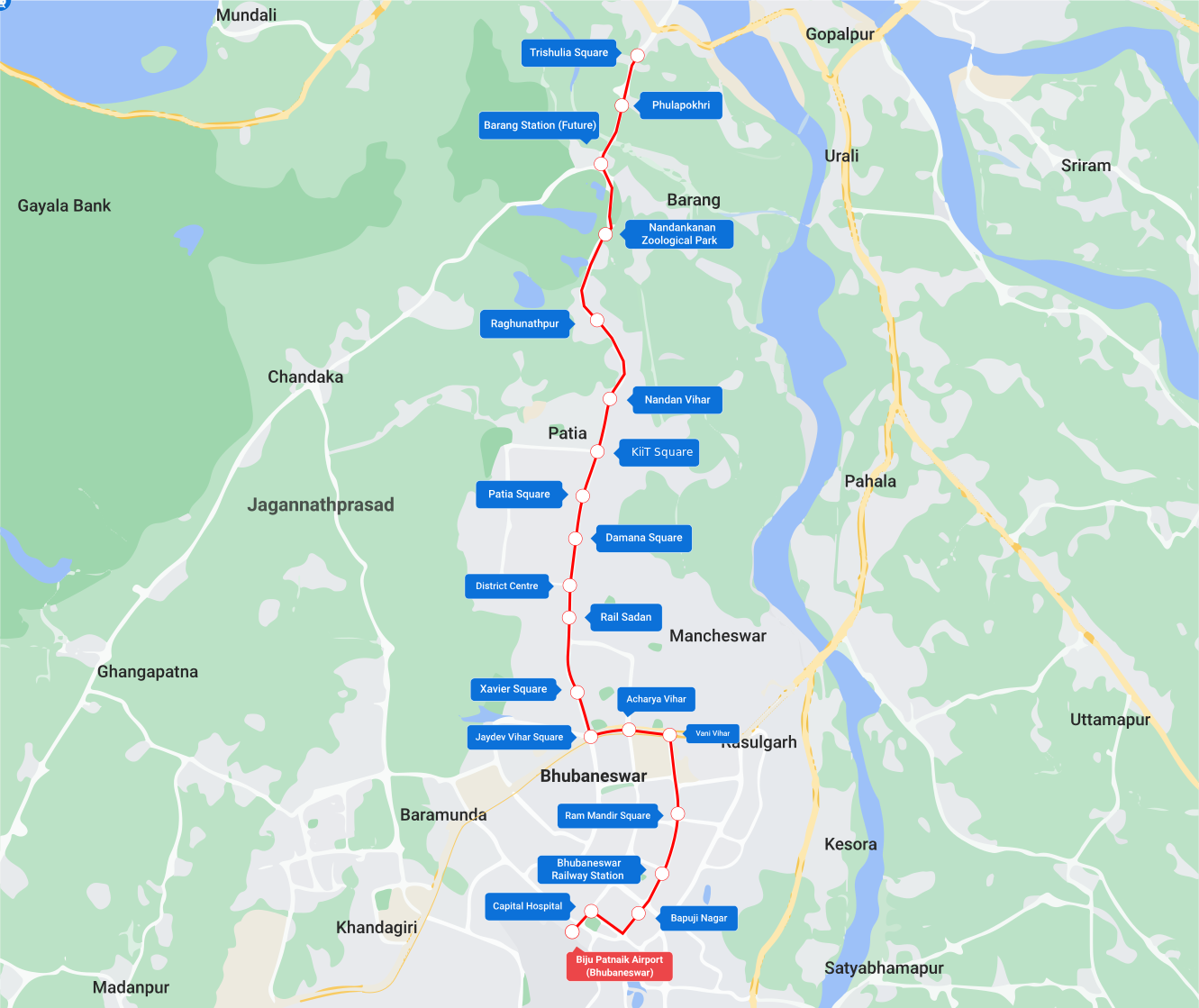
Bhubaneswar-Metro route-map-
Bhubaneswar Metro’s Route Map

The Bhubaneswar Metro project will enhance urban mobility by introducing 39 metro coaches. These coaches will be organised into 13 train sets, each comprising three coaches configured as DMC (Driving Motor Car) + TC (Trailer Car) + DMC (Driving Motor Car).  These 13 trainsets will operate on Line 1 of the Bhubaneswar Metro, which connects Biju Patnaik Airport and Trisulia Square through 20 stations. Each trainset will feature 3 coaches.

Traction for Rolling Stock

The metro trains operating in Bhubaneswar will utilise the Third Rail System to get electrical supply. The Phulapokhri Depot, which is currently under construction, will manage the trains for the Bhubaneswar Metro Phase 1 project.

Features of Bhubaneswar Metro

According to the DMRC’s guidelines, the 3-coach trains will be designed to accommodate 972 passengers. The new coaches will be constructed from stainless steel, ensuring they remain lightweight. Additionally, the trainsets will be compatible with Automatic Train Protection (ATP), Automatic Train Control (ATC), and Automatic Train Operation (ATO) modes.

Key Points about the Contract

  1. Estimated Cost: Rs. 509.68 crore
  2. Deadline: 154 weeks
  3. Pre-Bid Meeting Date: 2 August, 2024
  4. Bid Submission Deadline: 29 August, 2024

The delivery schedule for the train sets is outlined as follows:

  • The prototype train set must be delivered to Phulapokhari Depot within 102 weeks (2 years) from the commencement date specified in the contract.
  • The next batch of 4 train sets is required to be delivered within 137 weeks from the commencement date.
  • An additional 4 train sets should be delivered within 145 weeks from the commencement date.
  • The final set of 4 train sets must be delivered within 154 weeks from the commencement date.

The notice specifies that Bhubaneswar Metro’s trains must adhere to Grade of Automation-2 (GoA2) standards. This level of automation is one step below driverless operations (GoA3) and two steps below unattended train operations (GoA4).

Aligning with the “Make In India” Initiative

To ensure that this contract aligns with the Aatmannirbhar Bharat (Make In India) initiative, DMRC included a clause stating that a maximum of 9 coaches (3 trains) can be manufactured outside of India. The remaining coaches must be manufactured within India. To comply with these bid conditions, the contractor must establish manufacturing facilities locally, either independently or in partnership with an Indian company.

Advertisement1
InnoMetro_2026

Indian Railway Stations Reimagined: Blending Tradition with Modern Amenities

0
Indian Railways Station Development

Introduction

Indian Railways has been committed to providing world-class amenities and services to passengers, incorporating modern technologies and sustainable practices to enhance the overall travel experience. All station development projects aim to modernise and upgrade railway stations across the country. 

The iconic image of a bustling railway station with its cacophony of announcements, the rhythmic chugging of trains and the flurry of passengers has long been synonymous with India’s vibrant culture and dynamic transportation network. As the backbone of the country’s massive railway system, railway stations play a major role in connecting people, cultures, and businesses across vast distances. However, with the passage of time and the increasing demands of modern travellers, the need for comprehensive redevelopment of these stations has become apparent.

Modern amenities such as food courts, air-conditioned waiting lounges, a VIP lounge, dormitories, a digital signage system, and upgraded parking facilities are the key features of these station development projects.

Some of the other features of these developing or developed Indian Railways stations are that they consist of multi-modal transport integration, skywalks, improved traffic management, improved waiting areas, tourist information centres, rainwater harvesting, solar power & energy-efficient systems along with waste management facilities.

Rani Kamlapati Railway Station (Bhopal), Gandhinagar Capital Railway Station (Gujarat), Ayodhya Railway Station (Uttar Pradesh), Chhatrapati Shivaji Maharaj Terminus (Mumbai) & New Delhi Railway Station (New Delhi) are some of the examples of which new stations are being modernized. We will discuss in detail about these in this article.

Amrit Bharat Station Scheme

Untitled design 14

The Ministry of Indian Railways launched the Amrit Bharat Station Scheme in February 2023. This scheme is the Centre’s ambitious plan for transforming a total of 1275 stations across the Indian Railway system in the country. The Amrit Bharat Station Scheme signifies a concerted effort by Indian Railways to modernize and upgrade its infrastructure in order to elevate the travel experience for millions of passengers.  

The Amrit Bharat Station scheme envisions a sustained and comprehensive development of railway stations over the long term. It involves creating Master Plans and executing them in phases to enhance various station facilities. These improvements include enhancing station accessibility, waiting areas, restroom facilities, installing lifts and escalators as required, maintaining cleanliness, providing free Wi-Fi, establishing kiosks for local products through programs like ‘One Station One Product’, upgrading passenger information systems, creating Executive Lounges, designating spaces for business meetings, incorporating landscaping, and addressing the specific needs of each station.

The scheme also prioritises upgrading station structures and integrating them with the surrounding urban areas on both sides. It promotes multimodal connectivity and ensures facilities for individuals with disabilities (Divyangjans). Additionally, it focuses on implementing sustainable and eco-friendly solutions, introducing ballastless tracks, and incorporating ‘Roof Plazas’ where needed. By considering the feasibility and phasing of these improvements, the scheme aims to transform these stations into vibrant city centres over the long term.

One of the notable aspects of the Amrit Bharat Station Scheme is that the designs of the redeveloped station buildings are inspired by local culture, heritage, and architecture. For example, the Ahmedabad station draws inspiration from the Modhera Sun Temple, while the Dwarka station is influenced by the Dwarkadheesh Temple. The Gurugram station will reflect an IT theme, whereas the Baleshwar station in Odisha will be designed based on the theme of the Bhagwan Jagannath Temple. The Kumbhakonam Station in Tamil Nadu will prominently feature elements of Chola architecture.

Among the stations currently under redevelopment, Puri station is inspired by the architecture of the Jagannath Temple. In Tamil Nadu, the Madurai and Rameswaram stations draw their designs from the Madurai Meenakshi and Ramanathaswamy Temples, respectively. Kotdwar Station showcases traditional Hill Station architecture, while Udaipur Station features a dome inspired by the Umaid Bhawan Palace. Stations in the Delhi NCR region, such as Faridabad, Ghaziabad, Safdarjung, and Bijwasan, have a modern aesthetic, as do the stations in Prayagraj, Bhubaneswar, Secunderabad, and Chennai Egmore. The HiTech City station in Hyderabad boasts a contemporary designer look, and the two stations in Bengaluru—Yeshwantpur and Bangalore Cantt—are designed to resemble airports.

Major Station Development Projects of Indian Railways

Modernization of so many stations has started to create a new atmosphere for development in the country as they create a good first impression among the visitors. Upgraded stations will not only increase tourism but will also give a push to economic activities in the nearby areas. 

Additionally, the “One Station One Product” scheme is designed to support artisans and enhance the branding of districts. Under the new station development projects, each railway station will become a symbol of the nation’s modern aspirations while honouring its ancient heritage

Some of the railway stations have already been redeveloped as per vision. Below is a summary of some prominent station development projects, highlighting their key features and sustainable practices.

Rani Kamlapati Railway Station (Bhopal)

  • Overview: Formerly known as Habibganj, this station has been redeveloped into a world-class facility, inaugurated in November 2021.
  • Features: Modern amenities such as food courts, air-conditioned waiting lounges, a VIP lounge, dormitories, a digital signage system, and upgraded parking facilities.
  • Sustainability: The station is designed as a green building with energy-efficient systems and waste management facilities.

Gandhinagar Capital Railway Station (Gujarat)

  • Overview: Inaugurated in July 2021, the station has been redeveloped into a modern, airport-like facility.
  • Features: A five-star hotel above the station, a large concourse area, enhanced passenger amenities, and a central air conditioning system.
  • Sustainability: The station includes green building features such as LED lighting, rainwater harvesting, and solar power.

Ayodhya Railway Station (Uttar Pradesh)

  • Overview: The redevelopment of Ayodhya Railway Station aims to accommodate the expected increase in pilgrims and tourists due to the upcoming Ram Temple.
  • Features: Heritage-inspired architecture, modern amenities, improved waiting areas, better parking facilities, and tourist information centers.
  • Status: The project is under development and is expected to be completed in phases.

Chhatrapati Shivaji Maharaj Terminus (Mumbai)

  • Overview: One of India’s iconic railway stations, CSMT, is undergoing a comprehensive redevelopment plan.
  • Features: Preservation of the heritage structure while integrating modern amenities such as upgraded platforms, enhanced passenger facilities, and improved traffic management.
  • Sustainability: Emphasis on green building practices and energy efficiency.

New Delhi Railway Station (New Delhi)

  • Overview: A major redevelopment project aiming to transform New Delhi Railway Station into a world-class transport hub.
  • Features: A new terminal building, multi-modal transport integration, skywalks, high-quality passenger facilities, and commercial spaces.
  • Sustainability: Focus on eco-friendly practices and smart technologies for energy and water conservation.

Secunderabad Railway Station (Telangana)

  • Overview: A redevelopment project to modernize Secunderabad Railway Station with enhanced facilities.
  • Features: Upgraded platforms, new foot overbridges, improved passenger amenities, better parking, and enhanced security features.
  • Sustainability: Incorporation of energy-efficient lighting and waste management systems.

Ernakulam Junction Railway Station (Kerala)

  • Overview: Redevelopment aimed at transforming the station into a modern hub with improved amenities.
  • Features: Modern waiting lounges, better accessibility features, upgraded platforms, and digital information systems.
  • Sustainability: Focus on green building standards and eco-friendly operations.

Bengaluru Cantonment Railway Station (Karnataka)

  • Overview: Planned redevelopment to upgrade the station’s infrastructure and passenger amenities.
  • Features: Enhanced waiting areas, modern ticketing facilities, better parking and circulation areas, and improved platform facilities.
  • Sustainability: Emphasis on sustainable design and energy-efficient systems.

Lucknow Charbagh Railway Station (Uttar Pradesh)

  • Overview: A comprehensive redevelopment project to upgrade infrastructure and passenger facilities.
  • Features: Modern concourse area, enhanced waiting lounges, upgraded platforms, and improved accessibility.
  • Sustainability: Implementation of green building practices and energy-efficient technologies

Now, when you enter these modern & state of the art redeveloped railway stations, it gives an amazing experience. The redeveloped Railway stations will have all passenger amenities in one place along with spaces for retail, cafeterias, and recreational facilities. There will be a segregation of arriving and departing passengers. Facilities like a food court, waiting lounge, a place for local products, etc. will be available.

To make the station navigable, proper illumination, wayfinding/signages, acoustics, lifts/escalators/travellators shall be provided. A Master plan has been prepared for smooth movement of traffic, with adequate parking facilities. The redeveloped railway station will boast passenger amenities on par with those typically found at airports. The city centre, created due to the railway station’s redevelopment will lead to the creation of a fusion hub, seamlessly integrating transportation and commercial activities. 

India’s Railway Stations are not going to be the same in the near future.  What remained unchanged for decades, and in some cases even over a century, is now bracing for an unprecedented transformation. These state-of-art infrastructure and facilities will not only enhance the overall performance of Indian Railways but also contribute to making India the world’s 3rd largest economy sooner.

Conclusion

The development of Indian railway stations represents a significant leap towards creating a modern, efficient, and passenger-centric railway network. These efforts not only aim to meet the current demands but also anticipate future growth, ensuring that India’s railway infrastructure can support the country’s economic aspirations and enhance the travel experience for millions of passengers. Through strategic planning, technological innovation, and collaborative efforts, Indian railway stations are poised to become global benchmarks of excellence in railway infrastructure.

Advertisement1
InnoMetro_2026