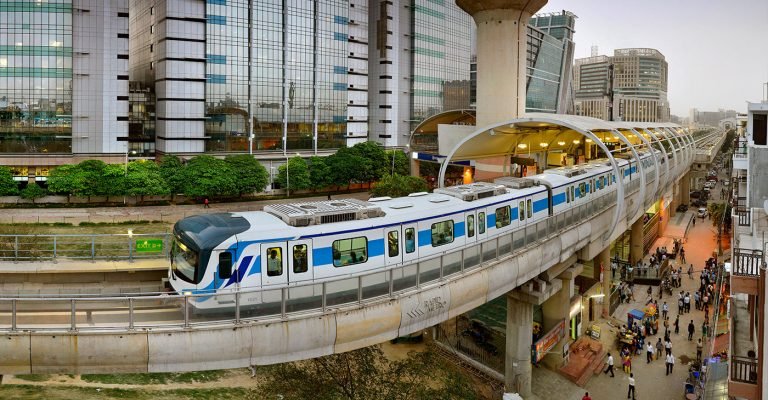
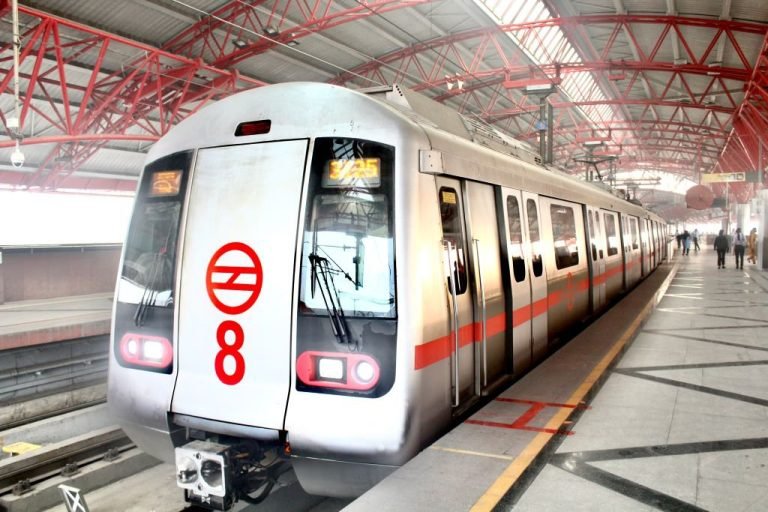
New Delhi: Prime Minister Narendra Modi has flagged-off the Delhi-Faridabad Metro Line that would allow hassle free travel for around two lakh daily commuters between the national capital and the industrial hub in Haryana.
The extension of the Delhi Metro connects Badarpur to Escorts Mujesar in Faridabad.
The total cost of the project from Badarpur to Escorts Mujesar is nearly Rs. 2,500 crore. Out of this, Rs. 1,557 crore was borne by the Haryana Government, the Centre contributed Rs. 537 crore, while the Delhi Metro provided Rs. 400 crore.
All these are elevated and located on either side of the Delhi-Mathura Road (NH-2).
“The nine-station metro corridor which was 95 per cent indigenously built will provide people a safe, affordable, quick, comfortable, reliable, environment-friendly and sustainable transport facility,” a Haryana government spokesperson said.
Haryana Chief Minister ML Khattar, addressing a press conference on Saturday, had thanked the Prime Minister for “gifting” the Metro service which would take the city to “another level of progress” with better connectivity with other NCR towns.
He had also said that the Prime Minister would be announcing the go-ahead for connecting Gurgaon with Faridabad by Metro.
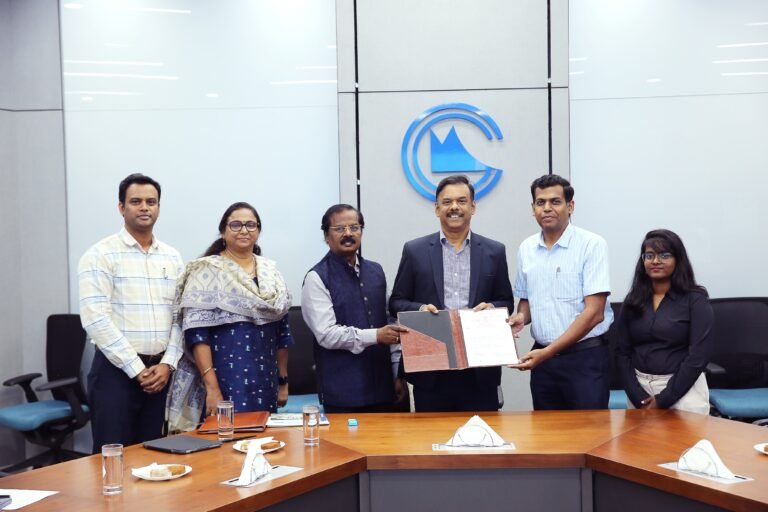
Chennai (Metro Rail News): Chennai Metro Rail Limited (CMRL) has signed a contract for the development of the Detailed Project Report (DPR) for property development at several locations in Phase 1 and Phase 2 of the Chennai metro network.
Contract Information
CMRL awarded this contract to M/s. Jones Lang Lasalle Property Consultants India Pvt. Ltd at Rs. 67.2 lakhs (excluding GST). The Letter of Acceptance (LOA) for the contract was issued on 28th October 2024.
Deadline: The final DPR is expected to be completed within 150 days from the date of the LOA.
The scope of work for the contract includes the development of the Detailed Project Report (DPR), feasibility study, market analysis, transactional advice, concept plans, and land use report.
Additionally, it involves the submission of necessary documents to the Chennai Metropolitan Development Authority (CMDA) and Greater Chennai Corporation (GCC) for approval, as well as the preparation of cost estimates and tender documents for the property development projects at:
Alandur,
Alapakkam Junction,
Boat Club,
Nandanam,
Wimco Nagar Depot.
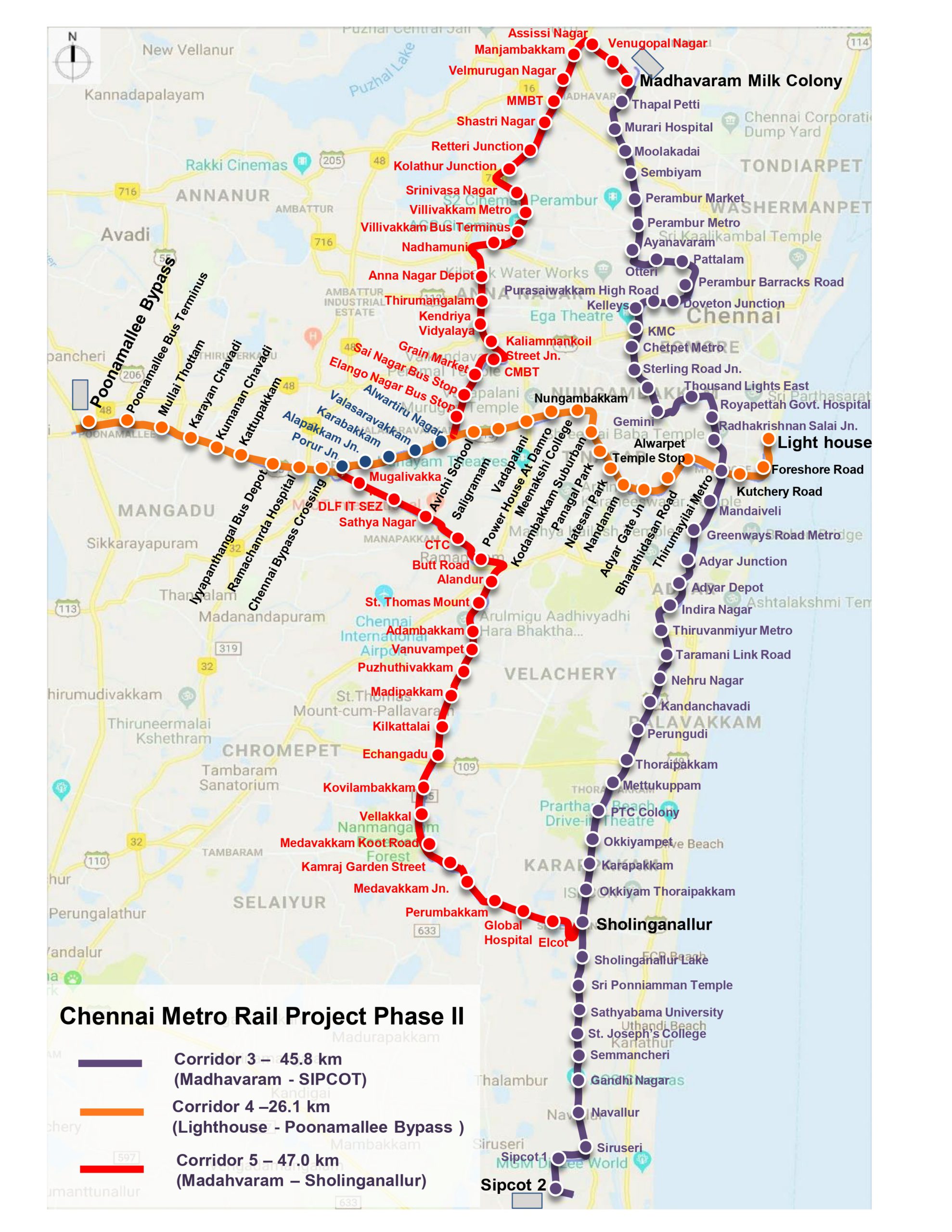
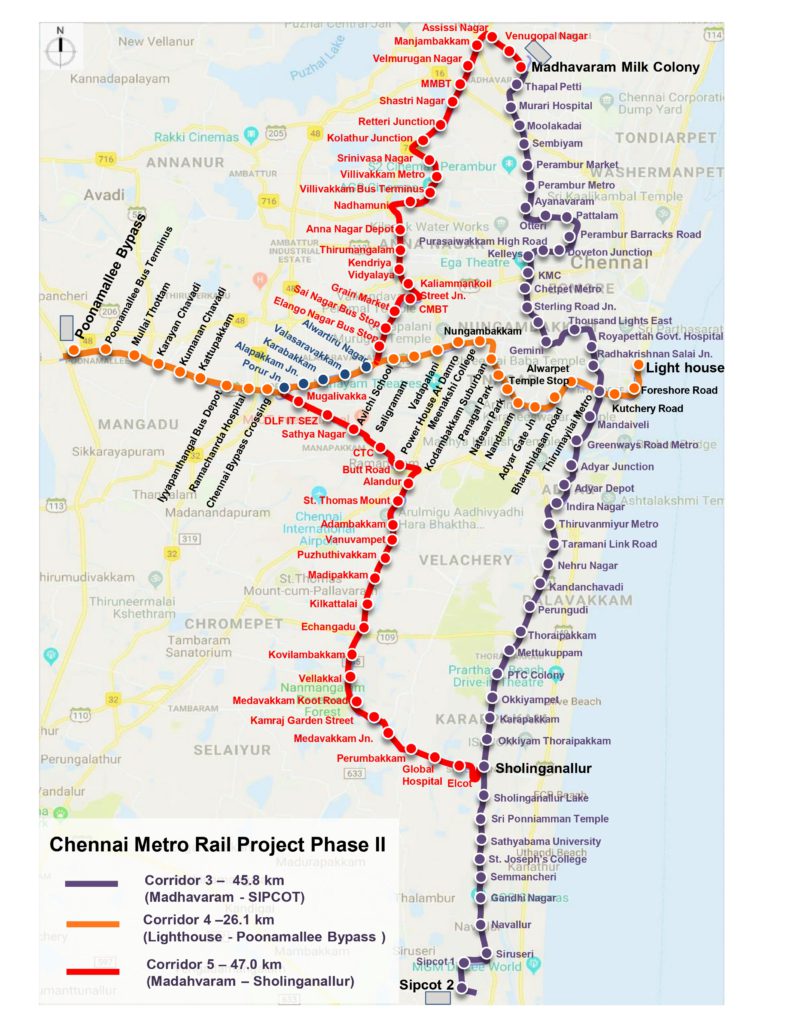
Chennai Metro Phase 2 Map
Non-Fare Revenue Strategy of Chennai Metro Rail
CMRL plans to generate non-fare revenue alongside fare revenue by integrating property development with metro stations at key locations, including Alandur, Alapakkam, Nandanam, Boat Club, and Wimco Nagar Depot.
The property development at Alapakkam will be connected to the Phase 2 station entry/exit via a Foot Over Bridge (FOB). At Nandanam, the property development will be integrated with the upcoming Phase 2 underground station. Alandur’s property development will connect to both Phase 1 and Phase 2 metro stations. Additionally, the Wimco Nagar Depot station will feature eight floors of property development above the existing metro building.
New Delhi (Metro Rail News): To streamline the safety of passengers the Indian Railways has taken a critical step by awarding a Rs 2,041.04 crore contract to Kernex Micro Systems (India) for the deployment of the Kavach System across the railway network.
TheContract Details:
The contract for the supply, installation, testing, and commissioning of 2,500 sets of onboard Kavach equipment (anti-collision system) was awarded by Chittaranjan Locomotive Works (CLW), a key manufacturing unit of Indian Railways situated in Chittaranjan, West Bengal.
Under the contract, Kernex Micro Systems is tasked with completing the installation and testing of the equipment within a 12-month period.
Kavach – An Initiative By Indian Railways to Strengthen Passenger Safety
Kavach is an Automatic Train Protection (ATP) system. The Research Designs & Standards Organisation (RDSO) developed this system in collaboration with Indian companies
In the beginning, this system was known as the Train Collision Avoidance System (TCAS), later in July 2020, the Ministry of Railways adopted Kavach as the national ATP system.
The Kavach system is engineered to prevent train collisions and enhance operational safety on Indian Railways. This system continuously monitors train speed and automatically applies brakes if the loco pilot fails to respond, thereby preventing potential collisions. The system also enhances safety during challenging weather conditions, such as fog and heavy rain, ensuring reliable train operations in adverse environments.
About Kernex Micro Systems
Since 1999, Kernex Microsystems has been involved in the development of railway safety systems, including anti-collision devices (ACDs) and other safety technologies for Indian Railways. Kernex Microsystems boasts a production capacity of 100 Kavach units per month, with the ability to scale up to 250 units per month as required.
Gurugram (Metro Rail News): Another major development has been waiting as eight firms have submitted for the General Consultant (GC) contract of Gurgaon Metro’s New Line spanning 28.5 km from HUDA Millennium City Centre to Cyber City.
The new line spanning 28.5 km will form a ring line connecting the Gurugram and old Gurugram through 27 stations.
In May 2024, Haryana Mass Rapid Transport Corporation Ltd. (HMRTC) floated tender for the General Consultant contract for Gurugram Metro’s 28.5 km New line.
Note: Some of the bidders may be in joint ventures with other partners.
Scope of Work
The appointed contractor will be providing their assistance to HMRTC regarding the design, supervision, safety, quality control and contract management. The contractor has been expected to stay on board for four years.
Additional Information:
In June 2023, The Indian Government’s Union Cabinet approved the project. The general consultant contract is a second crucial contract for Gurugram Metro. Before this, In July, SYSTRA was declared as the lowest bidder for the Detailed Design Consultant (DDC) contract.
Integration with Metro & RRTS
The new line will connect with Delhi Metro’s Yellow Line and Gurgaon’s Rapid Metro. It is also expected to feature interchanges with the 72 km Delhi–Dharuhera RRTS line at Cyber City and Hero Honda Chowk.
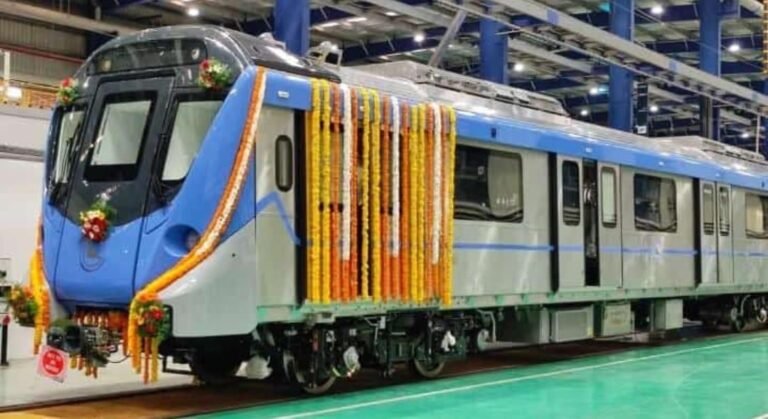
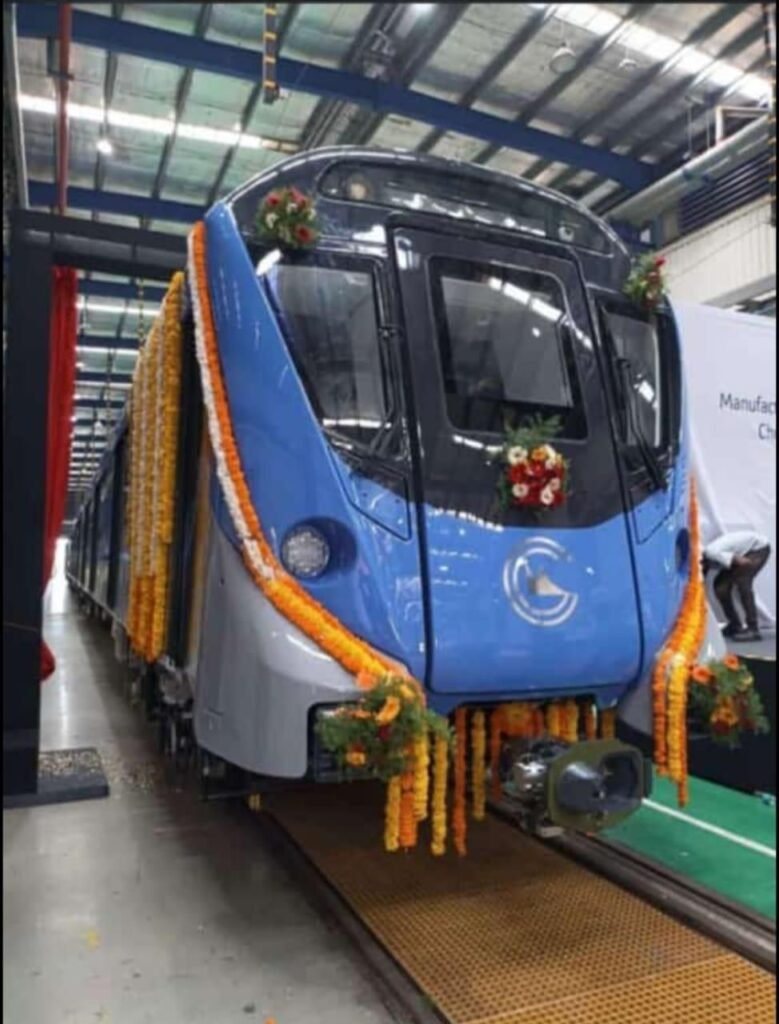
Chennai (Metro Rail News): A major development has been waiting for Chennai Metro as the CMRL is gearing up to initiate the trials of the first three-coach driverless train in December 2024. After performing all the tests CMRL will deploy these driverless trains on Line-4 which spans from Light House to Poonamallee Bypass through 28 stations (18 elevated & 10 underground) under Phase 2.
The train has been manufactured by Alstom at their manufacturing plant the Sri City, located in Andhra Pradesh. On October 17, the train arrived from Sri City and reached Poonamalle, the depot facility for Phase 2.
Key Features of Driverless Trains:
The train sets manufactured by Alstom are designed with the maximum speed of 90 kmph and will be able to serve driverless operations.
The train-sets will be operated in formations of DMC+TC+DMC
DMC = Driving Motor Car
TC = Trailer Car.
The train will be 67.8 meters long and be capable of accommodating approximately 1000 passengers (crush load conditions).
Chennai Metro Phase 2
Chennai Metro Phase 2 consists of 3 corridors spanning 116.1 km in total. In 2019, the Tamil Nadu Government approved the Chennai Metro Phase 2 at an estimated cost of Rs. 69,180 crore.
Line 3 ( Purple Line )
Madhavaram station– SIPCOT 2 station
45.4 km
Total no. of Stations: 49
Line 4 ( Orange Line )
Light House station – Poonamallee Bus Depot station
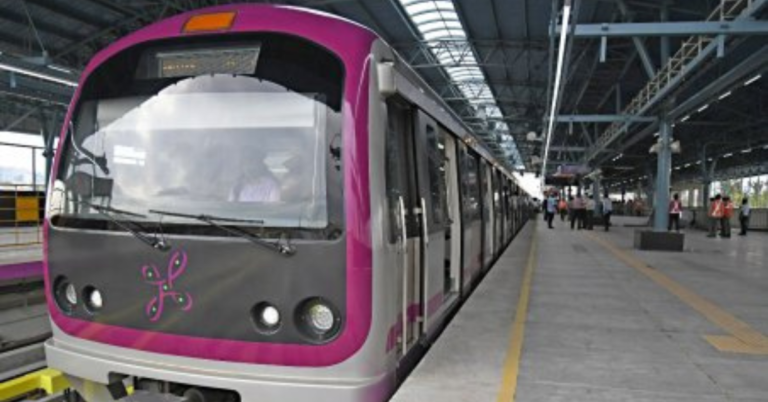
Bangalore (Metro Rail News): Phase 3A of Bangalore Metro (Namma Metro) gained momentum as the Karnataka Government cabinet approved the Detailed Project Report (DPR) of 36.59 Km long Phase 3A project with an estimated cost of Rs.28,405 Crores.
Rina Consulting prepared the Detailed Project Report (DPR) of the Bangalore Metro Phase 3A. The DPR report proposes a train maintenance and stabling depot at Sarjapur.
Bangalore Metro Phase 3A
The Bangalore Metro Phase 3A project executed by Bangalore Metro Rail Corporation Ltd. (BMRCL) will comprise one new corridor from Sarjapur to Hebbel with 28 stations out of which 17 stations will be elevated and 11 will be underground.
Stations Planned:
Sarjapur
Kada Agrahara Road
Sompura
Dommasandra
Muthanallur Cross
Kodathi Circle
Ambedkar Nagar
Carmelaram
Doddakanalli
Kaikondrahalli
Bellandur Gate
Ibbalur
Agara
Jakkasandra
Koramangala 3rd Block
Koramangala 2nd Block
Dairy Circle
Nimhans
Shantinagara
Town Hall
KR Circle
Basaveshwara Circle
Bengaluru Golf Course
Palace Guttahalli
Mekhri Circle
Veterinary College
Ganga Nagar
Hebbal.
The total length of the new metro will be 36.59 km out of which 22.14 km will be elevated while the remaining 14.45 km will be underground. The line will run underground between Veterinary College and Koramangala 3rd Block.
The line will connect the Carmeleram, Agara, Koramangala, Dairy Circle, Central College and Armane Nagar.
The 5 stations of this New corridor will provide interchange connectivity at:
Ibbalur (Blue Line)
Agara (Blue Line),
Circle (Pink Line),
KR Circle (Purple Line),
Hebbal (Blue Line & Orange Line)
Future Prospects:
The Detailed Project Report (DPR) of Bangalore Metro Phase 3A will now be submitted to the Union Government for review and approval by its various departments and the cabinet. Furthermore, BMRCL has been planning to appoint Detailed Design Consultants (DDCs) for Phase 3A.
Delhi (Metro Rail News): Delhi Metro Phase 4 advances as India’s Central Government’s Cabinet approved the Red Line extension from Rithala to Nathupur (Kundli) spanning 26.463 km at an estimated cost of Rs. 6,230 crore on 7 December. Currently, the 34.69 Km of the Red line between Rithala and Shaheed Sthal New Bus Adda is operational.
Delhi Metro Phase 4 Route Map
About the Red Line Extension From Rithala to Nathupur
Out of 26.463 km of the Red Line extension, 23.73 km of the line will lie in Delhi out of which the 22.75 km will be elevated with 19 stations in total. The remaining 2.73 km will lie in Haryana with 2 stations. This extension will establish metro connectivity between north-west Delhi and Haryana.
Additionally, DMRC has been planning to build a train maintenance depot between Sanoth and Bhorgarh village.
Stations planned on this extension:
Rohini Sector 25
Rohini Sector 26
Rohini Sector 31
Rohini Sector 32
Rohini Sector 36
Barwala
Rohini Sector 35
Rohini Sector 34
Bawana Industrial Area – 1 Sector 3,4
Bawana Industrial Area – 1 Sector 1,2
Bawana JJ Colony
Sanoth
New Sanoth
Depot Station
Bhorgarh village
Anaj Mandi Narela
Narela DDA Sports Complex
Narela
Narela Sector 5
Kundli
Nathupur
In 2019, Egis Rail SA – Egis India Consulting Engineers JV was awarded the contract of Detailed Design Consultants (DDC) under package DCDD-03. With this, the CEG Test House and Research Centre conducted the geotechnical investigations for this new corridor.
Additional Information:
With this approval, a total of 112.42 km of metro routes across 6 lines have been approved under Delhi Metro’s Phase 4. Furthermore, The Rithala – Narela – Nathupur (Kundli) Corridor will connect the Haryana – Delhi – Uttar Pradesh making the Red Line of Delhi Metro to become the first metro line to connect 3 different administrative regions.
Currently, DMRC operates its trains on a total of 12 metro lines which feature 392 km of network with 288 stations. Delhi Metro stands as the largest Metro network in India.
(Metro Rail News): Indian Railways infrastructure is set for another transformation as the Union Railway Minister Ashwini Vaishnaw recently announced the implementation of an Integrated Track Monitoring System (ITMS) across all railway zones.
The integration of the Integrated Track Monitoring System (ITMS) into Indian Railways will be a crucial step toward the modernisation of the Indian railways infrastructure ensuring safe operations.
Through advanced and modernised technology Ashwini Vaishnaw has been aiming to enhance the safety and efficiency of the Indian railways network promoting track inspection and maintenance.
The Integrated Track Monitoring System (ITMS) will provide Real-Time Data which will improve the working conditions and safety of the trackmen, making their job more efficient.
About Integrated Track Monitoring System (ITMS)
The Integrated Track Monitoring System (ITMS) is designed to monitor and record the different parameters in real-time while the train is running at a speed between 20 km/h and 200 km/h. Equipped with sensors, the system collects data on various track conditions including alignment, surface quality and structural integrity.
The evolution of trains has undergone massive changes, beginning in the 1550s with wooden wagonways in Germany, which evolved into iron rail tramways for transporting goods. The first steam locomotive, Richard Trevithick’s Puffing Devil, emerged in 1804, followed by George Stephenson’s Rocket in 1829, which reached speeds of 48 km/h (30 mph) and set standards for future locomotives. The establishment of the Liverpool and Manchester Railway in 1830 was the beginning of extensive railway networks, fueling economic growth in the 19th century. The transition to diesel and electric trains in the early 20th century improved operational efficiency, while Japan’s Shinkansen, introduced in 1964, pioneered high-speed rail travel.
Today, the integration of the Internet of Things (IoT) is transforming railways, creating smart trains and connected railway systems. These innovations enable real-time data exchange between trains, tracks, and control centres, enhancing operational efficiency, safety, and passenger experience.
This article will explore the potential of smart trains to transform mobility within the railway sector while creating a more connected ecosystem that enhances efficiency, safety, and passenger experience.
SMART Trains
Smart trains are developed through the integration of advanced embedded systems, onboard sensors, and communication modules that facilitate real-time data collection, transmission, and analysis. These sensors monitor critical train components, including wheel temperature, vibration levels, engine performance, and braking systems. The data collected is relayed to a central control centre, enabling continuous assessment and optimisation of operational parameters.
Smart Trains: Key Specifications and Features
Smart trains use advanced technologies that enhance safety, operational efficiency, and passenger experience. Below are the key specifications and features:
Key Specifications
Integrated Sensors:
Smart trains utilise modern sensor technologies to monitor both train compartments and track conditions. For instance, Self-Power Harvesting Sensors are deployed to assess wheel conditions and track integrity, transmitting alerts to control rooms when defects are detected.
Real-Time Monitoring:
Automatic Train Protection (ATP) systems continuously monitor train speeds in relation to allowable limits, which ensures compliance with safety regulations. Additionally, pantograph monitoring systems detect vibrations and capture video footage of any anomalies, further enhancing operational safety.
Passenger Information Systems:
Each smart coach is equipped with Passenger Information and Coaching Computing Units (PICCU), which deliver real-time updates on train locations, speeds, and next-station arrivals. This system enhances the passenger experience by ensuring travellers are well-informed throughout their journey.
Communication Technology:
The integration of 5G connectivity enables rapid data transmission between trains and control centres. This technology facilitates quicker emergency response times and enhances overall operational efficiency by synchronising previously fragmented information streams.
AI Integration:
Artificial Intelligence is employed for predictive maintenance through systems like the MiAIOT Train Protecting Monitoring System (MTPMS). This system can forecast equipment failures minutes before they occur, enabling proactive maintenance measures.
Case Study: In Taiwan, the MiAIOT Train Protecting Monitoring System (MTPMS) employs AI and 5G technology to provide real-time alerts to train drivers and control centres, which improves incident response times by up to 98%.
Safety Features:
Smart trains are equipped with AI-enabled CCTV cameras for enhanced security monitoring within coaches. These systems can detect suspicious activities and retain footage for up to 30 days for further analysis.
Environmental Considerations & monitoring:
Clean Diesel Engine Technology: SMART trains utilise EPA Tier 4 compliant diesel engines equipped with selective catalytic reduction (SCR) systems. These engines reduce nitrogen oxides (NOx) and particulate matter emissions, thereby optimizing fuel efficiency and adhering to stringent environmental standards.
Advanced sensors are employed to monitor environmental conditions within the train, including air conditioning performance and water levels, ensuring passenger comfort and optimal operational efficiency.
Emergency Communication:
Smart coaches feature a Talkback System that allows passengers to communicate directly with train staff in emergencies, thereby improving safety protocols and response times.
Benefits of Smart Trains
Improved Efficiency
Automated Systems: Smart trains employ automation for scheduling, tracking, and maintenance, resulting in more efficient operations and reduced delays.
Predictive Maintenance: Advanced analytics predict equipment failures before they occur, allowing for proactive maintenance and minimising downtime.
Enhanced Safety and Security
Positive Train Control (PTC): This technology helps prevent collisions and ensures trains operate within safe speed limits, significantly reducing accidents.
Real-Time Monitoring: Continuous monitoring of train components (like brakes and wheels) via onboard sensors allows for early detection of faults, reducing maintenance-related incidents.
Passenger Comfort and Experience
Real-Time Information Systems: Passengers receive updates on train schedules, delays, and next station arrivals, enhancing their travel experience.
Enhanced Amenities: Smart trains offer modern facilities, including Wi-Fi, spacious seating, and onboard services, improving overall passenger satisfaction.
Environmental Sustainability
Energy Efficiency: Smart trains use energy-efficient technologies, such as regenerative braking and clean diesel engines, reducing overall carbon emissions.
Reduced Congestion: By providing efficient rail alternatives, smart trains can help alleviate highway traffic congestion.
Economic Growth
Boost to Local Economies: Improved rail connectivity enhances trade, tourism, and local business, contributing to regional economic development.
Job Creation: Implementing smart trains increases job opportunities in technology, engineering, and service sectors.
Challenges of Smart Trains
Infrastructure Limitations
Ageing Rail Network: India’s existing rail infrastructure may require upgrades to support smart technologies, leading to high costs and extended timelines.
High Initial Investment
Capital Costs: Implementing smart technologies requires substantial initial investments in equipment, technology, and training.
Funding and Financial Viability: Securing funds and ensuring the financial sustainability of smart train projects can be challenging, especially in a price-sensitive market.
Technical Integration
Compatibility with Traditional Systems: Integrating new technologies with existing systems and processes can lead to technical challenges and operational disruptions.
Cybersecurity Risks: As trains become more connected, they face increased risks of cyberattacks, necessitating robust security measures to protect sensitive data.
Case Study: Smart Trains in India and Around the World
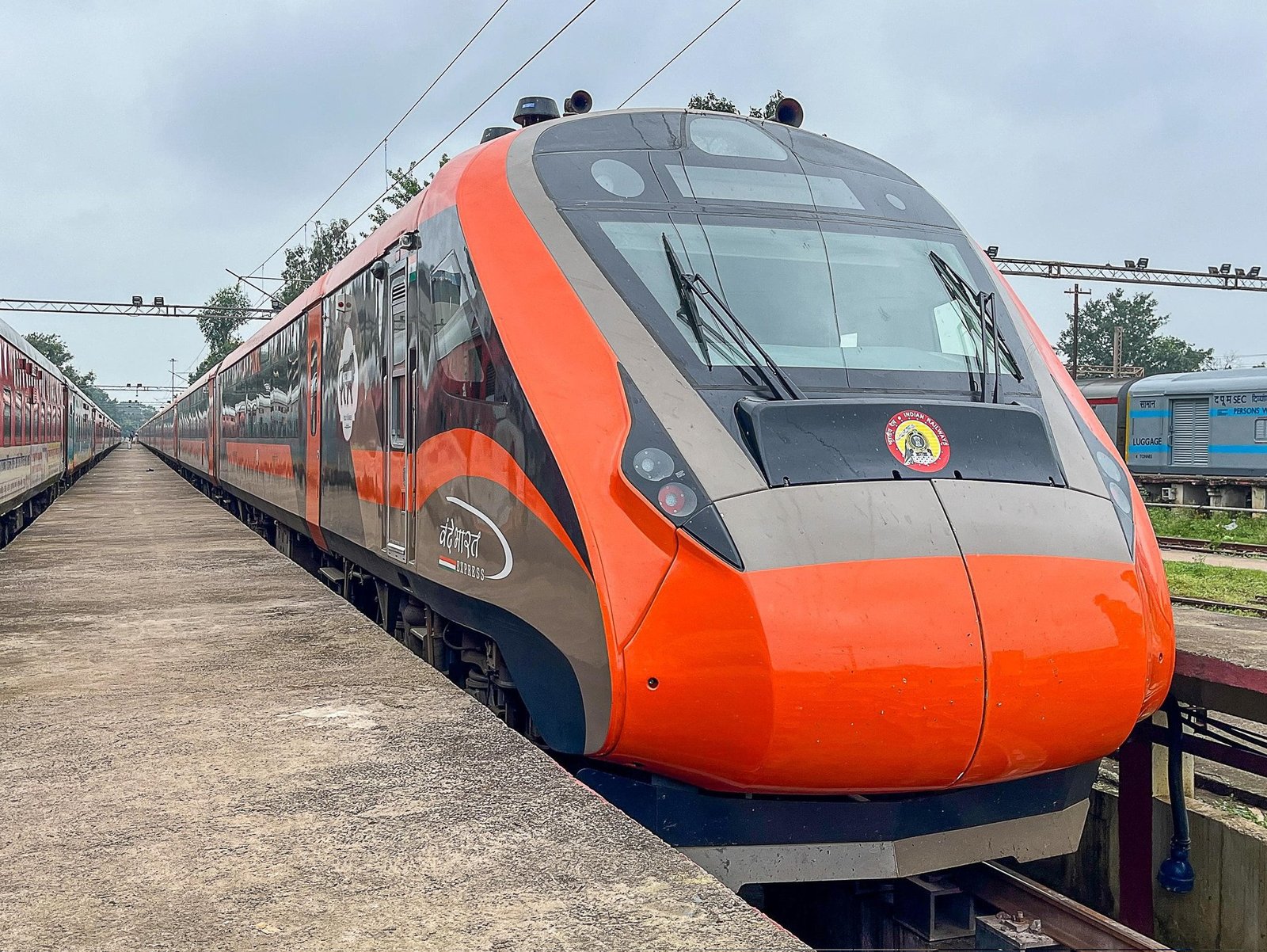
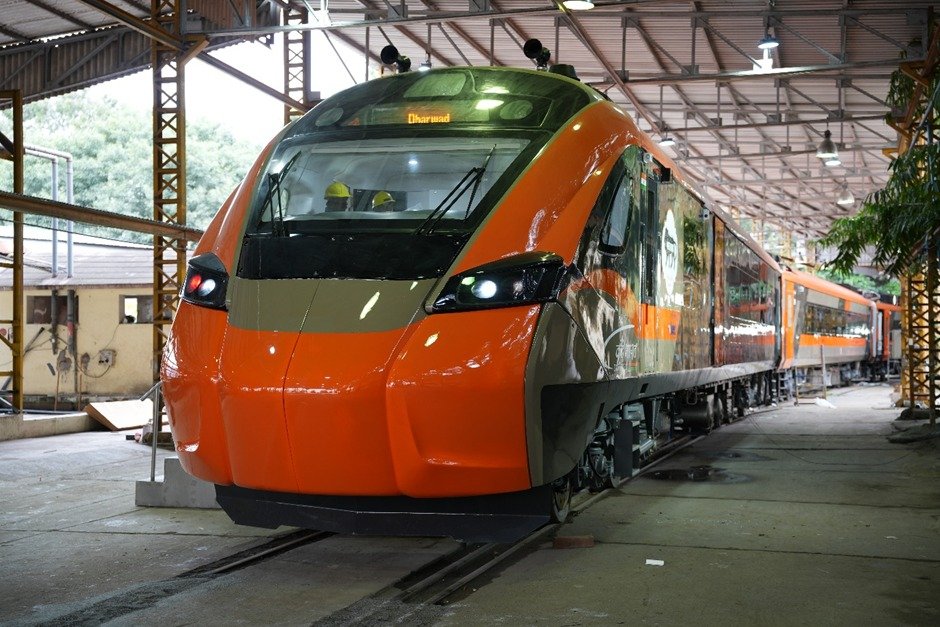
1. India: Vande Bharat Express (Train 18)
Overview: The Vande Bharat Express, also known as Train 18, is a semi-high-speed train introduced by Indian Railways in 2019.
Key Features:
Advanced Safety Systems:
Train Collision Avoidance System (TCAS): Automatically prevents collisions by monitoring speed and position.
Fire Detection and Alarm System (FDAS): Alerts crew and passengers in case of fire.
Real-Time Monitoring:
Onboard sensors track parameters such as wheel temperature and vibrations, sending alerts for preventive maintenance.
Passenger Comfort:
Ergonomically designed interiors with automatic doors and spacious seating.
Real-time updates via the Passenger Information System (PIS).
Energy Efficiency:
Regenerative Braking System: Recovers energy during braking.
Lightweight construction using aluminium.
2. Japan: Shinkansen (Bullet Train)
Overview: Japan’s Shinkansen, operational since 1964, is renowned for its punctuality and speed. It has set a global standard for high-speed rail.
Key Features:
Maglev Technology:
Some Shinkansen lines use magnetic levitation, which allows speeds exceeding 600 km/h (373 mph) with minimal friction.
Advanced Safety Systems:
Automatic Train Control (ATC): Monitors train speed and position
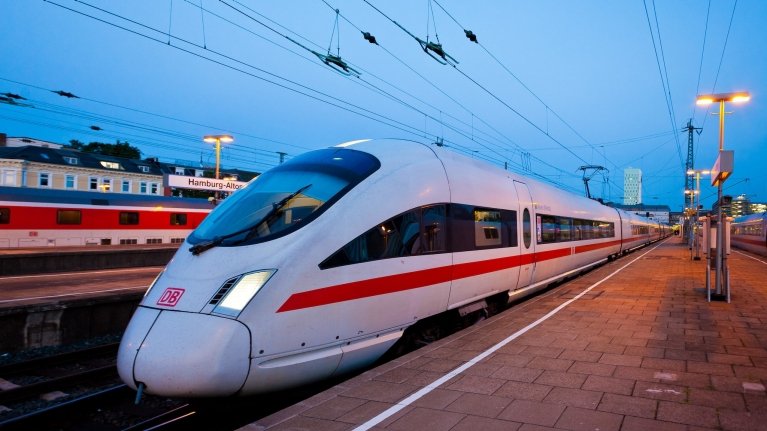
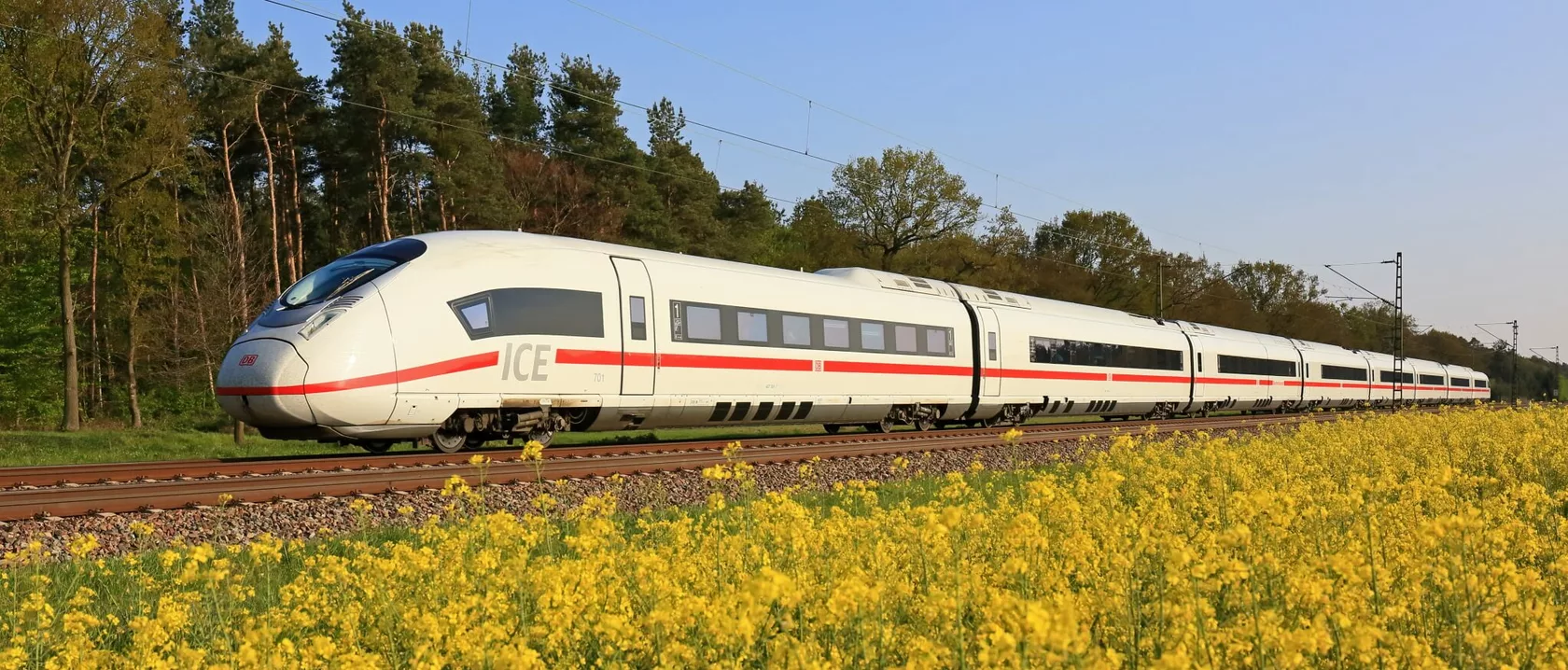
3. Germany: ICE (InterCity Express)
Overview: The ICE is Germany’s high-speed train service, connecting major cities at speeds of up to 300 km/h (186 mph).
Key Features:
Advanced Monitoring Systems:
Equipped with sensors that monitor train conditions in real-time, facilitating predictive maintenance.
Wi-Fi Connectivity:
Offers onboard internet services, enhancing passenger experience.
Energy Efficiency:
Utilises energy-efficient designs and regenerative braking systems.
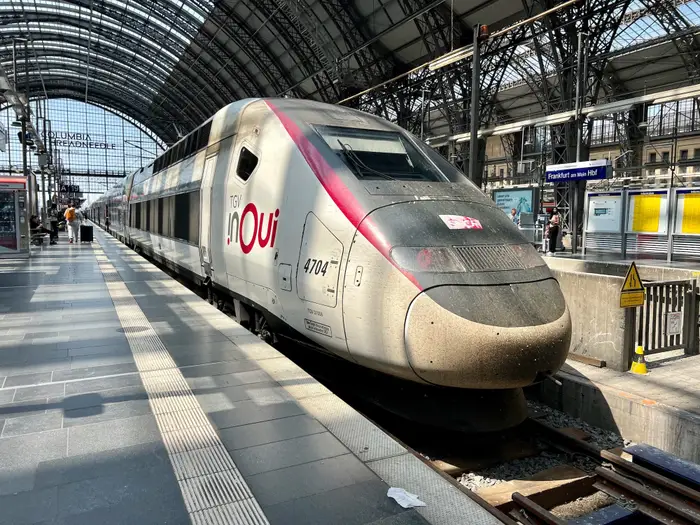
4. France: TGV (Train à Grande Vitesse)
Overview: The TGV is France’s high-speed train system, and it has been operational since 1981. It is known for its speed and efficiency and connects major cities across France and neighbouring countries.
Key Features:
High-Speed Technology:
The TGV, capable of speeds exceeding 300 km/h (186 mph), has established a high-speed rail network that is among the best in the world.
Smart Infrastructure:
Integrated with advanced signalling and communication systems for real-time train tracking and safety.
Future Trends
The integration of technologies such as Maglev (magnetic levitation) systems enables trains to achieve speeds exceeding 431 km/h with minimal friction. Additionally, concepts like Hyperloop are gearing up to transform rail transport by facilitating ultra-fast travel within low-pressure tubes.
IoT: Transforming Railways
IoT: The Internet of Things refers to a network of interconnected devices (sensors, actuators, controllers) that collect and share data over a cloud-based platform. In railways, IoT integrates various components, such as tracks, stations, trains, and signalling systems, for real-time monitoring and communication.
IoT Architecture in Railways:
Edge Devices and Sensors: These are the critical components of the IoT ecosystem. IoT devices (sensors, RFID tags, GPS trackers) collect data from various sources—track health, train speed, engine performance, braking force, and environmental conditions. Sensors are placed at critical locations, such as axles, brakes, and track joints, to gather data and send it to cloud platforms via local networks for processing and decision-making.
Network Connectivity: Connectivity is at the core of IoT systems in railways. Trains, stations, and control centres communicate using wireless networks such as 4G, 5G, LTE, and specialised railway communication systems (like GSM-R). High-speed 5G networks enable real-time data transfer, allowing instant feedback and remote control of train functions.
Data Collection & Analytics: Massive amounts of data are collected from sensors across the network and transmitted to cloud-based platforms where analytics engines powered by AI and machine learning algorithms analyse the data for actionable insights. For example, predictive maintenance algorithms can analyse temperature data from wheels and bearings to predict potential failures.
Technical Aspects of IoT:
Sensors: Devices like accelerometers, gyroscopes, strain gauges, and thermocouples are used to measure physical properties such as vibration, acceleration, and temperature. These sensors continuously monitor conditions like track integrity, wear on train components, and environmental factors (e.g., humidity affecting track expansion).
RFID (Radio-Frequency Identification): RFID tags are used for tracking inventory, including train parts and maintenance tools. They can also track passenger movement at stations, enabling a smooth flow of passengers through entry and exit points.
Communication Networks: The backbone of IoT systems in railways includes private, secure networks that enable low-latency, high-speed data transfer. 5G allows for ultra-reliable low-latency communication (URLLC), which is necessary for safety-critical applications like signalling and train control.
3. Key Applications of IoT in Railways
1. Predictive Maintenance:
Technical Insight: Predictive maintenance relies on condition monitoring sensors that continuously assess the health of various components, such as engines, wheels, and tracks. These sensors measure parameters like vibration, noise, and temperature. The data is then fed into an AI model that uses historical data to predict failures. This eliminates the need for scheduled inspections, allowing for repairs to be made only when necessary, saving on maintenance costs and avoiding unplanned downtime.
Ultrasonic Sensors: For example, ultrasonic sensors are installed on rails to detect invisible cracks or deformities to the naked eye, allowing for early detection of potential hazards before they lead to accidents.
Example: The German ICE 4 high-speed trains employ an IoT-based predictive maintenance system where sensors installed on the axles, brakes, and wheels collect data on vibrations and mechanical stress.
2. Smart Traffic Management:
Technical Insight: IoT-based traffic management uses Vehicle-to-Infrastructure (V2I) communication where the train’s position, speed, and other vital statistics are transmitted to the control center in real-time. Interlocking Systems connected to IoT allow for automatic switching of tracks based on real-time data, preventing conflicts between trains and optimising the use of the network. Advanced control systems can adapt to traffic conditions dynamically and re-route trains automatically if delays or blockages occur.
Digital Twin Technology: A digital twin is a real-time virtual model of the railway network that mirrors the physical system’s status. IoT sensors and edge computing feed real-time data into this model, allowing operators to simulate different traffic scenarios and optimize routing and scheduling decisions based on real-time data.
Example: The Japanese Shinkansen (bullet trains) use IoT-based control systems to monitor traffic across hundreds of kilometres. Sensors on the tracks and communication systems in trains transmit real-time data to the central control system, which automatically adjust train speeds or reroute them based on current traffic conditions, ensuring trains run punctually and safely.
3. Enhanced Passenger Experience:
Real-Time Information: Real-time passenger information systems utilise GPS, sensors, and wireless communication to provide live updates to passengers via apps and station screens. Passengers can get real-time data on train arrival and departure, delays, and seat availability. The system can also provide personalized updates through mobile apps based on passengers’ ticketing data.
Example: China’s Fuxing high-speed trains offer real-time train status updates via a mobile app that uses IoT sensors embedded in the train.
Smart Ticketing: IoT enables contactless payment solutions using RFID cards, mobile apps, or NFC-based payment systems. These solutions reduce congestion at ticket counters and gates. Additionally, IoT systems can track passenger flow through sensors at station entrances and exits, allowing operators to optimize train frequencies based on demand.
4. Energy Efficiency & Sustainability:
Technical Insight: IoT sensors installed on trains monitor energy consumption by tracking real-time power usage for propulsion, lighting, heating, ventilation, and air conditioning (HVAC) systems. Smart meters measure the electricity consumed at different points, providing insights into how energy can be saved. Regenerative braking systems, which allow trains to capture kinetic energy during braking and feed it back into the grid, are another IoT-based application that improves energy efficiency.
Example: The Siemens Velaro Novo trains are designed to be 30% more energy-efficient than their predecessors, thanks to IoT sensors that monitor and optimise the train’s energy use based on real-time data
Dynamic Power Management: By integrating IoT with energy management systems, power usage can be dynamically adjusted based on real-time conditions. For example, if the system detects that a train is traveling downhill, it can reduce the engine’s power output and engage regenerative braking, saving energy.
4. Safety and Security in Connected Railways
IoT-enabled Safety Systems:
Technical Insight: Advanced IoT-enabled systems like the Kavach system use GPS, onboard sensors, and wireless communication to monitor train locations, speed, and signal status. In case of potential collisions, the system sends automatic signals to slow down or stop the train. Similarly, IoT-enabled Positive Train Control (PTC) systems, used in Western rail networks, automatically enforce speed restrictions and prevent collisions by comparing real-time train data with pre-set safety parameters.
Obstacle Detection: IoT-based systems, including LiDAR and cameras installed on the front of the train, detect obstacles on the tracks, while V2I communication warns the driver of potential collisions. Autonomous emergency braking can be activated in case the driver fails to respond.
Cybersecurity Concerns:
Technical Insight: With IoT, cybersecurity becomes a critical concern. IoT systems in railways require robust end-to-end encryption (using protocols like SSL/TLS) to ensure that data from train sensors to the control center remains secure. Firewall systems, intrusion detection systems (IDS), and AI-powered threat detection systems can monitor for unusual network activity and isolate compromised components to prevent cyberattacks on critical railway infrastructure.
Access Control: Role-based access control (RBAC) systems ensure that only authorized personnel can access IoT systems and critical operational data. Using blockchain technology for maintaining secure and immutable logs of operations is another evolving approach to enhance security.
5. Case Studies of IoT Implementation in Railways
1. Indian Railways:
Kavach (Train Protection): This IoT-based signaling and control system in Indian Railways prevents train collisions by automatically controlling the train’s speed and movements based on real-time signals received from the control center. It also integrates GPS-based location tracking to continuously monitor train positions.
Asset Monitoring: Indian Railways has implemented IoT for monitoring track conditions and train components like axles, bearings, and brakes. Data is analyzed to predict potential failures and schedule maintenance, enhancing operational safety and efficiency.
2. European Railways:
Predictive Maintenance: In the UK, IoT systems monitor track integrity using accelerometers and gyroscopes, which measure track vibrations and forces. Algorithms predict when parts of the track are likely to fail, preventing derailments and reducing downtime.
ERTMS (European Rail Traffic Management System): The ERTMS eliminates trackside signals by introducing in-cab signaling, where trains receive movement instructions directly from the control center based on real-time data. This increases line capacity and allows trains to operate more closely together without sacrificing safety.
3. High-Speed Rail Systems (Japan/China):
Smart Traffic Management in China: China’s high-speed rail uses IoT to manage its massive network of trains, ensuring that hundreds of trains operate efficiently across long distances. Automated scheduling systems based on real-time demand and track conditions improve operational efficiency and minimize delays.
6. Benefits of IoT in Railways
Operational Efficiency:
IoT reduces human intervention by automating scheduling, signaling, and maintenance, which cuts down on delays and enhances train punctuality.
Cost Savings:
IoT lowers the costs associated with unscheduled repairs and downtime by reducing breakdowns and enabling predictive maintenance.
Passenger Satisfaction:
Real-time updates, improved services (like Wi-Fi), and smart ticketing systems lead to smoother journeys and increased satisfaction.
7. Challenges in IoT Adoption in Railways
High Investment:
Implementing IoT infrastructure involves the cost of sensors, communication networks, and backend data analytics systems.
Integration with existing Systems:
Indian rail systems still use legacy infrastructure that may not be compatible with IoT solutions. Upgrading or integrating older systems requires time and resources.
Data Management and Security:
Managing large volumes of data generated by IoT devices is challenging. Storage, analysis, and ensuring data integrity are major technical hurdles. Data Encryption and secure access control are vital to protect sensitive operational and passenger data from cyber threats.
8. Future of IoT in Railways
IoT is setting up the ground for autonomous trains where AI-driven systems handle driving, monitoring, and safety operations without human intervention.
AI and Machine Learning will be integral to advanced predictive maintenance, enabling rail operators to forecast component failures months in advance with greater accuracy.
Conclusion
The advancement of smart trains outlines a meaningful enhancement in operational efficiency, safety, and passenger experience within the railway industry. The incorporation of technologies such as Artificial Intelligence (AI), the Internet of Things (IoT), and 5G connectivity is creating a more responsive railway ecosystem. Smart coaches in Indian Railways, equipped with sensors for real-time diagnostics and passenger information systems, demonstrate practical implementations of these developments. While challenges such as the higher costs of implementing these technologies and integration with existing systems persist, advancements like Maglev and Hyperloop hold the potential to further enhance rail travel by offering faster and more efficient transportation alternatives.
Andhra Pradesh (Metro Rail News): On 2nd December, the state government showed the green flag to phase 1 of the Visakhapatnam and Vijayawada Metro Rail Projects.
About Visakhapatnam Phase 1 Metro Rail Project:
CORRIDORS
Length
Stations
Steel Plant Gate- Kommadi Junction
34.40 km
18
Gurudwara – Old Post Office
5.07 km
6
Thatichetlapalem – ChinaA Waltair
6.75 km
7
Total length & Stations
46.23 km
31
Total Cost
₹11,498 crore
About Vijayawada Metro Rail Project:
Corridors
Length
Stations
Gannavaram – Pandit Nehru Bus Station (PNBS)
25.95 km
22
PNBS – Penamaluru
12.45 km
11
Total length and stations
38.40 km
33
Total cost
₹ 11,009 crore
Future Aspects:
Phase 2 of Visakhapatnam metro rail project includes a fourth corridor namely Kommadi to Bhogapuram which will be developed after Bhogapuram Airport becomes operational.
Bhubaneswar, the capital city of Odisha, is known for its rich cultural heritage, modern infrastructure, and rapid development. Its history dates back over 2,000 years, originally known as “Tosali,” the capital of ancient Kalinga. Designed by German architect Otto Königsberger in 1946, Bhubaneswar is one of India’s first planned cities.
Bhubaneswar has emerged as a hub for IT, education, and healthcare. Its economy is primarily driven by the tertiary sector, which includes trade, commerce, and tourism. Establishments like “Infocity” have attracted IT companies, making Bhubaneswar an emerging tech hub. The city hosts numerous educational institutions and healthcare facilities sustaining both local and neighbouring states.
Bhubaneswar, with a population of approximately 1,257,000, is experiencing an annual growth rate of 2.2%, leading to a projected population of 1,541,000 in the near future. To address the demands of this growing urbanisation, the city recognised the need for an efficient transportation system. This requirement led to the conception of the Bhubaneswar Metro Project, aimed at enhancing the city’s transport infrastructure and efficiently accommodating the increasing population.
Bhubaneswar Metro: From Conception to Reality
27 July 2010: The Odisha State Transport Department requested the Delhi Metro Rail Corporation (DMRC) to survey the possibility of a metro rail connecting Bhubaneswar and Cuttack.
8 January 2013: E. Sreedharan, Principal Advisor of DMRC, stated that a metro rail system was unsuitable for Bhubaneswar due to the city’s population being below 2 million.
9 January 2013: Engineering Projects India Ltd. proposed a monorail project between Bhubaneswar and Cuttack to the state government.
23 August 2014: The Odisha state government signed a contract with Balaji Railroad Systems Ltd. (BARSYL) to prepare a Detailed Project Report (DPR) for a 30 km Mass Rapid Transit System (MRTS) between Bhubaneswar and Cuttack. BARSYL was allotted ₹2.52 crore for the project, to be submitted in ten months.
January 2018: Odisha Chief Minister (CM) Naveen Patnaik demanded metro rail connectivity between Cuttack and Bhubaneswar.
June 2019: The Governor of Odisha stated that the government would explore metro train connectivity between Cuttack and Bhubaneswar.
April 2023: Odisha CM Naveen Patnaik approved the metro train proposal connecting Cuttack, Bhubaneswar, Khordha, and Puri. The CM directed the Housing and Urban Development Department to expedite the DPR preparation, with the state government funding the entire project.
August 2023: Delhi Metro Rail Corporation (DMRC) was tasked with preparing the DPR for the metro project.
October 2023: Odisha CM Naveen Patnaik approved the DPR for the metro project, with a total project cost of ₹ 6255.94 Crore.
November 2023: Delhi Metro Rail Corporation (DMRC) was appointed as the consultant for the Bhubaneswar Metro project.
Foundation Stone for Bhubaneswar Metro
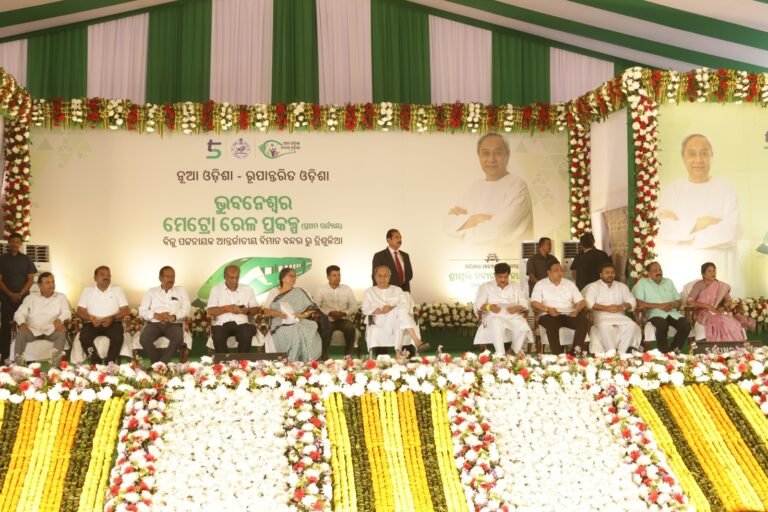
The former CM of Odisha, Mr Naveen Patnaik, laid the foundation stone for the Bhubaneswar Metro project on 1 January 2024.
Financing Mechanism: The Bhubaneswar will cost about ₹ 6255.94 Crore. The project will solely be funded by the Odisha Government.
Deadline: 48 Months
Phase 1
Phase 1 of the Bhubaneswar Metro features an elevated corridor covering a total distance of approximately 26.024 km, connecting Biju Patnaik International Airport in Bhubaneswar to Trisulia in Cuttack through 20 stations.
Depot: Phulapokhari Depot
Stations: Biju Patnaik International Airport, Capital Hospital, Bapuji Nagar, Bhubaneswar Railway Station, Ram Mandir Square, Vani Vihar, Acharya Vihar, Jaydev Vihar, Xavier Square, Rail Sadan, District Centre, Damana Square, Patia Square, KIIT Square, Nandan Vihar, Raghunathpur, Nandan Kanan Zoological Park, Barang, Phulapokhari and Trisulia Square
Key Specification Of Bhubaneswar Metro
Rolling Stock Composition
3 Coach Train Set
Carrying Capacity of Each Train Set:
764 Persons
Speed and Track:
Maximum speed: 80 Km/h Average speed: 34 Km/h Track Gauge: Standard Gauge Track measuring 1435 mm
Electrification:
Bhubaneswar Metro will be powered by 750V DC Third Rail
Signalling:
Continuous Automatic Train Control System (CATC)
Estimated Cost:
₹ 6255.94 Crore.
Bhubaneswar Metro Project Timeline
1 April 2023
The project was officially announced by Odisha Chief Minister Naveen Patnaik.
26 April 2023
DMRC was officially appointed to prepare the DPR for the project
July 2023:
DMRC initiated soil testing for Bhubaneswar Metro.
16 August 2023:
DMRC submitted the complete DPR to the Bhubaneswar Metro Rail Corporation ( BMRCL).
1 January 2024
The foundation stone for Phase 1 of the Bhubaneswar Metro was laid at Trisulia Square.
Contractor’s list:
Contractor name
Contract detail
Ranjit Buildcon Ltd.
BBC-03: design and construction of an elevated viaduct and 6 stations from Capital Hospital to Acharya Vihar Square
Ranjit Buildcon Ltd.
BBC-04:designing and constructing the elevated viaduct and 7 stations between Jaydev Vihar Square and KIIT Square.
MIA Construction Pvt. Ltd.
BBC-02:Construction of Phulapokhari Depot’s Cum Workshop, OCC Buildings including Plumbing, Drainage, External Development Works ETC.
Ceigall India Ltd. (CIL)
BBC-05: design and construction of the Elevated Viaduct and 6 from Nandan Vihar to Trisulia Square, excluding architectural finishing
Advantages of Bhubaneswar Metro
1. Reduced Traffic Congestion: Bhubaneswar City is witnessing rapid urbanisation, which is why the city is showing growing population trends. The introduction of the metro network will minimise road congestion and reduce the city’s residents’ dependence on private vehicles while ensuring a more convenient and safe mode of transport for the city’s residents.
2. Enhanced Connectivity: Bhubaneswar is emerging as a major hub for economic and educational activities. The strategically planned metro system will connect prominent places with residential areas, which will result in enhanced accessibility for Bhubaneshwar residents to commute to work and educational institutions much more conveniently.
3. Economic growth: The construction and operation phase of the Metro system will generate employment in the city, leading to a rise in its economic growth rate. This will attract more businesses to the city around metro stations, encouraging local economies.
4. Integration with other modes of transport: The project will also provide connectivity to the other modes of transport. This integration will enhance the convenience for commuters, making the metro a more attractive option for daily travel. Effective multimodal connectivity is expected to boost ridership and support the city’s overall transportation network.
Challenges in Bhubaneswar Metro
1. Ridership Concerns: Bhubaneswar City’s smaller population compared to larger metropolitan areas raises concerns for the sustainability of the project with such substantial investments. Many metro systems in India are failing to meet their ridership projection. For instance, cities like Lucknow and Jaipur have reported ridership at only 8.6% and 7.6% of their projections, respectively.
According to a report published by IIT Delhi on 4 December 2023, Delhi Metro achieved only 47% of its projected ridership. This generates a concern regarding the ridership level and long-term sustainability of the Bhubaneswar metro.
2. Financial constraints: The Odisha government has committed to funding the entire cost of the project, but ensuring financial sustainability during the project’s span remains a concern. For example, Chennai Metro reported a net loss of ₹714 crore against an income of ₹183 crore, while Bengaluru faced losses amounting to ₹498 crore on a revenue of ₹536 crore. Securing adequate funding and managing the budget effectively will be crucial for a successful execution.
3. Land Acquisition: The Bhubaneswar Metro’s route will be entirely elevated. Securing land for the construction can be a major challenge, further delaying the project and increasing its costs.
4. Affordability: Bhubaneswar is considered sensitive in terms of socio-economic factors. Ensuring that metro fares remain affordable to residents will be essential for encouraging a modal shift from private vehicles to public transport
Conclusion:
The Bhubaneswar Metro Project represents a critical step in addressing the city’s growing urbanisation and transportation needs. With a focus on enhancing connectivity, reducing congestion, and strengthening economic growth, the project promises to reshape Bhubaneswar’s infrastructure. However, challenges such as ridership concerns, financial sustainability, land acquisition, and fare affordability must be carefully managed.
The success of the metro system will depend on overcoming these hurdles while ensuring efficient integration with other modes of transport. If implemented effectively, the Bhubaneswar Metro could streamline the city’s transit landscape and quality of life for its residents.