

Lucknow Metro | LMRC to start trial run of first metro train on first day of December 2016.

Lucknow: Today Lucknow Metro Rail Corporation (LMRC) has announced the date of first trial run of its first train.With the handing off keys of the first Metro train to Shri Yasar Shah, Hon’ble Cabinet Minister, Government of Uttar Pradesh, by Shri Kumar Keshav, Managing Director, Lucknow Metro, LMRC is now all set to start the commissioning of the trial runs of its first Metro train set on 1st December, 2016.Lucknow Metro’s Transport Nagar Depot is already well prepared to receive the first Metro train set for testing and starting the trial runs inside the depot on 1st December, 2016. Yesterday, this train set was inspected by ShriYasar Shah, Hon’ble Cabinet Minister, Govt. of U.P.,in the presence of Shr iAlok Ranjan, Chief Advisor, Hon’ble Chief Minister, Shri Rahul Bhatnagar, Chief Secretary, Govt. of UP & Shri Sadakant, Principal Secretary, Department of Housing, Govt of UP, at Sri City, near Chennai – the manufacturing unit of M/s ALSTOM Transport India Ltd.On the occasion, Shri Kumar Keshav, Managing Director, said “I am extremely happy on this achievement and I thank the LMRC Team for their dedicated and sincere efforts to make this happen.” “It was, nevertheless, an easy task to achieve the manufacturing of Rolling Stock (Metro Train) in such a stiff target. Yet, we all were determined to achieve this anyhow,” he added.For the last six months, Shri Kumar Keshav along with ShriMahendra Kumar, Director (Rolling Stock & Systems), LMRC, and other top officials have been visiting the manufacturing facility of M/s Alstom at their Sri City plant near Chennai to ensure that the manufacturing of Metro train is done as per the design and according to the pre-defined time schedule.The Managing Director used to visit, inspect and review the manufacturing of the coaches on a regular basis at an interval of almost 20 days. He kept pressing the contractor for an early supply of the first Metro train.It is only because of his sustained efforts that Lucknow Metro’s Rolling Stock (Metro Train) is being dispatched within the contracted period of 65 weeks from the award of the ccontract which is one of shortest known period for supply of train world over.The salient design safety featuresof the Metro trains are proven design, crashworthiness, adequate redundancy in the system, use of fire retardant material, fire smoke detection & protection, safe passenger evacuation in emergency and the anti-climbing features of buffers.The passenger safety features includes emergency communication facilities including talkback facility for passenger for talking to train driver directly, CCTV images inside trains to be displayed to Train Driver as well as the Centralized Security Control Room.On 2nd September, 2015,Lucknow Metro had awarded the contract for supply, testing &commissioning of 80 cars for 20 trains of four car each along with train control & signaling system for Lucknow Metro Phase-1A project to French company, a consortium of ALSTOM Transport India Ltd, Bangalore & ALSTOM Transport SA, France at a cost of Rs.1069.81 crores.Source//LMRC Press release
Delhi Metro | DMRC plans to hike metro station’s parking charges

New Delhi: Fares of Delhi Metro’s parking lots will be hiked soon.
buy propecia online gaetzpharmacy.com/propecia.html no prescription
With non-Metro commuters reportedly occupying most of the parking space at stations, the Delhi Metro Rail Corporation (DMRC) is planning to provide parking incentives to its smart card users.About 74 of the 96 parking lots at Metro stations remain completely packed. But, this high rate of occupancy is no good news for the DMRC as only about 15 of these facilities see a 100% usage by Metro commuters.In a bid to ward off non-Metro commuters from using these spaces, the Delhi Metro is going to revise its parking fares which is nominal compared to other agencies. “We are now thinking of changing our policy to make it at par with local agencies like the municipal corporations. The fares will be increased soon,” DMRC managing director Mangu Singh said to media.He said that the work on smart card entry to parking facilities has been expedited. “Metro smart card users will get a benefit for parking. The modalities are being worked out,” Singh said.
buy propecia online gaetzpharmacy.com/propecia.html no prescription
With non-Metro commuters reportedly occupying most of the parking space at stations, the Delhi Metro Rail Corporation (DMRC) is planning to provide parking incentives to its smart card users.About 74 of the 96 parking lots at Metro stations remain completely packed. But, this high rate of occupancy is no good news for the DMRC as only about 15 of these facilities see a 100% usage by Metro commuters.In a bid to ward off non-Metro commuters from using these spaces, the Delhi Metro is going to revise its parking fares which is nominal compared to other agencies. “We are now thinking of changing our policy to make it at par with local agencies like the municipal corporations. The fares will be increased soon,” DMRC managing director Mangu Singh said to media.He said that the work on smart card entry to parking facilities has been expedited. “Metro smart card users will get a benefit for parking. The modalities are being worked out,” Singh said.
Delhi Metro | Japan government agency JICA keen to fund DMRC’s phase IV project

New Delhi: JICA is keen to extend its association with the Delhi Metro Rail Corporation (DMRC) beyond the phase III, a senior official of the agency said.New Delhi: The Chief Representative of Japan International Cooperation Agency (JICA) India office Takema Sakamoto said there is a need for huge capacity expansion in public transportation and the agency is likely to discuss further association with the Delhi Metro.“For public transportation, we need huge capacity and that is why we are now discussing for the further extension for the Delhi Metro even after the phase III. The DMRC is likely to request for support for the phase IV very soon,” Sakamoto told PTI.JICA has been supporting DMRC’s metro project since phase I construction in 1997.
buy cialis daily online https://gilbertroaddental.com/wp-content/themes/twentyseventeen/inc/en/cialis-daily.html no prescription
“We are now supporting the construction of the phase III of the DMRC and it is targeting completion in 2016 or next year,” he added.Source//PTI
buy cialis daily online https://gilbertroaddental.com/wp-content/themes/twentyseventeen/inc/en/cialis-daily.html no prescription
“We are now supporting the construction of the phase III of the DMRC and it is targeting completion in 2016 or next year,” he added.Source//PTI
Delhi Metro | Two metro trains collide in Kalindikunj depot (Line-8), no casualty reported

New Delhi: On 4th November 2016, two metro train collided in Delhi Metro Rail Corporation‘s new metro depot of Line-8 (Magenta Line). This incident has raised some serious concerns related the security of commuters as Delhi Metro has centralised automatic train control (CATC) comprising automatic train operation (ATO), automatic train protection (ATP) and automatic train signalling (ATS) systems.“An incident occurred yesterday at 3:45 pm at Kalindi Kunj Depot of Line-8, in which a train, which was under complete control of Hyundai ROTEM for commissioning was moved perhaps inadvertently in reverse direction by the ROTEM staff,” a Delhi Metro official said.“Responsibility for the incident is of ROTEM and prima facie it appears to be negligence on part of the ROTEM staff. However detailed inquiry is being conducted by ROTEM to look into this lapse and for suitable action,” he added.
buy cialis soft online https://www.facebeautyscience.com/wp-content/themes/twentyseventeen/inc/en/cialis-soft.html no prescription
The Delhi Metro consists of six lines, with a total length of 190km with 142 stations including 35 underground stations.
 This incident has raised some serious concerns related the security of commuters as Delhi Metro has centralised automatic train control (CATC) comprising automatic train operation (ATO), automatic train protection (ATP) and automatic train signalling (ATS) systems.“An incident occurred yesterday at 3:45 pm at Kalindi Kunj Depot of Line-8, in which a train, which was under complete control of Hyundai ROTEM for commissioning was moved perhaps inadvertently in reverse direction by the ROTEM staff,” a Delhi Metro official said.“Responsibility for the incident is of ROTEM and prima facie it appears to be negligence on part of the ROTEM staff. However detailed inquiry is being conducted by ROTEM to look into this lapse and for suitable action,” he added.
buy cialis soft online https://www.facebeautyscience.com/wp-content/themes/twentyseventeen/inc/en/cialis-soft.html no prescription
The Delhi Metro consists of six lines, with a total length of 190km with 142 stations including 35 underground stations.
Nagpur Metro | Bombay HC rejects BEML’s plea against Nagpur Metro bid

Nagpur: The Nagpur bench of Bombay High Court, on Tuesday, dismissed Bharat Earth Movers Limited’s plea against Nagpur Metro Rail Corporation Limited (NMRCL) which had rejected its technical bid. The court observed that petitioner’s joint partner Skoda Electric lacked the necessary experience required for bagging the tender for manufacturing metro coaches.
On January 25, the NMRCL invited tenders for design, manufacture, supply, testing and commissioning of passenger rolling stock (Electrical Multiple Units) and training of personnel.
buy vidalista online https://lasernailtherapy.com/wp-content/themes/twentytwentytwo/inc/patterns/en/vidalista.html no prescription
The requirements were — bidder should have at least 10 years experience of designing and manufacturing metro cars and established its performance and reliability for five years in minimum aggregate of 50 cars.
buy vidalista online https://lasernailtherapy.com/wp-content/themes/twentytwentytwo/inc/patterns/en/vidalista.html no prescription
The requirements were — bidder should have at least 10 years experience of designing and manufacturing metro cars and established its performance and reliability for five years in minimum aggregate of 50 cars.
The final condition was that the bidder should have successfully undertaken five different contracts in metros, Light Rail Transit (LRT), and suburban and high-speed railways, of at least one country outside its origin.
The NMRCL raised some queries seeking qualification on certain points, including supply of 363 cars for Tram and not for LRT.
Source//TOI
Noida Metro | DMRC breaks its own record of installing U Girder on Noida-Gr. Noida line

Noida: Delhi Metro Rail Corporation (DMRC) has launched a record 218 U-girders which converts to approximately 3 kms of twin Metro elevated viaduct in the month of October for the Noida-Greater Noida Metro track. Moving at a super-fast pace, so far DMRC has already put into place 15 km of the viaduct out of the 29.7 km of the corridor.According to officials, DMRC launched a record 200 U-girders in the month of May this year. These girders directly bear the load of Metro tracks and the use of U-shaped ones helps speed up construction work. “However, we have now beaten our own record and put into place 218 girders this month,” said Anuj Dayal, Executive Director, Corporate Communications, DMRC.“Also, in one section of the under-construction line, which has been divided into three sections, we have launched 120 girders this month. This is the highest so far,” he explained. “This is the maximum number of U-girders ever launched in any Metro corridor in India within a month. Till now, DMRC had achieved a maximum of 110 U-girders in a month on the Faridabad corridor,” he added.
“The latest feat to have been achieved by DMRC will significantly expedite the progress of construction on the corridor. “We have been able to accomplish this phenomenal task in close coordination with Pramit Garg, Project Director, his team of engineers and Noida Metro Rail Corporation (NMRC),” Dayal said.
Having completed the first concourse level work of the station at sector 71 Metro station, DMRC officials have also lit it up on the occasion of Diwali. By the end of March next year, this station will be complete and by August 2017 all the 21 stations will be in place, DMRC officials said.
The work of Noida-Greater Noida corridor is being executed by DMRC on behalf of NMRC. The civil works on this corridor consist of 29.7 Kms of viaduct and 21 stations. Fifteen kilometres of viaduct has been completed already on this corridor since the award of first contract for civil works. The viaduct on the Noida-Greater Noida section is being constructed by specialized technique of pre-cast pier caps and precast U-girders. So far about 60% of civil work has been completed on the corridor.
buy light pack online https://healthcoachmichelle.com/wp-content/themes/twentytwentyone/inc/en/light-pack.html no prescription
As per officials all civil work for the track will be completed by June 2017. The Metro, which is estimated to cost Rs 5,533 crore, is expected to roll by December 2017.
buy light pack online https://healthcoachmichelle.com/wp-content/themes/twentytwentyone/inc/en/light-pack.html no prescription
As per officials all civil work for the track will be completed by June 2017. The Metro, which is estimated to cost Rs 5,533 crore, is expected to roll by December 2017.
Mumbai Metro | State Govt. approves 118km Metro routes to connect Mumbai suburbs

Mumbai: The Maharashtra Urban Development (UD) Department has approved 118km of Metro lines, which will connect various parts of the Mumbai suburbs. The move is aimed to ease traffic congestion.According to the department notification, the government has approved following lines: Dahisar-DN Nagar (27km), Bandra-Mankhurd (13km), Wadala-Ghatkopar-Thane-Kasarwadavali (22km), Wadala-RA Kidwai Marg (8km), Dahisar (E)-Andheri (E) (18km), Andheri (E)-Bandra (E) (9km) and Jogeshwari-Vikroli Link road (11km).The Mumbai Metropolitan Region Development Authority (MMRDA) will undertake this work, while the Delhi Metro Rail Corporation (DMRC) will work as an advisory for the finalised Metro routes. The estimated cost for the Metro-II route (Dahisar-Charkop-Bandra-Mankhurd) is Rs10,986 crore, while Metro-IV route (Wadala-Ghatkopar-Mulund-Thane-Kasarvadavli) will cost an estimated cost Rs14,549 crore.The Government has also approved the decision of raising loans for these approved Metro lines from the Asian Development Bank (ADB).
buy temovate online https://calibudsman.com/wp-content/themes/twentytwentytwo/inc/patterns/en/temovate.html no prescription
In addition, MMRDA can also take loans from the World Bank or any other internationally approved bank. The Government will not take any responsibility of repaying the loan.Moreover, the Government and semi-Government agencies will have to rent the land under them to the MMRDA for development of the Metro lines, at a reasonable rate. If it requires to acquire the land permanently, the acquisition will be done as per the new Land Acquisition Act, 2013.A senior UD official said the Maharashtra Government has declared Metro an important and urgent project, so that various approvals required from the Central and Western Railways could be sought on an urgent basis.“The Metro project has to be completed within the stipulated time. The State Government will provide power for the project at a reasonable rate. The Government has also decided to have an integrated transport system,” added the official, requesting anonymity.He further said that during the development of these Metro lines, innovative traffic diversion will be done. “People should not suffer because of the project. We will sit with the traffic department officials and do innovative traffic diversion, so that the Metro work can carry on smoothly,” he said.Source//DNA.
buy temovate online https://calibudsman.com/wp-content/themes/twentytwentytwo/inc/patterns/en/temovate.html no prescription
In addition, MMRDA can also take loans from the World Bank or any other internationally approved bank. The Government will not take any responsibility of repaying the loan.Moreover, the Government and semi-Government agencies will have to rent the land under them to the MMRDA for development of the Metro lines, at a reasonable rate. If it requires to acquire the land permanently, the acquisition will be done as per the new Land Acquisition Act, 2013.A senior UD official said the Maharashtra Government has declared Metro an important and urgent project, so that various approvals required from the Central and Western Railways could be sought on an urgent basis.“The Metro project has to be completed within the stipulated time. The State Government will provide power for the project at a reasonable rate. The Government has also decided to have an integrated transport system,” added the official, requesting anonymity.He further said that during the development of these Metro lines, innovative traffic diversion will be done. “People should not suffer because of the project. We will sit with the traffic department officials and do innovative traffic diversion, so that the Metro work can carry on smoothly,” he said.Source//DNA.
Hyderabad Metro | HMRL to set 17 police stations along its metro stations

Hyderabad: The Hyderabad Metro Rail Limited is going to set up Seventeen police stations with the latest gadgets and equipment at Hyderabad Metro Rail stations and 48 outposts along the Metro corridor to ensure the security of passengers and the project.Five A category police stations will be set up at the Mahatma Gandhi Bus Station, Jubilee Bus Station, Secunderabad, Raidurgam and Panjagutta. Twelve B category police stations are going to be set up at the metro stations to ensure the security of the project and passengers.Outlining the plan to the managing director of Hyderabad Metro Rail N.V.S. Reddy and L&T Metro Rail managing director Shivanand Nimbarg, DGP Anurag Sharma stated that state of the art equipment will be used to ensure the safety and security of people along the metro route.Mr Krishna Prasad of Railway and Road Safety Board explained in detail the security implications of the metro rail project. All the police stations would also have a woman constable. Scanning of travellers baggage would be carried out by the team along with checking of security at the entrance and exit points.While L&T Metro Rail has also deployed its own security personnel at the railway station they would have to work in coordination with the police. Sniffer dog squads are also going to be set up for checking metro rail stations. CCTV surveillance would also be carried out in coordination with the L&T technical team at all stations.Source//DC
Lucknow Metro | LMRC to invite bids for commercial space use at 8 stations

New Delhi: Lucknow Metro Rail Corporation (LMRC) is likely to invite bids for use of commercial space at eight of its stations on a revenue share basis for 10 years, on the lines of Delhi Airport modernisation.
Trial runs of the first phase of the ₹7,000-crore Lucknow Metro are expected to kick off in December.
buy black cialis generic over the counter
“The contracts will have a reset clause at the end of 10 years, which will allow the Metro to re-invite bids on a revenue share basis,” Kumar Keshav, Managing Director, LMRC, told to Media.
The Metro which includes civil work is expected to start its run by December 1 on 8.5 km of the 23km track, said Keshav, who was in Delhi to receive the APJ Abdul Kalam awards for innovation in governance.
Asked how they managed to reduce the time taken for Lucknow Metro project implementation, Keshav, who was earlier with Delhi Metro, said they worked on civil construction simultaneously. For instance, apart from setting the foundation column on site, most of the other work was pre-cast site.
LMRC also saved considerable cost and time in installing the signalling system by inviting a common bid.
“Unlike most of the Metros in India, we had a common signalling and rolling stock bid. This allowed us to save time. We did this work in 65 weeks, instead of the 90 weeks done in Delhi Metro. We have also saved costs in the signalling system by one-fourth, as compared to Delhi Metro,” he said, adding that the cost of signalling systems for Lucknow Metro were 25 per cent lower than envisaged in the detailed project report prepared by the Delhi Metro.
Moreover, Lucknow Metro, which has an approved funding of € 450 million from the European Investment Bank, plans to draw down €100 million over the next few months, as the currency hedging cost will be borne by it. “We would like to delay the draw down of funds, as we have to start repaying the loan immediately,” said Keshav.
Meanwhile, LMRC is looking to use small and medium enterprises for use of solar power. While it cannot put solar panels on station rooftops as there are overhead wires that could be dangerous for people to access for cleaning the panels, LMRC plans to install panels with one mega watt capacity on the coach-maintenance depot. The contract is for supplying power for 25 years and it should not be more than ₹ 6 a unit, said Keshav.
At present, Lucknow Metro, which aims to start operations by this December, has an agreement with the Uttar Pradesh Power Corporation Limited for power purchase at the rate of Rs. 5.6/unit.
Delhi Metro | DMRC starts Swachha Metro campaign with specially decorated trains

New Delhi: Delhi Metro Rail Corporation on Friday stared ‘Swachha Metro’ campaign to promote PM Modi’s “Swachh Bharat Abhiyan” and inspire youth and children towards importance of cleanness in environment.The Delhi Metro Rail Corporation, in its endeavor to spread the message of cleanliness and to promote clean & green environment has taken the initiative of running a specially decorated train with slogans and greetings on the occasion of Diwali. This train will run on Line-6 i.e, ITO to Escorts Mujesar with tastefully decorated exteriors to promote importance of cleanliness in the true spirit of ‘Swachh Bharat Abhiyan’ to inspire public especially, youth/children.The exterior of this six coach train have been exclusively decorated in colorful theme of nature, spirit of festivity along with display of prize winning slogans on ‘Swachhta’. These slogans were part of an ‘online slogan writing competition’ organized by DMRC from 3rd to 7th October 2016 under its ‘Swachh Metro’ campaign. The Diwali Greetings include one liner messages to the public to provide clean and green future to their children by saying ‘No to Crackers’.Delhi Metro at present carries around 30 Lakh passengers daily (weekdays) with a network of 213 KM and 160 Metro stations. Such an initiative has the potential to spread the message on importance of cleanliness and inspire everyone to contribute in the ‘Swachh Bahrat Abhiyan’, a Government of India initiative, by keeping their surroundings clean and staying away from any such act which damages the environment/surroundings.Source//DMRC Press Release.
Delhi Metro | DMRC conducts test trial run on Botanical Garden – Janakpuri West line

New Delhi: The Delhi Metro Rail Corporation (DMRC) conducted trial runs on a 13.5 km stretch between Kalindi Kunj Depot and Botanical Garden, Noida. Earlier in August, trial runs were held on the Kalkaji Mandir-Kalindi Kunj stretch on the same corridor. This corridor is also known as Magenta Line.
Read also: DMRC extends trial runs of driverless metro between Kalindi Kunj and Kalkaji Mandir Metro Station
Trials also will be held of new UTO (Unattended Train Operations)-enabled trains which will be test run on these tracks to check their performance and mechanism. These driverless trains will increase the frequency of trains to every 90 seconds.
The Magenta Line will have 23 stations out of these 15 are underground and eight are elevated which covers across its 34.273 km length.
The stretch where the trials were done Botanical Garden and Kalkaji Mandir consists of nine stations – Botanical Garden, Okhla Bird Sanctuary, Kalindi Kunj, Jasola Vihar, Shaheen Bagh, Okhla Vihar, Jamia Milia Islamia, Sukhdev Vihar, Okhla NSIC and Kalkaji Mandir.
Botanical Garden station in Noida will be the first interchange station in NCR (National Capital Region) and will allow passengers to connect with Blue Line (Noida City Centre-Dwarka).
Delhi Metro is gradually progressing towards the completion of civil work on all its corridors. Trial runs were commenced on the ITO-Kashmere Gate section of Delhi Metro’s Purple Line in August this year.
Source//DMRC
Water Metro | KMRL shortlists consultants for Kochi Water Metro project

Kochi: The Kochi Metro Rail Ltd (KMRL) has completed short-listing general consultants for implementation of the Rs.740-crore integrated water transport project (Water Metro).Three consortiums of agencies have been short-listed from among the 15 bidders responded to the expression of interest (EoI) floated by the KMRl earlier this year.After technical evaluation, the short-listed firms will be asked to submit the request for proposal (RFP) within 45 days. The consortium of agencies are the ‘AECOM Consortium’ (Aecom India Pvt Ltd, Urban Mass Transit Company Ltd and Zebec Marine Consultants & Services Pvt Ltd); Egis Consortium (Egis India Consulting Engineers Pvt Ltd and Egis International) and Inros Lackner Se Consortium (Inros Lackner Se, Gopa, Tata Consulting Engineers Ltd and Fibroplast Marine Pvt Ltd).As per the tender, the scope of the work of the general consultant includes project management; planning and construction; supervision for finalisation of routes; study on the type of boats to be purchased; and construction of new jetties.The consultant will also look into the other aspects including navigation; OCC and other systems; dredging; approach roads and associated infrastructure; boat jetty area development including commercial retail and operation; and maintenance.“The general consultant will be reviewing the detailed project report (DPR) prepared by the UMTC and suggesting revisions and modifications,” said KMRL officials.Implementation of the Water Metro project will make Kochi the first Indian city with water connectivity as a feeder service for the Metro Rail.
Kochi Metro | KMRL Phase I project may be commissioned by April 2017, says V. Naidu
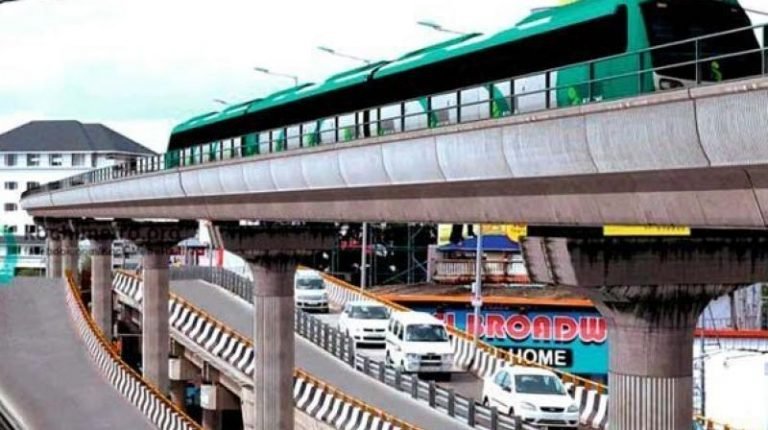
Kochi: Kochi Metro Rail works are progressing as per schedule and the first phase from Aluva to Palarivattom can be commissioned by April next year, Union minister for urban development, M. Venkaiah Naidu said. He was addressing the media after attending a review meeting of Centrally funded projects in Kochi on Tuesday. The minister was apprised about the current status of works including civil works and trial run of coaches and plans for the next phases. Rajiv Gauba, secretary Urban Development and chairman of Kochi Metro Rail Limited and top officials of KMRL and Delhi Metro Rail Corporation attended the meeting.As the city lags behind in implementation of the Rs 1,000 crore Smart City programme, the minister directed to speed up selection of Project Management Consultant and consultancies. The minister also asked to explore possibilities for public-private participation in Smart City and AMRUT schemes. “Kerala has vast natural resources which should be utilised effectively. Rainwater harvesting has to be made mandatory for every household. All urban local bodies should think of augmenting revenue sources,” he said.The state failed to comply with the time schedule of the projects due to Assembly polls. However, the minister hoped that the state would be able to effectively cope with the time delay. “The Centre is satisfied with the progress of various projects being undertaken,” he added. The minister handed over Swachhta certificate to Kattappana municipal chairman Johny Kulampilly for attaining the open defecation free status. Dr K. Vasuki, State Suchitwa Mission executive director received Rs 10 crore from the minister for Swachh Bharat Mission project. KMRL managing director and Cochin Smart Mission Limited CEO Elias George and other officials also attended.
Delhi Metro | DMRC starts adding 258 coaches on blue, yellow and red lines

New Delhi: The Delhi Metro Rail Corporation (DMRC) today started the process of adding 258 more coaches to its fleet to augment its carrying capacity on the Blue, Yellow and Red lines of the network.In order to substantially increase the carrying capacity of the three main corridors of Delhi Metro, orders have been placed for the procurement of 258 additional coaches with 162 of these coaches being provided by Bombardier, and 96 coaches by Bharat Earth Movers Limited (BEML).The first two coaches of the order to Bombardier were pressed into service today with the conversion of one more six coach train into eight coach configuration on the blue line. The other supplier, BEML will also commence supplying its coaches by the end of the year or early next year.The new eight coach train was inducted from the Yamuna Bank depot today in the presence of DMRC’s Managing Director, Dr. Mangu Singh and other senior officials.The 258 additional coaches will be utilised on the blue, yellow and red lines as per the following plan:· 14 new eight coach trains will be added on the Yellow Line.
· 03 new eight coach trains will be added on the Blue Line.
· 10 coaches will be used for converting 6 coach trains into 8 coaches on the Yellow Line.
buy cialis super active online https://calibudsman.com/wp-content/themes/twentytwentytwo/inc/patterns/en/cialis-super-active.html no prescription
· 74 coaches will be used for converting 6 coach trains into 8 coaches on the Blue Line. · 38 coaches will be used for converting 4 coach trains into 6 coaches on the Red Line.All the 258 coaches are expected to be delivered by end of 2017.The Delhi Metro currently operates with a fleet of 227 train sets comprising of 128 six coach, 58 eight coach and 41 four coach trains across all its corridors. A total of 71 trains operate on the Blue Line, 60 trains run on the Yellow Line and 29 trains operate on the Red Line. These three lines together carry over 20 lakh passengers every day.A total of 924 coaches have been ordered for the forthcoming phase of Delhi Metro including 504 coaches for the new Phase 3 corridors. 162 coaches have already been added on the standard gauge green and violet corridors in the last couple of years which has substantially boosted carrying capacity on these sections, especially the ITO – Faridabad Violet line.Source//DMRC Press Release
buy cialis super active online https://calibudsman.com/wp-content/themes/twentytwentytwo/inc/patterns/en/cialis-super-active.html no prescription
· 74 coaches will be used for converting 6 coach trains into 8 coaches on the Blue Line. · 38 coaches will be used for converting 4 coach trains into 6 coaches on the Red Line.All the 258 coaches are expected to be delivered by end of 2017.The Delhi Metro currently operates with a fleet of 227 train sets comprising of 128 six coach, 58 eight coach and 41 four coach trains across all its corridors. A total of 71 trains operate on the Blue Line, 60 trains run on the Yellow Line and 29 trains operate on the Red Line. These three lines together carry over 20 lakh passengers every day.A total of 924 coaches have been ordered for the forthcoming phase of Delhi Metro including 504 coaches for the new Phase 3 corridors. 162 coaches have already been added on the standard gauge green and violet corridors in the last couple of years which has substantially boosted carrying capacity on these sections, especially the ITO – Faridabad Violet line.Source//DMRC Press Release