Lucknow Metro Ridership crosses 51K Passengers by the end of Monday

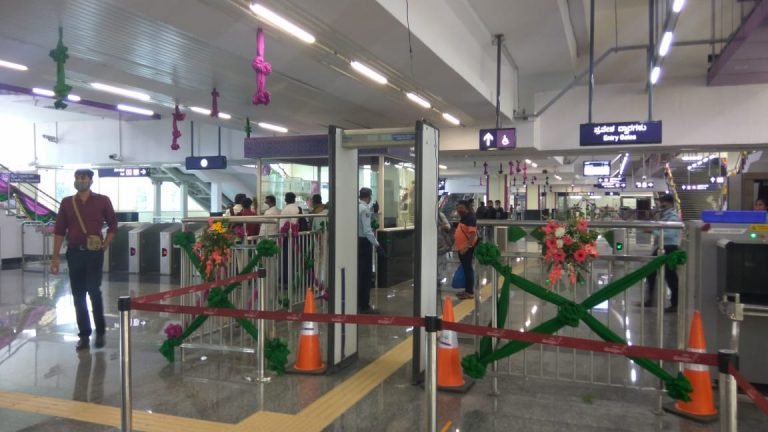
UTTARPRADESH, INDIA (Metro Rail News): Another milestone for the Lucknow Metro, the public commuting service by the end of Monday night logged 51,100 passengers, which was its highest ever since the post Covid-19 lockdown was lifted.

This was the highest ridership since 09th June 2021 when the Metro Rail started operating again after a long gap due to the pandemic. UP Metro Rail Corporation (UPMRC) MD Kumar Keshav congratulated the Operations and Maintenance team for the feat. On 05th August 2021 Lucknow Metro had touched the cumulative ridership figure of 3.25 crores.

94c1f962 ab5c 46e3 83cd 06f8b5d6c9ef
Photo Copyrighted: UPMRC

The Metro services started in the state capital on 05th September 2017, on the North-South Corridor (Phase I-A) from Transport Nagar to Charbagh. LMRC commissioned the services of Metro trains on the entire North-South corridor from CCS Airport to Munshipulia on 08th March 2019. The CCS Airport-Munshipulia corridor covers a stretch of 22.
buy antabuse online https://calibudsman.com/wp-content/themes/twentytwentytwo/inc/patterns/en/antabuse.html no prescription
878 km and has 21 stations.

DMRC would construct an Integrated Flyover-cum-Metro Viaduct at Soorghat

NEW DELHI, INDIA (Metro Rail News): On Sunday, the Delhi Metro Rail Corporation (DMRC) said that they would construct an integrated flyover-cum-metro viaduct and a vehicle underpass near Soorghat on the Majlis Park Maujpur corridor of phase-04 in north-east Delhi, with the Public Works Department (PWD).

The flyover and vehicle underpass is part of a proposed elevated road along the Yamuna parallel to Ring Road between Wazirabad flyover (Signature Bridge) and Ring Road near DND. 

“Integrated portals will be erected on which a road flyover as well as a Metro viaduct will be placed. While on one side of the portal, the Metro viaduct will be placed, a PWD flyover used for vehicular movement will be constructed on the other side. On these portals, the flyover and the viaduct will rest and run parallel to each other for a length of (approximately) 450 meters,” said DMRC officials. They added that a vehicle underpass would also be constructed below these portals, catering to the movement of vehicles coming from Outer Ring Road. The given deadline for this project is 2023.

Under phase-04, the DMRC is already building two integrated double-decker flyovers on which the Metro viaduct and the flyover will be placed one over the other. However, this stretch is unique since the flyover and the Metro viaduct will be parallel, said DMRC officials.

The Majlis Park to Maujpur corridor is 12.098 KMs long, comprising eight stations and is wholly elevated. This extension of the Pink Line will complete the ring of the Majlis Park to Shiv Vihar corridor and will be the first-ever ring corridor in the country with a length of about 70 KMs, said DMRC officials.

Financial bids opened for construction of 29 underground stations for Line-3 of Chennai Metro

CHENNAI (Metro Rail News): Chennai Metro Rail Limited (CMRL) has opened financial bids today for the construction of 29 underground stations under five packages for Line-3 of Chennai Metro which will run from Madhavaram to Siruseri for a length of 45.81 km with 48 stations on the route.

Larsen & Toubro (L&T), Tata Projects and Dineshchandra R Agrawal Infracon emerged as the lowest bidders for the construction of these 29 underground stations. Details of each package with financial values of bidders is given below –

Package UG-01 (Madhavaram to Perambur)

Name of Work: Construction of five (05) underground stations at Thapalpetti, Moolakadai, Sembiyam, Perambur Market and Perambur Metro and Crossover at Sembiyam and works other than diaphragm wall of two underground stations at Madhavaram Milk Colony and Murari.

Financial Bid Values –

  • Tata Projects – INR 1294.13 Crores
  • Larsen & Toubro (L&T) – INR 1490.17 Crores
  • DRA Infracon – INR 1552.02 Crores

Package UG-02 (Ayanavaram to Kellys)

Name of Work: Construction of four (04) underground stations at Otteri, Pattalam, Perambur Barracks Road and Kellys and works other than diaphragm wall of two underground stations at Ayanavaram & Puraisaiwakkam High Road cum Crossover Box.

Financial Bid Values –

  • DRA Infracon – INR 1479.00 Crores
  • Larsen & Toubro (L&T) – INR 1510.27 Crores
  • Tata Projects – INR 1536.23 Crores

Package UG-03 (KMC to Royapettah)

Name of Work: Construction of five (05) underground stations at KMC, Sterling Road Junction, Nangambakkam, Gemini, Thousand Lights and Thousand Lights Crossover and works other than diaphragm wall of two underground stations at Royapettah Govt. Hospital & Chetpet Metro.

Financial Bid Values –

  • Larsen & Toubro (L&T) – INR 1872.00 Crores
  • Tata Projects – INR 1975.28 Crores

Package UG-04 (Radhakrishnan to Adyar Junction)

Name of Work: Construction of five (05) underground stations at Radhakrishanan Salai Jn, Thirumayilai Metro, Mandaiveli, Greenways Road (with part diaphragm wall), Adyar Jn and two cross passage shafts and one emergency escape shaft.

Financial Bid Values –

  • Larsen & Toubro (L&T) – INR 1944.00 Crores
  • Tata Projects – INR 2040.17 Crores

Package UG-05 (Adyar Depot – Taramani Link Road)

Name of Work: Construction of three (03) underground stations at Adyar Depot, Indira Nagar and Taramani Road Jn and Ramp and works other than diaphragm wall of underground station station Thiruvanmiyur Metro.

Financial Bid Values –

  • Larsen & Toubro (L&T) – INR 1062.00 Crores
  • Tata Projects – INR 1085.30 Crores
  • DRA Infracon – INR 1096.04 Crores

Eaton HMH Series Medium Voltage Switchgear

Eaton HMH series metal-enclosed modular switchgear are medium voltage assemblies for use in secondary distribution systems, compact kiosk-type transformer substations, and industrial facilities. They are designed for indoor/ outdoor use. All functional units can be installed easily side by side. The switchgear is factory assembled and undergoes all routine type-approval tests. Units can be commissioned quickly and safely.

HMH Series medium voltage switchgear is designed for secondary distribution systems up to 36 KV, compact kiosk type transformer substations, and industrial facilities and indoor spaces. All functional units can be easily installed side by side. The metal-enclosed switchgear is produced in the factory with all routine and type tests conducted and can be commissioned in a brief period–practically and safely. Moreover, HMH Series modular switchgear can be quickly and safely used in kiosk type transformer substations due to their compact and minimized dimension.

COMPARTMENTS OF HMH SWITCHGEAR

HMH switchgear is divided into three compartments, i.e.,

  • Busbar Compartment
  • Cable Connection and Switching Compartment
  • LV Compartment
Picture2
Compartments of HMH Switchgear | Image Source: Eaton
  • (1) Busbar Compartment: The main busbar is in this compartment and is where the primary busbar connection is made. Busbars can be aluminium or copper. The breaker varies depending on the rated current value.
  • (2) Cable connection and Switching Compartment: Medium voltage cable connections are in this compartment. The earthing switch, breaker, support insulator, capacitive insulator, current transformer, voltage transformer, MV fuse and earthing busbar are also located in this compartment.

(3) LV Compartment: Terminal blocks, LV fuses, thermostat, measuring instruments and protection relays are in this compartment. When the switchgear (busbars and cables) is energized, the operation is possible via the LV panel.

Picture3
Image Source: Eaton

WHY EATON’S HMH SWITCHGEAR

Eaton’s HMH Series RMU is air-insulated medium voltage switchgear available from 12 KV to 36 KV. According to IEC standards, it is well designed & factory-assembled, type-tested switchgear up to 36 KV, 1250 A, 25 KA. It has a modular structure in consideration of functionality, appearance, and security features. HMH Series delivers safe operation with mechanical and electrical interlocks. It also has a long-life cycle and low power consumption. It works on a motorized or manual operated spring-charged mechanism.

Eaton’s HMH switchgear offers 50% space-saving on footprint compared to other available solutions in the market.

Picture4
Image Source: Eaton

KEY FEATURES OF EATON’S HMH SWITCHGEAR

Value ranges

• Up to 36 kV, 1250 A, 25 kA

• 12 / 24 / 36 kV

• Compliant with IEC standards

• Customized types

Safety

• Equipped with safety locks

• Internal arc classification IAC AFL

• Classified LSC-2A, PI

• Fixed-type circuit breaker

Flexibility

Wide variety of applications

• 24 kV vacuum circuit breaker and 36 kV SF6/Vacuum circuit breaker

• Load break switch (LBS)

• Manual disconnector

• Block voltage transformer, block/ toroidal current transformer

• Wall-mounted or free-standing

Quality

• 100% Eaton quality, factory tested

• Extensive installation network

• Installed in countries worldwide

• Approved for use in special environments including maritime, earthquake and nuclear; type tested in line with IEC standards

Design

• Protection and control

• Earthing switch

TYPES OF EATON’S HMH SWITCHGEAR

  • Modular Switchgear: HMH Series Modular Switchgears are easy to operate with their basic interlocking systems. The door, Load Break Switch and Earthing Switch are connected using the interlocking system, which provides safety for the operation staff.
  • Metal Enclosed Switchgear: HMH Series Switchgears are designed with a modular structure considering functionality, appearance, and security features. Switchgear carcasses are manufactured of 2 mm hot-dip galvanized sheet metal, with a thickness of 275gr/m² galvanize, which is above the industry standards; it is not subject to any deformation even under the dampest mediums.

Suppose you want complete protection against electrical hazards. In that case, you should have selected the right product which offers protection from essential to advance security & Eaton’s HMH Switchgear ensure the continuity of the system with utmost safety and protection.”

ABOUT COMPANY

Eaton’s mission is to improve the quality of life and the environment using power management technologies and services. We provide sustainable solutions that help our customers effectively manage electrical, hydraulic, and mechanical power – more safely, more efficiently, and more reliably. Eaton’s 2020 revenues were $17.9 billion, and we sell products to customers in more than 175 countries. We have approximately 85,000 employees.

Kochi Metro Commuters will get a 50% discount on 02nd Oct 2021

KOCHI, INDIA (Metro Rail News): Kochi metro commuters will get a 50% discount on train fare on 02nd October 2021, on the 152nd birth anniversary of Mahatma Gandhi.

Cardholders will get cashback of the difference in amount to the card. In addition, the free ticket scheme for mentally challenged passengers and a 50% discount for their accompanying passengers will take effect from the day.

The frequency of trains too will be increased from 02nd October 2021. In addition, metro trains can subsequently be recognized by their ‘names’. Kochi metro has taken the step-in line with the pattern set by trains of Indian Railways. “The names synchronize with the culture of our country and will assist commuters in quick and easy identification of the trains,” said KMRL officials.

Eaton received the Zero Water Discharge Certification

PONDICHERRY, INDIA (Metro Rail News): Eaton Power Quality Pvt. Ltd (EPQPL) Pondicherry plant received the Zero Water Discharge Certification recognition and the first Eaton Electrical plant to receive this recognition. The site’s efforts align with Eaton’s vision ‘To improve the quality of life and the environment through power management technologies and services. It also reflects Eaton’s promise to be active stewards of the environment. These efforts align with the company’s 2030 sustainability target of certifying 10% of its manufacturing facilities worldwide as zero-water discharge. To be deemed zero water discharge, sites must discharge less than two per cent of their industrial wastewater.

As India has been identified as one of the waters stressed countries and a focus area for water conservation, Eaton is committed to adhering to the strict government guidelines around water usage and conservation. Eaton Pondicherry plant has gone beyond regulatory requirements by following ways to achieve Zero Water Discharge certification, i.e., Reducing, Reusing & Recycling, and System Maintenance & leaks detection.

Globally, Eaton is working to reduce carbon emissions from its operations by half, lower product and supply chain emissions, and certify all manufacturing sites as zero-waste-to-landfill to reduce its environmental footprint.

About Eaton

Eaton’s mission is to improve the quality of life and the environment using power management technologies and services. We provide sustainable solutions that help our customers effectively manage electrical, hydraulic, and mechanical power – more safely, more efficiently, and more reliably. Eaton’s 2020 revenues were $17.9 billion, and we sell products to customers in more than 175 countries. We have approximately 85,000 employees. For more information visit: www.eaton.com

Top 5 Reasons of Delays and Disputes in Infrastructure Projects in India

With the present emphasis on creating physical infrastructure, massive investment is planned in the infrastructure sector in India. However, infrastructure projects in India are infamous for Delays and Disputes. As a result, there is significant time and cost overruns in projects. Projects across different government employers suffer from 50-100% cost overrun, primarily due to Delays.

Several studies and surveys are conducted to investigate reasons and their relative impact on these delays and disputes. With our extensive experience in project and claims management, we grouped several overlapping factors into 10 primary reasons and then analysed their relative contribution to Delays and Disputes. The result of the analysis is presented as below:

  1. Delay in handing over Right of Way/Site 
  2. Poor Scope and Interface Management by Owner/Engineer
  3. Delay in Payments by Owner/Engineer
  4. Slow Decision Making by Owner/Engineer
  5. Incorrect Contracting Practices by Owner/Engineer

1. Delay in handling over Right of Way/Site:

It is not surprising to find that Top reason is the Delay in handing over the Right of Way / Site to the contractor due to unpredictable and lengthy land acquisition process coupled with politically motivated agitations and equally lengthy inter-departmental permission processes in India.

2. Poor Scope and Interface Management by Owner/Engineer:

The second most frequent reason for delays and disputes is the unavailability of work fronts due to poor interface management among various agencies and contractors involved in the project. Although it is noted that generally, scope breakdown (work packaging) is based on only size manageability without precise scope distribution and interface matrix (RACI) and Master Implementation Program, it results in many scopes omission/duplication and too many interfaces, which in turn results in many scope addition/deletions during construction.

3. Delay in Payments by Owner/Engineer:

The third most frequent reason for delays and disputes in infrastructure projects is delayed payment to contractors. Again, several legitimate reasons range from fund allocation blues for Govt. funded projects to poor payment terms in the agreed contract.

4. Slow Decision Making by Owner/Engineer:

One of the most common reasons for delays across the sectors and industries as experienced by us in performing delay analyses is the excessive time taken by the owner / Engineer in review and approvals of technical and non-technical deliverables multiplied with too many rounds of commenting and revisions. There are instances where a critical design document approval process has taken >1000 days! Unbelievable but true!!

There are many reasons for slow decision making. Still, the most contributing reason found in our analyses is (a) lack of collaboration among various disciplines, departments with bureaucratic structure and multiple agencies, both internal & external working in silos and (b) non-availability of timely and correct information for effective decision making. Therefore, a Smart Engineering Document Management System Integrated with Project Communication and Interface Management Systems is an absolute necessity for successful project delivery.

5. Incorrect Contracting Practices by Owner/Engineer:

The top contract-related reason that creates frequent disruptions during execution is poorly written and incomplete, and heavily one-sided contract. It leads to cascading delays due to the stoppage of work or pace slowdowns. Our analyses have found several reasons out of which most frequent ones are:

  1. Lack of staff experience for contract management and adoption of the wrong contract standards leads to poorly written and incomplete documents. We often receive a tender document for consulting services amended from a standard tender for construction works. We find that it has many clauses that are not applicable for consulting work and at the same time, it does not have many mandatory clauses applicable to consulting services.
  2. Unreasonable Contracting Risk perceptions lead to a heavily one-sided contract document.
  • Tendency to transfer all the risks to the contractor
  • Tendency to pass on interfacing responsibility on the contractor
  • Tendency to cover up all unknowns within the scope of the contract 

Simply passing risks and complexities on to the contractors does not actually mitigate them. Ultimately, it only affects outcome of the Owner’s Project adversely

Protecton BTG has been instrumental in setting up these systems at India’s first bullet train project MAHSR and is currently in active discussion with other important infrastructural projects for providing MIP services and implementation/operations of SMART PMS.

Chennai Metro to get loan of USD 356.67 million from AIIB

CHENNAI (Metro Rail News): The Asian Infrastructure Investment Bank (AIIB) has approved loan amounting to USD356.67 million to assist in the expansion of the Chennai Metro Rail System.

According to AIIB, the project involves the construction of a new corridor in Chennai’s metro network as part of Chennai Metro Rail Phase 2. It will span from Lighthouse in the east to Poonamalee Bypass in the west to ensure seamless multimodal transport across Chennai by providing integrated access to suburban rail, bus stations and the city’s main airport. In addition, the project will address traffic bottlenecks and reduce greenhouse gas emissions by increasing public urban transport options.

This project is aligned with AIIB’s mandate to support high-quality and sustainable infrastructure.
buy lasix online https://healthcoachmichelle.com/wp-content/themes/twentytwentyone/inc/en/lasix.html no prescription
The improvement and integration of the transport sector in Chennai will further promote trade and economic growth,” said AIIB Vice President, Investment Operations, D. J. Pandian.

With this project, female passengers would have access to a safer and convenient mode of public transportation with knock-on effects such as increased opportunities to participate in school, work and social activities. The residential and commercial establishments along the new corridor will also benefit from enhanced accessibility and connectivity as well as increased economic opportunities, as stated by AIIB.

The project’s design and construction will have environmentally friendly features to help reduce its carbon footprint. In addition to solar panels installed on the roofs of the elevated stations, the project will have dedicated spaces for bicycles and green vehicles, and signage to raise environmental awareness. The project also integrates climate change resilience features to reduce its vulnerability to climate-related events.

AIIB has approved 28 projects in India, with a total amount of USD6.7 billion. The energy and transport sectors have received the highest amount of AIIB’s financing.

Govt. extended Dr. Mangu Singh tenure till 31st March 2022

NEW DELHI, INDIA (Metro Rail News): According to an official order released on Wednesday, the government has extended Dr. Mangu Singh’s tenure as the Managing Director (MD) of the Delhi Metro Rail Corporation (DMRC) till 31st March 2022.

Dr. Mangu Singh’s tenure as an MD of DMRC began from 01st January 2012, after his predecessor E Sreedharan had handed over charge to him.

 “The Govt. of NCT of Delhi, in accordance with the provisions of Article 130 of the Memorandum and Article of Association of the Delhi Metro Rail Corporation Limited, and after obtaining concurrence of the Ministry of Housing & Urban Affairs, Govt. of India vide letter dated 28.09.2021 is pleased to extend the tenure of Dr. Mangu Singh as Managing Director of Delhi Metro Rail Corporation Limited up to 31.03.2022,” written in the official statement

According to the sources, 169 days when metro services were suspended starting 22nd March 2020, the DMRC had suffered a loss of approximately Rs. 1300 crores.

Dr. Mangu Singh’s has significantly contributed to the project implementation of metros in Delhi and Kolkata and has been responsible for bringing revolutionary changes in the execution of large metro engineering projects (civil) within tight deadlines and budget and is considered the foremost tunnelling expert.

NCRTC begins assembling of Special Spans for challenging sections of the RRTS corridor

NEW DELHI, INDIA (Metro Rail News): NCRTC is implementing India’s first RRTS corridor that connects Delhi with regional nodes of Ghaziabad, Murad Nagar, Modi Nagar, and Meerut. In this 82 km long RRTS corridor, a total of 70 km stretch is elevated, and 12 km stretch is underground. Most of the elevated stretch of the Delhi-Ghaziabad-Meerut RRTS corridor is passing through the median of Delhi Meerut road (erstwhile NH-58) and densely populated areas which have heavy traffic movement as well.   

To construct the elevated viaduct of the RRTS corridor, NCRTC is erecting piers generally at an average distance of 34 meters (approximately). Post this, these piers are being joined by pre-cast segments with the help of launching gantries to construct an RRTS viaduct span. However, maintaining this distance between piers is not practically possible in some complex areas where the corridor is set to cross over rivers, bridges, rail crossings, metro corridors, expressways, or other such existing public infrastructure. Also, the maximum length of standard spans used to connect these piers is approximately 37 meters. 

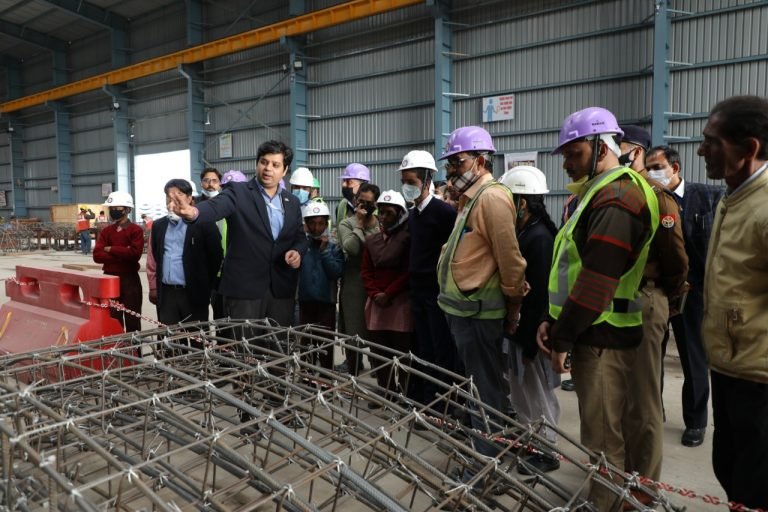
To connect piers in such areas & congested zones, Special Spans are being used. Special Spans are mammoth civil structures having beams made of structural steel. NCRTC is building Special Spans made of structural steel at a factory which is then transported to the sites on trailers during the night to avoid any bunch up of traffic and assembled in a systematic way with help of specialized cranes. The size and structure of these steel spans are designed aesthetically in advance, in line with the overall requirements of construction, installation, and usage. 

NCRTC is establishing two such Special Spans, between Sahibabad to Ghaziabad, with customized shape, elevation, design, and weight. One of the spans is being set up at Vasundhara, which is 73 meters long and weighs 850 tonnes, to cross the railway crossing. NCRTC is taking all measures to ensure the services of Indian Railways running below is not affected and the construction work is completed on time diligently.  

Another mammoth span is being set up for Ghaziabad RRTS station, the highest station of the RRTS corridor, crossing over the Red Line of Delhi Metro and the road overbridge. Portal Piers have been erected for the installation of Special Span on either side of the metro viaduct and road overbridge in Ghaziabad. On this portal pier, a Special Span of about 150 m in length is to be established. Its weight will be around massive 3200 tonnes and it will be installed at a height of about 26 meters from the ground. Special care is being taken in the assembling of this mega span due to the metro viaduct and road overbridge going below the RRTS viaduct.   

The special spans will be pushed to establish at Ghaziabad and Vasundhara rail crossing from one side of the pier to reach the other side with the help of Winch and roller arrangement.  

These pieces of Special Spans are factory-made, painted structures, and are ready to install directly. Hence, they save time and don’t affect the harmony of the surroundings be it population, traffic, or existing structures. The fabrication of these special spans, made of structural steel, is so fine that they don’t need any finishing post-installation and the next phase of track laying can be carried out immediately.  

Also, on-site deployment of heavy machines, raw materials, and a large number of workers for such large-scale construction work is practically not feasible. Complex construction activity on a massive scale in densely populated areas can cause safety issues, may affect routine operations of existing facilities and can cause inconvenience to the common people. Considering these aspects, NCRTC has proactively adopted this unique technique that would cause minimum inconvenience to the public, ensure smooth traffic management & operations, and safe construction.   

Presently, with the tireless efforts of more than 11,000 workers and 1100 engineers on the 82 km long RRTS corridor, about 900 piers of the elevated section with 40 km of foundation and 10 km of viaduct have already been completed, most of which is located in the priority section.  

Along with the construction of the viaduct in the priority section, the construction work of the superstructure of all five stations – Sahibabad, Ghaziabad, Guldhar, Duhai, and Duhai depot is in advanced stages. Track laying work is going on by connecting rail tracks on the viaduct between Guldhar to Duhai, for which a mobile flash welding plant has been set up. 

NCRTC team is working day and night at the sites with 17 launching gantries (Tarini) in operation for the elevated section in the corridor. The construction work for the underground stations has also started. The priority section of 17 km between Sahibabad to Duhai is targeted to be commissioned by March 2023 and the full corridor by 2025. 

RVNL gets another big contract of Rs. 382 Crores from MP Metro

MADHYA PRADESH, INDIA (Metro Rail News): Rail Vikas Nigam Ltd. (RVNL) announced that it had secured a contract from the Madhya Pradesh Metro Rail Corporation worth Rs. 381.95 crores on Tuesday.

The contract is for the design and construction of seven (7) elevated metro rail stations, including viaduct portions, transition spans on either side of the stations, entry-exit structures, architectural finishes, electrical and mechanical (E&M) works etc. of Madhya Pradesh Metro Rail Project.

Rail Vikas Nigam Ltd. (RVNL) is an organization associated with Indian Railways involved in building rail infrastructure required by the railways. As of 30th June 2021, the Government held a 78.2 per cent stake in the company.

On a consolidated basis, the company posted a 64 per cent jump in net profit to Rs. 232 crores on a 32.9 per cent rise in net sales to Rs. 3,869 crores in Q1 FY22 over Q1 FY21.

DMRC Earned Rs. 19.5 Crores by Selling Carbon Credits of 6 Years

NEW DELHI, INDIA (Metro Rail News): The DMRC earned Rs 19.5 crore by selling 3.55 million carbon credits collected from 2012 to 2018 on Sunday.

In 2007, DMRC became the first metro in India registered by the United Nations under the Clean Development Mechanism (CDM), which enabled Delhi Metro to claim carbon credits for its Regenerative Braking Project.

CDM may be a project-based Green House Gas (GHG) offset mechanism under the Kyoto protocol allowing the public and personal sector in high-income nations the chance to get carbon credits from greenhouse gas emissions.

“The CDM projects are managed by the United Nations Framework Convention on global climate change (UNFCCC), an entity established to combat ‘dangerous human interference with the climate system’. The first CDM project of Delhi Metro was supported the regenerative braking technology. Carbon credits generated from this project till 2012 were sold for Rs. 9.55 crores,” said DMRC official.

Agra Metro completes century of piers; Taj East Gate and Basai Metro Station taking shape

AGRA, INDIA (Metro Rail News): The civil construction work of the first corridor of the Agra Metro Project is being carried out with full momentum and precision. The team of Agra Metro Project has proven its dedication and worth by completing the erection of 100 piers, in just 10 months from the commencement of civil construction of the project. Piers, or commonly known as ‘pillars’ are the main support structure for the U girders of the metro project.

Managing Director, Uttar Pradesh Metro Rail Corporation Shri Kumar Keshav said, “The timely erection of the piers indicates that the project is being executed with accuracy and in a time-bound manner and the entire project will be executed within the stated timeline, with utmost safety, accuracy and finesse.”

2
Photo Copyrighted: Agra Metro

Completion of 100 piers marks the completion of most of the civil construction work for the 3 KMs elevated sections of the priority stretch, which runs from Taj East Gate station and Fatehabad Road.

The first station of the corridor, i.e. Taj East Gate, has already started coming into shape and it will soon be ready. Double T Girders are already being placed for the concourse area along with the commencement of construction work for the area from concourse to platform, for Taj East Gate Metro Station. Also, the concourse beam of Basai Metro station has also been cast and the construction work of the station area will commence shortly.

It is to be noted that Agra Metro Project was virtually inaugurated by Hon’ble Prime Minister Shri Narendra Modi, in presence of Hon’ble Chief Minister of Uttar Pradesh Yogi Adityanath on 7th December 2020. In just 10 months from the date of its inauguration, the Agra Metro Project team has completed 616 piles, 120 pile caps and 102 piers for the elevated section of the priority stretch of the 29.4 km long first corridor, which runs from Taj East Gate to Sikandara.

Protecon BTG Pvt. Ltd. Celebrates its 9th Foundation Day

NEW DELHI, INDIA (Metro Rail News): Protecon BTG Pvt. Ltd. celebrated its 9th anniversary on 25th September 2021 in the presence of the CEO, President, Directors, Board of Directors, Staff Members and other teammates at their Head Office.

On this occasion, the employees were made aware of the Protecon’s successful journey since 2013 and the efforts made in developing innovative ideas to meet the customer’s present and future requirements. With all these, Protecon inaugurated its Corporate Head Office at Images Tower, First Floor, B-27, Sec 132, Noida 201304.

Mr. Pankaj Rastogi, CEO, Protecon BTG Pvt. Ltd. words on the opening ceremony “We are incredibly delighted to announce the eight glorious years in the industry. The celebration marks Protecon BTG Pvt. Ltd.’s success, growing popularity, milestones and memories that have been created in the last couple of years”.

Mr. Rastogi further said that the expertise and passion of Protecon BTG are different from others in the business. Our endeavour to bring the best international practices at an affordable price is something unmatched in the market. We constantly strive to implement the strategies, systems and work processes to deliver the projects with maximum safety and maintain the desired quality. It is achieved within an optimum schedule and with minimum cost. We have a highly experienced team of experts who have worked internationally in various industries across the world.

The most challenging project of Protecon BTG was also unveiled on this occasion by Mr. Manish Khilauria, President (Operations). He said, “Every project, whether big or small, has its own nuisances and its own set of challenges”.  By far, the most challenging project has certainly been the ongoing Bullet Train Project between Mumbai and Ahmedabad. There have been many unique challenges in this project & the biggest challenge was to understand Japanese Shinkansen Technology & the constructability of project under Indian Environment. We have been engaged in this project from an early stage and have managed and overcome all these challenges by going to the basics of Project Management, i.e., breaking down the project to tiny details and developing a robust work breakdown structure. Once that was achieved, detailed study of work quantum was conducted, and a very detailed constructability plan was developed. It helped us to develop an integrated Master Implementation Program (MIP) for the project and a detailed system for effective project monitoring which has been accepted by Japanese & Indian Government.

On 25th September 2013 Protecon BTG Pvt. Ltd began its journey with a motto of “Bridging the Gap”. Over the years the organization has achieved sustainable and organic growth. Today, they feel proud to be acknowledged and trusted for the quality of their services and professional capabilities. Protecton BTG has been instrumental in setting up these systems at India’s First Bullet Train Project MAHSR and is currently in active discussions with other stakeholders of infrastructure industry for providing effective Project controls services and for implementation of the SMART-PMS, an Integrated Project Management Information System by bring all stakeholders on a Single platform & Showing Performance metrics of all Project Management processes through Single mouse click.