Indian Railways: Reform, Perform & Transform
Abstract
The National Rail Plan – 2030, published by Indian Railways, discusses the future of Indian Railways, which the Ministry of Railways in India envisages for freight and passenger transportation in India by the year 2030. In addition, the transformational Plan of Indian Railways has been elaborately discussed in Nation Rail Plan Policy – 2030.
The plan is to create a ‘future ready’ Railway system by 2030. The NRP aims to formulate strategies based on operational capacities and commercial policy initiatives to increase the modal share of the Railways in freight. The plan’s objective is to create capacity ahead of demand, which would also cater to future growth in demand right up to 2050 and increase the modal share of Railways to 45% in freight traffic and continue to sustain it. All possible financial models, including Public-Private Partnership (PPP), are being considered to achieve this objective.
The main features of the National Rail Plan are:
- Formulate strategies based on both operational capacities and commercial policy initiatives to increase the modal share of the Railways in freight to 45%.
- Reduce freight transit time substantially by increasing the average speed of freight trains to 50Kmph.
- As part of the National Rail Plan, Vision 2024 has been launched for accelerated implementation of certain critical projects by 2024, such as 100% electrification, multi-tracking of congested routes, upgradation of speed to 160 kmph on Delhi-Howrah and Delhi-Mumbai routes, upgradation of speed to 130kmph on all other Golden Quadrilateral-Golden Diagonal (GQ/GD) routes and elimination of all Level Crossings on all GQ/GD route.
- Identify new Dedicated Freight Corridors.
- Identify new High-Speed Rail Corridors.
- Assess rolling stock requirement for passenger traffic and wagon requirement for freight.
- Assess Locomotive requirement to meet twin objectives of 100% electrification (Green Energy) and increasing freight modal share.
- Assess the total capital investment that would be required along with a periodical break up.
- Sustained involvement of the Private Sector in areas like operations and rolling stock ownership, freight and passenger terminals development/operations of track infrastructure, etc.
Implementation of the NRP has already commenced. The Indian Railways has identified and prioritised a large number of projects designated as Super Critical, Critical and Coal/Port connectivity for completion as per the Vision 2024 document, which is a subset of the National Rail Plan.
RITES has developed the plan – AECOM JV with timelines and strategies for developing and upgrading the Indian Railways’ main-line, high-speed rail (HSR) system and dedicated freight corridors (DFCs).
RITES – AECOM JV started preparing the report back in December 2018 and the Ministry of Railways finalised it in January 2021 after taking recommendations from all stakeholders.
The timelines mentioned in it are odd and not aligned with what the National High-Speed Rail Corporation (NHSRCL) is already pursuing. For example, it suggests developing 6 corridors (eg. Mumbai – Nagpur HSR) with a target of 2051, but the NHSRCL has over the past 6 months already set into motion the development of their detailed project reports (DPRs) by awarding contracts for survey & traffic study work.
The detailed plan objectives shared by the Government are as under:
- To create capacity ahead of demand by 2030, which in turn would cater to growth in demand right up to 2050 and also increase the modal share of Railways from 27% currently to 45% in freight by 2030 as part of a national commitment to reduce Carbon emission and to continue to sustain it. Net Zero Carbon emission by 2030.
- A yearlong survey was conducted over hundred representative locations by survey teams spread all over the country to assess the actual demand in freight and passenger sectors.
- Forecast traffic growth in freight and passenger year on year up to 2030 and on a decadal basis up to 2050.
- Formulate strategies based on both operational capacities and commercial policy initiatives to increase modal share of the Railways in freight to 45% by 2030.
- Reduce freight transit time substantially by increasing the average speed of freight trains from 22Kmph to 50Kmph.
- Reduce overall cost of Rail transportation by nearly 30% and pass on the benefits to the customers.
- Map the growth in demand on the Indian Railway route map and simulate the capacity behaviour of the network in future.
- Based on the above simulation, identify infrastructural bottlenecks that would arise in the future with demand growth.
- Select projects along with appropriate technology in both track work, signalling and rolling stock to mitigate these bottlenecks well in advance.
Within the National Rail Plan, ‘Vision 2024’ has been launched for accelerated implementation of certain critical projects by 2024 such as 100% electrification, multi-tracking of congested routes, up-gradation of speed to 160 Kmph on Delhi-Howrah and Delhi-Mumbai routes, upgradation of speed to 130 Kmph on all other Golden Quadrilateral-Golden Diagonal (GQ/GD) routes and elimination of all level crossings on all GQ/GD routes.
High Speed Rail Timeline (Phasing)
India’s National Infrastructure Pipeline (NIP) has already set into the motion the following 6 new high speed rail corridors in addition to the Mumbai – Ahmedabad HSR (Bullet Train) which is presently under construction.
- Delhi – Agra – Lucknow – Varanasi
- Delhi – Chandigarh – Amritsar
- Delhi – Udaipur – Ahmedabad
- Mumbai – Nasik – Nagpur
- Mumbai – Hyderabad
- Chennai – Mysuru
In fact earlier this month, NHSRCL invited bids for 2 survey related packages encompassing the Varanasi – Howrah line as well, taking the number of corridors in the proposal stage to 7.
The NRP report proposes the following 13 corridors (existing and extensions) with a combined total of 7897 km to enhance HSR outreach and provide connectivity to other towns en route.
| Sr. No. | Year | Corridor & Approx. Length |
| 01. | 2026 | Mumbai – Ahmedabad (508 Km) |
| 02. | 2031 | Delhi – Ayodhya – Varanasi (855 Km) |
| 03. | 2031 | Delhi – Ahmedabad (886 Km) |
| 04. | 2031 | Varanasi – Patna (250 Km) |
| 05. | 2031 | Patna – Kolkata (530 Km) |
| 06. | 2041 | Hyderabad – Bangalore (618 Km) |
| 07. | 2041 | Nagpur – Varanasi (855 Km) |
| 08. | 2051 | Mumbai – Nagpur (789 Km) |
| 09. | 2051 | Mumbai – Hyderabad (709 Km) |
| 10. | 2051 | Patna – Guwahati (850 Km) |
| 11. | 2051 | Delhi – Chandigarh – Amritsar (485 Km) |
| 12. | 2051 | Amritsar – Pathankot – Jammu (190 Km) |
| 13. | 2051 | Chennai – Bangalore – Mysuru (462 Km) |
HSR Phasing
The above mentioned recommended and proposed corridors have been prioritised for development based on need and demand forecast. Proposed HSR phasing is described in table below :
| Phasing | 2026 | 2031 | 2041 | 2051 |
| New HSR Corridor | Mumbai – Ahmedabad, 508 Km (As per NIP also) | Delhi – Varanasi via Ajodhya, 855 Km (As per NIP also, Ajodhya included) | Hyderabad – Bangalore, 618 Km (New) | Mumbai Nagpur, 789 Km (As per NIP) |
| Varanasi to Patna, 250 Kms (New) | Nagpur – Varanasi, 855 Km (New) | Mumbai Hyderabad, 709 Km (As per NIP) | ||
| Patna to Kolkata, 530 Km (New) | Patna Guwahati, 850 Km (New) | |||
| Delhi – Udaipur – Ahmedabad 886 Km (As per NIP also) | Delhi – Chandigarh – Amritsar, 485 Km (As per NIP) | |||
| Amritsar – Pathankot – Jammu, 190 Km (New) | ||||
| Chennai to Mysuru via Bangalore, 462 Km (As per NIP) | ||||
| Length (Km) | 508 | 2,521 | 1473 | 3485 |
High Speed Rail Development Suggestions
The NRP report highlights the following suggestions for new corridors to meet growing passenger demand and optimise high-speed rail connectivity between major cities / commercial / economic centres.
The below information from the NRP report has been posted verbatim:
- Delhi-Chandigarh-Ludhiana-Jalandhar-Amritsar HSR Corridor is recommended to be extended to Jammu via Pathankot to enhance regional connectivity and give an economic boost to the Jammu and Pathankot Region. It will cater to the religious tourism potential of Vaishno Devi Shrine and other places.
- Delhi- Agra- Kanpur- Lucknow- Varanasi- HSR corridor is recommended to route via Ayodhya due to Religious Tourism Potential.
- Delhi- Agra- Kanpur- Lucknow- Varanasi- HSR corridor is also recommended to be extended to connect Patna and Kolkata.
- Additional HSR Line from Patna to Guwahati via Katihar and New Jalpaiguri thereby connecting Guwahati with Delhi Varanasi Kolkata HSR Corridor.
- Additional HSR Line between Hyderabad and Bengaluru by extending
Mumbai Hyderabad HSR Line. This shall connect Mumbai with Chennai and also will bring North India from Jammu – Amritsar – Delhi – Jaipur – Ahmedabad – Mumbai – Hyderabad – Bengaluru – Chennai on HSR corridor and all the major towns of North, West and South India shall be connected with 1 HSR Corridor. This will help in boosting the regional economy. - Additional HSR line is proposed between Nagpur and Varanasi by extending the Mumbai – Nashik – Nagpur HSR Corridor. This shall connect Mumbai with Varanasi which will further connect with Delhi – Varanasi – Patna – Guwahati HSR corridor.
Indian Railways: Need for Transformation

Public transport is vital in India due to its large population and expansive lands. The railway is one of the most efficient and economical methods of transport for both passengers and goods. They are the economic lifeline of India, with the volume of passengers using it in their daily commute.
With India’s rapid economic growth and its ascent as a global industrial hub, the Government of India has realised the big potential of Indian Railways in contributing to the mass transportation of goods and people and the necessity to modernise the railways infrastructure with an emphasis on comfort, optimisation and safety.
Even though Indian Railways has been regarded as the lifeline of independent India, it had been plagued with multiple plights. Primitive maintenance methods, ageing track and machinery, outmoded rolling stock technology and increasing railway accidents were some grave issues apart from safety and hygiene.
Some staggering data revealed that one-fifth of the total length of railway track in the system needed replacement but was not being done for many decades. Continuous use of old and weakened track led to metal fatigue and fractures causing major accidents, rail fractures increased from 4,517 in 1980-81 to 6,272 in 1987-88, resulting in severe speed restrictions. As many as 690 railway bridges were in distress. 2,119 out of 26,277 broad and meter gauge coaches were overaged and required immediate replacement but the required number of new coaches were simply not available. Similar had been the condition of almost all sections involved in rail traffic, transportation and management leading to an overall leading to a pathetic condition of Indian Railways.
How did Railways manage to come to a year that recorded 0 deaths due to rail accidents in 2019 from 2,400 deaths between 1990-1995? The past few years have been exceptional for the Indian Railways, from eliminating deaths caused by rail accidents to inaugurating ‘Dedicated Freight Corridor’ to boost transport to introducing semi-high speed fully air-conditioned trains operated by private operators.
Infrastructure plays a major role in rail accidents. From rail fractures to weak bridges, deaths due to rail accidents remained a major cause of concern for the country. However, for the first time in history, India managed to record 0 deaths due to rail accident in 2019. Ensuring mega blocks for maintenance, using modern machinery, removing all unmanned level crossings, signalling modernisation, and delegating more power to field level officers made this feat possible.
With these initiatives, Indian Railways is sure to experience a transformation in passenger experience and freight and transportation, which certainly can be stated to be a long-awaited and required move.
Summary & Conclusion
The Indian Government is undertaking several initiatives to upgrade its aging railway infrastructure and enhance its quality of service. The Railway Ministry has announced plans to invest Rs. 5,000,000 crore (equivalent to Rs. 53 trillion or US$700 billion in 2020) to upgrade the railways by 2030.
Upgrades include hundred percent electrification of railways, upgrading existing lines with more facilities and higher speeds, expansion of new lines, upgrading railway stations, introducing and eventually developing a large high-speed train network interconnecting major cities in different parts of India and development of various dedicated freight corridors to cut down cargo costs within the country.
Research Design and Standards Organisation (RDSO) is undertaking all research, designs and standardisation work for modernisation, National High Speed Rail Corporation Limited (NHSRCL) is overlooking the implementation of high-speed train programs across the country, Dedicated Freight Corridor Corporation of India (DFCCI) is the agency undertaking development of freight corridors around the country and Indian Railway Stations Development Corporation (IRSDC) is engaged in railway stations upgrade and development programs.
Some of the key developments initiated, planned and completed for Indian Railways towards Government’s effort to make it a future centric transport system is outlined as under:
High-Speed Rail
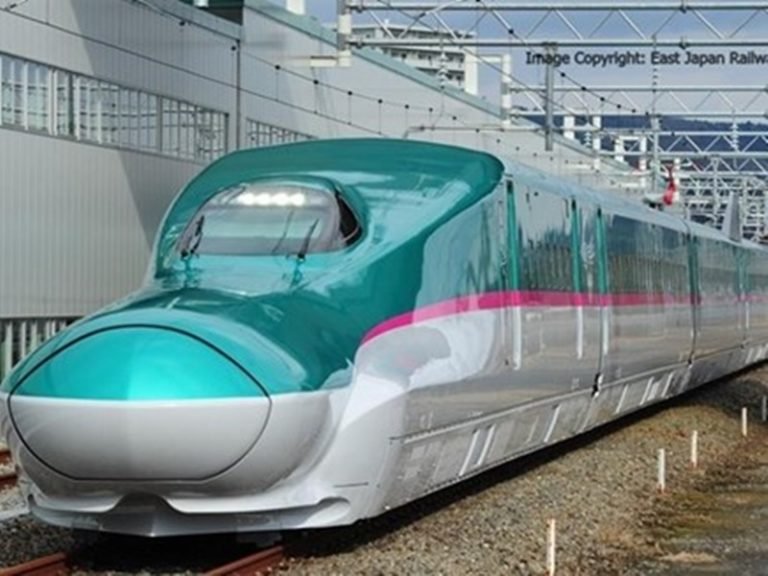
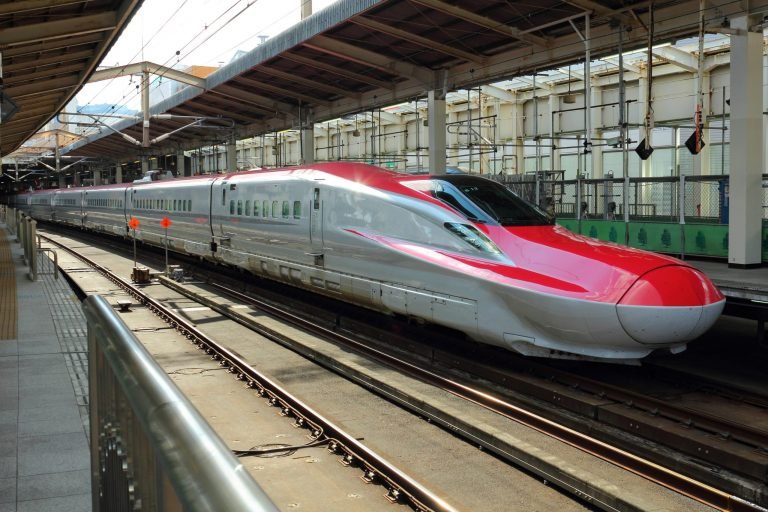
Feasibility studies for five high-speed rail corridors were conducted between 2009 and 2010. A ‘Diamond Quadrilateral’ has been planned to connect Delhi, Mumbai, Kolkata,and Chennai with a high-speed train network. The Indian Government conducted joint surveys with a Japanese government team in 2014, finally approving a corridor between Mumbai and Ahmedabad. The new high-speed service will use a Japanese Shinkansen system and rolling stock. The cost of procuring the technology is estimated to be around Rs. 110,000 crore. India and Japan signed agreements for the project in December 2015; the Japanese Government will fund 81% of the total cost with a soft loan fixed at a nominal interest rate.
A special committee has recommended the trains be run on an elevated corridor for an additional cost of Rs. 10,000 crore, to avoid the difficulties of acquiring land, building underpasses and constructing protective fencing. Indian Railways will operate the corridor for a five-year period after its commissioning and afterwards will be turned over to a private operator. Construction work of the corridor began in 2017 and will be completed by 2028.
Semi-High-Speed Rail

A semi-high-speed rail network will be introduced for connecting important routes, including Delhi–Agra, Delhi–Kanpur, Chennai–Hyderabad, Nagpur–Secunderabad, Mumbai–Pune–Solapur–Hyderabad and Mumbai–Goa. Initially, the trains will operate at a maximum speed of 160 km/h, which will be increased to 200 km/h after the rails are strengthened and fenced off. The Gatimaan Express began services on April 5, 2016, after safety clearances were obtained on its first route.
Conversion to High-Speed Passenger and Freight Corridors
IR will convert 10,000 km passenger and freight trunk routes in to High-speed rail corridors of India over 10 years with total investment of Rs. 20 lakh crore (equivalent to Rs. 24 trillion in 2020) and annual investment of Rs. 2 lakh crore (equivalent to Rs. 2.4 trillion in 2020) from 2017-2027, where half of the money will be spent on converting existing routes into high-speed corridors by leap-frogging the technology and the rest will be used to develop the stations and electronic signalling at the cost of Rs. 60,000 crore (equivalent to Rs. 720 billion in 2020) to enable automated running of trains at 5–6 minutes frequency. Dedicated freight corridors of 3,300 km length will also be completed thus freeing the dual use high demand trunk routes for running more high-speed passenger trains.
Modern Locomotive Factories

In 2015, plans were disclosed for the construction of two locomotive factories with foreign partnerships in the state of Bihar, at Madhepura (electric) and at Marhowra (diesel). The diesel locomotive works will be jointly operated in a partnership with General Electric, which has invested Rs. 2,052 crore for its construction and the electric locomotive works with Alstom, which has invested Rs. 1,293.57 crore. The factories will provide IR with 800 electric locomotives of 12,000 horsepower and a mix of 1,000 diesel locomotives of 4,500 and 6,000 horsepower each.
In November 2015, it was announced IR and GE would engage in an 11-year joint venture in which GE would hold a majority stake of 74%. IR would purchase 100 goods locomotives a year for 10 years, beginning in 2017; the locomotives would be modified versions of the GE Evolution series. The diesel locomotive works will be built by 2018; GE will import the first 100 locomotives and manufacture the remaining 900 in India from 2019 onwards, also assuming responsibility for their maintenance over a 13-year period. In the same month, a Rs. 20,000 crore partnership with Alstom to supply 800 electric locomotives from 2018 to 2028 was announced.
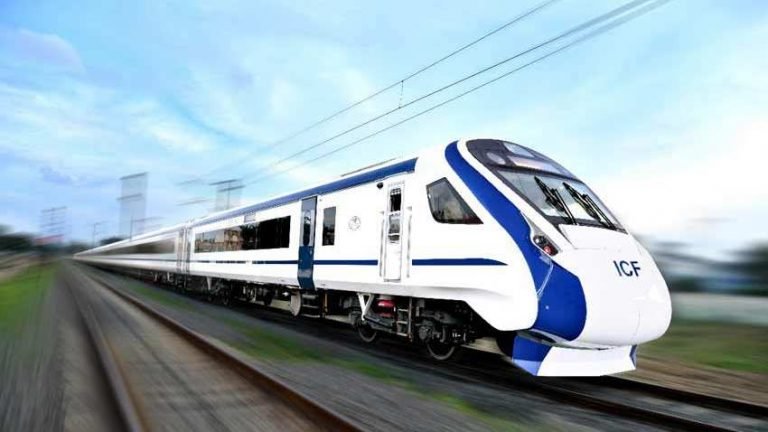
Indian Railways is now moving to manufacturing high-end aluminium self-propelled 160 km/hour indigenous Make in India coaches that require no locomotive and are 10% cheaper than the comparable imports. The first such self-propelled train, Train 18, was rolled out in October 2018. It is estimated to be 40% cheaper than foreign-built trains.
Railway Coach Refurbishment
The railway coach refurbishment project aims for the refurbishment of 12 to 15 years old coaches at Carriage Rehabilitation Workshop in Bhopal to enhance passenger amenities and fire safety measures.
Bio-toilets in all trains
In 2014, IR and DRDO developed a bio-toilet to replace direct-discharge toilets, which was the primary type of toilet used in railway coaches. Upgrade of all trains to bio-toilet was completed by the end of FY 2018-19.
The direct discharge of human waste from trains onto the tracks corrodes rails, costing IR tens of millions of rupees a year in rail-replacement work. Flushing a bio-toilet discharges human waste into an underfloor holding tank where anaerobic bacteria remove harmful pathogens and break the waste down into neutral water and methane, which can then be harmlessly discharged onto the tracks. IR plans to completely phase out direct-discharge toilets by 2020 or 2021.
All-new coaches were installed in 2016, with older rolling stock to gradually becoming retrofitted. After Comptroller and Auditor General of India found 200,000 complaints related to the foul smelling and blocked bio-toilets, IR announced that it will add 80,000 bio-toilets (each costing INR 1 lakh) in FY 2018-2019 and will start installing much improved ‘Vacuum Bio-Toilets’ (each costing INR 2.5 lakh) as well. By Feb 2018, over 100,000 biotoilets have been installed and the project is on target to have 100% biotoilets by 31 March 2019.
Hyperloop
Mumbai–Pune hyperloop

Mumbai–Pune hyperloop is a proposed 1000 km/hr Hyperloop system that will take 14 minutes compared to current 3 hours to commute between these two cities while carrying 10,000 commuters per hour (5,000 in each direction). The route is found feasible and can be made operational by 2026 as per the Detailed Project Report (DPR) submitted to ‘Pune Metropolitan Region Development Authority’ (PMRDA) by ‘Virgin Hyperloop company’ in January 2018.
Commuters and cargo will travel in pods traveling in the near-vacuum tubes at the speed of 1,000 km/hr. DPR provided three feasible terminal end-points options in Mumbai, namely Dadar, Santacruz and the international airport. Currently, 300,000 people commute between these two cities daily in 110,000 vehicles (including 80,000 cars and 6,000 buses).
Infrastructure: Station Redevelopment, Tracks & Geostrategic Border Rail Lines
Station redevelopment
Under a INR 1 trillion initiative, 600 railway stations will be redeveloped by monetising 2700 acres of spare railway land under the Rs. 1,070,000 crore plan undertaken by Indian Railway Stations Development Corporation by converging it with the Atal Mission for Rejuvenation and Urban Transformation and Smart Cities Mission in collaboration with Ministry of Urban Development, Rail Land Development Authority and National Buildings Construction Corporation. Following monetisation of land, Rs. 680,000 crore will be used for the commercial development, Rs. 280,000 crore for station redevelopment and the remaining Rs. 110,000 crore (US$15 billion) as surplus with the Railways. Initially A1 and A category stations will be prioritised. To begin with 22 stations will be developed by end of 2018.
In the first batch, IRSDC invited proposals in March 2018 for redeveloping 3 stations over two years, including the Chandigarh railway station, Bijwasan railway station and Anand Vihar railway station costing Rs140 crore, Rs310 crore and Rs206 crore respective.
Tracks : Dedicated freight corridors
There are 2 under implementation and 4 approved DFCs with many more planned. DFC will convert existing and implement new DFC as High-speed rail corridors of India.
Geostrategic Border Rail Lines
Ministry of Defence (MoD) a list of at least 15 new geostrategic rail lines to be constructed. In 2012, MoD had identified following 14 geostrategic new rail lines to be built near China, Pakistan and Nepal border for the rapid and easier deployment of troops while simultaneously undertaking development of 73 similar geostrategic India-China Border Roads (ICBR) roads as border rail and road transport development in India is lagging much behind China: China has built lines up to Shigatse in Tibet, with plans to connect it to Nepal and further to India. After these lines proposed by MoD in 2013, GoI approved the initial surveys of all 14 lines in 2014, of which at least 12 surveys had been already completed by 2014. Later additional “Bilaspur–Manali–Leh line” was also added to the list of strategic lines.
In 2016, the ‘Final Location Survey’ (FLS) at the cost of INR 345 crore for 4 lines to be taken up in the first phase was approved by the Cabinet, funding has been already provided by MoD and railway is undertaking survey of Missamari–Tenga–Tawang, Bilaspur–Manali–Leh, Pasighat–Tezu–Rupai and Lakhimpur–Bame–Silapathar lines. Undulating terrain of young Himalayas and difficult geological conditions affect the pace of survey.
| Sr. No. | Line | Length | Border | State |
| 01. | Murkongselek–Pasighat–Tezu–Rupai line | 227 km | China (Eastern sector) | Arunachal Pradesh, Assam |
| 02. | Missamari–Tenga–Tawang line | 378 km | China, Bhutan (Eastern sector) | Arunachal Pradesh, Assam |
| 03. | Lakhimpur–Along–Silapathar line | 249 km | China (Eastern sector) | Arunachal Pradesh, Assam |
| 04. | Bilaspur–Manali–Leh line | 498 km | China, Pakistan (Western sector) | Himachal Pradesh, Ladakh |
| 05. | Jodhpur – Jaisalmer Line Doubling | Pakistan (Western Sector) | Rajasthan | |
| 06. | Pathankot – Leh Line | China, Pakistan (Western Sector) | Ladakh, Punjab | |
| 07. | Tanakpur – Jaulijbi Line | Nepal (Central Sector) | Uttarakhand | |
| 08. | Tanakpur – Bageshwar Line | (Central Sector) | Uttarakhand | |
| 09. | Jammu – Akhnoor – Poonch Line | Western Sector | Jammu & Kashmir | |
| 10. | Patti – Ferozepur Line | Pakistan (Western Sector) | Punjab | |
| 11. | Anupgarh – Chattargarh – Motigarh – Bikaner Line | Pakistan (Western Sector) | Rajasthan | |
| 12. | Jodhpur-Agolai-Shergarh-Phalsund Line | Pakistan (Western Sector) | Rajasthan | |
| 13. | Jodhpur-Jaisalmer Line (Doubling) | Pakistan (Western Sector) | Rajasthan |
Public transport is vital in a country like India owing to its large population and expansive lands. The transportation industry in India is one of the most diverse comprising of Rail, Air, Water, and Road. It accounts for 6.4% of the GDP and is vital to the economic growth of the country.
One of the key areas of the transport industry is the rail network which spreads across 67,956 km making it the largest in Asia and the fourth largest in the world. Under the solitary management of Indian Railways, it comprises 13,169 passenger trains and 8,479 freight trains in operations from 7,349 stations. The gross revenue of Indian Railways for FY-22 (until June 2021) stood at INR 39,655.25 crores while freight earnings stood at INR 33, 241.75 crore accounting for 84% of the total revenue. Earnings by the passenger segment stood at INR 4,921.11 crores being the second major contributor of the total revenue.
The railway is one of the most efficient and economical methods of transport for both, passengers and goods. They are the economic lifeline of India with the volume of passengers using it in their daily commute. Additionally, they play a vital role in transporting goods like coal, metals, petroleum, chemical manures, and food grains. Even the automobile industry heavily relies on Indian Railways as the preferred carrier.
Indian Railways is an assets-heavy entity and it requires a punctual maintenance schedule, hence the value chain is imperative in keeping the sector functioning smoothly by enabling operations, management, maintenance of railway tracks and electricity lines, services, testing, construction activities, and procurement of materials.
The Government has also pushed for significant initiatives to boost the railway industry. The National Infrastructure Master plan (Gati Shakti) will help India’s growth story. By doing away with silos of departmentalism, the infrastructure roadmap will see faster and efficient completion. Gati Shakti is expected to increase the cargo handling capacity of railways to 1600 MT by the year 2024-25 thus accelerating the construction of two dedicated freight corridors. Even metro works have picked up and we can see India having a top-notch multi-modal transport hub in the coming years. These efforts will see greater last mile connectivity and increase the pace of economic prosperity.
Furthermore, the Central Government’s National Monetization Pipeline (NMP) is a strategic move that will shore up India’s overall development and bridge the infrastructure deficit. A rise in alternative financing for infra development will not only create a wealth of employment opportunities but, most importantly, strengthen the nation’s economy. It is also expected to lead to an increase in the railway’s potential to carry goods at a higher speed and a short turnaround time with enhanced efficiency. These factors will lower the high logistical costs and drastically reduce carbon footprint as well.
The Indian Railways had also unveiled a National Rail Plan (NRP) for India – 2030 which aims to create a ‘future ready’ railway system by 2030. It will look to create capacity ahead of demand and cater to future growth in demand right up to 2050. In July 2021, the South Central Railway zone announced infrastructure development by doubling the maximum permissible speed to 100 km per hour on the Godavari Bridge. The initiative gave a major boost to the Indian Railways on infrastructure modernisation.
The Indian Railways has taken several measures in improving the infrastructure and the quality of services and by 2030 the railway upgrades include hundred percent electrification of railways, upgrading existing lines with more advanced facilities, up-gradation of railway stations, developing a large high-speed train network interconnecting major cities in India and developing various freight corridors within the country. In a recent report by IEA, it was stated that Indian railways will account for nearly 40% of the total global rail activity by 2050.
To conclude, India’s Railway Transport is getting support and advancements from the Government. On the subject of becoming the world’s largest Railway entity, the Government’s initiatives have been designed for the benefit of the supporting businesses. Never has there been a better opportunity for railways to propel themselves to be the top transport sector in the world.
Metro Rail News is conducting a 2nd Edition InnoMetro 2022 on 28-30 April 2022, virtually focusing on Seamless Mobility. Join InnoMetro 2022 for a detailed discussion on the topic “HSR: Future of Indian Rail”.
Join as a delegate:
Join as a Speaker:
Join as a Partner: