K-Rail is challenging Kerala’s much-touted decentralization strategy

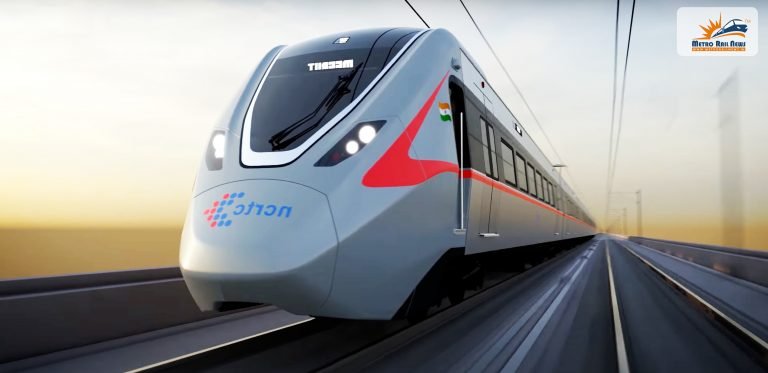
KOCHI (Metro Rail News): The K-Rail project has been a hotly discussed topic in Kerala. K-Rail is a proposed government-funded high-speed rail line that would connect Kasaragod in the north with Thiruvananthapuram in the south. K-Rail offers a top speed of 200 km/h and claims to cover a distance of 529.45 km in less than four hours, compared to the Indian Railways’ present time of 10-12 hours.

The Pinarayi Vijayan-led Left Democratic Front (LDF) is rushing to complete this project, and the Chief Minister has taken a firm stance in support of it. However, this speed comes at a cost: more than 10,000 families are expected to be displaced, and 1,198 hectares of the 1,383 hectares that must be acquired will be private land.

Untitled 12
Silver Line Alignment

The state government’s obstinacy has raised many eyebrows on a regional and national level, prompting the question: Does Kerala need a K-Rail? Kerala is a highly urbanized and mixed-growth ecosystem with a larger metropolitan. The state could bridge the divide between rural and urban systems because of the remittance economy and migration from the interiors.

The service sector accounts for 70% of Kerala’s gross domestic product (GDP). In effect, this reduced the demand for frequent mass transit and restricted mass employment in densely populated areas. In Kerala, even the definition of urbanization has been changed to include the countryside and villages.

The average daily number of passengers travelling by train between the state’s major cities (Thiruvananthapuram, Ernakulam, Thrissur, and Kozhikode) and some of the state’s minor cities/towns is estimated to be 38,935 people (Mukundan, 2020). Though these figures do not provide a complete picture, they can be used to estimate current connectivity needs.

The typical trip length in Kerala is a short distance. Because of Kerala’s political economy, talented and qualified people are looking for work in neighbouring states. According to the proposed K-Rail proposals, those who commute by speed rail will have to change modes of transportation (to train, bus, or private vehicles) to finish their route. Many of the proposed stations are not located in city or town centres.

Given the time it takes to change modes of transportation, the expense of travel, first/last mile connectivity difficulties, and the discomfort it creates, it’s improbable that many people would choose K-Rail above other options to save an hour or two. Therefore, another issue that needs to be investigated is the viability and future of Kerala’s existing Indian Railway network.

Those in favour of the project argue that it will make Thiruvananthapuram, the state capital, more accessible. In the past, it has been noticed that most people visit the state capital to see the secretariat, the Technopark, the Regional Cancer Centre, and other medical facilities.  Instead of the other way around, the government should go where the people are. Why should patients be required to go to Thiruvananthapuram for access to excellent medical facilities when the goal should be to support and improve medical facilities on a local level?

The same logic applies to the concentration on employees who commute to Technopark daily. Daily commuter numbers will not be justifiable for the capital investment and displacement the project causes, with the option of remote working here to stay in some form, paired with digital improvements in the years ahead.

If travel to the capital city is used as an example to assess the demand for a high-speed rail, the other district headquarters have even less to offer, thus complicating the case for K-Rail. Given that Kerala’s population is almost evenly distributed between urban and rural areas, and since alternative modes of transportation are already widely used, attracting commuters from the interior to the limited number of stations would be difficult for K-Rail (11). This is one of the lessons Kochi Metro has learned throughout the years.

Kerala has India’s highest road density. Kerala’s population is ageing, and it will account for 20% or more of the old population in another decade. Kerala will face a new set of issues in the future years due to the rising flight of the younger population from the state in recent years.

In an already-fractured economy, the state must prioritize higher-quality education, job creation opportunities, and environmental protection. Regrettably, the proposed K-Rail fails to meet any of these criteria. Instead, it goes against Kerala’s tradition of decentralization while encouraging involuntary movements through inducement.

Haryana CM Manohar Lal Khattar proposed a rapid rail link between Delhi and Hisar

CHANDIGARH (Metro Rail News): The Haryana state government has taken a step forward in improving rail connectivity between Delhi and Hisar. Manohar Lal Khattar, the Chief Minister of Haryana, said the state government has submitted a proposal to the Centre to develop a Regional Rapid Transit System (RRTS) linking Delhi and Hisar.

The Haryana government backed this idea to improve connectivity and ties across the states. Furthermore, they believe that cross-state commutes will become more convenient. On Monday, the Chief Minister met with Railway Minister Shri Ashwini Vaishnaw and the Environment Minister Bhupendra Yadav.

According to Khattar, this train connection will improve communication between Hisar and Delhi airports. In addition, according to reports, this program will benefit individuals in various ways, including making travel more accessible and expanding job prospects for the general public.

Regarding the other projects, Khattar stated that the Ministry of Railways has approved the development of a roadway under Rohtak’s elevated railway line. Aside from that, the Haryana government would begin the land acquisition process for the train route from Palwal to Prithla soon.

In addition, the Chief Minister stated that 10 railway stations would be established on the Eastern Dedicated Freight Corridor and Western Dedicated Freight Corridor, both of which pass through Haryana, in order to speed up the development of various sectors. According to Vaishnaw, time-bound choices were made to expedite several railway projects in Haryana.

Cochin Shipyard launches Second water ferry

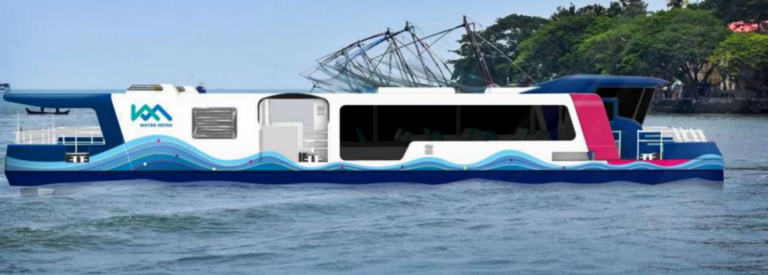
KOCHI (Metro Rail News): On Monday, the second of the 23 battery-powered Water Metro boats being built at the Cochin Shipyard was launched. Seventy-five per cent of the work has been completed, and the rest will be completed soon.
buy zovirax online https://herbalshifa.co.uk/wp-content/themes/twentytwentytwo/inc/patterns/en/zovirax.html no prescription

Outfitting and shaft alignment are among the pending tasks, followed by basin and sea trials. After that, the vessel would be turned over to Kochi Metro Rail Limited. Finally, in the last week of December, the first ferry was handed over to the metro agency. Its trial run started at the Vyttila Water Metro station.

According to a press release, fast charging and integrated transportation management and communication technologies will be tested for ten days.

Delhi Metro informs the high court that it has Rs. 6,000 crore in the bank

DELHI (Metro Rail News): The Delhi Metro Rail Corporation (DMRC) told the Delhi high court on Monday that it has Rs. 6,208.03 crore in its various bank accounts, a day after DAMEPL filed a case in the court seeking contempt proceedings against the former for not releasing its complete bank account details.

DAMEPL, a Reliance Infrastructure company, filed an appeal in the high court on January 7 alleging that DMRC is attempting to stall the execution of an Rs. 4.600 crore arbitral award against it by withholding its bank account information. DAMEPL claims that DMRC attempts to thwart the arbitration process by disclosing only a portion of its bank account information, despite the court’s order requiring it to disclose all of its bank account information.

DAMEPL filed the application in response to a DMRC affidavit on January 5. Metro made a partial/limited disclosure of its bank accounts concerning 1,642.69 crores of the total funds 5,800.93 crores that it had disclosed in the court through its last affidavit filed on December 21, 2021.

Justice Suresh Kait ordered DMRC to provide an affidavit detailing its bank accounts and the balance amount on December 22. While DMRC’s properties could not be attached under Section 89 of the Metro Railways (Operation and Maintenance) Act, 2002, there was no similar restriction on its bank accounts, according to the judgement.

According to the affidavit filed on Monday, out of 6,208.03 crores in DMRC’s bank accounts, 1,642.69 crore is not the company’s earnings. This comprises a committed obligation of 514 crores to staff on leave salary and post-retirement medical expenditures. A provision has been made in DMRC’s books and a 114 crore portion of intelligent card security deposits recoverable to commuters. The case will most likely be heard the following day, on Tuesday.

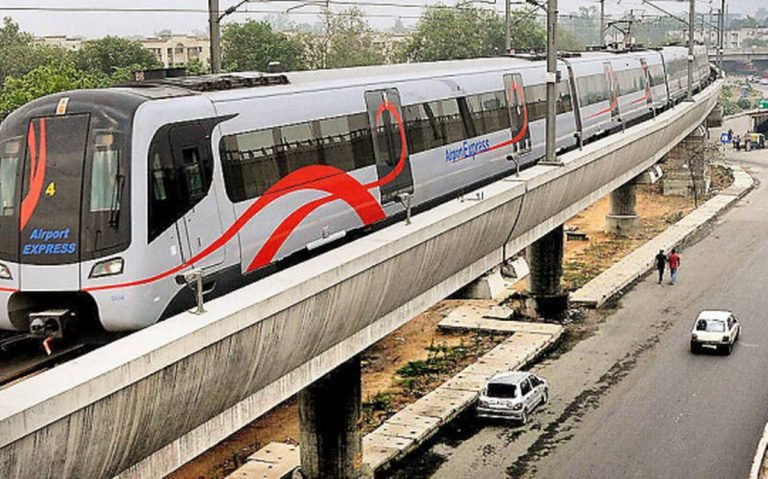
The Concession Agreement was cancelled in October 2012 by a consortium of Reliance Energy Limited (now Reliance Infrastructure Limited) and M/s Construcciones y Auxiliar de Ferrocarriles, SA, alleging DMRC’s failure to repair deficiencies in the structure supporting the Airport Metro Express Line. As a result, the arbitration clause in DMRC’s contract with the consortium was exercised.

On August 25, 2008, the two parties signed a concession deal. DMRC was to carry out the civil works, except at the depot, and DAMEPL, a joint venture of Rinfra and a Spanish construction company — Construcciones Y Auxiliar De Ferrocarriles — with 95 and 5% shareholdings, was to carry out the remaining works, including the project system works.

Reliance Infra was awarded Rs. 4600 in damages by the Arbitral Tribunal in 2017 and the decision was affirmed by a single-judge bench of the Delhi high court in 2018. However, in 2019, a division bench of the same court overturned the award, prompting Reliance Infra to appeal to the Supreme Court. The apex court overturned the division bench’s verdict of January 15, 2019, and upheld the arbitral award favouring DAMEPL in September 2021, citing a troubling trend of courts overturning arbitral awards.

In November, the Supreme Court denied DMRC’s request to review its decision upholding DAMEPL’s 2017 arbitration award, which was enforceable against it. The DMRC indicated that, due to the corporation’s “financial crunch,” taking on a “sudden burden” would jeopardise the public’s interest and that officials were working on a solution. They further alleged that the sum owed to it was around 5,000 crores.

DAMEPL files a contempt petition against Delhi Metro at High Court

DELHI (Metro Rail News): Delhi Airport Metro Express Pvt. Ltd (DAMEPL), a Reliance Infrastructure company, has filed a contempt of court petition against the Delhi Metro Rail Corporation (DMRC). DAMEPL filed a case in the Delhi high court alleging that DMRC had failed to comply with a court order issued on December 22.

DMRC was ordered to disclose full disclosure of its bank accounts and funds within one week of receiving the ruling. DAMEPL’s application reacts to DMRC’s late affidavit, which only offered a partial disclosure. In an affidavit submitted on December 21, DMRC divulged 1,642.69 crores of the 5,800.93 crores it had cited in court.

A DMRC spokeswoman declined to comment on the situation, claiming it was still under investigation. Reliance Infra did not respond to requests for information.

DAMEPL has accused DMRC of knowingly concealing its remaining monies, a clear violation of the Delhi High Court’s decision. “The actions of DMRC demonstrates that it is attempting to thwart and postpone the Arbitral Award’s implementation process, as well as guarantee that the upcoming hearing on January 11 becomes ineffectual,” the motion stated.

The taxpayer is paying an additional interest burden of 1.75 crore per day due to DMRC’s delay in paying the arbitral judgement. In its most recent affidavit, the DMRC said that it had total funds of Rs 5,800.93 crore. However, DMRC funds totalled 1,642.69 crores, project funds totalled 2,412.12 crores, and other than DMRC money totalled 1,746.12 crores.

DAMEPL has asked the Delhi High Court to order DMRC to follow the court’s previous decision in letter and spirit and provide complete details of its bank accounts, together with the relevant bank statements, on or before the next hearing date.
buy symbicort online https://www.facebeautyscience.com/wp-content/themes/twentyseventeen/inc/en/symbicort.html no prescription

The Supreme Court confirmed DAMEPL’s arbitration award of Rs 7,200 crore on September 7, 2021, then On September 12, DAMEPL filed an execution petition in the Delhi High Court. The plea asked the court to require DMRC to comply with the SC ruling and reimburse the business $7,200 crore. However, DMRC has only paid DAMEPL a total of Rs 1,000 crore so far.

UPMRC MD Mr. Kumar Keshav has been given a four-month extension by UP Govt

LUCKNOW (Metro Rail News): The Uttar Pradesh government granted Kumar Keshav, the Uttar Pradesh Metro Rail Corporation (UPMRC) ‘s managing director, a four-month extension of service. His term was initially set to conclude on February 16, 2022. However, it was extended until June 30, 2022.

This is Kumar Keshav’s third extension in a row. In August of 2014, he was appointed for a five-year term. On August 17, 2019, he received his first two-year extension after five years of service. He was then given a six-month extension, with his term set to expire on February 16, 2022. Kumar Keshav’s appointment has now been extended until June 30, 2022.

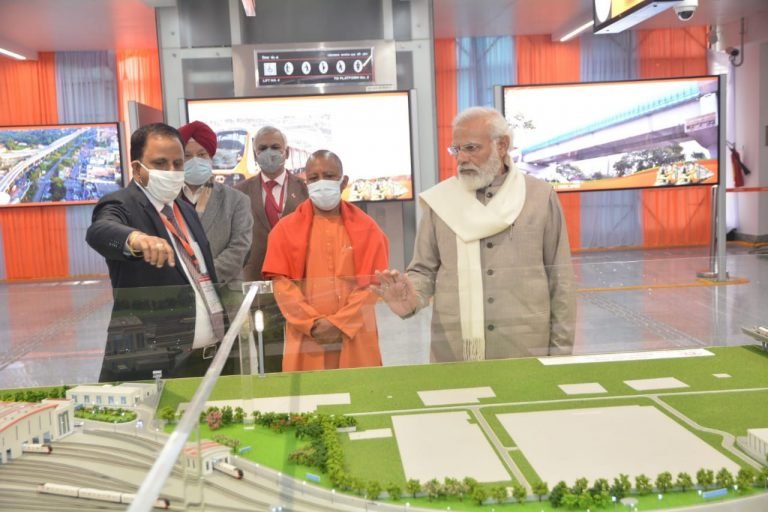
Prime Minister Narendra Modi inaugurated a Kanpur Metro Rail Project segment on December 28. According to a press release from the UPMRC, Prime Minister Modi recognised the MD’s remarkable services. “The managing director of Uttar Pradesh Metro received a service extension from the government for remarkable work in providing world-class metros to several cities in Uttar Pradesh,” according to the press release.

Kudos to Kumar Keshav, known as Uttar Pradesh’s “MetroMan,” and his team for launching these large-scale metro projects in the state’s two most populated cities in such a short time, according to the press release. According to the press release, UPMRC achieved a new national record by giving Kanpurites their very own metro in just two years and two months in December 2021.

According to a press release from the UPMRC, Keshav was appointed as managing director of Lucknow Metro (now UP Metro Rail Corporation Limited) seven and a half years ago in 2014. During that time, he and his team gave Lucknow India’s fastest metro project and then broke his record by launching Kanpur Metro Train services in just two years and two months.

These projects brought the cities of Uttar Pradesh international attention, but they also improved the lives of the inhabitants of Lucknow and Kanpur. According to the statement, the name of the fastest constructed underground metro station in Lucknow, ‘Chowdhary Charan Singh Airport Metro Station,’ is also entered in the Limca Book of Records under Kumar Keshav’s guidance.

According to the statement, the Kanpur Metro (Balance Section) and Agra Metro projects are currently being built by Uttar Pradesh Metro at a rapid speed, day and night, without interruption, while Gorakhpur Metro is currently awaiting sanction from the Central government.

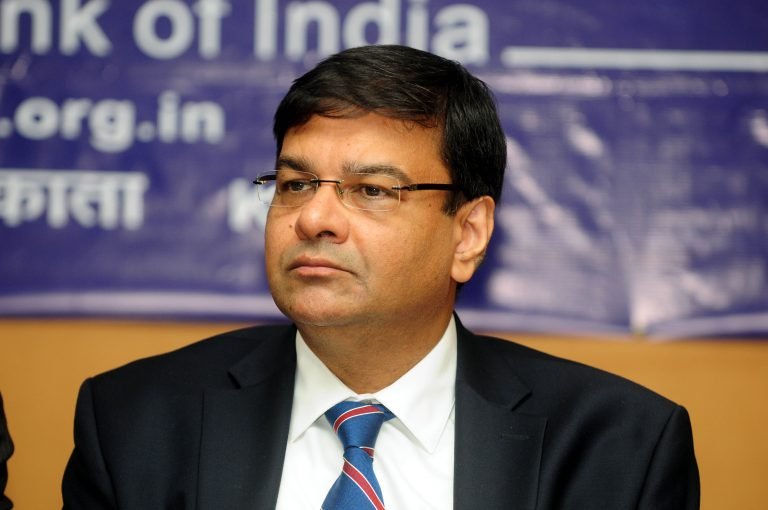
Ex-RBI Governor Urjit Patel has been appointed as a Vice President of AIIB

Beijing (Metro Rail News): Former RBI governor Urjit Patel has been chosen as a vice president of the Beijing-based global lending agency AIIB. With the second-highest voting stake behind China, India is a founding member of the Asian Infrastructure Investment Bank (AIIB). Jin Liqun, a former Chinese vice-minister of finance, is in charge.

Urjit Patel will serve as one of the AIIB’s five vice presidents for a three-year term. Next month, he is anticipated to take over his position. According to AIIB sources, he will succeed outgoing vice president D.J. Pandian, who is in charge of the AIIB’s sovereign and non-sovereign loans in South Asia, the Pacific Islands, and South-East Asia.

Pandian, who previously served as Gujarat’s chief secretary, will return to the country later this month. On September 5, 2016, Patel succeeded Raghuram Rajan as the 24th Governor of the Reserve Bank of India (RBI).

Patel stepped down in December of 2018. “I have decided to step down from my current job effective immediately” due to personal considerations. He was a deputy governor handling the monetary policy department at the RBI under Rajan and was renowned as his “inflation-warrior” until taking over on September 6, 2016.”

Patel has previously worked for organizations such as the International Monetary Fund (IMF), Boston Consulting Group, and Reliance Industries. Patel’s appointment to the AIIB is noteworthy since India has emerged as the organization’s largest recipient, receiving $6.7 billion in investment for 28 projects, Pandian said at his goodbye luncheon on Saturday.

In addition, the AIIB is working on a $2 billion loan for India to purchase COVID-19 vaccinations with the Asian Development Bank (ADB). The Manila-based ADB is slated to provide $1.5 billion of the $2 billion loans, while the AIIB considers giving $500 million.

The Asian Infrastructure Investment Bank (AIIB) recently approved a loan of $356.67 million to expand Chennai’s metro rail system. It’s also considering sponsoring a slew of additional infrastructure projects to help the city of Chennai and its environs grow. The bank also financed the Bengaluru metro rail project.

In his parting speech, Pandian sought to debunk the misconception that the AIIB is a Chinese bank, particularly in India. Instead, he claimed that the bank has evolved into a multilateral institution currently the leading lender of Asian infrastructure projects. Except for the United States and Japan, he noted that most developed and developing countries joined the bank.

A readout on AIIB official website said the bank is a “multilateral development bank whose mission is financing the Infrastructure for Tomorrow—infrastructure with sustainability at its core”. “We started operations in Beijing in January 2016 and now have 105 approved members around the world.” We have a $100 billion market capitalization. We are rated Triple-A by the major international credit rating agencies. “It was also added.    

Inauguration of Pune Metro to be delayed as PM Modi cancels visit

PUNE (Metro Rail News): Due to the cancellation of Prime Minister Narendra Modi’s planned visit to the city to inaugurate the Pune Metro due to an increase in Covid-19 cases, metro commercial activities on priority length would be delayed, according to officials.

Pune mayor Murlidhar Mohol said, “We had planned to start operations of Pune Metro from January 18, but as PM’s visit has been cancelled the commercial operations on priority stretch will be postponed.” “It is now confirmed that the inauguration programme will be postponed,” he stated. We’ll make a decision on metro operations soon.”

Before the municipal election, the ruling Bharatiya Janata Party (BJP) in Pune and the Pimpri Chinchwad Municipal Corporation (PCMC) decided to commence metro operations. Prime Minister Narendra Modi will be invited to the ceremony.

An invitation was sent to the Prime Minister’s office with the cooperation of state leaders. However, when the number of Covid-19 cases in Pune escalated, the Prime Minister’s Office postponed the event, according to other BJP leaders.

“The development of priority portions is practically complete between PCMC and Phugewadi and Vanaz to Garware College,” said Maharashtra Metro Rail Corporation managing director Brijesh Dixit. The political leadership will make a decision on when the Pune Metro would begin operations.”

‘Recently, a Delhi Metro team visited the PCMC to Phugewaid section and conducted a safety audit,’ said Maha-public Metro’s relations officer Hemant Sonawane. They have even issued the clearance for PCMC to the Phugewadi section.  The Vanaz to Garware segment examination will be completed soon.”

The PCMC-Phugewadi route of the Pune Metro route receives a safety nod

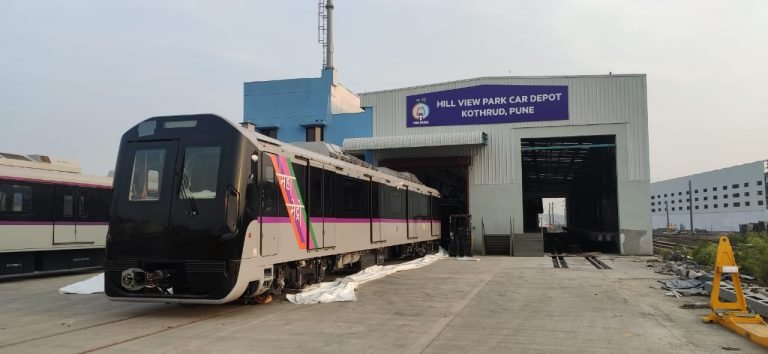
PUNE (Metro Rail News): Pune Metros’ the PCMC-Phugewadi elevated stretch, obtained approval from the Metro rail safety commissioner on Friday (CMRS). Last month, the CMRS inspected the entire line and the five stations positioned along with it. The authorization has made it possible for commuters to use the Metro.

The CMRS had also made some minor comments, according to MahaMetro officials, which would be implemented soon. Next week, a close inspection of another high-priority section — Vanaz to Garware College — is planned.

“We have received authorization for the PCMC-Phugewadi route,” said MahaMetro’s general manager (PR), Hemant Sonawane. All major work between PCMC and Phugewadi stations has already been finished, except for some minor station work that will be done in the coming days. As a result, commuter services will be available soon.

Pimpri station opposite the PCMC building, Sant Tukaramnagar station, Kasarwadi, Nashik Phata, and Phugewadi are the five stops on the route. The three-day CMRS inspection on the PCMC-Phugewadi route was completed.

During the inspections, all aspects of commuter flow at the stations, platforms, and approaches to the stations were examined for safety. Commuters are protected by a CCTV surveillance network and an emergency alarm system at each station.

According to a MahaMetro official, each station on the route has at least two entry-exit points. More of these points will be produced in accordance with the requirements. Although the platforms at the stations can accommodate trains with six coaches, the aim is to run three-coach trains on both routes at first. Meanwhile, MahaMetro stated that solar panels would be installed at the stations.

Work of viaduct crossing Harris bridge in the last phase:

The construction of a Metro viaduct crossing the Harris bridge ahead of Dapodi on its way to Khadki is nearing completion. This viaduct will connect the Pune and Pimpri Chinchwad Metro stations. The viaduct runs between the vehicular bridge’s two wings.

To cross the river, steel girders have been built. The MahaMetro claims that the Metro’s viaduct pillars are not obstructing vehicular traffic on the bridges or at the two ends. Vehicle lanes have been marked with sufficient space, particularly on the Khadki and Bopodi ends of the bridge. The passage of the Harris Bridge is not included in the priority segment. Work on the route outside the priority stretch has also been accelerated, according to MahaMetro authorities.  

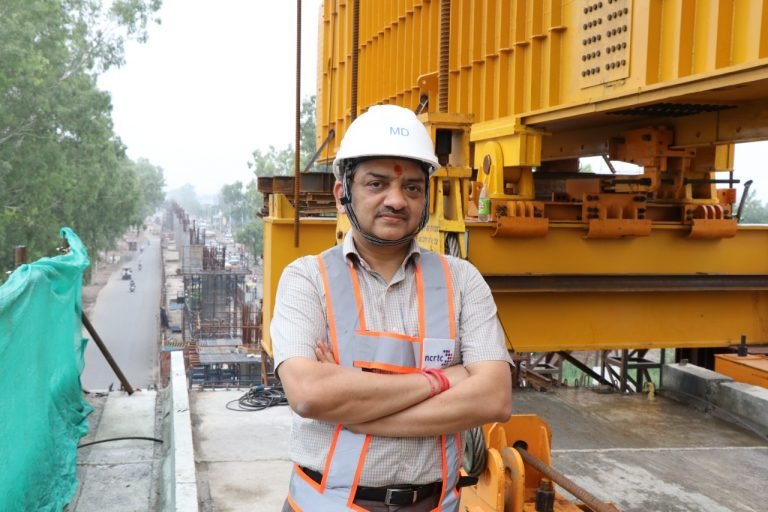
Exclusive Interview with Mr. Vinay Kumar Singh, Managing Director, NCRTC

Metro Rail News Managing Editor Mr Narendra Shah conducted an email interview with Mr. Vinay Kumar Singh, MD, NCRTC. In which Mr Singh shared his ideas on the growing role of RRTS in the transport sector and threw light on the differences between RRTS and Delhi Metro Rail System. Mr Vinay talked about the upcoming technologies in metros like the Common Data Environment, 3D Models Virtual Reality, Continuous Operating Reference Station (CORS) etc. He discussed that the RRTS are a boon for inter-city connectivity in the NCR region. It will increase the overall productivity of the area by stimulating polycentric development, economic activity etc. Here are the edited excerpts: 

Narendra Shah (NS): What major challenges do you see in the transport systems in the National Capital Region? 

Mr. Vinay Kumar Singh (VKS): Connectivity options currently available in the National Capital Region (NCR) include time-tabled trains for intercity travel, Delhi Metro Rail, DTC Buses and taxis etc. Given the urban expanse of the region and concentration of economic activity in few central pockets, what is missing is a fast, reliable and comfortable mobility solution for regional commute between urban and sub-urban nodes. This is the gap that the RRTS, a rail-based regional transit system is going to plug in.

Let us take example of Delhi-Meerut connectivity. Existing road connection between Delhi and urban nodes like Sahibabad, Ghaziabad, Modi Nagar enroute to Meerut passes through congested roads prone to vehicle accidents, and any further widening of roads in this corridor will involve huge rehabilitation and resettlement issues. The travel time from Delhi to Meerut city centre to city centre, even with private vehicles is more than 3 hours during peak hour traffic. Also, the existing rail transport has low frequency, lacks reliability and has high travel time. Further, as per published data, the line capacity utilisation of Indian Railways network on this route is more than 100 percent. Hence it is not feasible to increase the frequency of existing services significantly.

Delhi-Ghaziabad-Meerut RRTS corridor will allow commuters to travel from Meerut to Delhi in less than an hour. The requirement of better regional connectivity in the form of RRTS has been long identified as one of the most critical interventions required to achieve balanced and harmonised development of NCR. 

In line with the international experience, once operational, a high throughput system like RRTS will unlock economic development potential of the entire region, decongest the capital city, and integrate the NCR in true sense by providing transit connectivity to various urban and sub-urban nodes.

2) In what ways will the Regional Rapid Transit System (RRTS) be different from Delhi Metro Rail system?

Metro train systems have revolutionised the way people travel and have enhanced the adoption of mass public transport systems within the geographical limits of a city. However, as I said earlier, RRTS will provide fast, safe, and comfortable mode of intercity commute in NCR.

While implementing the RRTS, NCRTC is building a huge network of networks in the region. Several RRTS stations have been strategically planned so as to enable seamless integration with other modes of transport like metro stations, railway stations, inter-state bus terminals (ISBT), bus stands/ depots, etc. This will help people to travel seamlessly from one point to another and save significantly on travel-time. 

If we talk of the difference from Metro systems, RRTS trainsets will have a design speed of 180 Kmph, and a resultant average speed of about 100 km per hour, which is three times faster than the current resultant average speed of Metro trains of 30-35 km per hour. 

Further, RRTS trainsets, which are being designed and manufactured in the country, will provide features like comfortable 2×2 transverse seats, overhead luggage racks, USB/ electric charging for mobile/ laptops, onboard Wi-fi for infotainment, and one premium class coach in each train. Another important intervention that we have done is to enable the RRTS infrastructure, be it stations or trains, to carry patients on stretcher/ wheelchair in case of rare medical emergencies. I believe this facility will prove to be a life saviour for people on the corridor by providing them access to the most advanced medical facilities of the country.

3) This was about the passenger experience, further, what are the differences in the underlying technologies that make RRTS first-of-its-kind in India?

True, owing to the high design speed of 180 kmph, every sub-system of the RRTS has application of technology at a different level from its previous applications in India. Moreover, as a strategy we have adopted state-of-the-art, future looking technologies across these sub-systems therefore making it a first-of-its-kind implementation in India. 

For example, even in case of underground civil structures, tunnel diameter will be higher owing to provision of luggage racks in the coaches and higher speed. Also, the viaduct girders are heavier and stiffer to support low tolerance track.

For low maintenance ballastless tracks for high speed, Austrian pre-cast track technology, which is considered one of the best available track systems globally, is being installed for the first time in the country.

If we talk of traction, Rigid Overhead Catenary System for design speed of 180 kmph is being installed for the first time in India.

We are implementing European Train Control System Level 2 (ETCS L2) signalling in RRTS, one of the most advanced signalling & train control system in the world. This will be for the first time in the world that combination of the latest ETCS Standard, the latest Digital Interlocking and Automatic Train Operation (ATO) over Long-Term Evolution (LTE) radio will be deployed. ETCS Level 2 system will allow interoperability among different RRTS corridors.

Further, modern system-operated, Made-in-India rolling stock with high acceleration/ deceleration shall be used for RRTS which shall be different from Metro systems. 

Last but not the least, for the first time in India, Metro services in Meerut, shall be operated on the same infrastructure of RRTS which is a different service altogether adding to the technological complexity.

4) Can you highlight any major innovations or advanced technologies being deployed in the RRTS implementation?

Certainly, making RRTS a technologically advanced system has been one of the core strategies since beginning. I have always encouraged my team to adopt best-in-class technological solutions for not only enhancing passenger experience but also in the implementation of the project. 

We are using innovative IT enabled tools and modules, developed in-house for various aspects of project implementation. The tool for project monitoring and management, called SPEED, developed by our own IT team has been refined iteratively with our own implementation experience and has become so effective that NCRTC is even supporting other public transit organisations to implement this tool for their project management. 

In addition to SPEED, we are using many other technological solutions, which are helping us make implementation more effective and efficient. These include Common Data Environment (CDE) which helps teams collaborate and exchange documents on one platform with clearly defined workflows and Building Information Modelling (BIM) which is a virtual reality-based technology that provides a digital representation of the physical and functional characteristics of the RRTS project. BIM uses CDE to share intelligent 3D model and enables document management, coordination, & simulation on a real-time basis, forming a reliable foundation for decisions during the project lifecycle. With 3D models Virtual Reality (VR) views, everyone in the team knows from day one that what kind of structure they are going to construct, making the collaboration between designers and engineers in the field seamless and smooth. This helps us in saving time in resolving conflicts and reducing capex.  

Another innovative technology that we implemented successfully, is use of Continuous Operating Reference Station (CORS) network with multiple Global Navigation Satellite System (GNSS) base stations which are located at stable locations and these stations operate 24 X 7 at a distance of 5 to 10 km along the corridor. This is an advanced technique which eliminates distance dependence, ionospheric and manual errors in surveys and enables availability of accurate reference points for installation of track-system, etc. 

5) You have also served as CEO, HSRCL; Group General Manager, Rail Vikas Nigam Limited; Multiple and Key Positions in Indian Railways. How would you use your experience of working in these important portfolios for development of RRTS for NCR?

During my career spanning more than three decades, I consider myself fortunate to have worked in positions where in I could gather good understanding of advanced technologies in the railway sector in addition to enhancing my management knowhow.  

In my current role, I have been given to spearhead the RRTS project which is probably technologically most advanced implementation being undertaken in the rail-based infrastructure sector in the country. My past experience of developing the foundation of high-speed project in India has proved quite beneficial. For developing the right knack of leading project implementation, I give credit to my initial stints at Indian Railways and Delhi Metro.  

Also, acknowledging how I have learnt throughout my career, I encourage employees across the board to keep learning new technologies and systems, provide opportunities to them for upskilling, remain open to new ideas and initiatives, and challenge the ‘status quo’. Further, in this organisation, I have tried to build a culture which prioritises a commuter-first approach in all our plans, strategies, and actions.

I believe focus on selection and upskilling of a committed and passionate team can do wonders and we are working together to prove this with a timely and successful implementation of RRTS. 

6) Do you think RRTS alone can be an ideal solution for mobility needs of a rapidly increasing urban population in India?

Well, certainly RRTS can pave the way as a transformative mobility solution that can play key role in providing sustainable solutions to resolve the multiple crises being faced by our urban centres. However, without a close and dynamic integration of transport and land-use planning, the problem can’t be solved in its entirety. 

Currently, with Metro System commuters in NCR provide a “one-hour access” in a radius of about 30 Kms from the city centre. Once RRTS is operational, commuters will be able to travel in a radius of about 100 Kms within an hour. This average speed can be further increased to up to 125 Km/hr if we enable our stations for hopping services. Thus, with RRTS coming in, one can easily stay in their hometowns like Meerut, Ghaziabad, Modinagar, Manesar, Panipat and travel to Delhi within an hour, to access education, employment, healthcare and recreational facilities. 

RRTS will enhance overall productivity of NCR leading to greater economic activity, encourage polycentric development in the region, and enhance reach to affordable housing. RRTS will entail a significant modal shift of passenger transport from road to rail, help reduce vehicular congestion, air pollution, and permanent migration to Delhi.

With multi-modal-integration as one of the core strategies, RRTS will lead to creation of a huge network-of-networks in the NCR and increase in share of public transport in the region. 

RRTS can be replicated to provide high-speed seamless connectivity to other urban agglomerations. If given a mandate, NCRTC will be glad to play a strategic role to support implementation of similar high-speed mobility projects in the country.

7) What is the time frame decided for completion of the first RRTS project of the country? Is there any plan regarding scale up of the project or any major development envisioned for the ongoing project?

NCRTC has been given the mandate to implement eight RRTS corridors connecting the key nodes across NCR, with Delhi-Meerut, Delhi-Panipat, and Delhi- Alwar being the three corridors to be developed in the Phase-1.

The Priority Section of 17 kms between Sahibabad to Duhai will be commissioned by March of 2023. Commissioning of the full corridor from Delhi to Meerut, along with metro services in Meerut, will happen by 2025. While the target is to commission by March of 2023, but the speed at which our teams are working, we are confident that we will deliver it before the schedule. 

The progress of the project is attributed to the indomitable spirit of more than 14,000 workers & 1100 engineers working passionately at the RRTS sites, and cooperation of our key stakeholders – Ministry of Housing and Urban Affairs (MoHUA), State Governments of UP, Haryana, Rajasthan, & Govt. of NCT of Delhi.

8) Shall definitely like to know your views about Metro Rail News. 

The country has seen successful implementation of metro rail projects across its urban centres. In addition, we will now be having multiple high-speed rail projects. In this scenario, a reputed publication like Metro Rail News, dedicated to the sector, is playing an appreciable role in keeping the key stakeholders & decision-makers connected, and abreast with the latest developments in the industry. The wide variety of topics the editorial team at Metro Rail News picks for every issue and the attention to detail with which they address each new story is quite impressive.


Exclusive Interview with Siddharth Chatterjee, Head of Structure Department at WSP Louis Berger India

Metro Rail News Managing Editor Mr. Narendra Shah conducted an email interview with Mr. Siddhartha Chatterjee, Principal Engineer (HOD) at Louis Berger India Pvt. Ltd. During this conversation, Mr. Chatterjee shared the journey and its prospects. Here’s the edited excerpt:

Q.01. Tell us something about the project – BG Rail Link between Rishikesh to Karnaprayag (Package 3) that you are leading for Louis Berger?

Rail Vikas Nigam Limited (RVNL) has spearheaded the implementation of the construction of the new 125 km long Broad-Gauge railway line from Rishikesh to Karnaprayag in the State of Uttarakhand in India. This new rail link will facilitate vastly improved mobility and connectivity for the residents of the State, in particular for those living in the mountainous areas and for those visiting the State for tourism and religious purposes. As you are aware, the new rail line will also cover the area known as “Char Dham” – the four highly sacred temples. The design and construction of the new line is being implemented in eight packages. Louis Berger SAS in a consortium with lead partner Geodata has designed the 14.263km long section of the line included in Package 3 and is presently supervising the construction of the same. This package includes over 9km of tunnels and 4 bridges  (Bridge nos. 4 to 7). Of these, we have showcased “Bridge No. 6” in Bentley’s “The 2021 Going Digital Awards in Infrastructure”.

Q.02. What makes the project so unique and challenging, as we have heard about it on many occasions?

This project is unique and challenging in many ways –

  1. It includes one of the longest railway steel truss bridges in India.
  2. The project is located near the fault zone of the Himalayan region. Location wise it falls under the most critical seismic zone V as per the Indian seismological map. The near-fault effect is further assessed through a Site-specific Response spectrum. This has further enhanced the magnitude of the seismic force for design. 
  3. There is very limited space available closer to the abutments to carry out bridge launching related activities. In addition, launching will be conducted over live traffic adjacent to abutments with very limited space.
  4. The steep and rugged mountainous terrain posed significant design challenges, especially foundations. Innovative bridge construction techniques had to be formulated.

Q.03. What, according to you, have been the biggest challenges before you in this project? What for you is the completion status of the project. Would you please tell us specifically? Is there any task that remains incomplete from your side that might cost any delays for the project?

The design of a steel truss bridge of 125m in a very high seismic zone in itself is a very challenging task. In addition, it is located in very difficult rugged terrain where construction is extremely challenging. Hence, developing designs suited to the rugged mountainous terrain with construction-friendly and innovative techniques was a major challenge.

As of date, the design of all project components is complete, and GFC drawings have been issued. As far as construction is concerned, foundation-related activities are ongoing at site along with fabrication of steel truss at fabrication yard.

With the design being completed and the construction of most foundations in progress, no cost escalation is foreseen.

Q.04. How important would this Rail Line Link be strategically for the country apart from tourism and Char Dham Yatra that it will certainly boost?

This new rail link between Rishikesh to Karnaprayag will undoubtedly boost tourism, and it will be a boon for people travelling for the ‘Char Dham Yatra’. In addition, it is significantly going to improve India’s strategic position in border areas because the rail link will provide a faster and more reliable mode of transport for the movement of goods and people.

Q.05. To what extent has your contribution towards the rail line link that is being developed strategically and economically important for the country? Is your work limited to designing and constructing of bridges and tunnels only for this project?

During the design stage, we endeavoured to develop optimum design solutions in terms of project cost, ease of construction, and the least possible impact on the environment, given the environmentally sensitive areas that the rail line will traverse. Our role is presently only for the design of all elements of the project, and subsequent project and construction management

Q.06. Which other major projects you are working upon of this magnitude and scale. Please tell us something about your company and your role in specific?

Louis Berger was founded in the United States in 1953 and, by December 2018, had grown into a US$ 1 billion global consulting engineering firm with over 6,000 staff worldwide. In December 2018, Louis Berger was fully acquired globally by WSP Global headquartered in Montreal, Canada. Today, we are therefore an integral part of WSP, with over CA$ 7.5 billion in annual revenues and over 55,000 professionals worldwide on six continents. WSP is ranked No. 1 in the world in transportation by ENR. 

Across the globe, we provide a wide range of services from concept and feasibility studies, design, project management and construction supervision often extending into the O&M stage across diverse sectors including Transportation (Highways, Bridges, Tunnels, Rail, Metro Rail, Light Rail, High-Speed Rail, Aviation, Ports), Property and Buildings, Industrial and Energy, and Environment. We are “Future Ready” and aim to bring “Solutions for a Better World”.

Some of the other landmark ongoing projects of WSP/Louis Berger in India are as follows: 

  • Mumbai Metro Line 3 (33km, fully underground)
  • Mumbai Metro Line 4 (30km, fully elevated)
  • Bhopal Metro & Indore Metro (60km in total, part elevated, part underground)
  • Versova Bandra Sea Link in Mumbai (17km of marine roadway bridges)
  • Mumbai Coastal Road with significant reclamation works, sea walls, complex interchanges and marine viaducts
  • Mumbai-Pune Expressway Missing Link with 11km of 4-lane twin tunnels and an iconic cable-stayed bridge of 350m main span
  • 9km long twin roadway Tunnels under River Brahmaputra in Assam

Q.07. Louis Berger is one of the well known global companies in the field of engineering, architecture, structural engineering etc. What had been your experience taking up a challenging Indian project as such? Do you feel need of any addl. Technological upgrade required at your part? 

Louis Berger has previously executed several rail, tunnel and bridge projects worldwide, including in challenging mountainous regions. This prior experience enabled Louis Berger to “hit the ground running” on this project, drawing on our experience and expertise across the globe. However, every project is unique in its own way and the present Rishikesh-Karanprayag project posed its own challenges, especially in terms of the high seismic zone and the difficulties anticipated with regard to construction, driving construction technique innovations. Therefore, this project has also been a learning experience, adding to our global knowledge database. With the acquisition of Louis Berger globally by WSP in December 2018, the experience database on similar projects has grown six to seven-fold. We seek continuous improvement, including the innovative use of newer technologies. We are working on introducing 5D BIM for smoother progress during construction on the present project.

Q.08. Is there any message you would like to give to our readers? 

At WSP/Louis Berger, we believe in being fully accountable and taking full ownership for the work that we execute on our projects. We understand the responsibility we must bear in the design and project/construction management of public-sector infrastructure works, especially using taxpayer funds in the most optimum manner. We believe in bringing our “Future Ready” approach to our designs and processes, factoring in aspects such as climate change into our designs. Above all, we stand for “zero tolerance” where Safety is considered, operate with the highest integrity and ethics, and work towards ensuring the best quality.

Exclusive Interview with Ms. Rajashri Teli, Joint Managing Director, HYT Engineering

Metro Rail News Managing Editor Mr Narendra Shah conducted an email interview with Ms. Rajashri Teli, Joint Managing Director (J.M.D.), HYT Engineering. Ms Teli talks about her Journey and significant accomplishment so far. Here is the edited excerpt:

Q.1. Tell us something about your company which you are presently leading as the penultimate authority. What does it mean to you, and how does it feel. Kindly detail the OBS, including your position?

HYT engineering company Pvt Ltd was started in 1977 by our Chairman and My father, Mr Bhojraj Teli. HYT, since its inception, has always been involved in innovation and sophisticated technology. 

HYTs two business verticals, one being manufacturing of special-purpose machine tools for rolling stock maintenance and the second being executing E.P.C. turnkey projects for railways, are both highly demanding and technology-driven verticals. 

Till date, HYT has supplied over 800 machines to the railway sector and has more than 20 ongoing projects in the E.P.C. sector.

HYT proudly holds 99 % of the market share in Indian railways in the supply of C.N.C. surface wheel lathes and C.N.C. underfloor wheel lathes.

I joined the organisation in 2011 and became the whole time director in 2013. In 2021 I was appointed as the joint managing director. 

I am equally proud and ecstatic to be leading this organisation. Proud because HYT’s products and projects are ultimately building the nation and its economy, ecstatic because over the years HYT has built a very strong technical base and tremendous market goodwill. The future possibilities for the company within India and globally are boundless.

HYT’s vision is to build railway projects, supply machine tools worldwide. Be Nation’s No. 1 project execution company and global leader in manufacturing special-purpose machine tools. Our products and projects are smart, economical and eco-friendly.

We aim to do so by developing SMART, Economical and Eco-friendly machines and Projects 

Q.2. You have also worked as Vice President SAFOP S.R.L. Please tell us something about the company. Is it a separate entity, a different firm or organisation or the conglomerate of the company you are presently working as vice – president?

SAFOP S.R.L located in Pordenone, Italy, is a separate corporate entity and a 100% subsidiary of HYT engineering company, India. With a manufacturing facility of 24,000 sq. mt.,  SAFOP has a history of almost 100 years. Like HYT It is also a special purpose machine tool manufacturing company. It has supplied over 1400 wheel maintenance lathes, 32 ft large lathes, balmatic machines to to Energy, Steel, Paper, Oil, Aerospace, Shipyard and Heavy Industries around the world. SAFOP has a strong market base in U.S.A., Europe and Russia.

SAFOP S.r.l became a 100 % subsidiary of HYT in 2019. There are so many learning lessons that I as a vice president have learnt from delegation of authority to process structuring, From complex manufacturing project planning to thorough prototype testing and much more. Together HYT and SAFOP aim to become the powerhouse of innovation, a hub for the exchange of ideas and the world leaders in development and su pply of machine tools.

Q.3. You are leading your family business now. May be it is a bigger responsibility to you. How are you taking this opportunity? Please tell us something about your major accomplishment or key success?

Well, I don’t like to look at it as a family business anymore. I look at the business as a professional who has got this tremendous opportunity to take the company forward to realise its full potential. Our moto at HYT is to make the company independent from its investors and to make it a process and data-driven company.

One of my biggest contributions to the company has been developing the organisation and making the units and departments self-driven rather than owner driven. This has improved the efficiency of the operations taking the company’s top line from Rs. 179.59  Cr. In 2015 to Rs. 505.84 in F.Y. 2020-21 with a very strong bottom line. Today HYT has a total team of 800 people,  5 manufacturing units in Pune, 11 service centres across India and branch offices in Delhi and Chennai. HYT has now been dynamically expanding in the exports division by recent supplies to south Africa, Bangkok and France. HYT has successfully completed the supply and commissioning of C.N.C. Underfloor wheel lathe machine in France for SNCF to maintain its highspeed trains. 

Q.4. Would you like to share anything about your personal life, Your school days, education etc. Is there any dream you are too much pampered with and like to achieve in future?

I have always been patriotic. I always dreamt of joining the army or police force to serve my nation as a child. However, later in my teen years, my father explained the equal importance of building a nation as equal to protecting a nation.

That was when I realised how HYT engineering was helping the Indian economy by manufacturing import substitutes. Previously  India imported wheel maintenance machines at huge prices. HYT indigenously developed these machines and offered them at very reasonable prices, which has ultimately led to saving hundreds of crores of foreign exchange for the country. HYT had adopted the “Make in India” right from 1991 when it manufactured India’s First made in India wheel lathe machine making the nation ‘atmanirbhar’ in wheel maintenance technology. 

Q.5. Any failure or major setbacks in your career or projects supervised or taken. Would you like to speak of anything, If any?

A major challenge that I faced was back in 2013 when I was heading the company operations as a whole-time director at the age of 24. At that time, most of the organisation was comprised by senior staff whose work experience in HYT was more than my age. So their hesitance and doubt were natural. But their apprehensions soon changed when together as a team we led the company to a growth of 65 % over last 6 years. 

A second major setback I faced was in 2017 while developing a prototype machine. Again, a lot of time, money and efforts were already lost, and this prototype had started looking like a failure. It took as multiple “put out the fire” meetings to resolve the defects but ultimately, the final output was a massive success. 

The third and major setback was the pandemic. The uncertainty during 2020 and early 2021 had us wondering if HYT could come out on the other end. Nationwide lockdown followed by a slow economy and volatile market conditions were making our fears come true. 

This was a tough time for us but we as an organisation were tougher due to which HYT not only survived but also grew further. 

Q.6. As Joint MD what major activities you look after to in Hyt Engineering. How does the organisation plan to expand the business, keeping the professional standards and being at par with globally competitive engineering conglomerates?

Presently the key areas that I focus on are operations, financial planning,  Product and business development. I have spoken previously about HYT’s boundless potential to grow. With a strong technological base serving as our advantage, we are in the midst of developing more advanced import substitute machines for the Indian railways, metros and Highspeed trains. Our new C.N.C. Tandem Underfloor Wheel Lathe is one such product. The Automatic axle measuring attachment to our Vertical turning lathes has completely eliminated human intervention ultimately leading to improved accuracy and effective time-saving.

Automation and digitalisation are important but it’s important to understand that the age that we live in is a service age. Service is pivotal. I believe a  golden product has zero value if not coupled with services.

HYT has already been the pioneer in providing value-based services like “MAAS – machine as a service”, “industry 4.0” along with complete comprehensive services for our products.

With HYT’s wide and reliable service network we look froward to adding more service based offerings, fundamentally adding more value to our product and eventually benefiting the customer.

HYT has 20% of its revenue contributed through export sales and all the export machines are all C.E. certified, which makes HYT machines at par with the international standards. We have recently supplied underfloor wheel lathe machine to SNCF France with DEKRA accreditation for its highspeed trains, and we are proud to share that the machines is performing at its best.  

Q.7. Could you explain to our readers about the tandem underfloor wheel lathe technology ?

 CNC Tandem underfloor wheel lathe is an underfloor wheel lathe where two vehicle-mounted wheelsets can be simultaneously reprofiled in situ at the same time without removing the wheelsets of the rail/metros . The structure of the machine comprises of two under floor wheel lathes where one of the machine is fixed and the other is moving to accommodate variable center distance of the bogie .. Tandem underfloor wheel lathe Is the wheel lathe of the future and is specifically designed for the VandeBharat trains, Metros, Highspeed trains and the maintenance depots where high productivity is required with high number of wheelset profiling per day. 

Q.8. What are the latest trends in the railway EPC industry? 

Machine as a Service: Machines as a service is a prevailing business model and a better alternative for privatisation of maintenance process in the railway depots. In the model Machines of high value are leased for long term period inclusive of  the operations, spares , manpower  and guaranteed production is defined in the service contract . MAAS guarantees the output and maintenance. In this model, Railways provide  the input Material and the MAAS service provider guarantees the production. Railways in india  are adopting it predominantly to convert the CAPEX to OPEX.  

Industry 4.0 –  The maintenance depots of Railways and Metros are becoming smart day by day. Industry 4.0 is the enabler of enhanced control mechanisms, remote monitoring, predictive maintenance and superior safety features. The railways and metros have started adopting centralised and remote performance monitoring systems to have less dependency on traditional manual processes. This also reduces the requirement of manpower in maintenance yard and leads to manpower reduction and controlling the cost pertaining to spares and maintenance and also the breakdown time of machines.

Wheel Shop Automation for the Railway industry: The wheel shops of various railways zones should start implementing complete process Automation on its shop floor.   Overhead gantries, Turntables, automatic measuring stations, CNC controlled and traceability solutions are the main enablers for the Successful automation of wheel shop. The resultant benefits of wheel shop automation are reduction in manpower , increase in the productivity of wheel shop.it also has many safety features to avoid accidents on the shop floor.  

The making of fastest developed Metro Rail System in the country: Kanpur Metro

Abstract

In an all together new development of its kind the UPMRCL (Uttar Pradesh Metro rail corporation) after the inauguration of priority corridor of Kanpur Metro on Dec 28th 2021 by Prime Minister Mr. Narendra Modi stated that  trail run for priority corridor of Kanpur Metro beat Lucknow’s priority corridor trails by a margin of 69 days making Kanpur Metro the fastest developed Metro rail system in the country. 

The unique record became the centre of attention also because the project was halted for four and a half months during the corona pandemic period. The Corporation claimed that it took 795 days for the Lucknow Metro to start. The construction of Lucknow Metro started on September 28, 2014, and trail run was conducted on December 1, 2016. While in Kanpur Metro project, the construction started on November 15, 2019, and first official trial will begin on Wednesday post flag off by Chief Minister Yogi Adityanath. In total, it took only 726 days for Kanpur Metro to start trials.

The Kanpur Metro could achieve the feat as per officials of UPMRC for following reasons: 

  1. Used of Double T-girders to erect the station concourse – It was for the first time in India for the Metro project that girders were pre-casted at the factory floor and then brought to the construction site which was installed with the help of heavy lifter cranes. This method helped to save time.
  2. Utilizing the vicinity and non-congestion of lockdown – For Kanpur Metro the corona pandemic lockdown was utilized as an opportunity by expediting the construction in those areas of the Metro corridor which were often heavily congested during normal days. In order to ensure that labour were available during the corona pandemic, a labour colony was constructed. Facilities like food canteen, shelter with attached toilets and drinking water facilities were provided. Although, the project was halted for four and a half months in the pandemic arrangements were made for transportation facilities for those labourers who wanted to visit their villages to meet their dear ones. Such steps helped building the confidence and motivated the labourers to return and work for the project helping to complete it in a record time.
  3. Clear understanding with construction contractors – Confidence of construction contractors was gained. If the contractors had any issue, be it financial, material or anything else the contractors were asked to directly contact senior officials for immediate remedies. 
  4. Maintaining a uniform standard for the entire project — A uniform standard for entire project has been maintained which means that almost every girder or pillar is similar, which helped contractors to expedite the construction fast.

Kanpur Metro priority corridor is 9-km-long and stretches between IIT-Kanpur and Motijheel with nine stations, while Lucknow Metro trail stretch had eight stations in 8.7- km-long stretch between Transport Nagar and Charbagh.The Kanpur Metro project is funded by the European Investment Bank. Around 650 million euros (Rs 11076.48 crore) are being pumped into the project to construct two corridors, including a 23.7-km-long stretch between IIT-Kanpur and Naubasta and 8.6- km-long stretch between Agriculture University and Barra- sector 8. The entire cost of the Kanpur Metro project is expected to be realised within five years.

Detail

Kanpur is arguably the biggest industrial city in Uttar Pradesh. Spread across 300 sq kilometres, the city has grown at a tremendously pace, with its current population hitting over 30 lakh people. With an aim to provide Kanpur with planned development, a city that also has enormous historical and religious importance, the Kanpur Development Authority (KDA) was constituted under the UP Urban Development Act, 1973.

Prime Minister Mr. Narendra Modi inaugurated the completed section of the Kanpur Metro Rail project at around 1.30 pm, on December 28, 2021. The PM inspected the Kanpur Metro Rail Project and took a metro ride from the IIT metro station to Geeta Nagar. The completed nine-km stretch of the Kanpur Metro, is from IIT-Kanpur to Moti Jheel. Stations on the Kanpur Metro priority section, which was completed in a record two years’ time, include IIT-Kanpur, Kalyanpur, SPM Hospital, Kanpur University, Gurudev Crossing, Geeta Nagar, Rawatpur, GSVM Medical College and Moti Jheel

eYWS0lZQalaKq0 i24z6hOR F6RsUzwiqlYWFottVE7Fu3QD AFXm77nDA

Once fully operational, the Kanpur Metro would provide residents of the city access to a world-class transport system. Kanpur, an industrial city in Uttar Pradesh is home to over 41 lakh people and tit population is expected to reach 46.3 lakhs in 2021, making the metro network a much-needed infrastructure project.
To deal with the problem of rising number of registered vehicles in Kanpur and to provide efficient connectivity to its citizens, the authorities envisaged the construction of the Kanpur Metro. Even though building a mass transit transport network in one of the oldest industrial and densely populated cities is no ordinary feat, this dream is set to become a reality for the citizens of Kanpur. Here is a look at all the important details of the Kanpur Metro.

Project

The Uttar Pradesh government approved the Kanpur Metro project in 2016, while the centre gave a go-ahead to the project in 2019. The Kanpur Metro is jointly financed by the centre and the Uttar Pradesh government.

The detailed project report for phase-1 of the Kanpur Metro was approved by the Uttar Pradesh cabinet in March 2016. The project is being implemented by the Uttar Pradesh Metro Rail Corporation Limited (UPMRCL). The Kanpur Metro is also the first metro rail network in India to use double T-girders for a metro rail corridor, cutting down cost and time spent.

Route

pZWU7J9AmpoIKPtJrjOz BgHZ39iM06M3snyYbXpfBZn0nDpKbanfx AV7m2uJz9RGLstifrrnC24nmsfz2ysSG

The entire Kanpur metro route will be built in two phases. Under Kanpur Metro phase-1, a network spanning 32.385 kms will be built with two lines – the Red Line and the Blue Line. These lines will connect major public nodes and city cluster areas of Kanpur, thus, cutting down vehicular traffic and pollution. The transport network will also push demand for residential and commercial spaces along these corridors.

Metro Stations: Phase-1

Under phase-1, two corridors of the Kanpur Metro, the Red Line and the Blue Line will be built. The DPR for phase-1 pegs the total daily ridership in 2024 (when the proposed lines will be fully operational) at 9.4 lakhs, 10.8 lakhs in 2031 and 13.5 lakhs in 2041.

Metro Route Red Line

To run between IIT Kanpur and Naubasta, the 23.785-km Red Line of the Kanpur Metro will have 22 stations. While 15.164 kms of this line would be elevated, the remaining 8.621 kms will be underground.

Station list on Red Line

  • IIT Kanpur
  • Kalyanpur Railway Station
  • SPM Hospital
  • CSJM University
  • Gurudev Chauraha
  • Geeta Nagar
  • Rawatpur Railway Station
  • Lala Lajpat Rai Hospital
  • Moti Jheel
  • Chunniganj
  • Naveen Market
  • Bada Chauraha
  • Nayaganj
  • Birhana Road
  • Kanpur Central Railway Station
  • ISBT Jhakarkati
  • Old Transport Nagar
  • Kidwai Nagar North
  • Kidwai Nagar South
  • Yashoda Nagar
  • Baudh Nagar
  • Naubasta

Stations on 9-km priority corridor

  • IIT-Kanpur
  • Kalyanpur
  • SPM Hospital
  • Kanpur University
  • Gurudev Crossing
  • Geeta Nagar
  • Rawatpur
  • GSVM Medical College
  • Moti Jheel

The Red Line, with 14 elevated and eight underground stations will pass through the heart of the city, covering several prominent nodes and educational institutions in Kanpur, which is counted among the most populous Indian cities and the largest one in Uttar Pradesh. While work on Kanpur Metro Red Line is scheduled to be completed by December 2024, operation on priority corridor has been started from December 2021.

Blue Line

This 8.6-km elevated Blue Line corridor of the Kanpur Metro will run between Chandra Shekhar Azad University and Jaurali. The Blue Line will have a total of nine stations. The tender for this project is yet to be passed. The corridor, with elevated and underground stations, will provide connectivity to various densely-populated residential areas in Kanpur, including Kakadeo and Govind Nagar.

Metro Stations on Blue Line

  • CSA University
  • GSVM Medical College
  • Rawatpur Railway Station
  • Kakadeo
  • Vijay Nagar
  • Dada Nagar
  • Barra-7
  • Barra-8
  • Jarauli

Estimated Cost 

The estimated cost of the Kanpur Metro project is Rs 11,076.48 crores. The project is expected to be completed in five years. About 40 lakh people are expected to be benefitted by the new metro rail project.

Kanpur Metro work progress

bF55bxSzvbJOnaD4 5hUYWZ3gebU0bCeCX3e8Fhm7xniWK1uv4jNu0weh5 sMHOeXA9 vFSruSuZYz7DWh rUW6WdWBTBaK1 i8hndZIAMpNn29lKrgAOQ8azdDiPo2V7KSdR1B4

2015

September : Kanpur Metro Rail Corporation formed.

November : DPR for phase-1 is submitted to the state government by LMRC and RITES.

2016

March : Uttar Pradesh government approves phase-1 DPR.

October : Following the centre’s approval for the project, the former urban development minister, M Venkaiah Naidu, laid the foundation stone for the project along with the then Uttar Pradesh CM Akhilesh Yadav, at Brijendra Swaroop Park in Benajhabar.

2017

July : Civil work started for phase-1.

September : Centre seeks changes in the DPR.

December : New DPR is prepared.

2018

March : Uttar Pradesh cabinet approves Kanpur Metro project.

June : Finance Ministry gives in-principle approval to the Kanpur Metro.

September : DPR sent to the central government.

2019

February : Uttar Pradesh allocates Rs 175 crores in its budget, to start preliminary work; Centre approves Kanpur Metro project.

March : PM Narendra Modi lays the foundation stone for the Kanpur Metro project.

July : LMRC invites tender for construction of elevated track and stations.

September :  Afcons Infra awarded tender to construct nine stations along with tracks and elevated viaduct.

November : CM Yogi Adityanath inaugurates civil work for the Kanpur Metro.

2020

February : CM Yogi Adityanath allocates Rs 358 crores towards Kanpur Metro phase-1.

September : EIB to invest 650 million euros for the project.

2021

February : Uttar Pradesh budget 2021-22 allocates Rs 597 crores for Kanpur Metro Rail Project.

May : Initial work starts for the 8.621-km underground section of Kanpur Metro.

June : UPMRC completes the track laying work for a stretch of around one km, from IIT Kanpur to Kalyanpur Railway station for the priority corridor.

The nine-km stretch from IIT-Kanpur to Motijheel, which became operational on 28th  December 2021 is part of the Red Line and it will connect some landmarks in Kanpur. It is termed as the priority corridor. Recall here that Noida, Ghaziabad and Lucknow are among the cities in UP with an operational metro network.

Summary

3MOavJiJDdqGzXIVo0jY3u7EY 3L13S9R1e7MmK1qqvzmiKI4 Ie61Z6TqNxGgEUDn17pUmdcVDvXTj

While the entire project would take time to be completed, the government decided to proceed with the priority stretch, where the metro project is needed the most to relieve the city of traffic congestion. This priority stretch consists of nine metro stations. The second stretch of Kanpur metro would connect Motijheel to Transport Nagar area, which is scheduled to have under-ground stations.

The plan is to run six metro trains on the 9km stretch of the priority corridor in the initial phase and then add another six more trains. The project is unique in terms of using new technology. The ‘regenerative braking’ technology used in the project will save energy. It would ensure that for every 1000 units used, about 35 to 45 per cent units would be regenerated. The Kanpur Metro rail project, among other things proposes to provide about 56 USB charging points per train, talk-back button in case of emergency, long stop request button for the differently-abled. Further the train plans to use 100 per cent LED lights to reduce energy consumption. It would also have LCD panels for infotainment, along with CCTV cameras.

Vijaywada Metro: An ambitious Metro Project awaiting execution

Abstract

According to a report by Oxford Economics, a global survey organisation, Vijayawada is one of India’s top ten fastest expanding cities. It is a well-known industrial city producing vehicles, agricultural products, and consumer goods. In addition, rice and sugarcane cultivation is extensive throughout the year, making the district one of the country’s wealthiest rice bowls.

Vijayawada, earlier known as Bezawada during British days, is the second-largest city of Andhra Pradesh State. It is located on the banks of the Krishna River, and the famous Goddess Kanaka Durga Temple situated on the hill overlooks the entire city. The city is blessed with ‘Prakasam Barrage’ built by Sir Arthur Cotton about 120 years back, converting the city and surroundings very fertile and lush.

The City and the Urban Agglomeration population is 14.91 lakhs as per census of 2011 and is growing at a fast pace in the advent of the formation of the New State of Andhra Pradesh. The population as per 2021 estimations is around 20.95 lakhs by taking the population of surrounding areas into account.

Vijayawada being situated in the middle of East Coast, connecting to North India through Central India, it has become the busy Railway junction having railway lines in five directions namely to Hyderabad, Chennai, Kolkata, Benguluru via Guntur and Machilipatnam. It is the highest earning railway station in Andhra Pradesh. The largest State transport bus station is also Vijayawada. Thus the city is well connected from all corners of the country and therefore has enormous pressure on the urban transportation within the city.

A World class mass rapid transit system, a metro rail system is a much-needed mode of public transport to meet the challenges of fast-growing traffic scenario in Vijayawada and the surroundings. Therefore, the Government has decided to introduce an elegant and modern Light Metro Rail system in the city. The Metro Rail System would provide the commuters a fast, convenient, safer, comfortable, efficient and reliable, pollution-free and eco friendly transport. This would enable the city achieve a sustainable growth from the social, economic and environmental perspectives.

On coming into commercial operations, the Proposed Light Metro System is expected to cater to a passenger capacity of about 5.0 lakhs daily in 2025 and gradually to increase to 12-15 lakhs by the year 2055.

Earlier in 2015, DMRC (Delhi Metro Rail Corporation Limited) recommended for introducing Medium Metro system in two smaller corridors in the core city, of a total length of 26 km only. However, the State Government decided to go for Light Metro system keeping in view of traffic demand during the next 30 years period and considering the travel needs to expand it to the Airport/Gannavaram on one side and to the new Capital City Amaravati on the other side.

Development

Ex-CM Mr. N. Chandrababu Naidu planned a new capital for Andhra Pradesh, he planned to develop Vijayawada as a smart city & rolled out plans for metro in the city.

The metro project is implemented by a special purpose vehicle named as Amaravati Metro Rail Corporation. Amaravati Metro Rail Corporation has been renamed as Andhra Pradesh Metro Rail Corporation Ltd after the Managing Director of AMRC suggested that it might be appropriate to change the name AMRC as APMRC so as to implement the Metro Projects in other parts of the State.

The Metro rail project was proposed by N Chandrababu Naidu to reduce traffic congestion in the city. The project was awarded to E.Sreedharan led Delhi Metro Rail Corporation (DMRC), keeping in view its successful execution of the Delhi Metro Rail project. Survey work for the project began in 2014. RVR Associates was appointed to conduct household and traffic surveys. After completing these two surveys, topographical, environmental and soil surveys were also conducted. 

A detailed project report on the Vijayawada Metro was submitted by the Principal Advisor of DMRC, E.Sreedharan to the Chief Minister. As a result, the AMRC floated tenders for the construction of two lines for the project on 28 November 2016. Larsen and Toubro (L&T), Afcons Infrastructure Limited (AIL), and Simplex Infrastructures Limited (SIL) submitted bids for the project. 

Detail

Vijayawada Metro is a proposed light rail transit system in the Indian city of Vijayawada. The system is proposed to reduce traffic congestion in the city and consists of three corridors constructed in 3 Phases. Phase-I covers 24.5 km, phase-ll covers 12.50 Km, and phase-lll covers 28 km. The project was estimated approximately Rs. 15,000 crore. It was proposed in the form of light Metro which consists of 3 coaches.

Network & Route

AdZQSxDXhIoYulmFcBIe Kxx7N1cttQWjLtugRoRPt8wss56fCeD9odUOQG5hcdQQMD6dkYPHumdfR Fj0PjaZIG7DHyK ruwCcKpxFs077SdXXb7U EwIRkFFp2yolJcwFDLj0Y

The proposed interchange of two lines is Pandit Nehru Bus Station (PNBS), a bus station located at the southern side of Vijayawada city and beside the Krishna River. The proposed first line will follow Bandar Road from Pandit Nehru Bus Station to Penamaluru via Mahatma Gandhi road and the second run from PNBS along Eluru Road to Vijayawada Airport via Vijayawada Railway Station. An extension to Amaravati (state capital) is proposed in a subsequent phase. The project does not serve One Town area, where commercial locations such as KR Market, Vastralatha and the temple of Kanaka Durga are located.

The total length of alignment in 3 directions would be 66 km, as per the details mentioned below.

PhaseLineLengthStations
1APNBS-Gannavaram24.5 Km22
1BPNBS- Penamaluru12.50 Km11
2PNBS- Amaravati28 Km18
Total66.2 Km (Approx)51 Stations

Funding

The corridor from Pandit Nehru Bus Station (PNBS) to Nidamanur is estimated to cost Rs. 969 crore (US$130 million), and the corridor between PNBS and Penamalur will cost Rs. 831 crore (US$110 million). 

German bank KfW agreed to provide a loan of Rs. 2,500 crore (US$330 million) to the AMRC in February 2017. The Andhra Pradhesh Government had previously considered taking a loan from JICA, but chose not to, as JICA’s loan proposal mandated that 30% of the loaned amount should used to procure rolling stock from Japan.

Summary & Conclusion

Vijayawada Light Metro is a Light Rail Transit (LRT) system with 2 lines and 51 stations proposed to be built in the city of Vijayawada and Amaravati, the new capital of Andhra Pradesh, by the Andhra Pradesh Metro Rail Corporation (APMRC) earlier known as Amaravati Metro Rail Corporation (AMRC).

The project was originally conceived as a heavy-rail based mass rapid transit system (MRTS), and the Andhra Pradesh government signed an agreement with the Delhi Metro Rail Corporation (DMRC) to execute its 26.03 km Phase 1 project in September 2015.

The DMRC invited civil construction bids for both lines, but cancelled procurement due to its high cost and low ridership projections which were not in line with the Government of India’s new Metro Rail Policy

In 2017-18, the state government opted for a Light Rail Transit (LRT / MetroLite). It now plans to connect Gannavaram – Vijayawada – Amravati in 3 phases with a 66.2 km network at an estimated cost of Rs. 15,000 crore, based on a recommendation by the SYSTRA – RITES – GOPA JV which submitted its revised Detailed Project Report (DPR) in April 2019.

Key Features

Operational : 0 Km

Under Construction : 0 Km

Proposed : 66.2 Km

Vijaywada Metro Phase 1A Route

Line-2 : Pandit Nehru Bus Station (PNBS) – Vijaywada Airport at Gannavaram 

  • Length : 25.90 Km
  • Type : Elevated (23 Km) & Underground (2.90 Km)
  • Number of Stations : 22

Vijayawada Metro Phase 1B Route

Line-1: Pandit Nehru Bus Station (PNBS) – Penamaluru

  • Length: 12.76 km
  • Type: Elevated
  • Number of Stations: 12

Vijayawada Metro Phase 2 Route

 Line-2: Pandit Nehru Bus Station (PNBS) – Amravati Reservoir.

  • Length: 27.80 km
  • Type: Elevated (4.7 km) & Underground (23.1 km)
  • Number of Stations: 18

Station Detail

Phase 1A (Gannavaram to PNBS)

Name of Stations :  Gannavaram Bus Stand, Gannavaram, Yogashram, Airport, Kesarapalle, Velpuru, Gudavali, Sri Chaitanya College, Nidamanuru Railway Station, Nidamanuru, Enikepadu, MBT Center, Prasadampadu, Ramavarappadu Ring, Gunadala, Padavalarevu, Machavaram Down, Seetharampuram Signal, Besant Road, Railway Station East, Railway Station South, PNBS.

Phase 1B (PNBS to Penamaluru)

Name of Stations : PNBS, Victoria Jubilee Museum, Municipal Stadium, Tikkle Road, Benz Circle, Auto Nagar, Ashok Nagar, Krishna Nagar, Kanuru Centre, Tadigadapa, Poranki, Penamaluru.

Phase 2 (PNBS to Amaravathi Reservoir)

Name of Stations : PNBS, Mahanadu, Krishna Canal Junction, Polkampadu, Undavalli Centre, Undavalli, Venkata Palem (East), Venkata Palem (West), Tallaya Palem, Mandadam, Uddandrayuni Palem, Lingaya Palem, The Square Station, Central Park Station, Ceremonial Space Station, Assembly Station, FG Station, GH Station, Amaravathi Reservoir Station.