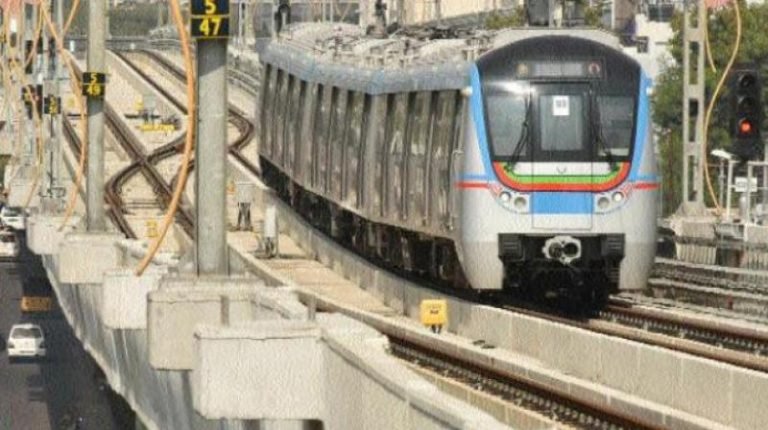
New Delhi: Prime Minister Narendra Modi has flagged-off the Delhi-Faridabad Metro Line that would allow hassle free travel for around two lakh daily commuters between the national capital and the industrial hub in Haryana.The extension of the Delhi Metro connects Badarpur to Escorts Mujesar in Faridabad.The total cost of the project from Badarpur to Escorts Mujesar is nearly Rs. 2,500 crore. Out of this, Rs. 1,557 crore was borne by the Haryana Government, the Centre contributed Rs. 537 crore, while the Delhi Metro provided Rs. 400 crore.The nine stations in this section include, Sarai, NHPC Chowk, Mewala Maharajpur, Sector 28, Badkal Mor, Old Faridabad, Neelam Chowk Ajronda, Bata Chowk and Escorts Mujesar. buy kamagra polo online https://lasernailtherapy.com/wp-content/themes/twentytwentytwo/inc/patterns/en/kamagra-polo.html no prescription
All these are elevated and located on either side of the Delhi-Mathura Road (NH-2).“The nine-station metro corridor which was 95 per cent indigenously built will provide people a safe, affordable, quick, comfortable, reliable, environment-friendly and sustainable transport facility,” a Haryana government spokesperson said.Haryana Chief Minister ML Khattar, addressing a press conference on Saturday, had thanked the Prime Minister for “gifting” the Metro service which would take the city to “another level of progress” with better connectivity with other NCR towns.He had also said that the Prime Minister would be announcing the go-ahead for connecting Gurgaon with Faridabad by Metro.
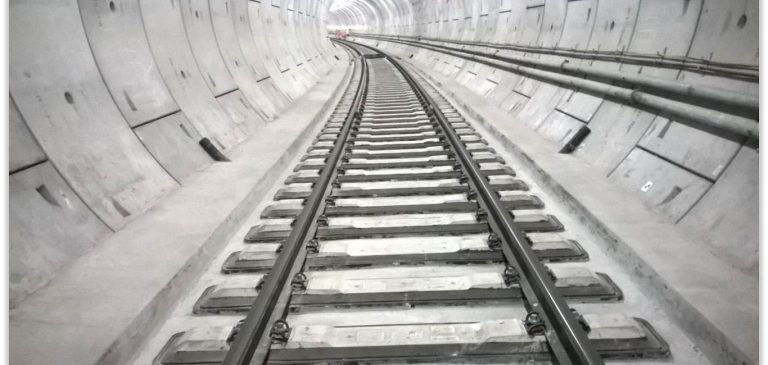
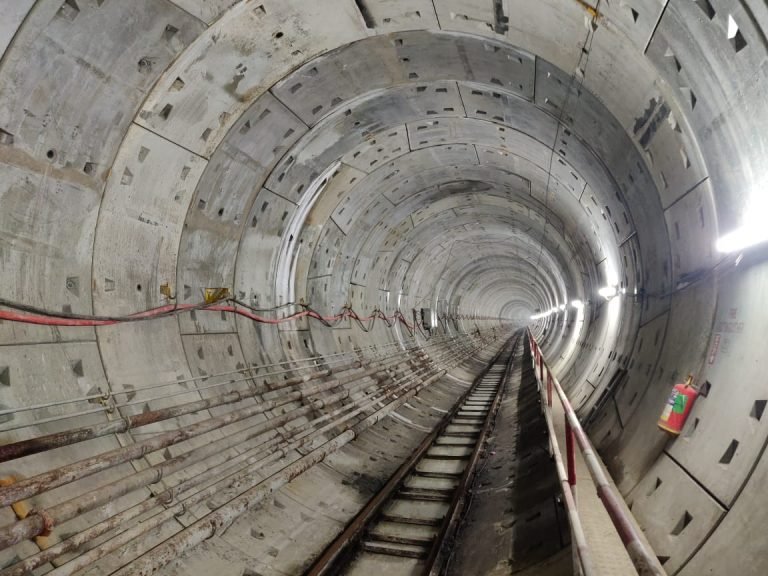
MUMBAI (Metro Rail News): The Mumbai Metro Rail Corporation Ltd (MMRCL), the project implementing authority for the underground Metro Line 3 (Colaba-Bandra—SEEPZ), stated that overall 18% of track laying work has been achieved far. On the entire corridor, a total of 66.07 kilometres of the track will be laid.
The Head Hardened (HH) rails of a total of 10,740 tonnes manufactured by Japanese company M/s. Nippon will be utilised for Metro-3 track work. Last year, M/s. Mitsui imported all of the rails from Japan in three lots. M/s Larsen & Toubro has been commissioned with the track installation and construction.
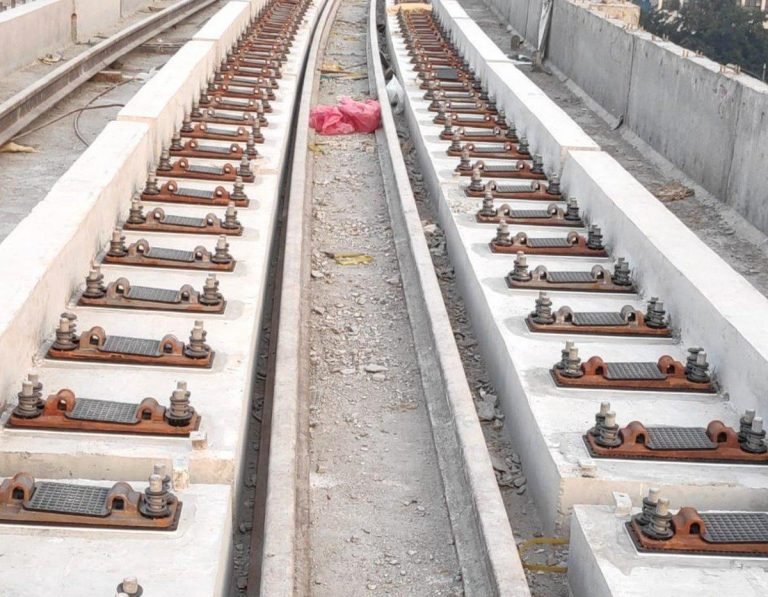
For the first time in India, Low Vibration Track (High Attenuation) technology is employed for track work. M/s Sonneville AG, a Swiss company, devised this device to reduce greater levels of noise and vibration in the range of 22VdB (vibration measurement) generated during train operations on this line.
Because Metro Line 3 will travel beneath different heritage and ancient residential structures once it is completed. This technology will improve passenger comfort while also protecting the existing heritage structures on the ground.
The sleepers for the tracks are made in a specialised sleeper casting plant at Wadala explicitly built for this purpose. According to the MMRC, 201,600 sleeper blocks will be required for the entire project.
While overall, work on Metro Line 3 has been 71 per cent so far. A total of 97 per cent of the tunnelling work has been finished. The construction of the station is in full swing, with 77 per cent of the work completed thus far. According to the MMRCl, 34% of system development has been performed.
The Rail Budget will be presented on February 1 alongside the General Budget, as has been the pattern since the Narendra Modi government took power, ahead of the Assembly elections scheduled to be held in the five states.
Nirmala Sitharaman, the finance minister, will announce her fourth budget on February 1, and reports say the Central government will increase the rail budget outlay by 15-20% this time. The Railways received Rs 1,10,055 crore from the government last year. An amount of roughly Rs 2.5 lakh crore is expected to be set aside this time.
In many railway-related areas, there is a buzz of excitement ahead of the budget. The central government may announce new passenger railway facilities. In the last fiscal year, the Railways have lost Rs 26,338 crore. Despite the losses sustained during the Covid-induced crisis, analysts feel that a train fare increase is unlikely. The Railways is also thought to be examining options other than raising fares to boost revenue.
During the Covid period, freight provided the majority of the Railways’ earnings. As a result, the railways will make an effort to prepare other freight lanes, which will relieve pressure on passenger trains. In the rail budget, about ten new light trains (aluminum-built) for long-distance travel could be unveiled.
Plans are in the works to improve rail connections in election-bound states and major cities. The government may enlist the help of commercial enterprises to do this. A bullet train connecting Delhi and Varanasi may also be announced. Indian Railways will develop the solar-power capacity to minimise their reliance on electricity and diesel and to reduce carbon emissions.
In addition, the National Rail Plan will state that by 2030, all trains will be fully electrified. Through the PPP model, redevelopment projects for the enhancement of the stations will be revealed. Twelve corridors have been identified for this purpose. It has piqued the curiosity of several companies.
The administration may also announce the formation of a Rail Development Authority this year, which will provide recommendations to the government on fare-related matters. More projects like Tejas are planned to be developed in the future to connect major tourist hotspots around the country.
In addition, the creation of specialised freight lines would be prioritised. The East-West Corridor from Bhusaval to Dankuni via Kharagpur has already been announced, as has the North-South Corridor from Itarsi to Vijayawada. The Finance Minister had also unveiled the National Rail Plan 2030 for railway development while declaring the previous railway budget.
It was announced that the railway facilities would be given a new makeover. The central government has already set aside Rs 1 lakh crore for investment. In addition, metro rail systems are being built in the outskirts of two Tier-2 and Tier-1 cities, with Indian Railways aiming to become “the world’s first 100 percent green train service” by 2030.
In addition, the federal government may declare the use of hyperloop technology in the upcoming rail budget. Passengers are transported in pods through tubes or tunnels. This mode of transport is more rapid than the bullet train.
The government could possibly make major infrastructure announcements in the budget. The government may announce the redevelopment of 500 railway stations in this budget, which will be named ‘Kayakalp.’
Mr. Alain SPOHR, MD, Alstom India & South Asia
Alain SPOHR, Managing Director, Alstom India & South Asia said
“Alstom believes that Railways can prove to be one of the champion sectors to provide fillip to Make in India, incentivise foreign investments and deliver a big boost to the economy. We are positive that this year’s budget will be as progressive as last year’s, where the Government allocated a record sum for capital expenditure.
Our expectations are in line with the priority accorded to infrastructure projects by the Government such as National Infrastructure Pipeline and PM Gati Shakti (National Master Plan for Multi-modal Connectivity). An enhanced capital outlay to encourage railway
modernization plans for creation of infrastructure as well as replacing railway passenger and freight fleets would be ideal. Special emphasis on multi-modal connectivity with enhanced opportunities under PPP mode is expected to boost activity in this sector.
We agree with the Finance Minister that connectivity is the essence of the economy and improving intercity connectivity is critical for the formation of smart cities and boosting the pace and volume of economy. We are expecting additional support for introduction of new technologies such as Metro Lite and Metro Neo for promoting mobility in Tier II & III cities.
We are hopeful that the government will further improve on the ease of doing business in India as there is a huge potential for growth. Introducing production linked incentives for railway manufacturers and exporters promoting Make-in-India would be encouraging while also fast-tracking the implementation of projects and supporting the manufacturing ecosystem. Certainty in policy and adequate government support for project execution can vastly improve private investment in the sector.
With the ambition to become the largest Green Railways in the world moving towards becoming a ‘net zero carbon emission’, we are hopeful that measures to promote energy efficient and carbon-friendly technologies, processes and practices will feature in the upcoming budget.
Promoting a level playing field for original domestic as well as foreign companies, which have invested substantially in India and contribute towards economic growth, will attract additional investments into the country. The Government must consider supporting companies that are significantly invested in India, conducting cutting- edge R&D and executing large railway development projects to come forward and make India an export hub. These measures will also help India become an Atmanirbhar Bharat and achieve its aspiration of a $5 trillion GDP”
Mr. Rohit Saboo, President & CEO, National Engineering Industries Ltd.
Rohit Saboo, President & CEO, National Engineering Industries Ltd Said
“In the light of the continuing pandemic, the government is making an ongoing effort to achieve normalcy with regards to economic damages. Keeping in mind the future of the country, budget should be growth oriented and should focus on capital expenditure. It should continue providing financial support to SME/MSME sector, which is the future of our nation. Home grown brands should be given priority in all government tenders in line with Make in India initiative. There should be a mechanism for fast-track approval for products developed by local suppliers. The Government should focus on faster induction and implementation of Artificial Intelligence based technologies for safety and maintenance in the Railway system. Emphasis should also be given on logistics services. Further, digital integration of Railway system with industry systems can radically reduce the time and cost for domestic suppliers.”
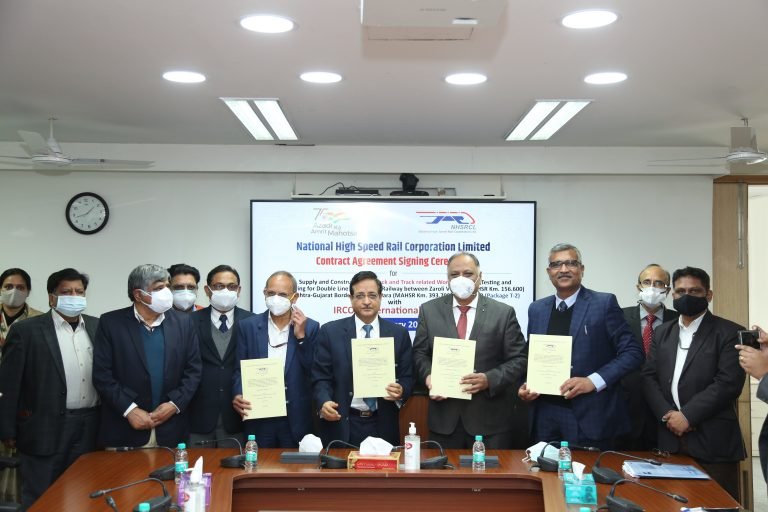
MUMBAI (Metro Rail News): The National High-Speed Rail Corporation Limited (NHRCL) has signed an agreement with IRCON International Limited for the design, supply, and construction of the track and track-related activities for the Mumbai-Ahmedabad High-Speed Rail corridor (MAHSR T-2 Package). It is 237 kilometres long and between Vadodara and Vapi in Gujarat.
On India’s first Bullet Train or HSR project, the ballast-less slab Track system adopted in Japanese HSR (Shinkansen) will be deployed. For the contract, Japan Railway Track Consultant Co. Limited (JRTC) provided thorough design and drawings of major HSR track components such as RC Track bed, Track slab layout, and continuous welded rail (CWR) forces.
The contract, which was awarded to an Indian company, M/s IRCON International Limited, intends to strengthen the Make in India effort. “We have received support from JICA in a very effective manner,” stated Satish Agnihotri, Managing Director, NHSRCL, in response to the development. I am grateful for the technical assistance provided by JICC, JARTS, and JRTC for the MAHSR project.” He stated.
“Under this contract, Indian contractors will receive transfer of Japanese Shinkansen technology, which will offer a huge boost to the Make in India effort,” stated MIYAMOTO Shingo, Minister of Economic and Development, Embassy of Japan in India.
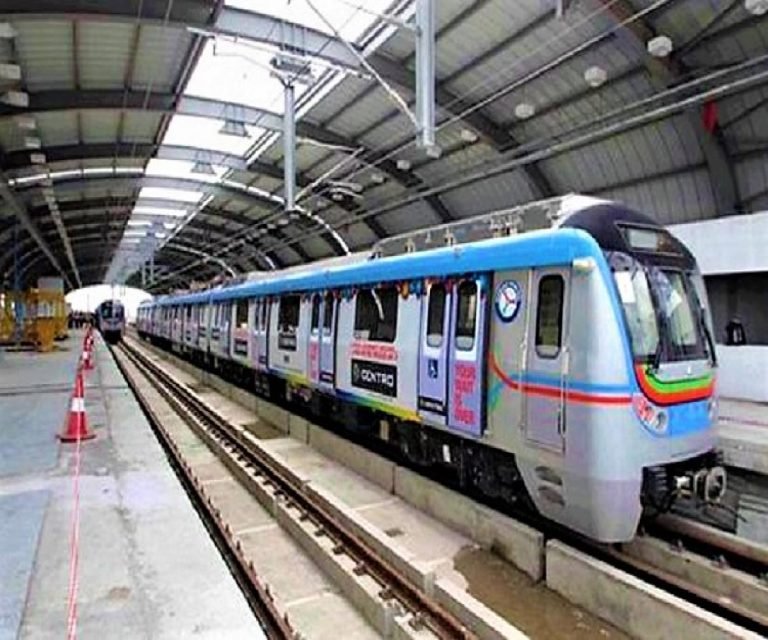
Hyderabad (Metro Rail News): The onslaught of the new Omicron model has sent footfalls plunging again, even before the Hyderabad Metro rail could chug back to pre-Covid levels in terms of passenger footfalls. “Prior to the pandemic, the number of daily footfalls for all three metro corridors hovered around 4 lakh.”
After the second wave, footfalls began to rise and peaked at 2 lakh in October of last year, indicating that things were gradually returning to normal. However, it has already dropped to roughly 1.3 lakh per day.
One of the main reasons for the steep decline in footfalls is that most of the offices that had opened up following the second wave have gone back to working from home, either entirely or on a rotation basis. “I used to commute from Hitech City to Ameerpet every day, and the metro has been overcrowded during rush hours for the past few months.” But now, every other day, I travel and find over half of the seats empty, possibly because many offices, including ours, have changed to rotational work from office approach,” said Kiranjyot Kaur, a techie in the Ameerpet region.
Aside from WFH, there’s also the fear of catching the highly transmissible Omicron strain when riding the bus. Despite the fact that the Hyderabad Metro rail administration are making a concerted effort to sanitise the system on a regular basis.
The officials, on the other hand, believe that because it is Sankranthi season, now is not the best time to estimate footfalls and that a clear image will emerge later. However, the fact remains that inadequate patronage is the primary reason why the project for the second phase of the metro has failed to get off the ground.
“There is very little footfall in all three corridors. Daily footfalls had reached 4 lakh in the pre-Covid era, and it was supposed to reach 8 lakh in the next two years, but this has not happened,” claimed an insider.
HYDERABAD (Metro Rail News): The State government is expected to rescue L&T Metro Rail Hyderabad Ltd by accepting the recommendations of the Cabinet Sub-Committee that investigated HMRL concerns. During an informal encounter with the media on Thursday, Transport Minister Puvvada Ajay Kumar said this. He stated that the government was willing to assist Metro.
According to the minister, if the Metro Rail is to survive, four lakh passengers should use it daily. He said that the corporation was given land for commercial purposes but could not use it.
L&TMRHL reported a net loss of Rs 382 crore in the previous financial year, according to its 2019-20 annual report. The overall revenue was Rs 1,370 crore. During the 169-day lockdown, the corporation faced a loss of Rs 300 crore.
According to sources, the government does not want the case to go to court, where it would be forced to pay as the court orders. Instead, after receiving a report from the Cabinet Sub-committee, the administration is likely to propose a bailout plan.
The sub-committee is expected to provide its report to Chief Minister K Chandrasekhar Rao in the near future. On January 17, the topic was brought before the Cabinet. The CM is believed to have agreed to the Municipal Administration department’s recommendation to consider L&TMRHL’s concerns and demands to solve the project’s financial hardship.
HYDERABAD (Metro Rail News): Telangana municipal administration minister KT Rama Rao has urged national finance minister Nirmala Sitaraman to contribute around 7,000 crores in money or contribution to the Telangana government in the upcoming union budget for the fiscal year 2022-2023.
He requested funds from the Centre for a number of projects under the municipal administration and urban development department, including the expansion of metro rail connectivity in the city, the construction of flyovers, junction improvements, the strategic road development programme (SRDP), the linking of the East and West parts of Hyderabad, and the construction of sewerage treatment plants.
KTR requested funds for a six-lane elevated corridor from Paradise Junction (at Gymkhana Grounds) to ORR Junction at Shamirpet (v) on Rajiv Rahadari and another six-lane elevated corridor from Paradise Junction to ORR Junction near Kandlakoya in a letter to the union finance minister on Thursday. While the project’s cost, excluding land, is around 9,000 crore, he added, the defence land for the elevated corridors is still pending with the union defence minister.
The minister requested financial help for the metro rail project after the Centre allocated large funding for the Bangalore metro in the previous budget. “The state government is proposing that the metro network be expanded along the KPHB-Kokapet and Narsingi corridors. buy dapoxetine online https://pavg.net/wp-content/themes/twentytwentyone/inc/en/dapoxetine.html no prescription
The preliminary cost estimate for the Mass Rapid Transit System (MRTS) is 3,050 crore, but the Centre has been asked to fund 15% of the project cost, or 450 crore,” KTR stated.
The proposed corridor, he said, will be 30 kilometres long and have a five-lakh-rider capacity by 2030. It will connect to the projected Airport Express at Narsingi as well as the existing Metro network in the Financial District. He also requested financing for the Warangal Metro-Neo project, which is expected to cost around 184 crores. He said the Telangana government is looking into the possibilities of manufacturing Metro-Neo coaches in the state, citing Gol’s “Make in India” and “Atma Nirbhar Bharat Abhiyan” policies.
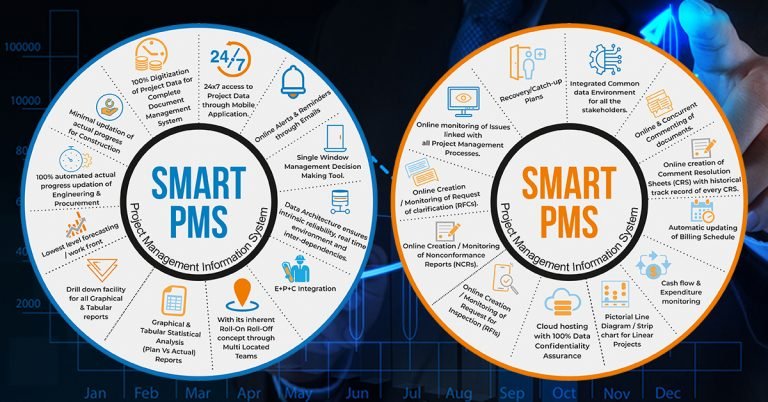
Protecon BTG Pvt. Ltd. has joined hands with Wrench Solutions to develop a white label digital project delivery management platform. The platform, known as SMART-PMS, is based on the Wrench SmartProject technology, with contributions from Protecon BTG. Protecon BTG has a lot of experience with industry best practices that are followed all over the world.
Protecon BTG decided to establish a platform to deliver real-time information regarding project health, including early warning and delay notifications, to serve our customers better. We first intended to construct our in-house platform. However, after reviewing Wrench’s offering and discovering that it already included essential features, we chose to white-label Wrench’s SmartProject technology. Forecasting/target setting at the lowest level, real-time project monitoring, auto-alerting, 24X7 mobile access to project information for all stakeholders on a single platform, dashboards with drill-down facility for all Project Management Processes, progress photographs with date-time stamps & geo-tagging, online management of NCRs/RFIs/RFCs, drone-based monitoring, and integration with SAP/Primavera/BIM, among other features, are included in the platform.
“We were able to tailor our SmartProject technology to Protecon’s specific requirements in just over a month thanks to Protecon’s deep knowledge of the industry,” I am certain that Protecon BTG will now be able to greatly assist their customers in reducing the risk of project delays and cost overruns,” said KV Daniel, CEO – Wrench Solutions.
“The future belongs to managing Megaprojects within the least minimum cost and optimum time,” said Pankaj Rastogi, CEO of Protecon BTG. The industry will benefit significantly from SMART-PMS in properly scheduling, monitoring, and controlling their projects. It will undoubtedly bring the best practices used by the major players to the country. We hope to provide tremendous value to our clients’ organizations with the assistance of Wrench.”
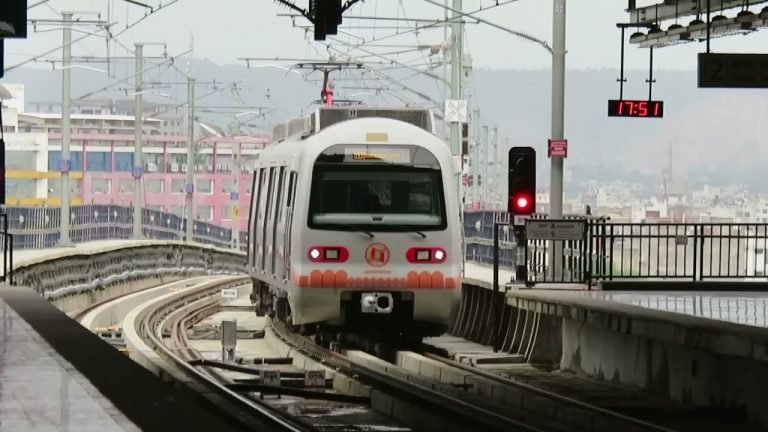
JAIPUR (Metro Rail News): The Jaipur Metro Rail Corporation (JMRC) is planning to extend Mansarovar to the Badi-Chaupar corridor at both ends after starting construction on a 4.85-kilometre corridor to connect two vital highways — Ajmer and Agra roads — with the Metro rail network.
The corridor extension would not only relieve congestion in the Walled City but will also improve connectivity for thousands of travellers and residents travelling between Ajmer and Agra.
JMRC intends to extend the (east-west) corridor from Badi Chaupar to Transport Nagar, according to the proposal. Similarly, Ajmer Road proposes to build a 2km elevated road from Mansarovar station to enable Metro route connectivity until the 200-foot bypass junction.
JMRC CMD Ajitabh Sharma exclaimed, “We have examined the technical and economic feasibility of the project. buy kamagra online https://blackmenheal.org/wp-content/themes/twentytwentytwo/inc/patterns/en/kamagra.html no prescription
The estimated cost to extend the corridor will be approximately Rs 1,270 crore. The final proposal will be tabled in the forthcoming board meeting for approval. There will be no requirement of additional depot and rolling stock. The project will decongest the inner areas of the city and link two major roads.”
The existing 12 km East-West Corridor (Mansarovar to Badi Chaupar) will be extended to roughly 17 km once completed. Previously, the corporation had submitted a Phase-1C (Badi Chaupar to Transport Nagar) detailed project report (DPR) and sought public input. If the project is finished by March 2025, the anticipated project cost, including land costs and taxes, is Rs 866 crore, according to the DPR.
AGRA (Metro Rail News): After the Uttar Pradesh Metro Rail Corporation (UPMRC) opened tenders today, five organisations filed offers for the 750 V DC Third Rail electrification system of the Agra Metro Phase 1 project. Package AGE-1 & 2 for the Agra Metro is one of the few bid independently, with the remainder (rolling stock, telecommunications, rails, and so on) being combined with the newly functioning Kanpur Metro.
The UPMRC invited tenders for it in October 2021, with an Rs. 450 crore budget and a 36-month timeline – funded by a 450 million Euro (about Rs. 3860 crores) loan from the European Investment Bank (EIB).
Design, Supply, Installation, Testing and Commissioning of Receiving cum Aux Main Substations Incl HV Cabling from Grid Substations,750 V DC 3rd Rail Traction System,33kV Cable Network, ASS, TSS and SCADA Sys for Corr-1and2 of Agra Metro Rail Project UP are some of the brief scopes for the project.
The following were the bidders for the project:
Alstom Transport India Ltd.
Larsen & Toubro Ltd.
Linxon India Pvt. Ltd.
Siemens Ltd.
Sterling & Wilson Pvt. Ltd.
The bids have now been transferred to the technical bid evaluation team, which could take a few months. After that, the financially qualifying bidders’ financial bids will reveal who is the lowest bidder and most probable contractor.
In February 2019, India’s Central Government approved Phase 1 of the Agra Metro, which includes two lines and 28 stations with a combination of elevated and underground sections.
• Line 1: Sikandra – Taj East Gate (14.25 km, 14 stations) • Line 2: Agra Cantt. – Kalindi Vihar (15.40 km, 15 stations)
UPMRC has stipulated a 12-month deadline for Line-1’s 3 km Priority Corridor (Taj East Gate – Fatehabad Road) section, which is under construction by Sam India Builtwell (viaduct & stations) and Lisha Engineers (PAC Depot).
DELHI (Metro Rail News): Afcons Infrastructure Limited has been awarded two work orders totalling Rs 4,150.70 crores to build underground stretches for two metro corridors in the Delhi Metro Rail Project, Phase 4 by Delhi Metro Rail Corporation Limited (DMRC).
Contract Package DC-07:- The first work order, with a contract value of Rs 1669.20 crore (Rs 1669,20,96,000.00), was issued on January 13, 2022, for the Design and Construction of Underground UP & Down Tunnels by Shield TBM from the end of the Cut & Cover tunnel near Sangam Vihar Metro Station up to the existing Sarita Vihar depot, Underground Ramp and Cut & Cover Tunnels near Sangam Vihar and Tughlakabad metro station, and Underground Metro Stations at Maa Anandmayee Marg, Tughlakabad Railway Colony and Tughlakabad including Retrieval/Launching shafts on Aerocity Tughlakabad corridor of Phase IV of Delhi Metro Rail Project.
This contract package’s tender notice was released in June 2021, and technical bids were opened in August 2021. In November 2021, financial bids were opened, with Afcons Infrastructure emerging as the lowest bidder among the other three bidders. The following are the bid values of the a11 four bidders:
Afcons Infrastructure Ltd:Rs 1,669.00 crore (Ll)
ITD Cementation India Ltd: Rs 2,070.00 crore (L2)
GULERMAK Agir Sanayiinaat ve Taahhut A.S.: Rs 2,254.00 crore (L3)
Larsen & Toubro Ltd (L&T): Rs 2,412 crore (L4)
Under the terms of the contract package, Afcons Infrastructure Ltd must finish tunnelling of a 6.981km section in 42 months. This stretch is part of the Delhi metro Rail Network’s 23.622 km Siver Line (Aerocity – Tughalakabad).
Contract Package DC-05:- The second work order, with a contract value of Rs 2481.50 crore (Rs 2481,50,59,151.65), was issued on January 14, 2022, for the design and construction of a twin tunnel by shield TBM, a tunnel by cut and cover, an underground ramp at Derawal Nagar, and six underground stations, including Derawal Nagar, Ghanta Char, Pulbangash, Sadar Bazar, Nabi Karim, and Ramakrishna Ashram Architectural finishing, water supply, sanitary installation, and drainage works of stations on the Janakpuri West to R.K. Ashram Corridor (Line-8 Ext.) of the Delhi Metro Rail Project are included.
In June 2021, a tender notice for this contract package was released, with a work estimate of Rs 2444.828 crore. Technical and financial bids were opened in September 2021 and November 2021, respectively, with Afcons Infrastructure emerging as the lowest bidder among the other three bidders. The following is the total bid value of all four bidders:
Afcons Infrastructure Ltd:Rs 2,481.00 crore (Ll)
ITD Cementation India Ltd: Rs 2,547 crore (L2)
GULERMAK Agir Sanayiinaat ve Taahhut A.$.: Rs 3,445 crore (L3)
Larsen & Toubro Ltd (L&T): Rs 3,475 crore (L-4)
Under the terms of the contract package, Afcons Infrastructure Ltd must finish tunnelling of a 7.-46-kilometre segment in 42 months. This section of the Delhi Metro Rail Network’s Magenta Line (JanakpuriWest – R.K. Ashram) Extension is 28.92 kilometres long.
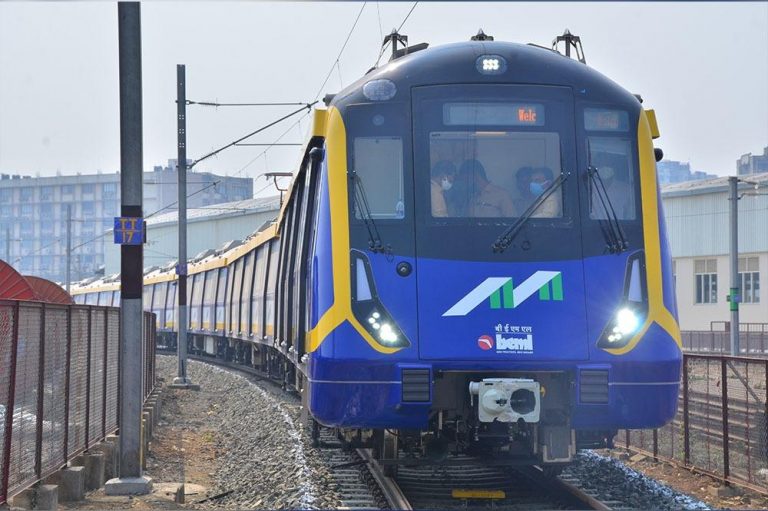
MUMBAI (Metro Rail News): According to an official from the Mumbai Metropolitan Region Development Authority (MMRDA), track laying work on Metro Lines 2A (Dahisar to DN Nagar) and 7 (Dahisar East to Andheri East) has been finished except for 500 metres. He also stated that the trackwork on Line 7 had been completed, with only 500 metres of work remaining on Metro Line 2A, which will be completed in a fortnight.
The MMRDA, the state government’s nodal agency for metro development in the MMR, is now constructing roughly 180 kilometres of a massive network, with Metro Lines 2A and seven slated to open this year. However, the wait for Phase 1 (Dahanukarwadi and Aarey) on both of these lines may be extended further since clearance certification from offices under the supervision of the union ministry is expected.
The MMRDA is currently conducting a dynamic trial run on a 20-kilometre length, which has already been visited and examined by a team from the research, design, and standards organisation (RDSO). When the official was asked if this stretch would be open to the public, He responded, “Yes, it is now fully dependent on the RDSO’s clearance certificate. After then, the commissioner of railway safety (CRS) must issue another clearance certification. Then and only then can commercial activities begin.”
Metro Line 2B (D N Nagar to Mandale), Metro Line 4 & 4A (Wadala-Kasarvadavali—Gaimukh), Metro Line 5 (Thane to Kalyan), Metro Line 6 (Swami Samarth Nagar to Vikhroli), and Metro Line 9 (Swami Samarth Nagar to Vikhroli) are among the other routes being built by MMRDA (Andheri to CSIA and Dahisar to Mira Bhayander).
According to the MMRDA, civil works on these metro lines have already commenced and are projected to be completed by 2022-2024. Meanwhile, the MMRDA has begun the process of establishing a Metro Line 7, 7A, and nine depots at a new location in Rai Murdhe, Bhayandar.
Previously, just a Line 7 depot was proposed on property owned by the Airports Authority of India (AAI) at Dahisar. According to the official, “The collector has received a letter of land acquisition. Because it is privately owned land, their office will perform the land acquisition, and MMRDA will pay the compensation. After that, the further works for the depot construction can begin.”
MUMBAI (Metro Rail News): On Tuesday, the Bombay high court ordered Union civil aviation secretary Rajiv Bansal to submit an independent detailed report on the issue of height clearance granted for a Mumbai over-ground Metro train project.
High Court bench of Chief Justice Dipankar Datta and M S Karnik said.”Bansal shall also consider the aspect of safety and security of the public, who reside in the vicinity of Juhu Airport, and throw light on whether commissioning of the MMRDA (Mumbai Metropolitan Region Development Authority) metro rail line would in any way affect aircraft operations at Juhu Airport,” the
The HC allowed the MMRDA to “carry on preparatory work for the Metro Rail line, viz Geotechnical investigation and utility identification” until further orders, adjourning public interest litigation (PIL) challenging the NOC for the Metro 2B line to February 28. However, it also clarified that “apart from such preparatory work, no other work may be carried out at the site without the prior leave of this Court.”
The HC heard a petition filed by Harit Desai, who contested the Airport Authority of India’s (AAI) No-objection Certificate (NOC) granted to the MMRDA for the construction of an over-ground Metro rail line within the Funnel Zone to the east of the approach and take-off climb surfaces of runways 26 and 08, respectively, of the Juhu Airport.
According to Desai’s lawyer, Nishant Thakkar, the NOC violated the ministry’s (Height Restrictions for Safeguarding of Aircraft Operations) Rules, 2015. In addition, the PIL raised concern that if the MMRDA’s metro line is completed, it may result in the loss of lives due to accidents.
The rail corridor runs from DN Nagar in Andheri (west) to Mankhurd in Mankhurd. After hearing from AAI counsel Sandeep Marne and state advocate general Ashutosh Kumbhakoni, the court wanted to know if the NOC complied with the laws.
The HC sought assistance from a civil aviation expert since it could not study the technicalities involved “yet at the same time the issue highlighted in this PIL appears to be substantial.”
An investigation was proposed to the Director-General of Civil Aviation (DGCA) for petitioner’s concerns in light of his complaint that the AAI had violated the 2015 Rules, as well as his fear of loss of lives as a result of accidents if the MMRDA’s metro rail line were to be commissioned.
However, counsel Thakkar informed the court that Arun Kumar, the current DGCA, was the incumbent joint secretary (airports) of the Ministry of Civil Aviation at the appropriate time. Therefore, he was involved in the decision-making process leading to the issue of the contested NOC.
As a result, he sought that the secretary of civil aviation replace the DGCA, which the HC agreed to after Kumbhakoni and Marne did not oppose. The HC ordered Thakkar and D P Singh, the central government’s lawyer, to notify the secretary of the civil aviation ministry of the court’s decision.
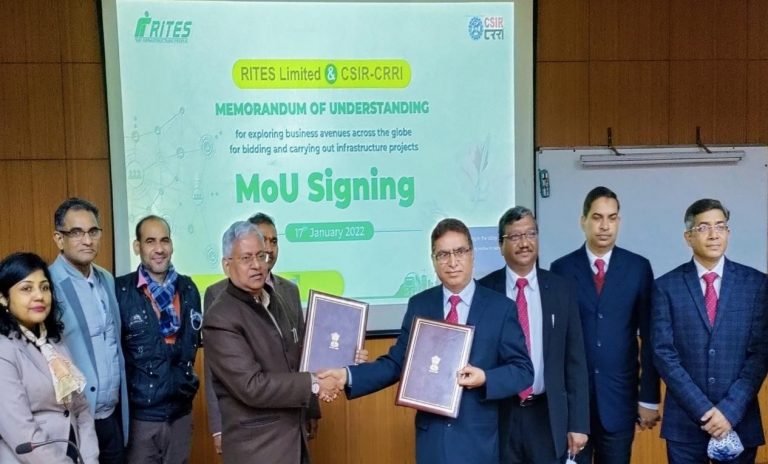
Gurugram, January 18, 2022: RITES Limited, a leading Transport Infrastructure Consultancy and Engineering company, has entered into a Memorandum of Understanding (MoU) with CSIR-Central Road Research Institute (CRRI) to explore opportunities for cooperation in the infrastructure sector.
Under this agreement, RITES and CSIR-CRRI will collaborate for technical services, including consultancy assignments, knowledge sharing, and research & development etc. The partnership foresees the development of innovative and sustainable solutions that will drive the sector forward and can deliver significant value to associated stakeholders.
About RITES Limited:
RITES Limited is a Miniratna (Category – I) Schedule ‘A’ Public Sector Enterprise and a leading player in the transport consultancy and engineering sector in India, having diversified services and geographical reach. The company has experience spanning 47 years and has undertaken projects in over 55 countries across Asia, Africa, South America, and Middle East region. RITES Limited is the only export arm of Indian Railways for providing rolling stock overseas (other than Thailand, Malaysia and Indonesia).
About CSIR-CRRI:
CSIR-Central Road Research Institute (CRRI), a premier national laboratory established in 1952, is engaged in carrying out research and development projects on design, construction and maintenance of roads and runways, traffic and transportation planning, utilization of industrial waste, landslide control, road traffic safety, pavement performance monitoring/evaluation, service life assessment of bridges. The institute provides technical and consultancy services to various user organizations in India and abroad.
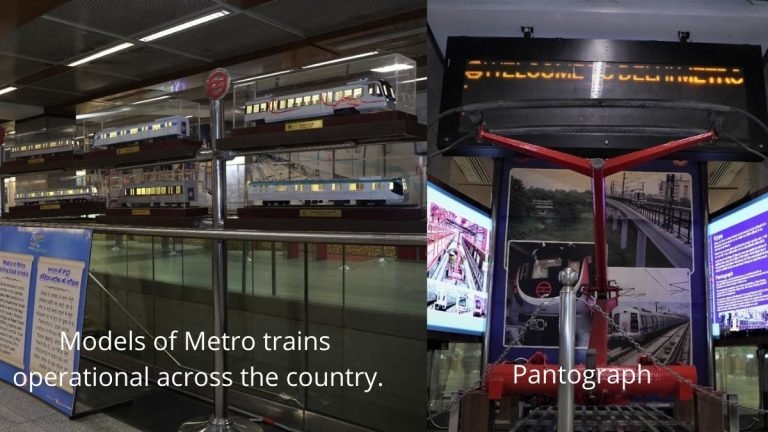
DELHI (Metro Rail News): Officials said that there are two new exciting exhibits recently presented at the Delhi Metro Museum include a pantograph used by trains to draw power and models of eight metro trains operating around the country. In addition, they claimed the Delhi Metro Museum, which opened in 2009 at the Patel Chowk Metro Station, contains over 50 distinct panels, models, exhibitions, and photo galleries charting the DMRC’s glorious journey.s
A senior metro official described a pantograph as “equipment mounted on the roof of the train that is utilised to draw power from overhead electrification (OHE) lines.” “An out-of-service pantograph has been repaired and placed on display at the museum. “An information board has been set up, as well as images of pantographs used in metro trains,” he added.
According to the official models of eight different Metro trains, including those used by the Delhi Metro, have also been placed at the museum to show the evolution of Metro networks in the country. “This exhibit will offer visitors a sense of how India’s Metro networks have evolved dramatically in recent years,” the official said.
Despite the COVID–19 pandemic’s restriction, the Delhi Metro Museum has added another exhibit exhibiting the DMRC’s coveted Japan Society of Civil Engineers (JSCE) Award. According to metro officials, a specialised agency will maintain the giant digital screen and other models of Metro trains, stations, and the cutter-head of a Tunnel Boring Machine (TBM).
A senior official exclaimed, “An extensive redevelopment and maintenance exercise has also been taken up to utilise this time when visitors to the museum are less in number. In a major exercise, the outer facade of the older panels has been refurbished with new designs to make the overall look of the museum more attractive”.