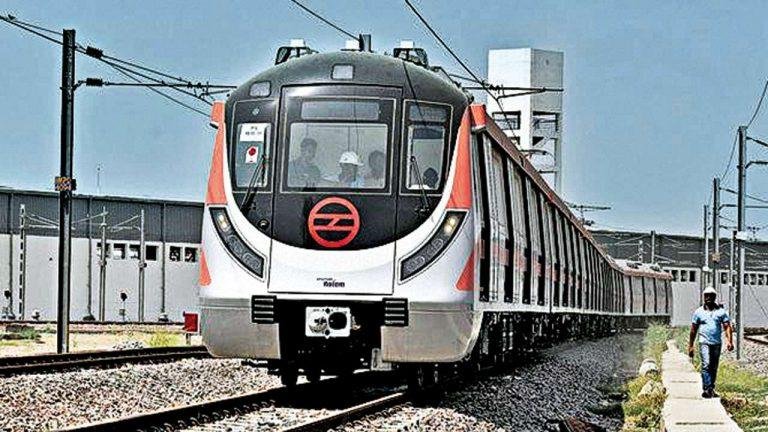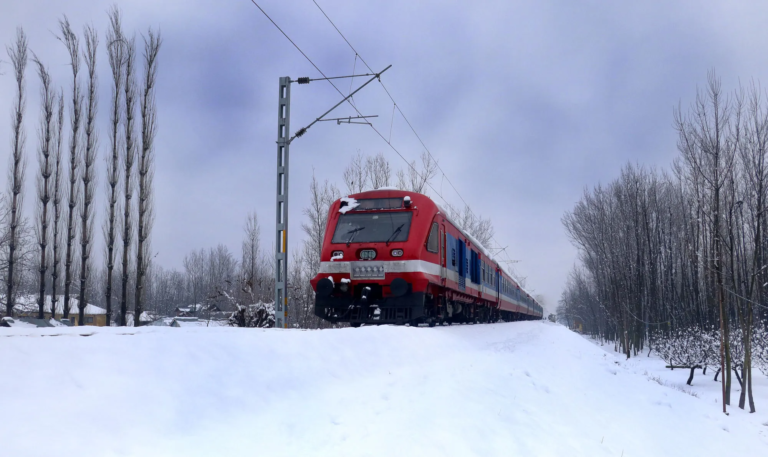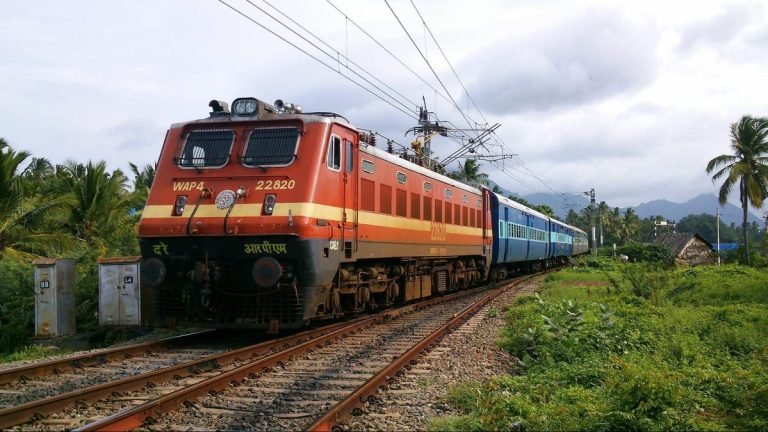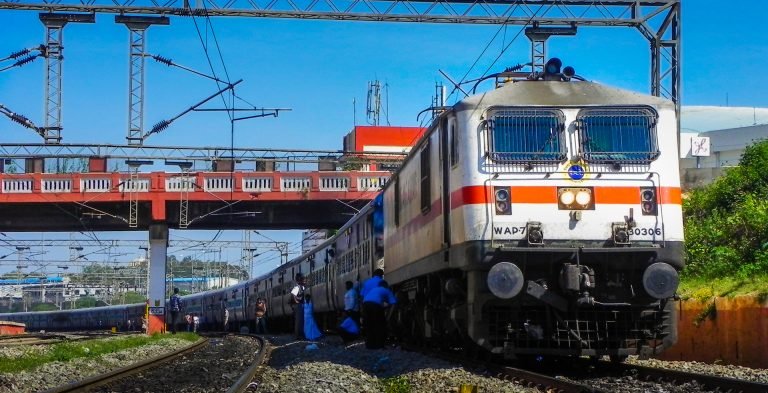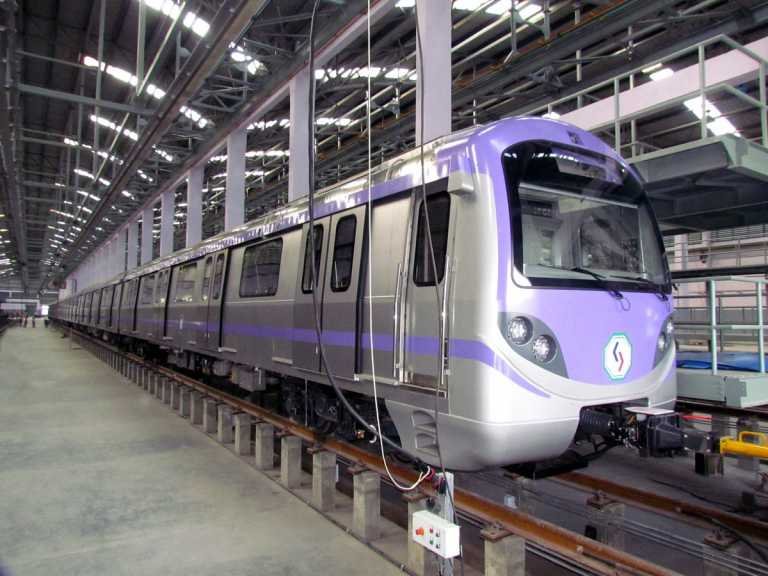
New Delhi: Prime Minister Narendra Modi has flagged-off the Delhi-Faridabad Metro Line that would allow hassle free travel for around two lakh daily commuters between the national capital and the industrial hub in Haryana.The extension of the Delhi Metro connects Badarpur to Escorts Mujesar in Faridabad.The total cost of the project from Badarpur to Escorts Mujesar is nearly Rs. 2,500 crore. Out of this, Rs. 1,557 crore was borne by the Haryana Government, the Centre contributed Rs. 537 crore, while the Delhi Metro provided Rs. 400 crore.The nine stations in this section include, Sarai, NHPC Chowk, Mewala Maharajpur, Sector 28, Badkal Mor, Old Faridabad, Neelam Chowk Ajronda, Bata Chowk and Escorts Mujesar. buy kamagra polo online https://lasernailtherapy.com/wp-content/themes/twentytwentytwo/inc/patterns/en/kamagra-polo.html no prescription
All these are elevated and located on either side of the Delhi-Mathura Road (NH-2).“The nine-station metro corridor which was 95 per cent indigenously built will provide people a safe, affordable, quick, comfortable, reliable, environment-friendly and sustainable transport facility,” a Haryana government spokesperson said.Haryana Chief Minister ML Khattar, addressing a press conference on Saturday, had thanked the Prime Minister for “gifting” the Metro service which would take the city to “another level of progress” with better connectivity with other NCR towns.He had also said that the Prime Minister would be announcing the go-ahead for connecting Gurgaon with Faridabad by Metro.
CHENNAI (Metro Rail News): The long-awaited proposal to integrate Chennai MRTS with the Chennai Metro has moved closer to implementation following a crucial meeting on 15 December between senior officials of the Tamil Nadu government and Southern Railway. After the discussions, both sides agreed to proceed towards finalising a memorandum of understanding (MoU), which is expected to be completed as early as next week.
The proposal intends to facilitate the transfer of the MRTS assets, along with its operations and maintenance responsibilities, from Southern Railway to Chennai Metro Rail Limited and the Tamil Nadu government. The meeting was held after the Railway Board gave in-principle approval in July to hand over the elevated suburban rail corridor to the state.
The draft MoU is almost ready, with only a few minor changes yet to be made. Officials said there is a clear intent on both sides to complete the process at the earliest. The document is about 10 pages long and will be finalised by the Railways.
After this, the draft will be reviewed by the state government, including the finance department and concerned committees. Once all departments agree on the terms, the document will be sent back to the Railways for completion, after which the MoU will be signed.
This takeover will be carried out in a phased manner over the next 2 years, which will enable the responsible authorities to ensure uninterrupted operations. In the initial phase, Chennai Metro Rail Limited plans to introduce 25 air-conditioned broad-gauge train sets for MRTS operations.
As part of the transition arrangement, Southern Railway will continue to run MRTS services for a temporary period while the groundwork for transferring assets and upgrading the system is carried out. At the same time, the Chennai Unified Metropolitan Transport Authority (CUMTA), which is leading the integration process, is preparing detailed project reports for each of the 18 existing stations. These plans focus on upgrading station facilities and improving public spaces within a 100-metre area around the stations.
In addition to this, work is also underway on improving the signalling system and reworking interchange points with existing metro lines. The objective is to align train operations more efficiently and, in the longer term, move towards a single, integrated ticketing system for passengers across the network.
Explore how AI-integrated systems are improving comfort, connectivity, and accessibility for passengers across metro and rail networks at the 6th edition of InnoMetro, India’s leading expo for the Metro & Railway industry.
Metro Rail News visited the Rahee Infratech stall at IREE 2025 for an exclusive conversation with Mr. Rahul Khaitan, Executive Director of Rahee Infratech Limited. During the interaction, Mr. Khaitan talked about Rahee’s 60-year journey in the railway sector and its steady contribution to metro and mainline projects across India. He shared how the company has played an important role in railway construction, introduced new rail technologies, and completed several key infrastructure projects in different parts of the country.
Mr. Khaitan also spoke about Rahee’s focus on practical innovation, sustainable practices, and the use of modern technology through global partnerships. He highlighted that the company’s alignment with the “Make in India, Make for the World” vision by developing reliable, high-quality railway solutions. He further outlined Rahee’s commitment to advancing India’s rail transit system for the future.
Below are the edited excerpts from the interview:
Q: We are here at the Rahee Infratech stall at IREE 2025, India’s biggest railway event. How does it feel to be part of this platform, and what does this participation mean for Rahee?
A: It’s a proud moment for Rahee Infratech to be part of IREE 2025, which is India’s largest railway exhibition.
For Rahee Infratech, being at IREE is not just about displaying our products or solutions; it’s about sharing our ongoing efforts to bring innovation and quality to railway infrastructure. Over the years, Rahee has become a trusted partner for Indian Railways and metro projects and contributed through modern track systems, bridge construction, and turnkey solutions.
We are here to highlight how technology, engineering, and quality form the core of our work. Our participation in IREE 2025 reflects Rahee’s continuous efforts to build a safe, reliable, and efficient rail infrastructure for the future.
Rahee Infratech Ltd has a rich legacy of 75 years in the rail transit sector. Could you share insight into the company’s remarkable journey and how it has evolved over the years to meet the challenging demand of the metro and railway sector?
Rahee was established in 1948, and we entered the railway sector around 1960, which gives us over 50 years of experience in railways. We started as a manufacturer of railway components and have gradually grown into a complete railway infrastructure provider. Today, Rahee excels in bridge construction for railways, track laying and maintenance, turnout systems, and rail fastening systems, among other solutions. Over the years, we have also introduced modern products and technologies to meet the evolving needs of metro and railway projects. This growth reflects our focus on delivering reliable, efficient, and technically sound solutions for the rail sector.
What are the key products and services that Rahee provides to the metro and railway sector?
In the metro and railway sector, Rahee’s core expertise lies in bridge construction, where we execute turnkey bridge projects for zonal railways and major contractors across India. In addition, we are actively involved in the metro railway sector, particularly in ballastless track construction. We have successfully delivered track work for major metro projects in cities including Kolkata, Delhi, and Mumbai, among others. Overall, Rahee is engaged across multiple key areas of railway infrastructure, providing comprehensive solutions that cover both conventional and modern rail systems.
Could you elaborate on Rahee’s collaborations or partnerships with other organisations, and how these alliances have strengthened the company’s capability and helped it deliver innovative track solutions to the railway sector?
At Rahee, we recognise the importance of developing and excelling in the products and systems we provide. One of our most crucial collaborations is with Pandrol, through the joint venture Pandrol Rahee, which today holds a major share in India’s modern rail fastening systems.
We have also partnered with TrackTec of Poland for turnouts, points, and crossings. This collaboration focuses on introducing heavy-haul turnouts, high-speed turnouts, and canted turnouts for the Indian market..
Additionally, our collaboration with Hydraulic Technologies of the UK enables us to bring modern in-sleeper point machines to Indian railways. These machines are embedded within the sleepers, providing precise, reliable switching of tracks with minimal maintenance, which is especially beneficial for busy metro and railway corridors.
Through these strategic alliances, Rahee is able to deliver advanced and innovative track solutions, adopt global best practices, and continuously expand its technical capabilities. We are actively exploring additional collaborations to further strengthen our offerings and support the evolving needs of India’s metro and railway sector
India is experiencing metros and high-speed rail expansion. How is Rahee scaling its manufacturing capacity to meet increasing project demands?
At Rahee, we place a strong focus on backward integration and the adoption of modern manufacturing technologies. To meet the growing demand from metro and high-speed rail projects, we are continually expanding our manufacturing capacities and capabilities.
Recently, we have added a 50,000-ton heavy steel fabrication facility in Odisha. In addition, we have established a 12,000-ton foundry in Durgapur, West Bengal, which further strengthens our capacity to manufacture critical railway components.
These expansions complement our existing product portfolio and enable us to scale efficiently to meet current and future project requirements in India’s rapidly expanding metro and high-speed rail sector.
How does Rahee balance cost competitiveness with pushing for advanced, future-oriented rail solutions?
In the Indian railway sector, cost competitiveness is a critical factor given the scale and scope of projects across the country. At Rahee, we address this by placing strong emphasis on backward integration. This allows us to make our products more competitive for the railway while maintaining quality and efficiency.
What sets Rahee apart from its competitors in the industry, and how does the company ensure its track solutions consistently meet global standards?
At Rahee, we do not consider ourselves as one of the typical companies; we see ourselves as a technology provider for the railway sector.
Coming from a strong manufacturing background, we boast an in-depth understanding of track structures, turnouts, fastening systems, and other critical track components. This knowledge enables us to integrate product innovation with construction capabilities, providing the railway with solutions that are both technically strong and reliable. As a result, Rahee is recognised not only for delivering high-quality railway products but also for offering comprehensive construction and track solutions that meet demanding standards consistently.
Could you share your flagship projects that best exemplify Rahee’s engineering capabilities?
Rahee has executed several landmark projects across India that outline our engineering capabilities. For instance,
Udhampur-Srinagar-Baramulla Rail Link (USBRL) Project
In Jammu and Kashmir, Rahee constructed track for the longest tunnel, T49, completing approximately 70 km of track construction. This project demonstrated our capability to work in challenging terrain and complex tunnel environments.
Chenab Bridge Project
Rahee undertook the design, supply, and installation of over 2,400 H-beam sleepers with fastening systems for the world’s highest steel arch rail bridge. This project highlighted our expertise in high-precision track systems for technically demanding structures.
Char Dham Yatra Rail Link Project
As part of this project, we completed major bridge works, including the construction of a 125-meter-long monolithic span with a 7.5-meter-wide motorable road bridge. This showcased our ability to integrate bridge and track construction in complex mountainous regions.
These projects highlight Rahee’s capability in executing complex track and bridge infrastructure, combining design, manufacturing, and construction expertise to deliver technically challenging solutions in some of the most demanding environments in India.
How is Rahee incorporating sustainable practices in its manufacturing process?
At Rahee, we understand the importance of adopting sustainable and environmentally responsible practices. One of our key initiatives is to reduce CO₂ emissions and minimise our overall carbon footprint. To move in this direction, we are increasingly using solar power in our manufacturing units, gradually shifting our energy consumption from conventional coal-based sources to renewable solar energy. This transition not only supports our internal sustainability goals but also aligns with India’s national push toward green manufacturing and clean energy adoption.
There is a push for “Make in India” to “Make for the World.” How does Rahee tailor its offerings to meet regulatory and infrastructure needs in the international market?
Rahee has been operating in India for over 60 years, which gives us a strong understanding of the regulatory framework and technical requirements of the Indian railway sector. In line with the shift from “Make in India” to “Make for the World,” our focus is on bringing advanced global technologies to India, adapting them to local conditions, and manufacturing them domestically.
The goal is to create products that not only meet the standards and needs of Indian Railways but are also competitive and compliant with international specifications, allowing us to serve global markets.
As India accelerates investment in metro, high-speed rail, and freight corridors, what is Rahee’s long-term growth strategy?
Rahee is actively focusing on the development of ballastless track technology in India. This is a relatively new technology that was earlier used mainly in metro railway systems, but it is now being extended to the mainline railway network. Indian Railways has made ballastless tracks mandatory for all tunnels, and Rahee is strongly engaged in this segment as one of the leading companies in the country.
In addition, we see Rahee playing a key role across metro, mainline, and high-speed rail projects. With our experience, technical capabilities, and focus on modern track technologies, we believe we are well-positioned to support India’s next phase of railway expansion.
What are your key takeaways from IREE 2025, and any message for visitors and partners?
IREE 2025 has been phenomenal for us. The level of engagement, discussions, and genuine interest shown in our innovations, especially the Electro-Hydraulic Point Machines, has been very encouraging.
The visit of Shri Satish Kumar, Chairman & CEO of the Railway Board, to our stall was a moment of pride and motivation for the entire Rahee team.
To all our partners, stakeholders, and visitors, we extend our heartfelt thanks for your continued trust and support. Every interaction here strengthens our vision to contribute to India’s rail growth story. Together, we will keep moving forward, creating better, safer, and more efficient railway infrastructure for the nation.
Discover how AI is bringing the next phase of sustainable urban rail mobility for Viksit Bharat at InnoMetro 2026, India’s prime exhibition and conference for metro & railways which is going to held on 21-22 May 2026 at Bharat Mandapam, New Delhi
SCC – MIRAL (JV) has received a Letter of Acceptance (LoA) from National High Speed Rail Corporation Limited (NHSRCL) for carrying out the Multi Modal Integration works at the 4 bullet train stations in Gujarat.
NHSRCL invited bids for this contract with a 730 Days deadline. Technical bids for the contract were opened on 14 August 2025 revealing that 4 firms have submitted bids for the contract. The technical evaluation of the submitted bids occurred on 22 September 2025. However, during the financial evaluation round 2 firm’s bid was rejected.
Subsequently, financial bids for the technically qualified bidders opened on 23 September 2025 and financial evaluation of the bids took place on 16 December 2025 after which NHSRCL declared SCC – MIRAL (JV) as the lowest bidder for the contract and received LoA for the contract.
Financial Bid Values
Firms
Bid Value
SCC – MIRAL (JV)
₹ 118.6 Cr
Dineshchandra R Agrawal Infracon Pvt. Ltd.
₹ 133.2 Cr
Contract Scope of Work: Construction Works for Multi Modal Integration and Station Plaza Development for Four Stations in Gujarat (Surat, Bilimora, Vapi, Bharuch) for Mumbai-Ahmedabad High Speed Rail Project
The Mumbai–Ahmedabad High-Speed Rail (MAHSR) corridor is a long under-construction high-speed rail line which spans 508.17 km connecting Mumbai in Maharashtra with Ahmedabad in Gujarat covering 12 stations.
Discover how AI is bringing the next phase of sustainable urban rail mobility for Viksit Bharat at InnoMetro 2026, India’s prime exhibition and conference for metro & railways which is going to held on 21-22 May 2026 at Bharat Mandapam, New Delhi
Banaras Locomotive Works (BLW) has once again showcased India’s manufacturing excellence by dispatching the sixth indigenously developed 3300 HP AC-AC diesel-electric locomotive to Mozambique on December 15, 2025.
BLW has secured an export order for ten 3300 Horse Power AC–AC diesel-electric locomotives for Mozambique. The supply of these locomotives is being executed through M/s RITES under a contract for the manufacture and export of 10 locomotives.
In June 2025, BLW dispatched the first two locomotives, then the third in September, and the fourth in October. This was followed by the fifth on December 12 and the sixth on December 15. This export order underscores India’s expanding prowess in global locomotive manufacturing.
As per the Press Release, These state-of-the-art 3300 HP Cape Gauge (1067 mm) locomotives are capable of operating at speeds of up to 100 kmph. They are equipped with international-standard, driver-friendly features such as a refrigerator, hot plate, mobile holder, and a modern cab design, ensuring enhanced comfort and operational efficiency.
Banaras Locomotive Works (BLW), a public sector undertaking of Indian Railways based in Varanasi, is solidifying its position as a major export hub for locomotives. Leveraging indigenous design expertise and advanced manufacturing, BLW is strengthening India’s footprint in global rail markets. Since 2014, it has supplied locomotives to Sri Lanka, Myanmar, and Mozambique, aiding their railway infrastructure development.
Discover how AI is bringing the next phase of sustainable urban rail mobility for Viksit Bharat at InnoMetro 2026, India’s prime exhibition and conference for metro & railways which is going to held on 21-22 May 2026 at Bharat Mandapam, New Delhi
MUMBAI (Metro Rail News): Landmark Corporation Pvt Ltd has received A Letter of Acceptance (LoA) for the architectural finishing contract for 7 stations of Mumbai Metro Line 2B. The Line 2B of Mumbai Metro spans 23.643 km between DN Nagar and Mandale covering 20 stations.
On 12 December 2025, MMRDA announced Landmark Corporation as the lowest bidder for the contract after the financial evaluation round. The financial bid value has been mentioned below:
Financial Bid Values
Firm
Bid Values
Landmark Corporation Pvt Ltd
₹ 151.2 Cr
Gawar Construction Limited
₹ 187.9 Cr
Godrej and Boyce Mfg Co. Ltd
₹ 175.4 Cr
M/S J. Kumar Infraprojects Ltd
₹ 185.4 Cr
Contracts Scope of Work: Architectural finishing works including interior fitouts design and construction of external facade water supply sanitary installation, drainage for 7 elevated stations from ESIC Nagar to Bandra of Metro Line 2B Corridor.
Recently, Dev – N.ROSE (JV) also received a Letter of Acceptance (LoA) from MMRDA for another architectural finishing contract of Mumbai Metro Line 2B. The contract included the Architectural Finishing Works Including Interior Fit outs, Design & Construction of External Facade, Water Supply, Sanitary Installation, Drainage for 07 Elevated Stations Viz. 3 Iconic elevated stations ITO, ILFS & MTNL and 4 elevated stations viz. S. G. Barve Marg, Kurla East, EEH & Chembur station of Metro Line 2B Corridor. To know more about this news :Click Here.
Discover how AI is bringing the next phase of sustainable urban rail mobility for Viksit Bharat at InnoMetro 2026, India’s prime exhibition and conference for metro & railways which is going to held on 21-22 May 2026 at Bharat Mandapam, New Delhi
Indian Railways is gearing up to launch the India’s first Vande Bharat Sleeper train between Patna and New Delhi. The Patna–Delhi Vande Bharat Sleeper will cover the roughly 1,000 km journey in just eight hours, operating at a top speed of 160 kmph.
The trial runs for the Patna–Delhi Vande Bharat Sleeper is almost done and the train is expected to launch before New Year. This initiative underscores Indian Railways’ push toward efficient, comfortable high-speed overnight journeys that balance speed and rest.
The Patna–Delhi Vande Bharat Sleeper will operate six days a week. Featuring 16 coaches with hundreds of berths, it targets relief on one of India’s busiest routes. Indian Railways has yet to confirm exact fares, but they are anticipated to align closely with premium services like the Rajdhani Express.
The sleeper version of Vande Bharat Express is engineered for seamless long-haul overnight journeys, blending high speed, top-tier safety, and exceptional comfort with globally benchmarked design standards. This variant of the Vande Bharat series promises to transform overnight travel for millions of passengers.
Explore how AI-integrated systems are improving comfort, connectivity, and accessibility for passengers across metro and rail networks at the 6th edition of InnoMetro, India’s leading expo for the Metro & Railway industry which is going to held on 21-22 May 2026 at Bharat Mandapam, New Delhi
The Union Ministry of Housing and Urban Affairs (MoHUA) has declined the National Capital Region Transport Corporation’s (NCRTC) proposal for a 72km Ghaziabad-Jewar rapid rail corridor to connect Noida International Airport. Instead, it has mandated a revised alignment starting directly from Sarai Kale Khan which is the terminal of the Delhi-Meerut RRTS corridor.
NCRTC had previously prepared a Detailed Project Report (DPR) for a 22-station elevated rapid rail-cum-metro corridor, split evenly between rapid rail and metro. The alignment stretched from Siddharth Vihar to Ecotech-6 via Char Murti, then extended to the airport through YEIDA sectors 17, 18, and 21. The project was estimated at Rs 20,637 crore and secured in-principle approval from the Uttar Pradesh government before submission to MoHUA last year.
In a review meeting attended by officials from the Uttar Pradesh government, Noida International Airport Ltd (NIAL), Yamuna International Airport Pvt Ltd, Noida Metro Rail Corporation (NMRC), and NCRTC, the ministry flagged the original plan’s shortcomings.
The proposed Ghaziabad-Jewar rapid rail corridor lacked a link with Delhi , duplicated NMRC’s Aqua Line extension, and raised safety concerns over blending rapid rail and metro on a shared elevated viaduct.
During the review meeting, officials also noted that the Ghaziabad route would fall short of NCRTC’s projected ridership, as most airport-bound passengers originate from Delhi and Noida which are key areas unserved by the proposed alignment.
NCRTC will now conduct a fresh survey and prepare a new DPR for the Sarai Kale Khan-Jewar route.
As per the preliminary alignment which is currently under study, the route may pass through DND Flyway, Noida City Centre, Noida Phase-2 (NSEZ), Surajpur, Knowledge Park-3, Pari Chowk, Ecotech-6, Dankaur, and YEIDA sectors 18 and 21. New Ashok Nagar could serve as an alternate start if Sarai Kale Khan faces land or operational hurdles.
Shailendra Bhatia, ACEO, YEIDA said “A decision has been taken to explore the feasibility of developing an RRTS corridor from Sarai Kale Khan to Noida International Airport. NCRTC will prepare the feasibility report, and further action will follow,”.
Explore how AI-integrated systems are improving comfort, connectivity, and accessibility for passengers across metro and rail networks at the 6th edition of InnoMetro, India’s leading expo for the Metro & Railway industry which is going to held on 21-22 May 2026 at Bharat Mandapam, New Delhi
The Mumbai- Ahmedabad High Speed Rail Project progressed as National High Speed Rail Corporation (NHSRCL) has successfully completed the launching of 130 m span of a 230 m (130 +100) long steel bridge over National Highway-64 and Bharuch Dahej freight line of Indian Railway tracks near Kanthariya village, Bharuch district, Gujarat.
This continuous steel bridge features two spans of 130 m and 100 m. On 9 December 2025, the 130 m span was launched. This span measures 18 m in height and 14.9 m in width, with a weight of approximately 2,780 metric tonnes. Fabricated at a workshop in Bhuj, Gujarat, the bridge is designed for a 100-year lifespan.
The bridge launching was completed in just 12 hours using intermittent blocks on freight tracks and road diversions on NH-64. These measures ensured safety and precise execution during the phased process. All activities were carefully planned to minimize disruptions for road users and ongoing freight operations.
Details of completed steel bridges
Sr. No.
Location
Length of the steel bridge (in meters)
Weight of the steel bridge (in MT)
1
Across National Highway 53, Surat, Gujarat
70
673
2
Over Vadodara-Ahmedabad main line of Indian Railways, near Nadiad, Gujarat
100
1486
3
Over Delhi-Mumbai National Expressway, near Vadodara, Gujarat
230 (130 + 100)
4397
4
Near Silvassa in Dadra & Nagar Haveli
100
1464
5
Over Western Railways, Vadodara, Gujarat
60
645
6
Over two DFCC Tracks and two Western Railways tracks, Surat, Gujarat
100, 60
2040
7
Over two DFCC tracks, near Vadodara, Gujarat
70
674
8
Over DFCC tracks near Bharuch, Gujarat
100
1400
9
Over NH-48, near Nadiad, Gujarat
2 x 100
2884
10
Over Railway Facility (Laundry) in Ahmedabad, Gujarat
60
485
11
Over Cadilla Flyover, Ahmedabad, Gujarat
70
670
12
Over NH-64 and Bharuch Dahej Freight line of IR, Bharuch, Gujarat
Span 1 : 130 m (completed) – 2780 MTSpan 2 : 100 m (in progress)
The Mumbai–Ahmedabad High-Speed Rail (MAHSR) corridor is a 508.17 km long under-construction high-speed rail line which connects Mumbai in Maharashtra with Ahmedabad in Gujarat through 12 stations.
A total of 28 steel bridges are planned along the Mumbai–Ahmedabad Bullet Train corridor. Out of 28 steel bridges, 11 are located in Maharashtra while the remaining 17 are located in Gujarat.
Explore how AI-integrated systems are improving comfort, connectivity, and accessibility for passengers across metro and rail networks at the 6th edition of InnoMetro, India’s leading expo for the Metro & Railway industry which is going to held on 21-22 May 2026 at Bharat Mandapam, New Delhi
NEW DELHI (Metro Rail News): Delhi Metro Rail Corporation (DMRC) achieved a milestone as the East Vinod Nagar Metro Station on Delhi Metro’s Pink Line has been honoured with the ‘Best Performing Unit award in the Metro Stations sector’ under the National Energy Conservation Awards (NECA) 2025.
The prestigious award was presented by President Smt. Droupadi Murmu at Vigyan Bhawan during National Energy Conservation Day and was received by Dr. Vikas Kumar, Managing Director of Delhi Metro Rail Corporation (DMRC).
The Bureau of Energy Efficiency (BEE), under the Ministry of Power, Government of India, selected the station following a comprehensive evaluation of applications from metro rail systems across the country.
As per the DMRC Press Release, East Vinod Nagar Metro Station has achieved this recognition through significant and consistent reduction in overall electrical energy consumption kWh & Energy Performance Index (EPI) (kWh/m2year) over the last three financial years, by regular monitoring of energy usage of various equipment and by implementing targeted Energy Conservation Measures, including retrofitting of 405 existing conventional type tube light fixtures of 2 X 28 W with 2 X 14 W LED tube lights.
The station features a dedicated 150 kWp rooftop solar plant, supplying 49% of its total energy needs and substantially cutting reliance on grid electricity.
Furthermore, The East Vinod Nagar Metro Station also holds Platinum rating under the Indian Green Building Council (IGBC) certification from the Confederation of Indian Industry (CII), underscoring its dedication to sustainability and environmental responsibility.
Explore how AI-integrated systems are improving comfort, connectivity, and accessibility for passengers across metro and rail networks at the 6th edition of InnoMetro, India’s leading expo for the Metro & Railway industry which is going to held on 21-22 May 2026 at Bharat Mandapam, New Delhi
Railway systems across the world are moving towards a new era of mobility. In this new era they are becoming data-driven to improve reliability, safety, and efficiency in rail operations. The expansion of rail networks, development of modern and faster rolling stock, and the growing demand for punctual services, managing vast and complex railway assets are together acting as a critical challenge for rail operators. In this context, predictive analytics is gaining attention as a resolution tool for these challenges that enables railway organistaions to transition from reactive maintenance and decision-making processes to proactive and data-informed management of railway assets.
Predictive analytics involves the use of statistical algorithms, machine learning models, and data mining techniques to analyse historical and real-time data for identifying patterns and predicting future outcomes of railway assets. In railways, this approach helps anticipate component failures, optimise maintenance schedules, forecast demand, and improve asset utilisation. Data from multiple sources such as sensors installed on tracks, locomotives, and signaling systems, along with weather and operational data, are collected and processed to generate actionable insights.
The global railway sector has increasingly adopted predictive maintenance and analytics solutions to improve asset reliability and prevent unplanned downtime. There are many countries in the world including Germanym, Japan, and the United Kingdom that have implemented predictive systems for the monitoring of various railway assets such as tracks, wheels and other minor and major rail components.
In India, the Indian Railways has begun deploying AI-based predictive tools and condition monitoring systems under its broader digital transformation initiatives. A prime example is the Madhepura Electric Locomotive Factory, a joint venture between Alstom (74%) and Indian Railways (26%), which is responsible for manufacturing 800 Prima T8 WAG-12B locomotives for freight operations. To ensure the optimal performance of these high-power locomotives, two ultramodern maintenance depots have been established at Saharanpur and Nagpur, both designed to utilise predictive maintenance technologies for real-time diagnostics and reliability improvement.
As railway networks continue to modernise, predictive analytics represents a fundamental shift in how decisions are made moving towards a model where maintenance, scheduling, and operations are guided by data-driven predictions rather than routine inspections or reactive responses which are cost intensive and time taking.
This article explores the concept of predictive analytics in railways, its applications in maintenance and operations, the underlying data infrastructure, global and Indian case studies, and how these technologies are driving operational excellence across the railway ecosystem.
Understanding Predictive Analytics in Railways
Predictive analytics in the railway sector is a data-driven approach that uses statistical models, artificial intelligence (AI), and machine learning (ML) algorithms to predict potential system failures, optimise maintenance schedules, and improve overall network efficiency. It forms a part of the broader domain of data analytics and asset intelligence, which further helps rail operators to make informed decisions based on data patterns rather than routine inspection cycles or human judgment alone.
In a railway environment, data is continuously generated from multiple assets and operational systems. This includes information from track circuits, axle counters, onboard sensors, signaling equipment, traction motors, brake systems, and even weather monitoring instruments. These data points are collected through Internet of Things (IoT) devices and transmitted to centralised platforms for processing and analysis.
By integrating ML models, the system identifies abnormal patterns or early indicators of deterioration in assets such as wheels, bearings, traction motors, and overhead equipment.
A key element of predictive analytics is its ability to integrate data from diverse subsystems rolling stock, track infrastructure, signaling, and power supply into a unified analytical framework. This integration enables cross-functional insights, such as correlating vibration data from wheelsets with track geometry variations or linking power consumption anomalies with traction motor performance. Such correlations provide actionable intelligence that supports timely maintenance interventions, thereby minimizing the likelihood of unexpected failures and service disruptions.
Globally, rail operators are adopting predictive analytics platforms that combine real-time monitoring with digital twins virtual replicas of physical assets that simulate behavior under different operational conditions. These digital twins help in testing scenarios, predicting wear rates, and planning asset replacements more accurately. In India, similar approaches are being introduced within locomotive and track monitoring systems, helping engineers move from schedule-based maintenance to condition-based strategies.
For example: Deutsche Bahn (DB), which manages a network of approximately 33,000 kilometres of track and 5,700 stations throughout Germany, is among the leaders in this transformation. Its subsidiary, DB Digital Services (DSD), aims to improve network efficiency without expanding physical infrastructure. In partnership with NVIDIA, DSD is developing the first country-scale digital twin capable of simulating automatic train operations across the entire German network. This model provides a photorealistic and physically accurate virtual environment, allowing DB to optimise scheduling, test new systems, and predict infrastructure behaviour under real-world conditions before implementation.
Applications of Predictive Analytics in Railway Operations
Predictive analytics has become an essential component of modern railway operationsad as it is capable of addressing a wide range of use cases from asset maintenance to passenger management. WIth the help of large volumes of operational data, railway and metro operators can anticipate system behavior which can further be utilised for minimising unplanned disruptions, and optimise resource allocation. The following are key domains where predictive analytics can make improvements in efficiency and reliability.
Predictive Maintenance
One of the direct applications of predictive analytics in railways & metros is predictive maintenance, which allows operators to monitor the condition of assets in real time and identify potential failures before they occur. Traditional maintenance methods rely on fixed schedules or manual inspections, which often lead to either premature part replacement or delayed interventions. Predictive maintenance, on the other hand, uses real-time data collected from sensors attached to locomotives, bogies, wheels, and tracks to estimate the remaining useful life (RUL) of each component.
Machine learning models analyse parameters such as temperature, vibration, acoustic emissions, and electrical current to detect early signs of wear or malfunction. For instance, abnormal vibration patterns can indicate developing wheel flats, while temperature spikes may suggest bearing or brake system issues. In India, the adoption of AI-driven condition monitoring for high-capacity freight locomotives, such as the WAG-12B series produced by Alstom, demonstrates how predictive insights can enhance locomotive availability and reduce unscheduled downtime.
Globally, predictive maintenance systems implemented by operators such as Deutsche Bahn (Germany) and Network Rail (UK) have led to measurable improvements in asset reliability, optimising maintenance costs and extending component life cycles.
Network Efficiency and Scheduling
Railway networks are complex systems where operational performance depends on the synchronisation of multiple variables train movements, track capacity, crew availability, and passenger demand. Predictive analytics supports timetable optimisation and network management by processing historical traffic data and real-time operational inputs to forecast congestion, delays, and capacity bottlenecks.
This approach allows control centers to allocate slots more efficiently, optimise headways, and minimise disruptions during peak hours. In freight operations, predictive analytics enhances asset rotation by estimating wagon turnaround times and optimising train formation based on route demand which can contribute directly to higher throughput.
Safety Management
Safety is the foundation of railway operations, and predictive analytics contributes to accident prevention by identifying risks before they lead to incidents. Data from track geometry measurement systems, wayside detection units, and overhead equipment sensors are analysed to predict structural weaknesses, potential derailments, or signal failures.
AI models detect anomalies such as rail surface cracks, misalignments, or excessive track wear, which empowers maintenance teams to act before conditions deteriorate to unsafe levels. Some advanced systems integrate predictive analytics with Automatic Train Protection (ATP) and Kavach-like technologies to further increase operational safety and reduce human dependency in fault detection.
Passenger Experience, Demand Forecasting, and Crowd Management
Predictive analytics also plays a crucial role in improving the passenger experience by enabling operators to anticipate demand, adjust capacity, and manage service quality. Using data from ticketing systems, sensors, and mobile applications, predictive models estimate passenger flow trends for specific routes, seasons, or events. This information allows operators to optimise rolling stock allocation, and resource deployment.
A growing area of application is crowd management and passenger safety. Data acquired from sensors, surveillance systems, and automated passenger counters integrated at stations can be analysed to assess crowd density in real time. These insights help railway authorities manage passenger volume, prevent overcrowding, and respond quickly to potential safety risks. In the context of Indian Railways, and metro systems, crowd management at stations and platforms is a persistent challenge, especially during festive seasons when passenger volumes surge beyond normal capacity.
In the past, overcrowding has resulted in serious accidents and casualties. A tragic example occurred on February 15, 2025, when a stampede at New Delhi Railway Station led to the death of at least 18 people and left 15 others injured. Such incidents highlight the urgent need for continuous crowd monitoring and early-warning systems. Predictive analytics, combined with video analytics and AI-based alert mechanisms, can play a vital role in forecasting crowd buildup which enable timely interventions such as regulating entry points, deploying additional staff, or adjusting train schedules to disperse congestion.
In urban metro systems, passenger density forecasts help manage crowd flow and improve station-level service management. For Indian Railways, integrating predictive demand forecasting and crowd analytics with the National Rail Plan can support long-term planning for safer and more efficient passenger operations.
Data Infrastructure and Technology Framework
The effectiveness of predictive analytics in railways depends heavily on the quality, availability, and integration of data collected from diverse operational assets. A strong data infrastructure forms the foundation of this ecosystem, and facilitates the acquisition, transmission, storage, and analysis of large volumes of information generated by rolling stock, track systems, signaling equipment, and passenger interfaces.
Internet of Things (IoT)
Internet of Things (IoT) network remains at the core of predictive analytics it connects the multiple sensors and devices embedded on the rolling stock, track. These sensors continuously record parameters such as vibration, temperature, current, pressure, and acceleration from locomotives, bogies, and tracks. The data is transmitted through edge computing or onboard communication modules to centralised control centers or cloud-based data platforms.
Big Data, ML & AI
Once acquired, the data is stored in Big Data architectures such as data lakes or distributed storage systems that can handle structured and unstructured data from multiple sources. Advanced analytics platforms, often supported by cloud service providers like AWS, Microsoft Azure, or Google Cloud, are used to run machine learning (ML) and artificial intelligence (AI) algorithms on this data. These platforms enable scalability and real-time analytics, and support both immediate operational decisions and long-term trend analysis.
Cybersecurity Framework
A secure and resilient data infrastructure is equally critical for the safe and efficient rail operation. As the reliance of railway systems increases on digital systems, cybersecurity frameworks must be embedded within the predictive analytics architecture.
The IEC 62443 series is widely used across industries and provides a clear framework for protecting industrial automation and control systems, including those in railway networks, devices, and operations centers. However, IEC 62443 has limitations when applied to large, distributed, and interconnected railway environments, where multiple systems operate together.
To address these challenges, the CENELEC Technical Specification TS 50701 was developed specifically for the railway sector. It provides guidance on how to apply cybersecurity principles to railway operations, covering rolling stock, signaling, communication, and control systems. TS 50701 bridges the gaps left by IEC 62443 and aligns cybersecurity requirements with the operational characteristics of railways.
Predictive Analytics Applications in Global Rail Operations
Deutsche Bahn, Germany
Deutsche Bahn (DB), Germany’s national railway operator, has implemented predictive analytics to improve infrastructure maintenance and network performance. With an investment of €66 million, DB has developed advanced data-driven systems to detect faults early and plan maintenance more efficiently. According to a 2019 DB report, the use of predictive maintenance helped prevent approximately 3,600 infrastructure defects.
A key element of this initiative is the DIANA platform (Diagnosis and Analysis), developed jointly by DB Engineering & Consulting and Infraview. DIANA integrates data from multiple digital sources, including sensors, control systems, and maintenance records, to create a comprehensive overview of asset conditions across the rail network. This centralised system allows engineers to monitor real-time performance, identify patterns of degradation, and predict potential failures before they affect train operations.
By analysing large datasets using machine learning and statistical models, DIANA supports condition-based maintenance and optimises maintenance schedules.
Network Rail, United Kingdom
The United Kingdom’s Network Rail has implemented predictive analytics for track and infrastructure maintenance through its Intelligent Infrastructure (II) Programme, a digital transformation initiative under Control Period 6 (2019–2024). The programme aimed to transition railway asset management from a reactive to a predictive maintenance model, using data from over 20,000 miles of rail network. It integrates cloud computing (via Microsoft Azure), Ellipse (Network Rail’s asset management system), and advanced analytical tools to convert raw data into actionable insights.
Through the II framework, maintenance teams can monitor assets in real time, assess their condition, and predict potential failures well in advance. The flagship tool, Insight, combines data from measurement trains, aerial surveys, and remote sensors to present a unified view of the railway network. This helps plan interventions proactively, improving safety, reliability, and operational efficiency.
The initiative also involves developing digital record systems, mobile applications, and a national relay database to enhance data accuracy and accessibility.
Japan Railways (JR Group), Japan
Japan Railways (JR Group) has integrated predictive analytics, which uses Artificial Intelligence and the Industrial Internet of Things (IIoT), into its maintenance and operations systems to support one of the world’s most punctual and safe rail networks.
JR uses “Doctor Yellow” high-speed inspection trains, equipped with advanced cameras and sensors, to measure track geometry, rail alignment, and overhead lines. JR Central has equipped its Tokaido-Shinkansen trains with AI systems that use in-line cameras, laser scanners, and near-infrared lighting to inspect overhead wires and poles while in operation.
The Roadblocks in Implementing Predictive Analytics in Indian Railways
Predictive analytics offers multiple benefits when applied at scale in railway operations. It has the potential to support the management of large and complex networks such as Indian Railways, where the movement of millions of passengers and vast freight volumes must be managed efficiently. The approach not only delivers substantial cost savings through optimised maintenance and reduced equipment failures but also minimises train disruptions and service delays. However, its large-scale implementation brings several operational, technical, and organisational challenges. These challenges become more complex in a system like Indian Railways, where legacy assets, extensive infrastructure, and regional variations create additional layers of difficulty.
1. Data Quality and Integration
Predictive analytics depends heavily on the accuracy and consistency of data. In railway systems, data originates from different sources such as rolling stock sensors, track monitoring units, signaling systems, and maintenance logs. These systems often operate independently and use different data formats, which makes their integration difficult.
2. High Implementation Costs
Developing and maintaining a predictive analytics ecosystem involves high initial costs. The installation of sensors, establishment of data centers, cloud computing services, and skilled manpower require capital expenditure. While the long-term benefits often outweigh these costs, budget constraints can delay adoption.
3. Legacy Infrastructure and System Compatibility
A major challenge in applying predictive analytics to indian railways is the coexistence of modern digital assets with decades-old mechanical and electrical systems. Many assets, such as locomotives and signaling equipment, were not designed for continuous data transmission.These assets require Retrofitting with IoT sensors and communication modules which can be technically complex and expensive.
4. Skill Gaps
Predictive analytics also requires a workforce that is skilled in handling the intricacies of these system. However, in Indian Railways the workforce is trained to manage the traditional systems. For the efficient implementation of Predictive analytics, it is imperative to upskilling maintenance and operations teams to interpret analytical outputs and take informed decisions is a gradual process. The development of in-house analytical capacity and promoting data literacy will play major role in overcoming these barriers.
Conclusion
Railway systems across the world are heading to a technological transformation where the data driven systems will empower them to utilise the full capacity of infrastructure. Predictive analytics is gradually changing the way railways operate and maintain their assets. It uses real-time data, historical patterns, and advanced algorithms which empowers the rail operators to anticipate equipment failures, optimis maintenance schedules, and enhance overall system reliability. India’s railway system which is currently the 4th largest railway in the world, can see it as practical solution to improve asset utilisation, reduce operational costs, and increase passenger safety without adding infrastructure overhead.
However, its success will completely depend on resolution of the challenges mentioned in earlier in this article. Railway authorities and government need to create an ecosystem where this technology can evolve and help Indian railways to become one of the efficient, safe railways in the world.
In essence, predictive analytics is not merely a technological upgrade it is a strategic shift towards, a more responsive, data-centric, and resilient railway system that can meet the growing demands of modern mobility in India.
Explore how AI-integrated systems are improving comfort, connectivity, and accessibility for passengers across metro and rail networks at the 6th edition of InnoMetro, India’s leading expo for the Metro & Railway industry which is going to held on 21-22 May 2026 at Bharat Mandapam, New Delhi
CHENNAI (Metro Rail News): Chennai Metro Rail Project progressed as the Asian Development Bank (ADB) has approved a loan of USD 240 million for Phase 2 of Chennai Metro.
This funding represents the second tranche of the Chennai Metro Rail Investment Project. It forms part of the Asian Development Bank’s (ADB) USD 780 million multitranche financing facility which was approved in 2022. It follows an initial USD 350 million loan under the first tranche.
Phase 2 of the Chennai Metro spans 118.9 km and consists of three new metro corridors.
Line
Route
Elevated Length
Underground Length
Total Length
Line 3 ( Purple Line)
Madhavaram – SIPCOT 2
19.1 km
26.7 km
45.8 km
Line 4 (Orange Line)
Light House – Poonamallee Bus Depot
16 km
10.1 km
26.1 km
Line 5 (Red Line)
Madhavaram – Sholinganallur
41.2 km
5.8 km
47 km
The second tranche will fund key segments of Chennai Metro Phase 2 lines 3, 4, and 5, spanning approximately 20 km of elevated and underground corridors.
As per the ADB Press Release, the funding will support civil and system works on the elevated Sholinganallur–SIPCOT-2 section of line 3, the underground Lighthouse–Kodambakkam stretch of line 4, and major system components for line 5, including power supply, traction and telecommunications.
ADB Country Director for India Mio Oka mentioned “ This project will deliver safer, faster, and more reliable daily travel in Chennai while advancing the city’s low-carbon development goals,”.
Join the 6th edition of InnoMetro to explore how the progressions in AI are improving the railway systems, including ticketing, rolling stock, and signalling. Witness the innovation from 200+ exhibitors at India’s leading show for metro & railways which is going to held on 21-22 May 2026 at Bharat Mandapam, New Delhi
The railway sector is getting reliant on digital mechanisms and data driven technologies for the betterment of railway safety and operations. The digital twin is one of the technologies that can enable efficient rail management. In simple terms, a digital twin is a dynamic digital model that mirrors the condition and behaviour of real-world railway assets such as locomotives, tracks, bridges, stations, and signalling systems. It continuously receives data from sensors and connected devices, which allows operators to visualise performance in real time and simulate operational scenarios.
In the context of railways, digital twins are being deployed to improve asset lifecycle management, predictive maintenance, and infrastructure planning. By integrating inputs from IoT devices and advanced analytics platforms, these models help engineers monitor structural health, detect anomalies, and plan maintenance before failures occur.
Globally, rail operators such as Deutsche Bahn, SNCF, and Network Rail have incorporated digital twin platforms into their operations to optimise infrastructure management and network reliability. In India, similar adoption is underway as part of Indian Railways’ digital modernisation initiatives. DMRC and NCRTC have also started using Building Information Modelling (BIM) and digital twin frameworks for construction, maintenance, and operational analysis.
As the scale and complexity of rail networks continue to grow, the use of digital twins offers a unified, comprehensive view of interconnected assets, which empowers rail operators with faster decision-making and better coordination across departments. This technology is gradually becoming a core component of smart railway ecosystems.
This paper studies the application of digital twin technology in the context of metro systems and other rail-based networks. The focus of this study is to examine how digital twins are being implemented across different operational layers from asset design and construction to maintenance and real-time operations. It will also explore the underlying technologies that enable these systems, including IoT-based sensing, cloud computing, and data analytics, along with their integration into existing railway infrastructure. Furthermore, the paper highlights global and Indian case studies that demonstrate the practical benefits of digital twins in improving efficiency, safety, and asset reliability, while also identifying key challenges in large-scale deployment and system interoperability.
Core Technology and Architecture for Digital Twins
The implementation of a digital twin in railways relies on the integration of hardware, software, and data analytics systems that together create a virtual representation of physical assets. Data acquisition is the creation of the foundation of this system.
The architecture of a digital twin in railway systems is built upon the integration of multiple digital technologies, including Building Information Modelling (BIM), the Internet of Things (IoT), Geographic Information Systems (GIS), and data analytics platforms. Together, these technologies create a unified framework that connects the physical and digital environments of railway infrastructure and operations.
1. Building Information Modelling (BIM): BIM provides the foundational layer by offering a detailed 3D representation of railway assets such as stations, tunnels, bridges, and rolling stock. It captures the geometric, spatial, and functional attributes of each asset, which enables visualisation and documentation throughout the project lifecycle. When extended to higher dimensions (4D to 7D), BIM incorporates elements such as construction sequencing, cost estimation, asset performance, and sustainability indicators.
2. Internet of Things (IoT): The IoT layer enables real-time data acquisition from sensors installed across assets. The continuous flow of data from field devices to central systems provides a live operational picture of railway infrastructure. IoT connectivity, often supported by wireless communication protocols like LTE, 5G, or LoRaWAN.
3. Geographic Information System (GIS): GIS integrates spatial data into the digital twin environment, which empowers operators to visualise assets within their geographical context. It supports corridor-level mapping of tracks, stations, and depots while accounting for terrain, land use, and environmental constraints. The combination of BIM and GIS provides both micro- and macro-level visibility.
4. Data Analytics and Cloud Integration: The analytics layer processes and interprets the data collected through IoT systems. Using artificial intelligence (AI) and machine learning (ML) algorithms, the system identifies patterns, predicts failures, and optimises operational decisions. Cloud computing platforms host these analytics tool
In the context of railway projects, digital twins are also used during the construction phase. The engineering teams utilise BIM-based models that evolve into operational digital twins once the assets are commissioned.
For example, the National Capital Region Transport Corporation has adopted an advanced approach by utilising most of the 7 dimensions of Building Information Modelling (BIM) for the Delhi – Meerut Regional Rapid Transit System (RRTS) project. Through the integration of BIM with a Geographic Information System (GIS) platform, NCRTC has successfully developed a digital twin of the RRTS corridor.
Applications of Digital Twin Technology in Railway Systems
Digital twin technology in the railway sector functions as a virtual representation of physical assets. It enables continuous synchronisation between real-time operational data and the digital environment.
In metro and mainline rail systems, digital twins are being applied across several operational domains:
Asset Management and Maintenance Digital twins enable predictive and condition-based maintenance by continuously analysing asset health parameters such as vibration, temperature, and wear rates. This helps in predicting component failures and scheduling maintenance activities proactively.
Infrastructure Monitoring The railway structural components, like bridges, tunnels, and elevated viaducts, can be digitally replicated to monitor stress, fatigue, and deformation. The embedded sensors on these structures support early detection of anomalies.
Operations Optimisation The integration of operational data, including train movements, energy consumption, and passenger flows, allows operators to simulate different scenarios and optimise timetables, headways, and energy use. In dense networks such as urban metro systems, this contributes to improved punctuality and efficient energy utilisation.
Design and Construction Management During the planning and construction phase, digital twins facilitate clash detection, sequencing of construction activities, and monitoring of progress against schedule baselines.
Passenger Flow and Station Management The operators can monitor passenger movement at stations by combining sensor-based data collected from Automatic Fare Collection (AFC) systems with digital station models. This integration helps implement crowd control measures effectively and supports the adjustment of platform management strategies to ensure smooth passenger flow and operational efficiency.
Global and Indian Case Studies of Digital Twin Implementation in Railways
The adoption of digital twin technology in the railway sector has gained momentum across the world. There are many prominent rail operators in the world that are utilising this technology enhance the reliability, efficiency, and safety of rail operations
1. Crossrail Project, United Kingdom
With a £14.8 billion (about US $21 billion) budget, Crossrail is currently the biggest engineering project in Europe, and it is also one of the most prominent global examples of digital twin application.
Canary Wharf Group
The project utilised advanced BIM-based digital twin models to coordinate design, construction, and maintenance activities across a complex underground network. The Crossrail model actually consists of more than 250,000 little models joined together in a database and linked to another database containing all the data and documentation about all of the railway’s assets, from 1-watt LED lightbulbs to the giant fans that extract smoke in the event of a fire as well as detailed descriptions of all the work that’s going on
It integrated real-time data from thousands of assets into a unified model for improving coordination between contractors and enabled efficient asset handover to Transport for London (TfL). The digital twin also continues to support predictive maintenance of tunnel ventilation, track systems, and electrical infrastructure.
SNCF, France
SNCF, the national railway operator of France, has collaborated with Akila, a digital twin and AI platform provider, to implement a real-time simulation and analytics system at the Monte-Carlo train station in Monaco. This setup enables real-time monitoring, operational optimisation, and simulation of passenger flow, environmental conditions, and energy performance, supporting data-driven management of station assets and passenger experience.
Digital Twin Implementation in NCRTC’s Delhi–Meerut RRTS Corridor
RRTS (Representational image)
The National Capital Region Transport Corporation (NCRTC) initiated a Proof of Concept (POC) to establish a comprehensive Level 4 Digital Twin ecosystem for the Sahibabad-Anand Vihar section of the Delhi–Meerut Regional Rapid Transit System (RRTS). This initiative integrates Building Information Modelling (BIM), Internet of Things (IoT), Operational Technology (OT), Artificial Intelligence (AI), and data analytics into a unified digital environment designed to enhance operational efficiency, asset reliability, and passenger safety.
Assets Covered under the RRTS Digital Twin Framework
Track Infrastructure
Overhead Electrification (OHE)
Rolling Stock
Station Facilities
Civil Structures
Signaling and Telecommunications
The pilot focuses on two critical nodes, Sahibabad Elevated Station and Anand Vihar Underground Station, along with the connecting viaduct and tunnel section. The objective is to develop a real-time, data-driven digital twin capable of supporting predictive maintenance, optimising station operations, and improving commuter experience through AI-based decision-making.
The project’s target is to achieve Level 4 maturity on the digital twin scale, where predictive and prescriptive analytics guide maintenance and operations, and Level 5 readiness, which allows eventual self-learning and autonomous decision-making. The solution is being developed at NCRTC’s Aparimit Lab at Duhai Depot, with final deployment planned on MeitY-approved cloud infrastructure.
Challenges and Implementation Barriers
While digital twin technology offers advantages in improving operational efficiency, predictive maintenance, and asset reliability, its large-scale implementation in railway systems presents technical and other challenges. These challenges stem from the complexity of integrating multiple subsystems and managing diverse data sources.
1. Data Integration and Standardization Railway infrastructure involves heterogeneous systems, rolling stock, signaling, OHE, and civil works, where each asset generates data in different formats. The consolidation of this information into a unified digital environment requires extensive data mapping, standardisation, and interoperability. Inconsistent data models can hinder the accuracy of simulations and predictive insights.
2. Legacy Systems
Many operational systems in Indian Railways and metro networks were not originally designed for real-time data exchange. Integrating legacy systems with modern IoT and BIM platforms demands complex interface development and cybersecurity validation.
3. High Initial Cost and Resource Requirements The development of a fully functional digital twin ecosystem involves investment in sensors, edge devices, cloud storage, analytics platforms, and high-performance computing infrastructure.
4. Skill Gaps and Organizational Readiness Digital twin implementation requires expertise in data engineering, AI/ML, BIM modeling, and cloud computing. These skills are still developing within the traditional railway workforce. To bridge this skill gap, it is imperative to initiate upskilling and capacity-building programs.
5. Cybersecurity and Data Governance As digital twins rely on extensive data exchange between field sensors, control systems, and cloud platforms, in this case, ensuring cybersecurity becomes critical. Data breaches, unauthorised access, or system disruptions could impact both safety and service reliability.
Conclusion
Digital twin technology is becoming an important tool for improving railway operations and maintenance. It allows operators to create a digital version of physical assets such as tracks, trains, and stations, helping them monitor conditions in real time and make decisions that are completely data based. This approach supports predictive maintenance, reduces failures, and improves overall service reliability.
Global rail operators like Deutsche Bahn, SNCF, and Network Rail have shown how digital twins can improve infrastructure management and network efficiency. In India, agencies such as DMRC and NCRTC are also adopting this technology. The Delhi–Meerut RRTS corridor is a practical example where a digital twin integrates BIM, GIS, IoT, and analytics to support daily operations, maintenance, and passenger management.
However, some challenges remain. Integrating data from different systems, ensuring interoperability, and maintaining cybersecurity are major issues. There is also a need for skilled personnel and standardised procedures to manage and use digital twin platforms effectively.
The proper planning, investment, and training in digital twin technology can play a key role in making Indian railways more efficient, reliable, and sustainable.
Join the 6th edition of InnoMetro to explore how the progressions in AI are improving the railway systems, including ticketing, rolling stock, and signalling. Witness the innovation from 200+ exhibitors at India’s leading show for metro & railways which is going to held on 21-22 May 2026 at Bharat Mandapam, New Delhi
Indian Railways, one of the world’s largest and most diverse rail networks, has continually evolved over more than a century to meet the nation’s growing mobility and economic demands. From the early days of steam-powered locomotives that connected distant towns and facilitated trade, to the introduction of diesel engines and later electrified networks, the system has consistently adapted to emerging technologies and increasing passenger expectations.
In recent decades, India has witnessed a growing emphasis on semi-high-speed rail services, exemplified by the Vande Bharat Express, which set new standards for speed, comfort, and modern passenger amenities. These developments reflect India’s ambitions to transform its rail sector into a world-class transportation system which is capable of meeting rising passenger expectations and the demands of a rapidly urbanizing population.
Building upon this legacy of innovation, India is now entering a transformative phase in urban and regional mobility with the launch of its first high-speed rail corridor, the Mumbai–Ahmedabad High-Speed Rail (MAHSR) project. The Mumbai–Ahmedabad High-Speed Rail project is designed to drastically reduce travel time between two of India’s most important economic hubs while enhancing regional connectivity and establishing a benchmark for modern and sustainable rail infrastructure.
Historical Background of Bullet Train Project
The Ministry of Railways (MOR), Government of India, prepared the Indian Railways Vision 2020 in December 2009, outlining plans for the modernization and expansion of passenger transport infrastructure. As part of this vision, pre-feasibility studies were initiated sequentially on seven potential routes identified for the construction of High-Speed Rail (HSR) corridors.
Among these, an expert committee on railway modernization recommended the Mumbai–Ahmedabad corridor (approximately 500 km) as the first HSR section to be constructed in India.
In FY 2009, a pre-feasibility study for the Mumbai–Ahmedabad line was undertaken by RITES (India), Systra (France), and other partners.
Building upon these studies, the Governments of India and Japan issued a joint statement on May 29, 2013, agreeing to conduct a joint feasibility study on the project. Subsequently, on October 7, 2013, the Japan International Cooperation Agency (JICA) and the Ministry of Railways signed a Memorandum of Understanding (MoU) to carry out the joint feasibility study.
The project reached a historic milestone on September 14, 2017, when Prime Minister Narendra Modi of India and Prime Minister Shinzo Abe of Japan jointly laid the foundation stone for the country’s first high-speed rail project between Mumbai and Ahmedabad.
To implement the project, a Memorandum of Cooperation was signed between the Governments of India and Japan on December 15, 2017.
India’s First Bullet Train: The Mumbai–Ahmedabad High-Speed Rail Project
Overview
The Mumbai–Ahmedabad High-Speed Rail (MAHSR) corridor, India’s first bullet train project, is a 508.17 km long under-construction high-speed rail line designed to link Mumbai in Maharashtra with Ahmedabad in Gujarat through 12 stations.
The National High-Speed Rail Corporation Limited (NHSRCL), incorporated on 12 February 2016 under the Companies Act, 2013, is the implementing agency responsible for financing, constructing, maintaining, and managing the corridor.
Established as a Special Purpose Vehicle (SPV), NHSRCL functions as a joint venture with equity participation from the Central Government, through the Ministry of Railways, and the state governments of Gujarat and Maharashtra.
Key Specification of MAHSR Corridor
Speed and Track
Maximum Speed: 350 kmph
Operational Speed: 320 kmph
Average Speed: 250 kmph
Standard Gauge – 1435mm
Traction
2 x 25 KV AC overhead catenary (OHE)
Signalling
Communication-based Train Control (CBTC)
Safety
Urgent Earthquake Detection and Alarm System (UrEDAS) for automatic breaking in case of an earthquake
Power supply
12 Traction substations, 2 Depot substations and 16 Distribution sub stations
Funding and Financial Structure of Bullet Train Project
The Mumbai Ahmedabad High Speed Rail Corridor project has an estimated cost of INR 1,08,000 crore (USD 17 billion) excluding taxes.
The project is being implemented with financial support through an Official Development Assistance (ODA) loan from the Japan International Cooperation Agency (JICA).
Approximately 81% of the total project cost will be financed by the Government of Japan through JICA, while the remaining cost will be borne by the Government of India.
Funding Received So far from JICA
Tranche
Date
Loan Amount (Japanese Yen)
Approximate Amount (INR Crore)
Tranche 1
September 2018
89.54 billion JPY
₹5,500 crore
Tranche 2
November 2018
—
₹9,600 crore
Tranche 3
July 2022
100,000 million JPY
₹6,000 crore
Tranche 4
March 2023
300 billion JPY
₹18,750 crore
Tranche 5
December 2023
400 billion JPY
₹22,627 crore
Major Contracts Awarded for Bullet Train Project
Contract
Contractor
Package C1: 1.028 km Underground Station at BKC, Mumbai
MEIL – HCC JV
Package C2: 20.377 km underground tunnel between BKC Station to Shilphata, Thane (3 Mega TBMs to be used)
Afcons Infrastructure
Package C3: 135.450 km elevated line between Shilphata, Thane and Zaroli Village (MH/GJ Border)
Larsen & Toubro
Package C4: 237.1 km elevated line between Zaroli Village (MH/GJ Border) and Vadodara
Larsen & Toubro
Package C5: 8.198 km elevated viaduct and station within Vadodara
Larsen & Toubro
Package C6: 87.569 km elevated viaduct between Vadodara and Ahmedabad
Larsen & Toubro
Package C7: 18.133 km elevated viaduct and station within Ahmedabad
IRCON – DRA JV
Package C8: 2.126 km viaduct, building works at Sabarmati Depot
SCC – VRS JV
Package P1(B): Construction of 4 PSC Bridges & 7 Steel Truss Bridges between Zaroli and Vadodara.
MG Contractors Pvt. Ltd. (MGCPL)
Package P1(C): Construction of 1 PSC Bridge & 4 Steel Truss Bridges between Vadodara and Ahmedabad.
MG Contractors Pvt. Ltd. (MGCPL)
Package T1: Design, Supply & Construction of Track & Track related works between HSR station at BKC/ Mumbai and Zaroli Village on MH/GJ border (156.855 km)
Larsen & Toubro (L&T)
Package T2: Design, Supply & Construction of Track and Track related works between Zaroli Village and Vadodara (237.10 km)
IRCON International
Package T3: Design, Supply & Construction of Track and Track related works between Vadodara and Sabarmati Depot and workshops (114.60 km)
Larsen & Toubro (L&T)
Package S-1: Design, Manufacture, Supply, Installation, Over all Integration, Testing Commissioning, and Comprehensive Maintenance, of Signalling & Train Control System, Telecommunication System, and Operation Control Center System
DRA Infracon – Siemens JV
Rolling Stock for the Bullet Train Project
The initial procurement plan for India’s Mumbai–Ahmedabad High-Speed Rail (MAHSR) project involved the E5 Shinkansen trainsets. However, due to subsequent project delays and technological advancements in Japan, India has now been offered the next-generation E10 Shinkansen series.
The Japanese government has agreed to introduce the E10 Shinkansen trains for the Mumbai–Ahmedabad High-Speed Rail project. The E10 series will be launched concurrently in both Japan and India.
Designed by East Japan Railway Company (JR East), the E10 draws inspiration from Japan’s iconic sakura, or cherry blossom, symbolizing elegance and innovation.
In addition to safety innovations, the E10 series introduces several passenger-centric upgrades. These include expanded luggage compartments, dedicated window-side spaces for wheelchair users, and a reconfigurable seating layout that can be adapted for additional passenger capacity or increased cargo space.
Assessing the Progress of Mumbai-Ahmedabad High Speed Rail Corridor
1. India’s first Undersea Tunnel
The Mumbai–Ahmedabad High-Speed Rail (MAHSR) corridor features a 21 km long tunnel, out of which 7 km will run under the Thane Creek, making it India’s first undersea rail tunnel. The tunnel will be built using a combination of tunneling methods: 5 km through the New Austrian Tunnelling Method (NATM) and the remaining 16 km with Tunnel Boring Machines (TBMs) for faster mechanized excavation.
Completion of the 5 km NATM Section (Ghansoli–Shilphata)
The project achieved a major milestone on 20 September 2025 with the completion of the 5 km NATM-driven tunnel section between Ghansoli and Shilphata in Maharashtra. The excavation was executed simultaneously from both ends, with teams progressing from the Ghansoli side and the Shilphata side to ensure timely completion.
In July 2025, the first NATM tunnel breakthrough was achieved at the Sawli Shaft in Ghansoli, where a 2.7 km section was completed between BKC (Bandra-Kurla Complex) and Ghansoli. This was followed by steady progress to link the excavation fronts between Ghansoli and Shilphata.
To accelerate progress, an Additional Driven Intermediate Tunnel (ADIT) was constructed. This allowed access to the underground alignment and enabled simultaneous tunneling operations towards both Ghansoli and Shilphata, thereby cutting down construction time and enhancing safety during excavation.
2. Mountain Tunnel for the Project
The MAHSR corridor features a total of 8 mountain tunnels. Seven of these tunnels are situated in the Palghar district of Maharashtra, while the remaining one is in the Valsad district of Gujarat.The tunnels will be constructed using the New Austrian Tunneling Method (NATM).
Breakthrough of First Mountain Tunnel on MAHSR Corridor
In 2023, the National High-Speed Rail Corporation Limited (NHSRCL) achieved a major milestone in the Mumbai-Ahmedabad High-Speed Rail (MAHSR) Corridor project with the breakthrough of the first mountain tunnel.The tunnel is located approximately 1 kilometer from Zaroli Village, Umbergaon Taluka, in the Valsad district of Gujarat. The tunnel was completed in a remarkable span of just 10 months.
3. Steel Bridges For the Project
A total of 28 steel bridges are planned along the Mumbai–Ahmedabad Bullet Train corridor, with 11 located in Maharashtra and 17 in Gujarat.
Completion of 9th steel bridge
In September 2025, the second 100-meter span of a 2 x 100-meter long steel bridge was successfully launched over National Highway 48 (connecting Delhi, Mumbai, and Chennai) near Nadiad in Gujarat. The first 100-meter span of this bridge had been completed earlier in April 2025. With this achievement, the ninth steel bridge was completed in Gujarat, out of the 17 planned for the state.
Launching of 10th Steel Bridge
In October 2025, the Mumbai–Ahmedabad Bullet Train project achieved another milestone with the successful launching of its 10th steel bridge in Ahmedabad, Gujarat. The 60-meter-long bridge, weighing 485 metric tons, was installed over a Western Railway facility (laundry) situated adjacent to existing railway tracks. Measuring 12 meters in height and 11.4 meters in width, the structure was fabricated at a dedicated workshop in Wardha, Nagpur (Maharashtra), and transported to Ahmedabad using specially designed trailers.
Details of the Steel Bridges Completed so far in Gujarat
Sr. No
Location
Length of the steel bridge (in meters)
Weight of the steel bridge (in MT)
1
Across National Highway 53, Surat
70
673
2
Over Vadodara-Ahmedabad main line of Indian Railways, near Nadiad
100
1486
3
Over Delhi-Mumbai National Expressway, near Vadodara
230 ( 130+100)
4397
4
Near Silvassa in Dadra & Nagar Haveli
100
1646
5
Over Western Railways, Vadodara
60
645
6
Over two DFCC Tracks and two Western Railways tracks, Surat
100, 60
2040
7
Over two DFCC tracks, near Vadodara
70
674
8
Over DFCC tracks near Bharuch
100
1400
9
Over NH-48, near Nadiad
2 X 100
2884
10.
Over Railway Facility (Laundry) in Ahmedabad, Gujarat
60
485
4. River Bridges For the Project
The Mumbai Ahmedabad Bullet Train corridor features 25 river bridges, out of which 21 are in Gujarat and 4 in Maharashtra. On 6 August 2025, The bridge on Vishwamitri River, Vadodara district, Gujarat was completed for the Mumbai-Ahmedabad Bullet Train project. This is the seventeenth river bridge completed out of the planned 21 river bridges in Gujarat for the project.
Railway Minister and Japan’s Transport Minister Reviewed the Progress of Bullet Train Project
In October 2025, Union Railway Minister Shri Ashwini Vaishnaw and Japan’s Minister of Land, Infrastructure, Transport and Tourism H.E. Hiromasa Nakano visited sites of the Mumbai–Ahmedabad Bullet Train project in Surat and Mumbai.
Visit to Track Slab Laying Site at Surat: The ministers visited the Surat High-Speed Rail track construction base, where they reviewed ongoing works related to the J-slab ballastless track system being installed on the viaduct. During the visit, Railway Minister Shri Ashwini Vaishnaw also witnessed the first track turnout installation near Surat HSR station.
Visit to BKC HSR Station at Mumbai: Following the site review in Surat, both delegations travelled to Mumbai aboard the Vande Bharat Express. The ministers reviewed the ongoing works at the Bandra Kurla Complex (BKC) High-Speed Rail Station.
Overall Status of Bullet Train Project as of 10th October 2025
Category
Progress Status
Viaduct Completed
325 km out of 508 km
Pier Work Completed
400 km
Noise Barriers
Over 4 lakh installed along a 216 km stretch
Track Bed Construction
217 track km of Reinforced Concrete (RC) track bed completed
Overhead Equipment (OHE)
More than 2300 masts installed, covering approximately. 57 route km of mainline viaduct
Station Works – Gujarat
Superstructure work at all stations is in the advanced stage
Station Works – Maharashtra
Work started on all three elevated stations; base slab casting at Mumbai underground station is in progress
Impacts of Mumbai Ahmedabad High Speed Rail Corridor
Economic growth and job creation
The project is expected to integrate the economies of major commercial centres along the corridor. Research on HSR projects in other countries has shown a direct correlation between increased market access and a rise in GDP. The construction of the corridor is providing employment opportunities, while its operations will also offer long-term job prospects in areas such as train operations, maintenance, station management, passenger services, and logistics support. The high-speed rail network is anticipated to attract new investments in real estate, manufacturing, and service sectors along the alignment.
The project has also created extensive opportunities for small and medium enterprises (SMEs) through subcontracting and supply chain participation. Companies engaged in civil construction, machinery supply, precision engineering, and material logistics have benefited from consistent project-related demand.
Social and Connectivity Impact
By linking two major metropolitan regions and several Tier-II cities such as Thane, Surat, Bharuch, Vadodara, Anand, and Sabarmati, the MAHSR will improve regional mobility and promote urban development along the corridor. This will strengthen social and economic ties between urban and semi-urban regions and enhance access to employment, education, and healthcare facilities. The development of the high-speed rail stations is designed to encourage transit-oriented development (TOD). The creation of commercial, residential, and recreational zones around station precincts will lead to planned urban expansion rather than unstructured sprawl.
Skill Development
The establishment of the High-Speed Rail Training Institute (HSRTI) in Vadodara has enabled training for engineers, technicians, and operational staff in high-speed rail technology. This has created a technically skilled manpower and introduced advanced engineering practices in India’s railway ecosystem.
Long-Term Strategic Impact
The MAHSR is a strategic initiative toward modernising India’s railway network. It establishes the technical, operational, and institutional framework for future high-speed rail corridors planned under the National Rail Plan. The project also strengthens India-Japan bilateral cooperation in transport technology and infrastructure development.
Environmental Impact
The social benefits of the corridor also extend to environmental quality. As a fully electric, low-emission mode of transport, high-speed rail will contribute to cleaner air, lower greenhouse gas emissions, and a reduction in noise pollution compared to conventional diesel-based modes. Once operational, it is expected to shift a portion of passenger traffic from air and road to rail.
Conclusion
The Mumbai–Ahmedabad High-Speed Rail (MAHSR) project is a landmark in India’s railway infrastructure. The project represents India’s first attempt to establish a high-speed rail network, integrating advanced Japanese technology with domestic engineering and execution capabilities. The project has made steady progress in civil works, bridge construction, and station development, but it has also faced delays due to land acquisition issues, environmental clearances, and coordination between multiple agencies.
The long-term success of the MAHSR corridor will depend on several factors. Achieving projected ridership levels and maintaining affordable yet financially sustainable fares will also influence the project’s economic viability. In addition, continuous skill development, safety assurance, and adherence to quality standards will be essential for reliable operations. If these factors are addressed effectively, the MAHSR corridor can serve as a model for future high-speed rail projects in India.
Join the 6th edition of InnoMetro to explore how the progressions in AI are improving the railway systems, including ticketing, rolling stock, and signalling. Witness the innovation from 200+ exhibitors at India’s leading show for metro & railways which is going to held on 21-22 May 2026 at Bharat Mandapam, New Delhi
MUMBAI (Metro Rail News): Mumbai Metropolitan Region Development Authority (MMRDA) has announced Landmark Corporation Pvt Ltd as the lowest bidder for the architectural finishing contract for 7 stations of Mumbai Metro Line 2B which spans 23.643 km from DN Nagar to Mandale through 20 stations.
MMRDA invited bids for this contract and technical bids were opened on 14 August 2025 revealing that 8 firms have submitted bids for this contract and on the same day technical evaluation of the bids occurred. However during the technical evaluation round 4 firms’ bids got rejected. Subsequently, financial bids were opened and on 12 December financial evaluation of the bids took place during which 3 firms’ bids got rejected, announcing Landmark Corporation as the lowest bidder for the contract.
Financial Bid Values
Firm
Bid Values
Landmark Corporation Pvt Ltd
₹ 151.2 Cr
Gawar Construction Limited
₹ 187.9 Cr
Godrej and Boyce Mfg Co. Ltd
₹ 175.4 Cr
M/S J. Kumar Infraprojects Ltd
₹ 185.4 Cr
Contracts Scope of Work: Architectural finishing works including interior fitouts design and construction of external facade water supply sanitary installation, drainage for 7 elevated stations from ESIC Nagar to Bandra of Metro Line 2B Corridor.
Join the 6th edition of InnoMetro to explore how the progressions in AI are improving the railway systems, including ticketing, rolling stock, and signalling. Witness the innovation from 200+ exhibitors at India’s leading show for metro & railways which is going to held on 21-22 May 2026 at Bharat Mandapam, New Delhi