




Introduction
Railways and urban rail systems are among the largest institutional consumers of electricity in India. As the networks expand, train frequencies increase, the share of electric traction and energy demand across Indian Railways and metro systems has risen steadily over the past decade. At the same time, the rail sector faces mounting pressure to reduce operational costs and align with national commitments on climate change and carbon reduction.
Against this backdrop, solar power has emerged as a practical option. Falling module prices, improved efficiency, and supportive government policies have made solar energy increasingly viable for large infrastructure operators. For rail systems, which possess extensive roof space at stations, depots, workshops, and land along corridors, solar power offers a decentralised and scalable energy solution.
Over the years, Indian Railways and several metro operators have begun integrating solar power into their energy mix, primarily for non-traction loads and auxiliary systems. Since 2014, the nation has invested more than USD 5.5 billion (INR 464.25 billion) in railway electrification. Today, Indian Railways’ BG rail network is 99.2% electrified. The pace of electrification of railways in India has far outpaced other regions like China, the UK, and Japan.
While solar energy alone cannot meet the entire power requirement of rail operations, its role in reducing grid dependence and improving energy sustainability is becoming paramount. The focus is now shifting from pilot installations to systematic adoption across the rail ecosystem.
Get the Daily Metro & Rail Brief
Join 125,000+ metro and rail professionals. Project updates, new tenders and contract awards from across India, in your inbox every day.
Relevance of Solar Energy in Rail Infrastructure
Availability of Rooftop and Right-of-Way Assets
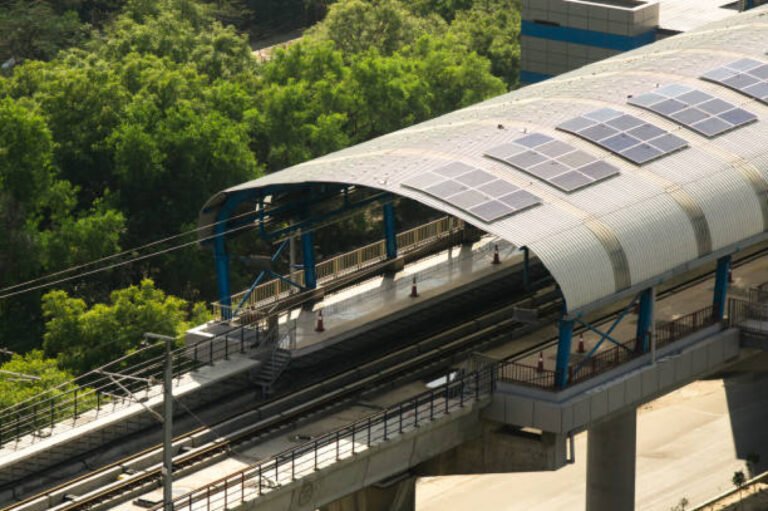
Rail infrastructure presents a unique operational environment where solar power can be deployed efficiently without disrupting core services. One of the primary advantages lies in the availability of large, underutilised surfaces. Railway stations, maintenance depots, workshops, administrative buildings, and parking structures offer high rooftop potential, while land parcels along tracks and yards can support ground-mounted installations where feasible.

Alignment Between Daytime Energy Demand and Solar Generation
From a demand perspective, rail systems consume substantial electricity during daylight hours for station operations, signalling, workshops, and auxiliary services. This aligns well with solar generation profiles, allowing a higher share of power to be consumed on-site and reducing transmission losses. As a result, solar installations can directly offset grid electricity drawn during peak daytime periods.
Cost Competitiveness and Tariff Predictability
Cost considerations further strengthen the case. Over the past decade, solar tariffs in India have declined sharply, which makes solar power competitive with conventional grid supply. For rail operators, long-term power purchase agreements and captive solar plants provide tariff predictability and insulation from future electricity price volatility.
Decentralised Generation and Energy Resilience
Additionally, decentralised solar generation improves energy resilience. By diversifying power sources, rail networks can reduce exposure to grid disruptions while gradually progressing toward sustainability targets. These factors together explain why solar power is increasingly being viewed as a strategic energy asset rather than a peripheral initiative.
Contribution to Sustainability and Emission Reduction Goals
IR is commissioning hundreds of megawatts of solar capacity for both traction (629 MW for trains) and non-traction (269 MW for stations and buildings) needs. These efforts are central to IR’s goal of becoming a Net Zero Carbon Emitter by 2030, complementing other measures like route electrification and energy efficiency.
Adoption of Solar Power in Rail Systems in India: Progress on Green Rail Mobility
Indian Railways: Solar Power Extending into Traction and Non-Traction Applications
Indian Railways has moved beyond pilot-scale renewable energy initiatives to a more structured deployment of solar power across its network. As of the current phase of implementation, the IR has commissioned a total solar capacity of 898 MW, which reflects the IR’s effort to integrate renewable energy into core railway operations.
Solar power is no longer limited to auxiliary consumption. Around 629 MW, accounting for nearly 70% of the commissioned solar capacity, is being utilised for traction purposes. This outlines an important shift, as solar-generated electricity is now contributing directly to the power requirements of electric train operations, thereby reducing dependence on conventional grid electricity for traction energy.
The remaining 269 MW of solar capacity is dedicated to non-traction applications, including station lighting, service buildings, workshops, maintenance depots, hospitals, and railway residential colonies. By meeting these requirements through solar power, Indian Railways has been able to lower electricity costs, minimise conventional energy consumption, and improve overall energy security across its infrastructure.
This dual utilisation covering both traction and non-traction loads indicates a growing maturity in renewable energy planning within Indian Railways. Solar power is increasingly being positioned as an integral component of the railways’ long-term energy strategy rather than a peripheral sustainability measure.
Solar on Track
The Solar Track initiative (also referred to as “Solar on Track”) represents a major shift in how Indian Railways and rapid transit systems utilise existing infrastructure to generate renewable energy. This involves installing solar panels in the previously unused space between the rails.
BLW Rolls Out India’s First Removable Solar Panel System Between Tracks
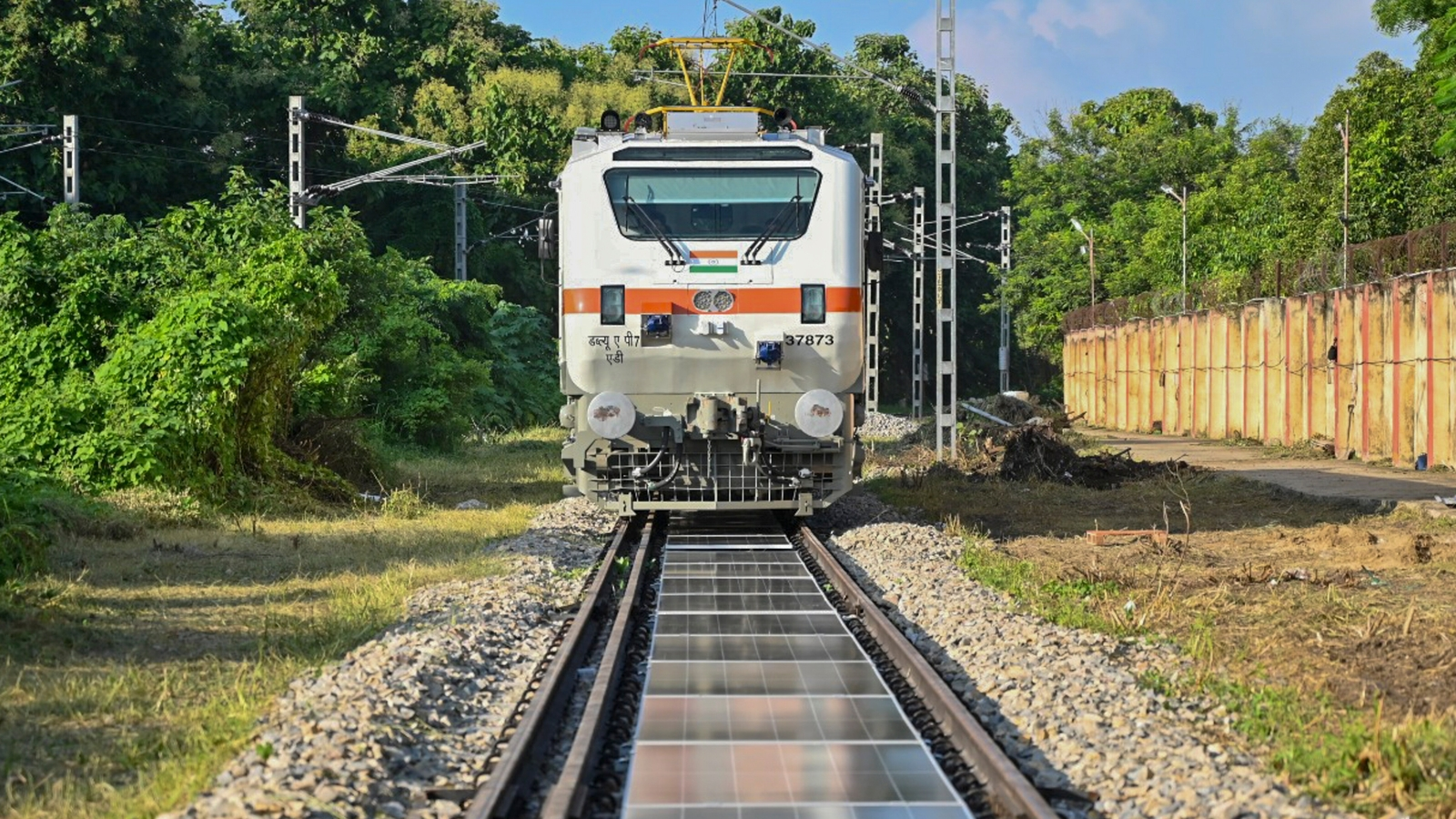
Indian Railways, through Banaras Locomotive Works (BLW) in Varanasi, successfully launched its first removable solar panel system between tracks in August 2025. It features 28 bifacial panels on a 70m stretch, generating 15 kWp (around 67 units daily) of clean energy without land acquisition, using vibration-resistant mounts for easy maintenance.
NCRTC: Exploring Track-Level Solar Deployment
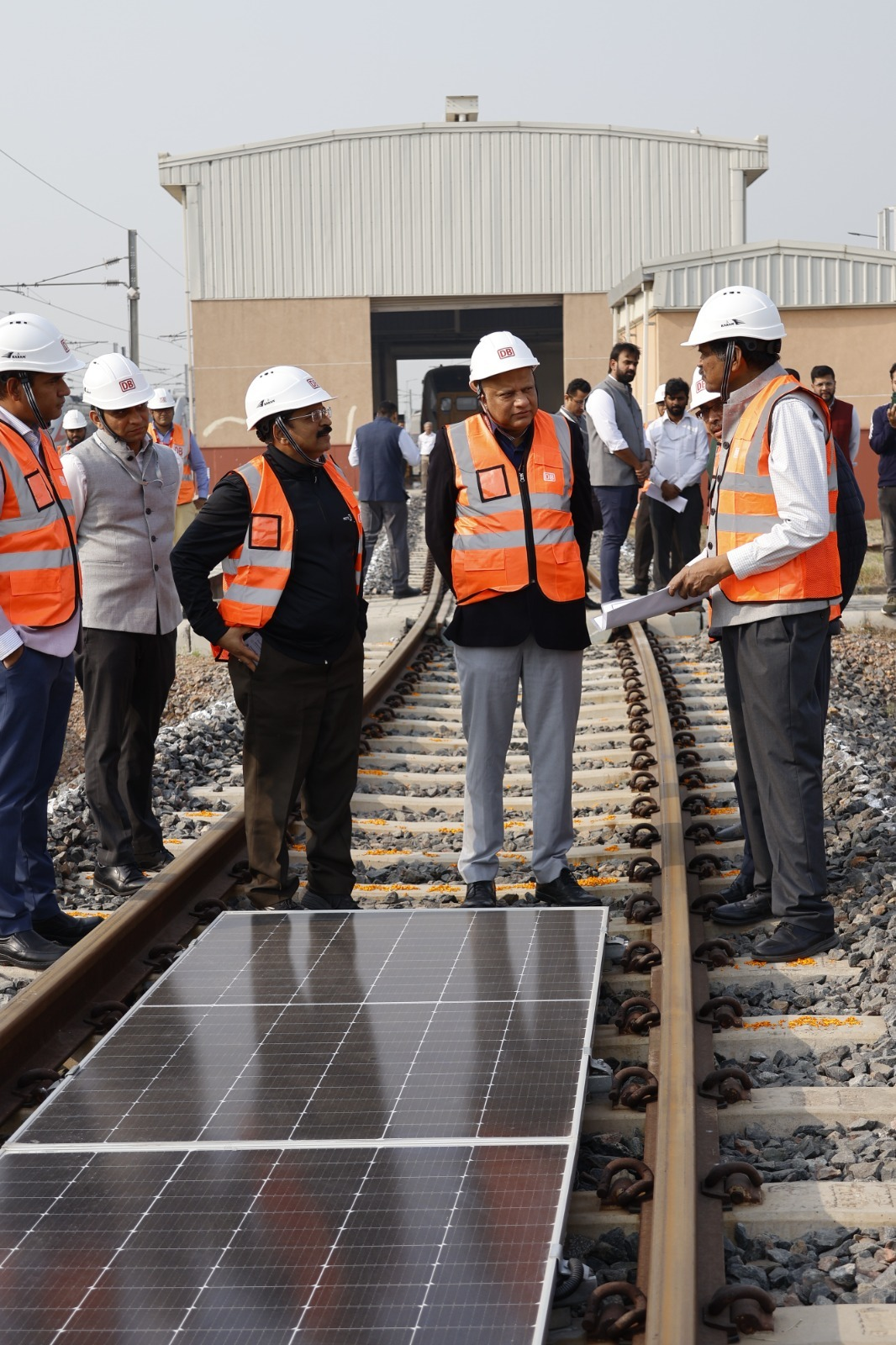
The National Capital Region Transport Corporation (NCRTC) has taken a distinct approach to renewable energy adoption through the implementation of a ‘Solar on Track’ initiative at the Namo Bharat Depot in Duhai. Unlike conventional rooftop or ground-mounted installations, this project involves installing solar panels directly on railway track infrastructure.
The pilot project has been executed on the Pit Wheel Track within the depot premises. It comprises 28 solar panels, each rated at 550 Wp, resulting in a total installed capacity of 15.4 kWp, spread across approximately 70 metres of track length. The system is designed to generate around 17,500 kWh of electricity annually, which will be utilised to meet depot-level energy requirements.
Beyond energy generation, the initiative demonstrates the potential for optimising limited infrastructure space in high-density transit systems. The project is expected to lead to an annual reduction of about 16 tonnes of CO₂ emissions, contributing to NCRTC’s broader sustainability objectives. While the installation remains at a pilot scale, it provides a valuable proof of concept for alternative solar deployment models in rail environments where land and rooftop availability may be constrained.
This experiment reflects a growing willingness among rail operators to explore unconventional yet practical solutions for integrating renewable energy into operational assets.
If these pilot projects remain successful and this initiative is expanded across the 1.2 lakh km national rail network, especially in yard lines, the system could generate up to 3.21 lakh units of electricity per kilometer annually.
NCRTC’s Broader Solar Adoption Across the RRTS Corridor
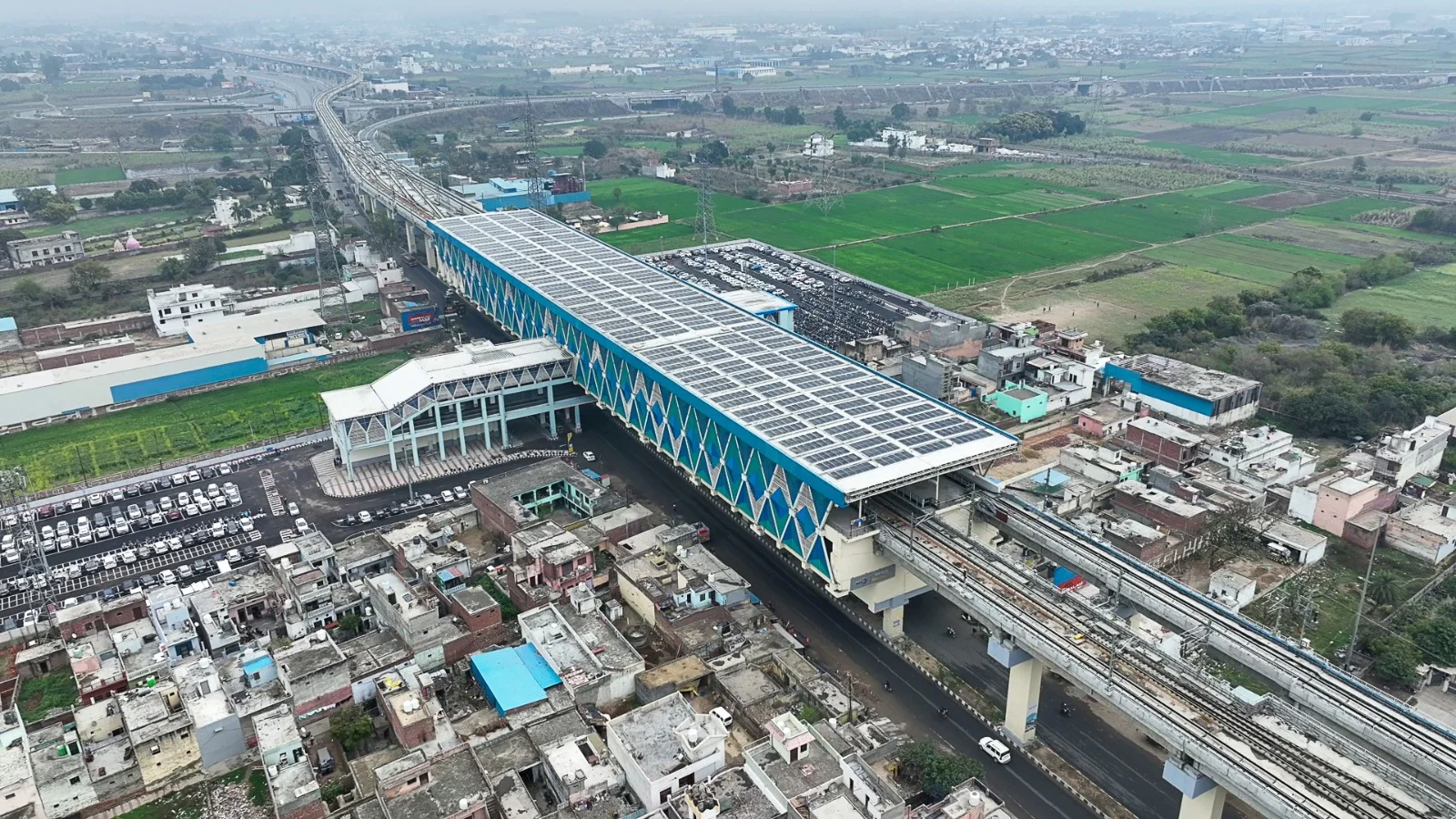
Beyond pilot initiatives, NCRTC has been steadily integrating solar infrastructure across operational assets on the Delhi-Ghaziabad- Meerut RRTS corridor. At present, 6 RRTS stations, along with 2 depots and associated receiving substations, are operating with on-site solar installations. These deployments shows NCRTC’s systematic approach to renewable energy adoption at both passenger-facing and core operational facilities.
Current Operational Solar Infrastructure on Delhi-Ghaziabad-Meerut Corridor
| Asset / Location | Type of Facility | Installed Solar Capacity |
| Sahibabad Station | RRTS Station | 729 kWp |
| Guldhar Station | RRTS Station | 729 kWp |
| Ghaziabad Station | RRTS Station | Approx 1 MWp |
| Duhai Depot | Depot | 585 kWp |
| Duhai Depot Station | Depot Station | 108 kWp |
| Murad Nagar Receiving Sub Station (RSS) | Receiving Sub Station | 43 kWp |
| Ghaziabad Receiving Sub Station (RSS) | Receiving Sub Station | 20 kWp |
| Meerut South Station | RRTS Station | 717 kWp |
Metro Rail Systems: Integration at Stations and Depots
Metro rail operators, including those in Delhi, Hyderabad, Bengaluru, Jaipur, Kochi, Mumbai, Nagpur, and Pune across Indian cities, have actively incorporated solar power into their infrastructure planning. In addition to this, the rooftop solar installations at stations, depots, and OCC buildings are increasingly being integrated at the design stage itself, particularly in newer metro projects. In several operational networks, solar energy contributes to station-level power needs, escalators, lifts, ventilation, and administrative functions. DMRC meets a significant portion of its energy demand (over 35%) through renewable sources. The Delhi Metro installed a vertical bi-facial solar plant on an elevated viaduct at Okhla Vihar and a 1 MW rooftop solar plant at Khyber Pass depot.
Unlike mainline railways, metro systems operate within dense urban environments where rooftop solar remains the most viable option. While land constraints limit large-scale installations, consistent adoption across stations has enabled metro operators to offset a portion of their electricity demand and demonstrate measurable reductions in operational emissions.
Operational and Economic Benefits of Solar-Powered Rail Infrastructure
The growing deployment of solar installations across Indian Railways, metro systems, and the RRTS network highlights a clear shift toward structured energy planning. As reflected in NCRTC’s operational assets listed in the table above, solar power is no longer confined to symbolic installations but is being applied across stations, depots, and traction-support infrastructure in a measurable manner.
Reduction in Electricity Costs and Exposure to Tariff Volatility
One of the most immediate benefits is a reduction in electricity expenditure. On-site solar generation allows rail operators to offset grid consumption during peak daytime hours, when commercial tariffs are typically higher. For large networks with predictable daily energy demand, this translates into tangible cost savings over the lifecycle of the asset.
Measurable Contribution to Carbon Emission Reduction
Beyond economics, solar adoption supports emission reduction objectives without compromising operational efficiency. By substituting conventional electricity with renewable energy for both traction and non-traction applications, rail systems are able to lower their carbon footprint in a measurable and verifiable manner. This balanced integration of sustainability with operational practicality underscores why solar power is increasingly viewed as a strategic approach rather than an optional add-on.
Limitations in Deploying Solar-Powered Rail Infrastructure
- Intermittency and Mismatch with Round-the-Clock Operations
The primary limitation of solar energy lies in its intermittent nature. Rail systems operate continuously, with traction and auxiliary loads extending well beyond daylight hours. Solar generation, by contrast, is restricted to daytime and is subject to seasonal and weather-related variability. As a result, solar power cannot function as a primary energy source for rail operations and must remain integrated with grid-based supply. The limited deployment of large-scale energy storage solutions further constrains the ability to fully use solar power for continuous rail services.
- Land Availability and Structural Constraints
Indian Railways possesses infrastructure assets, however not all locations are suitable for solar deployment. Rooftop installations depend on structural strength, orientation, and available surface area, which can vary widely across stations and legacy buildings.
- Safety, Maintenance, and Operational Considerations
Solar installations within active rail environments must comply with stringent safety norms. The proximity to overhead equipment, traction systems, and moving rolling stock necessitates careful design, insulation, and maintenance planning.
- Integration with Traction Power Systems
Although solar power is increasingly being used for traction through off-site and captive arrangements, direct integration with high-voltage traction systems remains challenging. Traction power networks are designed for reliability and stability, and integrating variable renewable energy sources requires strong grid coordination and regulatory approvals. These factors add more complexity to implementation timelines and institutional frameworks.
Conclusion
The integration of solar power into rail infrastructure shows a pragmatic response to rising energy demand, cost pressures, and sustainability commitments across the rail sector. The available data from Indian Railways, metro systems, and the RRTS network shows that solar energy has moved beyond pilot initiatives to become an operational resource supporting both traction and non-traction requirements. The scale of deployment, particularly in traction-linked applications, indicates growing capability in renewable energy as part of long-term rail energy planning.
At the same time, solar power remains a supplementary source rather than a standalone solution. Its effectiveness depends on careful integration with grid supply, appropriate deployment models, and adherence to operational and safety requirements.
The role of solar energy in rail systems will rely on multiple factors, including policy frameworks, technological improvements, and effective execution. In the long term, solar-powered rail infrastructure is expected to play a crucial role in steering rail transit systems toward greater sustainability, operational efficiency, and lower carbon emissions.
Explore how AI-integrated systems are improving comfort, connectivity, and accessibility for passengers across metro and rail networks at the 6th edition of InnoMetro, India’s leading expo for the Metro & Railway industry which is going to held on 21-22 May 2026 at Bharat Mandapam, New Delhi
Register now: https://innometro.com/visitor-registration/