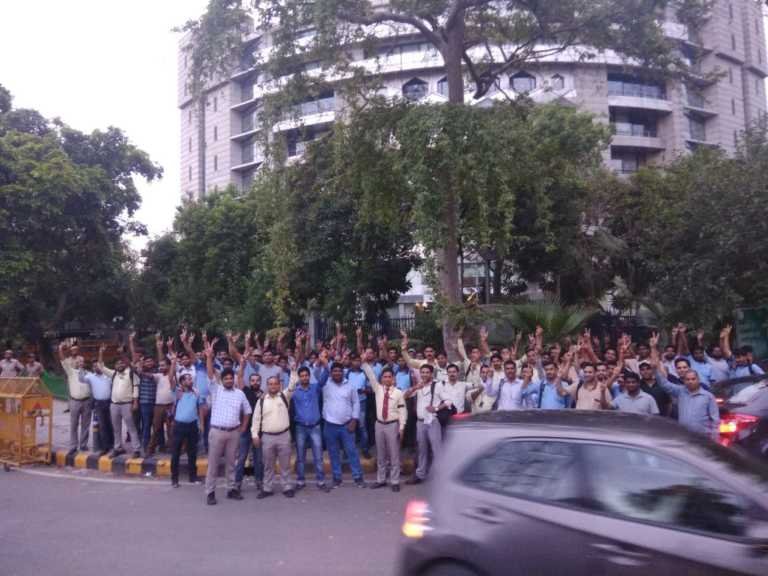
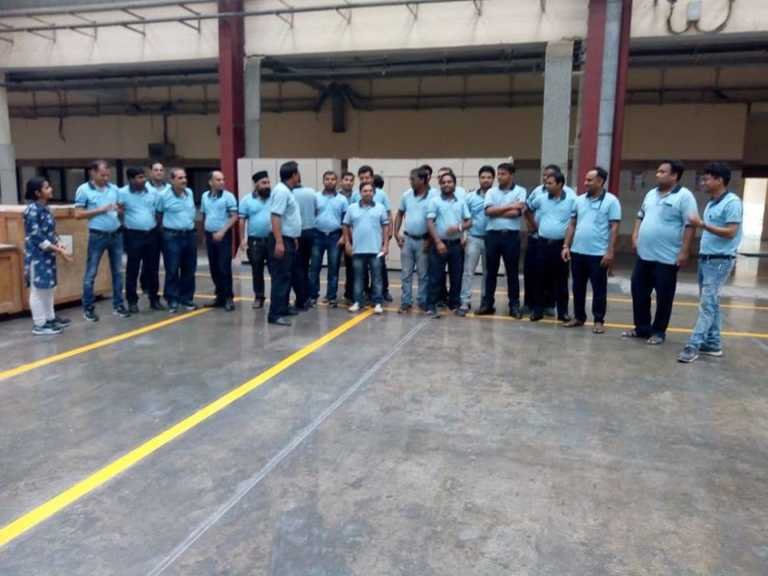
New Delhi: After the today’s meeting on 9.30 at Metro Bhawan Office an appeal has been given to Delhi Metro Rail Corporation (DMRC) employees by the DMRC management. This has increased the aggressiveness among the employees. Now after the employees are not ready to stop the strike, hunger strike continues and they consider DMRC decision as an unsatisfactory decision for them. This whole dispute will badly affect the commuters if the strike continues.
“We will wait for tomorrow morning proceedings report if they do not fulfil our demands. We will stop Metro services on 30 June”, stated by DMRC Employees Union and the Staff Council jointly in a video statement on 28 June.
Appeal to DMRC employees -001
A section of the staff, in collusion with an unrecognized Union, have launched an agitation with effect from 20/06/2018 and threatened shut down /lockout/tool down, i.e. 30/06/2018, in order to press for their unreasonable demands and the employees are being unduly provoked into an uncalled for, agitation.
As you are all aware, DMRC has an elected Staff Council, which has been satisfactorily functioning for years and employees issues are taken up and discussed through the platform of the staff council. As regards the Agreement of 23/07/2017, with regard to graduation and merger of pay scales, the same has been implemented in toto and no anomaly has arisen thereof, since no junior employee.
The repeated raising of unreasonable demands is the real reason for disparity amongst the staff. The 3rd pay revision has been delayed badly, for which led to the stoppage of the train is getting affected. The recent actions of some of the employees, which led to the stoppage of train services, has given DMRC a very bad name and the entire DMRC is under criticism from various quarters, including the government and the public.
A section of the staff, in collusion with an unrecognized Union, have launched an agitation with effect from 20/06/2018 and threatened shut down /lockout/tool down, i.e. 30/06/2018, in order to press for their unreasonable demands and the employees are being unduly provoked into an uncalled for, agitation.
As you are all aware, DMRC has an elected Staff Council, which has been satisfactorily functioning for years and employees issues are taken up and discussed through the platform of the staff council. As regards the Agreement of 23/07/2017, with regard to graduation and merger of pay scales, the same has been implemented in toto and no anomaly has arisen thereof, since no junior employee.
The repeated raising of unreasonable demands is the real reason for disparity amongst the staff. The 3rd pay revision has been delayed badly, for which led to the stoppage of the train is getting affected. The recent actions of some of the employees, which led to the stoppage of train services, has given DMRC a very bad name and the entire DMRC is under criticism from various quarters, including the government and the public.
The employees of DMRC have a responsibility to ensure smooth functioning of train services and to avoid any hardship to the travelling public. It may be mentioned that any action which is violative of the conduct rules of DMRC, cannot be accepted and shall be taken up suitably. The management reiterates its commitment to employees welfare and betterment, including, implementation of the revised pay scales (3rd Pay Revision), mention in the appeal letter.
On the other hand, DMRC has given an official order to all the employees of DMRC for attendance in work –reporting for duty and cancellation in left. Any employees not reporting for duty shall be treated as ‘ABSENT FROM DUTY, and the principle of ‘NO WORK, NO PAY’, shall be applicable. This shall be in addition to any other action, including, ‘BREAK IN SERVICES’ and/or, action under the relevant rules.
On the other hand, DMRC has given an official order to all the employees of DMRC for attendance in work –reporting for duty and cancellation in left. Any employees not reporting for duty shall be treated as ‘ABSENT FROM DUTY, and the principle of ‘NO WORK, NO PAY’, shall be applicable. This shall be in addition to any other action, including, ‘BREAK IN SERVICES’ and/or, action under the relevant rules.
DMRC Employees Union, Letter to Chief Minister
Secretary Staff Council has also written a letter to Chief Minister Delhi Arvind Kejriwal, employees have asked his cooperation in an ongoing strike and waiting for the response. And he has instructed to another ministry to take a genuine decision in this regard.
Whereas all genuine demands of Metro employees shud be met, strike wud cause inconvenience to lakhs of people. Strike shud not take place. Whereas govt imposing ESMA as last resort, I wud urge employees to not resort to strike. https://t.co/kbWtkUZvCL
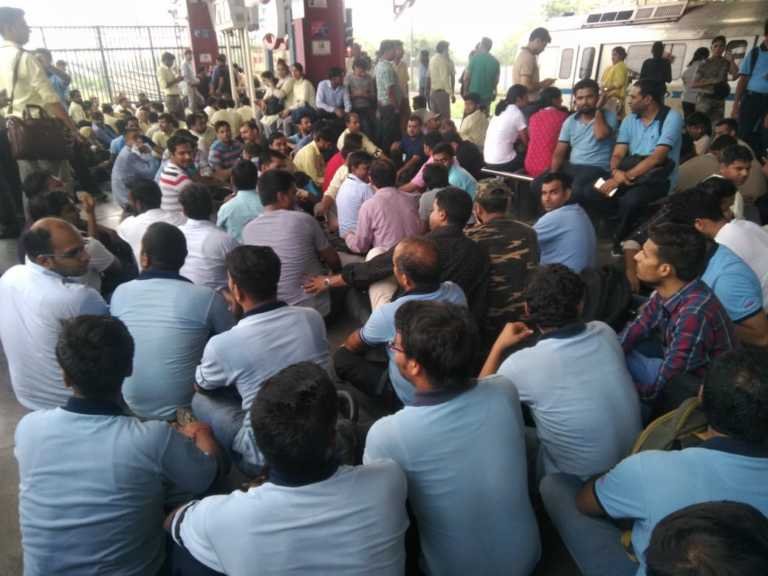
Delhi Metro Employees gathered at Yamuna Bank metro Station platform
DMRC Employees were on strike
DMRC Employees going to total shut down metro services
Around 1500 employees have gathered at Yamuna Bank Metro station and planning to shut down the Metro services if further action is not taken as earliest. They have also mentioned that our intention is not trouble commuters DMRC has not left any other option for us. we already were given 15 days notice to DMRC that if favoured action is not taken we will complete shutdown Metro services on 30 June.
Metro Rail News team has tried to connect with DMRC Spokesperson Anuj Dayal to know their further steps, but the call has been denied at all times.
Chennai: Chennai Metro Rail has been lauded for its effort to develop mass transit system which is at par with international standards. The Chennai Metro Rail has been awarded the SKOCH Order of Merit for the metro project it has developed in the city.
SKOCH – Smart Governance Award – is an initiative to distinguish top performing government organisation as well as those working with government agencies and following best practices and models of governance.
Chennai Metro Rail (CMRL) bags SKOCH Award for Good Governance (Photo: CMRL)
The Chennai Metro Rail Limited (CMRL) had presented before a board of experts the different facilities and features it has built in the 45km phase-1 project that is on the verge of conclusion.
During the presentation the officials of CMRL had showed various technologies it employed to operate the services. This also included the energy saving system as well as several green initiatives it has taken to turn metro as sustainable mode of transport.
Officials said the award was also to appreciate CMRL’s ability to become accustomed to future challenges and its efforts in transforming urban infrastructure through execution of its ambitious 107.55km phase-2 project.
As per the press release by CMRL, “Chennai Metro Rail project is conferred with SKOCH Order of Merit Gold.
The Chennai Metro Rail has added another feather to its cap with SKOCH Group conferring the SKOCH Order of Merit recognizing the organization’s vision and governance for creating world-class passenger amenities as part of the Chennai’s Metro Railway Phase I network.
CMRL presented before the expert jury panel on the unique features, energy saving technologies adopted, green initiatives and speedy decision implemented through efficient governance in the Phase I of CMRL Project.
This SKOCH Order of Merit Gold recognizes CMRL initiatives and governance practices that have ability to adapt to future challenges and transform the urban infrastructure as part of upcoming Phase II.”
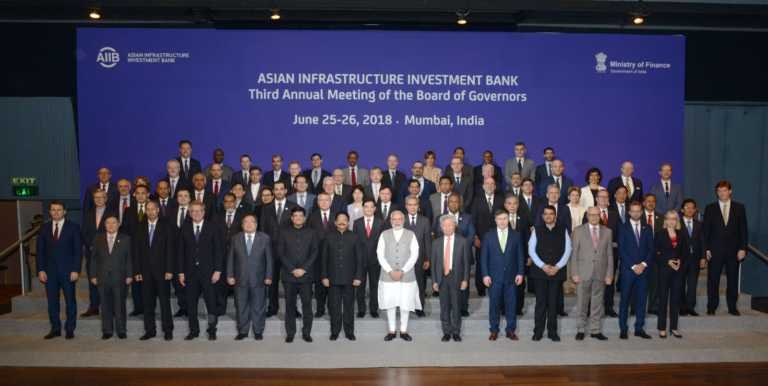
New Delhi: It is very auspicious achievement made by India that it has secured 3rd rank after two developed countries viz. China and South Korea to host the series of the annual summit of Asia Infrastructure Investment Bank (AIIB). According to information received from AIIB press release, they have planned to invest a sum of total USD100 crore in the National Infrastructure Investment Fund (NIIF), a public-private initiative to finance infrastructure activities in India and investment of another USD100 million is under consideration. And the total investment of USD100 crore is already announced by the AIIB.
“I believe that India and AIIB are both strongly committed to making economic growth more inclusive and sustainable. In India, we are applying novel Public Private Partnership models, Infrastructure Debt Funds, and Infrastructure Investment Trusts to fund infrastructure”, said Prime Minister Narendra Modi
India became 3rd country to host the AIIB annual submit
I believe that India and AIIB are both strongly committed to making economic growth more inclusive and sustainable. In India, we are applying novel Public Private Partnership models, Infrastructure Debt Funds, and Infrastructure Investment Trusts to fund infrastructure: PM
Three years ago, India also decided to become 57 founding member countries of the AIIB. India’s equity stake in the bank is 8.7% (as against China’s 31%). Gradually, the list of country-members increased to 86. Now with Lebanon being included as a member last week after that 87 country has become members of AIIB.
The main reason behind the China and India to set up this bank was to create another lending body that would cater to the interests of Asian countries (though the bank does lend to non-Asian countries). In many ways, it has been leading itself along the lines of the World Bank in which the US has a 26% equity stake in the capital, but lending by the bank is quite independent for that country. However, AIIB has some uniqueness which is not found in any other International bank like World Bank and the International Monetary Fund where loans are advanced only to countries which are members of the IMF, while the AIIB is willing to lend to anyone – member or otherwise.
AIIB has given fund for six projects (mentioned below) aggregating USD 1.2 billion. But its requirement for funds is immense. India has also requested to the AIIB to help in financing several other projects. Most of them are for Andhra Pradesh:
Andhra Pradesh Rural Roads project
Andhra Pradesh Urban Water Supply & Septage Management Project
West Bengal Major Irrigation & Flood Management Project
On 24 June 2018, an approval has been given to enhance by another $100 million shortly. Recently its chief executive, Sujoy Bose, has also planned to launch a $2 billion long-term fund for financing various mega projects.
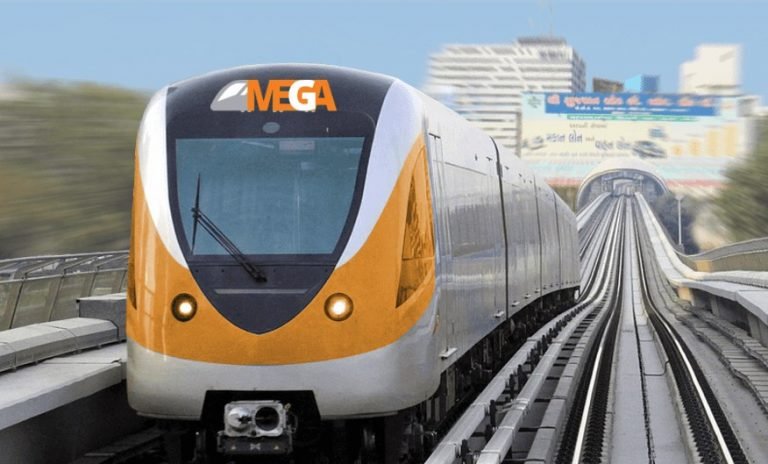
Ahmedabad: The Metro Link Express for Gandhinagar and Ahmedabad (MEGA) Co. Limited (A Special Purpose Vehicle of Govt. of India & Govt. of Gujarat) has invited tender through International Competitive Bidding for Design, Manufacture, Supply, Installation, Testing and Commissioning of (A) Electrical and Mechanical (E&M) Including Hydraulics, Fire Safety Systems, UPS & DG Sets (B). Environmental Control System (ECS) and Building Management System – BMS (C). Tunnel Ventilation System (TVS) and TVS – SCADA Works, for Underground Stations, Intermediate Vent Shaft and Associated Tunnels of East – West Corridor of Ahmedabad Metro Rail Project Phase – I”
Important Point of Tender Notice No. MEGA/UG/E&M-01, dated: 18-04-2018
Tender Notice No. MEGA/UG/E&M-01: Design, Manufacture, Supply, Installation, Testing and Commissioning of (A).Electrical and Mechanical (E&M) Including Hydraulics, Fire Safety Systems, UPS & DG Sets (B). Environmental Control System (ECS) and Building Management System – BMS (C). Tunnel Ventilation System (TVS) and TVS – SCADA Works, for Underground Stations, Intermediate Vent Shaft and Associated Tunnels of East – West Corridor of Ahmedabad Metro Rail Project Phase – I.
Scope of work: Design, Manufacture, Supply, Installation, Testing and Commissioning of (A).Electrical and Mechanical (E&M) Including Hydraulics, Fire Safety Systems, UPS & DG Sets (B). Environmental Control System (ECS) and Building Management System – BMS (C). Tunnel Ventilation System (TVS) and TVS – SCADA Works, for Underground Stations, Intermediate Vent Shaft and Associated Tunnels of East – West Corridor of Ahmedabad Metro Rail Project Phase – I.
Estimated Cost of Project: INR 599.0 Crore
Last date for tender document submission: 18.07.2018 up to 15.00 hrs.
Tender Opening Date & Time: 18.07.2018 at 15:30:00 hrs.
Bidding process will be done in accordance with the applicable Guidelines for Procurement under Japanese ODA Loans, and is open to all Bidders from eligible source countries, as defined in the Loan Agreement.
The MEGA Company Limited, now invites sealed Bids from eligible Bidders for this tender /bid. International Competitive Bidding will be conducted in accordance with JICA’s “Single-Stage Three Envelope” Bidding Procedure, comprising of three envelopes, to be submitted simultaneously.
The tender document should be submitted in three separate envelops i,e First envelope, called “Initial Filter Cum Qualification Requirement Bid”, Second envelope, called “Technical Bid” and Third envelope, called “Price Bid”.
Interested eligible Bidders may obtain further information from the office of MEGA Co. Limited, Procurement Cell, Block No. 1, First Floor, Karmayogi Bhavan, Behind Nirman Bhavan, Sector 10/A, Gandhinagar, 382010. Tel: +91-79-23248572 (Extn: 527), E-mail ID: snehal.shah@gujaratmetrorail.com
A complete set of the Bidding Documents may be purchased and inspected by interested Bidders on the submission of a written application to the address above and upon payment of a non-refundable fee of INR 50,000/ (Indian Rupees fifty thousand only) in the form of Demand Draft/Pay order/Banker’s Cheque drawn in favour of “Metro-Link Express for Gandhinagar and Ahmedabad (MEGA) Company Ltd.” payable at Gandhinagar (Gujarat) with effect from 24.04.2018.
Bid Security Amount: INR 59.00 Million.
The Japan International Cooperation Agency (JICA) is funding the loan for the above project being executed by the MEGA Co. Limited.
Mumbai: A group of Indian Ambassadors and High Commissioners (Indian envoys) visited various key constrution sites of Lucknow Metro Rail Corporation (LMRC) and Mumbai Metro Rail Corporation (MMRC) on Wednesday and Thursday respectively.
In first visit they reached to Transport Nagar depot of Lucknow Metro Rail Corporation on Wednesday. MD LMRC, Kumar Keshav welcomed the all delegates and guided during their visit to depot sites.
“Today Lucknow Metro is a case study subject in various technical and non-technical institutions across the country and the world. It has set new benchmarks in Metro rail construction and operation in India and has ushered a revolution in bringing Mass Rapid Transit System (MRTS) in Uttar Pradesh”, said Kumar Keshav, MD/LMRC.
They also visited the Depot Control Centre (DCC), workshop-cum-inspection bay lines and Operations Control Centre (OCC) of Lucknow Metro.
Today Lucknow Metro is a case study subject in various technical and non-technical institutions across the country and the world. It has set new benchmarks in Metro rail construction and operation in India and has ushered a revolution in bringing Mass Rapid Transit System (MRTS) in Uttar Pradesh, said Kumar Keshav, MD/LMRC.
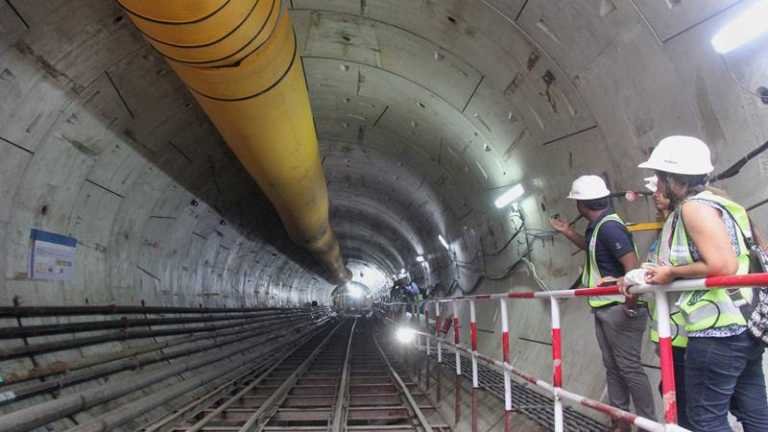
After visit to Lucknow Metro they visited the entire team of delegated visited ongoing construction site at Chhatrapati Shivaji Terminus of Mumbai Metro 3 on next day. MMRC Managing Director Ashwini Bhide cooperated the team and briefed about the project during their visit.
“These envoys went to the Chhatrapati Shivaji Terminus Metro 3 station site at Azad Maidan for a first-hand experience of the world-class technology in use”, said Ashiwini Bhide.
These envoys went to the Chhatrapati Shivaji Terminus Metro 3 station site at Azad Maidan for a first-hand experience of the world-class technology in use.
The Colaba–Bandra-SEEPZ line, line 3 of the Mumbai Metro, is a part of the metro system of Mumbai. The 33.5-km long line is the first underground metro line in Mumbai. The metro line covers Cuffe Parade business area to SEEPZ in the north-central with 26 underground and one at The metro line covers Cuffe Parade business area to SEEPZ in the north-central with 26 underground and one intersection where two or more transport axes cross at the same level. The cost of this corridor is estimated at ₹23,136 crore. This expected to reduce road congestion.
Envoys included India’s Ambassadors Ahmad Javed (Saudi Arabia), , Sangeeta Bahadur (Belarus), L. Prashant Pise (Tunisia), Atul M. Gotsurve (North Korea), Azar A.H. Khan (Turkmenistan), Ravi Bangar (Colombia) and Indian High Commissioners Ajay M. Gondane (Australia) and Vishvas Vidu Sapkal (Fiji).
“The MMRC briefed them on the project’s complexity and how it is being implemented, as part of the familiarisation visits of heads of Indian missions for the promotion of Indian states abroad,” she said.
This project was in controversies because the project will affect 5,012 trees, of which 1,331 will be cut and the remaining 3,681 will re-planted in other parts of the city. The Bombay High Court issued an interim order restricted the MMRDA from cutting trees for the project on 9 February 2017. As it may affect the nature.
The envoys showed interest in the project to know more about the project.
Kolkata: According to a communication issued by the Indian railways to West Bengal government needs to remove around 2,000 squatters of substantial land which was acquired for the Airport-Barasat metro of Kolkata Metro Rail Project to have any chance of completing it.
The administration had so far managed to remove close to 1,000 squatters from various Metro construction sites. But both the railways and the state government acknowledge that getting double the number of people to shift from just one stretch is a gargantuan challenge, said by a senior railway official of the state government.
Because of some technical hurdles on the construction of the 3.5 km stretch from the proposed airport metro hub till new Barrakpore the metro railway had already submitted an alternative plan to the railway board.
As now the rest of the route will be underground the encroachment would now be entailed and the expenditure will rise for about two and a half times. The estimated cost is Rs. 500-600 crore for each kilometer of underground tracks.
Earlier this entire route was being the elevated one till the airport authority of India cited technical restrictions, and they even forced the railways to make them alter their plan and make the tracks till new plan and make the tracks till new Barracpore underground.
Now, this stretch will have three stations- Birati, Michael Nagar, New Barrackpore.
A senior railway official said that “An army of 2,000 squatters between New Barrackpore and Barasat need to be shifted for the project to go ahead. Substantial land, both agricultural and residential, needs to be acquired as well. Construction can begin only after these impediments are removed”.
The railway minister Piyush Goyal was reported by metro earlier this month about the linking sanction of new projects to be ready for the availability of land in Bengal.
During a video conferencing from Delhi on June 11, Goyal said that “All projects will be taken up as and when we get the land for each project. The railways will focus on those projects and give enhanced capital to those for which land is available with the railways”.
The problems have been dogged from the starting on the Airport-Barasat project which was commissioned on January 2011.
By 2013, Larsen and Turbo won a contract of Rs. 280 crore to build a stretch of Rs. 2,397 crore project. The company on the railway-owned land between Madhyangram and Barasat wants to build overhead tracks and stations. But this work never started because 1,900 unauthorized structures were lined with stretch, which included 800 odd shops.
A senior state government official said that “Let the railways get sanction for the underground stretch first. We are ready to cooperate with them to complete the remaining portion till Barasat”.
New Delhi: The dispute between Delhi Metro Rail Corporation (DMRC) and its Employees not yet resolved and the strike is continuing since last 10 days with an ultimatum to stop metro services on 30 June in entire Delhi and NCR. Despite resolving the long pending issue raised by Metro employees. The Delhi Metro Rail Corporation Management has approached the regional level commissioner to start conciliation proceedings on the issue.
In response to the communication made by DMRC and intimation ( 15 days advance notice) given by the Delhi Metro Rail Corporation Employees Union (DMRCEU), the Regional Labour Commissioner issued a notice to all parties i.e. the Managing Director of Delhi Metro Rail Corporation, General Secretary of DMRC Employees Union and the Secretary of Staff Council and directed all the parties to join conciliation proceeding before the office of the Regional Labour Commissioner at 12.00 hours today. The meeting continues till 7 pm and no final outcome came out. The commissioner has directed to all the parties to resolve the dispute on tomorrow morning and come back by 2.30 pm and report the final conclusion at his office.
“In this connection, it is to inform DMRC management that the undersigned shall hold conciliation proceedings on 28.06.2018 in this office to resolve the dispute amicably. You are requested to make it convenient to attend the same in person or through duly authorized representatives with all relevant records/documents. This management is also requested to offer their comments on the representation of the union /council in five copies and also forward a copy of strike notice served by the union on or before the date of hearing. On 28 June Ministry of Labour to resolve an Industrial dispute between the management of Dmrc ltd. And DMRC staff council over notice of strike on 30.06.2018”, stated in the notice issued by Regional Labour Commissioner to all the parties.
This step of Ministry of Labour was expected to give a new ray of hope to Delhi Metro Employees, but after the conciliation proceedings result has disappointed employees. The Union/Council is requested not to resort to direct any action till the pendency of conciliation.
Background of dispute
In may 2015 a meeting was conducted between DMRC management and Staff Council to provide some pay hike to maintainer cadre employees as they were getting less salary since 1 January 2007 due to irregularities in pay fixation/pay revision by the DMRC. The DMRC accepted its mistake and issued their decision to upgrade the initial pay scale of maintainer from basic salary 8000 to 10170 and also agreed to merge two scales of its supervisory cadre. But no action was taken by the DMRC on its decision even after completion of two years.
Aggrieved with no action on their own decision of DMRC, the metro employees started their protest in mid of 2017. Despite resolving the issue the DMRC management taken an autocratic action and terminated an employee who was the best performer and was working on the post of RTI Supervisor in DMRC headquarters by alleging some baseless charges against him and even not given any reasonable opportunity to him. After the interaction with the terminated employee, it was revealed that the actual reason for his termination was that he has reported a complained to CVC against irregularities/corruption in recruitment by some HR officer of DMRC. Apart from this, the DMRC has issued major penalty charge sheet to two Staff Council members.
Aggrieved with the autocratic action taken by the DMRC management, about 11000 Metro Employees took a stand against DMRC and started strike with an ultimatum to shut down the metro services if the terminated employees are not taken back unconditionally and other pending issues not resolved.
Taking seriousness of the issues raised by the employees a high-level meeting conducted on 22nd and 23rd July of 2017 after consultation with Ministry of Housing and Urban Affairs, Government of Delhi and the principal adviser Dr E. Sreedharan. The meeting was chaired by DMRC Managing Director Mangu Singh and most of the full-time functional directors of DMRC along with staff council member have participated. In the meeting total 14 points, Agenda discussed and the management given assurance to the employees to full fill the all demands within two months of time but nothing was done by the DMRC management and even though the terminated employee not taken back. However, the DMRC management had issued a misleading press statement to the media assuring that all pending issues have been resolved and the terminated employee is taken back.
On 8-06-2018, an email letter was written by Ravi Bhardwaz secretary Staff Council to the Managing Director of Delhi Metro Rail Corporation (DMRC) to resolve the issues raised in a meeting of 22nd and 23rd July of 2017 and mutually agreed by the DMRC management. As no positive response received by the Managing Director of DMRC, the all non-executive employees of DMRC have decided to go on strike.
After the conciliation proceedings, the DMRC employees have decided to continue their strike till their demand is fulfilled as they are dissatisfied with the action of Regional Labour Commissioner.
After the proceedings, they gather at Metro Bhawan (DMRC Headquarters)
DMRC Employees at Metro Bhawan
1 of 4
DMRC Employees on hunger strike at Metro Bhawan
“We will wait for tomorrow morning proceedings report if they do not fulfilled our demand. we will stop Metro services on 30 June”, stated by DMRC Employees Union and the Staff Council jointly in a video statement.
“We will wait for tomorrow morning proceedings report if they do not fulfil our demands. we will stop Metro services on 30 June”, stated by DMRC Employees Union and the Staff Council jointly in a video statement.
We hope that tomorrow proceedings will bring positive results so that over 32 lakh Delhi Metro commuters in Delhi and NCR will not get affected. And DMRC will not repeat their mistake as committed in past and decision will give permanent solutions to end the dispute.
Amaravati: Things are moving at good pace for Vijayawada Metro. As per press briefing by minister for Municipal Administration P Narayana, the detailed project report (DPR) will be ready within 3 months. With DPR ready, process for metro work will begin post approval from authorities.
As per the minister, the DPR is being prepared for the metro corridors of 65 km stretch in the city. He also shared that the he reviewed the progress of metro rail with Amaravati Metro Rail Corporation MD N P Ramakrishna as well as the representatives of German government owned KfW Bank, SISTRA public transport consultants (France) at the Secretariat in the first half of the week.
As per the minister the initial DPR was made for two corridors for a stretch of 25km in the Vijayawada city. He added that this was later extended to Gannavaram airport and Amaravati.
Narayana shared that they are also planning to construct additional corridor to Jakkampudi location. The DPR for the new corridor will be prepared as per the new metro policy and the same will be submitted for review in 3 months time. He also informed that KFW Bank will be offering Rs 8 crore for the metro project.
Narayana shared that they are also planning to construct additional corridor to Jakkampudi location. The DPR for the new corridor will be prepared as per the new metro policy and the same will be submitted for review in 3 months time. He also informed that KFW Bank will be offering Rs 8 crore for the metro project.
Talking about the delay in the project, Narayana blamed the central government. He stated that the central government came out with new metro policy two years after they had submitted the DPR on building Vijayawada Metro. This change in policy caused unnecessary delay in metro project.
Not very happy with the response from the central government, Naryana said that the central has offered financial assistance. He added that they were assured for financial help for both Visakhapatnam metro rail and Vijayawada metro rail project as per the AP Reorganisation Act. But unfortunately, the central government has not done anything in last four years. The assurance has simply remained verbal, noting concrete has come so far.
New Delhi:Delhi Metro Rail Corporation Employees Union started hunger strike by 25 June and they will continue till their demand will fulfilled even they have decide to complete close of metro service by 30 June. Since 2015 dispute regarding salary hike and promotion is going, employees of DMRC has been always consider as member of DMRC family but their problem has not yet resolved.
From 19 June nearly 13000 non-executive staff members, including train operators, maintenance staff and station controllers, have been protesting at various depots and control rooms of the Delhi Metro.
A letter in this regard written by the General Secretary Mahaveer Parsad of Delhi Metro Rail Corporation Employees Union (DMRCEU) on 14-06-2018 addressed to the Managing Director of DMRC and copy circulated to various other authorities /ministries departments.
Our history is best example that any movement at starting period is faster and it get slower in its middle period and the last of its stage it get more faster than rest of the stage, said DMRC Employees Union.
DMRC employees Union on ongoing strike. Hunger strike from 25 June
1 of 4
DMRC management has not given any response till now all. Delhi Metro Rail Corporation has achieved a lot even it has largest metro network of India. But without the cooperation of executive employees it could not be came successful. Now it’s time of DMRC to cooperate with employees and resolve two year ongoing disputes. Non- cooperative nature of DMRC has created suspense among people that DMRC is really working for welfare of Public. Huge loss of Rs 4000 crore to DMRC due to irregularities in Delhi Metro Airport express line project has brought new debate among the public, due to which employees has to suffer.
Indefinite strike has greatly influenced the life of Delhi people, approximate 32 lakh people of Delhi are directly or indirectly depend upon Metro services. This is surely going to get affected if their demand not fulfilled or strike continues. In such weather condition this ongoing strike has become additional problem for daily commuters.
New Delhi: While the buzz around India’s Bullet Train continues, central government has already started planning another high-speed rail project. As per Union railway minister, Piyush Goyal, the studies on social and environmental impact are almost near completion.
Goyal who was attending the Asian Infrastructure Investment Bank (AIIB) annual meeting shared with the media. He even stated the issue of land acquisition for Mumbai-Ahmedabad Bullet Train has been resolved. With this issue now resolved, the central government is mulling with the idea of starting on another high-speed rail project.
With this news, it is certain that many other regions will get the benefit of high-speed travel. The bullet train facility will not only be restricted to Mumbai-Ahmedabad. There will be other regions that will experience the joy of travelling in a fast moving train.
Goyal who is happy with the progress of environment and social studies, said that the outcome of the reports will be known soon. The studies are nearing completion.
When asked to name the region where the study is being conducted, Goyal remained tight-lipped. He did not name the corridor but it is likely that the financing will come from AIB for the next high speed rail project in the country.
Goyal also cleared the air surrounding land acquisition for infrastructure project. The union minister assured that the government was not facing any issues from landowners across the country for infrastructure projects.
He added that the compensation has been increased fourfold for other infrastructure projects and fivefold for the high-speed rail project.
Currently Japan International Cooperation Agency is annual funding for the first high-speed rail project. The international agency has also agreed to increase the funding from $3 billion to $5 billion.
During the three-day AID Meeting that was held by Union Minister of railway, several representatives of multilateral banks were present. Many banking firms have shown interest in funding upcoming bullet train projects.