Home Blog Page 777

Mumbai Metro | State cabinet approves Swami Samarth Nagar-Vikhroli Metro link

0

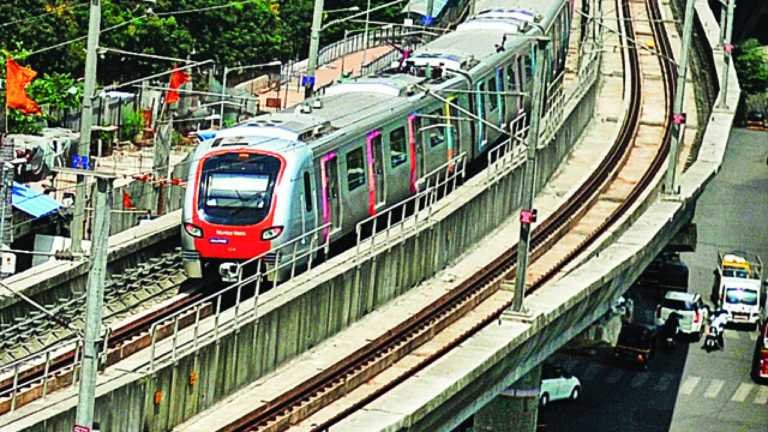
Mumbai: In a bid to boost the public transport and infrastructure in the city, the state cabinet on Tuesday gave a nod to the Swami Samarth Nagar-Vikhroli Metro railway link. The 14.47-km route will link the eastern and western suburbs, and arterial roads like the Jogeshwari Vikhroli Link Road (JVLR), Western Express highway, S.V Road, LBS Marg and Eastern Express highway.

This Mumbai Metro-6 project will connect commercial areas like Swami Samarth Nagar, L&T and SEEPZ, and the IIT at Powai through an elevated line.

The cabinet also gave its nod for the 23.50-km Thane- Bhiwandi-Kalyan Metro railway which will improve connectivity to Mumbai’s extended suburbs, which have seen an exponential growth in urbanisation and population. This route, which will have 16 stations, is proposed to be completed by March 2021.

The Mumbai Metropolitan Region Development Authority (MMRDA) has given its go-ahead for the execution of 118 km of Metro Railway routes in the Mumbai Metropolitan Region (MMR).

The amended plans for the Swami Samarth Nagar-Jogeshwari- Vikhroli route will connect the 18.6-km Metro 2-A route from Dahisar (East) to D N Nagar, which is approximately 33-km long. The link will benefit people from both, the eastern and western suburbs.

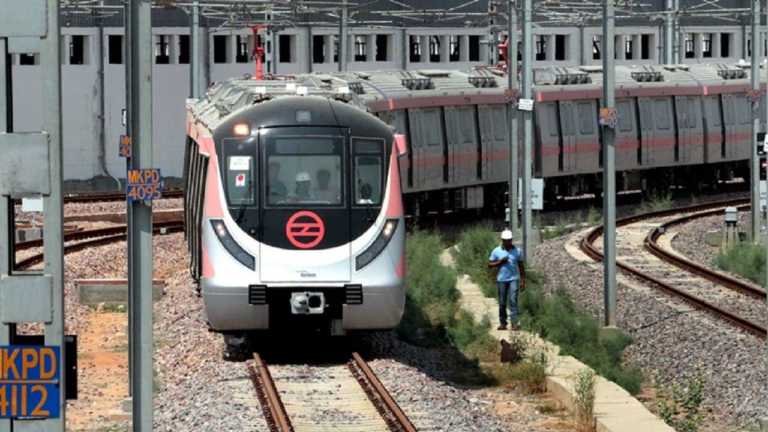
Along with the Metro 2-A, the 6,672 crores Metro-6 corridor may be executed by the Delhi Metro Rail Corporation (DMRC) and will have 13 Metro stations designed for six-coach rolling stock. The expected daily ridership for Metro-6 (in Mumbai, or Delhi?) is anticipated to be 6.5 lakh in 2021 and 7.69 lakh in 2031.

The Rs 8,416 crore Thane-Bhiwandi-Kalyan elevated metro will have an initial frequency of five minutes in 2021. The daily expected ridership for the corridor is said to be 2.29 lakh in 2021 and 3.34 lakh in 2031.

Currently, the civil works are underway for three Metro corridors in the city namely Dahisar- DN Nagar Metro-2A, Dahisar East- Andheri East Metro-7 and Colaba-Bandra-Seepz Metro-3 underground corridor. The civil works on DN Nagar Metro-2B and Wadala-Thane Metro-4 corridor are also expected to start by next year.

Advertisement1
InnoMetro_2026

Railway firm Keolis bags second metro contract in China

0

Keolis has secured a contract via its Chinese joint venture (JV) Shanghai Keolis to operate and maintain Shanghai Pudong International Airport’s new Communications Based Train Control (CBTC) automated metro system.

The new line is expected to connect the existing T1 and T2 terminals to the future satellite terminals and is scheduled to open in June 2019.

The 20-year contract represents Keolis’ second automated metro project in China.
buy viagra capsules online no prescription

Keolis International CEO Bernard Tabary said: “We are delighted to have been awarded the Pudong International contract, which in addition to reinforcing our reliability as a partner to Chinese authorities, confirms Keolis’ worldwide expertise in automated and CBTC metro operations.”

Construction of the new metro line forms part of Shanghai International Airport’s initiative to extend the capacity of Pudong International Airport from 60 million to 80 million passengers per year.

The new 7.8km-long metro line is intended to connect all four of the airport’s terminals and will operate throughout the day.

The CRRC-built train sets are equipped with CBTC technology and are able to operate without a driver, however the locomotives are expected to have a driver on-board when travelling on the Pudong airport line.

Keolis has been present in China since 2014 and the latest project is expected to strengthen the company’s presence in the country.

The company currently manages four automated metro networks, including three in France and one in the UK.

Advertisement1
InnoMetro_2026

Delhi Metro | DMRC plans to start clock room and porter facility at some metro stations

1

New Delhi: In a bid to provide better service to the commuters at Delhi Metro network, the Delhi Metro Rail Corporation (DMRC) is likely to introduce the service of cloak room and porter services rights inside some select metro stations.

The Delhi Metro Rail Corporation has floated a tender in this regard recently. With this step, the corporation will generate not only extra revenue, but also provide employment to others.

“Cloak room services” is where the metro passengers can keep their luggage for a specific period of time, while the “porter services” means a person employed to carry the luggage of passengers from one place to another within metro station premises.

This service is likely to be introduced at selected metro stations situated near at the Indira Gandhi International Airport and railway stations in the Delhi-NCR.

“There are numbers of commuters who travel from other states to the capital via railway or by flights on a short notice and they don’t wish to carry their luggage with them. In such cases, the passengers can keep their goods for safe keeping at the metro station cloak rooms and lockers.

“As part of turning the Delhi Metro network into a travelers’ hub and to add more customer-centric services, a cloakroom facility will be introduced soon.

There are many passengers who come from others states such as Haryana, Rajasthan, Punjab, Uttar Pradesh and Uttrakhand and have flights or trains at late hours.

“These commuters coming various places outside Delhi can avail this facility at respective Metro stations and get rid of their luggage,” said a metro official on the condition of anonymity.
buy kamagra effervescent online https://sextherapyhawaii.com/wp-content/themes/twentytwentyone/inc/en/kamagra-effervescent.html no prescription

The corporation has since completed the construction of phase-1, phase-2 network comprising of 158 stations and a network of around 213 km and has already put them under operation and the phase 3 of the Delhi Metro system is fast nearing completion. As of today, DMRC network comprises of seven operational lines.

Advertisement1
InnoMetro_2026

MEGA Metro | IITian Silpy Agrawal helps map city’s Metro rail project

0

Ahmedabad: A 26-year-old graduate from the Indian Institute of Technology, Gandhinagar (IIGn) is helping Ahmedabad Metro Rail project with underground infrastructure mapping through her expertise that does not damage pre-existing structures. Silky Agrawal who studied MTech in Civil Engineering from IITGn graduated in 2015 and launched her start-up GeoCarte Radar Technology Private Limited and incubated at IITGn.

GeoCarte is a consulting organisation that provides non-destructive geophysical exploration with the objective of providing the innovative approach for subsurface investigation using Ground Penetrating Radar (GPR). GPR is one of the best modern tools capable of imaging subsurface invasively.

Since 2015, Silky has worked on number of prestigious projects using IITGn’s network that includes working for Shree Somnath Trust, railway station in Gandhinagar and CST in Mumbai along with Ahmedabad Metro Rail project.

MEGA Metro

Speaking about her work, she said, “We specialise in mapping manholes beneath the surface, locate excavation for archaeological sites, leak detection in underground pipelines and understand the drainage system of a city.”

Silky added, “Ahmedabad is a Smart City now. It is undergoing massive development. It is extremely essential to prevent underground infrastructure and the pre-existing structures.”

Talking about the work, she said, “We map the underground surface by not digging. We have completed first part for metro here and soon will be working on Pune metro.”

She worked for proposed Shahpur metro station and located additional unknown utilities like sewage lines, electrical cables, underground storage tanks, and detected manholes.”

Speaking about challenges, she said, “The most challenging issue on my entrepreneurial journey has been late night working on the site. It often gets difficult for girls to be on the site.”

Advertisement1
InnoMetro_2026

Mumbai Metro-7 | Pillar collapses during ongoing construction, one worker injured

0

Mumbai: One worker was injured when a pillar collapsed during the on-going construction work of Mumbai Metro-7 between Goregaon and Aarey on Western Express highway in north Mumbai on Saturday.

Fortunately, the pillar did not fall on any vehicle plying on the Western Express highway.  Had it not been for the fact that Saturday was a holiday because of ‘Bhau Bheej’, there would have been casualties in the mishap. Reports said that a BEST bus had passed minutes before the collapsed onto the neighbouring Western Express highway.

Mumbai Metro 3
Mumbai Metro Project Construction Site

The mishap took place soon after a prop erected to support the pillar was removed.

Following the mishap, the traffic was disrupted for sometime on the Western Express highway.

The Mumbai Metro-seven  project involves development of 16.47 km elevated corridor with 13 stations from Andheri (East) to Dahisar (East) in north Mumbai.

The  Mumbai Metro-seven line will provide inter-connectivity among the existing Western Express Highway, Western Railway, Metro Line 1 (Ghatkopar to Versova), the ongoing Metro Line 2A (Dahisar to D N Nagar) and the proposed Metro Line 6 (Swami Samarth Nagar to Vikhroli). It will facilitate smooth and efficient interchange with the suburban rail system and MRT system at Andheri, JVLR and Dahisar.

Apart from providing connectivity between the Central Mumbai and the Northern suburban Mumbai, the proposed metro line will provide rail based access to the Mumbai International Airport (CSIA), SEEPZ, National Park and other commercial and geographical landmarks.

Advertisement1
InnoMetro_2026

Lucknow Metro | LMRC eyes to generate revenue from property business

0

Lucknow: With metro commencing commercial operations in Lucknow for over a month now, the major concern of Lucknow Metro Rail Corporation (LMRC) to earn revenue which can manage its operation and maintenance (O&M) cost . Since the initial ridership number has not been very encouraging on metro’s priority section on Kanpur Road because of limited catchment area, the team is now eyeing at earning revenue through property development.

Sreedharan LMRC Visit

Accordingly LMRC planning to develop commercial spaces for cafes, book-stores, shops, ATM centres inside metro stations as the corridor extends and operations expand.
“We are focusing on property development big time to increase our revenue to meet our O&M costs. Though this will contribute only 15% of our revenue in long run, at this time it is crucial as the fare box revenue is still less considering that metro service has just begin.”, said LMRC Chief Kumar Keshav.
According to DPR (Detailed Project Report) of Lucknow Metro Rail Project, its O&M cost will be derived up to 85% from the fares and 15% from property development. Since the metro is still new, team is mostly dependent on rent it would get from commercial properties inside stations and advertisements both in trains and stations. LMRC has recently awarded the contract for advertisements too and one can see panels being displayed in a few trains.

In recent visit to LMRC, Principal Advisor E. Sreedharan had also raised concern over meeting the O&M cost of Lucknow Metro.
“The properties will develop over a period of time as the corridor from the Airport to Munshipulia gets completed in phases. We aim to repay our loan to European Investment Bank in next 20 years.”, said Kumar Keshav.
Advertisement1
InnoMetro_2026

Vijayawada Metro | AMRC cancels MoU signed with DMRC for metro rail project in City

0
Dr. E. Sreedharan, The Metroman

Vijayawada: The Amaravati Metro Rail Corporation Limited (AMRCL) Managing Director NP Ramakrishna Reddy on Friday said that the state had decided to go with a Light Metro in Vijayawada, that would extend up to the Gannavaram airport and Krishna Canal junction.

The MD issued a press release after reports stated that the Memorandum of Understanding (MoU) between the AMRC and the Delhi Metro Rail Corporation (DMRC) had been cancelled.

Reddy stated that the DMRC prepared a Detailed Project Report (DPR) which pointed out that a Light Metro was adequate for Vijayawada, but recommended a Medium Metro, as the capital city of Amaravati was being developed nearby.

Metro Rail News reported that the state government then submitted this DPR to the Centre, to get approval from the Finance Ministry. However, in in May, 2017, the Union finance ministry refused to approve the Vijayawada Metro Rail, stating that the Centre did not find it financially viable.

As per the DPR, the expected Peak Hour Passenger Per Direction (PHPD) was projected as 6,366 by 2021-22 and the Financial Internal Rate of Return (FIRR) was 3.47%, which did not meet the Centre’s requirements for setting up a medium metro rail in Vijayawada.

The press release said that the MoU between the AMRC and DMRC had been mutually cancelled on October 4, after the project made no progress.

It added that a fresh DPR for Light Metro would now be prepared.

This also comes two months after India’s ‘Metro Man’ E Sreedharan, who was working as an advisor to the Andhra Pradesh government on metro rail projects, had submitted his resignation to Chief Minister N Chandrababu Naidu.

Confirming the same to Media, 85-year-old Sreedharan had earlier said, “I tendered the resignation because of my old age, which has made it difficult for me to travel to Andhra Pradesh frequently. Besides that, the work pressure was also more.”

Sreedharan, who was Principal Advisor, Delhi Metro Rail Corporation (DMRC), was in 2015 called in to oversee the Visakhapatnam and Vijayawada metro rail projects.

Experts saying that Sreedharan resigned due to differences with the state government choosing the light metro rail project.
buy cymbalta Canada langleyrx.com/cymbalta.html no prescription

However, he denied it.

Advertisement1
InnoMetro_2026

Chennai Metro | After long wait, metro rail fails to ‘break through’

0
Chennai Metro Rail Project
Chennai Metro/ Image for representation purpose only

Chennai: It was to be yet another milestone for Chennai metro rail, the completion of one of the tunnels under Anna Salaibegun about six years. But after a long wait and a few tense moments on Tuesday, the boring machine literally hit a wall and was unable to break through the 3.7km long tunnel connecting AG-DMS with May Park Day station.

The cutters in the boring machine that drilled through the rocky soil wore out and could not break through the 10cm concrete wall. The giant machine had to be restarted several times before engineers decided to change the cutters. The machine had already bored through one of the toughest layers amid several such hiccups over the last 17 months.

CMRL Underground
Chennai Metro Rail Underground Project

“Tunnel building is actually complete. The machine had to just break through the concrete wall and enter the station before we conclude tunneling,” said a Chennai Metro Rail Limited (CMRL) official. “The wall the machine had to break is a metre thick. We changed the cutters on the head before it started boring but they wore out before it could breach the final 10cm. The cutters will be changed and we hope to achieve the breakthrough in a couple of days.”

Industries minister M C Sampath and principal secretary (planning, development and special initiatives) S Krishnan joined around 300 CMRL engineers and workers in safety gear to watch the operation at AG-DMS. In the afternoon, a few minutes after it began boring with a squealing noise, the machine stopped.
buy cialis super active online https://lasernailtherapy.com/wp-content/themes/twentytwentytwo/inc/patterns/en/cialis-super-active.html no prescription

For the next couple of hours, loud noises interspersed with periods of long silence filled the air.

Every time the machine was restarted, thick foam squirted out and all eyes were on the wall. After around three hours, the invitees began to get anxious. “The wall seems to be tough and the machine cutters have become blunt,” a senior CMRL official said.

By 4.30pm, engineers used a hydraulic breaking machine from the station side to expose the cutter head of the boring machine, but the wall was too strong. They then decided to replace the cutter head and make an attempt on or before Thursday. “We have around 450m left to build in the other tunnel. We expect to finish by next month,” an official said.

Advertisement1
InnoMetro_2026

Noida Metro | NMRC to receive first metro train in end of the year

0
Why Noida Metro is still waiting for launch

Noida: The first train of the 29.7km Noida-Greater Noida Aqua Line Metro corridor will arrive in early December. The officials of Noida Metro Rail Corporation (NMRC) said this will be a demo train and the rest of the four-coach trains for the track will start arriving every fortnight thereafter.

The trial train is likely to be dispatched from China on October 25. CRRC Nanjing Corporation Limited, a Chinese state-owned rolling stock manufacturer, is supplying the trains to Delhi Metro Rail Corporation (DMRC) for the corridor. A Memorandum of Understanding (MoU) was inked between the two companies in March this year.

The Metro is likely to roll by April 2018. According to NMRC officials, the Aqua Line will support 76 coaches. Each Metro coach will come at a cost of nearly Rs 4 crore. A total of 19 trains will run between Noida and Greater Noida at a speed of 35 km/hour, and at an initial frequency of every five minutes in peak hours and and ten minutes at other times. The frequency will be tweaked to address commuter traffic, officials said.

Initially, NMRC will operate 11 trains along the corridor. While the seating capacity of each train will be 186, the standing capacity will be 848 passengers.
buy acyclovir online https://www.adentalcare.com/wp-content/themes/medicare/editor-buttons/images/en/acyclovir.html no prescription

Hence, the total capacity of each train will be 1,034 passengers. There will also be special seats of dark Aqua colour for women, seniors and specially-abled persons. These will number 16 in each coach, with a total of 64 in each train.

The coaches are lightweight and made of stainless steel and aluminium. Each train will be equipped with a passenger information system, a passenger announcement system and an emergency announcement system from the operation control centre of the train. The trains will also have a radio for communication between drivers and an operation control centre.

Trains will also be fitted with a continuous automatic train control system.

According to officials, presently, civil work on the under-construction Metro track between the twin cities is nearly 97% complete. Nearly 29 km of viaduct out of the 29.7km of the corridor has already been put in place by the Delhi Metro Rail Corporation. The DMRC has also started erecting Over Head Electrical (OHE) lines with about 1,100 electrical poles in place, out of the total 1,400. Nearly 30km of rail track of the total 60km has also been laid till now along the route. The structural work of all 21 stations along the corridor, including platforms, has been completed in a record time of 20 months. All stations along the corridor are likely to be ready by October 31. The finishing work of all Metro stations is presently under way.

Advertisement1
InnoMetro_2026

Maha Metro | MMRCL seeks latest tunneling technology for Pune metro rail project

0
Metro Rail Projects Tunnel Boring Machine (TBM)

Pune: The Maharashtra Metro Rail Corporation (Maha Metro) is seeking the latest tunnel-boring technology for the 5 km underground route of the Pune Metro rail project to drill through the hard ground under a river bed, a top company official has said.

Making a presentation of the Rs 11,420-crore project, which is expected to be completed by 2021, Brijesh Dixit, Managing Director of the Maharashtra Metro Rail Corp. Ltd, expressed confidence of using latest technologies in metro projects in India.

The tunnel will be drilled 30m under the Mula Mutha riverbed, through which a section of the project will pass, Dixit said yesterday at the ‘Year in Infrastructure 2017’ conference here, which was held for the first time in Asia.

A part of the 5-km underground stretch, will be bored through the Deccan plateau basalt strata, which is hard ground and good for drilling tunnels, the Maha-Metro MD said.

“We have learned from more than 200 metro systems operating in global cities as well as in India,” he said citing the technologies used in Nagpur metro, which has helped to significantly reduce construction cost and time significantly.

He said more than 50 per cent of the 38-km Nagpur metro, work on which started in 2015, has been completed and is set to meet its December-2019 deadline.

A trial run is underway on a five-km completed section from Khapri to Airport South, he said, adding that financing of the Rs 8,600-crore project has been closed, with over 50 per cent funding from Germany’s KfW bank and France’s AFD (French Development Agency).

Advertisement1
InnoMetro_2026