35.1 C
Delhi
Monday, April 13, 2026
spot_img
spot_imgspot_img
Home Blog Page 767

Noida Metro | NMRC receives first Aqua Line Metro train from CRRC China

0

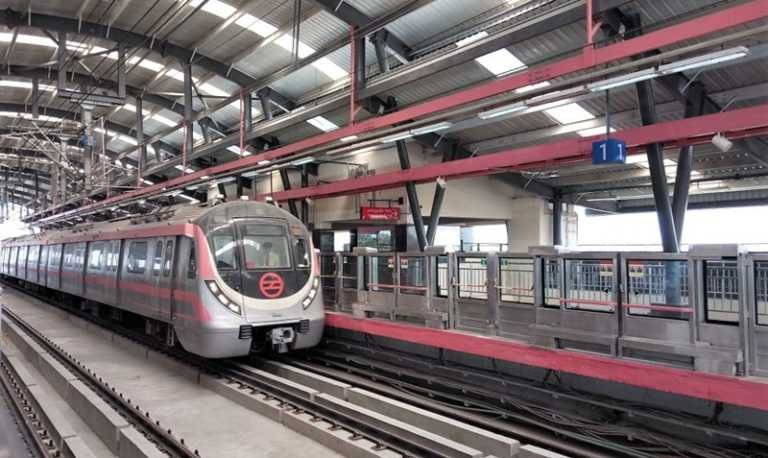
Noida: The Noida Metro Rail Corporation (NMRC) received first train for the Noida-Greater Noida Metro Aqua line which reached the Greater Noida depot on Thursday.

According to NMRC Officials, the four-coach train will be formally unveiled for a first look on December 18, 2017 by the Managing Directors of NMRC, Alok Tandon. DMRC Chief Mangu Singh will also present in inauguration ceremony. First trials for the corridor are expected to start from the end of the month.

The first train of the 29.7 km Noida-Greater Noida Metro corridor was dispatched from CRRC Nanjing, China for Mundra port in Gujarat on November 2, 2017 and from there, the train was rolled out by road to the Greater Noida depot.

P D Upadhyay, General Manager (Finance) and Spokesperson for Noida Metro Rail Corporation said, “The train arrived at 5am on Thursday at the depot. It will now be checked and examined for its fittings and any damages to body during transit, after which it will be set aside for power generation. Officials from CRRC Nanjing Corporation Limited, a Chinese rolling stock manufacturer who is supplying the trains to DMRC for the corridor, have been stationed at the depot to ensure smooth transition of the train from the depot to the trial track. On December 18, we are likely to put the train on test track within the depot for a week before we launch the trials for the corridor.”

“The first trial runs of the corridor will be launched from Greater Noida across 6 km, from the Depot station to Knowledge Park station across six stations. These trials are likely to last for nearly two months.”, He further added.

“Electrical and mechanical work for the corridor is 60% complete and 65% of the track has been laid along the nearly 30 km viaduct. Signalling work is also 60% complete. Structural work on all the 21 stations is also complete and finishing work is being carried out. The power sub-station in Sector 148 will go live by end of December. This sub-station will energise the entire Aqua line, while the 21 stations will be powered by 10 megawatt solar energy generated by roof-top panels.”, Upadhyay said during interaction with Media.

The Noida Metro Aqua line is scheduled to launch in April 2018.

Advertisement1
InnoMetro_2026

Mumbai Metro | MMRC ensures safe underground corridor of Metro-3 during the mansoon

0

Mumbai Metro: As concerns about the possibility of flooding in the underground corridor of Metro 3 during the monsoon increase, Mumbai Metro Rail Corporation (MMRC) has said it would be safe during the rains. Calling it an “water-tight project,” Ashwini Bhide the Managing Director of MMRC, said: “The Metro 3 corridor extends at least 25 m below the surface and is an water-tight project where it is impossible to filter and / or clog the Water”.

In a recent letter from the Development Authority of the Metropolitan Region of Mumbai (MMRDA) to the Guzdar Scheme Resident Trust in Khar explaining the reasons for building Metro 2B as an elevated walkway, he said: “It should be noted that in the case of heavy rains when the city’s roads are flooded, all level systems and underground systems are severely affected During the heavy floods in Mumbai, just a few days ago, only the elevated subway and the monorail continued to operate without interruption. , in such floods, it is likely to be affected despite all the necessary precautions. ”

However, S K Gupta, the Director (Projects), MMRC, explained that the Underground Metro has been designed to ensure there is no flooding. “We identify the ways in which water can enter the tunnel and plug it in. It’s part of our design philosophy,” he said.

The entrance of rainwater is possible through several points and axes. But these would be built at least 60-90 cm above the 100-year flood level. “Maximum flood levels were recorded during 2005. Since it is a recent event, we have all the data,” said Gupta.

The only exception would be in Hutatma Chowk, where the entrance of the station would be built 60 cms above the flood level, the lowest among the 26 underground stations. “Given that it is an area of ​​heritage, we do not have much space there, but as an additional precaution, we will place gates in the station,” added Gupta.
buy cialis pack online https://myhst.com/wp-content/themes/twentytwentytwo/inc/patterns/en/cialis-pack.html no prescription

To prevent rainwater seeping through the tunnels, Metro 3 will have special joints between the segments. “These are made of hydrophilic material, which swells when it comes into contact with water, preventing any leakage,” said Gupta. If the water still enters the tunnel, it would be collected through a chain of drains and eventually pumped. “The entry of rainwater can cause some inconvenience, but it will not flood the metro, it can be easily pumped and dried,” he added.

Advertisement1
InnoMetro_2026

Opportunities in Railway Signalling and Telecommunications

2

World class development in transport sector be it Highways, Shipping, River Transport, Railways or Air Transport are top priorities of the Modi Government. The Development agenda of Prime Minister Modi emphasized on en-cashing in on 4D i.e. Democracy, Demography, Demand, and Deregulation which are taking place to take the country on a fast track of progress. Further to take Demographic benefits of the youths of the country, a highly ambitious agenda of Skill Development was put in place by creating a Ministry of Skill Development exclusively to train manpower in various skills required by the indigenous industry and those of other countries too.

Among the means of transport, the railways are the lifeline for the Indians. Being the most economical mode of transport for the common man and the largest employer in the Government sector it has a high priority for development. In the past decade, there has been a rapid expansion in Metro Railways as a prominent means of transport in cities like Delhi, Mumbai, Hyderabad, and Bengaluru, etc. The target of the making of 100 smart cities in the country cannot be possible without developing smart urban transport which is fast, clean, safe, secure, economical and comfortable. Development of the Railway Freight Corridors and the Bullet trains are also going to be a reality in few years. Therefore the demand for infrastructure, skilled manpower and opportunities for Make in India are enormous in the Railway sector. In the Rail Budget of 2015, a Railway University was proposed so that the growing demands for the specialized manpower of railway sector could be catered to.

sc fare hike

Good Signaling and Telecommunications facilities are the core of a smart railway system. Since this is a very specialized subject, practically it is difficult to train manpower in large numbers as demanded by the industry. The Honorable Minister for Railways while addressing a seminar organized by IRSTE at Vigyan Bhavan, New Delhi in April 2017 had shown keen interest and given a Vision and Roadmap to train the manpower as below:

  • Prepare Course Curriculum in consultation with Industry to cater to the need of the industry.
  • Private Universities be encouraged to launch such training program of short-term duration and long-term duration.
  • Practical be allowed in the Training Institutes of the Railways for which the infra is already available at affordable cost. These Training Institutes may work on enhanced working hours, and additional manpower may be recruited in case the capacity of Training Institutes is fully utilized.
  • Ministry of Railways may recognize such courses and may give preference in the promotion and new recruitment.
  • Senior and retired people should take a keen interest in providing training and share their experiences so that they may remain useful to the society and live purposeful life even after retirement.
  • Senior and retired people should also share their experience in blog/ writing articles addressing workshops, etc. Their experience is valuable and it is not available through textbooks

Niche Skills Training of Signaling and Telecommunications

The need for training has considerably increased over the years due to technical advancements in Signal & Telecommunication Systems and the challenges to meet growing demand for new services & capacity building. “According to the survey conducted for the Rail projects, nearly  1600 to 2000 new people will be required every day in next five years in signaling and telecommunication alone with more than 30% of these people to be of technical level” (Source: http://www.indianmanpower.com)

DMRC Green Line

In line with above requirement few prominent institute like IIIT Hyderabad, IIT Kharagpur and Osmania University College of Engineering, Hyderabad have already begun a Master course in Signal and Telecommunications.

Besides few private institutes like Institute of Metro & Rail Technology (IMRT), Hyderabad and Rayat-Bahra University, Mohali in Chandigarh have launched Post Graduate program for Railway Signaling and Telecommunication under Guidance of IRSE (India Section). The students are trained by the domain and industry experts. Practical training is imparted by the companies working in the field. The students after training are employment ready by the companies working in Signal and Telecommunications field.

Make in India And Startup opportunities

Besides skill training the other priority area where Modi Government is focusing is opportunities to Make in India and Startups. The scope for Make in India opportunity is huge. Speaking in a seminar in May 2016 on technological advancement, Shri Suresh Prabhakar Prabhu said, “There is a huge exponential growth in Signal & Telecom sector, Digitization has created new dimensions in Signal & Telecom. Identifying Right technology is important. Make in India is an important program of Government of India. The railway is playing a big role in Make in India program. Loco Production in Bihar is a big part of Global Supply under Make in India program. Through Make in India, jobs, as well as supply chain, is created. The need for technological advancement is an imperative. Railways investment shall lead to spin off benefits to other sectors. India is a big market for the Global suppliers of technology at the same time it is important to understand that Make in India is one part and Develop in India is another. The focus is to co-develop technology in India. India will then become the hub of technology. Railways are looking for co-operation from the Global suppliers of technology and would welcome their solution if they are feasible and cost-effective in the Indian context.”

make in india coaches
Make in India metro coaches

A report in the Times of India states that it’s not just the private sector that has recognized the need for new and creative solutions to make the 163-year-old Indian Railways more flexible. In his Budget speech of 2016, Railway Minister Suresh Prabhu declared a Rs. 50-crore innovation fund for startups set up by its employees to solve problems relevant and pertinent to the organization. The ministry is also thinking of setting up an incubator to promote and encourage the startups for passenger services in railway sector.

There are many startups already working to facilitate railway passengers. Websites like trainman.in have implemented complex machine learning algorithms that predict about reservation possibilities. Ixigo.com is also one such startup that acts as a “Go-to” option for a traveler, search for your query. Khanaonline.in provides food on-the-go. Web site like railyatri.com, travelkhana.com are startups providing help to the passengers in need.

Advertisement1
InnoMetro_2026

Delhi Metro | Arvind Kejriwal urges with center to roll back fair hike as 18.5% loss in footfall

0

New Delhi: Delhi chief minister Arvind Kejriwal on Wednesday said that there was a 18.5 percent loss in Metro passenger trips after the fare hike on 10 October and urged the Central government to roll back the hike, which would cause more pollution.

In a letter to union housing and urban affairs minister Hardeep Singh Puri, he said,”There have been a decline of about 10.5 percent in the number of passenger trips undertaken during November 2017 as compared to November 2016.”

Noting passenger trips used to grow each year by about 8.5 to 9 percent, Kejriwal said that “even if we assume a conservative growth rate of 8 percent per annum, it would be evident that not only was this growth of 8 percent missed, there was also a decline of 10.5 percent as mentioned above, implying a total loss of 18.
buy viagra professional online no prescription

5 percent in passenger trips”.

The chief minister also said that this would significantly add to air pollution as the passengers who used to commute by Metro were now using modes of transport which were less-environment friendly.

“In view of the sharp decline in ridership after the recent tariff hike, it seems necessary in public interest to review this hike and claw back the fares to their September level.

“I reiterate our earlier offer to bear half the losses arising out of the proposal roll-back,” the letter read.

In October, the Central government had informed Kejriwal that it cannot put on hold the proposed hike unless his government gives about Rs 3,000 crore annually to DMRC as grant-in-aid for the next five years.

In response, Kejriwal said that his government was ready to pay Rs 1,500 crore a year, if the central government was ready to fund the other half.

The DMRC was formed in 1995 with equal equity participation of the Central and Delhi governments.

The Aam Aadmi Party government had locked horns with the Delhi Metro Rail Corporation (DMRC) over the fare hike on 10 October the second this year.

Advertisement1
InnoMetro_2026

Delhi Metro | A five-year-old child’s complaint against DMRC alleging noise pollution

0

New Delhi: A five-year-old child’s complaint alleging noise pollution due to the operation of Delhi Metro trains today prompted the National Green Tribunal to direct the Delhi Metro Rail Corporation, or DMRC, to strictly adhere to environmental norms.

A bench headed by NGT Chairperson Justice Swatanter Kumar directed the DMRC to comply with the prescribed limits and directed the Delhi Pollution Control Committee to ensure that no noise pollution is caused by its activities, including construction and operation.

The NGT was hearing a plea filed by Rohini resident Samriddhi Goswami, through her father Rakesh Goswami, seeking shifting of Rohini sector 18-19 metro stations to a suitable alternate site as noise levels were found to be above 85 decibels.

The five-year-old girl, in her plea filed through advocates Salik Shafique and Rahul Khurana, has also sought the erection of sound barriers around the Rohini sector 18 metro station in west Delhi and compensation for causing trauma due to noise pollution trom the construction and trial of the metro rail and the station.

The plea said the applicant has made several complaints through her father to various authorities. But her grievance was not redressed and the complaint was disposed by Delhi Metro with remarks that the “grievance can’t be resolved to the satisfaction of customer”.

Referring to the Environment Impact Assessment Report of metro stations prepared in August 2011, the plea has said the document provides that noise pollution may not pose a health risk but can lead to sleep disorders, stress, high blood pressure and anxiety.

The petition has made Ministry of Environment and Forests, the Delhi government, Central Pollution Control Board, Delhi Pollution Control Committee, North Delhi Municipal Corporation and Delhi Metro Rail Corporation as parties in the case.

Advertisement1
InnoMetro_2026

Pune Metro | Maha Metro adopts a new version to save trees by transplantation

0
What do you want? Butchery or a surgery…? This was the question Mr Devendra Jagtap (MD, Jagtap Horticulture Pvt. Ltd.) asked to Dr. Brijesh Dixit (MD, Maha Metro) approximately 4 months ago when two were discussing safe tree transplantation process for Pune Metro.. Mr. Dixit’s answer actually highlighted the honest efforts, Maha-Metro is taking to save the nature while rapidly transforming Pune’s Transportation future.
Mr Dixit said, “We don’t want a mere surgery but we want you to consider this tree transplantation operation like a Brain surgery.. Be as specific, sharp and meticulous while transplanting those trees to a new location..”
Pune Metro Tree Plantation
And finally on 9th Dec 2017, the best global scientific technology and practices for tree transplantation operation were adopted. This bench mark has been established by Lansol Landscape Solutions, A landscape Division of The well known Jagtap Nursery of Pune. The Platform was given by MAHA-METRO for its prestigious Pune Metro Project near Kasarwadi railway station. The technology and scientific methods Lansol Landscape Solutions used here today for two 7 to 10 years old Mahogany tree’s transplantation, were never been used by any of the central or state government in India.
Pune metro showed the willingness of saving Nature while progressing and allowed Jagtap Nursery to do this meticulous process. Tree transplantation operation involves highly scientific and globally adopted specifications. It is a three to four months series of activities. In these activities, tree is considered like a human. It considers tree anatomy and physiology. This operation involves high level of safety, qualified experienced technical staff, high end machinery and equipment to successfully complete the operation.
Tree transplantation starts with following steps: 1) Canopy pruning – The Arboriculture procedure is cutting very less branches of the tree. Only dry and infected branches are cut down for the sake of reducing the weight of tree during lifting process 2) Root pruning – This is a pure root anatomy study. It ensures the reduction of roots of tree without giving any shock to it. Root pruning done in three stages. Cuts are made around the tree with specific intervals. During each stage, while following very particular specifications, special care is taken to not disturb the natural inhabitants of tree. 3) Root ball making – The procedure is to secure all new roots generated during 2nd operation by covering root ball and prepare tree for transplantation. 4) Root ball lifting and transit – This procedure is high level engineering calculations, high end machinery and equipment involve making safe and comfortable transit of tree at the new location.
Lansol Landscape solutions, a landscape division of Jagtap Nursery made sure to meticulously plan and calculate all the engineering aspects without compromising on quality and most importantly safety of everybody who is involve in the process. The traffic was smoothly operating on the remaining part of the road and the operation of tree transplantation completed swiftly. New home for these trees will be a Vallabhnagar ST stand.
buy temovate online https://www.facebeautyscience.com/wp-content/themes/twentyseventeen/inc/en/temovate.html no prescription

Team Lansol ensures the safe transplanting of those trees to their new location. Jagtap Nursery is doing these kinds of professional Arboreal services in private landscape segments for years and now has successfully done the same in public sector for the prestigious project for Pune in the form of Pune Metro.
Advertisement1
InnoMetro_2026

Lucknow Metro | LMRC about to launched it’s official app

0

Lucknow: Even three months after the launch of Metro service in the state capital, Lucknow Metro Rail Corporation (LMRC) has still not been able to introduce the official app of Lucknow Metro. Making most of the delay, 16 other apps have already been launched and are available for free download.

These apps provide information about Lucknow Metro route and fare and have been downloaded by more than 60,000 people till now.

The situation is worrisome for IT experts in LMRC because when people already have options to get all information about the service and are using it already, they might not feel the need to download the official app.

Keeping this in mind, LMRC plans to incorporate some special features in the official app like calculation of fare between two stations and smart card recharge through it.
buy nolvadex online https://sextherapyhawaii.com/wp-content/themes/twentytwentyone/inc/en/nolvadex.html no prescription
According to sources, the LMRC app will have more features than Delhi Metro’s app, and unlike others that provide information just about fare details from source station to destination station, it will also give an option to calculate fare between two stations.

Lucknow Metro Rail Corporation is also planning to bring in special vouchers that will only be available on the official app to increase its public usage and popularity

DGM of IT department of LMRC Akashdeep Sehgal said, “Our official app will be far better and much more user-friendly than the ones available now. We will soon launch the official app and along with fare and route details, it will have all the information that one can see on the LMRC official website.”

Advertisement1
InnoMetro_2026

Delhi Metro | DMRC starts trial of metro train in Mundka-Bahadurgarh corridor

0
Mundka-Bahadurgarh Corridor
Delhi Metro Green Line

New Delhi: After Gurgaon and Faridabad, Delhi Metro Rail Corporation (DMRC) is going to foray into Haryana for the third time. Trials have started on a new 11km corridor that will put Bahadurgarh on the metro map.

The trial runs are being conducted between Tikri Kalan and City Park stations of the Mundka-Bahadurgarh corridor. The corridor will also be the longest “straight-line stretch” that Delhi metro has ever constructed, with no twist or turn between Mundka and Bahadurgarh.

“The trials will involve civil, electrical, rolling stock work, and signalling testing and certification,” said a DMRC spokesperson.

Though most of the construction work on the corridor is complete, it can’t be opened to public as the link between the viaduct and train depot is missing because of land issues. “The Mundka-Bahadurgarh metro corridor is an extension of the existing Inderlok-Mundka corridor (Line-5) of the Delhi metro. The metro corridor will run along NH-10 (Rohtak Road) on an elevated viaduct,” added the DMRC spokesperson.

There are total seven stations on the stretch, of which four are in Delhi—Mundka Industrial Area, Ghevra, Tikri Kalan and Tikri Border—and three are in Haryana—Modern Industrial Estate, Bus Stand and City Park.
buy valif online https://pridedentaloffice.com/wp-content/themes/twentytwentyone/inc/en/valif.html no prescription

While trial runs on the Haryana stretch of the corridor have begun, the trials on the Delhi side would start in January 2018. “There is a little problem regarding depot connectivity,” DMRC’s managing director Mangu Singh told TOI. “The land was acquired but the high court squashed that land acquisition. So, at present, there is no connection between the depot and the viaduct. The depot, the viaduct and the stations are ready but the connectivity is missing,” he said.

The spokesperson said that the targeted deadline for opening the section is June 2018 but when it will actually start depends on the availability of land for depot connectivity, which has to be provided by Haryana Urban Development Authority (HUDA).

The Haryana government had sought an extension of Delhi metro till Kundli, which is on the Delhi-Haryana border near Sonipat. “The elephant has to come first, and only then would the tail come. What they are talking is the extension of the proposed Phase IV line from Rithala to Narela, which will be extended to Kundli. The line has to come first. We have prepared a detailed project report and given it to them,” Singh said.
Advertisement1
InnoMetro_2026

Lucknow Metro | LMRC MD inspects ongoing construction works from Charbagh

0

 Lucknow: Mr. Kumar Keshav Managing Director, Lucknow Metro Rail Corporation reviewed the ongoing construction work under the North South Corridor from the Charbagh Ramp Section to Hazaratganj. During his visit he was accompanied by LMRC officials, General Consultant and M/s Tata Gulermak team today. Starting the inspection from Charbagh Ramp Section, he oversaw the installation works for Tunnel Boring Machine(TBM), along with taking stock of the ongoing construction work on Haider Canal.

IMG 0203

Managing Director also inspected the Hussainganj underground metro station, in which the work of roof slab 260/300 meters, concourse slab 220/300 meters has been completed. The same Secretariat Metro Station has completed 120/277 meters of the Concourse area and 60 meters of platform area.

IMG 0118 1

Managing Director took the information from the executive body of Metro about the ongoing works of TBM. With the removal of the TBM machine(Up-line) from Hussainganj, it is being implemented in the ramp section of Charbagh. The second TBM (down line) will be breakthrough from Hussainganj in the next week.
buy prednisone online https://www.adentalcare.com/wp-content/themes/medicare/editor-buttons/images/en/prednisone.html no prescription

Lastly, Managing Director reviewed the construction work at Hazaratganj Metro Station where 75/143 Diaphragm wall with 40 Meters of roof slab has been constructed.

Advertisement1
InnoMetro_2026

Alstom secures new high speed operation in Germany with its onboard signalling control systems for ICEs

0

december 7, 2017 -Alstom has been equipping the entire ICE high-speed fleet for Deutsche Bahn for the transport project of the German unit VDE 8, with its on-board control systems Atlas 200 (ETCS / ERTMS [1] level 2 of reference 3). On 10 December 2017 the high-speed section will start operating between the cities of Erfurt (Thuringia) and Ebensfeld (Bavaria). This line connects Berlin with Munich over Erfurt and Nuremberg.

Alstom equipped 70 ICE T, 66 ICE 3 and 40 ICE 1 high-speed trains with its proven Atlas 200 solution for Deutsche Bahn. This baseline 3 [2] is the latest ETCS technology standard and guarantees the smooth and safe operation of high-speed traffic. [I]

Currently, VDE 8 is the largest infrastructure project in Germany. The project began in 1991 to improve the rail connection between east and west, as well as between north and south for the transport of passengers and goods. The high-speed section between Berlin and Munich is a closure on the German high-speed network and, at the same time, an important section of the Trans-European Network (RTE).

“We are proud to open a new chapter in European rail transport with Deutsche Bahn and make it safer for passengers.” Traveling by train from Berlin to Munich in less than four hours is a great success that offers a competitive and environmentally friendly alternative to We have been the first company to implement this type of ETCS, demonstrating the wide range of our portfolio in the mobility sector, “said Gian-Luca Erbacci, Senior Vice President of Alstom Europe.

ERTMS has several objectives: to facilitate border crossings, open the railway signaling market, increase commercial speeds, reduce the intervals between two trains, reduce maintenance costs and guarantee maximum safety.

The project was carried out under the direction of the Alstom ERTMS competence center in Charleroi, Belgium (software development and adaptation) in close collaboration with the project office in Berlin, Germany, Villeurbanne, France (Hardware) and the German sites in Salzgitter and Braunschweig (integration and installation of vehicles).

About Alstom

As a promoter of sustainable mobility, Alstom develops and markets systems, equipment and services for the transport sector. Alstom offers a complete range of solutions (from high speed trains to metros, trams and electronic buses), solutions for passengers, personalized services (maintenance, modernization), infrastructure, signage and digital mobility solutions. Alstom is a world leader in integrated transportation systems. The company recorded sales of € 7.3 billion and reserved € 10.0 billion in orders in the 2016/17 fiscal year. Based in France, Alstom is present in more than 60 countries and employs 32,800 people.

[1] European Train Control System (ETCS) / European Rail Traffic Management System (ERTMS)

[2] Baseline 3 Maintenance version 1

[i] With the opening of Berlin-Munich and a reduction of associated travel time of 2 hours and 20 minutes, the 4th retro-installation contract of ICE ETCS will be carried out, which Alstom will deliver to DB on time. In June 2009, the ICE3-M / BR406 started the commercial service with ETCS in Frankfurt-Brussels, reducing travel time by 25 minutes. In December 2012, the ICE-T / BR411 started the commercial service with ETCS in Frankfurt-Wien, reducing the travel time by 20 minutes. In December 2015, ICE-T / BR411 and ICE-3 / BR403 began to operate commercially with ETCS on the VDE8.1 route (first section of the VDE 8 project).

Currently, almost all 206 DB ICE-1, ICE-T and ICE-3 trains have been retroactively adapted with Alstom ATLAS ETCS, which allows DB to connect German and European major cities faster and safer.

Advertisement1
InnoMetro_2026