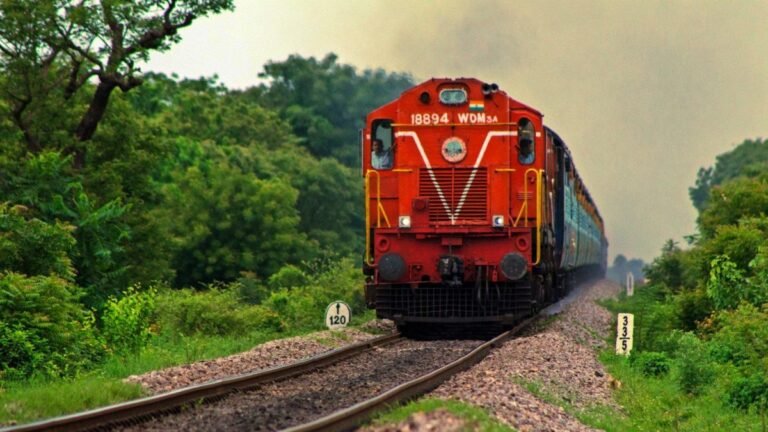
Hindustan Construction Company (HCC)- VCCL Joint Venture has secured a major civil contract worth Rs 901 crore from the Northeast Frontier Railway (NFR) which includes the construction of New Tunnel 28 on the Tupul- Imphal new Broad Gauge (BG) railway line.
The company announced in its BSE Release that the project was awarded to the HCC-VCCL Joint Venture (HCC-VCCL JV), where HCC holds a 65% stake and VCCL holds the remaining 35% Stake.
The contract entails the construction of a 3.5 km main tunnel, with end-to-end design, engineering, and commissioning. The contract’s scope of work also includes the design and proof-checking of a Broad-Gauge ballast-less track and supply, installation, testing, and commissioning of all systems and structures for railway operations.
The contract’s scope of work also covers design, supply, erection, and commissioning of tunnel ventilation systems, plus complete electro-mechanical works. The project further includes construction of approach roads and ancillary infrastructure for seamless integration with surrounding systems.
Join the 6th edition of InnoMetro to explore how the progressions in AI are improving the railway systems, including ticketing, rolling stock, and signalling. Witness the innovation from 200+ exhibitors at India’s leading show for metro & railways which is going to be held on 21-22 May 2026 at Bharat Mandapam, New Delhi.
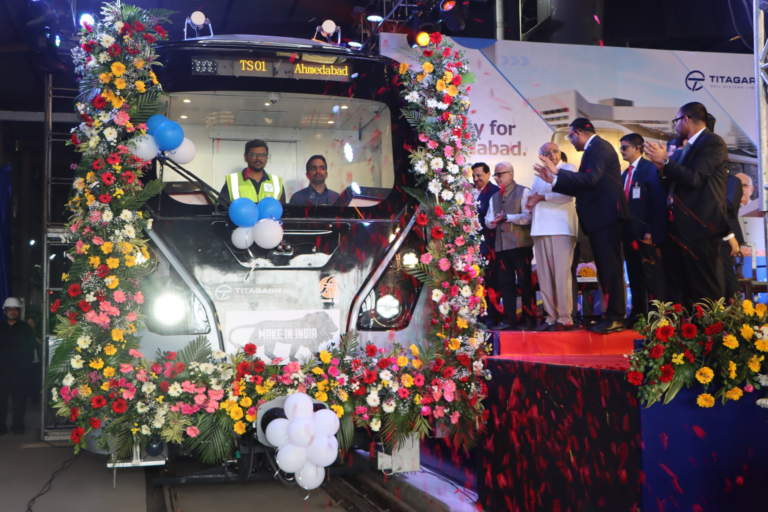
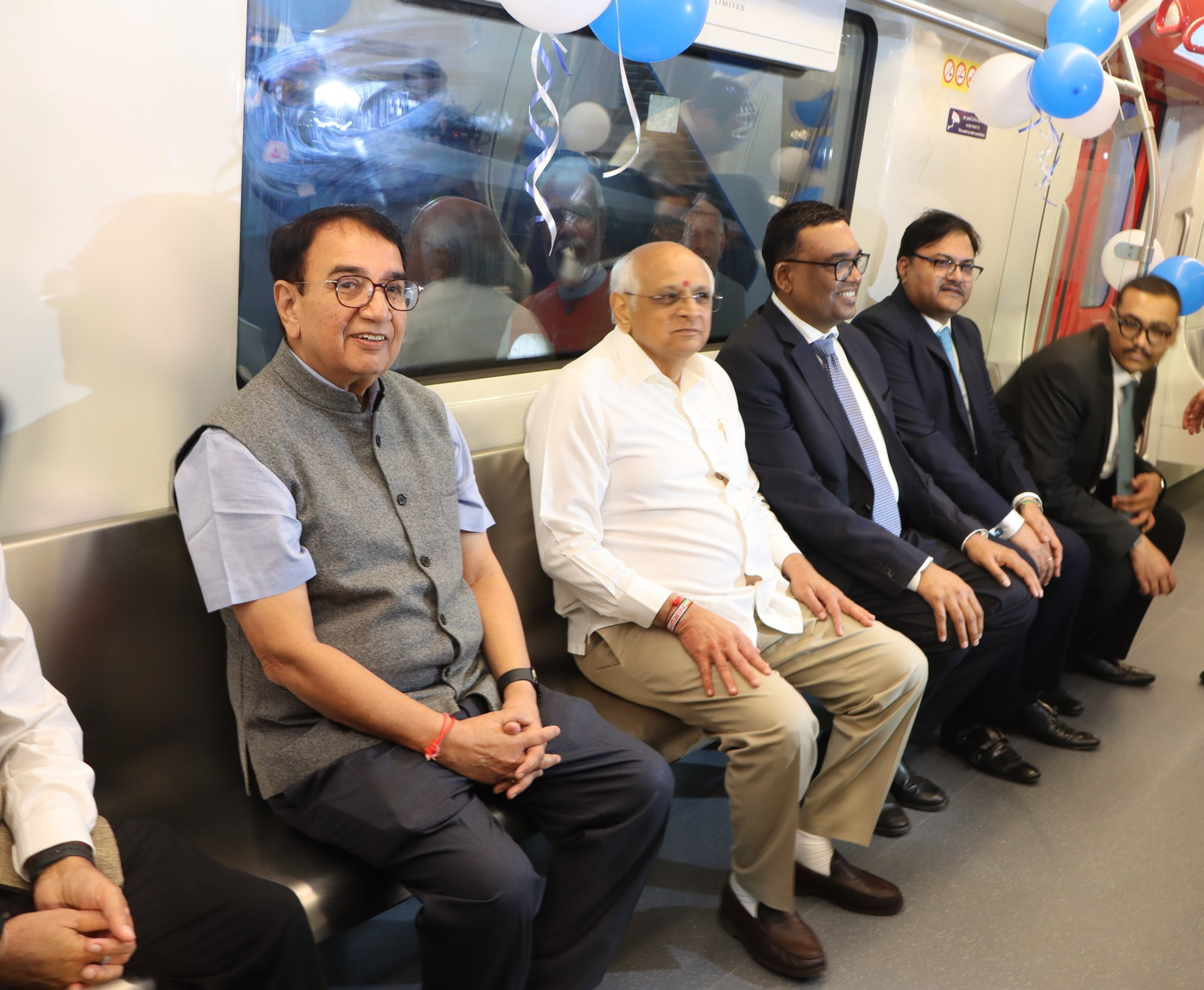
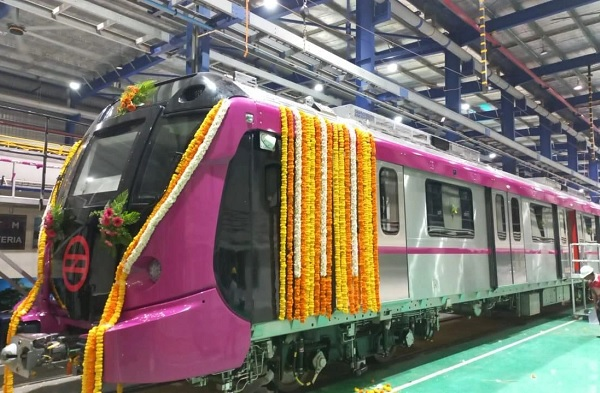
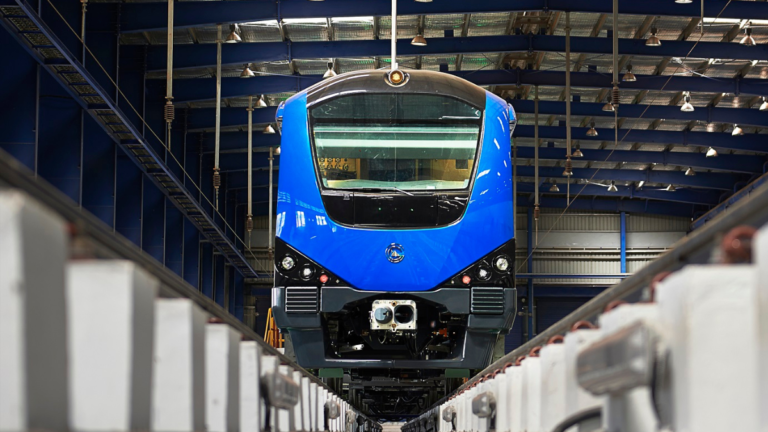
AHMEDABAD (Metro Rail News): Ahmedabad Metro Project progressed as Chief Minister Shri Bhupendrabhai Patel launched Ahmedabad Metro Rail’s first indigenously built ‘Make in India’ coaches at Titagarh Rail Systems’ modern plant near Kolkata.
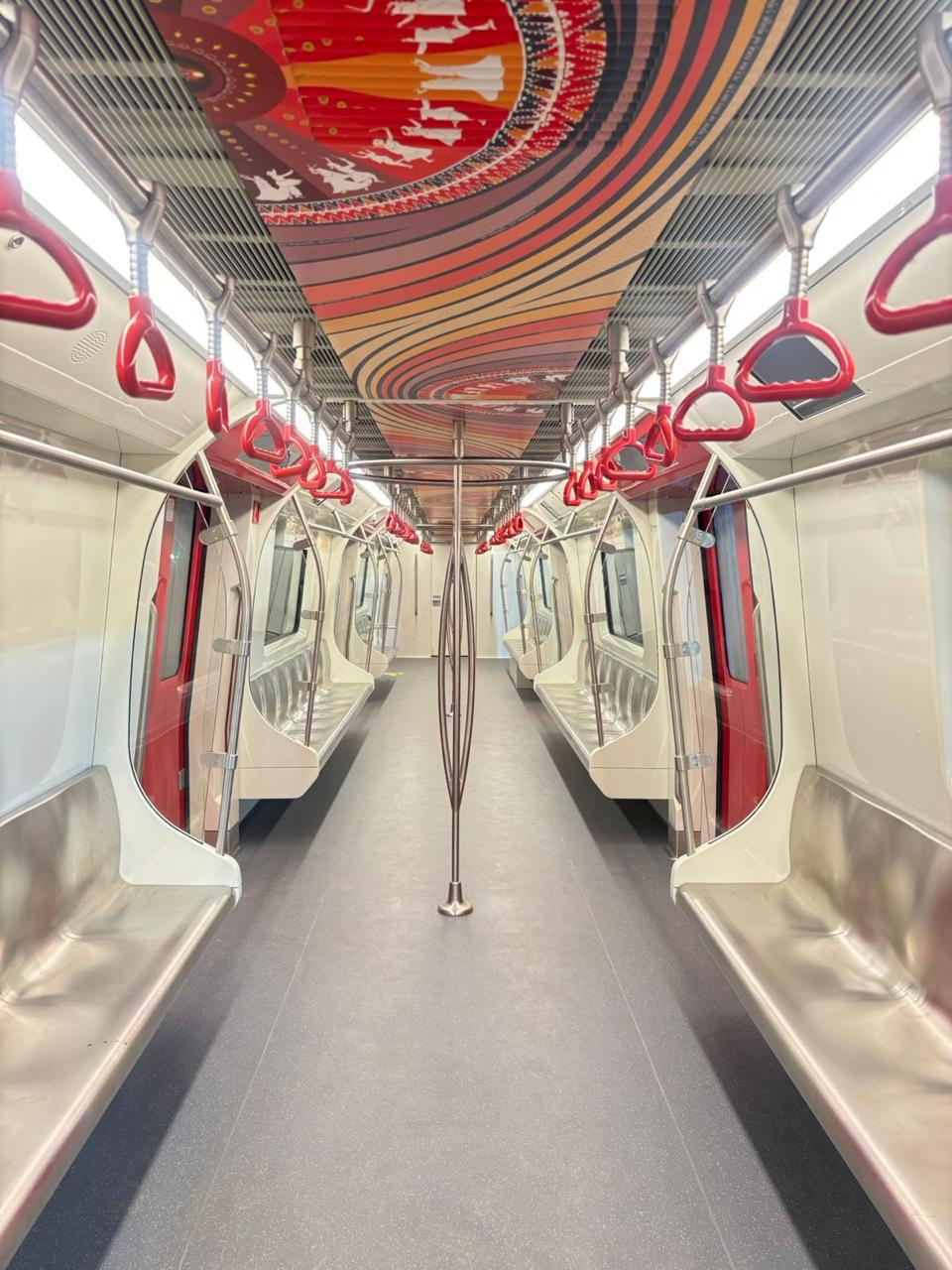
Chief Minister stated that this important step, which accelerates ‘Make in India’ and Aatmanirbhar Bharat under the leadership of the Hon’ble Prime Minister Shri Narendra Bhai Modi, is a matter of pride for Gujarat. The special touch given to the colors and design in these ‘Make in India’ trains, made from high-quality stainless steel, reflects the culture and traditions of Ahmedabad.
Ahmedabad Metro is an Urban Mass Rapid Transit System (MRTS). The project is being managed and implemented by Gujarat Metro Rail Corporation (GMRC) Limited.
The phase 1 of Ahmedabad Metro spans 39.26 km and consists of two metro corridors while the Phase 2 of Ahmedabad Metro covers the extension of existing line and one new corridor and spans 28.254 km. Currently, the Phase 1 of Ahmedabad Metro is completely operational and the 20.8 km section of Phase 2 is operational and the remaining 7.45 km of Phase 2 is under construction.
Discover how AI is bringing the next phase of sustainable urban rail mobility for Viksit Bharat at InnoMetro 2026, India’s prime exhibition and conference for metro & railways which is going to be held on 21-22 May 2026 at Bharat Mandapam, New Delhi.
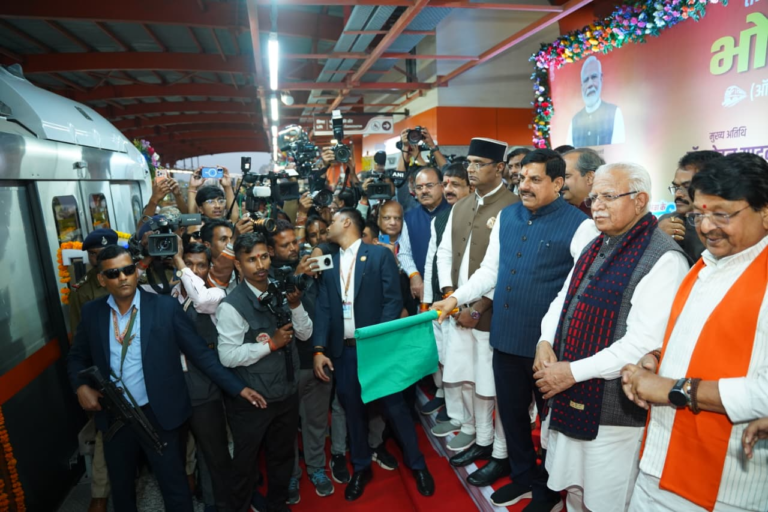
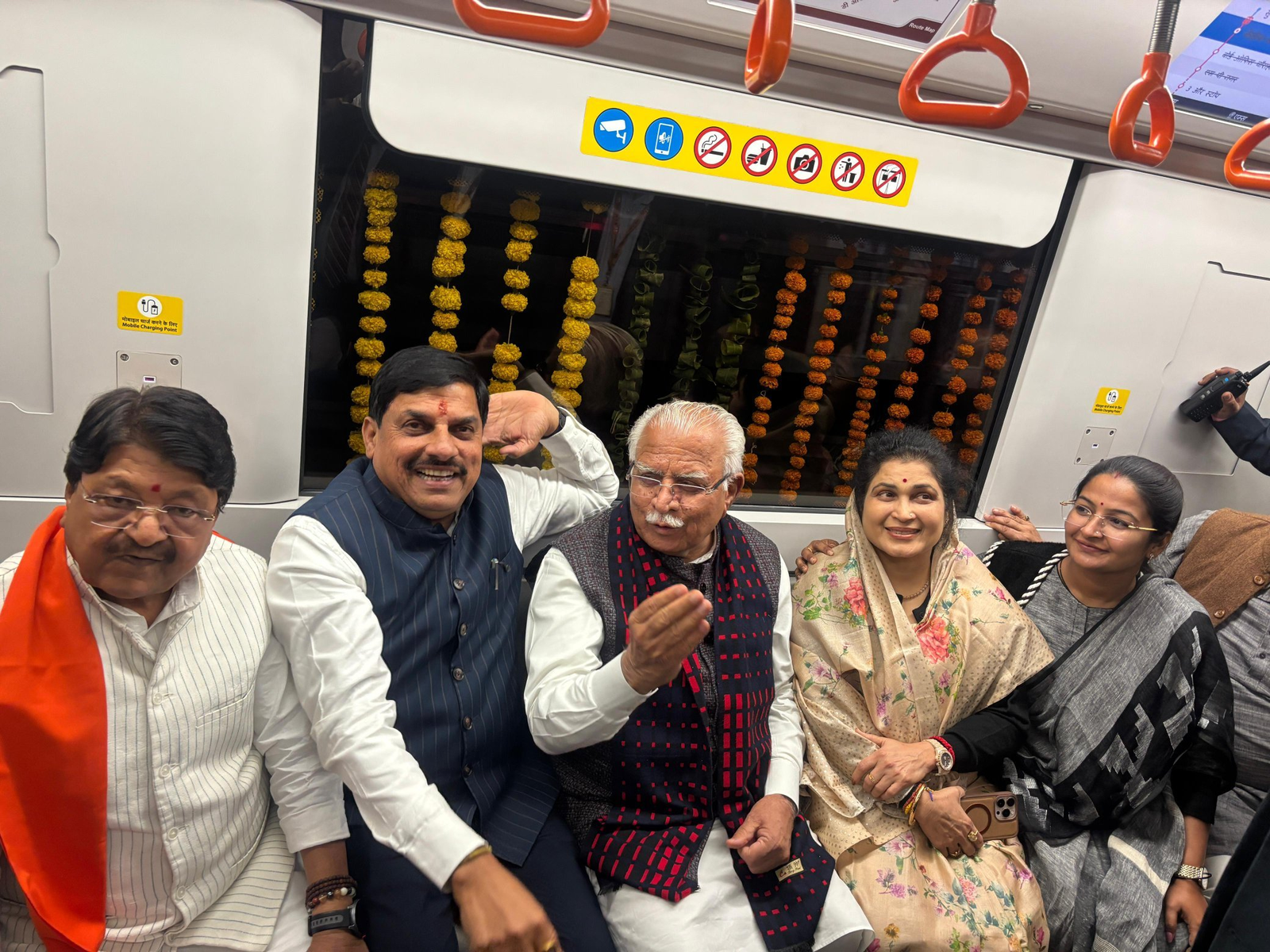
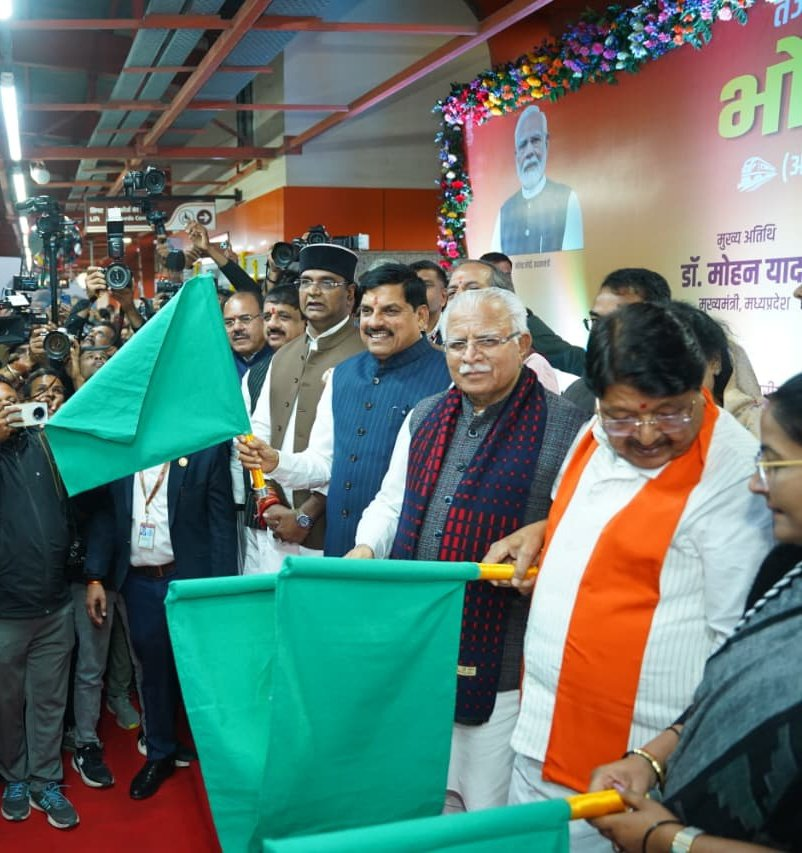
BHOPAL (Metro Rail News): Bhopal Metro project achieved notable milestones as Central Minister Shri Manohar Lal and the Chief Minister Dr. Mohan Yadav flagged off the services on Priority Corridor of Bhopal Metro.
The Priority Corridor of Bhopal Metro is a part of Bhopal Metro Line-2. The priority corridor spans 6.225 km between AIIMS and Subhash Nagar covering 8 elevated stations.
The Bhopal Metro is an under-construction Mass Rapid Transit System (MRTS) for the city of Bhopal.The project is being implemented and managed by Madhya Pradesh Metro Rail Corporation Limited (MPMRCL). The Phase 1 of Bhopal Metro consists of 2 metro corridors.
Bhopal Metro Phase 1
Corridor
Route
Length
Total No. of Stations
Line-2 (Orange Line)
Karond Circle – AIIMS
14.99 km
16 Stations
Line-5 (Blue Line)
Bhadbhada Square – Ratnagiri Tiraha
12.91 km
14 Stations
Discover how AI is bringing the next phase of sustainable urban rail mobility for Viksit Bharat at InnoMetro 2026, India’s prime exhibition and conference for metro & railways which is going to be held on 21-22 May 2026 at Bharat Mandapam, New Delhi.
BANGALORE (Metro Rail News): Aarvee Engineering Consultants Limited has received LoA from Bangalore Metro Rail Corporation for a contract, which involves the preparation of a Detailed Project Report (DPR) for the extension of the Bangalore Metro’s Green Line from Madavara (BIEC) to Tumakuru.
Tender Information
Tender Id
2025_BMRCL_255701_1
Tender No
BMRCL/DPR/CONS./2025/142
Cost of the project
₹ 1.2 Crore
Completion Period
150 Days
Scope of Work: Preparation of Detailed Project Report (DPR) for extension of Metro Rail Corridor from Madavara (BIEC) to Tumakuru for a length of 59.60 Km as per Terms of Reference and scope of work including Alternative Analysis Report, Geo-Technical Investigations, additional Topo survey, etc.
Bidders’ Details
Firm
Bid
Aarvee Engineering Consultants Limited
₹ 1.2 Cr
RITES limited
₹ 2.3 Cr
Capital Fortunes Pvt Ltd
₹ 4.6 Cr
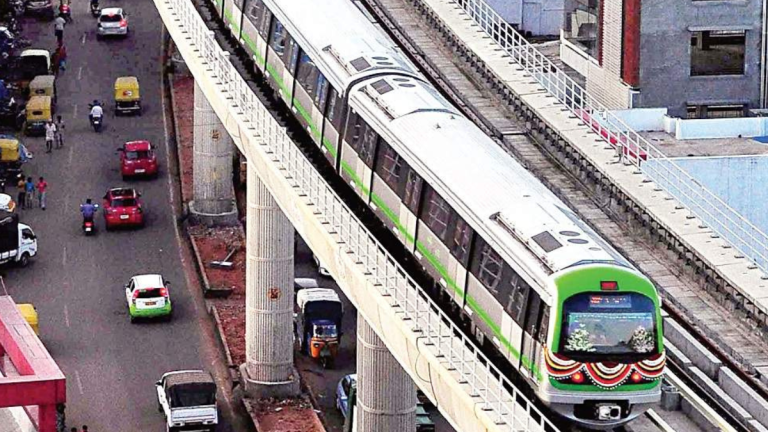
The Green Line of the Bengaluru Metro presently extends from Madavara to Silk Route, covering a total length of 33.46 km with 31 stations along the corridor. The 59 km-long Madavara-Tumakuru section is expected to become Karnataka’s first inter-city Metro line.
Tumakuru’s emergence as a major industrial and logistics centre has led to sustained demand for a high-capacity mass transit system linking it with Bengaluru. These demands have been articulated by industry stakeholders, elected representatives and various government agencies, particularly in view of increasing commuter movement between the two cities. As per the feasibility study undertaken for the project, BMRCL has estimated a peak hour peak direction traffic of approximately 15,000 passengers per hour, indicating a strong ridership potential.
Explore how AI-integrated systems are improving comfort, connectivity, and accessibility for passengers across metro and rail networks at the 6th edition of InnoMetro, India’s leading expo for the Metro & Railway industry.
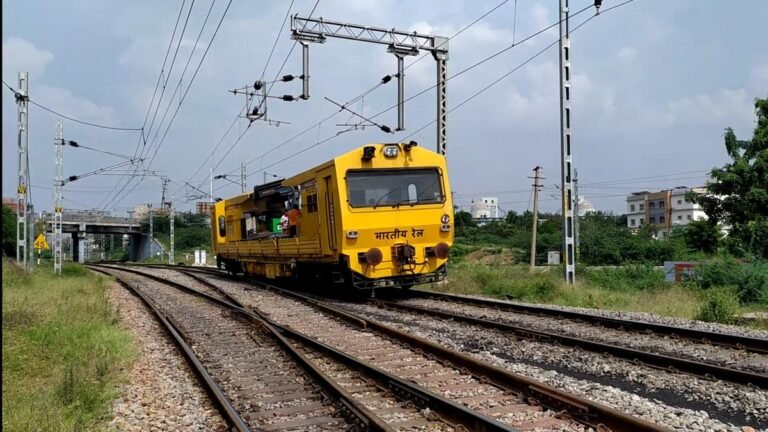
Titagarh Rail Systems has received a Letter of Acceptance (LOA) from the Indian Railways for a contract worth Rs 273.24-crore. The contract involves the design, manufacture, supply, testing, and commissioning of the 62 Rail Borne Maintenance Vehicles (RBMV).
The contract also requires Titagarh Rail Systems to train Indian Railways personnel and provide servicing and breakdown maintenance support. The company stated “This maiden order represents a major strategic milestone for TRSL, marking the company’s successful entry into a high-value, technology-driven, and safety-critical segment,” as mentioned by The Free Press Journal.
The RBMV is a specialized, self-propelled on-track machine designed for inspecting, maintaining, and restoring railway infrastructure. It integrates advanced systems for track maintenance and overhead equipment (OHE) works, boosting operational safety and reliability across the rail network.
This contract is a crucial milestone for Titagarh Rail Systems, as it reflects its successful entry into a high-value, technology-intensive, and safety-critical segment. It demonstrates the company’s capability to expand beyond conventional rolling stock manufacturing into advanced maintenance solutions. The development is aligned with Indian Railways’ broader objectives of mechanisation, improved safety standards, and the modernisation of maintenance practices, which are essential for enhancing operational efficiency and reliability across the rail network.
Discover how AI is bringing the next phase of sustainable urban rail mobility for Viksit Bharat at InnoMetro 2026, India’s prime exhibition and conference for metro & railways which is going to be held on 21-22 May 2026 at Bharat Mandapam, New Delhi.
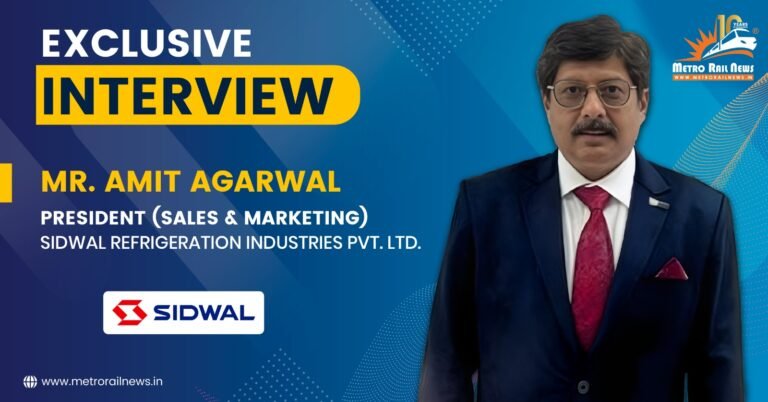
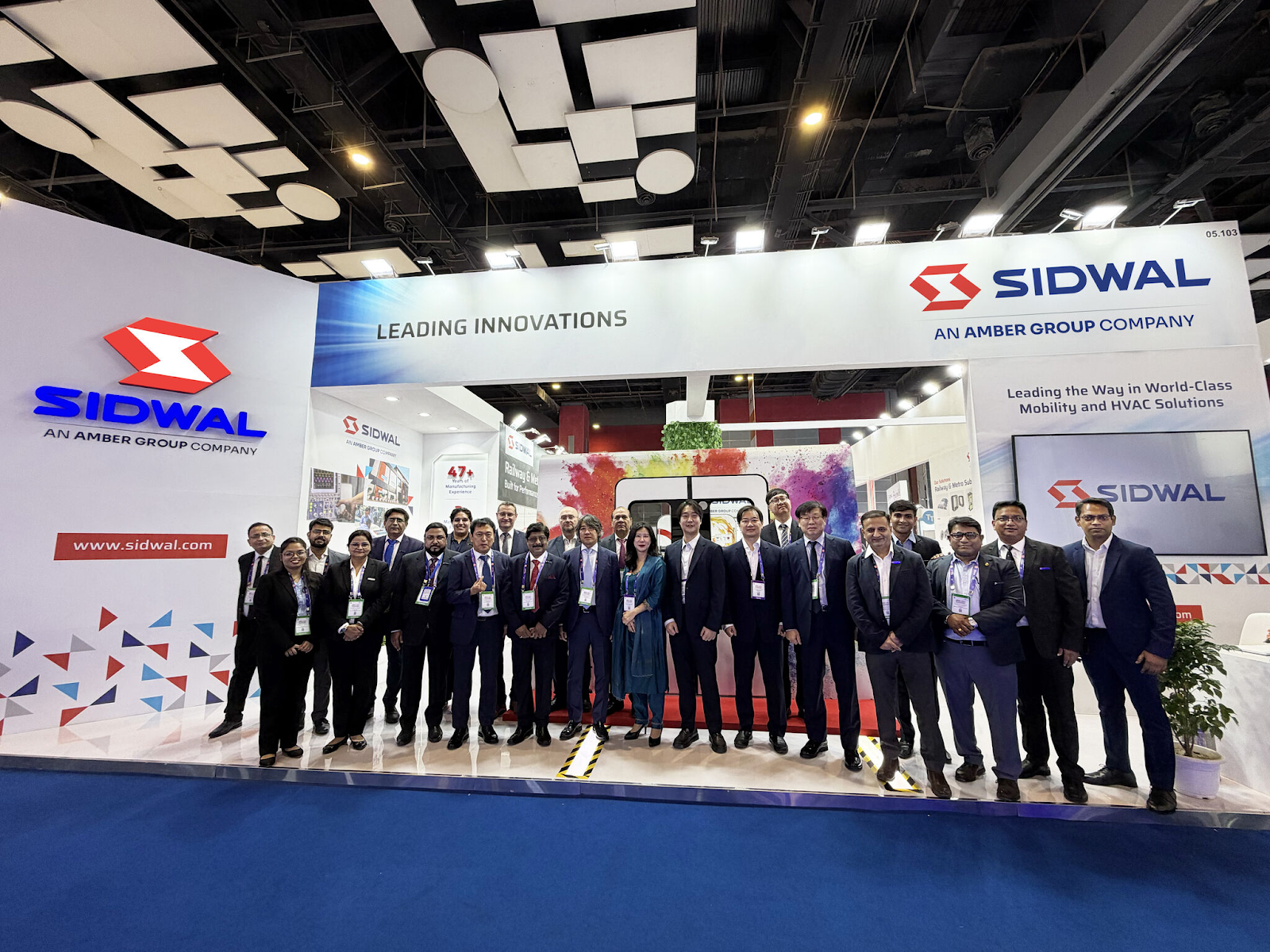
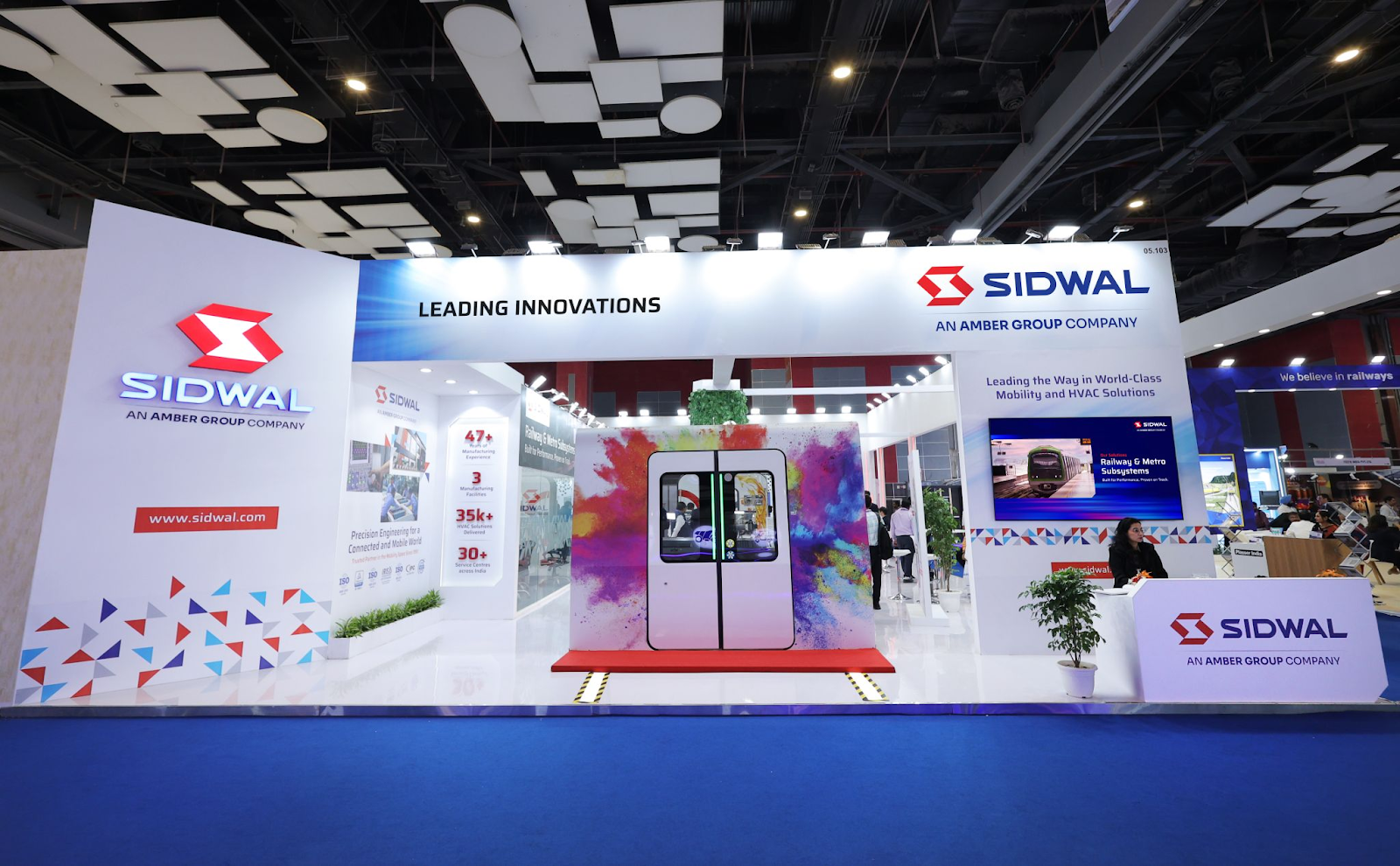
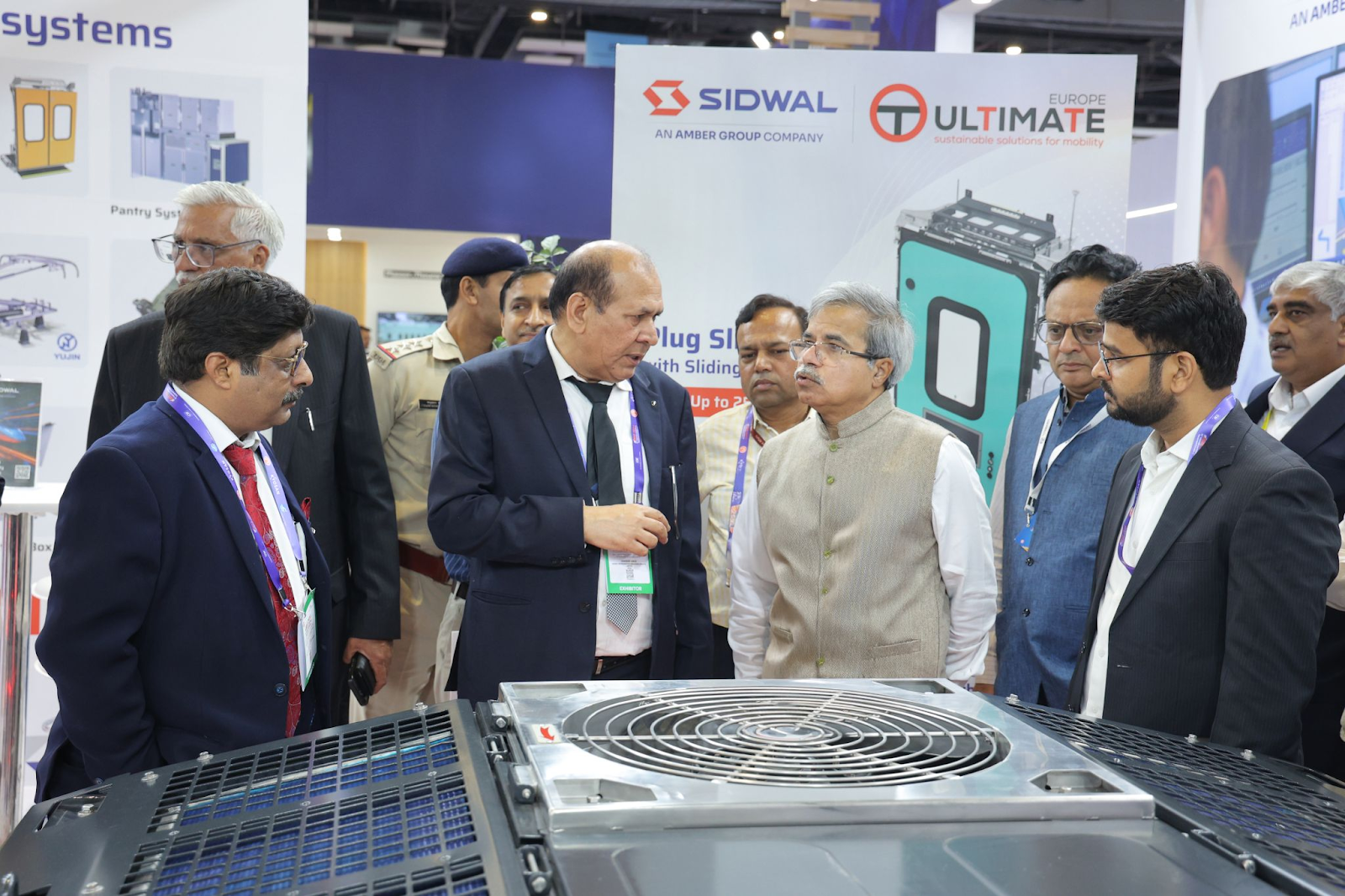
Metro Rail News visited the Sidwal stall,a subsidiary of Amber Group, to conduct an exclusive interview with Mr Amit Agarwal, President (Sales & Marketing), Sidwal. During the interaction, Mr. Agarwal highlighted Sidwal’s expanding footprint in India’s rail transport sector through its HVAC solutions, gangways, and door systems. He also spoke about Sidwal’s collaborations with leading global companies aimed at meeting the evolving needs of the Indian railway market. Furthermore, Mr. Agarwal shed light on some of Sidwal’s major orders that underscore the company’s leadership in HVAC systems and other critical rail components. Below are the edited excerpts from the interview:
We are here at the Sidwal stall at IREE 2025. How does it feel to be part of this platform? Sidwal, a subsidiary of the Amber Group, features a legacy of over 3 decades in the Metro & Rail industry. Could you share insights into your professional journey with Sidwal and elaborate on your role as President (Sales & Marketing)?
Thank you, Metro Rail News team, for visiting our stall and taking this opportunity to interact with us at IREE 2025. As for my role, I am currently serving as the President (Sales and Marketing), Sidwal. I joined the company five years ago, and since then, we have witnessed substantial growth across our product lines. Today, Sidwal holds over 85% market share in HVAC systems for metro projects in India.
Speaking about Sidwal, as you know, the company has been widely recognised for its expertise in HVAC systems for the rail and metro sector. However, this year, our theme is “Beyond HVAC.” We are expanding our portfolio and showcasing our journey into new product segments.
We have entered into a Transfer of Technology (ToT) agreement with Ultimate Europe for the manufacturing of Doors and Gangways, and production for localization of systems has already begun. We have secured contracts for the localisation and manufacturing of these products, which positions Sidwal to compete with leading global players in this domain.
Additionally, we have formed a Joint Venture (JV) with Yujin Machinery, a South Korea-based company. Through this collaboration, we have set up a new facility to manufacture couplers, brakes, driving gears, and pantographs, further broadening our product range.
2. Sidwal has established itself as a trusted partner in the Metro and Railway domains. Could you walk us through the key products and solutions the company offers for these sectors?
In the metro sector, we’ve achieved success across various projects in collaboration with leading rolling stock manufacturers. One of our accomplishments is the HVAC system development for the Delhi Metro’s RS17 project (Phase 4) and for the Chennai Metro, partnering with Alstom. We have also developed HVAC for the 5RSDM Bengaluru project with M/s. BEML. We are also developing HVAC for Surat Metro project with Titagarh Rail Systems. Our products are now being used across almost all major metro projects in the country. A recent highlight includes our work on the Mumbai Metro Line 4, also in association with Alstom.
It’s been a very rewarding journey. Our products have been validated, accepted, and highly appreciated not only by rolling stock manufacturers but also by metro corporations themselves.
Moving beyond HVAC, we have now introduced new product lines for Gangways and Doors. We have already started supplying Gangways for the Chennai Metro project with Alstom and are currently participating in tenders for Mumbai Metro Line 5 and Line 6 with Titagarh Rail Systems for HVAC, Gangways and Doors.
3. What differentiates Sidwal from other stakeholders in the mobility ecosystem? How is the company evolving in every aspect to meet the demands of the rail sector?
Sidwal is an Indian company with strong backward integration, which gives us a distinct advantage. For instance, when we manufacture our HVAC systems, nearly every component, starting from the steel used to fabricate the units to the heat exchangers and controllers, is produced in-house.
This level of integration ensures better quality control, efficiency, and reliability across our products. Unlike many multinational companies that rely heavily on imported components, Sidwal has established a complete, localized production ecosystem.
We operate as a one-stop solution for HVAC systems. At the same time, we source key components from reputed suppliers in the industry to maintain global standards of performance and safety.
This combination of local manufacturing and global quality helps us stay ahead, competitive, and aligned with the evolving needs of the rail and metro sectors.
4. Could you share details about Sidwal’s ongoing projects or recent orders in the Metro and Railway sectors?
In the metro segment, our recent order book has been quite strong and continues to grow steadily. We have secured multiple major projects with leading rolling stock manufacturers.
We are working for Delhi Metro RS17and Chennai Metro projects with Alstom. We are also executing the 5RSDM Bengaluru project with BEML and Surat Metro with Titagarh Rail Systems, . In addition, we are supplying HVAC systems for the 4RSDM Bengaluru project with CRRC. We are also executing Kolkata Metro with Medha and MRS -1 with BEML
Overall, we are proud to be associated with nearly all major ongoing metro projects in the country. The growing order book reflects the trust our partners place in Sidwal’s products and showcases the strong momentum and consistent growth of our HVAC business line.
5. Sustainability has become a major focus across the rail sector. What steps has Sidwal taken within its manufacturing operations to reduce its carbon impact and support a greener future?
Environmental Sustainability and carbon footprint reduction are key focus areas for Sidwal not only during the manufacturing of components, but we take significant efforts during design of HVAC units & other sub-systems to not only reduce their life cycle carbon footprint (by reducing their energy consumption, reduction of environmentally hazardous gases, etc.), but also ensure that their end of life footprint is minimal (by using recyclable materials). We have greatly improved the Coefficient of Performance (COP) of our HVAC systems. A higher COP means lower power consumption for the same output. Through all these measures, Sidwal aims to deliver high-quality, energy- efficient products that align with the broader goal of a greener and more sustainable rail ecosystem.
6. Could you tell us about Sidwal’s joint venture with Yujin Korea? What products or technologies are being developed through this collaboration?
Sidwal has entered a joint venture with Yujin Machinery of South Korea, forming a new entity that is currently in the erection and commissioning phase. This partnership is an important milestone in our journey toward product diversification and technological advancement.
The joint venture will focus on the manufacturing of critical rail components, including driving gears, couplers, pantographs, and brakes for a wide range of rolling stock. We already have a confirmed order book for couplers, and our next goal is to secure developmental orders from Indian Railways. Since these are safety-critical components, it takes time to complete the validation and approval process.
Our journey with this venture has started well, and we are confident that in the near future, it will enable Sidwal to capture a big share of the market in these product segments.
7. How has the technology transfer partnership with Ultimate Europe enhanced Sidwal’s capabilities in manufacturing doors and gangways for the rolling stock sector?
Sidwal entered into a Technology Transfer (ToT) partnership with Ultimate Europe Transportation Equipment GmbH around two years ago for the manufacturing of doors and gangways. This collaboration has strengthened our technological capabilities and opened up new opportunities in the rolling stock segment.
Through this partnership, we have secured several major orders, including Doors for 80 Vande Bharat trainsets from Titagarh Rail Systems, which cover both external passenger doors and internal doors.
Additionally, we have received order for Gangway from Kinet Railway Solution Limited, which we are now in the process of indigenizing and localizing in India under Ultimate’s design framework.
We have also obtained an order for passenger access doors from Kinet Railway Solutions for 60 Vande Bharat trainsets, which is 50% of the total quantity
Overall, our order book for Doors and Gangways is quite substantial. The journey so far has been very exciting, and we see immense potential in this segment in the years ahead.
8. What is Sidwal’s long-term strategic vision, and how does the company plan to expand its footprint in international rail markets?
In the rail industry, quality can never be compromised. To stay competitive, we must stay ahead of time and consistently deliver products that meet the highest standards of Quality, Cost, and Delivery (QCD). With new projects now requiring up to 35 years of maintenance life, manufacturers must ensure long-term reliability, durability, and lifecycle cost efficiency.
At Sidwal, we place strong emphasis on maintaining world- class quality standards. Sustaining in this highly competitive industry is possible only when quality is at the core, and that remains our top priority.
In terms of our global vision, we plan to manufacture Yujin joint venture products not only for the Indian market but also for exports to South Korea and other international markets. This will help build a strong export ecosystem from India.
Furthermore, we are also aiming to expand our HVAC product line globally, beginning with the APAC region, which has similar operating conditions to India. In the next phase, we plan to extend our reach to other international markets, which will position Sidwal as a global player in rail component manufacturing.
9. What key message would you like to share with the Metro & Railway industry and Metro Rail News readers?
The Indian railway and metro industry is witnessing a major growth phase. All the projects coming up in India are attracting attention from global companies and subsystem suppliers. The kind of growth we are seeing in India right now is unmatched anywhere else in the world.
Around 200 Vande Bharat trains are currently under execution, and a large ecosystem needs to be developed to support them. Many companies still do not have the capacity to manufacture the required products for these trains.
We also have a recent tender for MRVC trains, which is almost equal in scale to the Vande Bharat program, which highlights the momentum in India’s rail industry.. In my view, every subsystem supplier will have a fair share of opportunities in this growing market. As long as companies maintain quality, ensure technical sustainability, and deliver reliable products, they will continue to grow and contribute meaningfully to India’s rail sector.
Discover how AI is bringing the next phase of sustainable urban rail mobility for Viksit Bharat at InnoMetro 2026, India’s prime exhibition and conference for metro & railways which is going to be held on 21-22 May 2026 at Bharat Mandapam, New Delhi.
CHENNAI (Metro Rail News): Chennai Metro Rail Limited (CMRL) has announced Jakson Limited as the lowest bidder for a Rs 150 crore contract which involves Electrical, Plumbing and Fire Protection works for 8 Underground Stations from Light House Metro to Kodambakkam Metro of Corridor- 4 of Chennai Metro Rail Project Phase II.
CMRL invited bids for this contract with a 1630 Days deadline. Technical bids were opened on 16 April 2025 announcing that 4 firms have submitted bids for the contract. Technical evaluation of the submitted bids occurred on 16 Sep 2025. Subsequently, financial bids for the contract were opened on 17 Sep 2025 and financial evaluation of the bids took place on 18 Dec 2025 and CMRL announced Jakson Limited as the lowest bidder for the contract.
Contracts Scope of Work: Supply, Installation, Testing, Commissioning and Training of Electrical, Plumbing and Fire Protection works for 8 Underground Stations from Light House Metro to Kodambakkam Metro including Bored Tunnel between Stations, Cut & Cover Box, U Section and Ramp (Chainage 0 -173 M To 9+949 M) for Corridor- 4 of Chennai Metro Rail Project Phase II.
Discover how AI is bringing the next phase of sustainable urban rail mobility for Viksit Bharat at InnoMetro 2026, India’s prime exhibition and conference for metro & railways which is going to be held on 21-22 May 2026 at Bharat Mandapam, New Delhi.
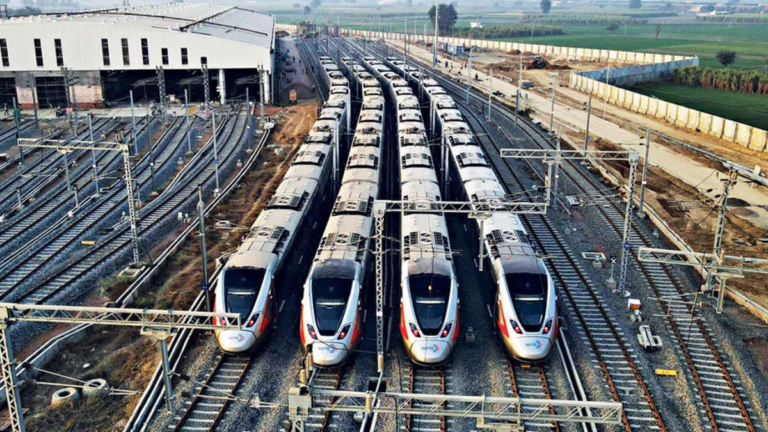
DELHI (Metro Rail News): The long-awaited Delhi-Panipat-Karnal RRTS Corridor has started picking up the pace. The National Capital Region Transport Corporation has invited bids for executing electrical utility shifting works on the Kashmiri Gate – Bhalswa Section of the Namo Bharat corridor. In November 2025, the Delhi-Panipat-Karnal RRTS Line received approval from PIB.
Tender Information
Tender Id
2025_NCRTC_245257_1
Tender No
DK/UD/COR-OF/009
Pre-bid Meeting
29-12-2025
Bid submission start date
12-Jan-2026
Bid submission deadline
19-Jan-2026
EMD
₹ 29,28,000
Completion period of work
12 months
NCRTC’s Brief Scope of Work: Supply, Installation, Testing & Commissioning/Shifting / Modification for 33KV,11kV, LT Electrical Utilities of TPDDL and Dismantling / Relocation of Street lights infringing Delhi – Panipat – Karnal Namo Bharat corridor from Kashmiri Gate to Bhalswa (Ch. 9550 to 20770).
The Delhi-Panipat-Karnal RRTS Corridor has been identified as a priority link under the NCR Regional Plan to address rising travel demand along the Delhi-Sonipat-Panipat-Karnal belt. The 136km Delhi-Panipat-Karnal RRTS Corridor is planned along a northbound alignment starting from Sarai Kale Khan in Delhi and extending through major urban and industrial centres in Haryana before reaching Karnal. The estimated cost of the project is Rs 33,000 crore.
Join the 6th edition of InnoMetro to explore how the progressions in AI are improving the railway systems, including ticketing, rolling stock, and signalling. Witness the innovation from 200+ exhibitors at India’s leading show for metro & railways.
CHENNAI (Metro Rail News): The long-awaited proposal to integrate Chennai MRTS with the Chennai Metro has moved closer to implementation following a crucial meeting on 15 December between senior officials of the Tamil Nadu government and Southern Railway. After the discussions, both sides agreed to proceed towards finalising a memorandum of understanding (MoU), which is expected to be completed as early as next week.
The proposal intends to facilitate the transfer of the MRTS assets, along with its operations and maintenance responsibilities, from Southern Railway to Chennai Metro Rail Limited and the Tamil Nadu government. The meeting was held after the Railway Board gave in-principle approval in July to hand over the elevated suburban rail corridor to the state.
The draft MoU is almost ready, with only a few minor changes yet to be made. Officials said there is a clear intent on both sides to complete the process at the earliest. The document is about 10 pages long and will be finalised by the Railways.
After this, the draft will be reviewed by the state government, including the finance department and concerned committees. Once all departments agree on the terms, the document will be sent back to the Railways for completion, after which the MoU will be signed.
This takeover will be carried out in a phased manner over the next 2 years, which will enable the responsible authorities to ensure uninterrupted operations. In the initial phase, Chennai Metro Rail Limited plans to introduce 25 air-conditioned broad-gauge train sets for MRTS operations.
As part of the transition arrangement, Southern Railway will continue to run MRTS services for a temporary period while the groundwork for transferring assets and upgrading the system is carried out. At the same time, the Chennai Unified Metropolitan Transport Authority (CUMTA), which is leading the integration process, is preparing detailed project reports for each of the 18 existing stations. These plans focus on upgrading station facilities and improving public spaces within a 100-metre area around the stations.
In addition to this, work is also underway on improving the signalling system and reworking interchange points with existing metro lines. The objective is to align train operations more efficiently and, in the longer term, move towards a single, integrated ticketing system for passengers across the network.
Explore how AI-integrated systems are improving comfort, connectivity, and accessibility for passengers across metro and rail networks at the 6th edition of InnoMetro, India’s leading expo for the Metro & Railway industry.
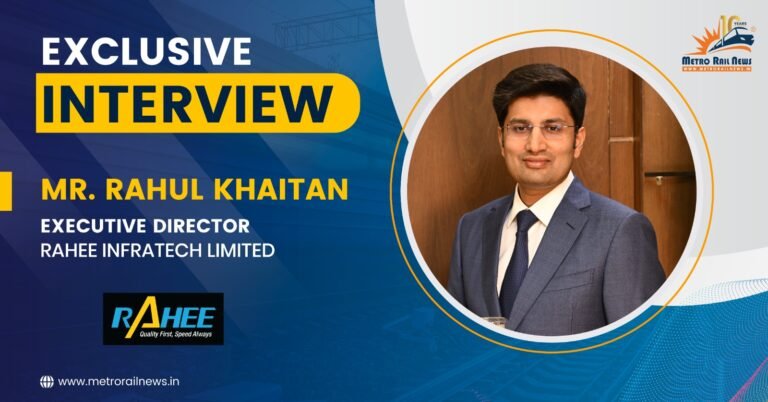
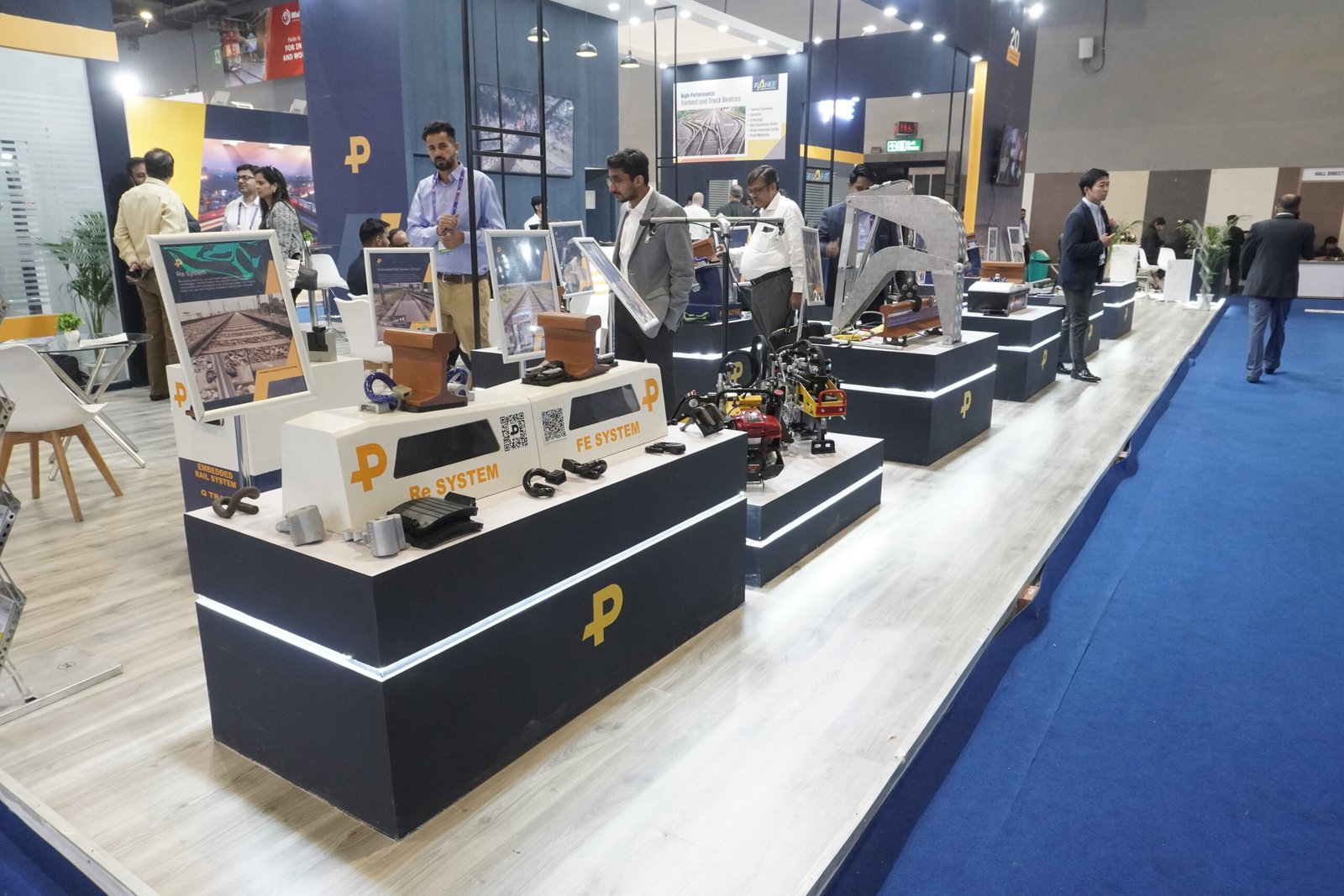
Metro Rail News visited the Rahee Infratech stall at IREE 2025 for an exclusive conversation with Mr. Rahul Khaitan, Executive Director of Rahee Infratech Limited. During the interaction, Mr. Khaitan talked about Rahee’s 60-year journey in the railway sector and its steady contribution to metro and mainline projects across India. He shared how the company has played an important role in railway construction, introduced new rail technologies, and completed several key infrastructure projects in different parts of the country.
Mr. Khaitan also spoke about Rahee’s focus on practical innovation, sustainable practices, and the use of modern technology through global partnerships. He highlighted that the company’s alignment with the “Make in India, Make for the World” vision by developing reliable, high-quality railway solutions. He further outlined Rahee’s commitment to advancing India’s rail transit system for the future.
Below are the edited excerpts from the interview:
Q: We are here at the Rahee Infratech stall at IREE 2025, India’s biggest railway event. How does it feel to be part of this platform, and what does this participation mean for Rahee?
A: It’s a proud moment for Rahee Infratech to be part of IREE 2025, which is India’s largest railway exhibition.
For Rahee Infratech, being at IREE is not just about displaying our products or solutions; it’s about sharing our ongoing efforts to bring innovation and quality to railway infrastructure. Over the years, Rahee has become a trusted partner for Indian Railways and metro projects and contributed through modern track systems, bridge construction, and turnkey solutions.
We are here to highlight how technology, engineering, and quality form the core of our work. Our participation in IREE 2025 reflects Rahee’s continuous efforts to build a safe, reliable, and efficient rail infrastructure for the future.
Rahee Infratech Ltd has a rich legacy of 75 years in the rail transit sector. Could you share insight into the company’s remarkable journey and how it has evolved over the years to meet the challenging demand of the metro and railway sector?
Rahee was established in 1948, and we entered the railway sector around 1960, which gives us over 50 years of experience in railways. We started as a manufacturer of railway components and have gradually grown into a complete railway infrastructure provider. Today, Rahee excels in bridge construction for railways, track laying and maintenance, turnout systems, and rail fastening systems, among other solutions. Over the years, we have also introduced modern products and technologies to meet the evolving needs of metro and railway projects. This growth reflects our focus on delivering reliable, efficient, and technically sound solutions for the rail sector.
What are the key products and services that Rahee provides to the metro and railway sector?
In the metro and railway sector, Rahee’s core expertise lies in bridge construction, where we execute turnkey bridge projects for zonal railways and major contractors across India. In addition, we are actively involved in the metro railway sector, particularly in ballastless track construction. We have successfully delivered track work for major metro projects in cities including Kolkata, Delhi, and Mumbai, among others. Overall, Rahee is engaged across multiple key areas of railway infrastructure, providing comprehensive solutions that cover both conventional and modern rail systems.
Could you elaborate on Rahee’s collaborations or partnerships with other organisations, and how these alliances have strengthened the company’s capability and helped it deliver innovative track solutions to the railway sector?
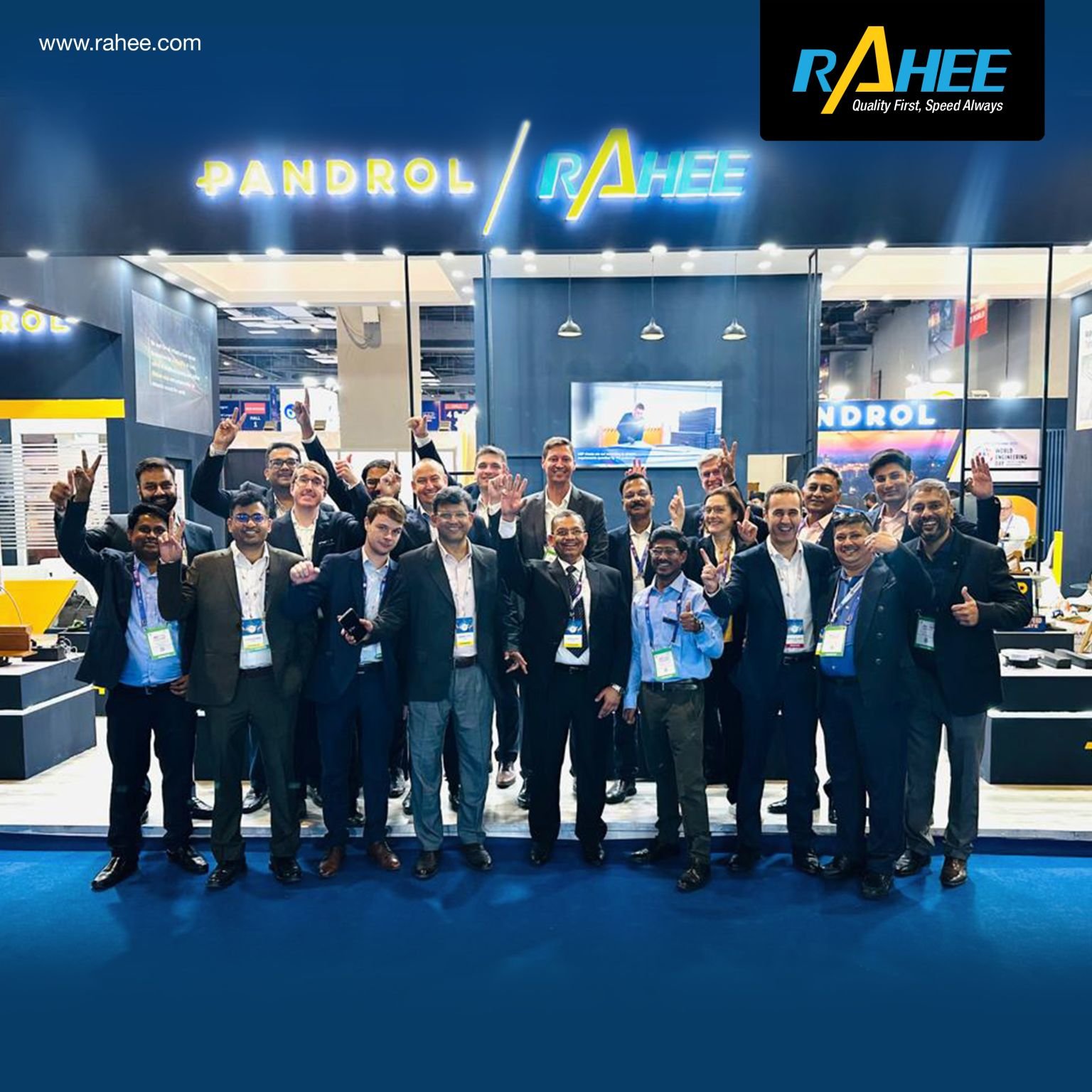
At Rahee, we recognise the importance of developing and excelling in the products and systems we provide. One of our most crucial collaborations is with Pandrol, through the joint venture Pandrol Rahee, which today holds a major share in India’s modern rail fastening systems.
We have also partnered with TrackTec of Poland for turnouts, points, and crossings. This collaboration focuses on introducing heavy-haul turnouts, high-speed turnouts, and canted turnouts for the Indian market..
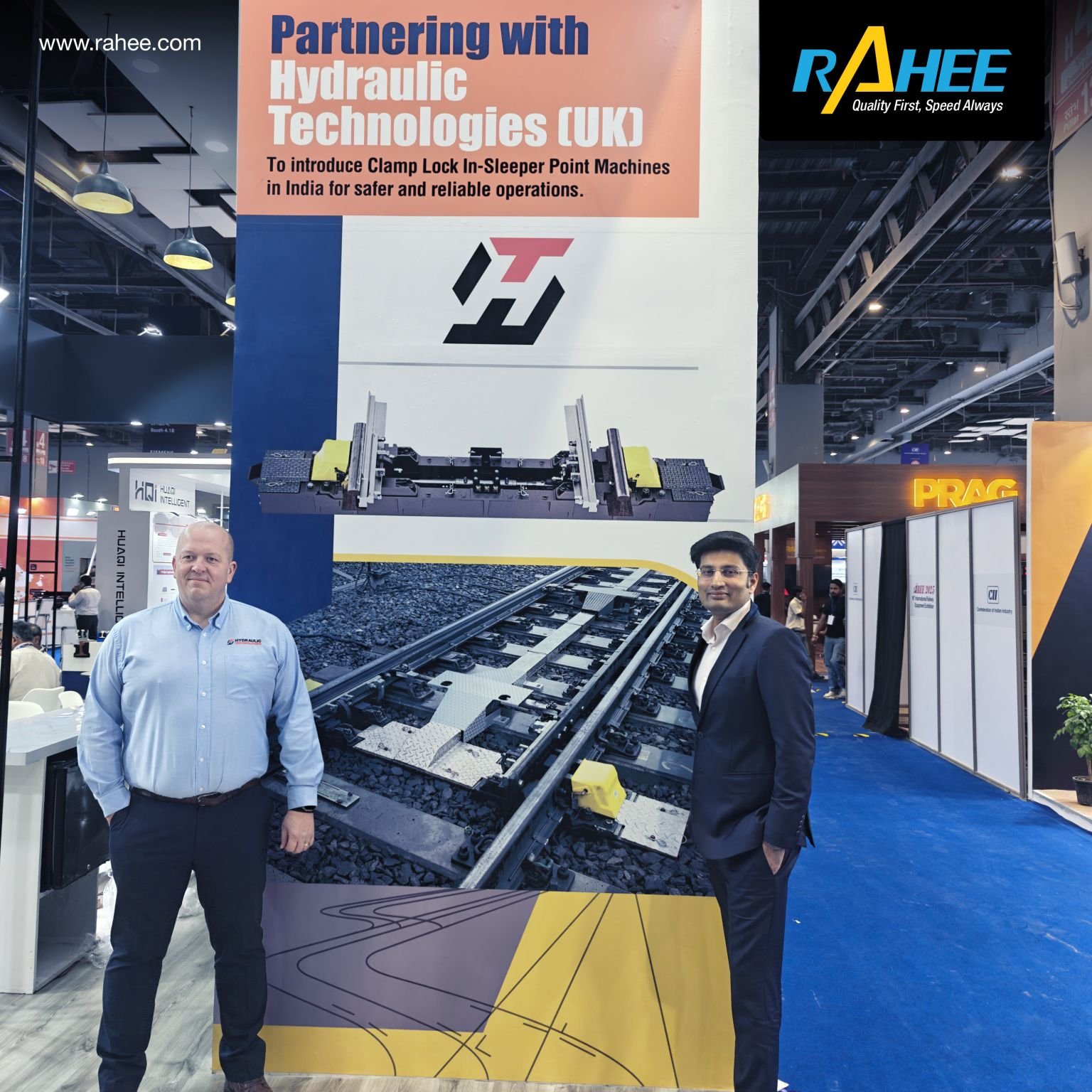
Additionally, our collaboration with Hydraulic Technologies of the UK enables us to bring modern in-sleeper point machines to Indian railways. These machines are embedded within the sleepers, providing precise, reliable switching of tracks with minimal maintenance, which is especially beneficial for busy metro and railway corridors.
Through these strategic alliances, Rahee is able to deliver advanced and innovative track solutions, adopt global best practices, and continuously expand its technical capabilities. We are actively exploring additional collaborations to further strengthen our offerings and support the evolving needs of India’s metro and railway sector
India is experiencing metros and high-speed rail expansion. How is Rahee scaling its manufacturing capacity to meet increasing project demands?
At Rahee, we place a strong focus on backward integration and the adoption of modern manufacturing technologies. To meet the growing demand from metro and high-speed rail projects, we are continually expanding our manufacturing capacities and capabilities.
Recently, we have added a 50,000-ton heavy steel fabrication facility in Odisha. In addition, we have established a 12,000-ton foundry in Durgapur, West Bengal, which further strengthens our capacity to manufacture critical railway components.
These expansions complement our existing product portfolio and enable us to scale efficiently to meet current and future project requirements in India’s rapidly expanding metro and high-speed rail sector.
How does Rahee balance cost competitiveness with pushing for advanced, future-oriented rail solutions?
In the Indian railway sector, cost competitiveness is a critical factor given the scale and scope of projects across the country. At Rahee, we address this by placing strong emphasis on backward integration. This allows us to make our products more competitive for the railway while maintaining quality and efficiency.
What sets Rahee apart from its competitors in the industry, and how does the company ensure its track solutions consistently meet global standards?
At Rahee, we do not consider ourselves as one of the typical companies; we see ourselves as a technology provider for the railway sector.
Coming from a strong manufacturing background, we boast an in-depth understanding of track structures, turnouts, fastening systems, and other critical track components. This knowledge enables us to integrate product innovation with construction capabilities, providing the railway with solutions that are both technically strong and reliable. As a result, Rahee is recognised not only for delivering high-quality railway products but also for offering comprehensive construction and track solutions that meet demanding standards consistently.
Could you share your flagship projects that best exemplify Rahee’s engineering capabilities?
Rahee has executed several landmark projects across India that outline our engineering capabilities. For instance,
Udhampur-Srinagar-Baramulla Rail Link (USBRL) Project
In Jammu and Kashmir, Rahee constructed track for the longest tunnel, T49, completing approximately 70 km of track construction. This project demonstrated our capability to work in challenging terrain and complex tunnel environments.
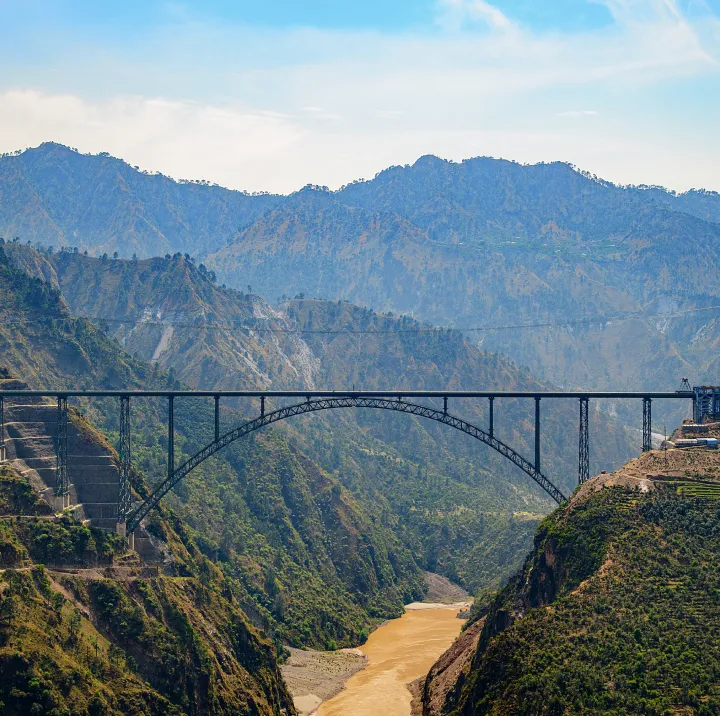
Chenab Bridge Project
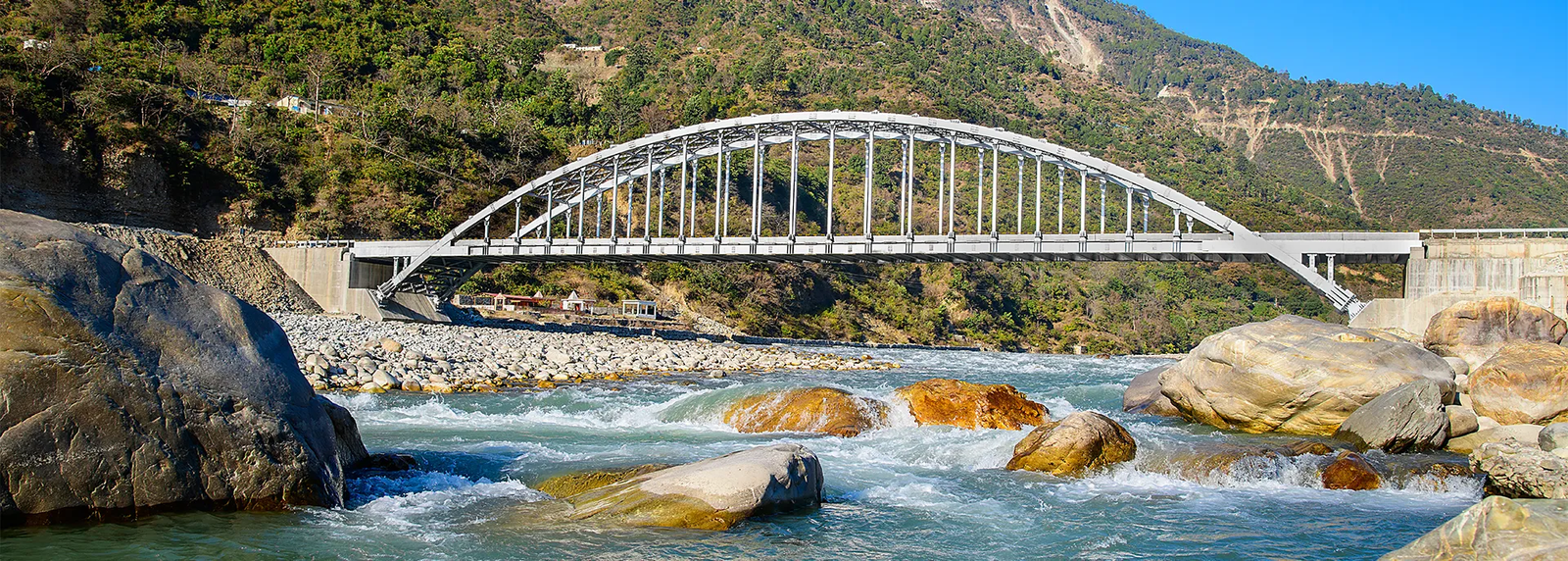
Rahee undertook the design, supply, and installation of over 2,400 H-beam sleepers with fastening systems for the world’s highest steel arch rail bridge. This project highlighted our expertise in high-precision track systems for technically demanding structures.
Char Dham Yatra Rail Link Project
As part of this project, we completed major bridge works, including the construction of a 125-meter-long monolithic span with a 7.5-meter-wide motorable road bridge. This showcased our ability to integrate bridge and track construction in complex mountainous regions.
These projects highlight Rahee’s capability in executing complex track and bridge infrastructure, combining design, manufacturing, and construction expertise to deliver technically challenging solutions in some of the most demanding environments in India.
How is Rahee incorporating sustainable practices in its manufacturing process?
At Rahee, we understand the importance of adopting sustainable and environmentally responsible practices. One of our key initiatives is to reduce CO₂ emissions and minimise our overall carbon footprint. To move in this direction, we are increasingly using solar power in our manufacturing units, gradually shifting our energy consumption from conventional coal-based sources to renewable solar energy. This transition not only supports our internal sustainability goals but also aligns with India’s national push toward green manufacturing and clean energy adoption.
There is a push for “Make in India” to “Make for the World.” How does Rahee tailor its offerings to meet regulatory and infrastructure needs in the international market?
Rahee has been operating in India for over 60 years, which gives us a strong understanding of the regulatory framework and technical requirements of the Indian railway sector. In line with the shift from “Make in India” to “Make for the World,” our focus is on bringing advanced global technologies to India, adapting them to local conditions, and manufacturing them domestically.
The goal is to create products that not only meet the standards and needs of Indian Railways but are also competitive and compliant with international specifications, allowing us to serve global markets.
As India accelerates investment in metro, high-speed rail, and freight corridors, what is Rahee’s long-term growth strategy?
Rahee is actively focusing on the development of ballastless track technology in India. This is a relatively new technology that was earlier used mainly in metro railway systems, but it is now being extended to the mainline railway network. Indian Railways has made ballastless tracks mandatory for all tunnels, and Rahee is strongly engaged in this segment as one of the leading companies in the country.
In addition, we see Rahee playing a key role across metro, mainline, and high-speed rail projects. With our experience, technical capabilities, and focus on modern track technologies, we believe we are well-positioned to support India’s next phase of railway expansion.
What are your key takeaways from IREE 2025, and any message for visitors and partners?
IREE 2025 has been phenomenal for us. The level of engagement, discussions, and genuine interest shown in our innovations, especially the Electro-Hydraulic Point Machines, has been very encouraging.
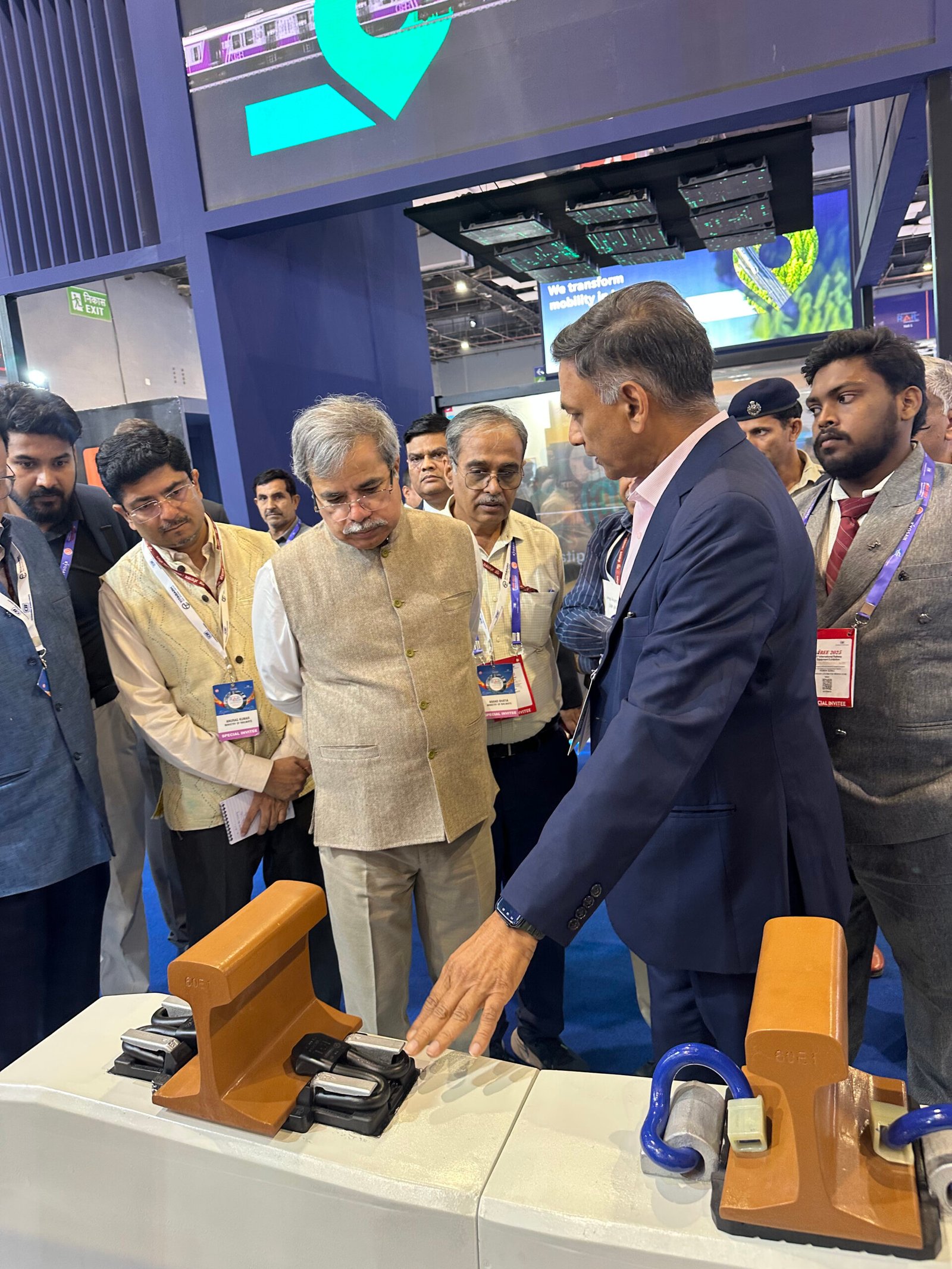
The visit of Shri Satish Kumar, Chairman & CEO of the Railway Board, to our stall was a moment of pride and motivation for the entire Rahee team.
To all our partners, stakeholders, and visitors, we extend our heartfelt thanks for your continued trust and support. Every interaction here strengthens our vision to contribute to India’s rail growth story. Together, we will keep moving forward, creating better, safer, and more efficient railway infrastructure for the nation.
Discover how AI is bringing the next phase of sustainable urban rail mobility for Viksit Bharat at InnoMetro 2026, India’s prime exhibition and conference for metro & railways which is going to held on 21-22 May 2026 at Bharat Mandapam, New Delhi