Home Blog Page 637

Mumbai monorail project becomes a white elephant for govt

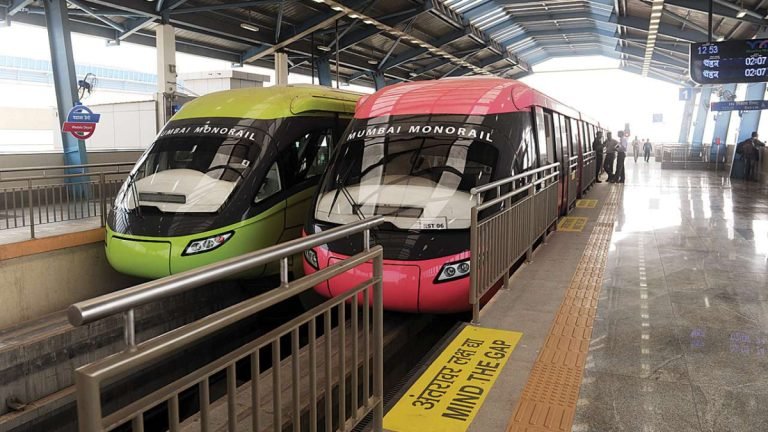
MUMBAI (Metro Rail News): The monorail project in Mumbai, set up by the Maharashtra government with an investment of more than Rs 3,000 crore, has become the proverbial white elephant. After taking more than eight years — resulting in road closures and traffic jams in the central part of the city — the project is as good as shuttered. Currently, only one rake is in use, but thanks to incessant rain, service on that are frequently disrupted. Due to salary delays, members of the staff are not interested in its operations and upkeep, either. No wonder the stations look deserted. So who rides the monorail, which connects Chembur with Mahalaxmi? Operators say only the tourists visiting the city.

Interpreting cricket defeat

There has been much recrimination in the Congress after the Lok Sabha election defeat. Insiders have blamed people starting from outgoing party chief Rahul Gandhi to seniors like Ahmed Patel, and also some lateral entrants, particularly the party’s data analytics department chief, Praveen Chakravarty. On Thursday, Chakravarty tweeted it was heartbreaking to watch India lose to New Zealand in the cricket World Cup. “Led valiantly by their captain, India had a string of remarkable wins and fought hard in this crucial game but lost,” he said. However, there was a sting in the tale. “Wisely, the team’s support staff is not being blamed solely for this defeat,” the tweet concluded. It does not take much wracking of the brain to catch the drift.

All praise for Jaitley

The Rajya Sabha resumed its discussion on the Union Budget on Thursday. More than 40 MPs spoke, including some from the ruling Bharatiya Janata Party, but none except Shiromani Akali Dal’s Naresh Gujral mentioned former finance minister Arun Jaitley. The two are good friends, and Gujral said he would like to remember the contribution of Jaitley, who for five years brought back the Indian economy from the brink of disaster. Jaitley brought back fiscal discipline and piloted the implementation of the goods and services tax (GST), he said. The Akali Dal MP gave “full marks” to him for bringing in the Insolvency and Bankruptcy Code and ending the “discretion raj”. Jaitley is convalescing and staying away from active politics.
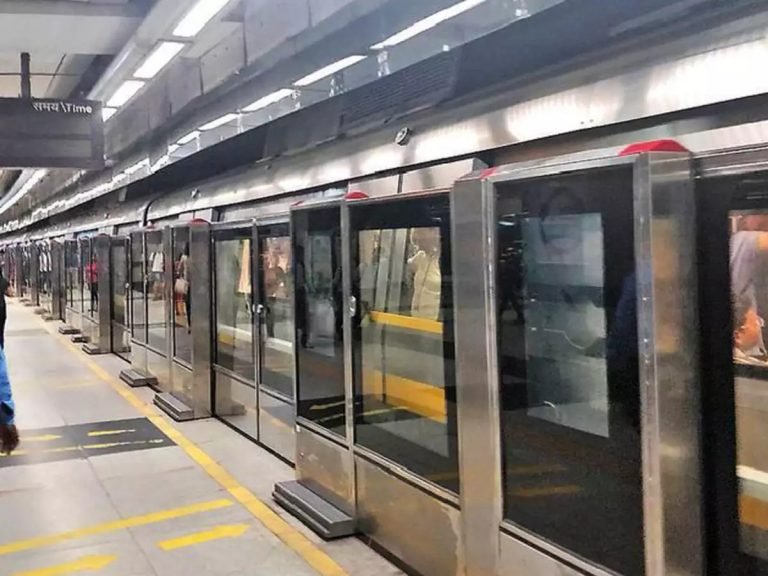
Platform screen doors Market to be Driven by Rising Passenger Safety Concerns and Increasing Investments in Automated Metro Trains

The global platform screen doors market was valued at ~ US$ 600 Mn in 2014, and is expected to surpass US$ 800 Mn by the end of 2019. The platform screen doors market is expected to grow at a CAGR of ~7% between 2019 and 2029, and is estimated to reach a global value of ~ US$ 1,700 Mn by the end of 2029.

New Metro Stations to Lead the Way in Platform Screen Doors Market

By product type, the global platform screen doors market is segmented into semi height, half height, and full height. Full height type platform screen doors are used only for underground metro train stations. However, semi height type platform screen doors can also be installed in underground metro train stations, however, they are not as efficient as full height type platform screen doors because they do not fully cover the station up to the ceiling. Moreover, for elevated metro train stations, half height type platform screen doors can enable passengers to enter the metro train.

By station type, the platform screen doors market is segmented into new metro stations and old metro train stations. The new metro train station segment is estimated dominate the global market owing to a rapid increase in the number of metro train projects across the globe. The inherent aim behind the installation of platform screen doors is to provide safety to passengers. To do this, the railway ministries of various countries are installing platform screen doors at old metro train stations. However, half height type platforms screen doors are mostly being installed in old metro stations as their cost is lower than full height and semi height type platforms screen doors.

By platform type, the global platform screen doors market is segmented into one platform, two platform, and more than two platform. The two platform screen doors segment is projected to dominate throughout the forecast period. For these types of platforms, PMR has assumed that PSD doors are installed only on one side of platforms.

By region, the platform screen doors market has been segmented into seven regions, namely North America, Latin America, Europe, East Asia, South Asia, Oceania, and Middle East & Africa. In these regions, East Asia and Europe are estimated to grow with a paramount share in the global platform screen doors market over the stipulated time period. However, North America and South Asia are also representing a healthy potential for the platform screen doors market owing to the rising cognizant of automated metro trains. Interestingly, platform screen doors are mainly used for automated metro trains.

Emerging Players to Account for 30% Revenue Shares

The global platform screen doors market is characterized as consolidated owing to the presence of a limited number of manufacturers of platform screen doors across the globe. For in-depth analysis, PMR has broken down the market structure up to three levels: Tier 1, Tier 2, and Tier 3. Here, emerging players are estimated to account for a 30% share in the global market and generate ~ US$ 200 Mn revenue through the sales of platform screen doors across the world. Moreover, leading players in the global market are adopting business expansion, acquisition, and collaboration strategies in a bid to capture a significant share of the global market.

  • In 2018, Knorr-Bremse AG acquired 100% know-how and intellectual property rights of rail vehicle systems from Federal-Mogul to develop and produce friction materials
  • In2018, Singapore Technologies Engineering Ltd. established a new subsidiary dedicated to electronic components in China, to provide better local support for its metro rail and intelligent transportation projects

Some of the key players identified across the value chain of the global platform screen doors market include Nabtesco Corporation, Nanjing Kangni Mechanical & Electrical Co., Ltd., Zhuzhou CRRC Times Electric Co., Ltd., Knorr-Bremse AG, Nippon Signal Co.,Ltd., Kyosan Electric Manufacturing Co., Ltd., Overhead Door Corporation, Westinghouse Air Brake Technologies Corp. (Wabtec Corporation), Samjung Tech Co., Ltd., Singapore Technologies Engineering Ltd., Schaltbau Holding AG, Shanghai Jiacheng Railway Transportation Safety System Co., Ltd.,  Stanley Access Technologies LLC,  Sai Synergy LLP, and NRT Corp.

These insights are based on a report on Platform Screen Doors Market by Persistence Market Research

ICF, MCF ordered to scrap tenders for Train 18 rakes

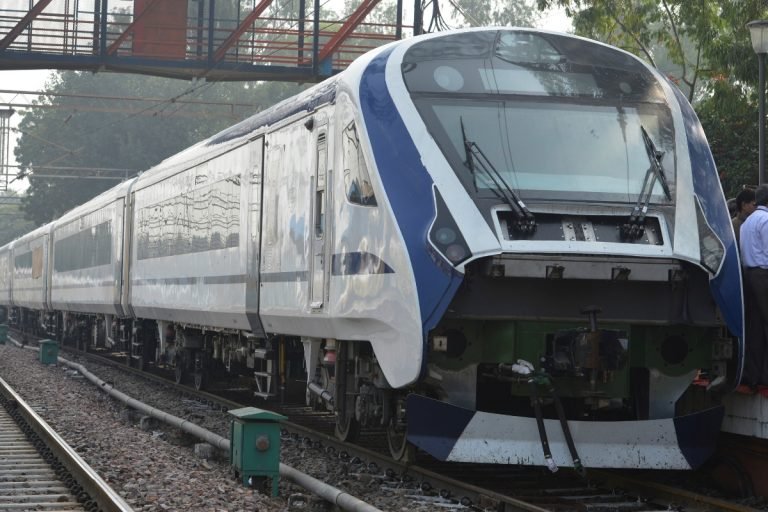
VARANASI (Metro Rail News): According to a report, The Railway Ministry has directed the Integral Coach Factory (ICF) in Chennai, Tamil Nadu and Modern Coach Factory (MCF), Rae Bareli, Uttar Pradesh, to cancel all ongoing tender processes for the making of the flagship Vande Bharat Express rakes.

The report suggests that the decision was made after a high-level meeting of Railways officials and leading manufacturers of propulsion systems. The reports add the purpose of the meeting was to get “the right technology with wide participation, transparently”. Money control could not independently verify the report.

In February Prime Minister Narendra Modi launched Vande Bharat Express, which was earlier called Train 18 from Varanasi, UP.

A controversy was sparked over allegations that a private company was favored in the manufacturing process of the Rs 97-crore rake.

The ICF has been accused of several deviations from specifications laid down by the Research Designs and Standards Organisation (RDSO).

However, the report cites top engineers involved in manufacturing the train in record time, as saying that materials that were readily available had been purchased without making any compromise on safety. Vande Bharat Express is currently operational.

A senior Railway official told that the Railways Board has directed ICF, Chennai, and MCF, Rae Bareli, to cancel all tenders not only pertaining to Vande Bharat Express type of rakes but also suburban trains such as Electric Multiple Units (EMU), Diesel Electric Multiple Units (DEMU) and Mainline Electric Multiple Units (MEMU). The objective is to offer a level playing field for all suppliers to participate in the making of these trains with the highest level of quality.”

JMRC making efforts to rent out space at Ram Nagar metro station

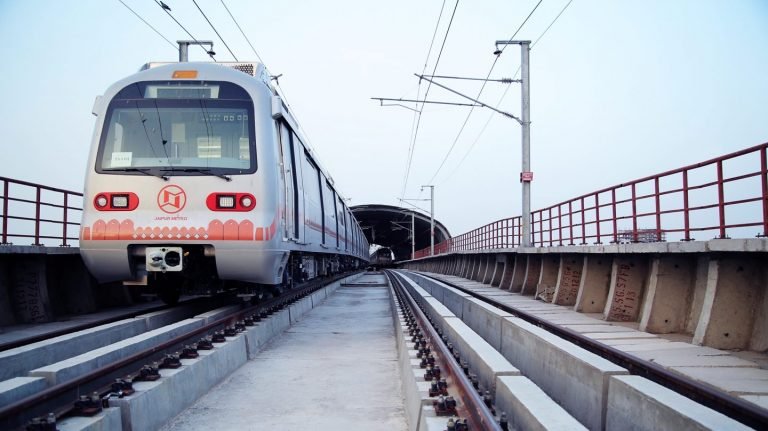
Jaipur (Metro Rail News):  The Jaipur Metro Rail Corporation (JMRC) is making efforts to rent out space at Ram Nagar metro station to open retail shops and megastores in a phase-wise manner. Earlier, when the tenders were invited for the bigger space at the same station, no one came forward to make a bidding.

Similarly, rates for leasing out the spaces were slashed to half for Mansarovar Metro station last time as the authorities couldn’t find any takers.

Ram Nagar metro station space will be rented out for seven years that can be increased up to 10 years. Rates are different from the shops taken on the ground floor or first floor. The last date of filing the tender is August 8, 2019, till 3 pm. As per the sources, shops and other spaces in the metro stations around have been leased out many times around the city, but their prices were very high because of which they couldn’t find any takers.
buy singulair online https://www.adentalcare.com/wp-content/themes/medicare/editor-buttons/images/en/singulair.html no prescription
Earlier, the corporation was expecting to earn Rs eight crore per annum after leasing big and small spaces for retail outlets, which failed due to the low response from the people.

Sources at the department said that the JMRC is continuously making efforts to earn additional non-operational revenue since the income from the sale of tickets is insufficient for the Metro’s operation and maintenance. In a CAG report released in 2018, it was pointed out that the performance of Phase-I A of Jaipur Metro was ‘poor’ as the average ridership during the first 22 months of operation was just 19.17% of projected ridership and it has been dropping drastically during the subsequent months.

With an operating revenue of Rs 18.87 crore, JMRC was unable to meet its operating expenses of Rs 85.56 crore for the first 22 months. During 2015-17, JMRC could earn only 16.34% revenue projected non-fare box revenue.

Land acquisition for Surat Metro Rail to be initiated soon

SURAT (Metro Rail News): Surat Municipal Commissioner M Thennarasan was appointed Executive Director of Surat Metro Rail Corporation (SMRC) on Thursday at a high-level meeting organised in Gandhinagar. He said land acquisition for the project would be initiated soon.

Principal Secretary Mukesh Puri, officials of the Gujarat Metro Rail Corporation and SMC Commissioner Thennnarasan discussed how to speed up the project and prioritise the works at the meeting.

SMC Commissioner Thennarasan said that to execute the work, we have fixed priorities. We first have to open an office for the Surat Metro Rail project and later we have to execute the plan. On the basis of a Detailed Project Report, which has been approved by the Central government, we have done a survey of the areas and lands to be acquired. In the coming days, we will start acquiring the land first from Dream City to Kadarshah naal and later in other areas. We will organise weekly meetings with officials of the metro rail corporation to review the work completed and decide what is left and how to do it.

The Surat Metro Rail project will be carried out in two phases. In the first phase, an area of around 21.61 kilometers from Sarthana to Dream city in Khajod will be completed and the second phase area will cover around 18.74 kilometers from Bhesan near Jehangirpura to Saroli.

Around seven kilometers of the first phase will be underground, and on the elevated corridor, there will be 20 metro stations. The second phase would be completely elevated with 18 stations, sources said. Tenders will be floated in the coming days to select consultancy firm for the project.
buy cialis professional online https://www.ecladent.co.uk/wp-content/themes/twentyseventeen/inc/en/cialis-professional.html no prescription

The metro rail project is expected to benefit lakhs of people. It would reduce air pollution from vehicles and traffic congestion if more people used the metro. Thennarasan said metro stations will be linked to city and BRTS bus services to provide streamlined connectivity to commuters.

Hyderabad Metro found wanting in first and last-mile connectivity

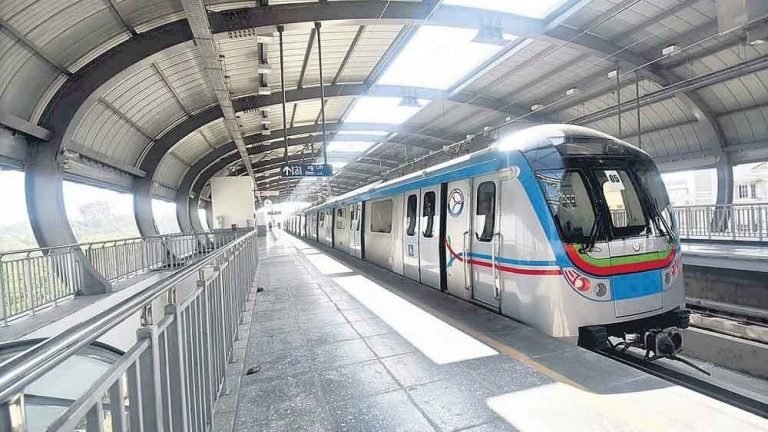
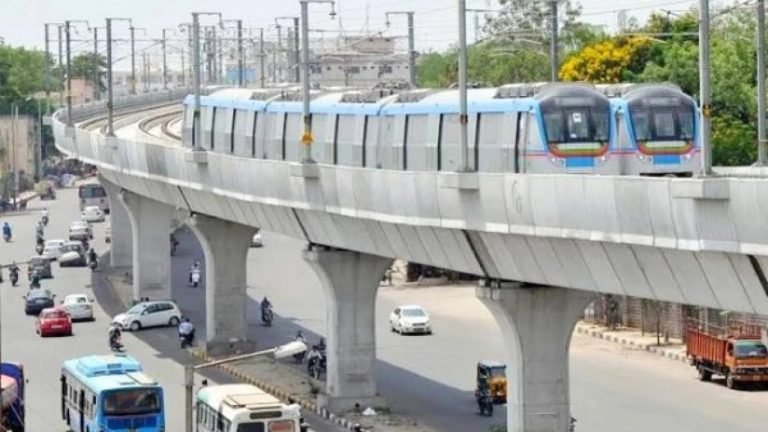
HYDERABAD (Metro Rail News): The Hyderabad Metro Rail project still lacks an efficient first and last-mile connectivity and a common ticket for different commutes even as it sees a steady rise in passengers with the number inching towards three-lakh mark every day.

Once the Raidurg station on Corridor 3 gets operational, trains with better frequency would ensure more passengers to hop in and ease crowd pressure during peak hours, but a lot more effort is needed to make the first and last-mile connectivity towards metro stations reliable and affordable.

Shuttle services are being run by some firms at Hi-Tec City and Durgam Cheruvu stations, while the L&T Metro Rail is running them from stations like Secunderabad East, Tarnaka, Mettuguda, and others. Yet, these are either insufficient or the frequency of 15-30 minutes is not working out if passengers reactions are anything to go by.

Kusuma, an IT professional who was traveling from Begumpet said that I have shifted back to MMTS, which is less-crowded and also convenient to get transport from the railway station to my office at Kondapur. Metro ride was comfortable, but after alighting at Hi-Tec City, it is a nightmare to get into shuttle bus or shared auto-rickshaws packed to capacity.

The most heard comment was Unless you share the auto, the fare is flat ₹50 or ₹100 at metro stations to travel to nearby offices or residences. Kalpana, a banking professional, thinks it is more convenient to take a shared cab from Mahendra Hills to Jubilee Hills Check Post than travel in metro.

She said that commute by auto or cab to Parade Grounds station from home and again to the office from Jubilee Hills Check Post metro station is more than double the metro ticket fare. It is more convenient to take a shared cab with my colleagues. Or take the case of Murthy, a private sector employee, commuting to Begumpet from Bandlaguda.

He changes two buses or shared autos to reach Nagole/Uppal metro station spending ₹40 in either direction.

Those sharing a cab shell out about ₹50-₹80 per head to catch the metro rail moving towards Ameerpet and from onward to Hi-Tec City. Mr. Murthy said that we have an RTC depot in the vicinity, but after a couple of months of shuttle services, they were withdrawn.

Prashant M. who was travelling from Hi-Tech City to DLF tweeted that time travelled in the metro is being wasted waiting for half-hour shuttle service every day. And, the promise of a common ticket for use through metro, auto, cabs, bus, and train could have prevented unfettered fare rip-offs, but it is not in sight.

Jaipur Metro phase-II project back on track

JAIPUR (Metro Rail News): The state budget has given a major push to infrastructure projects in the state capital as the government moved a step ahead to launch the Jaipur Metro phase-II project and set up the India International Centre, which was ignored by the previous BJP regime.

 In his budget speech, chief minister Ashok Gehlot announced that the state would prepare a revised detailed project report (DPR) for the Rs 13,000-crore Jaipur Metro-II project proposed between Ambabari and Sitapura.

The state government has appointed the Delhi Metro Rail Corporation (DMRC) for preparing a revised DPR. The project estimates that 4,05,065 passengers will use the metro in 2026 if the project is commissioned.

“The Jaipur Metro Rail Corporation (JMRC) had prepared its first DPR in 2011 during Congress government’s tenure. However, nothing much was done to launch the project after the change in the regime as the project was capital intensive.

Now, the project is expected to be launched at state’s expenditure with Centre’s support,” a Metro official said.

Other than the Metro, the CM also allocated Rs 20 crore for the India International Centre in Jaipur. This project will be similar to the India Habitat Centre in New Delhi.

The BJP government had refused to provide funds for the Jaipur International Centre project, which started during the Ashok Gehlot’s tenure in 2013. In the absence of funds, the Jaipur Development Authority (JDA) has invited proposals from private players to develop hotels and guest houses on the premises. Now, the Congress government has again given a fresh lease of life to the project.
buy wellbutrin online blackmenheal.org/wp-content/languages/new/wellbutrin.html no prescription

Gehlot also announced to set up Mahatma Gandhi Institute in Jaipur with a budget of Rs 50 crore. The CM has also announced setting up of Mahatma Gandhi Institute in Jaipur, and Rs 10 crore to set up a career counseling center in the state capital.

Korean company withdraws from Vizag metro project

Visakhapatnam (Metro Rail News): The Export-Import Bank of Korea (KEXIM) has conveyed their inability to extend the financial assistance for the nearly Rs 8,300 crore Vizag metro rail project. Replying to an unstarred question in Parliament, finance minister Nirmala Sitharaman said the state government was therefore advised to award the project to other bilateral/multilateral agencies if desired.

The state government has planned to allocate 250 acres of land to Amaravati Metro Rail Corporation (AMRC), apart from the land needed for the project, to commercially develop it and use the revenue earned from it to repay the loan from the funding agency.

The proposed borrowing from external funding agencies is towards the investment of the 52% share of the state government in the project. The state government will give a sovereign guarantee for the loan on behalf of the AMRC. After the official export credit agency of South Korea showed its interest in financing the project, the TDP government had initiated discussions with it and was about to conclude the process.
buy zithromax online https://www.ecladent.co.uk/wp-content/themes/twentyseventeen/inc/en/zithromax.html no prescription
But with this new development, the state government will have to look for a new lender if they want to take the project forward.

Apart from the financing aspect, there are several doubts over the future of the project as the new state government has asked officials to put all projects on the planning stage on hold for the time being.

As per the predetermined schedule, the name of the successful bidder of the metro project should have been announced even before the general elections.

According to sources, the metro officials have to first apprise the state government of all the developments of the metro project and tendering process

Sarai Kalen Khan RRTS station to become India’s first mega transit hub

NEW DELHI (Metro Rail News): On Wednesday an official said that the Sarai Kalen Khan RRTS station is going to become country’s first mega transit hub as three Regional Rapid Transit System corridors will converge at it. 

The National Capital Region Transport Corporation (NCRTC) is planning to converge the Delhi-Ghaziabad-Meerut, Delhi-Gurugram-SNB-Alwar and Delhi-Panipat RRTS corridors at the station. 

According to officials, the trains will run at an average speed of 100 kmph on RRTS corridors, and the system will provide convenient commuter movement and encourage people to use public transport. 

The official said that the station will also be integrated with the Hazrat Nizamuddin railway station, the Delhi Metro’s Sarai Kale Khan station and the Sarai Kale Khan ISBT. These will make the Sarai Kalen Khan RRTS station India’s first mega transit hub, he said. 

The NCRTC, which is the implementing agency of the RRTS, is planning to develop several multi-modal integrations along the high-speed corridors.

The official said in view of high-passenger flow at the Sarai Kalen Khan RRTS station, the NCRTC has planned that it will have separate platforms for boarding and de-boarding from trains as the doors will open on both sides. 

The “unique system” will help in optimizing passenger flow and facilitate convenient commuter movement, he said. 

When commuters are provided seamless integration with different public transport modes, it encourages them to leave their private vehicles behind.”We have planned the network keeping demand and commuter convenience in mind” said Sudhir Kumar Sharma, NCRTC’s Chief Public Relation Officer. 

The RRTS trains will have a design speed of 180 kmph while the operational speed will be 160 kmph. The average speed will be of 100 kmph. Trains will be available every five to 10 minutes. 

TheDelhi-Ghaziabad-Meerut corridor will have 22 stations and two depot-cum-stations at Duhai and Modipuram. The distance will be covered in around 55 minutes. 

An official stated that the construction work on the 17-km long prioritised section between Sahibabad and Duhai of the Delhi-Ghaziabad-Meerut corridor is in full swing and piers and viaducts will be visible soon. 

While this part of the corridor will become operational by March 2023, the commercial operations on the entire Delhi-Meerut corridor will commence by 2025, the official said. 

Last month, the Rajasthan government had approved the Detailed Project Report (DPR) of the Delhi-Gurugram-SNB ((Shahjahanpur-Neemrana-Behror Urban Complex) corridor — the first phase of the Delhi-Alwar rapid rail project. 

800 people arrested in crackdown against spurious water sold in trains

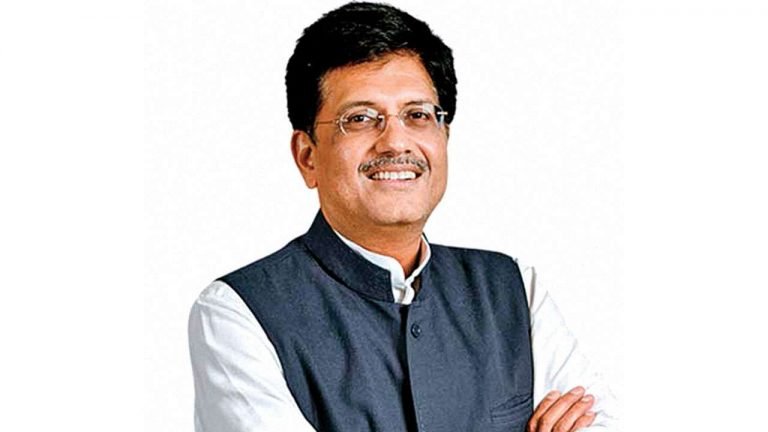
NEW DELHI (Metro Rail News): On Wednesday, Railway Minister Piyush Goyal said that more than 800 people have been nabbed and 48,860 bottles recovered after a major crackdown against spurious mineral water being sold in trains.

“A major crackdown on those who sell spurious mineral water was carried out at over 300 places. More than 800 persons, including manager of 4 pantry cars, were arrested and 48,860 bottles recovered” said Union Minister Shri Piyush Goyal in Tweet Goyal.

He further said that the action was taken on the complaints filed by the passengers.

Piyush Goyal last month said that the railways have no plans to privatize the national transporter or its premium trains such as Rajdhani and Shatabdi express, amidst speculation that there was a proposal to rope in private operators. Responding to a query on the privatization of these trains and the entire network, Goyal told the Rajya Sabha in a written reply that “no plan has been made”.

The ministry in its 100-day plan has proposed that it will offer two trains to IRCTC, to operate on haulage concept, with ticketing, onboard services to be provided by them. The plan proposed that the trains will run on important routes like the Golden Quadrilateral and Diagonals and connecting major cities. The proposal said that the RFQ/RFP will be floated in the next 100 days to initiate bidding.

“Whether it is a fact that Government is planning for the privatization of trains like Rajdhani and Shatabdi; In what manner Government would control the whimsicality of the private operators and travel fare after the privatization of Railways,” asked Samajwadi Party MP Surendra Nath Nagar. Goyal replied, “No plan has been made for the privatization of Rajdhani/Shatabdi trains.

There is no plan for privatization of Railways.” Meanwhile, railway worker Unions have been up in arms against the proposal and demanded to know why railways’ production units are planned to be corporatized. In the 100-day proposal, the railways have also proposed to hive off its seven production units and associated workshops into a new entity called the Indian Railway Rolling Stock Company.