Home Blog Page 625

Centre and states not on same page on Metro train plans

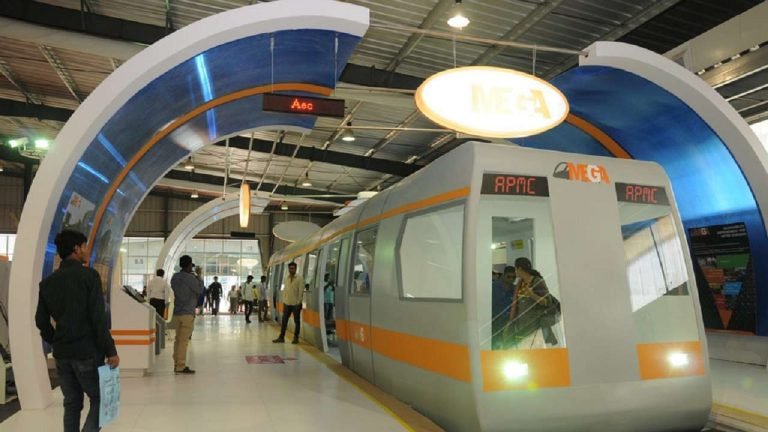
NEW DELHI (Metro Rail News):  Even as the Centre’s new policy on metro rail says this mode of public transport should be the last option in any city because it is very capital intensive, there a rising demand from various cities across the country seeking metro corridors. The Centre has received proposals of construction of 834 km of metro corridors from 20 cities. The estimated cost of all these corridors comes to over Rs 3 lakh crore.  

Cities like Mumbai, Chennai and Delhi lead in demanding more corridors. For Mumbai, multiple corridors of a total length of nearly 130 km have been proposed at an estimated budget of Rs 53,242 crore. For Chennai, the Tamil Nadu government submitted a revised proposal in January for implementation of Phase-II of Chennai Metro for a total route length of 118.9 km at an estimated cost of Rs 69,180 crore.

Delhi has also proposed multiple corridors of a total length of 104 km with an estimated budget of Rs 46,845 crore. The Centre issued the Metro Rail Policy in August 2017, which focuses on systematic planning and implementation of metro rail systems in a more comprehensive and sustainable manner. 

Officials said in the past, a few proposals have been sent back to the states for review due to various reasons. For instance, Jharkhand had submitted a proposal for a 16.25-km corridor in Ranchi.

The proposal was returned in April 2018 with a request to consider the strengthening of the existing bus fleet with other short and medium-term measures, as suggested under various studies, before embarking upon the Mass Rapid Transit System.

The policy also says the states desirous of availing central financial assistance for upcoming metro rail projects should mandatorily explore the possibility of having a public-private partnership arrangement.

28 interchange stations to help commuters to travel across the Chennai Metro

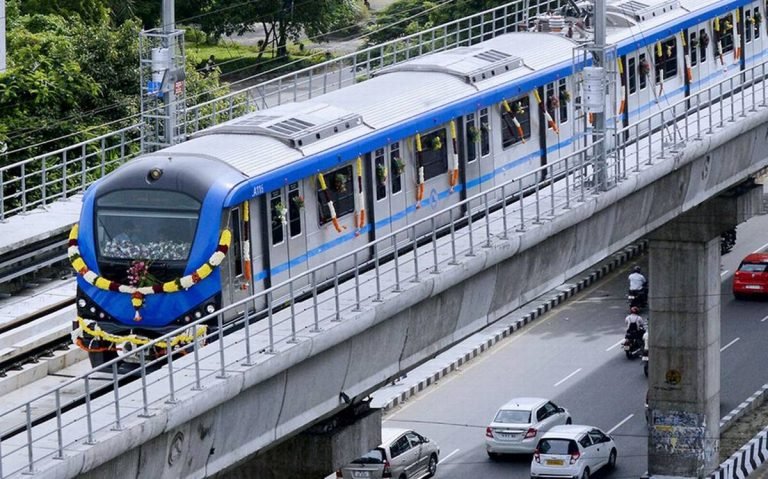
CHENNAI (Metro Rail News): In a few years, metro rail commuters would only need a mobile app and a smartcard to seamlessly switch between different modes of local transport as metro rail’s interchange stations will link metro, MRTS, suburban rail and MTC depots at 28 different locations in the city and the suburbs. These stations are coming up in the 118.9km phase-2.

People will be able to plan their commute well ahead through the app, which will have information on the routes, modes of transport, timetable, and duration of commute. Commuters will be able to move from metro stations to bus depots to MRTS stations through exclusive walkways, skywalks or subways.

A metro rail official said these stations are being designed to run one above the other in the elevated corridors to minimize land acquisition. In the case of underground interchanges, a smaller station packing all the commuter facilities will come up closer to the existing underground stations.

These stations will be linked either through long winding subways underground or skywalks in the elevated corridors. Wherever metros would link bus services, the station entry points are designed to lead commuters directly to the depots and terminuses. “The interchanges are being designed in such a way that commuters would be automatically directed to other modes of transport whether it is MTC or MRTS or suburban.

In most of these stations, they would not step out to the main road,” an official said. Construction for phase-2 is likely to begin early 2020 and a 52km stretch is expected to be ready by 2024-25. In phase-2, the stations have been planned in such a way that it would make commuting to the suburbs easier.

There will be 11 interchange stations linking MRTS, suburban and MTC between Madhavaram and Sholinganallur. Commuters at Perambur and Chetpet suburban stations or Greenways Road and Thiruvanmiyur MRTS or MTC depots at Aynavaram, Mandaveli or Adyar could easily board a metro train, as stations will be built nearby.

A smaller station has been planned on the road opposite Kilpauk Medical College near the existing underground station. These stations would be linked through the subway. But stations like Thirumangalam, which is underground now, will be linked to a new smaller elevated station on 100 Feet Road through a ramp or a skywalk.

Alandur will have another corridor and a station at 40m height and will be connected through skywalks or walkways. The corridor between Lighthouse and Poonamallee will have interchanges at Nandanam and Vadapalani, which are already connected through metro rail. For instance, Nandanam is along Anna Salai line while in phase-2, a new station will be on a line that goes from west to east.

“At Nandanam, we may have a pedestrian subway to link the two underground stations,” an official said. Similarly, commuters boarding metro trains in Madhavaram could switch between two metro stations at Thirumangalam to proceed to the airport or to Central.

There will be interchanges in suburbs like Alwarthirunagar, Valsaravakkam, Karambakkam, Alapakkam, Porur and Poonamallee as they have high interchange stations to help commuters to travel across the Chennai in phase 2 metro.

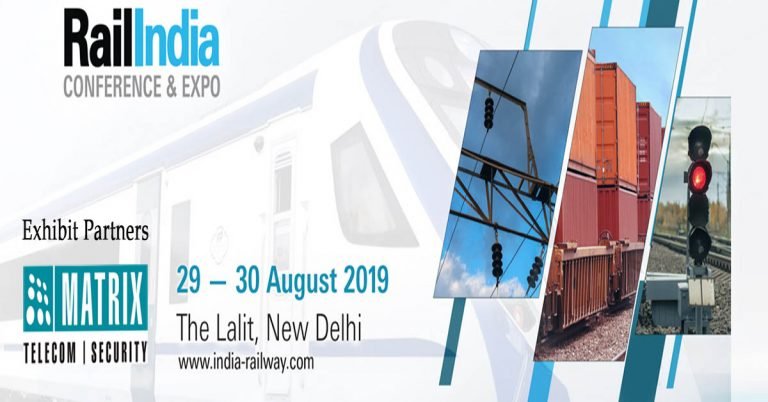
Matrix is participating in the RAIL INDIA CONFERENCE & EXPO 2019, held at The Lalit in New Delhi from 29 th  to 30 th  August 2019

Matrix will be participating in the RAIL INDIA CONFERENCE & EXPO 2019 to be held at The Lalit in New Delhi on 29th – 30th August 2019. 

Unified Communication Solutions

From Telecom domain, Matrix will be showcasing Enterprise Meeting Solution – PARISAT Meeting Server at the event. The conferencing server is engineered for 10 video and 100 audio participants enabling police force to collaborate from different locations and solve critical situations at the earliest. At the event, Matrix will exhibit pure IP solution – PRASAR UCS that enables armed forces’ personnel to connect wirelessly from remote locations. Matrix Unified Communication Server – SARVAM UCS will also be highlighted at the event. Equipped to support radio ports and in-skin GSM connectivity, the solution enhances connectivity between field personnel, helping them manage emergency situations effectively in less time. Matrix will also showcase its GSM and VoIP Gateways that allows police and defense forces to make an easy switch to the modern network while retaining their existing infrastructure.

People Mobility Management

Matrix, from the portfolio of People Mobility Management solutions, will be presenting its Aadhaar enabled biometric attendance system at the event. This device allows secured attendance marking through dual authentication – biometric/RFID card and Aadhaar number. We will also be presenting our other Time-Attendance and Access Control solutions at the event.

Matrix will showcase its Aadhaar Enabled Biometric Device. It is the only Linux based device available in Indian market with card and finger authentication. The device comes with multiple connectivity options like Wi-Fi, PoE, Ethernet. This Aadhaar based authentication device is purposely designed for marking attendance of government employees and is the only embedded device available in Indian market currently.

We will be showcasing enterprise grade Access Control and Time-Attendance solutions engineered with features such as Auto Push Events to server, Automatic Fingerprint distribution, Instant Notification, 300+ Customized Reports Generation, Scheduler services including backup and more. Furthermore, Access Control being the prime requirement in terms of security, Matrix will present its Standalone Access Control solution with License Free Environment, whereby a single panel can handle up to 255 doors and 25,000 users. At Rail India, get a glimpse into the cutting-edge Matrix biometric solutions with multiple credentials such as Face, Fingerprint, Palm Vein, RFID Card and PIN options at the Expo.

IP Video Surveillance

Matrix will also be showcasing an enterprise-grade Video Management System designed, engineered and built specifically for growing multi-location organizations. The entire solution focuses on automating processes and enhancing efficiency of organizations. We will also be showcasing a new range of Audio compatible and compact Professional Series IP Cameras powered by Sony STARVIS series sensors with Exmor technology. This gives the cameras an edge over others in terms of exceptional low light performance, consistent image quality during varying light conditions (True WDR), better bandwidth optimization, video analytics such as Intrusion Detection, Perimeter Security, Loitering Detection and many other features. Furthermore, we will be showcasing our new Extreme series of Network Video Recorder (NVRX) at the event. These NVRs are equipped with 4K Decoding capacity and characteristics like Cascading (up to 20 NVRs), Camera-wise Recording Retention, TCP notifications for remote locations and Database Level Integration. Moreover, these latest NVRs are also backed with an intelligent software that helps detect threats and send instant notifications for real-time security.

“We look forward to meeting system integrators and other business associates who can help us expand our business footprints at the event. We aim at using the event as a platform for hosting numerous meetings in the future and get a clear understanding of current market trends and needs”, commented Jatin Desai, Marketing Manager.

Visit Matrix at Stand Number 6, at The Lalit in New Delhi on 29th to 30th August 2019 and learn how our enterprise grade solutions can assist in resolving your communication and security issues.

About Matrix

Established in 1991, Matrix is a leader in Security and Telecom solutions for modern businesses and enterprises. As an innovative, technology driven and customer focused organization, the company is committed to keep pace with the revolutions in the Security and Telecom industries. With around 40% of its human resources dedicated to the development of new products, Matrix has launched cutting-edge products like Video Surveillance Systems – Video Management System, Network Video Recorder and IP Camera, Access Control and Time-Attendance Systems as well as Telecom Solutions such as Unified Communications, IP-PBX, Universal Gateways, VoIP and GSM Gateways and Communication Endpoints. These solutions are feature-rich, reliable and conform to the international standards. Having global footprints in Asia, Europe, North America, South America and Africa through an extensive network of more than 2,500 channel partners, Matrix ensures that the products serve the needs of its customers faster and longer. Matrix has gained trust and admiration of customers representing the entire spectrum of industries. Matrix has won many international awards for its innovative products.

For further information, please contact:
394-GIDC, Makarpura, Vadodara-390010, India
Toll Free – +91 1800-258-7747
E-Mail: inquiry@matrixcomsec.com
Website: www.MatrixComSec.com

India’s deepest Metro station comes up 30m below Howrah railway station

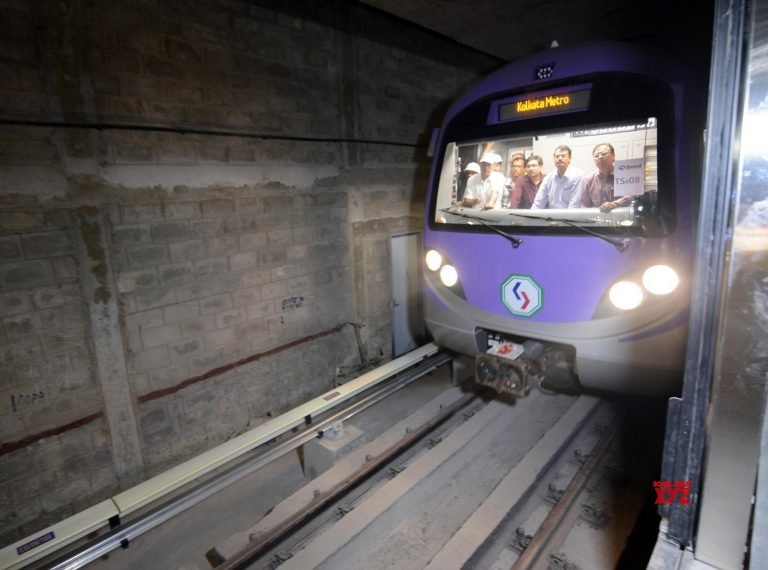
HOWRAH (Metro Rail News): India’s deepest Metro station is now structurally complete. The base slab of the Howrah Metro station, 30m equivalent to a 10-story building below platforms 14 and 17 of the rail station, was cast over the weekend, marking a milestone for the East-West Metro project.

The 16km Metro will link Howrah Maidan with Sector V, passing under the Hooghly. “Constructing the multi-level Metro hub below an active railway yard the country’s busiest railway terminus was quite a challenge, especially when we have to ensure train services are not interrupted,” said an official of Afcons, the construction major contracted to build the Metro station between two active railway platforms.

“It runs so deep because it had to be aligned with the two East-West tunnels running 26m below the Hooghly riverbed,” he said.

While in the eastern part of Kolkata, services along a 5km elevated stretch from Sector V to Salt Lake Stadium of East-West Metro, the city’s most ambitious infrastructure bet so far, is about the start, on the west, at Howrah, workers of Afcons had good reason to celebrate on Saturday.

They had managed to finish structural work of the country’s deepest Metro hub in a record 17 months’ time.

“Like any underground station, the Howrah Metro station was also built topside down. The station has five slabs and four levels. It was a momentous occasion to complete the fifth and the last slab on Saturday,” said an official.

It took them 13 months to excavate below platforms 14 and 17 of the Howrah station’s new complex from February 2016 to create space for the 34m deep Metro station. The digging generated 2,65,000 cubic meter soil. “We had to dig till we reached 34m because the width of the base slab was supposed to be around 4m. The station’s ground-level would start at 30m or 105ft, where the tracks would be laid,” explained an engineer.

While the base of the station is at a depth of 105ft, the platforms are 100ft below the surface. The station has five levels upper concourse, mechanical level, lower concourse and base or platform level spread across 40,000sqm. The multi-level sprawl will have interconnected facilities spread over five lakh square feet of interior space.

Walking 143 steps into the Metro station, opposite the divisional railway manager (DRM’s) office, one finds quite a bit of the civil construction, including the platforms, is now complete. There are three platforms, so that doors of the trains can open on both sides. The roof is waterproof and the premises greener and more energy-friendly.

East-West’s Esplanade Metro station is the next deepest — at 29m. Delhi’s Hauz Khas Metro station is also 29m below the surface. “It’s not so difficult building the Esplanade station because it’s coming up at a greenfield site because the Esplanade tram depot next to Curzon Park has been shifted out. East-West’s Sealdah Metro station is also easy compared to the construction of the Howrah Metro station, where the railway platform is barely 5m away from the station box, that too at such depth.

At Sealdah, the East-West Metro station is not all that near the railway station complex or the platforms,” said an official. Initially, there were four platforms above the Howrah Metro station. Now, platform number 16, which was only used for goods trains, has been abandoned. And platform number 15 has been shifted.

NHSRCL provides skills training to the youth of Anand, Kheda

VADODARA (Metro Rail News): The National High-Speed Rail Corporation Limited (NHSRCL) which is implementing the bullet train project between Ahmedabad and Mumbai has started efforts to train youth from project affected families to make them self employed.

Recently, NHSRCL in association with the Rural Development and Self Employment Training Institute (RUDSET) completed a 45 days skill development training program for the youth of Anand and Kheda.

The skill development program is meant to restore income and generate activities for the project affected individuals or families. Under the program, computer hardware and networking program for prospective youth were started by Nadiad-based RUDSET on June 26.

Twenty-six youth from six villages of Kheda and five villages of Anand benefitted from the skill development training program. The youth who underwent training received certificates for future entrepreneur training programme during a ceremony at Nadiad which witnessed presence of Kheda district collector Sudhir Patel, NHSRCL’s managing director Achal Khare, Kheda’s district superintendent of police Divya Mishra, NHSRCL, Vadodara’s chief project manager Pradeep Ahirkar, RUDSET’s director Arvind Mothaliya and more than 400 project affected persons and their families.

“This relationship is not just given and take but of growing together. NHSRCL will follow up with all training participants in future and will try to help in whatever way we can in the years to come,” said Khare.

He also announced that if the youth are ready to join hands to make a cooperative like Amul, NHSRCL will provide all its assistance to such an initiative. Similar training programs including those on mobile repairing, beauty parlor, bike repairing among others have been planned in various villages along the high-speed rail corridor.

After training, RUDSET will ensure that trained youth develop their own enterprises. “Since RUDSET is sponsored by two banks, they will also help the youth in getting loans. The institute will be providing handholding for at least two years till the candidates get established,” said Sushma Gaur, spokesperson of NHSRCL.

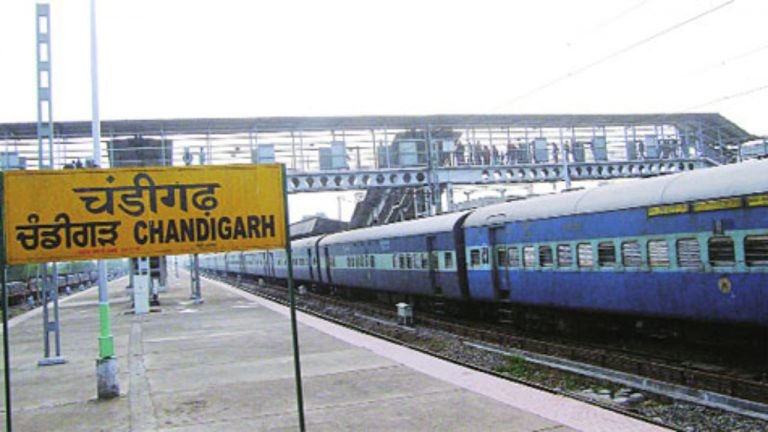
Chandigarh-New Delhi train journey time will get shorter soon

CHANDIGARH (Metro Rail News): Travel time between Chandigarh and New Delhi will come down soon, as the railways are going to increase the speed of trains on Ambala-New Delhi stretch, according to Dinesh C Sharma, divisional railway manager (DRM) – Ambala division. Interacting with reporters, the DRM also discusses issues like passenger amenities, punctuality and other operation related challenges in the Ambala division and spells out possible solutions for the same.

The railways are working to increase speed on prominent routes like New Delhi-Mumbai. The work is going on for Chandigarh-New Delhi section also.
buy cialis oral jelly online https://pridedentaloffice.com/wp-content/themes/twentytwentyone/inc/en/cialis-oral-jelly.html no prescription
But, we are not aware of what shape it will finally take, as the ministry has to take a final call on it. The work on the construction of walls along the tracks in this section is on. It will help with this project also.

Chandigarh is still ahead in most of the areas. The Indian Railway Stations Development Corporation (IRSDC) has been given the responsibility of planning in this regard and they are doing the facility management. We look after the core railway operations. As upgradation is a constant process, in the coming days, you will see better facilities at the Chandigarh railway station.

Intercity bullet trains start operation in Xinjiang

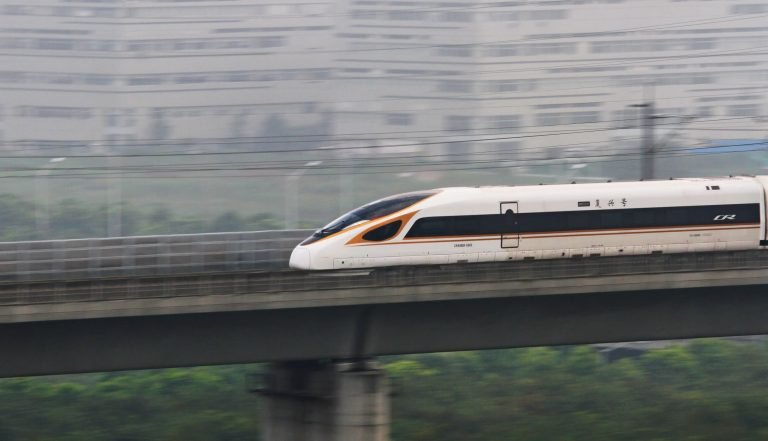
XINJIANG (Metro Rail News): Bullet trains that can run at 160 km per hour have been put into operation to replace the older and slower models in northwest China’s Xinjiang Uygur Autonomous Region.

The electric multiple units (EMU) train is named Fuxing, the same as the 350 km/h model that runs between Beijing and Shanghai. It can run on the existing rails in the region but has sealed compartments, internal temperature control, and lower noise.
buy xifaxan online www.blendedentalgroup.com/wp-content/languages/new/xifaxan.html no prescription

The first such trains started operation on Aug. 8 from Urumqi to Korla, with a total of three pairs of trains running daily. The train can cut the intercity travel time from 5 hours to 3 hours.

In the future, there will be 20 more sets of Fuxing trains linking multiple cities in the region, according to China Railway Urumqi Group Co., Ltd.

“Now that Fuxing trains have been put into operation, more people can experience the convenience and improved service of bullet trains,” said Song Qiang, deputy director of the passenger transport department of China Railway Urumqi Group Co., Ltd.

The region received about 75.9 million visitors in the first half of this year, up 46 percent compared with the same period last year, according to regional officials.

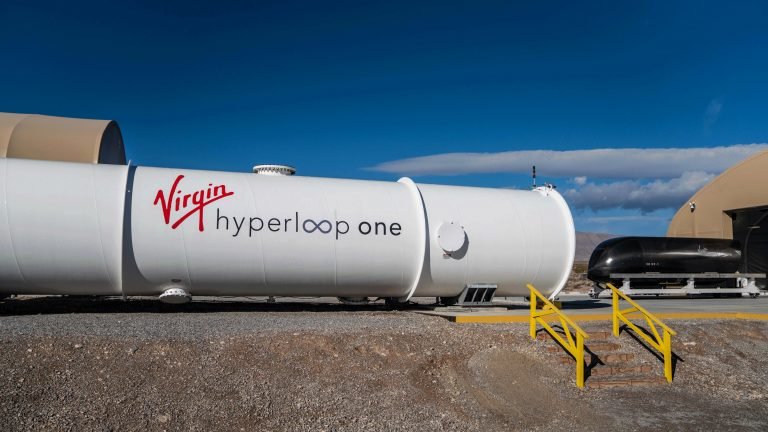
Virgin Hyperloop One could build the world’s first hyperloop in India

MAHARASHTRA (Metro Rail News): The first “hyperloop,” a concept for an ultra-fast underground transportation system, popularized by Elon Musk, is closer than you think and it may not be coming from Elon Musk’s Boring company.

Officials in the Indian state of Maharastra announced last month that they will be taking bids for what could be the first hyperloop project. Sir Richard Branson-backed Virgin Hyperloop One could win the contract and has been named the Original Project Proponent by the state.

“This is history in the making. The race is on to host the first hyperloop transportation system in the world, and today’s announcement puts India firmly in the lead,” Virgin Hyperloop One CEO Jay Walder said in a statement.

Virgin Hyperloop One and Musk’s Boring Company are both developing hyperloop transportation.

Interest in ultra-fast underground transportation piqued when Tesla’s Elon Musk published a concept in 2013. Musk outlines a system that involves a magnetically-propelled pod that carries passengers through a low-pressure tube at up to 700 miles per hour.

Despite the similarities, Walder says the two companies are like apples and oranges.

“Boring Company is really focused on carrying a few people in a vehicle. We see our vehicle as a vehicle for the masses,” Walder says. “We want to carry many, many people in what we’re doing. Maybe they integrate at some point, but we’re completely separate.”

The Virgin Hyperloop is taking its test pods stateside as well. Virgin will show off its XP-1 pods on a roadshow that will hit Ohio, Kansas, and Texas over the next few months.

“We’re bringing Hyperloop to America. It’s a great opportunity for people to be able to get a sense of what hyperloop could be, to be able to talk about what it means,” Walder says. “So it allows us to completely reimagine the way that we knit cities together, the way we knit places together.”

Delhi Metro services on Independence Day

NEW DELHI (Metro Rail News): Delhi Metro will run as usual on Independence Day (15 August) across the entire network, according to advisory issues for Independence Day by Delhi Metro Rail Corporation (DMRC).

All the Metro stations will remain open, However, the entry and exit at four stations will remain closed owing to security reasons during the Independence Day programme. The entry and exit at Lal Quila, Jama Masjid, Delhi Gate and ITO stations of Violet Line will be permitted from select entry/exit Gates during the ceremony time.

DMRC has announced that as part of heightened security, all parkings will be closed with effect from 14 th August morning till 15th August afternoon. “Parking at Metro stations will be closed from 6 am on 14th August (Wednesday) till 2 pm on 15th August 2019 (Thursday),” The DMRC circular read. This security measure comes into effect every year in order to avoid any untoward incident.

To facilitate people at Lal Quila station on Independence Day, additional ticket counters will be opened at Lal Quila and Jama Masjid Metro stations. apart from that additional staff will be deployed to guide people and cater to the rush after the ceremony.

Security has been beefed at all major airports and railway stations ahead of the Independence Day. All airlines have asked their flyers to reach airport early, at least three hours in advance.

The Delhi Traffic Police has also issued an advisory for the function. According to the traffic advisory, seven roads—Netaji Subhash Marg, Lothian Road, S.P Mukherjee Marg, Chandni Chowk Road, Nishad Raj Marg, Esplanade Road, its Link Road, and Ring Road from Rajghat to Y-Point-Hanuman Setu will be closed for general public from 4 am to 10 am. Routes of buses terminating at Red Fort, Jama Masjid and Delhi main railway station will be curtailed or diverted.

Prime Minister Narendra Modi will unfurl the national flag from the ramparts of the historic Red Fort on Thursday morning to a 21-gun salute, and then address the nation on the 73rd anniversary of independence from British rule.

Regional Rail stations to have platform screen doors

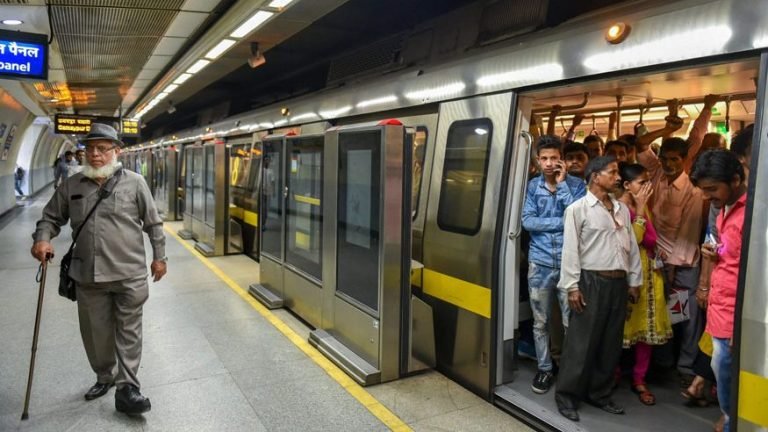
NEW DELHI (Metro Rail News): The National Capital Region Transport Corporation (NCRTC) plans to install platform screen doors (PDS) at all upcoming stations of rapid rail transit corridors so that suicides and other incidents prevented.

The NCRTC is executing agency of the Rail Rapid Transit System (RRTS) would facilitate safe boarding and deboarding from the train which will have an operational speed of 160 kmph.

The Delhi Metro Rail Corporation (DMRC) has installed platform screen doors at its several stations owing to instances of people jumping on metro tracks to commit suicide and crowd management.

The National Capital Region Transport Corporation (NCRTC) is executing three proposed RRTS corridors – Delhi-Ghaziabad-Meerut, Delhi-Gurugram-Alwar and Delhi-Sonipat-Panipat.

“In recent times, we have seen untoward incidents like commuters on railway track by accident, trespassing on track and suicide cases.

“The installation of PDS at all RRTS stations will increase safety measures,” Said Mr.
buy sildalis online https://herbalshifa.co.uk/wp-content/themes/twentytwentytwo/inc/patterns/en/sildalis.html no prescription
Sudhir Sharma, Chief Public Relation officer, NCRTC.

He said the PSDs would act as a barrier between the platform and the tracks besides helping in better crowd management at the stations.

According to the NCRTC, installation of PDS will also enable trains to arrive and leave the station at greater speed besides reducing the time it takes to pick up and drop passengers.

NCRTC said that the RRTS trains will be three times faster than the Delhi Metro trains in terms of operational speed

Commuters will be able to travel on the country”s first rail rapid transit corridor in over three years from now as its 17-km-long Duhai-Sahibabad section in Uttar Pradesh”s Ghaziabad is expected to be operational by early 2023.

The entire Delhi-Ghaziabad-Meerut RRTS corridor, spanning 82 km, will be operational by 2025.