Home Blog Page 581

IT-TRANS 2020: Exhibitors present digital solutions for urban mobility

Karlsruhe/Brussels (Metro Rail News): One of the key factors for achieving climate protection targets is having a strong public transport system. As well as generally expanding public transport, it is of crucial importance to switch to emission-free modes of transport such as in bus fleets. In its Clean Vehicles Directive, the EU therefore requires public authorities to purchase a minimum quota of clean buses. This means that, as of 2021, at least 45 percent of buses must use alternative drives or run on natural gas or synthetic fuels. This quota will be increased to 65 percent as of 2026.

Using buses with electric drives rather than conventional combustion engines would reduce noise pollution as well as cutting down substantially on emissions that are harmful for the climate and human health. As Martin Schmitz, Technical Director of the Association of German Transport Companies (VDV), which has more than 600 member companies from the public passenger and rail freight transport sector, explains: “Around 315 electric buses are currently being used in Germany, with a further 750 on order. However, the difficulties involved in supplying power to depots and getting approval for building charging infrastructure in densely built-up urban areas are continuing to hamper the switch to e-mobility. After all, as well as the vehicles themselves, it is primarily a question of infrastructure and new operational processes.”

Range calculation takes into account weather conditions, traffic jams and route characteristics

Swiss company Trapeze is showcasing special solutions for e-bus fleets at IT-TRANS. The Trapeze Smart Monitor allows the vehicle status to be monitored. The system provides real-time information on all the available vehicle data such as battery charge level and possible range in hours or kilometers. The technical status of the vehicle is also recorded automatically and communicated to control room and workshop. The ongoing range calculation additionally takes into account factors influencing energy consumption such as weather conditions, uphill and downhill sections and repeated stopping and starting on account of traffic jams and diversions. In this way, the smart software solution simplifies operational processes, making it possible to plan vehicle deployment more efficiently, to exclude range risks and also to reduce operating costs by optimizing workshop processes and maintenance.

New at IT-TRANS: Control center simulates e-bus route planning

The Future Mobility Lab is a new feature at IT-TRANS 2020. Among other things, a control room will be set up to simulate how electric and autonomous vehicles are integrated into a transport system that also features vehicles with drivers. The control center will be set up by the Swiss exhibitors Trapeze. The software for the integrating the self-driving vehicles in the control system is being supplied by its subsidiary AmoTech. “We will be using the control center to show you the challenges involved in managing a complex transport system. If vehicles with drivers are en route at the same time as self-driving vehicles it is important, for example, to decide – with support from the software – which bus will reach a particular stop first. In the case of driverless vehicles, information is needed as to how passengers get their tickets, how many passengers are in the vehicle and whether they are all ok”, explains Matthias Keller, Director Corporate and Marketing Communications, Trapeze Switzerland GmbH. Visitors to IT-TRANS can observe the various vehicles on the monitors in the control center, watch the dispatchers at work and ask them questions. One of the vehicles in the traffic management system at the control center is a self-driving minibus from the manufacturer easymile which AmoTech will demonstrate live on a demonstration route.

INIT presents a total solution for introducing e-buses

From the economic point of view, e-buses should be on the road for as long as possible. The eMOBILE-PLAN planning and simulation system from Karlsruhe-based software house INIT enables routes and scenarios to be simulated to determine the most appropriate options. The planning tool is only one element in the eMOBILE product suite, however. At IT-TRANS, INIT is presenting its smart solutions for charging and depot management, scheduling, range forecasting and control of e-bus fleets in ITCS.

COSware with automatic scheduling and intelligent fuel management

COSware smartBMS from IT-TRANS exhibitor COS makes it easier for dispatchers at the depot to handle e-mobility. The software provides dynamic range forecasts, taking into account different factors such as weather, topography and passenger volumes. The system determines charge durations, including load balancing, documents changes regarding the state of charge and analyses aging processes concerning the battery’s state of health. COSware also covers all other depot management tasks, such as automatic dispatching, intelligent maintenance planning, fuel management and location tracking. With COSware smartIMS, service technicians at the workshop can record such things as mileage and tire tread depth directly on the vehicle and report defects; regular control intervals are updated automatically.

E-mobile ride pooling with Via

ViaVan is re-engineering public transit, from a regulated system of rigid routes and schedules to a fully dynamic, on-demand network. ViaVan’s BerlKönig service, in partnership with the Berliner Verkehrsbetriebe (BVG), is the largest public sector on-demand ride pooling project. Around half the fleet comprises electric vehicles, for which Via has developed new charge tracking algorithm, allowing drivers to see when they need to charge the vehicle. The New York based company has also developed comprehensive planning tools which ensure that despite charging cycles and vehicle replacements the service is never undersupplied in its operating area. The BerlKönig project won the 2019 Public and Urban Transport Strategy Award sponsored by the International Association of Public Transport (UITP). UITP is a co-organizer of IT-TRANS.

IVU.suite combines all vehicles in one interface

The IVU.suite enables operational factors such as charge management and charging times, ranges, route lengths, overnight and opportunity charging to be optimized, and electric buses to be seamlessly integrated in planning, scheduling and control. IVU.rail, the integrated standard system for railways, helps to make efficient use of rolling stock. The vehicle and maintenance optimization system automatically takes into account predetermined service intervals and planned maintenance. In the event of a fault, a suggestion function recommends a suitable replacement vehicles and routes. IVU.rail also optimizes personnel deployment. The IVU.crew planning solution provides support in all personnel deployments and ensures that employees are where they are needed.

Coverage monitoring facilitates efficient use of resources

Verkehrsautomatisierung Berlin GmbH (VAB) also supports intelligent and demand-driven planning for e-bus fleets with IT solutions. The objectives are fast handling capabilities in daily operations and a reduction in administrative effort. Electromobility influences numerous operational processes at the depot and in the route network. VAB’s smart charging management solution in combination with range monitoring ensures eco-friendly and efficient use of resources. Proven technologies can be seamlessly integrated for preconditioning vehicles, for example in the form of demand-led control of vehicle preheating.

Practical optimization software for electric buses

Mentz, a Munich based company, is showcasing its GENIOS family at IT-TRANS for the first time. The program core integrates the latest research results from the fields of artificial intelligence, evolutionary algorithms and graph theory.The GENIOS family currently includes optimizations for electric buses, integrated and sequential duty and vehicle scheduling, duty rosters, personal duty scheduling, route planning to supply stops with printed timetables, and connection planning.Parameters such as legal requirements and operational agreements can be set or even redefined by the user on the application’s interface. Similarly, performance indicators to monitor optimization processes and solution proposals can be created through modular design.

Data-based decisions for information and cost transparency

Pure Vision Systems is consistently focusing on big data throughout its line of products and services, thus keeping public transport future proof and competitive.Typical applications include continuous recording of vehicle positions and meta data, information on fuel consumption and routes driven (relevant for e-mobility applications) and the creation of the basis for differentiated controlling.Data from all the on-board vehicle systems such as IBIS, passenger counting systems and vehicle CAN are recorded synchronously on the central system platform, processed and forwarded to backend systems.Depending on intended data usage, the data is processed either in real time or transferred to backend systems using block transfer.


DISCLAIMER: The published articles reflect the personal opinions of the authors (in this case the exhibitors at IT-TRANS) and do not represent the views of the International Association of Public Transport (UITP) or Messe Karlsruhe. Minor changes have been made to the texts supplied by the exhibitors. Date: January 2020 | Subject to change without notice.
DMRC re-invited bid for civil contract package 3 of Delhi Metro Phase IV

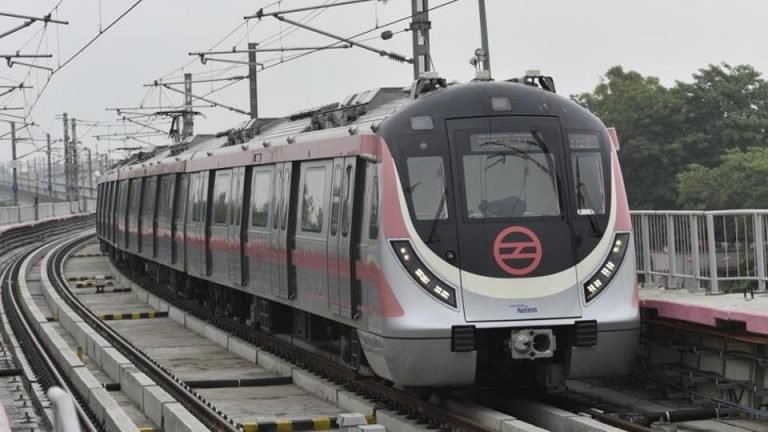
NEW DELHI, (Metro Rail News): Delhi Metro Rail Corporation (DMRC) re-invites online bids from the experienced and eligible contractors for civil construction under contract package 3 (DC-03) of phase IV of the Delhi Metro Rail project. DMRC cancelled the tender which was awarded to Dilip Buildcon Limited as It declared as the lowest bidder (L1) due to major difference in the estimate.

DMRC has also revised the estimate of work from Rs 746.68 crore to Rs 755.41 crore in the revised tender. Dilip Buildcon had quoted Rs 825.63 crore against the previous estimated value i.e Rs 746.68 crore.

Previous Bidders of Civil Contract Package 3

  • Dilip Buildcon (L1)
  • KEC International Limited (L2)
  • PNC Infratech Limited (L3)
  • Larsen and Toubro Limited (L4)
  • NCC Limited (L5

Scope of work

Contract Package DC-03R: Part Design and Construction of Elevated Viaduct, Elevated Ramp, Siding lines, Viaduct for connection to Mukundpur Depot and four Elevated Stations viz. Bhalswa, Majlis Park, Azadpur and Ashok Vihar [Excluding Architectural Finishing works, steel FOB (except at Ashok Vihar station which is including) & PEB works of stations] from Chainage 15206.166 m to 22680.000 m of Janakpuri West to R.K. Ashram Corridor (Extn. of Line-8) of Delhi Metro Phase IV project and partly integrated and partly independent flyover of PWD between Azadpur and Derawal Nagar on G.T. Road.

Important Information

  • Tender No.: DC-03R
  • Issue Date: 06.01.2020
  • Approximate cost of work: INR 755.41 crore
  • Tender Security amount: INR 1.0 Crore
  • The completion period of the Work: 30 months
  • Tender documents on sale: From 06.01.2020 to 17.02.2020
  • Cost of Tender documents: INR 23600.00
  • Pre-bid Meeting: 15.01.2020 at 11.00am
  • Tender submission start date: 10.02.2020
  • Tender submission end date: 17.02.2020
  • Date & time of opening of Tender (Online): 18.02.2020

Contact Point and Pre-bid Meeting Venue

The Senior General Manager/Contracts
Delhi Metro Rail Corporation,
5th Floor, A-Wing, Metro Bhawan,
Fire Brigade Lane, Barakhamba Road,
New Delhi –110001, India
E-mail id: gmcontracts@dmrc.org

Second TBM S79 commissions in Pune Metro by Gulermak-TPL JV

PUNE (Metro Rail News): The Pune Metro team of Gülermak–Tata Projects Limited Joint Venture (Gulermak-TPL JV) has commissioned the second TBM S79 “Mula” to build a tunnel from Range Hills Ramp towards Agriculture College Shaft after achieving the first tunnel breakthrough in at the beginning of the new year 2020.

Shri Eknath Shinde, Minister of Urban Development, Government of Maharashtra inaugurated the second Tunnel work by Tunnel Boring Machine (TBM) named after River Mula at Agriculture college Pune on January 5, 2020. The second TBM S79 “Mula” will drag a 5-km underground stretch between Range hill to Swargate of the PCMC (Pimpri Chinchwad Municipal Corporation)-Swargate corridor.

The Maharashtra Metro Rail Corporation (Maha Metro) is employing the tunnel boring machine (TBM) to dig two parallel tunnels between the range hill and Swargate. The first tunnel work was started on 30 November 2019 by the tunnel boring machine S78 named after river Mutha.

Shinde has inaugurated tunnel work and tunnel boring machine (TBM) by pressing the switch of TBM S79 Mula (names after river Mula) and the cutter head of the machine start rotating. After that, he climbs down 20m deep into the TBM shaft and inspected the machine and tunnel work from close. Atul Gadgil, Director (works) accompanied him and explained the tunnel work and the features of the tunnel boring machine.

While addressing the gathering, Shinde said that the metro work is complex, difficult, high tech and sophisticated; the TBM Mula machine is fully computer-controlled and there is no human error associated with it. Metro administration is taking adequate safety measures in tunnel work. I am sure that Pune Metro will finish the work before time. The govt (Govt. of Maharashtra) will eliminate all hurdles and help Maha Metro to complete the work before time. Maha Metro is doing good work in Nagpur, Pune and Metro for Nashik city will also in advance stage of approvals.

“I congratulate the Maha Metro team and their MD Dr. Brijesh Dixit for the excellent work. The metro will help the Pune citizen to commute in less time and reduce pollution in the city”, he added.

This Ø6.61m 100m long Terratec EPB TBM S79 completed factory acceptance tests in October 2019 and arrived on the Pune Metro rail site in December.

Haryana Govt approves Delhi-Panipat RRTS corridor up to Karnal

CHANDIGARH (Metro Rail News): The Government of Haryana decided to extend the Delhi-Panipat RRTS corridor of NCRTC up to Karnal on Jan 6, 2019. This decision will greatly enhance seamless transport facilities throughout the entire National Capital Region (NCR) including Karnal. The share of the Haryana government in the Delhi-Panipat RRTS corridor is around Rs 5,000 crore (16 per cent of the total cost).

A decision to this effect was taken in the meeting chaired by Haryana Chief Minister, Manohar Lal held here today regarding the implementation of the Delhi-Panipat Regional Rapid Transit System (RRTS) corridor.

The Chief Minister was apprised that under the Functional Plan on Transport for National Capital Region (NCR)-2032, eight corridors of RRTS will be constructed in the meeting. However, in the first phase, three corridors will be constructed under Regional Rapid Transit System in NCR viz. Delhi-MeerutDelhi-Panipat and Delhi-SNB-Alwar.

It was informed that a 103 km long Delhi-Panipat corridor will be constructed which will have a total of 17 RRTS stations (including Sarai Kale Khan in Delhi). Under this project, earlier Panipat North Station was the last station, however, the Chief Minister directed the officers concerned to extend this corridor up to Karnal with a provision for a station at Gharaunda as well.

The Chief Minister was apprised that the total alignment of these three RRTS corridors is 291.67 kilometers, out of which more than 50 percent is in Haryana, i.e, 149.31 kilometers. Therefore, after the completion of these corridors, the commuters of Gurugram, Rewari, Sonipat, Panipat and Karnal would be largely benefited.

Meanwhile, heading out in the northwesterly direction from Delhi, this corridor aims to connect Delhi to Sonipat, Gannaur, Samalkha, Panipat and Karnal in the State.

It was further informed that the RRTS stations and trains will be seamlessly integrated with other transport modes like Airport, Railway, Metro and ISBTs etc.

this RRTS corridor would be the catalyst for growth and regional development. The total length of the corridor will be 103 km with 17 stations, including Murthal depot station.

This corridor will not only cut down the travel time but will also bring environmental and economic benefits to the entire region, officials claimed.

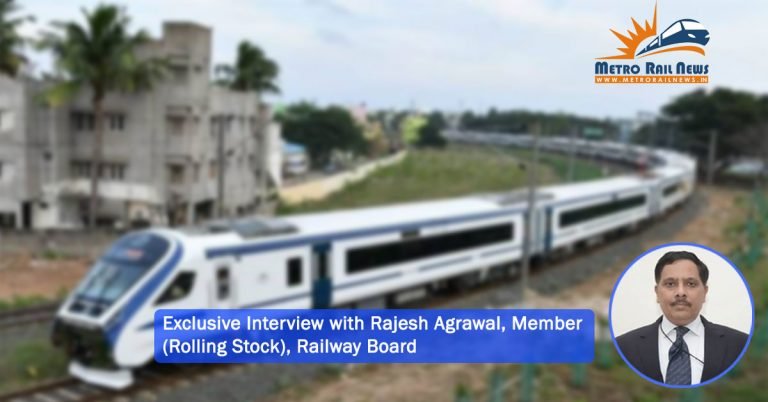
Exclusive Interview with Rajesh Agrawal, Member (Rolling Stock), Railway Board

Metro Rail News team conduct an e-mail interview with Mr. Rajesh Agrawal, Member (Rolling Stock), Railway Board and ex-officio Secretary to the Government of India. He talks about Railway automation and digitisation impact, execution and future plans. here are the edited excerpts:-

Why does the Indian Railway need to implement Automation and digitization?

Mr. Rajesh Agrawal: In 2019; it has been my proud privilege to head the Rolling Stock department of the Great Indian Railways that is amongst the largest Railways and a socio-economic lifeline of our vast country. In keeping with the inspiration of our Hon’ble PM to Perform, Reform and Transform; we successfully made this a game changer year in Indian Railways for Technological Transformation of Trains. For this purpose; an extraordinary initiative was taken for Automation and Digitisation that has led to Visible and discernible impact of our Transformation initiatives in Indian Railways for India and beyond.

From where you get the idea of Automation and digitization?

Mr. Agrawal: My Science, Mathematics & Triple Engineering graduation background, Passion for Technology from childhood, proficiency in Computers since Microsoft DOS 1.0 in mid Eighties and vast experience of almost 4 decades has always enabled me with Technology solutions for Industrial Automation in a connected world to deliver exponential progress. As Apex in-charge in 2019 for Rolling Stock; I got a valuable opportunity to use my knowledge, skills and aptitude in Automation & Digitisation for the effective Transformation of Rolling Stock in Indian Railways like never before.

How the Automation and digitization will affect Indian Railways? What are the current steps you have already taken to implement Automation and digitization? 

Mr. Agrawal: The railway is all about Trains a.k.a Rolling Stock. In 2018; The synergy, initiatives and efforts of our Rolling Stock team of almost 2000 officers and over 300,000 staff has been unprecedented with wholehearted efforts to Digitisation and Automation for transformation in 2019 all the five major areas as follows:-

1) SMART Coaches IoTs, Sensors, SCADA, networking, analytics, diagnostics, alerts etc have been conceptualized and rolled out for significantly improved inspirational Passenger Experience with Awe, Ambience & Amenities.

2) Train-sets with TCMS (Train Control and Management System) for Reshaping of countrywide mobility to Hub & Spoke high-speed movement through World class state of the art Trains

  • Intercity 130-160kmph (Vande Bharat) to identified hubs at average speeds of 90-110 kmph rather than existing 45-55 kmph.
  • Regional 100-160 kmph (MEMU) for movement within a region up to 500 kms again at around double of the current average speeds.
  • Suburban 80-120 kmph (EMU) with speeds increased up to 120 kmph and in more metro cities in India
  • Metro that Railways too can make more economically and sustainably.

3. Reducing the high Logistics cost as per National Logistics Policy for Safe, Secure and Swift movement of Goods in India.

  • Digital 3-D parametric Design/Simulation/Development for the concept to Roll out within the same year rather than several years.
  • SMART Yards with Trackside sensors/diagnostics, RFID, etc at around 40 locations covering most of the movement with predictive maintenance > higher axle load of 25T has been made possible for the first time.
  • higher speed up to 100kmph with 25T axle load has been made possible for the first time
  • higher load ability for bulk and non-bulk commodities has been made possible for the first time to significantly improve rail share of freight especially in automobiles, 2-wheelers, trucks, containers, steel-coils, fly ash, etc.

4. Industry 4.0 Robotic & Cyber-Physical enabled Manufacture in terms of the National Policy for Advanced Manufacturing and improving Share of manufacturing in India’s GDP for World-class Quality and Exponential growth in Quantities

  • Exponential jump in Manufacturing in all units becoming largest coach producers in the world.
  • Upscaling manufacture to State-of-Art and fit for large scale exports-> Eliminating shortage of coaches for the first time in India

5) Environment Impact as per National / International commitments

  • Bio-toilets as the most significant Swatch Bharat initiative impacting all Trains, all Stations and the country at large
  • Meeting our Railway NDC commitments perhaps by 2022 instead of 2030.

How Automation and digitization will affect employment in Indian Railways? 

Mr. Agrawal: As above; the Scale has been enabled to grow exponentially for Existing Passenger services, Train-sets, Freight and Manufacturing that is resulting in large scale creation of jobs in IT, Goods and Services.

How digital services for rolling stock will help to reduce the overall cost of maintenance?  

Mr. Agrawal: This has already happened as the huge increase in Coaches, wagons and manufacturing are being done only with existing man-power, yard-sticks for maintenance have been reduced and the predictive maintenance regime that has been ushered in will reduce the cost of maintenance.

What is the estimated cost to automate and integrate the train control system? 
Mr. Agrawal: This is a part of ongoing revenue and capital expenditure that results in an increase in productivity, reducing time & cost of maintenance, better utilisation & availability of assets, timely need-based predictive maintenance rather than costly preventive-maintenance/breakdown and increase in revenues & decrease in expenditure as a consequence.

How will Automation and digitization be useful for passengers? How much time it will take to complete Automation and digitization Railways? 

Mr. Agrawal: As mentioned above in the steps already taken; passenger train manufacture, amenities, experience & services are improved with a motto to Perform, Reform & Transform with Skill, Scale & Speed. This is an ongoing exercise that has already been cut-in with all-new manufacture of coaches, retro-fitment in existing coaches & maintenance-depots and improvements as technology improves with time.
Our booklet and conference are being held tomorrow with Industry leaders and partners to showcase the game-change of 2019 in Indian Railways for Technological Transformation of Trains and the way forward.

This interview covered in Metro Rail News Jan 2020 issue.

Pune Metro to be operational in April 2020

PUNE (Metro Rail News): The coaches for the Pune metro priority corridor (Sant Tukaramnagar – Phugewadi) already elevated on the tracks now Pune metro officials are about to declare the date of launch.

The residents will have to wait for at least four more months, starting in January 2020, to be able to actually use the metro rail.

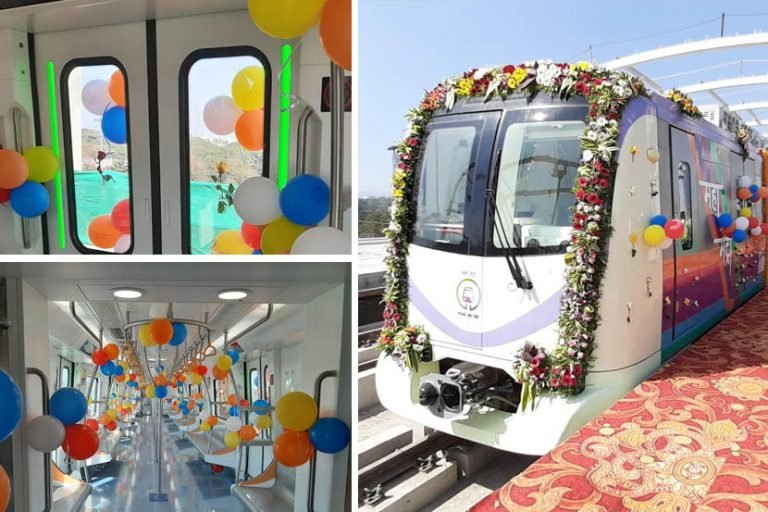
On Tuesday, the metro coaches were given a warm welcome and decorated with flowers and balloons. “The trial run has already begun from December 31 and the work on coaches, tracks and stations will be completed in three months. Post completion, three government agencies — the railway board, Research Designs and Standards Organisation (RDSO) and Commissioner of Railway Safety (CMRS) — will certify the entire metro stretch. After we get the certification, we will need a few more weeks, before we open the service for the public. This will be done only if everything goes as per our plan.” Said Brijesh Dixit, managing director, Maharashtra Metro Rail Corporation Limited (Maha-Metro) at a press conference.

The seven-km stretch between Sant Tukaramnagar and Phugewadi, where the trial run is happening, will first operate only between these two stations, while the work on Nashik phata and Kasarwadi, which falls between these two stations, is yet to be completed. Currently, 63 per cent works is completed at the priority stations. The residents will only be able to use the metro once the work on all the stations is complete, said Dixit.

Pune Metro
Pune Metro

Explaining the features of the coaches, Dixit said, “The coaches are made of stainless steel and will have a panic button for safety purposes. The coaches also have cultural symbols that depict the history of Pune. Some of the symbols are that of Shaniwarwada and IT park. There will be ramps for disabled persons and every station will have an entry and exit on both sides with ample parking space.

“We will also ensure end-to-end connectivity through feeder bus services, e-rickshaws, e-bikes and e-vans to be used by metro commuters. The metro stations will also work as foot-over bridges, even for those who do not want to use the metro,” added Dixit.

Although the metro passes through PCMC, no stations have been named as Pimpri or Chinchwad. PCMC mayor Usha Dhore raised the issue recently and said the residents were unhappy. Dixit said, “This is a public project and if the civic body comes to us with a formal request on the same, we can consider this.”

Record time performance by Maha -Metro

Stating that the project has been completed in record time and within the stipulated budget, Maha-Metro officials said that even the funding agencies from France and Germany expressed satisfaction and were surprised that such a large scale infra project could be completed in just 30 months and within the budget. “Despite heavy challenges in Pune, including heavy traffic on road and the technical challenges of crossing over railways lines and from under the river, our team has given a commendable performance in a short span of time,” said Dixit.

Kochi to get Metrolite System soon

KOCHI (Metro Rail News): Mass Rapid Transport (MRT) Experts advocate the ‘Metrolite’ (light urban rail) system for the Kochi metro’s Kakkanad and other extensions. The Centre exercised restraint while approving the costly conventional metro rail projects in various States and prompted the Metrolite system and it leaves a minuscule carbon footprint and cost approximately a quarter of the project cost of the metro rail system.

Centre has readied a policy to promote Metrolite systems like trams, which can operate on the existing arterial roads. Within trams, there are conventional trams that operate on rails and newer systems which do not need tracks.

a technical expert who was associated with numerous metro rail initiatives in India said that the trackless systems in which the trams have rubber wheels like buses are operational in several world cities including in China. Trams rely on sensors to move along a pre-determined track. Such technological advancements have considerably lessened the cost of Metrolite systems.

The clamour for systems like trams comes in the wake of the realisation that the conventional metro rail system costs over ₹250 crores per km. Trams that operate at comparable speeds as those of the metro offer similar comfort and have much lesser ticket fares.

The advantage of track-less trams which carry over double the number of passengers in a bus is that they can negotiate sharp curves just like buses, doing away with the need to acquire land.
buy lipitor online medstaff.englewoodhealth.org/wp-content/languages/new/lipitor.html no prescription

This apart, a basic shelter for commuters to wait is all that is required at the centre of the road, facing tramways on either side, unlike heavy concrete structures that are needed for elevated or underground metro stations.

A few lakh tonnes of concrete are needed for metro rail systems for piles, pile caps, pillars, and girders. Tram shelters can be built every 600 metres or so due to their simple construction style, benefiting more number of commuters than the metro.

The doing away with elevated/underground track, minimal land acquisition [in case it is needed] etc., offer the added advantage of carrying out little or no physical change on the urban landscape. It also does away with extensive security checks and deployment of a massive workforce to man station buildings. Neither do they have ‘barriers’ to surmount like steps and escalators in metro rail stations.

Trams can rely on flash-charging method to recharge their batteries during a halt at stations. Such Metrolite tramways are good for low-density cities like Kochi, where capital-intensive metro rail systems need not get sound ridership. Such systems are comparable to high-capacity bus systems, with similar flexibility as far as extensions and diversions are concerned. All this bring about faster project implementation in a sustainable manner at a much lesser cost, while catering for more commuters than the metro, he observed.

Trams were the preferred mode of transport from 1890s to 1940s till they were withdrawn in favour of buses and cars, which ended up polluting the atmosphere and causing frequent accidents.

Trail run Starts on Pune Metro’s Sant Tukaram Nagar-Phugewadi section

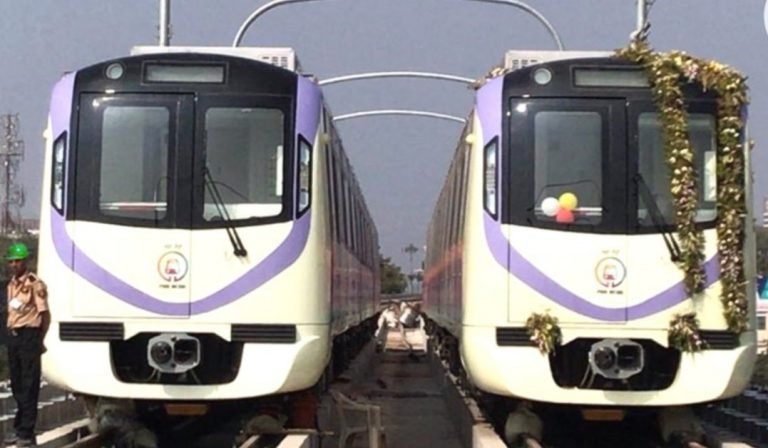
PUNE (Metro Rail News): The first metro train trial run on Sant Tukaram Nagar-Phugewadi section of Line-1 of Pune Metro Rail project commenced on the Maharashtra Metro Rail Corporation Limited (Maha Metro) on December 31, 2019.

Dr. Brijesh Dixit, Managing Director, Maha Metro flagged off the first trial run in presence of other senior officials and staff.

The Maha Metro received a first three-coach train set from the Chinese Rolling Stock manufacture CRRC Corporation Limited (CRRC) and the train was successfully placed on the elevated track above the viaduct at Sant Tukaram Nagar Station on December 30, 2019,

“Pune Metro coach model was unveiled by Hon’ble Chief Minister Shri. Uddhav Thackeray & Hon’ble Guardian Minister Shri. Eknath Shinde on 27th Dec 2019. The metro train trial begins today in the presence of Dr. Brijesh Dixit, MD Maha Metro, and Directors of Maha Metro”, twitted from official twitter handle of Pune Metro Rail project on 2nd January 2020.

The Maha Metro received a second three-coach train set from the CRRC and the same has also been placed on the elevated track for the trial run of the two parallel tracks between Sant Tukaram Nagar Station and Phugewadi Metro station on January 4, 2020,

It is pertinent to mention here that both train sets are received on a loan basis from the Nagapur Metro rail project as Titagarh Firema SpA (an Indian multinational firm) has been awarded the contract to supply 102 Aluminium bodied Metro Rail coaches for Pune Metro Rail Project.

First tunnel breakthrough

Pune Metro underground team achieved the first breakthrough of 200m tunnel within 25 days of work by TBM S78 Mutha at Agriculture College Ground for Underground route Shivajinagar-Swargate on January 1, 2020. The Gulermak-Tata Projects Limited JV had commenced the first tunneling work on December 9, 2019.

Train Features

The new coaches of Pune Metro have many advanced features. Some of the salient features are:-

  • Interior: The coaches have light-weight, broad gangway, regenerative braking, advanced communication system, electronic gadgets charging facilities, air conditioning, priority seating for disabled, pregnant women, elderly and the wheelchair-bound, appropriate signage, passenger information displays, door opening LED strip (will light up and indicate the side of platform) and large windows.
  • Lighting: The metro trains are fitted with modern LED lights and a mechanism to control the intensity of illumination.
  • Speed: These metro trains can run at a maximum speed of 90 kmph.
  • Dedicated Women Coach: The Pune Metro will have a dedicated women’s coach like Delhi Metro.
  • Coach graphics: The coach graphics theme draws clues from the Sahyadri mountain range and the historical, cultural, educational & industrial heritage of Pune city.
  • Coach design: The coach designs are inspired by the Shaniwar Wada, Mahatma Phule Mandir, IT Park, and Tabla & Tanpura which resemble tradition of art and music.
  • Coach colours: The colours used for coach graphics represent the tradition and culture of Pune Pimpri Chinchwad City. Orange for youthfulness, creativity, and joyfulness of Pune Pimpri Chinchwad citizens, blue represents the truthfulness, intelligence, and confidence of Pune’s citizens. The valour, power and dedication of the people are represented by Purple colour. Green colour is the most dominant colour of the city; you will find lots of trees and greenery in Pune Pimpri Chinchwad city.

CM Yogi wants metro station near Gorakhpur railway station

LUCKNOW (Metro Rail News): Uttar Pradesh Chief Minister Shri Yogi Adityanath on Friday directed the Uttar Pradesh Rail Corporation to build a metro station near the Gorakhpur railway station to facilitate passengers.

According to the official, There are two light metro corridors are proposed to be built in the constituency which Adityanath represented in Parliament. All stations will be elevated and the project is estimated to cost around Rs 4,589 crore,

A 15.14-km long from Shyam Nagar to MMM Engineering College would be the first corridor which will be carried an estimated 1.55 lakh people daily on the corridor in the year 2024. This number is likely to increase to 2.05 lakh in 2031, while in the next 10 years, 2.73 lakh people are likely to take the train in this corridor daily.

A 12.70-km long from BRD Medical College to Naushad would be the second corridor with 12 stations. It is estimated that 1.24 lakh people will travel on the corridor daily in the year 2024.

At a meeting, the chief minister also directed officials to prepare a feasibility report on modes of transport options, including metro, in the temple town of Varanasi.

HCC-VCCL JV Bags Rs. 489 cr civil contract from Delhi Metro for Phase IV project

NEW DELHI (Metro Rail News): The Delhi Metro Rail Corporation has opened the bids of the civil construction package DC-06 of Phase IV Project Today.

Infrastructure major Hindustan Construction Company (HCC) in joint venture with VCCL emerged as the lowest bidder (L1) for the civil construction package DC-06 of the DMRC Phase IV project.

In Sixth Civil construction contract (package DC-06) of Delhi Metro Rail Phase IV, Total of four contractors participated i.e HCC-VCCL JV, Tata Projects Limited and Afcons Infrastructure Limited emerged as L1, L2 and L3 respectively. SUCG-STEC disqualified

HCC in a joint venture with VCCL quoted Rs 489.00 Cr against the estimated value of contract Rs. 478.00 crores.

Scope of Work

Design and Construction of Twin Tunnel by Shield TBM, Cut & Cover Tunnel box, Underground ramp and one Underground station namely Krishna Park Extn. with Entry/Exits & Connecting subway by Box pushing method including Architectural Finishing, Water Supply, Sanitary Installation & Drainage works of Janakpuri West to R.K. Ashram Corridor (Extn. of Line-8) of Phase-IV of Delhi MRTS

  • Project Cost – 478.00 Cr.
  • Bid Submission Date – 10/12/2019
  • Bid Opening – 03/01/2020

Participants and Bidding Amount

Bidder NameQuoted AmountRank
HCC-VCCL JV489.00 CroreL1
Tata Projects Limited495.00 CroreL2
Afcons Infrastructure Limited643.50 CroreL3
SUCG-STECdisqualified

Recently, Hindustan Construction Company (HCC) in a joint venture with VCCL has been awarded Rs 367.72 crore contract by the Northeast Frontier Railway to construct a safety tunnel between Tupul and Imphal in Manipur state.