Home Blog Page 58

CMRS to Inspect the Yellow Line of Bangalore Metro Project

0
Bangalore Metro
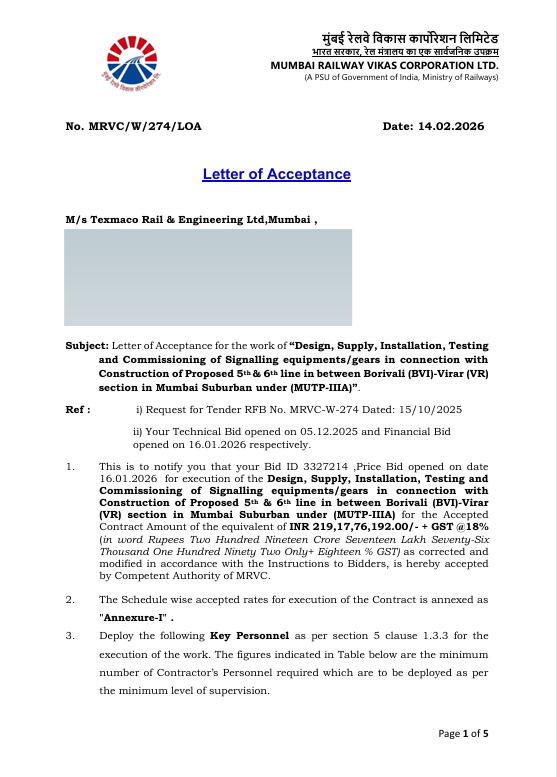
Bangalore Metro (Representational; Image)

BANGALORE (Metro Rail News): The long-delayed Yellow Line of Bangalore  Metro is finally on track for completion, with the Commissioner of Metro Railway Safety (CMRS) scheduled to inspect the corridor between July 22 and 25, as reported by Hindustan Times. The Yellow Line of Bengaluru Metro Phase 2 spans 19.143 km from RV Road to Bommasandra through 16 stations. 

The CMRS office has confirmed that the inspection of the Yellow Line will be carried out in multiple phases. 

  • The primary inspection of the new segment, extending from RV Road to Delta Electronics Bommasandra, is scheduled to take place from July 22 to July 24. 
  • A subsequent inspection and evaluation of the Operations Control Centre is planned for July 25.

Once the approvals from the CMRS are secured, the Bangalore Metro Rail Corporation Limited (BMRCL) is anticipated to finalise operational activities following consultations with both the Union and State governments of Karnataka. 

The trains on the Yellow Line are preparing for full operational status across all 16 stations, with services scheduled to run at 24-minute intervals. A limited initial operation will serve just seven stations.

Following CMRS approval, commercial operations will commence on the Yellow Line.

To get real-time updates on metro and railway tenders, join our WhatsApp Community  https://chat.whatsapp.com/FhRoGfM8zUl4secYj1ZQDT

Advertisement1
InnoMetro_2026

Bids Re-Invited for Electrification Contract of PCMC -Nigdi Stretch of Pune Metro

0
Pune Metro

PUNE (Metro Rail News): Maharashtra Metro Rail Corporation (Maha-Metro) has re-invited the bids for the electrification contract of the PCMC-Nigdi section of the Purple Line of Pune Metro Project. This section spans 4.15 km and features 4 elevated stations. This stretch was approved in 2023 at an estimated cost of Rs. 910.18 crore.

Maha Metro’s brief scope of work: Design, Supply, Installation, Testing & Commissioning Of 25kV Flexible Overhead Catenary System, associated 25kV Sectioning Posts, 33kV Auxiliary Sub-Station (ASS), associated Cabling And S~ADA Systems PCMC-Nigdi Elevated Extension of Pune Metro Rail Project.

Pune Metro Map


Originally, the bids for this contract were invited in February 2025 by Maha Metro. In the revised version, Maha Metro has increased the EMD of this contract. 

Tender ID: P1A-TR-03/2025(R)

Pre-bid meeting: 28 July 2025

EMD: Rs 26,60,000

Bid-submission deadline: 11 August 2025

The appointed contractor is required to complete the assigned works within a Completion Period of 110 weeks from the date of issuance of the Letter of Acceptance (LOA).

Pune Metro’s Purple Line spans 16.59 km between Pimpri Chinchwad Municipal Corporation (PCMC) and Swargate, covering  12 stations, and is currently operational. Later on, the northern extension and southern extension of the Pune Metro’s Purple line were planned to enhance connectivity in Pune. 

Pune Metro’s Purple Line 
Line Route Length Stations Status 
Orignal Line PCMC – Swargate 16.59 km12 StationsOperational 
Northern Extension PCMC to Nigdi 4.413 Km4 Stations Under Construction 
Southern Extension Swargate – Katraj(5.464 km3 Stations Under Implementation 

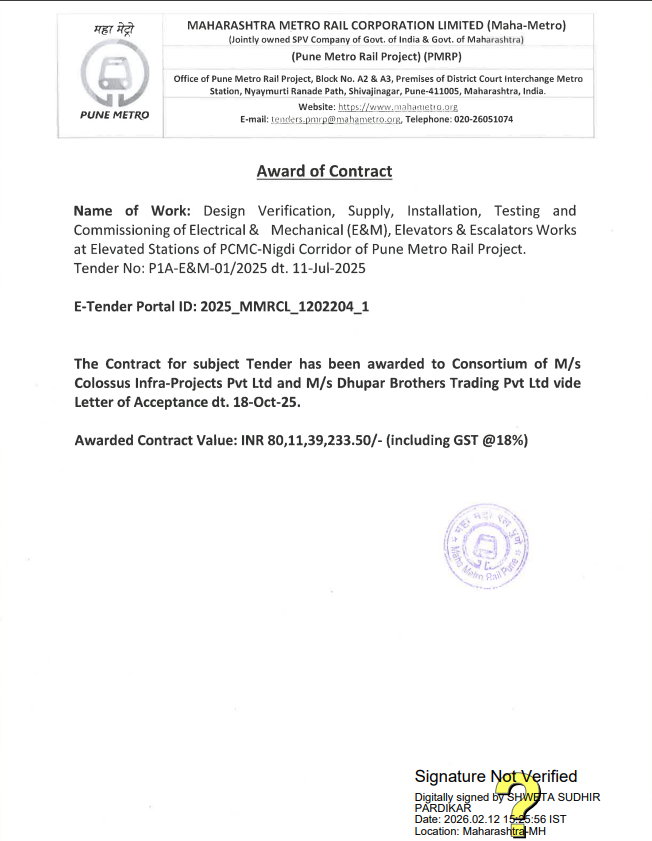
Recently, Maha Metro issued bids for the E&M works at elevated stations of the PCMC-Nigdi section (see full details here)

To get real-time updates on metro and railway tenders, join our WhatsApp Community  https://chat.whatsapp.com/FhRoGfM8zUl4secYj1ZQDT

Advertisement1
InnoMetro_2026

Ministry of Railways Approves New Railway Line in Odisha

0
Railway

ODISHA (Metro Rail News): The Ministry of Railways has approved the construction of a 4th Railway Line between Ranital Link Cabin and Bhadrak station in Odisha. This new line will span a distance of 5.06 kilometres and has been sanctioned at an estimated cost of ₹149.32 crore.

The project aims to increase line capacity and operational efficiency along this crucial section. The new line will streamline the freight connectivity to important ports like Dhamra and Paradeep.

The Ranital Link Cabin–Bhadrak section is situated on the critical Howrah–Chennai main line. The corridor currently operates under high traffic density, which results in frequent train delays. This has a direct impact on the punctuality and reliability of both passenger and freight services.

The sanctioned fourth line over a 5.06 km stretch is designed to reduce congestion by enhancing the line capacity and enabling the decongestion of existing up and down main lines. Once commissioned, the additional track will reduce the headway between trains.

A key technical outcome of the project is the segregation of freight and coaching traffic, which will optimise throughput and minimise inter-traffic interference. This operational bifurcation will help to improve the overall average sectional speed.

Furthermore, the project will augment the corridor’s capacity to handle higher train volumes, aligning with the anticipated growth in traffic due to increased industrial, agricultural, and passenger movement in the region.

This project is a critical component of East Coast Railway’s ongoing infrastructure upgradation programme, which aims to develop a future-ready, high-efficiency rail network in Odisha that meets global standards of reliability and performance.

Advertisement1
InnoMetro_2026

PM Modi Launches 4 Amrit Bharat Trains in Bihar

0

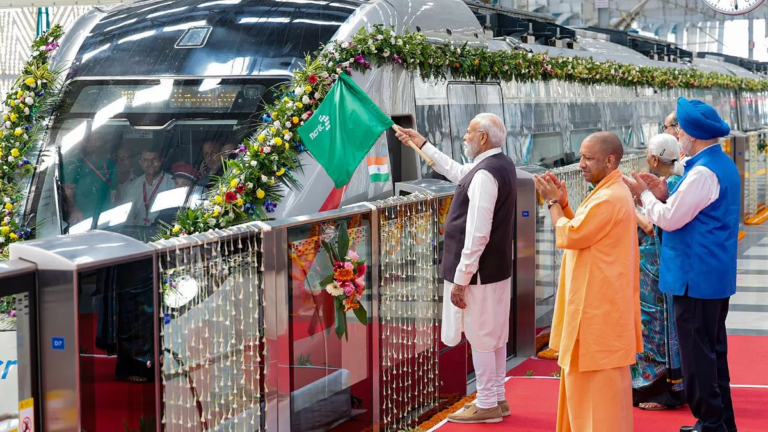
BIHAR (Metro Rail News): In a move to streamline connectivity in Bihar and provide affordable train services, Prime Minister Shri Narendra Modi launched 4 new Amrit Bharat Trains on 18 July.  The non-ac Amrit Bharat trains are specifically designed to serve the economically weaker sections.

GwIBQo6bMAAjK5s


As of now, two Amrit Bharat Trains are operational in Bihar. One train commenced its service in 2023, connecting Darbhanga with the Anand Vihar Terminal in Delhi. The second train, which began operations on April 24, 2025, operates between Lokmanya Tilak Terminus in Mumbai and Saharsa.

The newly introduced Amrit Bharat Trains represent an upgraded iteration of the initial services. These latest trains are equipped with contemporary features designed to enhance passenger comfort and convenience.

The newly launched Amrit Bharat Trains will run on the following routes: 

Train RouteDistance (approx.)Fare (Sleeper Class)Service Start DateFrequency
Rajendra Nagar (Patna) – New Delhi~1,000 km₹560July 31Regular
Bapudham Motihari – Anand Vihar (New Delhi)~1,000 km₹555To be announcedTo be announced
Darbhanga – Gomti Nagar (Uttar Pradesh)Not specified₹415 July 26Regular
Bhagalpur – Gomti Nagar via Malda Town (Weekly)Not specifiedNot specifiedJuly 24Weekly

The Amrit Bharat trains are engineered to achieve a maximum speed of 130 kilometres per hour. Indian Railways intends to produce an additional 100 Amrit Bharat rakes to enhance the provision of safe, rapid, and comfortable travel for the middle class and economically backwards population.

 These trains are designed with an air spring body that ensures a smooth travel experience devoid of shocks. Additionally, the Amrit Bharat trains are outfitted with modern toilet facilities tailored for individuals with disabilities. In terms of safety, the Amrit Bharat trains incorporate several advanced features, including a semi-automatic coupler equipped with a crash tube, an EP-assisted braking system, a sealed gangway, a vacuum evacuation system, a talk-back unit in every coach, and a comprehensive fire detection system.

Advertisement1
InnoMetro_2026

IRCON-JPWIPL JV Bags ₹755.78 Crore Railway Contract 

0
Indian Railways

MADHYA PRADESH (Metro Rail News): Rail Vikas Nigam Limited (RVNL) has issued a Letter of Acceptance (LoA) to the IRCON International Ltd.–JPWIPL Joint Venture for the execution of civil works for a new broad-gauge railway line from Pipaliya Nankar (excluding) to Budni (including), falling under the Indore–Budni section of the West Central Railway zone. The contract amounts to ₹755.78 crore.

IRCON Railway

Scope of work: Under this contract, IRCON is responsible for the Construction of Roadbed, Minor Bridges, Buildings, Installation of Track (Excluding Supply of Rails, Sleeper, & Thick Web Switches), and other Civil Engineering and General Electrical Works in connection with New BG Railway Line Between Pipaliya Nankar (Excl.) Budni (Incl.) Stations (Chainages 129.000 198.000 Km) in Indore-Budni section of Bhopal Division West Central Railway in Madhya Pradesh State, India.

The scope of the item rate contract includes a 36-month execution timeline, followed by a six-month defect liability phase to ensure quality and performance.

The total contract value stands at ₹755.78 crore (inclusive of GST). Under the joint venture arrangement, IRCON holds a 70% equity stake, corresponding to a contractual share of ₹529.04 crore, while the remaining 30% share, amounting to ₹226.74 crore, is allocated to JPWIPL.

Apart from this contract, IRCON International Limited has also secured two additional contracts worth ₹1,113.7 crore from the Mumbai Metropolitan Region Development Authority (MMRDA) for electrical works on Mumbai Metro Line 5 and Line 6. [Read more here].

Advertisement1
InnoMetro_2026

IRCON Bags ₹1,113.7 Crore E&M Contracts for Mumbai Metro Line 5 & Line 6

0
Mumbai Metro
Representational Image

MUMBAI (Metro Rail News): IRCON International Limited has received a Letter of Acceptance from the Mumbai Metropolitan Region Development Authority (MMRDA) for two major contracts of Mumbai Metro Lines 5 & 6. The total value of the two contracts awarded to IRCON International Limited stands at ₹1,113.7 crore, comprising ₹471.29 crore for Package CA-239 (Metro Line 5) and ₹642.44 crore for Package CA-233 (Metro Line 6).

Contract for Line 5: IRCON International Limited has secured Package CA-239 for Mumbai Metro Line 5 at a contract value of ₹471.29 crore. The project entails a construction period of 108 weeks, followed by a two-year defect liability period and five years of comprehensive maintenance.

Package CA 239

MMRDA’s Scope of Work for Package CA-239: Design, Manufacture, Supply, Installation, Integration, Testing And Commissioning of 220 kV receiving Substation Including 220 kV, 33kV & 25kV Cabling Work, Complete 25kV Overhead Catenary System along with switching station, 33kV Auxiliary Power Distribution System Including 33/0.415 kV Auxiliary Sub-Station (ASS) And Complete SCADA System, Electrical and Mechanical works, Lift & Escalator Works for part of Main Line, Stations & Kasheli Depot of Mumbai Metro Rail Line 5 Project of MMRDA Including 5 Years of Comprehensive Maintenance after 2 Years of Defect Liability and Maintenance Period.

Contract for Line 6: The Mumbai Metropolitan Region Development Authority (MMRDA) has issued a Letter of Acceptance to IRCON International Limited for the execution of Package CA-233 related to Mumbai Metro Line 6. This package, which primarily involves electrical and system works, is valued at ₹642.44 crore.

Package CA 233

MMRDA’s Scope of Work for Package CA-233: Design, Manufacture, Supply. Installation, Integration, Testing and Commissioning of Power Supply and Traction, E & M. Lifts & of Escalators including 5 Years Comprehensive Maintenance after 2 Years of Defect Liability Maintenance Period of Line 6 [Swami Samarth Nagar to Vikhroli (EEH)] of Mumbai Metro Rail Project of MMRDA.

Advertisement1
InnoMetro_2026

Monetising Railway Infrastructure: A Journey Towards Self-Sustaining Indian Railways

0
Representational Image only

Railway Infrastructure has been acting as the backbone of India because of its accessibility and capability to serve each domain of society. In addition, this massive railway infrastructure is also contributing to the growth and economic performance of the country. The improved quality of the results leads to increased employment opportunities, access to market and materials, improved quality of life and empowerment of vulnerable sections.

Acknowledging the importance of railway infrastructure, the Government shifted its focus to continuing investment and gradually increasing its pace to deliver better infrastructure that can not only address the growing demand of commuters but also help the nation to meet its economic goals.

Asset Monetisation in Railways

Asset monetisation in the railway sector constitutes the strategic process of deriving value from existing railway assets to generate revenue without the outright sale of these assets. This approach involves facilitating investment, operation, or development of these assets by private or public entities through structured agreements such as long-term leases, public-private partnerships (PPPs), or concession contracts.

Why is There a Need for Monetisation in the Railways?

Over the years, the union government has strategically increased the funds for the railway sector to improve the infrastructure and streamline the overall rail operations. For example, in 2025-26, capital expenditure is estimated at Rs 2,65,200 crore, the same as the revised estimate for 2024-25. However, despite the allocation of these substantial amounts, some shortcomings can be effectively addressed by the monetisation of railway assets. It can help to unlock the value of existing railway infrastructure to generate non-fare revenue and reinvest in critical upgrades.

Mobilising Funds for Infrastructure Expansion: Indian Railways has ambitious plans to expand its network and modernise its infrastructure. These require massive capital investment, which can be acquired through the monetisation of railway assets. In addition, it allows IR to use underutilised assets (stations, land parcels, etc.), attract private investment and reduce dependence on budgetary support or borrowings.

Improved Operational Efficiency: Through the inclusion of private firms through Public-Private Partnerships (PPP), the railway sector can improve service quality, introduce innovation and modern management practices and reduce delays in project implementation.

Unlocking Value from Non-Core Assets: Indian Railways owns vast land banks, stations, quarters, and freight terminals. Monetising these assets helps realise their full economic potential, which can further support IR in its endeavours to modernise railway infrastructure.

Achieving Self-Sustainability: With increasing pressure to reduce subsidies and operate on a commercially viable model, monetisation can help in generating steady, long-term revenue and reduce the fiscal burden on the government.

Improving Passenger Amenities and Freight Services: Revenue generated through monetisation can be redirected to modernise passenger coaches and terminals, upgrade safety features and improve logistics and multimodal connectivity.

Provision of Asset Monetisation in National Monetisation Pipeline (NMP):

Monetisation of Assets was considered one of the three pillars for more sustainable infrastructure financing in India under the Union Budget 2021-22. The Budget also envisioned the formulation of a “National Monetisation Pipeline” (NMP) to give guidance to the monetisation programme and investor visibility. NITI Aayog was entrusted to create a National Monetisation Pipeline (NMP) for brownfield core infrastructure assets.

The National Monetisation Pipeline (NMP) was designed to align with the remaining period of the National Infrastructure Pipeline (NIP), spanning four years from FY 2022 to FY 2025. During this period, the total indicative value of assets identified for monetisation under the NMP was estimated at ₹6.0 lakh crore. A sector-wise analysis reveals that a portion of this value is concentrated in just five key sectors, which together account for approximately 83% of the total pipeline. These top five sectors are:

  • Roads – 27%
  • Railways – 25%
  • Power – 15%
  • Oil & Gas Pipelines – 8%
  • Telecom – 6%
AD 4nXcXlWY5IJbeFwtgP1qBj0G7k12Q0ll2ma1XZ5uxCc9n9IZW MVUVRXwQGJ nJP9gKYiF 5g7YK2EA LzWB UxAqNjqoD3WDQXuTSb5kpUpaKtKmKUDinlhA61kK1X5XPOfaVKHmwCvfoezOJ8KRpA?key=GaRgm Nv0kNrYsACt25lzAAD 4nXfPXn3XY M7fqIf8PvNyXtDeTnB fwIKt0 NPqfhZtdezmDhBt7nZ6F5OBFeYK0XpEc4NFqPh76a9R7aqx xlD5vK1AwU6NIk KlKBPWEHYBPNT18BJaMIO Y IcHYishsLSKRMbYCnWk4KG9it00?key=GaRgm Nv0kNrYsACt25lzA

Potential Asset Base for Monetisation 

Indian Railways (IR) has about 135,207 kilometres of total track covering a route length of 69,181 km. Indian Railways is actively engaged in enhancing its railway infrastructure to enable efficient freight and passenger transportation. However, substantial capital investment is required to address existing capacity constraints. The Potential Asset Base includes assets owned and operated by the Ministry of Railways (MoR), which entail identified Public Sector Undertakings (PSUs) and other entities under the MoR. 

Railway Assets Considered for Monetisation Under NMP

AD 4nXcAjP738qRSr 61F4SC3bNkIwSBMgtVKGzgvLJselLQmPVYdvIwB9LrHsssFJHmkpzK14Fq6gksLRRbJgQ0hNIJAZKNXVpcNYanKDRqFk0JhrVqUrK1zRINNMjJ5jKYL9fsxVqoSVxzaJj6y8E0xA?key=GaRgm Nv0kNrYsACt25lzA

Station Redevelopment Programme 

    Indian Railways launched the station redevelopment plan to provide world-class passenger amenities, making them hubs of economic development and re-establishing them as the nerve centres of cities. The Railway Station Redevelopment Program, launched by the Government of India, targets the modernisation of 400 stations across the country with a total investment of ₹1 lakh crore.

    To streamline implementation, stations have been categorised based on their commercial viability and expected scale of development: 

    Category Number of Stations CriteriaCriteria 
    Tier 150 High commercial potential, major cities
    Tier 2100Medium-scale urban nodes
    Tier 3250Smaller stations with basic potential

    Passenger Train Operations under Monetisation Framework

      As part of the National Monetisation Pipeline (NMP), Indian Railways has included passenger train operations as one of the asset classes identified for private sector participation. This initiative was strategically placed to attract investment and improve service efficiency through structured public-private partnerships. During the NMP period (FY 2022–2025), around 90 trains (about 60%) were targeted to be made operational under private operators.

      Project Scope

      The plan involves allowing private operators to run trains on selected routes. Key details include:

      • 12 clusters have been identified, covering around 109 origin-destination (O-D) route pairs.
      • These routes are expected to support approximately 150 passenger trains.

      Despite Indian Railways’ efforts to attract private participation in passenger train operations, the initial tender issued in 2021 received a limited response from the industry. Only two entities, IRCTC and Megha Engineering & Infrastructures Ltd., submitted bids during the financial stage. In response to the muted interest, the Railways revised the bidding terms in 2022 to make the project structure more viable. However, concerns related to ridership risk, high haulage charges, and limited flexibility in fare setting continued to affect investor confidence.

      Track, Signalling, and Overhead Equipment (OHE)

        As part of the National Monetisation Pipeline (NMP), Indian Railways proposed monetising its existing infrastructure, which includes track, signalling systems, and overhead electrification (OHE) through an Infrastructure Investment Trust (InvIT) model.

        The goal was to bundle these assets across selected railway routes into a single monetisable package. Currently, these assets are in regular use by Indian Railways, but there is potential for allowing access to private operators in the future under defined terms.

        Private Freight Terminals (PFTs)

          Indian Railways manages around 1,246 railway-owned goods sheds, as per the Draft National Rail Plan (NRP) 2020. Under the National Monetisation Pipeline (NMP), a portion of these goods, approximately 265, or 21% of the total, have been identified for monetisation by encouraging private sector involvement in their augmentation and operation.

          Monetisation of Track & Allied Infrastructure of the Dedicated Freight Corridor of DFCCIL 

            AD 4nXcW1e m UopYEZFKiaI0tyk r eV vNt9L7y1Is0hRblEcWubAPHyBufUWIm4Jyusbdt XHSA4ZX9tpDcTlBfVnJ1WW3sCAalkZ1JKc9Pn8Jq18zE79mr1jNf7EG3J gYTbhj27ioT7nJcBaXoWZc?key=GaRgm Nv0kNrYsACt25lzA

            DFCCIL, a Public Sector Undertaking operating under the Ministry of Railways, was established in 2006 to mitigate the significant congestion and inefficiency prevalent in India’s existing railway network, particularly concerning freight transportation. The Eastern Dedicated Freight Corridor, which encompasses approximately 1,337 kilometres, has already been commissioned. Conversely, the Western Freight Corridor, stretching 1,506 kilometres, is nearing operational status, with the last section anticipated to be commissioned by December 2025.

            AD 4nXeC1SX5XK3zHUr9Tsi3 h 6H7xoSMINQQtfNoZQejaXGwtWnQoiEzBUzFCtKptnR50TTZCzdf1CPAJXfTQSfkUaj uE9hlrWP dQjR95UQG6FFJ4RKbwHwTAQEHlgJd7njmqHSiyD0zKA6G1vGdFzc?key=GaRgm Nv0kNrYsACt25lzA

            Under the National Monetisation Pipeline, it is projected that the Dedicated Freight Corridor Corporation of India Limited (DFCCIL) will monetise 673 kilometres of track. This will be accomplished either through the granting of Transfer of Track (TOT) concessions to private entities or by executing an Infrastructure Investment Trust (InvIT) transaction, with revenue generated in the form of Track Access Charges, commencing from the fiscal year 2024.

            The National Monetisation Pipeline has outlined two potential instruments for the monetisation of the dedicated freight corridor:

            • Infrastructure Investment Trust (InVIT) 
            • Carry Operate Transfer (COT) Concession.

            Indicative Transaction Structure and Terms: COT Concession

            AD 4nXecaL4odd5jqTDLTkDfwh6DPiOPyHRvqNyVaBV klyZDk9Elj4Q0G3 PtEI0CQNoYZlbtpt8qkRKG1IhnT7HJs7KNwkmGTtLX0FSZszckNFLU9mlmL8uKMMDj3xyQgfI42cLVZJmqu3yLhC4fbQpOE?key=GaRgm Nv0kNrYsACt25lzA

            Railway Asset Monetisation Target under National Monetisation Pipeline

            The Indian Railways is one of the largest state-owned enterprises in the country, owning vast infrastructure across land, tracks, stations, rolling stock, and utilities. To use this extensive asset base, the Government of India introduced the National Monetisation Pipeline (NMP) in August 2021. The NMP featured a structured framework for monetising core assets over four years from FY 2022 to FY 2025, in alignment with the broader National Infrastructure Pipeline (NIP).

            Under this framework, Indian Railways was assigned a monetisation target of ₹1,52,496 crore, which accounts for nearly 26% of the total NMP value of ₹6 lakh crore

            Breakdown of Monetisation by Asset Type

            The following key asset categories have been identified for monetisation under the Railway component of the NMP:

            S.No.Asset typeFY22 (₹ Cr)FY23 (₹ Cr)FY24 (₹ Cr)FY25(₹ Cr)Total (₹ Cr)
            1Railway station development1700029325175751235076250
            2Passenger train operations70027212742821642
            3Track – OHE InvIT1870018700
            4Good Sheds1575210018905565
            5Konkan Railway72817281
            6Hill Railways460170630
            7Dedicated Freight Corridor100891008920178
            8Railway Colonies redevelopment3504506508002250
            Total (Rs crore)17,81057,22244,90732,5571,52,496

            Yearly Asset Monetisation Target for Indian Railways

            AD 4nXfGTrbMJ riuG7favORGVKssnhyeAy7OyjFEGDhOLNE8baZamiZE7FHpVLjWjFoCnD8Q8hcwek2Fw4crdTKE0rLppMICzlYqCpkpse3SaAGeQScWZfuBn8fKZtKHrKrXq5ERpc2DbY5zfeArTAAfQ?key=GaRgm Nv0kNrYsACt25lzA

             Pipeline phasing – Railway Assets (Rs crore)

            Assessing the Progress of Railway Asset Monetisation 

            Despite comprehensive planning, the initiative to monetise railway assets has not succeeded in generating the anticipated revenue under the National Monetisation Pipeline (NMP). The Indian Railways established an ambitious target of raising ₹1.52 lakh crore through asset monetisation during the NMP period from fiscal year 2021 to fiscal year 2025. 

            However, the actual revenue generated has fallen short of expectations. According to data provided by the Ministry of Finance in the Lok Sabha on August 5, 2024, Indian Railways has raised only ₹28,717 crore for four years.

            Breakdown of total amount:

            ₹20,417 crore was accrued cumulatively between fiscal years 2021–22 and 2023–24.

            An additional ₹8,300 crore was generated in fiscal year 2024–25.

            The provided statistics indicate that Indian Railways has not met its target of ₹1.52 lakh crore, falling short by ₹1.23 lakh crore. Furthermore, this situation outlines the complexities of regulation, the lack of a structured framework, and the absence of a dedicated regulator in the sector, all of which have deterred private sector participation.

            Challenges Encountered in Monetising the Railway Assets

            There are several factors that have hindered Indian Railways from achieving its projected targets for asset monetisation. The following outlines the challenges encountered in the monetisation process, particularly concerning the station redevelopment program and private train operations, which are central to this initiative.

            Hurdles in Railway Station Redevelopment Programme: 

            Lack of a Structured Framework

            The redevelopment of railway stations constituted approximately 50% of the total projected revenue from asset monetisation. However, the monetisation framework established for the period from fiscal year 2021 to fiscal year 2025 lacked a thorough consultation process and did not include comprehensive recommendations from the railways. Consequently, this inadequacy hindered its ability to attract private investors effectively. 

            The Negotiation Gap Between Indian Railways and Private Entities

            The private businesses that came forward to develop and operate the railway stations expressed a demand for higher returns on the investment. In addition, they asked for better control over the pricing of tickets and the scheduling of trains. However, Indian Railways was unable to accommodate these demands, which affected the private participation.

            PPP vs EPC Model 

            Initially, the NITI Aayog advocated for the public-private partnership model to implement the station redevelopment program. However, this strategy did not prove effective, as it failed to attract private entities to participate in the project. Subsequently, an alternative approach was adopted, leading to the railway authority awarding projects based on the engineering, procurement, and construction (EPC) model.

            Absence of a Regulator

            A critical element that deterred private entities from actively engaging in the station redevelopment program is the lack of an independent regulatory authority in the railway sector. This absence has created uncertainty for potential investors, particularly concerning timely financial settlements, fare-related decisions, and a mechanism for conflict resolution. In large-scale projects which involve substantial capital, regulatory transparency is paramount for credibility. However, the current framework places much of the control within the Indian Railway itself.

            The Indian Railway Stations Development Corporation (IRSDC) was entrusted with the planning and execution of station redevelopment across the country. This entity was officially wound up in 2022. The dissolution of IRSDC has resulted in a fragmentation of responsibilities among various railway bodies and departments. This shift has also led to uncertainty regarding the continuity of projects.

            No Bidders for Private Train Operations

            The second major segment of revenue was projected to arise from private train operations as per the National Monetisation Pipeline. Indian Railways was anticipated to generate approximately Rs 21,642 crore between FY 2021- FY 2025. However, the initiative failed to yield the expected funds. In 2021, during the initial tendering process, Indian Railways encountered a weak response from private companies designated to manage train operations. Only two bidders, IRCTC and Megha Engineering & Infrastructures, moved further for the financial bidding phase in 2021. 

            A senior executive from a prospective bidder said that Indian Railways cannot simultaneously serve as both a competitor and a regulator. There is a clear necessity for an independent technical regulator.

            In 2022, Indian Railways implemented regulatory modifications; however, these adjustments did not succeed in attracting participation from private entities.

            National Monetisation Pipeline 2.0: An Approach to Addressing the Shortcomings

            In Phase 1 of the National Monetisation Pipeline (NMP), the government successfully secured approximately ₹5.65 lakh crore, in contrast to the projected target of ₹6 lakh crore through asset monetisation. However, the performance of the Indian Railways sector did not meet expectations, as it generated funds totalling around ₹28,717 crore against a target of ₹1.52 lakh crore between 2021 and 2025.

            Following Phase 1, Finance Minister Smt. Nirmala Sitaraman launched the National Monetisation Pipeline 2.0 in the budget for the current year. NMP 2.0 will span between FY2025 and FY2030. NMP 2.0 with a new target of about 10 lakh crore. NITI Aayog, which is responsible for the framework of NMP 2.0, is adopting a new approach this time for effectively meeting the targets through monetisation.

            Ministries to Set Their Own Targets under NMP 2.0

            NITI Aayog has directed individual ministries to define their own monetisation targets under the upcoming National Monetisation Pipeline (NMP) 2.0. This approach allows ministries to independently project the monetisation potential of their assets, set timelines, and assume direct accountability for outcomes. 

            This new framework was a key point of discussion during the April 2025 meeting of the Core Group of Secretaries on Asset Monetisation (CGAM). During the meeting, both the Ministry of Railways and the Ministry of Road Transport and Highways (MoRTH) raised concerns regarding the target-setting mechanisms and the methodology adopted in selecting assets for monetisation under the first phase of NMP. They stressed the need for improved internal consultation and asset mapping, which aligns with practical execution models.

            Railways Seeks More Control and Clarity in NMP 2.0

            In the previous cycle of the NMP, the Indian Railways focused largely on station redevelopment projects and private participation in passenger train operations. However, senior officials now acknowledge that several of these initiatives were implemented without comprehensive internal discussions or a viable Public-Private Partnership (PPP) framework in place. This often resulted in limited participation from private investors and delays in execution.

            Railways to Focus on Commercial Space Leasing in NMP 2.0

            In Phase 1, the National Monetisation Pipeline (NMP) did not fully explore the potential of commercial space monetisation, which could have been a major source of revenue. To address this, Indian Railways is now planning to shift its strategy in NMP 2.0 by prioritising the leasing of extra land and commercial areas. This will mainly target busy stations like Mumbai, Delhi, and Chennai, which are seen as ideal locations for attracting private investments in areas such as retail, hospitality, storage, and logistics.

            Conclusion

            Asset monetisation in Indian Railways remains a transformative yet underutilised strategy to unlock capital and modernise infrastructure. While Phase 1 of the National Monetisation Pipeline (NMP) faced setbacks, generating only ₹28,717 crore against a ₹1.52 lakh crore target, it provided critical insights into policy, regulatory, and structural shortcomings. The NMP 2.0 (FY 2025–2030) aims to rectify these gaps with a more flexible framework

            However, several challenges must be addressed to ensure success. These include the absence of an independent regulatory authority to provide investor confidence, unresolved issues around fare control and operational autonomy in private partnerships, and the need for clear, streamlined PPP frameworks. Moreover, internal coordination and asset mapping within Indian Railways require improvement to align monetisation efforts with practical execution. Addressing these hurdles with effective policy reforms and transparent stakeholder engagement will be crucial for NMP 2.0 to realise its full potential and contribute to India’s infrastructure development goals.

            Advertisement1
            InnoMetro_2026

            Eagle Infra Receives LoA Worth Rs. 214 Cr for PEB Contract of Mumbai Metro Line 4  

            0
            Mumbai Metro Line 6
            Representational Image

            MUMBAI (Metro Rail News): The MMRDA has issued a Letter of Acceptance (LoA) to Eagle Infra India Ltd for a contract to supply a Pre-Engineered Structure for the Mumbai Metro Line 4.

            1

            The Line 4 of Mumbai Metro is an under-construction elevated line which spans 32.32 km between Wadala and  Kasarvadavali, featuring 30 stations. Mumbai Line 4 Project will be executed at Rs. 14,549 Cr. 

            MMRDA invited bids for this contract with a 608-day deadline. Technical bids were opened on 7 December 2023, revealing that 5 firms have submitted bids for the contract. On 8 February 2024, the technical evaluation of the submitted bids took place. During the technical evaluation round, 2 firms out of 5 got rejected. Financial bids opened on 8 February 2024. On 8 July 2025, a financial evaluation took place, revealing that Eagle Infra India has bagged the contract. 

            • Contract Value: Rs. 214 Crores
            • Contract Duration: 608 Days

            The contract scope of work includes design, fabrication, supply and erection of pre-engineering structure, including entry and exit structure for 7 elevated stations of Mumbai Metro Line 4.

            Station: Mulund Fire Station, Maharana Pratap Chowk, Thane Teen Haath Naka, RTO Thane, Mahapalika Marg, Cadbury Junction and Majiwada. 

            Recently, MMRDA also issued a LoA worth 2,269 crore to NCC for executing various critical works in Package 1-CA-232 of Line 6 of the Mumbai Metro. To know more about this news, Click Here. 

            To get real-time updates on metro and railway tenders, join our WhatsApp Community: https://chat.whatsapp.com/FhRoGfM8zUl4secYj1ZQDT

            Advertisement1
            InnoMetro_2026

            BMRCL & ACES India Inks Contract to Boost Mobile Connectivity across Bangalore Metro Network

            0
            BMRCL & ACES India Inks Contract

            BANGALORE (Metro Rail News): To improve the passenger experience and facilitate mobile connectivity for the commuters of the Namma Metro, the Bangalore Metro Rail Corporation Limited (BMRCL) and ACES India Private Limited (a wholly‑owned subsidiary of Saudi Arabia–based ACES) entered a strategic partnership on 14 July 2025.

            The agreement has been executed for a duration of 13 years. Under the terms of this agreement, ACES India Private Limited will lease designated premises from Bangalore Metro Rail Corporation Limited (BMRCL) to deploy, operate, and maintain high-speed 4G/5G telecom infrastructure across both elevated and underground sections of the metro network.

            Screenshot 2025 07 18 113612 1

            The scope of work includes the installation of In-Building Solutions (IBS), Base Transceiver Stations (BTS), cellular towers, and telecom poles at metro stations located along the Four Extensions of Phase I and Reach-5 and Reach-6 corridors of Phase II. This infrastructure will be implemented using a neutral-host model, enabling multiple telecom service providers to deliver uninterrupted mobile voice and data services within metro premises, including stations, concourses, and tunnels.

            On this partnership, Maheshwar Rao, MD BMRCL, said, “This partnership is yet another step towards delivering future-ready mobility solutions while ensuring sustainability and operational efficiency in our services. The new telecom infrastructure will support multiple mobile network operators, facilitate the efficient use of space, minimise duplication, reduce deployment costs, and enable the faster rollout of advanced 4G/5G mobile services. Commuters across these corridors can expect uninterrupted connectivity during their metro journeys.”

            This initiative forms an integral part of BMRCL’s broader non-fare revenue generation strategy, which aims to optimise operational resources by using underutilised station infrastructure for the commercial deployment of telecom assets. By monetising access to its premises for high-speed connectivity solutions, BMRCL seeks to enhance service quality for commuters while ensuring long-term financial sustainability.

            To get real-time updates on metro and railway tenders, join our WhatsApp Community: https://chat.whatsapp.com/FhRoGfM8zUl4secYj1ZQDT

            Advertisement1
            InnoMetro_2026

            Colossus Infra Projects to Provide Train Operation Services for Nagpur Metro 

            0

            NAGPUR (Metro Rail News): Colossus Infra Projects Pvt. Ltd. will be providing train Operation and station control services for the Nagpur Metro Rail Project for a period of 2 years (730 Days). Colossus Infra Projects Pvt. Ltd. bagged the contract for the same from Maha-Metro (Maharashtra Metro Rail Corporation). The contract value stands at Rs 21.2 Cr. 

            Maha-Metro floated tender for this contract with a 2-year deadline. Technical bids were opened on 26 May, revealing that two firms had submitted bids for the contract. The technical evaluation of the submitted bids took place on 16 July. During the technical round, JMD Consultants’ bid was rejected. Financial bids were opened on 16 July, revealing that Colossus Infra Projects is the lowest bidder for the contract. 

            The Nagpur Metro Rail Project consist of 2 Phases. Currently, the Phase 1 of Nagpur Metro is completely operational, while Phase 2 is under construction.

            Phase 1: The Nagpur Metro Phase 1 spans 38.215 km and consists of 2 operational corridors. Phase I of the Nagpur Metro was developed at a cost of more than Rs 8650 crore. 

            Phase 1 
            Line CorridorRoute Length
            Line 1 ( Orange Line) North–South CorridorAutomotive Square – Khapri19.658 Km
            Line 2 ( Aqua Line) East–West CorridorLokmanya Nagar – Prajapati Nagar18.557 Km

            Phase 2: The under-construction Phase 2 spans 43.8 km. The Nagpur Metro Phase 2 consists of 4 extensions of the existing and operational 2 corridors of Phase 1. 

            Nagpur Metro
            Phase 2 
            Line Route Length 
            Orange Line Khapri – MIDC ESR 18.5 Km
            Orange Line Automotive Square – Kanhan River13 km
            Aqua LinePrajapati Nagar – Transport Nagar5.6 km
            Aqua Line Lokmanya Nagar – Hingna6.7 km

            Recently, Maha-Metro also invited bids for the Automatic Fare Collection Systems (AFC) contract for Phase 2 of the Nagpur Metro Rail Project. The contract value stands at Rs. 154.30 Crores. To know more about this news, Click Here. 

            To get real-time updates on metro and railway tenders, follow: https://chat.whatsapp.com/FhRoGfM8zUl4secYj1ZQDT

            Advertisement1
            InnoMetro_2026