Home Blog Page 578

Indian Railways: Balancing Socialist Economy & Revenue Generation

Last week, I planned a weekend trip to Agra along with my family. Since we had relocated to Gurugram, we had not been able to go out even once to explore the city or area around it. So, a trip to Agra, being just a couple of hours away from Gurugram, seemed like a very good proposition. Immediately, I opened my laptop to book railway tickets for Agra. But alas!! All the trains were full. The waiting list in every other train was well above the 200 figure mark. I had no choice but to wait until the day before my journey day to try the ‘Tatkal’ route. But, there was greater disappointment for me in store on that day. The Railways’ site for online ticket booking itself didn’t open on time and by the time it did, the ‘Tatkal’ quota had also been booked. Grudgingly, I was left with no option but to cancel the trip.

This incident made me curse the Indian Railways no end. Why do they allow the booking of tickets four months in advance? So that they can get ‘free’ float funds in hundreds of crores? They themselves must be earning a handsome amount of interest on these funds without having to pay any interest to the passengers. Even though the capacity of an unreserved coach is 90 passengers, tickets are often issued to double that number of passengers. That is why the unreserved coaches are always jam-packed with passengers. I thought that the Indian Railways must be earning a handsome profit by adopting such tactics and out of curiosity, I googled the income statistics of Indian Railways.

Now, grudge made way for a surprise. And surprised indeed I was because I came to know that the passenger segment of the Indian Railways is highly subsidized and loss-making, contrary to what I was thinking.

The first passenger train in our country, carrying 400 passengers in 14 coaches, ran for 34 km between Bori Bunder (Mumbai) and Thane on April 16, 1853. Initially, the coaches didn’t have even toilets which were introduced only after the national carrier completed 50 years! Lighting in passenger coaches was introduced in 1897. Later on, other facilities like fans and sleeping accommodation were also introduced. In 1956, the first fully air-conditioned train was introduced between Delhi and Howrah. In 1986, computerized ticketing and reservation were introduced in New Delhi. The first Shatabdi Express was introduced between New Delhi and Jhansi in 1988.

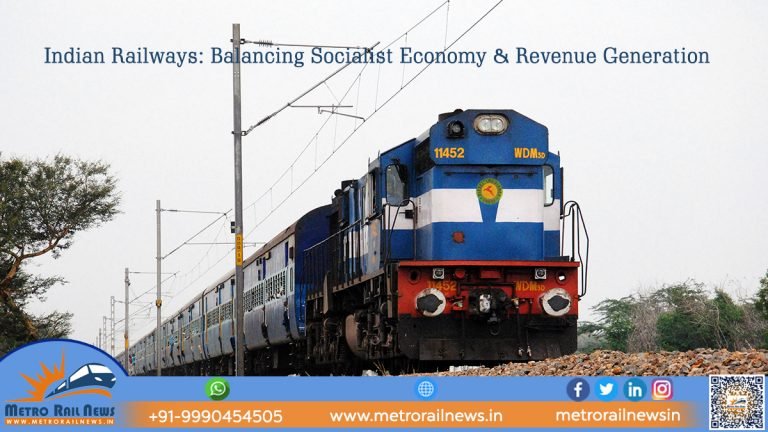
Today, the Indian Railways (IR) is the largest rail network in Asia and the second largest in the world. It transports about 2.5 crore passengers (almost equal to the population of Australia) daily. Even with such a volume of passenger traffic, the Railways makes losses from the passenger segment. The Indian Railways is the national carrier for the country’s masses. It is the preferred mode of transport for the poorest of the poor. As such, it has obligations towards society as well apart from earning revenue. Traditionally, the fares have not been increased much due to this and other political reasons. The fares were last revised in 2014.

The losses from the passenger segment of Railways are compensated by profits from the freight segment and almost 95% of the profit from the freight segment goes towards cross-subsidisation of the passenger segment. This results in the deterioration of the financial performance as a whole of the national carrier. As per the data released by the Railway Ministry, the operating ratio for the freight segment in FY 2017-18 was 58.83% which means on every Rs 100 of revenue, the freight segment was making a handsome profit of Rs 41.17. But surprisingly, the overall operating ratio for the Railways as a whole was at a  level of 98.44%-the worst in the last 10 years. This was because the operating ratio for the passenger segment was at a dismal level of 181.20% which means that to generate every Rs 100 of revenue from the passenger segment, the carrier was spending Rs 181.20!

Although no drastic measures have been ever taken by the Govt. regarding the increase in fares due to the reasons enumerated above, yet, the Govt. has taken a slew of measures from time to time towards improving the financial health of the national carrier. Some of these measures are:

1.‘Give up’ Scheme: It was started in 2017 to encourage senior citizens to give up their train fare concessions in a bid to increase revenue. As per CAG audit report, during the FY 2017-18, Rs 1411.23 crores worth of concession in fare was given to 5.92 crore senior citizens. The CAG report also stated that while the national carrier earned Rs 88064 crores as revenue from 2015-16 to 2017-18 from the sale of reserved tickets, it also allowed concession of Rs 7418 crores on these reserved tickets during the same period. Also, 89.7% of the revenue foregone towards concessions is on account of concession to senior citizens and privilege pass/PTO holders.

2.Dynamic Fare Pricing/Flexi fares: The Railways had introduced dynamic pricing of tickets in September 2016 for 142 of its premium trains-44 Rajdhani, 46 Shatabdi and 52 Duronto trains. Under this rule, the price of the ticket goes up as bookings grow. The fare would go up by 10% for every lot of 10% tickets booked. However, the scheme has been scrapped in most of the trains as it led to the loss of traffic volume for the national carrier.

3.Modernisation: One of the main reasons for the failure of a Flexi fare scheme was the competition to the Railways from low-cost airlines. Flexi-fare scheme reduced the gap between rail and airline tickets. Also, the quality of services and journey-time factor favoured the airlines. Now, the railways has also started modernizing its fleet by taking various measures some of which are as follows:

a)Introduction of LHB (Linke-Hofmann-Busch,Germany) Coaches: Traditionally, the Railways has been using ICF (Integral Coach Factory, Chennai) coaches. These coaches are considered having inadequate safety measures and are being slowly phased out. These are being replaced with LHB coaches which were introduced in mid-90s. These coaches are lighter, safer and capable of speeds upto 160 kmph.

b)Route Electrification: The national carrier has electrified about 46% of its running track as on March 31, 2019. As per the Railway Ministry, the entire track length in the country would be electrified by 2022.

c)Track modernization: Various initiatives have been undertaken by the Indian Railways for modernization of tracks as well. Nowadays, Pre-Stressed Concrete (PSC) sleepers are being increasingly used in place of wooden sleepers as these are economically and functionally best suited for high-speed and heavy density traffic. Long rail panels or welded rails are being used in place of rails with fish plated joints. Rails now being used are having high tensile strength. Bridges are being strengthened/rebuilt.

Signalling system for the trains is also undergoing continuous revamping. Automatic Train Protection (ATP) system based on the proven European Train Control System (ETCS) is being implemented on the tracks. The system will help in the seamless transmission of information between tracks and the engine cabin electronically. It will help in keeping train speed within the permissible limit.

d)Upgradation of Railway Platforms: The facilities and services at railway platforms are being upgraded to offer a convenient, hassle-free and pleasant travelling experience to the passengers. Escalators have been installed at select stations like New Delhi, to begin with. Free Wi-Fi facility is being offered to passengers. Use of false ceiling is being done to enhance the aesthetic appeal of the platforms.

e)Introduction of High-tech trains: To compete with the travel experience provided by low-cost airlines, the national carrier has introduced some modern, high-tech trains like:

i)Vande Bharat Express: It is also known as Train 18. It is a semi high-speed, air-conditioned day time journey train with modern facilities like Wi-Fi, snacks tables, CCTV cameras, hydraulic pressure doors as well as fire and smoke detection and extinguishing system. The train can run at a top speed of 200 kmph.

ii)Tejas Express: It is a semi high-speed, air-conditioned train which was introduced in 2017. The coaches in this train have LED TV on each passenger seat with a phone jack, local cuisine, Wi-Fi, tea and coffee vending machines, CCTV cameras, smoke and fire detection and extinguishing system, bio-vacuum toilets, tap sensors, hand dryers and integrated Braille displays. It can also run at a top speed of 200 kmph.

iii) Gatimaan Express: It is a semi high-speed, air-conditioned train running between Delhi and Jhansi at a top speed of 160 kmph.

iv) Humsafar Express: It is an air-conditioned train with 3-tier coaches and had its inaugural run between Gorakhpur and Anand Vihar terminal. It is equipped with LED screens displaying information about stations and train speed, a PA system, tea and coffee vending machines, charging ports for electronic devices, bio-toilets, CCTV cameras, smoke alarms and heating and refrigeration facilities for food.

v)Bullet Train: The first high-speed rail link in the country has been proposed between Mumbai and Ahmedabad. The work on the project is expected to begin in April 2020 and completed by Dec 2023. The trains on this line will run at speeds ranging from 320 to 350 kmph.

4.Dedicated Freight Corridor: The Railways has one of the lowest passenger fares and highest freight fares in the world. The freight segment faces stiff competition from the road transport segment. The passenger and freight trains run on the same network of rail tracks. Many times, freight trains have to be stopped midway to allow smooth passage of passenger traffic. There is thus an urgent need to provide a dedicated freight corridor for freight trains so that their service can be made world-class. It will help the national carrier to compete better against the road transport sector.

5.Revision of Child fare rule: The Railways has also revised its child fare rule since 2016. Now, children of age 5 years and under 12 years of age are charged full ticket in reserved coaches instead of half ticket if a berth is sought for them. However, if the berth is not sought for the child, then half of the full adult fare will continue to be charged as hitherto.

In view of the above, it can be said that the Indian Railways has chalked out an ambitious plan to bring the finances of the national carrier in the pink of health. Much will now depend on how the various measures are put to execution within the timelines envisaged.

After going through all the above facts,  the surprise, that I felt on discovering that the passenger segment of the railways is a loss-making segment, now gave way to concern and I could only say ‘All the Best’ to the national carrier.
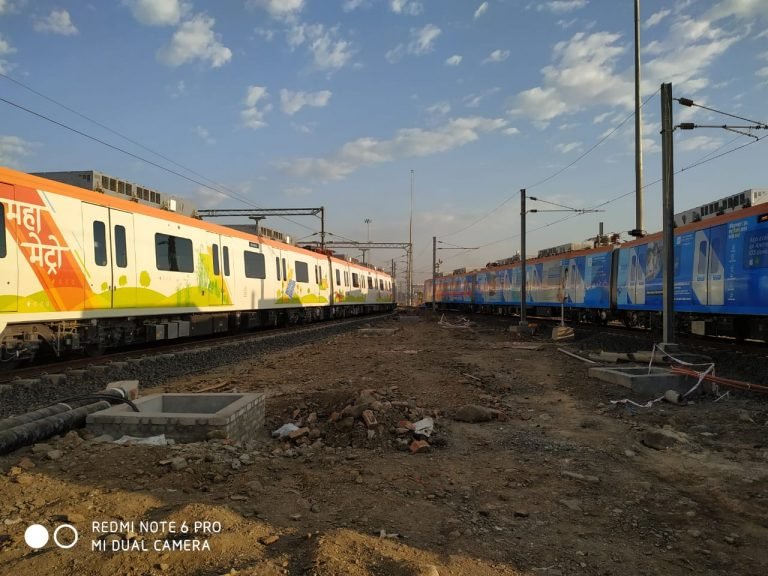
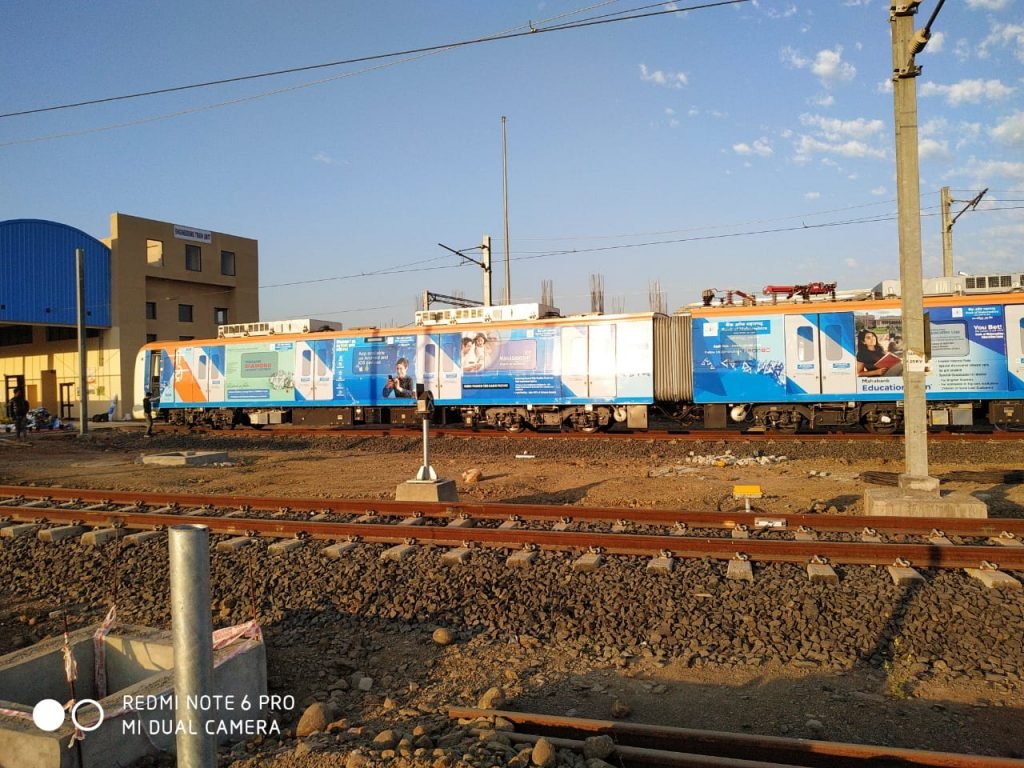
Maha Metro Moves on Train wrapping to increase non-fare revenues

NAGPUR (Metro Rail News): Even as Maha Metro gears for starting of services, it has achieved yet another milestone. Maha Metro has earned Train Wrapping Advertisement Rights of Bank of Maharashtra. The entire train has been wrapped displaying content issued by the Bank.
Train wrapping a global innovation for earning recurring and sustainable non-fare box revenue
Maha Metro at even this early stage stands to gain ₹ 1 lac per month from Bank of Maharashtra through this arrangement. The agreement is valid for a period of 12 months. One train – of three coaches is wrapped with advertisement material, which showcases different activities of Bank of Maharashtra. The train wrapping expenses amounting to ₹ 4.95 lac have also been borne by Bank of Maharashtra.

This is a major initiative on part of Maha Metro in the field of Non-Fare Revenue Box Concept. It is important to note that Nagpur Metro has an ambitious target to get more than 50% of its total revenues from the non-fair box. The Bank of Maharashtra agreement, valid for a year is just beginning of the journey and is initially valid for a period of one year. One train – of three coaches is wrapped under the agreement with advertisement material, which showcases different activities of Bank of Maharashtra.

This apart, Maha Metro has also started its earning on the Property Development (PD) front with various firms and institutions getting spaces for commercial operations at Institute of Engineers Metro, Lokmanya Nagar, Jai Prakash Nagar, Khapri, Airport and Jai Prakash Nagar Metro Stations.

It is worth mentioning that Maha Metro has always focussed on Non-Fare Box Revenue through Stamp Duty, TOD Policy, PD and Station Semi-Naming Rights. In fact, even before the project was inaugurated and commercial operations were launched on 7th March 2019, Maha Metro had earned ₹ 150 crores. So far the revenues from non-fare box revenues have crossed Rupees 250 crore. Thus considering the future need for generating revenue from other sources, Maha Metro has already not just planned but has also started executing plans as per the requirement.

While ridership on the Maha Metro trains is increasing steadily with every passing day, with a record revenue being generated yesterday – 26th January (Republic Day).

L&T Signed contract to lay track for Mumbai Metro Line 3

MUMBAI (Metro Rail News): Larsen & Toubro Limited (L&T Construction) signed a contract with Mumbai Metro Rail Corporation Limited (MMRCL) signed a contract on Jan 25, 2020, for laying track on Mumbai Metro Line-3 (Colaba-Bandra-SEEPZ corridor).

The L&T Construction has bagged the contract package 10C for the work of part design, procurement and supply, installation, testing and commissioning of approximately 40 km of ballastless track on the mainline and ballasted track inside the Aarey Depot in the section between BKC station to Aarey Station.

L&T has also been awarded contract package 10B for procurement and supply of Turnouts, Scissor Crossovers and Buffer Stops for the entire Mainline for Mumbai Metro Line 3 (Colaba–Bandra–SEEPZ) including Package 10C.

The company said in a press statement said that Another order has been secured from Mumbai Metro Rail Corporation Limited (MMRCL) involving design, procurement and supply, installation, testing and commissioning of the ballastless track on the mainline and ballasted track in the depot in the section between Bandra Kurla Complex station to Aarey Station (Package 10C – 40 Track km) for Mumbai Metro Line 3 project. This order has been secured against stiff competition from other major multinational companies. With this order, L&T shall be executing the entire track works in Mumbai Metro Line 3 (Colaba-Bandra-SEEPZ corridor).

This is the final work order issued to L&T for track laying work on Mumbai Metro Line-3. The work order for a contract value of Rs 303.27 crore, which L&T was secured in June 2019 involving Part Design, Procurement and Supply, Installation, Testing and Commissioning of ballastless Track on the Mainline from BKC station (excluded) to Cuffe Parade station (included) excluding the procurement and supply of Head Hardened rail 60 E1 (UIC 60), 1080 grade HH, Turnouts, Scissor Crossovers and Buffer Stops for Mumbai Metro Line 3 (Colaba – Bandra – SEEPZ).

the construction work of the controversial Aarey Crashed is stalled as a four-member committee has been formulated to look the alternate land for the depot after the change of Maharashtra government. Committee yet to submit the report to the Maharashtra Government.

Nagpur Metro to commence Lokmanya Nagar-Sitabuldi section on Jan 28

NAGPUR (Metro Rail News): Maharastra Metro Rail Corporation announced today that Nagpur Metro’s Aqua Line services between Lokmanya Nagar Metro Station and Sitabuldi Interchange will be flagged off on 28th January 2020 at 10.15 am.

Shri Uddhav Thackeray, Chief Minister of Maharashtra and Shri Hardeep Singh Puri, Union Minister of State (Independent Charge) for Housing & Urban Affairs, Civil Aviation, Commerce & Industry will flag off the first metro train through video link.

The flag-off ceremony will take place at Subhash Nagar Metro Station, Hingna Road. Shri Nitin Gadkari, Union Minister for Road Transport, Highways and Minister for Micro, Small and Medium Enterprises (MSME) will be present in the event. Shri Eknath Shinde, Urban Development and Public Works (Public Undertaking) Minister, Shri Anil Deshmukh, Home Minister, Dr Nitin Raut, Energy Minister & District Guardian Minister, Shri Sunil Kedar, Animal Husbandry, Dairy Development, Sports & Youth Welfare Minister, all from Government of Maharashtra will be prominently present on the occasion.

Shri Sandip Joshi, City Mayor, Dr Vikas Mahatme, Member of Parliament (Rajya Sabha), Shri Krupal Tumane, Member of Parliament (Ramtek) and Shri Devendra Fadnavis, former Chief Minister and Leader of Opposition (Maharashtra Legislative Assembly) will be prominently present on the occasion. Shri Nago Ganar, Shri Prakash Gajbhiye, Prof. Jogendra Kawade, Prof. Anil Sole, Shri Girish Vyas all MLC, Shri Krishna Khopde (Nagpur East), Shri Vikas Kumbhare (Nagpur Central), Shri Mohan Mate (Nagpur South), Shri Samir Meghe (Hingna), and Shri Vikas Thakre (Nagpur West), all MLA will be prominently present.

Shri Durga Shankar Mishra, Union Ministry for Housing & Urban Affairs (MoHUA) will also grace the event. Maha Metro MD Dr Brijesh Dixit has urged people to attend the event in large numbers.

MAHA- METRO cordially invites you for the Inauguration of Nagpur Metro Aqua Line services between Lokmanya Nagar Metro Station and Sitabuildi Interchange.on 28th January 2020 (Tuesday) at 10.15 am.
We request you to occupy your seats by 9.45 am.
MAHA- METRO cordially invites you for the Inauguration of Nagpur Metro Aqua Line services between Lokmanya Nagar Metro Station and Sitabuildi Interchange.on 28th January 2020 (Tuesday) at 10.15 am.
We request you to occupy your seats by 9.45 am.

The Aqua Line stretches from Prajapati Nagar to Lokmanya Nagar Metro Stations on the East-West Corridor. Of this, 11 km long line in Reach-III, to be flagged off includes 11 stations of which 6 including Sitabuldi Interchange are ready for operation.

The stations located in the Reach-III are Lokmanya Nagar, Bansi Nagar, Vasudev Nagar, Rachana Ring Road, Subhash Nagar, Ambazari Lake View, LAD Square, Shankar Nagar, Institute of Engineers, Jhansi Rani Square and finally Sitabuldi Interchange. Of these, 6 Metro Stations – Lokmanya Nagar, Vasudev Nagar, Subhash Nagar, Institute of Engineers, Jhansi Rani Square and Sitabuldi Interchange are ready for the opening of passenger services. The Aqua Line is so-called given the proximity of water bodies – Ambazari Lake, Gandhi Sagar and Nag River to the Metro alignment.

The opening of Aqua Line will give a major boost to academic institutions, industrial areas, residential colonies and others travelling on this line.

In December 2020, The Commissioner of Metro Rail Safety (CMRS) Shri Janak Kumar Garg conducted inspection related to the all-important Communication-Based Train Control (CBTC) technology along Reach-III stretch between Lokmanaya Nagar Metro Station and Sitabuldi Interchange along with CBTC, the high-level CMRS team also inspected Automatic Train Protection (ATP), Automatic Train Supervision (ATS) technologies embraced by Maha Metro for its Nagpur project.

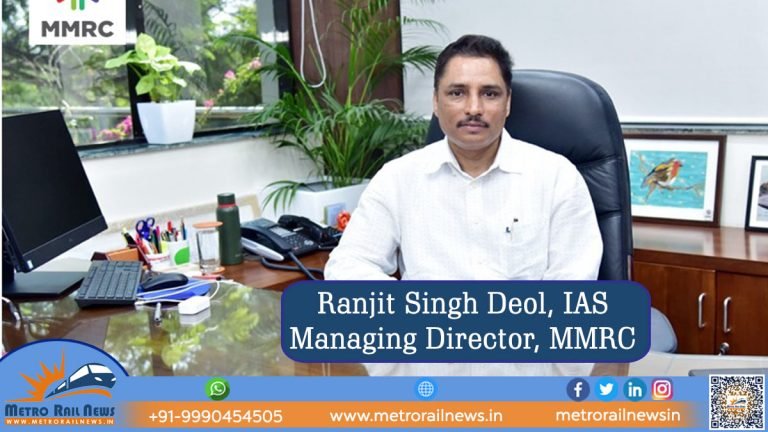
Ranjit Singh Deol takes charge of Managing Director of MMRC

MUMBAI (Metro Rail News): Ranjit Singh Deol, an IAS officer of 1998 batch has taken charge of Managing Director of Mumbai Metro Rail Corporation Limited (MMRCL) on Jan 23, 2020. Ashwini Bhide has handed over her charge to him on today. The Maharashtra Government has issued the transfer order of Ranjit Singh Deol on January 21.

Bhide, who belongs to the 1995-batch, was recently promoted to the rank of principal secretary. Chief Minister Uddhav Thackeray is yet to decide on her new assignment. Bhide had earlier faced criticism from the Shiv Sena over the overnight felling of trees in Aarey Colony for a car shed for the Metro project. She had completed her five-year tenure as MD with MMRC in December 2019.

Before posting as Managing Director Mumbai Metro Rail Corporation Limited (MMRCL), Ranjit Singh Deol was Vice-Chairman & Managing Director of Maharashtra State Road Transport Corporation (MSRTC). He has served in various departments under the Government of Maharashtra. He was Commissioner for Social Welfare, Maharashtra State, Pune; Director of Census Operation, Mumbai; Commissioner, Solapur Municipal Corporation; District Collector, Jalna; Chief Executive Officer, Zilla Parishad, Hingoli; Sub Divisional Officer, Yeotmal and Assistant Collector at Yeotmal.

In a fresh round of bureaucratic rejig on Wednesday, CM Uddhav assigned fresh postings to 20 senior and middle-level bureaucrats. Deol’s appointment to MMRC was one of them. The CM had transferred 22 bureaucrats last week.

Ranjit Singh Deol will now lead the ongoing construction work of Mumbai Metro Line-3 (Colaba-Bandra-SEEPZ), a fully underground line of Mumbai Metro Rail network.

According to the latest updates from Mumbai Metro Rail Corporation, about 100% excavation work of 13, out of 26 metro stations of Mumbai Metro Line-3 completed. In total, about 75% of tunnelling work completed so far.

Recently, MMRC has awarded the contract to L&T Construction for track laying work of the northern portion of the 33.5 km Line-3 connecting Cuffe Parade with SEEPZ.

Pune Metro Extensions approves on all route under PPP model

PUNE (Metro Rail News): Maharashtra deputy chief minister and Pune district guardian minister Mr Ajit Pawar conducted a review meeting with Pune Municipal Corporation (PMC), Pune Metropolitan Region Development Authority (PMRDA) and Maharashtra Metro Rail Corporation (Maha-Metro) officials on January 17, 2019, and asked officials to execute the extensions of the metro corridors on the public-private partnership (PPP) model.

Mr. Pawar approves the extension of Shivajinagar-Hadapsar corridor till Loni Kalbhor which is earlier demanded by MP Amol Kolhe and MLA Chetan Tupe. He also said that there is a need to extend the metro corridor from Swargate to Hadapsar.
buy viagra online no prescription

“We have been demanding to extend the Swargate to Hadapsar corridor for a long time now as there are many commuters on the route. Ajit Pawar has accepted this proposal,” said Tupe.

“Vanaz to Chandani chowk corridor will be extended on the same line. Hinjewadi to Shivajinagar metro corridor will be extended till Maan as a metro car shed is being constructed there. This new metro route will be called Maan-Hinjewadi-Shivajingar metro corridor,” said Pawar

Rename Pimpri to Swargate metro corridor link as Pune-PCMC metro

Pimpri to Swargate metro corridor link renames as Pune-PCMC metro as many local leaders have opposed to the earlier name as the line also passes through Pimpri-Chinchwad, Pawar instructed metro officials. The rest of the corridors will be known as Pune metro only.

Pawar has also asked the officers to give priority to the Swargate-Katraj metro corridor.

PMC commissioner Saurabh Rao, PMRDA commissioner Vikram Kumar and Maha-Metro managing director Brijesh Dixit were present for the meeting.

Mr. Dixit said, “Pawar has ensured full support for the ongoing and future metro projects. Be it land acquisition or budgetary allocation, the deputy CM has said that the government would provide full support to the project. Although the ongoing metro work is not being affected by land acquisition problems in the near future, we will require the land under question and so the government’s support is required. Also, we will now start working on the DPR for the proposed and new metro lines and study the technical feasibility for the project and traffic in the area. As of now, about 37% work on the ongoing metro work is completed.”

List of the Pune Metro extension using PPP mode

-Hinjewadi to Shivajinagar- Hadapsar metro corridor will be extended till Maan. This new metro corridor would be known as Maan-Hinjewadi-Shivajingar metro corridor

– Extend metro corridor from Swargate to Hadapsar

– Vanaz to Chandni chowk corridor will be extended along the same line

Pimpri to Swargate metro corridor link will now be known as Pune-PCMC metro

– Prioritise Swargate to Katraj metro corridor

– Hadapsar corridor will be extended till Loni Kalbhor

NCRTC floats Tender for RRTS’s first underground section

DELHI (Metro Rail News): The NCR Transport Corporation (NCRTC), which is executing the Delhi-Meerut (RRTS) corridor connecting Delhi, Ghaziabad and Meerut, has floated tenders for its first underground section proposed between New Ashok Nagar in East Delhi and Sahibabad in Ghaziabad.

The project cost would be ₹30,274 crore and developed with an aimed tp provide high-speed connectivity between Delhi, Ghaziabad and Meerut.

The 82km RRTS corridor will be mostly elevated and only 11.53km will be underground. The first section of 5.8km — between New Ashok Nagar (elevated) in East Delhi and Bharat Electronic Limited in Sahibabad area of Ghaziabad— will be taken up first of 11.53 km.

The Anand Vihar RRTS station will be the only underground station of the 5.8km section. The station will be constructed near the existing Metro station (elevated) and the ISBT Anand Vihar and provide an interchange facility for commuters to switch between different transport systems. like Train, bus, metro and RRTS

Sudhir Kumar Sharma, chief PRO, NCRTC, said that the tender has been floated for the 5.8km underground section and it is on a design-and-build basis. This means that the broad parameters are given by NCRTC while the structural, foundation design, etc., will be done by the selected contractor. The tunnelling for the underground section will be about 6.5 metres in diameter — slightly more than the normal Metro train tunnel diameter, which is of about 5.8 metres,”

The officials said that underground sections have been proposed keeping in mind the profile of an area, the density of population, availability of right of way and presence of buildings.

“There will be two tunnels for dual movement of trains in the first underground section (5.
buy udenafil online https://gilbertroaddental.com/wp-content/themes/twentyseventeen/inc/en/udenafil.html no prescription
8km). The midsection between the two tunnels will have a passage, in case of a breakdown or the need for rescue operations. The diameter of the RRTS tunnels will be more as these trains are of high speeds. We would require bigger cutters than the normal ones used by tunnel boring machines,” an NCRTC officer said.

The 17km long priority section (elevated) from Sahibabad to Duhai in Ghaziabad is already under construction and will be completed by March 2023. Once the priority stretch is ready, the NCRTC has plans to open the stretch for operations.

The NCRTC has also started the work for engaging a detailed design consultant (DDC) for Sarai Kale Khan and New Ashok Nagar stations, a multimodal integration scheme and a stabling yard in Jungpura.

The NCRTC officials said the second underground stretch, of 5.73km, has been proposed in Meerut. This section will start after Bhrampuri Metro station and trains will cross three underground stations of Meerut Central, Bhaisali and Begumpul to come up on to the elevated section at MES Colony.

The entire 82km corridor is slotted to be ready by March 2025. In all, the corridor will have 24 stations, including two depot stations in Duhai and Modipuram (Meerut).

CMRL lookout general consultant for corridor-4 of phase-2 Project

CHENNAI (Metro Rail News): Chennai Metro Rail Limited (CMRL) has begun scouting for a general consultant with the required expertise and oversee the construction of another portion of the corridors. Even as construction is set to commence on a part of the ambitious 118.9km phase-2 metro rail in June 2020. CMRL has called for expression of interest from firms to work as a general consultant for corridor-4 of phase-2.

The corridor will be from Lighthouse to Poonamallee bypass covering 26.1km. Officials said tenders for the construction of the corridor are likely to be floated in two months. “CMRL will require more than 30,000 people to execute such a massive project.

According to an official, a general consultant will bring in the experts required from across the world during various stages of construction since CMRL being a government agency won’t be able to do it on its own.

This comes after China-based Asian Infrastructure Investment Bank agreed to fund the construction of a part of corridor-4 between Meenakshi College and Poonamallee bypass. Officials said construction of the rest of the corridor from Lighthouse to Meenakshi College will be funded by Asian Development Bank.
buy viagra online no prescription

While construction will begin initially on the 52km line between Madhavaram and Sholinganallur and from Madhavaram to CMBT, which are part of corridors 3 and 5, in June 2020, construction for corridor-4 is likely to begin a few months later.

“If work progresses without delays the phase may be ready for operations by 2026,” Said an official. The corridor, which cuts across the heart of the city, links many-core localities like Mylapore, Nandanam, T Nagar, Kodambakkam and Vadapalani with suburban areas like Porur, Kattupakkam, Kumanan Chavadi, Karayanchavadi and Poonamallee, which have relatively poor public transport connectivity. The corridor is also called ‘orbital corridor’ as it links the rest of the corridors in phase-1 and 2.

“Our detailed design consultant is on the job. Soil test has been done. Construction tenders are likely to be floated in two or three months,” an official said on the work on the line between Meenakshi College and Poonamallee bypass.

General consultants will assist in reviewing the detailed designs submitted by contractors, monitoring construction through all stages – from foundation laying to the installation of signalling and electrical systems as well as suppliers and manufacturers, quality control and safety, contract management for the project, planning operation and maintenance and training personnel.

Gujarat CM Vijay Rupan flags off Ahmedabad-Mumbai Tejas Express

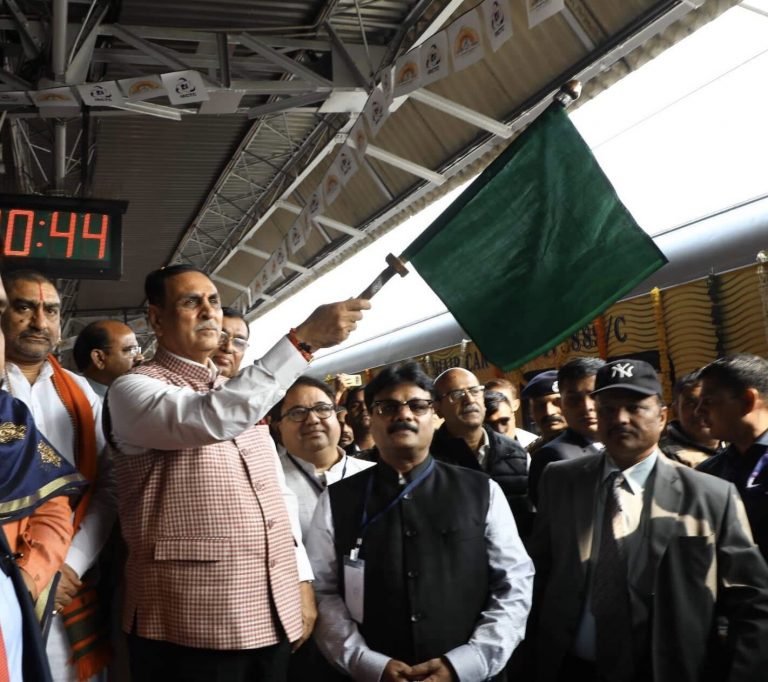
AHMEDABAD (Metro Rail News): India’s second Ahmedabad-Mumbai Tejas Express flagged off from Ahmedabad by Gujarat Chief Minister Vijay Rupani on Friday morning. Ahmedabad-Mumbai Tejas Express will run between Ahmedabad to Mumbai route six days a week except for Thursday. The commercial run of the newly launched Mumbai-Ahmedabad Tejas Express will start from 19 January 2020.

“It is a matter of pride that this semi high-speed, second Tejas Express train has been flagged off between Ahmedabad and Mumbai. This will benefit both states” Said Mr Rupani.

“The work on the bullet train is also going on the Mumbai-Ahmedabad route. Equipped with modern facilities, the train left from Ahmedabad at 10:43 am and reached Mumbai in about 6 hours 30 minutes, covering a distance of nearly 500 km. For the return journey, the train will leave Mumbai Central at 3:40 pm and reach Ahmedabad at 9:55 pm. The train will halt at Nadiad, Vadodara, Bharuch, Surat, Vapi and Borivali stations in both directions. The first Tejas Express between Delhi and Lucknow was flagged off last year.

The booking for Indian Railway Catering and Tourism Corporation (IRCTC) run Mumbai-Ahmedabad Tejas Express has started. Passengers can book their tickets exclusively on IRCTC website www.irctc.co.in and its mobile app ‘Irctc Rail Connect’. There will be no booking at railway reservation counters, said IRCTC in a press release.

Timings: the new Mumbai-Ahmedabad Tejas Express has two AC executive class chair cars and eight AC chair car with a capacity of carrying more than 700 passengers,

Fare: IRCTC will follow dynamic fare scheme for Ahmedabad-Mumbai Tejas Express There will be a different series of fares for lean, busy and festive seasons. There will be an advance reservation period of 60 days. If passenger cancels tickets, automatic full refund on confirmed or waitlisted e-tickets will be made.

Food: High quality food and beverages will be served on-board service staff in Ahmedabad-Mumbai Central Tejas Express. Passengers will be served morning welcome tea, breakfast and combo lunch/snacks in Ahmedabad –Mumbai Tejas Express. Tea and coffee vending machines will be available in the train. In addition to packaged drinking water, each coach will have a RO water filter machine.

Payment on delay: In a first, IRCTC decided to pay the travellers Mumbai-Ahmedabad Tejas Express is delayed. If the Mumbai-Ahmedabad Tejas Express delays for over an hour, passengers will get a compensation of ₹100. For delay of two hours and more, the passengers will receive ₹250, IRCTC said. There will be no facility of ‘tatkal’ ticket in the Tejas Express.

Free insurance: For the first time, IRCTC is offering a free insurance of ₹25 lakh to all the passengers travelling in Mumbai-Ahmedabad Tejas Express. The insurance cover includes ₹1 lakh insurance against theft or robbery during the travel.

Features of Ahmedabad-Mumbai Tejas Express

  1. Ahmedabad-Mumbai  Tejas express has state-of-the-art interiors, infotainment, personalised reading lights, mobile charging points, CCTV cameras, bio-toilets, LED TV sets and automatic doors and dustbins.
  2. The passengers travelling on Tejas Express will get free insurance of Rs 25 lakh.
  3. Some of the other facilities of Tejas Express include and compensation on delays. It will provide Rs 100 to each passenger in case delay is more than one hour and Rs 250 if delay exceeds two hours.
  4. Tejas Express also boasts of high quality food service – on-board meals and snacks. Tea and coffee vending machines will be available inside the train.
  5. Another feature of the Tejas Express is that you cancel a ticket, you will get automatic full refund on confirmed and waitlisted e-tickets in your accounts.
  6. “With state-of-the-art facilities along with the crew’s traditional attire, the new Tejas Express is a symbol of Indian culture blended with modernisation for enhanced passenger comfort,” Rail Minister Piyush Goyal wrote on Twitter.
  7. The Tejas Express train numbers 82902 and 82901 will operate on the Ahmedabad-Mumbai route six days a week with Thursday kept as off-day for maintenance activity.
  8. The fully air-conditioned train has two executive class chair cars, having 56 seats each, and eight chair cars, having capacity of 78 seats each.
  9. The total carrying capacity of the train is 736 passengers. The train halts at Nadiad, Vadodara, Bharuch, Surat, Vapi and Borivali stations.
  10. The commercial run of Tejas Express will take place on January 19. You can book your train tickets on irctc.co.in

GMRC invites bid for construction of Ahmedabad Metro Phase II Project

AHMEDABAD (Metro Rail News): The Gujarat Metro Rail Corporation Limited (GMRC) invited bids from the eligible and experienced bidders for the construction of viaducts and stations of Ahmedabad Metro Phase II projects.

Ahmedabad Metro Phase II Contract Package 1

Tender No.: GMRC/CONS/VDCT+STNS/PKG-C1/PH-2/2020
Issue Date: 10th January 2020

Scope of Work

Package – C1: Construction of i) 8.124 km elevated viaducts and 8 stations from Ch. 17343.443m to 25467.443m, ii) 5.420 km elevated viaducts and 3 stations from GNLU to GIFT City and iii) 0.815 km elevated viaducts and additional platform at Koteshwar Road station from Motera to Mahatma Mandir and GNLU to GIFT City (excl. E&M, Architectural, finishing and roofing) under Ahmedabad Metro Phase II project.

  • Approximate cost of work: Rs 1017.563 Crore
  • Tender Security Amount (EMD): Rs 20.35 Crore
  • The completion period of Work: 30 months (2 years 6 months)
  • Tender Document Cost: Rs 50,000 (Fifty Thousand)
  • Tender documents on sale: 20.01.2020 to 24.03.2020
  • Pre-bid Meeting: 01.02.2020 at 1100 hours
  • Last date and time of submission Tender: 24.03.2020 at 1500 hrs
  • Opening Date of Technical Bid: 24.03.2020 at 1530 hrs

Click here to know the eligibility criteria and bidding procedure, please read and download the complete tender notice

Ahmedabad Metro Phase II Contract Package 2

Tender No.: GMRC/CONS/VDCT+STNS/PKG-C2/PH-2/2020
Issue Date: 10th January 2020

Scope of Work

Package – C2: Construction of 6.478km elevated viaducts and 5 stations from CH. 25467.443m to 31945.443m and 0.679 km elevated viaducts and ramp for depot entry from Motera Stadium to Mahatma Mandir (excl. E&M, architectural finishing, and roofing) under Ahmedabad Metro Phase II project.

  • Approximate cost of work: Rs 470.064 Crore
  • Tender Security Amount (EMD): Rs 9.40 Crore
  • The completion period of Work: 27 months (2 years 3 months)
  • Tender Document Cost: Rs 50,000 (Fifty Thousand)
  • Tender documents on sale: 20.01.2020 to 26.03.2020
  • Pre-bid Meeting: 03.02.2020 at 1100 hours
  • Last date and time of submission Tender: 26.03.2020 at 1500 hrs
  • Opening Date of Technical Bid: 26.03.2020 at 1530 hrs

Click here to know the eligibility criteria and bidding procedure, please read and download the complete tender notice

Contact Point and Pre-bid Meeting Venue

Senior Deputy General Manager
(Civil & Procurement)
Gujarat Metro Rail Corporation Limited
Block No.1, First Floor, Karmayogi Bhavan,
Behind Nirman Bhavan, Sector 10/A,
Gandhinagar-382010, Gujarat, India

Kindly Visit the Ahmedabad Metro section of the website to read more about the project.