Home Blog Page 438

Kanpur Metro Trial run of Priority Corridor will be held in November 2021- MD Kumar Keshav

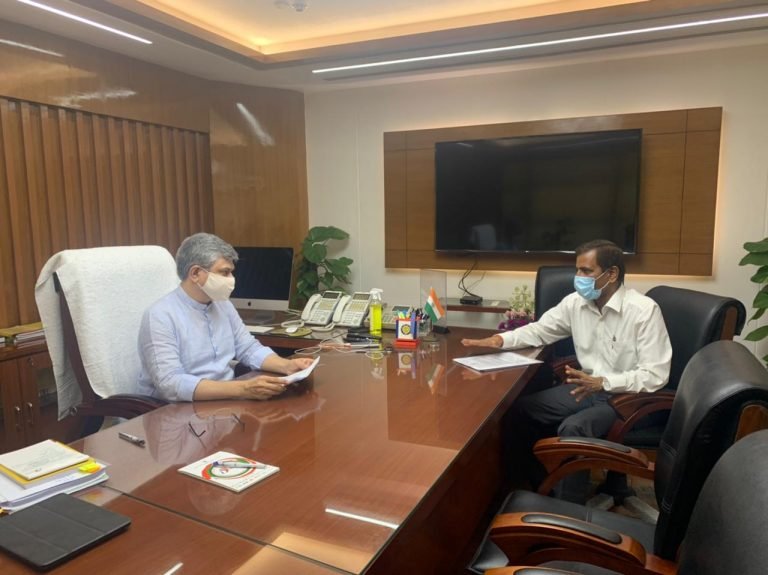
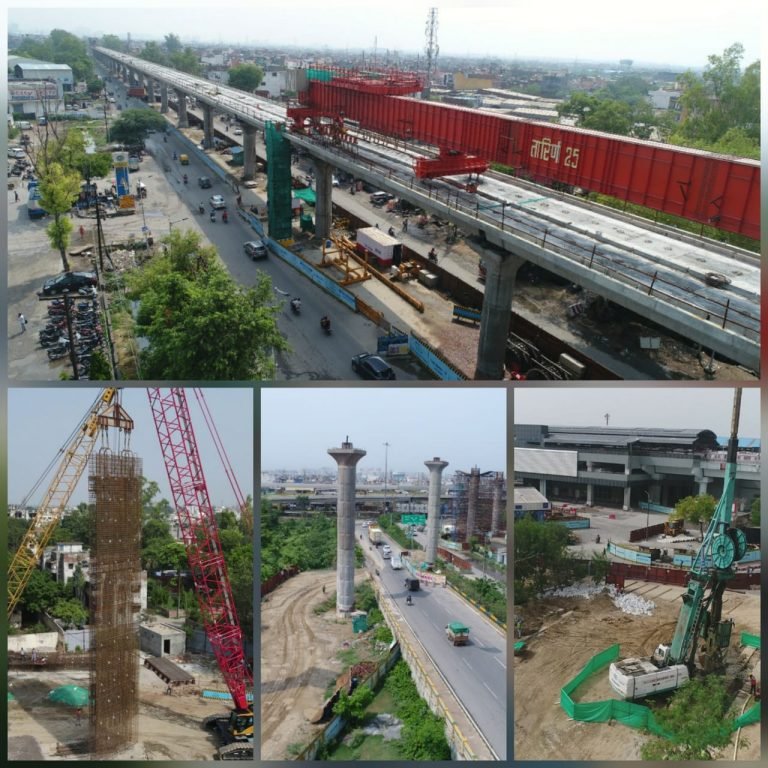
KANPUR (Metro Rail News): Today, on the occasion of World Environment Day, Uttar Pradesh Metro Rail Corporation Ltd. (UPMRC) Managing Director, Mr. Kumar Keshav came to Kanpur and planted a sapling at the Polytechnic Metro Depot. Throughout the visit, he inspected the stations of Priority Corridor and Metro Depot. During the inspection, he clarified that regardless of two waves of COVID-19 the deadline for the trial run remains intact and it is the endeavour of UP Metro to conduct the trial run on the Priority Corridor only in November 2021.

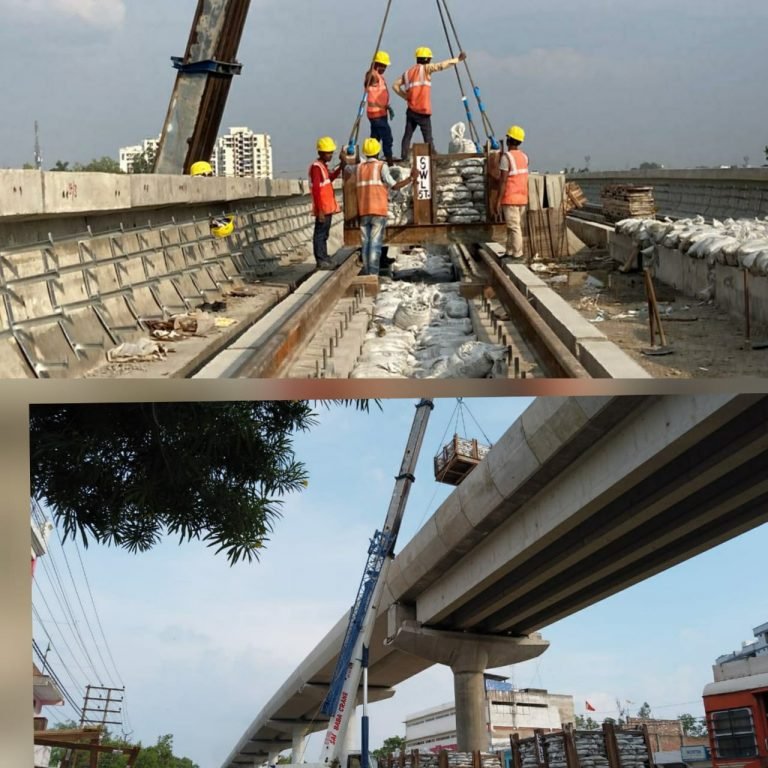
MD Shri Kumar Keshav started his visit from IIT-K Metro Station. After inspecting the IIT’s concourse, platform, and all the technical rooms, he reached Kalyanpur by walking on the viaduct of the Metro and examine the track work. Subsequently, he reached Metro Depot by reviewing the work progress of Receiving Sub Station (RSS) which is being built at Awadhpuri.

Expressing gratification over the pace of work at the Polytechnic Depot, he said, “The Machines of various systems will start being installed in the Metro Depot from July 2021 and by August the depot will be ready to welcome Metro Trains. The Metro Trains are being prepared at Savli Plant in Gujarat will start coming to Kanpur in September this year.” After reviewing the work of Depot, MD also visited Geeta Nagar, LLR (Hallet), and Motijheel Metro Stations.

Mumbai Metro achieves 38th Breakthrough at CSMT Metro Station for Line-3

MUMBAI (Metro Rail News): Mumbai Metro Rail Corporation (MMRC) achieved 38th breakthrough at Chhatrapati Shivaji Maharaj Terminus (CSMT) Metro Station out of the total 41 breakthroughs planned for the 33.5 km long Colaba-Bandra-Seepz underground line (Line-3) of Mumbai Metro.

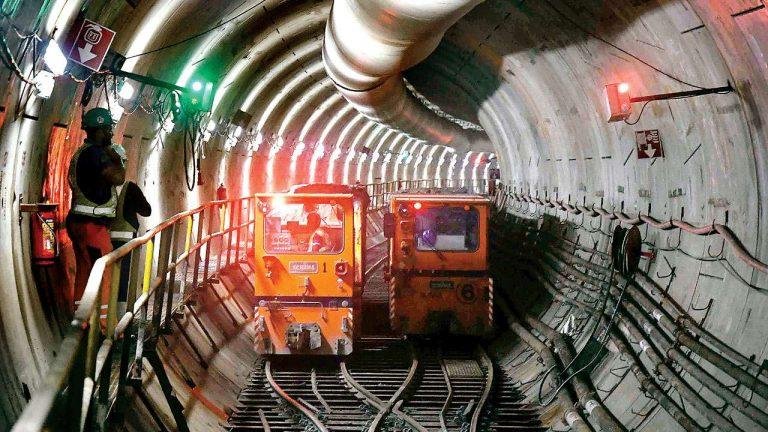
As per MMRC, the Robbins TBM Surya-1 has completed its final upline drive of 557 metres from Hutatma Chowk to CSMT Metro Station in 149 days using 405 concrete rings. With this, the 5.8-km-long tunnel from Cuffe Parade to CSMT Metro Station has been completed and the entire tunnelling scope of package-1 has been accomplished.

“We are pleased to announce 100% completion of tunneling work in 6 out of 7 contract packages covering the entire 33.5 km stretch. Package-1 completed this demanding task ensuring safety of the historical buildings in the heritage precinct. Our team of contractors, experts, engineers and workers completed this challenging work efficiently.” said Mr. Ranjit Singh Deol, Managing Director, MMRC.

Package-1 includes Cuffe Parade, Vidhan Bhavan, Churchgate and Hutatma Chowk Metro stations. It has now witnessed a total of eight breakthroughs –

  • Cuffe Parade to Vidhan Bhavan (Upline 1,228m and Downline 1,254 m)
  • Vidhan Bhavan to Churchgate (Upline 498 m and Downline 481 m)
  • Churchgate to Hutatma Chowk (Upline 654 m)
  • Hutatma Chowk to CSMT (Upline 557 m and Downline 569 m).

The overall tunnelling completed on the project is 52km which is approximately 96% of the total project.

Mumbai Metro Line-3 (Colaba-Bandra-SEEPZ) is a 33.5 km long fully underground line with 27 stations which would connect 06 business districts, 30 educational institutes, 30 recreational facilities and domestic as well as international airport terminals. 

It will have five interchange points for suburban railway and one each for Monorail and ‘Versova-Andheri-Ghatkopar’ Line-1.

MMRC, a joint venture of the Govt. of India and the Government of Maharashtra, is the nodal agency responsible for the implementation of Mumbai Metro Line-3 project. 

Surat Metro work is progressing well despite Covid-19 challenges

SURAT (Metro Rail News): Work on Surat Metro Rail Project is progressing well despite the menace of Covid-19 pandemic. At present work is under construction on 21.61 km long Line-1 from Dream City to Sarthana under Phase-1. Gujarat Metro Rail Corporation (GMRC) is the implementing agency for this project.

On Line-1, 77.27% of geotechnical investigation and 47% test pile casting work is completed for Dream City to Kadarsha Ni Nal elevated section of 11.6 km. In January this year, a joint venture of Sadbhav Engineering Ltd. and SP Singla Constructions Pvt. Ltd. was awarded the contract for construction of this elevated section with 10 stations for INR 779.73 Crores with a completion period of 30 months.

According to GMRC official, “In test pile casting, we check load capacity. We try to find out if the design matches the requirements of the spot of construction. So far, the results are satisfactory.”

As per Banchhanidhi Pani, Surat Municipal Commissioner, “The project work continued amid the pandemic and testing work is completed on some portion. As the situation becomes normal the work will take speed.”
At present, 300 workers are available for construction activities at various locations of city. “In normal circumstances we would have completed the pile testing work at least on one section.
We are delayed by one month but we will cover it soon by increasing our total workforce and machinery,” said the official.

“We will gradually increase the total workforce to 1,000 labourers by the end of August that will accelerate the work further,” he added.

Line-1 of Surat Metro comprises construction of 21.61 km long corridor from Sarthana to Dream City with 20 stations on the route. The corridor has elevated portion of 15.14 km and underground section of 6.47 km. This corridor will be built in 3 packages for which contracts are already awarded. The total estimated cost is INR 12,020 Crores.

9 bidders shortlisted for redevelopment of CSMT Railway Station

MUMBAI (Metro Rail News): Indian Railway Stations Development Corporation Limited (IRSDC) has shortlisted 09 bidders for the redevelopment of Chhatrapati Shivaji Maharaj Terminus Railway Station (CSMT) of Mumbai.

In August 2020, IRSDC invited RFQ (Request for Qualification) to redevelop CSMT Railway station and transform it into iconic city centre and in January 2021, it opened the RFQ applications of CSMT Railway station which revealed name of 10 applicants. After evaluation, IRSDC shortlisted 09 applicants as qualified for the next stage. The names of the qualified bidders are –

  • M/s Godrej Properties Limited
  • M/s Anchorage Infrastructure Investments Holdings Limited
  • M/s Oberoi Realty Limited
  • M/s ISQ Asia Infrastructure Investments Pte Ltd.
  • M/s Adani Railways Transport Limited
  • M/s Kalpataru Power Transmission Ltd
  • M/s GMR Enterprises Private Limited
  • M/s Moribus Holdings Pte, Ltd.
  • M/s BIF IV Infrastructure Holding DIFC Pvt. Ltd.

“Nine firms have qualified the RFQ stage for the redevelopment of CSMT station. As the next steps, IRSDC will float a Request for Proposal (RFP) soon to the qualified bidders. CSMT railway station redevelopment is one of our most ambitious projects and we at IRSDC are committed to transform the CSMT railway station into a state of the art transport hub” said SK Lohia, Managing Director & CEO – IRSDC.

“CSMT railway station redevelopment is one of our most ambitious projects and we at IRSDC are committed to transform the CSMT railway station into a state of the art transport hub”, he said.

The cost of station redevelopment including the cost of financing as well as contingency etc. is INR 1642 Crores. The investment opportunity for redevelopment is on the basis of Design, Build, Finance, Operate and Transfer (DBFOT).

The Applications were evaluated in accordance to the Financial Capacity, which had two criteria.

  • Minimum Net worth: INR 821 Crores at the close of preceding financial year OR
  • Minimum ACI: INR 821 Crores at the close of the preceding financial year (for AIF or Foreign Investment Fund).

The construction and O&M experience capacity shall have to be met after the award of the project. The entire bidding procedure is a two-stage bidding process consisting of RFQ and Request for Proposal (RFP).

The selected bidder at the RFP stage shall take up the redevelopment of the CSMT Railway station The Request for Proposal (RFP) for CSMT is under preparation and will be called shortly from the shortlisted applicants.

RLDA invites bids for leasing land parcel in Amravati for commercial development

Amravati, Maharashtra (Metro Rail News): Rail Land Development Authority (RLDA), a statutory body under the Ministry of Railways, has floated a Request for Proposal (RFP) for leasing a railway land parcel in Amravati for commercial development. Spanning across 10,080 sq. m., the land parcel is located in the vicinity of the Amravati railway station in a Commercial hub comprising Irwin Square to Malviya Chowk, railway station road, and the road leading to the Dafrin Government Hospital, as spokes of connectivity. It has a proposed Built-Up Area of 11088 sq m. utilising permissible Floor Space Index (FSI) of 1.10. The reserve price for the plot to be leased out for 45 years is Rs.25.0 crores. The online pre-bid meeting will be held on 9th June 2021, and the deadline for bid submission is 23rd July 2021.

The property is on one of the city’s busiest arterial roads and is accessible from the roads connecting Morshi and Walgaon. The property is situated at Irwin square, which also houses the State Government General Hospital and enjoys excellent access, frontage and visibility. It is well-connected to prominent landmarks such as Central Bus Stand, market, Collector Office, Dist. Court, Amravati Zilla Parishad Office, Municipal Corporation & Govt. Central Hospital, etc.

“Amravati is the second-largest city and an industrial hub in Vidarbha, Maharashtra. The land parcel is bounded by Amravati Railway Station on one side and Major Roads on other sides and enjoys excellent connectivity to the prominent landmarks of the city. The proposed commercial development on the site will boost real estate, retail and tourism and have a multiplier effect on socio-economic development, Also, in view of the expected government push for the health sector, the site is especially suited for a Multi-Specialty Hospital ” said Shri Ved Parkash Dudeja, Vice Chairman, RLDA.

RLDA will select developer through a competitive & transparent e-bidding process. The bidding process will be carried out in an online single Stage Bid (two cover) system. The lessee shall be required to complete the construction of the project of the developer portion within ten years. The Selected Bidder shall carry out the development as per local building bye-laws. He/She will bear the risk, cost, expense, and charges and procure all the applicable permits and arrange to design, finance, construct and develop the site. The bidder will be permitted to market and sub-lease Built-Up Area for legal activities.

Amravati is situated on the confluence of major regional roads and is well-connected to important cities like Mumbai, Nagpur, Pune, Nashik, Indore, Bhopal and Hyderabad. National Highway No. 6 (Mumbai – Kolkata) passes through Amravati and further connects to important centres throughout India. It is also called the cultural capital of the Vidarbha region and is regarded as an abode of Lord Indra. Amravati Railway Station is situated on the Howrah-Nagpur -Mumbai line and falls under the Bhusawal Division of the Central Railways.

Rail Land Development Authority (RLDA) is a statutory authority under the Ministry of Railways for the development of Railway land. It has four key mandates as a part of its development plan, namely leasing of commercial sites, colony redevelopment, station redevelopment and multi-functional complexes.

Indian Railways has approximately 43,000 hectares of vacant land across India. RLDA is currently handling 84 railway colony redevelopment projects and has recently leased out a railway colony in Guwahati for redevelopment. RLDA has over 84 commercial (greenfield) sites across India for leasing, and the eligible developers for each will be selected through an open and transparent bid process.

RLDA is also currently working on 60 stations in a phased manner while its subsidiary, IRSDC has taken up another 63 stations. In the first phase, RLDA has prioritised prominent stations like New Delhi, Tirupati, Dehradun, Nellore, Cuttack and Puducherry for redevelopment. The railway stations across India will be redeveloped on a PPP Model as a part of Smart City Projects launched by the Government of India.

Overview of Hydrogen Powered train on World Environment Day

The environment is one of today’s main issue with all societies being concerned. According to the annual ‘State of Global Air 2020’ report, around 6.7 million deaths were reported globally due to long-term exposure to air pollution in 2019. China (1.8 million) and India (1.6 million) together accounted for more than half of such deaths. Researchers from McGill University stated that over half of the world’s population lives without the protection of adequate air quality standards. Nitrogen dioxide (NO2) and particulate matter are two of the most dangerous air contaminants to human health. While stating that air pollution is globally the fourth highest cause of death, the report suggests that it is the largest risk factor for deaths in India.

With the global demand for passenger traffic expected to increase by more than double between 2015 and 2050, there is an urgent need to take substantive steps to cut emissions from transport. Sustainability is going to be the biggest game-changer going forward. Leading societies to a low carbon future, Alstom develops and markets mobility solutions that provide the sustainable foundations for the future of transportation. When it comes to hydrogen cell-powered trains, Alstom is the only company in the world to have a product on tracks and not merely on the drawing board. The Coradia iLint is the world’s first passenger train powered by a hydrogen fuel cell, which produces electrical power for traction. This zero-emission train emits low levels of noise, with exhaust being only steam and condensed water. It is a perfect illustration for the company’s commitment to designing and delivering innovative and environmentally friendly solutions.

In line with the aim to facilitate a global transition to a low-carbon transport system, it was at InnoTrans 2016 in Berlin that Alstom presented the Coradia iLint for the first time. The launch of the CO2-emission-free regional train that represents a true alternative to diesel power positioned the company as the first railway manufacturers in the world to develop a passenger train based on hydrogen technology. The Coradia iLint is special for its combination of different innovative elements: clean energy conversion, flexible energy storage in batteries, and smart management of traction power and available energy. Specifically designed for operation on non-electrified lines, it enables clean, sustainable train operation while ensuring high-performance levels. And just two years later, in 2018, the iLint entered into commercial service in Germany. This is the first time in the world that commercial trains powered by hydrogen-based cell have gone into use for transporting passengers.

This technology is gaining momentum quickly. Alstom has performed ten days of tests of the Coradia iLint hydrogen fuel cell train on the 65 kilometres of line between Groningen and Leeuwarden in the north of the Netherlands. The tests follow 18 successful months of passenger service on the Buxtehude–Bremervörde–Bremerhaven–Cuxhaven line in Germany, where total of 41 Coradia iLint have already been ordered. The latest tests make the Netherlands the second country in Europe where the train has proven itself a unique emissions-free solution for non-electrified lines. Alstom has received follow-up orders in Italy and France, led a pilot project in the UK and ran successful test runs in Austria, and Germany. Other countries already looking into buying their trains including U.K, Netherlands, Denmark, Norway, Italy and Canada.

The iLint was designed by Alstom teams in Salzgitter (Germany), the centre of excellence for regional trains, and in Tarbes (France), the centre of excellence for traction systems. This project benefitted from the support of the German Ministry of Economy and Mobility and the development of the Coradia iLint was funded by the German government, as part of the National Innovation Program for Hydrogen and Fuel Cell Technology (NIP).

Some specifications of Coradia iLint:

  • According to the company, the trains are low-noise, zero-emission and can reach speeds of up to 140km per hour.
  • For now, the train will only operate on 100 km of line running between Cuxhaven, Bremerhaven, Bremervörde and Buxtenhiede though they are capable of running longer distances.
  • These will replace the current diesel fleet on the train line and help reduce emission.
  • Alstom plans to delivers a further 14 Coradia iLint trains to the network by 2021.
  • Hydrogen is seen as a low-emission and efficient alternative to diesel, ensuring that the trains are environment friendly.
  • Each train cost $7 million (around 50 crore rupee)   

How does it work?

The Coradia iLint is the first low floor passenger train worldwide powered by a hydrogen fuel cell which produce electric power. This zero-emission train is silent and only emits steaming condensed water and any excess energy is stored in iron lithium batteries on board. The train hydrogen tank feeds a fuel cell that generates energy, which is then pushed to an electrical drive train and has a small battery which help to maintain power continuity as well as storing energy safe from regenerative braking. These new hydrogens can run for about 600 miles or 1000 kilometer on a single tank of hydrogen. Similar to the range of diesel trains, it will run 100 kilometer trips at up to 87 miles or 140 kilometers per hour, so they operate in the same way as existing diesel trains to avoid any culture shock for passengers and crew except that they need to refuel their 1000 kilometer capacity tanks are dedicated h2 fueling stations these trains would be a great addition to any regional area where diesel trains can’t be run. They may be more expensive to buy but it’s cheaper to run out to mention they are quiet and have zero-emission.

Why Germany has launched this train

CORADIA iLINT Chart
CORADIA ilint Train Chart

Air pollution has become an increasing problem in Germany, with nitrous dioxide causing over 10,000 premature deaths in 2016. Germany is very sensitive in these matters and took it seriously. Alstom is optimistic that the Coradia iLint trains will catch on, with a focus on making non-electrified train lines more environmentally friendly.

India on hydrogen powered trains

Indian Railway plans hydrogen-powered engine for passenger trains by end of 2021

Alstom Coradia iLint

As part of efforts to find alternative sources of fuel to power its trains, and to reduce reliance on fossil fuel-based energy sources like diesel and electricity, Indian Railways has set in motion efforts to build a hydrogen-powered rail engine that can propel a passenger train on a suburban route by the end of 2021.

Bids Invited for Hydrogen Fuel Cell-Based Hybrid Train Between Kalka and Shimla. The tender was initially floated in October 2019, and the bid submission deadline was December 31, 2020. The Indian Railways Organization for Alternate Fuels (IROAF) has issued a request for proposals to build a hydrogen fuel cell-based hybrid power train for retrofitting the 700 HP diesel hydraulic locomotives that operate on the narrow-gauge Kalka-Shimla segment in Himachal Pradesh. The scope of work will include the design, supply, and retrofitting, testing, certification, prove out, and field trials of fuel cell and battery-based power stack modules, hydrogen storage, power electronics, and related facilities, as well as engineering and supervision work for retrofitting on diesel-hydraulic locomotives.

As per the tender document, the total energy requirement for up and down trips based on actual driving cycles, is 1,556 kWh and 1,170 kWh, respectively. The power train, consisting of the primary energy source as the proton exchange membrane fuel cell and secondary energy source, which is the battery bank, should meet the peak power requirement. The power train should have minimal weight and not exceed the structural limits of the locomotive underframe, bogies, and superstructure. The energy management strategy should be designed such that the battery state remains the same from the start of the cycle to the end.

The diesel-hydraulic locomotive could be designed to operate in temperatures ranging from 10 to 55 degrees Celsius. The locomotive can have to run in an extremely dusty setting, necessitating the use of lithium-ion batteries. Alternative batteries, however, would be approved depending on efficiency. Indian Railways has been pursuing clean technology solutions to become a net-zero emitter by 2030.

Impact:

  • Cost

Purchasing and assembling hydrogen-powered trains is more costly than diesel locomotives. Nonetheless, since lithium-ion batteries are rechargeable, the operating and replacement costs will be smaller in the long term.

  • Speed

These hydrogen-powered trains can travel at a top speed of 140 km/h, which is comparable to diesel and electric trains.

  • Green economy

Using hydrogen propulsion in trains would help to reduce vehicular emissions.

  • Revenue

Hydrogen-powered trains emit no noise and can have new amenities, enticing more people to ride by rail.

  • Capacity

Hydrogen-powered trains can transport up to 300 passengers at once, increasing vehicular capacity.

Challenges:

  • Production

Hydrogen is not abundant in the atmosphere. As a result, it necessitates an energy input as well as a set of procedures to generate, transport, and then use it. The challenge is to find the most cost-effective and convenient one by extensive research and development.

  • Infrastructure for refuelling and delivery

If hydrogen must be refilled into onboard cylinders, technology and distribution infrastructure must be built.

  • High production costs

While hydrogen-powered trains prove to be more cost effective in the long run, they are still more costly than diesel locomotives, costing about Rs. 53.29 crore per engine.

  • Uncertainty over freight applications

The technology is efficient enough to shuttle passenger services. However, it is unclear if the same can be used to pull heavyweight freight traffic. 

Conclusion:

According to a report by Strategy&, the strategy consulting arm of management consulting firm PwC., global demand for hydrogen will almost double from 71 to 137 million metric tons per year by 2040, compared with 2019. The growth will be primarily due to the decarbonization of various sectors such as transportation, aviation and industry. Demand is expected to reach 519 million metric tons by 2070.

In India, the year 2021 is projected to be the year of hydrogen fuel cells. Certainly, this will be the most powerful driving force in meeting the goal of electrifying the entire rail network by 2024. This will make it the world’s first railway of this scale and complexity to operate solely on electricity. So far, 37,500 km (58%) of routes are electrified with 25 KVAC electric traction in India.               

In the future, hydrogen is projected to be the most exciting technology for establishing a zero-emission railway network in India by 2030, paving the way for a more prosperous future.

World First Hydrogen Fuel Train | How do hydrogen trains works?

Clean Metro, Green Metro: Regenerative Braking Technology in Metro Trains and Lifts will save electricity

KANPUR (Metro Rail News): Uttar Pradesh Metro Rail Corporation Ltd. (UPMRC) has always intended to provide not only a safe and convenient mode of transport to the citizens in the form of Metro Services but also the Metro Project being constructed inside the city should be the top in the list of Environmental Protection. After Lucknow, UPMRC continued this expedition in Kanpur. Recently, Kanpur Metro’s Priority Corridor has received ISO 14001 for environment management. – Kumar Keshav, MD, UPMRC

On the special occasion of Environment Day, Special arrangements have been made by Kanpur Metro to conserve electricity, water and trees:

1- The Metro Trains that is going to be operational in Kanpur will be equipped with Regenerative Braking Technology. Under this technique, the energy generated during the braking in the train is conserved and used back in the metro system. Kanpur Metro will be saved almost 45% energy through this technology, it means out of 1000 units being used in running of Trains almost 450 units are generated through Regenerative Braking Technology, which will be used back in the Metro system.

In addition, lifts to be installed at stations and depots will also be able to save energy with the above-mentioned technology. These will have up to 37% energy efficiency.

All the metro premises will have 100% LED lighting for energy saving. Apart from this, the plan is also being prepared to install solar panels at Metro Depots and Stations.

2- The Polytechnic Depot of Kanpur Metro will be equipped with a ‘Zero Discharge Facility’ i.e. the wastewater will not be disposed or discharged but inclusively recycled and used for various purposes. There will be two water treatment plants to be installed in Depot.

A sewage treatment plant (STP) of 10,000 liters per day capacity will be used to recycle gray water i.e. water that comes from the kitchen, washroom, and floor cleaning, etc.

At the same time, an Effluent Treatment Plant (ETP) with a capacity of 70 thousand liters per day will be installed in the automatic washing plant for the cleaning of the trains and to recycle the chemical-rich black water which comes from the repair of trains in the maintenance shed.

3- Kanpur Metro will have the capacity of ‘Rain Water Conservation’ up to 15 lakh liters

All the arrangements are being prepared for Rain Water Conservation. The all stations of the Corridors, the Metro Depot, and the 32.4 km long viaduct, a target has been set to develop a water conservation capacity of about 15 lakh liters. The viaduct will also have a system for carrying water at every other span down to the pit in the median. Around 180 pits to be built from October this year under the Priority Corridor (IIT to Motijheel) will be ready for water conservation.

4- 10 ‘Saplings’ will be planted in place of ‘One Tree’

Primarily, it is the endeavor of UPMRC that the Metro alignment should be designed in such a way that the situation of tree removal would not come up. If the situation arises, efforts are made to translocate (to move them from one place to another) them, if possible, keeping in view the age, thickness, and other factors of the tree. Trees that cannot be translocated are removed and then 10 new saplings are planted in the place of one tree. Till now 183 trees have been translocated in Kanpur.

Not only this but also saplings will be planted in the middle of the entire Elevated Corridor of Kanpur Metro and will be taken care of regularly by UPMRC. Plantation work is still going on at every possible place in the Polytechnic Metro Depot.

First pier of elevated RRTS corridor in Delhi has been constructed

DELHI (Metro Rail News): The first pier of elevated section of the RRTS corridor in Delhi portion has been constructed near upcoming New Ashok Nagar RRTS station. The height of the constructed pier is 6.5 meters, and average height of the piers in the stretch varies from 5.6 meter to 17 meters.

Delhi Portion of Elevated RRTS section starts from Sarai Kale Khan RRTS Station and passing above existing Barapulah Flyover in way of crossing Yamuna river to reach New Ashok Nagar RRTS station. A first RRTS Yamuna bridge is also under construction for crossing Yamuna river almost parallel to the DND Flyway.

The foundation work including piling and pile caps is in full swing between New Ashok Nagar to Kondli under package 6 contract and around 2 km of foundation work has already been completed out of the 9.2 km elevated corridor in Delhi.

NCRTC team is keeping the pace of the project intact to meet the stringent timelines despite the unprecedented challenges faced due to COVID-19. All construction activities are being carried out while following Covid appropriate behaviour on sites, with due safety protocols in compliance to COVID SOP & Government guidelines.

Presently construction is in progress on the entire 82km long corridor with the help of 12 Launching Gantries (tarini), probably the most in any urban infrastructure project for making RRTS viaduct.

RRTS is a rail based semi-high speed (design speed 180 kmph), high-frequency commuter transit system, which aims to improve quality of life of people by providing equitable, fast, reliable, safe comfortable, efficient & sustainable mobility solution enabling economic development of NCR and address issues of vehicular pollution and road congestion.

RLDA to redevelop Charbagh Railway Station of Lucknow

LUCKNOW (Metro Rail News): Rail Land Development Authority (RLDA) has floated a Request for Qualification (RFQ) for the redevelopment of Charbagh Railway Station in Lucknow. Under the Lucknow Railway Station Redevelopment Project, a complete integrated development and redevelopment of both LKO (NR) and LJN (NER) stations will be carried out including development of commercial land parcel on 12.23 acre land.

The station project will require an investment amounting to INR 556.8 Crores and to be redeveloped on a Design-Build-Operate-Finance-Transfer (DBFOT) model in two phases.

The objective of the station redevelopment project is to equip it with state-of-the-art amenities like segregation of arrival and departure, air-Concourse, foot-over bridges, lifts and escalator, conducive facilities for the specially-abled passengers to ensure a hassle-free travel experience.

As per RLDA, the redevelopment process involve two components –

  • Station or Mandatory Component – the station redevelopment
  • Station Estate Component – development of the surrounding railway land for pre-approved commercial & residential development

The cost of Phase 1 redevelopment is estimated at INR 442.5 Crore over 3 years, whereas Phase-2 is expected to incur INR 114.3 Crores over 2 years.

According to Shri Ved Parkash Dudeja, Vice Chairman, RLDA, “Lucknow is among the fastest-growing cities in North India. The city is home to several manufacturing and processing units and possesses a robust administrative, banking, and financial network of institutions. The redevelopment of the Lucknow Railway Station will augment the tourism potential and lead to employment generation. It will also boost real estate in the vicinity and have a formidable socio-economic impact on the region.”

The pre-bid meeting for developers held on 9th April 2021 elicited good participation, with many Developers from all over the country evincing great interest in the prestigious project. The deadline for the submission of Request for Qualification (RFQ) from intending bidders is 24th June 2021.

The design shall be incorporating the Green Building concept and shall adhere to the life-cycle cost minimization approach, which will be the hallmarks of the newly-redeveloped station. At the same time the heritage look of the existing grand station building will be retained.

The bid intends to pre-qualify and short-list suitable applicants who will be eligible for participation in the bid Stage. The concessionaire will be mandated to undertake up-gradation and redevelopment of the Lucknow Railway Station, including the ‘Station Component’ or ‘Mandatory Component’ and the ‘Station Estate Component,’ followed by its operation and maintenance.

Under the Railway Station Redevelopment Program of the Union Government, 400 railway stations in India will be redeveloped to provide them world class stature in terms of providing improved amenities to the passengers.

KMRL signs MoU with Kerala govt to form SPV for operation of Kochi Water Metro

KOCHI (Metro Rail News): Kochi Metro Rail Limited (KMRL) on Tuesday signed a memorandum of understanding (MoU) with the Kerala government to form a Special Purpose Vehicle (SPV) to look after the operation and maintenance of the Kochi Water Metro.

The MoU was signed between KMRL Managing Director K. R. Jyothilal and Chief Secretary V. P. Joy in Thiruvananthapuram. The SPV to be formed will be a joint venture of the state government and KMRL to be called as Kochi Water Metro Limited (KWML) and the state government and KMRL will have 74% and 26% cent stakes respectively in the KMRL.

The overall responsibility and authority to operate, maintain and manage this water metro transportation system will be given to KWML. Technical and administrative assistance will be provided by KMRL to set up KWML which will consist of eight members in the board of directors. The state government will have five members while three members will be from KMRL.

In February 2021, Kerala Chief Minister Pinarayi Vijayan inaugurated the first route (Vyttila-Kakkanad) and terminal buildings of the INR 747 crore Kochi Water Metro Project. It will serve as a feeder service connecting islands and city suburbs. A total of 23 boats will be built by Cochin Shipyard Limited (CSL) for the project with each boat can accommodate 100 passengers and the first boat is being already launched by CSL in April.

Although the operations were expected to start by the April end on Vyttila-Kakkanad sector, the operations got delayed as the work on the boat is still not completed.

As per the official, “The work was delayed due to the lockdown and other reasons. The CSL authorities had been facing shortage of workforce as many of their employees tested positive for Covid-19.”

”We expect that they will hand over the first boat without delay. They have also started the work on four more boats,” he further added.

The project is funded by KfW, a German Development Bank. It will comprise of 38 stations in 15 routes with total distance of 78.6 Km. The boats will be air-conditioned with the service of Wi-Fi along with latest safety and communication devices. The boats will also be environment friendly using green energy for its operation.