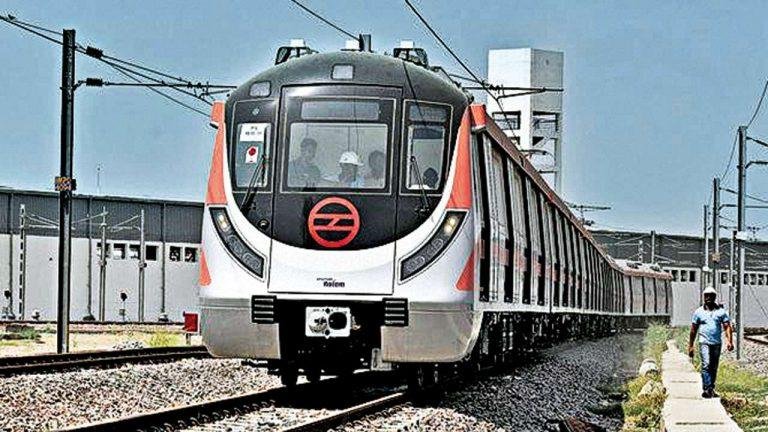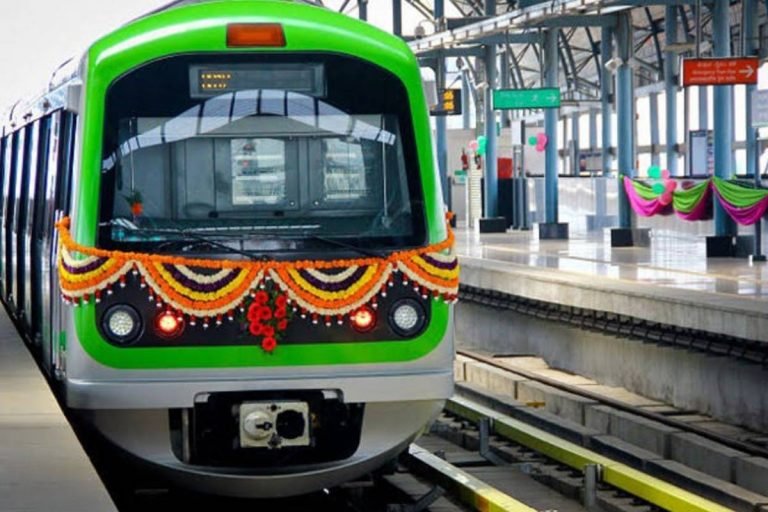
New Delhi: Prime Minister Narendra Modi has flagged-off the Delhi-Faridabad Metro Line that would allow hassle free travel for around two lakh daily commuters between the national capital and the industrial hub in Haryana.
The extension of the Delhi Metro connects Badarpur to Escorts Mujesar in Faridabad.
The total cost of the project from Badarpur to Escorts Mujesar is nearly Rs. 2,500 crore. Out of this, Rs. 1,557 crore was borne by the Haryana Government, the Centre contributed Rs. 537 crore, while the Delhi Metro provided Rs. 400 crore.
All these are elevated and located on either side of the Delhi-Mathura Road (NH-2).
“The nine-station metro corridor which was 95 per cent indigenously built will provide people a safe, affordable, quick, comfortable, reliable, environment-friendly and sustainable transport facility,” a Haryana government spokesperson said.
Haryana Chief Minister ML Khattar, addressing a press conference on Saturday, had thanked the Prime Minister for “gifting” the Metro service which would take the city to “another level of progress” with better connectivity with other NCR towns.
He had also said that the Prime Minister would be announcing the go-ahead for connecting Gurgaon with Faridabad by Metro.
BENGALURU (Metro Rail News): The much awaited Bangalore Suburban Rail Project will finally take off from October this year with K-RIDE (The Karnataka Rail Infrastructure Development Enterprise) plans to invite tenders for one of the four corridors of the 148.17 km long suburban railway project.
The tenders will be floated first for the 25.01 km long corridor from Byappanahalli to Chikkabanavara with 14 stations and the tender process is expected to be completed in four months with construction activities to begin from October on this corridor.
Karnataka Chief Minister B S Yediyurappa held a review meeting on Wednesday on Namma Metro and Suburban Rail Project. He instructed the officials to complete all preliminary works on suburban rail project by October.
The INR 15,767 Crores project will be implemented by K-RIDE which is a joint venture between the Government of Karnataka and the Ministry of Railways. The project comprises of four Corridors for a total length of 148.17 km. They are –
Corridor -1 from KSR Bengaluru to Devanahalli of length 41.40 km with 15 stations
Corridor -2 from Baiyappanahali to Chikkabanavara of length 25.01 km with 14 stations
Corridor -3 from Kengeri to Whitefield of length 35.52 km with 09 stations
Corridor -4 from Heelalige to Rajanakunte of length 46.24 km with 19 stations
These corridors will provide the much needed last mile connectivity to the commuters and will traverse through some of the densest and traffic congested areas of the city. It will also bring connectivity to the IT Industry of Bangalore.
According to an official, “With minimal land acquisition process and use of our existing Indian Railways infrastructure, the Suburban rail project with civil works will commence from October.”
“We should be able to manage the project and hopefully complete the entire network in the next 5 to 7 years,” he added.
Chief Minister also wants the work to start at the earliest at the ground level for the Bangalore Metro Line 2A & 2B which now got approval from Central Government also.
Phase-2A comprises construction of 19.75 km long elevated corridor connecting KR Puram to Central Silkboard with 13 stations while Phase-2B comprises construction of 38.44 long corridor connecting K R Puram to the Kempegowda International Airport via Hebbal Junction with 17 stations on the route. Tenders are already invited for both corridors.
Chief Minister also reiterated that the new Mysuru Road-Kengeri section under Phase-2 of Bangalore Metro would be opened in July next month.
BENGALURU (Metro Rail News): Fundraising targets through innovative financing models for Phase-2A & 2B of the Bengaluru Metro Rail Corporation Limited (BMRCL) has been reduced to INR 850 Crores, as per the Ministry of Housing and Urban Affairs (MoHUA).
Initially, the target of BMRCL to raise fund was INR 1,100 Crores which it hopes to raise further to INR 2,100 Crores as mentioned in the DPR (Detailed Project Report) but when the project got approval from state government in 2019, it was reduced to INR 900 Crores by MoHUA, which is now further reduced to INR 850 Crores as the final approval came from Union Government for both phases on Monday. The primary reason for lowering the targets is the lack of big offerings from private companies.
Under the model, BMRCL wanted to raise funds from private companies by providing direct access to their premises, giving them advertisement and naming rights along with willing to change the location of station for the benefit of company that wish to fund the project.
Real estate Embassy Group, and Intel Technology India Private Ltd have committed INR 100 Crores each to BMRCL for this project. Bangalore International Airport Limited (BIAL) will also fund the construction of the 4.95 km long airport stretch which will have 02 metro stations.
The total cost of the project is now reduced to be INR 14,788.101 Crores. The cost of metro line along ORR (Outer Ring Road) till the Kempegowda International Airport is reduced by INR 1790 Crores by MoHUA. The Centre and the state will provide 20% of the project cost each while state will further provide INR 2716 Crores for land acquisition and property development. JICA and ADB will also fund these both phases of Bangalore Metro.
BMRCL also hopes to raise fund amounting to INR 250 Crores from value capture financing which is linked to the principle that private land and buildings benefit from the public investments in infrastructure. Phase-2A comprises construction of 19.75 km long elevated corridor connecting KR Puram to Central Silkboard with 13 stations while Phase-2 comprises construction of 38.44 long corridor connecting K R Puram to the Kempegowda International Airport via Hebbal Junction with 17 stations on the route. Both phases will be operational in next five years.
DEHRADUN (Metro Rail News): Uttarakhand Metro Rail Corporation (UKMRC) has approved the DPR (Detailed Project Report) of the Dehradun Metro Neo Project in April 2021 with partial amendments.
Initially, Uttarakhand Government planned a Metro system for the Dehradun-Haridwar Metropolitan area for which Delhi Metro Rail Corporation prepared a DPR in January 2020 as per Metro Rail Policy 2017 issued by Ministry of Housing & Urban Affairs (MoHUA), Government of India.
It recommended a Metrolite system for all the four corridors including two corridors in Dehradun city (North-South corridor from ISBT to Kandholi and East-West corridor from FRI to Raipur). However, no decision could be taken on this DPR due to various factors including high cost. In the meantime, Ministry of Housing and Urban Affairs (MoHUA) has recently issued standard specifications of Metro Neo in November 2020.
First project of Metro Neo has been planned in the city of Nashik, Maharashtra. The cost of Metro Neo being much less than Metrolite. It has been decided in a meeting chaired by Chief Minister of Uttarakhand on 29th January 2021 that Metro Neo should be examined for implementation in place of Metrolite in Dehradun city for both corridors (N-S & E-W) except the stretch of NS corridor on Rajpur road.
In view of the above, the DPR for Metro Neo has been prepared in house by Uttarakhand Metro Rail, Urban Infrastructure & Building Construction Corp. Ltd. based on primary & secondary traffic data collected for the DPR of Metrolite including Topography survey and Geo-technical investigations etc.
Cost estimations in this DPR are broadly based on Nashik Metro Neo DPR. Considering an escalation at 5% per year. As decided, the stretch on Rajpur Road, from Gandhi Park to Kandholi, has been excluded and N-S corridor considered in the DPR is only from ISBT to Gandhi Park (8.523 Kms).
The stretch of 2.52Kms (Gandhi Park to Kandholi) on the Rajpur Road will be served either by running the Metro Neo coaches as battery operated buses at grade in shared access with other traffic or by some other suitable mode of transport so that there is no impact on the ridership estimated in the DPR of Metrolite and same ridership estimation and projections have been taken in the new DPR.
Dehradun Metro Neo Project comprises of two corridors. They are –
ISBT to Gandhi Park of length 8.523 km with 10 stations
FRI to Raipur of length 13.901 km with 15 stations.
Total 22.424 km with 25 stations (All Elevated Stations)
HYDERABAD (Metro Rail News): Timings of the Hyderabad Metro Rail service have been rescheduled as a result of the extension of lockdown in the state of Telangana with some relaxations.
From Thursday, Hyderabad Metro Rail will start its first train from respective terminal stations at 7 AM while the last train will start at 5 PM and end at the respective terminating stations by 6 PM.
Previously, the metro train service was operating from 7 AM to 11.45 AM with the last trains reaching the terminals by 12.45 PM. Now the timings have been extended in view of the latest lockdown guidelines.
“For everyone’s safety, passengers are advised to strictly follow the Covid-19 safety guidelines, including social distancing, wearing of face masks, regular hand sanitisation and thermal screening, among others,” said KVB Reddy, Managing Director & CEO, L&T Metro Rail (Hyderabad) Limited.
As per the press release, “Passengers are requested to cooperate with security personnel and staff of Hyderabad Metro Rail in their efforts towards keeping their journey safe.”
During the cabinet meeting on Tuesday at Pragati Bhavan in Hyderabad, the Telangana Government decided to extend the lockdown in the state by another 10 days till 20th of June.
Hyderabad has the second longest metro rail system in India after the Delhi Metro. At present, three lines are operational for route length of 67 km with 57 stations.
The Indian population of 1.3 billion is spread widely across its geographic territory generating a significant gap in demand and supply of transportation needs. The urban cities are considered as a complex structure due to the presence of several transport modes ranging from public, private including the Informal Transportation Modes (IFT) such as Vikrams, cycle-rickshaw, Tata Magics etc. The IFTs are deeply engrained into the Indian transportation structure, besides being cost-effective and flexible they have been instrumental in complementing fixed public transport routes by bridging the existing gaps. However, as India moves towards urbanisation, cycling, walking, public transport, or a combination of these will enable a mobility transition among the urban commuters towards a multimodal transport solution.
Collaboration supporting MaaS Eco-System
In order to effectuate this transition, the metro construction across the cities is in full swing, however there will also be a need to create partnerships with other transport modes so as to promote end to end connectivity at competitive cost. This is crucial for customer satisfaction and inducing a behaviour change from private to shared transportation.
While technology is imperative to aggregate the different transport modes on a single platform, the role of government plays a crucial role in fostering the development of Mobility as a Service (MaaS). The National Urban Transport Policy in 2006, mentions about the creation of an umbrella body Unified Metropolitan Transport Authority (UMTA) in cities with a population of 1 million and above.
MaaS, is a concept that aims to promote collaboration between the public and private transport operators towards creating a platform where all mobility needs of an individual are met on one platform providing an option to plan and pay for their travel.
Public transport is considered an integral part of MaaS platforms, because of the volume it transports each day. MaaS/integrated mobility solution holds the potential to increase the usage of public transportation through enhanced customer experience, achieved through real-time passenger information, traffic management, smart ticketing etc.
Stages of MaaS
UMTA can be considered as the first and the primary step to unify all public transportation modes in the city. While a nationwide implementation of such unified bodies will create an unparallel impact, we are yet to see significant development in this regard. In the meanwhile, there is however a potential for the cities to adopt the enterprise driven solutions and begin with the integration process.
Highlighting on some of the features that constitutes the MaaS platform –
Integration of transport modes:
While integrating various mobility and non-mobility modes (EV charging, Parking, Insurance, Roadside assistance etc) forms the basis of MaaS, accessing these services on one platform through single user account adds to the user convenience.
Use of technology and innovation
Different technologies are combined to make a MaaS platform functional such as e-ticketing and e-payment system, database management system and integrated infrastructure of technologies etc. Additionally, incentivising the customers for using sustainable transport modes can induce a modal shift. Incorporating dedicated dial-in number that can assist the digitally illiterate or older generation to book their intermodal transit journey would promote inclusiveness.
Fare Structure
The most common mode of payment is pay-as-you-go with individual stand-alone single mode fare. The fare structure can take on more innovative forms with monthly passes, or the pre-paid cards such as the National Common Mobility Card (NCMC), will trigger rapid adoption of digital payments across transit use cases improving efficiency and scale of public transit systems in the country. Alternatively, subscription-based model allows different operators to offer their services in bulk by allowing them to be purchased as a package by the commuters, intercity integrated multimodal pricing, and even bundled products with other consumer-based offering.
Data sharing and data privacy
It is next to impossible to provide a personalized travel experience in the absence of open data. A commitment from all the players in the mobility sector to share their data, including ticketing and payments is instrumental for the creation of intermodal journey planning.
The regulatory body (UMTA) should consider establishing clear and fair rules for the management of data and information flow. The ecosystem should ensure transparency on the data flow, usage, accountability and protection norms.
Data Analytics
Functions of Transport Interchanges
MaaS platforms can serve as a potential platform to source data on the travel movements of the incumbents thus opening the door to a more efficient use of capacity and new transport management tools. Understanding travel demand is important but predicting travel demand is even more crucial. Through the data analysis tools, it would be possible to better balance the supply to meet demand during peak periods, predict road traffic congestion, capacity utilisation rate for trains or buses, can be effective in influencing the commuters travel behaviour to a great extent.
With the current wave of digitalization impacting the whole economy, the concept of Mobility as a Service (MaaS) is gaining momentum in several countries across the world. MaaS tends to bring benefits to both the passengers who enjoy a seamless experience and to local authorities who can reduce the car usage and promote sustainable transportation in their area. Also transport operators can enhance their mobility offer and access to a broader passenger market. Multimodality is the solution to meet the transport challenges, coupled with the formation of unified regulatory bodies like UMTA in Indian cities will enable the modal shift in the days to follow.
LUCKNOW: Uttar Pradesh Metro Rail Corporation Limited (UPMRCL) invites tender for the supply and commissioning of Open Loop EMV NCMC Card & QR Code Based Automatic Fare Collection (AFC) System on PPP Basis for Kanpur Metro Project.
Important Details
Tender Notice No. – KNPAFC-01
Name of Work – Design, Manufacture, Supply, Installation, Testing & Commissioning of Open Loop EMV NCMC Card & QR Code Based Automatic Fare Collection (AFC) System on PPP Basis for Kanpur Metro Project.
Completion Period of the Work – 30 Months
Tender Publishing Date – From 08.06.2021 from 10:00 Hrs to 07.07.2021 up to 15:00 Hrs
Pre Bid Meeting Date – 22.06.2021 at 15:30 Hrs
Tender Submission Start Date – 30.06.2021 up to 09:30 Hrs
Tender Submission End Date – 07.07.2021 up to 15:00 hrs
Date of Opening of Tender – 08.07.2021 at 15:30 hrs
Brief Scope of Work
The scope includes but not limited to –
Design, Manufacture, Supply, Installation, Testing & Commissioning of Open Loop EMV NCMC Card & QR Code Based Automatic Fare Collection (AFC) System on “PPP” Basis for Kanpur Metro Project.
Integration with Lucknow Metro, Central computer system and CCHS including network connectivity from Kanpur Metro AFC system so that Lucknow “GoSmart” card can be used as fare media in Kanpur and Lucknow Metro AFC systems. The settlement of those Transactions shall be done via Lucknow CCHS.
Defect Liability Period (DLP) of AFC system (Hardware & Software and other required services) including Central computer system and AFC Back office system shall be till entire contract period of 10 years, but not limited to cost of spares, manpower, M&P etc is included in the contract.
DLP scope shall cover Operation & maintenance including spares and manpower etc.
Operation & maintenance support for the 10 years contract including sufficient spare parts i.e. Line replaceable unit (LRU) of AFC equipments.
Set up and maintenance of Acquiring Host including connectivity.
Implementation of Mobile App with QR ticket issuance, card recharge and other basic functionalities.
Provision of payment gateway for mobile app and top-up etc.
All certifications for AFC equipment reader central computer, mobile app etc.
In addition to Cash & Bank Debit/Credit card Payment Methods at TOM/EFO and TVM. UPI Payment & Bharat QR code/Mobile wallet for purchasing Single journey ticket/recharge of NCMC card shall also be enabled.
Cash collection and change replenishment at stations.
Provisioning of TOM Operators will be included in contract.
For more information and detailed scope of work, applicants can download tender documents from the website – https://etenders.gov.in/eprocure/app
LUCKNOW (Metro Rail News): Lucknow Metro is all set to resume train operations from 9th June (Wednesday) after a lockdown of around a month. With state of the art facilities Lucknow Metro is the safest, most comfortable, affordable, hygienic & most reliable as compared to other means of public transport. With the mantra ‘Lucknow Metro the Safest mode of travel ’, Lucknow Metro is restarting its train operations for the public of Lucknow. The train services will be available from 7AM and the last train to depart at 7PM from both terminal stations, CCS airport and Munshipulia.
It is imperative to state that Lucknow Metro has been taken stringent steps to provide the safest travel experience to the people since the 1st wave of COVID-19 last year. It was because of those measures, that Lucknow Metro registered the fastest ridership recovery post lockdown in the country.
This time again, Lucknow Metro has laid special emphasis on contactless travel, sanitization, social distancing, hygiene & cleanliness. Various rigorous steps are being undertaken to ensure a smooth, safe, secure and convenient commuting experience to the passengers.
The following measures will encourage people to use Metro more often for daily travel:
• Absolute Contactless travel with a GoSmart card: A GoSmart user enjoys a Total contactless travel right from entering the Metro station, boarding the train to exiting the premises. The automatic sensor of AFC gates detects the card from a distance without tapping it. So the only thing a GoSmart card user comes in contact with are the sanitized train seats
• First Metro in India to use UV technology for train and token sanitization ensuring full passenger safety • First Metro with cashless facility of multiple tokens/tickets with GoSmart card • Physical distancing markings & signage at all stations to ensure adequate distance among passengers near Ticket Counters (TOMs), Ticket Vending Machines (TVMs), security check frisking point, entry-exit AFC gates, etc.
• Physical distancing marking has been done on alternate seats to maintain sufficient distance between passengers inside train
• Frequently touched areas inside trains like grab rails, grab poles, grab handles, passenger seats & door surfaces from inside are sanitized regularly
• All common contact points like entry-exit gates , baggage scanners, Ticket Vending Machines, AFC gates, escalator handrails, staircase railings, lift buttons, platform seats, etc are also sanitized regularly.
Public Relations Department Uttar Pradesh Metro Rail Corporation Ltd.
Public transport operators are leveraging more digital technologies to enhance their operational efficiency. Communication-Based Train Control (CBTC) systems are a key element of this strategy, using moving block principles to reduce the headway, enabling a drastic increase in metro network capacity. With fewer field-connected elements and transport flow optimization software, the newer CBTC generations not only increase transport availability and punctuality but reduce maintenance and operational costs. Many of these benefits are achieved through system interoperability and use of IoT technologies. However, this greater efficiency comes at a price. CBTC systems are no longer isolated from the outside world, and their attack surface is widening. Hence, they are becoming a more accessible target for cyber-attacks from external networks and more prone to attacks from within the network, as well as more susceptible to exporting risks to other business systems.
CBTC Train-to-Ground wireless communication is prone to cyber-attacks that can result in train hijacking and serve as an attack vector to the operator’s network.
Description: CBTC Train-to-Ground communication is often based on WLAN technology to perform train control. WLAN is exposed to high vulnerabilities in key technologies such as authentication, encryption, and transmission. Furthermore, older CBTC implementations employ old Wi-Fi technologies (802.11X) with very weak cyber protection and may suffer from attacks such as sniffing, rogue AP, man-in-the-middle, Evil Twin Attacks and Denial of Service (DoS).
Impact: A threat actor can exploit weak wireless protocols to hijack trains, potentially transmitting emergency commands or penetrating the operator’s network. An additional challenge is the handling of jamming which can lead to loss of availability by moving to a degraded operational mode.
CBTCs are insecurely connected to OT and IT networks
Description: CBTC systems are increasingly interconnected to systems with different safety levels to unleash the full potential of digitalization. Traffic optimization requiring connections between Traffic Management and Interlocking systems, or real time information display justifying links between the Operational systems and the Passenger Information Systems, are two examples. Often these connections are implemented without proper security measures that are able to inspect the application traffic.
Impact: Leaving the CBTC to potential penetration from the lesser critical networks. Such penetration can result in safety and availability affecting impact.
CBTC Systems are hard or impossible to patch due to safety constraints, exposing the network to known vulnerabilities
Description: CBTC systems are subject to lengthy and complex safety approval processes. Yet, such systems have off-the-shelf software components and operating systems in wide use. OS and other firmware can be exposed to known vulnerabilities, which are difficult and costly to patch in a safety-critical environment.
Impact: By using vulnerability exploitation, the attacker can gain system privileges, crash systems, and perform remote code execution.
IT Security measures are not capable of “understanding” CBTC traffic, thus they are ineffective in stopping attacks on a CBTC system
Description: Most IT cyber solutions can protect against North-South traffic (in and out of a datacenter or internal segments) attacks on exposed IT vulnerabilities. Integrating such conventional peripheral protection within the safety-critical network would add latency without really being able to pick up East-West traffic (traffic between or within segments and components) attack vectors.
Impact:Many CBTC systems are only protected against IT exposed vulnerabilities and are de facto completely unsecured for East-West attacks.
CBTC proprietary protocols running on the application layers, can be abused by threat actors to harm the safety of the railway system
Description: All CBTC vendors develop their own specific solutions,but they are missing cybersecurity by design.
Impact:The most dangerous attacks are semantic-based, as they can change the message content, creating unsafe conditions that can cause accidents.
CBTC often include “hidden” applications for maintenance, built to provide suppliers with real-time enhanced troubleshooting capabilities, but without protecting the network access
Description: Many maintenance monitoring systems are added after the installation. To get access to the CBTC network, the maintenance team will create unstandardized interfaces with debug ports, debug messages or “hidden” features that can serve as an attack vector to operational devices. Because some of the maintenance activities are by nature intermittent, they create randomness that is difficult to pick up and may cause false positives.
Impact: Through pin sweep attacks, hackers can identify and use these unprotected channels, compromising the railway operational system. Furthermore, genuine maintenance activities to access failure logs may trigger false positives, affecting the system’s availability.
CBTC commands are often unauthenticated nor encrypted, which expose them to spoofing safety affecting attacks.
Description: Authentication and encryption is usually not part of the requirements of CBTC’s safety protocols, as traditionally the systems were considered as isolated islands. In addition, sometimes safety constraints related to latency prevented implementing authentication or encryption on the application layers.
Impact: Current CBTC technology does not provide end-to-end data encryption. Hence, threat actors can easily spoof operational commands to harm the safety of the network.
Cylus helps metro and tramway operators protect their networks from cyber threats and risks, while ensuring safety and service availability. Cylus helps to detect malicious and abnormal activities that increase the risk to railway-specific, OT and IT assets, with real-time alerts and actionable insights, for better response. Cylus addresses the full spectrum of cybersecurity needs, including support for compliance requirements according to the new railway standard TS-50701 and professional services. Cylus is 100% railway and PTO-focused and its solutions are designed to be operated by security or rail professionals.
The metro project, which is expected to cost Rs 14,788.101 crore, would be finished in five years from the time it was approved.
According to an IE report, the central government authorised the Bangalore Metro Rail Project Phase 2A and Phase 2B on Monday, a 58.19-kilometer line between Central Silk Board Junction and Kempegowda International Airport through Hebbal Junction. The metro project, which is projected to cost Rs 14,788.101 crore, would be finished in five years from the date of approval, according to Union Minister for Chemicals and Fertilisers DV Sadananda Gowda.
The Bengaluru Metro Rail Corporation Limited (BMRCL) said in a statement that the metro project entails efficient and effective integration with existing Bengaluru urban transportation systems. The initiative, according to the Corporation, will simplify the city’s urban transportation system. The order for the authorization of the Bangalore Metro Rail Project Phases 2A and 2B was released today, according to the statement.
According to the newspaper, the Union Cabinet authorised the same two stages of the Bengaluru Metro Rail Project last month. These two metro stages are planned to facilitate travel to the state of Karnataka’s capital’s Information Technology (IT) and Biotechnology (BT) industries. According to a statement from the Union Cabinet, the project will streamline Bengaluru’s urban transportation system, which is currently stressed due to the city’s intensive development, heavy construction, and an increase in the number of private vehicles, putting strain on travel infrastructure as well as industrial activities.
The Namma Metro Phase 2 Southern Extension route from Yelachenahalli to Silk Institute Metro stations was launched earlier this year. According to the Ministry of Housing and Urban Affairs, the Metro expansion is a step toward the Bengaluru Mission 2022 aims of enabling speedier commutes and smart transport alternatives in the city.
MUMBAI (Mumbai): National High-Speed Rail Corporation Limited (NHSRCL) has invited tender from eligible and experienced applicants for the construction of an8.2 km long double high-speed railway line elevated viaduct involving Vadodara station for the Mumbai-Ahmedabad High-Speed Rail Project.
Important Details
Package No. – MAHSR – C-5
Name of Work – Design and Construction of Civil and Buildings Works including Testing and Commissioning on Design-Build Lump Sum Price Basis for Double Line High-Speed Railway involving Vadodara Station, Confirmation Car Base, Viaducts & Bridges, Crossing Bridges and Associated works between MAHSR Km. 393.700 and MAHSR Km. 401.898 in the State of Gujarat for the Project for Construction of Mumbai-Ahmedabad High-Speed Rail.
Period of Completion of Work– 1490 Days
Pre Bid Meeting Date – 09-Jul-2021 11:00 AM
Document Download Start Date – 05-Jun-2021 03:00 PM
Document Download End Date – 04-Oct-2021 03:00 PM
Bid Submission Start Date – 28-Sep-2021 09:00 AM
Bid Submission End Date – 04-Oct-2021 03:00 PM
Bid Opening Date – 05-Oct-2021 03:30 PM
For more information and detailed scope of works, applicants can download tender document from e-procurement portal of NIC – https://etenders.gov.in/eprocure/app
Mumbai–Ahmedabad High Speed Rail Project is India’s first high-speed rail line connecting Mumbai with Ahmedabad with route length of 508 km. The project is expected to be completed by the end of 2023 but has been delayed due to land acquisition issues particularly in Maharashtra and now expected to become fully operational by 2027 with some portions in Gujarat to become operational by 2023 as 95% land is already acquired in Gujarat for this project in comparison to just 24% in Maharashtra. Civil construction activities have also began in Gujarat.
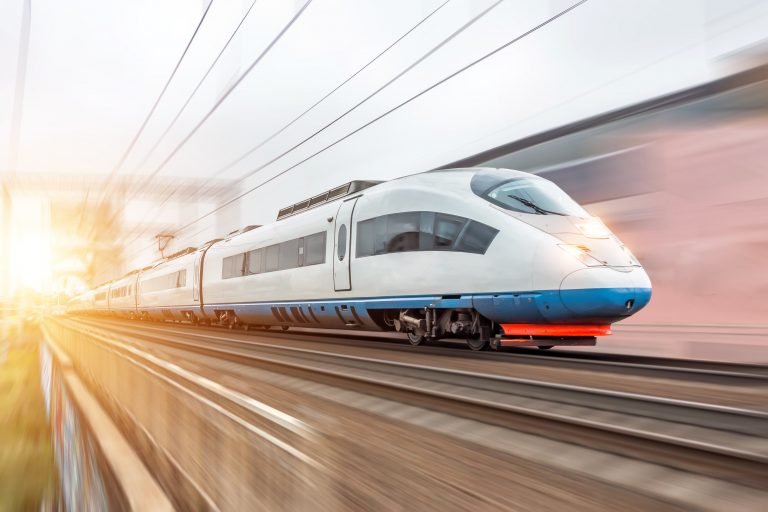
Once completed, the travel distance time between the two cities will reduced to 2 hrs with trains operating at top speed of 320 km per hour.