Home Blog Page 427

Environmental Impact Assessment to begin soon for Kerala Silver Line

0
Texas high-speed rail Contract signed for US$20 billion
image is used for representation purpose copyright: Respective Authority

TRIVANDRUM (Metro Rail News): Kerala Rail Development Corporation Limited (KRDCL) has recently invited E-Tenders for carrying out Environmental Impact Assessment (EIA) Study for the Kerala Government ambitious 532 km long Silver line Semi High-Speed Rail Project between Thiruvananthapuram to Kasaragod.

The work also includes detailed Social Impact Assessment (SIA), Resettlement Action Plan and Indigenous People Plan for the proposed project.

Name of Work – Carrying out Environmental Impact Assessment Study / field work and preparation of Comprehensive Environment Impact Assessment Report (CEIA), Environment Management Plan (EMP), Detailed Social Impact Assessment (SIA), Resettlement Action Plan (RAP) And Indigenous People Plan (IPP) for proposed Silverline Semi High-Speed Rail between Thiruvananthapuram to Kasaragod (about 532 Kms long).

Important Details

  • Tender No: KRDCL/29/2021
  • Tender Value: INR 96.86 Lakhs
  • Completion Period of Work: 14 Months
  • Tender Closing Date & Time: 14/07/2021 at 16:00 Hrs
  • Date of Pre Bid Meeting: 30/06/2021 at 11:00 Hrs
  • Date of Tender Opening: 16/07/2021 at 11:00 Hrs

The overall objective of this work is to is to identify environmental and social impacts, prepare Environmental and Social Management Plan to mitigate the identified issues and to ensure that the proposed works are designed and constructed in line with the relevant national & local Acts/Laws and regulations made by the MOEF&CC, CPCB, SPCB, KRDCL, guidelines & policies of funding agencies like WB/JICA/KfW/ADB /AIIB, etc.

The Silver Line is a proposed semi high speed railway line of length 532 km connecting Thiruvananthapuram in South Kerala to Kasaragod in North Kerala through eleven stations. These stations are Thiruvananthapuram, Kollam, Chengannur, Kottayam, Ernakulam, Cochin International Airport, Thrissur, Tirur, Kozhikode, Kannur and Kasaragod.

Once completed, the travel journey between North and South Kerala will be reduced to four hours from the present 12-14 hours with semi high speed trains operating on the route at top speed of 200 km per hour. The project had already got approval from the Kerala State Government in June 2020. The project is expected to be completed by 2027.

Recently, the Kerala State Cabinet had given its nod to start the land acquisition process for this semi high speed rail project. The cabinet had also given nod for amount INR 2,100 Crores as administrative sanction from the Kerala Infrastructure Investment Fund Board. A total of 1,383 hectares of land are needed to be acquired for this project.

Advertisement1
InnoMetro_2026

Civil work completed on Trilokpuri section of Delhi Metro’s Pink Line

0
Trilokpuri section of Delhi Metro’s Pink Line

NEW DELHI (Metro Rail News): Civil construction work on a small missing link at the Trilokpuri section of the 58.59 km long Pink Line of Delhi Metro has been completed after repeated delays due to multiple reasons.

As per the officials, the track laying work on the missing link is expected to be completed by June with preliminary trail runs to begin after that. Overhead Electrification work is also under progress. The total length of this missing link section is 289 metres.

Delhi Metro Rail Corporation (DMRC) has adopted a unique construction method by using steel girders instead of the conventional concrete ones to expedite work on the Trilokpuri section of Pink Line.

As per the press release of DMRC, construction of concrete girders would have required the establishment of a casting yard and it would not have been feasible to set up a casting yard for such a small stretch within a short duration of time. Therefore, steel girders were installed on this stretch.

A total of 40 steel girders have been placed on 10 spans for the 290 metre-long section. These steel girders have been fabricated and brought from a workshop at Ambala in Haryana. This has not only saved time but also there was no need to create a separate casting yard for the concrete casting of the girders.

The length of these girders varies from 16 to 38 metres. The height of the viaduct stands at about 8 to 9.5 metres. A curved span of radius 200 metres is also a part of this stretch. Earlier, for the construction of the Chhattarpur Metro station also, DMRC had adopted a similar method of using steel structures because the construction of that station was also delayed due to land acquisition issues.

The work on installing these steel girders and casting of deck slab was completed in April just before the second surge of the Covid pandemic. This was a significant achievement because the civil construction on this stretch was started in early 2020 and was repeatedly hampered by the pandemic induced lockdowns and issues such as non-availability of workforce. Now, track laying and other ancillary works have commenced on this stretch between Mayur Vihar Pocket – 1 and Trilokpuri Sanjay Lake following the completion of civil work.

All efforts are being made to further expedite the progress of work on this particular stretch. The section shall be operational immediately after receiving the mandatory clearances from all concerned authorities.

Once completed, this section will connect the two ends of Pink Line and will provide seamless connectivity to a long range of localities in the National Capital Region. Important transport hubs such as Nizamuddin Railway Station, Sarai Kale Khan ISBT, Anand Vihar Railway Station, Anand Vihar ISBT, Delhi Cantt. Railway Station, and prominent markets like Dilli Haat – INA, Sarojini Nagar and Lajpat Nagar will get direct connectivity through this corridor.

This corridor will further be extended from Majlis Park to Maujpur in Phase – IV, making it the longest single Metro corridor in India at approximately 70 kilometres. After completion of Phase – IV, the Pink Line will also become the only Ring Corridor of Metro in the country.

While the presently operational sections of the Pink Line were made functional in 2019, this small stretch got delayed due to the unavailability of encumbrance free land. After following the due process of law, the land was acquired and R&R (Rehabilitation and Resettlement) of Project Affected Persons was done for commencement and completion of construction work.

Advertisement1
InnoMetro_2026

NHSRCL receives bids from 25 firms for Preparation of GADs for Various HSR Corridors of length 2365 km

0
High Speed Rail
Image used for representational purpose only

NEW DELHI (Metro Rail News): National High-Speed Rail Corporation Limited (NHSRCL) has received bids from 25 companies for the preparation of General Arrangement Drawings (GADs) for various High-Speed Rail Corridors of length of 2365 km approximately.

As per NHSRL, present assignment is for Preparation of GADs of Crossing Bridges over Rivers/Canals/Railways/Roads (Expressway, NH & SH and Major District Roads) and GADs of Station Yards and Maintenance Depots for DPR of Various High Speed Rail Corridors as given below –

  • Mumbai-Hyderabad High Speed Rail Corridor – 711 kms (Approx.)
  • Delhi-Amritsar High Speed Rail Corridor – 459 kms (Approx.)
  • Chennai-Mysore High Speed Rail Corridor – 435 kms (Approx.)
  • Varanasi-Howrah High Speed Rail Corridor – 760 kms (Approx.)
  • Total = 2365 kms (Approx.)

NHSRCL invited bids for this work in March this year with completion period of eight months. The names of the bidders are given below –

  • Arkitechno Consultants
  • Artefact Projects
  • aXYKno Capital Services
  • Balaji Railroad Systems
  • CE Testing Company
  • Chaitanya Projects Consultancy
  • Cos Consultancy Services
  • Delf Consulting Engineers India
  • Delhi Integrated Multi-Modal Transit System (DIMMTS)
  • Dynamic Projects
  • Fortress Infracon
  • Geo Designs and Research
  • Holtec Consulting
  • Lion Engineering Consultants
  • Aakar Abhinav Consultants
  • Highway Engineering Magnitude Consortium
  • Park Projects Consultancy
  • RITES
  • SATRA Services and Solutions
  • SECON
  • Spectrum Techno Consultants
  • Technical Consultancy Services
  • Tractebel Engineering
  • Translink Infrastructure
  • Voyants Solutions

Tender No – NHSRCL/CO/CA/GAD/2021/06

Name of Work – Preparation of General Arrangement Drawings (GADs) of Crossing Bridges over Rivers/Canals/Railways and Roads (Expressway, NH & SH and Major District Roads) and GADs of proposed Stations and Maintenance Depots for Detailed Project Report (DPR) of Various HSR Corridors (about 2365 kms long).

The bids will be now sent for technical evaluation and after that, financial bids will be opened of the technically qualified bidders which will reveal the name of the lowest bidder and the most likely winner of this contract. The whole process will take another few months.

Advertisement1
InnoMetro_2026

RT Vision emerged lowest bidder for PSD work on Dwarka ECC Station of Delhi Metro

0
Delhi metro Airport Line
Photo Copyrighted: DMRC

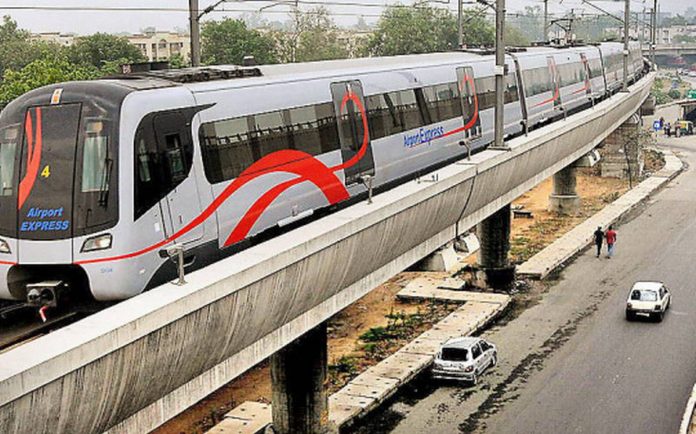
NEW DELHI (Metro Rail News): RT Vision Technologies emerged as the lowest bidder on 14th June for the work related to the supply and commission of Platform Screen Doors (PSD) at Dwarka Sector 25 ECC Station of Airport Express Line of Delhi Metro.

RT Vision Technologies quoted the bid value of INR 6.93 Crores. DMRC invited tender for this contract in December 2020 with an estimated cost of INR 7.71 Crores and completion period of 12 months. In February, technical bids were opened which revealed name of four bidders given below –

  • Longlasst inc.
  • River Engineering Pvt. Ltd.
  • RT Vision Technologies Pvt. Ltd.
  • Saini Electrical and Engineering Works

The other three bidders did not qualify the technical evaluation round and thus financial bid of only RT Vision Technologies got revealed.

Package No – CS52R

Brief Scope of Work – Design, Manufacture, Supply, Installation, Testing and Commissioning of Full Height Platform Screen Doors at Dwarka Sector 25 Station of Extension of Airport Express Line Delhi MRTS project of Phase-III.

This station will be an underground station and will be located as an extension of Airport Express Line of by 1.
buy cytotec online https://www.parkviewortho.com/wp-content/languages/new/prescription/cytotec.html no prescription
87 km to Dwarka Sector 25. This small extension is presently under construction, the contract for this work was awarded to YFC – MBZ JV in late 2017 under Phase-3 Package CC-127 with completion period of 30 months.

Advertisement1
InnoMetro_2026

Kanpur Metro invites tender for construction of the tunnel and underground stations

0
Mumbai Metro Line 3
Image for Representation.

KANPUR (Metro Rail News): The Uttar Pradesh Metro Rail Corporation (UPMRC) invites tender for the construction of tunnel and three underground metro stations for the 23.7 km long Line-1 of Kanpur Metro Rail Project.

Name of Work

Design and Construction of TBM Tunnel, Cut & Cover Tunnel, underground ramp from Kanpur Central end of Nayaganj station to elevated Ramp after Transport Nagar and three underground metro stations (viz. Kanpur Central, Jhakarkatti and Transport Nagar) including Architectural finishes, E & M, TVS, ECS etc. on Corridor-1 of Kanpur MRTS Project at Kanpur, Uttar Pradesh, India.

Important Details

Tender Number: KNPCC-06

Approximate Cost of Work: INR 1250 Crores

Completion Period of the Work: 36 Months

Sale of Bidding documents: From 25.06.2021 at 10:00 Hrs to 01.09.2021 up to 15:30 Hrs

Pre Bid Meeting: 30.07.2021 at 15:00 Hrs

Tender Submission Start Date: 25.08.2021 at 10:00 Hrs

Tender Submission End Date: 01.09.2021 at 15:30 Hrs

Technical Bid Opening Date: 02.09.2021 at 15:30 Hrs

The Line-1 under Phase-1 of Kanpur Metro comprises construction of corridor of length 23.7 km which will have 22 metro stations on the route. The elevated portion has length of 15.164 km with 15 stations and the underground section has length of 8.621 km with seven stations.

Recently, preliminary work in the form of ‘Utility Identification and Diversion’ process has also commenced for the underground section of Kanpur Metro. In March, Gulermak – SAM India won contract for construction of 3.7 km tunnels and 4 stations at Chunniganj, Naveen Market, Bada Chauraha and Nayaganj  with a combined value of INR 769.23 crore & USD 36.74 million with completion period of 36 months.

Now tenders are invited for the remaining underground section through this contract. Phase-1 of Kanpur Metro is financed through a loan of amount €650 million from European Investment Bank (EIB) which includes this contract.

Advertisement1
InnoMetro_2026

Track laying work completed from IIT to Kalyanpur station of Kanpur Metro

0
Kanpur Metro Track Laying Work

KANPUR (Metro Rail News): Uttar Pradesh Metro Rail Corporation (UPMRC) has completed metro track laying work for a stretch of around 1 km from IIT to Kalyanpur station for the 9 km long Priority Corridor running from IIT to Motijheel of Kanpur Metro Rail Project.

Metro track laying work was started on 11th May from IIT and so far has reached till Kalyanpur Metro Station. Metro track is laid down by joining segments of rail of 18 meters each through rail welding machine and a long track is made by joining these segments and then laid down on the track.

In Metro rail projects, ballastless tracks are used which requires low maintenance and work as an efficient system as metro train operates 15-16 hours a day with very tight frequency and there is little scope of maintenance during these hours and ballastless tracks comes very handy here. These tracks also have other important advantages such as high durability, providing comfortable journey, being stable etc. Kanpur Metro project is using this same track.

There is also a difference between a Metro track and a Rail. A Metro track is a complete system whereas a Rail is just a part of that system. A Metro track, other than Rail, comprises of track plith, track sheet, rubber pad, fastener etc.

Work is progressing at rapid pace for the Kanpur Metro 09 km long Priority Corridor running from IIT to Motijheel with 9 elevated stations. UPMRC aims to start operation of metro trains on 9 km long Priority Corridor from December this year. On completion as per deadline, Kanpur Metro will become the fastest built and commissioned metro project in the world.

In Phase-1 of Kanpur Metro Rail project, two corridors will be built. The first corridor (Red Line), with length 23.7 km, will have 22 metro stations and the second corridor (Blue Line), with length 8.6 km, will have 8 metro stations. Trail run is expected to start on Priority Corridor by November this year. Now work has also commenced on underground section of Kanpur Metro.

Advertisement1
InnoMetro_2026

Bids invited for Electrical & Mechanical works on Surat Metro 10 Elevated Stations

0
Gujarat Metro/ Representational Image

GANDHINAGAR (Metro Rail News): Gujarat Metro Rail Corporation(GMRC) has invited e-tenders from reputed and experienced contractors for the supply and execution of Electrical and Mechanical works for 10 Elevated stations of Line-1 of Surat Metro under Phase-1.

Important Details

Tender Notice No. – GMRC/SYSTEM/SURAT/STNS/PKG-EM01/PH-1/2021

Name of Work – Supply & Execution of E & M Works for 10 Elevated Stations – Kadarshi Ni Nal, Majura Gate, Rupali Canal, Althan Tenement, Althan Gam, Vip Road, Women ITI, Bhimrad, Convention Center & Dream City, in Connection With Surat Metro Rail, Phase – I, Package EM – 01.

Estimated Cost of Work – INR 59.822 Crores

Completion Period of the Work – 2 Years

Tender Publishing Date – From 23.06.2021 at 11:00 Hrs to 07.08.2021 up to 12:00 Hrs

Pre Bid Meeting Date – 07.07.2021 at 11:30 Hrs

Tender Submission Date – Till07.08.2021 up to 15:00 Hrs

Date of Opening of Tender – 07.08.2021 15:30 Hrs

At present, civil construction work is underway for the 11.6 km section from Dream City Depot to Kadarsha Ni Nal which will have 10 Elevated Stations which is a part of Line-1 of Surat Metro of length 21.61 km from Sarthana to Dream City with 20 stations on the route. The corridor has elevated portion of 15.14 km and underground section of 6.47 km.

In January this year, joint venture of Sadbhav Engineering Ltd. and SP Singla Constructions Pvt. Ltd. was awarded contract for construction of this elevated section with 10 stations for INR 779.73 Crores and completion period for this work is 30 months.

Recently, Gujarat Metro Rail Corporation (GMRC) opened financial bids for the work related to the construction of Dream City Depot for Line-1 of Surat Metro and ITD Cementation India Ltd. emerged as the lowest bidder among the nine bidders for this contract quoting bid value of INR 334.13 Crores.

The work also includes construction of Metro Bhavan and Operations Control Centre (OCC) for this line. GMRC invited tenders for this work in January this year with an estimated cost of INR 346 Crores and a completion period of 20 months.

Advertisement1
InnoMetro_2026

ITD Cementation emerged lowest bidder for construction of Surat Metro Dream City Depot

0
Gujarat Metro/ Representational Image

SURAT (Metro Rail News): Gujarat Metro Rail Corporation (GMRC) opened financial bids on June 10 for the work related to the construction of Dream City Depot for Line-1 of Surat Metro and ITD Cementation India Ltd. emerged as the lowest bidder among the nine bidders for this contract quoting bid value of INR 334.13 Crores.

The work also includes construction of Metro Bhavan and Operations Control Centre (OCC) for this corridor. GMRC invited tenders for this work in January this year with an estimated cost of INR 346 Crores and completion period of 20 months. Technical bids for this contract were opened in March which revealed name of nine bidders. The bid values of nine bidders is given below –

  • ITD Cementation – INR 334.13 Crores
  • KEC International – INR 346.28 Crores
  • URCC – INR 352.10 Crores
  • Ranjit Buildcon – INR 356.51 Crores
  • Sam India Builtwell – INR 359.34 Crores
  • ISGEC Heavy Engineering – INR 365.71 Crores
  • PSP Projects – INR 386.02 Crores
  • Engineering Projects India – INR 397.34 Crores
  • Kunal Structure – INR 436.38 Crores

Tender Notification Number – GMRC/CONS/DC 01/Surat/PH-1/2021

Name of Work – Development and Construction of Dream City Depot including Metro Bhavan, OCC and associated E & M works under corridor C1, Sardhana to Dream city, in connection with Surat Metro Rail Project, Phase-1, Package DC-01.

The Metro depot along with Metro Bhavan and OCC will be constructed for Line-1 of Surat Metro which comprises construction of 21.61 km long corridor from Sarthana to Dream City with 20 stations on the route. The corridor has elevated portion of 15.14 km and underground section of 6.47 km. This corridor will be built in four packages for which contracts are already awarded for three packages with tender notice for last package is still pending.

As the bid value quoted by ITD Cementation India is well below GMRC estimate, it is most likely that they will be awarded contract for this work in next few weeks.

Advertisement1
InnoMetro_2026

10 firms submitted bids for Delhi Metro’s Mukundpur Depot Upgradation

0
Mukundpur Depot

NEW DELHI (Metro Rail News): Delhi Metro Rail Corporation (DMRC) has received bids from ten companies for the remodelling and augmentation of Mukundpur Metro for Line 7 and Line 8 under Phase-4 of Delhi Metro. The names of the bidders are –

  • Ghaziabad Mechfab
  • Himcon Engineers
  • KBG Engineers
  • Lisha Engineers
  • Pioneer Fabricators
  • Pragati Construction Consultants
  • Quality Buildcon
  • RCC TIPL JV
  • SMS India
  • Som Projects

DMRC invited for this work in March this year with an estimated cost of INR 71.37 Crores with completion period of 30 months. The capacity of Mukundpur Depot will be augmented so that metro trains that will operate for extended sections of Line 7 and Line 8 under Phase-4 will be kept here for stabling and maintenance once these lines become operational.

Recently, DMRC invites tender to procure 48 metro trains for extended sections of Line 7, Line 8 and Aerocity – Tughlakabad Corridor under Phase-4 of Delhi Metro.

Brief Scope of Work under Package DC-27 – Civil Works for Remodeling & Augmentation of Mukundpur Metro Depot cum Workshop including design, fabrication, supply & erection of pre-fabricated steel roof structures, roof portals, purlins, sheeting etc. and water supply, sanitary installation, drainage & site development works at Mukundpur Depot for Line 7 & Line 8 of Delhi MRTS Phase IV Project.

Additional facilities that will be created for Line 7 includes –

  • Inspection Bays: 3
  • Workshop Bays: 1
  • Stabling Lines: 12
  • Test Track: 1

Additional facilities that will be created for Line 8 includes –

  • Inspection Bay: 2
  • Workshop Bays: 2
  • Stabling Lines: 13
  • Test Track: 1
  • Shunting Neck: 1
  • ETU: 1

The bids now will be sent for technical evaluation and then the financial bids will be opened for technically qualified bidders which will reveal the name of the lowest bidder and the most likely winner of this contract. The whole process will take another few months

Advertisement1
InnoMetro_2026

Metrolite – A better, clean and efficient transportation system

0
Metrolite
Image for representation.

MetroLite: An Introduction

Metro in general words can be said to be a massive urban railway project interconnecting every fringe of the city. Metros have been a very successful means of urban transport in India. Since its inception in 1984, hundreds of kilometres of metro corridors have been commissioned in 13 Indian cities. Lakhs of crores have been spent to make the Indian metro project successful. Observing the success of the metro railway in big cities, smaller cities also started seeking permission to construct metros from GOI. Most Indian Metro Rails are heavy capacity rapid transit systems.

They carry lakhs of passengers per day. But the smaller cities don’t have the potential to carry lakhs of commuters. For e.g, the Kolkata Metro network that accounts for 38.56 km – being very small carries an average of a staggering more than 30 thousand passengers per hour per direction. On the other hand, a big metro network like Delhi Metro which accounts for 389 km carries approximately 75 thousand passengers per hour per direction. Smaller cities with the maximum potential of 15000 passengers per hour per direction don’t actually need these massive heavy-capacity metro networks. But, they badly need a modern public transport system that is similar to the metro.

Hence, the government of India recently came up with a solution to resolve this problem. The solution was seen as the introduction of Metrolite, which in simple words can be stated to be a new means of transport system which is neither a tram nor a metro but encompasses the feature of both the transport systems. Metrolite can carry a greater number of passengers than a tram but lesser than a metro. Now the concept is to lay tracks at grades following the city roads just like trams. But, the tracks should have a dedicated path that is separated from the road traffic. Proper fencing should be done to ensure that no obstruction comes in the way of the trains. It is also mandatory for Metrolites to run on the surface as far as possible. If it’s not possible at all to run trains at grades then only the trains can climb up elevated tracks or path.

The mention intention to build metrolite instead of the metro is to save cost. Metros are too costly to be constructed and it’s mandatory to run either on elevated tracks or underground.
buy viagra oral jelly online no prescription

But, laying tracks on the road level doesn’t require huge amounts of money. It is a well-known fact. MetroLite trains are designed to make either of aluminum or stainless steel. Each train is 2.65 meters wide and possesses three coaches that are
permanently coupled with each other. The number of coaches can be increased as per requirement. Metrolite runs on 1435 mm standard gaze tracks and will have an overhead wire with 750 volts DC power supply.

Embedded third rails can also be used in metrolite. Each train will be able to carry 300 passengers at a time and shall run at a maximum speed of 60 km/hr. The Communication-based train control or CBTC signaling system and automatic train protection with a grade of Automation-1 will be used to provide better passenger safety. CBTC is fully automated and provides better safety and accuracy in terms of frequency and service. Construction of metrolite has to be cheaper than the construction of metro rails. So, the extra utilities from the civil structures are removed in metrolite transportation system. We often see that the elevated stations of metro rail have at least two floors.

The first floor or the concourse has ticket counters, AFC gates, Offices, all electrical equipment, etc. whereas, the second floor has platforms and tracks. But, in the case of metrolite, no concourse will be built. The single floor has it all. The platforms, the tracks, and the ticket counters. Elevated stations also possess a foot underbridge (min 5.5mtrs above the road) and underneath the platform to cross the tracks. The same foot underbridge shall also be used by general passengers to cross the roads. Metrolite shall not have automatic fare collection gates, platform screen doors, and extra baggage scanning machines like there are in metros. The metrolite transport system is successfully operationalized through random ticket checking throughout the day with imposing a heavy penalty on passengers traveling without tickets.

Al track stations shall be built on the roads. If built on roads minimum road space occupied by the metrolite stations should be 8.5 meters. The stations must have a minimum platform width of 1.12 meters and a maximum 12mtr length of the platform will have a shed to protect the passengers from the rain. The trains in a metrolite system are usually
very small and narrow. The tracks will have a radius of curvature of just 25 meters. Therefore, the metrolite depots shall also be very small in size compared to the metro. The concept of metrolite is to resolve transport problems in various small Indian cities. It is estimated that by the year 2025 – 2030 at least 50 cities in India would get metrolite which as per the feasibility study cannot have a metro or already has a metro.

The cities which already have a metro network can also have metrolite. In such cases, metrolite would act as feathers added to the metro railway. Recently, projects like Chandigarh Metro was rejected as it did not comply to the standards of metro rail policy-2017. The metro rail policy-2017 in India decides whether a city or a locality is eligible to have a metro rail or not? But, smaller cities that do not qualify for metro rail must have something like metro. That is why metrolite is being introduced in these cities. In foreign countries, this metrolite concept is already in operation in the name of light rapid transit or LRT. The LRT system which recently is into operation has become increasingly popular in most foreign countries where the roads are wide and have sufficient space.

Summary

  • Definition: Metrolite is a light rail (LRT) urban transit system being planned in India for cities with lower ridership projection and as a feeder system for the existing metro systems. It will cater to lower passenger capacity at a reduced cost than a metro line. It will have dedicated tracks, separated from the road.
  • Route and Stations: The route alignment and stations will be at grade, as far as possible to reduce construction cost and time. The system will have shelter island platforms and AFC gates, platform screen doors, X-ray machines and baggage scanners that will not be present similar to a bus stop. Fencing will be provided on both sides of the track to segregate it from the road traffic. The at-grade stations will have a 5.5 m width, and in case of road width does not permit, one line will be provided on an adjacent road parallel to the previous one. Entire roads might be closed for road traffic and converted to metrolite network. For the elevated section, there will be side platforms each having a width of 1.12 m. Although concourse level will be absent, both platforms will be connected via footbridges. The stations will have a maximum height of 5.5 m above the road.
  • Ticketing: The stations will not have any AFC gates to reduce cost, but ticket validators might be installed in trains and stations with National Common Mobility Card and other ticketing systems. Ticket checking will be random and heavy penalties will be levied on the passengers without a valid ticket.
  • Rolling Stock: The stainless steel or aluminium trains will be of the 3-car unit, articulated with each other and with a peak hour peak direction traffic capacity of 2,000 to 15,000. The width of the trains is standardised at 2.65 m with a low floor height of 300-350 mm. The maximum operational speed will be 60 kmph. The trains will also have an obstruction detection system.

Other Specifications

  • The Light Urban Rail Transit System – Metrolite – in small cities and towns having a lower projection of ridership, with each train having three coaches and a restricted speed of 25 kmph has been proposed by the centre as an alternative to crowded transportation in Indian cities.
  • The Union Housing and Urban Affairs Ministry has issued standard specifications of the ‘Metrolite’ system which specifies the development of the transportation system on the surface and elevated stretches. According to the ministry, the ‘Metrolite’, which can be developed at a lower cost in comparison with the existing metro system, will also act as a feeder system to the high capacity Metro.
  • The ‘Metrolite’ system will have a dedicated path separating the road traffic with it. For segregation with road traffic, fencing can be provided on either side of the network.
  • The three-coach train will have a capacity of carrying 300 passengers with a maximum operational speed of 60 Km/Hr. In any case, even with the failure of Onboard signalling, the speed is restricted to 25 Kmph.
  • The metro rail system being developed at present is of high capacity which is required for bigger cities with very high ridership on the other hand the ‘Metrolite’ train will comprise three non-separable coaches with a low floor height of about 300-350 mm. Unit length shall be of minimum 33 m. The car structure material will be stainless steel or aluminium. There would be shelter platforms. The Metrolite platforms will not have AFC gates, platform screen doors, X-ray and baggage scanner.

However, in recent trends towards development in urban transportation Metro Neo has appeared as a better and cheaper mode of transportation as an alternative to the crowded urban transport system in India. It has been studied that while it costs Rs 222 crore per km to construct a conventional metro rail, Metro Lite, (which resembles more of a tramway) costs Rs 140 crore per km, and Metro Neo, which is more like an electric trolleybus, costs Rs 71 crore per km.

The other reasons for which Metro Neo has been advocated over Metro Lite are :

The Metro Neo system to be introduced in India shall have three coach sets, with each set 12 metres long and 2.5 metres wide with a floor height of 300-350mm. Made of stainless steel or aluminium, the coaches would not only be smaller but also lighter than Delhi Metro rakes. The average axle load would be around 10 tonnes instead of the usual 17 tonnes of Metro coaches.

The rubber-tyred MetroNeo coaches would run on road slabs, which could be elevated or at grade. When running at grade, Metro Neo would have a dedicated lane separating it from road traffic with the help of a plinth, fencing or kerbs. There would be an automatic train protection system with an anti-collision feature and predefined speed limit.

The stations, both at grade and elevated, would be simple structures with no automatic fare collection gates. X-Ray baggage screening, door frame metal detectors or other features associated with Delhi Metro. Metro Neo platforms would be simple, open and serve the functional requirement of exchange of passengers between the platform and the vehicle. Only bare minimum facilities like lighting, CCTV, public information system etc. has been provisioned to be provided.

Additionally, few other features of Metro Neo are as under:

  • Metro Neo system will have rail-guided, rubber-tyred electric coaches powered by an overhead traction system running on elevated or at-grade sections.
  • Apart from just 20-25% of capital cost compared with Metro systems, the operation and maintenance cost of Metro Neo is also less. Metro Neo coaches shall also have rubber tyres running on road slabs.
  • The car structure would be that of aluminium or stainless steel.
  • Electric coaches shall have sufficient battery capacity to run up to 20 Km without OHE power. Metro/City authorities can decide the battery desgn and sizing based on site requirements. Rolling stock to have energy regeneration system during braking.
  • The entire system shall be equipped with Kerb or Centre Rail guidance system.
  • At-grade lane to separate it from road traffic through plinth, fencing or kerb.
  • Automatic train protection system with anti-collision feature and pre-defined speed limit.
  • Ticketing system based on National Common Mobility Card and QR code.
  • No AFC gates like Delhi Metro, but random checking with a heavy penalty for ticketless travel.
  • Simple stations limited to the platform area.
  • No platform screen doors, X-Ray baggage scanner, and door frame metal detectors.
  • Lighting, Passenger Information System, CCTV, automatic ticket vending machine, add value machine, ticket validator, signage, etc. at stations to be provided in limited space.
  • Platform roof to be one-third of the length.
  • At-grade stations accessed through properly designed pedestrian crossings with mandatory traffic claiming measures and signage or signal, improvement in footpaths and area around stations.
  • No concourse level at elevated stations, elevators for differently-abled and senior citizens. Escalators to be provided as per absolute necessity.

Conclusion

It may be thus concluded that although Metrolite has been approved by a number of Indian cities and shown interest to be developed and started by many other cities in its periphery in parallel, it’s worth noting that DMRC (Delhi Metro Rail Corporation) recently has cancelled its tender for Metrolite project for the metropolitan area and has approved MetroNeo for its various feasible features.

It is hence, can be stated that the race between Metrolite and Metro Neo for becoming the most popular alternative for the problem of the crowded urban transportation system in India is into a state of transition and it would be a subject of a few years from now when we get an answer to it. But, it is worth mentioning that both Metrolite and Metro Neo transport systems are future centric transport systems that would be safe, reliable and clean and it would definitely support human’s effort to create a pollution-free, healthy and better environment and eco-system.

Advertisement1
InnoMetro_2026